W. Joseph Campbell

Posts Tagged ‘Research’

Counterpunching that made-up line, ‘follow the money’

In Cinematic treatments, Debunking, Media myths, Washington Post, Watergate myth on March 15, 2011 at 9:45 am

Watergate’s most famous invented line showed up yesterday at the online site of CounterPunch, which touts itself as “America’s best political newsletter.”

That most famous invented line of Watergate is: “Follow the money.”

It was written into the script of All the President’s Men, the 1976 movie about the Watergate reporting of the Washington Post, and has since made a smooth, seamless transition to the vernacular.

Indeed, “follow the money” has become the passage most commonly associated with the Watergate scandal, which culminated in 1974 in the resignation of President Richard Nixon.

A commentary at the CounterPunch site referred to “follow the money” in a lengthy discussion of the perjury trial in Texas of a former CIA operative, Luis Posada Carriles, stating:

“During the investigation into the 1972 Watergate scandal, Washington Post reporter Bob Woodward found a source, whom he referred to only as ‘Deep Throat,’ who told him to ‘follow the money.’ Woodward and fellow journalist Carl Bernstein followed the money trail and unraveled the mysteries behind the crimes and subsequent cover-ups of President Richard M. Nixon and his White House staff.”

Simple as all that, eh? “Follow the money” was key to unraveling “the mysteries behind the crimes” of America’s greatest political scandal?

Hardly.

As is the case with all media-driven myths, there are elements of accuracy in that narrative. Woodward did periodically discuss Watergate with a high-level government source to whom the Post referred as “Deep Throat.”

But in real life, “Deep Throat” never counseled Woodward to “follow the money.”

Nor does “follow the money” doesn’t appear in All the President’s Men, the book Woodward and Bernstein wrote about Watergate.

Nor does the line appear in any Post article or editorial published during the Watergate period.

Nor was unraveling Watergate a simple matter of pursuing a money trail.

Far from it.

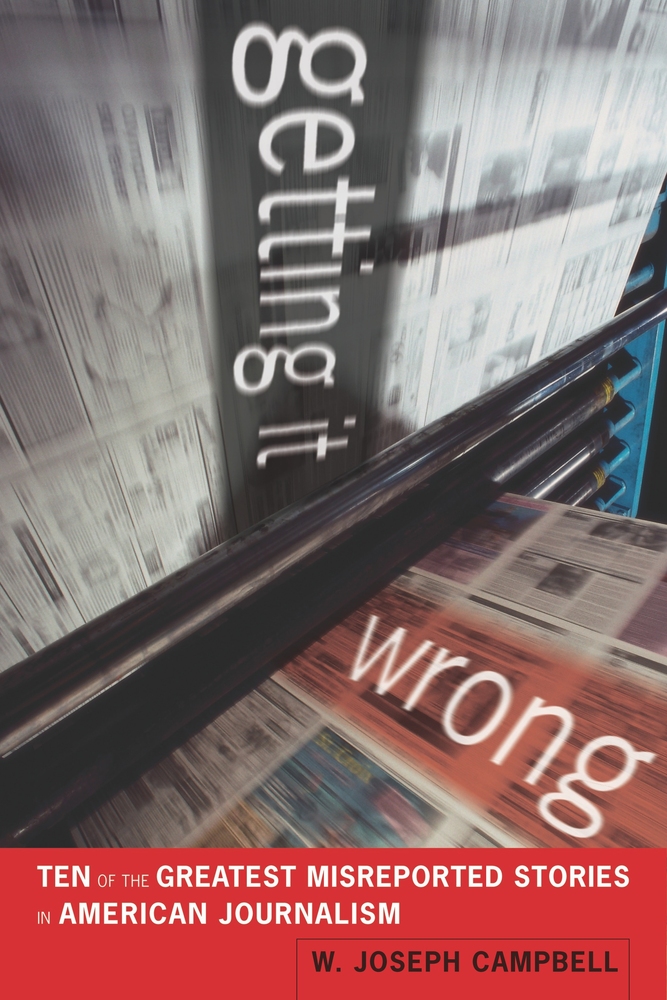
As I note in my latest book, Getting It Wrong, which debunks 10 prominent media-driven myths, rolling up a scandal of the dimension and complexity of Watergate “required the collective if not always the coordinated forces of special prosecutors, federal judges, both houses of Congress, the Supreme Court, as well as the Justice Department and the FBI.

“Even then,” I added, “Nixon likely would have served out his term if not for the audiotape recordings he secretly made of most conversations in the Oval Office of the White House. Only when compelled by the Supreme Court did Nixon surrender those recordings, which captured him plotting the cover-up and authorizing payments of thousands of dollars in hush money.”

The popularity of “follow the money” — a line for which screenwriter William Goldman has taken credit — highlights another characteristic of media myths: Their tendency to minimize complexity and offer simplistic and misleading interpretations instead.

I note in Getting It Wrong that high-quality cinematic treatments — and All the President’s Men is a telling example — can contribute significantly to solidifying and making believable mythical accounts of historical events.

“Follow the money” is just one of the distortions presented in All the President’s Men, the movie.

More broadly, the film promotes what I call the “heroic-journalist” interpretation” of Watergate.

The heroic-journalist meme is a trope that knows few bounds. It is the most familiar storyline of Watergate — the mediacentric version that Woodward and Bernstein, through their dogged and courageous reporting, brought down Nixon and his corrupt presidency.

It is one of American journalism’s most self-reverential stories — one propelled by the movie version of All the President’s Men.

As I point out in Getting It Wrong, the film placed Woodward and Bernstein “at the center of Watergate’s unraveling while denigrating the efforts of investigative agencies such as the FBI.

“The effect was to solidify and elevate the heroic-journalist myth, giving it dramatic power, and sustaining it in the collective memory.”

All the President’s Men offers no version of Watergate other than Woodward and Bernstein, with the help of “Deep Throat,” brought about the first-ever resignation of a U.S. president.

That’s an abridged and misleading interpretation, a misreading of history that deserves serious counterpunching.

WJC

Many thanks to Instapundit Glenn Reynolds for linking to this post

Recent and related:

Of media myths and false lessons abroad: Biden’s Moscow gaffe

In Bay of Pigs, Debunking, Media myths, New York Times, Newspapers, Washington Post, Watergate myth on March 14, 2011 at 7:57 am

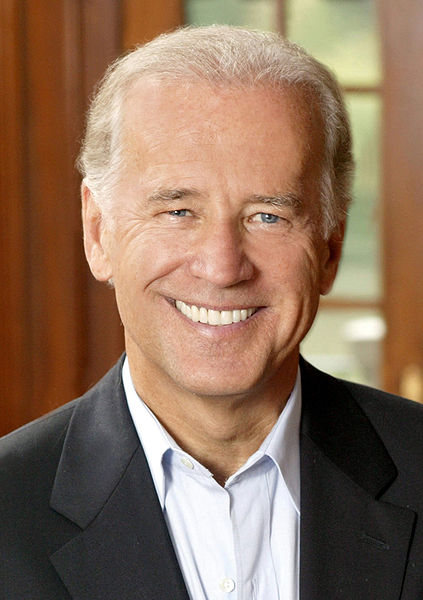
Biden shows the way (White House photo)

Vice President Joe Biden embraced in Moscow last week one of American journalism’s most tenacious myths — the notion that reporting by the Washington Post brought down” Richard Nixon’s corrupt presidency in the Watergate scandal.

Unwittingly or otherwise, Biden offered up the Watergate myth as a telling example of the values and virtues of a free press. The vice president said in remarks at Moscow State University:

“Journalists must be able to publish without fear of retribution. In my country it was a newspaper, not the FBI, or the Justice Department, it was a newspaper, the Washington Post that brought down a President for illegal actions.”

As I’ve noted, not even the Post endorses that superficial and misleading reading of Watergate history. (Ben Bradlee, the newspaper’s executive editor during Watergate, has said for example: “[I]t must be remembered that Nixon got Nixon. The Post didn’t get Nixon.”)

The significance of Biden’s mischaracterization of Watergate goes beyond being merely curious; it’s more than just another example of the gaffe-prone vice president slipping up again.

His remarks demonstrated anew that media myths are not just intriguing curiosities of history. They showed how false lessons can worm their way into diplomacy and policymaking.

Biden’s speech represented pointed criticism of — and recommendations for — Russia and its legal and political systems.  Biden offered a laundry list of democratic reforms that autocratic Russia ought to undertake, stating that courts “must be empowered to uphold the rule of law and protect those playing by the rules.

“Non-governmental watchdogs should be applauded as patriots, not traitors. …

“Journalists,” he added, “must be able to publish without fear of retribution.” To buttress his point about a robust free press, he invoked the claim that “the Washington Post … brought down a President for illegal actions.”

Biden offered that anecdote as an example of the benefits of press freedom, which he called “the greatest guarantee of freedom there is….”

Invoking the myth that the Post “brought down” Nixon is to offer an international audience a false lesson about the power of the news media. Invoking the myth is to suggest, wrongly, that that news media can, when circumstances are right, force a sitting president from office.

As I note in my latest book, Getting It Wrong, rolling up a scandal of the sweep and dimension of Watergate “required the collective if not always the coordinated forces of special prosecutors, federal judges, both houses of Congress, the Supreme Court, as well as the Justice Department and the FBI.”

Even then, I write, “Nixon likely would have served out his term if not for the audiotape recordings he secretly made of most conversations in the Oval Office of the White House.

“Only when compelled by the Supreme Court did Nixon surrender those recordings, which captured him plotting the cover-up” of Watergate’s signal crime — the break-in at the headquarters of the Democratic National Committee in June 1972.

Considered against the tableau of subpoena-wielding investigators and special prosecutors, the Watergate reporting of the Post recedes in significance.

As Michael Getler, the newspaper’s ombudsman wrote in 2005: “Ultimately, it was not The Post, but the FBI, a Congress acting in bipartisan fashion and the courts that brought down the Nixon administration.”

I also note in Getting It Wrong that “media-driven myths are neither trivial nor innocuous. They can and do have adverse consequences.”

They tend to offer simplistic and misleading interpretations of important historical events, and they “can blur lines of responsibility and deflect blame away from makers and sponsors of flawed public policy,” I write, citing as a case in point the New York Times-Bay of Pigs suppression myth.

Had the New York Times had reported all it knew 50 years ago about the run-up to the pending Bay of Pigs invasion of Cuba, the administration of President John F. Kennedy likely would have scuttled the operation–thus sparing the country a stunning foreign policy reversal.

Or so the media myth has it.

As I discuss in Getting It Wrong, that interpretation is not only misleading but it diverts responsibility away from Kennedy and his flawed decision to go ahead with the invasion.

The Times, after all, published a number detailed, front-page reports about the anticipated invasion in the days before the ill-fated assault. And there is no evidence that the newspaper censored itself under White House pressure in the run-up to the Bay of Pigs invasion.

And in the final analysis, I note, ” it was Kennedy, not American journalists, who gave the go-ahead in April 1961, sending a brigade of Cuban exiles to a disastrous rendezvous in the swamps of southwestern Cuba.”

The cause of independent-minded journalism in Russia would have been better served had Biden skipped the myth and urged the Kremlin to pursue serious investigations into unresolved cases of journalists who’ve been killed because of their work.

The New York-based Committee to Protect Journalists says 19 journalists have been killed in Russia since 2000.

The country, CPJ says, has a “record of rampant impunity in resolving the killings of journalists.”

WJC

Recent and related:

Mythmaking in Moscow: Biden says WaPo brought down Nixon

In Debunking, Media myths, Newspapers, Washington Post, Watergate myth on March 12, 2011 at 7:23 am

Gaffe-prone Joe Biden offered Russians this week a mythical and distorted version of American history,  declaring at Moscow State University that the Washington Post “brought down” Richard Nixon’s corrupt presidency in the Watergate scandal.

It’s an interpretation of Watergate that few serious historians embrace.

Gaffe-prone

And yet, according to the transcript of the vice president’s remarks posted online by the White House, Biden told his audience:

“In my country it was a newspaper, not the FBI, or the Justice Department, it was a newspaper, the Washington Post that brought down a President for illegal actions.”

Not even the Washington Post buys into that myth-encrusted version of history. Principals at the Post have from time to time over the years sought to distance the newspaper from such a misleading assessment.

For example, Katharine Graham, the newspaper’s doughty publisher during and after the Watergate scandal, said in 1997, at a program marking the 25th anniversary of the scandal:

“Sometimes people accuse us of bringing down a president, which of course we didn’t do. The processes that caused [Nixon’s] resignation were constitutional.”

Ben Bradlee,who was executive editor at the Post during Watergate, said on the “Meet the Press” interview show in 1997:

“[I]t must be remembered that Nixon got Nixon. The Post didn’t get Nixon.”

More recently, Michael Getler, then the newspaper’s ombudsman, wrote in 2005:

“Ultimately, it was not The Post, but the FBI, a Congress acting in bipartisan fashion and the courts that brought down the Nixon administration.”

Their comments are not the representations of false modesty: They speak to a more accurate reading of the history of Watergate than Biden offered his audience in Moscow.

Watergate-related reporting in the Post — even though it won a Pulitzer Prize in 1973 — was scarcely enough to turn from office a sitting president.

As I write in my latest book, Getting It Wrong, rolling up a scandal of the dimension and magnitude of Watergate “required the collective if not always the coordinated forces of special prosecutors, federal judges, both houses of Congress, the Supreme Court, as well as the Justice Department and the FBI.”

And even then, I write, “Nixon likely would have served out his term if not for the audiotape recordings he secretly made of most conversations in the Oval Office of the White House.

“Only when compelled by the Supreme Court did Nixon surrender those recordings, which captured him plotting the cover-up” of Watergate’s signal crime — the break-in at the headquarters of the Democratic National Committee in June 1972.

Biden’s remarks reflect an endorsement of I call the “heroic-journalist” myth of Watergate — the simplified and misleading interpretation that the reporting of  Post reporters Bob Woodward and Carl Bernstein uncovered evidence that forced Nixon’s resignation in 1974.

But not even Woodward endorses that interpretation. He said in 2004 in an interview with American Journalism Review:

To say the press brought down Nixon, that’s horseshit.”

But as I note in Getting It Wrong, the heroic-journalist meme has nonetheless “become the most familiar storyline of Watergate: ready short-hand for understanding Watergate and its denouement, a proxy for grasping the scandal’s essence while avoiding its forbidding complexity.

“How the Post and its reporters uncovered Watergate is deeply ingrained in American journalism as one of the field’s most important and self-reverential stories,” I write.

But being deeply ingrained and popular doesn’t mean it’s accurate. Far from it.

I note in Getting It Wrong that “to explain Watergate through the lens of the heroic-journalist is to abridge and misunderstand the scandal and to indulge in a particularly beguiling media-driven myth.

“The heroic-journalist interpretation minimizes the far more decisive forces that unraveled the scandal and forced Nixon from office.” And they included the very forces Biden dismissed in his remarks in Moscow –the FBI and the Justice Department.

The transcript of Biden’s speech, delivered Thursday, also shows that he flubbed the characterization of the news media, which sometimes are collectively referred to as the “Fourth Estate.”

According to Biden, they’re the “Third Estate.”

WJC

Recent and related:

Pumping up Watergate’s heroic-journalist myth

In Debunking, Media myths, Washington Post, Watergate myth on March 10, 2011 at 8:42 am

Bob Woodward of Watergate fame has been on the lecture circuit of late and his talks have stirred reference to the myth that his reporting for the Washington Post brought down Richard Nixon’s corrupt presidency in 1974.

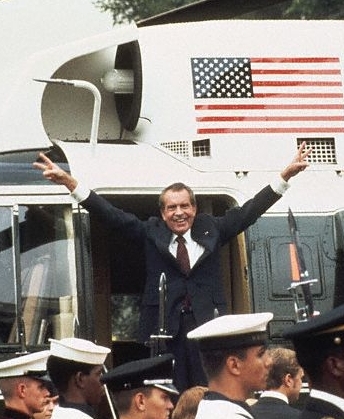
'Nixon got Nixon'

It’s not that Woodward has been making such mythical claims. Rather, they pop up in fawning news reports about his talks.

For notable example, consider the article posted yesterday at the online site of the Indianapolis Star. The article, a preview of Woodward’s talk in that city Friday, declared glowingly:

“For 40 years, Bob Woodward has pried open some of the toughest secrets in government, from the Watergate scandal to the secret war in Pakistan.

“His reporting has exposed corruption, helped to send people to jail and pressured a president to resign.”

The writeup continued much in that frothy vein, declaring:

“As a young reporter at The Post, Woodward teamed up with Carl Bernstein to dig into a ‘third-rate burglary’ of the Democratic National Committee’s headquarters at the Watergate complex. Over many months, through hundreds of stories, the two exposed political dirty tricks and abuse of power in the Nixon White House that eventually forced Nixon from office.”

Let’s address and untangle the myths invoked here.

For starters, the reporting of Woodward and Bernstein did not pressure or force Nixon to resign.

While their reporting won a Pulitzer Prize for the Post in 1973, it did not break open the Watergate scandal. It did not uncover the evidence that led or contributed to Nixon’s resignation.

To argue otherwise it did is to indulge in the beguiling “heroic-journalist myth,”  which, as I write in my latest book,  Getting It Wrong, has become “the most familiar storyline of Watergate.”

The heroic-journalist meme, I note, offers “ready short-hand for understanding Watergate and its denouement, a proxy for grasping the scandal’s essence while avoiding its forbidding complexity.

“How the Post and its reporters uncovered Watergate is deeply ingrained in American journalism as one of the field’s most important and self-reverential stories.”

To roll up a scandal of the dimensions of Watergate, I write, “required the collective if not always the coordinated forces of special prosecutors, federal judges, both houses of Congress, the Supreme Court, as well as the Justice Department and the FBI.”

And even then, Nixon likely would have served out his term if not for disclosures about the audiotape recordings he secretly made of his conversations in the Oval Office of the White House.

“Only when compelled by the Supreme Court did Nixon surrender those recordings, which captured him plotting the cover-up” of the Watergate break-in, I write in Getting It Wrong.

So against the tableau of prosecutors, courts, federal investigations, and bipartisan congressional panels, and the Supreme Court, the contributions of Woodward and Bernstein recede in importance.

Their contributions were modest, I write, “and certainly not decisive” to the outcome of Watergate.

This is not to say their reporting on Watergate was without distinction.

I note in Getting It Wrong that the Post was the first news organization to report a connection between the Watergate burglars and the White House, the first to demonstrate that campaign money was diverted to fund the break-in, the first to tie former Attorney General John Mitchell to the scandal, the first to link top Nixon aide H.R. Haldeman to Watergate.

But those reports were scarcely enough to unseat a president.

Put another way, Woodward and Bernstein did not uncover the evidence vital to understanding and unraveling the scandal.

They did not disclose the White House-led cover-up and payment of hush money to the Watergate burglars. Nor did they reveal the existence of Nixon’s secret White House tapes, which proved decisive to Watergate’s outcome.

No, Woodward and Bernstein and the Post did not force Nixon from office. As Ben Bradlee, the newspaper’s executive editor during the Watergate period, said in 1997:

“[I]t must be remembered that Nixon got Nixon. The Post didn’t get Nixon.”

Or as Woodward put it in an interview with American Journalism Review in 2004:

To say that the press brought down Nixon, that’s horseshit.”

Now there’s an emphatic line that Woodward might consider working into his speeches.

WJC

Recent and related:

57 years on: Was it really TV’s ‘finest half hour’?

In Anniversaries, Debunking, Media myths, Murrow-McCarthy myth on March 9, 2011 at 12:07 am

Murrow

Today’s the 57th anniversary of what has been called the “finest half hour” in television history — when Edward R. Murrow took to the small screen to confront Joseph R. McCarthy and the senator’s red-baiting ways.

Murrow’s on-air analysis of McCarthy and his tactics was so powerful, so revealing, that it marked an abrupt end to the senator’s witch-hunt for communists in government.

Or so the media myth has it.

The occasion was Murrow’s 30-minute See It Now program that aired on CBS on March 9, 1954.

As I write in my mythbusting book, Getting It Wrong, the program supposedly affirmed the potential power of television and confirmed the courage of Murrow.

I also write:

“The never-ending accolades notwithstanding, the evidence is overwhelming that Murrow’s famous program on McCarthy had no such decisive effect, that Murrow in fact was very late in confronting McCarthy, that he did so only after other journalists had challenged the senator and his tactics for months, even years.”

Indeed, the legendary status accorded the Murrow program has effectively “obscured and diminished the contributions of journalists who took on McCarthy years earlier, at a time when doing so was quite risky,” I point out in Getting It Wrong.

These journalists deserve more credit than Murrow for courage in confronting the McCarthy menace when it was most virulent.

One of them was James A. Wechsler, editor of the New York Post, which in 1951 published a bare-knuckle, 17-part series about McCarthy.

The closing installment characterized McCarthy as “a drunk at a party who was funny half an hour ago but now won’t go home. McCarthy is camped in America’s front room trying to impress everybody by singing all the dirty songs and using all the four-letter words he knows. The jokes are pointless, the songs unfunny, the profanity a bore.”

The series appeared in the Post 2½ years before Murrow’s program on McCarthy.

Wechsler was called before McCarthy’s investigative subcommittee and grilled about having been a member before in the Communist Youth League.

Wechsler said his being summoned to the closed-door hearing was “a reprisal against a newspaper and its editor for their opposition to the methods of this committee’s chairman.”

He sparred effectively with McCarthy, telling the senator at one point that the New York Post “is as bitterly opposed to Joe Stalin as it is to Joe McCarthy, and we believe that a free society can combat both.”

But in the end, Wechsler complied, reluctantly, with the subcommittee’s demand for names of people he had known to be communists during his time in the Youth League.

During McCarthy’s communists-in-government campaign, which lasted from 1950 to 1954, the senator had no more relentless or scathing foe in the news media than muckraking columnist Drew Pearson.

He wrote the widely published “Washington Merry-Go-Round” column — and was quick off the dime, taking on McCarthy soon after the senator first raised his reckless claims about communists in high places in the U.S. government and military.

Pearson wrote in February 1950, in one of his first columns about McCarthy’s charges, that “the alleged communists which he claims are sheltered in the State Department just aren’t.”

Pearson noted that he had covered the State Department for years and had been “the career boys’ severest critic.

“However,” he added, “knowing something about State Department personnel, it is my opinion that Senator McCarthy is way off base.”

And he was.

Pearson’s frequent challenges angered McCarthy who in December 1950, physically assaulted the columnist after a dinner at the hush-hush Sulgrave Club on DuPont Circle in Washington, D.C.

McCarthy confronted Pearson in the Sulgrave’s coat check room and either slapped, kneed, or punched the columnist. Accounts vary.

Richard Nixon, who recently had been sworn in as a U.S. Senator, intervened to break up the encounter. In his memoir RN, Nixon wrote that Pearson “grabbed his coat and ran from the room” and “McCarthy said, ‘You shouldn’t have stopped me, Dick.’”

So by the time Murrow took on McCarthy 57 years ago tonight, Americans really weren’t “waiting for a white knight like Murrow to tell them about the toxic threat the senator posed,” I write in Getting It Wrong, adding:

“By then, McCarthy and his tactics were well-known and he had become a target of withering ridicule — a sign of diminished capacity to inspire dread. On the day the See It Now program aired, former president Harry Truman reacted to reports of an anonymous threat against McCarthy’s life by saying:

“‘We’d have no entertainment at all if they killed him.'”

The notion that Murrow and his television program brought down McCarthy is a delicious story of presumptive media power:  More accurately, it is a tenacious media-driven myth.

WJC

Recent and related:

Bra-burning ‘never happened’?

In Anniversaries, Bra-burning, Debunking, Media myths, Photographs on March 8, 2011 at 8:40 am

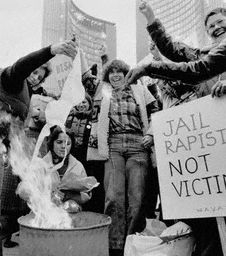
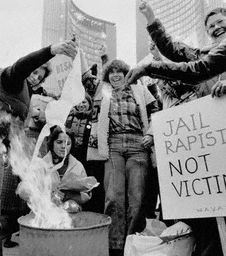
Toronto, 32 years ago today (Bettmann/Corbis)

“Bra-burning has long been associated with the feminist movement, but it never happened.”

So asserted an article published the other day in the Sacramento Bee.

It’s a not-infrequent claim, that feminist bra-burning was a media invention, a media myth.

But there were at least a couple of occasions when feminist protesters set fire to bras.

One of the occasions came 32 years ago today, when members of Women Against Violence Against Women demonstrated outside city hall in Toronto. Near the close of the demonstration, a protester named Pat Murphy dropped a white bra into the hungry flames of a burn barrel (see photo).

The demonstration in Toronto on March 8, 1979, coincided with International Women’s Day and was aimed at denouncing a report on rape prepared by the Ontario Provincial Police.

The police report said that of 337 rapes investigated, 140 were “unprovoked.” The report also said “promiscuity” was a factor in many rapes.

The Women Against Violence Against Women group scorned the report as outrageous and “dazzling in its illogic.” Protesters carried signs saying: “Take a Rapist to Lunch — Charcoal Broiled” and “Hookers Who Wink Go to the Clink! Men Who Rape Escape.”

The Globe and Mail newspaper reported that the protesters lighted “a fire in a garbage can, to the obvious annoyance of about a dozen watchful constables, [and] shouted: ‘Burn the rapists, burn the city, burn the OPP,’” acronym for Ontario Provincial Police.

The newspaper’s account did not mention the bra-burning which, one participant recently told me, “wasn’t a focal point” of the protest.

But it did happen.

Another participant recently recalled that “weighing in on the stereotype of ‘feminist bra-burners’ was actually an effective way [for protesters] to say: Women will control our own bodies, thank you!

“The bra burning,” she said, “was a way to entice the media as well as [offer] a critique of the police report.”

A little more than 10 years before the demonstration in Toronto, about 100 women gathered on the boardwalk at Atlantic City, New Jersey, to protest the 1968 Miss America pageant. The demonstration was organized by a small group called New York Radical Women and has been recognized as an early manifestation of the women’s liberation movement.

In Getting It Wrong, my mythbusting book that came out last year, I offer evidence that denials to the contrary, bras were briefly set afire at Atlantic City.

The evidence is from two witness accounts — one of which was published in the Press of Atlantic City on September 8, 1968, the day after the protest.

Boucher (1949 photo)

That account appeared beneath the byline of a veteran reporter named John L. Boucher and carried the headline:

“Bra-burners blitz boardwalk.”

Boucher’s article referred to the burn barrel that demonstrators had dubbed the “Freedom Trash Can” and stated:

“As the bras, girdles, falsies, curlers, and copies of popular women’s magazines burned in the ‘Freedom Trash Can,’ the demonstration reached the pinnacle of ridicule when the participants paraded a small lamb wearing a gold banner worded ‘Miss America.’”

That account was buttressed by recollections of the writer Jon Katz, who in 1968 was a young reporter for the Atlantic City Press. Katz was on the Atlantic City boardwalk the day of the protest, gathering material for a sidebar article about reactions to the demonstration.

Katz’s sidebar didn’t mention the fire in the “Freedom Trash Can.”

But in correspondence with me, Katz stated:

“I quite clearly remember the ‘Freedom Trash Can,’ and also remember some protestors putting their bras into it along with other articles of clothing, and some Pageant brochures, and setting the can on fire.

“I am quite certain of this.”

WJC

Recent and related:

Exaggerating Cleveland as ’70s Belfast on the lake

In Cinematic treatments, Debunking, Media myths, Newspapers on March 7, 2011 at 7:36 am

Advance publicity about Kill the Irishman, Hollywood’s portrayal of a long-dead Cleveland hood mostly unknown outside Northeast Ohio, erroneously casts the city in the mid-1970s as rivaling the shattering violence of Belfast or Beirut.

Cleveland’s daily newspaper, the Plain Dealer, for which I reported in the mid- and late-1970s, offered that allusion — or illusion — in an otherwise thoughtful article yesterday about Kill the Irishman, which opens Friday in limited release.

The movie dramatizes — and no doubt seeks to mythologize — the life and death of Danny Greene, a brazen Cleveland rackets figure and FBI informant killed by his foes in a car bombing in October 1977.

The Plain Dealer article asserted that “Cleveland in the mid-’70s echoed Belfast or Beirut.”

That characterization is glib, unfortunate, and  fails to distinguish between the bloodletting and terror of politically inspired violence in Belfast or Beirut and the bombings of far smaller scale, perpetrated by mobsters against mobsters, in Cleveland and vicinity in the mid-1970s.

Demonstrating anew that Hollywood often has little aversion to hyperbole, publicity material for Kill the Irishman carries the mischaracterization of bombing-prone Cleveland to an absurd extreme.

That material says in summer of 1976, “thirty-six bombs detonate[d] in the heart of Cleveland while a turf war raged between Irish mobster Danny Greene (Ray Stevenson) and the Italian mafia.”

The claim has been reiterated in descriptions of the film posted by online movie guides, including those of the Washington Post and  CBS Detroit. It appeared in a recent online review of Kill the Irishman.

Thirty-six bombings “in the heart of Cleveland” in any summer would have so dramatic as to have attracted national media attention. But a search of an archive of leading U.S. newspapers — including the New York Times, Los Angeles Times, Wall Street Journal, and the Post — turned up no reports about such a bombing spree in Cleveland that year.

I lived and worked in downtown Cleveland then, and recall no such rampage. That’s not to say that Cleveland was a particularly hospitable place. But the heart of the city on Lake Erie quite simply did not shudder that summer with anything akin to a succession of three dozen bombings.

Such a claim is preposterous.

The figure of 36 bombings appears to have been misappropriated from an article published in May 1977 in the Plain Dealer, as a sidebar to the account of the bombing death of John A. Nardi, a mob figure allied with Greene.

The sidebar article said “there were 21 bombings in the city last year [1976], a total of 37 in Cuyahoga County,” a political district of 458 square miles that embraces Cleveland and many of its suburbs.

Sure, 21 bombings in a year is a lot, in any city. But it is less than two per month, a frequency considerably less dramatic and sustained than 36 “in the heart of Cleveland” in a single summer (which corresponds to 13 a month or more than one a week).

Gritty Cleveland gets beaten up routinely. It was Forbes magazine’s choice as America’s “most miserable city” in 2010. Cleveland’s population is about half of what it was 50 years ago; it may be America’s most leave-able city. Abandoned buildings blight the cityscape.

Cleveland is in a long, grinding, unending decline. It’s a magnet for sneer and insult. But it was no Belfast, and it sure doesn’t merit the exaggeration and imprecision that’s come its way in the run-up to the release of Kill the Irishman.

WJC

Recent and related:

‘Sigue el dinero’: That made-up Watergate line gets around

In Cinematic treatments, Debunking, Media myths, Washington Post, Watergate myth on March 5, 2011 at 7:53 am

Follow the money” is pitch-perfect advice that’s found application in all sorts of contexts. It popped up the other day at  Spanish-language a blog in Castro’s Cuba , appearing as “sigue el dinero.”

And in Canada, the Globe and Mail newspaper invoked the phrase in a hockey story published yesterday.

Felt: Didn't say it

Without doubt, “follow the money” is the best-known line associated with the Washington Post and its reporting of the Watergate scandal.

Except that the Post never used the phrase in its articles or editorials about Watergate.

The passage was written into the script of All the President’s Men, the 1976 motion picture that dramatized the Watergate reporting of Post reporters Bob Woodward and Carl Bernstein.

“Follow the money” long ago crossed smoothly  from the silver screen to the vernacular — as suggested by the lead paragraph in an article posted the other day at the online site of an alternative newspaper in California. The lead declared:

“Watergate’s ‘Deep Throat,’ Mark Felt, advised investigative reporters Bob Woodward and Carl Bernstein to ‘follow the money’ to uncover the truth behind the Watergate scandal.”

Felt was a top FBI official whose identity as the stealthy “Deep Throat” source was kept secret until 2005. Periodically in 1972 and 1973, he conferred secretly with Woodward about the unfolding Watergate scandal. They sometimes met late at night in an underground parking garage in the Rosslyn section of Arlington, Virginia, across the Potomac River from Washington.

Felt, though, never spoke with Bernstein during the Watergate investigation. He was strictly Woodward’s source.

And Felt never counseled Woodward to “follow the money.”

That was actor Hal Holbrook’s line, spoken in All the President’s Men, the movie.

Holbrook, who turned 85 not long ago, was terrific in All the President’s Men, playing “Deep Throat” as a torn, twitchy, sometimes-irritable source.

In The Secret Man, his 2005 book about Felt, Woodward wrote of Holbrook’s portrayal of “Deep Throat”:

“It was a powerful performance, capturing the authoritative and seasoned intensity, cynicism and gruffness of the man in the underground garage.”

But of course there was much more to Watergate than Holbrook’s cinematic advice; there was more to it than following the money to “uncover the truth behind the … scandal.”

As I note in Getting It Wrong, my mythbusting book that came out last year, some 20 men associated with the presidency or reelection campaign of Richard Nixon went to jail for crimes linked to Watergate.

Rolling up a scandal of such dimension, I write in Getting It Wrong, “required the collective if not always the coordinated forces of special prosecutors, federal judges, both houses of Congress, the Supreme Court, as well as the Justice Department and the FBI.

“Even then,” I add, “Nixon likely would have served out his [second] term if not for the audiotape recordings he secretly made of most conversations in the Oval Office of the White House. Only when compelled by the Supreme Court did Nixon surrender those recordings, which captured him plotting the cover-up and authorizing payments of thousands of dollars in hush money.”

Those disclosures forced Nixon’s resignation in August 1974.

It’s clear that advice such as “follow the money” would have taken Woodward and Bernstein only so far. It would not have unlocked “the truth” about Watergate. For even now, Watergate still has not offered up all its secrets.

For example, we still don’t know what was said between Nixon and his top aide, H.R. Haldemann, on June 20, 1972; their conversation at the White House was recorded, but the portion of the discussion about Watergate was deliberately erased.

The conversation came just three days after the breakin at Democratic National Committee headquarters, the signal crime of Watergate. The deliberate erasure left a sound gap of 18 1/2 minutes — a gap that audio experts for the National Archives were unable to restore.

Follow the money” would have been advice useless in ferreting out decisive elements of Watergate. The existence of Nixon’s Oval Office tapes, for example, was disclosed not by Woodward and Bernstein; it was revealed in testimony in July 1973 given to the Senate select committee on Watergate.

But for a line that would have offered little guidance had it been spoken during Watergate, “follow the money” sure gets around.

WJC

Recent and related:

Enticing the media: More on bra-burning in Toronto, 1979

In Bra-burning, Debunking, Media myths, Photographs on March 4, 2011 at 7:00 am

Toronto, 1979 (Bettman/Corbis)

Another participant at the 1979 bra-burning protest in Toronto has offered recollections of the event, at which the group Women Against Violence Against Women protested a controversial police report about the causes of rape.

The participant, Amy Gottlieb, said in an email forwarded to me that the photograph (left) “definitely is not doctored.”

(I had had my suspicions given that it looked almost too good to be true — which can be a marker of an unethically edited photograph and a media-driven myth.)

Gottlieb referred to Pat Murphy, who is shown in the photograph dangling the bra above the hungry flames, and wrote:

“Pat was threatening to burn a bra because the movement was media savvy and felt that weighing in on the stereotype of ‘feminist bra-burners’ was actually an effective way to say: Women will control our own bodies, thank you!

“The bra burning was a way to entice the media as well as [offer] a critique of the police report.”

I spoke recently with Vicki Trerise, who is shown at the far right in the photograph; she, too, said the demonstrators were media-savvy and “knew that if they burned a bra, someone would take their picture.”

Interestingly, the leading Toronto newspapers at the time didn’t mention the bra-burning in reports about the demonstration, which took place near Toronto city hall on March 8, 1979.

The Globe and Mail, in a fairly detailed account published the following day, characterized the demonstration as “boisterous” and reported:

“The women carried signs saying: ‘Take a Rapist to Lunch — Charcoal Broiled’ and ‘Hookers Who Wink Go to the Clink! Men Who Rape Escape.’

“The women, after lighting a fire in a garbage can, to the obvious annoyance of about a dozen watchful constables, shouted: ‘Burn the rapists, burn the city, burn the OPP,” acronym for the Ontario Provincial Police, which had issued the disputed report about rape.

The Globe and Mail also reported: “The women charged that the OPP report was nothing less than state approval of rape and that no serious study of rape had even been done by the Government.

“The women then sang a surprisingly obscene song describing male domination of women and marched off, chanting anti-male slogans ….”

Before the demonstrators moved on, the Globe and Mail reported, a “few chuckles from male onlookers provoked a slight shoving match, including one reporter by a large lady in lavender brandishing a cat-o-nine tails.”

The issue of the Toronto Star of March 9, 1979, carried a brief report about the Women Against Violence Against Women demonstration, noting the protesters’ anger at the police report, which had identified hitchhiking, alcohol consumption, and drug use as causes of many rapes.

“The women lit sparklers and set a garbage can on fire as they booed the report’s findings,” reported the Star, which did not mention the bra-burning.

Lighted sparklers held aloft are clearly visible in the bra-burning photograph. Rights to the photograph are held by the Bettmann/Corbis archive, which says it does not know the identity of the photographer.

It is sometimes claimed said that no bras were ever burned at a feminist protest in the 1960s or 1970s. The photograph of the demonstration in Toronto proves otherwise.

Moreover, I offer evidence in my latest book, Getting It Wrong, that bras were burned, briefly, at the famous women’s liberation protest against the 1968 Miss America pageant in Atlantic City, New Jersey.

“This evidence,” I write in Getting It Wrong, “cannot be taken lightly, dismissed or ignored,” and suggests “that the myth of mass or demonstrative bra-burning needs to be modified.”

The bra-burning in Toronto in 1979 further calls for revision of the notion that feminist bra-burning was a media myth.

WJC

Recent and related:

‘Kill the Irishman’: Glamorizing ’70s Cleveland underworld?

In Cinematic treatments, Media myths, Newspapers on March 2, 2011 at 7:14 am

A lawyer friend in Cleveland told me yesterday that a movie called Kill the Irishman is soon to be released. It’s about a dapper Cleveland mobster named Danny Greene who was  slain in a car-bombing in 1977.

I was quite surprised that the life and death Greene, a swaggering smalltime crime figure in a gritty rustbelt city, would win Hollywood’s attention after all these years. And with such comparative star power, no less: Kill the Irishman features roles by Christopher Walken, Val Kilmer, Paul Sorvino, and Vincent D’Onofrio.

Ray Stevenson plays Greene.

As cinema is wont to do, Kill the Irishman may end up glamorizing and mythologizing Greene and the violent Cleveland underworld of the second half of the 1970s. Publicity material for the movie suggests as much, referring as it does to “Greene’s heroic rise from a tough Cleveland neighborhood to become an enforcer in the local mob.”

I was in Cleveland then, a young reporter for the city’s morning newspaper, the Plain Dealer. The mob scene was murky, chaotic, and hardly glamorous; its figures were scarcely “heroic.”

It did churn up some flamboyant characters, though, including Greene and another rackets figure, Alex (Shondor) Birns, who was killed in a car bombing the night before Easter in March 1975.

I wrote the story about Birns’ bombing death — and Jim Flanagan, the newspaper’s inestimable night city editor, rewrote the lead to say:

“Alex (Shondor) Birns, Cleveland numbers racketeer, was blown to bits at 8 last night seconds after he entered his car parked behind a West Side bar.

“Police, who made the identification, said Birns was hurled through the roof of a 1975 light blue Lincoln Continental Mark IV. The upper torso was found beside the opened front passenger door.”

Blown to bits. Do newspapers still write crime stories that way?

Everyone believed Greene to have been behind Shondor Birns’ death, but no one could finger him.

And a lot of people suspected that it was a matter of time before Greene was killed, too. He flirted with both sides of the law after all. For a time at least, Greene was an informant for the FBI.

Part of Greene’s appeal rested on a catlike ability to dodge attempts on his life.

About six weeks after Birns was blown to bits, Greene survived the bombing of his house on Waterloo Road in Cleveland.

I wrote that story, too, along with a police beat reporter named Mairy Jayn Woge, who commuted to work in Cleveland from somewhere near Pittsburgh.

The article opened this way:

“Cleveland gangland figure Daniel J. (Danny) Greene yesterday survived the second bombing attempt on his life in seven years.

‘Greene, 45, was at his home … when a bomb was thrown through a downstairs window at 3:50 a.m. The explosion destroyed the building that Greene also used as an office to run an industrial consulting firm.”

I remember relishing that line, “Cleveland gangland figure.”

His luck and elusiveness notwithstanding, Greene began to seem more eccentric than significant. He was, as I came to understand it, less important than his reputation. He may have been elbowing his way into the gambling rackets, but Greene really wasn’t such a leading figure in the Cleveland underworld.

He was colorful, though.

Plain Dealer articles described Greene as revealing no fear after escaping the attempt on his life in 1975.

“After that bombing,” one article recalled, “Greene used to sit on a bench in front of his office in a trailer, conducting business and unafraid of being shot down.”

He was killed in October 1977, the victim of what the Plain Dealer called a “trojan horse” bombing. An explosive device packed into a car parked next to Greene’s Lincoln Continental was detonated remotely, killing Greene immediately.

Greene had just completed a visit to the dentist.

I was one of nine Plain Dealer staffers who worked on that story, which carried the headline, “Car bomb kills Danny Greene.” Flanagan, the night city editor, also was credited as having contributed to the report.

Flanagan, a hefty man of Irish descent who wore suspenders and had a heart of gold, was a veteran of Cleveland’s once-lusty newspaper scene. He worked for the afternoon Cleveland News before it folded, and afterward joined the Plain Dealer.

He was steeped in a detail-rich, tabloidesque writing style. And he took time to mentor young reporters, if they were willing. I still have copies of some of my stories that Flanagan rewrote, to which he usually attached detailed notes of explanation.

“Don’t waste space on the obvious,” one note began.

“Remember the old English lesson, avoid adjectives; move the sentence by verbs,” said another.

“Simplify, simplify, simplify,” Flanagan wrote in another note, adding, “Again, I stress using simple, declarative sentences and make your attribution down in the story.”

I suspect Flanagan wrote the sidebar to the story about Greene’s violent death. Either he or Bob Daniels, a gifted rewriteman who called just about everyone “coach.”

The sidebar began this way:

“Daniel John Patrick Greene had the quiet courtesy of an Irish butler but his shillelagh-bold eyes were those of a muscleman. …

“His manner was reserved and polite and he showed compassion for friends.

“But bombs burst around him so frequently and bullets were fired at him so often that his mere appearance in a saloon caused an uneasy atmosphere and a gradual emptying of the bar.”

Vivid writing, delightfully over the top. And it’s just the kind of stuff that Hollywood seems to love.

WJC

Recent and related: