W. Joseph Campbell

Posts Tagged ‘Research’

‘Those bra-burning times’: And just when were they?

In Bra-burning, Debunking, Media myths on March 1, 2011 at 8:44 am

Atlantic City, 1968

Bra-burning” is a euphonic term that emerged in the late 1960s to dismiss the women’s liberation movement as trivial, shallow, and even a bit primitive.

The epithet is still used to insult feminist advocacy.

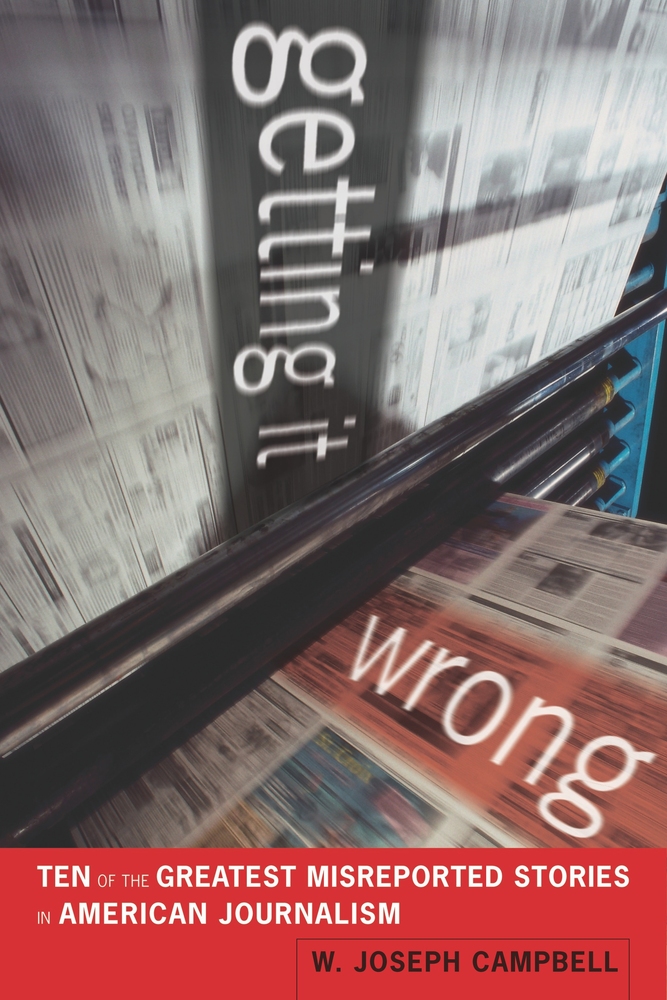
Bra-burning” also lives on as a cliché — “convenient shorthand,” as I write in my mythbusting book, Getting It Wrong, “for describing the upheaval” of the 1960s and 1970s.

The term sometimes is invoked quite casually, as in “the era of bra-burning,” the “hysteria of bra-burning,” and “the bra-burning days of the turbulent 1960s.”

A commentary the other day in the Detroit Free Press offered up “those bra-burning times” in characterizing the 1970s.

The commentary’s author, the Free Press business and autos editor, recalled that in the 1970s, her mother had given her a book titled Women Who Dared to be Different.

“It certainly was a book for those bra-burning times,” she wrote, “and it told the stories of women who pioneered in professions once reserved for men.”

Of particular interest to Media Myth Alert is the casual reference to “those bra-burning times.”

“Bra-burning” may be an enduring turn of phrase. But the act of “bra-burning” neither defined nor figured prominently in feminist protests of the 1970s. Or of the 1960s.

There was hardly any bra-burning back in the day. Or at any time since.

I offer in Getting It Wrong evidence that bras were set afire, briefly, at the famous women’s liberation protest in 1968 against the Miss America pageant at Atlantic City, New Jersey.

The evidence comes from two witness accounts — one of them published in the local newspaper, the Press of Atlantic City, on September 8, 1968, the day after the protest.

That account appeared beneath the byline of a veteran reporter named John L. Boucher and carried the headline:

“Bra-burners blitz boardwalk.”

Boucher’s article referred to the burn barrel that demonstrators had dubbed the “Freedom Trash Can” and stated:

“As the bras, girdles, falsies, curlers, and copies of popular women’s magazines burned in the ‘Freedom Trash Can,’ the demonstration reached the pinnacle of ridicule when the participants paraded a small lamb wearing a gold banner worded ‘Miss America.’”

Boucher’s account, as I note in Getting It Wrong, “did not elaborate about the fire and the articles burning in the Freedom Trash Can, nor did it suggest the fire was all that important. Rather, the article conveyed a sense of astonishment that an event such as the women’s liberation protest could take place near the venue of the pageant.”

That account was buttressed by the recollections of Jon Katz, a prolific writer who in 1968 was a young reporter for the Atlantic City Press.

He was on the boardwalk the day of the protest, gathering material for a sidebar article about reactions to the demonstration.

Katz’s article did not mention the burning bras. But in correspondence with me, Katz has stated:

“I quite clearly remember the ‘Freedom Trash Can,’ and also remember some protestors putting their bras into it along with other articles of clothing, and some Pageant brochures, and setting the can on fire. I am quite certain of this.”

He added: “I recall and remember noting at the time that the fire was small, and quickly was extinguished, and didn’t pose a credible threat to the Boardwalk. I noted this as a reporter in case a fire did erupt ….”

Boucher’s long-overlooked article and Katz’s more recent recollections represent strong evidence that “bras and other items were set afire, if briefly, at the 1968 Miss America protest in Atlantic City,” I write in Getting It Wrong. “This evidence cannot be taken lightly, dismissed or ignored.

“But it must be said as well,” I add, “that the witness accounts of Boucher and Katz lend no support to the far more vivid and popular imagery that many bras went up in flames in flamboyant protest that September day.”

Bra-burning did figure, flamboyantly, at a women’s protest in Toronto in March 1979.

But as I discussed in a recent post at Media Myth Alert, bra-burning wasn’t that demonstration’s focal point. Setting fire to a bra was a way for the media-savvy protesters to call attention to their grievances — specifically, a controversial police report about rape.

Otherwise, the evidence is scant at best of feminist protesters in the 1960s and 1970s setting fire to bras and tossing the flaming undergarments into spectacular bonfires.

WJC

Recent and related:

‘Furnish the war’ finds a place in sports

In 1897, Debunking, Furnish the war, Media myths, Newspapers, Spanish-American War, Yellow Journalism on February 28, 2011 at 8:13 am

Hearst: Didn't say it

William Randolph Hearst’s famous vow to “furnish the war” with Spain is one of American journalism’s most enduring myths. It’s a stunningly hardy though dubious tale that has been deployed in discussing journalistic sins and shortcomings of all sorts.

As I write in my myth-debunking book Getting It Wrong, the Hearstian vow “has been invoked to illustrate the media’s willingness to compromise impartiality, promote political agendas, and indulge in sensationalism.

“It has been used, more broadly, to suggest the media’s capacity to inject malign influence into international affairs.”

It even has application in news about collegiate sports.

An online sports-news site, Bleacher Report, turned to “furnish the war” in a commentary posted yesterday about the whiff of scandal around Auburn University’s championship football program.

Hearst’s reputed vow was a way to set up the commentary, which defended the program from what it called “the incessant beating of the investigation drum by Auburn detractors” suspicious of player-recruitment violations.

Of interest to Media Myth Alert is the commentary’s total buy-in of the Hearst anecdote, which, as evidence offered in Getting It Wrong clearly shows, is counterfeit, a discredited media myth.

The Bleacher Report commentary declared:

“When photographer Frederic Remington was dispatched to Cuba in the late 1800s to document a war and found none, he sent a message to publisher William Randolph Hearst: ‘There is no war.’

“Hearst allegedly responded: ‘Please remain. You furnish the pictures and I’ll furnish the war.’

“In the ensuing months Hearst’s newspaper fanned the flames with sensationalized front page articles that were of dubious accuracy and in many cases patently false. His articles stirred passions among a readership that neither knew nor cared if the reports were accurate. His relentless attacks eventually helped push U.S. administration into declaring war on Spain.  Hearst got his war.

“Since October, the Auburn football program has endured a similar smear campaign. …”

Reasons for doubting that Hearst ever made such a vow are many, and include the anecdote’s breathtaking illogic.

War was the reason Hearst, owner of the flamboyant New York Journal, sent Remington (an artist, not a “photographer”) to Cuba in the first place. That war was the Cuban rebellion against Spain’s colonial rule, which began in February 1895.

Remington

Remington was in Cuba briefly in January 1897.

By that time, I note in Getting It Wrong, newspaper readers “would have been well aware that Cuba was a theater of a nasty war. By then, the Cuban rebellion had reached island-wide proportion and not a single province had been pacified by Spain’s armed forces.”

It would have made no sense for Hearst to vow to “furnish the war.”

In addition, Hearst denied having made such a statement. Remington, apparently, never discussed it. And the telegrams bearing the content of the purported Remington-Hearst exchange have never surfaced.

Moreover, as I point out in Getting It Wrong, “there was no chance” that the telegrams “would have flowed freely between Remington in Havana and Hearst in New York.

“Spanish control of the cable traffic in Havana was too vigilant and severe to have allowed such an exchange to have gone unnoticed and unremarked upon,” I write, adding:

“A vow such as Hearst’s to ‘furnish the war‘ surely would have been intercepted and publicized by Spanish authorities as a clear-cut example of Yankee meddling in Cuba.”

Like many media myths, the tale of the Hearstian vow is accessible, pithy, and easily recalled. It supposedly illuminates larger lessons about the news media — in this case, the media’s malign potential to bring about a war the country otherwise wouldn’t have fought.

Which is nonsense, and historically inaccurate.

The Spanish-American War of 1898 was hardly a matter of Hearst’s having “got his war.” Rather, the conflict was the consequence of an intractable, three-sided standoff.

Cuba’s rebels would settle for nothing short of political independence. Spain refused to grant self-rule to the most important remnant of its once-sprawling American empire. And the United States, for economic and humanitarian reasons, could no longer tolerate an inconclusive war just 90 miles from its shores.

Simply put, Hearst and newspaper content were non-factors in the decision to go to war.

WJC

Recent and related:

WaPo on ‘historically faulty’ films: Ignoring ATPM

In Cinematic treatments, Debunking, Newspapers, Reviews, Washington Post, Watergate myth on February 27, 2011 at 8:26 am

(Oscars.org)

Today’s Washington Post offers an insightful commentary about movies that won best-picture Oscars despite having taken liberties with historical truth.

The commentary notes that this year’s favorite for best picture, The King’s Speech, “won’t win any awards for historical accuracy.

“King George VI didn’t really stammer that badly, we’ve been told. Critics have also pointed out that Winston Churchill didn’t actually think it necessary for the king’s brother, Edward VIII, to abdicate the throne before marrying a divorced woman. We’ve also learned that Churchill was not nearly as fat as Timothy Spall portrays him … and that King George was far too plain and short to be played by the tall, handsome Colin Firth.”

What’s more, the Post notes:

“The Oscar voters have often favored historically faulty movies, with the inaccuracies ranging from minor details to outright fiction. In ‘Patton,’ 1970’s Best Picture, Axis and Allied powers fought each other in the same kind of tanks — American ones, manufactured after the war. ‘Braveheart’ in 1995 put Mel Gibson in a kilt, even though his character, William Wallace, was a lowland Scot (and only highlanders wore kilts).”

Good stuff.

Surely it’s not churlish to call out the Post for failing to include All the President’s Men in the discussion about historical inaccuracy in movie-making — even if All the President’s Men (or ATPM) didn’t win the best picture Oscar for the year in which it was released.

Rocky did.

All the President’s Men of course was a 1976 film about the Washington Post and its Watergate investigation, starring those dogged reporters, Bob Woodward and Carl Bernstein. It won four Oscars, including best supporting actor, for Jason Robards’ role as the Post executive editor, Ben Bradlee.

The movie — which was based on Woodward and Bernstein’s 1974 book by the same title — distorted, stretched, and otherwise toyed with historical accuracy in several ways, namely:

  • It embraced and solidified the mythical heroic-journalist interpretation of Watergate.
  • It minimized, even denigrated, the decisive contributions of investigative agencies in unraveling the crimes of Watergate.
  • It depicted Woodward and Bernstein as facing dangers far greater than they really encountered.
  • It introduced into the vernacular the made-up line, “follow the money,” which many people believe was advice crucial to uncovering the scandal.

Let’s examine those points in turn.

As I discuss in my latest book, Getting It Wrong, the cinematic version of All the President’s Men promoted the misleading interpretation that Woodward and Bernstein’s reporting was decisive in uncovering the crimes of Watergate and forcing the resignation of President Richard Nixon.

I write in Getting It Wrong:

All the President’s Men allows no other interpretation: It was the work Woodward and Bernstein that set in motion far-reaching effects that brought about the first-ever resignation of a U.S. president.”

I also note:

“To an extent far greater than the book, the cinematic version of All the President’s Men placed Woodward and Bernstein at the center of Watergate’s unraveling while denigrating the efforts of investigative agencies such as the FBI. The effect was to solidify and elevate the heroic-journalist myth, giving it dramatic power, and sustaining it in the collective memory.”

To roll up a scandal of the dimensions of Watergate, I point out in Getting It Wrong, “required the collective if not always the coordinated forces of special prosecutors, federal judges, both houses of Congress, the Supreme Court, as well as the Justice Department and the FBI.

“Even then,” I add, “Nixon likely would have served out his term if not for the audiotape recordings he secretly made of most conversations in the Oval Office of the White House. Only when compelled by the Supreme Court did Nixon surrender those recordings, which captured him” plotting to cover up the signal crime of Watergate — the 1972 break-in at headquarters of the Democratic National Committee.

The cinematic version of All the President’s Men includes few references to subpoena-wielding agencies and congressional panels that broke open the scandal.

In addition, the movie excessively dramatizes the risks and hazards to which Woodward and Bernstein were exposed in their Watergate reporting.

In a  scene near the close of the movie, Woodward’s shadowy, high-level source “Deep Throat” — superbly played by Hal Holbrook — says the reporters’ “lives are in danger.”

The warning, which injected drama into the movie’s sometimes-leaden pacing, also was mentioned in All the President’s Men the book.

But it was fairly quickly recognized to have been a false alarm.

For a while, Woodward, Bernstein, and senior Post editors took precautions to avoid what they suspected was electronic surveillance. But as Woodward recounted in his book The Secret Man, such measures “soon seemed melodramatic and unnecessary.

“We never found any evidence that our phones were tapped or that anyone’s life was in danger,” Woodward added.

The Holbrook/”Deep Throat” character in All the President’s Men pressed into the vernacular what may be Watergate’s most famous line — “follow the money.”

The line does not appear in Woodward and Bernstein’s book. Nor was it spoken in real life by the stealthy “Deep Throat,” whose identity was kept secret for more than 30 years. (In 2005, the former second-ranking official at the FBI, W. Mark Felt, disclosed that he had been Woodward’s high-level source.)

“Follow the money” was worked into the script of All the President’s Men by the screenwriter, William Goldman.

The Holbrook/”Deep Throat” character delivered the line  with such quiet authority that it’s not difficult to understand how “follow the money” crossed from the silver  screen to the vernacular, how the phrase has been widely embraced not only as plausible but understood as guidance that had been invaluable.

As I’ve noted, however, Watergate was far more complex than a matter of identifying, pursuing, and describing a money trail.

The best cinematic antidote to All the President’s Men has to be the 1999 spoof Dick, which includes an amusing if over-the-top skewering of Woodward and Bernstein as klutzy, antagonistic, and ultimately very lucky.

Dick the movie won no Oscars. But it’s great fun, and deserves to be seen more widely than it was in 1999.

WJC

Recent and related:

Meaning what, ‘all the bra-burning’?

In Bra-burning, Debunking, Media myths, Photographs on February 21, 2011 at 8:11 am

Toronto, 1979 (Bettmann/Corbis)

Bra-burning used to commonplace in America, suggested a columnist in yesterday’s Boston Globe.

The column, which deplored the sexualization of American young women, contained this passage:

“American women stood up for their rights 50 years ago. The sexual revolution, too often blamed for what’s wrong with America today, wasn’t only about sexual liberation. It was about equality. We are more than our bodies is what all the bra-burning meant.”

What a minute: “…all the bra-burning”?

Meaning what? There was hardly any bra-burning in America. Ever.

Bra-burning wasn’t, and hasn’t been, a tactic of feminist protests, save for an episode — discussed in my latest book, Getting It Wrong — of what might best be called “bra-smoldering” at Atlantic City, New Jersey, in September 1968.

Getting It Wrong offers evidence that bras were burned, briefly, at a women’s liberation protest of the 1968 Miss America pageant at Atlantic City — but it was no demonstrative display, nothing, I write, akin to the “vivid and popular imagery that many bras went up in flames in flamboyant protest that September day.”

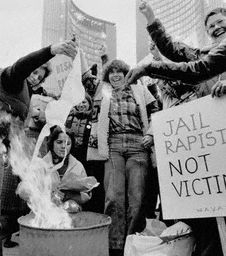
Bra-burning did figure, flamboyantly, at a women’s protest in Toronto in March 1979 (see photo, above).

But as I discussed in a recent post at Media Myth Alert, bra-burning wasn’t a focal point of that demonstration; rather, setting fire to a bra served as a way for media-savvy protesters to call attention to their grievances — specifically, a police report about rape.

Getting It Wrong discusses two other bra-burning episodes.

One was a failed attempted to set fire to a bra at Ohio State in 1999, to protest a cartoon in the student newspaper that poked fun at the university’s women’s studies program.

The other was a bizarre and gratuitous gesture on the Tyra Banks television show in 2008.

“Banks took members of her studio audience into the chill of a winter’s afternoon in New York for a made-for-television stunt about what women could do with ill-fitting brassieres,” I write in Getting It Wrong, adding:

“Banks wore an unzipped gray sweatshirt that revealed a powder-blue sports bra. Most of the other women were clad above the waist only in brassieres. They clutched other bras as they stood before a burn barrel from which flames leapt hungrily. On Banks’ word, the women tossed the bras in their hands into the fire.”

The Boston Globe columnist’s blithe and imprecise reference to bra-burning in a way evokes the role of columnists in the diffusion of the term.

As I write in Getting It Wrong, two columnists had a lot to do with the entry of “bra-burning” into the vernacular.

One was Harriet Van Horne, who wrote, sneeringly, in the New York Post two days after the demonstration at Atlantic City in 1968 that the protesters had screamed in “delight [as] they consigned to the flames such shackling, demeaning items as girdles, bras, high-heeled slippers, hair curlers and false eyelashes.”

Van Horne wasn’t at the protest. Even so, her highly imaginative characterization was taken up a few days later by Art Buchwald, then the leading humor columnist in American journalism.

Buchwald wrote with tongue in check how he had been “flabbergasted to read that about 100 women had picketed the Miss America pageant in Atlantic City against ‘ludicrous beauty standards that had enslaved the American woman.’”

He added: “The final and most tragic part of the protest took place when several of the women publicly burned their brassieres.”

As I point out in Getting It Wrong, Buchwald’s nationally syndicated column about the Atlantic City protest helped introduce the erroneous notion of flamboyant bra-burning to a national audience.

WJC

Recent and related:

Bra-burning in Toronto: Confirmed

In Bay of Pigs, Bra-burning, Debunking, Media myths, Photographs on February 19, 2011 at 12:12 am

It happened, and the photo’s no hoax.

The bra-burning episode pictured at left took place near Toronto city hall on March 8, 1979.

One of the participants, speaking by phone from Vancouver, confirmed the incident, saying, “The photo is authentic. Absolutely. It happened.”

The participant was Vicki Trerise, who is shown at the far right in the photograph, a larger version of which is accessible here.

I had not seen the photograph until February 6; it was posted that day with an article at the London Guardian online site.

I had had doubts about its authenticity.

Given periodic claims that no bras ever were burned at a feminist protest, the image, I suspected, may have been unethically altered.

Not only that, but the photograph seemed almost too good to be true, what with the white bra dangling above lapping flames of the burn barrel.

Trerise, though, assured me the photograph was legitimate. And her confirmation effectively represents a challenge to claims that feminist bra-burning is a media myth.

It happened in Toronto. The photograph shows a moment of demonstrative bra-burning, even though it “wasn’t a focal point” of the protest, Trerise said.

The bra-burning took place near the end of the demonstration, during which the group Women Against Violence Against Women protested what it termed was an illogical report prepared by the Ontario Provincial Police about rape.

Trerise said the demonstrators were media-savvy and “knew that if they burned a bra, someone would take their picture.”

By 1979, “bra-burning” had become part of the vernacular in North America, a dismissive term often invoked “to denigrate women’s liberation and feminist advocacy as trivial and even a bit primitive,” as I note in my latest book, Getting It Wrong.

“Invoking ‘bra-burning,'” I write, “was a convenient means of brushing aside the issues and challenges raised by women’s liberation and discrediting the fledgling movement as shallow and without serious grievance.”

The term emerged in the aftermath of a women’s liberation demonstration outside the Miss America pageant in September 1968 at Atlantic City, New Jersey.

Protest leaders have long insisted that nothing was burned at Atlantic City. However, I present evidence in Getting It Wrong that bras were set afire, briefly, during the demonstration on that long ago September day.

But I acknowledge that the evidence of bra-burning at Atlantic City doesn’t correspond to the “widely held image of angry feminists demonstratively setting fire to their bras and tossing the flaming undergarments into a spectacular bonfire.”

The demonstrators in Toronto in 1979 hardly looked angry; but they were flamboyant.

Trerise said the bra-burning that day “was a bit of a reverse spoof,” a parody of media claims that burning bras was commonplace at feminist protests in the late 1960s and 1970s. “It was like a joke,” she said, and “it wasn’t planned.”

She also said the demonstrators “all had been involved in street activism for many years.”

Dangling the bra above the burn barrel was Pat Murphy, who died in 2003. In the center of the photograph with her right arm upraised was Adrienne Potts.

Murphy and Potts were two members of the so-called “Brunswick Four” — lesbians arrested in 1974, following an episode at a tavern in Toronto where they sang a parody of “I Enjoy Being a Girl.” For “girl,” they had substituted “dyke.”

WJC

Many thanks to FiveFeetofFury for linking to this post

Recent and related:

A history lesson not to miss? No, but it is entertaining

In Anniversaries, Cinematic treatments, Debunking, Media myths, Reviews, Washington Post, Watergate myth on February 18, 2011 at 9:14 am

The Blu-ray edition of the most-watched movie about Watergate, All the President’s Men, is out, and its release has been received with favorable-to-glowing reviews.

One writeup, posted the other day at HamptonRoads.com went so far as to declare: “This history lesson shouldn’t be missed — especially if you’re an aspiring journalist.”

Well, that’s disputable.

All the President’s Men is entertaining and has help up impressively well in the 35 years since its release. The movie purports to recount tell the ingenuity and persistence of Washington Post reporters Bob Woodward and Carl Bernstein in investigating the scandal that ultimately brought down Richard Nixon’s corrupt presidency.

Trouble is, All the President’s Men — which is based on Woodward and Bernstein’s 1974 book of the same title — offers up an entirely misleading view of history.

It unabashedly advances what I call “the heroic-journalist interpretation of Watergate” — the endlessly appealing notion that it Woodward and Bernstein’s dogged work that exposed the crimes of Watergate and forced Nixon to resign.

And that’s a trope that knows few bounds.

The heroic-journalist interpretation of Watergate, as I write in my latest book, Getting It Wrong, serves “to abridge and misunderstand the scandal and to indulge in a particularly beguiling media-driven myth. The heroic-journalist interpretation minimizes the far more decisive forces that unraveled the scandal” and brought about  Nixon’s resignation in August 1974.

Watergate also led to the conviction and imprisonment of nearly 20 men associated with his presidency or his 1972 reelection campaign.

To roll up a scandal of such dimension, I write in Getting It Wrong, “required the collective if not always the coordinated forces of special prosecutors, federal judges, both houses of Congress, the Supreme Court, as well as the Justice Department and the FBI.

“Even then,” I add, “Nixon likely would have served out his term if not for the audiotape recordings he secretly made of most conversations in the Oval Office of the White House.”

Only when ordered by an 8-0 decision of the U.S. Supreme Court did Nixon surrender the audiotape recordings, which revealed his efforts to obstruct justice in the early days of the federal investigation into Watergate.

The cinematic version of All the President’s Men glosses over, ignores, or even denigrates the contributions of federal investigative agencies. It makes little or no mention of special Watergate prosecutors or of the bipartisan Senate select committee on Watergate or of the pivotal Supreme Court decision.

Not only that, but as I write in Getting It Wrong, All the President’s Men the movie suggests that the reporting of Woodward and Bernstein “was more hazardous than it was, that by digging into Watergate, Woodward and Bernstein exposed themselves to not insignificant risk and peril.”

As Woodward said in 1997, in an online chat at washingtonpost.com, “there is no evidence that anyone involved in the Nixon operation was going to threaten us.”

Because the cinematic version of All the President’s Men inaccurately places Woodward and Bernstein at the center of Watergate’s unraveling, because it minimizes the far more decisive efforts of subpoena-wielding investigative agencies, the movie really can’t be called a “history lesson” not to be missed.

It elevates and solidifies the heroic-journalist myth of Watergate. That makes for good entertainment — and for very deceptive history.

WJC

Recent and related:

Suspect Murrow quote pulled at Murrow school

In Debunking, Furnish the war, Media myths, Murrow-McCarthy myth on February 17, 2011 at 7:37 am

Did he say it?

I’ve written occasionally at Media Myth Alert about a suspect quotation attributed to broadcasting legend Edward R. Murrow.

Here’s the quotation:

“We must not confuse dissent with disloyalty. When the loyal opposition dies, I think the soul of America dies with it.”

The quotation is half true. That is, the first part was indeed spoken by Murrow; the other part is just too good to be true.

I happened to find the full quotation posted at the welcome page of the dean of the Edward R. Murrow College of Communication at Washington State University.

By email, I asked the dean, Lawrence Pintak, what he could tell me about the quote’s provenance.

I noted in my email that the first portion  of the passage – “We must not confuse dissent with disloyalty” – was spoken by Murrow near the end of his 1954 See It Now program about the witch-hunting ways of Senator Joseph R. McCarthy.

“But the rest of quotation – ‘When the loyal opposition dies, I think the soul of America dies with it’ – was not spoken during that program,” I noted in my email. I added that “I’ve not been able to determine where and when it was spoken or written.”

I further noted that I had consulted a database of historical newspapers — a full-text repository that includes the New York Times, Washington Post, Chicago Tribune, and Los Angeles Times — but no articles quoting the “loyal opposition” passage were returned.

I also mentioned in my email that a search of the LexisNexis database “produced a few returns, but none dated before 2001.” None of them state where and when Murrow made the purported comment.

Pintak, who became the first dean of the Murrow College in 2009, stated in reply that the online site had been constructed before his arrival at Washington State. He added:

“My suspicion is that the site was built by the university marketing comm. people and they may well have just pulled it from the web, rather than original source. If it’s not correct, we certainly need to get it pulled.”

He referred my inquiry to an instructor on his faculty, Paul Mark Wadleigh, whom he asked to investigate.

A few hours later, Wadleigh sent an email to the dean and me, stating:

“While it seems to reflect the Murrow spirit, the lack of evidence that he phrased it that way is indeed suspicious.”

Wadleigh also wrote that the transcript of Murrow’s closing comments in the 1954 show about McCarthy “reveals a different language and tone than the ‘loyal opposition’ quote.”

Good point.

His bottom line?

“I feel the evidence says no, Murrow did not say this,” Wadleigh wrote.

By the end of the day, the suspect quote had been pulled from the dean’s welcome page. Just the authentic portion — “We must not confuse dissent with disloyalty” — remains posted there.

The College’s move to pull the quote not only was commendable; it stands as further evidence that the “loyal opposition” line attributed to Murrow is dubious. It may have been made up well after Murrow’s death in 1965, perhaps to score points politically.

I’ve noted that if it were genuine, if Murrow had uttered the line, then its derivation shouldn’t be too difficult to determine.

Moreover, the quotation seems too neat and tidy to be authentic — which can be a marker of a media-driven myth.

As I write in my mythbusting book, Getting It Wrong:

“To thwart media myths, journalists can start by applying a measure of skepticism to pithy, telling quotes such as [William Randolph] Hearst’s vow to ‘furnish the war‘ and even to euphonic phrases such as ‘bra burning.’

“Turns of phrase that sound too neat and tidy,” I write, “often are too perfect to be true.”

WJC

Recent and related:

Is this bra-burning photo authentic?

In Bra-burning, Media myths, Newspapers, Photographs on February 15, 2011 at 8:21 am

Bra-burning in Toronto, 1979 (Bettmann/Corbis)

It is claimed from time to time that burning bras figured in no feminist protest of the late 1960s and 1970s. Bra-burning, it is sometimes said, was little more than a media-concocted myth.

But this photograph, taken near Toronto city hall in March 1979, suggests otherwise. (A larger version of the image is available here.)

Update: The photo is genuine.

The occasion was International Women’s Day and the demonstrators were protesting the contents of a controversial Ontario Provincial Police report about rape.

But why would protesters incensed about a police report burn bras? The connection seems elusive.

And that’s one reason why I wonder about the photo’s authenticity, whether it was improperly edited. I’m not saying it’s a hoax or a ruse; I’m saying I have reservations.

I’ve conducted a good deal of research about feminist bra-burning; my latest book, Getting It Wrong, offers evidence that — assertions to the contrary notwithstanding — bras were burned, briefly, at the famous women’s liberation protest in September 1968 against the Miss America pageant at Atlantic City.

That evidence “cannot be taken lightly, dismissed or ignored,” I write in Getting It Wrong, which debunks 10 prominent media-driven myths — those dubious stories about the news media that masquerade as factual.

I also acknowledge that the evidence of bra-burning at Atlantic City doesn’t corroborate the “widely held image of angry feminists demonstratively setting fire to their bras and tossing the flaming undergarments into a spectacular bonfire.”

I saw the image of bra-burning in Toronto for the first time last week, accompanying an article posted February 6 at the online site of the London Guardian. The image was credited to the Bettmann/Corbis photo archive.

The archive’s online record says the bra-burning photograph was taken in Toronto on March 8, 1979. Information about the photographer and place of publication are not available, however.

Corbis notes that it licenses photographs for sale; it doesn’t vouch for their authenticity.

The image of the Toronto protest certainly seems to pose a further challenge to claims that feminist bra-burning is a media myth. While the demonstrators in the photograph hardly look angry, their protest certainly seems flamboyant, what with flames leaping hungrily from the burn barrel.

The photograph suggests a vivid moment of demonstrative bra-burning.

But, then, maybe those flames are lapping a bit too hungrily at the dangling white bra.

Why hasn’t that bra yet caught fire?

And wouldn’t it have been more logical and emphatic to drop a copy of the controversial police report into the flaming burn barrel?

Interestingly, the leading Toronto newspapers of the time did not mention the bra-burning episode in their reports about the protest.

The Toronto Star of March 9, 1979, said that the demonstrators were outraged by the provincial police report, which had identified hitchhiking, alcohol consumption, and drug use as factors in many rapes.

“The [protesting] women lit sparklers and set a garbage can on fire as they booed the report’s findings,” the report in the Star said, identifying the demonstrators as members of Women Against Violence Against Women.

Lighted sparklers held aloft can be seen in the photograph; the placard shown in the image bears the acronym of Women Against Violence Against Women.

The report in Toronto’s Globe and Mail newspaper was more detailed — but likewise made no mention of the burning bra.

The Globe and Mail said the protest was “boisterous” and aimed at the police report, which the demonstrators dismissed as “‘dazzling in its illogic.'”

The newspaper also reported:

“The women carried signs saying: ‘Take a Rapist to Lunch — Charcoal Broiled’ and ‘Hookers Who Wink Go to the Clink! Men Who Rape Escape.’

“The women, after lighting a fire in a garbage can, to the obvious annoyance of about a dozen watchful constables, shouted: ‘Burn the rapists, burn the city, burn the OPP,” the acronym for Ontario Provincial Police.

The newspaper added: “The women charged that the OPP report was nothing less than state approval of rape and that no serious study of rape had even been done by the Government.

“The women then sang a surprisingly obscene song describing male domination of women and marched off, chanting anti-male slogans ….”

I spoke by phone the other day with Susan G. Cole, who was a member of Women Against Violence Against Women and who said she was at the protest in March 1979.

But Cole said she does not recall the bra-burning.

I shared with her a link to image posted at the Guardian site; Cole said she is not in the photograph but added that she recognized as prominent activists the women shown in the image. “We were so bright and energetic in those days,” Cole said, a bit wistfully.

Women Against Violence Against Women, Cole also said, was theatrical and very creative in its protests, adding that she is “not surprised that these guys were burning bras.”

She suggested that the Toronto demonstrators may have thought that if bras had not been flamboyantly set afire at Atlantic City in 1968, then “let’s do it now.”

I’ve tried without success to reach two of the women in the photograph. One is a lawyer in British Columbia, the other an activist in Toronto.

In the final analysis, if the image is authentic, then it represents impressive evidence of demonstrative bra-burning at a feminist protest in the 1970s. If it’s not, then it’s a well-done photo hoax, a composite that deserves unmasking.

WJC

Many thanks to FiveFeetofFury for linking to this post

Recent and related:

Keller no keeper of the flame on famous NYT motto

In 1897, Anniversaries, Debunking, New York Times, Newspapers, Year studies, Yellow Journalism on February 11, 2011 at 8:56 am

Keller

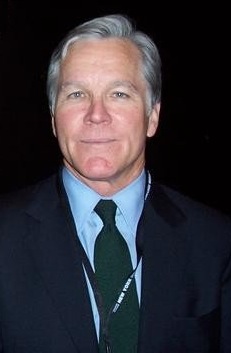
Bill Keller, executive editor of the New York Times, made clear the other day he doesn’t fully understand the derivation and significance of his newspaper’s famous, 114-year-old motto, “All the News That’s Fit to Print.”

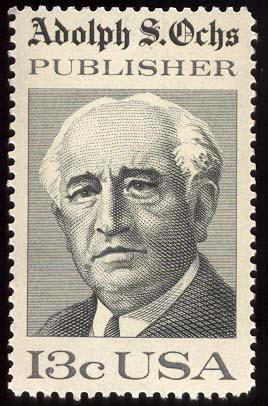
And he didn’t seem particularly comfortable with the slogan coined (most likely) by Adolph Ochs, who in 1896 acquired the then-beleaguered Times and eventually led the newspaper to preeminence in American journalism.

Ochs, commemorated

Sure, the motto’s smug and overweening, elliptical and easily parodied. But it is the most recognizable motto in American journalism, and it evokes a time now passed when slogans helped define and distinguish U.S. newspapers.

In an appearance not long ago at the National Press Club in Washington, Keller was asked about “All the News That’s Fit to Print,” which took a permanent place of prominence on the newspaper’s front page on February 10, 1897.

Keller rather sniffed at it, saying the motto “harkens back to a day when the aim of the newspaper was to be comprehensive.”

According to a transcript of his remarks, Keller said that nowadays the Times is “going to tell you maybe only a little bit, but a little bit about everything.

“And I think that slogan describes an aspiration, or a mindset. Now we tend to be more selective, and try to give you more depth, to tell you the stories that are not obvious.”

Actually, “All the News That’s Fit to Print” was framed a riposte to activist-oritented yellow journalism that flared in New York City in the closing years of the 19th century.

Ochs clearly meant the slogan to be a rebuke to the flamboyant ways of the  New York Journal of William Randolph Hearst and the New York World of Joseph Pulitzer. Their newspapers were the leading exemplars of the yellow press in fin-de-siècle urban America.

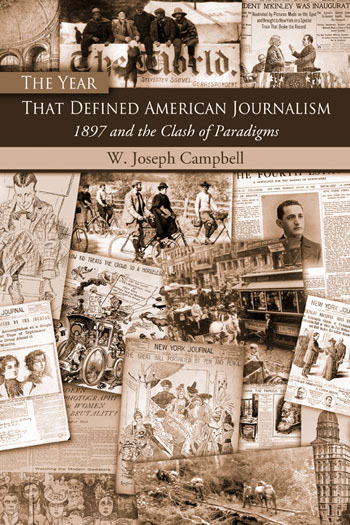
As I wrote in my 2006 book, a year study titled The Year That Defined American Journalism: 1897 and the Clash of Paradigms, the motto was, and remains, a daily rejection of flamboyant, self-promoting journalism.

And as the Times pointed out in 1935 in its obituary about Ochs, the motto “has been much criticized, but the criticisms deal usually with the phraseology rather than with its practical interpretation, and the phraseology was simply an emphatic announcement that The Times was not and would not be what the nineties called a yellow newspaper.”

I further noted in The Year That Defined American Journalism that the Times, at its 50th anniversary in 1901, “referred to ‘All the News That’s Fit to Print’ as its ‘covenant.’ One-hundred years later, a columnist for the Wall Street Journal aptly identified the motto as the ‘leitmotif not merely for the Times, but also, by a process of osmosis and emulation, for most other general-interest papers in the country, as well as for much of the broadcast media.'”

So, no, the motto wasn’t an assertion of intent to be comprehensive — although the Times surely carried a lot of news in the late 1890s. Thirty or more articles, many of them a paragraph or two in length, usually found places on its front page back then.

Ochs’ slogan was more than a daily slap at yellow journalism.

It also represents “a daily and lasting reminder of the Times’ triumph in a momentous … clash of paradigms that took shape in 1897—a clash that helped define the modern contours of American journalism,” as I noted in The Year That Defined American Journalism.

That clash pitted three rival, incompatible models for the future of American journalism.

“As suggested by its slogan,” I wrote, “the Times offered a detached, impartial, fact-based model that embraced the innovative technologies emergent in the late nineteenth century but eschewed extravagance, prurience, and flamboyance in presenting the news.

“Extravagance, prurience, and flamboyance were features typically associated with yellow journalism, a robust genre which, despite its controversial and self-indulgent ways, seemed to be irresistibly popular in 1897. The leading exemplar of yellow journalism was … Hearst’s New York Journal, which in 1897 claimed to have developed a new kind of journalism, a paradigm infused by a self-activating ethos that sidestepped the inertia of government to ‘get things done.’

“The Journal called its model the ‘journalism of action’ or the ‘journalism that acts,’ and declared it represented ‘the final state in the evolution of the modern newspaper.’

“The third rival paradigm,” I wrote, “was more modest and idiosyncratic than those of the Times and Journal. If improbable, it was nonetheless an imaginative response to the trends of commercialization in journalism. The paradigm was an anti-journalistic literary model devised and promoted by J. Lincoln Steffens, who in late 1897 became city editor of the New York Commercial Advertiser, then New York’s oldest newspaper.”

That model, Steffens said, was predicated on the notion “that anything that interested any of us would interest our readers and, therefore, would be news if reported interestingly.”

The Times ultimately prevailed in the three-sided rivalry that emerged in 1897, and “All the News That’s Fit to Print” lives on as a reminder of the outcome of that momentous clash of paradigms.

WJC

Recent and related:

‘Follow the money’: Why the made-up Watergate line endures

In Cinematic treatments, Debunking, Furnish the war, Media myths, Washington Post, Watergate myth on February 8, 2011 at 10:32 am

Watergate’s most famous made-up line — “follow the money” — is impressively versatile and doggedly persistent, some 35 years after it was written into a screenplay.

Mark Felt, 'Deep Throat' source

It’s a phrase that has resonance internationally. It’s made its way onto the sports pages and into publications on topics as diverse as secondary education and systems analysis.

And yesterday, the CBS business news site BNET invoked the passage in a post discussing a recent report of the Financial Crisis Inquiry Commission.

The reference to “follow the money” appeared at the end of BNET, as if it were an attempt at a witty ending:

“As Deep Throat said about the Watergate investigation, ‘follow the money.'”

But “follow the money” is really more clichéd than witty.

More important, it was a line not spoken by the stealthy “Deep Throat” source (see photo, above) of the Washington Post during its investigation of the Watergate scandal. The passage never appeared in the newspaper’s Watergate-related coverage.

No, it wasn’t the “Deep Throat” newspaper source who uttered “follow the money.” It was the actor Hal Holbrook, who played “Deep Throat” in the motion picture, All the President’s Men. The movie was based on Bob Woodward and Carl Bernstein’s book about their Watergate reporting for the Post.

Screenwriter William Goldman has taken credit for writing “follow the  money” into the script of All the President’s Men, which came out in 1976, less than two years after Watergate reached a climax with the resignation of President Richard Nixon.

Since 1976, millions of people have repeated the line, oblivious to its derivation and unaware of its falsity.

So why does this made-up line persist? Why is “follow the money” so appealing and versatile?

Like many media myths, “follow the money” is pithy, accessible, and easy-to-remember.

As I write in my latest book, Getting It Wrong, “Turns of phrase that sound too neat and tidy often are too perfect to be true.” William Randolph Hearst’s pithy vow to “furnish the war” with Spain is a particularly telling example.

There are, of course, other explanations for the persistent popularity of “follow the money.” It is, after all, a supposedly famous piece of advice — advice presumably crucial in unraveling Watergate.

The line suggests that rolling up the scandal was accomplished by identifying, pursuing, and reporting on an illicit money trail. Its purported centrality to understanding the Watergate scandal is an important reason why “follow the money” crossed smoothly from the silver screen to the vernacular and lives on.

But the Watergate scandal was more than a matter of a money trail. In the end, Nixon’s attempts to obstruct justice by covering up the break-in at headquarters Democratic national committee headquarters in 1972 brought down his presidency.

Moreover, “follow the money” is adaptable advice. It can be applied in many contexts. As Frances Miller wrote last year in the American Journal of Law and Medicine:

“Follow the money is a versatile phrase; the term can be used as an exhortation, designate a pathway, or denote a lifestyle choice. When it comes to health care, following the money is at least part of the sine qua non for anyone seeking to understand how this complex sector of the U.S. economy has arrived at its present sorry state.”

Similarly, “follow the money” has offered pertinent lessons in systems thinking, a broad-based approach to organizational assessment.

The journal Quality Progress invoked “Deep Throat” and “follow the money” in observing in 2004:

“What Deep Throat did, in effect, was lead Woodward, his colleague Carl Bernstein and the rest of us Watergate observers through an experiential workshop in systems thinking. The general instruction he gave the reporters to unravel the plot was, ‘Follow the money.’

“He assured them the money would connect the dots for them and eventually reveal the conspiracy’s entire ‘circulatory’ system. Identifying resources is one way to sketch in the outlines of some systems.”

That assessment was offered in the year before W. Mark Felt, formerly the second-ranking official at the FBI, identified himself as having been the “Deep Throat” of the Washington Post.

WJC

Recent and related: