 The Guardian, one of London’s top newspapers, bought into Watergate’s dominant myth yesterday in a flattering article about Carl Bernstein, who teamed with Bob Woodward to report the scandal for the Washington Post.
Referring to the resignation of President Richard Nixon in 1974 at the height of Watergate, the Guardian asserted that Bernstein and Woodward produced “a string of stories that brought down a president.”
That claim may be the dominant narrative of Watergate. But it’s simplistic, a media-centric misreading of history.
As I discuss in my latest book, Getting It Wrong, the heroic-journalist interpretation of Watergate — the notion that Bernstein and Woodward’s dogged reporting forced Nixon from office in disgrace — “minimizes the far more decisive forces that unraveled the scandal and forced Nixon from office.”
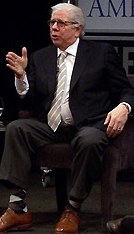
Bernstein: Didn't bring down Nixon
Those forces included special Watergate prosecutors, federal judges, bipartisan panels of both houses of Congress, the U.S. Supreme Court, as well as the Justice Department and the FBI.
To explain Watergate through the lens of the heroic-journalist interpretation, I write in Getting It Wrong, is to short-change and “misunderstand the scandal and to indulge in a particularly beguiling media-driven myth.”
The myth, though, is endlessly appealing – as the Guardian article suggested.
Interestingly, though, not even the Washington Post embraces the heroic-journalist trope.
For example, Michael Getler, then the newspaper’s ombudsman wrote in 2005:
“Ultimately, it was not The Post, but the FBI, a Congress acting in bipartisan fashion and the courts that brought down the Nixon administration. They saw Watergate and the attempt to cover it up as a vast abuse of power and attempted corruption of U.S. institutions.”
And Ben Bradlee, the Post’s executive editor during and after Watergate, said on the Meet the Press interview show in 1997:
[I]t must be remembered that Nixon got Nixon. The Post didn’t get Nixon.”
Even Woodward has dismissed the heroic-journalist interpretation, stating in an interview with American Journalism Review:
“To say the press brought down Nixon, that’s horse shit.”
What brought down Nixon’s presidency was evidence of his guilty role in the crimes of Watergate — evidence captured on audiotapes that he secretly made of his conversations at the White House.
The decisive evidence — known as the “Smoking Gun” tape — revealed that Nixon at a meeting with his top aide, H.R. Haldemann, on June 23, 1972, sought to deflect or derail the FBI investigation into the Watergate burglary.
Bernstein and Woodward didn’t reveal the contents of that tape, which Watergate prosecutors had subpoenaed and which Nixon refused to surrender until ordered by the U.S. Supreme Court to comply.
Nor did Bernstein and Woodward reveal the existence of Nixon’s taping system, which proved so crucial to Watergate’s outcome.
In All the President’s Men, their book about their Watergate reporting, Bernstein and Woodward said they had received a tip about the taping system a few days before its existence was made public in July 1973.
But according to the book, Bradlee, the executive editor, suggested not expending much energy pursuing the tip. And they didn’t.
Recent and related:
- Where do they get this stuff?
- Carl Bernstein, disingenuous
- WaPo ‘played pivotal role in Watergate’? Think again
- A trope that knows few bounds: The hero-journalist myth
- ‘Deep Throat’ garage marker errs about Watergate source disclosure
- Mythmaking in Moscow: Biden says WaPo brought down Nixon
- NYTimes flubs the correction
- ‘A debunker’s work is never done’
- ‘Getting It Wrong’ wins SPJ award for Research about Journalism










 Media Myth Alert