W. Joseph Campbell

Posts Tagged ‘Washington Post’

‘Sigue el dinero’: That made-up Watergate line gets around

In Cinematic treatments, Debunking, Media myths, Washington Post, Watergate myth on March 5, 2011 at 7:53 am

Follow the money” is pitch-perfect advice that’s found application in all sorts of contexts. It popped up the other day at  Spanish-language a blog in Castro’s Cuba , appearing as “sigue el dinero.”

And in Canada, the Globe and Mail newspaper invoked the phrase in a hockey story published yesterday.
Felt: Didn't say it

Without doubt, “follow the money” is the best-known line associated with the Washington Post and its reporting of the Watergate scandal.

Except that the Post never used the phrase in its articles or editorials about Watergate.

The passage was written into the script of All the President’s Men, the 1976 motion picture that dramatized the Watergate reporting of Post reporters Bob Woodward and Carl Bernstein.

“Follow the money” long ago crossed smoothly  from the silver screen to the vernacular — as suggested by the lead paragraph in an article posted the other day at the online site of an alternative newspaper in California. The lead declared:

“Watergate’s ‘Deep Throat,’ Mark Felt, advised investigative reporters Bob Woodward and Carl Bernstein to ‘follow the money’ to uncover the truth behind the Watergate scandal.”

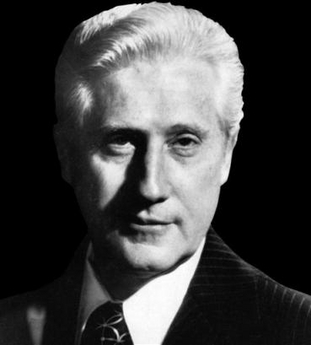
Felt was a top FBI official whose identity as the stealthy “Deep Throat” source was kept secret until 2005. Periodically in 1972 and 1973, he conferred secretly with Woodward about the unfolding Watergate scandal. They sometimes met late at night in an underground parking garage in the Rosslyn section of Arlington, Virginia, across the Potomac River from Washington.

Felt, though, never spoke with Bernstein during the Watergate investigation. He was strictly Woodward’s source.

And Felt never counseled Woodward to “follow the money.”

That was actor Hal Holbrook’s line, spoken in All the President’s Men, the movie.

Holbrook, who turned 85 not long ago, was terrific in All the President’s Men, playing “Deep Throat” as a torn, twitchy, sometimes-irritable source.

In The Secret Man, his 2005 book about Felt, Woodward wrote of Holbrook’s portrayal of “Deep Throat”:

“It was a powerful performance, capturing the authoritative and seasoned intensity, cynicism and gruffness of the man in the underground garage.”

But of course there was much more to Watergate than Holbrook’s cinematic advice; there was more to it than following the money to “uncover the truth behind the … scandal.”

As I note in Getting It Wrong, my mythbusting book that came out last year, some 20 men associated with the presidency or reelection campaign of Richard Nixon went to jail for crimes linked to Watergate.

Rolling up a scandal of such dimension, I write in Getting It Wrong, “required the collective if not always the coordinated forces of special prosecutors, federal judges, both houses of Congress, the Supreme Court, as well as the Justice Department and the FBI.

“Even then,” I add, “Nixon likely would have served out his [second] term if not for the audiotape recordings he secretly made of most conversations in the Oval Office of the White House. Only when compelled by the Supreme Court did Nixon surrender those recordings, which captured him plotting the cover-up and authorizing payments of thousands of dollars in hush money.”

Those disclosures forced Nixon’s resignation in August 1974.

It’s clear that advice such as “follow the money” would have taken Woodward and Bernstein only so far. It would not have unlocked “the truth” about Watergate. For even now, Watergate still has not offered up all its secrets.

For example, we still don’t know what was said between Nixon and his top aide, H.R. Haldemann, on June 20, 1972; their conversation at the White House was recorded, but the portion of the discussion about Watergate was deliberately erased.

The conversation came just three days after the breakin at Democratic National Committee headquarters, the signal crime of Watergate. The deliberate erasure left a sound gap of 18 1/2 minutes — a gap that audio experts for the National Archives were unable to restore.

Follow the money” would have been advice useless in ferreting out decisive elements of Watergate. The existence of Nixon’s Oval Office tapes, for example, was disclosed not by Woodward and Bernstein; it was revealed in testimony in July 1973 given to the Senate select committee on Watergate.

But for a line that would have offered little guidance had it been spoken during Watergate, “follow the money” sure gets around.

WJC

Recent and related:

Hat-tipping ‘On Language’

In Cinematic treatments, Debunking, Media myths, New York Times, Washington Post, Watergate myth on February 26, 2011 at 7:36 am

The New York Times yesterday announced it was ending “On Language,” a quirky and popular column that has appeared 32 years in its Sunday magazine.

For 30 years, it was the venue for the sometimes-obscure, sometimes-brilliant work of William Safire, a Pulitzer Prize-winning columnist who died in 2009.

Of the column’s passing, the incumbent writer of “On Language” stated that time had come  “to bid adieu, after some 1,500 dispatches from the frontiers of language.”

That vague and unsatisfactory explanation notwithstanding, the end of “On Language” offers an occasion to revisit, and offer a tip of the chapeau to, Safire’s laudable effort to call attention to a prominent media myth — that famous, often-invoked but totally made-up line of Watergate, “follow the money.”

Safire, 2006

In an “On Language” column titled “Follow the Proferring Duck” and published August 3, 1997, Safire wrote:

“Who first said ‘Follow the money’? Everybody knows the answer: ‘Deep Throat,’ the anonymous source quoted by Bob Woodward and Carl Bernstein in their book ‘All the President’s Men.’ Those three words from a mysterious Administration official whose identity is unknown even today impelled the young journalists to money laundered in Mexico and ultimately to payments to burglars and a Nixon White House slush fund.

“But wait,” Safire added, “thanks to Daniel Schorr, the National Public Radio commentator … we now have a new and disconcerting take on the origin of the famous phrase.”

Safire explained that Schorr had searched All the President’s Men for the phrase, and had failed to find it.

“Nor was it in any of the Watergate reporting in the Washington Post,” Safire wrote. The line first appeared in the cinematic version of All the President’s Men. It was spoken by the actor Hal Holbrook, who played the stealthy “Deep Throat” character.

“The screenplay was written by William Goldman,” Safire noted. “When Schorr called him, the famed screenwriter at first insisted that the line came from the book; when proved mistaken about that, he said: ‘I can’t believe I made it up. I was in constant contact with Woodward while writing the screenplay. I guess he made it up.’

“Schorr then called Woodward, who could not find the phrase in his exhaustive notes of Watergate interviews. The reporter told Schorr he could no longer rely on his memory as to whether Deep Throat had said the line and was inclined to believe that Goldman had invented it.”

Safire added:

“If the line was indeed a fiction, as it seems to be, what does that portend for its nonfictional source? Schorr only poses the question, but the irony is this:

“When recently asked on ‘Meet the Press’ what the lasting legacy of Watergate was after a quarter-century, Ben Bradlee of the Washington Post (brilliantly portrayed in the movie by Jason Robards Jr.) replied with the words of William Goldman: ‘Follow the money.'”

Indeed, the transcript of the program shows Bradlee did say that.

(In 2005, W. Mark Felt came forward to say was Watergate’s “Deep Throat.” Not long afterward, Goldman took credit for having written “follow the money” into the screenplay.)

If anything, “follow the money” has become more popular — and invoked more often — in the years since Safire wrote the column.

As I’ve noted at Media Myth Alert, “follow the money” is pithy, punchy, and easily remembered; like many other media myths, it is readily applicable.

And as I write in my latest book, Getting It Wrong:

“Turns of phrase that sound too neat and tidy often are too perfect to be true.” William Randolph Hearst’s pithy vow to “furnish the war” with Spain is a particularly telling example.

“Follow the money” lives on for other reasons, too. After all, it supposedly represented vital guidance in rolling up the Watergate scandal.

Its purported decisiveness certainly helps explain why the line crossed so smoothly from the silver screen to the vernacular.

But Watergate, of course, was more than a matter of identifying, pursuing, and explaining a money trail. In the end, Richard Nixon’s attempts to obstruct justice by covering up the break-in at headquarters Democratic national committee headquarters in 1972 was what brought down his presidency.

Safire, by the way, had been a speechwriter for Nixon during his presidency. And Safire used an “On Language” column in 1984 to challenge another hardy media myth — that Nixon ran for president in 1968 claiming to have a “secret plan” to end the war in Vietnam.

WJC

Recent and related:

Scoring political points with ‘follow the money,’ that made-up line

In Cinematic treatments, Debunking, Media myths, Washington Post, Watergate myth on February 20, 2011 at 8:06 am

Media myths have many uses, none of them necessarily praiseworthy.

Media myths can offer simplified and misleading versions of important historical events. They can be invoked as presumptive evidence of the power of the news media.

And they can be used to score points against political opponents.

That latter application was evident the other day in a commentary at Huffington Post that invoked the most famous made-up line of Watergate, “follow the money.”

Pope (Sierra Club)

The HuffPo commentary — written by Carl Pope, chairman of the Sierra Club environmental group — declared:

“But if, as Watergate’s ‘Deep Throat’ advised Woodward and Bernstein, we ‘follow the money,’ it’s clear that the real strategic objective of the far right is an American society ruled domestically by a predatory oligarchy and projected globally as a militaristic empire.”

While the claim is exaggerated nonsense, Media Myth Alert is most interested in Pope’s blithe, off-handed use of “follow the money” as if it were genuine, as if it had been vital guidance offered by a stealthy Watergate source. As if it lends Pope’s argument some sort of higher moral authority.

Felt

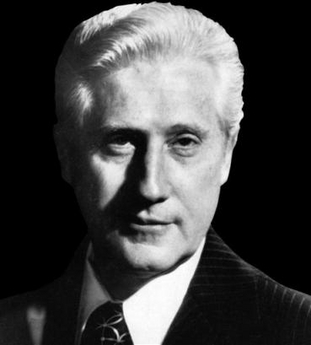
Deep Throat” — who as it turned out was the second-ranking official at the FBI, W. Mark Felt — spoke periodically with Bob Woodward (but never Carl Bernstein) as the two reporters investigated the emergent Watergate scandal for the Washington Post.

But “follow the money” was advice never given by Felt in periodic meetings with Woodward, which sometimes took place in a parking garage in the Rosslyn section of Arlington, Virginia, across the Potomac River from Washington.

And as I’ve noted at Media Myth Alert, no Post article or editorial related to Watergate invoked “follow the money” until June 1981 – nearly seven years after the scandal forced Richard Nixon to resign the presidency. (The Post article in 1981 simply mentioned that “follow the money” had been used in a fifth grade play.)

“Follow the money” was the creation of screenwriter William Goldman. He has taken credit for writing it into the script of All the President’s Men, the cinematic version of Woodward and Bernstein’s book about their Watergate reporting.

The book came out in 1974, just as Watergate was reaching a climax. The movie was released in 1976, as the wounds of the scandal were just beginning to heal. The book and, especially, the movie served to promote what I call the heroic-journalist interpretation of Watergate — the endlessly appealing notion that Woodward and Bernstein’s reporting brought down Nixon.

Since 1976, untold millions of people — now including Carl Pope — have invoked the line, oblivious to its derivation.

“Follow the money” was spoken by the actor Hal Holbrook, who was the “Deep Throat” character in All the President’s Men.

And Holbrook, who turned 85 last week, played the part exquisitely well.

In a memorable scene depicting a late-night meeting in the parking garage, in which Holbrook tells the Woodward character, played by Robert Redford:

“I have to do this my way. You tell me what you know, and I’ll confirm. I’ll keep you in the right direction, if I can, but that’s all.

“Just follow the money.”

The line was delivered with authority, certainty, and insistence — and it sounded for all the world as if it were advice crucial to understanding and unraveling Watergate.

In that way, it represents a simplified version about how the scandal was uncovered, about how the thread of Watergate corruption led to the Oval Office and Nixon.

Watergate, though, was far more complex than identifying and pursuing a money trail.

As I point out in my latest book, Getting It Wrong, rolling up a scandal of Watergate’s dimensions required more than simply following the money.

I note in Getting It Wrong:

“To roll up a scandal of such dimension required the collective if not always the coordinated forces of special prosecutors, federal judges, both houses of Congress, the Supreme Court, as well as the Justice Department and the FBI.”

Against the tableau of prosecutors, courts, federal investigations, and bipartisan congressional panels, I write, “the contributions of Woodward and Bernstein were modest, and certainly not decisive,” in the outcome of Watergate.

In the end, Nixon’s efforts to obstruct justice by covering up the break-in at headquarters Democratic national committee headquarters in 1972 was what forced his resignation in 1974.

It’s important to note, too, that “Deep Throat” in real life was no hero. As I point out in Getting It Wrong, Felt was convicted in 1980 on felony charges related to break-ins he had authorized as part of FBI investigations into leftists associated with the radical Weather Underground.

Felt was pardoned by President Ronald Reagan.

WJC

Recent and related:

‘Follow the money’ and the ‘new blue bloods’ in Parliament

In Cinematic treatments, Debunking, Media myths, Washington Post, Watergate myth on February 12, 2011 at 10:17 am

Spear’s is a glossy magazine published quarterly in London for the super rich. At its online site, Spear’s describes itself as “the essential resource for high net worths.”

In one of its recent articles, “The New Blue Bloods,” Spear’s discussed the number of entrepreneurs who sit in the British Parliament. The article opened by invoking the famous made-up line of Watergate:

“Deep Throat’s parking-lot exhortation to Bob Woodward to ‘follow the money’ has long established itself as shorthand for the pursuit of corruption in politics, but in the modern Parliament of the United Kingdom it has come to mean something altogether different.

“The otherwise-indecisive election of May 2010 saw one trend emerge strongly: a surprising number of those new members now sitting on the Government benches are successful entrepreneurs, and it is following the money they have made that has brought them into politics.”

I thought the 2010 election was decisive, that it turned out a Labor government and brought to power a Tory-led coalition.

Anyway. What most interests Media Myth Alert is Spear’s using that famous made-up line, “follow the money.”

The article, however inelegantly written, demonstrates anew the striking versatility of that contrived phrase as well as its impressive international resonance and its too-good-not-to-be-true quality.

“Follow the money” was never spoken by the Watergate source “Deep Throat” in his periodic meetings — sometimes in a parking garage in suburban Virginia — with Bob Woodward of the Washington Post.

The screenwriter William Goldman has taken credit for writing the line into the script of All the President’s Men, the cinematic version of Woodward and Carl Bernstein’s book about their Watergate reporting.

The movie came out in April 1976, less than two years after the Watergate scandal reached a climax with the resignation of President Richard Nixon.

The actor Hal Holbrook gave a stellar performance in All the President’s Men as the shadowy, conflicted, chain-smoking “Deep Throat” source.

“Follow the money” was uttered in a memorable scene of a late-night meeting in the parking garage, in which Holbrook tells the Woodward character, played by Robert Redford:

“I have to do this my way. You tell me what you know, and I’ll confirm. I’ll keep you in the right direction, if I can, but that’s all.

“Just follow the money.”

Holbrook’s lines were delivered with such authority that it’s not difficult to understand how “follow the money” has crossed from the screen to the vernacular, how the phrase has been embraced not only as plausible but as guidance that was genuine and essential.

But as I’ve noted, Watergate was more than a matter of pursuing and understanding a money trail. Rolling up a scandal of Watergate’s dimensions required more than simply following the money.

In the end, it was Nixon’s efforts to obstruct justice by covering up the break-in at headquarters Democratic national committee headquarters in 1972 that brought down his presidency.

As I note in my latest book, Getting It Wrong, the cinema can be a powerful agent in propelling and solidifying media-driven myths. Indeed, All the President’s Men, in its mediacentric focus on the supposed exploits of Woodward and Bernstein, helped inculcate the notion that the reporters’ investigative work was decisive in bringing down Nixon.

I point out in Getting It Wrong that “the cinematic treatment of All the President’s Men placed Woodward and Bernstein at the center of Watergate’s unraveling while denigrating the efforts of investigative agencies such as the FBI.

“The effect was to solidify and elevate the heroic-journalist myth, giving it dramatic power, and sustaining it in the collective memory.”

I further write that the movie “offers an unmistakable assertion of the power and centrality of the press in Nixon’s fall. All the President’s Men allows no other interpretation: It was the work Woodward and Bernstein that set in motion far-reaching effects that brought about the first-ever resignation of a U.S. president.

“And it is a message that has endured. More than thirty-five years later, what remains most vivid, memorable, and accessible about Watergate is the cinematic version of All the President’s Men.”

And a related and intriguing effect has been the tenacity of “follow the money” and the unwitting inclination to treat that pithy, well-delivered line as if it had been advice of decisive importance.

WJC

Recent and related:

‘Follow the money’: Why the made-up Watergate line endures

In Cinematic treatments, Debunking, Furnish the war, Media myths, Washington Post, Watergate myth on February 8, 2011 at 10:32 am

Watergate’s most famous made-up line — “follow the money” — is impressively versatile and doggedly persistent, some 35 years after it was written into a screenplay.

Mark Felt, 'Deep Throat' source

It’s a phrase that has resonance internationally. It’s made its way onto the sports pages and into publications on topics as diverse as secondary education and systems analysis.

And yesterday, the CBS business news site BNET invoked the passage in a post discussing a recent report of the Financial Crisis Inquiry Commission.

The reference to “follow the money” appeared at the end of BNET, as if it were an attempt at a witty ending:

“As Deep Throat said about the Watergate investigation, ‘follow the money.'”

But “follow the money” is really more clichéd than witty.

More important, it was a line not spoken by the stealthy “Deep Throat” source (see photo, above) of the Washington Post during its investigation of the Watergate scandal. The passage never appeared in the newspaper’s Watergate-related coverage.

No, it wasn’t the “Deep Throat” newspaper source who uttered “follow the money.” It was the actor Hal Holbrook, who played “Deep Throat” in the motion picture, All the President’s Men. The movie was based on Bob Woodward and Carl Bernstein’s book about their Watergate reporting for the Post.

Screenwriter William Goldman has taken credit for writing “follow the  money” into the script of All the President’s Men, which came out in 1976, less than two years after Watergate reached a climax with the resignation of President Richard Nixon.

Since 1976, millions of people have repeated the line, oblivious to its derivation and unaware of its falsity.

So why does this made-up line persist? Why is “follow the money” so appealing and versatile?

Like many media myths, “follow the money” is pithy, accessible, and easy-to-remember.

As I write in my latest book, Getting It Wrong, “Turns of phrase that sound too neat and tidy often are too perfect to be true.” William Randolph Hearst’s pithy vow to “furnish the war” with Spain is a particularly telling example.

There are, of course, other explanations for the persistent popularity of “follow the money.” It is, after all, a supposedly famous piece of advice — advice presumably crucial in unraveling Watergate.

The line suggests that rolling up the scandal was accomplished by identifying, pursuing, and reporting on an illicit money trail. Its purported centrality to understanding the Watergate scandal is an important reason why “follow the money” crossed smoothly from the silver screen to the vernacular and lives on.

But the Watergate scandal was more than a matter of a money trail. In the end, Nixon’s attempts to obstruct justice by covering up the break-in at headquarters Democratic national committee headquarters in 1972 brought down his presidency.

Moreover, “follow the money” is adaptable advice. It can be applied in many contexts. As Frances Miller wrote last year in the American Journal of Law and Medicine:

“Follow the money is a versatile phrase; the term can be used as an exhortation, designate a pathway, or denote a lifestyle choice. When it comes to health care, following the money is at least part of the sine qua non for anyone seeking to understand how this complex sector of the U.S. economy has arrived at its present sorry state.”

Similarly, “follow the money” has offered pertinent lessons in systems thinking, a broad-based approach to organizational assessment.

The journal Quality Progress invoked “Deep Throat” and “follow the money” in observing in 2004:

“What Deep Throat did, in effect, was lead Woodward, his colleague Carl Bernstein and the rest of us Watergate observers through an experiential workshop in systems thinking. The general instruction he gave the reporters to unravel the plot was, ‘Follow the money.’

“He assured them the money would connect the dots for them and eventually reveal the conspiracy’s entire ‘circulatory’ system. Identifying resources is one way to sketch in the outlines of some systems.”

That assessment was offered in the year before W. Mark Felt, formerly the second-ranking official at the FBI, identified himself as having been the “Deep Throat” of the Washington Post.

WJC

Recent and related:

JHistory: ‘Getting It Wrong’ deserves to be ‘required reading’

In Bay of Pigs, Bra-burning, Cronkite Moment, Debunking, Hurricane Katrina, Media myths, New York Times, Newspapers, Reviews, War of the Worlds, Washington Post, Watergate myth on February 7, 2011 at 9:51 am

JHistory, the listserv devoted to issues in journalism history, posted yesterday a very insightful and favorable review of my latest book, Getting It Wrong, saying it “should be required reading for journalism students as well as journalists and editors.”

Getting It Wrong “reinforces the necessity of healthy skepticism; a commitment to fully understanding the implications of one’s research; and the importance of cultivating diverse, credible sources and viewpoints for probing, quality journalism,” the review says.

Getting It Wrong, which was published in summer 2010 by University of California Press, addresses and debunks 10 prominent media-driven myths — those dubious tales about and/or by the news media that masquerade as factual.

The reviewer for JHistory, Jeanette McVicker of SUNY-Fredonia, says Getting It Wrong is a “compelling book” that “generated a minor sensation in journalism circles all summer, with good reason.”

McVicker, whom I do not know, notes:

“In each chapter, Campbell delivers pithy, well-researched correctives for each sensational claim.

“No,” she writes, “Orson Welles’s ‘War of the Worlds‘ radio broadcast did not induce a national panic in October 1938. Yes, there was symbolic bra burning in the Freedom Trash Can at the 1968 protest of the Miss America pageant in Atlantic City, but no mass stripping of undergarments by wild women’s liberationists. No, the Kennedy administration did not request the New York Times to spike or delay a report on the imminent Bay of Pigs invasion: ‘utter fancy,’ Campbell writes.”

McVicker adds:

“The deconstruction of these cherished media myths by Campbell’s archival, source-driven research is praiseworthy, and makes for fascinating reading.”

She further notes:

“In most of these examples, the devastating legacy of the mythmaking media machine continues far beyond attempts to backpedal and correct the erroneous reporting: sensational stories tend to remain in public consciousness for years and sometimes decades.”

Indeed.

Getting It Wrong, McVicker adds, “demonstrates with tremendous force how discrete instances of media reporting and mythmaking have built up a golden age fallacy of journalism’s self-importance, and his work goes a long way toward deflating such heroic myths and consensus-narratives at the heart of modern journalism history.”

Her principal challenge to Getting It Wrong lies in my view that stripping away and debunking prominent media myths “enhances a case for limited news media influence. Media power tends to be modest, nuanced, diffused, and situational.”

Too often, I write, “the ubiquitous presence of the news media is mistaken for power and influence. … The influence of the news media is typically trumped by other forces.”

It’s an accurate assessment, especially given that media myths — such as the notion that investigative reporting by the Washington Post brought down Richard Nixon’s corrupt presidency in the Watergate scandal — often seek to “ascribe power, significance, and sometimes great courage to the news media and their practitioners.”

Puncturing media myths thus serves to deflate the notion of sweeping media power.

McVicker tends to disagree, writing that “it is surely not the case that the combined effects of such narratives are ‘modest, nuanced, diffused, and situational.'”

She notes as an example “the ongoing legacy of mainstream media’s failure to hold members of the Bush administration accountable during the buildup to the invasion of Iraq, a devastating correlate to Campbell’s spot-on analysis of the distorted, erroneous reporting of what was happening in the streets of New Orleans following Hurricane Katrina.”

There is, though, a fair amount of evidence that the news media were neither gullible nor comatose in the run-up to the war in Iraq, that tough questions were raised of the Bush administration’s pre-war plans.

While the notion of a docile news media has hardened into conventional wisdom about the pre-war coverage, that view has been challenged, notably by David Gregory of NBC News, who has asserted:

“I think the questions were asked [in the run-up to the war].  I think we pushed. I think we prodded. I think we challenged the president. I think not only those of us the White House press corps did that, but others in the rest of the landscape of the media did that.

“If there wasn’t a debate in this country” about going to war in Iraq, Gregory has said, “then maybe the American people should think about, why not?  Where was Congress? Where was the House? Where was the Senate? Where was public opinion about the war?”

I find quite telling this observation, offered in 2007 by Reason magazine:

“The ‘we should have done more to head off this war’ arguments assumes too much, exaggerates the media’s power to influence, removes the onus from politicians and infantilizes news consumers. … many in the media did ask tough questions of the administration, but the public wasn’t paying much attention.”

That the news media were comatose in the run-up to the Iraq War may be yet another media-driven myth.

WJC

Recent and related:


Campbell’s

book should be required reading for journalism students as well as

journalists and editors, for it reinforces the necessity of healthy

skepticism; a commitment to fully understanding the implications of one’s

research; and the importance of cultivating diverse, credible sources and

viewpoints for probing, quality journalism. There is an even greater lesson

here, however, pertinent for all readers: consistent with the rise of

“modern” journalism from the late 1800s to the present, the institution of

journalism has bolstered itself with narratives celebrating its own

strategic importance to society, even when the narratives turn out to be

fictions.

‘Follow the money’: As if it were genuine

In Cinematic treatments, Debunking, Media myths, Washington Post, Watergate myth on February 4, 2011 at 8:00 am

I followed a hyperlink the other day to the Winter 2010 number of Rethinking Schools magazine to find that Watergate’s most famous made-up line prominently presented as if it were advice vital to unraveling the scandal.

Nixon resigns, 1974

The opening paragraphs of an article in Rethinking Schools, titled “The Ultimate $uperpower,” read this way:

“In 1972, two young Washington Post reporters were investigating a low-level burglary at the Watergate Hotel and stumbled upon a host of unexplained coincidences and connections that reached to the White House.

“One of the reporters, Bob Woodward, went to a high-level government source and complained: ‘The story is dry. All we’ve got are pieces. We can’t seem to figure out what the puzzle is supposed to look like.’

“To which the infamous Deep Throat replied: ‘Follow the money. Always follow the money.’

“For nearly 40 years, ‘follow the money’ has been an axiom in both journalism and politics—although, as Shakespeare might complain, one ‘more honour’d in the breach than the observance.'”

It may be an axiomatic line — it’s certainly invoked frequently enough — but it wasn’t used in the Washington Post investigation of the Watergate scandal.

Nor, it should be noted, did the Post bring down Richard Nixon’s corrupt presidency.

As I note in my latest book, Getting It Wrong, the contributions of Woodward and Bernstein’s investigative reporting, I write, “were modest, and certainly not decisive” to the outcome of Watergate.

The line “follow the money” was created, for dramatic effect, for the movie version of Woodward and Bernstein’s book about their Watergate reporting, All the President’s Men.

It wasn’t the “Deep Throat” source who uttered the line. It was his cinematic character, played in All the President’s Men by the actor Hal Holbrook.

In a scene showing a late-night meeting in a parking garage, Holbrook tells the Woodward character, played by Robert Redford:

“I have to do this my way. You tell me what you know, and I’ll confirm. I’ll keep you in the right direction, if I can, but that’s all. Just follow the money.”

As an article in the Post last summer pointed out that “the film’s most iconic piece of dialogue — ‘Follow the money’ — was never spoken in real life.”

Indeed, as I’ve noted previously at Media Myth Alert, no Post article or editorial related to Watergate used “follow the money” until June 1981 – nearly seven years after Richard Nixon resigned the presidency and well after the successor who pardoned him, Gerald Ford, had lost reelection. (The article in June 1981 merely noted that the line was used in a fifth grade play.)

“Follow the money” was the creation of screenwriter William Goldman. He has taken credit for working it into the script of All the President’s Men, which came out in 1976.

Since then, millions of people — among them, the author of the Rethinking Schools article — have unwittingly repeated the line, oblivious to its falsity, believing it had been guidance vital in rolling up Watergate.

But what harm is there in that? It’s just a movie, after all. A movie made a long time ago.

The phony but often-quoted line is suggestive of the exaggerations that infuse the cinematic version of All the President’s Men — a version that offers up “a neat, tidy, and vastly simplified account” of the scandal, as I write in Getting It Wrong.

The simplified version of Watergate enables viewers “to sidestep the scandal’s complexity while engaging in an entertaining storyline,” I further note.

Follow the money” also lends the inaccurate suggestion that unraveling Watergate was a matter of identifying, pursuing, and reporting about an illicit money trail. It was more than that.

What ultimately brought down Nixon was indisputable evidence of his order to cover up the signal crime of Watergate, the 1972 break-in at the headquarters of the Democratic National Committee. Nixon’s guilty role in the coverup was captured by audiotape recordings he secretly made of his conversation in the Oval Office of the White House.

Moreover, the movie version of All the President’s Men celebrated and helped firm up what I call the heroic-journalist myth of Watergate. The film’s inescapable but erroneous conclusion is that Woodward and Bernstein were central to unraveling the scandal and to forcing the resignation of a dishonest president.

WJC

Recent and related:

Pepco the rude

In Media myths, Washington Post on February 2, 2011 at 10:31 am

It’s no media myth: Pepco personnel can be downright rude to their customers.

Pepco is the bungling utility company that sells electricity to 778,000 households in and near Washington, D.C.

Pepco’s inability to keep the lights on during winter and summer storms, and its agonizing slowness in restoring power when the lights do go out, has stirred intense and richly deserved criticism from customers and politicians.

The criticism swelled anew in the aftermath of a snowstorm a week ago that brought some 8 inches of heavy snow to the Washington area and knocked out power to more than 200,000 Pepco customers. (The Washington Post noted that the utility “issued a series of promises about when service would be restored, and it did not keep them.”)

My place in suburban Maryland was without power for 44 hours, forcing a retreat to a local hotel.

Before dawn today, power went off again in the neighborhood. A light rain was falling, but that wasn’t enough to knock out the lights.

At the end of the otherwise darkened street I could see the flashing yellow lights of a Pepco repair truck. So I walked down to inquire about what was a puzzling outage.

“Good morning,” I said as I stepped across a snowbank and approached a helmeted Pepco worker standing near the truck.

“What was that?” the Pepco guy asked.

“I said, ‘Good morning.'”

“Good morning.”

“What are we looking at?” I asked Pepco guy. “Is this likely to be a brief outage or something more extended?”

“What do you mean, ‘more extended’?” Pepco guy asked.

“We were without power for 44 hours last week. That’s extended.”

Pepco guy replied, “I haven’t been home since Wednesday,” when the  snowstorm hit.

There was an abrupt and dismissive edge to his comment. He wasn’t seeking sympathy. He was suggesting my questions were inappropriate. Out of line. Trivial.

And I resented it.

“Well, you’re paid to do this work,” I said. “We pay Pepco to provide electricity, and they don’t do it very well.” Or reliably.

I asked again: “Are we looking at a brief outage, or something more extended?”

“We’ll have it on as soon as we can,” Pepco guy replied.

“What does that mean?” I asked.

“Within an hour,” he said, finally.

Thanks, I said, and walked back home — annoyed by Pepco guy’s rude responses, and wondering why he was so reluctant to be forthcoming.

If the repairs were minor, as they turned out to be, why not simply say so? Why attempt to shift the focus by injecting a curt and irrelevant comment — “I haven’t been home since Wednesday”? Why not respond directly, and in a professional manner, to what was a reasonable, straightforward, and polite inquiry?

The lights did come back on, in less than an hour. But the annoyance lingered.

Pepco does itself no favors when its personnel treat inquiring customers as if they were little more than nuisances. Customers pay for what they expect will be reliable electric service — and not surprisingly they will seek answers when the lights go out without warning or apparent cause.

Pepco says it has a five-year service-improvement plan that’s to cost $318 million. Five years is a prolonged period, given the extent and frequency of the utility’s service failings.

In any case, it shouldn’t take anywhere near five years for Pepco to commit to improving customer relations, to commit to training its personnel in properly fielding queries from people who pay the bill.

WJC

Recent:

Serving up Watergate, très simple

In Debunking, Media myths, Washington Post, Watergate myth on February 1, 2011 at 9:23 am

The simplified storyline of the Watergate scandal goes this way:

Two young, diligent reporters for the Washington Post, Bob Woodward and Carl Bernstein, obtained from their secretive “Deep Throat” source information that incriminated President Richard Nixon and brought about his downfall.

That essentially is the “heroic-journalist” interpretation of Watergate — a reductive and misleading trope to which I devote a chapter in my latest book, Getting It Wrong.

I write in Getting It Wrong that “to explain Watergate through the lens of the heroic-journalist is to abridge and misunderstand the scandal and to indulge in a particularly beguiling media-driven myth.”

Yahoo!News yesterday served up that très simple version of Watergate in an article about Julian Assange of Wikileaks. The item Yahoo! posted online referred to Mark Felt, formerly the second-ranking official at the FBI, saying he “supplied information about the role of Richard Nixon and his top aides in the Watergate scandal to Washington Post reporters Bob Woodward and Carl Bernstein and came to be known as ‘Deep Throat.’

“That series of leaks ultimately felled the Nixon presidency.”

Uh, no, it didn’t.

What Felt/”Deep Throat” told Woodward did not topple Nixon.

According to All the President’s Men, Woodward and Bernstein’s book about their Watergate reporting, Woodward turned to “Deep Throat” “only to confirm information that had been obtained elsewhere and to add some perspective.”

(Bernstein, by the way, never met Felt until shortly before Felt’s death in 2008. Felt disclosed in 2005 that he had been the “Deep Throat” source.)

Nixon’s fall was the result of his criminal conduct in attempting to cover up the signal crime of Watergate, the break-in at the headquarters of the Democratic National Committee in June 1972.

As I write in Getting It Wrong, the simplified, mediacentric interpretation of Watergate “minimizes the far more decisive forces that unraveled the scandal and forced Nixon from office.”

To topple a president and roll up a scandal of the dimensions of Watergate required, I write, “the collective if not always the coordinated forces of special prosecutors, federal judges, both houses of Congress, the Supreme Court, as well as the Justice Department and the FBI.

“Even then, Nixon likely would have served out his term if not for the audiotape recordings he secretly made of most conversations in the Oval Office of the White House. Only when compelled by the Supreme Court did Nixon surrender those recordings, which captured him plotting the cover-up and authorizing payments of thousands of dollars in hush money.”

Against that tableau of subpoena-wielding investigative authorities, the contributions of Woodward and Bernstein fades into relative insignificance.

So why has the heroic-journalist meme become the most familiar storyline of Watergate? Why is it so endlessly appealing?

Complexity-avoidance.

Watergate, after all, was a sprawling scandal. Twenty-one men associated with Nixon’s presidency or his reelection campaign in 1972 were convicted of Watergate-related crimes. Nineteen went to jail.

The heroic-journalist interpretation provides a passage through the intricacies of Watergate, offering what I call “a proxy for grasping the scandal’s essence while avoiding its forbidding complexity.”

Contributing to the durability of the heroic-journalist meme is the cinematic treatment of All the President’s Men, a 1976 film based on Woodward and Bernstein’s best-selling book.

All the President’s Men the movie focuses on Woodward and Bernstein while mostly ignoring, and even at times denigrating, the contributions of investigative agencies like the FBI.

All the President’s Men has held up quite well in the 35 years since its release. It surely is the most-watched movie ever made about Watergate.

But as I point out in Getting It Wrong, All the President’s Men the movie allows no interpretation other than the work of Woodward and Bernstein brought about the first-ever resignation of a U.S. president.

Woodward

Even Woodward has challenged that très simple version.

He declared in an interview several years ago with American Journalism Review:

To say that the press brought down Nixon, that’s horseshit.”

WJC

Recent and related:

Who, or what, brought down Nixon?

In Debunking, Media myths, Washington Post, Watergate myth on January 24, 2011 at 10:26 am

Who brought him down?

The easy, but wrong, answer to the question of who or what brought down Richard Nixon’s corrupt presidency in the Watergate scandal is: Bob Woodward and Carl Bernstein of the Washington Post.

As I point out in my latest book, Getting It Wrong, that interpretation has become “ready short-hand for understanding Watergate and its denouement, a proxy for grasping the scandal’s essence while avoiding its forbidding complexity.

“How the Post and its reporters uncovered Watergate is deeply ingrained in American journalism as one of the field’s most important and self-reverential stories.”

It’s also a prominent media-driven myth–a well-known but dubious or improbable tale about the news media that masquerades as factual.

What I call the heroic-journalist interpretation of Watergate offers a convenient, accessible, easy-to-grasp version of what was a sprawling and intricate scandal.

“But to explain Watergate through the lens of the heroic-journalist,” I write in Getting It Wrong, “is to abridge and misunderstand the scandal and to indulge in a particularly beguiling media-driven myth. The heroic-journalist interpretation minimizes the far more decisive forces that unraveled the scandal and forced Nixon from office.”

Britain’s Spectator magazine takes up the Watergate question in an article about fallout from the phone-hacking scandal that has swept up Rupert Murdoch’s London tabloid, the Sunday News of the World.

To its credit, Spectator sidestepped the heroic-journalist myth in declaring:

“Everyone who remembers the Watergate scandal remembers Bob Woodward and Carl Bernstein’s reporting. Brilliant though it was, the Nixon administration was destroyed not by the Washington Post, but by Sam Ervin’s Senate committee, which had the powers parliamentary select committees ought to have to issue subpoenas and compel witnesses to talk or go to jail for contempt.”

While commendable in eschewing the mythical heroic-journalist interpretation, the Spectator commentary overstated the importance of the Senate select committee on Watergate, which was chaired by Sam Ervin of North Carolina and took testimony during the spring and summer of 1973.

Rather than destroying Nixon’s presidency, the select committee had the effect of training public attention on the crimes of Watergate and, in the testimony it elicited, offered a way to determine whether Nixon had a guilty role in the scandal.

The select committee’s signal contribution to unraveling Watergate came in producing the revelation that Nixon had secretly tape-recorded conversations with top aides in the Oval Office of the White House.

The tapes, I note in Getting It Wrong, “proved crucial to the scandal’s outcome.”

They constituted Nixon’s “deepest secret,” Stanley Kutler, Watergate’s leading historian, has written.

The revelation about their existence set off a year-long effort to force Nixon to turn over the tapes, as they promised to clear or implicate him in the scandal.

Nixon resisted surrendering the tapes until compelled by the U.S. Supreme Court, in a unanimous decision in July 1974.

The tapes revealed his guilty role in seeking to block the FBI investigation of the Watergate’s seminal crime, the breakin in June 1972 at the offices of the Democratic national committee in Washington.

Nixon resigned in August 1974.

In the final analysis, then, who or what brought down Richard Nixon?

Certainly not Woodward and Bernstein. Not the Senate select committee, either.

The best answer is that rolling up a scandal of the dimension and complexity of Watergate “required the collective if not always the coordinated forces of special prosecutors, federal judges, both houses of Congress, the Supreme Court, as well as the Justice Department and the FBI,” as I write in Getting It Wrong.

“Even then,” I add, “Nixon likely would have served out his term if not for the audiotape recordings he secretly made of most conversations in the Oval Office of the White House. Only when compelled by the Supreme Court did Nixon surrender those recordings,” making inevitable the early end of his presidency.

WJC

Recent and related: