W. Joseph Campbell

Posts Tagged ‘Watergate’

WaPo ‘broke the Watergate scandal’? No way

In Debunking, Media myths, Washington Post, Watergate myth on March 17, 2011 at 7:04 am

I like to see blogs calling out the Washington Post, an unevenly edited shell of its former self.

The “Texas on the Potomac” blog did just that the other day, calling out the Post for misidentifying two Houston congressmen named Green.

But in adding a snarky dig of its own, the blog committed a more notable lapse, declaring that the Post “broke the Watergate scandal.”

Here’s what the blog post said:

”Oops! The Washington Post has apologized to Houston congressmen Al Green and Gene Green for mixing them up in its coverage of last week’s controversial House hearing on Muslim extremism. At the hearing, you’ll recall, Al Green criticized Republicans for focusing on Islamic terrorism while ignoring other forms of terrorism such as the Ku Klux Klan.

“But the newspaper that broke the Watergate scandal identified the Houston congressman as Gene Green.”

Oops, indeed. Flubbing the identities of the congressmen Green was unfortunate; more troubling was declaring that the Post “broke the Watergate scandal.”

It did no such thing.

The signal crime of Watergate — the June 1972 burglary at Democratic National Committee headquarters — wasn’t broken by the Post. The break-in was interrupted by police and, within hours, news was circulating of the arrest of five burglars at the Watergate complex in Washington, D.C.

The story in the Post about the break-in appeared beneath the byline of Alfred E. Lewis, a veteran police reporter, and its opening paragraph made clear that the information came from investigators:

“Five men, one of whom said he is a former employee of the Central Intelligence Agency, were arrested at 2:30 a.m. yesterday in what authorities described as an elaborate plot to bug the offices of the Democratic National Committee here.”

Watergate reporting by the Post did not expose the cover-up of crimes linked to the break-in or the payment of hush money to the burglars, either.

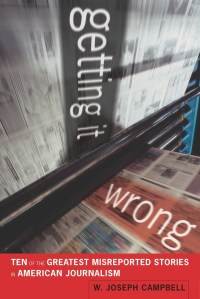
As I note in my latest book, Getting It Wrong, which includes a chapter about the media myths of Watergate, Post reporter Bob Woodward was quoted as saying in 1973 that those crucial aspects of the scandal were “held too close. Too few people knew. We couldn’t get that high.”

Nor did Woodward and his Watergate reporting colleague Carl Bernstein uncover or disclose the existence of the White House audiotaping system, which was decisive to the outcome of Watergate.

Audiotapes secretly made by President Richard Nixon captured him approving a plan in June 1972 to impede the FBI in its investigation of the Watergate break-in.

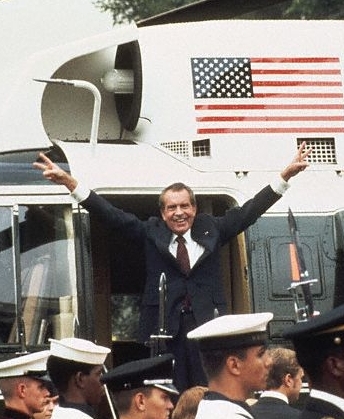
That contents of that tape — the so-called “smoking gun” of Watergate — sealed Nixon’s fate and led to his resignation in August 1974.

The White House taping system had been disclosed 11 months before, by investigators of the Senate select committee on Watergate, which convened hearing in spring and summer 1973.

As I point out in Getting It Wrong, Woodward and Bernstein later claimed to have had a solid lead about the existence of the taping system.

In All the President’s Men, the book he wrote with Bernstein, Woodward recalled having spoken with Post Executive Editor Ben Bradlee about the lead. Bradlee advised, “I wouldn’t bust one on it.”

Had they followed that lead, Woodward and Bernstein may well have broken a pivotal story about Watergate.

But they didn’t.

So, clearly, the disclosures about the pivotal events that led to Nixon’s resignation in Watergate weren’t the work of the Post.

As I’ve noted in previous postings at Media Myth Alert, it’s intriguing to note how the Post from time to time has sought to emphasize that its reporting was not decisive in Nixon’s resignation.

In 2005, for example, Michael Getler, then the newspaper’s ombudsman, wrote:

“Ultimately, it was not The Post, but the FBI, a Congress acting in bipartisan fashion and the courts that brought down the Nixon administration. They saw Watergate and the attempt to cover it up as a vast abuse of power and attempted corruption of U.S. institutions.”

And Bradlee, the executive editor during Watergate, said on a “Meet the Press” interview show in 1997, 25 years after the break-in:

“[I]t must be remembered that Nixon got Nixon. The Post didn’t get Nixon.”

WJC

Recent and related:

Counterpunching that made-up line, ‘follow the money’

In Cinematic treatments, Debunking, Media myths, Washington Post, Watergate myth on March 15, 2011 at 9:45 am

Watergate’s most famous invented line showed up yesterday at the online site of CounterPunch, which touts itself as “America’s best political newsletter.”

That most famous invented line of Watergate is: “Follow the money.”

It was written into the script of All the President’s Men, the 1976 movie about the Watergate reporting of the Washington Post, and has since made a smooth, seamless transition to the vernacular.

Indeed, “follow the money” has become the passage most commonly associated with the Watergate scandal, which culminated in 1974 in the resignation of President Richard Nixon.

A commentary at the CounterPunch site referred to “follow the money” in a lengthy discussion of the perjury trial in Texas of a former CIA operative, Luis Posada Carriles, stating:

“During the investigation into the 1972 Watergate scandal, Washington Post reporter Bob Woodward found a source, whom he referred to only as ‘Deep Throat,’ who told him to ‘follow the money.’ Woodward and fellow journalist Carl Bernstein followed the money trail and unraveled the mysteries behind the crimes and subsequent cover-ups of President Richard M. Nixon and his White House staff.”

Simple as all that, eh? “Follow the money” was key to unraveling “the mysteries behind the crimes” of America’s greatest political scandal?

Hardly.

As is the case with all media-driven myths, there are elements of accuracy in that narrative. Woodward did periodically discuss Watergate with a high-level government source to whom the Post referred as “Deep Throat.”

But in real life, “Deep Throat” never counseled Woodward to “follow the money.”

Nor does “follow the money” doesn’t appear in All the President’s Men, the book Woodward and Bernstein wrote about Watergate.

Nor does the line appear in any Post article or editorial published during the Watergate period.

Nor was unraveling Watergate a simple matter of pursuing a money trail.

Far from it.

As I note in my latest book, Getting It Wrong, which debunks 10 prominent media-driven myths, rolling up a scandal of the dimension and complexity of Watergate “required the collective if not always the coordinated forces of special prosecutors, federal judges, both houses of Congress, the Supreme Court, as well as the Justice Department and the FBI.

“Even then,” I added, “Nixon likely would have served out his term if not for the audiotape recordings he secretly made of most conversations in the Oval Office of the White House. Only when compelled by the Supreme Court did Nixon surrender those recordings, which captured him plotting the cover-up and authorizing payments of thousands of dollars in hush money.”

The popularity of “follow the money” — a line for which screenwriter William Goldman has taken credit — highlights another characteristic of media myths: Their tendency to minimize complexity and offer simplistic and misleading interpretations instead.

I note in Getting It Wrong that high-quality cinematic treatments — and All the President’s Men is a telling example — can contribute significantly to solidifying and making believable mythical accounts of historical events.

“Follow the money” is just one of the distortions presented in All the President’s Men, the movie.

More broadly, the film promotes what I call the “heroic-journalist” interpretation” of Watergate.

The heroic-journalist meme is a trope that knows few bounds. It is the most familiar storyline of Watergate — the mediacentric version that Woodward and Bernstein, through their dogged and courageous reporting, brought down Nixon and his corrupt presidency.

It is one of American journalism’s most self-reverential stories — one propelled by the movie version of All the President’s Men.

As I point out in Getting It Wrong, the film placed Woodward and Bernstein “at the center of Watergate’s unraveling while denigrating the efforts of investigative agencies such as the FBI.

“The effect was to solidify and elevate the heroic-journalist myth, giving it dramatic power, and sustaining it in the collective memory.”

All the President’s Men offers no version of Watergate other than Woodward and Bernstein, with the help of “Deep Throat,” brought about the first-ever resignation of a U.S. president.

That’s an abridged and misleading interpretation, a misreading of history that deserves serious counterpunching.

WJC

Many thanks to Instapundit Glenn Reynolds for linking to this post

Recent and related:

Of media myths and false lessons abroad: Biden’s Moscow gaffe

In Bay of Pigs, Debunking, Media myths, New York Times, Newspapers, Washington Post, Watergate myth on March 14, 2011 at 7:57 am

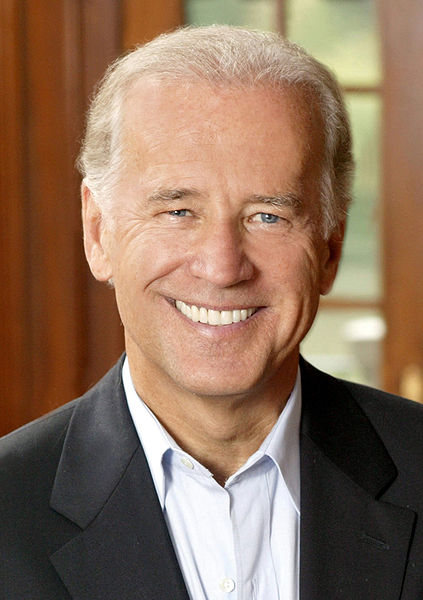
Biden shows the way (White House photo)

Vice President Joe Biden embraced in Moscow last week one of American journalism’s most tenacious myths — the notion that reporting by the Washington Post brought down” Richard Nixon’s corrupt presidency in the Watergate scandal.

Unwittingly or otherwise, Biden offered up the Watergate myth as a telling example of the values and virtues of a free press. The vice president said in remarks at Moscow State University:

“Journalists must be able to publish without fear of retribution. In my country it was a newspaper, not the FBI, or the Justice Department, it was a newspaper, the Washington Post that brought down a President for illegal actions.”

As I’ve noted, not even the Post endorses that superficial and misleading reading of Watergate history. (Ben Bradlee, the newspaper’s executive editor during Watergate, has said for example: “[I]t must be remembered that Nixon got Nixon. The Post didn’t get Nixon.”)

The significance of Biden’s mischaracterization of Watergate goes beyond being merely curious; it’s more than just another example of the gaffe-prone vice president slipping up again.

His remarks demonstrated anew that media myths are not just intriguing curiosities of history. They showed how false lessons can worm their way into diplomacy and policymaking.

Biden’s speech represented pointed criticism of — and recommendations for — Russia and its legal and political systems.  Biden offered a laundry list of democratic reforms that autocratic Russia ought to undertake, stating that courts “must be empowered to uphold the rule of law and protect those playing by the rules.

“Non-governmental watchdogs should be applauded as patriots, not traitors. …

“Journalists,” he added, “must be able to publish without fear of retribution.” To buttress his point about a robust free press, he invoked the claim that “the Washington Post … brought down a President for illegal actions.”

Biden offered that anecdote as an example of the benefits of press freedom, which he called “the greatest guarantee of freedom there is….”

Invoking the myth that the Post “brought down” Nixon is to offer an international audience a false lesson about the power of the news media. Invoking the myth is to suggest, wrongly, that that news media can, when circumstances are right, force a sitting president from office.

As I note in my latest book, Getting It Wrong, rolling up a scandal of the sweep and dimension of Watergate “required the collective if not always the coordinated forces of special prosecutors, federal judges, both houses of Congress, the Supreme Court, as well as the Justice Department and the FBI.”

Even then, I write, “Nixon likely would have served out his term if not for the audiotape recordings he secretly made of most conversations in the Oval Office of the White House.

“Only when compelled by the Supreme Court did Nixon surrender those recordings, which captured him plotting the cover-up” of Watergate’s signal crime — the break-in at the headquarters of the Democratic National Committee in June 1972.

Considered against the tableau of subpoena-wielding investigators and special prosecutors, the Watergate reporting of the Post recedes in significance.

As Michael Getler, the newspaper’s ombudsman wrote in 2005: “Ultimately, it was not The Post, but the FBI, a Congress acting in bipartisan fashion and the courts that brought down the Nixon administration.”

I also note in Getting It Wrong that “media-driven myths are neither trivial nor innocuous. They can and do have adverse consequences.”

They tend to offer simplistic and misleading interpretations of important historical events, and they “can blur lines of responsibility and deflect blame away from makers and sponsors of flawed public policy,” I write, citing as a case in point the New York Times-Bay of Pigs suppression myth.

Had the New York Times had reported all it knew 50 years ago about the run-up to the pending Bay of Pigs invasion of Cuba, the administration of President John F. Kennedy likely would have scuttled the operation–thus sparing the country a stunning foreign policy reversal.

Or so the media myth has it.

As I discuss in Getting It Wrong, that interpretation is not only misleading but it diverts responsibility away from Kennedy and his flawed decision to go ahead with the invasion.

The Times, after all, published a number detailed, front-page reports about the anticipated invasion in the days before the ill-fated assault. And there is no evidence that the newspaper censored itself under White House pressure in the run-up to the Bay of Pigs invasion.

And in the final analysis, I note, ” it was Kennedy, not American journalists, who gave the go-ahead in April 1961, sending a brigade of Cuban exiles to a disastrous rendezvous in the swamps of southwestern Cuba.”

The cause of independent-minded journalism in Russia would have been better served had Biden skipped the myth and urged the Kremlin to pursue serious investigations into unresolved cases of journalists who’ve been killed because of their work.

The New York-based Committee to Protect Journalists says 19 journalists have been killed in Russia since 2000.

The country, CPJ says, has a “record of rampant impunity in resolving the killings of journalists.”

WJC

Recent and related:

Mythmaking in Moscow: Biden says WaPo brought down Nixon

In Debunking, Media myths, Newspapers, Washington Post, Watergate myth on March 12, 2011 at 7:23 am

Gaffe-prone Joe Biden offered Russians this week a mythical and distorted version of American history,  declaring at Moscow State University that the Washington Post “brought down” Richard Nixon’s corrupt presidency in the Watergate scandal.

It’s an interpretation of Watergate that few serious historians embrace.

Gaffe-prone

And yet, according to the transcript of the vice president’s remarks posted online by the White House, Biden told his audience:

“In my country it was a newspaper, not the FBI, or the Justice Department, it was a newspaper, the Washington Post that brought down a President for illegal actions.”

Not even the Washington Post buys into that myth-encrusted version of history. Principals at the Post have from time to time over the years sought to distance the newspaper from such a misleading assessment.

For example, Katharine Graham, the newspaper’s doughty publisher during and after the Watergate scandal, said in 1997, at a program marking the 25th anniversary of the scandal:

“Sometimes people accuse us of bringing down a president, which of course we didn’t do. The processes that caused [Nixon’s] resignation were constitutional.”

Ben Bradlee,who was executive editor at the Post during Watergate, said on the “Meet the Press” interview show in 1997:

“[I]t must be remembered that Nixon got Nixon. The Post didn’t get Nixon.”

More recently, Michael Getler, then the newspaper’s ombudsman, wrote in 2005:

“Ultimately, it was not The Post, but the FBI, a Congress acting in bipartisan fashion and the courts that brought down the Nixon administration.”

Their comments are not the representations of false modesty: They speak to a more accurate reading of the history of Watergate than Biden offered his audience in Moscow.

Watergate-related reporting in the Post — even though it won a Pulitzer Prize in 1973 — was scarcely enough to turn from office a sitting president.

As I write in my latest book, Getting It Wrong, rolling up a scandal of the dimension and magnitude of Watergate “required the collective if not always the coordinated forces of special prosecutors, federal judges, both houses of Congress, the Supreme Court, as well as the Justice Department and the FBI.”

And even then, I write, “Nixon likely would have served out his term if not for the audiotape recordings he secretly made of most conversations in the Oval Office of the White House.

“Only when compelled by the Supreme Court did Nixon surrender those recordings, which captured him plotting the cover-up” of Watergate’s signal crime — the break-in at the headquarters of the Democratic National Committee in June 1972.

Biden’s remarks reflect an endorsement of I call the “heroic-journalist” myth of Watergate — the simplified and misleading interpretation that the reporting of  Post reporters Bob Woodward and Carl Bernstein uncovered evidence that forced Nixon’s resignation in 1974.

But not even Woodward endorses that interpretation. He said in 2004 in an interview with American Journalism Review:

To say the press brought down Nixon, that’s horseshit.”

But as I note in Getting It Wrong, the heroic-journalist meme has nonetheless “become the most familiar storyline of Watergate: ready short-hand for understanding Watergate and its denouement, a proxy for grasping the scandal’s essence while avoiding its forbidding complexity.

“How the Post and its reporters uncovered Watergate is deeply ingrained in American journalism as one of the field’s most important and self-reverential stories,” I write.

But being deeply ingrained and popular doesn’t mean it’s accurate. Far from it.

I note in Getting It Wrong that “to explain Watergate through the lens of the heroic-journalist is to abridge and misunderstand the scandal and to indulge in a particularly beguiling media-driven myth.

“The heroic-journalist interpretation minimizes the far more decisive forces that unraveled the scandal and forced Nixon from office.” And they included the very forces Biden dismissed in his remarks in Moscow –the FBI and the Justice Department.

The transcript of Biden’s speech, delivered Thursday, also shows that he flubbed the characterization of the news media, which sometimes are collectively referred to as the “Fourth Estate.”

According to Biden, they’re the “Third Estate.”

WJC

Recent and related:

Fact-checking Watergate advice that ‘worked’

In Cinematic treatments, Debunking, Washington Post, Watergate myth on March 11, 2011 at 8:32 am

In an online commentary posted yesterday, media critic Eric Alterman treated as factual the most famous invented line of the Watergate scandal, “Follow the money.”

As I’ve noted at Media Myth Alert, “follow the money” was advice written into the screenplay of All the President’s Men, the 1976 cinematic version of the book by Bob Woodward and Carl Bernstein about their Watergate reporting for the Washington Post.

Felt: Didn't say it

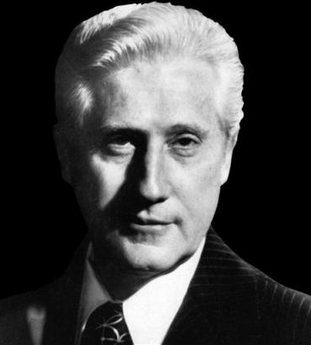
The line was spoken by the actor Hal Holbrook, who in the movie played Woodward’s secretive high-level source, “Deep Throat” (who in real life turned out to be W. Mark Felt, formerly the second-ranking official at the FBI).

“Follow the money” doesn’t appear in All the President’s Men, the book.

It appears in no Post article or editorial published during the Watergate period.

And in his periodic meetings with Woodward (he never spoke with Bernstein during Watergate), “Deep Throat”/Felt never uttered the line.

Alterman, the author of  What Liberal Media? and other books, ruminated in his commentary about what he called the willingness of people in politics and the media “to debase themselves for cash.”

His essay appeared beneath the headline, “Think Again: ‘Follow the Money’,” and opened with an allusion to “follow the money,” declaring:

“Deep Throat’s advice worked for Woodward and Bernstein, and it remains useful today.”

Maybe it is “useful” still.

But it is a made-up line.

Screenwriter William Goldman has taken credit for writing “follow the  money” into the script of All the President’s Men, which came out in April 1976 — 20 months after Watergate reached a denouement with the resignation of President Richard Nixon.

Since then, millions of people have repeated the evocative and pithy line, oblivious to its derivation and unaware of its falsity.

As I point out in my latest book, Getting It Wrong, “Turns of phrase that sound too neat and tidy often are too perfect to be true.”

So it is with “follow the money”: Too good to be true.

In that respect, it’s akin to William Randolph Hearst’s purported vow to “furnish the war” with Spain. That famous line is almost certainly apocryphal, as I discuss in Getting It Wrong, which addresses and debunks 10 prominent media-driven myths.

But why bother calling attention to “follow the money”? After all, the movie into which the line was written is nearly 35 years old.

It matters because historical accuracy matters.

As I’ve noted, “follow the money” suggests that rolling up Watergate was a case of identifying and pursuing a money trail. There was, though, much more to the scandal than that.

Nixon lost the presidency not because of illegal campaign contributions but because he obstructed justice in the investigation of the scandal’s signal crime, the break-in in June 1972 at the Democratic National Committee headquarters.

All the President’s Men the movie doesn’t reach that level of complexity.

Calling attention to “follow the money” also matters because of the power and influence invested in the cinema.

I note in Getting It Wrong that high-quality cinematic treatments can be “powerful agents of media myth-making, and can enhance a myth’s durability.”

Richard Bernstein, in an essay published in 1989 in the New York Times, offered a thoughtful discussion about cinema’s capacity to shape perceptions about historical events. Although Bernstein didn’t mention All the President’s Men, his essay is germane nonetheless.

He noted that “even small details have value as history.

“To change them is the rough cinematic equivalent of a newspaper’s inventing quotations on the grounds that, even if nobody actually made the quoted statement, it represents what people were thinking or feeling at the time.”

Indeed.

Bernstein’s essay quoted Richard Slotkin, a Wesleyan University English and American studies professor, as saying:

”Even when you know that something didn’t happen, movie photography gives you the illusion that it did.”

And that helps explain the wide and enduring appeal of “follow the money”: The made-up line was delivered by Holbrook with such quiet assurance and dramatic effect that it offered the illusion of having been advice essential to investigating Watergate.

That is, to being advice that “worked.”

WJC

Many thanks to Instapundit Glenn Reynolds for linking to this post

Recent and related:

Pumping up Watergate’s heroic-journalist myth

In Debunking, Media myths, Washington Post, Watergate myth on March 10, 2011 at 8:42 am

Bob Woodward of Watergate fame has been on the lecture circuit of late and his talks have stirred reference to the myth that his reporting for the Washington Post brought down Richard Nixon’s corrupt presidency in 1974.

'Nixon got Nixon'

It’s not that Woodward has been making such mythical claims. Rather, they pop up in fawning news reports about his talks.

For notable example, consider the article posted yesterday at the online site of the Indianapolis Star. The article, a preview of Woodward’s talk in that city Friday, declared glowingly:

“For 40 years, Bob Woodward has pried open some of the toughest secrets in government, from the Watergate scandal to the secret war in Pakistan.

“His reporting has exposed corruption, helped to send people to jail and pressured a president to resign.”

The writeup continued much in that frothy vein, declaring:

“As a young reporter at The Post, Woodward teamed up with Carl Bernstein to dig into a ‘third-rate burglary’ of the Democratic National Committee’s headquarters at the Watergate complex. Over many months, through hundreds of stories, the two exposed political dirty tricks and abuse of power in the Nixon White House that eventually forced Nixon from office.”

Let’s address and untangle the myths invoked here.

For starters, the reporting of Woodward and Bernstein did not pressure or force Nixon to resign.

While their reporting won a Pulitzer Prize for the Post in 1973, it did not break open the Watergate scandal. It did not uncover the evidence that led or contributed to Nixon’s resignation.

To argue otherwise it did is to indulge in the beguiling “heroic-journalist myth,”  which, as I write in my latest book,  Getting It Wrong, has become “the most familiar storyline of Watergate.”

The heroic-journalist meme, I note, offers “ready short-hand for understanding Watergate and its denouement, a proxy for grasping the scandal’s essence while avoiding its forbidding complexity.

“How the Post and its reporters uncovered Watergate is deeply ingrained in American journalism as one of the field’s most important and self-reverential stories.”

To roll up a scandal of the dimensions of Watergate, I write, “required the collective if not always the coordinated forces of special prosecutors, federal judges, both houses of Congress, the Supreme Court, as well as the Justice Department and the FBI.”

And even then, Nixon likely would have served out his term if not for disclosures about the audiotape recordings he secretly made of his conversations in the Oval Office of the White House.

“Only when compelled by the Supreme Court did Nixon surrender those recordings, which captured him plotting the cover-up” of the Watergate break-in, I write in Getting It Wrong.

So against the tableau of prosecutors, courts, federal investigations, and bipartisan congressional panels, and the Supreme Court, the contributions of Woodward and Bernstein recede in importance.

Their contributions were modest, I write, “and certainly not decisive” to the outcome of Watergate.

This is not to say their reporting on Watergate was without distinction.

I note in Getting It Wrong that the Post was the first news organization to report a connection between the Watergate burglars and the White House, the first to demonstrate that campaign money was diverted to fund the break-in, the first to tie former Attorney General John Mitchell to the scandal, the first to link top Nixon aide H.R. Haldeman to Watergate.

But those reports were scarcely enough to unseat a president.

Put another way, Woodward and Bernstein did not uncover the evidence vital to understanding and unraveling the scandal.

They did not disclose the White House-led cover-up and payment of hush money to the Watergate burglars. Nor did they reveal the existence of Nixon’s secret White House tapes, which proved decisive to Watergate’s outcome.

No, Woodward and Bernstein and the Post did not force Nixon from office. As Ben Bradlee, the newspaper’s executive editor during the Watergate period, said in 1997:

“[I]t must be remembered that Nixon got Nixon. The Post didn’t get Nixon.”

Or as Woodward put it in an interview with American Journalism Review in 2004:

To say that the press brought down Nixon, that’s horseshit.”

Now there’s an emphatic line that Woodward might consider working into his speeches.

WJC

Recent and related:

‘Sigue el dinero’: That made-up Watergate line gets around

In Cinematic treatments, Debunking, Media myths, Washington Post, Watergate myth on March 5, 2011 at 7:53 am

Follow the money” is pitch-perfect advice that’s found application in all sorts of contexts. It popped up the other day at  Spanish-language a blog in Castro’s Cuba , appearing as “sigue el dinero.”

And in Canada, the Globe and Mail newspaper invoked the phrase in a hockey story published yesterday.

Felt: Didn't say it

Without doubt, “follow the money” is the best-known line associated with the Washington Post and its reporting of the Watergate scandal.

Except that the Post never used the phrase in its articles or editorials about Watergate.

The passage was written into the script of All the President’s Men, the 1976 motion picture that dramatized the Watergate reporting of Post reporters Bob Woodward and Carl Bernstein.

“Follow the money” long ago crossed smoothly  from the silver screen to the vernacular — as suggested by the lead paragraph in an article posted the other day at the online site of an alternative newspaper in California. The lead declared:

“Watergate’s ‘Deep Throat,’ Mark Felt, advised investigative reporters Bob Woodward and Carl Bernstein to ‘follow the money’ to uncover the truth behind the Watergate scandal.”

Felt was a top FBI official whose identity as the stealthy “Deep Throat” source was kept secret until 2005. Periodically in 1972 and 1973, he conferred secretly with Woodward about the unfolding Watergate scandal. They sometimes met late at night in an underground parking garage in the Rosslyn section of Arlington, Virginia, across the Potomac River from Washington.

Felt, though, never spoke with Bernstein during the Watergate investigation. He was strictly Woodward’s source.

And Felt never counseled Woodward to “follow the money.”

That was actor Hal Holbrook’s line, spoken in All the President’s Men, the movie.

Holbrook, who turned 85 not long ago, was terrific in All the President’s Men, playing “Deep Throat” as a torn, twitchy, sometimes-irritable source.

In The Secret Man, his 2005 book about Felt, Woodward wrote of Holbrook’s portrayal of “Deep Throat”:

“It was a powerful performance, capturing the authoritative and seasoned intensity, cynicism and gruffness of the man in the underground garage.”

But of course there was much more to Watergate than Holbrook’s cinematic advice; there was more to it than following the money to “uncover the truth behind the … scandal.”

As I note in Getting It Wrong, my mythbusting book that came out last year, some 20 men associated with the presidency or reelection campaign of Richard Nixon went to jail for crimes linked to Watergate.

Rolling up a scandal of such dimension, I write in Getting It Wrong, “required the collective if not always the coordinated forces of special prosecutors, federal judges, both houses of Congress, the Supreme Court, as well as the Justice Department and the FBI.

“Even then,” I add, “Nixon likely would have served out his [second] term if not for the audiotape recordings he secretly made of most conversations in the Oval Office of the White House. Only when compelled by the Supreme Court did Nixon surrender those recordings, which captured him plotting the cover-up and authorizing payments of thousands of dollars in hush money.”

Those disclosures forced Nixon’s resignation in August 1974.

It’s clear that advice such as “follow the money” would have taken Woodward and Bernstein only so far. It would not have unlocked “the truth” about Watergate. For even now, Watergate still has not offered up all its secrets.

For example, we still don’t know what was said between Nixon and his top aide, H.R. Haldemann, on June 20, 1972; their conversation at the White House was recorded, but the portion of the discussion about Watergate was deliberately erased.

The conversation came just three days after the breakin at Democratic National Committee headquarters, the signal crime of Watergate. The deliberate erasure left a sound gap of 18 1/2 minutes — a gap that audio experts for the National Archives were unable to restore.

Follow the money” would have been advice useless in ferreting out decisive elements of Watergate. The existence of Nixon’s Oval Office tapes, for example, was disclosed not by Woodward and Bernstein; it was revealed in testimony in July 1973 given to the Senate select committee on Watergate.

But for a line that would have offered little guidance had it been spoken during Watergate, “follow the money” sure gets around.

WJC

Recent and related:

WaPo on ‘historically faulty’ films: Ignoring ATPM

In Cinematic treatments, Debunking, Newspapers, Reviews, Washington Post, Watergate myth on February 27, 2011 at 8:26 am

(Oscars.org)

Today’s Washington Post offers an insightful commentary about movies that won best-picture Oscars despite having taken liberties with historical truth.

The commentary notes that this year’s favorite for best picture, The King’s Speech, “won’t win any awards for historical accuracy.

“King George VI didn’t really stammer that badly, we’ve been told. Critics have also pointed out that Winston Churchill didn’t actually think it necessary for the king’s brother, Edward VIII, to abdicate the throne before marrying a divorced woman. We’ve also learned that Churchill was not nearly as fat as Timothy Spall portrays him … and that King George was far too plain and short to be played by the tall, handsome Colin Firth.”

What’s more, the Post notes:

“The Oscar voters have often favored historically faulty movies, with the inaccuracies ranging from minor details to outright fiction. In ‘Patton,’ 1970’s Best Picture, Axis and Allied powers fought each other in the same kind of tanks — American ones, manufactured after the war. ‘Braveheart’ in 1995 put Mel Gibson in a kilt, even though his character, William Wallace, was a lowland Scot (and only highlanders wore kilts).”

Good stuff.

Surely it’s not churlish to call out the Post for failing to include All the President’s Men in the discussion about historical inaccuracy in movie-making — even if All the President’s Men (or ATPM) didn’t win the best picture Oscar for the year in which it was released.

Rocky did.

All the President’s Men of course was a 1976 film about the Washington Post and its Watergate investigation, starring those dogged reporters, Bob Woodward and Carl Bernstein. It won four Oscars, including best supporting actor, for Jason Robards’ role as the Post executive editor, Ben Bradlee.

The movie — which was based on Woodward and Bernstein’s 1974 book by the same title — distorted, stretched, and otherwise toyed with historical accuracy in several ways, namely:

  • It embraced and solidified the mythical heroic-journalist interpretation of Watergate.
  • It minimized, even denigrated, the decisive contributions of investigative agencies in unraveling the crimes of Watergate.
  • It depicted Woodward and Bernstein as facing dangers far greater than they really encountered.
  • It introduced into the vernacular the made-up line, “follow the money,” which many people believe was advice crucial to uncovering the scandal.

Let’s examine those points in turn.

As I discuss in my latest book, Getting It Wrong, the cinematic version of All the President’s Men promoted the misleading interpretation that Woodward and Bernstein’s reporting was decisive in uncovering the crimes of Watergate and forcing the resignation of President Richard Nixon.

I write in Getting It Wrong:

All the President’s Men allows no other interpretation: It was the work Woodward and Bernstein that set in motion far-reaching effects that brought about the first-ever resignation of a U.S. president.”

I also note:

“To an extent far greater than the book, the cinematic version of All the President’s Men placed Woodward and Bernstein at the center of Watergate’s unraveling while denigrating the efforts of investigative agencies such as the FBI. The effect was to solidify and elevate the heroic-journalist myth, giving it dramatic power, and sustaining it in the collective memory.”

To roll up a scandal of the dimensions of Watergate, I point out in Getting It Wrong, “required the collective if not always the coordinated forces of special prosecutors, federal judges, both houses of Congress, the Supreme Court, as well as the Justice Department and the FBI.

“Even then,” I add, “Nixon likely would have served out his term if not for the audiotape recordings he secretly made of most conversations in the Oval Office of the White House. Only when compelled by the Supreme Court did Nixon surrender those recordings, which captured him” plotting to cover up the signal crime of Watergate — the 1972 break-in at headquarters of the Democratic National Committee.

The cinematic version of All the President’s Men includes few references to subpoena-wielding agencies and congressional panels that broke open the scandal.

In addition, the movie excessively dramatizes the risks and hazards to which Woodward and Bernstein were exposed in their Watergate reporting.

In a  scene near the close of the movie, Woodward’s shadowy, high-level source “Deep Throat” — superbly played by Hal Holbrook — says the reporters’ “lives are in danger.”

The warning, which injected drama into the movie’s sometimes-leaden pacing, also was mentioned in All the President’s Men the book.

But it was fairly quickly recognized to have been a false alarm.

For a while, Woodward, Bernstein, and senior Post editors took precautions to avoid what they suspected was electronic surveillance. But as Woodward recounted in his book The Secret Man, such measures “soon seemed melodramatic and unnecessary.

“We never found any evidence that our phones were tapped or that anyone’s life was in danger,” Woodward added.

The Holbrook/”Deep Throat” character in All the President’s Men pressed into the vernacular what may be Watergate’s most famous line — “follow the money.”

The line does not appear in Woodward and Bernstein’s book. Nor was it spoken in real life by the stealthy “Deep Throat,” whose identity was kept secret for more than 30 years. (In 2005, the former second-ranking official at the FBI, W. Mark Felt, disclosed that he had been Woodward’s high-level source.)

“Follow the money” was worked into the script of All the President’s Men by the screenwriter, William Goldman.

The Holbrook/”Deep Throat” character delivered the line  with such quiet authority that it’s not difficult to understand how “follow the money” crossed from the silver  screen to the vernacular, how the phrase has been widely embraced not only as plausible but understood as guidance that had been invaluable.

As I’ve noted, however, Watergate was far more complex than a matter of identifying, pursuing, and describing a money trail.

The best cinematic antidote to All the President’s Men has to be the 1999 spoof Dick, which includes an amusing if over-the-top skewering of Woodward and Bernstein as klutzy, antagonistic, and ultimately very lucky.

Dick the movie won no Oscars. But it’s great fun, and deserves to be seen more widely than it was in 1999.

WJC

Recent and related:

Hat-tipping ‘On Language’

In Cinematic treatments, Debunking, Media myths, New York Times, Washington Post, Watergate myth on February 26, 2011 at 7:36 am

The New York Times yesterday announced it was ending “On Language,” a quirky and popular column that has appeared 32 years in its Sunday magazine.

For 30 years, it was the venue for the sometimes-obscure, sometimes-brilliant work of William Safire, a Pulitzer Prize-winning columnist who died in 2009.

Of the column’s passing, the incumbent writer of “On Language” stated that time had come  “to bid adieu, after some 1,500 dispatches from the frontiers of language.”

That vague and unsatisfactory explanation notwithstanding, the end of “On Language” offers an occasion to revisit, and offer a tip of the chapeau to, Safire’s laudable effort to call attention to a prominent media myth — that famous, often-invoked but totally made-up line of Watergate, “follow the money.”

Safire, 2006

In an “On Language” column titled “Follow the Proferring Duck” and published August 3, 1997, Safire wrote:

“Who first said ‘Follow the money’? Everybody knows the answer: ‘Deep Throat,’ the anonymous source quoted by Bob Woodward and Carl Bernstein in their book ‘All the President’s Men.’ Those three words from a mysterious Administration official whose identity is unknown even today impelled the young journalists to money laundered in Mexico and ultimately to payments to burglars and a Nixon White House slush fund.

“But wait,” Safire added, “thanks to Daniel Schorr, the National Public Radio commentator … we now have a new and disconcerting take on the origin of the famous phrase.”

Safire explained that Schorr had searched All the President’s Men for the phrase, and had failed to find it.

“Nor was it in any of the Watergate reporting in the Washington Post,” Safire wrote. The line first appeared in the cinematic version of All the President’s Men. It was spoken by the actor Hal Holbrook, who played the stealthy “Deep Throat” character.

“The screenplay was written by William Goldman,” Safire noted. “When Schorr called him, the famed screenwriter at first insisted that the line came from the book; when proved mistaken about that, he said: ‘I can’t believe I made it up. I was in constant contact with Woodward while writing the screenplay. I guess he made it up.’

“Schorr then called Woodward, who could not find the phrase in his exhaustive notes of Watergate interviews. The reporter told Schorr he could no longer rely on his memory as to whether Deep Throat had said the line and was inclined to believe that Goldman had invented it.”

Safire added:

“If the line was indeed a fiction, as it seems to be, what does that portend for its nonfictional source? Schorr only poses the question, but the irony is this:

“When recently asked on ‘Meet the Press’ what the lasting legacy of Watergate was after a quarter-century, Ben Bradlee of the Washington Post (brilliantly portrayed in the movie by Jason Robards Jr.) replied with the words of William Goldman: ‘Follow the money.'”

Indeed, the transcript of the program shows Bradlee did say that.

(In 2005, W. Mark Felt came forward to say was Watergate’s “Deep Throat.” Not long afterward, Goldman took credit for having written “follow the money” into the screenplay.)

If anything, “follow the money” has become more popular — and invoked more often — in the years since Safire wrote the column.

As I’ve noted at Media Myth Alert, “follow the money” is pithy, punchy, and easily remembered; like many other media myths, it is readily applicable.

And as I write in my latest book, Getting It Wrong:

“Turns of phrase that sound too neat and tidy often are too perfect to be true.” William Randolph Hearst’s pithy vow to “furnish the war” with Spain is a particularly telling example.

“Follow the money” lives on for other reasons, too. After all, it supposedly represented vital guidance in rolling up the Watergate scandal.

Its purported decisiveness certainly helps explain why the line crossed so smoothly from the silver screen to the vernacular.

But Watergate, of course, was more than a matter of identifying, pursuing, and explaining a money trail. In the end, Richard Nixon’s attempts to obstruct justice by covering up the break-in at headquarters Democratic national committee headquarters in 1972 was what brought down his presidency.

Safire, by the way, had been a speechwriter for Nixon during his presidency. And Safire used an “On Language” column in 1984 to challenge another hardy media myth — that Nixon ran for president in 1968 claiming to have a “secret plan” to end the war in Vietnam.

WJC

Recent and related:

Scoring political points with ‘follow the money,’ that made-up line

In Cinematic treatments, Debunking, Media myths, Washington Post, Watergate myth on February 20, 2011 at 8:06 am

Media myths have many uses, none of them necessarily praiseworthy.

Media myths can offer simplified and misleading versions of important historical events. They can be invoked as presumptive evidence of the power of the news media.

And they can be used to score points against political opponents.

That latter application was evident the other day in a commentary at Huffington Post that invoked the most famous made-up line of Watergate, “follow the money.”

Pope (Sierra Club)

The HuffPo commentary — written by Carl Pope, chairman of the Sierra Club environmental group — declared:

“But if, as Watergate’s ‘Deep Throat’ advised Woodward and Bernstein, we ‘follow the money,’ it’s clear that the real strategic objective of the far right is an American society ruled domestically by a predatory oligarchy and projected globally as a militaristic empire.”

While the claim is exaggerated nonsense, Media Myth Alert is most interested in Pope’s blithe, off-handed use of “follow the money” as if it were genuine, as if it had been vital guidance offered by a stealthy Watergate source. As if it lends Pope’s argument some sort of higher moral authority.

Felt

Deep Throat” — who as it turned out was the second-ranking official at the FBI, W. Mark Felt — spoke periodically with Bob Woodward (but never Carl Bernstein) as the two reporters investigated the emergent Watergate scandal for the Washington Post.

But “follow the money” was advice never given by Felt in periodic meetings with Woodward, which sometimes took place in a parking garage in the Rosslyn section of Arlington, Virginia, across the Potomac River from Washington.

And as I’ve noted at Media Myth Alert, no Post article or editorial related to Watergate invoked “follow the money” until June 1981 – nearly seven years after the scandal forced Richard Nixon to resign the presidency. (The Post article in 1981 simply mentioned that “follow the money” had been used in a fifth grade play.)

“Follow the money” was the creation of screenwriter William Goldman. He has taken credit for writing it into the script of All the President’s Men, the cinematic version of Woodward and Bernstein’s book about their Watergate reporting.

The book came out in 1974, just as Watergate was reaching a climax. The movie was released in 1976, as the wounds of the scandal were just beginning to heal. The book and, especially, the movie served to promote what I call the heroic-journalist interpretation of Watergate — the endlessly appealing notion that Woodward and Bernstein’s reporting brought down Nixon.

Since 1976, untold millions of people — now including Carl Pope — have invoked the line, oblivious to its derivation.

“Follow the money” was spoken by the actor Hal Holbrook, who was the “Deep Throat” character in All the President’s Men.

And Holbrook, who turned 85 last week, played the part exquisitely well.

In a memorable scene depicting a late-night meeting in the parking garage, in which Holbrook tells the Woodward character, played by Robert Redford:

“I have to do this my way. You tell me what you know, and I’ll confirm. I’ll keep you in the right direction, if I can, but that’s all.

“Just follow the money.”

The line was delivered with authority, certainty, and insistence — and it sounded for all the world as if it were advice crucial to understanding and unraveling Watergate.

In that way, it represents a simplified version about how the scandal was uncovered, about how the thread of Watergate corruption led to the Oval Office and Nixon.

Watergate, though, was far more complex than identifying and pursuing a money trail.

As I point out in my latest book, Getting It Wrong, rolling up a scandal of Watergate’s dimensions required more than simply following the money.

I note in Getting It Wrong:

“To roll up a scandal of such dimension required the collective if not always the coordinated forces of special prosecutors, federal judges, both houses of Congress, the Supreme Court, as well as the Justice Department and the FBI.”

Against the tableau of prosecutors, courts, federal investigations, and bipartisan congressional panels, I write, “the contributions of Woodward and Bernstein were modest, and certainly not decisive,” in the outcome of Watergate.

In the end, Nixon’s efforts to obstruct justice by covering up the break-in at headquarters Democratic national committee headquarters in 1972 was what forced his resignation in 1974.

It’s important to note, too, that “Deep Throat” in real life was no hero. As I point out in Getting It Wrong, Felt was convicted in 1980 on felony charges related to break-ins he had authorized as part of FBI investigations into leftists associated with the radical Weather Underground.

Felt was pardoned by President Ronald Reagan.

WJC

Recent and related: