W. Joseph Campbell

Archive for the ‘Anniversaries’ Category

60 years after his death, media myth towers around Hearst

In Anniversaries, Debunking, Furnish the war, Media myths, Spanish-American War on August 15, 2011 at 4:35 am

The BBC over the weekend marked the 60th anniversary of the death of William Randolph Hearst by posting a piece I wrote about the mythology surrounding the often-scorned media tycoon of the late 19th and 20th centuries.

Hearst: Routinely scorned

Hearst, I wrote, “lives on 60 years after his death as the mythical bogeyman of American journalism, the personification of the field’s most egregious impulses,” and the inspiration for the epithet “yellow journalism.”

I discussed the hardy media myths that Hearst famously vowed to “furnish the war” with Spain and then made good on the pledge.

“The towering mythology that envelopes Hearst,” I noted, “began to take hold long before his death on 14 August 1951.

“The lore dates to the late 1930s and the first in a succession of wretched biographies about Hearst.

“Among them was Imperial Hearst, a truculent work that excoriated Hearst’s increasingly conservative politics and resurrected the ‘furnish the war’ myth.”

Even more important to the mythology around Hearst, I wrote, was Orson Welles’ cinematic masterpiece, Citizen Kane.

“The movie was based loosely on Hearst’s life and times, and received mostly mixed reviews when it was released in 1941,” I noted, adding:

“Hearst did try to have the film killed, which served to enhance its latent appeal. Kane was rediscovered in the 1960s and ultimately gained deserved recognition as a classic.”

I noted that a rollicking scene in Kane “borrows from and paraphrases the ‘furnish the war’ anecdote, which further helped to implant the myth in the popular consciousness.”

Hearst was a ready target for the contempt of his peers and rivals because of inherited wealth enabled him to enter journalism at the top — as publisher of the San Francisco Examiner and, later in the 19th century, the New York Journal.

Hearst’s quixotic personality also made his a target of media mythmaking. I quoted David Nasaw’s fine biography of Hearst, The Chief, which noted:

“William Randolph Hearst was a huge man with a tiny voice; a shy man who was most comfortable in crowds; a war hawk in Cuba and Mexico but a pacifist in Europe; an autocratic boss who could not fire people; a devoted husband who lived with his mistress; a Californian who spent half his life in the East.”

It’s little wonder then why Hearst was, and remains, the object of so much myth and misunderstanding.

He also used his newspapers as platforms for pursuing his mostly unfulfilled political ambitions — which further accounts for the mythology, which further explains why he became a lightning rod for enduring scorn.

Hearst ran for the Democratic Party’s nomination for the presidency in 1904, but fell well short. Later, he ran for governor of New York and mayor of New York City, and lost.

By 1910 or so, Hearst’s political ambitions were, I noted, mostly spent.

And now, 60 years after his death, the mythology surrounding Hearst is so firmly entrenched so as never to be expunged.

WJC

Recent and related:

Following the money on 37th anniversary of Nixon’s fall

In Anniversaries, Cinematic treatments, Debunking, Media myths, Washington Post on August 9, 2011 at 12:55 am

Nixon resigns, 1974

It’s somehow fitting on this, the 37th anniversary of President Richard Nixon’s resignation, to direct attention to the myth and hyperbole that embrace the best-known line of the Watergate scandal, the line that supposedly helped bring him down.

That line, of course, is “follow the money,” which purportedly was crucial advice given the Washington Post by a super-secret, high-level source code-named “Deep Throat.”

Follow the money” was said to have been so telling and effective that it’s still cited as exemplary guidance applicable in journalism, politics, and finance.

Just yesterday, for example, Barry Nolan, a journalist and contributor to Boston Magazine’sBoston Daily” blog, invoked the famous phrase, writing:

“Any time you really want to know why a vote happened the way it did, the single best piece of advice ever given came from ‘Deep Throat,’ the shadowy tipster in the Watergate scandal. ‘Follow the money,’ he told the Washington Post reporters.”

It may seem like stellar advice, but it’s guidance that the “Deep Throat” source offered only in the movies.

As I’ve discussed at Media Myth Alert, “follow the money” is Watergate’s most famous made-up line.

The phrase was written into the screenplay of All the President’s Men, the 1976 cinematic version of the book by Bob Woodward and Carl Bernstein of the Washington Post.

“Follow the money” appears nowhere in Woodward and Bernstein’s book about their Watergate reporting — reporting that did not, as I discuss in my latest work, Getting It Wrong, take down Nixon’s corrupt presidency.

Nor did “follow the money” appear in any Watergate-related news article or editorial in the Post until June 1981, nearly seven years after Nixon’s resignation.

Nor did “Deep Throat” — who was self-identified in 2005 as W. Mark Felt, formerly the FBI’s second-ranking official — utter the line in his periodic meetings with Woodward. (And Felt/”Deep Throat” didn’t meet Bernstein until 2008.)

Follow the money” was memorably intoned not by Mark Felt but by Hal Holbrook, the actor who played “Deep Throat” in All the President’s Men.

As I’ve noted, Holbrook turned in a marvelous performance as a tormented, conflicted, and stealthy “Deep Throat.”

Holbrook delivered the “follow the money” line with such conviction and steely assurance, that it seemed for all the world to offer a way through the labyrinth of the Watergate scandal.

But even if Woodward had been counseled to “follow the money,” the advice certainly neither would have unraveled Watergate nor led him to Nixon.

Nixon resigned 37 years ago today not because he misused campaign funds but because he sought to obstruct justice by covering up the signal crime of Watergate, the break-in at the headquarters of the Democratic National Committee in June 1972.

The simplified follow-the-money  interpretation of Watergate effectively deflects attention from the decisive forces that ultimately forced Nixon from office.

As I note in Getting It Wrong, rolling up a scandal of Watergate’s intricacy and dimension required “the collective if not always the coordinated forces of special prosecutors, federal judges, both houses of Congress, the Supreme Court, as well as the Justice Department and the FBI.

“Even then,” I write, “Nixon likely would have served out his term if not for the audiotape recordings he secretly made of most conversations in the Oval Office of the White House.

“Only when compelled by the Supreme Court did Nixon surrender those recordings, which captured him plotting the cover-up” that cost him the presidency.

WJC

Recent and related:

Noting the anniversary of Twain’s ‘report of my death’ comment

In 1897, Anniversaries, Debunking, Media myths, Newspapers, Yellow Journalism on June 1, 2011 at 7:02 am

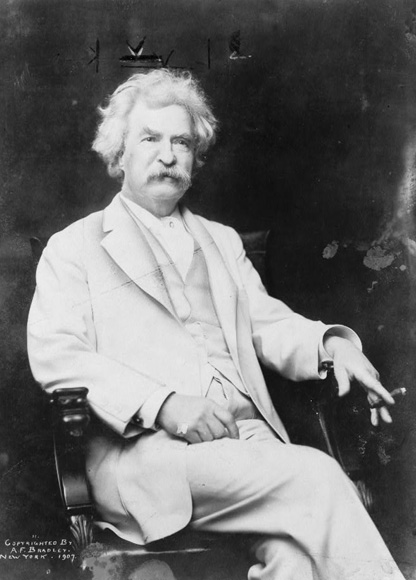
Tomorrow marks the 114th anniversary of Mark Twain‘s well-known, much-quoted, often-distorted observation: “The report of my death was an exaggeration.”

As is discussed in my 2006 book, The Year That Defined American Journalism, Twain’s remark was prompted by an article published June 1, 1897, in the New York Herald.

Mark Twain, 1907

The Herald, which then was regarded as one of the top daily newspapers in America, reported Twain, then 61, to be “grievously ill and possibly dying. Worse still, we are told that his brilliant intellect is shattered and that he is sorely in need of money.”

Twain was in London then, preparing to cover Queen Victoria’s Diamond Jubilee for William Randolph Hearst’s flamboyant New York Journal. That association allowed the Journal to puncture the Herald’s account as false.

In an article published June 2, 1897, beneath the headline, “Mark Twain Amused,” the Journal skewered the Herald’s story and offered Twain’s timeless denial: “The report of my death was an exaggeration.”

Twain’s line is often quoted as “the news of my death has been greatly exaggerated” and, sometimes, the Journal is said to have been the source for the erroneous report rather than the agent of its swift debunking.

According to the Journal, Twain said the likely source of the Herald’s error was the serious illness of his cousin, J.R. Clemens, who had been in London a few weeks before.

Ever eager to indulge in self-promotion, Hearst’s Journal enthusiastically embraced its brief association with Twain. Even so, it couldn’t have been much pleased with what the humorist filed about Victoria’s Jubilee.

As I wrote in The Year That Defined American Journalism, “Twain’s reporting about Victoria’s jubilee seemed half-hearted and hardly inspired. The spectacle was easily the most regal international story of 1897, and came at a time when the British empire was at or near its height. But Twain found the celebration overwhelming,” calling it “a spectacle for the kodak [camera], not the pen.”

Twain’s dispatch to the Journal also included this strange observation:

“I was not dreaming of so stunning a show. All the nations seemed to be filing by. They all seemed to be represented. It was a sort of allegorical suggestion of the Last Day, and some who live to see that day will probably recall this one if they are not too much disturbed in the mind at the time.”

Lining up Twain to cover the Jubilee was emblematic of Hearst’s inclination to spend lavishly to recruit big-name talent, if only for spot assignments.

Hearst was the leading practitioner of yellow journalism, or what he called the “journalism of action,” which embraced an activist vision for American newspapering.

His Journal argued that “a newspaper may fitly render any public service within its power. Acting on this principle, it has fed the hungry, brought criminals to justice and enforced by legal methods the responsibility of public officials.”

Not everyone was comfortable with or admired such an activist vision, especially as it came with such heavy and frequent doses of acute self-promotion.

Twain didn’t much like it, either. In his autobiography, he likened Hearstian yellow journalism to “that calamity of calamities.”

WJC

Related:

<!–[if !mso]> –> Twain’s reporting about Victoria’s jubilee seemed half-hearted and hardly inspired. The spectacle was easily the most regal international story of 1897, and came at a time when the British empire at or near its height. But Twain found the celebration overwhelming—“a spectacle for the kodak [camera], not the pen.”[i] His dispatch included this strange observation: “I was not dreaming of so stunning a show. All the nations seemed to be filing by. They all seemed to be represented. It was a sort of allegorical suggestion of the Last Day, and some who live to see that day will probably recall this one if they are not too much disturbed in mind at the time.”


[i]. Mark Twain, “The Great Jubilee As Described by the Journal’s Special Writers: Mark Twain’s Pen Picture of the Great Pageant in Honor of Victoria’s Sixtieth Anniversary,” New York Journal (23 June 1897): 1.

Six years on: Identity of Watergate’s ‘Deep Throat’ revealed

In Anniversaries, Cinematic treatments, Debunking, Media myths, Washington Post, Watergate myth on May 29, 2011 at 6:22 am

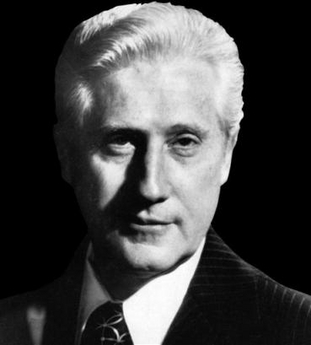
It’s been six years since W. Mark Felt,  once a senior FBI official, was revealed to have been “Deep Throat” of the Watergate era, the most famous source in modern American journalism.

Alias 'Deep Throat'

Felt’s “Deep Throat” identity had remained a secret — and was a topic of often-intense speculation — for more than 30 years.

On May 31, 2005, Vanity Fair disclosed that Felt had been the Washington Post’s elusive and enigmatic source as the Watergate scandal unfolded in 1972-73.

The disclosure was made with the consent of Felt — who then was 91 and in declining physical and mental health — and his daughter, Joan.

The Vanity Fair report meant that the Post effectively had been scooped on its own story.

“The identity of Deep Throat is modern journalism’s greatest unsolved mystery,” Vanity Fair crowed in its article lifting Felt’s secret. “It has been said that he may be the most famous anonymous person in U.S. history.”

As I note in Getting It Wrong, my media-mythbusting book that came out last year, the prolonged guessing game about the identity of “Deep Throat” help solidify the notion that the Post and its lead Watergate reporters, Bob Woodward and Carl Bernstein, were central to uncovering the scandal and forcing President Richard Nixon’s resignation.

I point out that speculation “about the identity of the ‘Deep Throat’ source provided periodic and powerful reminders about the Post and its Watergate coverage, serving to keep Woodward and Bernstein in the public eye far longer than they otherwise would have been.”

I further note:

“They and the mysterious ‘Deep Throat’ source became central figures” in what the Philadelphia Inquirer once called “the parlor game that would not die. … With each passing year, as ‘Deep Throat’s’ cloak of anonymity remained securely in place, his perceived role in Watergate gained gravitas.”

“And so,” I write, “… did the roles of Woodward and Bernstein.”

Although Alexander Haig, John Dean, and Henry Kissinger were among the suspects mentioned in the “Deep Throat” guessing game, Felt’s name always placed high on the roster of likely candidates.

As I discuss in Getting It Wrong, speculation about the identity of “Deep Throat” began in earnest in June 1974, with a front-page article in the Wall Street Journal, and continued periodically over the next 31 years.

The Journal article appeared soon after publication of All the President’s Men, Woodward and Bernstein’s best-selling book about Watergate in which they introduced the furtive source they called “Deep Throat.”

The Journal article described Felt as the top suspect.

Felt, though, repeatedly and adamantly denied having been “Deep Throat.” He was quoted as saying in the Journal article in 1974:

“I’m just not that kind of person.”

He told the Hartford Courant newspaper in 1999 that he “would have been more effective” had he indeed been Woodward’s secretive source, adding:

“Deep Throat didn’t exactly bring the White House crashing down, did he?”

That’s a revealing point that goes to the heart of what I call the heroic-journalist myth of Watergate: Disclosures by “Deep Throat” didn’t bring down Nixon’s corrupt presidency; nor did the reporting of Woodward and Bernstein.

(Bernstein, by the way, never spoke with Felt during the Watergate scandal; Felt was Woodward’s exclusive source. Bernstein finally met Felt in November 2008, shortly before the former G-man’s death.)

On the day six years ago when Felt was confirmed to have been “Deep Throat,” his family issued a statement calling him “a great American hero who went well above and beyond the call of duty at much risk to himself to save his country from a horrible injustice. We all sincerely hope the country will see him this way as well.”

Felt, though, hardly was such a noble character.

In his senior position at the FBI, he had authorized illegal burglaries as part of FBI investigations into leftists associated with the radical Weather Underground in the early 1970s.

Felt was convicted in 1980 on felony charges related to the break-ins, but pardoned by President Ronald Reagan.

Interestingly, his “Deep Throat” alter ego may best be known for a line Felt never spoke: “Follow the money.”

As I’ve discussed at Media Myth Alert, Felt never offered such guidance to Woodward. He never advised the reporter to “follow the money.”

The line doesn’t appear in the book All the President’s Men. But it was written into the script of the cinematic adaptation of Woodward and Bernstein’s book.

Follow the money” was spoken by Hal Holbrook, who delivered a bravado performance as “Deep Throat” in the movie.

Holbrook delivered his “follow the money” lines with such quiet insistence and knowing authority that it sounded for all the world as if it really had been guidance crucial to rolling up Watergate.

WJC

Recent and related:

Every good historian a mythbuster

In Anniversaries, Cinematic treatments, Debunking, Media myths, Newspapers, Washington Post, Watergate myth on May 27, 2011 at 6:10 am

While researching studies of memorable or decisive years recently, I happened across a Washington Post review of The Year That Changed the World, a book about 1989.

I was impressed by this passage in the review:

The good historian is a mythbuster.”

Indeed.

Couldn’t agree more.

The reviewer, Gerard DeGroot, also wrote:

“The past is what happened, history what we decide to remember. We mine the past for myths to buttress our present.”

That’s well said, too. It’s a characterization that offers insight about the rise and diffusion of media-driven myths, 10 of which I debunk in my latest book, Getting It Wrong.

History often is what we decide to remember. And we tend to remember what’s most accessible, what’s most easy to remember.

Take, for example, the mediacentric interpretation of Watergate, the greatest political scandal in American history, a scandal that destroyed a presidency and sent nearly twenty men to jail.

The shorthand, easy-to-grasp version of Watergate is that Bob Woodward and Carl Bernstein of the Washington Post, aided immeasurably by a stealthy, high-level source code-named “Deep Throat,” brought down Richard Nixon’s corrupt presidency.

That’s also the mediacentric version of Watergate, the version journalists love to recall. It serves to remind them of the potential power of the news media.

But as I note in Getting It Wrong, the mediacentric interpretation is misleading and historically inaccurate; it “minimizes the far more decisive forces that unraveled the scandal and forced Nixon from office,” I write.

To roll up a scandal of Watergate’s dimensions, I add, “required the collective if not always the coordinated forces of special prosecutors, federal judges, both houses of Congress, the Supreme Court, as well as the Justice Department and the FBI.

“Even then,” I argue, “Nixon likely would have served out his term if not for the audiotape recordings he secretly made of most conversations in the Oval Office of the White House. Only when compelled by the Supreme Court did Nixon surrender those recordings, which captured him plotting the cover-up and authorizing payments of thousands of dollars in hush money.”

So why do we choose to remember the Woodward-Bernstein-mediacentric interpretation of Watergate? Why has it become the dominant narrative of the scandal? That it is shorn of complexity and easy to grasp is one reason.

A more powerful reason is to be found in the cinematic adaptation of All the President’s Men, Woodward and Bernstein’s book about their Watergate reporting.

The book came out in June 1974 as Watergate was approaching its climax, and was a best-seller.

All the President’s Men was an even greater success in its screen adaptation. It was released 35 years ago this spring and surely ranks as the most-viewed movie about Watergate.

To an extent “far greater than the book,” I write in Getting It Wrong, “the cinematic version of All the President’s Men placed Woodward and Bernstein at the center of Watergate’s unraveling while denigrating the efforts of investigative agencies such as the FBI.

“The effect,” I add, “was to solidify and elevate” the heroic-journalist myth of Woodward and Bernstein, “giving it dramatic power, and sustaining it in the collective memory.”

For contemporary journalists who confront sustained and sweeping upheaval in their field, the mediacentric myth of Watergate is comforting,  reassuring.

Recalling the myth and treating it as authentic serves to buttress the present against the riptide of change.

WJC

Recent and related:

A ‘follow the money’ hat trick

In Anniversaries, Cinematic treatments, Debunking, Media myths, Washington Post, Watergate myth on May 14, 2011 at 9:32 am

Follow the money,” the line so readily associated with the Washington Post and its Watergate reporting, is freighted with no fewer than three related media myths.

One is that the Post’s stealthy, high-level source known as “Deep Throat” uttered “follow the money” as guidance vital to unraveling the Watergate scandal.

What page is it on?

Two is that “Deep Throat” conferred privately with both Bob Woodward and Carl Bernstein, the Post’s  lead reporters on Watergate.

Three is that “follow the money” appears in Woodward and Bernstein’s book about Watergate, All the President’s Men.

All three are untrue.

And all three were incorporated into a blog report posted yesterday at the online site of the Providence Journal, in what was a rare “follow the money” hat trick.

The Providence Journal item described “follow the money” as “the famous admonition from the source ‘Deep Throat’ to Washington Post reporters Bob Woodward and Carl Bernstein during the Watergate scandal that brought down President Richard M. Nixon. It was immortalized in the reporters’ book, and the subsequent movie, ‘All the President’s Men.'”

No, no, and most definitely no.

The Post’s “Deep Throat” source — who was revealed in 2005 to have been W. Mark Felt, formerly a senior FBI official — never recommended that the Post “follow the money” as a way to get a handle on Watergate.

“Deep Throat,” moreover, conferred only with Woodward, sometimes late at night in a parking garage in the Rosslyn section of Arlington, Va., across the Potomac River from Washington. Felt/”Deep Throat” never met Bernstein until weeks before Felt’s death in 2008.

And, no, “follow the money” certainly does not appear in Woodward and Bernstein’s book, which came out in June 1974, just as the Watergate scandal was nearing its denouement with Nixon’s resignation.

The famous line was written into the cinematic version of All the President’s Men, which came out 35 years ago last month.

Follow the money” was spoken not by Felt but by the actor who played “Deep Throat” in the movie — Hal Holbrook.

As I’ve noted at Media Myth Alert, Holbrook turned in a marvelous performance as a twitchy, tormented, conflicted “Deep Throat.”

And he delivered his “follow the money” lines with such quiet conviction that for all the world they seemed to suggest a way through the labyrinth that was the Watergate scandal.

But even if guidance such as “follow the money” had been offered to Woodward (and/or Bernstein), it would have taken them only so far in investigating Watergate. The scandal was, after all, much broader than the misuse of campaign monies.

In the end, Nixon was toppled by his felonious conduct in attempting to cover up the signal crime of Watergate, the break-in at the headquarters of the Democratic National Committee in June 1972.

The simplified, mediacentric, follow-the-money  interpretation of Watergate tends to minimize the more decisive forces that unraveled the scandal and forced Nixon from office.

As I note in my latest book, Getting It Wrong, rolling up a scandal of Watergate’s dimensions required “the collective if not always the coordinated forces of special prosecutors, federal judges, both houses of Congress, the Supreme Court, as well as the Justice Department and the FBI.

“Even then,” I write, “Nixon likely would have served out his term if not for the audiotape recordings he secretly made of most conversations in the Oval Office of the White House. Only when compelled by the Supreme Court did Nixon surrender those recordings, which captured him plotting the cover-up and authorizing payments of thousands of dollars in hush money.”

Against the tableau of subpoena-wielding investigative authorities, the contributions of Woodward and Bernstein in the Watergate scandal fade into comparative insignificance.

WJC

Recent and related:

Bay of Pigs suppression myth too rich and delicious to die away

In Anniversaries, Bay of Pigs, Debunking, Media myths, New York Times on May 7, 2011 at 5:31 am

The tale of the New York Times censoring itself in the runup to the Bay of Pigs invasion 50 years ago supposedly offers timeless lessons about the perils of journalists surrendering to the agenda of government.

That anecdote, I write in my latest book, Getting It Wrong, is “often cited as an object lesson … about what can happen when independent news media give in to power-wielding authorities.”

Supposedly, in early April 1961, the Times spiked or emasculated a detailed report about the invasion preparations — and did so at the urging of President John F. Kennedy.

But as I discuss in detail in Getting It Wrong, neither Kennedy nor anyone in his administration asked or lobbied the Times to kill or tone down that report — which was written by a veteran correspondents named Tad Szulc, ran to more than 1,000 words, and was published April 7, 1961, above the fold on the newspaper’s front page.

Like many consensus narratives and media-driven myths, though, the Times-Bay of Pigs suppression tale is too neat and tidy, too rich and delicious, ever to die away.

A hint of that came yesterday at the online site of CounterPunch, which touts itself as “America’s best political newsletter.”

CounterPunch posted an essay that referred to the Times’ purported act of self-censorship, stating:

“Back in April 1961, the Times deleted from Tad Szulc’s story the time and place of landing of the CIA-backed Bay of Pigs invasion because President Kennedy told the Times’ publisher it would not serve U.S. National Security interests. (David Halberstam, The Powers That Be, p. 448).”

It’s neat the passage was cited. But the citation doesn’t render it accurate.

Halberstam‘s Powers That Be, after all, is no authoritative source on the tale of the Times‘ self-censorship. Far from it.

Halberstam’s account claimed that Kennedy called James (“Scotty”) Reston, the Times’ Washington bureau chief, “and tried to get him to kill” the Szulc story.

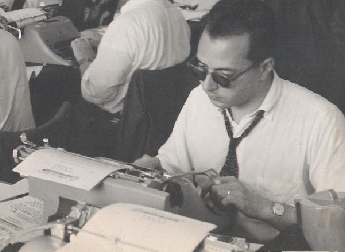
Szulc of the Times

According to Halberstam, Kennedy “argued strongly and passionately about what the Szulc story would do to his policy” and president warned that the Times would risk having blood on its hands were the article published and the invasion a failure.

Heady stuff, but it never happened.

As I note in Getting It Wrong, there is “no evidence that Kennedy spoke with anyone at the Times” on April 6, 1961, the day Szulc’s dispatch was written, edited, and prepared for publication.

“The Kennedy Library in Boston says that the White House telephone logs reveal no calls were placed to Reston” or other Times executives that day, I write, adding:

“Kennedy had almost no chance to speak with those executives during the interval from when Szulc’s story arrived at the Times building in midtown Manhattan and when it was set in type.”

That’s because the president spent the last half of the afternoon of April 6, 1961, playing host to Harold Macmillan, the British prime minister, on a lengthy cruise down the Potomac River to Mount Vernon.

The outing ended around 6:30 p.m., leaving Kennedy only a tiny window of opportunity to call Times executives before the first edition of the newspaper hit the streets.

Harrison Salisbury, a Pulitzer-winning Times correspondent and editor, offered in his book, Without Fear of Favor the most detailed account of the Times’ deliberations on the Szulc article. And Salisbury was unequivocal:

“The government in April 1961,” he wrote, “did not … know that The Times was going to publish the Szulc story, although it was aware that The Times and other newsmen were probing in Miami. Nor did President Kennedy telephone [Times President Orvil] Dryfoos, Scotty Reston or [Managing Editor] Turner Catledge about the story.”

The editing that Szulc’s story received served to improve its accuracy. The reference to the invasion’s imminence was removed, as it represented “a prediction and not a fact,” as Reston wrote years later.

(The story Szulc submitted included no reference to “place of landing.”)

The invasion at the Bay of  Pigs was launched April 17, 1961, or 10 days after Szulc’s story appeared.

In the interim, as I point out in Getting It Wrong, the Times “did not abandon the Cuba-invasion story ….  Subsequent reporting in the Times, by Szulc and others, kept expanding the realm of what was publicly known about a coming assault against Castro.”

So Szulc’s article of April 7, 1961, was no one-off effort. And it wasn’t sanitized at the request of the Kennedy administration, either.

WJC

Many thanks to Little Miss Attila
for linking to this post

Recent and related:

‘Follow the money’: You won’t find that line in the book

In Anniversaries, Cinematic treatments, Debunking, Media myths, Washington Post, Watergate myth on April 27, 2011 at 4:00 am

The most famous line about Watergate reporting — “follow the money” — appears nowhere in the most famous book about Watergate reporting, All the President’s Men.

Not in this book

It’s often thought that it does. The Post and Courier newspaper in Charleston, S.C., said so, for example, in an editorial posted online yesterday.

The editorial referred to the stealthy Watergate source of Washington Post reporter Bob Woodward and declared:

“‘Deep Throat,’ finally identified in 2005 as former FBI associate director Mark Felt, gave Carl Bernstein and Bob Woodward the inside dirt on the Nixon administration’s attempt to cover up its dirty tricks.

“He also gave them, as chronicled in their book ‘All the President’s Men,’ this tip: ‘Follow the money.'”

Felt was Woodward’s source; he never met Bernstein until late in Felt’s life.

And Felt never offered Woodward the advice of “follow the money.”

That line doesn’t appear in All the President’s Men, Woodward and Bernstein’s book about their reporting on Watergate. Nor does it appear in any Watergate-related article or editorial published in the Washington Post before 1981.

The passage was, though, written into the screenplay of All the President’s Men, the 1976 cinematic version of Woodward and Bernstein’s book. The movie came out 35 years ago this month, and has aged quite well.

The acting was notably strong and included a memorable performance by Hal Holbrook, who played a shadowy, tormented “Deep Throat.”

Holbrook delivered his lines about “follow the money” with such certainty and quiet insistence that it sounded as if it really were guidance vital to rolling up Watergate.

But in the real-life investigation of Watergate, “follow the money” wouldn’t have taken investigators to the point of determining Nixon’s guilty role in the crimes of Watergate.

As I write in Getting It Wrong, my media-mythbusting book that came out last year, some 20 men associated with Nixon’s administration or his 1972 reelection campaign went to jail for crimes linked to Watergate.

Rolling up a scandal of such sweep, I write in Getting It Wrong, “required the collective if not always the coordinated forces of special prosecutors, federal judges, both houses of Congress, the Supreme Court, as well as the Justice Department and the FBI.

“Even then,” I add, “Nixon likely would have served out his [second] term if not for the audiotape recordings he secretly made of most conversations in the Oval Office of the White House. Only when compelled by the Supreme Court did Nixon surrender those recordings, which captured him plotting the cover-up and authorizing payments of thousands of dollars in hush money.”

What cost Nixon the presidency wasn’t of the improper use of campaign monies but his efforts to obstruct justice and deter the FBI’s investigation of the scandal.

Still, it’s curious why “follow the money” crossed so seamlessly from the silver screen to the vernacular.

One reason no doubt are proximate release dates of the book and movie of All the President’s Men, allowing the two versions to become confounded.

The book came out in June 1974, just as Watergate was nearing its endgame with Nixon’s resignation in August 1974. The movie was released in April 1976, as the wounds of Watergate were only beginning to heal.

Another reason for the persistent appeal of “follow the money” lies in its pithiness. Like many media-driven myths — those dubious or apocryphal tales about the news media and their power — “follow the money” is neat, tidy, succinct. It’s easy to remember, and it seems almost too good not to be true.

But probably the most compelling explanation for its tenacity lies in the power of the cinema to propel media myths and to offer plausible if greatly simplified versions of history.

Richard Bernstein addressed this tendency quite well in a memorable essay published in 1989 in the New York Times.

He wrote that “movies-as-history” tend “to construct Technicolored and sound-tracked edifices of entertainment on the slender foundations of what appear to be actual events, or, at the very least, to mingle fact with fancy, history with imagination, in such a way that the average viewer has no way of sorting out one from the other.”

Quite so.

I note in Getting It Wrong that the cinematic version of All the President’s Men helped ensure that Woodward, Bernstein, and the Post would be regarded as vital and central to the unraveling of Watergate.

The mediacentric version of Watergate — or what I call the heroic-journalist interpretation — allows audiences to sidestep the scandal’s off-putting complexity and engage in a narrative that is entertaining and reassuring.

WJC

Recent and related:

Woodward, ‘tombeur de Nixon’

In Anniversaries, Cinematic treatments, Debunking, Media myths, Washington Post, Watergate myth on April 25, 2011 at 7:18 am

That headline — which appeared with an item posted yesterday at Les In Rocks, a slick, Paris-based arts and music blog — translates to:

“Woodward, the guy who brought down Nixon.”

Which is hyperbole.

Bob Woodward and the Washington Post did not bring down Richard Nixon in the Watergate scandal of 1972-74.

But as the headline and accompanying interview with Woodward suggest, Wooward-hero worship can be surprisingly intense and deep-seated abroad.

The article’s opening paragraph declared:

“Not many people can boast of having been played in the movies by Robert Redford. In fact, there’s only one. His name is Bob Woodward. He’s a journalist, and with his colleague Carl Bernstein, in life as in the film All the President’s Men, brought down Richard Nixon in 1974 in the Watergate affair.”

(Here’s the original French version: “Peu d’hommes peuvent se vanter d’avoir été incarnés au cinéma par Robert Redford. En fait, il n’y en a qu’un. Il s’appelle Bob Woodward. Il est journaliste et, avec son collègue Carl Bernstein, dans la vie comme dans le film Les Hommes du Président, il fit tomber Richard Nixon en 1974 avec l’affaire du Watergate.”)

Redford, of course, played Woodward in the motion picture, All the President’s Men, which was released 35 years ago this month.

It is easily the most-viewed film about the scandal and, as I point out in Getting It Wrong, my media-mythbusting book that came out last year, All the President’s Men effectively sealed the heroic-journalist myth of Watergate.

The heroic-journalist interpretation has it that the scandal’s disclosure pivoted on Woodward and Bernstein’s dogged reporting for the Post, that they exposed the crimes of Watergate and forced Nixon’s resignation.

That’s an interpretation not even the Post — and not even Woodward — buy into.

As Woodward declared in an interview in 2004 with American Journalism Review:

To say the press brought down Nixon, that’s horseshit.”

Less indelicately, the Post’s then-ombudsman, Michael Getler, wrote in 2005:

“Ultimately, it was not The Post, but the FBI, a Congress acting in bipartisan fashion and the courts that brought down the Nixon administration. They saw Watergate and the attempt to cover it up as a vast abuse of power and attempted corruption of U.S. institutions.”

But the movie — which has aged impressively well — offers another, simpler, less-accurate interpretation.

As I write in Getting It Wrong:

All the President’s Men placed Woodward and Bernstein at the center of Watergate’s unraveling while denigrating the efforts of investigative agencies such as the FBI. The effect was to solidify and elevate the heroic-journalist myth, giving it dramatic power, and sustaining it in the collective memory.”

The film closes with the Woodward and Bernstein characters (played by Redford and Dustin Hoffman, respectively) at their respective desks in the Post’s brilliantly lighted newsroom, pounding away at their typewriters.

The newsroom is otherwise empty. Woodward and Bernstein remain oblivious to their colleagues as they slowly drift in. It’s Inauguration Day 1973 and the Post editors and reporters are shown gathering at television sets in the newsroom to watch as Nixon is sworn in to a second term. Woodward and Bernstein, however, remain at their desks, focused on their work.

The television sets show Nixon smiling as he completes the oath of office. The first volleys of a twenty-one gun salute begin to boom. Woodward and Bernstein continue their frantic typing and the cannonade resounds ever louder. The newsroom scene dissolves to a close-up of an overactive teletype machine, noisily battering out summaries about indictments, trials, and convictions of Nixon’s men.

The clattering machine spells out “Nixon resigns, Ford sworn in,” and stops abruptly. The movie’s over.

It’s an imaginative and effective ending which, as I write in Getting It Wrong, “pulls together the many strands of Watergate. But more than that, it offers an unmistakable assertion of the power and centrality of the press in Nixon’s fall.”

Indeed, it is perhaps the most powerful and vivid assertion of Watergate’s heroic-journalist myth. Who else but Woodward and Bernstein?

WJC

Recent and related:

That’s rich: Woodward bemoans celebrity journalism

In Anniversaries, Cinematic treatments, Debunking, Media myths, Washington Post, Watergate myth on April 24, 2011 at 11:33 am

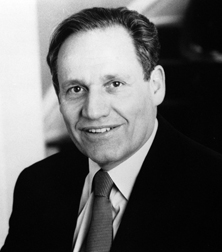
The country’s foremost celebrity journalist, Bob Woodward of the Washington Post and Watergate fame, has deplored what he called the “curse” of celebrity journalism, which he reportedly said has infected the news media.

Woodward, celebrity journalist

Woodward was speaking the other night at a panel in Austin, Texas, that was convened to mark the 35th anniversary of All the President’s Men, the motion picture about the Watergate reporting of Woodward and his Post colleague, Carl Bernstein.

According to a report posted online by ABC News, Bernstein, who also was on the panel, complained that the culture of journalism has shifted dramatically since the Watergate era of the early 1970s. Woodward, according to the ABC post, characterized this shift the “curse” of celebrity journalism — the “Paris Hilton factor and Kardashian equation.”

Even if he was referring to excessive media attention to the likes of Paris Hilton and Kim Kardashian, it’s still pretty rich for Woodward to bemoan celebrity journalism — given that All the President’s Men established the cult of the contemporary celebrity journalist.

By “celebrity journalist,” I mean the journalist who has attained outsize prominence or who is regarded as more important than the people and the events he or she covers.

Sydney Schanberg, writing in the Village Voice in 2005, pointed out that the Watergate era of the early 1970s “can be fairly marked as the starting point of the age of journalists as celebrities. Bob Woodward and Carl Bernstein weren’t celebrities when they cracked the story for The Washington Post, but they soon would be, and a wave of emulators quickly began applying to journalism schools.”

Schanberg was incorrect about the Watergate effect on journalism schools: The surge in enrollments was well underway before Watergate, before Woodward and Bernstein became household names.

But he was quite correct about Watergate’s having represented a demarcation of modern celebrity journalism. (Alicia Shepard referred to this phenomenon in 1997, writing in American Journalism Review in 1997: “The Watergate affair changed journalism in many ways, not the least of which was by launching the era of the journalist as celebrity.” She also claimed in the article that Woodward and Bernstein “brought down a president.” Not so.)

More than any other single factor, the movie All the President’s Men propelled the media myth of the heroic journalist — the beguiling notion that Woodward and Bernstein’s investigative reporting of the Watergate scandal exposed the corruption of Richard Nixon and forced his resignation in disgrace in 1974.

As I discuss in Getting It Wrong, my media-mythbusting book that came out last year, All the President’s Men placed the characters of Woodward and Bernstein squarely if inappropriately “at the center of Watergate’s unraveling while denigrating the efforts of investigative agencies such as the FBI.

“The effect,” I write, “was to solidify and elevate the heroic-journalist myth, giving it dramatic power, and sustaining it in the collective memory.”

The heroic-journalist interpretation of Watergate has become “the most familiar storyline of Watergate: ready short-hand for understanding Watergate and its denouement, a proxy for grasping the scandal’s essence while avoiding its forbidding complexity,” I note in Getting It Wrong, adding:

“How the Post and its reporters uncovered Watergate is deeply ingrained in American journalism as one of the field’s most important and self-reverential stories.”

I further note in Getting It Wrong that the notion Woodward and Bernstein “exposed Nixon’s corruption is a favored theme in textbooks of journalism and mass communication.” And that offers a wholly inaccurate misleading reading of the history of Watergate.

Woodward and Bernstein didn’t bring down Nixon’s corrupt presidency. That was the effect of the collective if not always the coordinated efforts of the Justice Department, the FBI, special Watergate prosecutors, bipartisan panels of both houses of Congress, and the U.S. Supreme Court.

Against that tableau, the contributions of Woodward and Bernstein recede in significance.

WJC

Many thanks to Instapundit
Glenn Reynolds for linking to this post

Recent and related: