W. Joseph Campbell

Archive for the ‘Debunking’ Category

Time for WaPo to disclose sources on bogus Lynch story

In Anniversaries, Debunking, Jessica Lynch, Media myths, Washington Post on April 3, 2011 at 7:16 am

It may border on sacrilege to ask journalists to divulge confidential sources.

Private Lynch

In the still-murky case of Private Jessica Lynch, it’s an appropriate and relevant request.

Eight years ago today, the Washington Post published an electrifying, front-page report that thrust Lynch into international fame which has never fully receded.

Based on comments by “U.S. officials” it otherwise did not identify, the Post said Lynch, a 19-year-old supply clerk in the Army’s 507th Maintenance Company, had fought fiercely in the ambush of her unit at Nasiriyah, in southern Iraq.

Lynch, the Post reported, “continued firing at the Iraqis even after she sustained multiple gunshot wounds and watched several other soldiers in her unit die around her in fighting.”
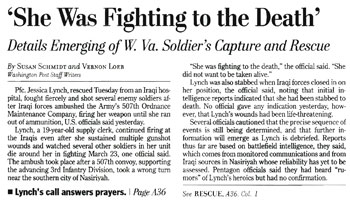
The newspaper quoted “one official” as saying:

“‘She was fighting to the death She did not want to be taken alive.'”

As I note in my media-mythbusting book, Getting It Wrong, the Post’s hero-warrior tale was an immediate sensation, a story picked up by news outlets around the world.  For example, the Daily Telegraph of Sydney, Australia, reported Lynch’s purported heroics on its front page, saying she had “staged a one-woman fight to the death,” and was “certain to become a national icon.”

But the hero-warrior tale about Lynch was  utterly false.

She never fired a shot at Nasiriyah; her rifle jammed during the attack. She suffered shattering injuries when a rocket-propelled grenade struck her Humvee, causing the vehicle to crash. But she wasn’t shot.

Lynch was taken prisoner and treated at an Iraqi hospital, from where she was rescued April 1, 2003, by a U.S. special operations team.

Meanwhile, the real hero of Nasiriyah, an Army cook-sergeant named Donald Walters, received nothing remotely approaching the attention given the false story about Lynch’s purported derring-do. Walters is believed to have fought to his last bullet at Nasiriyah. He was captured and executed by Iraqi irregulars.

The Post showed no interest in Walters’ heroism, or in explaining how his deeds were misattributed to Lynch.

And as I note in Getting It Wrong, the Post never has disclosed the identity of the source or sources behind its bogus “fighting to the death” story about Lynch.

So why does sourcing of the Post’s erroneous report still matter, eight years on?

It matters because, as months passed and American public opinion turned against the war in Iraq, the singular role of the Post in the mythical hero-warrior narrative about Lynch faded in favor of a false narrative that the Pentagon had made it all up.

The military concocted the hero-warrior tale and fed it to the Post in a crude attempt to bolster U.S. support for the Iraq War. So the false narrative goes.

The Post itself has been complicit in suggesting that machinations by the Pentagon were behind the bogus story. But it’s clear that the Post alone placed the “fighting to the death” story into the public domain.

And as I discuss in Getting It Wrong, the Pentagon wasn’t the source for the hero-warrior tale.

Vernon Loeb, who shared a byline on the “fighting to the death” story, said in December 2003 on NPR’s  Fresh Air show program that he “could never get anybody from the Pentagon to talk about” the Lynch case.

“They wouldn’t say anything about Jessica Lynch,” Loeb said.

“I just didn’t see the Pentagon trying to create a hero where there was none,” he added. “I mean …they never showed any interest in doing that, to me.”

Loeb declared:

“Our sources for that story were not Pentagon sources.”

Loeb described them as “some really good intelligence sources” in Washington, D.C. , and added:

“We wrote a story that turned out to be wrong because intelligence information we were given was wrong. That happens quite often.”

Loeb on another occasion was quoted by the New York Times as saying: “Far from promoting stories about Lynch, the military didn’t like the story.”

Despite Loeb’s exculpatory remarks, the erroneous view the Pentagon concocted the story about Lynch’s heroics lives on, in large measure because it corresponds so well to the view that the Iraq War was a thoroughly botched affair.

Like many media-driven myths, the false narrative about the Pentagon offers a simplistic, easy-to-understand account of an event — a war — that was complex, controversial, and faraway.

By identifying its sources for the erroneous “fighting to the death” report about Lynch, the Post will correct a false narrative.

Its sources on the “fighting to the death” story don’t deserve the cloak of anonymity, given how they so badly misled the newspaper. Journalist-source confidentiality isn’t intended as a vehicle to cover up error and permit the diffusion of false accusation.

So who were those “really good intelligence sources”? The Post has an obligation to say.

Especially since it has been the newspaper’s policy to press sources to be quoted by name. On the record.

WJC

Many thanks to Instapundit
Glenn Reynolds for linking to this post

Recent and related:

What a Rash remark: ‘If I’ve lost Cronkite, I’ve….’

In Cronkite Moment, Debunking, Media myths, New York Times, Newspapers on April 2, 2011 at 7:17 am

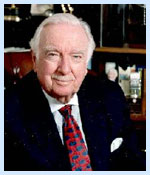
The mythical “Cronkite Moment” can be an irresistible point of reference in broadcast journalism, especially in assessing the shortcomings and inadequacies of contemporary network news anchors.

A commentary posted yesterday at the online site of the Minneapolis Star Tribune offered such a comparison, unfavorably comparing CBS News anchor Katie Couric to the venerable Walter Cronkite.

Couric is believed on her way out as CBS anchor and the commentary’s author, John Rash, noted that Cronkite said he regretted leaving the anchor’s chair in 1981.

In what could pass for a eulogy, Rash also wrote:

“The avuncular Cronkite, once considered the most trusted man in America, was also one of the most influential. His … clear-eyed assessment of Vietnam as a ‘stalemate’ led [John] Kennedy’s successor, President Lyndon B. Johnson, to say, ‘If I’ve lost Cronkite, I’ve lost America.'”

There’s no small amount of myth to unpack in that paragraph.

Most trusted?

For starters, the claim that Cronkite was the “most trusted man in America” rests on a flimsy foundation. The characterization stems from an unrepresentative survey conducted in 18 states in 1972, and from subsequent newspaper advertisements in which CBS touted Cronkite as most trusted.

As for Cronkite’s assertion that the U.S. military was “mired in stalemate” in Vietnam — well, there’s no evidence that Johnson reacted by saying, “If I’ve lost Cronkite, I’ve lost America.”

Or by saying anything akin to such a comment.

The Cronkite-Johnson anecdote, though, is one of the best known in American journalism. It’s often called as the “Cronkite Moment” — and it’s also a media-driven myth, one of 10 I address and debunk in my latest book, Getting It Wrong.

Cronkite certainly made the “mired in stalemate” assessment, at the close of a special report that CBS aired on February 27, 1968.

At the White House, the story goes, Johnson watched the Cronkite program and upon hearing the anchorman’s “mired in stalemate” critique, reached over, snapped off the television and said to an aide or aides:

“If I’ve lost Cronkite, I’ve lost Middle America.”

But as I point out in Getting It Wrong, Johnson wasn’t at the White House that night. He wasn’t in front of a television set.

He didn’t see the program.

Johnson was in Austin, Texas, at the 51st birthday party of Governor John Connally, a longtime political ally.

And about the time Cronkite intoned his “mired in stalemate” assessment, Johnson wasn’t wringing his hands about his war policy. He was cracking a light-hearted joke about Connally’s age.

“Today, you are 51, John,” the president said. “That is the magic number that every man of politics prays for—a simple majority.”

As I’ve noted at Media Myth Alert, it is difficult to fathom how Johnson could have been much moved by a television program he didn’t see.

Besides, Cronkite was scarcely the first to invoke “stalemate” in describing Vietnam.

The New York Times turned to that term periodically in the months before the presumptive “Cronkite Moment.”

In a front-page analysis published August 7, 1967, the Times declared that “the war is not going well. Victory is not close at hand.”

The Times report was published on its front page beneath the headline:

Vietnam: The Signs of Stalemate.

A month before, on July 4, 1967, the Times had said of the war effort:

“Many officers believe that despite the commitment of 466,000 United States troops now in South Vietnam … the military situation there has developed into a virtual stalemate.”

And the Times said in an editorial published October 29, 1967:

“Instead of denying a stalemate in Vietnam, Washington should be boasting that it has imposed a stalemate, for that is the prerequisite–on both sides–to a negotiated settlement. That settlement, if it is to be achieved, will have to be pursued with the same ingenuity and determination that have been applied to fighting the war.”

So Cronkite in his report about Vietnam on February 27, 1968, essentially reiterated an assessment that the Times had offered on a number of occasions  in the months before.

“Stalemate” may have been a “clear-eyed” assessment. But by the time Cronkite invoked the term, “stalemate” in Vietnam was neither novel nor stunning.

WJC

Recent and related:

Myth and error: Recalling the rescue of Private Lynch

In Anniversaries, Debunking, Jessica Lynch, Media myths, Newspapers, Washington Post on April 1, 2011 at 12:49 pm

Today marks the eighth anniversary of the swiftly executed rescue of Private Jessica Lynch from a hospital in Iraq, an event long since steeped in myth and distortion. The prevailing dominant narrative has it that the rescue was contrived — much like the rationale for the war in Iraq.

Lynch rescued

But the dominant narrative is in error.

Lynch’s rescue, the first of a U.S. soldier held captive behind enemy lines since World War II, was the highly effective work of a team of Army Rangers and Navy Seals which extricated Lynch within minutes, and without injury.

But less than two days later, the Lynch case became swept up in myth and error that persist eight years on.

On April 3, 2003, the Washington Post published its famously botched story about Lynch, saying the young woman had fought fiercely against Iraqis attackers before being wounded, overwhelmed, and taken prisoner in an ambush at Nasiriyah on March 23, 2003.

The Post report, which appeared beneath the headline, “‘She Was Fighting to the Death’,” was an instant sensation, picked up by news organizations around the world. The Times of London, for example, said that Lynch’s battlefield derring-do surely had won her “a place in history as a gritty, all-American hero…”

Sgt. Walters

The tale of Lynch’s heroics turned out to be utterly false, a case of apparent mistaken identity. Although the Post never adequately addressed how it got the story so thoroughly wrong, the battlefield heroics it attributed to Lynch most likely were the deeds of a cook-sergeant in Lynch’s unit, Donald Walters.

As I write in Getting It Wrong, my media-mythbusting book that came out last year,  Walters during the ambush at Nasiriyah “either stayed behind, or was left behind, to lay down covering fire as his fellow soldiers tried to make their escape. Walters fought his attackers in a fashion that the Post attributed to Lynch.”

Richard S. Lowry, in a fine account of the battle at Nasiriyah, wrote of Walters:

“He probably ‘fought to his last bullet.’ He was captured alive and taken to an Iraqi stronghold and later murdered.”

Walters, the father of three children, was executed by Iraqi irregulars.

Lynch, as it turned out, had never fired a shot in the attack. She was badly injured in the crash of a Humvee in trying to escape the Iraqi ambush.

As the Post’s erroneous report about Lynch’s purported heroics unraveled in the spring of 2003, suspicions arose that her rescue had been drama contrived.

“Such suspicions,” I write in Getting It Wrong, “reached full expression in May 2003, in a documentary broadcast on the British Broadcasting Corporation …. Relying almost entirely on the accounts of Iraqi medical personnel at the hospital, the BBC concluded that the rescue of Lynch was ‘one of the most stunning pieces of news management ever conceived,’ a shameless bit of stagecraft done for propaganda purposes.”

The BBC version of the rescue, though vigorously disputed by the Pentagon, soon congealed into the dominant popular narrative about the Lynch case. “After all,” I note in Getting It Wrong, “the notion of a theatrical but counterfeit rescue operation fit well with the curdled popular view about the war in Iraq.”

But an investigation by the Defense Department’s inspector general — an inquiry requested by three Democratic members of Congress, including Rahm Emanuel — reported in 2007 that the BBC’s allegations had not been substantiated, that no evidence had been uncovered to support the notion the rescue “was a staged media event.”

In testimony to Congress in April 2007, Thomas F. Gimble, the Defense Department’s acting inspector general, said the rescue operation was found to have been “a valid mission” to recover a prisoner of war “under combat conditions.”

More than thirty witnesses were interviewed in the inspector general’s inquiry, including members of the Special Operations rescue team, Gimble said in written testimony.

Few if any of those witnesses had been interviewed by news organizations, he noted. In undertaking the Lynch rescue, Gimble said, the extrication team “fully expected to meet stiff resistance” and had come under enemy fire from the hospital building and areas nearby.

Gimble’s report, I note in Getting It  Wrong , represented “an unequivocal rebuke to the BBC’s account. Even so, by the time Gimble testified, four years had passed and the BBC’s version had become an unshakeable, widely accepted element of the Lynch saga.”

Gimble’s report, I add, “did not fit what had become the dominant narrative about the rescue. It made little news.”

WJC

Recent and related:

He may be a crook, but he’s right about Vietnam, Watergate

In Cronkite Moment, Debunking, Media myths, Newspapers, Washington Post, Watergate myth on March 31, 2011 at 10:20 am

He may be a crook, but he’s right about Vietnam and Watergate: They were no “crowning achievements” for the news media, even though journalists love to embrace them as such.

Black mug shot

The crook is erstwhile media mogul Conrad Black, who was released on bail late last year from a prison in Florida. In a speech this week in New York, Black declared journalism “an occupation that suffers from a collective and in some cases individual narcissism.”

The Canadian-born Black, who gave up his citizenship to accept a British peerage, was quoted indirectly by Toronto’s Globe and Mail as saying:

“What journalists believe to be crowning achievements — for example, the crusading reporting on the Vietnam War and Watergate — are nothing of the sort.”

So why should anyone care what Black thinks or says? He was, after all, accused of looting Hollinger International, the company that once was at the heart of his media empire.

But even a disgraced former press tycoon can offer useful insight, and Black’s observation about Vietnam and Watergate are on target: News coverage did not bring about an end to the war in Vietnam; nor did the press didn’t bring down Richard Nixon in the Watergate scandal.

Journalists, though, do love to believe both self-reverential claims.

As I write in Getting It Wrong, my media mythbusting book that came out last year, such “purported achievements are compelling and exert an enduring allure; to expose them as exaggerated or untrue is to take aim at the self-importance of American journalism.”

The media myth about Vietnam often revolves around the so-called “Cronkite Moment” in February 1968, when CBS News anchorman Walter Cronkite declared on air that the U.S. military was “mired in stalemate” in Vietnam.

Supposedly, President Lyndon Johnson watched Cronkite’s report and, upon hearing the “mired in stalemate” assessment, realized his Vietnam policy was a shambles.

In a supposed moment of dazzling clarity, Johnson is said to have snapped off the television set and declared to an aide or aides:

“If I’ve lost Cronkite, I’ve lost Middle America.”

Or:

“If I’ve lost Cronkite, I’ve lost the war.”

Or something to that effect. Versions vary, but the point is that Cronkite’s assessment supposedly altered U.S. policy, and altered history.

Which was demonstrably not the case.

As I discuss in Getting It Wrong, Johnson didn’t see Cronkite’s program when it aired. He was at the time cracking a light-hearted joke in Austin, Texas, at the 51st birthday party of Governor John Connally.

It is hard to fathom how the president could have been much influenced by a show he hadn’t seen.

In the days and weeks immediately after the “Cronkite Moment,” Johnson was hardly reduced to wringing his hands over failed policy in Vietnam. Rather, he gave a couple of robust speeches in which he urged renewed commitment to the war.

Johnson vowed in one speech that the United States would “not cut and run” from its obligations in Vietnam. In another, in mid-March 1968, he called for “a total national effort to win the war.”

And the notion that the press — specifically, the Washington Post — brought down Nixon in the Watergate scandal is an interpretation that even the Post has sought to dismiss.

I note in Getting It Wrong that the newspaper’s then-ombudsman, Michael Getler, wrote in 2005:

“Ultimately, it was not The Post, but the FBI, a Congress acting in bipartisan fashion and the courts that brought down the Nixon administration. They saw Watergate and the attempt to cover it up as a vast abuse of power and attempted corruption of U.S. institutions.”

Bob Woodward, one of the two lead reporters for the Post on Watergate, said as much, if in earthier terms. He declared in an interview with American Journalism Review in 2004:

“To say that the press brought down Nixon, that’s horseshit.”

So even if he didn’t go into much detail about Vietnam and Watergate, Black had something useful to say about those matters. (It should be noted, too, that Black wrote a hefty and largely sympathetic biography of Nixon.)

According to the Globe and Mail, Black in his speech “excoriated the U.S. legal system, describing the original charges against him as ‘nonsense’ produced by prosecutors throwing ‘spaghetti at the wall.'”

Black formerly was chief executive of Hollinger, the holdings of which once included the Chicago Sun-Times and the London Daily Telegraph. He was convicted in Chicago in 2007 on three counts of fraud and one of obstructing justice and sentenced to 6 1/2 years in prison.

The laws under which he was convicted were narrowed in a subsequent U.S. Supreme Court decision and Black was released on bail, pending review of his sentence.

WJC

Recent and related:

Watergate and revolutions: Indulging in media-power myths

In Debunking, Media myths, Washington Post, Watergate myth on March 29, 2011 at 11:21 am

Assertions about the power of the media tend to be blithely made, often without much support or documentation. It’s almost as if assertion is good enough, evidence to the contrary notwithstanding.

So it was with a commentary posted yesterday at Huffington Post, which offered these evidence-free claims:

“In the 1970s, the Washington Post’s reporting led to the downfall of President Nixon. In recent months, Facebook accelerated the downfall of governments in the Middle East and Twitter helped to ignite the demonstrations in the last Iranian election.”

The claim about the Post and Nixon’s downfall in the Watergate scandal is one that not even officials at the Post embrace.

Katharine Graham, the newspaper’s publisher during Watergate, declared in 1997, for example:

“Sometimes people accuse us of bringing down a president, which of course we didn’t do. The processes that caused [Nixon’s] resignation were constitutional.”

And as I discuss in Getting It Wrong, my media-mythbusting book that came out last year, the contributions of the Post in uncovering the Watergate scandal “were modest, and certainly not decisive.”

Far more vital to Watergate’s outcome, I note, were the collective if not always the coordinated efforts of special Watergate prosecutors, federal judges, bipartisan panels of both houses of Congress, the Justice Department, the FBI, and the U.S. Supreme Court.

To argue that “the Post’s reporting led to the downfall” of Nixon is to misread the history of Watergate and to indulge in a beguiling media-driven myth.

As for the assertion in the HuffPo commentary that “Facebook accelerated the downfall of governments in the Middle East” — how many regimes have been toppled? All of two?

Facebook may have had an accelerant effect, but do we know that for sure? What’s the evidence that it did have such effects?

It is far more likely that comparatively moderate dictatorships in Egypt and Tunisia fell because they were less inclined to apply severe repression — unlike hardline regimes in Iran, Syria, and Libya, where leaders hesitate little in killing and jailing protestors in large numbers.

The point about the disparate responses of moderate and hardline regimes was made quite well by Simon Sebag Montefiore in a commentary Sunday in the New York Times.

Montefiore wrote:

“Once the crowds are in the streets, the ability to crush revolutions depends on the ruler’s willingness and ability to shed blood. The more moderate the regimes, like the Shah’s Iran in 1979 or Hosni Mubarak’s Egypt, the easier to overthrow. The more brutal the police state, like Colonel Qaddafi’s Libya, President Saleh’s Yemen or President Assad’s Syria, the tougher to bring down.” Facebook, or no Facebook.

Montefiore added that “technology’s effect is exaggerated” in revolutions and would-be revolutions. He noted broad similarities in the upheavals of 1848 and those sweeping North Africa and the Middle East in 2011.

The uprisings in 1848, he wrote, “spread from Sicily to Paris, Berlin, Vienna and Budapest in mere weeks without telephones, let alone Twitter. They spread through the exuberance of momentum and the rigid isolation of repressive rulers.”

Such factors tend to characterize the contagion of protest that emerged this year in Tunisia and spread to Egypt, Libya, Syria, Yemen, and Bahrain.

What, then, accounts for claims that media content can be decisive in scandals such as Watergate and in upheavals such as those in the Arab world?

Complexity-avoidance certainly is a factor.

Crediting the Washington Post with having brought about Nixon’s resignation or Facebook for having “accelerated the downfall of governments in the Middle East” is to offer simplistic, easy-to-grasp explanations for complex events.

The urge to simplify is, as I point out in Getting It Wrong, an important factor accounting for the emergence of media-driven myths, those dubious media-centric tales that masquerade as factual.

Media myths often arise, I write, “from an impulse to offer easy answers to complex issues, to abridge and simplify topics that are thorny and intricate.”

A related factor is that indulging in media-power myths can be self-serving and self-rewarding. Tales of media power are comforting to journalists, as salve for image and self-worth.

In his review of Getting It Wrong, Andrew Ferguson wrote in Commentary magazine that media myths often  “cast the journalist as hero. No wonder they’re so popular … among journalists. We warm ourselves by such tales, draw compensation and comfort from them, which is why they’re taught in our trade schools as elements of basic training.”

Ferguson added, in closing: “Some stories are too good to check.”

And that, too, explains why media-power myths, such as those surrounding Watergate, take hold and endure: They’re just too good to check, too reaffirming not to be true.

WJC

Recent and related:

Hearst and war: A newspaper misreads history

In Debunking, Media myths, Newspapers, Spanish-American War, Yellow Journalism on March 28, 2011 at 8:30 am

American journalists, to put it charitably, can be quite unfamiliar with the history of their profession.

The field, as I note in my latest book, Getting It Wrong, “seldom is seriously introspective, or very mindful of its history.”

As such, journalists are known to flub it — or indulge in media myths — when they do take up the past. Consider, for example, the Bangor Daily News in Maine, which both flubs it and offers up a hardy media myth in an editorial posted online last night.

The media myth centers around the hoary notion, rejected by serious historians, that William Randolph Hearst’s yellow journalism fomented or brought about the Spanish-American War in 1898.

In invoking the myth of Hearst and the long-ago war, the Bangor newspaper sought to describe the context for the multiple military missions the United States is pursuing these days.

The newspaper declared:

“U.S. forces have been in Afghanistan since 2001. They’ve been in Iraq since 2003. And they soon could be in Libya. This is not to mention standing U.S. military bases in Japan, South Korea, Germany, Italy, Greece, Spain, Bulgaria, Kosovo, Israel, Turkey, Saudi Arabia, Kuwait, Bahrain, Brazil, Greenland, the Philippines, Cuba, Guam and on and on. How and when did this happen?

“The year the United States began its ascendancy as a world power was 1898, beginning with the Spanish-American War, a conflict of dubious progeny fanned into flames by the partisan journalism practiced by William Randolph Hearst.”

How simplistic. And how illogical.

Just think it through: wars can begin because of overheated newspaper content?

Quite simply, that’s a misreading of history, a lazy interpretation that ascribes too much power to Hearst and his yellow press while ignoring the human rights disaster on Cuba that helped precipitate the war in April 1898.

As I wrote in my 2001 book, Yellow Journalism: Puncturing the Myths, Defining the Legacies:

“The yellow press is not to blame for the Spanish-American-War. It did not force — it could not have forced — the United States into hostilities with Spain over Cuba in 1898. The conflict was, rather, the result of a convergence of forces far beyond the control or direct influence of even the most aggressive of the yellow newspapers, William Randolph Hearst’s New York Journal.”

In 1898, Hearst published the Journal, the New York Evening Journal, and the San Francisco Examiner. The three titles wielded at best modest agenda-setting influence on the rest of the American press, which then numbered more than 2,200 daily newspapers.

Indeed, as I pointed out in Yellow Journalism:

“There is little evidence that the press beyond New York City, especially in small-town and rural America, was influenced by the content of the yellow journals, including their demands for war after the destruction of the Maine,” an American battleship that blew up in Havana harbor in February 1898, killing 266 officers and sailors.

The destruction of the Maine was a triggering event of the war. But it was not the sole factor, or even necessarily the decisive factor.

What galvanized American public opinion were Spain’s brutal efforts to suppress an islandwide rebellion on Cuba, a nasty conflict that began in February 1895 and ultimately gave rise to the Spanish-American War.

A centerpiece of Spain’s attempt to crush the rebellion was to force Cuban non-combattants – old men, women, and children– into what the Spanish called “reconcentration centers,” to prevent the non-combattants from giving aid, succor, and supplies to the Cuban rebels.

The “reconcentration” policy was a disaster. Tens of thousands of Cubans fell victim to disease and starvation. U.S. newspapers — including but certainly not limited to Hearst’s dailies — were aware of, and reported extensively about, the humanitarian crisis that had taken hold on Cuba by early 1898.

That crisis, not the content of the yellow press, was what “fanned” the flames for war with Spain.

As the historian David Trask has written, Americans in 1898 “went to war convinced that they had embarked upon an entirely selfless mission for humanity,” to end Spain’s brutal rule of Cuba.

The war hardly was “a conflict of dubious progeny,” as the Bangor Daily News dismissively put it. And it surely wasn’t a war driven by Hearst and his yellow press.

WJC

Recent and related:

When we err, we correct: Still waiting, Bill Keller

In Debunking, Media myths, New York Times on March 27, 2011 at 7:06 am

Keller

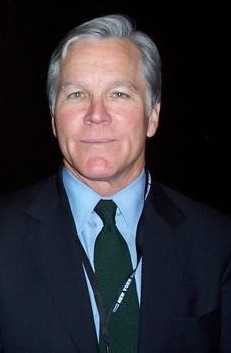
Bill Keller, executive editor of the New York Times, offers a smug and  sanctimonious commentary today, asserting that the newspaper strives “to be impartial” and corrects its errors “as quickly and forthrightly as possible.”

Whether the Times is impartial open to serious debate. What interests Media Myth Alert is Keller’s claim that the Times strives for promptness in correcting errors — even to the point of seeming a bit absurd in doing so.

Keller wrote that “when we get it wrong, we correct ourselves as quickly and forthrightly as possible. Connoisseurs of penitence find The Times a bottomless source of amusement. (An actual correction: ‘An article in The Times Magazine last Sunday about Ivana Trump and her spending habits misstated the number of bras she buys. It is two dozen black, two dozen beige and two dozen white, not two thousand of each.’)”

But the policy of publishing a prompt and forthright correction certainly hasn’t been followed in the matter of a correction the Times flubbed two months ago — a lapse that I brought to the attention of the newspaper and its public editor, or ombudsman.

Granted, correcting a correction can be complicated and muddy.

But still: If the policy is to “correct ourselves as quickly and forthrightly as possible,” then there’s no reason for the newspaper not to have addressed by now a correction that it so clearly flubbed.

Joseph Welch

The correction in question was published January 23, 2011; in it, the Times sought to set straight its mistake in a “Week in Review” article of the week before, which referred to the dramatic exchange at during a Senate hearing in 1954, in which the lawyer Joseph N. Welch skewered Senator Joseph McCarthy and his communists-in-government witch-hunt by declaring:

“Have you no sense of decency, sir? At long last, have you left no sense of decency?”

The Times sought to set straight the context and circumstances of Welch’s memorable remarks, which came during the so-called Army-McCarthy hearings. The Times stated in its correction:

“Senator McCarthy was serving on the committee investigating suspected Communist infiltration of the Army; he was not at the hearings to testify.”

Which was incorrect on two counts, as I pointed out.

McCarthy wasn’t serving on that Senate panel (which in fact was a subcommittee — a temporary subcommittee of the Senate permanent subcommittee on investigations). And McCarthy was at the hearing to testify.

As I wrote in calling attention to the flubbed correction:

“Had the Times consulted its back issues, it would have found that not long after Welch’s pointed questions about McCarthy’s ‘sense of decency,’ the senator was sworn in as a witness.”

According to hearing excerpts the Times published at the time, McCarthy said upon being sworn in:

“Well, I’ve got a good hog-calling voice, Mr. Chairman. I think I can speak loudly enough so that the mikes will pick it up.”

To date, the Times has not corrected its flubbed correction.

So why does it matter? After all, 1954 was a long time ago.

It matters because the Army-McCarthy hearings were an important moment in Cold War America. A newspaper as important — and self-important — as the Times should be expected to get straight the details about a memorable and dramatic occasion.

It also matters because of Keller’s smug assurance that the Times corrects its errors “as quickly and forthrightly as possible.”

Surely, if the Times deigns it important to set the record straight about Ivana Trump’s bras, it ought to fix its flawed correction about the Army-McCarthy hearings.

WJC

Many thanks to Instapundit
Glenn Reynolds for linking to this post

Recent and related:

Searing insight that wasn’t: Fox Business and the ‘Cronkite Moment’

In Cronkite Moment, Debunking, Media myths on March 25, 2011 at 7:59 am

It’s intriguing how media myths — especially those distilled to pithy turns of phrase — are invoked by commentators to infuse their arguments with a presumptive moral authority.

Johnson: Cracked a joke instead

A telling example of this tendency is the mythical line attributed to President Lyndon Johnson — “If I’ve lost Cronkite, I’ve lost Middle America” (or words to that effect).

As I note in my latest book, Getting It Wrong, it’s almost certain that Johnson never made the comment, at least not in reaction to Walter Cronkite’s on-air assessment in February 1968 that the U.S. military in Vietnam was “mired in stalemate.”

But the mythical line lives on because it’s pithy, memorable, and telling. Supposedly.

It suggests the news media can offer power-wielding authorities insight so profound and searing that can alter policy and even change the course of a war. Which is what Cronkite’s “mired in stalemate” characterization purportedly represented for Johnson.

As I write in Getting It Wrong, Cronkite’s assessment “supposedly was so singularly potent that it is has come to be remembered as the ‘Cronkite Moment.‘”

How the “Cronkite Moment” can be applied in reaching for the high moral ground was evident the other day in a commentary aired on the Fox Business cable channel.

The commentator, Gerri Willis, slammed Obamacare, the year-old federal health care legislation, as a looming financial disaster that “sure ain’t what it was advertised to be.”

Fair enough: No argument there.

But in closing, Willis reached for the “Cronkite Moment,” as if to gild her argument.

It came off sounding like a non-sequitur.

Here’s what she said:

“It’s no wonder that an all-star panel of health care backers — which included Ted Kennedy’s widow Vicki Kennedy and Tom Daschle, among others — are nowhere to be found.

“President Johnson said during the Vietnam War, ‘If I’ve lost Cronkite I’ve lost Middle America.

“Well Mr. Obama ,” she said, referring to President Barack Obama, “look at the polls. You lost Middle America on this a long time ago.”

Invoking a media myth hardly clinches the argument. Turning to the dubious line makes the argument appear a bit frivolous and decidedly  less than sedulous.

And why is the comment attributed to Johnson a media myth?

For several reasons, which are discussed in Getting It Wrong.

For starters, Johnson did not see the Cronkite program when it aired. The president at the time was in Austin, Texas, at the 51st birthday party for a longtime political ally, Gov. John Connally.

Johnson wasn’t in front of a television set when Cronkite intoned his “mired in stalemate” commentary. Johnson was at the podium at Connally’s birthday party, cracking a joke (see photo).

“Today, you are 51, John,” the president said. “That is the magic number that every man of politics prays for—a simple majority.”

It is difficult to fathom how Johnson could have been much moved by a television program he didn’t see.

And even if the president watched the Cronkite report on videotape at some later date (and there’s no evidence he did), it represented no epiphany, no moment of revealing insight.

Johnson in the days and weeks after the Cronkite program was publicly urging a national recommitment to the war in Vietnam.

Just a few days after Cronkite offered his “mired in stalemate” assessment, Johnson delivered a rousing speech in Texas, declaring that the United States would “not cut and run” from commitments in Vietnam.

In mid-March 1968, Johnson gave lectern-pounding speech in Minnesota, urging “a total national effort to win the war” in Vietnam.

“We love nothing more than peace,” Johnson said, “but we hate nothing worse than surrender and cowardice.”

Clearly, the “Cronkite Moment” offered no searing insight for Lyndon Johnson.

WJC

Recent and related:

WaPo ‘played pivotal role’ in Watergate? Think again

In Anniversaries, Bay of Pigs, Cronkite Moment, Debunking, Media myths, Washington Post, Watergate myth on March 24, 2011 at 7:52 am

The Wall Street Journal blog “India Real Time” indulged yesterday in the conventional but mistaken narrative of the Watergate scandal, declaring that the Washington Post “played a pivotal role in effectively bringing down then U.S. President Richard Nixon.”

Effectively brought down Nixon, eh?

Not even the Post buys into that misreading of Watergate history.

As I note in my latest book, Getting It Wrong, the newspaper’s publisher during and after the Watergate scandal, Katharine Graham, dismissed that interpretation, declaring in 1997:

“Sometimes people accuse us of bringing down a president, which of course we didn’t do. The processes that caused [Nixon’s] resignation were constitutional.”

Similarly, the newspaper’s executive editor during Watergate, Ben Bradlee, has asserted:

“[I]t must be remembered that Nixon got Nixon. The Post didn’t get Nixon.”

Such comments aren’t the manifestation of false modesty. Far from it. Rather, they represent candid observations about the peripheral role the Post played in uncovering the scandal that brought about Nixon’s resignation in 1974.

As I write in Getting It Wrong, rolling up a scandal of the dimension and complexity of Watergate “required the collective if not always the coordinated forces of special prosecutors, federal judges, both houses of Congress, the Supreme Court, as well as the Justice Department and the FBI.

“Even then,” I add, “Nixon likely would have served out his term if not for the audiotape recordings he secretly made of most conversations in the Oval Office of the White House. Only when compelled by the Supreme Court did Nixon surrender those recordings, which captured him plotting the cover-up and authorizing payments of thousands of dollars in hush money.”

Still, the notion that the Post was vital to the outcome of Watergate, that the newspaper “effectively” brought down a president, is the stuff of legend. It’s a powerful media-driven myth that offers a simplistic and misleading interpretation of the country’s greatest political scandal.

Watergate was among the media myths I discussed last night in a book talk at Kensington Row Bookshop in Kensington, MD.

I noted in my talk: “Obstruction of justice — not the Washington Post — is what cost Nixon his presidency.”

I also spoke about the mythical “Cronkite Moment” of 1968 and the NewYork Times-Bay of Pigs suppression myth of 1961.

The “Cronkite Moment” is shorthand for the dubious notion that the on-air assessment of CBS News anchorman Walter Cronkite forced President Lyndon Johnson to alter policy on Vietnam.

In a special report that aired February 27, 1968, Cronkite declared that the U.S. military effort in Vietnam was “mired in stalemate” and suggested that negotiations would prove to be the way out of the morass.

Johnson supposedly was at the White House that night, watching Cronkite’s show. Upon hearing the “mired in stalemate” assessment, the president supposedly snapped off the television set and said to an aide or aides:

“If I’ve lost Cronkite, I’ve lost Middle America.”

Or words to that effect.

As I said in my talk at the Kensington bookshop, “Acute version variability— the shifting accounts of just what was said — can be a marker of a media-driven myth.”

And so it is with the so-called “Cronkite Moment.”

Johnson did not see the Cronkite program when it aired. The president at the time was in Austin, Texas, offering light-hearted comments at a birthday party for Gov. John Connally, who that day turned 51.

About the time Cronkite was intoning his “mired in stalemate” commentary, Johnson was at the podium at Connally’s birthday party, saying:

“Today, you are 51, John. That is the magic number that every man of politics prays for—a simple majority.”

That line drew laughter from the audience of 25 people at the Kensington bookshop.

The Times-Bay of Pigs suppression myth, I said in my talk, dates almost 50 years — to April 1961, when “a CIA-trained force of Cuban exiles threw themselves on the beaches of southwest Cuba in a futile attempt to turn Fidel Castro from power.”

Supposedly, the Times censored itself about invasion plans several days before the assault took place — at the request of the President John F. Kennedy.

The Times, I said, “did not censor itself. It did not suppress its reporting” about invasion preparations.

“In fact,” I added, “the Times’ accounts of preparations for the invasion were fairly detailed — and prominently displayed on the front page in the days before the Bay of Pigs assault was launched.”

The suppression myth seems to have has its origins in the Cuban Missile Crisis of October 1962 — when the Times, at Kennedy’s request, did hold off publishing a story about the deployment of Soviet nuclear-tipped missiles in Cuba.

On that occasion, I said in my talk, “when the prospect of a nuclear exchange seemed to be in the balance, the Times complied” with the president’s request.

“But no such request,” I added, “was made of the Times in the run-up to the Bay of Pigs invasion of 50 years ago.”

WJC

Recent and related

Recalling the hero of Nasiriyah: It wasn’t Jessica Lynch

In Anniversaries, Debunking, Jessica Lynch, Media myths, Washington Post on March 22, 2011 at 8:05 am

Tomorrow marks the anniversary of the deadly ambush at Nasiriyah in southern Iraq, an engagement so poorly reported by the Washington Post that it catapulted Jessica Lynch to undeserved international fame – and obscured the heroism of an Army sergeant who was captured, then killed.

The Post published an electrifying, front-page account of Lynch’s supposed heroics in the battle of March 23, 2003. The report appeared beneath the headline, “‘She was fighting to the death,'” and said Lynch had fought fiercely before being overwhelmed and captured by Iraqi attackers.

But the Post hero-warrior tale about Lynch was erroneous.

Botched.

Because of the apparent mistranslation of battlefield radio intercepts, the deeds the Post misattributed to Lynch, then a 19-year-old Army private, most likely were those of a 33-year-old cook-sergeant named Donald Walters.

Like Lynch, Walters was assigned to the Army’s 507th Maintenance Company, elements of which came under attack at Nasiriyah in March 2003, during the first days of the Iraq War.

Walters (right), a veteran of the Gulf War in 1991, either was left behind or stayed behind as his fellow soldiers tried to escape.

Perhaps the most detailed account of the ambush at Nasiriyah appears in Richard Lowry’s masterful work, Marines in the Garden of Eden.

In the book, Lowry wrote:

“We will never really know the details of Walters’ horrible ordeal. We do know that he risked his life to save his comrades and was separated from the rest of the convoy, deep in enemy territory. We know that he fought until he could no longer resist.”

Walters is believed to have fired 201 M-16 rounds at his attackers.

He was captured and executed by Iraqi irregulars.

His killers, so far as is known, have never been caught.

But how did Walters’ heroism come to confounded with the actions of Lynch — who later said she never fired a shot during the ambush? (Lynch cowered in the back seat of a Humvee as it tried to escape the Iraqi attack.)

As I write in Getting It Wrong, my media-mythbusting book:

“The probable sources of confusion were Iraqi radio communications that the U.S. forces intercepted. These communications reportedly included references to a blond American soldier’s fierce resistance in the fighting at Nasiriyah.

“In translating the intercepted reports to English, the pronoun ‘he’ was mistaken for ‘she.’ As Lynch was the only blonde woman in the 507th, the battlefield heroics were initially attributed to her, not Walters.”

And drawing on information sources it has never revealed, the Post published its erroneous account of Lynch’s derring-do.

I further note in Getting It Wrong that a brigade commander named Colonel Heidi Brown offered the explanation about the mistranslation, in an interview broadcast in 2004 on National Public Radio’s All Things Considered program.

Brown said on the program: “What I was told was that it was just a faulty translation, but it made for everyone … to make a huge assumption that it was Jessica Lynch, when, in fact it probably — but you know, no one knows for sure. It probably was Sergeant Walters.”

I also note in Getting It Wrong that Walters’ actions, “when they became known, attracted little more than passing interest from the American news media — certainly nothing akin to the intensity of the Lynch coverage after the Post’s ‘fighting to the death’ story appeared.”

The Post article about Lynch’s supposed heroism, which appeared April 3, 2003, set off an avalanche of similar news coverage in news outlets across the United States and around the world. It was an irresistible, cinematic tale — a waiflike teenager pouring lead into attacking Iraqis, much like a female Rambo.

The Post never fully explained how it got the story so badly wrong, and offered but scant interest in the real hero at Nasiriyah.

A database search of Post articles published since April 2003 revealed just three stories in which Walters’ name was mentioned. None of those articles discussed in any detail his bravery at Nasiriyah.

The Army eventually acknowledged that Walters’ conduct “likely prevented his unit from suffering additional casualties and loss of life” and posthumously awarded him the Silver Star — the military’s third-highest decoration for valor.

WJC

Recent and related:

But how was it that Lynch came to be confused with Walters, who was slim, ruddy, and 33-years-old? The probable sources of confusion were Iraqi radio communications that the U.S. forces intercepted. These communications reportedly included references to a blond American soldier’s fierce resistance in the fighting at Nasiriyah. In translating the intercepted reports to English, the pronoun “he” was mistaken for “she.” As Lynch was the only blonde woman in the 507th, the battlefield heroics were initially attributed to her, not Walters.[i] A brigade commander, Colonel Heidi Brown, offered that explanation in an interview broadcast in 2004 on National Public Radio’s All Things Considered program. “What I was told,” Brown said, “was that it was just a faulty translation, but it made for everyone … to make a huge assumption that it was Jessica Lynch, when, in fact it probably—but you know, no one knows for sure. It probably was Sergeant Walters


[i] Lowry, Marines in the Garden of Eden, 134. Lowry wrote that Walters “was left in a situation that could have easily turned into the Iraqi radio report.”