It’s striking how a measure of fame still attaches to Jessica Lynch, the Army private thrust into the international spotlight seven years ago by an erroneous report in the Washington Post about her heroism in Iraq.
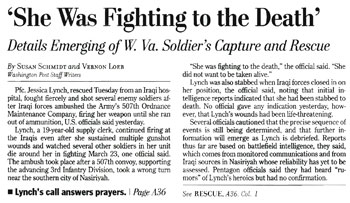
The Post's erroneous story
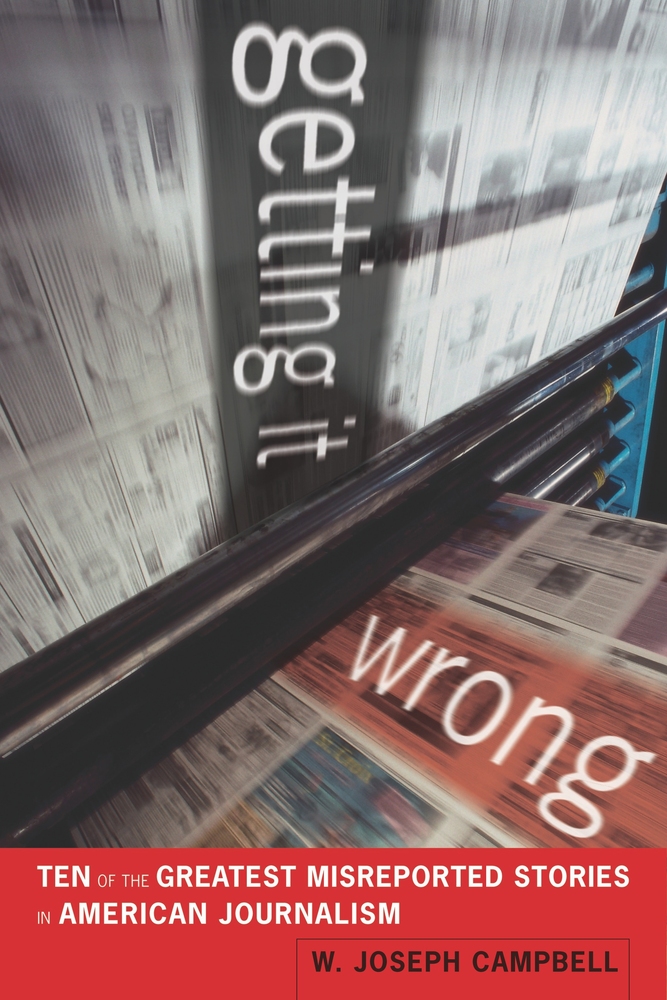
As I write in Getting It Wrong, my forthcoming book about media-driven myths, the “international spotlight … has never fully receded” from Lynch, a waif-like 19-year-old whom the Post misidentified as having fought fiercely after supposedly being shot and stabbed.
As it turned out, Lynch never fired a shot in anger in Iraq. She suffered neither gunshot nor stab wounds. She was severely injured, in the crash of a fleeing Humvee.
Lynch was taken captive by Iraqis and placed in a hospital, from where she was rescued by a U.S. special operation team.
The Post‘s botched report about her derring-do on the battlefield appears to have been a case of mistaken identity: It wasn’t Lynch who had fought heroically; it was most likely Sergeant Donald Walters, who was in Lynch’s unit and who was captured by Iraqi irregulars, and executed.
Walters never received anything near to the attention that was bestowed upon Lynch.
Further evidence of that came yesterday, with reports of a new show on cable’s Bio Channel that will feature William Shatner of Star Trek fame catching up with people who had won sudden fame and attention. (Bio formerly was the Biography Channel.)
Lynch was mentioned by name in writeups about the program, to be called Shatner’s Aftermath and to premiere in the fall. TV Guide said today that six episodes of Shatner’s Aftermath have been ordered.
The Post’s erroneous article about Lynch was published in early April 2003—and was picked up by news organizations around the world.
Lynch’s photograph appeared on the cover of Time and Newsweek magazines.
She insisted she was no hero. But no matter.
She accepted a book deal estimated at $1 million, half of which reportedly went to her biographer, Rick Bragg, a former New York Times correspondent. She went on morning and evening television shows to promote the book, I Am a Soldier, Too, which Bragg completed in time for publication on November 11, 2003—Veterans Day.
Lynch inspired a television movie, Saving Jessica Lynch. She was offered tuition-free education at West Virginia University. And she was named “West Virginian of the year” in 2003.
Although the frenzy long ago subsided, Lynch still pops up in the news from time to time. She still attracts a spotlight.
For example, NBC’s Today show in December 2009 featured the Lynch as one of the “buzziest” people in the news during the first decade of the 21st century.
In 2007, Lynch testified at a much-publicized hearing of the House Committee on Oversight and Government Reform. And she later wrote a first-person article for Glamour magazine.
She said in the Glamour article: “I don’t know why the military and the media tried to make me a legend.”
As I point out in Getting It Wrong, the story of Lynch’s heroics was a media-driven myth. The U.S. military was loath to promote the case. In fact, one of the Post reporters who worked on the erroneous article told NPR’s Fresh Air program in late 2003:
“I could never get anybody from the Pentagon to talk about those reports [of Lynch’s supposed heroism] at all. I got indications that they had, in fact, received those intelligence reports, but the Pentagon was completely unwilling to comment on those reports at all. They wouldn’t say anything about Jessica Lynch.”






 Media Myth Alert