W. Joseph Campbell

Archive for the ‘Furnish the war’ Category

‘War Lovers’: A myth-indulging disappointment

In 1897, Furnish the war, Media myths, Spanish-American War, Yellow Journalism on May 2, 2010 at 3:37 pm

I had a chance today to thumb through The War Lovers, the widely reviewed new book by Evan Thomas about the run-up to Spanish-American War.

But I didn’t buy it. It’s a myth-indulging disappointment.
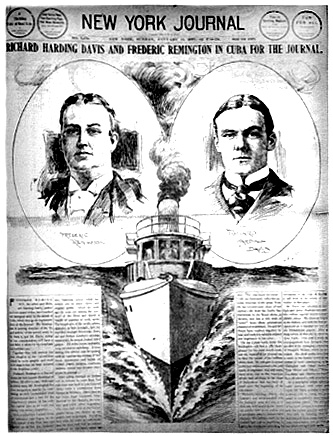
Remington in Cuba

In sections of the book about the yellow press period at the end of the 19th century, Thomas ignored–or was unaware of–recent scholarship that has cast serious doubt on anecdotes he included.

Notably, Thomas embraced the media-driven myth of William Randolph Hearst’s purported vow to “furnish the war” with Spain–a vow supposedly contained in a telegram to the artist Frederic Remington, on assignment in Cuba.

It is perhaps American journalism’s best-known tale. But as I wrote in my 2001 book, Yellow Journalism: Puncturing the Myths, Defining the Legacies, the anecdote almost certainly is apocryphal.

It lives on despite a nearly complete absence of supporting documentation. It lives on even though the telegram Hearst’s reputedly sent has never turned up. It lives on even though Hearst denied ever sending such a message.

And it lives on despite an obvious and irreconcilable internal inconsistency: It would have been absurd for Hearst to have vowed to “furnish the war” because war—specifically, the Cuban rebellion against Spain’s colonial rule—was the reason Hearst sent Remington to Cuba in the first place.

Remington was there in early 1897, at a time when anyone reading U.S. newspapers would have been quite aware that Cuba for two years had been a theater of a very nasty war. By 1897, Spain had sent nearly 200,000 soldiers to Cuba in a failed attempt to put down the rebellion, which in 1898 gave rise to the Spanish-American War.

Thomas–whose biography at Amazon.com says he “is one of the most respected historians and journalists writing today”–overlooked almost all of that.

He cited as his authority James Creelman, the pompous, hyperbolic reporter for Hearst’s New York Journal who recounted the anecdote, without documentation, in his 1901 memoir, On the Great Highway.

Creelman presented the “furnish the war” anecdote in an admiring way, saying it demonstrated how Hearst’s “yellow journalism” had an eye toward the future and was good at anticipating events. But over the years, the vow has taken on the more sinister overtones, of the sort that Thomas invoked in his book.

The anecdote’s evolution over the past 110 years is discussed in Chapter One of Getting It Wrong, my forthcoming book on media-driven myths.

Creelman, by the way, wasn’t with Remington in Cuba in early 1897. He wasn’t in New York with Hearst, either. Creelman was in Europe, as the Journal‘s special correspondent on the continent. So he would not have had first-hand knowledge about the “furnish the war” telegram, had Hearst sent it to Remington in Cuba.

Thomas indulged in another myth of yellow journalism, one that centers around what I call the greatest escape narrative in American media history.

In what also is known as the case of “jail-breaking journalism,” Hearst’s Journal organized the escape in 1897 of a 19-year-old Cuban political prisoner named Evangelina Cisneros.

By then, she had been held in a Havana jail, without trial, for 15 months on suspicion of conspiring to kill a senior Spanish military officer. Cisneros claimed the officer had made her the target of unwelcome sexual advances.

As I described in my 2006 book, a year-study titled The Year That Defined American Journalism: 1897 and the Clash of Paradigms,  Hearst sent a reporter named Karl Decker to Cuba, ostensibly as the Journal correspondent in Havana.

In reality, Decker was under orders to organize the rescue of Cisneros.

With the quiet help of U.S. diplomatic personnel in Cuba, and with the vital support of a clandestine smuggling network in Havana, Decker succeeded: He and two accomplices broke Cisneros out of jail in early October 1897. She was smuggled aboard a passenger steamer to New York City, where Hearst organized a delirious reception for her.

Thomas claimed that Decker, in articles the Journal published about jailbreak, “neglected to inform readers that he had bribed the guards, who arranged the theater of the escape as a way to save face.”
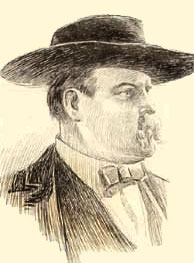
Decker

Such claims have circulated since 1897, mostly as a way to denigrate the Journal and its brazen accomplishment. Decker did say he tried, but failed, to bribe the jailer.

As is noted in The Year That Defined American Journalism, the evidentiary record to support the claim that bribes were paid is very, very thin.

“No one has identified to whom bribes were paid, how much, by what method, and how the purported payoffs secured the enduring silence of the authorities,” I wrote, adding:

“The allegations or suspicions of bribery rest more on assertion—and newspaper rivals’ contempt for the Journal—than on specific, persuasive documentation.”

It’s a good story, though. Like many media-driven myths, the Decker-bribery tale is delicious and enticing.

But it withers under scrutiny.

WJC

Halberstam the ‘unimpeachable’? Try myth-promoter

In Bay of Pigs, Cronkite Moment, Debunking, Furnish the war, Media myths, New York Times, Spanish-American War on April 24, 2010 at 9:02 am

A book review in the New York Times the other day referred to David Halberstam, the legendary author and journalist, as an “unimpeachable” source.

Halberstam, who died in an automobile accident three years ago, certainly built an outsize reputation. But unimpeachable?

I’d say no way.

Halberstam, in his hefty and still-popular 1979 study of the news media, The Powers That Be, encouraged the rise of two prominent media-driven myths and endorsed a third.

As I note in Getting It Wrong, my forthcoming book about media-driven myths, Halberstam’s Powers That Be was an important source, perhaps the original source, for the so-called “Cronkite Moment” of February 27, 1968.

That was when CBS anchorman Walter Cronkite asserted in a special report that the U.S. war effort in Vietnam was “mired in stalemate.”

In Halberstam’s telling, Cronkite’s report represented “the first time in American history a war had been declared over by an anchorman.”

Halberstam wrote that President Lyndon Johnson was in Washington and watched the Cronkite special that night. Upon hearing Cronkite’s dire assessment about Vietnam, the president said that if he had lost Cronkite, he had lost Mr. Average Citizen.

Interestingly, Halberstam did not place Johnson’s purported lament inside quotation marks. He paraphrased the remarks and said Johnson had directed  them to presidential press secretary George Christian.

But as I write in Getting It Wrong, Johnson was not in Washington that night. He did not see the Cronkite program when it aired. Thus, he could not have had the abrupt, dramatic, yet resigned reaction that Halberstam, and others, have attributed to him.

Johnson that night was in Austin, Texas, at the 51st birthday party of a political ally, Governor John Connally.

About the time Johnson supposedly made the comment about losing Cronkite, he was offering light-hearted banter about Connally’s age, saying:

“That is the magic number that every man of politics prays for—a simple majority. Throughout the years we have worked long and hard—and I might say late—trying to maintain it, too.”

The “Cronkite Moment,” I write in Getting It Wrong, “is a media-driven myth. It did not have the effects that Halberstam and many others have attributed to it.”

Halberstam’s Powers That Be also offered a graphic, if exaggerated, account that President John Kennedy supposedly called James Reston of the New York Times in April 1961 and urged him not to publish a report about the pending Bay of Pigs invasion.

Kennedy “argued strongly and passionately,” Halberstam wrote, that the Times by reporting the story would damage his policy. Halberstam also wrote that in his call to Reston, Kennedy said the Times risked having blood on its hands were the article published and the invasion failed.

Such a conversation never happened, according to Reston and others quoted in Harrison Salisbury’s insider’s account of the Times, Without Fear or Favor.

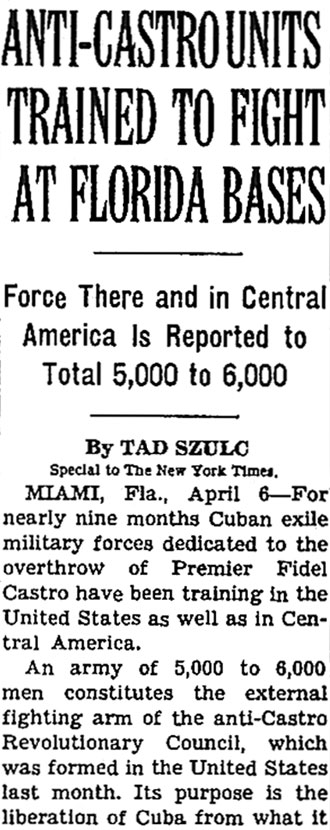
Indeed, there is no evidence that Kennedy called anyone at the Times in advance of the report–which was written by Tad Szulc and published April 7, 1961, on the Times front page (see right).

As I note in Getting It Wrong:

“The Kennedy Library in Boston says that the White House telephone logs reveal no calls were placed to Reston” or other Times executives on April 6, 1961, the day the story was prepared for publication.

“Moreover,” I note, “Kennedy had almost no chance to speak with those executives during the interval from when Szulc’s story arrived at the Times building in midtown Manhattan and when it was set in type. … During that time, Kennedy was otherwise preoccupied. He spent the last half of the afternoon of April 6, 1961, playing host to Harold Macmillan, the British prime minister, on a lengthy cruise down the Potomac River to Mount Vernon.”

In addition, Halberstam’s Powers That Be invoked one of the most enduring media myths–the anecdote about William Randolph Hearst’s purported vow to “furnish the war” with Spain at the end of the 19th century.

That anecdote is revisited, and dismantled, in the first chapter of Getting It Wrong.

The Powers That Be was a popular success, reaching the second spot on the New York Times best-selling list in May 1979. But the book wasn’t without persuasive critics.

Among them was David Culbert, an historian at Louisiana State University who years ago raised questions about the “Cronkite Moment,” noting that Johnson was in Texas when the program aired.

In a devastating review published in the American Historical Review, Culbert called The Powers That Be overlong and declared:

“The absence of a developed thesis, lack of proper documentation, and numerous errors of fact for events before the 1960s suggest that historians will have to use this book with caution. There is much here that might be true and, if true, valuable, but there is also no certainty that sloppy research does not undermine the very parts that seem most interesting.”

WJC

Read Chapter One: ‘Furnish the war’

In Debunking, Furnish the war, Media myths, Spanish-American War on April 23, 2010 at 10:07 am

The opening chapter of Getting It Wrong, my forthcoming work debunking 10 prominent media-driven myths, is available at the Web site for the book sponsored by the publisher, University of California Press.

Chapter One is titled “‘I’ll furnish the war'” and examines one of the hardiest myths in American journalism–William Randolph Hearst’s purported vow to “furnish the war” with Spain, at the end of the 19th century.

As I write in Chapter One:

“Like many media-driven myths, it is succinct, savory, and easily remembered. It is almost too good not to be true. Not surprisingly, Hearst’s vow to ‘furnish the war’ has made its way into countless textbooks of journalism. It has figured in innumerable discussions about Hearst and about the news media and war. It has been repeated over the years by no small number of journalists, scholars, and critics of the news media such as Ben Bagdikian, Helen Thomas, Nicholas Lemann, and the late David Halberstam.”

I further write:

“Interestingly, the anecdote lives on despite a nearly complete absence of supporting documentation. … It lives on even though Hearst denied ever sending such a message.”

The sole original source for the now-famous anecdote was a slim memoir, On the Great Highway, written by James Creelman and published in 1901.

I note in Getting It Wrong that Creelman’s taste for hyperbole represents one of many solid reasons for doubting “that Hearst ever vowed ‘to furnish the war.’ Creelman’s record of exaggeration offers compelling reason to challenge the anecdote’s authenticity.”

I refer to the anecdote “Creelman’s singular contribution to American journalism” and note how it “feeds popular mistrust of the news media and promotes the improbable notion the media are powerful and dangerous forces, so powerful they can even bring on a war.”

Getting It Wrong will be out this summer. It is set in a Sabon typeface, which is quite handsome.

WJC

Movies about journalists: Another list, another myth

In Cinematic treatments, Debunking, Furnish the war, Media myths, Newspapers, Washington Post, Watergate myth on April 17, 2010 at 6:31 pm

The blog True/Slant includes a ranking today of the 10 best-ever movies about journalism, and the Bogart film, Deadline U.S.A., tops the list.

This 10-best lineup was inspired by the series of newspapering movies running at Film Forum in Manhattan.

Absence of Malice (which I thought was dreadfully stereotypical), ranked second on the True/Slant list; The Paper was third, and All the President’s Men, the best-known movie about the Watergate scandal, was fourth.

Almost predictably, the description about All the President’s Men said:  “Robert Redford and Dustin Hoffman play Washington Post reporters Carl Bernstein and Bob Woodward, who reported the Watergate scandal and brought down a President. One of the few movies that makes journalism look like something worth doing.”

So there we are again–the hoary claim resurfaces that Nixon was “brought down” by the reporting of the intrepid Post reporters.

It’s what I call the heroic-journalist myth, and it’s addressed, and debunked, in Getting It Wrong, my forthcoming book about media-driven myths.

I note in the book, which is due out this summer, that heroic-journalist myth of Watergate is one of the most appealing and self-reverential stories in American media history.

It is striking indeed how routinely and even off-handedly Bernstein and Woodward are credited with the accomplishment, especially when the record of Watergate shows that the Post’s reporting had at best a marginal effect on forcing Nixon’s resignation in 1974.

Other forces and factors were far more decisive to the denouement of Watergate. As Howard Kurtz, the Post’s media reporter, has written:

“Despite the mythology, The Post didn’t force Richard Nixon from office—there were also two special prosecutors, a determined judge, bipartisan House and Senate committees, the belated honesty of [former White House lawyer] John Dean and those infamous White House tapes.”

Nixon’s White House tapes were crucial to the outcome. He resigned the presidency shortly after the Supreme Court ordered him to turn over the tapes subpoenaed by the Watergate special prosecutor.

One of the tapes undeniably showed Nixon participating in the coverup of the burglary at Democratic national headquarters, the signal crime of the Watergate scandal.

I also note in Getting It Wrong that motion pictures have a way of solidifying media-driven myths in the public’s consciousness.

“High-quality cinematic treatments,” I write, “are powerful agents of media myth-making, and can enhance a myth’s durability.”

And so what’s my top movie about newspapering? The 1941 Orson Welles masterpiece, Citizen Kane.

And that’s probably because I get such a laugh every time I watch the scene that paraphrases William Randolph Hearst‘s purported vow “to furnish the war” with Spain.

That may be the hardiest media myth of all.

A sleeper in my lineup of best movies about journalism is John Ford’s 1962 Western, The Man Who Shot Liberty Valence.

Why Liberty Valence?

Solely because of the movie’s greatest line, which is so applicable to media myth-making:

“This is the West, sir. When the legend becomes fact, print the legend.”

WJC

In today’s ‘Outlook’ section

In Cronkite Moment, Debunking, Furnish the war, Media myths, Murrow-McCarthy myth, Newspapers, Washington Post, Watergate myth on April 11, 2010 at 12:13 pm

An abbreviated version of my recent guestpost at the “Political Bookworm” blog appeared today in the “Outlook” section of the Washington Post.

Here’s the text of the “Outlook” piece, with links that I’ve added:

W. Joseph Campbell, a professor of communication at American University, busts some media myths in his book, “Getting It Wrong: Ten of the Greatest Misreported Stories in American Journalism,” coming in July from the University of California Press. Here are three of Campbell’s biggies:

1. William Randolph Hearst’s purported vow, telegraphed to the artist Frederic Remington in Cuba, to “furnish the war” with Spain. Hearst denied making such a statement. The telegram containing his purported pledge has never turned up. The “furnish the war” anecdote can be traced to 1901 and a memoir by another journalist, James Creelman, who did not say when or how he learned the story about Hearst’s vow.

2. Edward R. Murrow brought an end to Sen. Joseph R. McCarthy’s communists-in-government witch hunt. This myth stems from Murrow’s CBS program “See It Now” on March 9, 1954, when the newsman dissected McCarthy’s crude investigative techniques and taste for the half-truth — none of which was unknown to American audiences at the time. The myth took hold even though years before the program aired, several prominent journalists — including Washington-based syndicated columnist Drew Pearson — had become searching critics of McCarthy and his tactics.

Nixon resigns, 1974

3. The Washington Post’s investigative reporting brought down Richard Nixon’s corrupt presidency. Katharine Graham, The Post’s publisher during the Watergate period, said in 1997: “Sometimes people accuse us of bringing down a president, which of course we didn’t do. The processes that caused [Nixon’s] resignation were constitutional.” She was right, but the complexities of Watergate are not readily recalled these days. What does stand out is a media-centric interpretation that the dogged reporting of Post journalists Bob Woodward and Carl Bernstein brought Nixon down.

WJC

Now at Political Bookworm, where ‘must-read books are discovered’

In Cronkite Moment, Debunking, Furnish the war, Media myths, Washington Post, Watergate myth on April 9, 2010 at 7:35 am

I guestpost today at the Political Bookworm, a Washington Post-sponsored site that describes itself as a blog where “tomorrow’s must-read political books are discovered today.”

In my post, I discuss three of the media-driven myths examined in my forthcoming book, Getting It Wrong, which the University of California Press will publish in the summer.

Political Bookworm is edited by Steven Levingston, the Post‘s nonfiction editor. The blog notes that it “discusses new books long before they hit the shelves.”

And here’s the text of my guest post:

The most famous anecdote in American journalism may be William Randolph Hearst’s purported vow, telegraphed to the artist Frederic Remington in Cuba, to “furnish the war” with Spain at the end of the 19th century.

Or it may be Edward R. Murrow’s television program on CBS in 1954, which supposedly brought an end to Sen. Joseph R. McCarthy’s communists-in-government witch-hunt.

Or it may be the interpretation of Watergate that says The Washington Post’s investigative reporting brought down Richard Nixon’s corrupt presidency.

All three are well-known stories about the exercise of media power, for good or bad. All three anecdotes are often retold.

All three are media-driven myths.

Media myths often confer on the news media far more power and influence than they merit or possess. Media myths also tend to minimize the complexity of historical events in favor of simplistic and misleading interpretations.

That’s an important reason why Hearst’s vow has lived on for more than 100 years: It is succinct, savory, and easily remembered. It conforms to the popular image of Hearst as war-monger.

Hearst, though, denied making such a statement. The telegram containing his purported pledge has never turned up. And it would have been absurd for Hearst to vow to “furnish the war” because war — Cuba’s rebellion against Spain’s colonial rule — was the reason he sent Remington to Cuba. (The Cuban rebellion gave rise in 1898 to the Spanish-American War.)

The “furnish the war” anecdote can be traced to 1901 and a memoir by another journalist, James Creelman, who did not say when or how he learned story about Hearst’s vow.

The Murrow-McCarthy myth stems from Murrow’s See It Now program on March 9, 1954. See It Now that night dissected McCarthy’s crude investigative techniques and taste for the half-truth — none of which was unknown to American audiences at the time

Years before the program aired, several prominent journalists — including the Washington-based syndicated columnist Drew Pearson — had become searching critics of McCarthy and his tactics.

Interestingly, the myth took hold despite Murrow’s protests. In the weeks following the See It Now program, Murrow said he recognized that at best he had reinforced what others had long said about the red-baiting senator.

Similarly, principals at The Washington Post over the years have disputed the notion their newspaper toppled Nixon, who resigned in 1974. Among them was Katharine Graham, the Post’s publisher during the Watergate period. “Sometimes people accuse us of bringing down a president, which of course we didn’t do,” she said in 1997. “The processes that caused [Nixon’s] resignation were constitutional.”

She was right, but the complexities of Watergate — the deceit and criminality that characterized the Nixon White House and the multiple lines of investigation that slowly unwound the scandal — are not readily recalled these days.

What does stand out is a media-centric interpretation, that the dogged reporting of Washington Post journalists Bob Woodward and Carl Bernstein brought Nixon down. It’s a familiar storyline, a proxy for grasping Watergate’s essence while sidestepping its complexities.

That storyline was solidified by the 1976 motion picture, “All the President’s Men,” the screen adaptation of Bernstein and Woodward’s book of the same title. The film casts the reporters as central to unraveling the scandal.

Debunking these and other media myths matters for a variety of reasons. Media myths can and do feed stereotypes. They distort our understanding of the news media and of history. And there is inherent value in setting the record straight.

In that sense, myth-busting is aligned with a central objective of newsgathering — that of getting it right.

WJC

‘War means profits’? It didn’t for Hearst’s papers

In 1897, Debunking, Furnish the war, Media myths, Newspapers, Spanish-American War, Yellow Journalism on April 3, 2010 at 9:05 am

William Randolph Hearst’s purported vow to “furnish the war” with Spain in the late 1890s may be the anecdote most often told in American journalism.

Hearst

It’s a woolly tale that’s been in circulation since 1901, and it lives on despite repeated and thorough debunking. It’s one of the ten media-driven myths examined in my forthcoming book, Getting It Wrong.

“Furnish the war” is so tenacious because it offers a tidy summary of the news media at their worst. And it’s a pithy quotation, easily digested and readily recalled.

The anecdote reemerged the other day, in a commentary posted at TheCitizen.com, an online news site of Fayette Publishing in Fayetteville, GA. The commentary stated:

“William Randolph Hearst in 1897 [told] the artist Frederic Remington: ‘You furnish the pictures and I’ll furnish the war.’ Think for a minute what that statement means. War means business, war means profits and war means death.”

Hearst’s purported message to Remington is almost certainly apocryphal–as is the notion that war meant profits for Hearst’s newspapers. In their intensive coverage of the four-month Spanish-American War of 1898, his papers lost money.

As I wrote in my 2001 book, Yellow Journalism: Puncturing the Myths, Defining the Legacies, the Spanish-American War generally boosted newspaper circulation. But advertising revenues fell, as advertisers feared the war would undercut the nascent recovery from the hard economic times of the 1890s.

In addition, newsprint costs soared, as did news-gathering expenditures.

The trade journal Fourth Estate estimated in 1899 that Hearst’s New York Journal had spent $50,000 a week—the equivalent these days of more than $1 million—on cable tolls, reporters’ salaries, and dispatch boats that ferried correspondents’ reports from the war’s principal theater in Cuba to Jamaica and elsewhere for transmission to New York.

Hearst's 'New York Evening Journal'

The Journal scoffed at claims that it helped foment the conflict in a cynical scheme to build circulation and boost profits.

“Would you like to know what effect the war had on the money-making feature of this particular newspaper? The wholesale price of paper was greatly increased. Advertising diminished, expenses increased enormously,” the Journal said, adding that its expenses related to covering the conflict exceeded $750,000—the equivalent these days of more than $20 million.

During the war, which lasted 114 days, the Journal‘s racy sister publication, the Evening Journal,  produced as many as forty extra editions a day–a late 19th century manifestation of what contemporary journalists would recognize as the unrelenting, 24-hour news cycle.

WJC

‘Newspapers must learn from their history’

In 1897, Debunking, Furnish the war, Media myths, Spanish-American War on February 16, 2010 at 8:03 am

So read the headline over a column the other day in a Canadian newspaper, the Guardian of Charlottetown, which says it covers Prince Edward Island “like the dew.”

“Newspapers must learn from their history.”

A fine sentiment, that.

As the Guardian headline suggests, many journalists tend to be ahistoric: They have but a dim understanding of journalism’s past.

It’s not entirely their fault, though: The task of finding lessons in journalism history is complicated because journalism history often is badly mangled, and distorted by myth.

Young W.R. Hearst

The Guardian column offers a case in point: Despite its call to learn from the past, the column mangled an often-mangled moment in journalism history.

That is, it indulged in a hardy media-driven myth–the myth of the purported vow of New York newspaper publisher William Randolph Hearst to provide the war with Spain at the end of the 19th century.

Here’s what the Guardian column said:

“Hearst was embroiled in a newspaper war in New York City. He figured a war would do wonders for circulation. Cuba was run by the Spanish, and that didn’t seem right, so a war there seemed logical.

“Get down there and cover the war, he told his reporting staff. Those assigned to the story promptly booked passage on the next boat. Once there, however, they discovered they had a rather serious problem.

“Have arrived, but there doesn’t seem to be a war, they said in a cable.

“You provide the stories, I’ll provide the war, Hearst replied.”

So where to begin in unpacking this account?

As I write in Getting It Wrong, my forthcoming book about media-driven myths, the anecdote about Hearst’s vowing to bring about war with Spain is almost certainly apocryphal.

Here are some reasons why:

  • The telegram that supposedly contained Hearst’s vow has never turned up.
  • Hearst denied ever sending such a message.
  • Spanish censors in Cuba surely would have intercepted, and called attention to, such an inflammatory message, had it been sent.

And the anecdote lives on despite an irreconcilable internal inconsistency: It would have been absurd for Hearst to vow to furnish or provide the war because war—the Cuban rebellion against Spanish colonial rule—was the reason Hearst sent correspondents to Cuba in the first place.

In most retellings, the anecdote about Hearst’s vow revolves around the purported exchange of telegrams with the famous artist, Frederic Remington, whom Hearst sent to Cuba in early 1897. Paired with him on the assignment was the famous writer, Richard Harding Davis.

Remington and Davis were there at a time when anyone reading U.S. newspapers would have been well aware that Cuba was the theater of a nasty war. By then, Spain had sent nearly 200,000 soldiers in a failed attempt to put down the rebellion, which led in 1898 to the Spanish-American War.

Although the Guardian column suggested that Hearst blithely sought to foment a war as a ploy to boost readership (“a war would do wonders for circulation”), the causes of the conflict with Spain were of course far more profound and complex.

The Cubans who rebelled against Spanish rule were determined to win political independence, and would settle for nothing short of that.

The Spanish, for domestic economic and political reasons, would not grant Cuba its independence.

And the Americans could no longer tolerate the disruptions and human rights abuses created by Spain’s failed attempt to put down the Cuban rebellion.

That impasse became the formula for the U.S. war with Spain over Cuba in 1898.

It is quite likely the United States would have gone to war no matter what Hearst printed in his newspapers.

WJC

‘Pharm parties’ and the tenacity of media myths

In Debunking, Furnish the war, Media myths on January 26, 2010 at 6:25 am

Jack Shafer, editor-at-large at slate.com, recently revisited and re-debunked the media-driven myth of “pharm parties,” those purported gatherings at “which young people … dump the pills they’ve stolen from their parents’ medicine cabinets into a big bowl and then scoop out and swallow random handfuls.”

It’s a phenomenon, he says, that the news media “pretend [is] both real and ubiquitous.”

Shafer begins his take-down with a half-serious lament, writing:

“I regret to inform you that this column has failed to eradicate the ‘pharm party’ meme,” noting that he has written about this fanciful pastime on five other occasions.

Shafer appeals to common sense in deflating the myth, writing:

“There are at least two basic problems with the pharm-party scenario reported in the press. To begin with, if you were a young drug fiend and stole potent drugs, why would you deposit them in a communal bowl if there was a good chance that when your turn came to draw a drug at random, you might get an antihistamine? And second, I’ve yet to read a story in which a journalist actually attends such a gathering, interviews a participant, or cites a police report alleging such behavior.”

It’s an impressive debunking, but Shafer is under no illusions that his efforts will kill off the fantasy.

After all, he says, reports of “pharm parties” or their equivalent can be traced to the mid-1960s. “Any myth hearty enough to survive and thrive for 40-plus years in the media is probably unkillable,” Shafer writes.

And he’s probably right.

As I note in my forthcoming book, Getting It Wrong, some media-driven myths are so tenacious, so debunking-resistant, because they seem too good, too delicious, not to be true.

That’s certainly the case with the hoary tale of William Randolph Hearst’s purported vow to “furnish the war” with Spain at the end of the nineteenth century. What story better captures Hearst the warmonger than that? What tale better signals the potential malignant effects of the news media, writ large?

The anecdote of the Hearstian vow lives on, shrugging off repeated efforts to uproot it.

Likewise, the notion of “pharm parties,” is too enticing, too delicious in a perverse way, not to be true.

Another factor explaining tenacity of media-driven myths is that they readily feed stereotypes. “Pharm parties” certainly do so, offering supposed evidence of the mindless, reckless ways of a younger generation.

One of the cases of stereotyping explored in Getting It Wrong is that of “crack babies,” a frightening and overstated phenomenon of the late 1970s and 1980s. Women who smoked crack cocaine during pregnancy were, it was feared, giving birth to a neurologically damaged “bio-underclass” that would forever be dependent on the state.

The “crack baby” phenomenon turned out to be a widely misreported pandemic. Even so, it seemed to confirm the worst pathologies associated with inner-city poor people. That stereotype was one reason the “crack baby” meme lived on.

And lives on still.

WJC

A media myth tamed — or at least controlled

In Cronkite Moment, Debunking, Furnish the war, Media myths on January 3, 2010 at 4:58 pm

Many media-driven myths seem to defy debunking.

The tale of William Randolph Hearst’s supposed vow to “furnish the war” with Spain is a telling example. So is the notion that Walter Cronkite’s downbeat report in 1968 about the U.S. military effort in Vietnam forced President Lyndon Johnson to rethink American war policy.

Both media myths live on and on.

As I write in my forthcoming book Getting It Wrong, these “and other media myths endure, because in part they are reductive: They offer unambiguous, easily remembered explanations about complex historic events. Similarly, media myths invite indulgence in the ‘golden age fallacy,’ the flawed but enticing belief that there really was a time when journalism and its practitioners were respected and inspiring.”

While many media myths are indeed tenacious, the efforts of the Annenberg Public Policy Center over the past 10 years suggest that some myths can be curbed or contained, if not defeated entirely.

The Phildelphia-based Annenberg Center has worked to debunk the notion that suicides rise during the year-end holidays.

Such a connection may seem logical, given the stresses of the holiday season. But the data point otherwise: Suicides most often peak in the United States during the spring and fall, according to the Centers for Disease Control and Prevention.

(See the CDCP’sl 2009 data sheet on suicides here.)

The Annenberg Center tracks newspaper reports for mentions of a holiday season-suicide link. Its analysis of reporting during the 2008–09 holiday season found that 37.5 percent of 64 newspaper articles asserted such a linkage. A majority, 62.5 percent, disputed or challenged the presumed holiday season-suicide connection.

The difference over 10 years is quite dramatic. In 1999–2000, the first year of the Annenberg Center’s study on the topic, 77 percent of 101 newspapers articles asserted a holiday season-suicide link.

The pattern has been a bit erratic in the intervening years, Annenberg Center data show.

In 2006–07, for example, just 9 percent of 32 articles asserted a holiday season-suicide link. The following season, however, 51 percent of 43 articles claimed there was such a connection.

Data for the 2009–2010 season are still being compiled. But a quick check of the LexisNexis database suggests that newspaper articles published in late 2009 more often challenged than claimed a holiday season-suicide link.

A notable example was an article in USA Today in late November which noted:

“You could blame George Bailey” for the myth. “In the 1946 holiday film It’s a Wonderful Life, that fictional character contemplated suicide on Christmas Eve, possibly giving birth to the idea that suicides climb during the winter holidays.”

The Washington Times suggested a similar explanation in an article published two days before Christmas.

Like many media-driven myths, the dubious holiday season-suicide link is neither harmless nor trivial.

The Annenberg Center says:

“Perpetuating the myth not only misinforms readers but it also misses an opportunity to educate the public about the most likely sources of suicide risk, including major depression and substance abuse.”

Still, the Center’s data offer a measure of encouragement that media-driven myths are not entirely beyond taming.

WJC