W. Joseph Campbell

Archive for the ‘Media myths’ Category

Cronkite ‘the most-trusted’? Where’s the evidence?

In Debunking, Media myths on June 9, 2012 at 8:45 am

The notion that Walter Cronkite was “the most trusted man in America” has received fresh stimulus from the recently published biography about the avuncular CBS News anchorman.
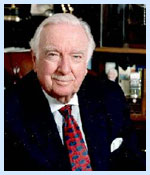
‘Most trusted’? How so?

Author Douglas David Brinkley refers often in the book, titled Cronkite, to the anchorman’s “most trusted” status. But Cronkite contains no searching assessment about whether the epithet was justified or based on much empirical evidence.

It’s really a dubious characterization that has  morphed into a tiresome cliché. It was not credibly supported by public opinion polling: It was propelled by CBS advertising.

The “most trusted” epithet can be traced to a survey conducted in 1972 of 8,780 respondents in 18 states. The pollster, Oliver Quayle and Company, sought to assess and compare public trust among then-prominent U.S. politicians.

Inexplicably, Cronkite was included in the Quayle poll, which meant he was compared to the likes of Richard Nixon, Hubert Humphrey, Edmund S. Muskie,  George McGovern, Edward Kennedy, and Spiro T. Agnew.

Cronkite topped the Quayle poll, receiving a “trust index” score of 73 percent. The generic “average senator” was next with 67 percent. Muskie was third with 61%.

The results were not much of a surprise. As the inestimable media critic Jack Shafer wrote in a column shortly after Cronkite’s death in 2009, the anchorman’s score “seemed impressive until you considered the skunks polled alongside him.”

Brinkley mentions the poll in Cronkite and says it was strange that the anchorman was included.

But he raises no challenge to the odd methodology (the survey was highly unrepresentative) or to the unsurprising result. Instead, he writes:

“The poll confirmed overnight what had long been apparent: Cronkite was the ultimate reliable source.”

Confirmed? Including Cronkite’s name with those of mostly uninspiring politicians was scarcely a precision measure of “trust.” It was a dubious basis on which to build the claim of “most trusted.”

But the claim was enthusiastically embraced, and propelled, by CBS advertising.

On Election Day in November 1972, CBS published prominent display advertisements in leading U.S. newspapers such as the Chicago Tribune, the New York Times, and the Washington Post.

The ads carried this headline:

Re-elect the Most Trusted Man in America.”

In what seems a quaint reference to the limited broadcast news options of the early 1970s, the ad copy read:

“You’ll have three viewing choices on Election Night. … A good reason for watching us is because we’ve got a man on our slate who was recently voted the most trusted American in public life” — an allusion to the Quayle poll.

In italics, the ad copy referred to Cronkite as “The most trusted American in public life.”

CBS later modified the sweeping claim, characterizing Cronkite in an ad in the Washington Post in 1976 as “one of the most trusted men in America” (emphasis added).

Interestingly, Cronkite in the 1970s wasn’t always regarded as the most trusted television newsman, let alone “the most trusted” person in America.

A Phillips-Sindlinger survey conducted by telephone in 1973 rated Howard K. Smith of ABC News the most trusted and objective U.S. newscaster. Cronkite that year came in fourth.

The following year, the Phillips-Sindlinger survey had Cronkite in first place among newscasters, followed by John Chancellor of NBC.

So what did Cronkite have to say about this “trust” stuff? He was quoted in USA Today in 2002 as sort of pooh-poohing it all:

“Trust is such an individual thing. I don’t think it’s definable.”

Then what accounts for the enduring inclination to characterize Cronkite as having been the “most trusted man in America”?

One reason is that the epithet isn’t entirely outlandish.  Like many media myths, the “most trusted” claim rests on the cusp of plausibility. Cronkite was an esteemed anchorman. He cut an unthreatening-yet-authoritative presence on TV. His voice — what Shafer called a “furry baritone” — was as engaging as it was unmistakable.

But it’s the “golden age” fallacy that best accounts for the tenacity of the “most trusted” cliché.

As I describe in my 2010 book, Getting It Wrong, the “golden age” fallacy is that “flawed but enticing belief that there really was a time when journalism and its practitioners were respected and inspiring.” Such as the 1960s and 1970s, when Cronkite became a dominant figure in American broadcast journalism.

Writer Andrew Ferguson deftly identified this dynamic in an essay in the Weekly Standard in 2008.

Cronkite, Ferguson wrote, “is a kind of synecdoche for American journalism. … From the 1960s onward Cronkite was transformed by some mysterious process into a … spiritual force as imposing and weightless as a dirigible. He was an oracle, a teller of truths, the conscience of a nation, ‘the most trusted man in America.’

“American journalism followed the same trajectory into self-importance, borne aloft on the same draft of hot air and vanity.”

Voilá. The “golden age” fallacy, in full flight.

WJC

Many thanks to Instapundit
Glenn Reynolds for linking to this post

Recent or related:

A glowing, hagiographic treatment of the ‘Cronkite Moment’

In Cronkite Moment, Debunking, Media myths on May 31, 2012 at 8:41 am

The evidence that the mythical “Cronkite Moment” was of minor consequence is compelling and multidimensional.

The “Cronkite Moment” was the televised report in February 1968 when CBS News anchorman Walter Cronkite said the U.S. war effort in Vietnam was “mired in stalemate.” Legend has it that President Lyndon B. Johnson was profoundly moved by Cronkite’s assessment.

Among the elements of the minor-consequence brief are these:

  • Cronkite said nothing about the war that hadn’t been said by leading journalists many times before. By early 1968, “stalemate” was a decidedly unoriginal way of characterizing the conflict.
  • Public opinion had begun shifting against the war months before Cronkite’s commentary. Indeed, Cronkite followed rather than led the changing views about Vietnam.
  • Johnson did not see the Cronkite program when it aired on February 27, 1968, and remained publicly hawkish about the war in the days afterward.
  • Cronkite, until late in his life, pooh-poohed the notion his pronouncement had much effect on Johnson, likening its impact to that of a straw.

But little in the minor-consequence brief has kept historian Douglas Brinkley from offering in his new book about Cronkite a glowing, hagiographic interpretation of the “Cronkite Moment.”

Brinkley’s hefty biography is eager to find exceptionality in the “Cronkite Moment,” asserting that it “guaranteed” Cronkite’s “status as a legend.”

Brinkley, however, offers more assertion than compelling evidence in writing that the “aftershock” of Cronkite’s report about Vietnam “was seismic” and in declaring that the report “signaled a major shift in the public’s view of the war.”

As evidence of the purported “seismic” effect, Brinkley claims that Cronkite’s assessment “opened the door for NBC News’ Frank McGee to take a similar stand in a documentary on Vietnam that aired two weeks later.”

But as I point out in my 2010 book, Getting It Wrong, Cronkite’s “stalemate” characterization was “far less emphatic” McGee’s on-air remarks on March 10, 1968. “The war,” McGee declared on that occasion, “is being lost by the administration’s definition.”

So McGee’s interpretation wasn’t  “similar” to Cronkite’s at all; he didn’t hedge and invoke the safe characterization of “stalemate.” McGee said the war was being lost.

Brinkley also writes in discussing the supposed “seismic” effect: “Even the conservative Wall Street Journal editorial page said, ‘The whole Vietnam effort may be doomed.'”

The Journal certainly said so — four days before Cronkite’s broadcast. To invoke the Journal’s editorial as evidence of the “seismic” effect of the “Cronkite Moment” is misleading, to say the least.

Brinkley’s writes that “Cronkite had grabbed America’s attention about Vietnam in a way that would have been impossible for Johnson” to have missed. But, again, supporting evidence is thin.

Did opinion polls at the time suggest that “Cronkite had grabbed America’s attention about Vietnam”?

Brinkley offers no such evidence.

Public opinion polling about the war did show that Americans had begun turning against the war by fall 1967, well before the “Cronkite Moment.”

Specifically, Gallup surveys found in October 1967 that a plurality of Americans (47%) said sending U.S. forces to Vietnam had been a mistake. That question was often asked by Gallup and was a sort of proxy for gauging popular sentiment about the war.

In August-September 1965, only 24 percent of Gallup’s respondents said it was a mistake to send troops. Thereafter, as I discuss in Getting It Wrong, the percentage of respondents saying the U.S. military presence in Vietnam was a mistake increased steadily, reaching a plurality in October 1967.

That moment was 3½ months before the communist Tet offensive across South Vietnam, an extensive and coordinated series of attacks that prompted Cronkite to pay a reporting trip to southeast Asia in early February 1968.

Brinkley, moreover, dismisses as insignificant the pronounced version variability that characterizes Lyndon Johnson’s supposed reaction to Cronkite’s report about Vietnam.

Depending on the source, the president is said to have said in reacting to Cronkite’s assessment:

“If I’ve lost Cronkite, I’ve lost Middle America.”

Or, “If I’ve lost Cronkite, I’ve lost the war.”

Or, “If I’ve lost Cronkite, I’ve lost the American people.”

Or, “If I’ve lost Cronkite, I’ve lost the country.”

Or, “If I’ve lost Cronkite, I’ve lost the nation.”

Or, “If I’ve lost Cronkite, I’ve lost America.”

Or, “Well, that’s the end of the war.”

Brinkley doesn’t interpret these varying versions indicating the apocryphal quality of Johnson’s purported reaction. He waves it off, writing:

“It doesn’t make any real difference.”

Oh, but it does.

As I discuss in Getting It Wrong, “version variability” of such dimension “signals implausibility.

“It is a marker of a media-driven myth.”

Indeed, if anyone’s words should be captured with precision, they  should be the president’s. Especially on matters as important as shifting popular support for war policy.

It is quite interesting that Cronkite never spoke with Johnson about the purported “Cronkite Moment” and, as Brinkley notes, the president had nothing to say about it in his memoir.

There’s little contemporaneous evidence that the “Cronkite Moment” was profoundly shocking or moving. Or seismic. But there are plenty of claims to its significance, years after the fact.

The “Cronkite Moment” took on importance not in 1968 but by 1979, when David Halberstam wrote in The Powers That Be that Cronkite’s report “was the first time in American history a war had been declared over by an anchorman.” Which was nonsense, of course.

But Halberstam’s over-the-top characterization signaled how the “Cronkite Moment” was becoming a memorable and supposedly revealing example about how journalists can have powerful and immediate effects, how they can bring to bear decisive impacts on major issues facing the country.

Even Cronkite embraced the presumptive power of the “Cronkite Moment.” It took him a while, though.

In his 1997 memoir, Cronkite characterized the program in modest terms, saying that his “stalemate” assessment was, for Johnson, “just one more straw in the increasing burden of Vietnam.” He repeated the analogy in the years immediately afterward, saying on a CNN program in 1999, for example:

“I think our broadcast simply was another straw on the back of a crippled camel.”

But in the years before his death in 2009, Cronkite claimed greater significance for the program. For example, he told Esquire magazine in an interview in 2006:

“To be honest, I was rather amazed that my reporting from Vietnam had such an effect on history.”

WJC

Many thanks to Instapundit
Glenn Reynolds for linking to this post

Recent and related:

Misremembering the Jessica Lynch case, on Memorial Day

In Debunking, Jessica Lynch, Media myths on May 28, 2012 at 5:11 pm

It’s astonishing how engrained the false narrative has become that the Pentagon made up the hero-warrior tale about Army private Jessica Lynch in the early days of the Iraq War.

It is often invoked — and typically without any reference to specific sources.

(Newseum image)

Take, for example, the top-of-the-front-page article today in today’s The State newspaper in South Carolina, which refers to unspecified “critics” who “charge that the Pentagon exaggerated her wounds by saying she was shot and stabbed when she wasn’t.”

As I’ve noted many times at Media Myth Alert, the Pentagon wasn’t the source for the bogus tale about Lynch’s heroics in an ambush at Nasiriyah in southern Iraq.

It was the Washington Post that thrust the story into the public domain in a dramatic account published on its front page on April 3, 2003.

The Post’s report said Lynch, then a 19-year-old supply clerk in the Army’s 507th Maintenance Company, fired at attacking Iraqis “even after she sustained multiple gunshot wounds and watched several other soldiers in her unit die around her in fighting” on March 23, 2003.

The story, which was picked up by news organizations around the world, was embarrassingly wrong in all important details. Lynch, it quickly turned out, was neither shot nor stabbed, as the Post had reported. She did not fire a shot in the ambush. She suffered severe injuries in the crash of a Humvee as it tried to flee the ambush.

Lynch was taken prisoner and treated at an Iraqi hospital, from where she was rescued April 1, 2003, by a U.S. special operations team.

As Lynch herself insists, she was no hero (although she has said she could have embraced the Post’s hero-warrior tale and no one would’ve been the wiser).

We know the Pentagon wasn’t the source of the Post’s exaggerated tale: Vernon Loeb, one of the reporters who wrote the story, said so in an interview on Fresh Air, an NPR radio program, in mid-December 2003.

In the interview, Loeb said flatly:

“Our sources for that story were not Pentagon sources.”

Loeb also said that he “could never get anybody from the Pentagon to talk about” the Lynch case.

“They wouldn’t say anything about Jessica Lynch,” Loeb declared, adding:

“I just didn’t see the Pentagon trying to create a hero where there was none. I mean …they never showed any interest in doing that, to me.”

Loeb said the details about Lynch’s supposed heroics came from “some really good intelligence sources” in Washington, D.C. — sources whom the Post has never specifically identified, although it should.

The State’s article is pegged to Memorial Day and recalls the death at Nasiriyah of Sgt. George Buggs. He was the first serviceman from South Carolina killed in Iraq.

The article notes that “Buggs’ death is now forgotten by most except family and friends. … But his story is both intertwined and overshadowed by one of the most tragic and controversial events in modern U.S. military history — the capture and rescue of a young soldier from West Virginia named Jessica Lynch.”

The article invokes those nameless “critics” in saying they “charged that the United States government exaggerated the facts of the rescue, manipulated the media and exploited Lynch to build public support for a war many thought was unnecessary.”

Such claims are erroneous in at least two important respects.

One, the Defense Department’s acting inspector general reported finding no evidence to support the notion that Lynch’s rescue “was a staged media event.” Rather, the inspector general’s report said the rescue operation was “a valid mission” to recover a prisoner of war “under combat conditions.” It further stated that the “level of force used by [the special forces team] to perform the mission was consistent with the anticipated resistance and established doctrine.”

Two, the U.S. government had little reason to exploit the Lynch case as a means “to build public support”  for the Iraq War. As I point out in my 2010 book, Getting It Wrong:

“It may be little-recalled now, but the U.S.-led invasion of Iraq was widely supported by the American public. Polling data from March and April 2003, the opening days and weeks of the war, show an overwhelming percentage of Americans supported the conflict and believed the war effort, overall, was going well.”

Among those public opinion polls was a Washington Post-ABC News survey conducted in late March and early April 2003. The poll found that eight of ten Americans felt the war effort was going well, and 71 percent approved of the Bush administration’s handling of the Iraq situation.

I further note in Getting It Wrong:

“At the time of the Lynch rescue, U.S. forces were closing in on Baghdad. So it defies logic to argue that the American military would have singled out and hyped the Lynch rescue for morale-building purposes when its central and vastly more important wartime objective was within reach.”

WJC

Recent and related:

Four weeks on: No answer from WaPo about empty links to Jessica Lynch stories

In Debunking, Jessica Lynch, Media myths, Newspapers, Washington Post on May 25, 2012 at 6:55 am

Lynch photo at WaPo’s Iraq archive

Want to read the Washington Post article of April 10, 2003, about the fall of Baghdad to U.S. forces? The article’s online link is here.

How about the Post’s report about the Iraqi lawyer who helped lead U.S. rescuers to Jessica Lynch, the Army private taken prisoner and hospitalized following a deadly ambush in the war’s early days? Here’s the link to that story,  which the Post published on its front page April 4, 2003.

How about the Post’s front-page article of the day before, which told of Lynch’s supposed heroism in the ambush, how she had fought fiercely and “continued firing at the Iraqis even after she sustained multiple gunshot wounds and watched several other soldiers in her unit die around her”?

It was an electrifying report, one picked up by news organizations around the world.

But it turned out that the Post’s hero-warrior tale about Lynch was embarrassingly wrong in all important details. Lynch never fired a shot in Iraq; she was neither shot nor stabbed, as the Post had reported, but badly injured in the crash of a Humvee as it fled the ambush.

Try finding the botched hero-warrior story at the Post’s online site. All that turns up is a headline, byline, and date of publication. Otherwise, it’s an empty link. No content, in other words.

That’s also true for a column published April 20, 2003, by Michael Getler, the newspaper’s then-ombudsman, who criticized the hero-warrior story: Another empty, no-content link.

Same for the Post’s partial rollback of the hero-warrior story, published in mid-June 2003: Also an empty link.

So what gives? Why is some of the Post’s content about the Iraq War — and Jessica Lynch — freely available online while the more embarrassing material shows up as empty links?

Is this a matter of digital scrubbing, akin to Vogue magazine’s excising of a flattering profile of the wife of the Syrian dictator, Bashar al-Asad? The Post last month described the Vogue matter as “an almost-unheard-of step for a mainstream media organization.”

Periodically over the past four weeks, I’ve asked the Post’s ombudsman, Patrick Pexton, about the digitally unavailable versions of the newspaper’s reports about Lynch.

Pexton has  promised to look into my questions.

But four weeks on, he has yet to offer a substantive reply.

I have asked him: “Does the embarrassment quotient explain this apparent inconsistency?” That is, is the Post too embarrassed by its botched reporting about Lynch to make the links freely available online?

I suspect it is.

In his most recent email to me, on May 16, Pexton said he receives “200 to 300 e-mails per day and we’re always behind. We are working on trying to get you some answers on this.”

I replied the following day, thanking him for the update and saying I hoped to hear from him soon.

I also wrote:

“I believe my request can be distilled thusly:

“Why is some Lynch-related content from 2003 freely available online (see here), while content more embarrassing to the Post (see empty links here, here, and here) not available? Shouldn’t those empty links be restored, and added to the Post’s link-rich Iraq War archive, where Lynch’s name and image already appear?”

That email produced no response from Pexton, however.

The Post‘s digital archive of the Iraq War offers a functioning link to the article about the Iraqi lawyer who helped guide rescuers to Lynch.

In fact, the only U.S. soldier identified by name and image at the archive is Jessica Lynch.

I discuss the Post’s reporting of the Lynch case in a chapter in my latest book, Getting It Wrong.

WJC

Many thanks for Instapundit
Glenn Reynolds for linking to this post

Recent and related:

Kurtz invokes ‘if I’ve lost Cronkite’ myth in reviewing new Cronkite biography

In Cronkite Moment, Debunking, Media myths on May 21, 2012 at 3:50 pm

Media critic Howard Kurtz invokes one of American journalism’s most tenacious media myths in a review today about the forthcoming biography of Walter Cronkite, the CBS News anchorman from 1962-81.

Out soon

Kurtz writes in the review, which is posted at the Daily Beast:

“As everyone from presidents to astronauts catered to him, Cronkite used that access to drive unflinching coverage of civil rights, corruption, and especially the morass of Vietnam — when his own reporting led him to declare that ill-fated conflict a stalemate. When LBJ said that ‘if I’ve lost Cronkite, I’ve lost the country,’ he was acknowledging that a single newsman had the power to change a national narrative.”

It’s highly arguable whether Cronkite “had the power to change a national narrative.”

But first, that mythical “I’ve lost Cronkite” quotation.

As I discuss in my latest my book, Getting It Wrong, there is no compelling, first-hand evidence that LBJ — President Lyndon B. Johnson — ever uttered the comment about losing Cronkite.  (Douglas Brinkley, author of the Cronkite biography, writes in the latest issue of American Heritage magazine that Johnson “probably didn’t” make such a statement. The evidence is far more persuasive than “probably didn’t,” though.)

Legend has it that Johnson said something of the sort in reacting to Cronkite’s special televised report about Vietnam, which aired February 27, 1968. At the close of the broadcast, Cronkite declared the U.S. war effort was “mired in stalemate.”

Johnson, supposedly, watched the program at the White House. Upon hearing Cronkite’s assessment, the president snapped off the television set and declared to an aide or aides:

“If I’ve lost Cronkite, I’ve lost Middle America.”

Or, as Kurtz writes, the president said: “If I’ve lost Cronkite, I’ve lost the country.”

Or: “If I’ve lost Cronkite, I’ve lost the war.”

Or: “If I’ve lost Cronkite, I’ve lost the American people.”

Or something to that effect. Versions vary (and version variability of such magnitude is a signal of a media myth).

The power of that broadcast stems from the immediate and visceral effect the anchorman’s critique supposedly had on the president.

It is, though, exceedingly unlikely that Johnson had any reaction of the sort. After all, as I discuss in Getting It Wrong, the president wasn’t in front of a television set that night.

He was on the campus of the University of Texas at Austin, attending the 51st birthday party of Governor John Connally.

About the time the anchorman intoned his “mired in stalemate” comment, Johnson wasn’t lamenting any loss of support from Cronkite. Johnson was making light of Connally’s age, saying:

“Today you are 51, John. That is the magic number that every man of politics prays for — a simple majority.”

So it’s difficult to fathom how Johnson could have had much moved by a television program he didn’t see. Or ever discussed with Cronkite.

I further note in Getting It Wrong that Johnson’s supposedly “self-pitying reaction to Cronkite’s on-air assessment clashes sharply” with his contemporaneous characterizations of the war.

“Hours before the Cronkite program,” I write, “Johnson delivered a little-recalled but rousing speech on Vietnam, a speech cast in Churchillian terms. It seems inconceivable that Johnson’s views would have pivoted so swiftly and dramatically, upon hearing the opinion of a television news anchor, even one as esteemed as Cronkite.”

In that speech, Johnson declared:

“Persevere in Vietnam we will, and we must.” The militancy of the president’s remarks render the purported despairing comment about having “lost Cronkite” all the more improbable.

Even if Johnson later heard — or heard about— Cronkite’s “stalemate” assessment, it would have come as no epiphany. “Stalemate,” after all, had been bruited for months in Washington policy circles and in South Vietnam.

Indeed, less than three weeks before Cronkite’s televised commentary, the New York Times declared in an editorial:

“Politically as well as militarily, stalemate increasingly appears as the unavoidable outcome of the Vietnam struggle.”

The phrasing seemed to anticipate Cronkite’s on-air assessment, in which he declared:

“To say that we are mired in stalemate seems the only realistic, yet unsatisfactory, conclusion.”

In any case, Johnson didn’t turn dovish in the days following Cronkite’s report. Not long after the program, the president delivered a lectern-thumping speech in Minnesota in which he urged a “total national effort to win the war” in Vietnam.

“We love nothing more than peace,” Johnson said on that occasion, “but we hate nothing worse than surrender and cowardice.”

So publicly, at least, Johnson remained hawkish in the immediate aftermath of the Cronkite program.

And as for Kurtz’s claim that Cronkite possessed singular power “to change a national narrative”? Cronkite, himself, didn’t much buy into that notion, not in the context of his 1968 report on Vietnam.

For example, Cronkite said in 1997 in promoting his memoir that the program’s effect on Johnson was akin to “a very small straw on a very heavy load he was already carrying.” Hardly narrative-changing.

(In the years just before his death in 2009, Cronkite did begin to embrace the purported impact of his 1968 program.)

In any event, public opinion polls indicated that Americans were turning against the Vietnam War by autumn 1967, well before the Cronkite report.

As Daniel C. Hallin memorably wrote in the former Media Studies Journal in 1998:

“Lyndon Johnson had essentially lost Mr. Average Citizen months before Cronkite’s broadcast.”

WJC

Recent and related:

Cronkite biographer on the ‘Cronkite Moment’: A bit muddled

In Cronkite Moment, Debunking, Media myths on May 20, 2012 at 8:53 am

Historian Douglas Brinkley will be out soon with an 800-page biography of Walter Cronkite, the prominent CBS News anchorman from 1962-1981.

In a cover story in the latest issue of American Heritage, Brinkley indicates how his biography will treat the mythical “Cronkite Moment” of 1968, when the anchorman’s televised “mired in stalemate” assessment about the Vietnam War supposedly sent shock waves through the administration of President Lyndon Johnson.

Judging from the American Heritage article, Brinkley’s take on the “Cronkite Moment” is a bit muddled.

And even somewhat misleading.

Brinkley writes, for example, that Cronkite’s opinion about the war “was widely quoted in the press …. Even the conservative Wall Street Journal’s editorial page said, ‘The whole Vietnam effort may be doomed.'”

But the Journal took no leads from Cronkite. It published its “may be doomed” editorial four days before the Cronkite program.

The editorial appeared February 23, 1968, and said “everyone had better be prepared for the bitter taste of a defeat beyond America’s power to prevent.”

Strong stuff.

Far stronger than the fairly tepid “Cronkite Moment” commentary, which the anchorman offered on February 27, 1968, near the close of a 30-minute special program, “Report from Vietnam.”

Cronkite declared that night: “To say that we are closer to victory today is to believe, in the face of the evidence, the optimists who have been wrong in the past. To suggest we are on the edge of defeat is to yield to unreasonable pessimism.

“To say that we are mired in stalemate seems the only realistic, yet unsatisfactory, conclusion.”

Brinkley’s article notes that Cronkite’s “calling the war a ‘stalemate’ was a middling position in 1968.” Indeed, it was hardly novel. As I point out in my latest book, Getting It Wrong:

“By late February 1968 … Cronkite’s ‘mired in stalemate’ assessment was neither notable nor extraordinary.” I point out that “nearly seven months before the program, the New York Times correspondent R.W. Apple Jr. had cited ‘disinterested observers’ in reporting that the war in Vietnam ‘is not going well.’ Victory, Apple wrote, ‘is not close at hand. It may be beyond reach.’

“Apple’s analysis was published on the Times’ front page, beneath the headline: ‘Vietnam: The Signs of Stalemate.'”

The Times’ analysis also noted: “‘Stalemate’ is a fighting word in Washington. President Johnson rejects it as a description of the situation in Vietnam. But it is the word used by almost all Americans here, except the top officials, to characterize what is happening” in the war.

While Brinkley concedes the unremarkable character of “mired in stalemate,” he nonetheless writes that “Cronkite’s ‘Report from Vietnam’ represented a turning point.”

To support that claim, Brinkley turns to the exaggerated assertion in David Halberstam’s The Powers That Be, that the Cronkite program marked “the first time in American history that a war had been declared over by a commentator.” (In my edition of Halberstam’s book, the closing portion of that sentence reads: “the first time in American history a war had been declared over by an anchorman.”)

Of course, though, the war dragged on for years.

In no way was the “Cronkite Moment” anything approaching a turning point. American public opinion notably had clearly begun shifting against the war by fall 1967, months before the Cronkite report on Vietnam.

And as journalist Don Oberdorfer noted in December 1967, the “summer and fall of 1967 [had] been a time of switching, when millions of American voters — along with many religious leaders, editorial writers and elected officials — appeared to be changing their views about the war.”

So if anything, Cronkite’s program trailed the shifts in American public opinion.

It is often said that Cronkite’s “stalemate” assessment exerted a powerful effect on Johnson, that the president exclaimed upon hearing the anchorman’s interpretation:

“If I’ve lost Cronkite, I’ve lost Middle America” (or, “If I’ve lost Cronkite, I’ve lost the war”; or, “If I’ve lost Cronkite, I’ve lost the country”; or something to that effect).

But it’s quite clear Johnson did not see the Cronkite report when it was shown on CBS and there is no certain evidence that he ever saw it later, on videotape.

The night of the Cronkite program, the president was on the campus of the University of Texas at Austin, at birthday party for Governor John Connally, a longtime political ally.

About the time Cronkite was intoning his “mired in stalemate” assessment, Johnson was offering light-hearted remarks about Connally’s age, saying: “Today you are 51, John. That is the magic number that every man of politics prays for — a simple majority.”

Even so, Brinkley’s article speculates that “Johnson must have known that the Cronkite broadcast — while stating the obvious — had done him major political damage.”

But Cronkite for many years rejected the notion that his “Report from Vietnam” had had much effect on Johnson. Indeed, Brinkley’s article quotes Cronkite as saying as much:

“‘No one has claimed, and I certainly don’t believe, that our broadcast changed his mind about anything. I do believe it may have been the back-breaking piece of straw that was heaped on the heavy load he was already carrying.'”

But even the “piece of straw” metaphor seems to overstate the effects of a program the president did not see, and never discussed with Cronkite.

Brinkley’s article does include intriguing references to Cronkite’s having
“given speeches promoting Johnson’s Great Society domestic policies, including Medicaid-Medicare, wilderness preservation, civil rights, and a hopper full of antipoverty measures.”

I was unaware that Cronkite had been such an open advocate of Johnson’s domestic policy initiatives.

WJC

Recent and related:

Two weeks on: Still waiting for WaPo on missing Jessica Lynch online content

In Debunking, Jessica Lynch, Media myths, Newspapers, Washington Post on May 11, 2012 at 9:41 am

Lynch photo at WaPo’s Iraq archive

Two weeks ago, the Washington Post ombudsman promised to look into questions I had posed about the unavailable digital versions of the newspaper’s embarrassingly wrong reports about Jessica Lynch’s supposed heroics during the Iraq War.

I’m still waiting a response from the ombudsman, Patrick Pexton.

At issue are empty links for at least three articles and commentaries about Lynch that appeared in the Post in 2003 — all of which are keenly embarrassing to the newspaper. Among them is the Post’s infamous “Fighting to the Death” story of April 3, 2003, which is at the heart of the bogus hero-warrior tale about Lynch.

That story — which isn’t available at the Post’s online site — described Lynch’s purported derring-do on the battlefield, saying she fought fiercely in an ambush in Nasiriyah and was captured only after running out of ammunition.

As it turned out, the story was utterly wrong in all important details. Lynch never fired a shot in Iraq; she was neither shot nor stabbed, as the Post had reported, but badly injured in the crash of a Humvee as it fled the ambush. (I discuss the Post’s handling of the Lynch case in a chapter in my latest book, Getting It Wrong.)

Another element of the Post’s narrative about Lynch that’s missing online is a column written several days later by Michael Getler, then the newspaper’s ombudsman. Getler criticized the hero-warrior story, noting that readers thought it suspicious.

In mid-June 2003, the Post grudgingly walked back from aspects of its hero-warrior tale — an embarrassment that media critic Christopher Hansen characterized as “the journalistic equivalent of Napoleon’s retreat from Moscow.”

The Post’s walk-back article also is unavailable online.

But at least one of the Post’s  stories about Lynch in 2003 is freely available online, as I’ve noted in email messages to Pexton.

That article — which is decidedly non-embarrassing to the Post — was published April 4, 2003; there’s a functioning link to it at the newspaper’s link-rich digital archive about the Iraq War. Interestingly, the only U.S. soldier identified by name and image at the archive site is Jessica Lynch.

So why aren’t the Post’s other reports about Lynch available at that online archive? If some Lynch-related content from 2003 is freely available, why not the rest? Wouldn’t restoring all Lynch content make the digital archive richer, more comprehensive, and more balanced?

I believe it would.

I’ve asked Pexton: “Does the embarrassment quotient explain this apparent inconsistency?” In other words, is the Post too embarrassed by its botched reporting about Lynch to make the links freely available online?

I suspect so.

Pexton did say in an email 14 days ago that his looking into my questions “will take some considerable time to research, but I’ll check into it. It’s very hard to trace some of this back when The Post has gone through several computer systems since that time, but I’ll make an effort.”

In reply, I suggested that the matter could be readily distilled by focusing on this question:

“Why is some Lynch-related content from 2003 freely available online (see here), while other and more embarrassing content (see empty links here, here, and here) not available?”

I sent Pexton follow-up email messages on May 1 and May 7. In those email, I asked why the empty links about the Lynch case couldn’t be restored and added to the digital archive about the Iraq War.

I have received no reply.

And that’s a bit odd because Pexton, in a column in March, pointedly urged Post staffers to be responsive to inquiries, writing:

“Return the blessed phone calls and e-mails from readers! And do it with courtesy, respect and politeness, even when the caller, or writer, is persistent or even unpleasant. Please.”

That’s advice too good to be ignored.

WJC

Recent and related:

Those ‘warmongering’ papers of William Randolph Hearst

In 1897, Debunking, Furnish the war, Media myths, Spanish-American War, Yellow Journalism on May 1, 2012 at 5:35 am

The first major engagement of the Spanish-American War took place 114 years ago today — in the Philippines, where U.S. warships attacked and destroyed a Spanish naval squadron in Manila Bay.

Warmonger?

The battle was a thoroughly unexpected development in a conflict fought over Spain’s harsh rule of Cuba, a conflict often but inaccurately blamed on the yellow press of William Randolph Hearst.

A commentary in the Tennessean newspaper took up that hoary myth the other day and added for good measure the apocryphal tale of Hearst’s having vowed to bring on the war.

The commentary said of Hearst:

“His most infamous manipulation was the warmongering his papers did in pushing the U.S. into war with Spain in 1898. He sent artist Frederick Remington to Cuba to cover the native uprising against Spain. Remington reportedly cabled Hearst that there was no war in Cuba. Hearst responded, ‘You get me the pictures; I’ll get you the war.’ He was true to his word.”

No serious historian embraces the notion that Hearst’s newspapers were decisive or much of a factor at all in the U.S. declaration of war against Spain in April 1898. That is a simplistic explanation about a war that was fought largely on humanitarian grounds — those of ending Spain’s long and harsh rule of Cuba.

As often is the case when such mediacentric claims are advanced, the commentary in the Tennessean left wholly unaddressed the method or mechanism by which the content of Hearst’s newspapers — he published three in 1898 —  was transformed into military action.

Three was, in fact, no such mechanism.

As I pointed out in my 2001 book, Yellow Journalism: Puncturing the Myths, Defining the Legacies, top officials in the administration of President William McKinley largely disregarded the content of the Hearst press. They certainly didn’t turn to it for policy guidance.

“If the yellow press did foment the war,” I wrote in Yellow Journalism, “researchers should be able to find some hint of, some reference to, that influence in the personal papers and the reminiscences of policymakers of the time.

“But neither the diary entries of Cabinet officers nor the contemporaneous private exchanges among American diplomats indicate that the yellow newspapers exerted any influence at all. When it was discussed within the McKinley administration, the yellow press was dismissed as a nuisance or scoffed at as a complicating factor.”

Advocates of the mediacentric interpretation of the Spanish-American War invariably cite — as the Tennessean did — the tale about Hearst’s vowing to furnish the war. It’s their Exhibit A.

While colorful, the tale of the purported Hearstian vow is a media-driven myth, one of the hardiest in American journalism.

It’s more than 110-years-old; during that time, no compelling evidence has ever emerged to support or document the tale.

Hearst denied making such a vow, which he purportedly sent in a telegram to Remington, an artist on assignment to Spanish-ruled Cuba in early 1897 for Hearst’s New York Journal.

The telegram to Remington has never surfaced. And Remington apparently never discussed the tale, which was first recounted in 1901, in a brief, unsourced passage in memoir by James Creelman, a blowhard journalist known for frequent exaggeration.

Creelman

Perhaps the most compelling reason for doubting Creelman’s undocumented account rests on an irreconcilable internal inconsistency.

As I write in my latest book, Getting It Wrong, it “would have been absurd for Hearst to vow to ‘furnish the war’ because war — specifically, the Cuban rebellion against Spain’s colonial rule — was the very reason Hearst sent Remington to Cuba in the first place.

“Anyone reading U.S. newspapers in early 1897 would have been well aware that Cuba was a theater of a nasty war.”

WJC

Recent and related:

National Press Club invokes media myths of Watergate

In Media myths, Newspapers, Scandal, Washington Post, Watergate myth on April 30, 2012 at 5:45 am

The National Press Club indulged in a couple of tenacious media myths about Watergate in announcing the other day it was giving its top award to Bob Woodward, one of the Washington Post’s lead reporters on what was the country’s greatest political scandal.

In its statement that Woodward will receive this year’s Fourth Estate Award, the Press Club declared that his “work on the Watergate scandal led to the resignation of an American president” — an interpretation that not even Woodward embraces.

He once told the PBS “Frontline” program that “the mythologizing of our role in Watergate has gone to the point of absurdity, where journalists write … that I, single-handedly, brought down [President] Richard Nixon. Totally absurd.”

And on another occasion, Woodward declared more bluntly:

To say that the press brought down Nixon, that’s horseshit.”

As I note in my latest book, Getting It Wrong, the simplified notion that Woodward’s Watergate reporting for the Post led to Nixon’s resignation serves to diminish “the far more decisive forces that unraveled the scandal and forced Nixon from office.”

To roll up a scandal of the dimension of Watergate required, I write, “the collective if not always the coordinated forces of special prosecutors, federal judges, both houses of Congress, the Supreme Court, as well as the Justice Department and the FBI.

“Even then, Nixon likely would have served out his term if not for the audiotape recordings he secretly made of most conversations in the Oval Office of the White House” — recordings the U.S. Supreme Court ruled that he had to surrender.

So the notion that Woodward’s reporting for the Post was decisive to Watergate’s outcome is absurd.

So, too, is the subsidiary myth that Watergate reporting — and the cinema’s depiction of the Post’s coverage in All the President’s Men — made the field seem so alluring  that enrollments in college journalism programs surged as a result.

The Press Club statement about Woodward’s award invokes that myth, too, asserting that “enrollment in journalism departments rose in the post-Watergate era, especially after ‘All the President’s Men’ was made into a movie.” It was based on a book by the same title, which was written by Woodward and his Post colleague, Carl Bernstein.

As I point out in Getting It Wrong, however, separate scholarly studies have debunked the notion of Watergate’s  propellant effect on college enrollments in journalism.

One study, conducted for the Freedom Forum media foundation and released in 1995, said that “growth in journalism education result[ed] not from specific events as Watergate … but rather to a larger extent from the appeal of the field to women, who ha[d] been attending universities in record numbers.”

The study’s author, Lee Becker and Joseph Graf, stated flatly:

“There is no evidence … that Watergate had any effect on enrollments.”

A separate study, conducted by veteran journalism scholar Maxwell E. McCombs and published in 1988, reported that “the boom in journalism education was underway at least five years before” the Watergate break-in in 1972.

McCombs further wrote:

“It is frequently, and wrongly, asserted that the investigative reporting of Woodward and Bernstein provided popular role models for students, and led to a boom in journalism school enrollments. The data … reveal, however, that enrollments already had doubled between 1967 and 1972….”

So why are these Watergate myths so appealing, and so tenacious, that even the National Press Club embraces them?

One reason is that they’re simplistic, easy-to-remember narratives that locate the news media heroically at the heart of unraveling America’s greatest political scandal.

Indulging in myths such as the heroic-journalist trope of Watergate also offers a subtle way of investing the Press Club award with even greater distinction.

And as I note in Getting It Wrong, the tale about how “the Post and its reporters uncovered Watergate is deeply ingrained in American journalism as one of the field’s most important and self-reverential stories.”

It’s a myth that’s no doubt too resilient, too media-centric, and too widely applicable ever to eradicate.

WJC

Digitally scrubbing WaPo’s embarrassment on Jessica Lynch?

In Debunking, Jessica Lynch, Media myths, Washington Post on April 27, 2012 at 2:15 pm

The Washington Post carried a fine story yesterday about Vogue magazine’s apparent removal from its online site of an unaccountably flattering profile of Asma al-Assad, wife of Syrian dictator Bashar al-Assad.

Where's the digital version?

The Post said the 3,200-word puff piece in Vogue “apparently proved so embarrassing to the magazine that it scrubbed it from its Web site, an almost-unheard-of step for a mainstream media organization and a generally acknowledged violation of digital etiquette.”

That observation — “violation of digital etiquette” — evoked for me the unavailability online of the Post’s embarrassingly wrong-headed reports in 2003 about Jessica Lynch and her supposed heroism early in the Iraq War.

In an electrifying account published on its front page April 3, 2003, the Post reported that Lynch, then a 19-year-old Army private, had fought fiercely in the ambush of her unit in Nasiriyah, in southern Iraq.

Lynch, according to the Post,  “continued firing at the Iraqis even after she sustained multiple gunshot wounds and watched several other soldiers in her unit die around her in the fighting,” which took place March 23, 2003.

The hero-warrior tale about Lynch turned out to be utterly wrong in all crucial details. She was neither shot nor stabbed, as the Post reported; she suffered shattering injuries in the crash of a Humvee fleeing the ambush.

Lynch was taken prisoner and moved to an Iraqi hospital where she lingered near death until her rescue by U.S. special forces on April 1, 2003.

The Post’s hero-warrior tale appeared two days later.

But try finding the Post’s digitized version of that story. Here’s the link; but clicking through turns up the article’s headline, byline, date of publication, and page placement. But no text.

(The Post’s story is available in full at the online site of the Pittsburgh Post-Gazette.)

Later in April 2003, the Post’s then-ombudsman, Michael Getler, published a critical column about the hero-warrior story, noting that “several readers wrote to complain, saying they did not doubt ‘the gravity of Lynch’s situation,’ as one put it, but that The Post, ‘using unnamed sources,’ was ‘creating a sensationalist story riddled with inaccuracies.’ ‘I smell an agenda,’ said one reader, suspecting wartime ‘propaganda.’ Another was suspicious of the ‘Hollywood-like telling of the story.'”

Try finding Getler’s column online.

Here’s the link; but in this case, too, just the headline, byline, publication date, and page reference are available.

In mid-June 2003, the Post revisited and grudgingly walked back from aspects of its hero-warrior story about Lynch. One media critic characterized the article as “the journalistic equivalent of Napoleon’s retreat from Moscow.”

(And as I point out in my latest book, Getting It Wrong, the walk-back story “included a nervy attempt by the Post to deflect blame from its central role in spreading the hero-warrior myth of Jessica Lynch.”

(The Post, I note, “faulted the U.S. military and the administration of President George Bush for failing to correct an error for which the Post was responsible. ‘Neither the Pentagon nor the White House publicly dispelled the more romanticized initial version of her capture,’ the Post said, ‘helping to foster the myth surrounding Lynch and fuel accusations that the Bush administration stage-managed parts of Lynch’s story.’  It was an astounding assertion: The Post, alone, was responsible for propagating the ‘romanticized initial version’ that created the hero-warrior myth. To claim the Pentagon and the White House should have done more to dispel that report was, in short, exceedingly brazen.”)

Well, good luck in finding the Post’s walk-back story online.

Here’s the link; but, again, only the headline, byline, publication date, and page reference show up.

So has the Post excised the digital reminders of an embarrassing misstep, of a dramatic story that it thoroughly and singularly botched? Has it, at a minimum, committed a “violation of digital etiquette”?

Rather looks like it. (The Post’s ombudsman, Patrick Pexton, promised to “check into” my questions. He also said in an email today: “It’s very hard to trace some of this back when The Post has gone through several computer systems since that time, but I’ll make an effort.”)

Separately, I’ve been told that Post stories published before 2005 have largely been placed behind a paywall. For the most part, that is, they’re not freely available online.

But some special sections are accessible online without payment — and they include the Post’s link-rich “War in Iraq” digital archive.

And in a box at the lower right corner of the digital archive is an Army photograph of none other than Jessica Lynch.

Lynch photo at WaPo's Iraq War archive

The box carries the headline, “Saving Pfc Lynch,” and offers a link to an article published in the Post April 4, 2003, a day after the botched hero-warrior tale.

The April 4 article ran to 1,500 words in discussing the Iraqi lawyer who helped set in motion Lynch’s rescue.

And that article is available in full.

WJC

Recent and related: