W. Joseph Campbell

Archive for the ‘Quotes’ Category

Obama’s ‘Cronkite Moment’? ‘Salon’ dials up a media myth

In Cronkite Moment, Debunking, Error, Media myths, Quotes, Scandal, Television on May 14, 2013 at 6:48 pm

The online news and commentary site Salon today invokes the mythical “Cronkite Moment” of 1968 in mulling TV comedian Jon Stewart’s obscenity-laced criticism last night about the scandals battering the administration of President Barack Obama.

Salon logoStewart’s remarks on his Daily Show are evocative, Salon declares, of “one of the most famed moments in broadcasting, when CBS News legend Walter Cronkite delivered an editorial opinion after the Tet Offensive in February 1968,” in which he suggested that negotiations could offer a way out of Vietnam.

Salon adds the media myth, stating:

“Apparently watching at the White House, President Johnson, who had lost the left long ago, reportedly turned to an aide and said, ‘If I’ve lost Cronkite, I’ve lost Middle America.’ Just a few weeks later, Johnson announced he would not seek reelection.”

Salon then injects a muddled caveat, stated parenthetically: “Critics say the event has been widely misreported and overblown, but it still looms large in the American consciousness of the era, even if apocryphally.”

How’s that? It “looms large … even if apocryphally”?

Simply put, the “Cronkite Moment” is apocryphal.

And here are a few of the reasons why:

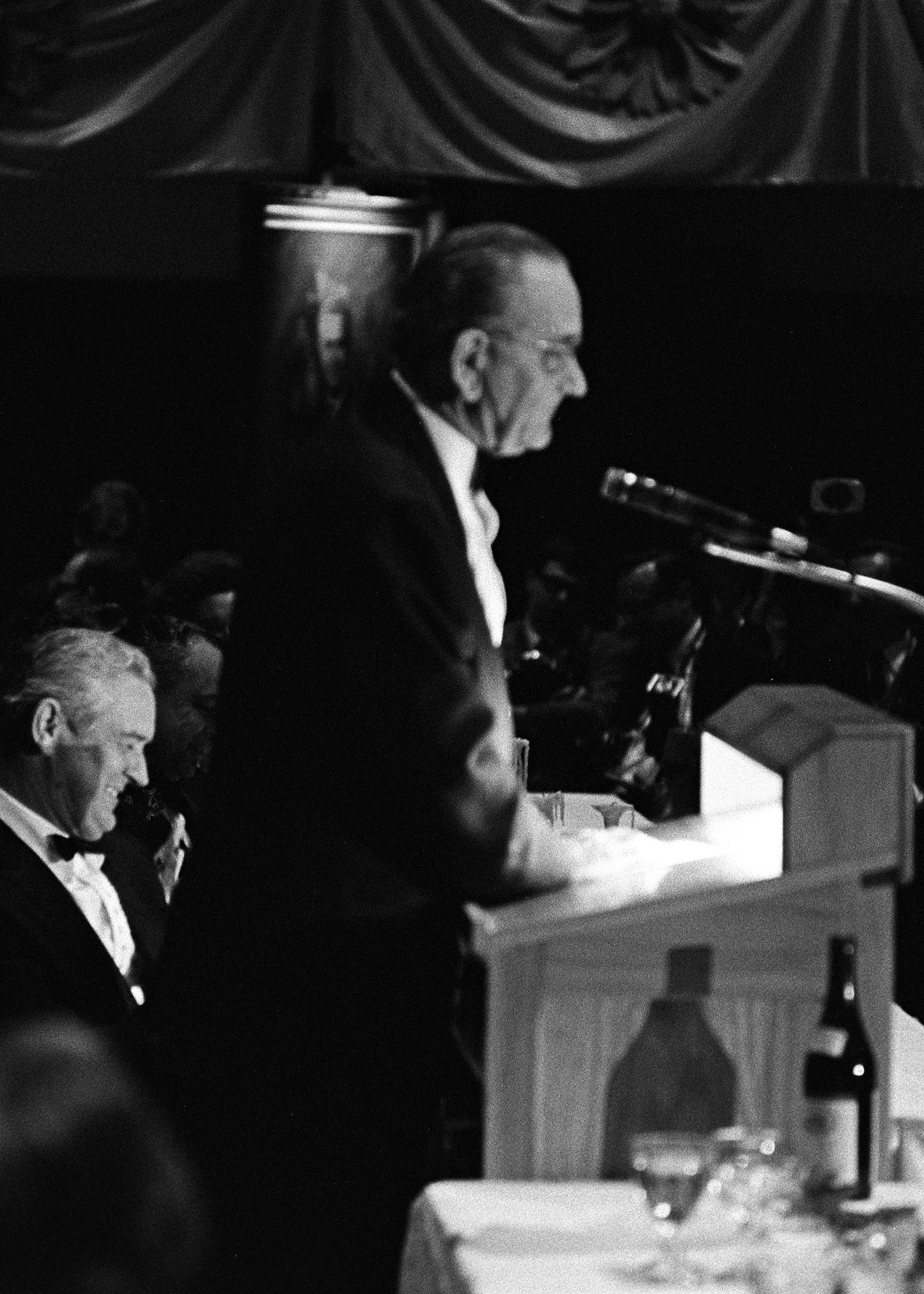
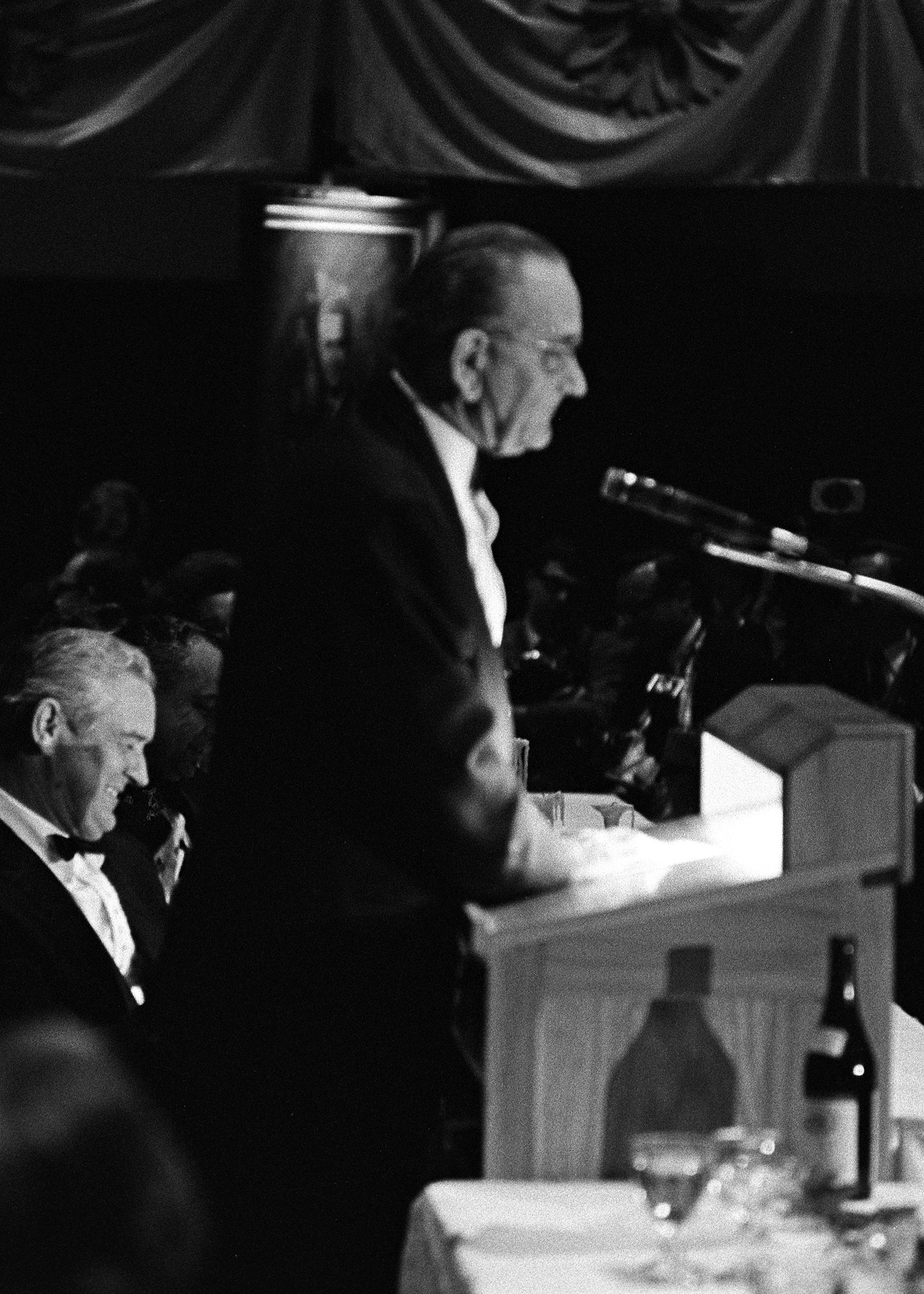
  • Johnson did not see the Cronkite program when it aired on February 27, 1968. He wasn’t at the White House, either. He was in Austin, Texas, at a black-tie party marking the 51st birthday of a longtime political ally, Governor John Connally. About the time Cronkite was intoning his commentary about Vietnam, Johnson was making light of Connally’s age, saying: “Today, you are 51, John. That is the magic number that every man of politics prays for — a simple majority.”
  • Cronkite’s on-air remarks had little to do with Johnson’s decision, announced at the end of March 1968, not to seek reelection. Far more decisive was Johnson’s eroding political support: By mid-March 1968, the president was confronting intra-party challenges from Democratic senators Eugene McCarthy and Robert F. Kennedy. And Johnson may have decided well before then against another term. He wrote in his 1971 memoir, The Vantage Point, that well before March 1968, he “had told a number of people” of his “intention not to run again.”
  • Cronkite for years rejected the notion that his on-air comments about Vietnam had had much effect on Johnson. The anchorman characterized his observations as akin to “another straw on the back of a crippled camel.” Evidence is scant, moreover, that Cronkite’s commentary had much influence on popular opinion, either. Polls had detected shifts in public sentiment against Vietnam months before Cronkite’s on-air remarks. Which means the anchorman can be said to have followed rather than have precipitated deepening disenchantment about the war.

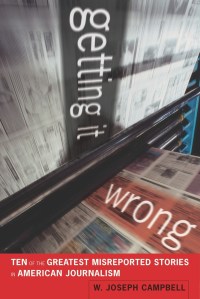
What’s more, as I discuss in my media-mythbusting book, Getting It Wrong, Cronkite’s commentary — he also said the U.S. war effort was “mired in stalemate” — was far less emphatic than the on-air remarks not long afterward by a rival network newsman, Frank McGee of NBC News.

On March 10, 1968, McGee declared: “The war is being lost by the administration’s definition.”

Lost: No hedging there about a stalemate.

Not only does Salon indulge in media myth, its commentary probably overstates the impact of Stewart’s segment about the scandals.

The comedian was hardly direct or unrelenting in criticizing Obama. His frustration was aimed primarily at IRS and the agency’s stunning recent acknowledgement that it had singled out conservative organizations for detailed scrutiny.

As such, Stewart’s remarks are unlikely to be remembered as much of a turning point in popular views about the Obama administration.

WJC

More from Media Myth Alert:

A ‘Cronkite Moment’ in the war on terror? There never was a ‘Cronkite Moment’

In Cronkite Moment, Debunking, Error, Media myths, Quotes, Television, Year studies on April 27, 2013 at 12:56 pm

When Walter Cronkite of CBS News called the Vietnam War a stalemate in 1968, he supposedly set a standard of courage that some journalists yearn desperately to find in contemporary practice.

Did he inspire a 'Brokaw Moment'?

Did he inspire a ‘Brokaw Moment’?

The latest example of such nostalgic longing appeared yesterday, in a column praising Tom Brokaw’s remarks during Sunday’s Meet the Press program about the terrorist bombings at this month’s Boston Marathon.

The surviving of the two suspected bombers reportedly has said the attack was motivated by U.S.-led wars in Afghanistan and Iraq.

To David Sirota, that signals retributive blowback in America’s war on terror. And in a column posted at the In These Times site (also posted at Salon.com), Sirota lavished praise on Brokaw for having said on Meet the Press:

“But we’ve got to look at the roots of all of this. Because it exists across the whole [Asian] subcontinent and the Islamic world around the world. And I think we also have to examine the use of drones that the United States is involved in. And there are a lot of civilians who are innocently killed in a drone attack in Pakistan, in Afghanistan, and in Iraq.

“And I can tell you, having spent a lot of time over there, young people will come up to me on the streets and say, ‘We love America. But if you harm one hair on the head of my sister, I will fight you forever.’ And there is this enormous rage against what they see in that part of the world as a presumptuousness of the United States.”

While not particularly pithy or eloquent, such sentiments qualify Brokaw as “a Walter Cronkite of his age,” Sirota wrote in his column, adding that Brokaw’s “declaration recalls Cronkite’s seminal moment 45 years ago.

“Back in 1968,” Sirota went on, “opponents of the Vietnam War were being marginalized in much the same way critics of today’s wars now are. But when such a revered voice as Cronkite took to television to declare the conflict an unwinnable ‘stalemate,’ he helped create a tipping point whereby Americans began to reconsider their assumptions.

“In similarly making such an assumption-challenging statement, Brokaw has followed in Cronkite’s heroic footsteps,” Sirota declared. His commentary carried the headline, “A Cronkite Moment for the War on Terror.”

Whether media historians one day will refer to the “Brokaw Moment” in the war on terror is questionable: I doubt whether Brokaw’s remarks on Meet the Press will prove very memorable.

But what most interests Media Myth Alert is embellishing the so-called “Cronkite Moment” as a kind of lofty and inspiring standard of journalistic conduct, as a singular moment of memorable courage.

It wasn’t.

Now, there is no doubt that Walter Cronkite declared that the U.S. military was “mired in stalemate” in Vietnam. He said so on February 27, 1968, in a special report that aired on CBS television.

But over time, the effects of Cronkite’s “stalemate” observation have been inflated out of proportion to the decidedly modest impact it had in 1968. Sirota’s column is emblematic of that tendency to inflate.

After all, it was scarcely original or provocative to describe the Vietnam War as a “stalemate” in early 1968. In his well-regarded study of that year, Mark Kurlansky wrote that Cronkite’s view was “hardly a radical position” at the time.

News organizations such as the New York Times had invoked “stalemate” as early as the summer of 1967 in reporting and commenting about Vietnam.

Indeed, a front-page new analysis about the war, published in the Times in August 1967,  carried the headline:

Vietnam: The Signs of Stalemate.”

The evidence is scant, moreover, that Cronkite’s “mired in stalemate” comment “helped create a tipping point” in U.S. public opinion about the war.

The “tipping point” had been reached months before.

As I point out in my media-mythbusting book, Getting It Wrong, opinion polling had detected shifts in views about the war long before Cronkite’s program. In a very real sense, Cronkite followed rather than precipitated deepening popular doubts about the wisdom of the war.

For example, a Gallup Poll conducted in early October 1967 — 4½ months before Cronkite’s “mired in stalemate” observation — reported that 47 percent of respondents, a plurality, said it was a mistake to have sent U.S. troops to fight in Vietnam. A little more that two years earlier, Gallup had reported that only 24 percent of respondents felt that way.

Journalists detected other evidence in late 1967 of a shift in views about the war. Don Oberdorfer, then a national correspondent for the Knight newspapers, wrote in December 1967 that the previous five or six months had been “a time of switching, when millions of American voters — along with many religious leaders, editorial writers and elected officials — appeared to be changing their views about the war.”

Opponents of the war hardly “were being marginalized” in early 1968. They were increasingly outspoken, and prominent.

As for Cronkite, he pooh-poohed for years the notion his “mired in stalemate” observation was of much consequence.

In his 1997 memoir, Cronkite said his “stalemate” assessment was for President Lyndon Johnson “just one more straw in the increasing burden of Vietnam.” Cronkite repeated the analogy in the years immediately afterward, saying on a CNN program in 1999:

“I think our broadcast simply was another straw on the back of a crippled camel.”

The presumed power of the “Cronkite Moment” lies in the immediate and visceral effects Cronkite’s “stalemate” comment supposedly had on Johnson.

It often has been said that Johnson watched the Cronkite program at the White House and, upon hearing the “mired in stalemate” remark, turned to an aide or aides and said something along these lines:

“If I’ve lost Cronkite, I’ve lost Middle America.”

Johnson: Not in front of a TV

Johnson: Not in front of a television set

But as I discuss in Getting It Wrong, Johnson wasn’t at the White House when the Cronkite program aired. He wasn’t in front of a television set, either.

Johnson was in Austin, Texas, at the 51st birthday party of Governor John Connally.

About the time Cronkite was uttering his “mired in stalemate” opinion, Johnson wasn’t bemoaning the loss of Cronkite. He was making light of Connally’s age.

“Today, you are 51, John,” the president said. “That is the magic number that every man of politics prays for — a simple majority.”

WJC

Many thanks to Instapundit
Glenn Reynolds
for linking to this post.

More from Media Myth Alert:

Confused and illogical: WaPo commentary on effects of ‘Cronkite Moment’

In Cronkite Moment, Debunking, Error, Media myths, Quotes, Television, Washington Post on March 3, 2013 at 8:20 am

The Washington Post today offers one of the more baffling and illogical characterizations of the supposed effects of Walter Cronkite’s mythical report about Vietnam, which aired in February 1968.

Cronkite in Vietnam, 1968

Cronkite in Vietnam, 1968

Cronkite’s assessment supposedly was so exceptional, so influential on American policy and politics, that it has come to be call the “Cronkite Moment.”

A commentary in today’s Post addresses that occasion in a broader discussion of hostility between the news media and the White House. In referring to President Lyndon B. Johnson, the commentary says:

“Walter Cronkite’s on-air report from Vietnam — which the president did not see — supposedly elicited his famous lament: ‘If I’ve lost Cronkite, I’ve lost middle America.’ Shortly thereafter, Johnson would make his most memorable television appearance, announcing that he would not run for president in 1968.”

How’s that? Johnson “did not see” the Cronkite report; even so, it packed such wallop that Johnson knew without watching that he had “lost Cronkite”?

Who’s editing this stuff?

Not only is that passage confused and illogical: It’s historically inaccurate.

Let’s unpack the passage:

  • Cronkite’s report was aired February 27, 1968, on CBS television. In closing, the anchorman offered the comparatively mild assessment that U.S. forces were “mired in stalemate” in Vietnam — an assessment reflecting the conventional wisdom that had been circulating for months among the news media in Washington and Saigon, the South Vietnamese capital.
  • Johnson did not see Cronkite’s report: When it aired, the president was in Austin, Texas, attending a black-tie birthday party for Governor John B. Connally, a long-time political ally.
  • There’s no persuasive evidence or documentation that Johnson ever said, “If I’ve lost Cronkite, I’ve lost middle America.” Or anything close to that statement.  Indeed, versions of what Johnson purportedly said vary markedly — and such variability can be a marker of a media-driven myth.
  • Nearly five weeks after Cronkite’s report about Vietnam, Johnson announced that he would neither seek nor accept the Democratic party’s nomination for president. But Cronkite’s downbeat assessment about the war had nothing to do with Johnson’s decision not to stand for reelection (see below).

In the days following Cronkite’s “mired in stalemate” commentary, Johnson remained outwardly hawkish about the war in Vietnam. In mid-March 1968, for example, he traveled Minnesota to deliver a rousing speech in which he urged “a total national effort to win the war” in Vietnam.

Johnson punctuated his remarks in Minnesota by pounding the lectern and jabbing his finger in the air. “We love nothing more than peace,” he declared, “but we hate nothing worse than surrender and cowardice.” The president disparaged critics of the war as being inclined to “tuck our tail and violate our commitments.”

Johnson’s decision not to seek reelection stemmed from at least two sources: his health and his rivals for the Democratic nomination for president.

There’s evidence that Johnson never intended to seek another term, that in 1967 or before, he had decided against another campaign for the presidency in part because of concerns about his health. “Long before I settled on the proper forum to make my announcement,” Johnson wrote in his memoir, The Vantage Point, “I had told a number of people of my intention not to run again.”

Johnson’s announcement not to seek another term came after insurgent Democratic candidate Eugene McCarthy had won more than 40 percent of the vote in the New Hampshire presidential primary on March 12, 1968, and after had Johnson nemesis Robert F. Kennedy had entered the race for the Democratic nomination on March 16.

Johnson, moreover, was facing near-certain defeat in the Wisconsin primary, on April 2, 1968.

Those were considerations weighing on Johnson on March 31, 1968, when he said he would not seek reelection. Cronkite’s remarks about Vietnam on February 27, 1968, were not a factor.

As I discuss in my media-mythbusting book, Getting It Wrong, the purported “Cronkite Moment,” when scrutinized, “dissolves as illusory—a chimera, a media-driven myth.”

WJC

Many thanks to Instapundit
Glenn Reynolds for linking to this post

More from Media Myth Alert:

Media myth outbreak abroad; ‘Cronkite Moment’ goes viral

In Cronkite Moment, Debunking, Media myths, Newspapers, Quotes, Television on February 9, 2013 at 8:38 am

It’s well-known that media myths — those tall tales about the purported feats of American journalists — can go viral, internationally.

Seldom, though, has there been an outbreak as such yesterday’s, when leading newspapers in Canada, Britain, and Belgium separately indulged in the  “Cronkite Moment” media myth.

Johnson: Not in front of a TV

Johnson on February 27, 1968: Not watching Cronkite

The “Cronkite Moment” was in 1968, when on-air editorializing by CBS News anchorman Walter Cronkite supposedly produced a moment of stunning clarity and insight for President Lyndon B. Johnson and altered the course of the war in Vietnam.

Such effects are wildly overstated, but they make for an irresistible tale of powerful media influence, and that’s like so much catnip to contemporary journalists and columnists.

It helps explains yesterday’s outbreak, which was abundantly seasoned with hagiographic praise for Cronkite, who died in 2009:

  • Rick Salutin, in a column for the Toronto Star about a Canadian news anchor, wrote that Cronkite set the “gold standard for anchors” and “was solid as the bronze statue of the American revolutionary minuteman” at Concord, Massachusetts. Salutin further wrote: “When president Lyndon Johnson heard Cronkite turn against the Vietnam War, he said, ‘If I’ve lost Cronkite, I’ve lost the country.'”
  • Michael McCarthy, the environment editor for London’s Independent newspaper, wrote in a column about filmmaker David Attenborough that Cronkite “was a world figure as America’s most celebrated broadcaster.”Independent masthead McCarthy declared: “Such was his aura and influence that when, on his return from a Vietnam trip in 1968, he pronounced that the US could not win the war, President Lyndon Johnson is said to have exclaimed: ‘If I’ve lost Cronkite, I’ve lost Middle America!’ and shortly afterwards announced he would not seek re-election.”
  • Jean-Paul Marthoz, in a blog commentary for the French-language Le Soir of Brussels, wrote that Cronkite was America’s “most trusted man” and added: “In 1968, on his return from a reporting assignment to Vietnam, a conflict that he covered with rigorous impartiality, he declared that the war couldn’t be won, which led President Lyndon Johnson to declare:  ‘If I’ve lost Walter Cronkite, I’ve lost America.'”

It’s true that Cronkite, on February 27, 1968, pronounced the U.S. war effort in Vietnam was “mired in stalemate.” And he suggested that negotiations might prove to be the way out.

But the effects of Cronkite’s commentary were dramatically more modest than the characterizations of Salutin, McCarthy, and Marthoz.

As I discuss in my media-mythbusting book, Getting It Wrong, Lyndon Johnson did not see the Cronkite program when it aired, and there’s no certain evidence he ever saw it later, on videotape.

Johnson was not at the White House on February 27, 1968. He was not in front of a television set when Cronkite’s special report aired.

The president then was in Austin, Texas, at a black-tie event marking the 51st birthday party of Governor John Connally, one of Johnson’s long-time political allies.

About the time Cronkite was intoning his “mired in stalemate” assessment, Johnson was engaging in light-hearted banter about Connally’s age. Johnson hardly was bemoaning the loss of an anchorman’s support.

“Today,” the president said, “you are 51, John. That is the magic number that every man of politics prays for — a simple majority.”

What’s more, Cronkite’s “mired in stalemate” assessment was neither profound nor exceptional in early 1968.

For months before Cronkite’s program, U.S. news organizations had been invoking “stalemate” to characterize the war effort.

The New York Times, in an analysis published August 7, 1967,  declared “the war is not going well. Victory is not close at hand.”

The analysis, filed from Saigon, further stated:

“‘Stalemate’ is a fighting word in Washington. President Johnson rejects it as a description of the situation in Vietnam. But it is the word used by almost all Americans here, except the top officials, to characterize what is happening.”

The Times’ assessment appeared on its front page, beneath the headline:

Vietnam: The Signs of Stalemate.

Not only was Cronkite’s “mired in stalemate” assessment belated; it was mild compared to other commentary at the time.

The Wall Street Journal in an editorial published four days before Cronkite’s report, said the U.S. war effort in Vietnam “may be doomed” and that “everyone had better be prepared for the bitter taste of defeat beyond America’s power to prevent.”

Strong stuff.

Interestingly, Cronkite in his memoir dismissed the supposedly powerful effects of his report on Vietnam. He wrote in memoir, titled A Reporters’ Life and published in 1997, that the “mired in stalemate” assessment represented for Johnson “just one more straw in the increasing burden of Vietnam.”

Cronkite repeated the analogy in promoting the book, telling CNBC that he doubted whether the program “had a huge significance. I think it was a very small straw on a very heavy load [Johnson] was already carrying.”

WJC

More from Media Myth Alert:

‘Yes, Virginia’ special on CBS a sad distortion of a timeless newspaper reply

In 1897, Debunking, Error, Media myths, New York Sun, Quotes, Television on December 13, 2012 at 7:29 am

CBS will demonstrate anew tomorrow night that repeat performance is no measure of quality. Or accuracy.

The network will air for the fourth successive Christmas season its charmless, half-hour animated special, “Yes Virginia.”

The show is an unrelieved distortion of  the story behind the New York Sun’s classic editorial reply to 8-year-old Virginia O’Hanlon who implored in a letter to the newspaper in 1897:

“Please tell me the truth; is there a Santa Claus?”

Church

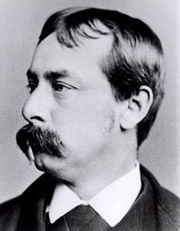
The Sun’s reply, by a veteran editorial writer named Francis P. Church, declared in part:

“Yes, Virginia, there is a Santa Claus. He exists as certainly as love and generosity and devotion exist, and you know that they abound and give to your life its highest beauty and joy. Alas! how dreary would be the world if there were no Santa Claus. It would be as dreary as if there were no Virginias.”

The tiresome CBS show offers none of the charm of Church’s timeless paean to childhood and the Christmas spirit.

Indeed, the program distorts all major elements of the back story of the “Yes, Virginia,” editorial.

Holiday Programming

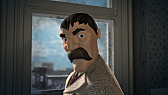
CBS’ Church: Scowling, loud, irritable

It depicts Virginia is a waddling, round-headed girl annoyingly obsessed about the existence of Santa Claus. It portrays Church as scowling, loud, and irritable.

Neither portrayal is convincing, nor very accurate.

Church is cast as the editor of the Sun, which is shown as a tabloid newspaper. Church wasn’t the editor; he was an editorial writer who relished the anonymity the position allowed.

And the Sun of 1897 was no tabloid.

Not only that, but the CBS show has Virginia writing her letter, and the Sun publishing its reply, in December, as Christmas approached.

That’s far from accurate.

As I discussed in my 2006 book, The Year That Defined American Journalism: 1897 and the Clash of Paradigms, Virginia wrote the letter not long after her birthday in July 1897.

The Sun published its editorial-reply on page 6 of its issue of September 21, 1897.

In first appearance, the editorial that has become the most famous in American journalism was inconspicuous and obscure. It was placed in the third of three columns of editorials. It certainly was not introduced with large headlines on the front page, as the CBS show has it.

The headline accompanying the Sun’s editorial posed the timeless question:

“Is There A Santa Claus?”

The editorial was no instant sensation, no immediate hit. And the Sun did not reprint the editorial at Christmastime every year after 1897, as is commonly believed.

It took years for the newspaper to warm to and embrace “Is There A Santa Claus?”

As I noted in The Year That Defined American Journalism, it wasn’t until the mid-1920s when the Sun began routinely publishing the essay at Christmastime.

What helped kept the editorial alive were the newspaper’s readers. They found it appealing and memorable. They found solace and inspiration in its passages.

In untold numbers over the years, readers asked the Sun to reprint the essay.

A letter-writer told the newspaper in 1926 that “Is There A Santa Claus” offered “fine relief from the commercialism and unsentimental greed” of the Christmas season.

In 1940, a writer to the Sun likened the essay to “a ray of hope on the path to human understanding in our troubled times.”

The CBS program hints at none of that. It offers no indication that the editorial’s fame rests at least in part on generations of readers who collectively proved to be far more perceptive than editors in identifying and affirming the essay’s significance and enduring appeal.

If anything, the vapid CBS show demonstrates that history’s back story can be richer, and far more charming, than repeat holiday fare on television.

WJC

Many thanks to Instapundit
Glenn Reynolds for linking to this post

Recent and related:

Lessons unlearned: Indulging in the ‘Cronkite Moment’ myth

In Cronkite Moment, Debunking, Media myths, Quotes, Television on December 6, 2012 at 4:50 am
Johnson: Not in front of a TV

Johnson: Not at the White House

The wide applicability of the mythical “Cronkite Moment” — that occasion in 1968 when Walter Cronkite’s observations about the Vietnam War supposedly altered opinions of the president and the American public — is nothing less than astonishing.

The myth’s resistance to debunking is similarly impressive.

Just yesterday, for example, two media outlets in the American heartland invoked elements of the “Cronkite Moment” as if they were genuine, as if they were instructive.

The sports director of WHO TV in Des Moines, Iowa, asserted in a blog post that “Walter Cronkite didn’t oppose the Vietnam War initially, but when he started questioning what we were doing over there, public opinion turned – correctly – against the war.”

And an item posted yesterday at the online site of the Oklahoma Gazette  arts and entertainment weekly declared: “Lyndon Johnson once remarked that he knew he’d lost Middle America’s support for the Vietnam War when he lost the support of CBS news anchor Walter Cronkite.”

Both are inaccurate elements of the larger, mythical interpretation of what Cronkite, the CBS News anchor, said about Vietnam and what President Lyndon Johnson said in reaction.

The “Cronkite Moment”  is the short-hand phrase for Cronkite’s editorial comment, offered February 27, 1968, at the end of a special report about the Vietnam War.

Cronkite said that the U.S. military had become “mired in stalemate” in Vietnam and suggested that negotiations eventually might offer to be a way out.

At the White House, Johnson supposedly watched the Cronkite report and, upon hearing the “mired in stalemate” assessment, suddenly realized his war policy had received a devastating blow. “If I’ve lost Cronkite,” the president is said to have told an aide, or aides, “I’ve lost Middle America.”

Or something to that effect.

Versions vary markedly.

In reality, Johnson did not see the Cronkite program when it aired. Nor is there any persuasive evidence that he watched the show on videotape at some later date.

As I discuss in my latest book, Getting It Wrong, Johnson was not at the White House but in Austin, Texas, at a black-tie affair marking the 51st birthday of his longtime political ally, Governor John Connally (see photo, above).

At the time Cronkite was intoning “mired in stalemate,” Johnson wasn’t lamenting the loss of the anchorman’s support. He wasn’t wringing his hands or bemoaning that he had “lost Middle America.”

The president was making lighthearted comments about Connally’s age, saying:

“Today you are 51, John. That is the magic number that every man of politics prays for— a simple majority.”

As for Cronkite’s assessment being so powerful as to shift public opinion — that, too, is mistaken: Popular views about the war had begun shifting months before the “Cronkite Moment.”

By October 1967, 47 percent of Americans, a plurality, maintained that U.S. military presence in Vietnam was a mistake, according to Gallup surveys. The plurality climbed to 49 percent, according to a Gallup Poll completed the day of Cronkite’s program about Vietnam.

So not only that, but Cronkite’s “mired in stalemate” observation was scarcely  remarkable.

Or novel. Journalists had been using the term “stalemate” for months in commentaries, analyses, and news reports about the war.

For example, syndicated columnist James J. Kilpatrick wrote in August 1967:

“So long as the present ground rules obtain in Vietnam, this war will drag along its indecisive way. … [T]he condition is stalemate.”

Also in August 1967, the New York Times said in a news analysis that the war in Vietnam “is not going well.”

U.S. victory, the Times said, “is not close at hand. It may be beyond reach.”

The analysis was published on the front page, beneath the headline: “Vietnam: The Signs of Stalemate.”

Not only did Cronkite’s views of the war lag public opinion, they trailed those offered by rival news organizations.

What, then, accounts for the tenacity of the mythical “Cronkite Moment”?

It’s an accessible tale, easily told and readily understood. It has broad applicability, as the myth’s appearance at WHO TV and in the Oklahoma Gazette suggest.

And it’s unreservedly media-centric: In a period of declining audience share and declining perceived influence, it’s reassuring to media practitioners that there were better, more powerful times when the likes of Cronkite supposedly told truth to power — and supposedly altered policy as a result.

WJC

Recent and related:

Recalling George Romney’s ‘brainwashing’ — and Gene McCarthy’s ‘light rinse’ retort

In Anniversaries, Cronkite Moment, Debunking, Media myths, Newspapers, Quotes on September 4, 2012 at 3:38 pm

It’s been 45 years since George Romney committed one of the greatest gaffes in American political history — a misstep that supposedly inspired one of the most devastating putdowns in American political history.

Interestingly, though, crucial details about the devastating putdown remain rather murky.

Romney’s gaffe, which effectively destroyed his run for the presidency before it officially began, came in an interview taped on August 31, 1967, and aired September 4, 1967, on a Detroit television station.

In the interview, Romney, then governor of Michigan and a presumptive Republican candidate for president, referred to his visit to South Vietnam in 1965 and declared:

“You know, when I came back from Vietnam, I’d just had the greatest brainwashing that anybody could get. … Well, not only by the generals but by the diplomatic corps over there. They do a very thorough job.”

The assertion that he had been duped into supporting America’s war effort in Vietnam revealed Romney’s muddled thinking and an uncertain command of foreign policy. (“Could the country afford a President who was so easily deceived?” the New York Times wondered.)

Forty-five years on, Romney’s comment remains striking both for clumsiness and self-destructiveness. And it’s been recalled not infrequently in recent months as Romney’s son, Mitt, has campaigned for the presidency.

When it is recalled, the “brainwashing” gaffe often is coupled with the stiletto-like rejoinder attributed to Eugene McCarthy, then a second-term U.S. senator from Minnesota.

McCarthy supposedly said that rather than brainwashing, “a light rinse” would have sufficed in Romney’s case.

There is no question about Romney’s having made the “brainwashing” claim; this YouTube video cuts to the money quote:

The anecdote’s memorable quality lies not only in Romney’s befuddled claim but also in McCarthy’s “light rinse” quip. Indeed, McCarthy’s retort is said to have been so powerful that it “essentially finished Romney.”

But the precise context of McCarthy’s “light rinse” zinger is at best unclear. My research has turned up no unambiguous documentation about when McCarthy made the comment, where, and specifically to whom.

(And why does this matter? Getting it right matters a lot, especially about an insult so piercing and effective that it lives on like few others in American political lore.)

A database search of leading U.S. newspapers — including the New York Times, the Washington PostChicago Tribune, Los Angeles Times, and Baltimore Sun — turned up no published reference to McCarthy’s “light rinse” remark in 1967 or 1968, or for many years afterward.

The nearest contemporaneous hint to a “light rinse” came in a commentary published in mid-September 1967 in the Los Angeles Times, in which conservative columnist James J. Kilpatrick said of Romney:

“Brainwashed, was he? It couldn’t have been much of a laundry bill.”

Kilpatrick’s column did not mention McCarthy, who wasn’t prominently in the news in September 1967. McCarthy did not announce his candidacy for president until November that year.

The first reference found in the database search to the “light rinse” comment  was in a commentary written by Fred Barnes and published in Baltimore Sun in April 1983. Barnes’ commentary, however, did not say when, where, or to whom McCarthy uttered the “light rinse” line.

The “light rinse” anecdote notably has been afflicted with version variability — my term for the shifting of important details as a story is retold over the years. As I point out in my 2010 book,  Getting It Wrong, version variability can be a marker of a media-driven myth.

Here are a few examples of the shifting versions of the “light rinse” remark:

  • Maureen Dowd of the New York Times, writing in her column in January 2012, quoted McCarthy as having said: “All that was needed in the case of George Romney was a light rinse.”
  • Syndicated columnist Jules Witcover wrote in 2007 that McCarthy “quipped that he ‘would have thought a light rinse would have done it.'”
  • Mark Shields, writing in the Washington Post in 1988, quoted McCarthy’s one-liner this way: “I don’t know why Romney was brainwashed; in his case, a light rinse would have been sufficient.”

And as further evidence of version variability, the “light rinse” quip has even been attributed to Daniel Patrick Moynihan.

Such imprecision invites suspicion about the “light rinse” quip. (It also sounds almost too perfect to be true — not unlike, say, William Randolph Hearst’s purported vow to “furnish the war” with Spain or Lyndon B. Johnson’s supposed epiphany on the Vietnam War: “If I’ve lost Cronkite, I’ve lost Middle America.”)

Among the first accounts  — if not the first account — of McCarthy’s quip appeared in An American Melodrama: The Presidential Campaign of 1968, a hefty book published in 1969.

American Melodrama, which was written by Lewis Chester, Godfrey Hodgson, and Bruce Page, described McCarthy’s remark as off-handed and said his aides persuaded journalists to hush it up.

According to American Melodrama, McCarthy was asked “by reporters whether he thought Romney’s ‘brainwashed’ gaffe had dealt the death blow to his chances.”

McCarthy was quoted as saying in reply:

“Well . . . er no, not really. Anyway, I think in that case a light rinse would have been sufficient.”

The book further stated:

“McCarthy’s press aides, appalled at the possible effects of this remark on Republicans, who, bereft of a dove candidate in their own party, might write-in McCarthy’s name, pleaded with reporters not to use it. They dutifully complied; though few would have done the same for Romney.”

While intriguing, American Melodrama doesn’t say when McCarthy made the comment, where, or specifically to whom.

Although self-censorship could account for the absence of contemporaneous references to McCarthy’s quip in leading U.S. newspapers, it seems implausible that an insult so delicious and devastating would have remained hushed up, even by compliant reporters, for very long.

Another version was offered by British journalist David Frost in an interview the aired on C-SPAN in 2007. Frost recalled having heard McCarthy’s comment, and said it was made in New Hampshire not long after Romney’s “brainwashing” statement.

But Frost’s recollection is faulty in a crucial respect: He said in the interview that “within a week or so” after making the “brainwashing” comment, Romney “was out of the race.”

Not so. Romney’s ended his campaign for the presidency on February 28, 1968 — six months after uttering the “brainwashing” remark and 3½ months after officially entering the race.

During the week Romney dropped out, Frost said in the C-SPAN interview, “I was interviewing Eugene McCarthy in New Hampshire, and, as we came out, there were three or four people who … wanted a sound bite. And one of them said, ‘What do you think about George Romney being brainwashed?’

“And McCarthy said, ‘I would have thought a light rinse would have been sufficient.’ Killer line. Fantastic line, I thought.”

But left unclear in Frost’s version is why journalists would have been asking McCarthy in late February or early March 1968 about a claim that Romney had made months before. Why would it have been newsworthy then?

Puzzling.

Not only that, but Frost did not say whether, or when, he reported McCarthy’s “killer line.” Or whether McCarthy’s “press aides” pleaded with him not to use it.

WJC

Recent or related:

‘Not Likely Sent’ article about Hearst’s ‘vow’ a top 50 selection in AEJMC flagship journal

In 1897, Debunking, Furnish the war, Media myths, Newspapers, Quotes, Spanish-American War, Yellow Journalism on August 10, 2012 at 12:45 pm

AEJMC, the journalism educators organization, announced yesterday the 50 top articles to have appeared in its flagship journal — and among the selections was “Not Likely Sent,” my 2000 myth-busting study about William Randolph Hearst and his purported vow to “furnish the war” with Spain.

Hearst

“Not Likely Sent” was published in the summer 2000 issue of the peer-reviewed Journalism & Mass Communication Quarterly.

The article challenged as implausible the often-retold anecdote about Hearst’s supposed exchange of telegrams with the artist Frederic Remington, in which Hearst is said to have declared:

You furnish the pictures, and I’ll furnish the war.”

Remington at the time of purported exchange was in Cuba, on assignment for Hearst’s New York Journal. Remington spent six days on the island in January 1897, preparing sketches to illustrate aspects of the Cuban insurrection against Spain’s colonial rule.

Among the reasons for dismissing the famous anecdote — which has been invoked over the decades by scores of journalists and historians — is Hearst’s denial, and the implausibility of the supposed exchange.

That is, Spanish censors who controlled all incoming and outgoing telegraphic traffic surely would have intercepted and called attention to Hearst’s message to Remington, had it been sent.

I also pointed out in “Not Likely Sent” that Hearst’s supposed vow ran counter “to the Journals editorial positions in January 1897. The newspaper in editorials at the time expected the collapse of the Spanish war effort and resulting independence for Cuban insurgents. The Journal was neither anticipating nor campaigning for U.S. military intervention to end the conflict.”

The Cuban rebellion, however, ground on and became a stalemate. In April 1898, the United States entered the conflict, principally to end a human rights disaster that was festering in Cuba.

The editor of Journalism and Mass Communication Quarterly, Daniel Riffe, said in a statement that selecting the journal’s top 50 articles was “a piece of research in itself.” The process included tapping the advice of his predecessors as editor, as well as consulting citation guides and Google Scholar.

“I finally assembled a list of 50 articles that I hope our members agree have been influential in our field,” Riffe said.

The top 50 articles were selected and announced as part of the centennial celebration of AEJMC — the Association for Education in Journalism and Mass Communication.

Predecessor titles of Journalism and Mass Communication Quarterly were Journalism Quarterly and The Journalism Bulletin.

An elaboration of “Not Likely Sent” appeared as a chapter in my 2001 book, Yellow Journalism: Puncturing the Myths, Defining the Legacies. Separately, a chapter in my latest book, Getting It Wrong, described how Hearst’s purported vow came to be embedded in the lore of American journalism.

Despite the repeated debunkings, however, the anecdote about “furnish the war” lives on — a timeless, pithy, and easily recalled example of the news media at their supposed worst.

As I wrote in the article:

“The Remington-Hearst anecdote is indeed ‘a beautiful story,’ a succinct and delicious tale, one rich in hubris and in swaggering recklessness. It is, however, a story altogether dubious and misleading.

“It suggests a power that the press, including Hearst’s Journal, did not possess, that of propelling the country into a war that it did not want.”

WJC

Recent or related:

Chris Matthews invokes the ‘if I’ve lost Cronkite’ myth in NYT review

In Cronkite Moment, Debunking, Media myths, New York Times, Quotes, Reviews on July 9, 2012 at 7:29 am

The New York Times lined up Chris Matthews, voluble host of cable television’s Hardball program, to review Douglas Brinkley’s Cronkite, the new biography about legendary CBS News anchorman Walter Cronkite.

LBJ wasn’t watching Cronkite’s report

Matthews turned in a fluffy review, published yesterday, that invoked one the American journalism’s best-known media myths — the claim that President Lyndon B. Johnson was dramatically moved by Cronkite’s on-air assessment about the war in  Vietnam.

“Cronkite never shied away from telling hard truths,” Matthews writes in his review. “Recall his half-hour ‘Report From Vietnam’ on Feb. 27, 1968, in which he declared the Vietnam War a ‘stalemate.’ It was a verdict the veteran war correspondent didn’t relish delivering, but Cronkite, who had recently returned from reporting on the Tet offensive, now believed that the war was unwinnable and indefensible.”

Matthews then repeats Brinkley’s thinly supported claim that Cronkite’s “stalemate” pronouncement had “seismic” effects.

Matthews adds, presumably as evidence of such an effect: “President Johnson reportedly said, ‘If I’ve lost Cronkite, I’ve lost the country.'”

But as I discuss in my latest book, Getting It Wrong, there’s no persuasive evidence that Johnson ever uttered such a remark.

Indeed, the president’s purported comment is defined by what I call acute version variability. That is, there is no agreed-upon version of what Johnson supposedly said in reacting to Cronkite’s “stalemate” assessment.

Other versions include:

“If I’ve lost Cronkite, I’ve lost Middle America.”

“If I’ve lost Cronkite, I’ve lost the war.”

“If I’ve lost Cronkite, I’ve lost the American people.”

“If I’ve lost Cronkite, I’ve lost the nation.”

And so on. (The Richmond Dispatch in a review published yesterday of Cronkite said Johnson exclaimed: “My God, if I’ve lost Cronkite, I’ve lost the country.”)

As I’ve noted previously at Media Myth Alert, if anyone’s words should be captured with precision, they ought to be the president’s. Especially on matters as critical as support for war policy. The wide variance as to what Johnson supposedly said is, then, a marker of a media myth.

Even more injurious to the case that Cronkite’s pronouncement was of great significance is that Johnson didn’t see the program when it was broadcast.

The president was not at the White House on February 27, 1968; nor was he in front of a television set when Cronkite’s program aired.

And about the time Cronkite intoned his “stalemate” assessment, Johnson was offering light-hearted remarks in Austin, Texas, at the 51st birthday party of Texas Governor John Connally (see photo, above).

“Today you are 51, John,” the president said. “That is the magic number that every man of politics prays for — a simple majority.”

I further note in Getting It Wrong that there is no compelling evidence that Johnson saw the Cronkite program later, on videotape.

Even if he had, Cronkite’s characterization of the was as a “stalemate” would have come as old news to the president. What Cronkite said about Vietnam on February 27, 1968, hardly earth-shaking, stunning, or original.

In no way did it alter the course of the war or influence American policy.

If anything, Cronkite’s observation about a “stalemate” was a rehash of what other news organizations, such as the New York Times, had been saying for months.

For example, the Times said in a news analysis published July 4, 1967:

“Many officers believe that despite the commitment of 466,000 United States troops now in South Vietnam … the military situation there has developed into a virtual stalemate.”

And in a report from Saigon that appeared on August 7, 1967, the Times noted:

“‘Stalemate’ is a fighting word in Washington. President Johnson rejects it as a description of the situation in Vietnam. But it is the word used by almost all Americans here, except the top officials, to characterize what is happening.”

So why bother calling out Matthews for casually invoking the central component of the mythical “Cronkite Moment”?

Doing so serves to highlight how insidious the myth has become, how blithely it is marshalled to support the notion that courageous and motivated journalists can do marvelous things.

Doing so also demonstrates anew that not even prominent and presumably fact-checked news organizations such as the Times are resistant to the intrusion of hoary media myths.

And doing so indicates that at least some high-profile contemporary journalists possess a shaky command of the history of their field.

WJC

Many thanks to Instapundit
Glenn Reynolds for linking to this post

Recent or related:

Renewing the Hearst-Remington association in a $200,000 grant

In 1897, Debunking, Furnish the war, Media myths, Quotes, Spanish-American War on July 8, 2012 at 10:10 am

The most tenacious myth in American journalism tells of a purported exchange of telegrams in January 1897 between  newspaper magnate William Randolph Hearst and the artist Frederic Remington.

Remington

Supposedly, in answering Remington’s telegram, Hearst vowed to “furnish the war” with Spain, which broke out 15 months later, in April 1898.

Despite repeated efforts to debunk it, the tale about Hearst’s reckless vow lives on — a story just too delicious to be discarded.

So I found intriguing the news the other day that the Hearst Foundations — which Hearst set up in the 1940s — have agreed to a $200,000 grant to the Frederic Remington Art Museum in Ogdensburg, N.Y.

Most of the money, $150,000, is to put toward extensive restoration work on the museum’s main building, which dates to 1810. The remainder, $50,000, is for educational purposes, if matched by the museum before year’s end.

Hearst

The grant — the foundations’ second to the Remington museum since 2009 — represents a reminder and a renewal of sorts of the long ago Hearst-Remington association.

In early 1897, Remington and the writer Richard Harding Davis arrived in Cuba on assignment from Hearst’s New York Journal to cover the rebellion against Spanish colonial rule, the conflict that gave rise to the Spanish-American War.

It was a coup for the Journal to have lined up talent such as Remington and Davis, who were paid handsomely for what was to be a month-long assignment.

It was during that assignment when the purported exchange of the telegrams supposedly took place — an exchange described by neither Hearst nor Remington, but by James Creelman, a Hearst correspondent who was in Madrid at the time.

The tale of Hearst’s vow is almost surely apocryphal, for reasons I discuss in my latest book, Getting It Wrong.

Among the reasons (typically overlooked) is that Hearst denied having sent such a message. Remington, apparently, never discussed the anecdote, which Creelman recounted, without documentation, in a memoir published in 1901.

Further reason for doubting the tale is that Spanish authorities controlled incoming and outgoing telegraphic traffic from Havana. They surely would have intercepted and called attention to Hearst’s incendiary message to Remington, had it been sent.

Additionally, the anecdote rests on irreconcilable illogic. As I write in Getting It Wrong, it “would have been absurd for Hearst to vow to ‘furnish the war’ because war— specifically, the Cuban rebellion against Spain’s colonial rule — was the very reason Hearst sent Remington to Cuba in the first place.

“Anyone reading U.S. newspapers in early 1897 would have been well aware that Cuba was a theater of a nasty war. By then, the Cuban rebellion had reached island-wide proportion and not a single province had been pacified by Spain’s armed forces.”

Hearst’s Journal gave prominent display to Remington’s sketches beginning in late January 1897, following the artist’s return to New York after a stay in Cuba of just six days.

The Journal gushed over Remington’s work, introducing his sketches with extravagant headlines such as:

“War Sketches Gathered in the Field by Frederic Remington; The Gifted Artist, Visiting Cuba Especially for the Journal, Describes with Pen and Pencil Characters That Are Making the War Famous and Infamous.”

Remington, though, grumbled that his work did not reproduce well in Hearst’s newspaper.

The artist returned to Cuba for Hearst in June 1898, to cover the Cuban campaign of the Spanish-American War. He did not distinguish himself.

Overweight and ailing, Remington suffered in the Cuban summer. He seldom was near the front and became what biographers Peggy and Harold Samuels termed “the chronicler of the battle’s rear.”

Remington died in 1909. The museum devoted to his work was established in Ogdensburg in 1923.

The museum’s executive director, Ed LaVarnway, said by phone yesterday that the Hearst Foundations’ grants to the museum weren’t made in recognition of the late 19th century association between Hearst and Remington.

But Hearst representatives knew about those connections and about the anecdote about the purported exchange of telegrams, he said.

Vital to securing the latest grant, LaVarnway noted, was Gilbert C. Maurer, a Hearst Foundations director and a benefactor of St. Lawrence University in Canton, N.Y., Remington’s hometown. Canton is 18 miles from Ogdensburg.

He “was in the museum’s corner,” LaVarnway said of Maurer, formerly the chief operating officer of Hearst Corp., which William Randolph Hearst established 125 years ago.

WJC

Recent or related: