W. Joseph Campbell

Archive for the ‘Scandal’ Category

Watergate made boring

In Anniversaries, Media myths, Newspapers, Scandal, Washington Post, Watergate myth on July 31, 2014 at 9:45 am

The Washington Post brought together its legendary Watergate reporters last night for a lengthy look back at the scandal that culminated 40 years ago next week with the resignation of President Richard Nixon.

The program was notable for how it made Watergate seem tedious and stale.
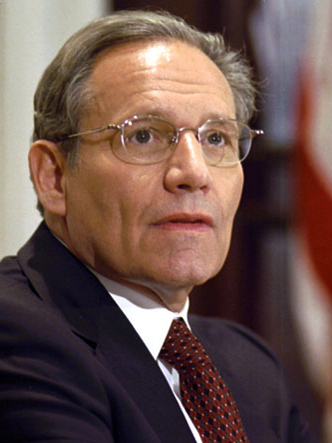
(Woodward (Jim Wallace/Smithsonian)

Woodward: Not much new

It was striking how little new the reporters, Carl Bernstein and Bob Woodward, had to say about covering a scandal that catapulted them to fame and wealth. In that, perhaps, was implicit recognition that their reporting contributed marginally at best to Watergate’s outcome.

Given that the program was convened in an auditorium at the Post, it was a bit surprising there were no self-congratulatory claims that Woodward and Bernstein brought down Nixon’s presidency, no embrace of what I call the hero-journalist myth of Watergate.

To his credit, Bernstein acknowledged the forces that combined to end Nixon’s presidency, including the Senate select committee that uncovered the decisive evidence of Watergate — the existence of Nixon’s White House taping system — and the U.S. Supreme Court, which unanimously ordered Nixon to turn over the tape recordings subpoenaed by prosecutors.

But mostly, the program lurched from topic to topic, from a lengthy discussion about Nixon’s abuses and his “tortured mind” (as the moderator, Ruth Marcus, put it) to non-Watergate topics such as the scandalous IRS conduct in targeting conservative political organizations for scrutiny.

Woodward and Bernstein took turns plugging each other’s books. Author Elizabeth Drew, who also was on the panel, went on and on and on about Nixon’s criminality and about how the IRS scandal is nothing like Watergate.

Bernstein, invariably voluble as well, lavished praised on Ben Bradlee and Katharine Graham, the Post’s executive editor and publisher during the Watergate period. Woodward cracked a few jokes, injecting what little humor the program offered. And Marcus asked a ludicrous and unanswerable question about what Watergate would be like had it happened in age of Twitter.

Notably missing was any insightful appraisal of the journalism of Watergate or any discussion of the scandal’s enduring mysteries (such as did Nixon know in advance about the seminal crime of Watergate — the break-in in June 1972 of the headquarters in Washington of the Democratic National Committee). Woodward and Bernstein rehashed a few reporting anecdotes familiar to people knowledgeable about Watergate; among them, Attorney General John Mitchell’s vulgar remark that Graham risked finding her tit caught in a ringer.

WaPo panel_crowd

In line for a tedious program

What was most impressive about the two-hour program was the turnout it attracted: Easily 1,000 people showed up, crowding the newspaper’s auditorium and an adjacent overflow room. (The editor of the Post’s “Book World” section, Ron Charles, said in a Tweet last night that he had “never seen a crowd at The Post like the one lined up for … Woodward & Bernstein talk on Watergate.”)

The Post’s public relations staff clearly was ill-equipped to handle such a crowd. More than a few people who thought they had registered online found that the Post staff had no record of their having signed up. And at one point, the video feed to the overflow room went dark, prompting dozens of people to enter the already crowded auditorium to stand and watch as the panelists droned on.

WJC

More from Media Myth Alert:

WaPo now embracing the dominant myth of Watergate?

In Debunking, Error, Media myths, Scandal, Washington Post, Watergate myth on July 22, 2014 at 8:05 pm

To its credit, the Washington Post over the years has mostly declined to embrace the dominant media myth about the Watergate scandal, which culminated 40 years ago with the resignation of President Richard Nixon.

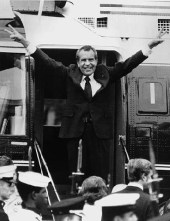
Nixon resigns_1974

Not the Post’s doing: Nixon resigns, 1974

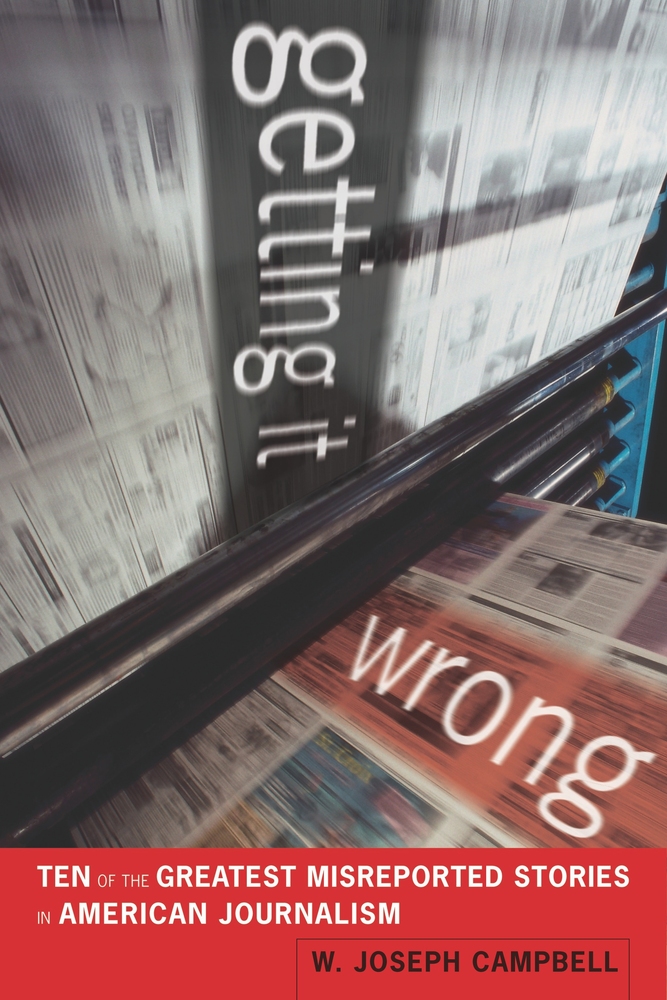
The dominant narrative is that Post reporters Bob Woodward and Carl Bernstein uncovered evidence that brought down Nixon and his corrupt presidency. It’s one of 10 media-driven myths debunked in my 2010 book, Getting It Wrong.

Principals at the Post, among them Katharine Graham, the newspaper’s publisher during Watergate, typically have steered well clear of what I call the hero-journalist myth. Graham, who died in 2001, said in 1997:

“Sometimes people accuse us of bringing down a president, which of course we didn’t do.”

Graham added, quite accurately: “The processes that caused [Nixon’s] resignation were constitutional.”

Michael Getler, who was an outstanding ombudsman for the Post, wrote in 2005:

“Ultimately, it was not The Post, but the FBI, a Congress acting in bipartisan fashion and the courts that brought down the Nixon administration. They saw Watergate and the attempt to cover it up as a vast abuse of power and attempted corruption of U.S. institutions.”

In earthier terms, Woodward, too, has scoffed at the dominant narrative, declaring in an interview in 2004:

To say the press brought down Nixon, that’s horse shit.”

But of late, such myth-avoidance has slipped.

In an article last month about the planned demolition of the parking garage where Woodward periodically conferred with a stealthy, high-level source codenamed “Deep Throat,” the Post said the source “provided Woodward with information that exposed the Nixon administration’s obstruction of the FBI’s Watergate investigation.”

The source — who revealed himself years later to have been W. Mark Felt, formerly the FBI’s second-ranking official — did no such thing.

As I noted soon after the Post article appeared, if Felt had shared obstruction-of-justice evidence with Woodward — and if the Post had published such information — the uproar would have been so intense that Nixon certainly would have had to resign the presidency long before he did in August 1974.

But it was not until late summer 1974 — several months after Felt’s retirement from the FBI — when unequivocal evidence emerged about Nixon’s attempt to block FBI’s investigation into the foiled burglary in 1972 at Democratic National Committee headquarters at the Watergate building in Washington.

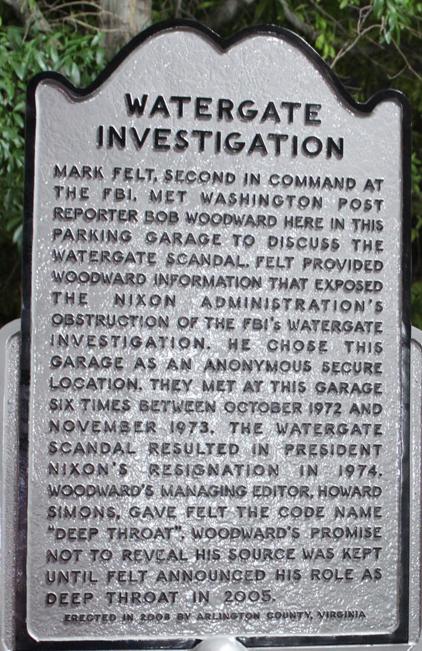
Watergate marker_cropped

The marker with the error

(I also pointed out that the Post’s erroneous description of the information Felt shared with Woodward was almost word-for-word identical to a passage on the historical marker that was placed outside the garage in 2011. The marker says: “Felt provided Woodward information that exposed the Nixon administration’s obstruction of the FBI’s Watergate investigation.” The Post article said Felt “provided Woodward with information that exposed the Nixon administration’s obstruction of the FBI’s Watergate investigation.”)

In any case, the Post hasn’t corrected its mischaracterization about the information Felt passed on to Woodward.

And in today’s issue, John Kelly, a popular Post columnist, referred to Bernstein as “the former Washington Post reporter famous for his role in bringing down a president.”

Kelly’s column neither explained nor elaborated on Bernstein’s putative “role in bringing down” Nixon. As I wrote in Getting It Wrong, the reporting of Woodward and Bernstein was not decisive in Watergate’s outcome. Their contributions — while glamorized in the cinematic version of their book, All the President’s Men — were marginal in forcing Nixon’s resignation.

Rolling up a scandal of Watergate’s dimension and complexity required the collective efforts of special prosecutors, federal judges, both houses of Congress, the Supreme Court, as well as the Justice Department and the FBI.

And even then, as I noted in Getting It Wrong, Nixon likely would have survived the scandal and served out his term if not for the audiotape recordings that he secretly made of conversations in the Oval Office of the White House.

Only when compelled by the Supreme Court did Nixon surrender the recordings, which captured him approving a plan to divert the FBI’s investigation into  the break-in at Democratic National Committee headquarters, seminal crime of Watergate.

It is not clear whether the recent examples of myth-embrace reflect laziness, inattentive editing, or a gradual inclination to embrace an interpretation of Watergate that is beguiling but misleading. It is an easy-to-remember, simplified version of the history of America’s greatest political scandal.

And it’s wrong.

WJC

More from Media Myth Alert:


‘Deep Throat’ garage to be razed: The inaccurate historical marker should go, too

In Debunking, Error, Media myths, Scandal, Washington Post, Watergate myth on June 16, 2014 at 10:36 am

The parking garage in suburban Virginia where Washington Post reporter Bob Woodward occasionally met with his stealthy Watergate source “Deep Throat” is to be torn down to permit construction of two commercial and residential towers.

While they’re at it, local authorities ought to scrap the inaccurate historical marker that went up near the garage a few years ago.

Watergate marker_cropped

Melt it down

The garage is in the Rosslyn section of Arlington, Virginia, across the Potomac River from Washington. Woodward met there on six occasions in 1972 and 1973 with his source, who in 2005 identified himself as W. Mark Felt, formerly the FBI’s second-ranking official.

Woodward’s meetings with “Deep Throat” are commemorated by a marker that declares:

“Felt provided Woodward information that exposed the Nixon administration’s obstruction of the FBI’s Watergate investigation.”

In its article yesterday about the garage’s planned demolition, the Post used phrasing almost identical to that of the marker, stating that Felt “provided Woodward with information that exposed the Nixon administration’s obstruction of the FBI’s Watergate investigation.”

Both the marker and the newspaper are incorrect in saying so.

Had Felt shared obstruction-of-justice evidence with Woodward in 1972 or 1973 (and had the Post published such information), the uproar would have been so intense that Nixon surely would have had to resign the presidency long before he did in August 1974.

But it was not until late summer 1974 — months after Felt’s retirement — when unequivocal evidence emerged about Nixon’s attempt to block FBI’s investigation into Watergate.

That came about when Nixon complied with a unanimous Supreme Court ruling and surrendered audiotape recordings he had secretly made of conversations at the White House.

The recording of Nixon’s meeting with his top aide, H.R. Haldemann, on June 23, 1972, revealed that the president had sought to deflect or derail the FBI investigation into the burglary six days earlier at the headquarters of the Democratic National Committee at the Watergate complex in Washington. The burglary was Watergate’s seminal crime.

The recording of Nixon’s conversation with Haldemann was called the “Smoking Gun” and it was that tape — not information Felt passed on to Woodward — that exposed Nixon’s guilty role in Watergate and forced his resignation. As I noted in my media-mythbusting book, Getting It Wrong, had Nixon not recorded his conversations, he likely would have survived the Watergate scandal and served out his term.Getting It Wrong_cover

In any case, the historical marker is inaccurate and ought to be scrapped. And the Post’s article yesterday ought to be corrected.

So what sort of information did “Deep Throat” pass on to Woodward?

All the President’s Men, the book in which Woodward and co-author Carl Bernstein introduced the secret source, says Woodward’s conversations with “Deep Throat” were intended “only to confirm information that had been obtained elsewhere and to add some perspective.”

All the President’s Men also says “Deep Throat” tended to be cautious in what he shared with Woodward:

“He always told rather less than he knew.”

WJC

More from Media Myth Alert:

Maddow cherry-picks to avoid correcting claim about Pentagon, Jessica Lynch

In Debunking, Error, Jessica Lynch, Media myths, Newspapers, Scandal, Television, Washington Post on June 10, 2014 at 6:18 pm

To cherry-pick is to be highly selective, to use facts that support one’s position while ignoring the confounding evidence.

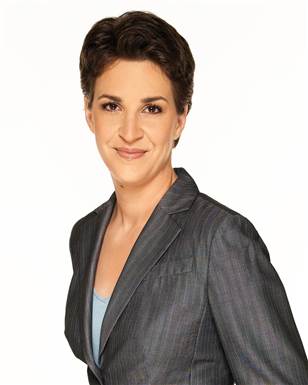
Maddow (NBC News)

Maddow (NBC News)

And that’s essentially what Rachel Maddow did on her MSNBC program last night. She cherry-picked details about the reporting of the hero-warrior story about Jessica Lynch to avoid correcting her erroneous claim on a show June 3. Maddow had said in a commentary that night “the Pentagon made up” the tale of Lynch’s battlefield heroics in the first days of the Iraq War.

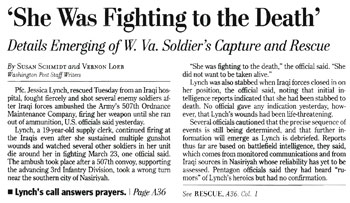
In cherry-picking, Maddow failed to mention the foundation of the bogus hero-warrior story – the Washington Post article that cited “U.S. officials” in saying that Lynch, then a 19-year-old supply clerk, had fought fiercely in the ambush of her Army unit, the 507th Maintenance Company, on March 23, 2003. The Post’s story turned out to be wrong in almost all vital details.

One of the reporters on the story, which the Post published on its front page on April 3, 2003, later said, unequivocally:

Our sources for that story were not Pentagon sources.”

Rather, he said, without a trace of irony, they were “some really good intelligence sources” in Washington, D.C.

The reporter was Vernon Loeb, who at the time the Post’s defense correspondent. He also said in an interview that aired on NPR in December 2003: “We got these intelligence reports right as [Lynch] was being rescued” in an operation mounted by U.S. special forces on April 1, 2003. Lynch has been grievously injured in the crash of a Humvee in trying to escape the ambush; she was taken prisoner and held at an Iraqi hospital in Nasiriyah.

Loeb said the Post’s story “turned out to be wrong because intelligence information we were given was wrong.”

What’s more, he said:

“I could never get anybody from the Pentagon to talk about those [intelligence] reports at all. I got indications that they had, in fact, received those intelligence reports, but the Pentagon was completely unwilling to comment on those reports at all. They wouldn’t say anything about Jessica Lynch.

“I’ve never believed that, at least as far as the story we wrote goes, that it was a Pentagon attempt to create a hero there.”

Despite Loeb’s statements about the sourcing of the hero-warrior story, a false narrative has taken hold over the years that the Pentagon concocted the tale about Lynch’s battlefield derring-do, supposedly to build homefront support for the war.

On her show last night, Maddow referred neither to Loeb’s statements nor to the Post’s seminal report about Lynch. She instead assailed Politifact, a blog aligned with Punditfact, which had assessed as false her claim last week that the Pentagon “made up” the tale of Lynch’s heroics.

According to a transcript of her remarks last night, Maddow smugly declared:

“So, this is a pretty simple thing from the fact-checking perspective. Did the military provide false information that led to the narrative that Jessica Lynch went down fighting when she was captured?”

(Note the none-too-subtle shift: On her program June 3, Maddow asserted that “the Pentagon made up” the story about Lynch’s heroics. Last night, her parameters were: “Did the military provide false information that led to the narrative ….” Not quite the same.)

Maddow referred last night to a report by the Military Times on April 3, 2003, in which a military spokesman, Frank Thorp, was quoted as saying that Lynch “waged quite a battle prior to her capture.

“We do have very strong indications that Jessica Lynch was not captured very easily,” Thorp also was quoted as saying. “Reports are that she fired her (M-16 rifle) until she had no more ammunition.”

Maddow crowed: “That information straight from a military public affairs official was not true. It was made up. But it landed in press reports anyway.”

What Maddow neglected to mention was that Thorp was recapping for the Military Times what the Washington Post had already published.

Lynch_headline_Post

WaPo’s hero-warrior story

Thorp,  then a Navy captain assigned to the U.S. Central Command headquarters in Doha, Qatar, was not inventing, he was following. He was restating elements of a story the Post had already placed in circulation, a story based on intelligence sources, a story that quickly attracted all sorts of international attention.

As the Post’s ombudsman at the time, Michael Getler, pointed out: “The Post story [about Lynch] was exclusive. The rest of the world’s media picked it up from The Post, which put this tale into the public domain.”

Indeed, it is impossible to address the hero-warrior tale about Lynch without considering the Washington Post’s central and decisive role in the story. And Thorp’s subsequent statements made clear that he had been following the Post’s lead that day. Thorp said in an email in 2007 to a congressional staffer who had asked about the comments to the Military Times:

“As I recall, this was a short interview and media desperately wanted me to confirm the story that was running in the States .…  I never said that I had seen any intel or even intimated the same .… I may have said I am familiar with ‘the reports’ meaning the press reports, but as you can see I did not confirm them .… We did have reports of a battle and that a firefight had occurred .… That is what I stated.” (Ellipses in the original.)

Thorp later was quoted by Newsweek as saying he was not a source for the Post on its seminal story about Lynch’s heroics.

Which makes sense. Had he been a source for the Post on the Lynch story, why would the newspaper resist identifying him as such, especially after his remarks to the Military Times? If Thorp, a military spokesman, had been a source for the Post, why would Loeb, months after the hero-warrior story was published, insist that his sources had been “intelligence sources”?

Thorp at most played a bit part in the Lynch saga.

Besides, the cynical, Pentagon-made-it-up narrative never made much sense. As I wrote in my media-mythbusting book, Getting It Wrong, “At the time of the Lynch rescue, U.S. forces were closing in on Baghdad. So it defies logic to argue that the American military would have singled out and hyped the Lynch rescue for morale-building purposes when its central and vastly more important wartime objective was within reach.”

WJC

More from Media Myth Alert:

Now from the right: ‘American Spectator’ wrongly says Jessica Lynch was ‘portrayed by Pentagon as hero’

In Debunking, Error, Jessica Lynch, Media myths, Scandal, Washington Post on June 8, 2014 at 8:58 am

In an otherwise cogent critique of Rachel Maddow’s recent commentary about returned American prisoner Bowe Berghdahl, the right-of-center American Spectator wrongly accused the Pentagon of portraying Jessica Lynch “as a hero” early in the Iraq War.

Lynch was a 19-year-old Army supply clerk severely injured March 23, 2003, in the crash of her Humvee while fleeing an ambush in Nasiriyah in southern Iraq. The Washington Post, though, reported that Lynch had suffered gunshot and stab wounds as she fought fiercely against the attacking Iraqis. She kept firing, the Post said, until she ran out of ammunition.

None of those details was accurate, however. Lynch never fired a shot in the ambush; her weapon jammed. She was neither shot nor stabbed, but was badly hurt in the Humvee crash. Lynch was taken prisoner and held in an Iraqi hospital where she lingered near death until rescued by U.S. special forces on April 1, 2003.

AmSpecturkey_1

American Spectator logo

In the years since the Post’s hero-warrior story was published on April 3, 2003, a false narrative has taken hold that says the Pentagon concocted the tale about Lynch’s battlefield derring-do. The American Spectator’s claim, included in a commentary posted online Friday, is the latest evocation of that narrative.

We know it’s a false narrative because one of the Post reporters on the story has flatly stated that the newspaper’s sources for the story “were not Pentagon sources.” The reporter, Vernon Loeb, who in 2003 was the Post’s defense correspondent, further stated in an interview in December 2003 on NPR that Pentagon officials “wouldn’t say anything about Jessica Lynch.”

Loeb, now managing editor at the Houston Chronicle, also said in the interview:

“I’ve never believed that, at least as far as the story we wrote goes, that it was a Pentagon attempt to create a hero there.”

None of that what acknowledged by the liberal Maddow in an on-air commentary Tuesday on MSNBC in which she sought to equate the rescue of Lynch with the release of Bergdahl, the American soldier whose comrades say deserted his post in Afghanistan in 2009. Bergdahl was taken captive by the Taliban and exchanged a week ago for five senior Taliban figures.

In her commentary, Maddow asserted without citing sources that the Pentagon had “made up” the tale of Lynch’s battlefield heroics. The American Spectator, in taking issue with Maddow’s equating the cases of Lynch and Bergdahl, committed a similar error: Lynch, it said, “was initially portrayed by the Pentagon as a hero … who went down guns blazing and riddled with bullets.”

Loeb and the Post have never made clear how it got the Lynch-combat story so utterly wrong — a story that Michael Getler, then the newspaper’s ombudsman, memorably described as having “had an odor to it almost from the beginning.”

Loeb’s interview on NPR was the Post’s most detailed public discussion about sourcing for that story, which Loeb and co-author Susan Schmidt reported from Washington, D.C. But even that discussion fell woefully short in important respects.

In the NPR interview, Loeb said “we were told by some really good intelligence sources here in Washington that, you know, there were indications that [Lynch] had, you know, fired back and resisted her capture and actually been shot and possibly stabbed doing so. None of this turned out to be the case as we, you know, quickly learned. But, you know, we basically told our readers that day what the U.S. intelligence community was telling senior members of the U.S. government. It just kind of goes back to the old adage that, you know, initial reports from the battlefield are almost always wrong.”

Despite the recognized unreliability of such reports, the Post placed its account of Lynch’s supposed exploits in combat on the front page, thrusting the hero-warrior tale into the public domain. And the story was picked up by news organizations around the world. The Times of London, for example, declared that “Private Lynch has won a place in history as a gritty, all-American hero, to rival the likes of Bonnie and Clyde.”

In its erroneous report about Lynch, Post cited otherwise unnamed “U.S. officials” as sources. The newspaper has never identified them.Getting It Wrong_cover

In 2008, I called Loeb to discuss the matter but he hung up on me. I was at the time researching my media-mythbusting book, Getting It Wrong, a chapter of which is devoted to the bogus hero-warrior story about Lynch.

So if the Post will not disclose the sources that led it to such embarrassment, the next-best step would be for news organizations to avoid, resist, and deep-six the false narrative about Lynch and the Pentagon.

Important steps to that end can be taken if Maddow and the American Spectator were to issue corrections to their erroneous reports.

WJC

More from Media Myth Alert:

Editor’s little-noted memoir offers intriguing insight about WaPo’s Watergate reporters

In Media myths, Newspapers, Scandal, Washington Post, Watergate myth on December 21, 2013 at 6:12 am

It’s mentioned on few if any “books of the year” lists, but the recent memoir by a former Washington Post editor offers revealing insights about the newspaper’s lead Watergate reporters, describing how one of them, Carl Bernstein, was such a slacker that he was nearly dismissed in the early 1970s.

Rosenfeld memoir_coverThe memoir, From Kristallnacht to Watergate, is Harry Rosenfeld’s telling of his long career in newspapering. He was the Post’s metropolitan editor during Watergate and managed Bernstein and Bob Woodward, who in 1972 and 1973 were the newspaper’s lead reporters on the unfolding scandal.

Rosenfeld’s memoir adds dimension to the ample, mostly glowing public record about Bernstein and Woodward, who have been celebrated over the years as heroic journalists whose dogged reporting brought down the presidency of Richard Nixon.

Or so the media myth has it.

Rosenfeld comes close in his book to embracing the myth of Watergate, stating that the Post “played a key role in assisting the ship of state to stay the course while navigating through the stormy waters of a constitutional crisis” that brought Nixon’s resignation in 1974. He makes scant acknowledgement of the more powerful investigative forces — congressional and judicial — that combined to uncover Nixon’s criminal misconduct and bring an end to his presidency.

As I discuss in my media mythbusting book, Getting It Wrong, the contributions of Woodward and Bernstein to Watergate’s outcome were modest at best.

Rosenfeld writes with evident pride about Woodward and the “intensity of his work habits.” By the time the Watergate scandal broke in 1972, Rosenfeld says, Woodward “had established himself as a fully qualified reporter, sharper than most and more ambitious and hardworking than any.”

The most delicious passages of Rosenfeld’s book discuss Bernstein’s troubled times at the Post during the period before and shortly after the break-in in June 1972 at the headquarters in Washington of the Democratic National Committee, the signal crime of the Watergate scandal.

Bernstein, he writes, routinely antagonized his editors, was known for missing deadlines while regularly logging many hours of unapproved overtime, and was notorious for failing to submit expense reports. He also had a tendency on assignments to rent cars that he was slow to return, running up late charges for the Post.

Bernstein (Newseum photo)

Bernstein (Newseum photo)

After such a caper in the summer of 1972, the Post’s executive editor, Ben Bradlee, and its managing editor, Howard Simons, wanted Rosenfeld to fire Bernstein. He had “yet again rented a car and left it stranded in a parking lot for days, with costly rental fees mounting by the hour,” Rosenfeld writes.

But Rosenfeld demurred, telling the editors that dismissing Bernstein made no sense when, “‘for once in his life, Carl is producing the goods'” in reporting on the unfolding Watergate scandal. Bernstein kept his job.

Rosenfeld had laid groundwork for dismissing Bernstein in 1971, after the reporter had failed to submit an article about the port of Norfolk, VA, despite his many promises to produce the story.

Rosenfeld sat in on what he called “a heart-to-heart” conversation between Bernstein and his then-editor, Kevin Klose, who later became dean of the College of Journalism at the University of Maryland.

After the heart-to-heart, Rosenfeld wrote in a memorandum that it had been made clear to Bernstein “‘that he either begins to be a productive reporter or he and the Post better go separate ways and that if cannot soon come to grips with his responsibilities to his job, that I would move against him on negligence of duty. …'”

Bernstein, Rosenfeld wrote in the memorandum, “‘understood that if he could not become productive and that if he and his editors continued to be antagonistic all the time, it would be better for him to leave. He said that … I would see a much changed man.’

“That new man,” Rosenfeld says, “clearly emerged in Watergate — a full year after his pledge. In the course of Watergate, the tiger changed his stripes, the leopard his spots, and Joshua commanded the sun not to set and the moon to stand still. The transformation was that epic. …. If he had persisted in his old ways … he almost surely would have been fired, for which the legal groundwork had been laid.”

Still, Bernstein’s redemption was less than total. Even when doing his best work, Rosenfeld notes in the book, Bernstein “still managed to remain irritating.”

So why, more than 40 years afterward,  is all of this important?

As Rosenfeld notes, it is “worth contemplating” how Bernstein — who remains one of America’s best-known and most outspoken journalists — nearly missed having an “historic role” in the Watergate story. Rosenfeld’s memoir also demonstrates how unpopular Bernstein was in the Post’s newsroom.

More important is that Rosenfeld’s unflattering characterizations, which clearly are offered not in hostility, bring some depth to the almost-reflexive characterizations of Bernstein as heroic, as a superstar. The unflattering material helps to deepen and round out the biography in a way that Woodward and Bernstein certainly did not do in their bestselling 1974 book, All the President’s Men.

Finally, the passages about Bernstein serves as a reminder that the most engaging memoirs are those not sanitized. Although the book has not received wide attention, Rosenfeld’s memoir is commendable for its candor about Bernstein.

WJC

More from Media Myth Alert:

Feeling like 1995

In Media myths, Newspapers, Scandal, Washington Post, Watergate myth on October 3, 2013 at 12:27 pm

These days have evoked 1995 in more than a few respects.

The sale of the Washington Post closed Tuesday; the new owner is Jeff Bezos, who in July 1995 began selling books at Amazon.com, in near-total obscurity.

Amazon since then has made Bezos a multibillionaire and he has recently talked about leading the sometimes-arrogant Post to a new golden era, a vague reference to the Post’s mythologized reporting of the Watergate scandal 40 years ago.

The episode today in which a woman tried to rammed her car into a barricade near the White House, setting off a wild and deadly chase that ended near the Capitol, was faintly evocative of the night in May 1995 when an intruder scaled a fence near the White House, unloaded pistol in hand. “I’m here to see the president!” he shouted before being shot and wounded by a secret service agent.

Today also marks the 18th anniversary of the acquittal of O.J. Simpson in the slayings of his former wife and her friend. Simpson’s trial lasted more than nine months and its related controversies spread like a stain across 1995.

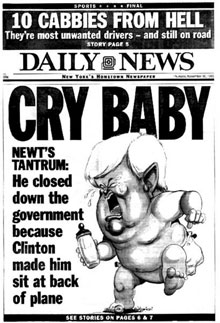
Crybaby Newt_1995NYDN

Recalling 1995: Newt and the shutdown (New York Daily News)

The strongest allusions to 1995 are of course to be found in the partial shutdown of the federal government — the first since the closures of November 14-19, 1995, and of December 16, 1995, to January 6, 1996.

The shutdowns, then and now, are alike in their effects — government workers sent home, federal landmarks and national parks closed — but differ notably in their immediate causes.

As the Wall Street Journal has noted, “The sticking points during that 1995-96 fight centered on demands from Republicans … for cuts in spending on entitlements such as Medicare, the health-care program for retirees, as well as other nondefense spending.” They also pressed President Bill Clinton to agree to balance the federal budget within seven years.

The second and longer shutdown took shape when Clinton and the Congressional Republicans, led by Speaker Newt Gingrich, differed over how to calculate whether the budget would be balanced in seven years, as the Journal pointed out.

The confrontations had improbable effects.

They allowed Clinton to steady his shaky administration; much of 1995 had been a time of missteps and gaffes for Clinton. He was reduced, for example, to insisting on his relevancy as a president amid a political landscape where Gingrich and the Republicans were ascendant following sweeping victories in midterm elections in 1994.

The government shutdowns of 1995 brought confirmation of Gingrich’s pricklinesss and volatility. One of the most remarkable moments of the government closure was his ill-considered outburst on November 15, 1995.

At a breakfast meeting with journalists, Gingrich acknowledged that a measure of personal pique was behind his toughening up the spending bill that Clinton vetoed to set in motion the furlough of 800,000 government employees.

Gingrich complained that Clinton had passed up an opportunity to negotiate the budget issues aboard Air Force One the week before, during a long trip home from Israel, where the president and congressional leaders had attended the funeral of Yitzhak Rabin.

Not only that, but Gingrich complained that he and Senate Majority Leader Bob Dole were forced to leave the Air Force One by the rear stairs after landing at Andrews Air Force base in Maryland.

“This is petty,” Gingrich said at the breakfast meeting. But “you land at Andrews and you’ve been on the plane for twenty-five hours [for the round trip to Israel] and nobody has talked to you and they ask you to get off the plane by the back ramp. . . . You just wonder, where is their sense of manners? Where is their sense of courtesy?”

The perceived slights and rude treatment, Gingrich said, were “part of [the reason] why you ended up with us sending down a tougher” spending measure, making Clinton’s veto and the government shutdown a certainty.

The outburst turned Gingrich into the petulant poster boy of the government shutdown. The New York Daily News caricatured him as a wailing toddler, stamping his foot in anger. Gingrich’s favorability ratings, which had been ebbing throughout 1995, fell further during the shutdowns.

Clinton may have steadied his presidency during the shutdowns. But he also engaged in conduct that would bring his administration to the brink of ruin.

On the night of Gingrich’s outburst, Clinton and Monica S. Lewinsky, a White House intern then 22-years-old, had their first sexual encounter at the White House — the first in a series of furtive liaisons that would lead, improbably, to Clinton’s impeachment three years later.

WJC

More from Media Myth Alert:

Good call: WaPo building no landmark

In Debunking, Media myths, Scandal, Washington Post, Watergate myth on September 19, 2013 at 10:59 am
A landmark?

Not a landmark

A leading preservation group in Washington, DC, has quietly decided against seeking landmark status for the Washington Post building, saying the structure isn’t distinctive enough, architecturally.

And that’s a good call.

I had suspected that landmark status would be proposed for the building because of the newspaper’s reporting of the Watergate scandal, which over the years has become a subject of a towering media myth.

The myth has it that the Post’s dogged reporting on Watergate forced Richard M. Nixon to resign the presidency.

That, of course, is a simplistic and superficial interpretation of Watergate — an interpretation not even embraced by the sometimes-arrogant Post. One of the newspaper’s lead reporters on Watergate, Bob Woodward, has declared, for example:

To say that the press brought down Nixon, that’s horseshit.”

Had the Post building been designated a landmark, a likely upshot would have to deepen the heroic-journalist myth of Watergate. Landmark status could have further entrenched the erroneous notion that the Post was the place where Woodward and his colleague Carl Bernstein wrote the stories that exposed and ended a corrupt presidency.

As I discuss in my mythbusting book, Getting It Wrong, the Post’s contributions to unraveling Watergate were very modest and not at all decisive.

To roll up a scandal of the complexity of Watergate, I write in Getting It Wrong, “required the collective if not always the coordinated forces of special prosecutors, federal judges, both houses of Congress, the Supreme Court, as well as the Justice Department and the FBI.”

And even then, Nixon likely would have served out his term if not for the forced disclosures about the audiotape recordings he secretly made of his conversations in the Oval Office of the White House.

Only when compelled by a Supreme Court ruling did Nixon surrender those recordings, which captured him plotting to cover up the signal crime of Watergate, the break-in in June 1972 at headquarters of the Democratic National Committee.

The Post reported this week that the non-profit DC Preservation League has decided that the building’s design “did not rise to a level worth preserving, despite the fact it served as the workplace for journalists who pursued stories such as the Watergate scandal that brought down President Richard Nixon.”

The Post building is pretty bland.  Without landmark status, it may be easier to sell to a developer. The Post said early this year that it was exploring the building’s sale.

Over the summer, the Post was sold to Jeff Bezos, founder of Amazon.com, who agreed to pay $250 million for the newspaper, a deal that’s expected to close in a few weeks. Bezos did not acquire the building.

Meantime, the garage in suburban Virginia where Woodward occasionally met a secret Watergate source, codenamed “Deep Throat,” may be torn down in the next few years and an office building put up in its place.

If that happens, then the historical marker next to the garage ought to be removed, too.

The marker, which was put up a little more than two years ago, errs in describing the information Woodward received from his “Deep Throat” source, who in 2005 revealed himself as W. Mark Felt, formerly the FBI’s second in command.

The marker says: “Felt provided Woodward information that exposed the Nixon administration’s obstruction of the FBI’s Watergate investigation.”

Not so.

As I’ve pointed out, such evidence “would have been so damaging and explosive that it surely would have forced Nixon to resign the presidency well before he did, in August 1974.”

Felt didn’t have that sort of information — or (less likely) he didn’t share it with Woodward.

Given the historical inaccuracy the marker ought to go.

WJC

More from Media Myth Alert:

The Nixon tapes: A pivotal Watergate story that WaPo missed

In Anniversaries, Error, Media myths, Newspapers, Scandal, Washington Post, Watergate myth on July 14, 2013 at 8:45 am

Forty years ago this week, Alexander Butterfield told a U.S. Senate select committee investigating the Watergate scandal that President Richard Nixon had installed a secret audiotaping system in his offices.

Butterfield’s disclosure was one of the most decisive moments in the Watergate. It focused the scandal’s multiple investigations into a months-long pursuit of the tapes — one of which clearly revealed Nixon’s role in attempting to cover up the crimes of Watergate. That revelation forced his resignation in August 1974.

The disclosure of Nixon’s audiotaping system was a major story which the Washington Post — often and inaccurately credited with having “uncovered” or “broken” the Watergate scandal — missed badly.

How the Post fumbled that story makes for an intriguing sidebar at the anniversary of Butterfield’s stunning disclosure. The newspaper’s lead Watergate reporters, Bob Woodward and Carl Bernstein, described in a book about their reporting how leads about the taping system were not pursued.

The book, All the President’s Men, says that Woodward had found out about private testimony that Butterfield had given to staff members of the select committee and he called Ben Bradlee, the Post’s executive editor, for guidance.

The call to Bradlee was on a Saturday night. After outlining what he knew, Woodward, according to the book, said:

“We’ll go to work on it, if you want.”
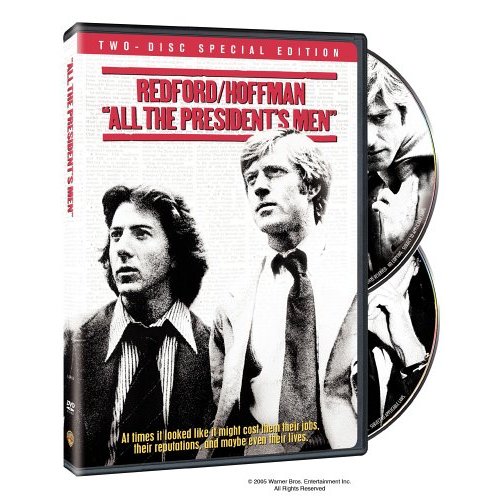
In reply, Bradlee is quoted as saying with some slight irritation, “Well, I don’t know.”

How would you rate the prospective story? Woodward asked him.

“B-plus,” Bradlee replied.

Woodward figured a B-plus wasn’t much, according to the book.

“See what more you can find out, but I wouldn’t bust one on it,” Bradlee is quoted as instructing Woodward.

And Woodward didn’t “bust one.”

Two days later, on July 16, 1973, Butterfield made his reluctant disclosure at a public session of the Senate select committee.

The following day, according to All the President’s Men, Bradlee conceded that the lead about the taping system was “more than a B-plus.”

The anecdote from All the President’s Men is suggestive of the overall minor role that the Post played in uncovering Watergate. As I point out in my media-mythbusting book, Getting It Wrong, unraveling a scandal of the dimension of Watergate “required the collective if not always the coordinated forces of special prosecutors, federal judges, both houses of Congress, the Supreme Court, as well as the Justice Department and the FBI.

“Even then, Nixon likely would have served out his term if not for the audiotape recordings he secretly made of most conversations in the Oval Office of the White House. Only when compelled by the Supreme Court did Nixon surrender those recordings, which captured him plotting the cover-up” of Watergate’s signal crime, the breakin in June 1972 at the headquarters of the Democratic National Committee.

All the President’s Men was revealing in other ways about the work and conduct of Woodward and Bernstein. Media critic Jack Shafer, in a column in 2004, revisited a number of reporting flaws and ethical lapses that Woodward and Bernstein acknowledged in their book.

It’s a roster of transgressions that is too-little remembered.

WJC

More from Media Myth Alert:

Vomit humor and scandal: Inane ‘Drunk History’ TV show promotes Watergate media myth

In Cinematic treatments, Debunking, Media myths, Scandal, Washington Post, Watergate myth on July 8, 2013 at 8:10 am

Drunk History, a new cable TV show based on the inane premise that history is entertaining when told by inebriated narrators, isn’t meant to be taken seriously.

Obviously.

Drunk History, which  debuts tomorrow night on DrunkHistory_logoComedy Central (the pilot is available online), features what the show’s  Web site says is an “often incoherent narration of our nation’s history.”

If the first episode is an indication, incoherent history makes for faint humor. Even worse, the inaugural show promotes a notably tenacious media myth in offering a chaotic look at the Watergate scandal of 1972-74.

In doing so, Drunk History draws heavily, if erratically, on the 1976 film, All the President’s Men. The movie focused on Bob Woodward and Carl Bernstein’s Watergate reporting for the Washington Post — and was central to the rise of the myth that Woodward and Bernstein brought down the corrupt presidency of Richard Nixon.

The movie as inspiration

The media myth of Watergate has helped make accessible to contemporary audiences a complex scandal that unfolded 40 years ago. But it’s an inaccurate interpretation; not even the Washington Post embraces it, as I point out in my mythbusting book, Getting It Wrong.

As Woodward said in an interview several years ago with American Journalism Review:

To say the press brought down Nixon, that’s horseshit.”

But back to the blurry first episode of Drunk History: Woodward is shown meeting “Deep Throat,” his secret Watergate source, in an underground garage in suburban Virginia. And he throws up on the source’s shoes.

Vomit humor: Now that’s inspired.

Woodward then asks “Deep Throat” — who was a senior FBI official named W. Mark Felt — for help in understanding the scandal.

“Put the pieces together, you dumbass,” Felt snaps. “It’s all in front of you. Do the work. Just be careful. Watergate is the tip of the iceberg.”

In the compressed Drunk History version of Watergate, Nixon soon realizes he has no choice but to resign.

“And in the end,” the narrator says, “you can toss aside Richard Nixon for all his cynicism, you can toss aside Mark Felt for all his cynicism, but you can’t toss aside Robert Woodward, and to a lesser extent, Carl Bernstein, for the truth that they exposed for America.”

That’s really not a bad touch, tweaking the pompous Bernstein for having had a “lesser” role in Watergate. Which is not entirely inaccurate, given that Felt was Woodward’s source. Bernstein first met Felt in 2008, shortly before Felt’s death.

“Well,” the narrator says, “we told the story of Watergate. There’s no way I could possibly misconstrue it as not the greatest journalistic endeavor ever told. Robert Woodward would be proud.”

Watergate was scarcely that.

Unraveling the scandal, as I write in Getting It Wrong, “required the collective if not always the coordinated forces of special prosecutors, federal judges, both houses of Congress, the Supreme Court, as well as the Justice Department and the FBI.

“Even then, Nixon likely would have served out his term if not for the audiotape recordings he secretly made of most conversations in the Oval Office of the White House. Only when compelled by the Supreme Court did Nixon surrender those recordings,” which captured him plotting to cover up the seminal crime of Watergate, the breakin in June 1972 at the headquarters in Washington of the Democratic National Committee.

So against the complex tableau of special prosecutors, federal investigations, and bipartisan congressional panels, Woodward and Bernstein’s contributions in unraveling the scandal were modest at best, and certainly not decisive to Watergate’s outcome.

In its tipsy way, Drunk History pokes at the conventions of documentary history, as the New Yorker has noted. Otherwise, there’s little to cheer about the show, which was a Web-based series before moving to cable. Whatever humor Drunk History projects isn’t likely to be sustaining.

A far more humorous send-up of Watergate — and of Woodward and Bernstein — is the underappreciated 1999 film, Dick. Although Woodward and Bernstein are not the central characters, the movie depicts them as antagonistic incompetents who bungle their way to a Pulitzer Prize.

WJC

Many thanks to Instapundit
Glenn Reynolds for linking to this post

More from Media Myth Alert: