
Hearst: Didn't say it
William Randolph Hearst’s famous vow to “furnish the war” with Spain is one of American journalism’s most enduring myths. It’s a stunningly hardy though dubious tale that has been deployed in discussing journalistic sins and shortcomings of all sorts.
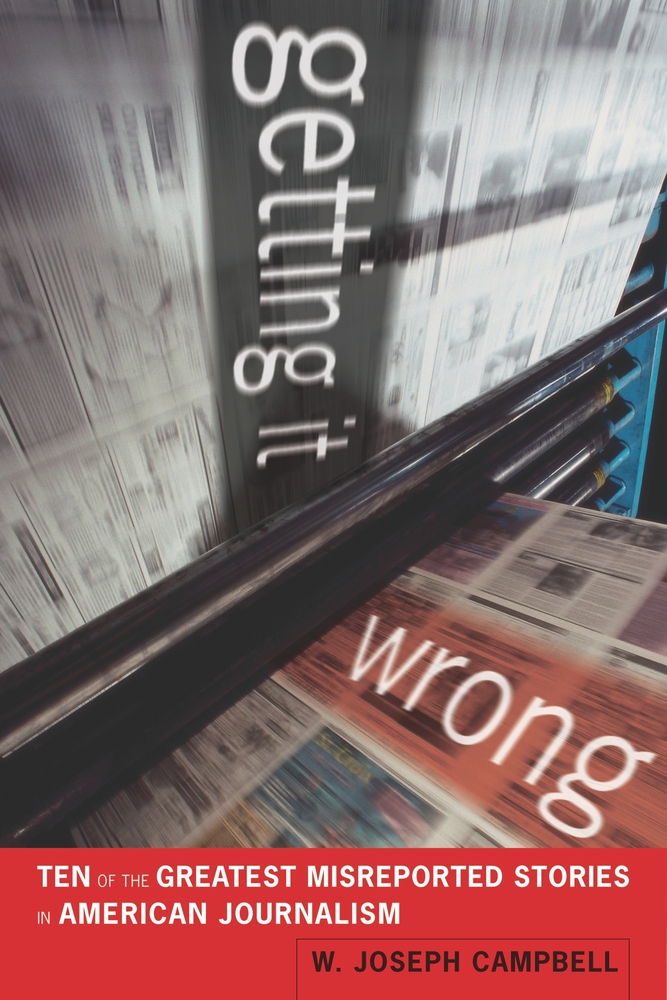
As I write in my myth-debunking book Getting It Wrong, the Hearstian vow “has been invoked to illustrate the media’s willingness to compromise impartiality, promote political agendas, and indulge in sensationalism.
“It has been used, more broadly, to suggest the media’s capacity to inject malign influence into international affairs.”
It even has application in news about collegiate sports.
An online sports-news site, Bleacher Report, turned to “furnish the war” in a commentary posted yesterday about the whiff of scandal around Auburn University’s championship football program.
Hearst’s reputed vow was a way to set up the commentary, which defended the program from what it called “the incessant beating of the investigation drum by Auburn detractors” suspicious of player-recruitment violations.
Of interest to Media Myth Alert is the commentary’s total buy-in of the Hearst anecdote, which, as evidence offered in Getting It Wrong clearly shows, is counterfeit, a discredited media myth.
The Bleacher Report commentary declared:
“When photographer Frederic Remington was dispatched to Cuba in the late 1800s to document a war and found none, he sent a message to publisher William Randolph Hearst: ‘There is no war.’
“Hearst allegedly responded: ‘Please remain. You furnish the pictures and I’ll furnish the war.’
“In the ensuing months Hearst’s newspaper fanned the flames with sensationalized front page articles that were of dubious accuracy and in many cases patently false. His articles stirred passions among a readership that neither knew nor cared if the reports were accurate. His relentless attacks eventually helped push U.S. administration into declaring war on Spain. Hearst got his war.
“Since October, the Auburn football program has endured a similar smear campaign. …”
Reasons for doubting that Hearst ever made such a vow are many, and include the anecdote’s breathtaking illogic.
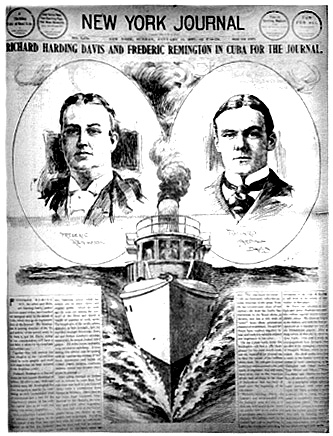
War was the reason Hearst, owner of the flamboyant New York Journal, sent Remington (an artist, not a “photographer”) to Cuba in the first place. That war was the Cuban rebellion against Spain’s colonial rule, which began in February 1895.
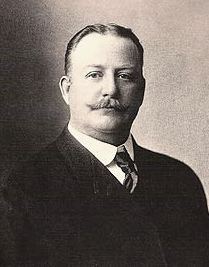
Remington
Remington was in Cuba briefly in January 1897.
By that time, I note in Getting It Wrong, newspaper readers “would have been well aware that Cuba was a theater of a nasty war. By then, the Cuban rebellion had reached island-wide proportion and not a single province had been pacified by Spain’s armed forces.”
It would have made no sense for Hearst to vow to “furnish the war.”
In addition, Hearst denied having made such a statement. Remington, apparently, never discussed it. And the telegrams bearing the content of the purported Remington-Hearst exchange have never surfaced.
 Moreover, as I point out in Getting It Wrong, “there was no chance” that the telegrams “would have flowed freely between Remington in Havana and Hearst in New York.
“Spanish control of the cable traffic in Havana was too vigilant and severe to have allowed such an exchange to have gone unnoticed and unremarked upon,” I write, adding:
“A vow such as Hearst’s to ‘furnish the war‘ surely would have been intercepted and publicized by Spanish authorities as a clear-cut example of Yankee meddling in Cuba.”
Like many media myths, the tale of the Hearstian vow is accessible, pithy, and easily recalled. It supposedly illuminates larger lessons about the news media — in this case, the media’s malign potential to bring about a war the country otherwise wouldn’t have fought.
Which is nonsense, and historically inaccurate.
The Spanish-American War of 1898 was hardly a matter of Hearst’s having “got his war.” Rather, the conflict was the consequence of an intractable, three-sided standoff.
Cuba’s rebels would settle for nothing short of political independence. Spain refused to grant self-rule to the most important remnant of its once-sprawling American empire. And the United States, for economic and humanitarian reasons, could no longer tolerate an inconclusive war just 90 miles from its shores.
Simply put, Hearst and newspaper content were non-factors in the decision to go to war.
Recent and related:
- Hat-tipping ‘On Language’
- Media myth and Truthout
- The ‘anniversary’ of a media myth: ‘I’ll furnish the war’
- Getting it right about Hearst, his newspapers, and war
- Hearst ‘pushed us into war’? How’d he do that?
- ‘War Lovers’: A myth-indulging disappointment
- Fact-checking WaPo columnist on the ‘McKinley moment’
- Suspect Murrow quote pulled at Murrow school
- The Post ‘took down a president’? That’s a myth
- A history lesson not to miss? No, but it’s entertaining
- Getting It Wrong goes on Q-and-A






 Media Myth Alert
1897, Commentary, Debunking, Fact-checking, Hearst, History, Insults, Journalism, Media, New journalism, New York Press, News, Opinion, Pulitzer, Spanish-American War, Yellow Journalism
‘Yellow journalism’ turns 114
In 1897, Anniversaries, Debunking, Media myths, Newspapers, Spanish-American War, Yellow Journalism on January 30, 2011 at 8:21 amIt is a little-recognized, never-celebrated anniversary in American journalism, granted.
Wardman of the Press
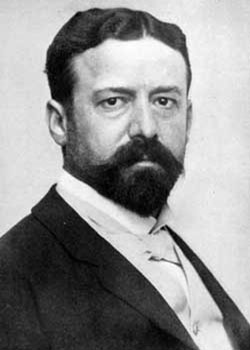
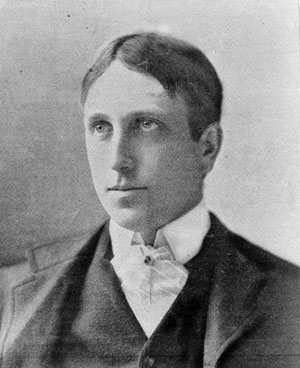
But tomorrow marks 114 years since the term “yellow journalism” first appeared in print, in the old New York Press, edited by the austere Ervin Wardman (left).
The phrase “the Yellow Journalism” appeared in a small headline on the editorial page of the Press on January 31, 1897. The phrase also appeared that day in the newspaper’s editorial page gossip column, “On the Tip of the Tongue.”
“Yellow journalism” quickly caught on, as a sneer to denigrate what then was called the “new journalism” of the New York Journal of William Randolph Hearst and the New York World of Joseph Pulitzer. By the end of March 1897, references to “yellow journalism” had appeared in newspapers in Providence, Richmond, and San Francisco.
In the decades since then, “yellow journalism” has become a widely popular if nebulous term — derisive shorthand for vaguely denouncing sensationalism and journalistic misconduct of all kinds, real and imagined.
“It is,” as I noted in my 2001 book Yellow Journalism: Puncturing the Myths, Defining the Legacies, “an evocative term that has been diffused internationally, in contexts as diverse as Greece and Nigeria, as Israel and India.”
Precisely how Wardman and the Press landed on the phrase “yellow journalism” isn’t clear.
The newspaper’s own, brief discussion of the term’s derivation was unhelpful and unrevealing: “We called them Yellow because they are Yellow,” it said in 1898 about the Journal and the World.
In the 1890s, the color yellow sometimes was associated with decadent literature, which may have been an inspiration to the Harvard-educated Wardman, a figure now largely lost to New York newspaper history.
Wardman was tall and stern-looking. He once was described as showing his “Calvinistic ancestry in every line of his face.” He did little to conceal his contempt for Hearst and Hearst’s journalism.
His disdain was readily apparent in the columns of the Press, of which Wardman became editor in chief in 1896 at the age of 31. (The Press is long defunct; it is not to be confused with the contemporary alternative weekly of the same title.)
Wardman’s Press took to taunting Hearst, Hearst’s mother, and Hearst’s support for Democratic candidate William Jennings Bryan in the 1896 presidential election. The New York Journal was virtually alone among New York newspapers in supporting Bryan’s “free silver” candidacy.
The Press disparaged Hearst, then 34, as a mama’s boy, as “Billy” and “little Willie.” It referred to the Journal as “our silverite, or silver-wrong, contemporary.”
The Press also experimented with pithy blasts on the editorial page to denounce “new journalism.”
“The ‘new journalism,’” the Press said in early January 1897 “continues to think up a varied assortment of new lies.”
Later in the month, the Press asked in a single-line editorial comment:
“Why not call it nude journalism?”
It clearly was a play on “new journalism” and meant to suggest the absence of “even the veneer of decency.”
Before long, Wardman and the Press seized upon the phrase “yellow-kid journalism,” which evoked the Hearst-Pulitzer rivalry over a popular cartoon character known as the “Yellow Kid.”
Both the Journal and the World at the time were publishing versions of the kid.
Yellow kid poster (Library of Congress)
At the end of January 1897, the phrase “yellow-kid journalism” was modified to “the Yellow Journalism,” and the sneer was born.
After landing on that evocative pejorative, Wardman turned to it often, invoking the term in brief editorial comments and asides such as: “The Yellow Journalism is now so overripe that the little insects which light upon it quickly turn yellow, too.”
The diffusion of “yellow journalism” was sealed when the Journal embraced the term in mid-May 1898, during the Spanish-American War. With typical immodesty, the newspaper declared:
“… the sun in heaven is yellow—the sun which is to this earth what the Journal is to American journalism.”
WJC
From an essay originally posted at Media Myth Alert January 31, 2010
Many thanks to Jim Romenesko for linking to this post
Recent and related:
Share this: