W. Joseph Campbell

Archive for the ‘Yellow Journalism’ Category

Finding hints of Hearst in the Tucson aftermath? What a stretch

In Debunking, Media myths, New York Times, Newspapers, Spanish-American War, Yellow Journalism on January 15, 2011 at 11:32 am

Hearst's Evening Journal, April 1898

The deadly shootings in Tucson a week ago touched off intense efforts by the New York Times and other mainstream media outlets to link the attacks to views and rhetoric of conservative politicians and activists.

But the smear failed to take hold, given the dearth of evidence tying the suspected shooter to political causes of the right and given the vigor of the pushback against what were outrageous characterizations.

The pushback was not without inaccuracy, however.

The conservative Red State blog the other day likened the media meme of the Tucson shootings to the historically incorrect view that the overheated content of William Randolph Hearst’s yellow press brought about the Spanish-American War in 1898.

The Red State item asserted that in the Tucson shootings, the mainstream media “smelled opportunity in the proud and honorable tradition of William Randolph Hurst [sic].”

The item further declared:

“Hearst earned well-deserved infamy for his manipulation of the explosion of the USS Maine to enhance the likelihood of a war between The United States and Spain. He wrote inflammatory articles, based on biased and insufficient evidence that implicated the Spanish for having an infernal machine to sink US vessels. The Spanish-American War broke out in 1898. Historians believe that it may not have happened with the rhetorical justifications Heart’s dishonest journalism provided.”

There’s a lot of error and imprecision to unpack in that paragraph. Take the last line first: Few serious historians would argue that Hearst or the content of his newspapers were factors at all in the Spanish-American War.

Indeed, as I wrote in my 2001 book, Yellow Journalism: Puncturing the Myths, Defining the Legacies :

“The yellow press … did not force—it could not have forced—the United States into hostilities with Spain over Cuba in 1898. The conflict was, rather, the result of a convergence of forces far beyond the control or direct influence of even the most aggressive of the yellow newspapers, William Randolph Hearst’s New York Journal.”

No one making the argument that the yellow press fomented the war can demonstrate adequately or persuasively how its content influenced American policymaking during the weeks between the destruction of the Maine and the declaration of war in April 1898.

As I wrote in Yellow Journalism:

“If the yellow press did foment the war, researchers should be able to find some hint of, some reference to, that influence in the personal papers and the reminiscences of policymakers of the time.

“But neither the diary entries of cabinet officers nor the contemporaneous private exchanges among American diplomats indicate that the yellow newspapers exerted any influence at all.”

When it was discussed by officials of in the administration of President William McKinley, the yellow press was dismissed as a nuisance or disdained at as a complicating factor. But the yellow press neither shaped, drove, nor  crystallized U.S. policy.

Besides, the yellow press wasn’t alone in implicating Spanish authorities for the destruction of the Maine in Havana harbor on February 15, 1898. The   warship exploded at anchor, killing 266 officers and sailors.

A U.S. court of naval inquiry found that the warship’s destruction was caused by a mine, set by persons unknown. The court of inquiry rejected the theory that an unnoticed coal bunker fire set off explosions that destroyed the Maine.

The court of inquiry’s most telling piece of evidence: The inward thrust of the warship’s keel. Such damage could only have been caused by an external explosion.

In any case, the warship was sunk in a harbor under control and supervision of Spanish authorities which, to the McKinley administration, was further evidence of an intolerable state of affairs in Cuba, where an islandwide rebellion had periodically flared over the previous three years.

Spain’s attempts to crush the rebellion had largely failed, but its harsh policies had precipitated a humanitarian crisis in which tens of thousands of Cuban non-combattants –old men, women, and children–fell victim to disease and starvation.

The humanitarian crisis, and Spain’s inability to exert control over Cuba, were the proximate causes of the war in 1898. The content of the yellow press, as well as other U.S. newspapers, reflected those realities, but certainly did not cause them.

As historian David Trask has written, Americans in 1898 “went to war convinced that they had embarked upon an entirely selfless mission for humanity.”

But they didn’t go because they were moved to do so by Hearst and his yellow press.

In the end, to indict Hearst and the yellow press for instigating the Spanish-American War, is I wrote in Yellow Journalism, “to misread the evidence and thus do disservice to the broader understanding of a much-misunderstood conflict.”

Much as the post-Tucson media smear has done a disservice to the vigor and legitimacy of political discourse in a democratic society.

WJC

Recent and related:

NYTimes practices ‘yellow journalism’? How so?

In 1897, Debunking, Media myths, New York Times, Year studies, Yellow Journalism on January 14, 2011 at 8:03 am

The “Best of the Web” roundup yesterday accused the New York Times of practicing “yellow journalism” for suggesting that conservative activists and politicians bore collective responsibility for last weekend’s murderous rampage in Arizona.

Best of the Web,” an online compilation prepared by the Wall Street Journal, assailed the Times for having “seized upon a horrific crime to demonize its political opponents,” for having “instigated” an uproar “with its yellow journalism.”

The Times certainly deserves criticism for hasty and politically charged commentary about the violence in Arizona that killed six people and left Congresswoman Gabrielle Giffords severely wounded.

But to accuse the Times of “yellow journalism“?

Well, that’s absurd.

For starters, the “Best of the Web” item didn’t explain what it meant by “yellow journalism.”

The term is convenient but imprecise; it’s often invoked (though not entirely accurately) as a shorthand for the sensational treatment of the news.

More broadly, as I noted in my 2001 book Yellow Journalism: Puncturing the Myths, Defining the Legacies, “yellow journalism” is an amorphous epithet that has been applied to all sorts of journalistic misconduct. It’s a term favored by letter-writers to newspapers who denounce bias, distortion, and other presumed misdeeds in journalism.

“Yellow journalism” also finds expression in international contexts, often emerging, for example, as a complaint about press performance in India.

Wardman: Coined 'yellow journalism'

This impressively dexterous term emerged in early 1897. That was when a New York newspaper editor named Ervin Wardman coined “yellow journalism” to disparage the flamboyant newspapers of William Randolph Hearst and Joseph Pulitzer.

Hearst claimed to practice “new journalism” but came to embrace Wardman’s term. In so doing, Hearst’s flagship New York Journal was typically immodest, likening itself to the sun–“the sun which is to this earth what the Journal is American journalism.”

Yellow journalism” became a recognizable, even bold genre in the late 19th and early 20th centuries.

As I wrote in Yellow Journalism, the genre in its most developed and intense form was characterized by these features:

  • the frequent use of multicolumn headlines that sometimes stretched across the front page.
  • a variety of topics reported on the front page, including news of politics, war, international diplomacy, sports, and society.
  • the generous and imaginative use of illustrations, including photographs and other graphic representations such as locator maps.
  • bold and experimental layouts, including those in which one report and illustration would dominate the front page. Such layouts sometimes were enhanced by the use of color.
  • a tendency to rely on anonymous sources, particularly in dispatches of leading reporters.
  • a penchant for self-promotion, to call attention eagerly to the paper’s accomplishments. This tendency was notably evident in crusades against monopolies and municipal corruption.

And as I noted in Yellow Journalism, the genre as practiced more than a century ago “certainly could not be called predictable, boring, or uninspired”—complaints of the sort that often are raised about contemporary American newspapers.

Interestingly, the New York Times established itself as the antithesis of yellow journalism of the late 1890s. It often condemned the excesses of the genre, especially those of Hearst’s Journal.

Under the ownership of Adolph Ochs, who acquired the newspaper in 1896, the Times nominally sought to position itself as a staid, impartial, fact-based model of journalism that eschewed extravagance and flamboyance in presenting the news.

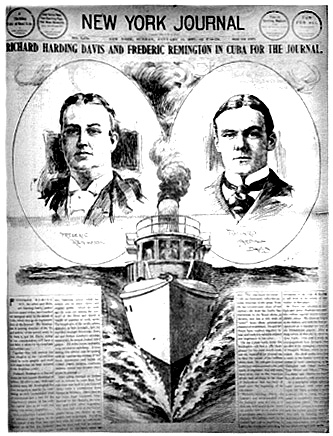
And as I wrote in my 2006 book–a year-study titled The Year That Defined American Journalism: 1897 and the Clash of Paradigms–the Times under Ochs lacked the resources of Hearst’s Journal and seldom competed in expensive and far-flung newsgathering ventures. (Hearst spent lavishly to gather the news; in 1897, he paid Richard Harding Davis the contemporary equivalent of $50,000 to report from Cuba for a month on the uprising against Spanish colonial rule.)

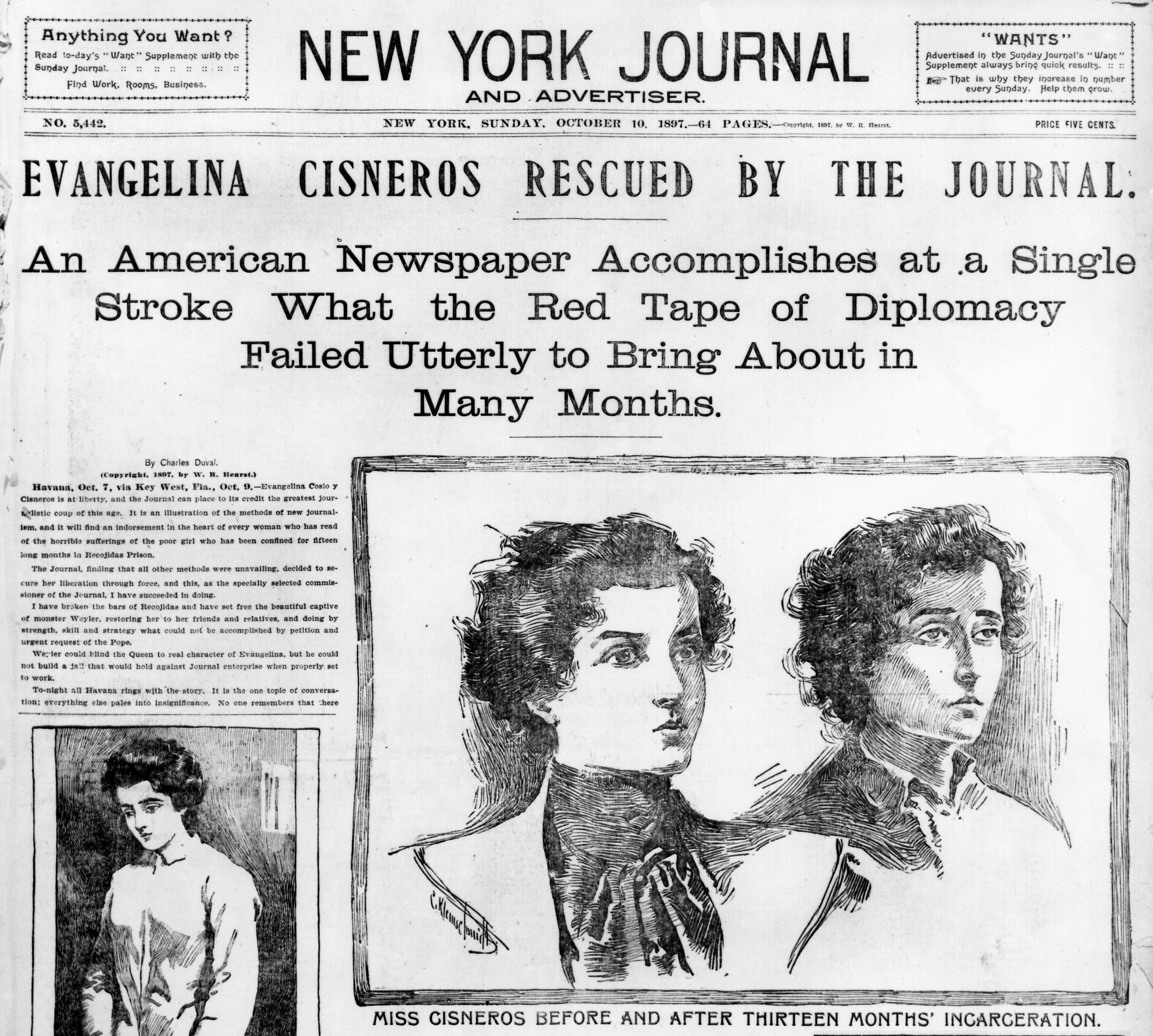
The Times instead sought to position itself as the sober, moral counterweight to the Journal, and periodically challenged the wisdom and ethics of that newspaper’s forays into activist journalismsuch as the case of jailbreaking journalism in 1897. That was when a reporter for the Journal organized the escape of a 19-year-old Cuban political prisoner named Evangelina Cisneros.

“Yellow journalism” has a long, varied, but not distinguished pedigree. It is to be sure a handy and supple pejorative.

But when invoked in criticism, definitional vagueness doesn’t cut it. “Yellow journalism” ought to be used with precision.

WJC

Recent and related:

Many thanks to Jim Romenesko for linking to the post.

n its most developed and intense form, yellow journalism was characterized by:

· the frequent use of multicolumn headlines that sometimes stretched across the front page.

· a variety of topics reported on the front page, including news of politics, war, international diplomacy, sports, and society.

· the generous and imaginative use of illustrations, including photographs and other graphic representations such as locator maps.

· bold and experimental layouts, including those in which one report and illustration would dominate the front page.[i] Such layouts sometimes were enhanced by the use of color.

· a tendency to rely on anonymous sources, particularly in dispatches of leading reporters (such as James Creelman, who wrote for the Journal and the World).

· a penchant for self-promotion, to call attention eagerly to the paper’s accomplishments. This tendency was notably evident in crusades against monopolies and municipal corruption.

As defined above and as practiced a century ago, yellow journalism certainly could not be called predictable, boring, or uninspired—complaints of the sort that were not infrequently raised about U.S. newspapers at the turn of the twenty-first century


[i]. See, among many other examples, “Remington and Davis Tell of Spanish Cruelty,” New York Journal (2 February 1897): 1. The front page was almost entirely devoted to a sketch by Frederic Remington to illustrate a dispatch by Richard Harding Davis about a Cuban rebel’s execution by Spanish firing squad.

The ‘anniversary’ of a media myth: ‘I’ll furnish the war’

In 1897, Anniversaries, Debunking, Furnish the war, Media myths, Newspapers, Spanish-American War, Yellow Journalism on January 13, 2011 at 7:31 am

Remington, Davis in Cuba for Hearst

Had it occurred, the legendary but improbable exchange of telegrams between William Randolph Hearst and the artist Frederic Remington–in which Hearst supposedly vowed to “furnish the war” with Spain–would have taken place in mid-January 1897.

The uncertainty as to exactly when the purported exchange occurred is one of many signals the tale is apocryphal, a media-driven myth.

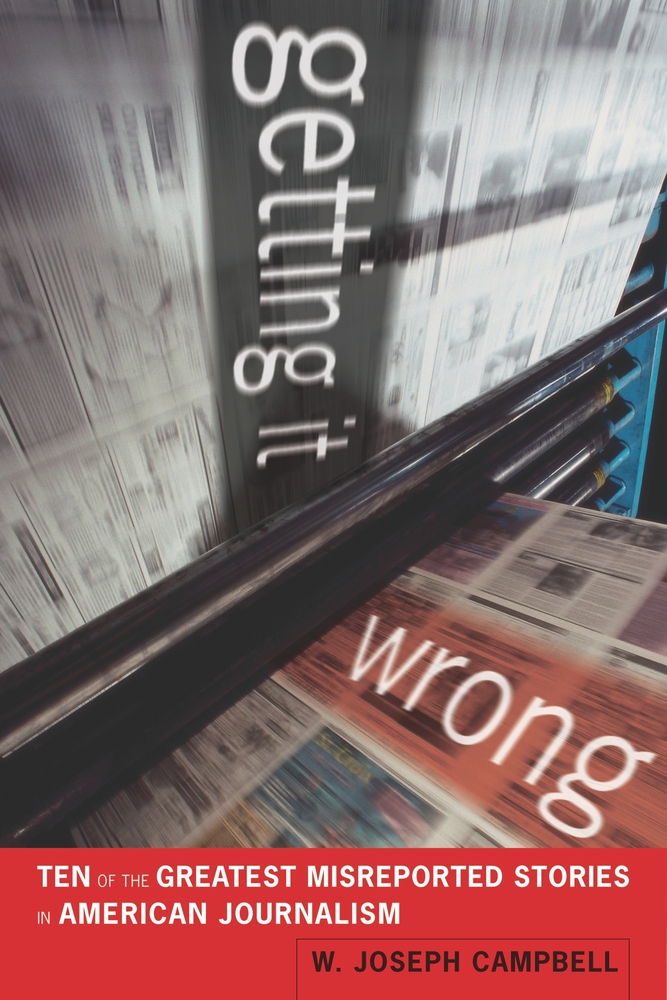
As I discuss in my media-mythbusting book, Getting It Wrong, the Remington-Hearst anecdote is “perhaps the hardiest myth in American journalism.”

It lives on in part because it is a pithy and delicious tale. It corresponds well to the image of Hearst the war-monger, the unscrupulous newspaper published who fomented the Spanish-American War in 1898.

As I point out in the first chapter of Getting It Wrong, the Remington-Hearst tale is often retold “despite a nearly complete absence of supporting documentation. It lives on even though telegrams supposedly exchanged by Remington and Hearst have never turned up. It lives on even though Hearst denied ever sending such a message.”

Moreover, I write:

The anecdote “lives on despite an irreconcilable internal inconsistency: It would have been absurd for Hearst to vow to ‘furnish the war’ because war—specifically, the Cuban rebellion against Spain’s colonial rule—was the very reason Hearst sent Remington to Cuba in the first place.”

The sole original source for the “furnish the war” quotation was On the Great Highway, a slim volume of reminiscences that came out in 1901. The author was James Creelman, a portly, cigar-chomping journalist prone to pomposity and exaggeration.

Creelman did not explain in On the Great Highway how or where he learned about the purported Remingt0n-Hearst exchange. Creelman–who was in Madrid at the time Remington was in Cuba–recounted the anecdote a not as a rebuke but as a compliment to Hearst and the activist “yellow journalism” he had pioneered in New York City.

Nor did Creelman say exactly when the presumed exchange took place, writing only that it was “some time before the destruction of the battleship Maine in the harbor of Havana” in mid-February 1898. The only time Remington was in Cuba before the explosion that destroyed the Maine was in January 1897.

Creelman: Sole source

Remington, an accomplished artist of the American West, went to Cuba in 1897 to draw sketches of scenes of the uprising against Spanish rule. He traveled with Richard Harding Davis, who then was burnishing a reputation as one of American journalism’s leading correspondents.

Hearst recruited Remington and Davis for a month, and the plan was for them to reach a force of Cuban rebels under the command of Máximo Gómez.

But Remington and Davis never reached the rebels. What’s more, they proved to be an oddly matched team. In Matanzas on January 15, 1897, they parted ways. Remington returned to Havana and the next day boarded a steamship bound for New York.

Legend has it that before leaving Havana, Remington sent Hearst a telegram that supposedly said:

“Everything is quiet. There will be no war. I wish to return.”

Hearst purportedly cabled Remington in reply:

“Please remain. You furnish the pictures, and I’ll furnish the war.”

Had it occurred, the exchange would have taken place late on January 15, 1897, or early on January 16, 1897.

Remington disregarded Hearst’s purported instructions to “remain” in Cuba. The artist was one of seven passengers aboard the Seneca when it sailed from Havana on January 16, 1897. The steamer reached New York four days later and soon afterward, Hearst’s New York Journal began publishing Remington’s sketches drawn in Cuba.

“The work was given prominent display,” I note in Getting It Wrong. Headlines in the Journal hailed Remington as a “gifted artist”–hardly the sort of accolade Hearst would have extended to someone in his employ who had brazenly disregarded instructions to remain on the scene.

That’s further reason for doubting that Hearst ever sent a telegram vowing to “furnish the war.”

And yet another reason is that Spanish censors, who controlled all incoming and outgoing cable traffic in Havana, surely would have intercepted Hearst’s inflammatory message, had it been sent. It’s highly improbable that cables such as those attributed to Hearst and Remington would have flowed readily between New York and Havana.

Additionally, the correspondence of Davis gives lie to the anecdote.

Davis wrote frequently to his family, especially to his mother, Rebecca Harding Davis. His letters make clear that  Remington did not leave because they found “everything is quiet” in Cuba.

In fact, Davis wrote on the day he and Remington parted ways:

“There is war here and no mistake.”

His correspondence offered detailed descriptions of what he called the grim process “of extermination and ruin” in Cuba.

More important, Davis’ letters make clear that Remington left for home not on the pretext that “everything is quiet,” but because Davis wanted him to go.

“I am as relieved at getting old Remington to go as though I had won $5000,” Davis wrote to his mother on January 15, 1897. “He was a splendid fellow but a perfect kid and had to be humored and petted all the time.”

Davis added that he “was very glad” Remington left “for he kept me back all the time and I can do twice as much in half the time.”

I note in Getting It Wrong that the Remington-Hearst tale was “Creelman’s singular contribution to American journalism.” The anecdote has proven to have timeless appeal, in part because it promotes what I call “the improbable notion the media are powerful and dangerous forces, so powerful they can even bring on a war.”

WJC

Recent and related:

Fact-checking WaPo columnist on the ‘McKinley moment’

In Debunking, Media myths, Spanish-American War, Washington Post, Yellow Journalism on January 12, 2011 at 7:42 am

Washington Post columnist Dana Milbank offered up a glib and flabby column yesterday, arguing that the false charges of incitement raised long ago in the McKinley assassination should serve as a cautionary reminder to the likes of Sarah Palin and Fox News commentator Glenn Beck.

They should experience what Milbank vaguely termed a “McKinley moment.”

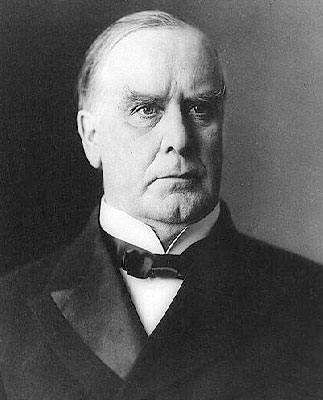
McKinley

He recalled–and not entirely accurately–the efforts in 1901 to link the contents of William Randolph Hearst’s newspapers to the fatal shooting of President William McKinley.

I discussed that topic in a post Monday at Media Myth Alert, noting how extreme and wrong-headed attempts to exploit and politicize the weekend’s shooting rampage in Tucson was reminiscent of the smear campaign against Hearst following McKinley’s slaying.

The rampage in Arizona left six people dead, including a federal judge. Congresswoman Gabrielle Giffords was severely wounded.

Milbank’s column seizes on the shootings in Tuscon as a pretext to condemn the views and rhetoric of Palin and Beck, neither of whom I much care for.

Milbank began his column by declaring:

“If any good can come of the horror in Tucson, it will be that this becomes a McKinley moment for Sarah Palin and her chief spokesman, Glenn Beck.”

A “McKinley moment”? Meaning what? An occasion for self-censorship because of the insinuations and false allegations raised against them in the aftermath of the shootings in Tucson–much as false allegations were raised against Hearst following McKinley’s slaying?

Not only is “McKinley moment” an imprecise construct: It suggests that using smears to batter foes into silence is somehow worthy or admirable.

Milbank in his column briefly reviewed the false and improbable charges of incitement leveled against Hearst after McKinley was fatally shot in September 1901 and wrote:

“The outcry against Hearst’s incitement–there were boycotts and a burning in effigy–dashed his presidential ambitions.

“A similar, and long overdue, outcry has followed the Tucson killings.”

“Maybe,” Milbank added, “Beck and Palin will be good enough to show us what a real moment of silence is–by having themselves a nice long one.”

A more fitting and appropriate response from the violence in Tucson would be not to seek to mute the rhetoric of foes, but to condemn the smear, to call attention to the hazards of battering opponents with indirect and groundless allegations of incitement.

Hearst was so battered in 1901.

He, not unlike Palin and Beck, was a brash and controversial figure, easy to dislike.

Hearst’s aggressive, activist-oriented approach to newspapering–his yellow journalism–shook up New York City’s media scene in late 1890s and served as a platform for his political ambitions during the first decade of the 20th century.

But Hearst was no villain, no violence-monger. As I write in my latest book, Getting It Wrong, Hearst almost surely never vowed to bring on the Spanish-American War of 1898, although that hardy myth is often invoked and readily believed.

His newspapers were known to publish intemperate commentary, as were rival newspapers at the turn of the 20th century. And ill-advised surely defines the column written in 1900 by Ambrose Bierce, who ruminated about a bullet “speeding here to stretch McKinley on his bier.”

Milbank’s column suggested that Bierce’s commentary was published in the Hearst papers some six months before McKinley was shot.

In fact, it appeared 20 months before the assassination, in a quatrain about the fatal shooting of William Goebel, the governor of Kentucky. Bierce said he meant to call attention to risks of not finding and prosecuting Goebel’s killer.

Milbank’s column, moreover, erred in claiming the uproar that followed McKinley’s assassination “dashed” Hearst’s presidential ambitions.

Not so.

Hearst mounted a serious bid for Democratic nomination for president in 1904. He was by then a congressman, and his presidential bandwagon  gathered some momentum during the first months of that year.

In the end, though, his candidacy was doomed–not by the smears and fabrications raised after the McKinley assassination but by the reluctance of William Jennings Bryan to embrace Hearst’s bid.

Bryan, who lost presidential elections to McKinley in 1896 and 1900, had been expected to endorse Hearst for Democratic nomination in 1904. After all, Hearst had supported Bryan’s ill-fated campaigns for the presidency and had even financially supported Bryan’s travels in Europe following the 1900 election.

When Bryan did not deliver the hoped-for endorsement (thinking, perhaps, he might again emerge as the party’s standard-bearer), Hearst’s candidacy was faded, according to David Nasaw, Hearst’s leading biographer.

“Without Bryan’s endorsement,” Nasaw wrote in his 2000 work, The Chief, “Hearst had no hope of securing the votes [of convention delegates] he needed for the nomination.”

Still, Hearst pursued his bid for the nomination to the Democratic convention in St. Louis in 1904. He lost by a wide margin to Judge Alton B. Parker.

Parker in turn lost the 1904 election in a landslide to Teddy Roosevelt, who as vice president had succeeded McKinley to the presidency.

The “McKinley moment,” as Milbank used the term, seems a misnomer.

More appropriate and accurate would be to call it the “Hearst moment,” given that Hearst was the target, the victim, of distortion and falsehood.

The “Hearst moment” offers a useful and pertinent reminder about the use and effect of the smear.

WJC

Recent and related:

Many thanks to Glenn Reynolds
at Instapundit for linking to this post.

Blaming assassination on overheated commentary: No new tactic

In 1897, Debunking, Media myths, New York Sun, Spanish-American War, Yellow Journalism on January 10, 2011 at 7:56 am

The extreme attempts to politicize the weekend shootings in Arizona were dismaying and wrong-headed, but not without parallel.

Efforts to link the attack on Democratic Congresswoman Gabrielle Giffords to overheated political rhetoric and, more explicitly, to Republican Sarah Palin and the conservative Tea Party movement were evocative of a campaign more than a century ago to blame the assassination of President William McKinley on the yellow press of William Randolph Hearst.

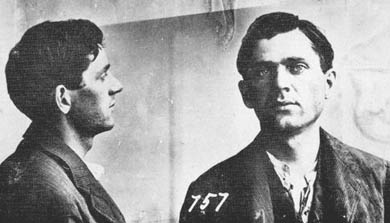
Czolgosz, assassin

McKinley was fatally shot in September 1901 by an anarchist named Leon Czolgosz, who, according to Hearst’s finest biographer, was unable to read English.

Even so, Hearst’s foes–notably, the New York Sun–sought to tie the assassination to ill-advised comments about McKinley that had appeared in Hearst’s newspapers months earlier.

One especially ill-considered comment helped fuel the allegations: That was a quatrain written by columnist Ambrose Bierce 20 months before McKinley was shot on September 6, 1901, while greeting well-wishers in Buffalo.

Bierce’s column of February 4, 1900, closed with a reference to the assassination a few days earlier of the Kentucky governor, William Goebel. Bierce, a prickly and acerbic commentator, wrote:

The bullet that pierced Goebel’s breast
Can not be found in all the West.
Good reason: it is speeding here [to Washington]
To stretch McKinley on his bier.

As I pointed out in my 2005 work, The Spanish-American War: American Wars and the Media in Primary Documents, “The quatrain attracted little notice or comment until Czolgosz shot the president in 1901.”

Bierce later wrote, ‘The verses, variously garbled but mostly made into an editorial, or a news dispatch with a Washington date-line but usually no date, were published all over the country as evidence of Mr. Hearst’s [supposed] complicity in the crime.”

The Sun led the assault on Hearst and his flagship newspaper, the New York Journal.

Beneath the headline, “A Menace to Our Civilization,” the Sun on September 12, 1901, accused the Journal of having provoked “an atrocious Anarchistic assault on the President” and declared that yellow journalism had “graduated into a serious and studied propaganda of social revolution.”

Never, the Sun declared, “was an instrument of disorder and sedition used so effectually and none ever had so great opportunities for its malign propaganda.”

Advertisers in the Journal, said the Sun, were “feeding a monster which is using the strength they are giving nutrition to in an effort to strike down the civilization upon which they depend.”

It was of course absurd to claim that Czolgosz’s mind had been poisoned by the contents of the Hearst press. Few other New York City newspapers were inclined to pick up the cudgel, even though not many admired Hearst’s activist-oriented journalism.

And as media scholar Brian Thornton noted in a fine journal article in 2000, “most of the attack against Hearst” in the aftermath of the McKinley shooting was sustained by letters to the editor of the Sun, not by the newspaper’s editorials.

The Sun, it should be noted, had long campaigned against Hearst, having urged in early 1897 a readership boycott of the yellow press, an effort that drew attention but ultimately collapsed.

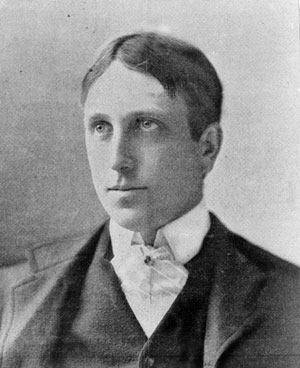
Hearst

Still, the uproar in 1901 stunned Hearst. David Nasaw, Hearst’s leading biographer, wrote that perhaps for “the first time in his life, Hearst was forced onto the defensive.”

In response, Hearst renamed the Journal the Journal and American, to assert the newspaper’s patriotism. Eventually, he dropped the “Journal” from the nameplate altogether.

Hearst could take a measure of comfort in the insightful and level-headed commentary of journals such as The Bookman, which dismissed the criticism as preposterous.

“As a matter of fact,” The Bookman said in its December 1901 number, “it cannot be shown that any President ever lost his life because his assassins were influenced by the reading of newspaper denunciation.”

The Bookman also noted:

“Indeed, the most severe attacks on President McKinley’s policy were not attacks for which the so-called ‘yellow journals’ were responsible, but they were attacks uttered by such sincere and high-minded men as Senator [George] Hoar and ex-Secretary [Carl] Schurz–both of them Republicans–and by newspapers of great ability, such as the Evening Post” of New York.

The Bookman added:

“It is unthinkable that a press censorship should ever be established in our country; for in its practical operation it would mean that the opposition would have to abstain from all newspaper criticism of the party in power.”

There are in The Bookman commentary echoes of well-reasoned and insightful commentary written in the aftermath of the rampage in Arizona that left six people (a federal judge among them) dead and Giffords clinging to life.

Notably, media critic Jack Shafer pointed out in a column posted yesterday at slate.com that only “the tiniest handful of people—most of whom are already behind bars, in psychiatric institutions, or on psycho-meds—can be driven to kill by political whispers or shouts.

“Asking us to forever hold our tongues lest we awake their deeper demons,” Shafer wrote, “infantilizes and neuters us and makes politicians no safer.”

He’s absolutely right.

And to seize on political shootings to score political points is as appalling as it is unworthy.

WJC

Recent and related:

The ‘defining moment’ in investigative journalism? Wasn’t Watergate

In Cinematic treatments, Debunking, Media myths, Newspapers, Watergate myth, Yellow Journalism on January 8, 2011 at 9:03 am

The “defining moment” in investigative journalism? Well, that had to be the Watergate reporting of the Washington Post in the early 1970s.

So says Britain’s serious-minded Financial Times in a commentary published yesterday.

The newspaper, however, offered no persuasive evidence for the Post-Watergate claim beyond asserting:

“Investigative reporting has been one of the strongest developments of postwar journalism, illuminating government deceit, corporate fraud and criminal activity. The reporting of Bob Woodward and Carl Bernstein for The Washington Post in the early 1970s on the illegal efforts of Nixon’s White House to destabilise the Democratic party remains its defining moment.”

Was it, really, the “defining moment”? The Post certainly practiced some solid journalism in reporting the unfolding Watergate scandal; its coverage after all won the Pulitzer Prize for public service in 1973.

But the defining moment of investigative reporting?

I argue “no, not at all,” in my latest book, Getting It Wrong, which addresses and debunks 10 prominent media-driven myths–among them the heroic-journalist interpretation of Watergate.

The heroic-journalist meme has it that Woodward and Bernstein’s dogged reporting about the Watergate scandal brought down Richard Nixon’s corrupt presidency. (Nixon resigned in 1974, in the face of certain impeachment and conviction for his role in seeking to coverup the Watergate scandal.)

“The heroic-journalist has become the most familiar storyline of Watergate,” I write in Getting It Wrong. That interpretation, I add, is “ready short-hand for understanding” Watergate, “a proxy for grasping the scandal’s essence while avoiding its forbidding complexity. How the Post and its reporters uncovered Watergate is deeply ingrained in American journalism as one of the field’s most important and self-reverential stories.”

But that doesn’t make it the “defining moment” in investigative reporting.

The reporting by the Post certainly did not bring down Nixon’s presidency. To embrace that interpretation is, I write, “to indulge in a particularly beguiling media-driven myth.

“The heroic-journalist interpretation minimizes the far more decisive forces that unraveled the scandal and forced Nixon from office”–including the collective efforts of such subpoena-wielding agencies and entities as the FBI, federal grand juries, special prosecutors, bipartisan congressional panels, and ultimately the U.S. Supreme Court.

Not even the Post embraces the heroic-journalist interpretation of Watergate.

For example, the newspaper’s publisher during the Watergate period, Katharine Graham, insisted the Post did topple Nixon. In 1997, at a Newseum program marking the 25th anniversary of the break-in at Democratic headquarters–the Watergate’s seminal crime–Graham declared:

“Sometimes people accuse us of bringing down a president, which of course we didn’t do,” she said. “The processes that caused [Nixon’s] resignation were constitutional.”

And in 2005, Michael Getler, then the newspaper’s ombudsman, declared in his column:

“Ultimately, it was not The Post, but the FBI, a Congress acting in bipartisan fashion and the courts that brought down the Nixon administration.”

I note in Getting It Wrong that Woodward and Bernstein “did not uncover defining and decisive elements of the Watergate scandal—the cover-up and the payment of hush money to the Watergate burglars.”

Those aspects of the scandal, Woodward was quoted as saying in 1973, were “held too close. Too few people knew. We couldn’t get that high.”

Nor did they disclose the secret audiotaping system that Nixon had installed at the White House; the recordings of his private conversations about Watergate proved decisive in the scandal’s outcome.

If not Watergate, then what was the “defining moment” in investigative reporting–the genre’s most decisive and lasting contribution?

I’ll take up that question tomorrow at Media Myth Alert.

WJC

Recent and related:

Gotham’s exceptional New Year’s Eve: 1897

In 1897, New York Sun, Newspapers, Year studies, Yellow Journalism on December 31, 2010 at 7:05 am

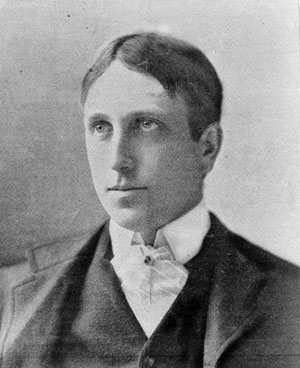
W.R. Hearst

Publisher William Randolph Hearst was at the peak of his most innovative period 113 years ago, when he organized a New Year’s Eve bash for Gotham in 1897.

The year then closing had been a stunning one for Hearst and his flagship newspaper, the New York Journal.

He had introduced in 1897 a hearty brand of activist journalism: The “journalism of action,” the Journal called it. And it meant that newspapers had an obligation to inject themselves routinely and conspicuously into public life, to address the ills that government would not or could not confront.

Rivals scoffed and sneered; “yellow journalism” they called it.

But the stunning character of Hearst’s “journalism of action” had been demonstrated in October 1897 with the rescue of Evangelina Cisneros, a 19-year-old political prisoner jailed by Spanish authorities in Havana for months without charges.

The Cisneros rescue, as I wrote in my 2006 book–a year study titled The Year That Defined American Journalism: 1897 and the Clash of Paradigms–was the “greatest escape narrative” in U.S. media history, “an episode unique in American journalism.”

In late summer 1897, as Cuba’s guerrilla war against Spanish colonial rule ground on, Hearst sent a reporter named Karl Decker to Cuba, ostensibly as the Journal correspondent in Havana.

Rescuing Evangelina

But Decker was under orders to organize the rescue of Evangelina Cisneros. With the quiet help of U.S. diplomatic personnel in Cuba, and the vital support of a clandestine smuggling network in Havana, Decker succeeded in breaking her out of jail and getting her aboard a steamer to New York.

The “greatest journalistic coup of this age,” the Journal crowed, never reluctant to indulge in self-promotion. The “journalism of action” never seemed more robust, or more proud of itself, I noted in The Year That Defined American Journalism.

Rivaling the Cisneros jailbreak as the crowning achievement of the “journalism of action” was the 1897 New Year’s Eve bash that Hearst threw for New York City.

It was an exceptional occasion, marking as it did the consolidation of the boroughs of New York and the birth of the modern mega-city.

As I wrote in The Year That Defined American Journalism, New York officials “had planned no special event to celebrate the political consolidation of the five boroughs… William Strong, the city’s outgoing mayor and a foe of consolidation, suggested that a mock funeral would be more appropriate than a celebration. Hearst would have none of that.”

Hearst stepped forward to organize what the Journal called a “great carnival,” a celebration replete with “volcanoes of fireworks and floods of pulse-quickening music,” all centered around City Hall Park, near what then was Newspaper Row.

Weather conditions were awful that night in lower Manhattan. Drizzling rain turned to ice and snow during the waning hours of 1897. The weather was so poor that the Journal announced in the afternoon that festivities would be postponed. An hour or two later, it reversed itself and the celebration was back on.

Perhaps 100,000 merry-makers braved the inclement conditions to watch the parade of floats that snaked its way down Broadway to City Hall.

As midnight struck in New York, the mayor of San Francisco (as Hearst had arranged), pressed a button sending an electric current across country to lower Manhattan. The electric charge sent a small white object climbing the flagpole at City Hall.

Reaching the top of the staff, the object unfurled and revealed itself to be the flag of New York City. And with that, one news account said, “bedlam broke loose.”

Fireworks burst over lower Manhattan, sending up what one reporter called “showers of blazing stars,” and a National Guard battery began firing a salute of 100 guns.

Just as the Journal had promised, the celebration was the “luminous starting point from which the history of the expanded New York will be dated.”

Even such bitter rivals as the New York Sun complimented the Journal for having organized and underwritten the celebration, which cost at least the contemporary equivalent of $500,000.

“It was such a display of fireworks and enthusiasm as perhaps had never been seen before in the State of New York, certainly not in the vicinity of New York city,” the Sun declared, adding:

“The show that the New York Journal provided was all that that paper claimed it would be.”

It was an exceptional New Year’s Eve in Gotham–and, as I wrote in The Year That Defined American Journalism, it also was “a tremendous opportunity for the Journal to indulge in a celebration of its activist ethos.”

WJC

Recent and related:

Recalling Mark Twain and the ‘calamity of calamities’

In 1897, Debunking, Media myths, Reviews, Year studies, Yellow Journalism on December 21, 2010 at 10:18 am

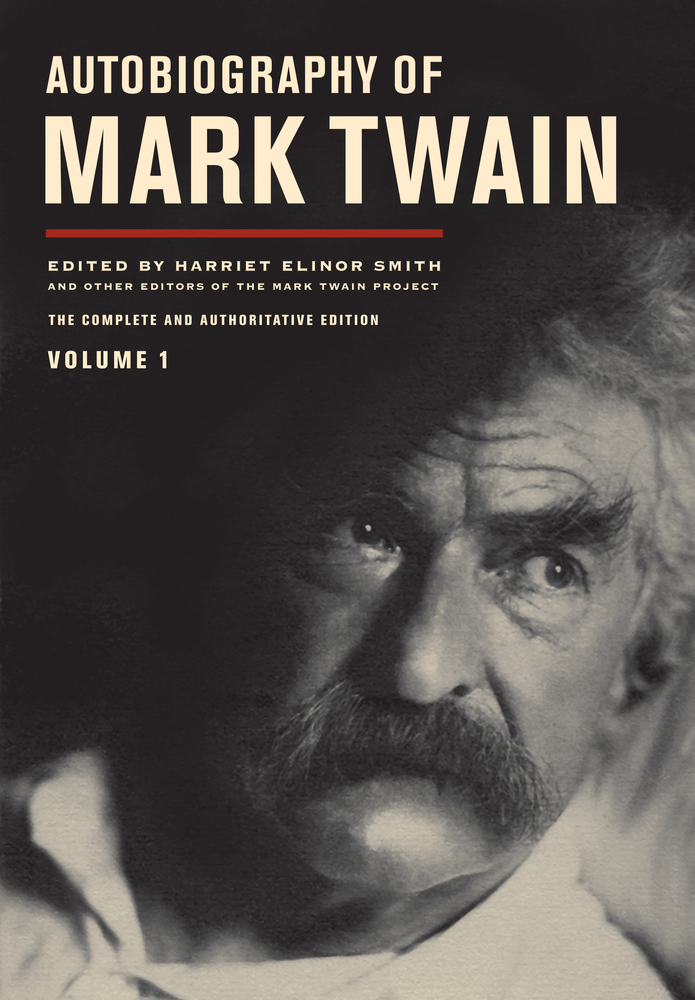
The first volume of Autobiography of Mark Twain–published 100 years after his death–has been a best-seller for the University of California Press, the publisher that brought out my latest book, Getting It Wrong.

The Twain volume has received largely favorable reviews, although the New York Times did say, in a critique the other day by the insufferable Garrison Keillor, that “there’s precious little frankness and freedom here and plenty of proof that Mark Twain, in the hands of academics, can be just as tedious as anybody else when he is under the burden of his own reputation.”

A more generous review, posted online yesterday by the North County Times in California, caught my eye–mostly for its reference to Twain (Samuel Clemens) and yellow journalism. The review quoted this passage from Twain’s autobiography:

“I was converted to a no-party independence by the wisdom of a rabid Republican. This was a man who was afterward a United States Senator, and upon whose character rests no blemish that I know of, except that he was the father of the William R. Hearst of to-day, and therefore grandfather of Yellow Journalism–that calamity of calamities.”

The reference was to George Hearst, an adventurer-miner who struck it rich in the silver fields of the 19th century American West. After securing his fortune, George Hearst became a U.S. senator from California, serving from 1886-1891.

Twain’s reference to “a rabid Republican” is puzzling, though, because George Hearst was a committed Democrat, as was his son, William Randolph Hearst.

More interesting was Twain’s characterization of yellow journalism as “that calamity of calamities.”

It’s an amusing line, but it ignores the generosity young Hearst extended to Twain in 1897, when the writer was down on his luck in London.

Hearst by then was running the provocative and activist-oriented New York Journal — the newspaper that helped give rise in 1897 to the sneer, “yellow journalism.”

The Journal preferred the term “journalism of action” and asserted that a newspaper had an obligation to inject itself routinely and conspicuously into civic life, to address the ills that government wouldn’t or couldn’t.

As I wrote in my 2006 year-study, The Year That Defined American Journalism: 1897 and the Clash of Paradigms, Hearst arranged for Twain, then 51, to report for the Journal on Queen Elizabeth’s Diamond Jubilee in June 1897.

Lining up Twain to cover the Jubilee was emblematic of Hearst’s willingness to spend money lavishly to recruit big-name talent, if only for spot assignments.

In Twain, though, Hearst must have been disappointed.

As I wrote in The Year That Defined American Journalism:

“Twain’s reporting about Victoria’s jubilee seemed half-hearted and hardly inspired. The spectacle was easily the most regal international story of 1897, and came at a time when the British empire at or near its height. But Twain found the celebration overwhelming—’a spectacle for the kodak [camera], not the pen,’” as he wrote in a dispatch published June 23, 1897.

Twain’s dispatch to the Journal included this odd observation:

“I was not dreaming of so stunning a show. All the nations seemed to be filing by. They all seemed to be represented. It was a sort of allegorical suggestion of the Last Day, and some who live to see that day will probably recall this one if they are not too much disturbed in mind at the time.”

Twain’s association with the Journal in 1897 did give rise to one of his most memorable lines–and allowed the newspaper to puncture rumors about the writer’s health.

In early June 1897, the New York Herald reported that Twain was “grievously ill and possibly dying. Worse still, we are told that his brilliant intellect is shattered and that he is sorely in need of money.”

The Journal promptly exposed the Herald report as erroneous, and published Twain famous, if often-misquoted, denial:

“The report of my death was an exaggeration,” Twain said.

He lived until 1910.

WJC

Recent and related:

As inevitable as ‘Yes, Virginia,’ at the holidays

In 1897, Debunking, Furnish the war, Media myths, New York Sun, New York Times, Newspapers, Year studies, Yellow Journalism on December 15, 2010 at 8:59 am

The approach of the year-end holidays brings inevitable reference to American  journalism’s most famous editorial, “Is There A Santa Claus?”

Virginia O'Hanlon

The lyrical and timeless tribute to childhood and the Christmas spirit was first published in 1897 in the old New York Sun, in response to the inquiry of an 8-year-old girl, Virginia O’Hanlon.

“Please tell me the truth,” she implored, “is there a Santa Claus?”

The Sun in reply was reassuring:

“Yes, Virginia, there is a Santa Claus. He exists as certainly as love and generosity and devotion exist, and you know that they abound and give to your life its highest beauty and joy.”

Almost as inevitable as the editorial’s reappearance this time of year are sightings of myths and misconceptions associated with “Is There A Santa Claus?”

Today, for example, an online reference site for journalists, Followthemedia.com, says in an essay that “Is There a Santa Claus?” was published on the front page of the Sun, on September 21, 1897.

The date is correct. But the famous editorial was given obscure placement in its debut. As I wrote in my 2006 book, The Year That Defined American Journalism: 1897 and the Clash of Paradigms:

“‘Is There a Santa Claus?’ appeared inconspicuously in the third of three columns of editorials in the New York Sun on 21 September 1987. It was subordinate to seven other commentaries that day, on such matters as ‘British Ships in American Waters,’ the ambiguities in Connecticut’s election law, and the features of the chainless bicycle anticipated in 1898.”

“Is There A Santa Claus” appeared on page six, the editorial page of the Sun.

Interestingly, the oddly timed editorial about Santa Claus–appearing as it did more than three months before Christmas–prompted no comment from the many newspaper rivals to the Sun.

That’s somewhat curious because the New York City press of the late 19th century was prone–indeed, eager–to comment on, and disparage, the content of their rivals.  That’s how the enduring sneer “yellow journalism” was coined, in early 1897.

In its headline today, Followthemedia suggests the editorial’s most-quoted passage — “Yes, Virginia, there is a Santa Claus” — are the words most famous in American journalism.

Maybe.

But a stronger case can be made for  the New York Times logo, “All the News That’s Fit to Print,” which in 1897 took a permanent place in the upper left corner of the newspaper’s front page, a spot known in journalism as the “left ear.”

As I noted in a blog post nearly a year ago: “The ‘Yes, Virginia,’ passage is invoked so often, and in so many contexts, that no longer is it readily associated with American journalism. ‘Yes, Virginia,’ long ago became unmoored from its original context, the third of three columns of editorials in the New York Sun on September 21, 1897.”

I also suggested then that the famous vow attributed to William Randolph Hearst–“You furnish the pictures, I’ll furnish the war“–may be more famous in journalism than “Yes, Virginia.”

The Hearstian vow, as I write in my latest book, Getting It Wrong, is almost certainly apocryphal. But like many media-driven myths, it lives on as an anecdote too delicious not to be true.

What is striking and perhaps exceptional about “Is There A Santa Claus?” is its timeless appeal–how generations of readers have found solace, joy, and inspiration in its passages.

A letter-writer to the Sun in 1914 said, for example: “Though I am getting old,” the editorial’s “thoughts and expressions fill my heart with overflowing joy.”

In 1926, a letter-writer told the Sun that “Is There A Santa Claus?” offered “fine relief from the commercialism and unsentimental greed” of the Christmas season.

In 1940, a writer to the Sun likened the editorial to “a ray of hope on the path to human understanding in our troubled times.”

WJC

Recent and related:

Wikileaks and the Spanish-American War?

In Debunking, Media myths, Spanish-American War, Yellow Journalism on December 3, 2010 at 7:41 am

The recent Wikileaks disclosure of more than 250,000 U.S. diplomatic cables has prompted commentators to look for parallels, however rough, in American history.

Going to war with Spain

The Watergate scandal has been invoked, but the equivalents are neither especially clear nor convincing.

Now, the blustering conservative commentator Pat Buchanan has found Wiki-like resonance in a diplomatic faux pas in 1898, when the chief Spanish diplomat in Washington wrote disparagingly of President William McKinley in a private letter.

The letter was purloined and given to William Randolph Hearst‘s New York Journal, which splashed the  contents across its front page, beneath a hyperbolic headline that declared:

“The Worst Insult to the United States in its History.”

It’s an intriguing case, about which Buchanan said in a blog post yesterday:

“The Spanish minister in Washington, Enrique Dupuy De Lome, had written an indiscreet letter that was stolen by a sympathizer of the Cuban revolution and leaked to William Randolph Hearst’s warmongering New York Journal. In the De Lome letter, the minister had said of McKinley that he is ‘weak, and a bidder for the admiration of the crowd, besides being a … politician who tries to leave a door open behind himself while keeping on good terms with the jingoes of his party.’

“Six days later, the battleship Maine blew up in Havana harbor. Hearst’s Journal screamed Spanish ‘treachery.’ And the war was on.”

Just like that?

Well, no.

The Maine blew up in mid-February 1898. The United States and Spain did not declare war until late April 1898, during which time a U.S. Naval Court of Inquiry investigated the battleship’s destruction. The Inquiry found that the Maine most likely had been destroyed by an underwater mine. Who set the device couldn’t be determined.

The de Lome letter and the destruction of the Maine weren’t related and they weren’t decisive factors in the U.S. decision to declare war in 1898. (And the overheated content of Hearst’s New York Journal wasn’t much of a factor at all in the march to war.)

As I wrote in my 2005 book, The Spanish-American War: American War and the Media in Primary Documents:

“The United States went to war in April 1898 to fulfill a moral and humanitarian imperative—that of ending the abuses created by Spain’s failed attempt to quell an island-wide rebellion in Cuba,” its last important colonial possession in the Western hemisphere.

The Spanish-American War, in broad terms, was the upshot of a prolonged, three-sided diplomatic impasse: Cubans, who in 1895 launched what became an island-wide rebellion against Spanish rule, would settle for nothing short of political independence. Spain, for reasons of political stability at home, would not agree to grant Cuba its independence. And the United States could tolerate no longer the disruptions caused by turmoil in Cuba.

Spain sent nearly 200,000 soldiers to the island in a mostly failed attempt to put down the rebellion. But by early 1898, the military situation in Cuba was a stalemate.

A particularly disastrous element of Spain’s strategy was to seek to deprive Cuban rebels of support in the hinterland through a policy called “reconcentration,” under which Cuban non-combatants–old men, women, and children–were forced into garrison towns. There, by the tens of thousands, the Cubans fell victim to disease and starvation.

A humanitarian disaster had taken hold in Cuba by early 1898, and the harsh effects of Spain’s “reconcentration” policy were often described in U.S. newspapers, including Hearst’s yellow press.

In many respects, the U.S. entry into the rebellion in Cuba was a humanitarian crusade to end to the abuses caused by Spain’s “reconcentration” policy.

Buchanan’s telescoping of late 19th century history lends a mistaken impression that de Lome’s diplomatic faux pas help precipitate a war. It didn’t.

At best, it was a mild contributing factor.

WJC

Recent and related:

My thanks to FiveFeetofFury for linking to this post.