W. Joseph Campbell

Posts Tagged ‘Cronkite Moment’

That made-up Watergate line resonates abroad

In Cinematic treatments, Cronkite Moment, Debunking, Furnish the war, Murrow-McCarthy myth, Newspapers, Washington Post, Watergate myth on November 30, 2010 at 9:38 am

Watergate’s most famous made-line up — “follow the money,” which was a cinematic invention not the revealing words of guidance — is often invoked by U.S. news outlets. Surprisingly, it resonates as well in news media abroad.

“Follow the money” is often attributed to “Deep Throat,” the stealthy, anonymous source to whom Bob Woodward of the Washington Post frequently turned during the newspaper’s Watergate investigation.

But the phrase “follow the money” never figured in the Post’s Watergate coverage, which is the topic of a chapter in my mythbusting book, Getting It Wrong.

What’s more, a search of the electronic archive of all issues of the Post from June 1, 1972, to October 1, 1974, the period embracing the Watergate scandal, produced no returns for the phrase “follow the money.”

The line, however, was uttered in the cinematic version of All the President’s Men by the character who played “Deep Throat.” The movie, which was released in 1976, was an adaptation of Woodward and Carl Bernstein’s book by the same title.

The most likely inventor of “follow the money” was the screenwriter of All the President’s Men, William Goldman.

Testimony to the line’s impressive adaptability abroad appeared yesterday in an item posted at a South Africa news outlet called the Daily Maverick. The item included this passage:

“‘Follow the money,’ as the informant ‘Deep Throat’ famously told Bob Woodward and Carl Bernstein during the Watergate scandal.”

The line also popped up not long ago in Le Devoir, a French-language daily newspaper in Quebec. The article in Devoir stated:

“Comme Deep Throat disait dans l’affaire du Watergate: follow the money.” [As Deep Throat said in the Watergate affair: follow the money.]

So why does this made-up line from a long-ago motion picture possess such international appeal?

In a way, “follow the money” is like media-driven myths that have gained popularity abroad–among them, the mythical Cronkite Moment, the Murrow-McCarthy tale, the famous “furnish the war” vow attributed to William Randolph Hearst. And, of course, the heroic-journalist myth, according to which the investigative reporting of Woodward and Bernstein brought down Richard Nixon’s corrupt presidency in the Watergate scandal.

They are decidedly American tales that offer reductive, mediacentric interpretations of important historical moments.  News outlets abroad–intrigued as they often are by American culture and politics–are scarcely immune from the temptation to offer up these tales. Or pithy lines like “follow the money,” which sums up fairly well an important path of inquiry in the Watergate scandal.

Pithiness can be a powerful propellant of movie lines–and media myths.

Besides, these tales are straightforward, unambiguous, and as such memorable. They can be readily invoked to make a telling point, usually about the power and importance of the news media.

But often, that message is misleading.

As I write in Getting It Wrong, “media-driven myths are neither trivial nor innocuous. They can and do have adverse consequences. Notably, they tend to distort understanding about the role and function of journalism in American society, conferring on the news media far more power and influence than they necessarily wield.”

Media myths, I add, “often emerge from an eagerness to find influence and lasting significance in what journalists do….”

Debunking these myths helps to place media influence in a more coherent context.

WJC

Recent and related:

Palin’s new book invokes ‘bra-burning’ stereotype

In Bra-burning, Cronkite Moment, Debunking, Media myths, Watergate myth on November 24, 2010 at 8:57 am

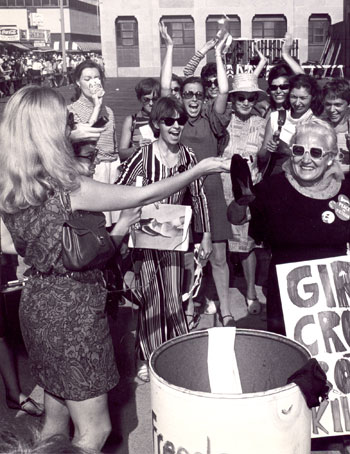
Bra-burning,” I point out in my mythbusting book Getting It Wrong, was scarcely a common feature of feminist protests of the 1960s and 1970s, stereotypes and popular narratives notwithstanding.

The enduring and popular notion of numerous, demonstrative bra-burnings–that female protestors in those days set their bras afire and twirled them over their heads–“is fanciful and highly exaggerated,” I write.

At most, women’s liberation demonstrators at Atlantic City in September 1968, briefly set bras and other items afire, an episode that may best be described as “bra-smoldering.”

At most, ‘bra-smoldering’

But there was no flamboyant bra-burning that day at Atlantic City, no fiery spectacle, no bonfire of bras. (See photo.) “Fire at most was a modest and fleeting aspect of the protest that day,” I write in Getting It Wrong.

Despite the thin evidentiary record, “bra-burning” lives on as a convenient if misleading shorthand phrase in “describing the upheaval of the 1960s and early 1970s,” as I note in Getting It Wrong. I  point out that “bra-burning” long has been “invoked as a defining phrase, or cliché, of those troubled times—as in ‘the era of bra-burning,’ ‘the hysteria of bra-burning,’ the time of ‘raucous bra burning,'” and the like.

To those misleading turns of phrase, Sarah Palin, the 2008 Republican vice presidential candidate and former governor of Alaska, adds “1960s-era bra-burning militancy.”

The phrase appears in America By Heart: Reflections on Family, Faith, and Flag, Palin’s second book, which came out yesterday.

Palin offers up “bra-burning militancy” in writing:

“Remember Hillary Clinton’s famous rant, when her husband was running for president, that she wasn’t, in her words, ‘some little woman standing by my man like Tammy Wynette’? Hillary … came across then as someone frozen in an attitude of 1960s-era bra-burning militancy. She told us in no uncertain terms that she ‘could have stayed and baked cookies and had teas’ but preferred to pursue a serious career.”

The passage has attracted some comment–for its jab at Clinton, not for its historically incorrect reference to “bra-burning militancy.”

It’s regrettable, and more than a little unfair, that a misnomer like flamboyant “bra-burning” is so casually invoked in characterizing the 1960s and 1970s.

It’s unfortunate, too: Those turbulent times are prone to mythical treatment as it is–the mythical “Cronkite Moment” of 1968 and the heroic-journalist meme of the Watergate scandal both figure in Getting It Wrong.

But there’s no denying the perverse appeal of the term. It trips off the tongue in a blithe, faintly sneering sort of way: “Bra-burning.”

Stereotyping can be a hazard of media-driven myths, and there’s also no denying that stereotype is embedded in the phrase.

“Bra burning,” I write in Getting It Wrong, “has long been an off-hand way of ridiculing feminists and mocking their sometimes-militant efforts to confront gender-based discrimination in the home and the work place. Characterizations such as ‘bra-burning feminists,’ ‘the bra-burning women’s movement,’ ‘loud-mouthed, bra-burning, men-hating feminists,’ and ‘a 1960s bra-burning feminist’ have had currency for years.”

In its passage mentioning “bra-burning,” Palin’s book casually, almost off-handedly, serves to reinforce the stereotype.

WJC

Recent and related:

“Bra burning” also has long been an off-hand way of ridiculing feminists and mocking their sometimes-militant efforts to confront gender-based discrimination in the home and the work place. Characterizations such as “bra-burning feminists,”[i] “the bra-burning women’s movement,” “loud-mouthed, bra-burning, men-hating feminists,” and “a 1960s bra-burning feminist” have had currency for years.


[i] Tony Chamberlain, “Berman’s A Women’s Movement Unto Herself with Three Official Wins,” Boston Globe (16 April 2006): C1.

Jimmy Carter fumbles Watergate history

In Debunking, Media myths, Washington Post, Watergate myth on November 23, 2010 at 6:28 am

Former President Jimmy Carter went on CNN’s Reliable Sources the other day to plug his new book and offered up the heroic-journalist myth of the Watergate scandal.

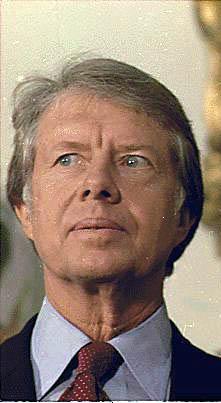
Carter (1980 photo)

The heroic-journalist meme, which has become the scandal’s dominant popular narrative, maintains Washington Post reporters Bob Woodward and Carl Bernstein, in their dogged coverage, brought down the corrupt presidency of Richard Nixon.

Carter invoked this media myth in response to a fairly pointed question from the show’s host, Howard Kurtz, about whether the former president felt “the press had it for you.”

Carter in reply referred to his term in office and said:

“I came in at a time when the press was in the post-Watergate period, and when two reporters in the Washington Post had become famous because they had revealed some secrets that had brought down the Nixon administration. And when I got there, shortly thereafter, I think a lot of the reporters were looking for something within my administration that might be scandalous or put them in the headlines as very notable investigative reporters.”

Hmm. “Brought down the Nixon administration.”

As notable as the reporting of Woodward and Bernstein may have been, it didn’t bring down the Nixon administration.

As I point out in my latest book, Getting It Wrong, the work of Woodward and Bernstein was at best marginal to Watergate’s outcome–the resignation of Nixon in 1974 and the eventual jailing of nearly 20 of his top aides and reelection campaign officials.

“To roll up a scandal of such dimension,” I note in Getting It Wrong, “required the collective if not always the coordinated forces of special prosecutors, federal judges, both houses of Congress, the Supreme Court, as well as the Justice Department and the FBI.”

Even then, I add:

“Nixon likely would have served out his term if not for the audiotape recordings he secretly made of most conversations in the Oval Office of the White House. Only when compelled by the Supreme Court did Nixon surrender those recordings, which captured him plotting the cover-up and authorizing payments of thousands of dollars in hush money.”

I further point out in Getting It Wrong that the heroic-journalist interpretation of Watergate “has become the most familiar storyline” of the scandal, because it is such an effective “proxy for grasping the scandal’s essence while avoiding its forbidding complexity.”

But to indulge in the heroic-journalist interpretation, I write, “is to abridge and misunderstand the scandal and to indulge in a particularly beguiling media-driven myth.

“The heroic-journalist interpretation minimizes the far more decisive forces that unraveled the scandal and forced Nixon from office.”

As Carter’s comment suggests, though, the heroic-journalist trope offers an accessible and simplistic explanation for a sprawling scandal that unfolded many years ago.

It’s interesting to note that Woodward and Bernstein’s reporting–for which they won the Pulitzer Prize for public service in 1973–never disclosed the key “secrets” of the scandal.

They did not disclose the hush-money payments made in an attempt to cover up the seminal crime of Watergate, the break-in at Democratic party offices in June 1972. Nor did they disclose the existence of the taping system that Nixon had installed to record most of his conversations in the Oval Office.

So it’s really not clear what Carter had in mind in asserting that the Post reporters “revealed some secrets that … brought down the Nixon administration.”

Interestingly, Kurtz did not challenge Carter on that point. Kurtz formerly was the media writer for the Post who, in 2005, pointedly disputed the heroic-journalism myth of Watergate.

He wrote in a column for the Post:

“Despite the mythology, The Post didn’t force Richard Nixon from office—there were also two special prosecutors, a determined judge, bipartisan House and Senate committees, the belated honesty of [White House counsel] John Dean and those infamous White House tapes.”

That’s a fine summary of the forces that truly did bring down Nixon’s presidency.

WJC

‘Mired in stalemate’? How unoriginal of Cronkite

In Cronkite Moment, Debunking, Media myths, New York Times on November 22, 2010 at 12:57 pm

So unoriginal.

Hardly exceptional.

Those are ways to characterize Walter Cronkite’s famous assessment–offered in a special televised report in February 1968–that the U.S. war effort in Vietnam was “mired in stalemate.”

Cronkite’s characterization supposedly represented a moment of such stunning clarity and insight that it forced President Lyndon Johnson to realize his war policy was a shambles.

“If I’ve lost Cronkite,” Johnson supposedly said to an aide or aides after seeing the special report, “I’ve lost Middle America.”

Or words to that effect.

And a month later, Johnson announced he was not running for election–a decision often linked, if erroneously, to Cronkite’s “mired in stalemate” analysis about Vietnam.

I dispute the power and impact of the so-called “Cronkite Moment” in my latest book, Getting It Wrong, which addresses and debunks 10 prominent media-driven myths. I point out that Johnson didn’t even see the Cronkite program when it aired on CBS on February 27, 1968.

I further note in Getting It Wrong that “stalemate” had been invoked  months before the “Cronkite Moment” to describe the war in Vietnam. Notably, the New York Times published a front-page analysis on August 7, 1967, that declared “the war is not going well. Victory is not close at hand.”

The Times report was published on its front page beneath the headline:

Vietnam: The Signs of Stalemate.

And that wasn’t only occasion in 1967 and early 1968 when the Times turned to “stalemate” to characterize the war.

A review of database articles reveals that “stalemate” was raised not infrequently, and that the Johnson administration disputed the characterization.

And all this was months before the supposed insight offered by Cronkite.

For example, in a news analysis published July 4, 1967, the Times said of the war effort:

“Many officers believe that despite the commitment of 466,000 United States troops now in South Vietnam … the military situation there has developed into a virtual stalemate.”

The Times report of August 7, 1967, which was filed from Saigon, elaborated on that view and included this observation:

“‘Stalemate’ is a fighting word in Washington. President Johnson rejects it as a description of the situation in Vietnam. But it is the word used by almost all Americans here, except the top officials, to characterize what is happening. They use the word for many reasons ….”

Johnson was confronted with that “fighting word” during a news conference August 18, 1967. He was asked whether “we have reached a stalemate in the Vietnam war.”

The president gave a rambling answer, but ended up rejecting the characterization of stalemate as “nothing more than propaganda.”

Johnson also said, apparently in reference to the communist North Vietnamese and their Viet Cong allies: “I think that our–there are those who are taking a pretty tough drubbing out there that would like for our folks to believe there’s a stalemate.”

Moreover, four months before Cronkite’s report, the Times said in an editorial that the Johnson administration should embrace stalemate in Vietnam as a way of enabling peace talks and a negotiated settlement of the war.

The logic was intriguing if not entirely persuasive. Here’s what the Times said in that editorial, published October 29, 1967:

“Instead of denying a stalemate in Vietnam, Washington should be boasting that it has imposed a stalemate, for that is the prerequisite–on both sides–to a negotiated settlement. That settlement, if it is to be achieved, will have to be pursued with the same ingenuity and determination that have been applied to fighting the war.”

Three months later, the Times anticipated Cronkite’s “mired in stalemate” commentary, stating in an editorial published February 8, 1968:

“Politically as well as militarily, stalemate increasingly appears as the unavoidable outcome of the Vietnam struggle.”

Cronkite said in wrapping up his special report on February 27, 1968:

“To say that we are mired in stalemate seems the only realistic, yet unsatisfactory, conclusion.”

So why does all this matter? Why is it important to trace the use of “stalemate” to describe a long-ago war?

Doing so demonstrates how unexceptional Cronkite’s commentary was. And how middling it was, too. It’s scarcely the stuff of dramatic insight, scarcely the sort of comments that would have decisive effect.

Tracing the use of “stalemate” also serves to underscore the inconsequential nature of the purported “Cronkite Moment, which nonetheless remains among the hardiest myths of American journalism.

WJC

Recent and related:

Newsman tells ‘a simple truth,’ changes history: Sure, he did

In Cronkite Moment, Debunking, Media myths on November 21, 2010 at 2:42 pm

Media-driven myths, I write in my latest book, Getting It Wrong,  “tend to minimize or negate complexity in historical events and offer simplistic and misleading interpretations instead.”

Cronkite

So it is with the mythical “Cronkite Moment,” one of the most tenacious myths of American journalism.

An important reason for the myth’s hardiness is that it presents a simplified version of a supposed turning point in the long political career of President Lyndon Johnson.

The “Cronkite Moment” has it that CBS News anchorman Walter Cronkite told truth to power in reporting that the U.S. military was “mired in stalemate” in Vietnam.

Supposedly, Johnson watched Cronkite’s special report on Vietnam, which aired February 27, 1968. Upon hearing the anchorman’s “mired in stalemate” assessment, the president switched off the television set and told an aide or aides:

“If I’ve lost Cronkite, I’ve lost Middle America.”

Or something to that effect.

A blogger at CapeCodToday.com recounted the familiar and delicious tale of the “Cronkite Moment” yesterday, writing:

“President Lyndon Johnson is reported to have said … after hearing Cronkite’s report, ‘If I’ve lost Cronkite, I’ve lost middle America.’ Not long after that, LBJ stepped down from office, refusing to run for a second term.

“A news person had told a simple truth, and it had helped change history.”

Of course Cronkite’s report on Vietnam had no such effect on history.

There is quite simply no link between the “Cronkite Moment” and Johnson’s decision–announced at the end of March 1968–not to stand for reelection that year.

None.

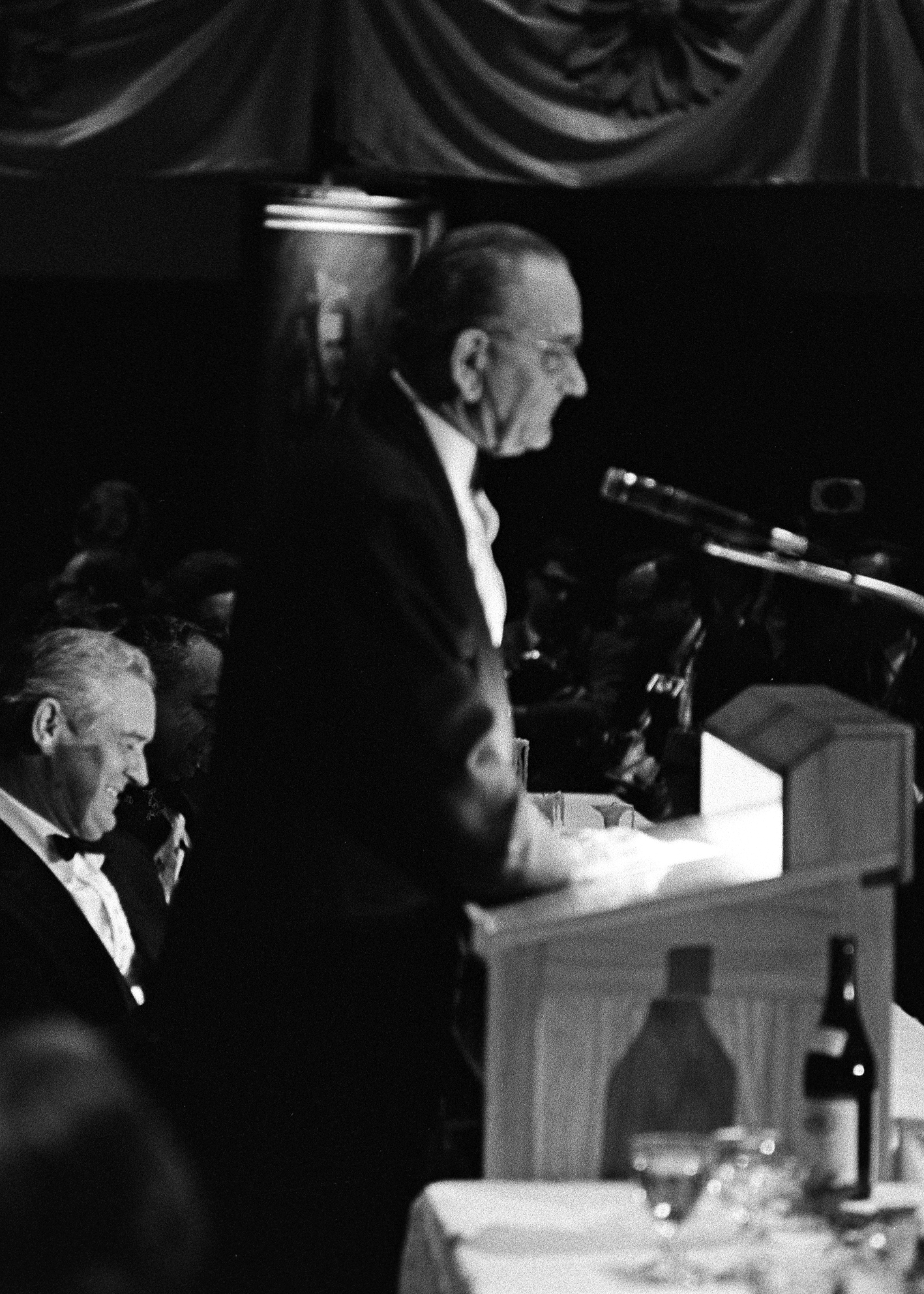
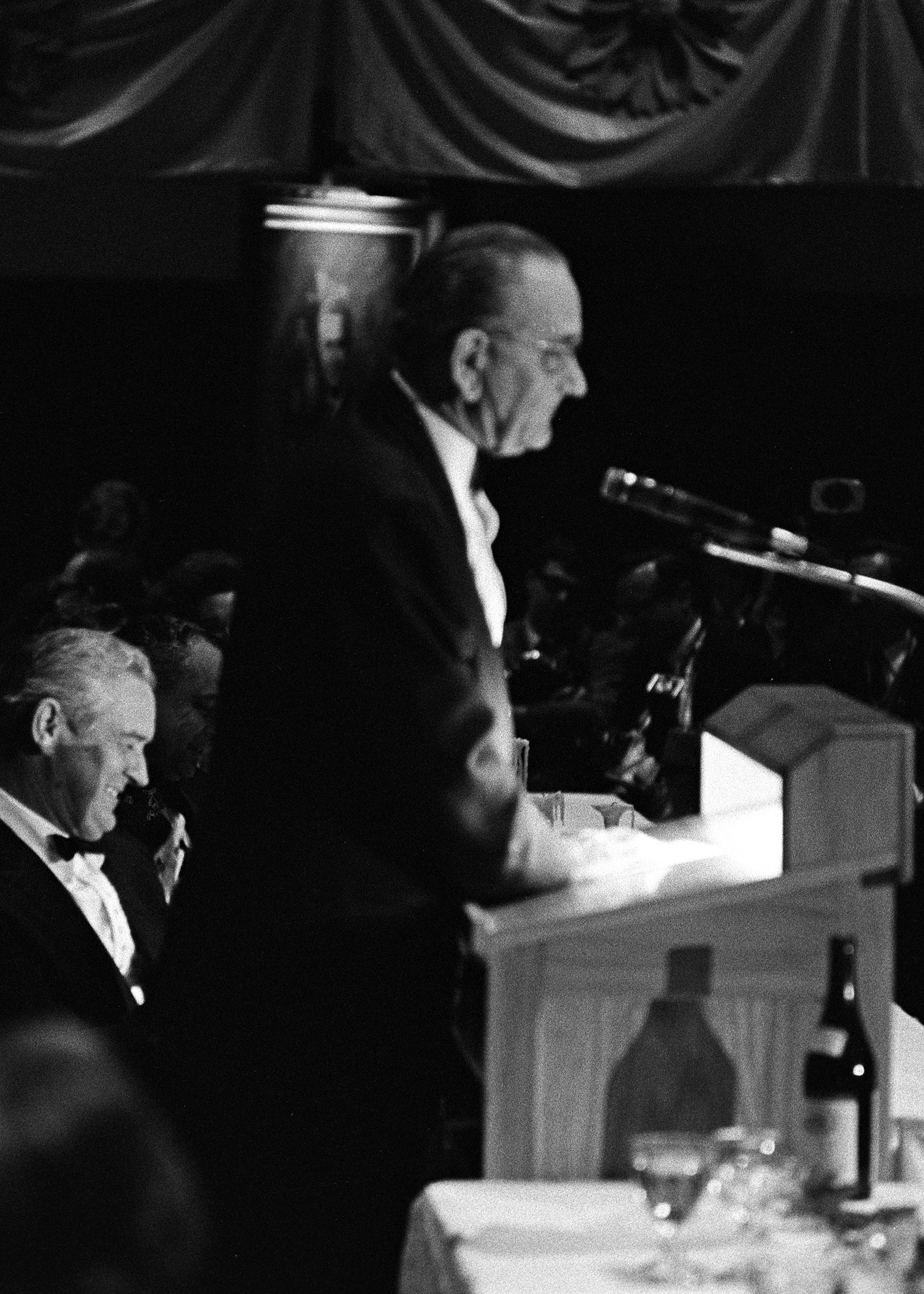
LBJ at moment of 'Cronkite Moment': Telling a joke

For starters, Johnson did not see the Cronkite report when it aired.

As I note in Getting It Wrong, the president at the time was in Austin, Texas, attending the 51st birthday party of Governor John Connally, a longtime political ally.

At about the moment Cronkite was intoning his “mired in stalemate” interpretation, Johnson was offering light-hearted banter about Connally’s age, saying:

“Today you are 51, John. That is the magic number that every man of politics prays for—a simple majority.”

So at the time of the purported “Cronkite Moment,” Johnson wasn’t agonizing about having lost Cronkite’s support; he wasn’t overcome with angst about the war effort in Vietnam.

Johnson was telling a joke.

And it’s hard to argue that the president could have been much moved by a television report that he didn’t see.

Not only that, but Johnson may have decided in 1967 or even earlier not to stand for reelection in 1968. He wrote in his memoir, The Vantage Point: “Long before I settled on the proper forum to make my announcement, I had told a number of people of my intention not to run again.”

Given those factors, Cronkite’s show at the end of February 1968 recedes into trivial insignificance as a reason for Johnson’s decision–announced a month later–not to stand for reelection.

It certainly is an appealing notion that a newsman such as Cronkite could tell “a simple truth” and, by doing so, help change history.

But such a notion is more often the recipe for a media-driven myth than it is the foundation of historical accuracy.

WJC

Recent and related:

‘When I lost Cronkite’–or ‘something to that effect’

In Cronkite Moment, Debunking, Media myths, Reviews on November 20, 2010 at 9:46 am

I discuss in my mythbusting book Getting It Wrong how accounts vary widely as to what President Lyndon Johnson purportedly said in reacting to Walter Cronkite’s on-air commentary in 1968 that the U.S. military effort in Vietnam was “mired in stalemate.”

Acute version variability has taken hold over the years and, as suggested by a theatrical review in yesterday’s Washington Times, fresh versions as to what Johnson said keep popping up.

Many published accounts have said Johnson’s reaction was: “If I’ve lost Cronkite, I’ve lost the country.”

Other accounts quote the president as saying: “If I’ve lost Cronkite, I’ve lost the American people.”

Or: “If I’ve lost Cronkite, I’ve lost the war.”

Or: “If we lose Cronkite, we lose America.”

The most common published version probably is: “If I lost Cronkite, I’ve lost Middle America.” It’s the version Cronkite included in his 1997 memoir, A Reporter’s Life.

In any case, version variability of such magnitude, I write in Getting It Wrong, signals more than laziness and reluctance to trace the derivation of a popular anecdote. The shifting versions of what Johnson supposedly said are an indicator the Cronkite-Johnson anecdote is bogus, a marker of a media-driven myth.

After all, the remarks and utterances of the president of the United States are among the most carefully chronicled. The many inconsistent accounts of Johnson’s remarks are akin to the effects of a tall tale that changes with frequent retelling.

The latest version of Johnson purported response appeared in the Washington Times review of a comedy titled Walter Cronkite Is Dead, which recently opened at the Signature Theatre in Arlington, Virginia, in suburban Washington, D.C.

The play isn’t much about Cronkite, the former CBS News anchorman who died 16 months ago. But the reviewer carries on about Cronkite at some length, and indulges in media myth in writing:

“Walter was regarded as the Gospel when it came to reporting the Vietnam War and his reports were instrumental in turning around the nation’s support for that war.

“Lyndon Johnson was reputed to have said of his own prospects, ‘When I lost Cronkite, I lost the election,’ or something to that effect. Not long after his observation, the beleaguered president dropped out of the 1968 electoral contest.”

Let’s consider the passages in bold: Both are dubious claims.

First, the notion that Cronkite’s views on the war in Vietnam “were instrumental” in altering public opinion.

As I discuss in Getting It Wrong, American public opinion had begun shifting against the war months before Cronkite offered his “mired in stalemate” assessment in special report that aired February 27, 1968.

By October 1967, 47 percent of Americans, a plurality, maintained that U.S. military presence in Vietnam was a mistake, according to Gallup surveys.

In a Gallup poll completed in early February 1968, three weeks before the Cronkite special report, the proportion saying the war was a mistake stood at 46 percent. Forty-two percent said it had not been a mistake.

As for the purported Johnson comment, “When I lost Cronkite, I lost the election”–it’s assuredly bogus. Johnson had stood in no election at the time of Cronkite’s commentary. The Democratic primary election in New Hampshire was a couple of weeks away, and Johnson would win as a write-in candidate.

More important, Johnson did not see the Cronkite program when it aired.

The president at the time was in Austin, Texas, attending the 51st birthday party of Governor John Connally, a longtime political ally.

Quite simply, Johnson could not have had “the abrupt yet resigned reaction that so often has been attributed to him,” as I write in Getting It Wrong. It’s illogical to argue he was much moved by a television report he hadn’t seen.

There is, moreover, no evidence Johnson later watched the Cronkite program on videotape.

And as I note in Getting It Wrong:

“The power of the ‘Cronkite moment’ resides in the sudden, unexpected, and decisive effect it supposedly had on the president. Such an effect would have been absent, or greatly diminished, had Johnson had seen the program on videotape at some later date.”

WJC

Recent and related:

Mythbusting at the Smithsonian

In Cronkite Moment, Debunking, Media myths, New York Times, War of the Worlds, Washington Post, Watergate myth on November 19, 2010 at 7:03 pm

A fine crowd was on hand last night for my book talk at the Smithsonian’s Ripley Center about media-driven myths.

The talk was part of the Smithsonian Resident Associates Program, which organized the event superbly well.

During the talk, I reviewed three of the 10 media myths debunked in my latest book, Getting It Wrong: the heroic-journalist myth that has become the most popular narrative of the Watergate scandal; the mythical  “Cronkite Moment” of 1968 that supposedly forced President Lyndon Johnson to realize the futility of the war effort in Vietnam, and The War of the Worlds radio dramatization in 1938 that purportedly pitched tens of thousands of Americans into panic and mass hysteria.

I also offered a few suggestions about identifying and sidestepping media myths, suggestions that included being skeptical about turns of phrase that just sound too neat and tidy–almost too good to be true. Another bit of advice was to apply logic and healthy skepticism to extravagant claims about the news media and their presumed influence.

Questions and comments from the audience of 170 or so people were especially thoughtful.

One comment was about the notion the famous New York City blackout in November 1965 was followed nine months later by an uptick in births–a linkage suggested in reports by the New York Times in August 1966. The Times quoted a sociologist as saying then:

“The lights went out and people were left to interact with each other.”

Though not addressed in Getting It Wrong, it is an intriguing topic, one that could be considered in a sequel about media myths, I said.

I added that the blackout tale sounded a lot like more recent speculation that the major snowstorms along the East Coast in December 2009 and February 2010 would give rise to an increase in live births nine months later. A blizzard baby boom, as it were.

That correlation may be mythical, though.

Still, the notion there is such a linkage isn’t entirely far-fetched. It rests on the cusp of plausibility–as do many media myths addressed in Getting It Wrong, I said.

I also noted during the Q-and-A session that media myths that have appeal across the political spectrum can be especially tenacious and enduring. They are tales, I said, that offer something for everyone.

The “crack baby” scare of the late 1980s and 1990s is an example of a media-driven narrative that offered something for everyone.

As I write in Getting It Wrong:

“The crack baby was a rare social issue that had appeal across the political spectrum—appeal that made the phenomenon especially powerful, compelling, notable, and tenacious. For conservatives, the specter of crack babies underscored the importance of imposing stiff penalties in the country’s war on drugs. And penalties were stiffened for crack possession during the second half of the 1980s. For liberals, meanwhile, crack babies represented an opportunity to press for costly assistance programs aimed at helping crack users and their children.”

“Crack babies” were children born to women who had taken cocaine during pregnancy, and many news reports and commentaries predicted an epidemic of crack-damaged misfits.

Among the more overheated predictions was that of conservative columnist Charles Krauthammer, who wrote in 1989:

“The inner-city crack epidemic is now giving birth to the newest horror: a bio-underclass, a generation of physically damaged cocaine babies whose biological inferiority is stamped at birth.”

Krauthammer likened the crack-induced “bio-underclass” to a “biologically determined underclass of the underclass.”

But it never happened.

The crack baby phenomenon turned out to be the epidemic that wasn’t, the product of over-the-top, anecdote-driven news reporting.

WJC

Recent and related:

Koppel goes on NPR, indulges in media myth

In Cronkite Moment, Debunking, Media myths, Murrow-McCarthy myth on November 18, 2010 at 6:19 am

Ted Koppel, the former host of ABC’s Nightline program, has been back in the public eye of late, following his smug but widely noted lament in the Washington Post about the partisanship of cable TV news.

Koppel (Wikicommons)

Koppel renewed his complaint in an interview the other day on NPR’s Talk of the Nation–during which he indulged in some of American journalism’s most alluring mythology.

Specifically, Koppel embraced the mythical “Cronkite Moment” of 1968 and saluted Edward R. Murrow’s legendary report about Senator Joseph McCarthy in 1954–much as Keith Olbermann, Koppel’s nemesis of late, did the other night on his MSNBC show, Countdown.

In the interview on Talk of the Nation, Koppel said one of the most memorable programs in Cronkite’s years as CBS News anchorman was “the piece that he did when he came back after a couple of weeks in Vietnam and of which President Johnson famously said, ‘If I’ve lost Walter Cronkite, I’ve lost the country.'”

As for Murrow, Koppel said that “what is most remembered about what Ed Murrow did is the extraordinary See It Now piece that he did on Joseph McCarthy.”

Let’s unpack both dubious claims.

Cronkite first.

As I write in my latest book, Getting It Wrong, President Lyndon Johnson “did not have—could not have had—the abrupt yet resigned reaction that so often has been attributed to him. That’s because Johnson did not see the [Cronkite] program when it was aired.”

And there’s no evidence he ever saw it on videotape, either.

As such, it’s quite difficult to make a case that Johnson was much moved by a program he didn’t see.

Cronkite closed his report on Vietnam, which aired February 27, 1968, with an editorial comment that the U.S. military effort  was “mired in stalemate” and that negotiations might eventually offer a way out.

Media myth has it that Johnson, at the White House, saw the Cronkite program and, upon hearing the anchorman’s “mired in stalemate” assessment, leaned over, snapped off the television set, and said to an aide or aides:

“If I’ve lost Cronkite, I’ve lost the country.”

Another, more common version quotes Johnson as saying, “If I’ve lost Cronkite, I’ve lost Middle America.”

There are other versions, too, of what the president supposedly said in reaction.

But Johnson wasn’t at the White House that night. He wasn’t in front of a television set, either.

Johnson at Austin

At the time Cronkite offered his downbeat commentary, Johnson was offering light-hearted banter in Austin, Texas, at the 51st birthday party of Governor John Connally.

The president wasn’t agonizing about his policy in Vietnam. He wasn’t wringing his hands about losing the country. He was teasing Connally about his age: “Today you are 51, John,” the president said. “That is the magic number that every man of politics prays for—a simple majority.”

What’s more, Cronkite’s “mired in stalemate” opinion was, by February 1968, neither exceptional nor stunning. Indeed, nearly seven months before Cronkite’s program, the  New York Times published a front-page report that cited “disinterested observers” as saying the war in Vietnam was “not going well.” Victory, the Times reported, “is not close at hand. It may be beyond reach.”

That analysis was published in August 1967, beneath the headline:

“Vietnam: The Signs of Stalemate.”

As for Murrow’s “extraordinary” show about McCarthy: It wasn’t all that extraordinary. It aired March 9, 1954–years after other journalists had begun scrutinizing the senator’s exaggerated claims and hard-ball tactics in campaigning against communists in government.

Long before the See It Now program,” I note in Getting It Wrong, “several prominent journalists—including the Washington-based syndicated columnist Drew Pearson—had become persistent and searching critics of McCarthy, his record, and his tactics.”

Some critics at the time pointed out that the See It Now program had offered nothing new about McCarthy.

“Murrow said nothing, and his cameras showed nothing, that this and some other newspapers have not been saying—and saying more strongly—for three or four years,” Jay Nelson Tuck, the New York Post’s television writer, wrote after the program. He was referring to the 17-part series on McCarthy that ran in the Post in 1951.

“The news” in Murrow’s program, Tuck added, “was in the fact that television was saying it at all.”

Murrow’s collaborator and co-producer, Fred W. Friendly, also rejected claims the See It Now program about Murrow was exceptional or decisive.

Friendly wrote in his memoir:

“To say that the Murrow broadcast of March 9, 1954, was the decisive blow against Senator McCarthy’s power is as inaccurate as it is to say that Joseph R. McCarthy … single-handedly gave birth to McCarthyism.”

Interestingly, a book that Murrow and Friendly compiled in 1955 about the best of the See It Now omitted the 1954 show on McCarthy, the one that Koppel claims was so “extraordinary.”

WJC

Recent and related:

Media history with Olbermann: Wrong and wrong

In Cronkite Moment, Debunking, Media myths, Murrow-McCarthy myth on November 17, 2010 at 7:15 am

MSNBC host Keith Olbermann invoked media history the other night in a blustering, on-air response to criticism by Ted Koppel, the former host of ABC’s Nightline, about hyperpartisanship on cable TV news.

Trouble is, Olbermann got it wrong in the two history lessons he cited–the mythical “Cronkite Moment” of 1968 and the Murrow-McCarthy encounter of 1954.

In both cases, Olbermann bought into tenacious media-driven myths.

The so-called “Cronkite Moment” came on February 27, 1968, when CBS News anchorman said in an on-air commentary that the U.S. war effort in Vietnam was “mired in stalemate” and suggested that negotiations might offer a way out of the morass.

Declared Olbermann: “All that newscast did was convince the 36th president of the United States to not seek reelection.”

It had no such effect.

The media-driven myth surrounding the “Cronkite Moment”–one of 10 media myths debunked in my latest book, Getting It Wrong–has it that Lyndon Johnson, the 36th president, saw the program and, upon hearing the anchorman’s commentary, told an aide or aides, “If I’ve lost Cronkite, I’ve lost Middle America.”

Or words to that effect.

But Johnson didn’t see the show when it aired. He was in Austin, Texas, at the time, offering light-hearted banter at the 51st birthday party of Governor John Connally, a longtime political ally.

The president couldn’t have been much moved by–or decided his political future on–a show he hadn’t seen. And there’s no evidence that he watched it on videotape at some later date.

Johnson announced at the end of March 1968 that he would not seek reelection. It was a stunning development–but the Cronkite show had nothing to do with the president’s decision.

Johnson’s announcement came a couple of weeks after his surprisingly poor showing as a write-in candidate in the Democratic primary in New Hampshire. The president won the primary with 49 percent of the vote. But Senator Eugene McCarthy won 42 percent, an unexpectedly strong result.

Within days, Senator Robert F. Kennedy entered the race for the Democratic presidential nomination. So Johnson faced a brutal course to winning the party’s nomination, not to mention reelection.

Moreover, there’s strong evidence that Johnson never intended to seek another term, that in 1967, or even earlier, he had decided against another campaign for the presidency. (Johnson wrote in his memoir, The Vantage Point: “Long before I settled on the proper forum to make my announcement, I had told a number of people of my intention not to run again.”)

Given those factors, Cronkite’s show at the end of February 1968 recedes into trivial insignificance as a factor in Johnson’s decision not to stand for reelection.

Olbermann in his commentary referred to Edward R. Murrow as “a paragon of straight reporting” and claimed the American press “stood idly by” as Senator Joseph R. McCarthy pursued his communists-in-government witch-hunt.

But on March 9, 1954, on a 30-minute television show called See It Now, “Murrow slayed the dragon,” Olbermann declared.

But neither Murrow, nor his producer Fred Friendly, bought the dragon-slaying interpretation. (The latter wrote in his memoir, Due to Circumstances Beyond Our Control: “To say that the Murrow broadcast of March 9, 1954, was the decisive blow against Senator McCarthy’s power is as inaccurate as it is to say that Joseph R. McCarthy … single-handedly gave birth to McCarthyism.”)

And it’s quite clear that the American press did not stand “idly by” as the scourge of McCarthyism emerged.

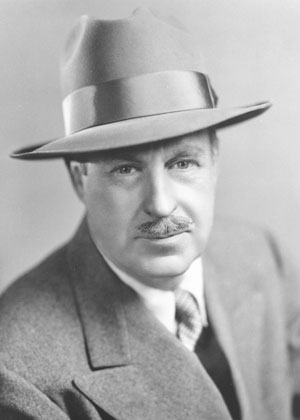
Drew Pearson

As I write in Getting It Wrong:

“Long before the See It Now program, several prominent journalists—including the Washington-based syndicated columnist Drew Pearson—had become persistent and searching critics of McCarthy, his record, and his tactics.”

Indeed, Pearson was McCarthy’s most relentless and implacable media foe during the senator’s witch-hunt.

In his widely read column, Pearson ridiculed McCarthy as the “harum-scarum” senator and dismissed his allegations “way off base.” And those characterizations came in February 1950–more than four years before Murrow’s See It Now show on McCarthy.

Pearson was unrelenting in his scrutiny of McCarthy, calling attention to the senator’s tax troubles in Wisconsin and to questionable payments McCarthy received from a government contractor.

McCarthy was so annoyed by Pearson’s probing that he threatened the columnist at a Gridiron Club dinner in Washington, D.C., in May 1950. On that occasion, McCarthy placed a hand on Pearson’s arm and muttered:

“Someday I’m going to get a hold of you and really break your arm….”

That was a prelude to a violent encounter in December 1950, when McCarthy cornered Pearson in the cloakroom of the hush-hush Sulgrave Club in Washington and either kneed the columnist in the groin or slapped him hard across the face.

So, no, the press didn’t stand “idly by” in face of the McCarthy menace.

As I write in Getting It Wrong, by March 1954 Americans weren’t “waiting for a white knight like Murrow to tell them about the toxic threat the senator posed.”

They already knew, from the work of Pearson and others.

And Pearson took on McCarthy when doing was not risk-free.

WJC

Recent and related:

Cinematic treatments can solidify media myths

In Cinematic treatments, Cronkite Moment, Debunking, Media myths, Murrow-McCarthy myth, Newspapers, Washington Post, Watergate myth on November 14, 2010 at 7:12 am

In this, the last of three installments drawn from an interview with Newsbusters about Getting It Wrong, the discussion turns to whether new media are effective in thwarting the spread of media-driven myths.

I express doubts about that prospect.

The Newsbusters interview was conducted by Lachlan Markay, who described Getting It Wrong as “exhaustively researched and painstakingly even-handed.” The interview transcript is accessible here.

NEWSBUSTERS: Looking forward, do new media present an opportunity to debunk these myths, before they get started?

CAMPBELL: You would think that it would, and I think there has been some evidence that that’s the case, but then there are other myths that just seem to defy debunking newer myths.

Jack Shafer at Slate.com has done some interesting work in looking at the so-called … “pharm parties” in which young people would raid their medicine cabinets of their parents and just take whatever medication they could find, bring them to a party, and then dump them in a communal bowl, and sort of play Russian roulette with these drugs–by the handful take them, and see what kind of effect that they have.

And it seems to be an urban legend that’s just taken hold, and it’s appeared in newspapers, periodically, around the country–San Francisco to DC–and there seems to be no evidence to support this other than the notion that police have heard that this kind of stuff goes on. And Shafer’s written a number of columns at Slate that insist that no one has ever seen this happen, no one has ever attended a pharm party, there’s never been any kind of first person documentation.

And yet, the story is too good not to be true, and it lives on.

So you would think that the Internet would have been more effective by now in knocking down that kind of story. It hasn’t.

NB: So these myths, then, get started because newspapers have disregarded their own–or not just newspapers, but any media has disregarded its own standards of journalism.

CAMPBELL: You could see that in some cases, yeah, I suppose that’s true. [But] I don’t think they’re going at this whole hog and saying, we’re just going to forget about our standards and go at this story just because it sounds so good.

NB: Or, put differently, if those standards were followed to a T, some of these myths might never have taken shape.

CAMPBELL: Yeah, that’s probably true.

NB: A lot of these myths are ingrained in our culture. They’re part of American history, included in textbooks. The Woodward and Bernstein example comes to mind. You have movies, for instance, All the President’sMen , or Good Night, and Good Luck with Edward R. Murrow–does pop culture, or culture in general, play a larger part in perpetuating these myths? Is this something that journalists create on their own, or is it out of their hands and American culture sees these magnificent stories, and sort of adopts them as their own?

CAMPBELL: I think the dynamic that leads to the solidification of media myths is a very interesting one. It’s kind of complex, but I think that some of the points that you’ve mentioned are very central to that process of solidifying a myth–sort of the national consciousness. Cinema does a very good job of doing that.

Cinematic treatments help solidify in the minds of people the supposed reality of some of these exchanges, of some of these encounters, of some of these moments.

…. the cinematic treatment of Woodward and Bernstein in All the President’s Men I think really helped solidify the notion that those two guys were central to bringing down Richard Nixon. In fact, the movie, as clever and well-done as it is, leads to no other interpretation but that. It had to be those guys. …

As a nation we do tend to remember things cinematically. I’m not the first one to say that. Others have looked at it more closely than I have and have made that determination. It’s a fair statement. Good Night, and Good Luck introduced a whole new generation of Americans to the notion that Edward R. Murrow was the one who did in Joe McCarthy, with his 30-minute television program.

NB: Do you have students who come in and say, “I saw Good Night and Good Luck and it inspired me to pursue a career in journalism”?

CAMPBELL: You know, I haven’t heard it said quite that way. But they do think that that movie is well done.

NB: The romanticism of journalism appeals to the students.

CAMPBELL: Exactly. And more students have seen All the President’s Men than have read the book, by far. … But cinema really is a factor that propels and solidifies these myths.

End of part three