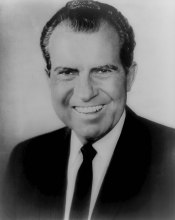
We need not take Bob Woodward’s word for it: The murky Trump-Russia suspicions are still far, far from the constitutional crisis that was Watergate, the scandal that took down Richard Nixon’s corrupt presidency and sent some 20 of his associates to jail.
Saturday Night Massacre
Even so, exaggerated claims have flourished in the days since President Donald Trump sacked the preening FBI director, James Comey.
Firing Comey was reminiscent — vaguely — of Nixon’s Saturday Night Massacre in October 1973, when the top two Justice Department officials resigned rather than carry out the president’s order to dismiss Archibald Cox, the Watergate special prosecutor.
A persuasive case can be made that Comey, unlike Cox, merited dismissal. But Trump’s conduct was puzzling nonetheless: What better way to encourage Trump-Russia suspicions than to fire the head of an agency investigating those suspicions?
Still, the Trump-Russia matter differs from Nixon-Watergate in significant respects, not all of which are well-recognized.
For starters, Watergate originated with a crime — a thwarted burglary in June 1972 at the headquarters of the Democratic National Committee. Arrested in the break-in were five men linked to Nixon’s reelection campaign, including the security coordinator.
But the centerpiece crime in Trump-Russia? No one can say. As Jonathan Turley, a law professor at George Washington University, said the other night: “No one has yet to explain to me what the core crime that would be investigated with regards to Russian influence.”
More than six months after the election, it remains unclear what Trump’s campaign did — if anything — to collude with Russian operatives.
And it’s unlikely that Russian interference would have been decisive in tipping the election to Trump. The inept, highly centralized campaign run by Democratic nominee Hillary Clinton effectively accomplished that. Trump was the beneficiary of Clinton’s flawed candidacy.
It’s also important to recognize that although Watergate’s outcome may seem now to have been inevitable, bringing about Nixon’s resignation was rather a close call.
Nixon resigned after the Supreme Court compelled him to surrender telltale audio tapes that he had secretly made of many of his conversations at the White House. (Woodward, himself, said last week: “The Supreme Court forced Nixon to turn those [tapes] over and that ended the reign.”)
As I point out in my media-mythbusting book, Getting It Wrong (an expanded second edition of which is out now), absent the audiotapes “Nixon likely would have served out his term.” The tapes were key. They were compelling evidence that captured him, in his own words, approving a scheme to sidetrack the FBI’s investigation of the Watergate burglary.
It is, moreover, important to keep in mind the sui generis character of Watergate. The scandal was sweeping; it went to the heart of America’s political and constitutional system, as Stanley I. Kutler, Watergate’s leading historian, noted. Its reach and implications were exceptional, and they will be difficult, perhaps impossible, to duplicate.
“Overstated” hardly suffices in describing the media’s eagerness to find in President Donald Trump’s odd affinity for Russia parallels or echoes that bring to mind Richard Nixon and the Watergate scandal.
Such stuff is overstated. Premature. Facile. And ahistoric.
Even if they are vague and remote, Trump-Russia parallels to Nixon-Watergate are delectable to hyperventilating anti-Trump commentators. But of course no evidence has emerged that Trump or his administration have been corrupted by Russia, or that they are under the influence of Russia’s thuggish leader, Vladimir Putin.
Casually invoking such parallels is to ignore and diminish Watergate’s exceptionality. Watergate was a constitutional crisis of unique dimension in which some 20 men, associated either with Nixon’s administration or his reelection campaign in 1972, went to prison.
Watergate’s dénouement — Nixon’s resignation in August 1974 — was driven not by dogged reporting of the Washington Post but by Nixon’s self-destructive decision to tape-record conversations at the White House. Thousands of hours of audiotape recordings were secretly made, from February 1971 to July 1973.
“To roll up a scandal of such dimension [as Watergate] required the collective if not always the coordinated forces of special prosecutors, federal judges, both houses of Congress, and the Supreme Court, as well as the Justice Department and the FBI.
“Even then,” I write, Nixon likely would have served out his term if not for the audiotape recordings he secretly made of most conversations in the Oval Office of the White House.”
Those recordings were crucial. They provided unambiguous evidence that Nixon conspired to obstruct justice by approving a plan to divert the FBI from its investigation into the seminal crime of Watergate — the burglary in June 1972 at the headquarters of the Democratic National Committee in Washington, D.C.
Without the tapes, Nixon likely would have served out his second presidential term. He would have been bloodied and weakened by Watergate, but his presidency likely would have survived the scandal.
That, too, was the assessment of Watergate’s leading historian, Stanley Kutler, who died last year. In the final analysis, Kutler observed, Nixon “was primarily responsible” for bringing down Nixon, given the tell-tale tapes.
“Absent the tapes, Nixon walks,” Kutler said. “You had to have that kind of corroborative evidence to nail the president of the United States.”
Other figures, including John Dean, White House counsel to Nixon as Watergate unfolded, have reached similar conclusions.
Not only were the White House tapes essential, but unseating Nixon, a Republican, also required a Democratic-controlled Congress to pursue investigations of the administration and the tentacles of Watergate. Likewise, it took a Republican-controlled Congress to impeach Bill Clinton, a Democrat, in 1998 for perjury and obstruction of justice.
It would take a good deal more than vague associations for a Republican-controlled Congress to consider launching an impeachment inquiry of Trump, and that reality renders Trump-Russia and Nixon-Watergate comparisons even more distant and improbable.
Of course, Trump, himself, has invoked Nixon and Watergate. He did so yesterday, claiming on Twitter that his predecessor, Barack Obama, wiretapped Trump Tower in New York City. Trump offered no evidence to support the claim, which stands as yet another example of how Nixon-Watergate parallels are invoked with imprecision.
How low has President Obama gone to tapp my phones during the very sacred election process. This is Nixon/Watergate. Bad (or sick) guy!
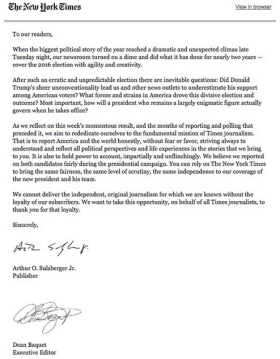
Amid the media’s self-flagellation and agonized introspection in the days since Donald Trump’s stunning election victory — days that brought such astonishing turns as the New York Times all but begging subscribers not to quit the newspaper — I have thought often of an ombudsman’s column published eight years ago, soon after Barack Obama won the presidency.
NYTimes letter to subscribers
The ombudsman, or in-house critic, was Deborah Howell of the Washington Post, who wrote:
“I’ll bet that most Post journalists voted for Obama. I did. There are centrists at The Post as well. But the conservatives I know here feel so outnumbered that they don’t even want to be quoted by name in a memo.”
The column stuck with me not only because of Howell’s evident candor in describing conservatives in the newsroom — you could almost see them cowering — but because viewpoint diversity remains largely elusive in mainstream American journalism.
Howell was right in 2008, and her analysis rings true today: Leading U.S. news outlets have done little to address a failing that has been evident for years.
As John Kass, a conservative columnist for the Chicago Tribune wrote recently, “It’s no secret that most of American journalism is liberal in its politics. The diversity they prize has nothing to do with diversity of thought.”
The viewpoint-diversity deficit was highlighted anew in Trump’s electoral victory over Democratic nominee Hillary Clinton, an outcome that gave journalists what Joshua Benton of the Nieman Journalism Lab called “the shock of their professional lives.”
The shock was of 1948 proportions, the year when President Harry S. Truman defied broad expectations that he would handily lose the election to Republican Thomas Dewey. This year, as Nate Silver of the FiveThirtyEight data blog observed, “most campaign coverage was premised on the idea that Clinton was all but certain to become the next president.”
The outcome revealed how inadequately journalists had prepared their audiences for a Trump victory.
Granted, the viewpoint-diversity deficit in leading American newsrooms hasn’t been much measured. As I note in my media mythbusting book, Getting It Wrong— an expanded second edition of which came out late last month — a survey in 2008 for the Washington-based Committee of Concerned Journalists found that 8 percent of national correspondents for U.S. news media considered themselves “conservative.” The overwhelming majority self-reported as “moderate” or “liberal.”
That such surveys have been rare is hardly reason to pretend the deficit is imaginary. Or that it can be justified by arguing, “Well, conservatives have Fox News,” the cable outlet.
Few media self-critiques following Trump’s victory were as brutally discerning — or as revealing of the viewpoint-diversity deficit — as the essay Will Rahn wrote for CBS News.
Rahn, managing director of political coverage for CBS News Digital, did not refer specifically to viewpoint diversity in his essay. But he said as much, writing:
“Journalists love mocking Trump supporters. We insult their appearances. We dismiss them as racists and sexists. We emote on Twitter about how this or that comment or policy makes us feel one way or the other, and yet we reject their feelings as invalid. It’s a profound failure of empathy in the service of endless posturing.”
Rahn further wrote of journalists:
“We must become more impartial, not less so. We have to abandon our easy culture of tantrums and recrimination. We have to stop writing these know-it-all, 140-character sermons on social media and admit that, as a class, journalists have a shamefully limited understanding of the country we cover. … There’s a fleeting fun to gang-ups and groupthink. But it’s not worth what we are losing in the process.”
The periodic Wikileaks disclosures during the fall campaign that revealed fawning interactions of journalists and the Clinton campaign further confirmed that the deficit in viewpoint diversity is no evanescent problem.
And it’s not of recent vintage.
Howell’s column in 2008 quoted Tom Rosenstiel, then the director of the Washington-based Project for Excellence in Journalism as saying that “conservatives are right that journalism has too many liberals and not enough conservatives. It’s inconceivable that that is irrelevant.”
Rosenstiel added: “More conservatives in newsrooms will bring about better journalism.”
In this year’s election, journalists openly challenged or flouted professional norms of impartiality and detachment in reporting, saying the incendiary character of Trump’s views and remarks was so egregious that they were left with no choice.
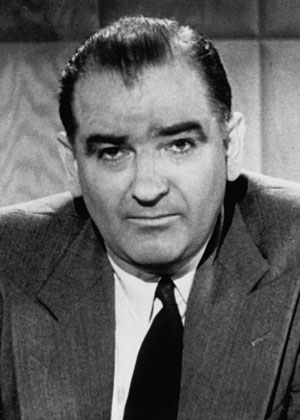
Columbia Journalism Review fairly rejoiced in what it saw as a latter-day “Murrow Moment” for journalists, a reference to the mythical 1954 television program when Edward R. Murrow took on the red-baiting Republican senator, Joseph R. McCarthy.
The journalism review said “we … are witnessing a change from existing practice of steadfast detachment, and the context in which journalists are reacting is not unlike that of Murrow: The candidate’s comments fall outside acceptable societal norms, and critical journalists are not alone in speaking up.”
Powerful stuff. Except that the “Murrow Moment” is a false precedent.
As I discuss in Getting It Wrong, Murrow took on McCarthy years after other journalists had directed pointed and sustained attention to the senator’s brutish tactics — and in some instances paid a price for having done so. McCarthy, I point out, had no more sustained or prominent critic in journalism than Drew Pearson of the nationally syndicated muckraking column, “Washington Merry-Go-Round.”
Pearson first challenged McCarthy in February 1950, shortly after the senator began a campaign against communists in government, and persisted in questioning the validity of McCarthy’s accusations. That was four years before Murrow’s program.
Not only that, but McCarthy’s favorability rating had hit the skids before Murrow’s program aired on March 9, 1954.
So the “Murrow Moment” can’t be considered a high moment in American journalism.
It looks something like 1948 for mainstream American news media today.
Donald Trump’s stunning victory in yesterday’s presidential election brought reminders of the embarrassment of 1948, when Thomas Dewey, the presumptive favorite for the presidency, was upset by President Harry S. Truman, much to the shock of the American press.
In the weeks and months before yesterday’s election, prominent media analysts predicted Trump was going to lose, and probably decisively, to Democratic nominee Hillary Clinton.
Notable among these misplaced predictions was that of Stuart Rothenberg, who wrote on August 9 at the Washington Post’sPowerPost blog:
“Three months from now, with the 2016 presidential election in the rearview mirror, we will look back and agree that the presidential election was over on Aug. 9th.
“Of course,” he added, “it is politically incorrect to say that the die is cast. …
“But a dispassionate examination of the data, combined with a coldblooded look at the candidates, the campaigns and presidential elections, produces only one possible conclusion: Hillary Clinton will defeat Donald Trump in November, and the margin isn’t likely to be as close as Barack Obama’s victory over Mitt Romney” in 2012.
Trump won at least 290 electoral votes yesterday; Clinton, at least 228. Four years ago, Obama defeated Romney by an electoral count of 332-206.
In another essay at PowerPost a few days before the election, Rothenberg asserted: “Partisan pollsters on both sides” agreed it was “very unlikely that Trump will sweep all of the toss-up states and pick off one or two Clinton-leaning states, which he would need to do to win.”
Trump essentially accomplished just that: He won toss-up states Florida, Iowa, North Carolina, and Ohio, and flipped Pennsylvania, and Wisconsin, both Democratic-leaning states where Clinton had been expected to win.
Misguided media predictions went well beyond Rothenberg’s projections.
In a column published October 11, David Brooks of the New York Times ruminated about what he called “the essential loneliness of Donald Trump” and declared:
“On Nov. 9, the day after Trump loses, there won’t be solidarity and howls of outrage. Everyone will just walk away.”
Nate Silver, founder and editor of the widely followed Five Thirty Eight data-blog, wrote on October 20, the day after the third and final presidential debate of the campaign:
“I’m not sure I need to tell you this, but Hillary Clinton is probably going to be the next president. It’s just a question of what ‘probably’ means.”
Referring to Trump’s deficit of some seven percentage points in public opinion polling at that time, Silver declared:
“There aren’t really any direct precedents for a candidate coming back from this far down to win an American presidential election, although you can make a few loose analogies. Harry Truman’s comeback over Thomas Dewey in 1948 almost works as a comparison, but Truman wasn’t coming from as far behind as Trump is, and there was much less polling in 1948.”
New York magazine election cover
The Washington Postreported on October 20 that Trump’s performance at the third debate, at which he declined to say whether he would accept the election result, touched off a “wave of apprehension and anguish [that] swept the Republican Party … with many GOP leaders alarmed by Donald Trump’s refusal to accept the outcome of the election and concluding that it is probably too late to salvage his flailing presidential campaign.”
Such eagerness to declare the election over prompted a rebuke from Howard Kurtz, an analyst and media reporter for Fox News.
“The tenor of the coverage certainly suggests that Donald Trump has no hope and Hillary Clinton is coasting to victory,” Kurtz wrote in a commentary posted October 24 at the Fox News site.
Many pundits, Kurtz noted, “are now portraying the billionaire’s plight as Mission Impossible.”
He added, presciently:
“I’m always more cautious than that. I’ve seen too many elections where a candidate bounced back after being written off, the polls were off, or some unexpected event moved the needle.”
Such a development came 11 days before the election, when FBI Director James Comey announced the reopening of the agency’s investigation into Clinton’s use of private email while she was secretary of state. But then, two days before the election, Comey said Clinton should face no criminal charges.
The media prize for excessive self-confidence has to go to New York magazine: Its election issue cover featured a photograph of an angry Trump, a taunting sneer, “LOSER,” emblazoned across his face. The issue’s publication date was October 31.
The cover today evokes the Chicago Tribune’s memorable and stunningly wrong front-page headline of November 3, 1948, which announced Dewey’s victory over Truman.
The hoary myth of Richard Nixon’s “secret plan” to end the war in Vietnam has surfaced with some frequency in recent days as commentators across the political spectrum stretch for parallels between Republican presidential nominee Donald Trump and the campaign Nixon ran in 1968.
These commentators — writing for such diverse sources as the New York Post, the NationalInterest, the Daily Beast, History News Network, among others — have referred to Nixon’s “secret plan” as if such a pledge figured in his run for the White House 48 years ago.
So of late, we’ve had the New York Postdeclaring flatly that Nixon in 1968 “ran against the Vietnam War by claiming he had a ‘secret plan’ to end it.” We’ve had the National Interest — in a commentary headlined, “Can Trump Follow Nixon to Victory?” — asserting that “Nixon said he had a ‘secret plan’ to end” the war.
We’ve had a political columnist writing in the Lowell Sun in Massachusetts that Nixon “said he had a secret plan to end the war in Vietnam — a war that was tearing the country apart.”
And we’ve had the History News Network, which seeks to place “current events into historical perspective,” stating that “Richard Nixon won the presidency, mainly based on his ‘secret plan’ to end the Vietnam War and his tough stance on law and order.”
What has encouraged those and other outsize references to Nixon’s “secret plan” has been Trump’s repeated if vague promise to wipe out ISIS, the radical Islamic terror organization that has seized portions of Syria and Iraq and has taken responsibility for murderous attacks in Europe and the United States. Trump, for example, declared in an interview that aired Sunday on 60 Minutes, “We’re going to declare war against ISIS. We have to wipe out ISIS.”
Trump offered few details on occasions he has spoken about ISIS — a vagueness that seemed redolent of candidate Nixon’s saying he had a “secret plan” for Vietnam.
But Nixon pointedly and publicly dismissed such a notion: In an article published March 28, 1968, in the Los Angeles Times, he was quoted as saying he had “no gimmicks or secret plans” for Vietnam.
“If I had any way to end the war,” Nixon was further quoted as saying, “I would pass it on to President [Lyndon] Johnson.” (Nixon’s remarks were made just days before Johnson announced he would not seek reelection.)
Now Nixon may or may not have had a “secret plan” in mind in 1968. But such a claim wasn’t a feature of his campaign. That becomes quite clear in reviewing the search results of a full-text database of leading U.S. newspapers in 1968, including the New York Times, Los Angeles Times, Baltimore Sun, Wall Street Journal, Washington Post, and Chicago Tribune.
The search terms “Nixon” and “secret plan” returned no articles during the period from January 1, 1967, to January 1, 1969, in which Nixon was quoted as saying he had a “secret plan” for Vietnam. (The search period included the months of Nixon’s presidential campaign and its aftermath.)
As I’ve noted several times at Media Myth Alert, if Nixon had campaigned in 1968 on a “secret plan” for Vietnam, the country’s leading newspapers certainly would have reported it.
The “secret plan” anecdote is likely derived from a speech Nixon made on March 5, 1968, in Hampton, New Hampshire, in which he declared that “new leadership” in Washington would “end the war” in Vietnam.
The wire service United Press International, in reporting on Nixon’s remarks, pointed out that the candidate “did not spell out how” he would “end the war.” The UPI account also noted that “Nixon’s promise recalled Dwight D. Eisenhower’s pledge in 1952, when Nixon was his running mate, to end the war in Korea.” Eisenhower was elected president that year.
A New York Times account of Nixon’s speech, published March 6, 1968, quoted the candidate as saying he “could promise ‘no push-button technique’ to end the war. Nixon also said he was not suggesting ‘withdrawal’ from Vietnam.” A brief follow-on report published in the Times that day quoted Nixon as saying he envisioned applying military pressure as well as diplomatic efforts in seeking to end the war.
A fine recent book about the tumultuous 1968 presidential election briefly takes up, and promptly dismisses, the “secret plan” claim.
“Though it is often claimed that Nixon spoke of a ‘secret plan’ to end the war, he never uttered those words. Even suggesting that he had a plan would have been too much for Nixon.”
Media Myth Alertcalled attention in 2015 to the appearance of prominent media-driven myths, including cases in which celebrities took up and repeated dubious tall tales about journalists and their work.
Here is a rundown of the blog’s five top posts of the year, followed by a roster of other notable mythbusting writeups of 2015.
The hoary old myth received a boost in April when, on the 152d anniversary of Hearst’s birth, the humorist and radio personality, Garrison Keillor, blithely invoked the unsubstantiated anecdote, which reinforces the superficial and misleading notion of Hearst as war-mongering newspaper publisher.
“In 1898,” Keillor told listeners of his “Writer’s Almanac” podcast that airs on NPR, “Hearst sent the artist Frederic Remington to Cuba to cover the war. And Remington wrote home, ‘There is no war. Request to be recalled.’
“And he was told, ‘You furnish the pictures, I’ll furnish the war.’ And the Hearst newspapers did their best to promulgate what came to be called the Spanish-American War.”
The tale is one of the best-known in American journalism, and it is almost certainly apocryphal, for reasons described in my 2010 media-mythbusting book, Getting It Wrong.
Keillor
Notably, the anecdote lives on despite the absence of supporting documentation: The telegraphed messages that Remington and Hearst supposedly exchanged have never turned up. And the Spanish authorities who controlled incoming and outbound telegraphic traffic in Cuba surely would have intercepted and called attention to Hearst’s incendiary message, had it been sent.
Moreover, the sole original source of the “furnish the war” anecdote, James Creelman, a portly, cigar-chomping journalist prone to hyperbole and exaggeration, never said how or where he learned about the purported Remingt0n-Hearst exchange.
And almost no one remembers that Hearst denied having sent such a message.
By the way, the transcript of Keillor’s remarks about Hearst and Remington remains posted at the “Writer’s Almanac” Web site. Uncorrected.
Peter Landesman, who is to produce and direct the film, was quoted last week as saying Felt will be akin to “a Shakespearean melodrama, a massively powerful story. It’s like a domestic spy thriller but there’s a very powerful, almost Shakespearean thing happening inside his home, but it will incorporate all those elements.”
But why is Mark Felt, who died in 2008, biopic worthy?
FBI agents who conducted the illegal break-ins went through “desks, closets, clothing and private papers for clues to the whereabouts of the Weathermen,” according to an account in the New York Times. “With a camera that could be concealed in an attaché case, the agents photographed diaries, love letters, address books and other documents” belonging to relatives of Weather radicals.
In 1980, Felt was convicted of felony charges related to those warrantless break-ins, which were known in the FBI as “black bag jobs.” He was fined $5,000 but not sentenced to prison for the crimes.
The following year, Felt received an unconditional pardon from President Ronald Reagan.
In its obituary about the former FBI official, the Los Angeles Times recalled that tears welled in Felt’s eyes as he acknowledged at trial having approved secret break-ins by FBI agents between May 1972 and May 1973 — “roughly the same time he was talking to Woodward about Watergate.”
Felt and co-defendant Edward S. Miller argued that the warrantless entries were justified for reasons of national security.
In doing so, Noonan tripped over the mythical “Cronkite Moment” of 1968.
Noonan
That “moment” was when CBS News anchorman Walter Cronkite declared on the air that the U.S. military effort in Vietnam was “mired in stalemate.” Cronkite’s assessment supposedly came as an epiphany to President Lyndon B. Johnson, who, in visceral reaction, said something to the effect of:
“If I’ve lost Cronkite, I’ve lost Middle America.”
But as I discussed in Getting It Wrong, Johnson did not see Cronkite’s program when it aired on February 27, 1968; the president then was attending a black-tie birthday party in Texas for Governor John Connally.
I also noted in Getting It Wrong that by 1968, “stalemate” was hardly a novel or shocking way to characterize the Vietnam War: “Stalemate” had circulated in the news media months before Cronkite spoke the word on the air.
In her column, Noonan referred to shifting contours in American politics that have boosted Trump’s bid for the Republican presidential nomination. She also wrote:
“Old style: If I’ve lost Walter Cronkite, I’ve lost middle America. New style: How touching that an American president once thought if you lost a newsman you’d lost a country.”
Noonan’s reference to the “Cronkite Moment” may have been indirect and a bit confusing, given the topic of her column. But there was no doubt she was treating as authentic one of American journalism’s most tenacious myths.
Dowd did so in February, in a commentary that ruminated about the bizarre falsehoods told by Brian Williams, the disgraced former anchor of NBC Nightly News, about an assignment to Iraq in 2003: Williams claimed to have been aboard a U.S. Army helicopter when it was struck by a rocket-propelled grenade.
Dowd, after noting that network evening news shows are shells of their much-watched former selves, turned implicitly to the “Cronkite Moment,” writing that CBS anchorman had “risked his career to go on TV and tell the truth about the fact that we were losing the Vietnam War.”
Except Cronkite didn’t say “we were losing.” He said the war was stalemated and that negotiations might eventually prove to be the way out. But saying so posed no risk to Cronkite’s career. By then, it was commonplace, and safe, to say the war had reached a stalemate.
Of course, it had no such effect, as Bradlee himself had said, on the 25th anniversary of the seminal crime of Watergate–the burglary in June 1972 at the headquarters of the Democratic National Committee.
On Meet the Press in June 1997, Bradlee said “it must be remembered that Nixon got Nixon. The Post didn’t get Nixon.”
Bradlee, who died in 2014, was referring to the White House audio tapes which Nixon secretly made and which revealed the president’s guilty role in conspiring to obstruct the FBI’s investigation into the breakin at the DNC headquarters.
As I noted in Getting It Wrong the notion that the Post and its lead Watergate reporters, Bob Woodward and Carl Bernstein, “brought down” Nixon’s presidency represents a fundamental misreading of history that diminishes “the far more decisive forces that unraveled the scandal and forced Nixon from office.”
Those forces included special prosecutors and federal judges, FBI agents, bipartisan congressional panels, and the U.S. Supreme Court, which unanimously ruled that Nixon must turn over to prosecutors the tapes that captured his guilty participation in the attempted coverup.
Against this tableau, the contributions of the Post and Woodward and Bernstein to the outcome of Watergate were minimal. Modest at best. They were hardly decisive, Politico’s claim notwithstanding.
■Jorge Ramos, media-myth-teller (posted September 5): The international reach of media-driven myths was best defined in 2015 when Jorge Ramos, the self-important anchorman for Univision, went on an ABC News program and claimed that the Washington Post’s reporting of Watergate forced Nixon’s resignation.
He stated:
“I think that, as a reporter, many times, you have to take a stand. … And the best examples of journalism that I have—Edward R. Murrow against McCarthy; Cronkite during the Vietnam War, or the Washington Post reporters forcing the resignation of Richard Nixon—that’s when reporters challenge those who are in power.”
Ramos, who has been called the “Walter Cronkite of Latino America,” invoked a similar claim a few days later in a commentary posted at the online site of AM, a newspaper in Mexico.
What prompted these claims was Ramos’ conduct a news conference convened by Donald Trump. Ramos insisted on posing a question before being called on, a showboating moment that led to his being escorted from the room.
Not even the newspaper’s principal figures during the Watergate period embraced the notion that the Post forced Nixon to quit in August 1974.
Notable among them was the publisher during Watergate, Katharine Graham. She said 1997:
“Sometimes people accuse us of bringing down a president, which of course we didn’t do. The processes that caused [Nixon’s] resignation were constitutional.”
In a strained and unpersuasive effort to liken the excesses of billionaire Donald Trump to those of the long-dead media tycoon William Randolph Hearst, Salon indulges in the hoary media myth that Hearst’s “yellow journalism” provoked war with Spain in 1898.
Salon’sessay was posted today beneath the headline: “Donald Trump’s third-rate ego monument: The billionaire wanna-be president who makes Trump look like a chump.”
Wasn’t Heast’s war
As the headline suggests, the essay is no subtle or thoughtful treatment of Hearst. It reflects none of the sophistication and insight of Hearst’s most recent and skilled biographers, David Nasaw (who wrote The Chief in 2000) and Kenneth Whyte (author of The Uncrowned King in 2008).
Significantly, the Salonessay errs in claiming that Hearst’s flamboyant journalism of the late 19th century brought on the Spanish-American War, declaring:
“Headline grabbing was, literally, Hearst’s business. His combustible personality had already been responsible for the ‘yellow journalism’ that got the U.S. into war in Cuba in 1898. Trump hasn’t done that yet.”
Before unpacking that mythical claim, let’s briefly consider the defining features of Hearst’s journalism of the late 1890s — and how and why it came to be called “yellow journalism.”
Hearst, who was 32 when he came to New York City from San Francisco in 1895 and acquired a moribund daily, the Journal, infused his journalism with self-promotion, as did many fin-de-siecle American newspapers.
What set Hearst apart from his many competitors in New York was a willingness to spend generously in news-gathering and an inclination to go bold in news-presentation: His Journal was typographically more engaging and experimental than its staid rival newspapers.
Activist, and bold in presentation
Moreover, Hearstian journalism of the late 1890s was animated by activism — by a notion that newspapers had an obligation to do more than comment and criticize, but to inject themselves in the issues of the day and try to correct the wrongs in public life, to fill the voids created by government inaction or incompetence.
The “journalism of action,” it was called. And it borrowed from “government by journalism,” which William T. Stead advanced in Britain in the 1880s.
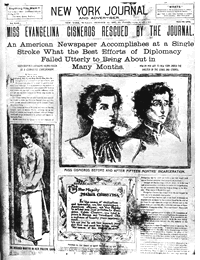
The most dramatic and celebrated manifestation of the “journalism of action” was the jailbreak in Havana in 1897 that freed a 19-year-old Cuban political prisoner named Evangelina Cisneros. A reporter for Hearst’s Journal organized the escape of Cisneros, who was smuggled aboard a passenger steamer to New York, where Hearst organized a rapturous reception for her in midtown Manhattan.
Hearst shook up New York City journalism, and his foes chafed at his aggressive brand of journalism. Some of them openly hoped that the young publisher would spend himself into bankruptcy. In early 1897, one of the rivals came up with “yellow journalism” as a jeering rejection of what Hearst was then calling “the new journalism.” The sneer “yellow journalism” stuck; even Hearst’s Journal came to embrace the term.
But by no means did “yellow journalism” cause, foment, or otherwise bring about the war in 1898, a brief conflict that confirmed America as a global power.
“The conflict was, rather, the result of a convergence of forces far beyond the control or direct influence of even” Hearst’s Journal.
Assertions that the yellow press caused the war, I wrote, “are exceedingly media-centric, often rest on the selective use of evidence, and tend to ignore more relevant and immediate factors that give rise to armed conflict.”
In 1898, those factors centered around a diplomatic impasse between the United States and Spain over Spanish rule of Cuba, where an islandwide rebellion had flared in early 1895.
In a failed attempt to put down the armed challenge to Spanish rule, Madrid sent as many as 200,000 troops to the island and its generals imposed a policy called “reconcentration,” by which thousands of Cubans — mostly old men, women, and children — were herded into garrison towns so they could offer neither support nor supplies to the Cuban rebels.
The “reconcentration” policy gave rise to much suffering and disease: Unknown tens of thousands of Cuban non-combatants died from illness and starvation, creating a humanitarian disaster on Cuba that “inevitably stirred outrage and condemnation in the United States,” as I wrote in Yellow Journalism.
The desperate conditions on Cuba in 1897 and early 1898 were frequent topics of reporting in the American press — including, but certainly not limited to, Hearst’s Journal. His newspaper reported on “reconcentration” but in no way created the policy’s devastating effects.
A leading historian of that period, Ivan Musicant, correctly observed that the abuses and suffering caused by the “reconcentration” policy “did more to bring on the Spanish-American War than anything else the Spanish could have done.”
In the end, the humanitarian crisis on Cuba, and Spain’s inability to resolve the crisis, were pivotal in the American decision to go to war over Cuba in 1898; the content of the yellow press was irrelevant.
“If the yellow press did foment the war, researchers should be able to find some hint of, some reference to, that influence in the personal papers and the reminiscences of policymakers of the time. But neither the diary entries of Cabinet officers nor the contemporaneous private exchanges among American diplomats indicate that the yellow newspapers exerted any influence at all. When it was discussed within the [William] McKinley administration, the yellow press was dismissed as a nuisance or scoffed at as a complicating factor. It was regarded neither as a source of insight into popular thinking in the United States nor as a useful guide in pursuing the delicate and ultimately futile negotiations with Spain.”
A few years after the war, the Journal pointedly scoffed at claims that it fomented the war in a cynical scheme to build circulation and boost profits. “Would you like to know what effect the war had on the money-making feature of this particular newspaper? The wholesale price of paper was greatly increased. Advertising diminished, expenses increased enormously,” the Journal noted in 1902, adding that its expenses related to covering the conflict exceeded $750,000 — the equivalent these days of more than $20 million.
Bob Woodward, he of Watergate fame, says Donald Trump’s persistent questioning about President Barack Obama’s place of birth is akin to the tactics of the odious Joe McCarthy, the Republican senator infamous for his communists-in-government witch-hunt during the early 1950s.
The probing by Trump, the billionaire developer and prospective presidential candidate, prompted Obama this week to release the long form of his birth certificate, which clearly showed he was born in Hawaii in 1961.
“Trump, I think, was or may be still aspiring to be the new Joe McCarthy,” Woodward said yesterday on the MSNBC talk show, Morning Joe.
But why should anyone care what Woodward thinks about Trump and McCarthy? Woodward’s no expert on 1950s America.
Besides, his claim about McCarthy was little more than glib and sanctimonious hyperbole: Trump’s aggressive badgering of Obama may have been hardball politics. It was nothing akin to McCarthy’s wild accusations about communist infiltration of government, nothing like the senator’s bullying of witnesses under oath in closed session.
Woodward and his Post colleague, Carl Bernstein, acknowledged in their book, All the President’s Men, to having committed ethical lapses during their Watergate reporting in the early 1970s.
Notably, they recounted failed attempts to encourage federal grand jurors to violate oaths of secrecy and discuss Watergate testimony. Woodward and Bernstein conceded their efforts were “a seedy venture” that nonetheless had the approval of top editors at the Post, including the then-executive editor, Ben Bradlee.
According to All the President’s Men, Woodward “wondered whether there was ever justification for a reporter to entice someone across the line of legality while standing safely on the right side himself.” Such qualms notwithstanding, they went ahead with what they described in the book as a “clumsy charade with about half a dozen members of the grand jury.”
Their efforts to entice grand jurors to violate their oaths of secrecy were soon reported to federal prosecutors who in turn informed John Sirica, chief judge of U.S. District Court in the District of Columbia.
“John Sirica is some kind of pissed at you,” the Post’s lawyer, Edward Bennett Williams, told the reporters, according to the book. “We had to do a lot of convincing to keep your asses out of jail.”
Bernstein also acknowledged in All the President’s Men that he sought and obtained information from otherwise private telephone records.
McCarthy-esque their lapses certainly weren’t. But weren’t trivial, either. Adrian Havill, author of Deep Truth, an unauthorized biography of Woodward and Bernstein, wrote that “part of the methodology Bob and Carl used … was unethical or bordered on criminality.”
Their missteps represented serious misjudgments, which are rarely recalled these days, when the hero-worship of Woodward and Bernstein seems as intense as ever.


 In the weeks and months before yesterday’s election, prominent media analysts predicted Trump was going to lose, and probably decisively, to Democratic nominee Hillary Clinton.
 “But a dispassionate examination of the data, combined with a coldblooded look at the candidates, the campaigns and presidential elections, produces only one possible conclusion: Hillary Clinton will defeat Donald Trump in November, and the margin isn’t likely to be as close as Barack Obama’s victory over Mitt Romney” in 2012.
 The hoary old myth received a boost in April when, on the 152d anniversary of Hearst’s birth, the humorist and radio personality, Garrison Keillor,

 Of course, it had no such effect, as Bradlee himself had said, on the 25th anniversary of the seminal crime of Watergate–the burglary in June 1972 at the headquarters of the Democratic National Committee.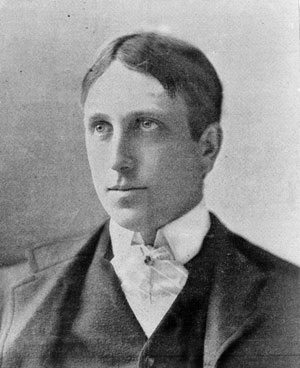

 Media Myth Alert