W. Joseph Campbell

Posts Tagged ‘Hearst’

About the innovative social media deck, and ‘yellow blogging’

In 1897, Newspapers, Yellow Journalism on April 20, 2010 at 10:22 am

Kudos to my nephew, Rob Campbell, and the innovative social media deck he’s helped launch at the Cleveland Indians’ ballpark, Progressive Field.

The Tribe Social Deck, believed to be the first of its kind in a major professional sports venue, is described as “a press box for bloggers/social media types.”

The Deck was launched last week at the team’s home opener.

As far as is known, Rob has been quoted as saying, “the Tribe Social Deck is a one-of-a-kind endeavor.  Other professional sports teams have offered individual bloggers press credentials on occasion but to our knowledge there has never been a section exclusively catering to the internet and social media community.”

Rob heads up social media efforts for the Indians and posts frequently to the team’s Twitter site, Tribetalk.

In other developments in social media, a writer for the BetaNews blog has proposed “yellow blogging” as a latter day “reincarnation” of yellow journalism, which flared in the U.S. press more than 100 years ago.

By “yellow blogging,” he means those “gossip and rumor blogsites [that] ruthlessly compete for pageviews.”

Cool term, “yellow blogging.”  I like it.

But as heir to yellow journalism, as it was practiced in urban America at the end of the 19th century and early 20th century–unh-uh.

As I wrote in my 2001 book, Yellow Journalism: Puncturing the Myths, Defining the Legacies, “yellow journalism” has become a shorthand term–a cliché, really–for exaggerated, sensationalized, rumor-driven treatment of the news.

But that’s far from what “yellow journalism” was.

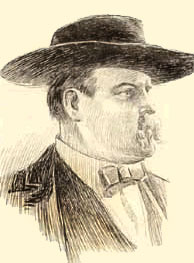
Hearst caricature, 1896

Newspapers of a century or so ago that can be classified as “yellow journals” (such as those of William Randolph Hearst and Joseph Pulitzer)  “were, at a minimum, typographically bold in their use of headlines and illustrations,” I wrote in Yellow Journalism, adding:

“They certainly looked different from their gray, conservative counterparts, and their use of design elements was more conspicuous and imaginative. They were, moreover, inclined to campaign against powerful interests and municipal abuses, ostensibly on behalf of ‘the people.’ And they usually were not shy about doing so.”

More specifically, yellow journalism–a term that emerged in 1897–was defined by these features and characteristics:

  • the frequent use of multicolumn headlines that sometimes stretched across the front page.
  • a variety of topics reported on the front page, including news of politics, war, international diplomacy, sports, and society.
  • the generous and imaginative use of illustrations, including photographs and other graphic representations such as locator maps.
  • bold and experimental layouts, including those in which one report and illustration would dominate the front page. Such layouts sometimes were enhanced by the use of color.
  • a tendency to rely on anonymous sources, particularly in dispatches of leading reporters.
  • a penchant for self-promotion, to call attention frequently to the newspaper’s accomplishments.

So the yellow press back then was certainly anything but boring, predictable, or uninspired—complaints of the sort that frequently are raised about contemporary American newspapers.

The yellow journals were hardly wretched scandal sheets, indulging in gossip and rumor.

WJC

Movies about journalists: Another list, another myth

In Cinematic treatments, Debunking, Furnish the war, Media myths, Newspapers, Washington Post, Watergate myth on April 17, 2010 at 6:31 pm

The blog True/Slant includes a ranking today of the 10 best-ever movies about journalism, and the Bogart film, Deadline U.S.A., tops the list.

This 10-best lineup was inspired by the series of newspapering movies running at Film Forum in Manhattan.

Absence of Malice (which I thought was dreadfully stereotypical), ranked second on the True/Slant list; The Paper was third, and All the President’s Men, the best-known movie about the Watergate scandal, was fourth.

Almost predictably, the description about All the President’s Men said:  “Robert Redford and Dustin Hoffman play Washington Post reporters Carl Bernstein and Bob Woodward, who reported the Watergate scandal and brought down a President. One of the few movies that makes journalism look like something worth doing.”

So there we are again–the hoary claim resurfaces that Nixon was “brought down” by the reporting of the intrepid Post reporters.

It’s what I call the heroic-journalist myth, and it’s addressed, and debunked, in Getting It Wrong, my forthcoming book about media-driven myths.

I note in the book, which is due out this summer, that heroic-journalist myth of Watergate is one of the most appealing and self-reverential stories in American media history.

It is striking indeed how routinely and even off-handedly Bernstein and Woodward are credited with the accomplishment, especially when the record of Watergate shows that the Post’s reporting had at best a marginal effect on forcing Nixon’s resignation in 1974.

Other forces and factors were far more decisive to the denouement of Watergate. As Howard Kurtz, the Post’s media reporter, has written:

“Despite the mythology, The Post didn’t force Richard Nixon from office—there were also two special prosecutors, a determined judge, bipartisan House and Senate committees, the belated honesty of [former White House lawyer] John Dean and those infamous White House tapes.”

Nixon’s White House tapes were crucial to the outcome. He resigned the presidency shortly after the Supreme Court ordered him to turn over the tapes subpoenaed by the Watergate special prosecutor.

One of the tapes undeniably showed Nixon participating in the coverup of the burglary at Democratic national headquarters, the signal crime of the Watergate scandal.

I also note in Getting It Wrong that motion pictures have a way of solidifying media-driven myths in the public’s consciousness.

“High-quality cinematic treatments,” I write, “are powerful agents of media myth-making, and can enhance a myth’s durability.”

And so what’s my top movie about newspapering? The 1941 Orson Welles masterpiece, Citizen Kane.

And that’s probably because I get such a laugh every time I watch the scene that paraphrases William Randolph Hearst‘s purported vow “to furnish the war” with Spain.

That may be the hardiest media myth of all.

A sleeper in my lineup of best movies about journalism is John Ford’s 1962 Western, The Man Who Shot Liberty Valence.

Why Liberty Valence?

Solely because of the movie’s greatest line, which is so applicable to media myth-making:

“This is the West, sir. When the legend becomes fact, print the legend.”

WJC

In today’s ‘Outlook’ section

In Cronkite Moment, Debunking, Furnish the war, Media myths, Murrow-McCarthy myth, Newspapers, Washington Post, Watergate myth on April 11, 2010 at 12:13 pm

An abbreviated version of my recent guestpost at the “Political Bookworm” blog appeared today in the “Outlook” section of the Washington Post.

Here’s the text of the “Outlook” piece, with links that I’ve added:

W. Joseph Campbell, a professor of communication at American University, busts some media myths in his book, “Getting It Wrong: Ten of the Greatest Misreported Stories in American Journalism,” coming in July from the University of California Press. Here are three of Campbell’s biggies:

1. William Randolph Hearst’s purported vow, telegraphed to the artist Frederic Remington in Cuba, to “furnish the war” with Spain. Hearst denied making such a statement. The telegram containing his purported pledge has never turned up. The “furnish the war” anecdote can be traced to 1901 and a memoir by another journalist, James Creelman, who did not say when or how he learned the story about Hearst’s vow.

2. Edward R. Murrow brought an end to Sen. Joseph R. McCarthy’s communists-in-government witch hunt. This myth stems from Murrow’s CBS program “See It Now” on March 9, 1954, when the newsman dissected McCarthy’s crude investigative techniques and taste for the half-truth — none of which was unknown to American audiences at the time. The myth took hold even though years before the program aired, several prominent journalists — including Washington-based syndicated columnist Drew Pearson — had become searching critics of McCarthy and his tactics.

Nixon resigns, 1974

3. The Washington Post’s investigative reporting brought down Richard Nixon’s corrupt presidency. Katharine Graham, The Post’s publisher during the Watergate period, said in 1997: “Sometimes people accuse us of bringing down a president, which of course we didn’t do. The processes that caused [Nixon’s] resignation were constitutional.” She was right, but the complexities of Watergate are not readily recalled these days. What does stand out is a media-centric interpretation that the dogged reporting of Post journalists Bob Woodward and Carl Bernstein brought Nixon down.

WJC

Now at Political Bookworm, where ‘must-read books are discovered’

In Cronkite Moment, Debunking, Furnish the war, Media myths, Washington Post, Watergate myth on April 9, 2010 at 7:35 am

I guestpost today at the Political Bookworm, a Washington Post-sponsored site that describes itself as a blog where “tomorrow’s must-read political books are discovered today.”

In my post, I discuss three of the media-driven myths examined in my forthcoming book, Getting It Wrong, which the University of California Press will publish in the summer.

Political Bookworm is edited by Steven Levingston, the Post‘s nonfiction editor. The blog notes that it “discusses new books long before they hit the shelves.”

And here’s the text of my guest post:

The most famous anecdote in American journalism may be William Randolph Hearst’s purported vow, telegraphed to the artist Frederic Remington in Cuba, to “furnish the war” with Spain at the end of the 19th century.

Or it may be Edward R. Murrow’s television program on CBS in 1954, which supposedly brought an end to Sen. Joseph R. McCarthy’s communists-in-government witch-hunt.

Or it may be the interpretation of Watergate that says The Washington Post’s investigative reporting brought down Richard Nixon’s corrupt presidency.

All three are well-known stories about the exercise of media power, for good or bad. All three anecdotes are often retold.

All three are media-driven myths.

Media myths often confer on the news media far more power and influence than they merit or possess. Media myths also tend to minimize the complexity of historical events in favor of simplistic and misleading interpretations.

That’s an important reason why Hearst’s vow has lived on for more than 100 years: It is succinct, savory, and easily remembered. It conforms to the popular image of Hearst as war-monger.

Hearst, though, denied making such a statement. The telegram containing his purported pledge has never turned up. And it would have been absurd for Hearst to vow to “furnish the war” because war — Cuba’s rebellion against Spain’s colonial rule — was the reason he sent Remington to Cuba. (The Cuban rebellion gave rise in 1898 to the Spanish-American War.)

The “furnish the war” anecdote can be traced to 1901 and a memoir by another journalist, James Creelman, who did not say when or how he learned story about Hearst’s vow.

The Murrow-McCarthy myth stems from Murrow’s See It Now program on March 9, 1954. See It Now that night dissected McCarthy’s crude investigative techniques and taste for the half-truth — none of which was unknown to American audiences at the time

Years before the program aired, several prominent journalists — including the Washington-based syndicated columnist Drew Pearson — had become searching critics of McCarthy and his tactics.

Interestingly, the myth took hold despite Murrow’s protests. In the weeks following the See It Now program, Murrow said he recognized that at best he had reinforced what others had long said about the red-baiting senator.

Similarly, principals at The Washington Post over the years have disputed the notion their newspaper toppled Nixon, who resigned in 1974. Among them was Katharine Graham, the Post’s publisher during the Watergate period. “Sometimes people accuse us of bringing down a president, which of course we didn’t do,” she said in 1997. “The processes that caused [Nixon’s] resignation were constitutional.”

She was right, but the complexities of Watergate — the deceit and criminality that characterized the Nixon White House and the multiple lines of investigation that slowly unwound the scandal — are not readily recalled these days.

What does stand out is a media-centric interpretation, that the dogged reporting of Washington Post journalists Bob Woodward and Carl Bernstein brought Nixon down. It’s a familiar storyline, a proxy for grasping Watergate’s essence while sidestepping its complexities.

That storyline was solidified by the 1976 motion picture, “All the President’s Men,” the screen adaptation of Bernstein and Woodward’s book of the same title. The film casts the reporters as central to unraveling the scandal.

Debunking these and other media myths matters for a variety of reasons. Media myths can and do feed stereotypes. They distort our understanding of the news media and of history. And there is inherent value in setting the record straight.

In that sense, myth-busting is aligned with a central objective of newsgathering — that of getting it right.

WJC

Remembering the Maine — and a myth of yellow journalism

In Anniversaries, Debunking, Media myths, New York Times, Spanish-American War on April 6, 2010 at 5:33 pm

American yellow journalism of the late 19th century, led by the newspapers of William Randolph Hearst, has been often blamed for bringing on the Spanish-American War, which began 112 years ago this month.

Wreckage of the Maine (Library of Congress)

Wreckage of the Maine

It is an enduring media-driven myth, a misleading, media-centric interpretation that refuses to die, despite considerable evidence to the contrary.

The media myth of the Spanish-American War was invoked in a commentary posted today at the conservative online news site, Human Events.

The commentary–which contemplated parallels in the recent sinking of a South Korean Navy vessel and the destruction in Havana harbor in 1898 of the USS Maine– declared:

“While the cause of the explosion [that destroyed the Maine] remained a mystery, newspapers fighting for readership jumped on the incident as a means to increase sales. Exploiting and distorting the news—an industry art form that came to be called ‘yellow journalism’—reporters slanted the news to sensationalize it. As the Navy continued its investigation [into the causes of the battleship’s loss], the newspapers worked the American public’s emotions into a frenzy.”

There is, quite simply,  little evidence to support such a claim. (And coining the term “yellow journalism” predated the Maine‘s destruction by more than a year.)

Rather than stirring emotions “into a frenzy” in late winter 1898,  the American press was “notably becalmed and restrained,” as I wrote in my 2001 book, Yellow Journalism: Puncturing the Myths, Defining the Legacies.

I cited the trade journal Fourth Estate, which observed that the “frightful news from Havana, telling of the destruction of the . . . Maine, was treated here as a terrible calamity. The natural suspicion that Spanish methods of warfare had destroyed the ship moved men to cry for war, but the press as a whole published and reiterated the message from the [Maine’s] Captain, to ‘suspend judgment.’”

The trade journal also noted:

“Some of our papers, overheated with natural anger, have clamored for war, but the great majority have shown to the world that the press of the United States is in accord with the Government and is anxious for war only when it must be.” (Emphasis added.)

The Fourth Estate‘s reference to “some” papers clamoring for war no doubt was a reference to Hearst’s New York Journal and its racy sister publication, the Evening Journal. Hearst’s papers, as well as those of Joseph Pulitzer, were often speculative and over-the-top in their reporting.

But these newspapers, the leading exemplars of yellow journalism, hardly set an agenda for the American press in the aftermath of the Maine‘s destruction.

As I wrote in Yellow Journalism, scholarly “studies of the heartland press in 1898 signal the limited influence of the Hearst and Pulitzer newspapers—and note that few local newspapers immediately and vigorously advocated war” because of the loss of the Maine in a harbor under Spanish control.

The staid New York Times, which in the late 19th century began emerging as the antithesis to yellow journalism, also noted the generally calm reaction in the United States after the Maine‘s destruction.

The Times stated in late February 1898:

“No Latin race, we imagine, would have kept its head as well as the American people have kept theirs during the disturbing events of the past two weeks. In Spain or France or Italy there would have been tumultuous assemblages, much outcry in the streets, and incitements to riots.

“Outside of the reckless newspapers there has been no raving here.”

So it scarcely can be said that newspapers “worked the American public’s emotions into a frenzy” that led to the Spanish-American War. There is  little to support the notion that a journalistic war cry arose in the wake of the Maine’s destruction.

WJC

‘War means profits’? It didn’t for Hearst’s papers

In 1897, Debunking, Furnish the war, Media myths, Newspapers, Spanish-American War, Yellow Journalism on April 3, 2010 at 9:05 am

William Randolph Hearst’s purported vow to “furnish the war” with Spain in the late 1890s may be the anecdote most often told in American journalism.

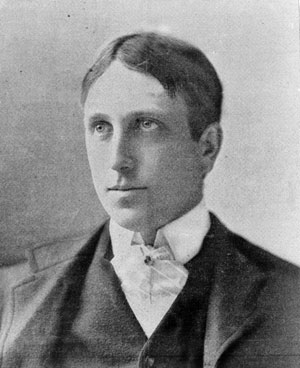
Hearst

It’s a woolly tale that’s been in circulation since 1901, and it lives on despite repeated and thorough debunking. It’s one of the ten media-driven myths examined in my forthcoming book, Getting It Wrong.

“Furnish the war” is so tenacious because it offers a tidy summary of the news media at their worst. And it’s a pithy quotation, easily digested and readily recalled.

The anecdote reemerged the other day, in a commentary posted at TheCitizen.com, an online news site of Fayette Publishing in Fayetteville, GA. The commentary stated:

“William Randolph Hearst in 1897 [told] the artist Frederic Remington: ‘You furnish the pictures and I’ll furnish the war.’ Think for a minute what that statement means. War means business, war means profits and war means death.”

Hearst’s purported message to Remington is almost certainly apocryphal–as is the notion that war meant profits for Hearst’s newspapers. In their intensive coverage of the four-month Spanish-American War of 1898, his papers lost money.

As I wrote in my 2001 book, Yellow Journalism: Puncturing the Myths, Defining the Legacies, the Spanish-American War generally boosted newspaper circulation. But advertising revenues fell, as advertisers feared the war would undercut the nascent recovery from the hard economic times of the 1890s.

In addition, newsprint costs soared, as did news-gathering expenditures.

The trade journal Fourth Estate estimated in 1899 that Hearst’s New York Journal had spent $50,000 a week—the equivalent these days of more than $1 million—on cable tolls, reporters’ salaries, and dispatch boats that ferried correspondents’ reports from the war’s principal theater in Cuba to Jamaica and elsewhere for transmission to New York.

Hearst's 'New York Evening Journal'

The Journal scoffed at claims that it helped foment the conflict in a cynical scheme to build circulation and boost profits.

“Would you like to know what effect the war had on the money-making feature of this particular newspaper? The wholesale price of paper was greatly increased. Advertising diminished, expenses increased enormously,” the Journal said, adding that its expenses related to covering the conflict exceeded $750,000—the equivalent these days of more than $20 million.

During the war, which lasted 114 days, the Journal‘s racy sister publication, the Evening Journal,  produced as many as forty extra editions a day–a late 19th century manifestation of what contemporary journalists would recognize as the unrelenting, 24-hour news cycle.

WJC

Yellow journalism ‘juiced’ the appetite for war? Not likely

In Debunking, Media myths, Spanish-American War, Yellow Journalism on February 18, 2010 at 5:39 am

An undying myth of American journalism is that yellow journalism, as practiced by William Randolph Hearst and Joseph Pulitzer, led the country to war with Spain in April 1898.

That notion, I wrote in my 2001 book, Yellow Journalism: Puncturing the Myths, Defining the Legacies, “tidily, if mistakenly, serves to illustrate the power and the lurking malevolence of America’s news media.” That’s an important reason the yellow journalism myth lives on.

And on.

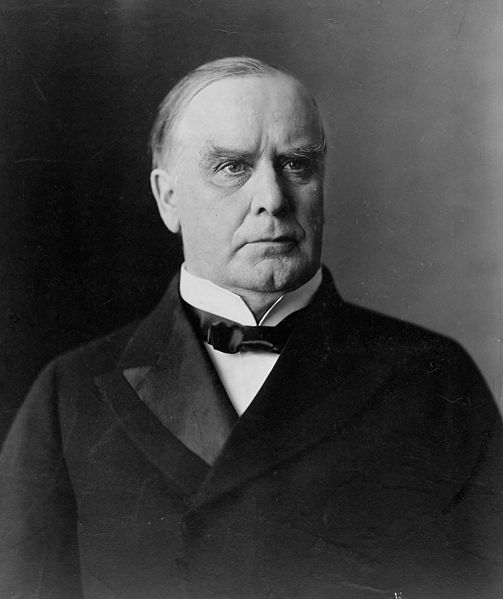
William McKinley

The myth reemerged the other day in a Time magazine online feature listing the “top 10 forgettable presidents” of the United States.  Leading the list was Martin Van Buren. In eight place was William McKinley, about whom Time said:

“McKinley was a savvy politician who listened carefully to the public. Though he opposed it at first, McKinley brought the country to war with Spain in 1898 as Pulitzer and Hearst’s ‘yellow journalism’ juiced the nation’s appetite for a fight. America’s claim to Puerto Rico and Guantanamo Bay count among the war’s legacies.”

So the yellow journalism “juiced” the country’s war appetite, eh?

Like many media-driven myths, this one’s certainly a juicy story–almost too juicy to be false. Like many media myths, it offers a simplistic explanation to a complex question: It is far easier, after all, to blame the yellow press for pushing the country into war than it is to recall the factors accounting for the diplomatic impasse that led the United States and Spain to go to war over Cuba, which at the time was up in arms against Spanish rule.

Significantly, the newspapers of Hearst and Pulitzer–the New York Journal and New York World, respectively– exerted no more than limited agenda-setting influence on the U.S. press in the run-up to the war.

As I wrote in Yellow Journalism:

“A significant body of research indicates that newspapers in small-town and rural America scoffed at, condemned, and ignored the exaggerated and fanciful reports appearing in New York City’s yellow journals before and after the Maine’s destruction” in Havana harbor in mid-February 1898.

The destruction of the battleship U.S.S. Maine killed more than 260 Navy sailors and officers, and helped trigger the war.

“Rather than taking a lead from accounts published in the Journal and World, newspapers in the American heartland turned away from their excesses,” I further wrote.

Moreover, I noted, “claims that the yellow press fomented the Spanish-American War contain almost no discussion about how, specifically, that influence was brought to bear within the McKinley administration.

“The reason for such a gap is straightforward.

“There is almost no evidence that the content of the yellow press, especially during the decisive weeks following the Maine’s destruction, shaped the thinking, influenced the policy formulation, or informed the conduct of key White House officials.”

WJC

Recalling journalism’s ‘greatest escape narrative’

In 1897, Debunking, Yellow Journalism on February 17, 2010 at 12:06 am

That Canadian newspaper column I blogged about yesterday included erroneous and exaggerated references to one of the most brazen and spectacular moments in late 19th century journalism–the jailbreak in Havana organized by a reporter for William Randolph Hearst’s New York Journal.

It was, I wrote in my 2006 book, The Year That Defined American Journalism: 1897 and the Clash of Paradigms, the “greatest escape narrative” in U.S. media history, “an episode unique in American journalism.”

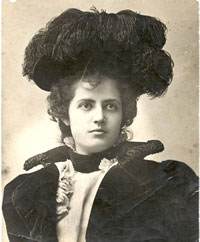
Evangelina Cisneros

The central figure in the jailbreak was a 19-year-old political prisoner named Evangelina Cisneros, who had been held for more than a year without charges. She was suspected of plotting to kill a senior Spanish military officer who, she said, had made her the target of unwelcome sexual advances.

In late summer 1897, as Cuba’s guerrilla war against Spanish colonial rule wore on, Hearst sent a reporter named Karl Decker to Cuba, ostensibly as the Journal‘s correspondent in Havana.

In reality, Decker was under orders to organize the escape of Evangelina Cisneros.

With the quiet help of U.S. diplomatic personnel in Cuba, and with the vital support of a clandestine smuggling network in Havana, Decker succeeded in early October 1897 in breaking Cisneros out of jail.

She was hidden for nearly three days at the home of Carlos Carbonell, an American-educated Cuban banker whom she later married. Then, dressed as a boy, Cisneros was smuggled aboard the Seneca, a passenger steamer bound for New York City, where Hearst organized a thunderous welcome for her.

The column, published the other day in the Guardian newspaper of Charlottetown on Prince Edward Island, offers a grubbier and error-strewn account of the Cisneros case, saying:

“Evangelina was a beautiful, teenage virgin caught in the grasp of evil, dark-haired, poorly shaven, leering captors determined to do horrible things to her. She had to be rescued. At least, that was Hearst’s version of the story.

“He milked her plight for three weeks, until, with the help of a Hearst-funded rescuer, she sawed her way through the bars of her cell, climbed out on the ladder connecting it to an adjoining building, and crawled to freedom.

“Readers loved it. None of it was true, of course.

“A bribe had been paid so she could walk out, but that was the last thing Hearst wanted to see in a story. He wanted action.”

Hearst certainly was an advocate of activist journalism. In 1897, he advanced a model called the “journalism of action,” in which he argued newspapers should do more than gather and comment on the news. Rather, he claimed, newspapers had an obligation to inject themselves routinely and conspicuously to address the ills of society.

The Cisneros jailbreak was just such a case: For Hearst’s Journal, the leading exemplar of flamboyant “yellow journalism,” her rescue was “epochal,”  a “supreme achievement of the journalism of action.” (Illicit “jail-breaking journalism” was more like it, scoffed the Chicago Times-Herald.)

Decker

As for the claim that Cisneros sawed through the bars herself: Not so. Decker and his accomplices broke the bars of her cell, using a heavy Stillson wrench.

And as for the claim the rescue was a farce, that Decker paid bribes to win Cisneros’ release: The evidentiary record to support that claim is very, very thin.

As I wrote in The Year That Defined American Journalism:

“No one has identified to whom bribes were paid, how much, by what method, and how the purported payoffs secured the enduring silence of the authorities.

“A conspiracy of silence that included … Spanish authorities in Cuba would have been so extensive—so many people would have known—that concealment could not possibly have lasted for long, certainly not 100 years and more.”

I further wrote:

“The allegations or suspicions of bribery rest more on assertion—and newspaper rivals’ contempt for the Journal—than on specific, persuasive documentation. They are supported more by argument than evidence.”

The Cisneros jailbreak was not a hoax. It was, rather, the successful result of an intricate plot in which Cuba-based operatives and U.S. diplomatic personnel filled vital roles—roles that remained obscure for more than 100 years.

WJC

‘Newspapers must learn from their history’

In 1897, Debunking, Furnish the war, Media myths, Spanish-American War on February 16, 2010 at 8:03 am

So read the headline over a column the other day in a Canadian newspaper, the Guardian of Charlottetown, which says it covers Prince Edward Island “like the dew.”

“Newspapers must learn from their history.”

A fine sentiment, that.

As the Guardian headline suggests, many journalists tend to be ahistoric: They have but a dim understanding of journalism’s past.

It’s not entirely their fault, though: The task of finding lessons in journalism history is complicated because journalism history often is badly mangled, and distorted by myth.

Young W.R. Hearst

The Guardian column offers a case in point: Despite its call to learn from the past, the column mangled an often-mangled moment in journalism history.

That is, it indulged in a hardy media-driven myth–the myth of the purported vow of New York newspaper publisher William Randolph Hearst to provide the war with Spain at the end of the 19th century.

Here’s what the Guardian column said:

“Hearst was embroiled in a newspaper war in New York City. He figured a war would do wonders for circulation. Cuba was run by the Spanish, and that didn’t seem right, so a war there seemed logical.

“Get down there and cover the war, he told his reporting staff. Those assigned to the story promptly booked passage on the next boat. Once there, however, they discovered they had a rather serious problem.

“Have arrived, but there doesn’t seem to be a war, they said in a cable.

“You provide the stories, I’ll provide the war, Hearst replied.”

So where to begin in unpacking this account?

As I write in Getting It Wrong, my forthcoming book about media-driven myths, the anecdote about Hearst’s vowing to bring about war with Spain is almost certainly apocryphal.

Here are some reasons why:

  • The telegram that supposedly contained Hearst’s vow has never turned up.
  • Hearst denied ever sending such a message.
  • Spanish censors in Cuba surely would have intercepted, and called attention to, such an inflammatory message, had it been sent.

And the anecdote lives on despite an irreconcilable internal inconsistency: It would have been absurd for Hearst to vow to furnish or provide the war because war—the Cuban rebellion against Spanish colonial rule—was the reason Hearst sent correspondents to Cuba in the first place.

In most retellings, the anecdote about Hearst’s vow revolves around the purported exchange of telegrams with the famous artist, Frederic Remington, whom Hearst sent to Cuba in early 1897. Paired with him on the assignment was the famous writer, Richard Harding Davis.

Remington and Davis were there at a time when anyone reading U.S. newspapers would have been well aware that Cuba was the theater of a nasty war. By then, Spain had sent nearly 200,000 soldiers in a failed attempt to put down the rebellion, which led in 1898 to the Spanish-American War.

Although the Guardian column suggested that Hearst blithely sought to foment a war as a ploy to boost readership (“a war would do wonders for circulation”), the causes of the conflict with Spain were of course far more profound and complex.

The Cubans who rebelled against Spanish rule were determined to win political independence, and would settle for nothing short of that.

The Spanish, for domestic economic and political reasons, would not grant Cuba its independence.

And the Americans could no longer tolerate the disruptions and human rights abuses created by Spain’s failed attempt to put down the Cuban rebellion.

That impasse became the formula for the U.S. war with Spain over Cuba in 1898.

It is quite likely the United States would have gone to war no matter what Hearst printed in his newspapers.

WJC

‘Yours neatly, sweetly, completely’: Revisiting the Times’ motto contest

In 1897, New York Times, Year studies, Yellow Journalism on February 10, 2010 at 12:06 am

How about this as the motto for the New York Times? “Clean, crisp, bright, snappy; read it daily and be happy.”

Or this? “Bright as a star and there you are.”

Or? “Pure in Purpose, Diligent in Service.”

Or? “You do not want what the New-York Times does not print.”

They were among thousands of entries submitted in a “motto contest” organized by the Times and its new owner, Adolph Ochs, in autumn 1896.

The contest ostensibly was to encourage readers to propose “a phrase more expressive of the Times’ policy” than “All the News That’s Fit to Print,” which Ochs had begun using as a marketing and advertising slogan in early October 1896. By the end of that month, the phrase had taken a modest place in a corner of the Times’ editorial page.

And on February 10, 1897–113 years ago today–“All the News That’s Fit to Print” appeared in the upper left corner, the “left ear,” of the Times’ front page, a place the motto has occupied ever since.

The 1896 motto contest was in reality a way to call attention to the Times in New York’s crowded newspaper market—one dominated by the yellow journalism of William Randolph Hearst and Joseph Pulitzer. Ochs had acquired the beleaguered Times in August 1896 and faced such rough going that Pulitzer’s New York World declared several months later:

“The shadow of death is settling slowly but surely down upon” the Times.

The motto contest, cheesy though it may seem today, stirred a fair amount of attention–and reader interaction–in 1896. The Times promised to pay $100 to the person who proposed in ten words or fewer a slogan deemed better than “All the News That’s Fit to Print,” which had first appeared in early October 1896, spelled out in a row of red lights on an advertising sign above New York’s Madison Square.

Among the entries sent to the Times were clunky such suggestions as: “All the News Worth Telling,” “All the News That Decent People Want,” and “The Fit News That’s Clean and True.”

Other were:

“Full of meat, clean and neat.”

“Instructive to all, offensive to none.”

“The people’s voice, good the choice.”

“Aseptic journalism up to date.”

“Yours neatly, sweetly, and completely.”

As I wrote in my 2006 book, a year study titled The Year That Defined American Journalism: 1897 and the Clash of Paradigms: “Before the contest ended, the Times altered the stakes by making clear it would not abandon ‘All the News That’s Fit to Print.’

“The Times justified this change of heart by saying no phrase entered in the contest was more apt and expressive than ‘All the News That’s Fit to Print.’ The $100 prize would be awarded, to the person adjudged to have submitted the best entry. But the motto would not be changed.”

Indeed, “All the News That’s Fit to Print” lives on as the most famous slogan in American journalism, the “leitmotif not merely for the Times, but also … for most other general-interest papers in the country,” a columnist for the Wall Street Journal once wrote.

The Times characterized its motto contest not as a grubby publicity stunt but as an opportunity for high-minded rumination about New York City newspapers. The contest, it said, had “set the people of this city to thinking upon the subject of newspaper decency in a more attentive and specific way than has been their custom.”

In any event, a committee of Times staffers winnowed the entries to 150 semi-finalists, which were submitted to Richard Watson Gilder, editor of The Century magazine. Gilder selected four finalists, which were:

  • Always decent; never dull.
  • The news of the day; not the rubbish.
  • A decent newspaper for decent people.
  • All the world’s news, but not a school for scandal.

As I wrote in The Year That Defined American Journalism, Gilder noted “that terms of the contest had changed from the original intent of selecting a slogan that ‘more aptly express the distinguishing characteristics of the New-York Times’ to the more theoretical task of determining which entry ‘would come nearest to it in aptness.’”

That entry, Gilder determined, was submitted by D.M. Redfield of New Haven, Connecticut. Redfield’s suggestion:

“All the world’s news, but not a school for scandal.”

Catchy.

WJC