W. Joseph Campbell

Posts Tagged ‘McCarthy’

Suspect Murrow quote pulled at Murrow school

In Debunking, Furnish the war, Media myths, Murrow-McCarthy myth on February 17, 2011 at 7:37 am

Did he say it?

I’ve written occasionally at Media Myth Alert about a suspect quotation attributed to broadcasting legend Edward R. Murrow.

Here’s the quotation:

“We must not confuse dissent with disloyalty. When the loyal opposition dies, I think the soul of America dies with it.”

The quotation is half true. That is, the first part was indeed spoken by Murrow; the other part is just too good to be true.

I happened to find the full quotation posted at the welcome page of the dean of the Edward R. Murrow College of Communication at Washington State University.

By email, I asked the dean, Lawrence Pintak, what he could tell me about the quote’s provenance.

I noted in my email that the first portion  of the passage – “We must not confuse dissent with disloyalty” – was spoken by Murrow near the end of his 1954 See It Now program about the witch-hunting ways of Senator Joseph R. McCarthy.

“But the rest of quotation – ‘When the loyal opposition dies, I think the soul of America dies with it’ – was not spoken during that program,” I noted in my email. I added that “I’ve not been able to determine where and when it was spoken or written.”

I further noted that I had consulted a database of historical newspapers — a full-text repository that includes the New York Times, Washington Post, Chicago Tribune, and Los Angeles Times — but no articles quoting the “loyal opposition” passage were returned.

I also mentioned in my email that a search of the LexisNexis database “produced a few returns, but none dated before 2001.” None of them state where and when Murrow made the purported comment.

Pintak, who became the first dean of the Murrow College in 2009, stated in reply that the online site had been constructed before his arrival at Washington State. He added:

“My suspicion is that the site was built by the university marketing comm. people and they may well have just pulled it from the web, rather than original source. If it’s not correct, we certainly need to get it pulled.”

He referred my inquiry to an instructor on his faculty, Paul Mark Wadleigh, whom he asked to investigate.

A few hours later, Wadleigh sent an email to the dean and me, stating:

“While it seems to reflect the Murrow spirit, the lack of evidence that he phrased it that way is indeed suspicious.”

Wadleigh also wrote that the transcript of Murrow’s closing comments in the 1954 show about McCarthy “reveals a different language and tone than the ‘loyal opposition’ quote.”

Good point.

His bottom line?

“I feel the evidence says no, Murrow did not say this,” Wadleigh wrote.

By the end of the day, the suspect quote had been pulled from the dean’s welcome page. Just the authentic portion — “We must not confuse dissent with disloyalty” — remains posted there.

The College’s move to pull the quote not only was commendable; it stands as further evidence that the “loyal opposition” line attributed to Murrow is dubious. It may have been made up well after Murrow’s death in 1965, perhaps to score points politically.

I’ve noted that if it were genuine, if Murrow had uttered the line, then its derivation shouldn’t be too difficult to determine.
Moreover, the quotation seems too neat and tidy to be authentic — which can be a marker of a media-driven myth.

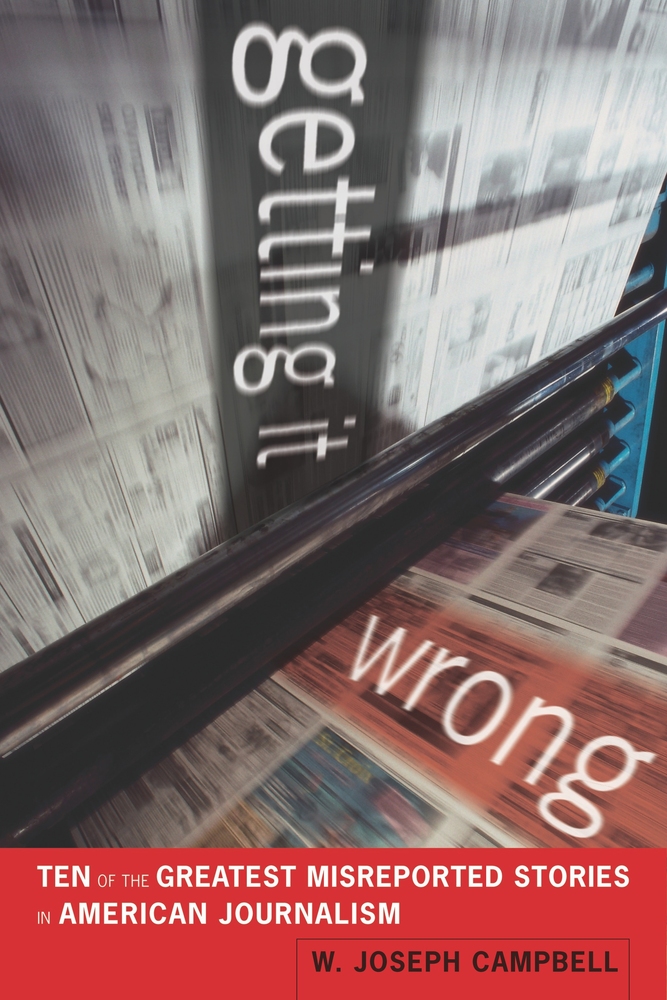
As I write in my mythbusting book, Getting It Wrong:

“To thwart media myths, journalists can start by applying a measure of skepticism to pithy, telling quotes such as [William Randolph] Hearst’s vow to ‘furnish the war‘ and even to euphonic phrases such as ‘bra burning.’

“Turns of phrase that sound too neat and tidy,” I write, “often are too perfect to be true.”

WJC

Recent and related:

America ‘was saved by Murrow’? No way

In Debunking, Media myths, Murrow-McCarthy myth on February 5, 2011 at 10:14 am

He 'saved' America?

Edward R. Murrow’s legendary television report in 1954 about Senator Joseph R. McCarthy has stirred no small praise over the years.

The accolades for Murrow’s unflattering portrait of the senator and his communists-in-goverment witch-hunt have been many and often excessive.

Murrow’s show often is praised for putting an end to McCarthy’s blustering and erratic campaign that he had begun in 1950. But few bows to Murrow have been as deep as this characterization, which appeared yesterday in the Jerusalem Post:

“America under Joseph McCarthy’s influence was in danger of losing its right of dissent until it was saved by courageous men like Edward R. Murrow and Joseph Welch with his famous accusation, ‘Have you no shame?'” (Welch was a lawyer who famously confronted McCarthy at Senate hearing in June 1954.)

But what a minute: America “was in danger of losing its right of dissent” in 1954? How so?

And America was “saved by courageous men” like Murrow and Welch? “Saved“? Again, how so?

The article doesn’t say. So let’s examine, and debunk, both over-the-top assertions.

Simply put, America was in no danger in 1954 “of losing its right of dissent.” Notably, Americans had registered opposition to McCarthy and his hardball tactics well before Murrow’s program, which aired March 9, 1954.

McCarthy: Americans disapproved

A Gallup Poll published in mid-January 1954 reported that 47 percent of Americans disapproved of the methods McCarthy used in pressing his anti-communist campaign. Thirty-eight percent said they approved of the senator’s methods, and 15 percent said they had no opinion.

Disapproval rates were highest among what Gallup called the “professional and business” and “white-collar” occupations. A small plurality of “manual workers,” Gallup said, approved of McCarthy’s methods.

So Americans in early 1954 were well aware of McCarthy’s aggressive, often-bullying ways, and largely found them disagreeable. They didn’t need Murrow or Welch to demonstrate McCarthy’s offensiveness.

They knew.

Gallup also reported that objections to McCarthy’s tactics were many. Most frequently mentioned by Americans, Gallup said, was that “the senator is overly harsh in his methods, that ‘he goes too far,’ that ‘he is too rough,’ and ‘uses methods like the Gestapo.'”

Additionally, Gallup said, many Americans complained that “McCarthy ‘never has proof of what he claims’ in his investigations. ‘He should find out if they are Communists before exposing them to the public’ was the type of sentiment offered by many persons.”

So in their reactions to McCarthy, Americans were hardly cowed, hardly inclined to silence about the senator and his witch-hunting ways.

And as for the claim America was “saved” by the courage of Murrow and Welch?

As I write in my mythbusting book, Getting It Wrong, which came out last summer, “the evidence is overwhelming that Murrow’s famous program on McCarthy had no such decisive effect, that Murrow in fact was very late in confronting McCarthy, that he did so only after other journalists had challenged the senator and his tactics for months, even years.”

Among those journalists was the Washington-based syndicated columnist Drew Pearson, who took to challenging — and even ridiculing — McCarthy soon after the senator launched his communists-in-government witch-hunt in 1950, years before the Murrow program.

Indeed, I write, “McCarthy had no more relentless, implacable, or scathing foe in the news media than Drew Pearson, the lead writer of the syndicated muckraking column, ‘Washington Merry-Go-Round.'”

I also write in Getting It Wrong that Murrow was loath to claim much significance for his televised report about McCarthy, saying he “recognized his accomplishments were modest, that at best he had reinforced what others had long said about McCarthy.”

I note, for example, that Jay Nelson Tuck, then the television critic for the New York Post, wrote that Murrow felt “almost a little shame faced at being saluted for his courage in the McCarthy matter. He said he had said nothing that … anyone might not have said without a raised eyebrow only a few years ago.”

Indeed.

Murrow’s collaborator and co-producer, Fred W. Friendly, also rejected claims the 1954 program on McCarthy was pivotal or decisive. Friendly wrote in his memoir:

“To say that the Murrow broadcast of March 9, 1954, was the decisive blow against Senator McCarthy’s power is as inaccurate as it is to say that Joseph R. McCarthy … single-handedly gave birth to McCarthyism.”

Welch: 'No decency?'

As for Joseph Welch: He memorably upbraided McCarthy during a televised Senate hearing June  9, 1954, declaring:

“Have you no sense of decency, sir? At long last, have you left no sense of decency?”

Welch was counsel for the U.S. Army in the Senate’s Army-McCarthy hearings, which considered allegations that McCarthy and his top aide, Roy Cohn, sought favored treatment for a staff member who had been drafted into military service.

The New York Times reported that Welch’s rebuke of McCarthy was greeted by a burst of applause in the Senate gallery and that Welch the next day had reported having received 1,400 telegrams, most of them supportive.

However, a database review of coverage by the Times and four other leading U.S. newspapers indicates that the Welch-McCarthy encounter was, at the time, essentially a one-day story, to which lasting importance only later became attached.

WJC

Recent and related:

On the thin contributions of media rabble-rousers

In Debunking, Jessica Lynch, Media myths, Yellow Journalism on January 26, 2011 at 6:39 am

The departure of the bombastic Keith Olbermann from MSNBC’s primetime lineup is no an occasion for mourning.

But it’s to be regretted.

A little.

So suggested Bret Stephens yesterday in hisWall Street Journal column about Olbermann, who abruptly left his “Countdown” show at the end of last week.

Stephens pointed out:

“The ‘Countdown’ host did away with the old-fashioned liberal snigger and replaced it with a full-frontal snarl. Put simply, Mr. Olbermann had a genuine faith in populism, something liberals more often preach than practice.”

Stephens also offered this intriguing observation:

“America does better when its political debates descend, as they so often do on (or between) MSNBC and Fox News, into honest brawls.”

He may be right, although I wish he had elaborated on that point.

The observation about “honest brawls” reminded me of the insults and brickbats that American newspaper editors of the 1890s routinely exchanged in print. These were vigorous, lusty,  often vicious exchanges — and there really was little memorable or lasting about them. Save, perhaps, for an epithet or two.

Like that of “yellow journalism.”

Wardman, father to a sneer

As I discussed in my 2001 book, Yellow Journalism: Puncturing the Myths Defining the Legacies, the epithet emerged in late January 1897, during the failed campaign of Ervin Wardman, a New York newspaper editor, to drive a stake into the heart of the upstart journalism of William Randolph Hearst and, to a lesser extent, of Joseph Pulitzer.

Yellow journalism” took hold and spread quickly in 1897; it lives on today, as a vague but handy smear especially favored by letter-writers to newspapers.

Trouble is, the sneer “yellow journalism” is so ill-defined and flabby that it has become synonymous with journalistic sins of all kinds — exaggeration, sensationalism, hype, plagiarism, what have you.

And the trouble with media rabble-rousers like Olbermann is that their commentary often lacks wit and nuance, and tends to be superficial. It’s not deft, typically, and it’s unheard of for them to invoke media-driven myths–those dubious stories about the news media that masquerade as factual.

I address and debunk 10 prominent media-driven myths in my latest book, Getting It Wrong.

On his way out, in announcing his abrupt departure, Olbermann indulged in media myth. He described as “exaggerated” the rescue of Army private Jessica Lynch in Iraq in 2003. Hyped, maybe a bit. But the Lynch rescue, conducted by a U.S. special operations force under combat conditions, was not exaggerated.

As I note in Getting It Wrong, the Defense Department’s inspector general reported in 2007 that the rescue of Lynch from an Iraqi hospital was “a valid mission” to recover a prisoner of war.

There was no evidence to suggest that the rescue “was a staged media event” even though it was videotaped, as such missions often are.

Olbermann had on other occasions invoked the media myth surrounding Edward R. Murrow, whom he sought to emulate by borrowing the legendary broadcaster’s sign-off, “Good night, and good luck.”

In November, Olbermann referred to Murrow as “a paragon of straight reporting” while claiming the American press “stood idly by” as Senator Joseph R. McCarthy pursued his communists-in-government witch-hunt.

On March 9, 1954, during a 30-minute CBS television show called See It Now, “Murrow slayed the dragon,” Olbermann declared.

As I point out in Getting It Wrong, neither Murrow nor his producer, Fred Friendly, embraced the dragon-slaying interpretation. (Friendly wrote in his memoir, Due to Circumstances Beyond Our Control: “To say that the Murrow broadcast of March 9, 1954, was the decisive blow against Senator McCarthy’s power is as inaccurate as it is to say that Joseph R. McCarthy … single-handedly gave birth to McCarthyism.”)

And it’s quite clear that the American press did not stand “idly by” as the scourge of McCarthyism emerged.

As I point out in Getting It Wrong:

“Long before the See It Now program, several prominent journalists—including the Washington-based syndicated columnist Drew Pearson—had become persistent and searching critics of McCarthy, his record, and his tactics.”

By the time Murrow took on McCarthy in March 1954, Americans weren’t waiting for a white knight to tell them about the toxic threat the senator posed.

Thanks to the work of Pearson and other journalists, they already knew.

WJC

Recent and related:

NYTimes flubs the correction

In Debunking, Media myths, Murrow-McCarthy myth, New York Times, Newspapers on January 23, 2011 at 11:58 am

The New York Times today publishes a correction to last week’s “Week in Review” article about sudden “transformational moments” — and flubs the correction.

McCarthy: He testified

The article discussed among other topics the dramatic exchange at a Senate hearing on June 9, 1954, in which lawyer Joseph N. Welch supposedly deflated Senator Joseph McCarthy and his communists-in-government witch-hunt by declaring:

“Have you no sense of decency, sir? At long last, have you left no sense of decency?”

I raised doubts in a recent post at Media Myth Alert about whether the Welch-McCarthy encounter was as “transformational” as the Times suggested.

The correction in the Times today addresses the context of the encounter and states:

“Senator McCarthy was serving on the committee investigating suspected Communist infiltration of the Army; he was not at the hearings to testify.”

But McCarthy wasn’t serving on that Senate panel (which in fact was a subcommittee–a temporary subcommittee of the Senate permanent subcommittee on investigations) and he was there to testify.

(McCarthy and a top aide, Roy Cohn, were focal points of what were called the Army-McCarthy hearings of 1954. At the time, McCarthy was chairman of the Senate’s permanent subcommittee on investigations. He removed himself from the temporary subcommittee which conducted the Army-McCarthy hearings and which was chaired by Senator Karl Mundt of South Dakota. McCarthy, however, was permitted to cross-examine witnesses during the hearings.)

Had the Times consulted its back issues, it would have found that not long after Welch’s pointed questions about McCarthy’s “sense of decency,” the senator was sworn in as a witness.

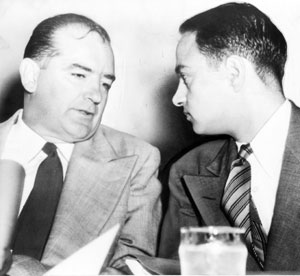
McCarthy, Cohn at 1954 hearings

According to hearing excerpts published in the Times, McCarthy said upon being sworn in:

“Well, I’ve got a good hog-calling voice, Mr. Chairman. I think I can speak loudly enough so that the mikes will pick it up.”

And he proceeded to discuss at length his views about the Communist Party U.S.A. and its leadership. “The orders flow, of course, from Moscow,” McCarthy declared.

In a front-page article published June 10, 1954, the Times focused on the Welch-McCarthy encounter of the day before, stating in its lead paragraph:

“The Army-McCarthy hearings reached a dramatic high point … in an angry, emotion-packed exchange between Senator Joseph R. McCarthy and Joseph N. Welch, special counsel for the Army.”

The four-column headline over the Times article read:

WELCH ASSAILS M’CARTHY’S ‘CRUELTY’ AND ‘RECKLESSNESS’ IN ATTACK ON AIDE; SENATOR, ON STAND, TELLS OF RED HUNT

Interestingly, coverage in the Chicago Tribune on June 10, 1954, focused on McCarthy’s having taken the witness stand the day before, announcing in bold headlines stripped across the top of a cluttered front page:

QUIZ OF M’CARTHY STARTS!

The opening paragraphs in the Tribune read:

“Sen. McCarthy [R., Wis.] warned that a Red world would follow communist penetration of the United States government as he took the witness stand … in his battle with the Pentagon.

“The appearance under oath of McCarthy came on the 30th day of the senate inquiry ….

“McCarthy outlined the nature and size of the communist conspiracy in this nation, describing it as a militant organization of 25,000 trained spies and saboteurs.”

Not until the fifth paragraph did the Tribune mention the Welch-McCarthy encounter.

Quite clearly, then, McCarthy was “at the hearings to testify.” And testify he did, in rather typical fashion.

So why does all this matter? So what if the Times flubbed a correction about its reference to a long-ago moment that probably wasn’t  so “transformational”?

After all, as media critic Jack Shafer of slate.com has pointed out:

“Readers should recognize that in journalism as in life, some number of mistakes are unavoidable. And some of those mistakes, while deplorable, don’t matter all that much.”

But injecting fresh error into a correction goes beyond trivial, and may signal trouble in the newspaper’s internal fact-checking procedures.

There is, of course, inherent value in setting the record straight, as the Times recognized in publishing the correction in the first place.

Setting the record straight supposedly helps promote a newspaper’s credibility, too. As I note in Getting It Wrong, my book debunking prominent media-driven myths, “a central objective of newsgathering” is “that of seeking to get it right.”

I further note in Getting It Wrong that “journalism seldom is seriously introspective, or very mindful of its history. It usually proceeds with little more than a nod to its past.”

Flubbing the correction suggests a broader unfamiliarity at the Times with an important period in American history–and hints, too, at a reluctance to consult its electronic database of back issues.

WJC

Recent and related:

On ‘transformational moments’ that journalists see

In Debunking, Media myths, Murrow-McCarthy myth, New York Times, Newspapers, Spanish-American War, Washington Post on January 20, 2011 at 9:04 am

The “turning points” that journalists seem eager to find in dramatic events usually turn out to be mythical–chimeras built on a convenient if faulty and clichéd storyline.

'Turning points' sculpture in Ohio (Marty Gooden)

That’s a central point blogger and political scientist Brendan Nyhan offered the other day in a perceptive commentary dismissing the notion that the shootings this month in Tucson may be seen, sooner or later, as a turning point in American political life.

Nyhan argued that “single events almost never reshape social and political life” and added:

“The turning points of the past seem more clear in large part because the messiness of those events has faded in our memory and we remember the narratives that have been constructed after the fact.”

Well said.

Nyhan’s particular target was the New York Times and two rather superficial commentaries written by Matt Bai in the aftermath of the Tucson shootings. The longer and more recent piece was published Sunday in the Times “Week in Review” section. In it, Bai ruminated:

“If the shooting didn’t feel like the turning point in the civic life of the nation that some of us had imagined it might become, then it may be because such turning points aren’t always immediately evident.”

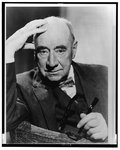
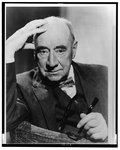
Welch (Library of Congress)

He went on to consider a few supposedly “transformational moments” of the past, such as the televised Senate hearing in 1954, when lawyer Joseph N. Welch upbraided Senator Joseph McCarthy, declaring:

“Have you no sense of decency, sir? At long last, have you left no sense of decency?”

It was a moment, Bai wrote, that “resonated throughout a country that was just then discovering the nascent power of television. Years of ruinous disagreement over the threat of internal Communism seemed to dissipate almost overnight.”

The sweeping claim caught my eye, given that my latest book, Getting It Wrong, addresses and debunks the media myth that broadcast journalist Edward R. Murrow put an end to McCarthy’s communists-in-government witch-hunt in a 30-minute television program in March 1954.

I don’t discuss the Welch-McCarthy encounter in Getting It Wrong, but barnacles of media myth seem to cling to that tale, too.

Take, for example, the claim that Welch’s famous line — uttered on the 30th day of what were called the Army-McCarthy hearings — “resonated throughout” the country.

The hearings centered around the Army’s accusations that McCarthy and his top aide, Roy Cohn, had sought special treatment for a McCarthy staffer who had been drafted into military service. The hearings were televised live, gavel to gavel, by the fledgling ABC and by the declining DuMont networks.

As Thomas Doherty pointed out in Cold War, Cool Medium, a fine study of television during the McCarthy period,the hearings “were not a saturation television event in the modern sense. The refusal of NBC and CBS [for commercial reasons] to telecast the hearings blacked out whole regions of the country from live coverage.”

He also wrote:

“With cable costs keeping ABC from relaying the hearings to Denver and points west, the coverage on the Pacific Coast was particularly sparse.”

Given such gaps in television’s coverage, it’s hard to see how the sudden and dramatic put down by Welch, a Boston lawyer who was the Army’s lead counsel at the hearings, could have “resonated” across the entire country.

Welch’s comment certainly attracted attention. But briefly.

The New York Times said the rebuke of McCarthy was greeted by a burst of applause in the Senate gallery and that Welch the next day reported having received 1,400 telegrams, most of them supportive.

Even so, a database review of the reporting in the Times and four other leading U.S. newspapers indicates the Welch-McCarthy encounter was at the time essentially a one-day story.

The database search for articles, editorials, transcriptions, and letters to the editor that contained “McCarthy,” “Welch,” and “sense of decency” returned 14 items in the period from June 9, 1954, to June 30, 1955.

Ten of the 14 items were published June 10, 1954, a day after Welch rebuked McCarthy.  The remarks were reported that day on the front pages of all five newspapers–the Times, Baltimore Sun, Chicago Tribune, Los Angeles Times, and Washington Post.

But none of the 14 items was published after June 25, 1954. In other words, none of the items was published during the time late in 1954 when the Senate voted to censure (“condemn” was the term) McCarthy’s conduct.

What’s more, lengthy excerpts of the hearing record published in the New York Times show that Welch’s “sense of decency” rebuke didn’t stun McCarthy into silence. The senator blundered on, insinuating that Welch had sought to include on his hearing staff a young lawyer with a dubious background.

The Welch-McCarthy encounter assumed “turning point” status in the years after 1954. But in the moment, in June 1954, it was recognized as dramatic but not “transformational.”

Bai’s “Week in Review” piece offered up this dubious point as well:

“A century ago, news traveled slowly enough for Americans to absorb and evaluate it; today’s events are almost instantaneously digested and debated, in a way that makes even the most cataclysmic event feel temporal.”

A century ago, news traveled rapidly by telegraph. It was scarcely  unusual then for large-circulation urban newspapers to publish multiple extra editions to report fresh elements of a major breaking story.

During the Spanish-American War in 1898, for example, William Randolph Hearst’s New York Evening Journal published as many as 40 extra editions a day. On such occasions, news surely wasn’t traveling slowly.

Indeed, at the end of the 19th century, it was not uncommon for Americans to claim they were living at “a time of rush and hurry.”

WJC

Recent and related:

Murrow, Cronkite myths cited in Poland’s top paper

In Cronkite Moment, Debunking, Media myths, Murrow-McCarthy myth, New York Times, Newspapers, Watergate myth on January 4, 2011 at 10:25 am

I’ve discussed from time to time at Media Myth Alert how media-driven myths about the U.S. news media have a way of traveling well and finding expression in news outlets overseas.

Watergate-related myths are notable examples of this tendency.

A couple of prominent media myths popped up yesterday in an article posted at the online site of Gazeta Wyborca, the leading daily in Poland and a newspaper with a remarkable past.

Gazeta Wyborca traces its lineage to what was the leading underground newspaper in Poland of the 1980s, Tygodnik Mazowsze. The clandestine title appeared under the noses of Poland’s communist authorities, week after week, from 1982 to 1989–some 290 issues in all.

Tygodnik Mazowsze was run almost entirely by women affiliated with Poland’s then-banned Solidarity opposition. When the country’s communist rulers permitted Solidarity candidates to stand in elections in 1989, one of the conditions was that the movement be permitted to publish an above-ground newspaper.

So the staff of Tygodnik Mazowsze moved up from the underground to launch Gazeta Wyborca, which means “electoral newspaper.” In the years since, Gazeta has become the dominant news outlet in Poland, which now is a thriving democracy.

Gazeta yesterday referred to the debate that bubbled last week in U.S. news media over a New York Times article that likened TV comedian Jon Stewart to legendary CBS newsman Edward R. Murrow.

Gazeta noted that U.S. news media “triumphantly” mentioned “cases in which journalists have changed the course of history” and referred to Murrow’s “instrumental” role in ending Senator Joseph McCarthy’s communists-in-government witch-hunt.

It also noted CBS anchorman Walter Cronkite’s criticism of the Vietnam War in 1968, which supposedly forced President Lyndon Johnson to realize his war policy was a shambles.

It’s too bad Gazeta didn’t point out that both cases are media-driven myths.

As I discuss in my latest book, Getting It Wrong, Murrow was quite late in confronting McCarthy, doing so most prominently in a half-hour television program that aired March 9, 1954.

That show came months, even years after other American journalists–notably, syndicated columnist Drew Pearson–had reported critically, closely, and often about McCarthy and his exaggerated charges.

“To be sure,” I write in Getting It Wrong, “it wasn’t as if Americans in early 1954 were hoping for someone to step up and expose McCarthy, or waiting for a white knight like Murrow to tell them about the toxic threat the senator posed.”

By then, they knew all too well.

Nor was Cronkite at the cutting edge of criticism of the U.S. war effort in Vietnam.

Far from it.

The CBS anchorman declared in a televised special report on February 27, 1968, that the U.S. military was “mired in stalemate” in Vietnam.

LBJ in Texas, February 27, 1968

But that scarcely was a remarkable assertion.

As I note in Getting It Wrong, stalemate” had been appearing as early as the summer of 1967 in New York Times editorials and analyses about the war.

What supposedly made the Cronkite characterization stand out is that President Johnson saw the program and, as it ended, said to an aide or aides, “If I’ve lost Cronkite, I’ve lost Middle America.”

Or something to that effect.

But in fact, Johnson wasn’t in front of a television set that night. He didn’t see the Cronkite program when it aired.

At the time Cronkite was intoning his “mired in stalemate” assessment, Johnson was offering light-hearted banter in Austin, Texas, at the 51st birthday party of one of his longtime political allies, Governor John Connally.

So it’s difficult to fathom how Johnson could have been much moved by a program that he hadn’t seen.

WJC

Recent and related:

Only Murrow had the bona fides? Nonsense

In Debunking, Media myths, Murrow-McCarthy myth, New York Times, Newspapers on December 30, 2010 at 11:31 am

The New York Times certainly was casual and superficial in likening TV comedian Jon Stewart to Edward R. Murrow. Not only that, but the discussion about the absurd comparison has been accompanied by the appearance of media-driven myth.

Notably, a post yesterday at the Atlantic online site invoked the dubious notion that Murrow stood up to Joseph R. McCarthy, the red-baiting senator from Wisconsin, when no one else could or would.

The Atlantic post said of Stewart and Murrow:

“Both men stuck their necks out. Both went first into a sort of no-man’s-land. It is probably true that only Murrow in his time had the bona fides to stand up to McCarthy (and don’t forget, Murrow waited years before doing so).” [Emphasis added in bold.]

That claim is just absurd.

While Murrow did take on McCarthy, in a much-celebrated half-hour television program in March 1954, he was scarcely alone in challenging the senator and his communists-in-government witch-hunt. And certainly not the first.

As I point out in my latest book, Getting It Wrong, other journalists in the early 1950s had the bona fides, and had the guts, to take on McCarthy when the risks of doing so were quite pronounced.

Pearson: Had the bona fides

Among these journalists with the bona fides was the Washington-based syndicated columnist Drew Pearson.

As I note in Getting It Wrong: “During the four years of his communists-in-government campaign, McCarthy had no more relentless, implacable, or scathing foe in the news media” than the muckraking Pearson, who wrote the widely published “Washington Merry-Go-Round” column and had a radio show.

Pearson was no saint. Jack Shafer of slate.com not long ago described Pearson as “one of the skuzziest journalists to ever write a story.” Pearson was intrusive and overbearing. He readily made enemies, and almost seemed to relish doing so.

But there’s no denying that he was quick off the dime, that he went after McCarthy hard and relentlessly, and that he immediately recognized the dubious quality of McCarthy’s claims about communists in high places in the U.S. government and military.

Pearson first wrote about McCarthy’s allegations on February 18, 1950, just days after McCarthy had begun raising them, notably in a speech in Wheeling, West Virginia. Pearson called McCarthy the “harum-scarum” senator and said that when he “finally was pinned down, he could produce … only four names of State Department officials whom he claimed were communists.”

Two of the four people named by McCarthy had resigned years earlier; another had been cleared, and the fourth had never worked for the State Department, Pearson wrote.

Pearson followed up with another column, writing that “the alleged communists which he claims are sheltered in the State Department just aren’t.”

Pearson also noted that he had covered the State Department for years, during which time he had been “the career boys’ severest critic. However, knowing something about State Department personnel, it is my opinion that Senator McCarthy is way off base.”

As he was.

Pearson leveled not just a few, scattered shots at McCarthy. His challenges in print became a near-barrage. Pearson scrutinized the senator’s tax troubles in Wisconsin, his accepting funds from a government contractor, and his taking suspicious campaign contributions back in Wisconsin.

The probing angered McCarthy, and in December 1950, the hulking senator physically assaulted Pearson after a dinner at the hush-hush Sulgrave Club on DuPont Circle in Washington, D.C.

McCarthy confronted Pearson in the Sulgrave’s coat check room and either slapped, kneed, or punched the columnist.

Richard Nixon, who recently had been sworn in as a U.S. Senator, intervened to break up the encounter. Nixon, in his memoir RN, said Pearson “grabbed his coat and ran from the room. McCarthy said, ‘You shouldn’t have stopped me, Dick.’”

So Pearson had the bona fides.

So did James A. Wechsler, editor of the New York Post.

In 1951, the Post published a 17-part, bare-knuckle series about McCarthy. The installments of the series addressed McCarthy’s tax troubles, his hypocrisy, and his recklessness in raising allegations about communists in government.

The closing installment likened McCarthy to “a drunk at a party who was funny half an hour ago but now won’t go home. McCarthy is camped in America’s front room trying to impress everybody by singing all the dirty songs and using all the four-letter words he knows. The jokes are pointless, the songs unfunny, the profanity a bore.”

The series was published 2½ years before Murrow’s television program on McCarthy.

And Wechsler paid a price for it, too. He was hauled before McCarthy’s investigative subcommittee and grilled about his dalliance years before in the Communist Youth League.

Wechsler characterized the closed-door hearing as “a reprisal against a newspaper and its editor for their opposition to the methods of this committee’s chairman.” But he complied, reluctantly, with the subcommittee’s demand to produce names of people he had known to be communists during his time in the Youth League.

By the time Murrow took on McCarthy in March 1954, the senator’s favorable ratings had crested and entered a terminal decline.

And Americans by then weren’t “waiting for a white knight like Murrow to tell them about the toxic threat the senator posed,” I write in Getting It Wrong.

Thanks to the work of Pearson and Wechsler and other journalists, they already knew.

WJC

Recent and related:

Likening Jon Stewart to Murrow: ‘Ignorant garbage’

In Cronkite Moment, Debunking, Media myths, Murrow-McCarthy myth, New York Times on December 28, 2010 at 12:04 am

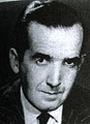
Murrow

The New York Times piece that extravagantly compared TV comedian Jon Stewart to Edward R. Murrow stirred considerable discussion yesterday in the blogosphere and beyond.

The most incisive and inspired characterization I encountered was that of Todd Gitlin, a professor of journalism and sociology at Columbia University. He was quoted by ABC News as saying that likening Stewart to Murrow or legendary CBS anchorman Walter Cronkite “is childish, it is garbage, it is ignorant garbage.”

Ignorant garbage: Scathing but accurate, indeed.

Gitlin, whom I do not know, also was quoted as saying, quite correctly, that Stewart “is not a news person. He’s a satirist and when he chooses to be blunt, he has the luxury of being blunt.” Stewart is host of Comedy Central’s Daily Show with Jon Stewart.

Embedded in the Times article were two prominent media-driven myths, both of which I address and debunk in my latest book, Getting It Wrong.

One was the notion that Murrow’s half-hour television report on Senator Joseph R. McCarthy in 1954 turned public opinion against the senator and his communists-in-government witch-hunt. In fact, however, McCarthy’s favorable ratings had been falling for a few months before Murrow’s program, which aired March 9, 1954.

The other embedded myth was the allusion to the “Cronkite Moment” of February 1968. That was when Cronkite declared on-air that the U.S. military was “mired in stalemate” in Vietnam. Supposedly, Cronkite’s analysis was an epiphany for President Lyndon Johnson, who suddenly realized his war policy was a shambles.

But as I note in Getting It Wrong, Cronkite’s “mired in stalemate” assessment was scarcely novel or stunning at the time. And Johnson didn’t even see the Cronkite report when it aired. He was in Austin, Texas, attending a birthday party for a longtime political ally, Governor John Connally (see photo).

LBJ didn't see Cronkite show

As such, it is very difficult to believe the president was much moved by a program that he hadn’t watched.

Left largely unaddressed in the discussion of the Times claim about Stewart, Murrow, and Cronkite is why–what accounts for the appeal of such extravagant characterizations?

In part, they are driven by an understandable urge to distill and simplify history–to be able to grasp the essence of important historical events while sidestepping their inherent complexity, messiness, and nuance.

Characterizations such as those in the Times yesterday also seek to ratify the importance of contemporary television personalities, to locate in them the virtues and values that supposedly animated the likes of Murrow and Cronkite.

Such an impulse skirts, if not indulges in, the “golden age” fallacy.

But it should be noted that Murrow, in particular, was no white knight, no paragon of journalistic virtue.

As I point out in Getting It Wrong, Murrow’s biographers have acknowledged that the broadcasting legend added to his employment application at CBS five years to his age and claimed to have majored in college in international relations and political science.

He had been a speech major at Washington State University.

Murrow also passed himself off as the holder of a master’s degree from Stanford University–a degree he never earned.

And Cronkite for years pooh-poohed the notion that his 1968 program on Vietnam had much effect on Johnson and U.S. war policy. Cronkite said in his memoir, A Reporter’s Life, that his  “mired in stalemate” assessment represented for Johnson “just one more straw in the increasing burden of Vietnam.”

Cronkite later told the CNBC cable network that he doubted the program “had a huge significance.

“I think it was a very small straw on a very heavy load [Johnson] was already carrying.”

Only late in his life, as the so-called “Cronkite Moment” gained legendary dimension, did Cronkite begin to embrace the anecdote’s purported power.

“It never occurred to me,” Cronkite said in 2004, that the 1968 program “was going to have the effect it had.”

But Cronkite’s initial interpretation was most accurate: The show had little to no effect on policy or public opinion.

WJC

Recent and related:

Two myths and today’s New York Times

In Cronkite Moment, Debunking, Media myths, Murrow-McCarthy myth, New York Times on December 27, 2010 at 1:33 am

Today’s New York Times offers up a double-myth story, a rare article that incorporates two prominent media-driven myths.

The Times invokes the Murrow-McCarthy and “Cronkite Moment” myths in suggesting that TV comedian Jon Stewart is a latter-day equivalent of Edward R. Murrow for advocating congressional approval of a health-aid package for first responders to the terror attacks of September 11, 2001.

That’s certainly a stretch.

But here’s what the Times says in presenting its double dose of media myths–both of which are addressed and debunked in my latest book, Getting It Wrong:

  • “Edward R. Murrow turned public opinion against the excesses of Senator Joseph McCarthy in the 1950s.”
  • “Walter Cronkite’s editorial about the stalemate in the war in Vietnam after the Tet Offensive in 1968 convinced President Lyndon B. Johnson that he had lost public support and influenced his decision a month later to decline to run for re-election.”

Both claims are delicious, and often invoked as evidence of the power of the news media.

But both claims are specious.

As I discuss in Getting It Wrong, public opinion began turning against McCarthy well before Murrow’s often-recalled half-hour television report in March 1954 that scrutinized the senator and his communists-in-government witch-hunt.

Specifically, I note Gallup Poll data showing McCarthy’s appeal having crested in December 1953, when 53 percent of Americans said they had a favorable view of him. The senator’s favorable rating fell to 40 percent by early January 1954, and to 39 percent in February 1954, when an almost identical number of Americans viewed him unfavorably.

“To be sure,” I write in Getting It Wrong, “it wasn’t as if Americans in early 1954 were hoping for someone to step up and expose McCarthy, or waiting for a white knight like Murrow to tell them about the toxic threat the senator posed.

“By then, McCarthy and his tactics were well-known and he had become a target of withering ridicule—a sign of diminished capacity to inspire dread.”

On March 9, 1954, the day Murrow’s See It Now program on McCarthy was aired, former president Harry Truman reacted to reports of an anonymous threat against McCarthy’s life by quipping:

“We’d have no entertainment at all if they killed him.”

And long before Murrow took on McCarthy, “several prominent journalists—including the Washington-based syndicated columnist Drew Pearson—had become persistent and searching critics of McCarthy, his record, and his tactics,” I note.

A media-driven myth even more tenacious than the Murrow-McCarthy tale is the legendary “Cronkite Moment” of February 1968, when CBS anchorman Cronkite declared on-air that the U.S. military was “mired in stalemate” in Vietnam.

I point out in Getting It Wrong that by early 1968, Cronkite’s assessment was neither novel nor exceptional.

Indeed, the Times had reported August 1967, months before Cronkite’s on-air assessment, that the war effort was not going well.

Victory in Vietnam, the Times said then, “is not close at hand. It may be beyond reach.”

The article appeared on the front page August 7, 1967, beneath the headline:

Vietnam: The Signs of Stalemate

That wasn’t only occasion in 1967 when the Times invoked “stalemate” to characterize the war. In a news analysis published July 4, 1967, the newspaper stated:

“Many officers believe that despite the commitment of 466,000 United States troops now in South Vietnam … the military situation there has developed into a virtual stalemate.”

Moreover, the Times anticipated Cronkite’s “mired in stalemate” commentary in an editorial published February 8, 1968.

“Politically as well as militarily,” the editorial declared, “stalemate increasingly appears as the unavoidable outcome of the Vietnam struggle.”

So “stalemate” was much in the air weeks and months before Cronkite invoked the word on television.

Moreover, as I note in Getting It Wrong, President Johnson didn’t even see the Cronkite program when it aired February 27, 1968.

Johnson wasn’t at the White House that night. And he wasn’t in front of a TV set.

The president was in Austin, Texas, offering light-hearted remarks at the 51st birthday party of a longtime political ally, Governor John Connally.

About the time Cronkite was intoning his “mired in stalemate” assessment, Johnson was saying in jest:

“Today, you are 51, John. That is the magic number that every man of politics prays for—a simple majority.”

It’s difficult to make a persuasive case that the president could have been much moved by a television report he didn’t see.

Not only that, but Johnson may have decided in 1967 or even earlier against seeking reelection in 1968. He wrote in his memoir, The Vantage Point: “Long before I settled on the proper forum to make my announcement, I had told a number of people of my intention not to run again.”

Johnson’s memoir, by the way, has nothing to say about the Cronkite program of February 1968.

WJC

Recent and related:

Many thanks for Ed Driscoll and Jim Romenesko for linking to this post

Remembering when Joe McCarthy beat up a columnist

In Anniversaries, Debunking, Media myths, Murrow-McCarthy myth on December 9, 2010 at 12:09 am

It may seem unimaginable these days, but a U.S. Senator once assaulted a prominent newspaper columnist at an exclusive club in Washington, D.C.

Assaulted a columnist

The brief but violent confrontation between Joe McCarthy and columnist Drew Pearson took place December 12, 1950, at the end of a dinner at the Sulgrave Club, which occupies a Gilded Age Beaux Arts mansion on DuPont Circle.

I recount this episode in my book, Getting It Wrong — in a chapter puncturing the myth about CBS newsman Edward R. Murrow and his half-hour television report on McCarthy in March 1954. The myth has it that Murrow confronted and single-handedly took down McCarthy, the Red-baiting Republican senator from Wisconsin.

I note in Getting It Wrong that “the evidence is overwhelming” that Murrow’s television report on McCarthy “had no such decisive effect, that Murrow in fact was very late in confronting McCarthy, that he did so only after other journalists had challenged the senator and his tactics for months, even years.”

Notable among those journalists was Pearson, a veteran, Washington-based syndicated columnist and radio commentator who, long before Murrow’s show, raised pointed and repeated challenges to McCarthy’s claims that communists had infiltrated high positions in the State Department, the Army, and other American institutions.

McCarthy, I write in Getting It Wrong, “had no more relentless, implacable, or scathing foe in the news media than Drew Pearson.”

The columnist readily made enemies, “and almost seemed to relish doing so,” I note. (Jack Shafer, the inestimable media critic, once referred to Pearson not long ago as “one of the skuzziest journalists to ever write a story.”)

Pearson became a target of McCarthy and his threats after writing repeatedly and critically about the senator’s bullying tactics, his tax troubles, and his thinly documented allegations about subversives in government.

In May 1950, McCarthy approached the columnist at a Gridiron Club dinner in Washington, placed a hand on his arm and muttered, “Someday I’m going to get a hold of you and really break your arm….”

The threat was in effect a prelude to the encounter at the Sulgrave Club, then a hush-hush meeting place for Washington socialites and powerbrokers.

In December 1950, a 27-year-old socialite named Louise Tinsley (“Tinnie”) Steinman invited Pearson and McCarthy to join her guests at dinner at the Sulgrave. She seated the men at the same table and they traded barbs and insults throughout the evening.

Pearson and McCarthy “are the two biggest billygoats in the onion patch, and when they began butting, all present knew history was being made,” Time magazine said about their encounter, which took place on the eve of Pearson’s 53rd birthday. The columnist was born December 13, 1897.

At the Sulgrave, McCarthy repeatedly warned Pearson that he planned to attack the columnist in a speech in the Senate. Pearson in turn chided McCarthy on his tax troubles in Wisconsin.

As the evening ended, McCarthy confronted Pearson in the Sulgrave’s coat check room. Accounts differ about what happened.

Pearson said McCarthy pinned his arms to one side and kneed him twice in the groin. McCarthy said he slapped Pearson, hard, with his open hand. A third account, offered by a radio broadcaster friendly to McCarthy, said the senator slugged Pearson, a blow so powerful that it lifted Pearson three feet into the air.

Richard Nixon, who had recently been sworn in as a U.S. Senator and who was guest at Tinnie Steinman’s party, intervened and broke up the encounter.

Nixon, in his memoir RN, said Pearson “grabbed his coat and ran from the room. McCarthy said, ‘You shouldn’t have stopped me, Dick.'”

Pearson

Pearson said he was embarrassed by McCarthy’s assault but insisted the senator had caused no harm.

In his 1999 book, Joseph McCarthy: Reexamining the Life and Legacy of America’s Most Hated Senator, a revisionist treatment of McCarthy, Arthur Herman wrote of the encounter:

“If some were horrified and disgusted with what McCarthy had done, many were not,” given the many enemies that Pearson had made.

The encounter certainly didn’t stir the outrage that such an attack would cause today.

Soon after, McCarthy followed through on his threat to attack Pearson verbally.

From the libel-proof confines of the Senate floor, McCarthy  delivered a vicious speech denouncing his nemesis as the “diabolically” clever “voice of international communism,” a “prostitute of journalism,” and a “Moscow-directed character assassin.”

McCarthy’s speech about Pearson was given December 15, 1950–more than three years before Murrow’s television report about the senator.

WJC

Recent and related: