W. Joseph Campbell

Posts Tagged ‘News’

Fact-checking ‘Mother Jones’: A rare two-fer

In Cronkite Moment, Debunking, Furnish the war, Media myths, New York Times, Spanish-American War on April 26, 2011 at 7:07 am

The most prominent media-driven myths — those dubious or apocryphal stories about the news media that masquerade as factual — include William Randolph Hearst’s vow to “furnish the war” and the so-called “Cronkite Moment” of 1968.

Mother Jones magazine, in the cover story of its May/June number, cites both tales as if they were genuine, in a rare, myth-indulging two-fer.

In an article written by Rick Perlstein and titled “Inside the GOP’s fact-free nation,” Mother Jones says of Hearst (who was no Republican):

“In a fearsome rivalry with Joseph Pulitzer, he chose as his vehicle the sort of manly imperialism to which the Washington elites of the day were certainly sympathetic — although far too cautiously for Hearst’s taste. ‘You furnish the pictures,’ he supposedly telegraphed a reporter, ‘and I’ll furnish the war.’ The tail wagged the dog.”

You furnish the pictures, and I’ll furnish the war.” Couching it with “supposedly” allows no free pass for myth-telling.

It’s quotation most often attributed to Hearst. And as I discuss in my latest book, Getting It Wrong, it’s a durable media-driven myth that has survived “concerted attempts to discredit and dismantle it.”

It is, I add, “succinct, savory, and easily remembered. It is almost too good not to be true.”

The purported recipient of Hearst’s telegram was not “a reporter,” as Perlstein writes, but Frederic Remington, the famous artist of the American West.

Remington, Davis in Cuba

Hearst had assigned Remington and the correspondent Richard Harding Davis to Cuba to cover the insurrection against Spanish colonial rule. They arrived in Havana in early January 1897, and Remington six days later.

He parted ways with Davis in Matanzas, Cuba, and, before leaving Havana for New York, supposedly cabled Hearst, saying:

“Everything is quiet. There will be no war. I wish to return.”

Hearst, in reply, cabled his famous vow, telling Remington:

“Please remain. You furnish the pictures, and I’ll furnish the war.”

Remington didn’t stay. He promptly returned to New York, where his sketches were given prominent display in Hearst’s New York Journal, appearing beneath such headlines as:

“Cuban War Sketches Gathered in the Field by Frederic Remington; The Gifted Artist, Visiting Cuba Especially for the Journal.”

That’s hardly an accolade Hearst would have extended to someone who had so brazenly disregarded instructions to remain on the scene.

As I write in Getting It Wrong, “the anecdote lives on despite a nearly complete absence of supporting documentation. It lives on even though telegrams supposedly exchanged by Remington and Hearst have never turned up.”

What’s more, I note in Getting It Wrong, the Remington-Hearst anecdote “lives on despite an irreconcilable internal inconsistency: It would have been absurd for Hearst to vow to ‘furnish the war’ because war — specifically, the Cuban rebellion against Spain’s colonial rule — was the very reason Hearst sent Remington to Cuba in the first place.”

Anyone who read U.S. newspapers in early 1897 “would have been well aware,” I write, “that Cuba was a theater of a nasty war,” which gave rise in April 1898 to the Spanish-American War.

The tale about the Remington-Hearst exchange is surely apocryphal.

So, too, is the presumed effect of the “Cronkite Moment” which, like the story about Hearst’s famous vow, is “succinct, savory, and easily remembered.”  It reputedly demonstrates the potency of broadcast journalism.

The “Cronkite Moment” was, I point out in Getting It Wrong, purportedly “an occasion when the power of television news was unequivocally confirmed,” a rare, pivotal moment when a truth-telling broadcast demonstrated the folly of a faraway war.

Perlstein writes in Mother Jones:

“Walter Cronkite traveled to Saigon after the Tet Offensive in 1968, saw things with his own eyes, and told the truth: The Vietnam War was stuck in a disastrous stalemate, no matter what the government said. That was a watershed.”

Well, no, it wasn’t.

Cronkite did indeed travel to Vietnam in February 1968 and upon his return to the United States aired an hour-long special report about the war, in which he concluded that the American military was “mired in stalemate” and suggested that negotiations offered the best way out.

But “mired in stalemate,” I write in Getting It Wrong, “was neither notable nor extraordinary” by February 27, 1968, when Cronkite’s report aired. As Mark Kurlansky wrote in his study of the year 1968, Cronkite’s assessment was “hardly a radical position” for the time.

Indeed, months before the program, the New York Times had been using “stalemate” to describe the war in Vietnam.

On July 4, 1967, for example, the Times said this about the war effort:

“Many officers believe that despite the commitment of 466,000 United States troops now in South Vietnam … the military situation there has developed into a virtual stalemate.”

And in a front-page analysis published August 7, 1967, the Times declared “the war is not going well.” Victory “is not close at hand.”

The Times published the analysis beneath the headline:

Vietnam: The Signs of Stalemate.

And in an editorial published October 29, 1967, the Times offered this assessment:

“Instead of denying a stalemate in Vietnam, Washington should be boasting that it has imposed a stalemate, for that is the prerequisite – on both sides – to a negotiated settlement. That settlement, if it is to be achieved, will have to be pursued with the same ingenuity and determination that have been applied to fighting the war.”

Cronkite’s “mired in stalemate” represented no watershed, no assessment of exceptional and stunning clarity. Cronkite said as much in his memoir, which was published in 1997. He wrote that his special report represented for President Lyndon B. Johnson “just one more straw in the increasing burden of Vietnam.”

In fact, public opinion had begun shifting away from supporting the war months before the “Cronkite Moment.”

It’s often said that Johnson watched Cronkite’s program and, upon hearing the “mired in stalemate” interpretation, snapped off the television set and said something to the effect of:

“If I’ve lost Cronkite, I’ve lost Middle America.”
LBJ: Not watching TV

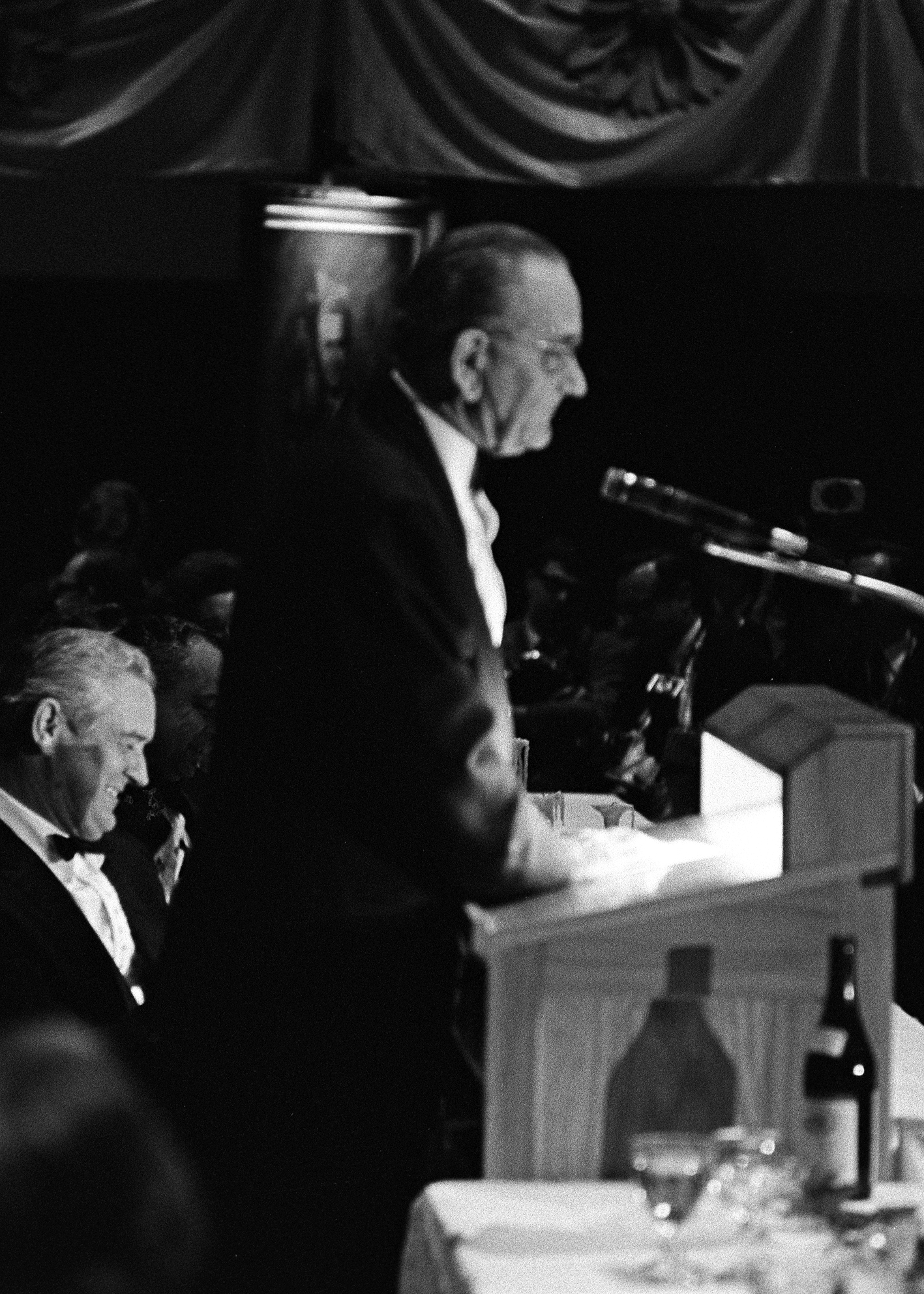
But as I discuss in Getting It Wrong, Johnson did not see the Cronkite report went it aired. The president at that time wasn’t in front of a television set. And he certainly wasn’t lamenting the loss of Cronkite’s support. Indeed, it is hard to fathom how he could have been much moved by a show he did not see.

At about the time Cronkite was intoning “mired in stalemate,” Johnson was in Austin, Texas, offering light-hearted banter at the 51st birthday party of Governor John Connally.

“Today,” the president said, “you are 51, John. That is the magic number that every man of politics prays for — a simple majority.”

WJC

Many thanks to Little Miss Attila
for linking to this post

Recent and related:

Woodward, ‘tombeur de Nixon’

In Anniversaries, Cinematic treatments, Debunking, Media myths, Washington Post, Watergate myth on April 25, 2011 at 7:18 am

That headline — which appeared with an item posted yesterday at Les In Rocks, a slick, Paris-based arts and music blog — translates to:

“Woodward, the guy who brought down Nixon.”

Which is hyperbole.

Bob Woodward and the Washington Post did not bring down Richard Nixon in the Watergate scandal of 1972-74.

But as the headline and accompanying interview with Woodward suggest, Wooward-hero worship can be surprisingly intense and deep-seated abroad.

The article’s opening paragraph declared:

“Not many people can boast of having been played in the movies by Robert Redford. In fact, there’s only one. His name is Bob Woodward. He’s a journalist, and with his colleague Carl Bernstein, in life as in the film All the President’s Men, brought down Richard Nixon in 1974 in the Watergate affair.”

(Here’s the original French version: “Peu d’hommes peuvent se vanter d’avoir été incarnés au cinéma par Robert Redford. En fait, il n’y en a qu’un. Il s’appelle Bob Woodward. Il est journaliste et, avec son collègue Carl Bernstein, dans la vie comme dans le film Les Hommes du Président, il fit tomber Richard Nixon en 1974 avec l’affaire du Watergate.”)

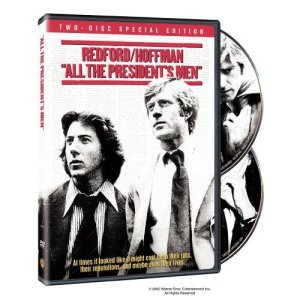
Redford, of course, played Woodward in the motion picture, All the President’s Men, which was released 35 years ago this month.

It is easily the most-viewed film about the scandal and, as I point out in Getting It Wrong, my media-mythbusting book that came out last year, All the President’s Men effectively sealed the heroic-journalist myth of Watergate.

The heroic-journalist interpretation has it that the scandal’s disclosure pivoted on Woodward and Bernstein’s dogged reporting for the Post, that they exposed the crimes of Watergate and forced Nixon’s resignation.

That’s an interpretation not even the Post — and not even Woodward — buy into.

As Woodward declared in an interview in 2004 with American Journalism Review:

To say the press brought down Nixon, that’s horseshit.”

Less indelicately, the Post’s then-ombudsman, Michael Getler, wrote in 2005:

“Ultimately, it was not The Post, but the FBI, a Congress acting in bipartisan fashion and the courts that brought down the Nixon administration. They saw Watergate and the attempt to cover it up as a vast abuse of power and attempted corruption of U.S. institutions.”

But the movie — which has aged impressively well — offers another, simpler, less-accurate interpretation.

As I write in Getting It Wrong:

All the President’s Men placed Woodward and Bernstein at the center of Watergate’s unraveling while denigrating the efforts of investigative agencies such as the FBI. The effect was to solidify and elevate the heroic-journalist myth, giving it dramatic power, and sustaining it in the collective memory.”

The film closes with the Woodward and Bernstein characters (played by Redford and Dustin Hoffman, respectively) at their respective desks in the Post’s brilliantly lighted newsroom, pounding away at their typewriters.

The newsroom is otherwise empty. Woodward and Bernstein remain oblivious to their colleagues as they slowly drift in. It’s Inauguration Day 1973 and the Post editors and reporters are shown gathering at television sets in the newsroom to watch as Nixon is sworn in to a second term. Woodward and Bernstein, however, remain at their desks, focused on their work.

The television sets show Nixon smiling as he completes the oath of office. The first volleys of a twenty-one gun salute begin to boom. Woodward and Bernstein continue their frantic typing and the cannonade resounds ever louder. The newsroom scene dissolves to a close-up of an overactive teletype machine, noisily battering out summaries about indictments, trials, and convictions of Nixon’s men.

The clattering machine spells out “Nixon resigns, Ford sworn in,” and stops abruptly. The movie’s over.

It’s an imaginative and effective ending which, as I write in Getting It Wrong, “pulls together the many strands of Watergate. But more than that, it offers an unmistakable assertion of the power and centrality of the press in Nixon’s fall.”

Indeed, it is perhaps the most powerful and vivid assertion of Watergate’s heroic-journalist myth. Who else but Woodward and Bernstein?

WJC

Recent and related:

That’s rich: Woodward bemoans celebrity journalism

In Anniversaries, Cinematic treatments, Debunking, Media myths, Washington Post, Watergate myth on April 24, 2011 at 11:33 am

The country’s foremost celebrity journalist, Bob Woodward of the Washington Post and Watergate fame, has deplored what he called the “curse” of celebrity journalism, which he reportedly said has infected the news media.

Woodward, celebrity journalist

Woodward was speaking the other night at a panel in Austin, Texas, that was convened to mark the 35th anniversary of All the President’s Men, the motion picture about the Watergate reporting of Woodward and his Post colleague, Carl Bernstein.

According to a report posted online by ABC News, Bernstein, who also was on the panel, complained that the culture of journalism has shifted dramatically since the Watergate era of the early 1970s. Woodward, according to the ABC post, characterized this shift the “curse” of celebrity journalism — the “Paris Hilton factor and Kardashian equation.”

Even if he was referring to excessive media attention to the likes of Paris Hilton and Kim Kardashian, it’s still pretty rich for Woodward to bemoan celebrity journalism — given that All the President’s Men established the cult of the contemporary celebrity journalist.

By “celebrity journalist,” I mean the journalist who has attained outsize prominence or who is regarded as more important than the people and the events he or she covers.

Sydney Schanberg, writing in the Village Voice in 2005, pointed out that the Watergate era of the early 1970s “can be fairly marked as the starting point of the age of journalists as celebrities. Bob Woodward and Carl Bernstein weren’t celebrities when they cracked the story for The Washington Post, but they soon would be, and a wave of emulators quickly began applying to journalism schools.”

Schanberg was incorrect about the Watergate effect on journalism schools: The surge in enrollments was well underway before Watergate, before Woodward and Bernstein became household names.

But he was quite correct about Watergate’s having represented a demarcation of modern celebrity journalism. (Alicia Shepard referred to this phenomenon in 1997, writing in American Journalism Review in 1997: “The Watergate affair changed journalism in many ways, not the least of which was by launching the era of the journalist as celebrity.” She also claimed in the article that Woodward and Bernstein “brought down a president.” Not so.)

More than any other single factor, the movie All the President’s Men propelled the media myth of the heroic journalist — the beguiling notion that Woodward and Bernstein’s investigative reporting of the Watergate scandal exposed the corruption of Richard Nixon and forced his resignation in disgrace in 1974.

As I discuss in Getting It Wrong, my media-mythbusting book that came out last year, All the President’s Men placed the characters of Woodward and Bernstein squarely if inappropriately “at the center of Watergate’s unraveling while denigrating the efforts of investigative agencies such as the FBI.

“The effect,” I write, “was to solidify and elevate the heroic-journalist myth, giving it dramatic power, and sustaining it in the collective memory.”

The heroic-journalist interpretation of Watergate has become “the most familiar storyline of Watergate: ready short-hand for understanding Watergate and its denouement, a proxy for grasping the scandal’s essence while avoiding its forbidding complexity,” I note in Getting It Wrong, adding:

“How the Post and its reporters uncovered Watergate is deeply ingrained in American journalism as one of the field’s most important and self-reverential stories.”

I further note in Getting It Wrong that the notion Woodward and Bernstein “exposed Nixon’s corruption is a favored theme in textbooks of journalism and mass communication.” And that offers a wholly inaccurate misleading reading of the history of Watergate.

Woodward and Bernstein didn’t bring down Nixon’s corrupt presidency. That was the effect of the collective if not always the coordinated efforts of the Justice Department, the FBI, special Watergate prosecutors, bipartisan panels of both houses of Congress, and the U.S. Supreme Court.

Against that tableau, the contributions of Woodward and Bernstein recede in significance.

WJC

Many thanks to Instapundit
Glenn Reynolds for linking to this post

Recent and related:

Something exaggerated in hero-worship of Woodward

In Anniversaries, Cinematic treatments, Debunking, Media myths, Washington Post, Watergate myth on April 21, 2011 at 9:55 am

There’s something exaggerated, and a bit cloying, about the recent spasm of adulation of Bob Woodward, he of the Washington Post and Watergate fame.

Movie that solidified the myth

Early this week, Woodward and former Post executive editor Ben Bradlee received a standing ovation from the nearly 1,000 people at a program at the Richard Nixon Presidential Library and Museum in California.

The library recently opened a gallery about the Watergate, the  scandal that cost Nixon the presidency in 1974.

The new exhibit replaced a display that offered a dubious and seriously distorted interpretation of Watergate, which declared among other things that Woodward and his reporting colleague, Carl Bernstein, “used anonymous sources exclusively to try and convict the President in the pages of the Post….” Nixon wasn’t a specific target of their award-winning Watergate reporting.

The replacement exhibit was undertaken after the National Archives took over the library from a private foundation. Woodward and Bradlee went to the library for what was billed as a conversation about Watergate.

Politico reported that Woodward and Bradlee attracted an audience that “listened with rapt attention and regular laughter as the two men traded wisecracks and reminisced about their roles in bringing down the 37thpresident.”

Left unaddressed by Politico was just what were those “roles in bringing down” Nixon. The implication was that their work for the Post was central in forcing the resignation of a corrupt president.

But not even Woodward and Bradlee go so far as to embrace that misleading interpretation of Watergate.

Bradlee asserted in 1997, at the 25th anniversary of Watergate’s signal crime, the break-in at the headquarters of the Democratic national committee:

“[I]t must be remembered that Nixon got Nixon. The Post didn’t get Nixon.”

And in 2004, Woodward told American Journalism Review:

To say the press brought down Nixon, that’s horseshit.”

The Politico piece noted that Bradlee “marveled at how many people still care about a decades-old conflict — one that turned Woodward, his reporting partner Carl Bernstein and Bradlee into the most famous journalists of their era.”

Why people still care is not especially difficult to fathom. It’s largely because Woodward, Bernstein, and to a lesser extent, Bradlee, are living reminders of the unmasking of America’s greatest political scandal — one that sent to jail nearly 20 men associated with Nixon’s presidency or his 1972 reelection campaign.

As I point out in my media-mythbusting book, Getting It Wrong:

“The complexity of the Watergate scandal— the lies, deceit, and criminality that characterized the Nixon White House; the multiple lines of investigation that slowly unwound the scandal, and the drama of what was an exceptional constitutional crisis — are not routinely recalled these days.

“The epic scandal [of 1972-74] has grown so distant that few Americans can accurately describe what took place.”

I further write in Getting It Wrong:

“What does stand out amid the scandal’s many tangles is the heroic-journalist version of Watergate — the endlessly appealing notion that the dogged reporting of two young, hungry, and tireless Washington Post journalists, Bob Woodward and Carl Bernstein, brought down Nixon and his corrupt presidency.

“The heroic-journalist has become the most familiar storyline of Watergate: ready short-hand for understanding Watergate and its denouement, a proxy for grasping the scandal’s essence while avoiding its forbidding complexity.”

The heroic-journalist myth — and the celebrity cult of Watergate — were solidified by the cinematic version of All the President‘s Men, Woodward and Bernstein’s book about their Watergate reporting.

The movie came out 35 years ago this month — and is to be a topic of discussion tonight when  Woodward, Bernstein, and movie star Robert Redford gather at the Lyndon Baines Johnson Library & Museum in Austin, Texas.

Redford played the Woodward character in All the President’s Men.

The event no doubt will be the occasion for more standing ovations, more cloying hero-worship.

WJC

Recent and related:

Canada’s CBC invokes Bay of Pigs suppression myth

In Anniversaries, Bay of Pigs, Debunking, Media myths, New York Times, Newspapers on April 17, 2011 at 2:38 am

CBC News in Canada invoked the hardy New York Times-Bay of Pigs suppression myth this weekend in a lengthy online article recapping the failed invasion of Cuba, which was launched 50 years ago today.

The suppression myth has it that the Times, at the behest of President John F. Kennedy, spiked or emasculated its detailed report about invasion preparations.

But as I discuss in Getting It Wrong, my media-mythbusting book that came out last year, neither Kennedy nor anyone in his administration asked or lobbied the Times to kill or tone down the pre-invasion report, which was published on the newspaper’s front page on April 7, 1961.

Moreover, the Times coverage of the pending invasion was not confined to that article.

As I point out in Getting It Wrong: “The suppression myth … ignores that several follow-up stories and commentaries appeared in the Times during the run-up to the invasion.”

The CBC, however, invoked the hoary suppression myth as if it were genuine. It declared, in reference to the Times report of April 7, 1961:

“The Times had actually played down their story at the direct request of Kennedy, something both he and The Times’ editors later regretted. Shortly after the invasion, Kennedy reportedly told a Times editor, ‘if you had printed more about the operation, you would have saved us from a colossal mistake.'”

No call to the Times

While Kennedy did not call on Times editors before the invasion, he did say on separate occasions in the months afterward that had the newspaper printed more details about the pending invasion, it “would have saved us from a colossal mistake.”

Of course, such comments were quite self-serving. I note in Getting It Wrong that they “represented an attempt to deflect blame for the debacle” at the Bay of Pigs, where the invasion force of CIA-trained exiles was rolled up within three days.

James (“Scotty”) Reston of the Times later characterized Kennedy’s comments as “a cop-out,” adding:

“It is ridiculous to think that publishing the fact that the invasion was imminent would have avoided this disaster. I am sure the operation would have gone forward” nonetheless.

I note in Getting It Wrong that the Times’ pre-invasion coverage cited no prospective date for the invasion. But the newspaper’s front-page reports in April 1961 unmistakably signaled that something was afoot, that an attempt to oust Castro by arms was forthcoming. And on April 17, 1961, at the Bay of Pigs in southern Cuba, the invasion force of some 1,400 exiles launched their ill-fated attack.

The Times wasn’t alone, either, in reporting about the pending invasion. Its competition on the pre-invasion story included the Miami Herald, the New York Herald Tribune, and Time magazine.

According to a critique published in May 1961 in The Reporter, a journalists’ trade publication, the pre-invasion story “was covered heavily if not always well” by the U.S. news media.

So what, then, accounts for the emergence and tenacity of the Times-Bay of Pigs suppression myth?

I write in Getting It Wrong that the myth’s most likely derivation lies in confusion with a separate episode during the Cuban Missile Crisis in October 1962, when Kennedy did ask the Times to hold off publishing a report about the Soviets having deployed nuclear-tipped weapons in Cuba.

On that occasion, when the prospect of a nuclear exchange seemed in the balance, the Times complied, holding off publication 24 hours.

“What likely has happened is that, over the years, distinctions between the separate incidents surrounding the Times and Cuba became blurred,” I write. “That is, it was mistakenly thought that Kennedy had called the Times executives about the newspaper’s coverage in the days before the Bay of Pigs invasion when, in fact, his call came on an entirely different matter in 1962.”

WJC

Recent and related:

More mythical claims for WaPo’s Watergate reporting

In Debunking, Media myths, Washington Post, Watergate myth on April 16, 2011 at 8:35 am

Nixon quits

The claims for the Watergate reporting of Bob Woodward and Carl Bernstein seldom are very modest. The mythical notion that their reporting brought down President Richard Nixon in 1974 is among the most cherished — and extravagant — tales in American journalism.

But the assertions posted yesterday at the online site of a Texas alternative newspaper were extraordinary in their lavishness.

The newspaper, the Austin Chronicle, declared:

“In the summer of 1972, when the unlikely duo of Washington Post reporters Woodward and Bernstein stumbled onto what would turn out to be the most important hard news story of the century, investigative journalism and the gritty and laborious, but ultimately necessary, processes it entailed reached a zenith.

“Public people in positions of great – and presumably unassailable – power went to prison as a result of Woodward and Bernstein’s dogged determination not to allow what was initially perceived as a nonstory to die out. They stuck to their guns, their guts, and their deadlines. And in the end, President Richard Milhous Nixon, facing impeachment and charges of high crimes and misdemeanors, was forced out of office by genuine, bipartisan outrage. Absolute hubris corrupted absolutely. It was a brief, shining moment when American journalism not only shook the pillars of power but also very nearly toppled them.”

There’s a lot of exaggeration to unpack there, so let’s focus on key claims:

  • Woodward and Bernstein “stumbled onto what would turn out to be the most important hard news story of the century.”
  • “Public people” went to prison because of their Watergate reporting.
  • Woodward and Bernstein’s work on Watergate was a moment when “American journalism … shook the pillars of power.”

This is not to quibble with word choice, but Woodward and Bernstein certainly did not stumble onto the Watergate scandal. They were assigned by editors at the Washington Post to dig into the highly suspicious breakin in June 1972 at the headquarters of the Democratic national committee.

As Edward Jay Epstein pointed out in his brilliant 1974 essay, the reporting of Woodward and Bernstein was highly derivative, sustained by leaks from federal investigations into the crimes of Watergate.

And I note in my media-mythbusting book, Getting It Wrong, that “Woodward and Bernstein did not uncover defining and decisive elements of the Watergate scandal” — the White House attempt to cover-up crimes associated with the breakin and the payment of hush money to the Watergate burglars.

Those aspects of the scandal, Woodward was quoted as saying in 1973, were “held too close. Too few people knew. We couldn’t get that high.”

As for the claim that Woodward and Bernstein sent “public people” to jail: Well, who were they?

This is not a claim that Woodward and Bernstein are known to make publicly. And it’s not a claim that appears in their book, All the President’s Men, which describes their reporting on Watergate.

A case might be made that their reporting about the “dirty tricks” organized by Donald Segretti, a minor figure in the Watergate scandal, led to his imprisonment. Segretti pleaded guilty to three misdemeanor charges of distributing illegal campaign materials during the 1972 Democratic primaries and spent 4 1/2 months in prison.

But as Epstein noted in his essay, “neither the prosecutors, the grand jury, nor the Watergate Committee … found any evidence to support the Bernstein-Woodward thesis that Watergate was part of the Segretti operation.” Segretti’s dirty tricks were a sideshow, not central elements of the Watergate scandal.

Nor can it be accurately said that Woodward and Bernstein’s work on Watergate represented a moment when “American journalism … shook the pillars of power.”

Those pillars were shaken by an unprecedented constitutional crisis caused not by investigative journalism but by the illegal conduct of Nixon, his senior aides, and officials in reelection campaign.

Nixon resigned the presidency in August 1974 following release of audiotapes he secretly made; the content of the tapes showed he had approved an attempt to divert the FBI from investigating the crimes of Watergate. The incriminating tapes were surrendered only after the Supreme Court ruled unanimously that the president must turn them over to federal prosecutors.

Nixon, then, was forced from office only after the disclosure of unequivocal proof that he had obstructed justice in the investigation of the crimes of Watergate. The Washington Post had nothing to do with those disclosures.

As Ben Bradlee, the Post’s executive editor during the Watergate period has said: It “must be remembered that Nixon got Nixon. The Post didn’t get Nixon.”

Or as Woodward put it in an interview in 2004:

To say the press brought down Nixon, that’s horseshit.”

That’s earthy but telling perspective. And it represents a useful antidote to breathtaking and lavish claims about the effects of newspaper reporting.

WJC

Recent and related:

A fiasco for the press, too: Error, hype marked Bay of Pigs reporting

In Anniversaries, Bay of Pigs, Debunking, New York Times, Newspapers, Washington Post on April 15, 2011 at 3:17 am

The Wall Street Journal told of at least three landings in “a land, air and sea struggle” to topple Fidel Castro’s regime in Cuba.

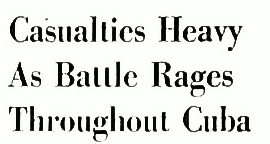
Miami Herald headline

The Miami Herald spoke of battles raging “throughout” the island.

The United Press International wire service said invading “revolutionaries … appeared to have knocked back Fidel Castro’s forces in the initial assault.”

Thus, a sampling of some of the erroneous first U.S. news reports about the ill-fated invasion of Cuba, launched 50 years ago this weekend at the Bay of Pigs.

Castro’s military overwhelmed the assault in less than three days; the CIA-trained invasion force of some 1,400 Cuban exiles never gained much more than a bitterly contested beachhead.

The thwarted invasion entrenched Castro’s dictatorship and represented a major foreign policy setback for the United States and the three-month-old administration of President John F. Kennedy.

It was something of a fiasco for the U.S. news media as well.

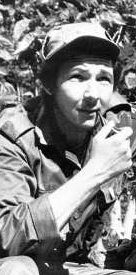
Raul Castro: Not captured

No correspondents were with the invading forces and Castro’s regime imposed a blackout on U.S. correspondents assigned to Cuba. The first news accounts of the invasion of April 17, 1961, as a result were wildly inaccurate and, in some cases, highly colorful and imaginative.

Those initial reports, while still interesting on their face, offer timeless testimony to the extraordinary difficulties of covering conflict from afar.

They also offer a lesson the U.S. news media seem intent on never remembering: First reports from the battlefield, or from the scene of a disaster, almost reliably will be in error. Cautious reporting and scrutiny of sources are thus always advisable amid uncertain and shifting conditions.

Such lessons tend to remain unlearned, however — as was apparent in the highly exaggerated news reports about violence and mayhem that supposedly swept New Orleans in the immediate aftermath of Hurricane Katrina’s landfall in 2005.

As I note in my media-mythbusting book, Getting It Wrong, “the erroneous and exaggerated reporting [about post-Katrina New Orleans] had the cumulative the effect of painting for America and the rest of the world a scene of surreal violence and terror, something straight out of Mad Max or Lord of the Flies.”

I further note that “initial and worst-case estimates of disaster casualties almost always are exaggerated. … Recognition of this tendency may well have helped to temper or curb the exaggerated reports of lawlessness and violence” in Katrina’s wake.

Revisiting the Bay of Pigs coverage also demonstrates how wished-for outcomes can color and distort news coverage.

The Miami Herald, which clearly wanted Castro gone, was eager to report imagined gains by the undermanned exile force, while offering no sources at all in its breathless accounts.

Beneath a banner headline that read, “Invaders Slug Into Interior,” the Herald reported on April 18, 1961, that the anti-Castro rebels “were pushing into the interior of Cuba” after launching assaults “at several key points” on the island.

“It was brother against brother,” the Herald said of the fighting, adding, “A virtual blackout was stretched across Cuba since the first shot of the civil war was fired.”

The newspaper further reported — while citing no sources — that it had “learned that the rebel troops are paying heavily for every mile gained.”

The Herald also attempted to divine the invaders’ strategy, asserting: “Rebels pouring in from Las Villas in the soft underbelly of Cuba were headed towards Central Highway in an apparent attempt to control the strategic road and cut the island in two.”

While somewhat more cautious than the colorful account in the Miami Herald, the Wall Street Journal of April 18, 1961, reported that at “least three widely scattered landings” had “brought an immediate state of emergency and brisk fighting inside Cuba and rapid repercussions around the globe.”

The Journal noted that the “cutoff of telephone and cable communications by the Castro government and conflicting battle reports made the tide of fighting difficult to assess,” but added:

“The invaders seem bent on cutting Cuba in half, then wheeling westward to Havana, about 100 miles from their original beachhead.”

The Journal didn’t hold back from publishing what it acknowledged were unverified reports that anti-Castro forces had captured the Isle of Pines and freed 10,000 political prisoners; had taken Santiago de Cuba, the country’s second-largest city, and had seized Raul Castro, Fidel’s brother.

“None of these reports were confirmed, however,” the Journal added — as if such a disclaimer were of much value after having offered up what proved to be wild and fanciful rumors.

The Washington Post of April 18, 1961, turned to wire service dispatches in compiling its first account of the invasion. It led with a United Press International report that breathlessly declared:

“Invading Cuban revolutionary troops, landed from the sea and dropped from planes, fought a bloody battle yesterday in the swamps 90 miles southeast of Havana and appeared to have knocked back Fidel Castro’s forces in the initial assault.

“There were reports that segments of the Cuban Navy had revolted.

“The revolutionary front directed by former Castro Premier Jose Miro Cardona in a secret United States headquarters was estimated to have thrown 5,000 anti-Castro Cubans into action in 48 hours on the east and south coasts.”

The Post’s report incorporated an Associated Press dispatch that said “the invaders hit the beaches in four of Cuba’s six provinces.”

Within weeks of the failed invasion, one of the leading journalists in America, James (“Scotty”) Reston of the New York Times, charged in a column that U.S. government officials and the CIA had fed reporters erroneous information about the assault on Cuba.

“When the landings started,” Reston wrote, “American reporters in Miami were told that this was an ‘invasion’ of around 5,000 men — this for the purpose of creating the impression among the Cuban people that they should rise up to support a sizable invasion force.

“When the landing … began to get in trouble, however,” Reston added, “officials here in Washington put out the story — this time to minimize the defeat in the minds of the American people — that there was no ‘invasion’ at all, but merely a landing of some 200-400 men to deliver supplies to anti-Castro guerrillas already in Cuba.

“Both times the press was debased for the Government’s purpose.”

Could be, but journalists amply demonstrated in their reporting that they were inclined to be gullible accomplices — eager at least to embrace wishful scenarios about the invasion. Official disinformation only partly explains the media credulity in reporting the Bay of Pigs.

News outlets bear a far heavier burden for botching the coverage.

WJC

Recent and related:

Always ‘follow the money’ — even if it’s made up

In Anniversaries, Cinematic treatments, Debunking, Media myths, Washington Post, Watergate myth on April 11, 2011 at 10:26 am

Watergate’s single most famous line — “follow the money” — is impressively durable and versatile.

Especially so for a made-up line.

Follow the money” wasn’t guidance offered during the Watergate scandal of 1972-74. It wasn’t advice crucial to unraveling the most significant case of corruption in American history.

It was a line written into the screenplay of All the President’s Men, the 1976 motion picture that dramatized the Watergate reporting of Bob Woodward and Carl Bernstein for the Washington Post.

“Follow the money” was spoken by Hal Hollbrook, who played Woodward’s stealthy “Deep Throat” source in All the President’s Men. (The real-life “Deep Throat” was revealed in 2005 to have been W. Mark Felt, formerly the second-ranking official at the FBI.)

The line is so pithy — and seems to offer such sage and telling advice — that it crossed long ago from the cinema to the vernacular, and has become embedded in Watergate lore.

A telling example of how deeply “follow the money” has burrowed into popular culture was apparent in a commentary posted yesterday by the scrappy Washington Times newspaper.

The commentary discussed companies that pay no corporate federal taxes, declaring: “For too long the American public has been hornswoggled by this century’s ‘robber barons.'”

The commentary included this passage:

“No wonder corporations court politicians. As Deep Throat so wisely told reporter Bob Woodward, ‘Always follow the money.‘”

Always follow the money, eh?

Even if Felt, Woodward’s real-life “Deep Throat” source, had offered such guidance, it wouldn’t have been sufficient to implicate Nixon in the crimes of  Watergate.

Unraveling the scandal required much more than identifying and following a trail of illicit fundraising and money-laundering. Those were elements of Watergate, but they weren’t decisive in forcing President Richard Nixon’s resignation in August 1974.

As I note in Getting It Wrong, my media-mythbusting book that came out last year, some 20 men associated with Nixon’s  presidency or reelection campaign went to jail for crimes linked to Watergate.

To roll up a scandal of such dimension, I write in Getting It Wrong, “required the collective if not always the coordinated forces of special prosecutors, federal judges, both houses of Congress, the Supreme Court, as well as the Justice Department and the FBI.

“Even then,” I note, “Nixon likely would have served out his [second] term if not for the audiotape recordings he secretly made of most conversations in the Oval Office of the White House. Only when compelled by the Supreme Court did Nixon surrender those recordings, which captured him plotting the cover-up and authorizing payments of thousands of dollars in hush money.”

Those were the disclosures that brought about Nixon’s resignation in August 1974.

The reporting of the Washington Post was marginal to that outcome, despite the message and storyline of All the President’s Men.

WJC

Recent and related:

Inspirations to journalists: Woodward, Bernstein — and Gaga?

In Cinematic treatments, Debunking, Media myths, Washington Post, Watergate myth on April 9, 2011 at 7:41 am

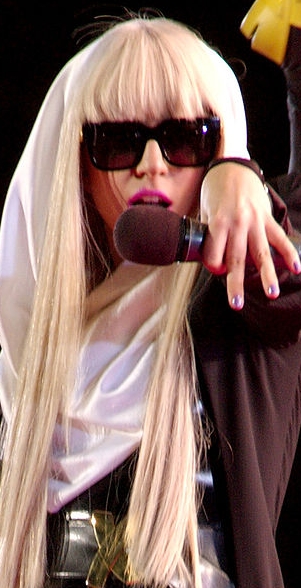
The Poynter Institute, a journalism training center dedicated to “teaching and inspiring journalists and media leaders,” offered up a myth of Watergate yesterday in an article that ruminated about Lady Gaga’s potential to “awaken her young fans to 21st century journalism.”

Gaga: Inspiring?

The Poynter piece discussed the, ahem, news that pop star Gaga would guest-edit the May 17 editions of the giveaway newspaper Metro. The freesheet is available in many large cities in North America, Europe, and Asia. Metro was launched by a Swedish company in 1995.

Of particular interest to Media Myth Alert is not so much Lady Gaga’s one-off editing adventure but the Poynter article’s reference to Bob Woodward and Carl Bernstein, lead Washington Post reporters on the Watergate scandal of the 1970s.

The article stated:

“As Lady Gaga takes her celebrity into the worlds of journalism and photography, does it bring cachet to a struggling and confused industry that might need a tad of glamour and inspiration? She certainly has encouraged her fans to blog, create videos and design costumes.

“In the 1970s Bob Woodward and Carl Bernstein inspired a generation to major in journalism and become investigative reporters. … Could Lady Gaga awaken her young fans to 21st century journalism?”

Woodward

The notion that the work of Woodward and Bernstein “inspired a generation” of journalism students is a persistent subsidiary myth of Watergate.

There’s no evidence to support it.

I note in my media-mythbusting book, Getting It Wrong, that the subsidiary myth “lives on despite its thorough repudiation in scholarly research.”

One study was financed by the Freedom Forum media foundation and released in 1995. In it, researchers Lee B. Becker and Joseph D. Graf reported finding that “growth in journalism education result[ed] not from specific events as Watergate … but rather to a larger extent from the appeal of the field to women, who ha[d] been attending universities in record numbers. The growth also in part reflect[ed] the applied nature of the field and its link to specific job skills.”

Becker and Graf added:

“There is no evidence … that Watergate had any effect on enrollments.”

Seven years earlier, Maxwell E. McCombs reported in the Gannett Center Journal that “the boom in journalism education was underway at least five years before” the Watergate break-in in 1972. That also was the year Woodward and Bernstein published the investigative reports about Watergate that won for the Post the coveted Pulitzer Prize for public service.

McCombs, a veteran mass communication scholar, further wrote:

“It is frequently, and wrongly, asserted that the investigative reporting of Woodward and Bernstein provided popular role models for students, and led to a boom in journalism school enrollments. The data … reveal, however, that enrollments already had doubled between 1967 and 1972….”

The appeal of the subsidiary myth, I write in Getting It Wrong, stems from the fact that it is so “easily understood: It endures because it seems irresistibly logical and straightforward—too obvious, almost, not to be true.”

That is, Woodward and Bernstein made journalism seem sexy, vital, urgent. They were, after all, subjects of a major motion picture, All the President’s Men, which was based on their best-selling book by the same title.

And their reporting did bring down a corrupt president.

Or so goes the central myth of Watergate — that of the heroic-journalist. The heroic-journalist meme holds that Woodward and Bernstein exposed the crimes and misdeeds of Richard Nixon’s presidency, forcing him from office.

But as I point out in Getting It Wrong, not even the Post buys into that simplistic interpretation of American journalism’s greatest political scandal.

To explain Watergate “through the lens of the heroic-journalist is to abridge and misunderstand the scandal and to indulge in a particularly beguiling media-driven myth,” I write, noting:

“The heroic-journalist interpretation minimizes the far more decisive forces that unraveled the scandal and forced Nixon from office.”

Those forces typically wielded subpoenas and included special Watergate prosecutors, federal judges, bipartisan panels of both houses of Congress, the Supreme Court, the Justice Department, and the FBI.

“Even then,” I write in Getting It Wrong, “Nixon likely would have served out his term if not for the audiotape recordings he secretly made of most conversations in the Oval Office of the White House. Only when compelled by the Supreme Court did Nixon surrender those recordings, which captured him plotting the cover-up and authorizing payments of thousands of dollars in hush money.”

WJC

My thanks to LittleMissAttila for linking to this post.

Recent and related:

Busting the NYTimes suppression myth, 50 years on

In Anniversaries, Bay of Pigs, Debunking, Media myths, New York Times on April 6, 2011 at 7:30 am

Few tales in American journalism offer such rich, potent, and timeless lessons as that of the New York Times’ censoring itself in the run-up to the Bay of Pigs invasion 50 years ago this month.

Had the Times reported all it knew about the planned assault on Fidel Castro’s Cuba, had the Times not held back, the ill-fated invasion may well have been called off and the United States would have been spared an acute foreign policy reversal.

Or so the media myth has it.

The New York Times-Bay of Pigs suppression myth — one of 10 media-driven myths debunked in my latest book, Getting It Wrong — endures as a telling reminder about the hazards that can befall journalists when they yield to the government’s agenda on national security.

Indeed, the Times’ purported spiking has been called the “symbolic journalistic event of the 1960s.”

Only the Times didn’t censor itself.

It didn’t kill, spike, or otherwise emasculate the news report published 50 years ago tomorrow that lies at the heart of this media myth.

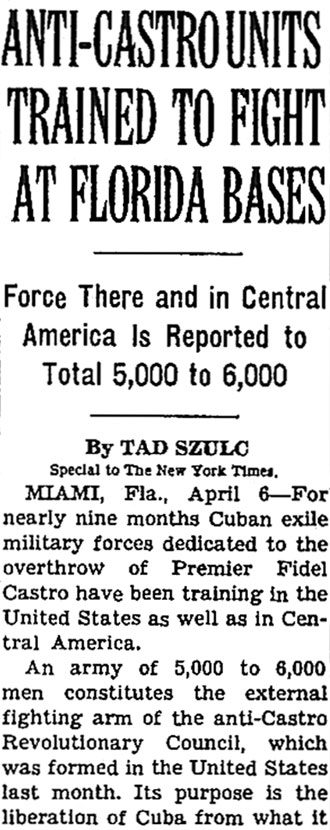
That article was written by a veteran Times correspondent named Tad Szulc, who reported that 5,000 to 6,000 Cuban exiles had received military training for a mission to topple Fidel Castro’s regime; the actual number of invaders was about 1,400.

But overstatement was hardly the article’s most controversial or memorable element.

Supposedly, editors at the Times caved in to pressure from the White House of President John F. Kennedy and eviscerated Szulc’s article, removing key elements about the invasion plans.

That Kennedy intervened in the Times’ editorial decisionmaking in April 1961 is widely believed, and lives on as a cautionary tale. As the trade publication Editor & Publisher put it a few years ago:

“The Times, of course, famously held off on the story at the request of President John F. Kennedy, who later regretted the decision.”

Even the Times has bought into this erroneous meme.

The newspaper’s executive editor, Bill Keller, wrote in a column a few weeks ago:

“We may err on the side of keeping secrets (President Kennedy reportedly wished, after the fact, that The Times had published what it knew about the planned Bay of Pigs invasion, which possibly would have helped avert a bloody debacle) or on the side of exposing them. We make the best judgments we can.”

Had Keller taken time to consult a database of issues of his newspaper, he would have found that the Times reported in detail about preparations to infiltrate the CIA-trained exiles into Cuba, in hopes of sparking an uprising that would overthrow Castro.

As I write in Getting It Wrong, “the notion that Kennedy asked or persuaded the Times to suppress, hold back, or dilute any of its reports about the pending Bay of Pigs invasion is utter fancy. There is no evidence that Kennedy or his administration knew in advance” about Szulc’s dispatch, which was filed from Miami on April 6, 1961.

The article was published the following day – above the fold on the Times front page.

Nor, I write, is there any evidence “that Kennedy or anyone in his administration lobbied or persuaded the Times to hold back or spike that story, as so many accounts have said.”

After the cruise

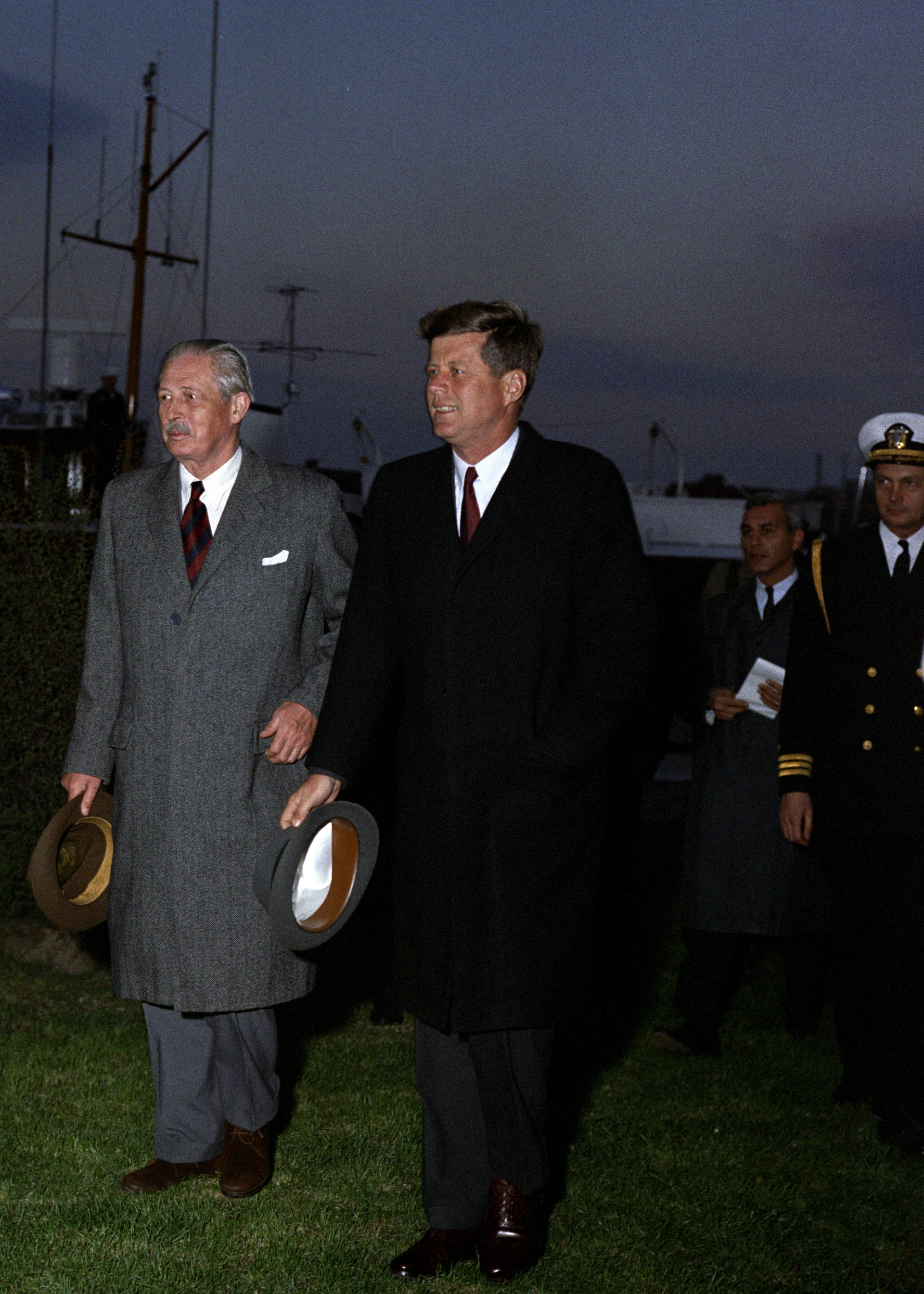
Indeed, while Szulc’s dispatch was edited in New York on the afternoon of April 6, 1961, Kennedy was playing host to Harold Macmillan, the British prime minister, on a lengthy cruise down the Potomac River to Mount Vernon.

Kennedy returned to the White House around 6:30 that evening, leaving almost no time for the president to have intervened and negotiated with Times editors before the newspaper’s first edition hit the streets around 7 p.m.

According to the Kennedy presidential library, White House telephone logs reveal that no calls were placed on April 6, 1961, to top Times executives such as President Orvil E. Dryfoos, Managing Editor Turner Catledge, or Washington bureau chief James “Scotty” Reston. (In The Powers That Be, David Halberstam depicted Kennedy as having called Reston to argue “strongly and passionately” against the Times’ publishing Szulc’s story.)

In his book, Without Fear or Favor, an insider’s look at the Times, Harrison Salisbury offered a detailed account about the handling of Szulc’s dispatch.

“The government in April 1961,” Salisbury wrote, “did not … know that The Times was going to publish the Szulc story, although it was aware that The Times and other newsmen were probing in Miami. Nor did President Kennedy telephone Dryfoos, Scotty Reston or Turner Catledge about the story…. The action which The Times took [in editing Szulc’s report] was on its own responsibility,” the result of internal discussions and deliberations.

The editing was conservative but not unreasonable.

A reference to the invasion’s imminence was removed, serving to improve its accuracy. The force of Cuban exiles did not launch the assault until April 17, 1961, 10 days after Szulc’s report appeared. Such an interval hardly suggests “imminence.”

Besides, as Reston pointed out in his memoir, “imminence” is a prediction, not a fact.

References to the CIA’s role in training the Cuban exiles were omitted in favor of the more nebulous terms “U.S. officials” and “U.S. experts.” Catledge, the managing editor, said he reasoned that the U.S. government had more than a few intelligence agencies, “more than most people realize, and I was hesitant to specify the CIA when we might not be able to document the charge.”

An entirely defensible if cautious editorial decision.

The prominence given the Szulc report also was modified, from a planned four-column display to a single column. If the invasion was not imminent, then a four-column headline was difficult to justify, Catledge reasoned.

Those decisions were judicious, not unreasonable, and had the effect of improving the accuracy of Szulc’s dispatch.

“Most important,” as Salisbury wrote, “The Times had not killed Szulc’s story. … The Times believed it was more important to publish than to withhold. Publish it did.”

The Times-suppression myth, I point out in Getting It Wrong, likely stems from confusion with a separate episode during the Cuban Missile Crisis in October 1962, when Kennedy did ask the Times to postpone publication of a report about the Soviets having deployed nuclear-tipped weapons in Cuba.

On that occasion, when the prospect of a nuclear exchange seemed in the balance, the Times complied, holding off publication 24 hours.

WJC

Many thanks to Instapundit
Glenn Reynolds for linking to this post

Recent and related: