W. Joseph Campbell

Posts Tagged ‘Nixon’

‘Deep Throat’ garage marker errs about Watergate source disclosures

In Debunking, Media myths, Washington Post, Watergate myth on August 18, 2011 at 10:16 am

An historical marker went up the other day outside the parking garage in Arlington, Virginia, where Washington Post reporter Bob Woodward periodically met during the Watergate scandal with a stealthy, high-level source code-named “Deep Throat.”

It’s a handsome marker, artfully scalloped at the top.
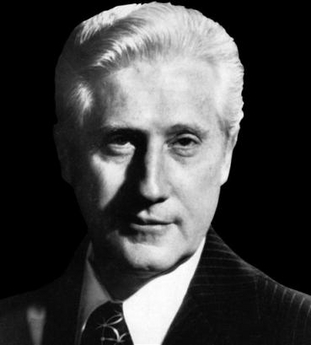
Felt: Cagey source

But it errs in describing the information Woodward received from “Deep Throat,” who in 2005 revealed himself as W. Mark Felt, formerly the FBI’s second in command.

The marker, which is titled “Watergate Investigation,” says:

“Felt provided Woodward information that exposed the Nixon administration’s obstruction of the FBI’s Watergate investigation.”

Not so.

Such evidence would have been so damaging and explosive that it surely would have forced Nixon to resign the presidency well before he did, in August 1974.

Felt didn’t have that sort of information — or (less likely) didn’t share it with Woodward.

As described in Woodward’s book about Felt, The Secret Man, the FBI official provided or confirmed a good deal of piecemeal evidence about the scandal as it unfolded.

And he could be cagey and evasive in doing so.

Here, for example, is a passage from Secret Man, in which Woodward discussed efforts he and his Post colleague Carl Bernstein had made to identify Nixon’s chief of staff, H.R. Haldemann, as one of five people controlling a secret slush fund:

“I told Felt that we were going to publish a story next week saying that Haldemann was the fifth and final person to control the secret fund.

“‘You’ve got to do it on your own,’ Felt said.

“I said I expected him to warn me if we were wrong.

“Felt said he would.

“So he was essentially confirming Haldemann?

“‘I’m not,’ he said. ‘You’ve got to do it on your own.’

“It was a distinction that didn’t make sense to me. I was tired of this dancing around.

“‘You cannot use me as a source [on that story],’ Felt said. ‘I won’t be a source on a Haldemann story.””

And so it went.

(All the President’s Men, Woodward and Bernstein’s book about their Watergate reporting, says Woodward’s conversations with “Deep Throat” were intended “only to confirm information that had been gathered elsewhere and to add some perspective.”)

Woodward met Felt at the garage six times from October 1972 to November 1973, the marker notes. The last meeting at the garage was a few months after Felt had been passed over for the FBI directorship and retired.

Not until late summer 1974 — months after Felt left the FBI — did unequivocal evidence emerge about Nixon’s attempt to thwart the agency’s investigation into Watergate.

That came when Nixon complied with a unanimous Supreme Court ruling and surrendered audiotape recordings he had secretly made of conversations at the White House.

A recording of Nixon’s meeting with Haldemann on June 23, 1972, revealed that the president had sought to deflect or derail the FBI investigation into the burglary six days before at the headquarters of the Democratic National Committee at the Watergate complex in Washington.

The recording was called the “Smoking Gun” tape — and that tape, not information Felt gave Woodward, exposed Nixon’s guilt and forced his resignation.

The tape offered stunning and incontrovertible evidence that Nixon “had participated in an obstruction of justice almost from the outset” of the scandal, Stanley I. Kutler, the leading historian of the scandal, wrote in The Wars of Watergate.

As I note in my latest book, Getting It Wrong, had Nixon not recorded his conversations, he likely would have survived the Watergate scandal and served out his second term.

The marker outside the “Deep Throat” garage contains another, smaller error, too.

It says it was “erected in 2008 by Arlington County, Virginia.” But the online news site arlnow .com pointed out that the marker went up late last week — “after a three year delay.”

WJC

Recent and related:

Fox News misremembers Watergate and ‘follow the money’

In Cinematic treatments, Debunking, Media myths, Washington Post, Watergate myth on August 16, 2011 at 9:20 am

I’ve referred to “follow the money” as Watergate’s best-known made-up line.

It also can be thought of as Watergate’s best-known misremembered line.

I say that because a Fox News commentary posted yesterday thoroughly misremembered the phrase as having been part of the “media circus” of Watergate in the months before the scandal reached its denouement with Richard Nixon’s resignation in August 1974.

The Fox commentary declared:

“America was transfixed for months by [Watergate-related] televised hearings presided over by the colorful Sen. Sam Ervin. … We learned about the mysterious insider, pornographically code-named ‘Deep Throat’ murmuring intriguing clues like ‘Follow the Money….’ It was a media circus.”

But as I’ve noted at Media Myth Alert, follow the money” was not part of the vernacular of Watergate. It was never offered as advice — murmured or otherwise — by the stealthy “Deep Throat” source, who met periodically with Bob Woodward of the Washington Post as the scandal unraveled.

(The identity of “Deep Throat” remained a secret for more than 30 years until W. Mark Felt, a former top FBI official, self-identified himself as having been Woodward’s secret source during Watergate.)

What’s more, “follow the money” appeared in no Watergate-related article or editorial in the Post until June 1981.

Nor is the line to be found in All the President’s Men, the book Woodward and his Post colleague, Carl Bernstein, wrote about their Watergate reporting.

The phrase exists only in the movies — in the cinematic version of All the President’s Men, which came out in April 1976.

Follow the money” was written into the screenplay of All the President’s Men and spoken by the actor Hal Holbrook, who turned in a memorable performance as “Deep Throat.”

Holbrook intoned “follow the money” with such steely assurance that it did indeed seemed to suggest a way — however simplistic — to unravel the scandal.

But even if “Deep Throat”/Felt had counseled Woodward to “follow the money,” the advice would have neither unraveled Watergate nor led the reporter to Nixon.

Nixon quit the presidency not because he misused campaign funds; he resigned in disgrace after it became clear he had sought to obstruct justice by covering up the signal crime of Watergate, the break-in at the headquarters of the Democratic National Committee in June 1972.

As I note in my latest book, Getting It Wrong, rolling up a scandal of the dimension and complexity of Watergate required “the collective if not always the coordinated forces of special prosecutors, federal judges, both houses of Congress, the Supreme Court, as well as the Justice Department and the FBI.

“Even then,” I write, “Nixon likely would have served out his term if not for the audiotape recordings he secretly made of most conversations in the Oval Office of the White House.

“Only when compelled by the Supreme Court did Nixon surrender those recordings, which captured him plotting the cover-up” — which cost him the presidency.

WJC

Recent and related:

Following the money on 37th anniversary of Nixon’s fall

In Anniversaries, Cinematic treatments, Debunking, Media myths, Washington Post on August 9, 2011 at 12:55 am

Nixon resigns, 1974

It’s somehow fitting on this, the 37th anniversary of President Richard Nixon’s resignation, to direct attention to the myth and hyperbole that embrace the best-known line of the Watergate scandal, the line that supposedly helped bring him down.

That line, of course, is “follow the money,” which purportedly was crucial advice given the Washington Post by a super-secret, high-level source code-named “Deep Throat.”

Follow the money” was said to have been so telling and effective that it’s still cited as exemplary guidance applicable in journalism, politics, and finance.

Just yesterday, for example, Barry Nolan, a journalist and contributor to Boston Magazine’sBoston Daily” blog, invoked the famous phrase, writing:

“Any time you really want to know why a vote happened the way it did, the single best piece of advice ever given came from ‘Deep Throat,’ the shadowy tipster in the Watergate scandal. ‘Follow the money,’ he told the Washington Post reporters.”

It may seem like stellar advice, but it’s guidance that the “Deep Throat” source offered only in the movies.

As I’ve discussed at Media Myth Alert, “follow the money” is Watergate’s most famous made-up line.

The phrase was written into the screenplay of All the President’s Men, the 1976 cinematic version of the book by Bob Woodward and Carl Bernstein of the Washington Post.

“Follow the money” appears nowhere in Woodward and Bernstein’s book about their Watergate reporting — reporting that did not, as I discuss in my latest work, Getting It Wrong, take down Nixon’s corrupt presidency.

Nor did “follow the money” appear in any Watergate-related news article or editorial in the Post until June 1981, nearly seven years after Nixon’s resignation.

Nor did “Deep Throat” — who was self-identified in 2005 as W. Mark Felt, formerly the FBI’s second-ranking official — utter the line in his periodic meetings with Woodward. (And Felt/”Deep Throat” didn’t meet Bernstein until 2008.)

Follow the money” was memorably intoned not by Mark Felt but by Hal Holbrook, the actor who played “Deep Throat” in All the President’s Men.

As I’ve noted, Holbrook turned in a marvelous performance as a tormented, conflicted, and stealthy “Deep Throat.”

Holbrook delivered the “follow the money” line with such conviction and steely assurance, that it seemed for all the world to offer a way through the labyrinth of the Watergate scandal.

But even if Woodward had been counseled to “follow the money,” the advice certainly neither would have unraveled Watergate nor led him to Nixon.

Nixon resigned 37 years ago today not because he misused campaign funds but because he sought to obstruct justice by covering up the signal crime of Watergate, the break-in at the headquarters of the Democratic National Committee in June 1972.

The simplified follow-the-money  interpretation of Watergate effectively deflects attention from the decisive forces that ultimately forced Nixon from office.

As I note in Getting It Wrong, rolling up a scandal of Watergate’s intricacy and dimension required “the collective if not always the coordinated forces of special prosecutors, federal judges, both houses of Congress, the Supreme Court, as well as the Justice Department and the FBI.

“Even then,” I write, “Nixon likely would have served out his term if not for the audiotape recordings he secretly made of most conversations in the Oval Office of the White House.

“Only when compelled by the Supreme Court did Nixon surrender those recordings, which captured him plotting the cover-up” that cost him the presidency.

WJC

Recent and related:

No ‘rock-em,’ no ‘sock-em’: What ails WaPo

In Debunking, Jessica Lynch, Media myths, Newspapers, Washington Post, Watergate myth on August 7, 2011 at 1:59 am

The ombudsman of the Washington Post, Patrick Pexton, weighs in today with platitudes and hang-wringing about the newspaper. He mostly misses the mark.

Pexton writes in his column that the Post’s “future lies not with the rich; it lies with the citizenry.

“This newspaper must be the one source of high-quality, probing Washington news that readers in this region and across the country can look to for holding their government accountable. This publication must be for all Americans.”

Oh, brother.

But wait: Here’s more vague abstraction:

“The Post,” Pexton writes, “can’t be a liberal publication or a conservative one. It must be hard-hitting, scrappy and questioning — skeptical of all political figures and parties and beholden to no one. It has to be the rock-’em-sock-’em organization that is passionate about the news. It needs to be less bloodless and take more risks when chasing the story and the truth.”

A “rock-’em-sock-’em organization,” eh? Well, that’s useful guidance.

In his five or so months as ombudsman, Pexton hasn’t dared touch the electrified third rail about the Post, which one of his predecessors, Deborah Howell, gamely if belatedly addressed.

That’s a decided lack of intellectual diversity in the Post’s newsroom. In mid-November 2008, shortly after Barack Obama was elected president, Howell wrote in her ombudsman column:

“I’ll bet that most Post journalists voted for Obama. I did. There are centrists at The Post as well. But the conservatives I know here feel so outnumbered that they don’t even want to be quoted by name in a memo.”

Howell’s column quoted Tom Rosenstiel of the Project for Excellence in Journalism as saying that “conservatives are right that journalism has too many liberals and not enough conservatives. It’s inconceivable that that is irrelevant.”

In Obama's thrall

The lack of intellectual diversity often shows in the Post’s report. Even casual reading signals that the newspaper remains in the thrall of Obama, despite his clearly failing presidency.

Obama scarcely gets “rock-’em-sock-’em” treatment from the Post.

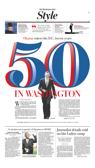
Last Wednesday, for example, the Post’s once-edgy “Style” section devoted most of its front page to a cheery feature about the meaning of Obama’s turning 50-years-old.

“On Thursday,” the article gushed, “President Obama — one of American history’s most precocious achievers — joins the ranks of Washington 50-somethings ….”

But what ails the Post goes well beyond its routinely tender treatment of Obama.

The Post’s local report is superficial, a diet of eye-rolling, feel-good features. The newspaper carries little staff-produced national coverage. Its international report is undistinguished, especially compared to that of the New York Times.

Moreover, the Post offers few notable cases of investigative journalism any more.

It has won two Pulitzer Prizes for investigative reporting in 25 years, which has to be considered meager for a newspaper that reputedly brought down Richard Nixon’s corrupt presidency with its relentless digging into the Watergate scandal.

But as I discuss in my latest book, Getting It Wrong, the Post-Watergate trope, of course, is a powerful media-driven myth.

I’d be remiss were I to fail to note that the Post never has come clean about how it erred so utterly in offering the world the bogus hero-warrior tale about Jessica Lynch in the early days of the Iraq War.

Lynch, the Post reported on its front page on April 3, 2003, “fought fiercely and shot several enemy soldiers after Iraqi forces ambushed the Army’s 507th Ordnance Maintenance Company, firing her weapon until she ran out of ammunition, U.S. officials said yesterday.”

But none of the derring-do attributed to Lynch was true, and the Post has never explained who led it so badly astray.

Moreover, the staff cuts and buyouts of recent years left few notable characters on the newspaper’s staff.

Gone are such colorful figures as the erudite and pugnacious Henry Allen, a Pulitzer winner who left the Post after throwing punches at a staff writer who called him a c—sucker.

Now there was “rock-’em-sock-’em,” old school variety.

WJC

Many thanks to Instapundit
Glenn Reynolds for linking to this post.

Recent and related:

India high court order invokes phony Watergate line

In Debunking, Furnish the war, Media myths, Washington Post, Watergate myth on August 2, 2011 at 9:48 am

Two Supreme Court judges in India last month turned to Watergate’s most famous made-up line in ordering an investigation into large sums of money believed stashed in banks abroad.

The judges in their order cited the made-up line as if it had been genuine advice from a high-level source to Bob Woodward of the Washington Post  during the newspaper’s investigation of the Watergate scandal.

The line is “follow the money” — and it had no role whatsoever in the Watergate scandal.

Follow the money” was never uttered by Woodward’s stealthy source, who was code-named “Deep Throat.”

The line appears nowhere in the All the President’s Men, the book Woodward and Carl Bernstein wrote about their Watergate reporting for the Post.

Nor did the passage appear in any Watergate-related news article or editorial in the Post before June 1981 — nearly seven years after the scandal reached its denouement with President Richard Nixon’s resignation.

Follow the money” was written into the screenplay of All the President’s Men, the 1976 movie based on Woodward and Bernstein’s book.

Many people and many news outlets over the years have cited “follow the money” as if it were real, as if it had been advice to Woodward that really worked.

Just last week, for example, a column in London’s high-brow Financial Times newspaper described “follow the money” as the “mantra” of Watergate. And a column posted at Huffington Post a couple of weeks ago also repeated “follow the money” as if it had been vital guidance to uncovering Watergate.

But finding its way into a high court order probably represents a first for “follow the money.”

As noted in a Bloomberg news service report yesterday, the two judges — B. Sudershan Reddy and S.S. Singh Nijjar — invoked “follow the money” at the outset of the order they released early last month.

Credulously, the judges wrote:

“‘Follow the money’ was the short and simple advice given by the secret informant, within the American Government, to Bob Woodward, the journalist from Washington Post, in aid of his investigations of the Watergate Hotel break in.”

So how is it that such errors are made? What explains the impressive reach and popularity of this appealing but contrived statement?

A partial explanation is that “follow the money” seems just too good, too delicious, not to be true. It’s in the class of William Randolph Hearst’s purported vow to “furnish the war” with Spain: It’s a quotation that really ought to true.

And as I point out in my media myth-busting book, Getting It Wrong:

“To thwart media myths, journalists can start by applying a measure of skepticism to pithy, telling quotes such as Hearst’s vow to ‘furnish the war.’ … Turns of phrase that sound too neat and tidy often are too perfect to be true.”

The popularity of “follow the money” goes beyond appealing pithiness and is rooted in the dramatic quality of All the President’s Men, the most-watched movie ever made about Watergate.

The “Deep Throat” character was played in All the President’s Men by the actor Hal Holbrook, who turned in a marvelous performance.

In a late-night scene in a darkened parking garage, the shadowy, raspy-voiced Holbrook told the Woodward character (played by Robert Redford):

“I have to do this my way. You tell me what you know, and I’ll confirm. I’ll keep you in the right direction, if I can, but that’s all.

“Just follow the money.”

Holbrook delivered the line with such quiet insistence that it truly seemed to offer a way through the labyrinth of the Watergate scandal. And the popularity of the movie carried “follow the money” into the vernacular.

But such guidance, had it really been offered to Woodward, would have taken the reporter only so far. Watergate, after all, was much broader than the improper use of campaign monies.

Nixon was toppled not by heroic journalists who followed a money trail, but by irrefutable evidence captured on audiotapes that he had ordered the cover up Watergate’s signal crime, the break-in at the headquarters of the Democratic National Committee in June 1972.

WJC

Recent and related:

A media myth eruption: WaPo, Watergate, and Nixon’s fall

In Debunking, Media myths, Washington Post, Watergate myth on July 30, 2011 at 4:55 am

Bimbo eruptions” was the memorably colorful term invoked during the 1992 presidential campaign by Betsey Wright, an aide to presidential candidate Bill Clinton, to describe the suspicions and potential allegations about Clinton’s womanizing.

Sure, he did

The past couple of days have brought an eruption of media myth — notably, the rich and appealing tale that Bob Woodward and Carl Bernstein’s reporting for the Washington Post brought down Richard Nixon’s corrupt presidency in the Watergate scandal.

Not even the Post buys into that simplistic and media-centric interpretation. As Michael Getler, the newspaper’s then-ombudsman correctly noted in 2005:

“Ultimately, it was not The Post, but the FBI, a Congress acting in bipartisan fashion and the courts that brought down the Nixon administration. They saw Watergate and the attempt to cover it up as a vast abuse of power and attempted corruption of U.S. institutions.”

(More coarsely, Woodward himself has declared: “To say the press brought down Nixon, that’s horseshit.”)

Even so, the media myth about Woodward, Bernstein, and the Post — the heroic-journalist myth, as I describe it in my latest book, Getting It Wrong — is so delicious and compelling that it lives on and on, as this recent eruption attests.

Figuring in the media myth eruption have been:

  • The Daily Beast, which rhetorically asked in a commentary yesterday about the phone-hacking scandal that has battered Rupert Murdoch’s media in Britain: “Did Woodward and Bernstein need [phone-hackers and private investigators] to bring down Richard Nixon?”
  • The Daily Mirror  tabloid in Britain declared in an article posted online today that “Watergate was exposed by Washington Post reporters Carl Bernstein and Bob Woodward.”
  • Charleston Gazette in West Virginia, which declared passage in an editorial about Murdoch’s troubles in Britain: “The Washington Post toppled President Richard Nixon in the Watergate scandal.”
  • The publisher of the North Platte Telegraph in Nebraska, who in a column the other day referred to the “early 1970s when the Post brought down the presidency of Richard Nixon using primarily an unnamed source.” That was a reference to Woodward’s stealthy, high-level source who was code-named “Deep Throat.”

The appearance of the heroic-journalist myth in such diverse outlets and contexts is testifies to how deeply embedded the tale has become in the popular consciousness.

And why is that?

The heroic-journalist myth, as I discuss in Getting It Wrong, is “ready short-hand for understanding Watergate and its denouement, a proxy for grasping the scandal’s essence while avoiding its forbidding complexity.”

Rather that attempting to keep straight the dimensions of a scandal that began to break nearly 40 years ago, it is fair easier to embrace the proxy version — the simplified narrative that Woodward and Bernstein took down Nixon, with help from the “Deep Throat” source.

The identity of “Deep Throat” remained a secret — and the subject of much speculation and many guessing games — until 2005 when W. Mark Felt and his family announced that Felt, a former FBI official, had been Woodward’s mysterious source.

The heroic-journalist myth lives on because it’s such a reassuring narrative for the news media — a tale that describes the news media at their supposed best, a time when their reporting made a powerful difference in national life.

As I note in Getting It Wrong, the notion that the Post and its reporters exposed the Watergate scandal “is deeply ingrained in American journalism as one of the field’s most important and self-reverential stories.”

It’s a comforting trope about a purported triumph for a profession that’s more accustomed to scorn and condemnation than applause and approbation.

But it’s no less a media myth.

WJC

Many thanks to Instapundit
Glenn Reynolds for linking to this post.

Recent and related:

The Fin Times and the ‘mantra’ of Watergate

In Cinematic treatments, Debunking, Media myths, Washington Post, Watergate myth on July 28, 2011 at 7:33 am

The single phrase associated most often with Watergate surely is “follow the money” — guidance supposedly given to Washington Post reporters covering the scandal in the early 1970s.

“Follow the money” also is the best-known made-up line of Watergate.

The statement is only as real as images projected on the screen: “Follow the money” was written into the screenplay of All the President’s Men, the cinematic version of the Watergate book by Post reporters Bob Woodward and Carl Bernstein.

But because it sounded so compelling, because it seemed to be such crucial guidance to unraveling the dimensions of Watergate, “follow the money” made a smooth transition from cinematic fiction to the vernacular.

So it’s commonly believed that “follow the money” was guidance uttered by the  Post’s high-level secret source, who was code-named “Deep Throat.”

The usually sober and usually well-reported Financial Times of London yesterday invoked “follow the money” as if it were genuine, stating in a column on financial matters:

“’Follow the money’ might have been the mantra for Bob Woodward and Carl Bernstein in investigating the Watergate scandal. But ‘follow the debt’ would be a better way of summing up where investors should be looking for the next bubble.”

We’ll leave “follow the debt” to bubble-seeking investors.

What intrigues Media Myth Alert is the reference to “follow the money” as the “mantra” of Watergate.

No way was it Watergate’s “mantra.”

The line appeared in no Watergate-related news article or editorial in the Post until 1981 — nearly seven years after Watergate had reached a climax with the resignation of President Richard Nixon.

Moreover, “follow the money” appears nowhere in Woodward and Bernstein’s book about their Watergate reporting. The book came out in June 1974, a couple of months before Nixon quit the presidency in disgrace.

So the phrase was no “mantra.”

What pressed “follow the money” into the vernacular was the marvelous performance of actor Hal Holbrook in the cinematic version of All the President’s Men.

Holbrook played a conflicted, shadowy, even tormented “Deep Throat” character. In a memorable, late-night scene in a darkened parking garage, Holbrook told the Woodward character (played by Robert Redford):

“I have to do this my way. You tell me what you know, and I’ll confirm. I’ll keep you in the right direction, if I can, but that’s all.

“Just follow the money.”

Holbrook delivered the “follow the money” line with such quiet conviction that it seemed to be a guide to unraveling the labyrinthine scandal that was Watergate.

Bernstein (Newseum photo)

But had it really been offered to Woodward (“Deep Throat” never met Bernstein during Watergate), “follow the money” would have taken him only so far.

Watergate, after all, was much broader than the misuse of campaign funds.

What ultimately brought down Nixon was  his plotting to cover up the signal crime of Watergate — the break-in at the headquarters of the Democratic National Committee in June 1972.

As I note in my latest book, Getting It Wrong, rolling up a scandal of Watergate’s dimension required “the collective if not always the coordinated forces of special prosecutors, federal judges, both houses of Congress, the Supreme Court, as well as the Justice Department and the FBI.

“Even then,” I write, “Nixon likely would have served out his term if not for the audiotape recordings he secretly made of most conversations in the Oval Office of the White House.”

Only when compelled by the Supreme Court did Nixon surrender the Watergate-related recordings that captured him plotting to cover up the Watergate break-in.

Heeding advice to “follow-the-money” scarcely would have enabled investigators to uncover the decisive evidence about Nixon’s misconduct.

WJC

Recent and related:

He ‘did a Zhou Enlai’

In Cronkite Moment, Debunking, Media myths, New York Times on July 26, 2011 at 10:15 am

Cohen (NYTimes photo)

Roger Cohen, a twice-a-week foreign affairs columnist for the New York Times, stirred murmured commentary not long by defending Rupert Murdoch as a phone-hacking scandal swirled around the tycoon’s media holdings in Britain.

“If you add everything up,” Cohen wrote about the tough, old media mogul, “he’s been good for newspapers over the past several decades, keeping them alive and vigorous and noisy and relevant.”

Maybe Cohen was being contrarian. Or maybe he didn’t quite grasp what the scandal says about Murdoch and his corporate management.

In a more recent column, Cohen revealed that he’s not fully up to speed with the revised interpretation of Zhou Enlai’s famous comment in 1972 that “it’s too early” to discern the implications of upheaval in France.

The conventional interpretation is that Zhou was speaking about the French Revolution that began in 1789.

As such, his comment suggests a sagacity and a long view of history seldom matched by Western leaders.

Recent evidence has emerged, however, that says Zhou was referring not to the French Revolution but to the more recent political unrest that rocked France in 1968.

The new evidence was offered last month by Charles W.  (Chas) Freeman Jr., a retired U.S. diplomat who a was present when Zhou made the comment during President Richard Nixon’s visit to China in February 1972.

Freeman discussed the context of Zhou’s remark last month at a panel discussion in Washington, D.C. London’s Financial Times was first to report on the revised interpretation that Freeman offered about Zhou’s comment.

In a subsequent interview with me, Freeman said that Zhou made the remark during a discussion about revolutions that had failed or succeeded.

He pointed out that it was clear from the context that Zhou’s “too early to say” comment was in reference to upheaval in France in May 1968, not the years of turmoil that began in 1789.

Freeman described Zhou’s misinterpreted comment as “one of those convenient misunderstandings that never gets corrected,” adding that “it conveniently bolstered a stereotype … about Chinese statesmen as far-sighted individuals who think in longer terms than their Western counterparts.”

The misconstrued comment fit nicely with “what people wanted to hear and believe,” Freeman said, “so it took” hold.

And it’s not infrequently repeated.

Cohen invoked the conventional interpretation late last week, in a column that began this way:

“When I asked Gen. David H. Petraeus what the biggest U.S. mistake of the past decade has been, he did a Zhou Enlai on the French Revolution number to the effect that it was too early to say.

“The outgoing commander in Afghanistan and incoming Central Intelligence Agency chief is adept at politics,” Cohen wrote, “one reason he’s the object of the sort of political speculation once reserved for Gen. Colin L. Powell, who was the face of the military to most Americans before Petraeus assumed that role later in the post-9/11 era.”

The passage, “he did a Zhou Enlai,” suggests how irresistible Zhou’s misconstrued remark really is — a quality that’s typical of quotations that seem just too highly polished.

“Turns of phrase that sound too neat and tidy often are too perfect to be true,” I write in my latest book, Getting It Wrong, which addresses and debunks 10 prominent media-driven myths.

Among the myths is the remark attributed to President Lyndon B. Johnson, who after watching Walter Cronkite’s pessimistic, on-air assessment about the Vietnam War supposedly said:

“If I’ve lost Cronkite, I’ve lost Middle America.”

Or something to that effect.

Versions vary markedly.

But as I discuss in Getting It Wrong, the anecdote is almost certainly apocryphal.

Johnson wasn’t in front of a television when Cronkite’s special report about Vietnam aired on CBS television on February 27, 1968.

The president wasn’t lamenting the supposed loss of Cronkite’s support, either.

Rather, Johnson was on the campus of the University of Texas at Austin, offering light-hearted banter at the 51st birthday party of a longtime political ally, Governor John Connally.

At about the time Cronkite was saying the U.S. war effort was “mired in stalemate,” Johnson was quipping:

“Today you are 51, John. That is the magic number that every man of politics prays for — a simple majority.”

WJC

Recent and related:

Inflating the exploits of WaPo’s Watergate reporters

In Debunking, Media myths, Washington Post, Watergate myth on July 21, 2011 at 2:51 am

As it has receded in time and memory, the Watergate scandal of 1972-74 has become ever more prone to myth and misleading interpretation.

Bernstein in 2009 (Newseum photo)

That helps explain why Watergate’s dominant narrative centers on the reporting exploits of Carl Bernstein and Bob Woodward, two then-young reporters for the Washington Post.

It’s far simpler to focus on two star reporters — and to inflate their accomplishments — than it is to wrestle with the forbidding complexity of a scandal that sent 19 men to jail and forced the resignation of a sitting U.S. president, Richard Nixon.

That’s a point I make in my media myth-busting book, Getting It Wrong, which came out last year. “How the Post and its reporters uncovered Watergate,” I write, “is deeply ingrained in American journalism as one of the field’s most important and self-reverential stories.”

It’s a narrative that commands considerable appeal abroad as well.

Just yesterday, Britain’s Sky News channel became the latest news outlet to indulge in the heroic-journalist interpretation of Watergate, declaring in a report posted online that “Bernstein was one of two reporters who revealed US president Richard Nixon’s efforts to cover up a break-in at the Democratic National Committee headquarters.

“It led to the conviction of a number of White House officials and Mr Nixon’s eventual resignation,” Sky’s report said.

Well, no: Neither Bernstein nor Woodward “revealed” Nixon’s attempts to cover up the burglary at the Watergate complex in Washington, the scandal’s signal crime. And their reporting didn’t bring about Nixon’s downfall, either.

Nixon’s authorization of a cover-up — to obstruct justice by attempting to divert the FBI’s investigation of the break-in — wasn’t clearly demonstrated until July 1974.

That was when Nixon complied with the U.S. Supreme Court’s decision and surrendered audiotapes of key, Watergate-related conversations that he had secretly recorded in the Oval Office of the White House.

The tapes clearly showed the president had engaged in a cover-up, a revelation that led directly to his resigning in August 1974.

Bernstein and Woodward’s reporting had nothing to do with the forced disclosure of the incriminating audiotapes.

Nor did Bernstein and Woodward’s reporting disclose that the tapes existed.

That Nixon had made such recordings emerged in July 1973, during the Watergate investigation by a select committee of the U.S. Senate.

To call out the erroneous Sky News report about Bernstein and Woodward is not to pick nits.

Rather, it’s to insist on a more precise understanding of the Washington Post’s modest role in Watergate — and to note how routinely that role is exaggerated.

In other words, to call out the Sky News report is to insist on what Bernstein says is journalism’s fundamental objective — that of seeking “the best obtainable version of the truth.”

And the truth is, the Post’s reporting did not disclose the cover-up Nixon ordered; nor did the newspaper’s reporting force the president’s resignation.

To roll up a scandal of the dimension of Watergate, I point out in Getting It Wrong, “required the collective if not always the coordinated forces of special prosecutors, federal judges, both houses of Congress, the Supreme Court, as well as the Justice Department and the FBI.

“Even then,” I add, “Nixon likely would have served out his term if not for the audiotape recordings he secretly made of most conversations in the Oval Office of the White House.”

WJC

Recent and related:

Imprecise, overwrought Watergate analogies emerge in Murdoch scandal

In Cinematic treatments, Debunking, Media myths, Washington Post, Watergate myth on July 17, 2011 at 3:00 am

Meeting his Watergate?

Watergate has become a frequent though imprecise point of reference for the reporting scandal that has battered Rupert Murdoch’s media holdings in Britain, prompting the closure of a leading Sunday tabloid, the resignation of two executives prominent in his news empire, and groveling apologies in print.

The scandal, which centers on illegal hacking of cell phone voicemail, has come to called Murdoch’s Watergate, a characterization embraced especially by Murdoch’s  enemies in America, hoping that this imbroglio may finally brings down the tough old media mogul.

The phone-hacking scandal is “a debacle that features Murdoch starring in the eerily similar role as the one Dick Nixon played,” declared Eric Boehlert in an essay posted the other day at Huffington Post.

Carl Bernstein, who teamed with Bob Woodward in covering Watergate for the Washington Post, has notably promoted the Murdoch-Watergate comparison.

In an essay titled “Murdoch’s Watergate?” and published recently in Newsweek, Bernstein wrote, not surprisingly:

“For this reporter, it is impossible not to consider these facts through the prism of Watergate. … The circumstances of the alleged lawbreaking within [Murdoch’s] News Corp. suggest more than a passing resemblance to Richard Nixon presiding over a criminal conspiracy in which he insulated himself from specific knowledge of numerous individual criminal acts while being himself responsible for and authorizing general policies that routinely resulted in lawbreaking and unconstitutional conduct.”

But it’s imprecise, premature, and a bit overwrought to liken the phone-hacking scandal to Watergate.

It’s no Watergate. Not yet, anyway. And it’s certainly not clear that Murdoch authorized policies that “routinely resulted in lawbreaking and unconstitutional conduct.”

Watergate was sui generis, an unprecedented constitutional crisis that led in to Nixon’s departure from office in disgrace in 1974. He was the first U.S. president ever to resign.

In addition, 19 men associated with Nixon’s presidency or his 1972 reelection campaign went to jail for Watergate-related crimes. (Woodward once called Watergate “an immensely complicated scandal with a cast of characters as varied as a Tolstoy novel.”)

Rolling up a scandal of such dimension required, as I note in my latest book, Getting It Wrong, “the collective if not always the coordinated forces of special prosecutors, federal judges, both houses of Congress, the Supreme Court, as well as the Justice Department and the FBI.”

Even then, Nixon likely would have survived and served out his term if not for the audiotape recordings he secretly made of most private conversations in the Oval Office of the White House. (Woodward has endorsed that interpretation as well. He said in an online chat at washingtonpost.com in 1997 that “if the tapes had never been discovered, or [Nixon] had burned them, he almost surely would not have had to resign, in my view.”)

Toppling Nixon was no certain outcome of Watergate, at least not in the first year or so of the slowly unfolding scandal. And bringing down Nixon wasn’t a consequence of the reporting of Woodward and Bernstein, hoary media myth notwithstanding.

The phone-hacking scandal — in which reporters and private investigators for Murdoch’s now-shuttered News of the World tabloid broke into the voicemail of scores of people — has been an occasion to conjure Watergate in another way. In a romanticized, glowing way that recalls Watergate as a golden age in American journalism.

The Houston Chronicle has given expression to the golden-age sentiment.

The newspaper declared in a tut-tutting editorial the other day that the phone-hacking scandal “is a very long way from the saga of All the President’s Men, the uplifting account of how two dogged young reporters, Bob Woodward and Carl Bernstein, with the backing of ethically responsible Washington Post management, broke the Watergate scandal in 1972 that led to the resignation of President Richard Nixon. It inspired a generation of new journalists to their mission and exhibited the finest aspects of the profession.”

All the President’s Men was Woodward and Bernstein’s 1974 book about their Watergate reporting. The book’s cinematic version came out in 1976 and helped solidify the mythical notion that the Post brought down Nixon.

It deserves noting that the Chronicle’s editorial errs in at least three respects.

One, the Post management was not always so “ethically responsible” during Watergate.

For example, top editors approved an ethically suspect scheme allowing Woodward and Bernstein to approach federal grand jurors hearing Watergate testimony and ask them to break their vows of secrecy. As the reporters wrote in All the President’s Men, the ill-advised overtures to grand jurors nearly landed them in jail.

Two, the Post did not break the Watergate scandal.

The signal crime of Watergate — the burglary in June 1972 at Democratic National Committee headquarters — was interrupted by police. Within hours, news was circulating of the arrest of five burglars at the Watergate complex in Washington, D.C.

The Post’s article about the break-in appeared beneath the byline of Alfred E. Lewis, a veteran police reporter, and it drew heavily on information from investigators.

In subsequent Watergate reporting, moreover, the Post exposed  neither the cover-up of crimes linked to the break-in, nor the payment of hush money to the burglars. Nor did it break the news about Nixon’s secret audiotapes.

Three, the claim that coverage of Watergate “inspired a generation of new journalists to their mission” is exaggerated.

Watergate produced no enrollment surge in journalism programs at American colleges and university. Enrollment growth in fact had begun well before Woodward and Bernstein wrote their first Watergate-related story in 1972.

Still, as I note in Getting It Wrong, the notion that Woodward and Bernstein inspired a generation of students to take up journalism “lives on despite its thorough repudiation in scholarly research.”

Like many media-driven myths, the tale of inspiration is almost too good not to be true.

WJC

Many thanks to Instapundit
Glenn Reynolds for linking to this post.

Recent and related: