W. Joseph Campbell

Posts Tagged ‘Research’

Murrow, Cronkite myths cited in Poland’s top paper

In Cronkite Moment, Debunking, Media myths, Murrow-McCarthy myth, New York Times, Newspapers, Watergate myth on January 4, 2011 at 10:25 am

I’ve discussed from time to time at Media Myth Alert how media-driven myths about the U.S. news media have a way of traveling well and finding expression in news outlets overseas.

Watergate-related myths are notable examples of this tendency.

A couple of prominent media myths popped up yesterday in an article posted at the online site of Gazeta Wyborca, the leading daily in Poland and a newspaper with a remarkable past.

Gazeta Wyborca traces its lineage to what was the leading underground newspaper in Poland of the 1980s, Tygodnik Mazowsze. The clandestine title appeared under the noses of Poland’s communist authorities, week after week, from 1982 to 1989–some 290 issues in all.

Tygodnik Mazowsze was run almost entirely by women affiliated with Poland’s then-banned Solidarity opposition. When the country’s communist rulers permitted Solidarity candidates to stand in elections in 1989, one of the conditions was that the movement be permitted to publish an above-ground newspaper.

So the staff of Tygodnik Mazowsze moved up from the underground to launch Gazeta Wyborca, which means “electoral newspaper.” In the years since, Gazeta has become the dominant news outlet in Poland, which now is a thriving democracy.

Gazeta yesterday referred to the debate that bubbled last week in U.S. news media over a New York Times article that likened TV comedian Jon Stewart to legendary CBS newsman Edward R. Murrow.

Gazeta noted that U.S. news media “triumphantly” mentioned “cases in which journalists have changed the course of history” and referred to Murrow’s “instrumental” role in ending Senator Joseph McCarthy’s communists-in-government witch-hunt.

It also noted CBS anchorman Walter Cronkite’s criticism of the Vietnam War in 1968, which supposedly forced President Lyndon Johnson to realize his war policy was a shambles.

It’s too bad Gazeta didn’t point out that both cases are media-driven myths.

As I discuss in my latest book, Getting It Wrong, Murrow was quite late in confronting McCarthy, doing so most prominently in a half-hour television program that aired March 9, 1954.

That show came months, even years after other American journalists–notably, syndicated columnist Drew Pearson–had reported critically, closely, and often about McCarthy and his exaggerated charges.

“To be sure,” I write in Getting It Wrong, “it wasn’t as if Americans in early 1954 were hoping for someone to step up and expose McCarthy, or waiting for a white knight like Murrow to tell them about the toxic threat the senator posed.”

By then, they knew all too well.

Nor was Cronkite at the cutting edge of criticism of the U.S. war effort in Vietnam.

Far from it.

The CBS anchorman declared in a televised special report on February 27, 1968, that the U.S. military was “mired in stalemate” in Vietnam.
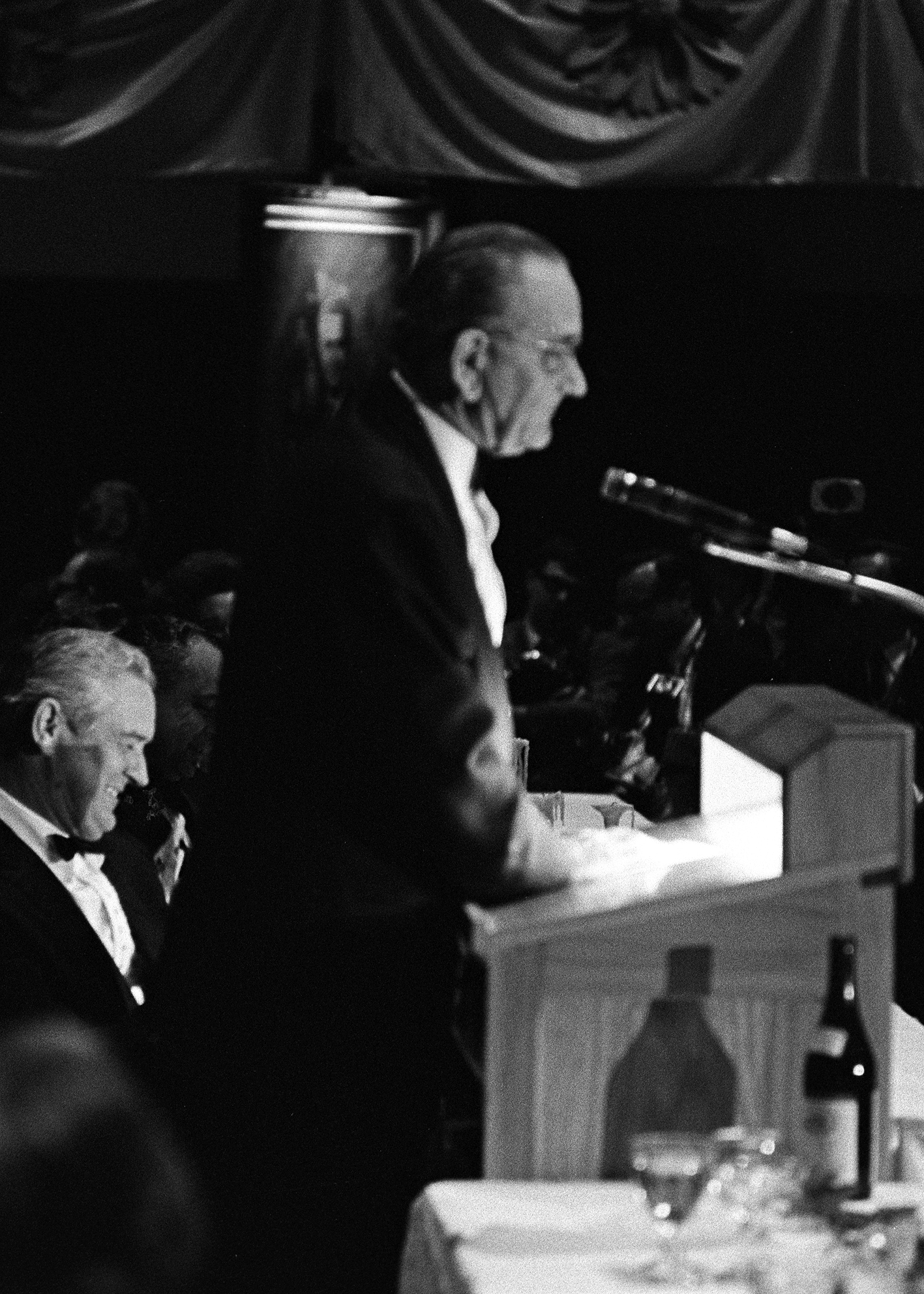
LBJ in Texas, February 27, 1968

But that scarcely was a remarkable assertion.

As I note in Getting It Wrong, stalemate” had been appearing as early as the summer of 1967 in New York Times editorials and analyses about the war.

What supposedly made the Cronkite characterization stand out is that President Johnson saw the program and, as it ended, said to an aide or aides, “If I’ve lost Cronkite, I’ve lost Middle America.”

Or something to that effect.

But in fact, Johnson wasn’t in front of a television set that night. He didn’t see the Cronkite program when it aired.

At the time Cronkite was intoning his “mired in stalemate” assessment, Johnson was offering light-hearted banter in Austin, Texas, at the 51st birthday party of one of his longtime political allies, Governor John Connally.

So it’s difficult to fathom how Johnson could have been much moved by a program that he hadn’t seen.

WJC

Recent and related:

Excess praise for Edward R. Murrow

In Debunking, Media myths, Murrow-McCarthy myth, New York Times on January 2, 2011 at 10:59 am

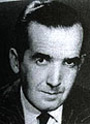
Edward R. Murrow, the legendary CBS newsman who died in 1965, has been back in the news of late, owing to the facile suggestion by the New York Times that TV comedian Jon Stewart is Murrow’s “modern-day equivalent.”

Murrow the legendary

Absurd though it was, the comparison in the Times served to train attention anew on Murrow and on his famous 30-minute television program of March 9, 1954, which supposedly helped end the communists-in-government witch-hunt of Senator Joseph R. McCarthy.

The latest iteration of that theme find expression today in a commentary in South Bend Tribune in Indiana, which revisits the Times-Stewart-Murrow tempest and asserts that “in broadcast journalism history, Murrow was a giant of his time, honored for turning the spotlight in 1954 on the witch-hunt excesses of Sen. Joseph McCarthy, ‘McCarthyism,’ and helping to bring the demagogue’s downfall.”

Murrow certainly was a preeminent figure in American broadcast journalism, having won fame for his radio reports from London during World War II and for his weekly, documentary-style television program, See It Now, which was launched in 1951.

But to argue that Murrow turned the spotlight on the excesses of McCarthyism, and to claim Murrow helped bring about McCarthy’s downfall–well, that’s excess praise.

As I point out in Getting It Wrong, my mythbusting book published last year, the See It Now program on McCarthy in 1954 was neither pivotal nor decisive, in part because Murrow was following the spotlight when he turned attention to McCarthy and his excesses.

That is, Murrow was quite late in taking on McCarthy, doing so long after other journalists–among them muckraking columnist Drew Pearson–had become persistent and searching critics of the senator, his record, and his tactics.

As I write in Getting It Wrong,  Murrow’s friend and CBS colleague Eric Sevareid chafed at the misleading interpretation attached to the See It Now program on McCarthy which, he noted, “came very late in the day.”

Sevareid said in 1978:

“The youngsters read back and they think only one person in broadcasting and the press stood up to McCarthy and this has made a lot of people feel very upset, including me, because that program came awfully late.”

And in the days and weeks following the See It Now program on McCarthy, Murrow acknowledged the show’s contributions were modest, that it had at best reinforced what others had long said about McCarthy.

Jay Nelson Tuck, the television critic for the New York Post, wrote in April 1954 that Murrow felt “almost a little shame faced at being saluted for his courage in the McCarthy matter. He said he had said nothing that … anyone might not have said without a raised eyebrow only a few years ago.”

And Murrow’s collaborator and co-producer, Fred W. Friendly, rejected claims the See It Now program was decisive. Friendly wrote in his memoir, Due to Circumstances Beyond Our Control:

“To say that the Murrow broadcast of March 9, 1954, was the decisive blow against Senator McCarthy’s power is as inaccurate as it is to say that Joseph R. McCarthy … single-handedly gave birth to McCarthyism.”

These were not assertions of false modesty. McCarthy’s tactics, after all, had become quite well-known by March 1954. As I write in Getting It Wrong, it wasn’t as if Americans then “were waiting for a white knight like Murrow to tell them about the toxic threat the senator posed.”

From the work of Pearson and other journalists, they already knew.

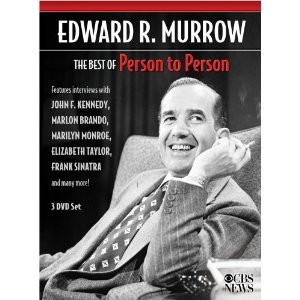
'Best of Person to Person'

While Murrow may have been a giant in American broadcasting, he did a fair share of puff-ball journalism, too. Besides the See It Now program, Murrow conducted mushy interviews with the likes of Marilyn Monroe, Elizabeth Taylor, Marlon Brando, and other celebrities of the 1950s on his highly rated Person to Person show on CBS.

As Jack Shafer of slate.com has argued: “If we’re going to praise Murrow for producing fearless TV news, we should also be ready to damn him for paving the way for Barbara Walters, Oprah Winfrey, and all the celebrity bootlickers on red carpets.”

It should be noted that Murrow was no white knight, either. He privately tutored Adlai Stevenson, the Democratic presidential candidate in 1956, on speaking to the TV camera. In addition, Murrow claimed a master’s degree that he never earned, and inflated his speech major at Washington State University to a degree in international relations and political science.

I mention this not to dismiss Murrow’s contributions, but to argue for context about an important though flawed figure in American journalism–and to challenge as one-dimensional and misleading the mythic image of Murrow as “a giant of his time.”

WJC

Recent and related:

Anniversary journalism and media-driven myths in 2011

In Anniversaries, Bay of Pigs, Debunking, Media myths, New York Times, Newspapers on January 1, 2011 at 7:21 am

NY Times front page, April 7, 1961

“Anniversary journalism” has the appeal of being irresistible and easily done.

Typically, a reporter targets an upcoming anniversary (preferably, the occasion is divisible by 5 or 10), sells the idea to an editor, and cobbles together a story recalling the event. Easily done, but as the Independent newspaper in London has observed, not always very compelling.

We’ll surely see a lot of “anniversary journalism” in 2011.

The year, after all, brings the 10th anniversary of terrorist attacks of September 11, the 100th anniversary of the death of Joseph Pulitzer, and the 150th anniversary of the start of the American Civil War.

Media Myth Alert will be especially interested in 2011 in the 50th anniversary of the botched Bay of Pigs invasion of Cuba, which gave rise to the durable New York Times-Bay of Pigs suppression myth.

In the run-up to the anniversary in April of the Bay of Pigs invasion, we’ll no doubt see frequent references to this media-driven myth.

As I discuss in Getting It Wrong, my mythbusting book that came out in 2010, the suppression myth has it that the New York Times bowed to pressure from the White House of President John F. Kennedy and “spiked,” or self-censored, its detailed report about the pending Bay of Pigs invasion of Cuba.

The purported self-censorship took place about 10 days before the invasion– which failed utterly in its objective of toppling the Cuban revolutionary leader, Fidel Castro.

But as I point out in Getting It Wrong, the Times did not suppress its reports about the pending invasion of Cuba.

It did not censor itself.

The Times’ reports about preparations for the invasion were in fact fairly detailed–and prominently displayed on the front page in the days before the invasion.

The run-up to the Bay of Pigs was no one-day story. A succession of articles before the invasion “kept expanding the realm of what was publicly known about a coming assault against Castro,” I write.

To be sure, not all pre-invasion news reports were accurate or on-target. Much of the reporting was piecemeal.

But overall, the reports in the Times and other U.S. newspapers let readers know that something was afoot in the Caribbean, that an assault on Castro was in the works.

“Indeed,” I write in Getting It Wrong, “the coverage helped strip away the fiction circulated by the Kennedy administration that the invasion was strictly a Cuban affair.”

The suppression myth largely centers around a dispatch that a veteran Times correspondent, Tad Szulc, filed on April 6, 1961.

Supposedly, the Kennedy administration learned of the contents of Szulc’s dispatch about the pending invasion and urged that it be suppressed.

In his book The Powers That Be, David Halberstam offered a graphic, though exaggerated, account of Kennedy’s calling James Reston of the Times, saying the newspaper risked having blood on its hands were the article published.

Such a conversation never happened, according to Reston and others quoted in Harrison Salisbury’s Without Fear or Favor, an insider’s account of the Times and its history.

Moreover, as I note in Getting It Wrong:

“The Kennedy Library in Boston says that the White House telephone logs reveal no calls were placed to Reston” or other Times executives on April 6, 1961.

Szulc’s story was published on the front page on April 7, 1961 (see image, above).

I argue in Getting It Wrong that that the suppression myth likely stems from confusion over an episode in October 1962, when Kennedy did ask the Times to delay publication of a sensitive report.

That came during the Cuban Missile Crisis, when Reston was prepared to report that nuclear-tipped Soviet weapons had been deployed in Cuba. With the prospect of a nuclear exchange seemingly in the balance, the Times complied with the president’s request.

Kennedy took office in 1961–a year with more than a few significant anniversaries. In 1961, Berlin Wall went up, the Soviets put the first man into space, Hemingway killed himself, and Adolf Eichmann‘s war-crimes trial was convened in Israel.

And the Times suppression myth took hold.

WJC

Recent and related:

Only Murrow had the bona fides? Nonsense

In Debunking, Media myths, Murrow-McCarthy myth, New York Times, Newspapers on December 30, 2010 at 11:31 am

The New York Times certainly was casual and superficial in likening TV comedian Jon Stewart to Edward R. Murrow. Not only that, but the discussion about the absurd comparison has been accompanied by the appearance of media-driven myth.

Notably, a post yesterday at the Atlantic online site invoked the dubious notion that Murrow stood up to Joseph R. McCarthy, the red-baiting senator from Wisconsin, when no one else could or would.

The Atlantic post said of Stewart and Murrow:

“Both men stuck their necks out. Both went first into a sort of no-man’s-land. It is probably true that only Murrow in his time had the bona fides to stand up to McCarthy (and don’t forget, Murrow waited years before doing so).” [Emphasis added in bold.]

That claim is just absurd.

While Murrow did take on McCarthy, in a much-celebrated half-hour television program in March 1954, he was scarcely alone in challenging the senator and his communists-in-government witch-hunt. And certainly not the first.

As I point out in my latest book, Getting It Wrong, other journalists in the early 1950s had the bona fides, and had the guts, to take on McCarthy when the risks of doing so were quite pronounced.

Pearson: Had the bona fides

Among these journalists with the bona fides was the Washington-based syndicated columnist Drew Pearson.

As I note in Getting It Wrong: “During the four years of his communists-in-government campaign, McCarthy had no more relentless, implacable, or scathing foe in the news media” than the muckraking Pearson, who wrote the widely published “Washington Merry-Go-Round” column and had a radio show.

Pearson was no saint. Jack Shafer of slate.com not long ago described Pearson as “one of the skuzziest journalists to ever write a story.” Pearson was intrusive and overbearing. He readily made enemies, and almost seemed to relish doing so.

But there’s no denying that he was quick off the dime, that he went after McCarthy hard and relentlessly, and that he immediately recognized the dubious quality of McCarthy’s claims about communists in high places in the U.S. government and military.

Pearson first wrote about McCarthy’s allegations on February 18, 1950, just days after McCarthy had begun raising them, notably in a speech in Wheeling, West Virginia. Pearson called McCarthy the “harum-scarum” senator and said that when he “finally was pinned down, he could produce … only four names of State Department officials whom he claimed were communists.”

Two of the four people named by McCarthy had resigned years earlier; another had been cleared, and the fourth had never worked for the State Department, Pearson wrote.

Pearson followed up with another column, writing that “the alleged communists which he claims are sheltered in the State Department just aren’t.”

Pearson also noted that he had covered the State Department for years, during which time he had been “the career boys’ severest critic. However, knowing something about State Department personnel, it is my opinion that Senator McCarthy is way off base.”

As he was.

Pearson leveled not just a few, scattered shots at McCarthy. His challenges in print became a near-barrage. Pearson scrutinized the senator’s tax troubles in Wisconsin, his accepting funds from a government contractor, and his taking suspicious campaign contributions back in Wisconsin.

The probing angered McCarthy, and in December 1950, the hulking senator physically assaulted Pearson after a dinner at the hush-hush Sulgrave Club on DuPont Circle in Washington, D.C.

McCarthy confronted Pearson in the Sulgrave’s coat check room and either slapped, kneed, or punched the columnist.

Richard Nixon, who recently had been sworn in as a U.S. Senator, intervened to break up the encounter. Nixon, in his memoir RN, said Pearson “grabbed his coat and ran from the room. McCarthy said, ‘You shouldn’t have stopped me, Dick.’”

So Pearson had the bona fides.

So did James A. Wechsler, editor of the New York Post.

In 1951, the Post published a 17-part, bare-knuckle series about McCarthy. The installments of the series addressed McCarthy’s tax troubles, his hypocrisy, and his recklessness in raising allegations about communists in government.

The closing installment likened McCarthy to “a drunk at a party who was funny half an hour ago but now won’t go home. McCarthy is camped in America’s front room trying to impress everybody by singing all the dirty songs and using all the four-letter words he knows. The jokes are pointless, the songs unfunny, the profanity a bore.”

The series was published 2½ years before Murrow’s television program on McCarthy.

And Wechsler paid a price for it, too. He was hauled before McCarthy’s investigative subcommittee and grilled about his dalliance years before in the Communist Youth League.

Wechsler characterized the closed-door hearing as “a reprisal against a newspaper and its editor for their opposition to the methods of this committee’s chairman.” But he complied, reluctantly, with the subcommittee’s demand to produce names of people he had known to be communists during his time in the Youth League.

By the time Murrow took on McCarthy in March 1954, the senator’s favorable ratings had crested and entered a terminal decline.

And Americans by then weren’t “waiting for a white knight like Murrow to tell them about the toxic threat the senator posed,” I write in Getting It Wrong.

Thanks to the work of Pearson and Wechsler and other journalists, they already knew.

WJC

Recent and related:

LOC honor stirs references to Watergate myth

In Cinematic treatments, Debunking, Media myths, Newspapers, Washington Post, Watergate myth on December 29, 2010 at 11:31 am

All the President’s Men, the movie that helped solidify the heroic-journalist myth of Watergate, was among 25 American motion pictures chosen for the 2010 National Film Registry, the Library of Congress announced yesterday.

I have no serious quarrel with the LOC’s selection. All the President’s Men is an entertaining and imaginative film, adapted from Bob Woodward and Carl Bernstein’s book by the same title about their Watergate reporting for the Washington Post.

The cinematic version of All the President’s Men came out in 1976, just as the wounds of Watergate were beginning to heal, and has aged quite well.

But as I discuss in my latest book, Getting It Wrong, All the President’s Men “offers an unmistakable assertion of the power and centrality of the press” in the fall of Richard Nixon’s corrupt presidency. The movie promotes the misleading yet beguiling heroic-journalist interpretation of Watergate.

I note in Getting It Wrong that All the President’s Men “allows no other interpretation: It was the work Woodward and Bernstein that set in motion far-reaching effects that brought about the first-ever resignation of a U.S. president.”

And that message that “has endured,” I write. “More than thirty-five years later, what remains most vivid, memorable, and accessible about Watergate is the cinematic version of All the President’s Men.”

Nonetheless, as I discuss in Getting It Wrong, the Watergate reporting of Woodward and Bernstein was at best marginal to the outcome of the scandal, in which 19 men associated with Nixon’s presidency or his 1972 reelection campaign went to jail.

Nixon resigned in 1974, to avoid certain impeachment and conviction for his role in Watergate.

Rolling up a scandal of such dimension, I write in Getting It Wrong, “required the collective if not always the coordinated forces of special prosecutors, federal judges, both houses of Congress, the Supreme Court, as well as the Justice Department and the FBI.”

But the cinematic version of All the President’s Men portrays none of that collective effort. In fact, the movie downplays, even denigrates, the contributions of investigative agencies such as the FBI.

The LOC’s announcement inevitably stirred references in mainstream media and the blogosphere to the heroic-journalist interpretation of Watergate.

The New York Post, for example, said in referring to the movie’s recognition that the work of Woodward and Bernstein “led to the resignation of President Nixon.”

And in a lengthy and glowing post at Houston’s CultureMap blog, a film critic described Woodward and Bernstein as “fearless and relentless seekers of truth who helped to bring down the most corrupt President in U.S. history.”

He also wrote that All the President’s Men stood as “first among equals” among the movies selected for the National Film Registry and added that Woodward and Bernstein “set new standards for American journalism, and inspired thousands of idealists — along with more than a few amoral glory-hounds — to follow in their paths.”

Just what were those “new standards” was left unsaid.

And the work of Woodward and Bernstein may have “inspired thousands of idealists” to enter American journalism, but there’s only anecdotal support for such claims.

And scholarly research has shown that Woodward, Bernstein, and All the President’s Men did not cause enrollments to climb at journalism and mass communication programs at U.S. college and universities.

One such study was financed by the Freedom Forum media foundation and conducted by researchers Lee B. Becker and Joseph D. Graf. They reported in 1995 that “growth in journalism education result[ed] not from specific events as Watergate … but rather to a larger extent from the appeal of the field to women, who ha[d] been attending universities in record numbers. The growth also in part reflect[ed] the applied nature of the field and its link to specific job skills.”

Becker and Graf added:

“There is no evidence … that Watergate had any effect on enrollments.”

A final note about All the President’s Men and the National Film Registry: As the MovieNation blog at the Boston Globe pointed out, “It has to be the only film on the list that includes a scene set in the Library of Congress.”

That scene depicts Woodward and Bernstein at a table in the Library’s spectacular Main Reading Room, sorting through records of materials checked out by the Nixon White House. As they thumb through stacks of cards, the camera pulls away, slowly and upward, toward the Reading Room’s gold-inlaid dome. The effect is to suggest the lonely earnestness of the reporters’ work.

WJC

Recent and related:

Two myths and today’s New York Times

In Cronkite Moment, Debunking, Media myths, Murrow-McCarthy myth, New York Times on December 27, 2010 at 1:33 am

Today’s New York Times offers up a double-myth story, a rare article that incorporates two prominent media-driven myths.

The Times invokes the Murrow-McCarthy and “Cronkite Moment” myths in suggesting that TV comedian Jon Stewart is a latter-day equivalent of Edward R. Murrow for advocating congressional approval of a health-aid package for first responders to the terror attacks of September 11, 2001.

That’s certainly a stretch.

But here’s what the Times says in presenting its double dose of media myths–both of which are addressed and debunked in my latest book, Getting It Wrong:

  • “Edward R. Murrow turned public opinion against the excesses of Senator Joseph McCarthy in the 1950s.”
  • “Walter Cronkite’s editorial about the stalemate in the war in Vietnam after the Tet Offensive in 1968 convinced President Lyndon B. Johnson that he had lost public support and influenced his decision a month later to decline to run for re-election.”

Both claims are delicious, and often invoked as evidence of the power of the news media.

But both claims are specious.

As I discuss in Getting It Wrong, public opinion began turning against McCarthy well before Murrow’s often-recalled half-hour television report in March 1954 that scrutinized the senator and his communists-in-government witch-hunt.

Specifically, I note Gallup Poll data showing McCarthy’s appeal having crested in December 1953, when 53 percent of Americans said they had a favorable view of him. The senator’s favorable rating fell to 40 percent by early January 1954, and to 39 percent in February 1954, when an almost identical number of Americans viewed him unfavorably.

“To be sure,” I write in Getting It Wrong, “it wasn’t as if Americans in early 1954 were hoping for someone to step up and expose McCarthy, or waiting for a white knight like Murrow to tell them about the toxic threat the senator posed.

“By then, McCarthy and his tactics were well-known and he had become a target of withering ridicule—a sign of diminished capacity to inspire dread.”

On March 9, 1954, the day Murrow’s See It Now program on McCarthy was aired, former president Harry Truman reacted to reports of an anonymous threat against McCarthy’s life by quipping:

“We’d have no entertainment at all if they killed him.”

And long before Murrow took on McCarthy, “several prominent journalists—including the Washington-based syndicated columnist Drew Pearson—had become persistent and searching critics of McCarthy, his record, and his tactics,” I note.

A media-driven myth even more tenacious than the Murrow-McCarthy tale is the legendary “Cronkite Moment” of February 1968, when CBS anchorman Cronkite declared on-air that the U.S. military was “mired in stalemate” in Vietnam.

I point out in Getting It Wrong that by early 1968, Cronkite’s assessment was neither novel nor exceptional.

Indeed, the Times had reported August 1967, months before Cronkite’s on-air assessment, that the war effort was not going well.

Victory in Vietnam, the Times said then, “is not close at hand. It may be beyond reach.”

The article appeared on the front page August 7, 1967, beneath the headline:

Vietnam: The Signs of Stalemate

That wasn’t only occasion in 1967 when the Times invoked “stalemate” to characterize the war. In a news analysis published July 4, 1967, the newspaper stated:

“Many officers believe that despite the commitment of 466,000 United States troops now in South Vietnam … the military situation there has developed into a virtual stalemate.”

Moreover, the Times anticipated Cronkite’s “mired in stalemate” commentary in an editorial published February 8, 1968.

“Politically as well as militarily,” the editorial declared, “stalemate increasingly appears as the unavoidable outcome of the Vietnam struggle.”

So “stalemate” was much in the air weeks and months before Cronkite invoked the word on television.

Moreover, as I note in Getting It Wrong, President Johnson didn’t even see the Cronkite program when it aired February 27, 1968.

Johnson wasn’t at the White House that night. And he wasn’t in front of a TV set.

The president was in Austin, Texas, offering light-hearted remarks at the 51st birthday party of a longtime political ally, Governor John Connally.

About the time Cronkite was intoning his “mired in stalemate” assessment, Johnson was saying in jest:

“Today, you are 51, John. That is the magic number that every man of politics prays for—a simple majority.”

It’s difficult to make a persuasive case that the president could have been much moved by a television report he didn’t see.

Not only that, but Johnson may have decided in 1967 or even earlier against seeking reelection in 1968. He wrote in his memoir, The Vantage Point: “Long before I settled on the proper forum to make my announcement, I had told a number of people of my intention not to run again.”

Johnson’s memoir, by the way, has nothing to say about the Cronkite program of February 1968.

WJC

Recent and related:

Many thanks for Ed Driscoll and Jim Romenesko for linking to this post

What became of Virginia O’Hanlon?

In 1897, New York Sun, New York Times, Newspapers, Year studies on December 25, 2010 at 8:13 am

Virginia

Virginia O’Hanlon was 8-years-old when she gained a measure of fame that would last her lifetime.

Shortly after her birthday in July 1897, young Virginia wrote to the New York Sun, posing the timeless question: “Is there a Santa Claus?

It took several weeks, but her innocent letter gave rise to the most famous editorial in American journalism. The Sun answered Virginia’s query on September 21, 1897, in an essay destined to become a classic.

The essay was assigned an inconspicuous place in the Sun, appearing in the third of three columns of editorials beneath the headline, “Is There A Santa Claus?

Its most memorable passage sought to reassure Virginia–and, as it turned out, generations of youngsters since then.

“Yes, Virginia,” it declared, “there is a Santa Claus. He exists as certainly as love and generosity and devotion exist, and you know that they abound and give to your life its highest beauty and joy. Alas! how dreary would be the world if there were no Santa Claus. It would be as dreary as if there were no Virginias.”

The editorial closed with further reassurance:

“No Santa Claus! Thank God! he lives, and he lives forever. A thousand years from now, Virginia, nay, ten times ten thousand years from now, he will continue to make glad the heart of childhood.”

As I note in my 2006 book, a year-study titled The Year That Defined American Journalism: 1897 and the Clash of Paradigms, Virginia O’Hanlon as an adult embraced the recognition and modest fame that came with her part in inspiring “Is There A Santa Claus?” (She once said in jest that she was “anonymous from January to November.”)

The editorial, she told an interviewer in 1959, when she was 67, “gave me a special place in life I didn’t deserve. It also made me try to live up to the philosophy of the editorial and to try to make glad the heart of childhood.”

She occasionally read the editorial at Christmas programs, as she did in 1933 and 1937 at Hunter College, her alma mater. Virginia earned a bachelor’s degree there in 1910 and a master’s degree two years later at Columbia University.

She was a teacher in the New York City schools, and became a principal at a school for handicapped children after earning a doctorate from Fordham University in 1935.

At her retirement in 1959, the New York Times observed that Virginia was “one of those rare persons whose given name alone has instant meaning for millions.”

In December 1960, Virginia went on the Perry Como Show and said she had lived “a wonderfully full life.” She told Como in a brief interview that her letter to the Sun had been “answered for me thousands of times.”

She was married for a time to Edward Douglas by whom she had a daughter, Laura Temple. For two years in the 1930s, Temple worked in the advertising office of the Sun.

“They all knew who I was,” she was quoted years as saying about the Sun staff. “And we all had the same feeling about the editorial that my mother had—that it was a classic.”

Virginia O’Hanlon Douglas was 81 when she died at a nursing home in upstate New York.

Her death in May 1971 was reported on the front page of the New York Times beneath the headline:

Virginia O’Hanlon, Santa’s friend, dies.”

Virginia's gravesite (Photo by George Vollmuth, 2009)

She was buried in North Chatham, New York.

At the approach of Christmas in recent years, the North Chatham Historical Society has conducted a reading at Virginia’s gravesite of the letter that brought her fame and of the editorial that it inspired.

WJC

Recent and related:

At Christmas: The remarkable trajectory of an 1897 editorial

In 1897, Debunking, Media myths, New York Sun, Newspapers on December 24, 2010 at 7:52 am

WJC and pal: Merry Christmas

Christmas Eve is a fine occasion to consider how an obscure essay published more than 120 years ago in a combative New York City newspaper became the most memorable editorial in American journalism.

The editorial is the timeless tribute to childhood and the Christmas spirit, “Is There A Santa Claus?

Its trajectory from obscurity is remarkable.

The essay appeared in the New York Sun, in response to a letter from 8-year-old Virginia O’Hanlon, who implored:

“Please tell me the truth; is there a Santa Claus?”

The Sun in reply was reassuring.

“Yes, Virginia,” the editorial declared, “there is a Santa Claus. He exists as certainly as love and generosity and devotion exist, and you know that they abound and give to your life its highest beauty and joy. Alas! how dreary would be the world if there were no Santa Claus. It would be as dreary as if there were no Virginias.”

The editorial was published not at Christmas but in September 1897, in the third of three columns of editorials in the Sun–a newspaper that relished the rough and tumble of late 19th century American journalism.

As I noted in my 2006 book, The Year That Defined American Journalism: 1897 and the Clash of Paradigms, the Sun in its editorials in the late 19th century “was more inclined to vituperation and personal attack than to evoke the eloquence and lyricism” that distinguished “Is There A Santa Claus?”

Indeed, the trade journal Fourth Estate observed in 1897 that the Sun was never happy unless it was on the attack. Given such tendencies, I wrote, “the delicate charm of ‘Is There A Santa Claus?’ was decidedly out of place” in the columns of the Sun.

Moreover, the Sun was slow–reluctant, even–to embrace the editorial, usually rebuffing readers’ requests to reprint “Is There A Santa Claus?”

After its initial appearance on September 21, 1897, the essay was not published again in the Sun until December 1902.  The newspaper did so then with a trace of annoyance, declaring:

“Since its original publication, the Sun has refrained from reprinting the article on Santa Claus which appeared several years ago, but this year requests for its reproduction have been so numerous that we yield.

“Scrap books,” the Sun added in a gratuitous swipe, “seem to be wearing out.”

Over the years, though, readers persisted in their requests, asking the Sun every year at Christmastime to reprint “Is There A Santa Claus?”

And as I wrote in The Year That Defined American Journalism, the newspaper ultimately gave in, “tacitly acknowledging that editors are not always as perceptive as their readers in identifying journalism of significance and lasting value.”

In 1924, the newspaper’s then-owner, Frank Munsey, ordered “Is There A Santa Claus?” to appear as the lead editorial on Christmas Eve. In the years that followed, until the newspaper folded in 1950, “Is There A Santa Claus?” was the lead editorial in the Sun on December 23 or 24.

It remains a favorite, 113 years on.

Reasons for the editorial’s enduring popularity are several. Among them are:

  • The editorial is a cheering, reaffirming story, one without villains or sinister elements.
  • It represents a connection to distant time: It is reassuring, somehow, to know that what was appealing in 1897 remains appealing today.
  • It offers a reminder to adults about Christmases past, and the time when they, too, were believers.
  • It has been a way for generations of parents to address the skepticism of their children about Santa Claus. They can point to the editorial and its timeless answer to an inevitable question–and not have to fib much about Santa’s existence.

Interestingly, the essay was written by a veteran and childless journalist named Francis P. Church whose authorship wasn’t widely known until soon after his death in April 1906.

The Sun revealed that Church had written the editorial in what was an eloquent, posthumous tribute.

“At this time,” the newspaper said, “with the sense of personal loss strong upon us, we know of no better or briefer way to make the friends of the Sun feel that they too have lost a friend than to violate custom by indicating him as the author of the beautiful … editorial article affirming the existence of Santa Claus, in reply to the question of a little girl.”

WJC

Recent and related:

Mythmaking on Blu-ray?

In Cinematic treatments, Debunking, Media myths, Washington Post, Watergate myth on December 20, 2010 at 11:11 am

All the President’s Men, the most-seen movie about the Watergate scandal, may be released on Blu-ray early next year, according to a post yesterday at a blog sponsored by a Canadian newspaper.

“Word is that Warner Bros. will release the Watergate movie … in a feature loaded  Blu-ray book in February,” said the item at the Leader-Post newspaper in Saskatchewan.

Now at best, the Blu-ray version of All the President’s Men is of mild interest to Media Myth Alert. What caught the  eye, though, was this characterization in the Leader-Post item:

“The 1976 movie is perhaps the greatest ever on newspaper journalism. It tells the true story of how Washington Post reporters Carl Bernstein and Bob Woodward exposed the real story behind the break-in at Democratic Party offices in the Watergate building by Republican political operatives. Their exposé, fed by a mysterious source called ‘Deep Throat,’ led to the resignation of President Richard Nixon.”

I placed the words in bold for emphasis.

As I note in my latest book, Getting It Wrong, Woodward and Bernstein didn’t expose the Watergate scandal. It was at first a police beat story that spiraled into an intricate and sprawling scandal that sent to jail nearly 20 men associated with Nixon’s presidency or his 1972 reelection campaign.

And the reporting of Woodward and Bernstein didn’t lead to Nixon’s resignation.

As I point out in Getting It Wrong:

“To roll up a scandal of such dimension [as Watergate] required the collective if not always the coordinated forces of special prosecutors, federal judges, both houses of Congress, the Supreme Court, as well as the Justice Department and the FBI.

“Even then, Nixon likely would have served out his term if not for the audiotape recordings he secretly made of most conversations in the Oval Office of the White House. Only when compelled by the Supreme Court [in 1974] did Nixon surrender those recordings, which captured him plotting the cover-up and authorizing payments of thousands of dollars in hush money.”

Against the tableau of subpoena-wielding investigative authorities, the work of Woodward and Bernstein for the Washington Post fades into relative insignificance.

Even so, as I write in Getting It Wrong, the heroic-journalist interpretation of Watergate–the endlessly appealing notion that the  reporting of Woodward and Bernstein did bring down Nixon’s  presidency–“has become the most familiar storyline of Watergate.”

The heroic-journalist interpretation is, I note, “a proxy for grasping the scandal’s essence while avoiding its forbidding complexity.”

Perhaps the factor most important in propelling and solidifying the heroic-journalist meme of Watergate was the movie All the President’s Men, an adaptation of Woodward and Bernstein’s 1974 book by the same title.

“The book in fact had been written with the cinema in mind,” I write in Getting It Wrong, noting that the actor Robert Redford “had taken keen interest in the Woodward-Bernstein collaboration in reporting the scandal and encouraged the reporters to structure the book around their experiences.”

Redford paid $450,000 for the rights to All the President’s Men, and he played Woodward in the movie.

The cinematic version of All the President’s Men focuses on the work of Woodward and Bernstein while mostly ignoring, and even denigrating, the efforts of investigative agencies like the FBI.

I further note that the movie All the President’s Men allows no interpretation other than it was the work Woodward and Bernstein that set in motion far-reaching effects that brought about the first-ever resignation of a U.S. president.

The movie, I write, helped ensure the heroic-journalist myth “would live on by offering a neat, tidy, and vastly simplified account the Watergate scandal, one that allowed viewers to sidestep the scandal’s complexity while engaging in an entertaining storyline.”

The myth is solidly entrenched in popular culture. It is one of the heartiest of media-driven myths, those dubious, media-centric tales that masquerade as factual.

The Blu-ray version of All the President’s Men may serve to introduce the myth of Watergate to yet another generation of movie-goers.

WJC

Recent and related:

‘Yes, Virginia,’ on CBS: No classic

In 1897, Anniversaries, Debunking, Media myths, New York Sun, Newspapers, Year studies on December 18, 2010 at 7:44 am

I wrote a year ago about the charmless CBS animated Christmas special, Yes, Virginia, a show based on Virginia O’Hanlon’s famous letter to the New York Sun in 1897 that prompted American journalism’s best-known editorial.

The show aired again last night; watching it was headache-inducing.

It utterly lacks the serendipity, anticipation, disappointment, and surprise that characterized the real back story to Virginia’s 1897 letter.

Her appeal to the Sun — “Please tell me the truth; is there a Santa Claus?”–gave rise to an editorial published beneath the headline, “Is There A Santa Claus?”

The editorial’s most memorable and most-quoted passage declared:

“Yes, Virginia, there is a Santa Claus. He exists as certainly as love and generosity and devotion exist, and you know that they abound and give to your life its highest beauty and joy. Alas! how dreary would be the world if there were no Santa Claus. It would be as dreary as if there were no Virginias.”

As I noted last year at Media Myth Alert, CBS took great liberties with the back story in offering up a tedious half-hour show that was neither accurate nor entertaining. It’s a distortion of a charming story.

Francis P. Church

The animated Virginia is waddling, round-headed, and unaccountably obsessed with the existence of Santa Claus. Francis P. Church, the retiring journalist who wrote the famous editorial, is depicted–no, misrepresented–as scowling, dismissive, and hard-hearted.

Neither character is convincing. Neither is realistic.

The animated Church is identified as the editor of the Sun, which is shown as a tabloid newspaper. Church was not the editor; he was an editorial writer. And the Sun was no tabloid.

The CBS show also had Virginia writing her letter, and the Sun publishing its reply, in December, as Christmas approached.

In fact, the letter was written in the summer of 1897, and the Sun published the editorial on September 21, 1897 — obscurely, in the third of three columns on editorials on an inside page (and not in big, sensation-stirring headlines across the front page, as the CBS show had it).

As I discuss in my 2006 book–a year-study titled The Year That Defined American Journalism: 1897 and the Clash of Paradigms–Virginia O’Hanlon said that she addressed her letter to the Sun’s question-and-answer column, and waited impatiently for the newspaper to publish a response.

She recalled that the Sun did not promptly take up her inquiry. Far from being obsessed, little Virginia stopped thinking about it after a while.

“After writing to the Sun,” she told an audience in Connecticut many years later, “I looked every day for the simple answer I expected. When it didn’t appear, I got disappointed and forgot about it.”

At the Sun, Virginia’s letter probably was overlooked, or misplaced, for an extended period.

That there was such a gap seems certain, given O’Hanlon’s recollections about waiting and waiting for a reply, and the accounts that say Church wrote the editorial in “a short time” or “hastily, in the course of the day’s work.”

Virginia O'Hanlon

What reconciles the two accounts—O’Hanlon’s prolonged wait and Church’s quickly written response—is that the Sun for a time had misplaced the letter that inspired a classic editorial, one that would recall the newspaper long after it folded in 1950.

The real back story to Virginia’s letter is far richer than the cheerless, vapid fare that CBS offered up.

Unlike the 1897 editorial, the wretched animated show is destined to be no classic.

WJC

Recent and related: