W. Joseph Campbell

Posts Tagged ‘Spanish-American War’

Remembering the ‘Maine,’ Hearst, and Remington

In 1897, Anniversaries, Debunking, Furnish the war, Media myths, Spanish-American War on February 16, 2011 at 7:01 am

Wreckage of the 'Maine'

The battleship Maine blew up in Havana harbor 113 years ago yesterday, a development that rocked Americans and helped trigger the brief but decisive Spanish-American War.

The Brooklyn Daily Eagle recalled the battleship’s destruction in a post yesterday that invoked one of American journalism’s most tenacious myths — the purported vow of William Randolph Hearst to “furnish the war” with Spain.

The item in the Eagle — a latter-day version of the storied Brooklyn Daily Eagle that was published from 1841 until 1955 — said in its post that after the Maine blew up, Hearst “sent artist Frederic Remington to cover the war story in Cuba.

“When Remington found little happening there, he asked about coming home. Hearst wired back: ‘Please remain. You furnish the pictures and I’ll furnish the war.'”

As I discuss in the first chapter of my latest book, Getting It Wrong, the Hearstian vow, while well-known and often retold, is almost surely apocryphal.

I note in Getting It Wrong that that the vow “has achieved unique status” in American journalism “as an adaptable, hardy, all-purpose anecdote, useful in illustrating any number of media sins and shortcomings.

“It has been invoked to illustrate the media’s willingness to compromise impartiality, promote political agendas, and indulge in sensationalism. It has been used, more broadly, to suggest the media’s capacity to inject malign influence into international affairs.”

Reasons for doubting that Hearst ever sent such a message are many, and include the fact that the artifacts — the purported telegrams exchanged between Remington and Hearst — have never turned up.

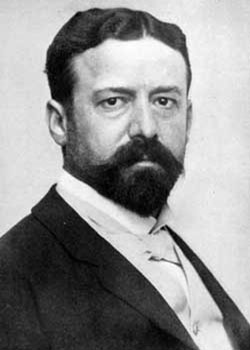
Hearst

Hearst, moreover, denied ever having sent such a message, and there’s no known record of Remington ever having discussed the purported exchange.

I note in Getting It Wrong that the Remington-Hearst anecdote “lives on despite an irreconcilable internal inconsistency: It would have been absurd for Hearst to vow to ‘furnish the war’ because war — specifically, the Cuban rebellion against Spain’s colonial rule — was the very reason Hearst sent Remington to Cuba in the first place.”

Had the Remingt0n-Hearst exchange taken place, it would have been in mid-January 1897, at the end of Remington’s lone visit to Cuba in the months before the loss of the Maine.

We know that because the sole original source of the anecdote, a self-centered journalist named James Creelman, claimed in a book of reminiscences that exchange took place “some time before the destruction of the battleship Maine in the harbor of Havana” on February 15, 1898.

Creelman, who titled his book On the Great Highway, did not say how he learned about the purported exchange. In early 1897, Creelman was not in New York with Hearst, nor in Cuba with Remington. Creelman was in Spain, on assignment for Hearst’s New York Journal, the leading exemplar of what was called “yellow journalism.”

It is exceedingly unlikely that the telegrams would have flowed freely between Hearst and Remington as Creelman suggested. Spanish authorities in Havana, after all, had imposed strict censorship of international cable traffic. As I note in Getting It Wrong:

“Spanish control of the cable traffic in Havana was too vigilant and severe to have allowed such an exchange to have gone unnoticed and unremarked upon. A vow such as Hearst’s to ‘furnish the war’ surely would have been intercepted and publicized by Spanish authorities as a clear-cut example of Yankee meddling in Cuba.”

I also note in Getting It Wrong that the purported Hearstian vow is a telling example of a quote that’s so neat and tidy that it should immediately trigger suspicions.

“Like many media-driven myths,” I write, “it is succinct, savory, and easily remembered.

“It is almost too good not to be true.”

WJC

Recent and related:

Media myth and Truthout

In 1897, Debunking, Media myths, Newspapers, Spanish-American War, Yellow Journalism on February 3, 2011 at 6:47 am

It’s at least faintly ironic that an online news site called Truthout — which asserts an embrace of “equality, democracy, human rights, accountability and social justice” — would post a reference to one of American journalism’s most enduring and delicious media myths.

Not Hearst's doing

In its serializing a book by radio host Thom Hartmann, Truthout the other day indulged in the myth that William Randolph Hearst vowed to “furnish the war” with Spain in 1898 — and then made good on the supposed pledge.

The installment Truthout posted Monday said Hearst “had cabled his artist correspondent to Cuba, Frederick[sic] Remington, ‘You provide the pictures, and I’ll provide the war.’

“Hearst came through on his end of the deal, and the Spanish-American War—started largely by his newspapers and the public sentiment they controlled ….”

As I discuss in my latest book, Getting It Wrong, the anecdote about Hearst’s vow is almost certainly apocryphal — a media-driven myth.

And so is the notion that Hearst’s newspapers fomented the Spanish-American War.

In the first chapter of Getting It Wrong, I note that the Remington-Hearst tale remains popular “despite a nearly complete absence of supporting documentation. It lives on even though telegrams supposedly exchanged by Remington and Hearst have never turned up. It lives on even though Hearst denied ever sending such a message.”

Moreover, I write:

The anecdote endures “despite an irreconcilable internal inconsistency: It would have been absurd for Hearst to vow to ‘furnish the war’ because war—specifically, the Cuban rebellion against Spain’s colonial rule—was the very reason Hearst sent Remington to Cuba in the first place.”

Given the context of Remington’s assignment, a vow to “furnish the war” simply would have been incongruous, and illogical.

Had Hearst sent such an inflammatory telegram, it surely would have been intercepted by Spanish censors, who controlled incoming and outgoing cable traffic in Cuba. Spanish authorities undoubtedly would have called attention to what would have been a clear case of Hearst’s meddling.

So it’s highly improbable that a cable containing a vow to “furnish the war” would have flowed without interruption between Hearst in New York and Frederic Remington in Havana. (Had the cable been sent, it would have been in mid-January 1897, near the end of Remington’s lone pre-war visit to Cuba.)

Moreover, no one who repeats the purported vow seems to note, or much care, that Hearst denied having sent such a message and Remington, a prominent artist of the American West, apparently never spoke about it.

The related myth — that Hearst’s newspapers brought on the conflict with Spain — is just as hardy as “furnish the war.” Like many media myths, it offers a reductive, simplistic, and easy-to-remember version of a complex historical event.

The Spanish-American War, quite simply, was not caused by the contents of Hearst’s newspapers, of which he had three at the time — two in New York City, one in San Francisco.

As I discuss in my 2001 book, Yellow Journalism: Puncturing the Myths, Defining the Legacies:

“The yellow press [of Hearst and Joseph Pulitzer] is not to blame for the Spanish-American-War. It did not force—it could not have forced—the United States into hostilities with Spain over Cuba in 1898. The conflict was, rather, the result of a convergence of forces far beyond the control or direct influence of even the most aggressive of the yellow newspapers, William Randolph Hearst’s New York Journal.”

Besides, no one who asserts that the yellow press was responsible for the war with Spain can persuasively demonstrate just how the often-exaggerated contents of Hearst and Pulitzer’s newspapers were decisive in the declaration of war in April 1898.

“If the yellow press did foment the war,” I wrote in Yellow Journalism, then “researchers should be able to find some hint of, some reference to, that influence in the personal papers and the reminiscences of policymakers of the time.

“But neither the diary entries of cabinet officers nor the contemporaneous private exchanges among American diplomats indicate that the yellow newspapers exerted any influence at all.”

When it was discussed within the administration of President William McKinley, the yellow press was dismissed as a nuisance or disdained at as a complicating factor.

The truth is that the yellow press neither drove, shaped, nor  crystallized U.S. policy vis-à-vis Spain in 1898.

Put another way: Hearst did not follow through on a vow he never made.

WJC

Recent and related:

‘Yellow journalism’ turns 114

In 1897, Anniversaries, Debunking, Media myths, Newspapers, Spanish-American War, Yellow Journalism on January 30, 2011 at 8:21 am

It is a little-recognized, never-celebrated anniversary in American journalism, granted.

Wardman of the Press

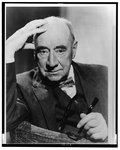
But tomorrow marks 114 years since the term “yellow journalism” first appeared in print, in the old New York Press, edited by the austere Ervin Wardman (left).

The phrase “the Yellow Journalism” appeared in a small headline on the editorial page of the Press on January 31, 1897. The phrase also appeared that day in the newspaper’s editorial page gossip column, “On the Tip of the Tongue.”

Yellow journalism” quickly caught on, as a sneer to denigrate what then was called the “new journalism” of the New York Journal of William Randolph Hearst and the New York World of Joseph Pulitzer. By the end of March 1897, references to “yellow journalism” had appeared in newspapers in Providence, Richmond, and San Francisco.

In the decades since then, “yellow journalism” has become a widely popular if nebulous term — derisive shorthand for vaguely denouncing sensationalism and journalistic misconduct of all kinds, real and imagined.

“It is,” as I noted in my 2001 book Yellow Journalism: Puncturing the Myths, Defining the Legacies, “an evocative term that has been diffused internationally, in contexts as diverse as Greece and Nigeria, as Israel and India.”

Precisely how Wardman and the Press landed on the phrase “yellow journalism” isn’t clear.

The newspaper’s own, brief discussion of the term’s derivation was unhelpful and unrevealing: “We called them Yellow because they are Yellow,” it said in 1898 about the Journal and the World.

In the 1890s, the color yellow sometimes was associated with decadent  literature, which may have been an inspiration to the Harvard-educated Wardman, a figure now largely lost to New York newspaper history.

Wardman was tall and stern-looking. He once was described as showing his “Calvinistic ancestry in every line of his face.” He did little to conceal his contempt for Hearst and Hearst’s journalism.

His disdain was readily apparent in the columns of the Press, of which Wardman became editor in chief in 1896 at the age of 31. (The Press is long defunct; it is not to be confused with the contemporary alternative weekly of the same title.)

Wardman’s Press took to taunting Hearst, Hearst’s mother, and Hearst’s support for Democratic candidate William Jennings Bryan in the 1896 presidential election. The New York Journal was virtually alone among New York newspapers in supporting Bryan’s “free silver” candidacy.

The Press disparaged Hearst, then 34, as a mama’s boy, as “Billy” and “little Willie.” It referred to the Journal as “our silverite, or silver-wrong, contemporary.”

The Press also experimented with pithy blasts on the editorial page to denounce “new journalism.”

“The ‘new journalism,’” the Press said in early January 1897 “continues to think up a varied assortment of new lies.”

Later in the month, the Press asked in a single-line editorial comment:

“Why not call it nude journalism?”

It clearly was a play on “new journalism” and meant to suggest the absence of “even the veneer of decency.”

Before long, Wardman and the Press seized upon the phrase “yellow-kid journalism,” which evoked the Hearst-Pulitzer rivalry over a popular cartoon character known as the “Yellow Kid.”

Both the Journal and the World at the time were publishing versions of the kid.

Yellow kid poster (Library of Congress)

At the end of January 1897, the phrase “yellow-kid journalism” was modified  to “the Yellow Journalism,” and the sneer was born.

After landing on that evocative pejorative, Wardman turned to it often, invoking the term in brief editorial comments and asides such as: “The Yellow Journalism is now so overripe that the little insects which light upon it quickly turn yellow, too.”

The diffusion of “yellow journalism” was sealed when the Journal embraced the term in mid-May 1898, during the Spanish-American War. With typical immodesty, the newspaper declared:

“… the sun in heaven is yellow—the sun which is to this earth what the Journal is to American journalism.”

WJC

From an essay originally posted at Media Myth Alert January 31, 2010

Many thanks to Jim Romenesko for linking to this post

Recent and related:

24/7 news cycle no new phenomenon

In Debunking, Media myths, Newspapers, Spanish-American War on January 25, 2011 at 8:31 am

A recent commentary in the Wall Street Journal about the 24/7 news cycle offered a telling point that the Internet “has made real-time reporting more prevalent, but it certainly didn’t invent it.”

The commentary’s author, Peter Funt, also noted that “the notion that nonstop news coverage is something new, some recent innovation developed as a product of the Internet and utilities such as Twitter, is bogus.”

Bogus, indeed.

The 24/7 news cycle is no phenomenon exclusive to the digital century. It is hardly novel, and it’s tiresome to hear journalists cite the nonstop news cycle as if it were — and as if it were a cause and excuse for error and superficial reporting.

I grow impatient with claims such as this:

“There was a time that the people we watched on T.V. for informative news were trustworthy and generally provided a pretty good snapshot of the days’ activities, breaking in when there truly was ‘breaking news.’ … With the advent of  cable T.V.  and the eventual cable-based ‘News’ networks, and then the Internet, we have become a nation addicted to a 24 hour news cycle.”

Not only does such a claim smack of indulgence in the “golden age” fallacy, it offers no evidence of a national addiction to nonstop news.

Adult Americans on average spent 70 minutes a day, getting the news, according a study last year by the Pew Research Center. While that figure is up from an average of 67 minutes in 2008, it is down from an average of 74 minutes in 1994–before the emergence of social media, and even before the popular advent of the Internet’s World Wide Web.

Pew also reported last year that 17 percent of adult Americans go “newsless” on a typical day. That is, they avoid getting the news despite the variety of options and platforms offered by media technologies.

That a significant percentage of the populates chooses to go newsless is, I write in my latest book, Getting It Wrong, among the reasons to question whether the news media exert broad influence in American life.

“Large numbers of Americans are beyond media influence,” I note in Getting It Wrong, which addresses and debunks 10 prominent media-driven myths.

Choosing to go newsless may signal that a segment of the adult population has little trust or faith in the U.S. news media and their content. It’s also an effective response, too, to nonstop news: They ignore it. Turn it off.

In any event, it’s quite clear the 24/7 news cycle goes back decades.

As I’ve noted from time to time at Media Myth Alert, large-city newspapers of the late 19th century were known would produce many “extra” editions to report fresh elements of important, breaking news.

Extras not uncommon in 1898

During the Spanish-American War in 1898, for example, William Randolph Hearst’s New York Evening Journal published as many as 40 extra editions a day. On such occasions, deadline pressures had to have been intense.

Wire service journalism long has been acquainted with immediate deadlines. Indeed, beating the competition and being first with the news are priorities that define — and have defined — news agencies such as the Associated Press and Reuters.

Deadlines arrive every second in the fast-paced wire service world. And so it was, long before the Internet’s emergence.

(As Michael Oreskes, senior managing editor of the Associated Press, noted in a letter to the Wall Street Journal about Funt’s piece, a book published in 1957 about the old United Press news agency was titled A Deadline Every Minute.)

There are plenty of other examples of news outlets built around speed and immediacy.

CNN launched a headline news channel in 1982. As Funt noted, “All-news radio began in the early 1960s at stations like WAVA in Washington, D.C., and WINS in New York, where it was refined to become the nonstop reporting format that remains popular today.”

I remember listening as a kid to Philadelphia’s KYW news radio in the mid-1960s. KYW’s history says that it was “the second all-news station in the country.”

Then as now, KYW emphasizes news all the time, even though content does become repetitive.

So, no, the 24-hour-a-day news cycle is not new. Speed and time pressures are traditional elements of daily journalism.

They are, as Funt correctly noted, “integral to the very definition of news.”

WJC

Recent and related:

On ‘transformational moments’ that journalists see

In Debunking, Media myths, Murrow-McCarthy myth, New York Times, Newspapers, Spanish-American War, Washington Post on January 20, 2011 at 9:04 am

The “turning points” that journalists seem eager to find in dramatic events usually turn out to be mythical–chimeras built on a convenient if faulty and clichéd storyline.

'Turning points' sculpture in Ohio (Marty Gooden)

That’s a central point blogger and political scientist Brendan Nyhan offered the other day in a perceptive commentary dismissing the notion that the shootings this month in Tucson may be seen, sooner or later, as a turning point in American political life.

Nyhan argued that “single events almost never reshape social and political life” and added:

“The turning points of the past seem more clear in large part because the messiness of those events has faded in our memory and we remember the narratives that have been constructed after the fact.”

Well said.

Nyhan’s particular target was the New York Times and two rather superficial commentaries written by Matt Bai in the aftermath of the Tucson shootings. The longer and more recent piece was published Sunday in the Times “Week in Review” section. In it, Bai ruminated:

“If the shooting didn’t feel like the turning point in the civic life of the nation that some of us had imagined it might become, then it may be because such turning points aren’t always immediately evident.”

Welch (Library of Congress)

He went on to consider a few supposedly “transformational moments” of the past, such as the televised Senate hearing in 1954, when lawyer Joseph N. Welch upbraided Senator Joseph McCarthy, declaring:

“Have you no sense of decency, sir? At long last, have you left no sense of decency?”

It was a moment, Bai wrote, that “resonated throughout a country that was just then discovering the nascent power of television. Years of ruinous disagreement over the threat of internal Communism seemed to dissipate almost overnight.”

The sweeping claim caught my eye, given that my latest book, Getting It Wrong, addresses and debunks the media myth that broadcast journalist Edward R. Murrow put an end to McCarthy’s communists-in-government witch-hunt in a 30-minute television program in March 1954.

I don’t discuss the Welch-McCarthy encounter in Getting It Wrong, but barnacles of media myth seem to cling to that tale, too.

Take, for example, the claim that Welch’s famous line — uttered on the 30th day of what were called the Army-McCarthy hearings — “resonated throughout” the country.

The hearings centered around the Army’s accusations that McCarthy and his top aide, Roy Cohn, had sought special treatment for a McCarthy staffer who had been drafted into military service. The hearings were televised live, gavel to gavel, by the fledgling ABC and by the declining DuMont networks.

As Thomas Doherty pointed out in Cold War, Cool Medium, a fine study of television during the McCarthy period,the hearings “were not a saturation television event in the modern sense. The refusal of NBC and CBS [for commercial reasons] to telecast the hearings blacked out whole regions of the country from live coverage.”

He also wrote:

“With cable costs keeping ABC from relaying the hearings to Denver and points west, the coverage on the Pacific Coast was particularly sparse.”

Given such gaps in television’s coverage, it’s hard to see how the sudden and dramatic put down by Welch, a Boston lawyer who was the Army’s lead counsel at the hearings, could have “resonated” across the entire country.

Welch’s comment certainly attracted attention. But briefly.

The New York Times said the rebuke of McCarthy was greeted by a burst of applause in the Senate gallery and that Welch the next day reported having received 1,400 telegrams, most of them supportive.

Even so, a database review of the reporting in the Times and four other leading U.S. newspapers indicates the Welch-McCarthy encounter was at the time essentially a one-day story.

The database search for articles, editorials, transcriptions, and letters to the editor that contained “McCarthy,” “Welch,” and “sense of decency” returned 14 items in the period from June 9, 1954, to June 30, 1955.

Ten of the 14 items were published June 10, 1954, a day after Welch rebuked McCarthy.  The remarks were reported that day on the front pages of all five newspapers–the Times, Baltimore Sun, Chicago Tribune, Los Angeles Times, and Washington Post.

But none of the 14 items was published after June 25, 1954. In other words, none of the items was published during the time late in 1954 when the Senate voted to censure (“condemn” was the term) McCarthy’s conduct.

What’s more, lengthy excerpts of the hearing record published in the New York Times show that Welch’s “sense of decency” rebuke didn’t stun McCarthy into silence. The senator blundered on, insinuating that Welch had sought to include on his hearing staff a young lawyer with a dubious background.

The Welch-McCarthy encounter assumed “turning point” status in the years after 1954. But in the moment, in June 1954, it was recognized as dramatic but not “transformational.”

Bai’s “Week in Review” piece offered up this dubious point as well:

“A century ago, news traveled slowly enough for Americans to absorb and evaluate it; today’s events are almost instantaneously digested and debated, in a way that makes even the most cataclysmic event feel temporal.”

A century ago, news traveled rapidly by telegraph. It was scarcely  unusual then for large-circulation urban newspapers to publish multiple extra editions to report fresh elements of a major breaking story.

During the Spanish-American War in 1898, for example, William Randolph Hearst’s New York Evening Journal published as many as 40 extra editions a day. On such occasions, news surely wasn’t traveling slowly.

Indeed, at the end of the 19th century, it was not uncommon for Americans to claim they were living at “a time of rush and hurry.”

WJC

Recent and related:

Finding hints of Hearst in the Tucson aftermath? What a stretch

In Debunking, Media myths, New York Times, Newspapers, Spanish-American War, Yellow Journalism on January 15, 2011 at 11:32 am

Hearst's Evening Journal, April 1898

The deadly shootings in Tucson a week ago touched off intense efforts by the New York Times and other mainstream media outlets to link the attacks to views and rhetoric of conservative politicians and activists.

But the smear failed to take hold, given the dearth of evidence tying the suspected shooter to political causes of the right and given the vigor of the pushback against what were outrageous characterizations.

The pushback was not without inaccuracy, however.

The conservative Red State blog the other day likened the media meme of the Tucson shootings to the historically incorrect view that the overheated content of William Randolph Hearst’s yellow press brought about the Spanish-American War in 1898.

The Red State item asserted that in the Tucson shootings, the mainstream media “smelled opportunity in the proud and honorable tradition of William Randolph Hurst [sic].”

The item further declared:

“Hearst earned well-deserved infamy for his manipulation of the explosion of the USS Maine to enhance the likelihood of a war between The United States and Spain. He wrote inflammatory articles, based on biased and insufficient evidence that implicated the Spanish for having an infernal machine to sink US vessels. The Spanish-American War broke out in 1898. Historians believe that it may not have happened with the rhetorical justifications Heart’s dishonest journalism provided.”

There’s a lot of error and imprecision to unpack in that paragraph. Take the last line first: Few serious historians would argue that Hearst or the content of his newspapers were factors at all in the Spanish-American War.

Indeed, as I wrote in my 2001 book, Yellow Journalism: Puncturing the Myths, Defining the Legacies :

“The yellow press … did not force—it could not have forced—the United States into hostilities with Spain over Cuba in 1898. The conflict was, rather, the result of a convergence of forces far beyond the control or direct influence of even the most aggressive of the yellow newspapers, William Randolph Hearst’s New York Journal.”

No one making the argument that the yellow press fomented the war can demonstrate adequately or persuasively how its content influenced American policymaking during the weeks between the destruction of the Maine and the declaration of war in April 1898.

As I wrote in Yellow Journalism:

“If the yellow press did foment the war, researchers should be able to find some hint of, some reference to, that influence in the personal papers and the reminiscences of policymakers of the time.

“But neither the diary entries of cabinet officers nor the contemporaneous private exchanges among American diplomats indicate that the yellow newspapers exerted any influence at all.”

When it was discussed by officials of in the administration of President William McKinley, the yellow press was dismissed as a nuisance or disdained at as a complicating factor. But the yellow press neither shaped, drove, nor  crystallized U.S. policy.

Besides, the yellow press wasn’t alone in implicating Spanish authorities for the destruction of the Maine in Havana harbor on February 15, 1898. The   warship exploded at anchor, killing 266 officers and sailors.

A U.S. court of naval inquiry found that the warship’s destruction was caused by a mine, set by persons unknown. The court of inquiry rejected the theory that an unnoticed coal bunker fire set off explosions that destroyed the Maine.

The court of inquiry’s most telling piece of evidence: The inward thrust of the warship’s keel. Such damage could only have been caused by an external explosion.

In any case, the warship was sunk in a harbor under control and supervision of Spanish authorities which, to the McKinley administration, was further evidence of an intolerable state of affairs in Cuba, where an islandwide rebellion had periodically flared over the previous three years.

Spain’s attempts to crush the rebellion had largely failed, but its harsh policies had precipitated a humanitarian crisis in which tens of thousands of Cuban non-combattants –old men, women, and children–fell victim to disease and starvation.

The humanitarian crisis, and Spain’s inability to exert control over Cuba, were the proximate causes of the war in 1898. The content of the yellow press, as well as other U.S. newspapers, reflected those realities, but certainly did not cause them.

As historian David Trask has written, Americans in 1898 “went to war convinced that they had embarked upon an entirely selfless mission for humanity.”

But they didn’t go because they were moved to do so by Hearst and his yellow press.

In the end, to indict Hearst and the yellow press for instigating the Spanish-American War, is I wrote in Yellow Journalism, “to misread the evidence and thus do disservice to the broader understanding of a much-misunderstood conflict.”

Much as the post-Tucson media smear has done a disservice to the vigor and legitimacy of political discourse in a democratic society.

WJC

Recent and related:

The ‘anniversary’ of a media myth: ‘I’ll furnish the war’

In 1897, Anniversaries, Debunking, Furnish the war, Media myths, Newspapers, Spanish-American War, Yellow Journalism on January 13, 2011 at 7:31 am

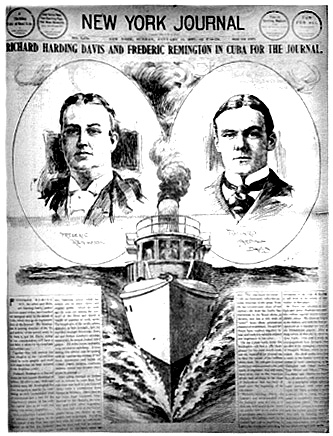
Remington, Davis in Cuba for Hearst

Had it occurred, the legendary but improbable exchange of telegrams between William Randolph Hearst and the artist Frederic Remington–in which Hearst supposedly vowed to “furnish the war” with Spain–would have taken place in mid-January 1897.

The uncertainty as to exactly when the purported exchange occurred is one of many signals the tale is apocryphal, a media-driven myth.

As I discuss in my media-mythbusting book, Getting It Wrong, the Remington-Hearst anecdote is “perhaps the hardiest myth in American journalism.”

It lives on in part because it is a pithy and delicious tale. It corresponds well to the image of Hearst the war-monger, the unscrupulous newspaper published who fomented the Spanish-American War in 1898.

As I point out in the first chapter of Getting It Wrong, the Remington-Hearst tale is often retold “despite a nearly complete absence of supporting documentation. It lives on even though telegrams supposedly exchanged by Remington and Hearst have never turned up. It lives on even though Hearst denied ever sending such a message.”

Moreover, I write:

The anecdote “lives on despite an irreconcilable internal inconsistency: It would have been absurd for Hearst to vow to ‘furnish the war’ because war—specifically, the Cuban rebellion against Spain’s colonial rule—was the very reason Hearst sent Remington to Cuba in the first place.”

The sole original source for the “furnish the war” quotation was On the Great Highway, a slim volume of reminiscences that came out in 1901. The author was James Creelman, a portly, cigar-chomping journalist prone to pomposity and exaggeration.

Creelman did not explain in On the Great Highway how or where he learned about the purported Remingt0n-Hearst exchange. Creelman–who was in Madrid at the time Remington was in Cuba–recounted the anecdote a not as a rebuke but as a compliment to Hearst and the activist “yellow journalism” he had pioneered in New York City.

Nor did Creelman say exactly when the presumed exchange took place, writing only that it was “some time before the destruction of the battleship Maine in the harbor of Havana” in mid-February 1898. The only time Remington was in Cuba before the explosion that destroyed the Maine was in January 1897.

Creelman: Sole source

Remington, an accomplished artist of the American West, went to Cuba in 1897 to draw sketches of scenes of the uprising against Spanish rule. He traveled with Richard Harding Davis, who then was burnishing a reputation as one of American journalism’s leading correspondents.

Hearst recruited Remington and Davis for a month, and the plan was for them to reach a force of Cuban rebels under the command of Máximo Gómez.

But Remington and Davis never reached the rebels. What’s more, they proved to be an oddly matched team. In Matanzas on January 15, 1897, they parted ways. Remington returned to Havana and the next day boarded a steamship bound for New York.

Legend has it that before leaving Havana, Remington sent Hearst a telegram that supposedly said:

“Everything is quiet. There will be no war. I wish to return.”

Hearst purportedly cabled Remington in reply:

“Please remain. You furnish the pictures, and I’ll furnish the war.”

Had it occurred, the exchange would have taken place late on January 15, 1897, or early on January 16, 1897.

Remington disregarded Hearst’s purported instructions to “remain” in Cuba. The artist was one of seven passengers aboard the Seneca when it sailed from Havana on January 16, 1897. The steamer reached New York four days later and soon afterward, Hearst’s New York Journal began publishing Remington’s sketches drawn in Cuba.

“The work was given prominent display,” I note in Getting It Wrong. Headlines in the Journal hailed Remington as a “gifted artist”–hardly the sort of accolade Hearst would have extended to someone in his employ who had brazenly disregarded instructions to remain on the scene.

That’s further reason for doubting that Hearst ever sent a telegram vowing to “furnish the war.”

And yet another reason is that Spanish censors, who controlled all incoming and outgoing cable traffic in Havana, surely would have intercepted Hearst’s inflammatory message, had it been sent. It’s highly improbable that cables such as those attributed to Hearst and Remington would have flowed readily between New York and Havana.

Additionally, the correspondence of Davis gives lie to the anecdote.

Davis wrote frequently to his family, especially to his mother, Rebecca Harding Davis. His letters make clear that  Remington did not leave because they found “everything is quiet” in Cuba.

In fact, Davis wrote on the day he and Remington parted ways:

“There is war here and no mistake.”

His correspondence offered detailed descriptions of what he called the grim process “of extermination and ruin” in Cuba.

More important, Davis’ letters make clear that Remington left for home not on the pretext that “everything is quiet,” but because Davis wanted him to go.

“I am as relieved at getting old Remington to go as though I had won $5000,” Davis wrote to his mother on January 15, 1897. “He was a splendid fellow but a perfect kid and had to be humored and petted all the time.”

Davis added that he “was very glad” Remington left “for he kept me back all the time and I can do twice as much in half the time.”

I note in Getting It Wrong that the Remington-Hearst tale was “Creelman’s singular contribution to American journalism.” The anecdote has proven to have timeless appeal, in part because it promotes what I call “the improbable notion the media are powerful and dangerous forces, so powerful they can even bring on a war.”

WJC

Recent and related:

Fact-checking WaPo columnist on the ‘McKinley moment’

In Debunking, Media myths, Spanish-American War, Washington Post, Yellow Journalism on January 12, 2011 at 7:42 am

Washington Post columnist Dana Milbank offered up a glib and flabby column yesterday, arguing that the false charges of incitement raised long ago in the McKinley assassination should serve as a cautionary reminder to the likes of Sarah Palin and Fox News commentator Glenn Beck.

They should experience what Milbank vaguely termed a “McKinley moment.”

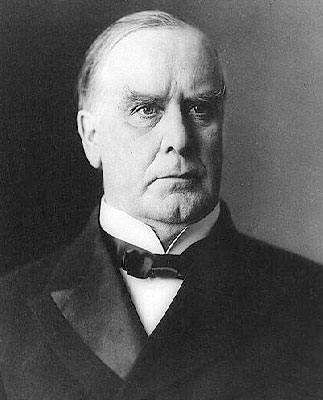
McKinley

He recalled–and not entirely accurately–the efforts in 1901 to link the contents of William Randolph Hearst’s newspapers to the fatal shooting of President William McKinley.

I discussed that topic in a post Monday at Media Myth Alert, noting how extreme and wrong-headed attempts to exploit and politicize the weekend’s shooting rampage in Tucson was reminiscent of the smear campaign against Hearst following McKinley’s slaying.

The rampage in Arizona left six people dead, including a federal judge. Congresswoman Gabrielle Giffords was severely wounded.

Milbank’s column seizes on the shootings in Tuscon as a pretext to condemn the views and rhetoric of Palin and Beck, neither of whom I much care for.

Milbank began his column by declaring:

“If any good can come of the horror in Tucson, it will be that this becomes a McKinley moment for Sarah Palin and her chief spokesman, Glenn Beck.”

A “McKinley moment”? Meaning what? An occasion for self-censorship because of the insinuations and false allegations raised against them in the aftermath of the shootings in Tucson–much as false allegations were raised against Hearst following McKinley’s slaying?

Not only is “McKinley moment” an imprecise construct: It suggests that using smears to batter foes into silence is somehow worthy or admirable.

Milbank in his column briefly reviewed the false and improbable charges of incitement leveled against Hearst after McKinley was fatally shot in September 1901 and wrote:

“The outcry against Hearst’s incitement–there were boycotts and a burning in effigy–dashed his presidential ambitions.

“A similar, and long overdue, outcry has followed the Tucson killings.”

“Maybe,” Milbank added, “Beck and Palin will be good enough to show us what a real moment of silence is–by having themselves a nice long one.”

A more fitting and appropriate response from the violence in Tucson would be not to seek to mute the rhetoric of foes, but to condemn the smear, to call attention to the hazards of battering opponents with indirect and groundless allegations of incitement.

Hearst was so battered in 1901.

He, not unlike Palin and Beck, was a brash and controversial figure, easy to dislike.

Hearst’s aggressive, activist-oriented approach to newspapering–his yellow journalism–shook up New York City’s media scene in late 1890s and served as a platform for his political ambitions during the first decade of the 20th century.

But Hearst was no villain, no violence-monger. As I write in my latest book, Getting It Wrong, Hearst almost surely never vowed to bring on the Spanish-American War of 1898, although that hardy myth is often invoked and readily believed.

His newspapers were known to publish intemperate commentary, as were rival newspapers at the turn of the 20th century. And ill-advised surely defines the column written in 1900 by Ambrose Bierce, who ruminated about a bullet “speeding here to stretch McKinley on his bier.”

Milbank’s column suggested that Bierce’s commentary was published in the Hearst papers some six months before McKinley was shot.

In fact, it appeared 20 months before the assassination, in a quatrain about the fatal shooting of William Goebel, the governor of Kentucky. Bierce said he meant to call attention to risks of not finding and prosecuting Goebel’s killer.

Milbank’s column, moreover, erred in claiming the uproar that followed McKinley’s assassination “dashed” Hearst’s presidential ambitions.

Not so.

Hearst mounted a serious bid for Democratic nomination for president in 1904. He was by then a congressman, and his presidential bandwagon  gathered some momentum during the first months of that year.

In the end, though, his candidacy was doomed–not by the smears and fabrications raised after the McKinley assassination but by the reluctance of William Jennings Bryan to embrace Hearst’s bid.

Bryan, who lost presidential elections to McKinley in 1896 and 1900, had been expected to endorse Hearst for Democratic nomination in 1904. After all, Hearst had supported Bryan’s ill-fated campaigns for the presidency and had even financially supported Bryan’s travels in Europe following the 1900 election.

When Bryan did not deliver the hoped-for endorsement (thinking, perhaps, he might again emerge as the party’s standard-bearer), Hearst’s candidacy was faded, according to David Nasaw, Hearst’s leading biographer.

“Without Bryan’s endorsement,” Nasaw wrote in his 2000 work, The Chief, “Hearst had no hope of securing the votes [of convention delegates] he needed for the nomination.”

Still, Hearst pursued his bid for the nomination to the Democratic convention in St. Louis in 1904. He lost by a wide margin to Judge Alton B. Parker.

Parker in turn lost the 1904 election in a landslide to Teddy Roosevelt, who as vice president had succeeded McKinley to the presidency.

The “McKinley moment,” as Milbank used the term, seems a misnomer.

More appropriate and accurate would be to call it the “Hearst moment,” given that Hearst was the target, the victim, of distortion and falsehood.

The “Hearst moment” offers a useful and pertinent reminder about the use and effect of the smear.

WJC

Recent and related:

Many thanks to Glenn Reynolds
at Instapundit for linking to this post.

Wikileaks and the Spanish-American War?

In Debunking, Media myths, Spanish-American War, Yellow Journalism on December 3, 2010 at 7:41 am

The recent Wikileaks disclosure of more than 250,000 U.S. diplomatic cables has prompted commentators to look for parallels, however rough, in American history.

Going to war with Spain

The Watergate scandal has been invoked, but the equivalents are neither especially clear nor convincing.

Now, the blustering conservative commentator Pat Buchanan has found Wiki-like resonance in a diplomatic faux pas in 1898, when the chief Spanish diplomat in Washington wrote disparagingly of President William McKinley in a private letter.

The letter was purloined and given to William Randolph Hearst‘s New York Journal, which splashed the  contents across its front page, beneath a hyperbolic headline that declared:

“The Worst Insult to the United States in its History.”

It’s an intriguing case, about which Buchanan said in a blog post yesterday:

“The Spanish minister in Washington, Enrique Dupuy De Lome, had written an indiscreet letter that was stolen by a sympathizer of the Cuban revolution and leaked to William Randolph Hearst’s warmongering New York Journal. In the De Lome letter, the minister had said of McKinley that he is ‘weak, and a bidder for the admiration of the crowd, besides being a … politician who tries to leave a door open behind himself while keeping on good terms with the jingoes of his party.’

“Six days later, the battleship Maine blew up in Havana harbor. Hearst’s Journal screamed Spanish ‘treachery.’ And the war was on.”

Just like that?

Well, no.

The Maine blew up in mid-February 1898. The United States and Spain did not declare war until late April 1898, during which time a U.S. Naval Court of Inquiry investigated the battleship’s destruction. The Inquiry found that the Maine most likely had been destroyed by an underwater mine. Who set the device couldn’t be determined.

The de Lome letter and the destruction of the Maine weren’t related and they weren’t decisive factors in the U.S. decision to declare war in 1898. (And the overheated content of Hearst’s New York Journal wasn’t much of a factor at all in the march to war.)

As I wrote in my 2005 book, The Spanish-American War: American War and the Media in Primary Documents:

“The United States went to war in April 1898 to fulfill a moral and humanitarian imperative—that of ending the abuses created by Spain’s failed attempt to quell an island-wide rebellion in Cuba,” its last important colonial possession in the Western hemisphere.

The Spanish-American War, in broad terms, was the upshot of a prolonged, three-sided diplomatic impasse: Cubans, who in 1895 launched what became an island-wide rebellion against Spanish rule, would settle for nothing short of political independence. Spain, for reasons of political stability at home, would not agree to grant Cuba its independence. And the United States could tolerate no longer the disruptions caused by turmoil in Cuba.

Spain sent nearly 200,000 soldiers to the island in a mostly failed attempt to put down the rebellion. But by early 1898, the military situation in Cuba was a stalemate.

A particularly disastrous element of Spain’s strategy was to seek to deprive Cuban rebels of support in the hinterland through a policy called “reconcentration,” under which Cuban non-combatants–old men, women, and children–were forced into garrison towns. There, by the tens of thousands, the Cubans fell victim to disease and starvation.

A humanitarian disaster had taken hold in Cuba by early 1898, and the harsh effects of Spain’s “reconcentration” policy were often described in U.S. newspapers, including Hearst’s yellow press.

In many respects, the U.S. entry into the rebellion in Cuba was a humanitarian crusade to end to the abuses caused by Spain’s “reconcentration” policy.

Buchanan’s telescoping of late 19th century history lends a mistaken impression that de Lome’s diplomatic faux pas help precipitate a war. It didn’t.

At best, it was a mild contributing factor.

WJC

Recent and related:

My thanks to FiveFeetofFury for linking to this post.

He may be arrogant, but he’s right about presentism

In Debunking, Media myths, Spanish-American War, Watergate myth on November 29, 2010 at 6:57 am

Edmund Morris, the Pulitzer Prize-winning biographer of Theodore Roosevelt, is a bit of an arrogant twit. But he was absolutely on-target in dismissing as “presentist” an inane question raised yesterday by host Bob Schieffer on the Face the Nation interview program.

Morris on 'Face the Nation'

Schieffer asked Morris, who recently completed the third of three volumes about Roosevelt’s life and times:

“What would Teddy Roosevelt think of today’s politics, Edmund?”

To which the Kenya-born Morris, who has lived in the United States since 1968, replied:

“You keep asking these presentist questions, Bob. As the immortal Marisa Tomei said in [the movie] My Cousin Vinny, that’s a bullshit question. Because you cannot pluck people out of the past and expect them to comment on what’s happening today.

“I can only say that what he represented in his time was that what we look for in our presidents now, what we hope for in our presidents now and we’re increasingly disappointed. He was somebody who understood foreign cultures. He represented the dignity of the United States. He was forceful but at the same time civilized.

“And what I really feel these days is we’ve become such an insular people … I see an insular people who are insensitive to foreign sensibilities, who are lazy, obese, complacent, and increasingly perplexed as to why we are losing our place in the world to people who are more dynamic than us and more disciplined.”

Morris’ comments–especially his profanity and his condescending swipes at Americans–quickly drew flak in the blogosphere.

And it’s true enough, as Matt Schneider of mediate.com observed with tongue in check, that “nothing compares to the thrilling unpredictability of an uninhibited guest like Morris who in one breath idolizes America’s ‘immortal’ movie stars, but in the next laments the rest of America as fat and lazy.”

Still, Morris was quite right to challenge Schieffer’s question. He was quite right to say that “you cannot pluck people out of the past and expect them to comment on what’s happening today.” It was a useful lesson.

Morris in effect was calling attention to the fallacy of presentism–that of applying contemporary standards and ideals to events and characters of the past. In other words, reading the present into the past.

Earlier in the show, Schieffer had asked Morris:

“What would T.R. have thought about what’s going on today? … Is there any correlation that you see between what he thought about and his vision for the country and, say, the rise of the Tea Party movement?”

To which Morris replied: “Well, I’m not going to pluck him out of the past because you can’t do that. He lived in his time. And he represented his time.”

Presentism is one of the fallacies David Hackett Fischer discussed 40 years ago in his superb study, Historians’ Fallacies.

Fischer noted: “The fallacy of presentism is a common failing in historical writing by men who have never been trained in the discipline of history.” He also wrote: “Academic historians are not exempt from the same error.”

Morris, whose Colonel Roosevelt has just been published, appeared on Face the Nation with three other authors of recent historical or political books. Among them was Bob Woodward, he of the Washington Post Watergate fame and author most recently of Obama’s Wars.

I’ve previously discussed at Media Myth Alert another, even more common fallacy of history–the “golden age” fallacy.The fallacy also is addressed in my latest book, Getting It Wrong, which debunks 10 prominent myths about the news media. Among them is the heroic-journalist myth of Watergate–the notion that the tireless reporting by Woodward and his colleague Carl Bernstein brought down Richard Nixon’s corrupt presidency.

I note in Getting It Wrong that the “golden age” fallacy is a “flawed but enticing belief that there really was a time when journalism and its practitioners were respected and inspiring”—the time, say, of Woodward and Bernstein.

WJC

Recent and related: