W. Joseph Campbell

Posts Tagged ‘Version variability’

Fact-checking ‘Mother Jones’: A rare two-fer

In Cronkite Moment, Debunking, Furnish the war, Media myths, New York Times, Spanish-American War on April 26, 2011 at 7:07 am

The most prominent media-driven myths — those dubious or apocryphal stories about the news media that masquerade as factual — include William Randolph Hearst’s vow to “furnish the war” and the so-called “Cronkite Moment” of 1968.

Mother Jones magazine, in the cover story of its May/June number, cites both tales as if they were genuine, in a rare, myth-indulging two-fer.

In an article written by Rick Perlstein and titled “Inside the GOP’s fact-free nation,” Mother Jones says of Hearst (who was no Republican):

“In a fearsome rivalry with Joseph Pulitzer, he chose as his vehicle the sort of manly imperialism to which the Washington elites of the day were certainly sympathetic — although far too cautiously for Hearst’s taste. ‘You furnish the pictures,’ he supposedly telegraphed a reporter, ‘and I’ll furnish the war.’ The tail wagged the dog.”

You furnish the pictures, and I’ll furnish the war.” Couching it with “supposedly” allows no free pass for myth-telling.

It’s quotation most often attributed to Hearst. And as I discuss in my latest book, Getting It Wrong, it’s a durable media-driven myth that has survived “concerted attempts to discredit and dismantle it.”

It is, I add, “succinct, savory, and easily remembered. It is almost too good not to be true.”

The purported recipient of Hearst’s telegram was not “a reporter,” as Perlstein writes, but Frederic Remington, the famous artist of the American West.

Remington, Davis in Cuba

Hearst had assigned Remington and the correspondent Richard Harding Davis to Cuba to cover the insurrection against Spanish colonial rule. They arrived in Havana in early January 1897, and Remington six days later.

He parted ways with Davis in Matanzas, Cuba, and, before leaving Havana for New York, supposedly cabled Hearst, saying:

“Everything is quiet. There will be no war. I wish to return.”

Hearst, in reply, cabled his famous vow, telling Remington:

“Please remain. You furnish the pictures, and I’ll furnish the war.”

Remington didn’t stay. He promptly returned to New York, where his sketches were given prominent display in Hearst’s New York Journal, appearing beneath such headlines as:

“Cuban War Sketches Gathered in the Field by Frederic Remington; The Gifted Artist, Visiting Cuba Especially for the Journal.”

That’s hardly an accolade Hearst would have extended to someone who had so brazenly disregarded instructions to remain on the scene.

As I write in Getting It Wrong, “the anecdote lives on despite a nearly complete absence of supporting documentation. It lives on even though telegrams supposedly exchanged by Remington and Hearst have never turned up.”

What’s more, I note in Getting It Wrong, the Remington-Hearst anecdote “lives on despite an irreconcilable internal inconsistency: It would have been absurd for Hearst to vow to ‘furnish the war’ because war — specifically, the Cuban rebellion against Spain’s colonial rule — was the very reason Hearst sent Remington to Cuba in the first place.”

Anyone who read U.S. newspapers in early 1897 “would have been well aware,” I write, “that Cuba was a theater of a nasty war,” which gave rise in April 1898 to the Spanish-American War.

The tale about the Remington-Hearst exchange is surely apocryphal.

So, too, is the presumed effect of the “Cronkite Moment” which, like the story about Hearst’s famous vow, is “succinct, savory, and easily remembered.”  It reputedly demonstrates the potency of broadcast journalism.

The “Cronkite Moment” was, I point out in Getting It Wrong, purportedly “an occasion when the power of television news was unequivocally confirmed,” a rare, pivotal moment when a truth-telling broadcast demonstrated the folly of a faraway war.

Perlstein writes in Mother Jones:

“Walter Cronkite traveled to Saigon after the Tet Offensive in 1968, saw things with his own eyes, and told the truth: The Vietnam War was stuck in a disastrous stalemate, no matter what the government said. That was a watershed.”

Well, no, it wasn’t.

Cronkite did indeed travel to Vietnam in February 1968 and upon his return to the United States aired an hour-long special report about the war, in which he concluded that the American military was “mired in stalemate” and suggested that negotiations offered the best way out.

But “mired in stalemate,” I write in Getting It Wrong, “was neither notable nor extraordinary” by February 27, 1968, when Cronkite’s report aired. As Mark Kurlansky wrote in his study of the year 1968, Cronkite’s assessment was “hardly a radical position” for the time.

Indeed, months before the program, the New York Times had been using “stalemate” to describe the war in Vietnam.

On July 4, 1967, for example, the Times said this about the war effort:

“Many officers believe that despite the commitment of 466,000 United States troops now in South Vietnam … the military situation there has developed into a virtual stalemate.”

And in a front-page analysis published August 7, 1967, the Times declared “the war is not going well.” Victory “is not close at hand.”

The Times published the analysis beneath the headline:

Vietnam: The Signs of Stalemate.

And in an editorial published October 29, 1967, the Times offered this assessment:

“Instead of denying a stalemate in Vietnam, Washington should be boasting that it has imposed a stalemate, for that is the prerequisite – on both sides – to a negotiated settlement. That settlement, if it is to be achieved, will have to be pursued with the same ingenuity and determination that have been applied to fighting the war.”

Cronkite’s “mired in stalemate” represented no watershed, no assessment of exceptional and stunning clarity. Cronkite said as much in his memoir, which was published in 1997. He wrote that his special report represented for President Lyndon B. Johnson “just one more straw in the increasing burden of Vietnam.”

In fact, public opinion had begun shifting away from supporting the war months before the “Cronkite Moment.”

It’s often said that Johnson watched Cronkite’s program and, upon hearing the “mired in stalemate” interpretation, snapped off the television set and said something to the effect of:

“If I’ve lost Cronkite, I’ve lost Middle America.”
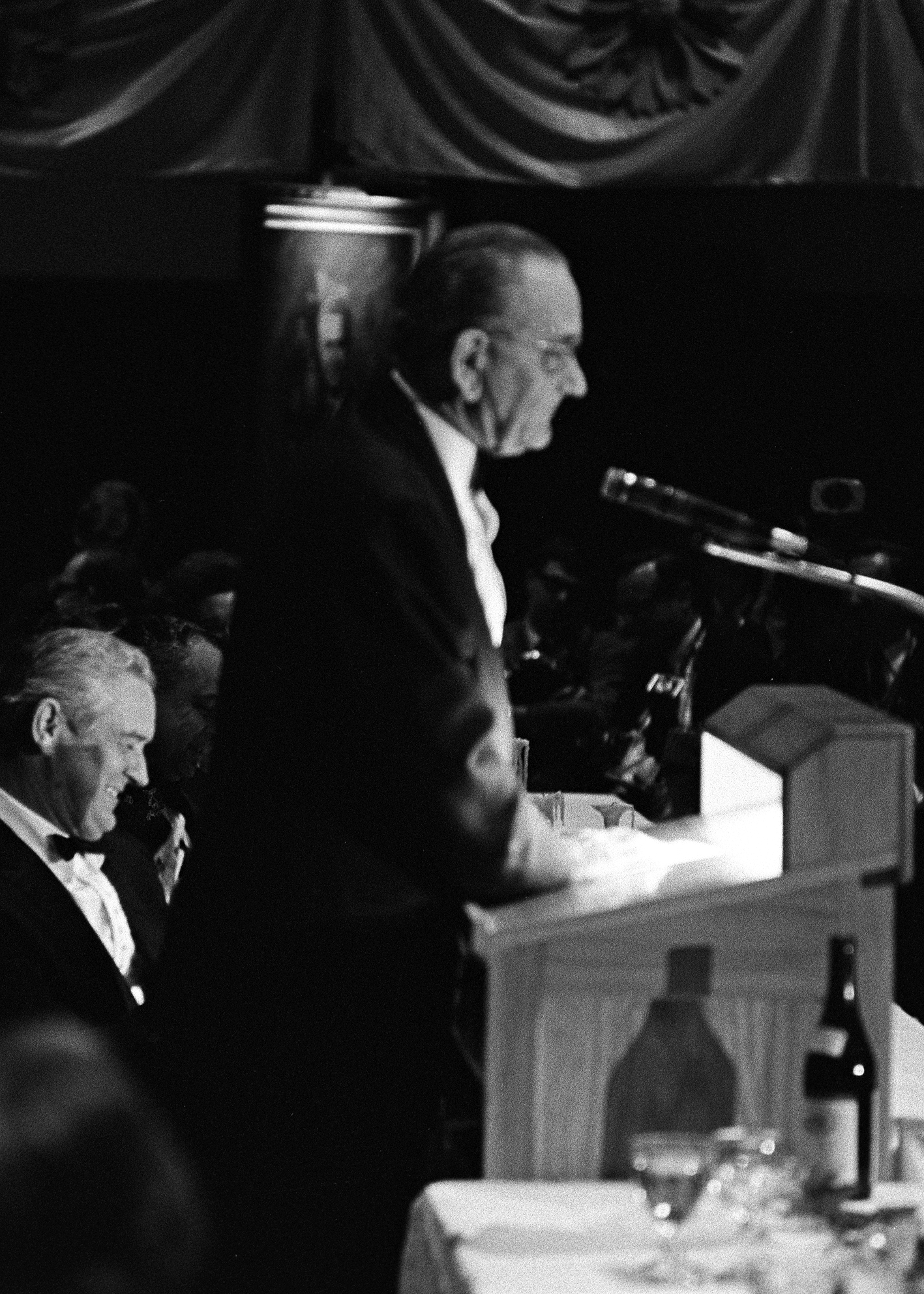
LBJ: Not watching TV

But as I discuss in Getting It Wrong, Johnson did not see the Cronkite report went it aired. The president at that time wasn’t in front of a television set. And he certainly wasn’t lamenting the loss of Cronkite’s support. Indeed, it is hard to fathom how he could have been much moved by a show he did not see.

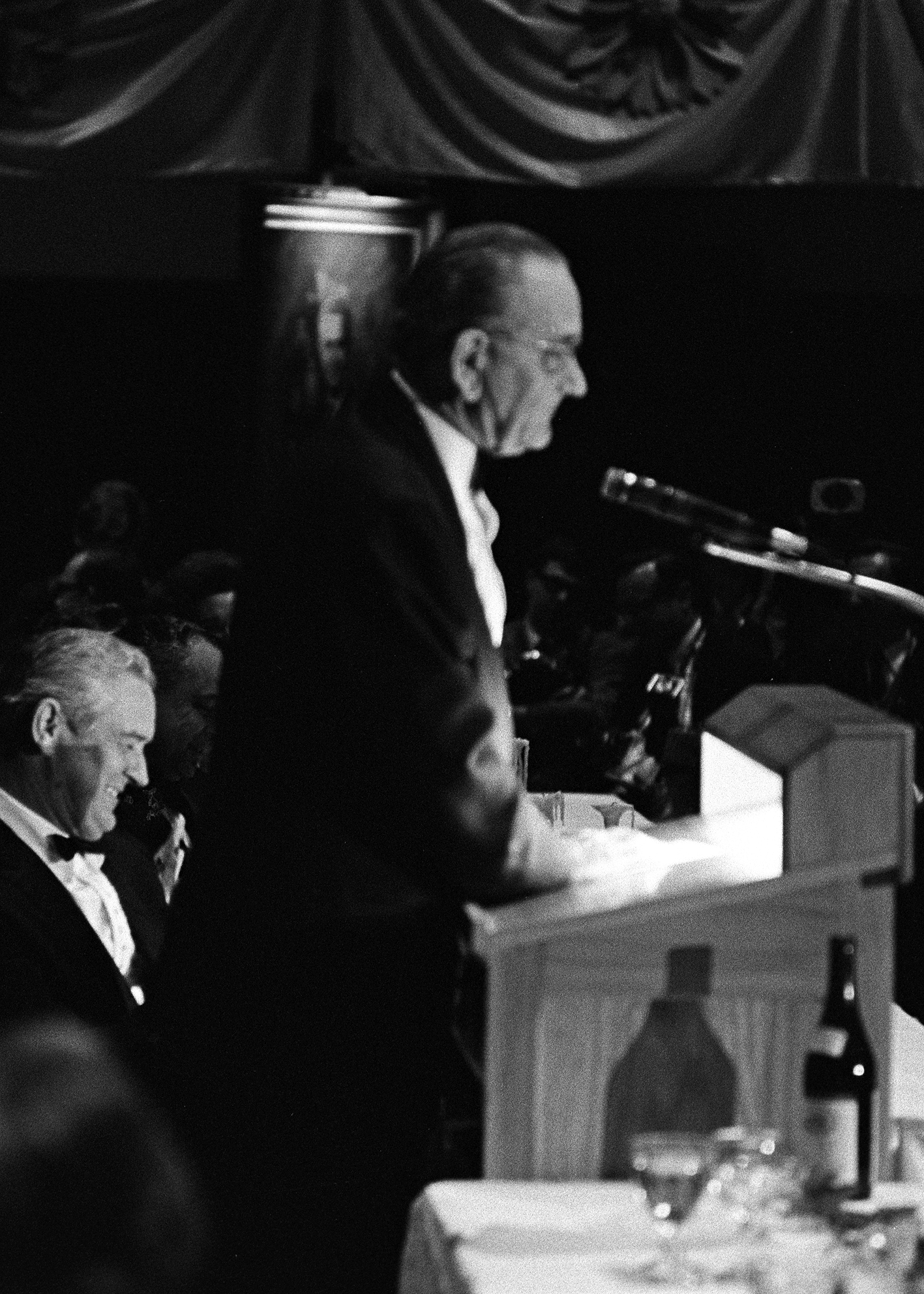
At about the time Cronkite was intoning “mired in stalemate,” Johnson was in Austin, Texas, offering light-hearted banter at the 51st birthday party of Governor John Connally.

“Today,” the president said, “you are 51, John. That is the magic number that every man of politics prays for — a simple majority.”

WJC

Many thanks to Little Miss Attila
for linking to this post

Recent and related:

CBC modifies its Bay of Pigs claim — but still has it wrong

In Anniversaries, Bay of Pigs, Debunking, Media myths, New York Times on April 19, 2011 at 2:03 pm

After my post Sunday that called attention to its erroneous characterization of  the New York Times reporting in the run-up to the Bay of Pigs invasion, CBC News in Canada modified its claim that at “the direct request” of the President John F. Kennedy, the Times “played down” its story about the pending invasion of 50 years ago.

The CBC now says the Times “played down their story at the direct request of the Kennedy administration.” It’s a slight modification, but a significant shift in storyline, away from Kennedy to an unnamed person or persons in his administration.

Even so, the CBC offered no compelling evidence about who in the Kennedy administration made such a request to the Times, when, to whom, or how.

The modification does little more than muddy matters.

And the CBC still doesn’t have it right about Kennedy, the Times, and the run-up to the ill-fated Bay of Pigs invasion.

As I point out in Getting It Wrong, my media-mythbusting book that devotes a chapter to the New York Times-Bay of Pigs suppression myth, there is no compelling evidence that Kennedy or anyone in his administration pressured, lobbied, or persuaded the Times to modify, emasculate, or sanitize the article it published April 7, 1961, which lies at the heart of this media-driven myth.

Szulc of the Times

That article was written by a veteran correspondent named Tad Szulc, who reported that a force of Cuban exiles had been training in the United States and Central America, preparing to launch an armed assault on the regime of Fidel Castro.

I point out in Getting It Wrong that the recollections of none of the principal figures in the Times-suppression episode say that Kennedy pressured the newspaper’s editors about the Szulc story.

These recollections, I write, “include the memoirs of Turner Catledge, then the managing editor of the Times; of James (Scotty) Reston, then the chief of the Times’ Washington bureau; of Pierre Salinger, Kennedy’s press secretary, and of Arthur M. Schlesinger Jr., an award-winning Harvard historian who was a White House adviser to Kennedy.”

It’s highly improbable that a such juicy detail as Kennedy’s purported interference with the Times’ news judgment would have been so thoroughly ignored by such a disparate cast.

Moreover, the compelling insider’s account written by Harrison E. Salisbury, a former Times senior editor and Pulitzer Prize-winning correspondent, asserted that the Kennedy White House neither knew about, nor meddled in, the newspaper’s deliberations about its pre-invasion coverage.

Salisbury was unequivocal about that, writing in his 1980 work, Without Fear or Favor:

“The government in April 1961, did not … know that The Times was going to publish the Szulc story, although it was aware that The Times and other newsmen were probing in Miami. Nor did President Kennedy telephone Dryfoos, Scotty Reston or Turner Catledge about the story…. The action which The Times took [in editing Szulc’s report] was on its own responsibility,” the result of its internal discussions and deliberations.

“Most important,” Salisbury added, “The Times had not killed Szulc’s story.” The newspaper, he wrote, “believed it was more important to publish than to withhold. Publish it did.”

Even with the modification of its article about the Bay of Pigs, the CBC was not inclined to abandon entirely the notion that Kennedy, somehow, took a direct role in meddling with the Times. In a sidebar article posted Sunday, the CBC asserted:

“Numerous sources say that President Kennedy spoke with someone at the New York Times about their reporting there was going to be an invasion of Cuba.”

Many sources may have made such a claim. But assertion is not evidence. And none of the sources mentioned by the CBC offered documentation for their claims.

The CBC sidebar referred specifically to David Halberstam, who wrote The Powers That Be, and Peter Wyden, author of Bay of Pigs: The Untold Story.

Halberstam offered a highly colorful  yet uncorroborated claim that Kennedy called Reston “and tried to get him to kill” Szulc’s article.

Kennedy “argued strongly and passionately about what the Szulc story would do to his policy,” Halberstam wrote, adding that the president warned that the Times would risk having blood on its hands were the article published and the invasion a failure.

Wyden claimed that Orvil Dryfoos, then the Times president, “was in touch with” Kennedy, and the president “was upset” by plans to publish the report.

In a footnote, Wyden added: “It can no longer be determined whether Dryfoos contacted the President or whether Kennedy was told about the story and took the initiative.”

The CBC sidebar referred to yet another version, offered in a history of the Times titled The Trust: The Private and Powerful Family Behind the New York Times. According to that account, Reston took the initiative to call the CIA director, Allen Dulles, to speak with him about Szulc’s story as it was being prepared for publication.

“Dulles advised Scotty [Reston] that, for national security reasons, it would be best not to publish the story,” according to The Trust’s version. “However, if the Times decided it absolutely must publish, it should keep [references to] the CIA out of it.”

Such a conversation, however, was neither mentioned nor hinted at by Reston in his memoir, Deadline, which discussed in some detail the Times’ handling of the Szulc story.

And if it Dulles did offer such pre-invasion advice, the suggestions were made in response to Reston’s inquiry — which is quite apart from the Kennedy administration’s calling on, and lobbying, the Times.

Significantly, the versions of Halberstam, Weyden, and The Trust do not agree on who called whom, or what was discussed. Collectively, they offer a great deal of version variability — shifting accounts of what Kennedy supposedly said, and with whom at the Times he supposedly spoke.

Version variability of such magnitude can be a marker of a media-driven myth, as I point out in Getting It Wrong.

That Kennedy took the initiative and called on the Times to encourage the newspaper to tread lightly in its pre-invasion reporting is at the heart of this media myth. And there’s no evidence to support that claim — as the CBC’s modification indicates.

WJC

Recent and related:

What a Rash remark: ‘If I’ve lost Cronkite, I’ve….’

In Cronkite Moment, Debunking, Media myths, New York Times, Newspapers on April 2, 2011 at 7:17 am

The mythical “Cronkite Moment” can be an irresistible point of reference in broadcast journalism, especially in assessing the shortcomings and inadequacies of contemporary network news anchors.

A commentary posted yesterday at the online site of the Minneapolis Star Tribune offered such a comparison, unfavorably comparing CBS News anchor Katie Couric to the venerable Walter Cronkite.

Couric is believed on her way out as CBS anchor and the commentary’s author, John Rash, noted that Cronkite said he regretted leaving the anchor’s chair in 1981.

In what could pass for a eulogy, Rash also wrote:

“The avuncular Cronkite, once considered the most trusted man in America, was also one of the most influential. His … clear-eyed assessment of Vietnam as a ‘stalemate’ led [John] Kennedy’s successor, President Lyndon B. Johnson, to say, ‘If I’ve lost Cronkite, I’ve lost America.'”

There’s no small amount of myth to unpack in that paragraph.

Most trusted?

For starters, the claim that Cronkite was the “most trusted man in America” rests on a flimsy foundation. The characterization stems from an unrepresentative survey conducted in 18 states in 1972, and from subsequent newspaper advertisements in which CBS touted Cronkite as most trusted.

As for Cronkite’s assertion that the U.S. military was “mired in stalemate” in Vietnam — well, there’s no evidence that Johnson reacted by saying, “If I’ve lost Cronkite, I’ve lost America.”

Or by saying anything akin to such a comment.

The Cronkite-Johnson anecdote, though, is one of the best known in American journalism. It’s often called as the “Cronkite Moment” — and it’s also a media-driven myth, one of 10 I address and debunk in my latest book, Getting It Wrong.

Cronkite certainly made the “mired in stalemate” assessment, at the close of a special report that CBS aired on February 27, 1968.

At the White House, the story goes, Johnson watched the Cronkite program and upon hearing the anchorman’s “mired in stalemate” critique, reached over, snapped off the television and said to an aide or aides:

“If I’ve lost Cronkite, I’ve lost Middle America.”

But as I point out in Getting It Wrong, Johnson wasn’t at the White House that night. He wasn’t in front of a television set.

He didn’t see the program.

Johnson was in Austin, Texas, at the 51st birthday party of Governor John Connally, a longtime political ally.

And about the time Cronkite intoned his “mired in stalemate” assessment, Johnson wasn’t wringing his hands about his war policy. He was cracking a light-hearted joke about Connally’s age.

“Today, you are 51, John,” the president said. “That is the magic number that every man of politics prays for—a simple majority.”

As I’ve noted at Media Myth Alert, it is difficult to fathom how Johnson could have been much moved by a television program he didn’t see.

Besides, Cronkite was scarcely the first to invoke “stalemate” in describing Vietnam.

The New York Times turned to that term periodically in the months before the presumptive “Cronkite Moment.”

In a front-page analysis published August 7, 1967, the Times declared that “the war is not going well. Victory is not close at hand.”

The Times report was published on its front page beneath the headline:

Vietnam: The Signs of Stalemate.

A month before, on July 4, 1967, the Times had said of the war effort:

“Many officers believe that despite the commitment of 466,000 United States troops now in South Vietnam … the military situation there has developed into a virtual stalemate.”

And the Times said in an editorial published October 29, 1967:

“Instead of denying a stalemate in Vietnam, Washington should be boasting that it has imposed a stalemate, for that is the prerequisite–on both sides–to a negotiated settlement. That settlement, if it is to be achieved, will have to be pursued with the same ingenuity and determination that have been applied to fighting the war.”

So Cronkite in his report about Vietnam on February 27, 1968, essentially reiterated an assessment that the Times had offered on a number of occasions  in the months before.

“Stalemate” may have been a “clear-eyed” assessment. But by the time Cronkite invoked the term, “stalemate” in Vietnam was neither novel nor stunning.

WJC

Recent and related:

He may be a crook, but he’s right about Vietnam, Watergate

In Cronkite Moment, Debunking, Media myths, Newspapers, Washington Post, Watergate myth on March 31, 2011 at 10:20 am

He may be a crook, but he’s right about Vietnam and Watergate: They were no “crowning achievements” for the news media, even though journalists love to embrace them as such.

Black mug shot

The crook is erstwhile media mogul Conrad Black, who was released on bail late last year from a prison in Florida. In a speech this week in New York, Black declared journalism “an occupation that suffers from a collective and in some cases individual narcissism.”

The Canadian-born Black, who gave up his citizenship to accept a British peerage, was quoted indirectly by Toronto’s Globe and Mail as saying:

“What journalists believe to be crowning achievements — for example, the crusading reporting on the Vietnam War and Watergate — are nothing of the sort.”

So why should anyone care what Black thinks or says? He was, after all, accused of looting Hollinger International, the company that once was at the heart of his media empire.

But even a disgraced former press tycoon can offer useful insight, and Black’s observation about Vietnam and Watergate are on target: News coverage did not bring about an end to the war in Vietnam; nor did the press didn’t bring down Richard Nixon in the Watergate scandal.

Journalists, though, do love to believe both self-reverential claims.

As I write in Getting It Wrong, my media mythbusting book that came out last year, such “purported achievements are compelling and exert an enduring allure; to expose them as exaggerated or untrue is to take aim at the self-importance of American journalism.”

The media myth about Vietnam often revolves around the so-called “Cronkite Moment” in February 1968, when CBS News anchorman Walter Cronkite declared on air that the U.S. military was “mired in stalemate” in Vietnam.

Supposedly, President Lyndon Johnson watched Cronkite’s report and, upon hearing the “mired in stalemate” assessment, realized his Vietnam policy was a shambles.

In a supposed moment of dazzling clarity, Johnson is said to have snapped off the television set and declared to an aide or aides:

“If I’ve lost Cronkite, I’ve lost Middle America.”

Or:

“If I’ve lost Cronkite, I’ve lost the war.”

Or something to that effect. Versions vary, but the point is that Cronkite’s assessment supposedly altered U.S. policy, and altered history.

Which was demonstrably not the case.

As I discuss in Getting It Wrong, Johnson didn’t see Cronkite’s program when it aired. He was at the time cracking a light-hearted joke in Austin, Texas, at the 51st birthday party of Governor John Connally.

It is hard to fathom how the president could have been much influenced by a show he hadn’t seen.

In the days and weeks immediately after the “Cronkite Moment,” Johnson was hardly reduced to wringing his hands over failed policy in Vietnam. Rather, he gave a couple of robust speeches in which he urged renewed commitment to the war.

Johnson vowed in one speech that the United States would “not cut and run” from its obligations in Vietnam. In another, in mid-March 1968, he called for “a total national effort to win the war.”

And the notion that the press — specifically, the Washington Post — brought down Nixon in the Watergate scandal is an interpretation that even the Post has sought to dismiss.

I note in Getting It Wrong that the newspaper’s then-ombudsman, Michael Getler, wrote in 2005:

“Ultimately, it was not The Post, but the FBI, a Congress acting in bipartisan fashion and the courts that brought down the Nixon administration. They saw Watergate and the attempt to cover it up as a vast abuse of power and attempted corruption of U.S. institutions.”

Bob Woodward, one of the two lead reporters for the Post on Watergate, said as much, if in earthier terms. He declared in an interview with American Journalism Review in 2004:

“To say that the press brought down Nixon, that’s horseshit.”

So even if he didn’t go into much detail about Vietnam and Watergate, Black had something useful to say about those matters. (It should be noted, too, that Black wrote a hefty and largely sympathetic biography of Nixon.)

According to the Globe and Mail, Black in his speech “excoriated the U.S. legal system, describing the original charges against him as ‘nonsense’ produced by prosecutors throwing ‘spaghetti at the wall.'”

Black formerly was chief executive of Hollinger, the holdings of which once included the Chicago Sun-Times and the London Daily Telegraph. He was convicted in Chicago in 2007 on three counts of fraud and one of obstructing justice and sentenced to 6 1/2 years in prison.

The laws under which he was convicted were narrowed in a subsequent U.S. Supreme Court decision and Black was released on bail, pending review of his sentence.

WJC

Recent and related:

Searing insight that wasn’t: Fox Business and the ‘Cronkite Moment’

In Cronkite Moment, Debunking, Media myths on March 25, 2011 at 7:59 am

It’s intriguing how media myths — especially those distilled to pithy turns of phrase — are invoked by commentators to infuse their arguments with a presumptive moral authority.

Johnson: Cracked a joke instead

A telling example of this tendency is the mythical line attributed to President Lyndon Johnson — “If I’ve lost Cronkite, I’ve lost Middle America” (or words to that effect).

As I note in my latest book, Getting It Wrong, it’s almost certain that Johnson never made the comment, at least not in reaction to Walter Cronkite’s on-air assessment in February 1968 that the U.S. military in Vietnam was “mired in stalemate.”

But the mythical line lives on because it’s pithy, memorable, and telling. Supposedly.

It suggests the news media can offer power-wielding authorities insight so profound and searing that can alter policy and even change the course of a war. Which is what Cronkite’s “mired in stalemate” characterization purportedly represented for Johnson.

As I write in Getting It Wrong, Cronkite’s assessment “supposedly was so singularly potent that it is has come to be remembered as the ‘Cronkite Moment.‘”

How the “Cronkite Moment” can be applied in reaching for the high moral ground was evident the other day in a commentary aired on the Fox Business cable channel.

The commentator, Gerri Willis, slammed Obamacare, the year-old federal health care legislation, as a looming financial disaster that “sure ain’t what it was advertised to be.”

Fair enough: No argument there.

But in closing, Willis reached for the “Cronkite Moment,” as if to gild her argument.

It came off sounding like a non-sequitur.

Here’s what she said:

“It’s no wonder that an all-star panel of health care backers — which included Ted Kennedy’s widow Vicki Kennedy and Tom Daschle, among others — are nowhere to be found.

“President Johnson said during the Vietnam War, ‘If I’ve lost Cronkite I’ve lost Middle America.

“Well Mr. Obama ,” she said, referring to President Barack Obama, “look at the polls. You lost Middle America on this a long time ago.”

Invoking a media myth hardly clinches the argument. Turning to the dubious line makes the argument appear a bit frivolous and decidedly  less than sedulous.

And why is the comment attributed to Johnson a media myth?

For several reasons, which are discussed in Getting It Wrong.

For starters, Johnson did not see the Cronkite program when it aired. The president at the time was in Austin, Texas, at the 51st birthday party for a longtime political ally, Gov. John Connally.

Johnson wasn’t in front of a television set when Cronkite intoned his “mired in stalemate” commentary. Johnson was at the podium at Connally’s birthday party, cracking a joke (see photo).

“Today, you are 51, John,” the president said. “That is the magic number that every man of politics prays for—a simple majority.”

It is difficult to fathom how Johnson could have been much moved by a television program he didn’t see.

And even if the president watched the Cronkite report on videotape at some later date (and there’s no evidence he did), it represented no epiphany, no moment of revealing insight.

Johnson in the days and weeks after the Cronkite program was publicly urging a national recommitment to the war in Vietnam.

Just a few days after Cronkite offered his “mired in stalemate” assessment, Johnson delivered a rousing speech in Texas, declaring that the United States would “not cut and run” from commitments in Vietnam.

In mid-March 1968, Johnson gave lectern-pounding speech in Minnesota, urging “a total national effort to win the war” in Vietnam.

“We love nothing more than peace,” Johnson said, “but we hate nothing worse than surrender and cowardice.”

Clearly, the “Cronkite Moment” offered no searing insight for Lyndon Johnson.

WJC

Recent and related:

WaPo ‘played pivotal role’ in Watergate? Think again

In Anniversaries, Bay of Pigs, Cronkite Moment, Debunking, Media myths, Washington Post, Watergate myth on March 24, 2011 at 7:52 am

The Wall Street Journal blog “India Real Time” indulged yesterday in the conventional but mistaken narrative of the Watergate scandal, declaring that the Washington Post “played a pivotal role in effectively bringing down then U.S. President Richard Nixon.”

Effectively brought down Nixon, eh?

Not even the Post buys into that misreading of Watergate history.

As I note in my latest book, Getting It Wrong, the newspaper’s publisher during and after the Watergate scandal, Katharine Graham, dismissed that interpretation, declaring in 1997:

“Sometimes people accuse us of bringing down a president, which of course we didn’t do. The processes that caused [Nixon’s] resignation were constitutional.”

Similarly, the newspaper’s executive editor during Watergate, Ben Bradlee, has asserted:

“[I]t must be remembered that Nixon got Nixon. The Post didn’t get Nixon.”

Such comments aren’t the manifestation of false modesty. Far from it. Rather, they represent candid observations about the peripheral role the Post played in uncovering the scandal that brought about Nixon’s resignation in 1974.

As I write in Getting It Wrong, rolling up a scandal of the dimension and complexity of Watergate “required the collective if not always the coordinated forces of special prosecutors, federal judges, both houses of Congress, the Supreme Court, as well as the Justice Department and the FBI.

“Even then,” I add, “Nixon likely would have served out his term if not for the audiotape recordings he secretly made of most conversations in the Oval Office of the White House. Only when compelled by the Supreme Court did Nixon surrender those recordings, which captured him plotting the cover-up and authorizing payments of thousands of dollars in hush money.”

Still, the notion that the Post was vital to the outcome of Watergate, that the newspaper “effectively” brought down a president, is the stuff of legend. It’s a powerful media-driven myth that offers a simplistic and misleading interpretation of the country’s greatest political scandal.

Watergate was among the media myths I discussed last night in a book talk at Kensington Row Bookshop in Kensington, MD.

I noted in my talk: “Obstruction of justice — not the Washington Post — is what cost Nixon his presidency.”

I also spoke about the mythical “Cronkite Moment” of 1968 and the NewYork Times-Bay of Pigs suppression myth of 1961.

The “Cronkite Moment” is shorthand for the dubious notion that the on-air assessment of CBS News anchorman Walter Cronkite forced President Lyndon Johnson to alter policy on Vietnam.

In a special report that aired February 27, 1968, Cronkite declared that the U.S. military effort in Vietnam was “mired in stalemate” and suggested that negotiations would prove to be the way out of the morass.

Johnson supposedly was at the White House that night, watching Cronkite’s show. Upon hearing the “mired in stalemate” assessment, the president supposedly snapped off the television set and said to an aide or aides:

“If I’ve lost Cronkite, I’ve lost Middle America.”

Or words to that effect.

As I said in my talk at the Kensington bookshop, “Acute version variability— the shifting accounts of just what was said — can be a marker of a media-driven myth.”

And so it is with the so-called “Cronkite Moment.”

Johnson did not see the Cronkite program when it aired. The president at the time was in Austin, Texas, offering light-hearted comments at a birthday party for Gov. John Connally, who that day turned 51.

About the time Cronkite was intoning his “mired in stalemate” commentary, Johnson was at the podium at Connally’s birthday party, saying:

“Today, you are 51, John. That is the magic number that every man of politics prays for—a simple majority.”

That line drew laughter from the audience of 25 people at the Kensington bookshop.

The Times-Bay of Pigs suppression myth, I said in my talk, dates almost 50 years — to April 1961, when “a CIA-trained force of Cuban exiles threw themselves on the beaches of southwest Cuba in a futile attempt to turn Fidel Castro from power.”

Supposedly, the Times censored itself about invasion plans several days before the assault took place — at the request of the President John F. Kennedy.

The Times, I said, “did not censor itself. It did not suppress its reporting” about invasion preparations.

“In fact,” I added, “the Times’ accounts of preparations for the invasion were fairly detailed — and prominently displayed on the front page in the days before the Bay of Pigs assault was launched.”

The suppression myth seems to have has its origins in the Cuban Missile Crisis of October 1962 — when the Times, at Kennedy’s request, did hold off publishing a story about the deployment of Soviet nuclear-tipped missiles in Cuba.

On that occasion, I said in my talk, “when the prospect of a nuclear exchange seemed to be in the balance, the Times complied” with the president’s request.

“But no such request,” I added, “was made of the Times in the run-up to the Bay of Pigs invasion of 50 years ago.”

WJC

Recent and related

Talking media myths at the alma mater

In 1897, Cronkite Moment, Debunking, Furnish the war, Media myths, Spanish-American War, Washington Post, Watergate myth on March 19, 2011 at 9:06 am

I gave a talk about media-driven myths yesterday on the campus of Ohio Wesleyan University, where years ago I earned my undergraduate degree in journalism and history.

The talk focused on three of the media myths debunked in my latest book, Getting It Wrong, which is dedicated to Verne E. Edwards Jr., my journalism professor at Ohio Wesleyan.

I was delighted that Edwards and his wife attended yesterday’s talk, during which I discussed the myths of Watergate, of the “Cronkite Moment,” of William Randolph Hearst’s purported vow to “furnish the war” with Spain.

These, I said, all are well-known tales about the power of the news media that often are taught in schools, colleges, and universities. All of them are delicious stories that purport to offer lessons about the news media’s power to bring about change, for good or ill.

I described media-driven myths as I often do — as “the junk food of journalism, meaning that they’re tasty and alluring, but in the end, not terribly healthy or nutritious.”

Because it debunks prominent media myths, Getting It Wrong, I said, should not be considered “yet another media-bashing book.”

Rather, I said, Getting It Wrong is aligned with a fundamental objective of American journalism — that of getting it right.

I noted that the book is provocative and edgy — inevitably so, given that it dismantles several of the most-cherished stories in American journalism.

Among them is the notion that the Watergate reporting of the Washington Post exposed the crimes of the administration of President Richard Nixon and forced his resignation in 1974.

I noted that the Post and its reporting “was really peripheral to the outcome” of Watergate, pointing out that even senior officials at the newspaper have insisted as much over the years.

Among them was Katharine Graham, publisher of the Post during Watergate, who said on the scandal’s 25th anniversary in 1997:

“Sometimes people accuse us of bringing down a president, which of course we didn’t do. The processes that caused [Nixon’s] resignation were constitutional.”

I also pointed out that Bob Woodward, one the lead reporters for the Post on Watergate, has expressed much the same sentiment, only in earthier terms. In an interview in 2004 with American Journalism Review, Woodward declared:

To say the press brought down Nixon, that’s horseshit.”

I also reviewed the “Cronkite Moment” of February 27, 1968 — that legendary occasion when the on-air assessment of CBS News anchorman Walter Cronkite supposedly altered American policy on the Vietnam War. At the end of a special report about Vietnam, Cronkite asserted that the U.S. war effort was “mired in stalemate.”

President Lyndon Johnson supposedly watched Cronkite’s program and, upon hearing the anchorman’s “mired in stalemate” analysis, snapped off the television set and declared:

“If I’ve lost Cronkite, I’ve lost Middle America.”

Or something to that effect.

I pointed out that Johnson did not see the Cronkite program when it aired, that the president then was in Austin, Texas, at the 51st birthday party of Governor John Connally.

“About the time Cronkite was intoning his ‘mired in stalemate’ commentary,” I told the audience at Ohio Wesleyan, “Johnson was at the podium at Connally’s birthday party, saying: ‘Today, you are 51, John. That is the magic number that every man of politics prays for — a simple majority.’

“Now that may not have been the greatest presidential joke ever told,” I said, “but it is clear that Johnson at that time wasn’t lamenting his fate, wasn’t lamenting the supposed loss of Cronkite’s support” for the war in Vietnam.

Clearly, I added, the so-called “‘Cronkite Moment’ was of little importance or significance for Johnson. Especially since he didn’t even see the show when it aired.”

I described how Hearst’s purported vow to “furnish the war” lives on despite Hearst’s denial and despite an array of reasons that point to the anecdote’s falsity.

Hearst supposedly made the vow in an exchange of telegrams with the artist Frederic Remington, whom Hearst had sent to Cuba in early 1897 to draw sketches of the Cuban rebellion against Spanish colonial rule — the nasty conflict that gave rise in 1898 to the Spanish-American War.

The tale “lives on despite an irreconcilable internal inconsistency,” I said. “It would have been absurd for  Hearst to have vowed to ‘furnish the war’ because war — the Cuban rebellion against Spanish rule — was the very reasons he sent Remington to Cuba in the first place.”

Still, that anecdote and other media myths live on because they are “deliciously good stories — too good, almost, to be disbelieved,” I said. Too good, almost, to check out.

The university president, Rock Jones, introduced my talk, which was organized by Lesley Olson, general manager of the OWU bookstore, and by Cole E. Hatcher, the university’s director of media and community relations.

Two college buddies of mine, Hugh D. Pace and Tom Jenkins, also attended the talk.

WJC

Recent and related:

Cronkite’s view on Vietnam ‘changed course of history’ But how?

In Cronkite Moment, Debunking, Media myths, New York Times, Newspapers on January 17, 2011 at 7:16 am

Few media-driven myths are more enticing, delicious, or retold as often as the so-called “Cronkite Moment,” when the views of CBS anchorman Walter Cronkite supposedly altered American policy in the Vietnam War.

The presumptive “Cronkite Moment“–one of 10 media-driven myths I address and debunk in my latest book, Getting It Wrong–took place February 27, 1968, when Cronkite declared on air that U.S. military was “mired in stalemate” in Vietnam.

At the White House, President Lyndon Johnson supposedly watched the Cronkite report and, upon hearing the “mired in stalemate” analysis, snapped off the television set and told an aide or aides:

“If I’ve lost Cronkite, I’ve lost Middle America.”

Or something to that effect. Versions vary markedly.

The words of the anchorman supposedly represented an epiphany for the president.

A slimmed-down version of the “Cronkite Moment” appeared in yesterday’s Los Angeles Times, in a commentary about a supposed surfeit of opinion in contemporary America.

“Opinion inflation has invaded every aspect of our lives,” wrote the commentary’s author, Stephen Randall, the deputy editor of Playboy.

“There was a time,” he added, vaguely, “when thoughtful people tried to be balanced. The old-style political columnists were famous for saying nothing.”

Randall further declared:

“Walter Cronkite voiced so few opinions that when he uttered one—about the Vietnam War—it changed the course of history.”

My opinion? Such ruminations are glib, superficial and, in reference to Cronkite, the stuff of media myth.

The author doesn’t explain how Cronkite’s views on Vietnam “changed the course of history” (an exaggerated claim sometimes made about the Watergate reporting of Bob Woodward). But Randall’s clearly alluding to the mythical “Cronkite Moment” of February 1968.

As I discuss in Getting It Wrong, “serious flaws are associated with the presumptive ‘Cronkite moment.'”

Notable among them is that President Johnson did not see Cronkite’s Vietnam program when it aired.

Johnson at the time wasn’t at the White House and he wasn’t in front of a television set.

Johnson was on the campus of the University of Texas at Austin, attending the 51st birthday party of a longtime political ally, Governor John Connally.

As Cronkite was intoning his “mired in stalemate” assessment, Johnson was offering light-hearted banter about Connally’s age.

“Today you are 51, John,” the president said. “That is the magic number that every man of politics prays for—a simple majority.”

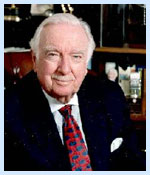
Cronkite

It was hardly the best presidential joke ever told. But it clearly demonstrated that Johnson was not bemoaning the loss of Cronkite’s support.

Indeed, it is difficult to fathom how Johnson could have been moved by a program he did not see.

Not only that, but Cronkite’s “mired in stalemate” assessment was by late February 1968 neither striking nor original.

As I note in Getting It Wrong, “stalemate” had been invoked  for months to describe the war in Vietnam.

Notably, the New York Times published a front-page analysis on August 7, 1967, that declared “the war is not going well. Victory is not close at hand.”

The Times report was published on its front page beneath the headline:

Vietnam: The Signs of Stalemate.

And that wasn’t the only occasion in 1967 when the Times turned to “stalemate” to characterize the war.

A review of database articles and editorials published in the Times reveals that “stalemate” was invoked not infrequently in the months before the supposedly revealing “Cronkite Moment.”

For example, in a news analysis published July 4, 1967, the Times said of the war effort:

“Many officers believe that despite the commitment of 466,000 United States troops now in South Vietnam … the military situation there has developed into a virtual stalemate.”

And in an editorial published October 29, 1967, the Times said:

“Instead of denying a stalemate in Vietnam, Washington should be boasting that it has imposed a stalemate, for that is the prerequisite–on both sides–to a negotiated settlement. That settlement, if it is to be achieved, will have to be pursued with the same ingenuity and determination that have been applied to fighting the war.”

So Cronkite in his report about Vietnam on February 27, 1968, essentially reiterated an assessment that had been offered several times by the Times.

And embracing the view of the Times “changed the course of history”?

Hardly.

U.S. troops were in Vietnam for five years after the “Cronkite Moment.”

WJC

Recent and related:

Murrow, Cronkite myths cited in Poland’s top paper

In Cronkite Moment, Debunking, Media myths, Murrow-McCarthy myth, New York Times, Newspapers, Watergate myth on January 4, 2011 at 10:25 am

I’ve discussed from time to time at Media Myth Alert how media-driven myths about the U.S. news media have a way of traveling well and finding expression in news outlets overseas.

Watergate-related myths are notable examples of this tendency.

A couple of prominent media myths popped up yesterday in an article posted at the online site of Gazeta Wyborca, the leading daily in Poland and a newspaper with a remarkable past.

Gazeta Wyborca traces its lineage to what was the leading underground newspaper in Poland of the 1980s, Tygodnik Mazowsze. The clandestine title appeared under the noses of Poland’s communist authorities, week after week, from 1982 to 1989–some 290 issues in all.

Tygodnik Mazowsze was run almost entirely by women affiliated with Poland’s then-banned Solidarity opposition. When the country’s communist rulers permitted Solidarity candidates to stand in elections in 1989, one of the conditions was that the movement be permitted to publish an above-ground newspaper.

So the staff of Tygodnik Mazowsze moved up from the underground to launch Gazeta Wyborca, which means “electoral newspaper.” In the years since, Gazeta has become the dominant news outlet in Poland, which now is a thriving democracy.

Gazeta yesterday referred to the debate that bubbled last week in U.S. news media over a New York Times article that likened TV comedian Jon Stewart to legendary CBS newsman Edward R. Murrow.

Gazeta noted that U.S. news media “triumphantly” mentioned “cases in which journalists have changed the course of history” and referred to Murrow’s “instrumental” role in ending Senator Joseph McCarthy’s communists-in-government witch-hunt.

It also noted CBS anchorman Walter Cronkite’s criticism of the Vietnam War in 1968, which supposedly forced President Lyndon Johnson to realize his war policy was a shambles.

It’s too bad Gazeta didn’t point out that both cases are media-driven myths.

As I discuss in my latest book, Getting It Wrong, Murrow was quite late in confronting McCarthy, doing so most prominently in a half-hour television program that aired March 9, 1954.

That show came months, even years after other American journalists–notably, syndicated columnist Drew Pearson–had reported critically, closely, and often about McCarthy and his exaggerated charges.

“To be sure,” I write in Getting It Wrong, “it wasn’t as if Americans in early 1954 were hoping for someone to step up and expose McCarthy, or waiting for a white knight like Murrow to tell them about the toxic threat the senator posed.”

By then, they knew all too well.

Nor was Cronkite at the cutting edge of criticism of the U.S. war effort in Vietnam.

Far from it.

The CBS anchorman declared in a televised special report on February 27, 1968, that the U.S. military was “mired in stalemate” in Vietnam.

LBJ in Texas, February 27, 1968

But that scarcely was a remarkable assertion.

As I note in Getting It Wrong, stalemate” had been appearing as early as the summer of 1967 in New York Times editorials and analyses about the war.

What supposedly made the Cronkite characterization stand out is that President Johnson saw the program and, as it ended, said to an aide or aides, “If I’ve lost Cronkite, I’ve lost Middle America.”

Or something to that effect.

But in fact, Johnson wasn’t in front of a television set that night. He didn’t see the Cronkite program when it aired.

At the time Cronkite was intoning his “mired in stalemate” assessment, Johnson was offering light-hearted banter in Austin, Texas, at the 51st birthday party of one of his longtime political allies, Governor John Connally.

So it’s difficult to fathom how Johnson could have been much moved by a program that he hadn’t seen.

WJC

Recent and related:

Knocking down the ‘Cronkite Moment’

In Cronkite Moment, Debunking, Media myths, New York Times on December 22, 2010 at 9:28 am

That’s more like it.

A blog sponsored by the Hollywood Reporter yesterday invoked–and parenthetically disputed–the so-called “Cronkite Moment” of 1968, when CBS news anchorman Walter Cronkite declared on-air that the U.S. war effort in Vietnam was “mired in stalemate.”

The media myth has it that President Lyndon Johnson watched the Cronkite report and, upon hearing the anchorman’s “mired in stalemate” assessment, snapped off the television set and told an aide or aides:

“If I’ve lost Cronkite, I’ve lost Middle America.” Or something to that effect.

As I discuss in my latest book, Getting It Wrong, the tale almost certainly is a media myth.

Johnson didn’t see the Cronkite report when it aired on February 27, 1968. The president at the time was in Austin, Texas, attending the 51st birthday party of Governor John Connally, one of his longtime allies.

About the time Cronkite was intoning “mired in stalemate,” Johnson wasn’t lamenting the loss of the anchorman’s support. Johnson was making light-hearted comments about Connally’s age, saying:

“Today you are 51, John. That is the magic number that every man of politics prays for—a simple majority.”

Moreover, there is no compelling evidence that Johnson saw the Cronkite program later, on videotape.

And as I point out in Getting It Wrong, “The power of the ‘Cronkite moment’ resides in the sudden, unexpected, and decisive effect it supposedly had on the president: Such an effect would have been absent, or greatly diminished, had Johnson had seen the program on videotape at some later date.”

So here’s what the Hollywood Reporter blog said yesterday, in a column that discussed leading candidates for best motion picture of 2010:

“They say that when President LBJ saw newscaster Walter Cronkite editorialize against Vietnam, he said, ‘If I’ve lost Cronkite, I’ve lost the war.’ (Actually, this is an urban legend, but it’s a fine metaphor so it endures.)”

While it’s not entirely clear why the writer felt compelled to invoke the “Cronkite Moment,” that he promptly knocked it down is commendable.

Calling it out as dubious is necessary if the myth ever is to be unmade.

The “Cronkite Moment,” despite its wobbly and improbable elements, is a delicious story of a journalist telling truth to power–and producing a powerful effect. As such, it probably will live on.

It certainly will live on if efforts aren’t made repeatedly to call attention to its improbability: A news anchorman’s brief editorial statement was sufficient to alter a president’s thinking?

Come on.

It doesn’t work that way.

Besides, as I point out in Getting It Wrong, Cronkite’s assessment of the U.S. war effort was hardly original.

Nearly seven months before the “Cronkite Moment,” the New York Times had reported the war in Vietnam “is not going well.”

Victory, the Times said in August 1967, “is not close at hand. It may be beyond reach.”

This analysis was published on the Times’ front page beneath the headline:

Vietnam: The Signs of Stalemate.”

WJC

Recent and related: