
Private Lynch
The Huffington Post today reviews the new movie about Pat Tillman, the pro football player turned Army Ranger who was killed in Afghanistan in 2004. The review also takes a swipe at the Pentagon for supposedly concocting a hero-warrior story around 19-year-old Army private Jessica Lynch in the early days of the Iraq War.
The review says that Lynch’s “combat actions, as ginned up by the Bush-era Pentagon, did not square with reality.”
Well, frankly, that observation doesn’t quite “square with reality.”
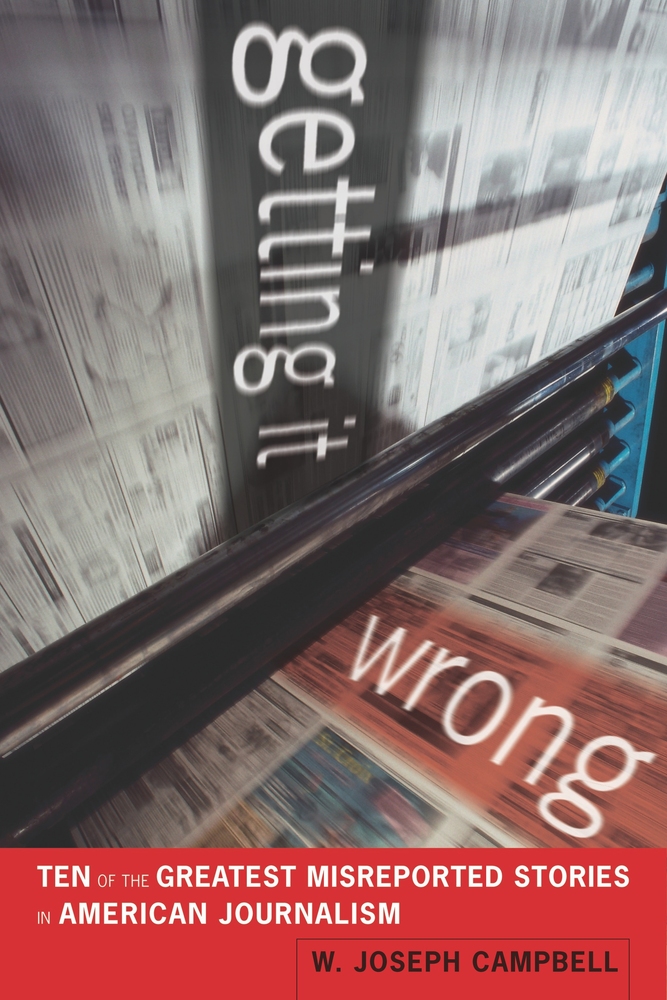
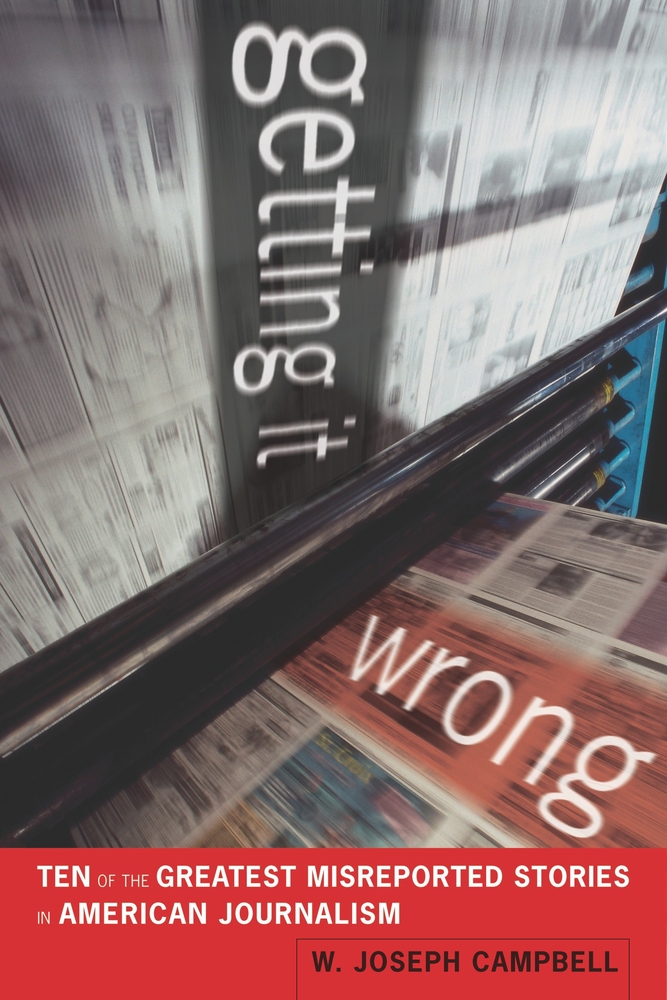
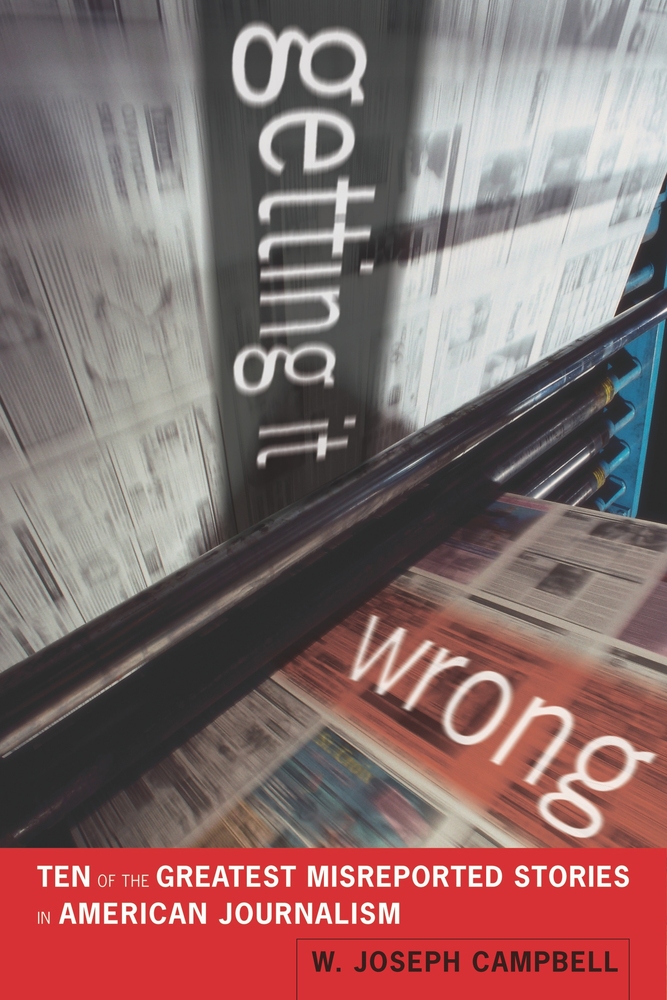
I discuss the myths that have been spun off from the Lynch case in my new book Getting It Wrong, noting that the Pentagon wasn’t the source for the erroneous account of Lynch’s battlefield heroics.
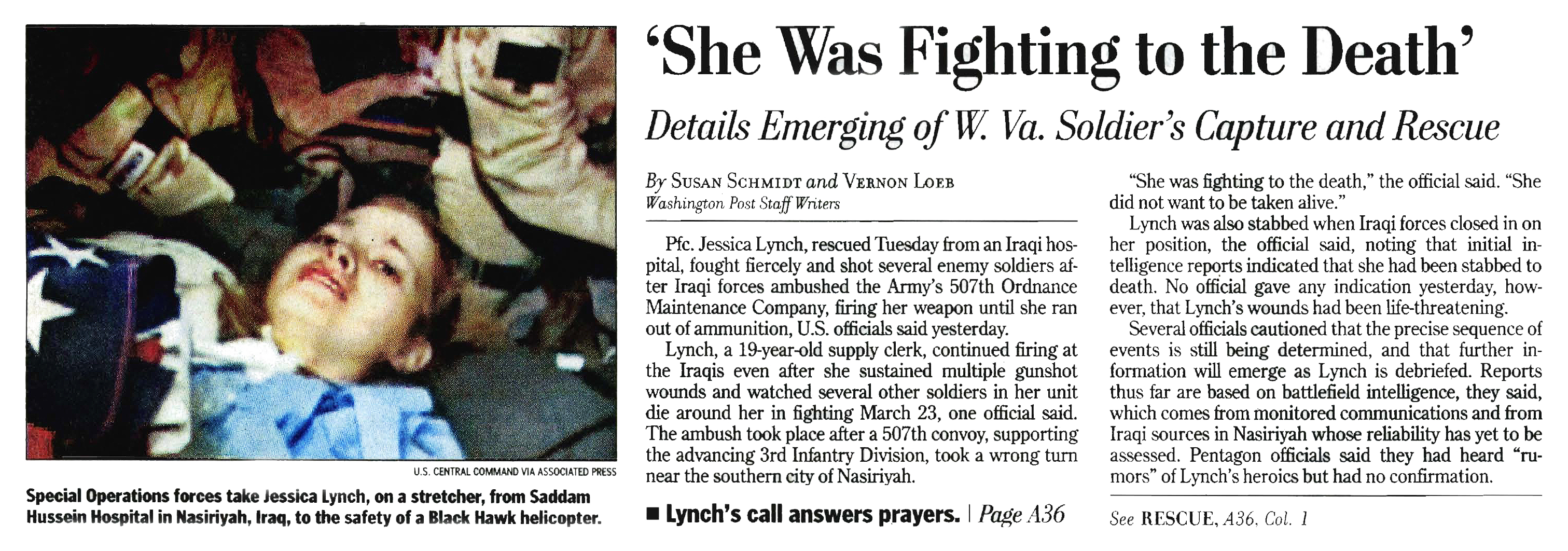
The Washington Post thrust that account into the public domain in a sensational, front-page report on April 3, 2003.
The Post‘s story described how Lynch, despite being shot and stabbed, fiercely fought Iraqi attackers in an ambush at Nasiriyah. The electrifying report appeared beneath the headline:
“‘She was fighting to the death.’”
And the story was picked up around the world. But it was wrong, badly wrong.
Lynch never fired a shot in the fighting at Nasiriyah. She suffered neither gunshot nor stab wounds; her injuries were severe, and came in the crash of a Humvee fleeing the ambush.
The Post‘s article was based on sources identified only as “U.S. officials.” The article said that “Pentagon officials … had heard ‘rumors’ of Lynch’s heroics but had no confirmation” to offer.
As I note in Getting It Wrong, one of the Post reporters on the story said on at least two occasions that the Pentagon was not the source for the Lynch story.
The reporter, Vernon Loeb, who has since moved on to the Philadelphia Inquirer, told the NPR Fresh Air program in December 2003 that he “could never get anybody from the Pentagon to talk about those reports [of Lynch’s supposed heroics] at all.”
He added that the Pentagon “was completely unwilling to comment on those reports at all.
“They wouldn’t say anything about Jessica Lynch.”
As denials and knock-downs go, that one is pretty solid. And unequivocal.
A few months earlier, Loeb was quoted in an op-ed article in the New York Times as saying: “Far from promoting stories about Lynch, the military didn’t like the story.”
As I also note in Getting It Wrong, the Pentagon’s then-spokeswoman, Victoria Clarke, told the Associated Press in June 2003: “We were downplaying [the Lynch story]. We weren’t hyping it.”
Even in the face of such denials, the notion the Pentagon concocted a phony hero-warrior story about Lynch has become the dominant narrative–one repeated blithely and often.
Interestingly, those pushing the Pentagon-made-it-up meme never seem to explain just how the veteran Post reporters on the Lynch story were so easily and thoroughly duped.
Loeb shared the byline on the story with Susan Schmidt, who later won a Pulitzer Prize for investigative reporting. Among those contributing to the story was Dana Priest, who also has won a Pulitzer.
And if the Pentagon had “ginned up” the hero-warrior story about Lynch, “it failed miserably in keeping the ruse from unraveling, ” I write in Getting It Wrong.
The day after the Post‘s “‘fighting to the death'” article appeared, the head of the Army hospital at Landstuhl, Germany, told reporters that Lynch had been neither shot nor stabbed–undercutting crucial elements of the hero-warrior tale.
Related:
- ‘Mythmaking in Iraq,’ at a conference in New York
- ‘Commentary’ reviews ‘Getting It Wrong’
- ‘Getting It Wrong’ goes Majic
- Seeking antidotes to journalism’s ‘junk food’
[i] Schmidt and Loeb, “‘She Was Fighting to the Death,’” Washington Post.




 Media Myth Alert