W. Joseph Campbell

Posts Tagged ‘Watergate’

Nixon quits–36 years on

In Anniversaries, Cinematic treatments, Media myths, Washington Post, Watergate myth on August 9, 2010 at 8:40 am

Richard Nixon resigned the presidency 36 years ago today–the only American president to have done so.

Nixon leaves, August 9, 1974

He left the White House on August 9, 1974, to avoid certain impeachment and conviction. By then it had become clear that Nixon had ordered senior aides to cover up the Watergate scandal’s signal crime, the burglary in June 1972 at Democratic national headquarters.

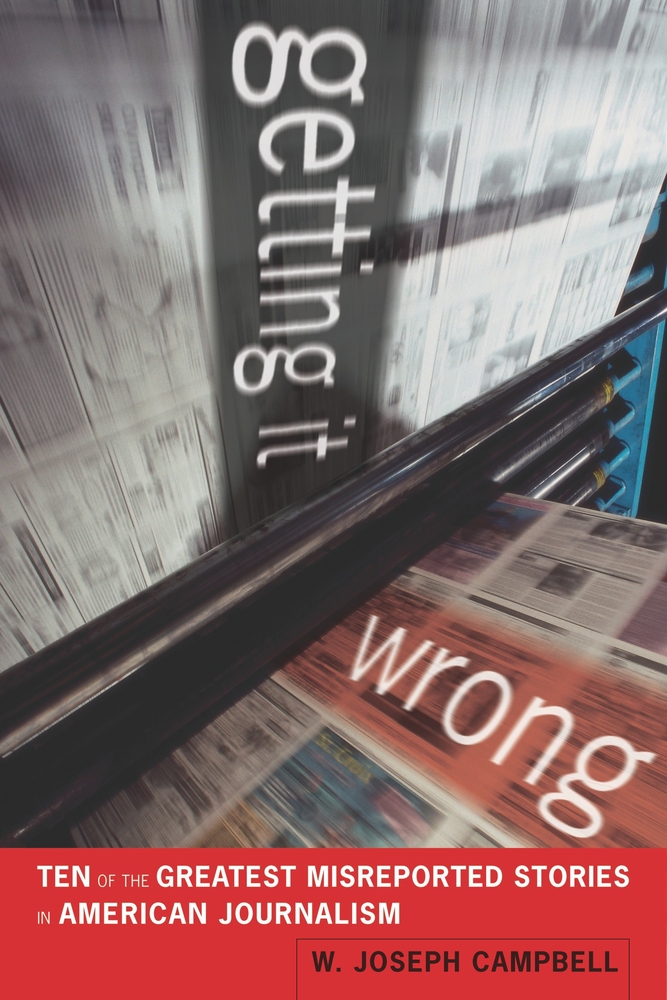
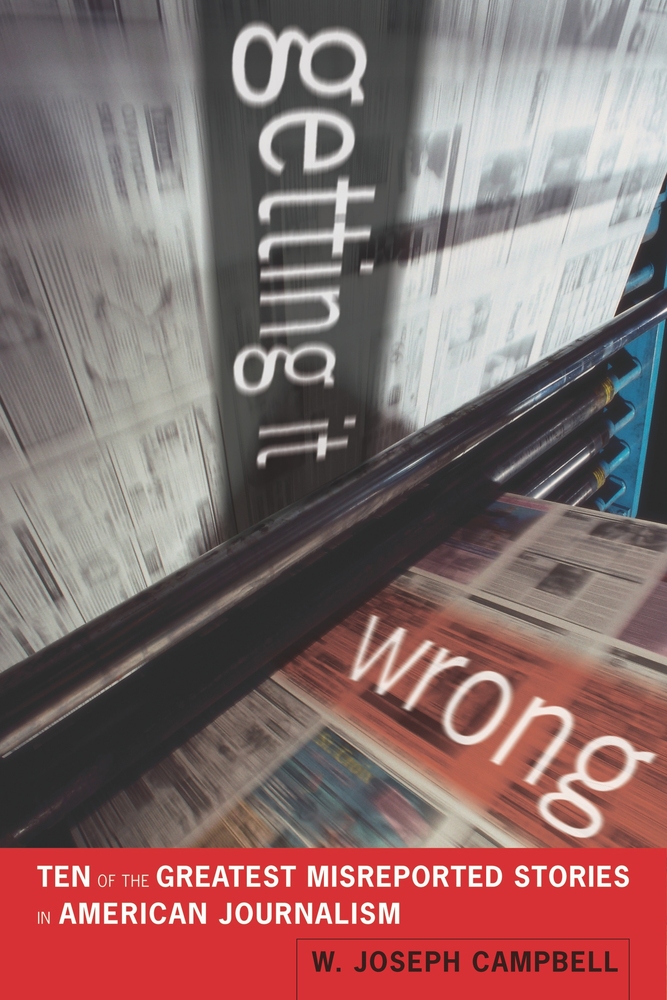
As I write in Getting It Wrong, my new book about media-driven myths, forcing Nixon’s resignation “required the collective if not always the coordinated forces of special prosecutors, federal judges, both houses of Congress, the Supreme Court, as well as the Justice Department and the FBI.”

But in the years since 1974, the dominant popular narrative of the Watergate scandal has become the heroic-journalist meme, the widely held notion that the investigative reporting of two young, tireless reporters for the Washington Post led the way in bringing down Nixon’s corrupt presidency.

Such claims appear often in the news media, both in the United States and abroad.

As I note in Getting It Wrong, “The heroic-journalist has become the most familiar storyline of Watergate: ready short-hand for understanding Watergate and its denouement, a proxy for grasping the scandal’s essence while avoiding its forbidding complexity.”

Indeed, 19 men associated with Nixon’s administration or his reelection campaign in 1972 went to jail for crimes in the Watergate scandal–a revealing marker of the scandal’s reach and complexity.

I write in Getting It Wrong that how “the Post and its reporters uncovered Watergate is deeply ingrained in American journalism as one of the field’s most important and self-reverential stories.”

So why has the heroic-journalist interpretation of Watergate become the dominant popular narrative?

Three related reasons offer themselves, I write in Getting It Wrong.

They are:

  • the well-timed release in June 1974 of All the President’s Men, the best-selling book by Washington Post reporters Bob Woodward and Carl Bernstein about their Watergate reporting
  • the cinematic version of the book, which was released in 1976 to very favorable reviews, and
  • the decades-long guessing game about the identity of the helpful and anonymous high-level source, code-named “Deep Throat,” with whom Woodward surreptitiously met while investigating Watergate. The secret source was introduced in All the President’s Men and immediately prompted considerable speculation as to who he was.

“These factors,” I write in Getting It Wrong, “combined to place Woodward and Bernstein at the center of Watergate in popular consciousness, and project the notion that the scandal’s outcome pivoted on disclosures reported by the news media.”

This is especially so in the movie All the President’s Men, which, I write, “offers an unmistakable assertion of the power and centrality of the press in Nixon’s fall.”

The movie also suggested their reporting was more hazardous than it was, that by digging into Watergate, Woodward and Bernstein exposed themselves to not insignificant risk and peril.

However, to explain Watergate through the lens of the heroic-journalist is, I note, “to abridge and misunderstand the scandal and to indulge in a particularly beguiling media-driven myth.

“The heroic-journalist interpretation minimizes the far more decisive forces that unraveled the scandal and forced Nixon from office”–the special Watergate prosecutors, the federal judges, bipartisan congressional panels, the Justice Department, the FBI, and the Supreme Court.

Even then, I argue, Nixon probably would have survived in office and served out his term–albeit as a wounded and weakened chief executive–had it not been for the existence of the audiotapes he made of many of his conversations in the Oval Office.

Only when ordered by the Supreme Court in late July 1974 did Nixon surrender those recordings, which captured him plotting the cover-up and authorizing payments of thousands of dollars in hush money.

Interestingly, Woodward and Bernstein did not uncover the defining and decisive element of the Watergate scandal—the existence of the audiotaping system that Nixon had installed in the Oval Office.

And the tapes were decisive in ultimately forcing his resignation.

WJC

Related:

‘Getting It Wrong’ plays the Tattered Cover

In Debunking, Furnish the war, Jessica Lynch, Media myths, Washington Post, Watergate myth on August 7, 2010 at 7:28 pm

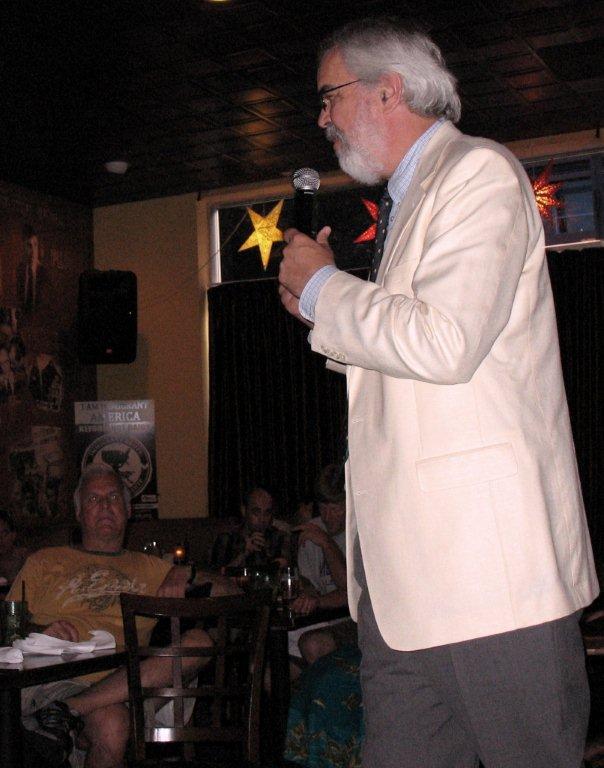
Denver’s well-known Tattered Cover bookstore was the venue last night for a fine discussion about Getting It Wrong, my new book that addresses and debunks 10 prominent, media-driven myths.

At the Tattered Cover

About 60 people attended the book event, at least a few of whom had learned about it in listening to my in-studio interview Friday morning with David Sirota on KKZN, AM 760, Denver’s progressive talk radio station.

At the Tattered Cover, one of the country’s top independent bookstores, I discussed the myths of Watergate, of the “Cronkite Moment,” of William Randolph Hearst’s purported vow to “furnish the war” with Spain, and of the famous War of Worlds radio dramatization of  1938.

Those stories, I noted, are “all well-known—they are often taught in schools, colleges, and universities. They’re all delicious tales about the power of the news media to bring about change, for good or ill.”

And I proceeded to explain why all of them are media-driven myths–dubious and improbable tales about the news media that masquerade as factual. “They can be thought of as the junk food of journalism,” I noted. “Tasty and alluring, perhaps, but in the end, not terribly healthy or nutritious.”

The surprise of the evening came in discussing the mythical “Cronkite Moment,” in which President Lyndon Johnson supposedly realized U.S. policy in Vietnam was doomed, given the on-air assessment by CBS anchorman Walter Cronkite that the war was “mired in stalemate.”

Among the reasons the “Cronkite Moment” is a media myth, I said, is that Johnson did not see the Cronkite program on Vietnam when it aired on February 27,  1968.

Johnson was not in Washington; he was not in front of a television set. He was in Austin, Texas, making light-hearted comments at a black-tie birthday party for Governor John Connally, who that day turned 51.

“At about the time Cronkite was intoning his ‘mired in stalemate’ commentary,” I said at the Tattered Cover, “Johnson was at the podium at Connally’s birthday party, saying: ‘Today you are 51, John. That is the magic number that every man of politics prays for—a simple majority.'”

And with that, the audience burst into laughter.

Never before had the line prompted so many laughs. For some reason last night, it did.

The audience was attentive and inquisitive. Questions were raised about the media myth associated with coverage of the Jessica Lynch case and of the aftermath of Hurricane Katrina, which battered the Gulf Coast five years ago this month.

Another question was about the cinema’s capacity to promote and propel media myths. It was a good observation, one that I wished I had emphasized earlier in my talk.

A telling example of the how cinematic can solidify media myths is to be found in the 1976 film All the President’s Men, an adaptation of the book by the same name by Carl Bernstein and Bob Woodward about their Watergate reporting.

As I write in Getting It Wrong the cinematic version of All the President’s Men “helped ensure the [heroic-journalist] myth would live on by offering a neat, tidy, and vastly simplified account the Watergate scandal, one that allowed viewers to sidestep the scandal’s complexity while engaging in an entertaining storyline.”

I noted in my talk that Bernstein and Woodward did not uncover the defining and decisive elements of the Watergate scandal—the cover-up and the payment of hush money to the burglars arrested at Democratic national headquarters in June 1972, the signal crime of Watergate. Nor did Woodward and Bernstein uncover the existence of the audiotaping system that Nixon had installed in the Oval Office, which proved decisive in forcing the president’s resignation.

The Tattered Cover was a wonderful venue–comfortable, inviting. Its staff is exceptionally courteous and professional, and the hour-and-a-half went by extremely quickly.

WJC

Related:

Photo credit: Ann-Marie C. Regan

‘Getting It Wrong’ goes on Q-and-A

In Cronkite Moment, Debunking, Media myths, War of the Worlds, Watergate myth on August 4, 2010 at 8:47 am

My interview with Brian Lamb on C-SPAN’s Q&A program aired Sunday evening and early Monday–and the show looked better on the tube than I thought it would.

The interview was taped two weeks earlier and, afterward, I didn’t feel that it had gone all that well.

But I was mistaken.

Lamb, who is a real gentleman and is supported by a courteous and highly professional staff, led me through a brief discussion of each of the 10 prominent tales about American journalism which I address and debunk in my new book, Getting It Wrong.

We subsequently zeroed in on the myths of Watergate, Murrow-McCarthy, the Cronkite Moment, and the War of the Worlds radio dramatization.

Toward the end of the interview, which lasted nearly an hour, Lamb asked what might be next in my research. Maybe a sequel to Getting It Wrong, I replied, adding that universe of media-driven myths isn’t confined to the 10 addressed in the book.

Lamb

Lamb, who had read Getting It Wrong closely, surprised me a few times with his questions, including his query about this passage in the book’s closing chapter:

“American journalism loves giving prizes—to its own.”

That passage (which is true, of course) was a way of setting up the conclusion to the chapter discussing the highly exaggerated, over-the-top news coverage of Hurricane Katrina, which battered New Orleans and the Gulf Coast five years ago this month.

Among the many awards given for reporting about the hurricane was the Mongerson Prize for Investigative Reporting on the News. That award, I note in Getting It Wrong, “was initiated in 2001 to recognize journalists who set the record straight on inaccurate, incomplete, or misleading news stories. The Mongerson Prize was administered by Northwestern University and had a five-year run. It never attracted much attention, certainly nothing approaching the prominence of the Murrow Awards or the Pulitzer Prizes.”

The Mongerson Prize was given for the last time in 2006 and the winners that year were Brian Thevenot and Gordon Russell of the New Orleans Times-Picayune. They were honored for the report they prepared in late September 2005 that examined exaggerated accounts of mayhem in post-Katrina New Orleans.

“Four weeks after the storm,” Thevenot and Russell wrote, “few of the widely reported atrocities have been backed with evidence. The piles of murdered bodies never materialized, and soldiers, police officers and rescue personnel on the front lines assert that, while anarchy reigned at times and people suffered unimaginable indignities, most of the worst crimes reported at the time never happened.”

In announcing the winners, Northwestern said Thevenot and Russell had “exposed the dangers of pack journalism in a difficult reporting environment.”

A telling point.

I write in Getting It Wrong that Katrina’s aftermath “was no high, heroic moment in American journalism. The coverage was in important respects flawed and exaggerated. On crucial details, journalists erred badly, and got it wrong.

“In the days following Katrina’s landfall, news reports described apocalyptic horror that the hurricane supposedly had unleashed. They reported snipers firing at medical personnel. They reported that shots were fired at helicopters, halting evacuations from the Convention Center. They told of bodies being stacked there like cordwood. They reported roving gangs were preying on tourists and terrorizing the occupants of the Superdome, raping and killing. They said children were victims of sexual assault, that one seven-year-old was raped and her throat was slit. They reported that sharks were plying the flooded streets of New Orleans.

“None of those reports was verified or substantiated: No shots fired at rescue helicopters, no child rape victims, no bodies stacked like cordwood, no sharks.”

Thevenot’s candor about the Katrina coverage was refreshing, in measure because he acknowledged that he, too, had gotten it wrong in some of his reporting.

In an article for American Journalism Review titled “Mythmaking in New Orleans,” Thevenot wrote that “in the worst of the storm reporting, tales of violence, rapes, murders and other mayhem were simply stated as fact with no attribution at all.

“I am among those who committed this sin,” he conceded, referring to his description of the Convention Center in New Orleans, where many people dispossessed by the hurricane took refuge, as “a nightly scene of murders, rapes and regular stampedes.”

WJC

Related:

None of those reports was verified or substantiated: No shots fired at rescue helicopters,[i] no child rape victims, no bodies stacked like cordwood, no sharks


[i] See A Failure of Initiative, 169.

A silly season stew: Serving up the Watergate myth

In Debunking, Washington Post, Watergate myth on July 30, 2010 at 9:01 am

The silly season of journalism is upon us, producing a summer stew of media-driven myths.

Take, for example, the heroic-journalist myth of Watergate, one of 10 I address and debunk in my new book, Getting It Wrong.

The notion that the investigative reporting by Washington Post reporters Bob Woodward and Carl Bernstein brought down the corrupt presidency of Richard Nixon is, I write in Getting It Wrong, one of the most cherished stories American journalism tells about itself.

“But,” I further write, “to explain Watergate through the lens of the heroic-journalist is to abridge and misunderstand the scandal and to indulge in a particularly beguiling media-driven myth.”

It is, though, quite a hardy and versatile myth.

It’s sometimes casually asserted, as in a column the other day in a suburban Washington newspaper, the Falls Church (Virginia) News-Press. The column-writer flatly declared the Washington Post “brought down a U.S. president by its Watergate investigations in the early 1970s.”

On other occasions, the Watergate myth is asserted with gusto, as it was yesterday at the online site of the French business newspaper Les Echos, in a feature article about Katharine Graham. She was publisher of the Post during the Watergate period and beyond.

Les Echos declared that the Post “played a capital role in the disclosure of the scandal,” adding that Woodward and Bernstein, “after a meticulous investigation, were able to untangle the mysterious business of wiretappings, which led to the White House.”

Les Echos failed to mention that Graham, herself, insisted the Post did not topple Nixon.

“Sometimes people accuse us of bringing down a president, which of course we didn’t do,” Graham said in 1997, at a program at the Newseum marking the scandal’s twenty-fifth anniversary.

“The processes that caused [Nixon’s] resignation were constitutional,” she insisted.

Woodward concurred, albeit in earthier terms: “To say that the press brought down Nixon, that’s horseshit.”

Nearly 20 men associated with Nixon’s White House or his 1972 reelection campaign were convicted of Watergate-related crimes and served time in jail. Nixon resigned in August 1974 to avoid certain impeachment.

As I write in Getting It Wrong:

“To roll up a scandal of such dimension required the collective if not always the coordinated forces of special prosecutors, federal judges, both houses of Congress, the Supreme Court, as well as the Justice Department and the FBI.”

Even then, I argue, Nixon likely would have served out his term if not for the audiotape recordings he secretly made of most conversations in the Oval Office of the White House. The Supreme Court in July 1974 ordered Nixon to surrender the tapes subpoenaed by the special Watergate prosecutor; the recording of June 23, 1972, captured Nixon plotting the cover-up.

Amid the tableau of prosecutors, courts, federal investigations, congressional panels, and the Supreme Court, the contributions of Woodward and Bernstein were modest.

And certainly not decisive.

WJC

Related:

<!–[if !mso]>

Twenty-one men associated with the presidency of Richard M. Nixon or his reelection campaign in 1972 were convicted of Watergate-related crimes, nineteen of whom went to prison.[i] Nixon himself resigned in August 1974, less than halfway through his second term, to avoid certain impeachment and conviction. By then it had become clear that Nixon had ordered senior aides to cover up the scandal’s signal crime, the burglary in June 1972 at the national headquarters of the rival Democratic Party at the Watergate office-apartment complex in Washington, D.C.

To roll up a scandal of such dimension required the collective if not always the coordinated forces of special prosecutors, federal judges, both houses of Congress, the Supreme Court, as well as the Justice Department and the FBI. Even then, Nixon likely would have served out his term if not for the audiotape recordings he secretly made of most conversations in the Oval Office of the White House. Only when compelled by the Supreme Court did Nixon surrender those recordings, which captured him plotting the cover-up and authorizing payments of thousands of dollars in hush money.


[i] See Harry F. Rosenthal, no headline, Associated Press (22 June 197). Retrieved from LexisNexis database.

What was decisive in Watergate’s outcome?

In Anniversaries, Debunking, Media myths, Washington Post, Watergate myth on July 25, 2010 at 1:34 pm

“Without the Watergate hearings, surely Nixon would have escaped judgment.”

So wrote Jeff Stein the other day, at his “Spy Talk” blog, for which the Washington Post is host.

While Stein didn’t focus his commentary on Watergate and the factors accounting for Richard Nixon’s fall, his observation invites reflection about what ultimately ended Nixon’s corrupt presidency.

Were the Watergate hearings–those of the Senate Select Committee on Watergate–indeed pivotal, as Stein suggests? What were the other factors?

I note in Getting It Wrong, my new book about prominent media-driven myths, that the dominant popular narrative of Watergate has long been the notion that dogged investigative reporting of two Washington Post journalists, Bob Woodward and Carl Bernstein, was what exposed the crimes of Watergate and brought down Nixon.

“How the Post and its reporters uncovered Watergate is deeply ingrained in American journalism as one of the field’s most important and self-reverential stories,” I write in Getting It Wrong, adding:

“But to explain Watergate through the lens of the heroic-journalist is to abridge and misunderstand the scandal and to indulge in a particularly beguiling media-driven myth. The heroic-journalist interpretation minimizes the far more decisive forces that unraveled the scandal and forced Nixon from office.”

Among the more decisive forces and factors were hearings of the Senate Select Committee in the summer 1973–the “Watergate hearings,” to which Stein refers.

The hearings were most memorable for the stunning disclosure that Nixon had secretly and routinely tape-recorded conversations in the Oval Office.

The disclosure was to prove decisive to Watergate’s outcome. It set off intensive efforts by the special federal prosecutor on Watergate, as well as other subpoena-wielding authorities, to gain access to tapes relevant to their inquiries.

Citing “executive privilege,” Nixon resisted releasing them until ordered to do so by the U.S. Supreme Court–in an 8-0 decision handed down 36 years ago yesterday, July 24, 1974. He complied.

One of the recordings revealed Nixon’s active role in attempting to cover up the signal crime of Watergate, the break-in in June 1972 at the Democratic National Headquarters in Washington, D.C. That recording–the so-called “smoking gun” tape–made resignation inevitable.

The “smoking gun” tape showed that Nixon “had instituted a cover-up and thus had participated in an obstruction of justice almost from the outset” of the scandal, Stanley I. Kutler, Watergate’s foremost historian, wrote in his fine book, The Wars of Watergate.

If not for the Supreme Court’s order, it is my view that Nixon never would have released the tapes revealing his guilt in Watergate and likely would have served out his term, albeit as a badly wounded chief executive.

Interestingly, as I note in Getting It Wrong, Woodward and Bernstein wrote in All the President’s Men, the book about their Watergate reporting, that they received a lead about the Oval Office tapes shortly before their existence was revealed.

Woodward said he called Post Executive Editor Ben Bradlee about the tip; Bradlee suggested not expending energy in pursuing it.

Had they pursued the tip, Woodward and Bernstein might have broken the pivotal story about Watergate. Had they done so, the heroic-journalist interpretation of Watergate–the media-centric view that they uncovered the scandal–would be somewhat more plausible.

WJC

Related:

Watergate a Washington Post ‘scoop’? Not quite

In Debunking, Media myths, Washington Post, Watergate myth on July 20, 2010 at 7:08 pm

Among the myths and misunderstandings associated with the sprawling scandal that was Watergate is the notion that the Washington Post owned the story.

The notion was reiterated today in a post at a blog of a North Carolina newspaper. The post, which discussed the Post‘s ongoing investigative series on U.S. intelligence networks, contained this passage:

“Newspaper editors and writers usually consider themselves patriots, but they are aware that government officials sometimes hide their actions behind the national security banner. The issue came up as the Watergate scandal was unfolding during the Nixon administration. That was also a Washington Post scoop.”

A “scoop”? Not exactly.

As I write in Getting It Wrong, my new book about media-driven myths, “rival news organizations such as Los Angeles Times and New York Times did not ignore Watergate as the scandal slowly took dimension during the summer and fall of 1972.”

The Los Angeles Times, for example, published an unprecedented, first-person account in early October 1972 of Alfred C. Baldwin III, a former FBI agent who acted as the lookout man in the burglary at Democratic National Headquarters in June 1972–the signal crime of the Watergate scandal.

And the New York Times was the first news organization to report the payment of hush money to the Watergate burglars, a pivotal disclosure in early 1973 that made clear that efforts were under way to cover up and conceal the crimes and misconduct of others in the scandal.

Unlike most other Watergate-related news reports in 1972 and early 1973, the New York Times story about hush money “hit home!” John Dean, former counsel to President Richard Nixon, recalled years later in a memoir titled Lost Honor. “It had everyone concerned and folks in the White House and at the reelection committee were on the wall,” Dean wrote.

In addition, as Edward Jay Epstein wrote in his classic essay about Watergate and the news media, the Washington Post and other newspapers were joined during the summer of 1972 by the General Accounting Office, the investigative arm of Congress, and Common Cause, a foundation that seeks accountability in government office, in directing public attention to the scandal.

“In short, even in publicizing Watergate,” Epstein wrote, “the press was only one among a number of institutions at work.”

And as I point out in Getting It Wrong:

“Nixon’s Democratic challenger for the presidency, George McGovern, repeatedly invoked Watergate in his campaign appearances in the summer and fall of 1972. At one point, McGovern charged that Nixon was ‘at least indirectly responsible’ for the Watergate burglary.”

So in its reporting on the emergent scandal in the summer and fall of 1972, the Post “was one of several institutions seeking to delineate the reach and contours of Watergate,” I write.

As the scandal unfolded, then, the Post was very much not on its own.

WJC

Related:

Going international: Media myths travel far, well

In Cinematic treatments, Debunking, Furnish the war, Media myths, Newspapers, Spanish-American War, Washington Post, Watergate myth on July 15, 2010 at 6:05 am

Prominent media-driven myths—the subject of my new book, Getting It Wrong—not only can be tenacious; some of them travel quite well, crossing linguistic and cultural borders with surprising ease.

Indeed, it’s a sign of hardy appeal when media-driven myths turn up in international contexts more often than just occasionally.

The heroic-journalist myth of Watergate–one of the 10 media myths I explore in Getting It Wrong—represents this phenomenon quite well. The heroic-journalist meme has it that the fearless investigative reporting by Bob Woodward and Carl Bernstein, then-young journalists for the Washington Post, brought down Richard Nixon’s corrupt presidency in the Watergate scandal.

Woodward

It’s a compelling tale that long ago became the scandal’s dominant popular narrative.

It’s also a simplistic interpretation of what was a complex and intricate web of misconduct that took down Nixon and landed nearly 20 of his top aides, associates, and cabinet officers in jail.

I note in Getting It Wrong that to roll up a scandal of such dimension required the collective, if not always the coordinated, efforts of special prosecutors, bipartisan congressional panels, federal judges, the FBI, and, ultimately, the U.S. Supreme Court, which ordered Nixon to surrender audiotapes that proved his complicity in the Watergate cover-up.

Against such a tableau, journalism’s contributions to unraveling Watergate were modest—certainly not decisive.

But because the heroic-journalist interpretation is so straightforward and unambiguous, it’s not surprising that it finds appeal across cultures and turns up fairly often in media reports outside the United States.

Simplicity propels the Watergate myth, enabling it to travel far and well.

Just the other day, for example, a commentary at Mediapart, a French online investigative reporting site, recalled Woodward and Bernstein as “the two journalists for the Washington Post who, thanks to their investigation, set in motion the resignation of President Richard Nixon, during Watergate.”

Another media myth that travels widely and well is that of William Randolph Hearst’s purported vow to “furnish the war” with Spain at the end of the 19th century. Hearst’s pledge supposedly was contained in a cable to the artist Frederic Remington, whom Hearst sent to draw illustrations of the Cuban rebellion, which preceded the Spanish-American War.

The anecdote lives on as one of the most famous and delicious in American journalism—even though it is buttressed by no supporting documentation and is improbable on its face.

It is, however, a tale almost too good to be disbelieved, given that it so effectively captures Hearst as warmonger . The anecdote turns up more than occasionally abroad, especially in Spanish-language media.

I note in Getting It Wrong that “Hearst’s famous vow to ‘furnish the war’ has achieved unique status as an adaptable, hardy, all-purpose anecdote, useful in illustrating any number of media sins and shortcomings. It has been invoked to illustrate the media’s willingness to compromise impartiality, promote political agendas, and indulge in sensationalism. It has been used, more broadly, to suggest the media’s capacity to inject malign influence into international affairs.”

With all that going for it, the step to adoption in international contexts is fairly small.

Beyond simplicity and deliciousness, the international appeal of prominent media myths also may be attributed to a keen and enduring curiosity abroad in American journalism. For all its faults and uncertainties, American journalism is a sprawling, robust, and intriguing profession. Such dynamism exerts appeal and interest beyond the United States.

American cinema is perhaps an even more powerful force: Hollywood treatments have helped solidify media myths. And Hollywood productions often travel well abroad.

The 1976 film All the President’s Men certainly helped propel the heroic-journalist myth of Watergate, for example. As I write in Getting It Wrong: “More than thirty-five years later, what remains most vivid, memorable, and accessible about Watergate is the cinematic version of All the President’s Men.”

The movie, I note, “helped ensure the [heroic-journalist] myth would live on by offering a neat, tidy, and vastly simplified account the Watergate scandal, one that allowed viewers to sidestep the scandal’s complexity while engaging in an entertaining storyline.”

Hollywood also was crucial to cementing Hearst’s purported vow into the popular consciousness. That vehicle was Citizen Kane, the 1941 motion picture based loosely on Hearst’s life and times.

Hearst’s purported vow is paraphrased in a scene early in Kane, which some critics regard as the best-ever American motion picture.

The Hearstian vow also is quoted in the 1997 James Bond movie, Tomorrow Never Dies. Or, as it was known in francophone countries, Demain ne meurt jamais.

WJC

A version of this post first appeared at the University of California Press blog.

‘Persuasive and entertaining’: WSJ reviews ‘Getting It Wrong’

In Cronkite Moment, Debunking, Furnish the war, Jessica Lynch, Media myths, Murrow-McCarthy myth, New York Times, Reviews, Spanish-American War, War of the Worlds, Washington Post, Watergate myth on July 12, 2010 at 6:05 am

Today’s Wall Street Journal reviews Getting It Wrong, characterizing as “persuasive and entertaining” my new book debunking 10 prominent media-driven myths.

The review–which appears beneath the headline “Too good to check”–is clever and engaging, and opens this way:

“Hello, city desk, get me rewrite. Here’s the lead: Many of the landmark moments in American journalism are carefully nurtured myths—or, worse, outright fabrications.

“William Randolph Hearst never said, ‘You furnish the pictures, and I’ll furnish the war.’ Orson Welles’s ‘War of the Worlds’ radio broadcast didn’t panic America. Ed Murrow’s ‘See It Now’ TV show didn’t destroy Sen. Joseph McCarthy. JFK didn’t talk the New York Times into spiking its scoop on the Bay of Pigs invasion. Far from being the first hero of the Iraq War, captured Army Pvt. Jessica Lynch was caught sobbing ‘Oh, God help us’ and never fired a shot.

“These fables and more are lovingly undressed in W. Joseph Campbell’s persuasive and entertaining ‘Getting It Wrong.’ With old-school academic detachment, Mr. Campbell, a communications professor at American University, shows how the fog of war, the warp of ideology and muffled skepticism can transmute base journalism into golden legend.”

The reviewer, Edward Kosner, author of the memoir It’s News to Me, also discusses the myth of the “Cronkite Moment,” writing, “Television icons are central to two of Mr. Campbell’s dubious cases: Murrow and his successor as the patron saint of TV news, Walter Cronkite.”

Kosner notes–as I do in Getting It Wrong–that at least some of the myths confronted in the book will likely survive their debunking.

“For all Mr. Campbell’s earnest scholarship,” Kosner writes, “these media myths are certain to survive his efforts to slay them. Journalism can’t help itself—it loves and perpetuates its sacred legends of evil power-mongers, courageous underdogs, dread plagues and human folly.”

Well said.

And, alas, he may be right. Some of the myths almost certainly will live on. As I write in the introduction to Getting It Wrong, they “may prove resistant to debunking. They may still be widely believed despite the contrary evidence marshaled against them.

“The most resilient myths,” I further write, “may be those that can be distilled to a catchy, pithy phrase like: ‘If I’ve lost Cronkite, I’ve lost Middle America.’ Such quotations are neat, tidy, and easily remembered. Cinematic treatments influence how historical events are collectively remembered and can harden media-driven myths against debunking. The motion picture All the President’s Men, which cast Robert Redford and Dustin Hoffman in the lead roles of Washington Post reporters [B0b] Woodward and [Carl] Bernstein, has helped ensure that the journalists and their newspaper would be regarded as central to cracking the Watergate scandal.”

Kosner closes the review with a humorous observation, writing:

“At the end of the book, Mr. Campbell offers some remedies for media mythologizing, urging journalists, among other things, ‘to deepen their appreciation of complexity and ambiguity.’ Good luck with that, professor.'”

Heh, heh. Nice touch.

WJC

Related:

Myth-busting at Busboys and Poets

In Media myths, Washington Post, Watergate myth on July 8, 2010 at 9:47 pm

It was a fine event last night at the Busboys and Poets restaurant/bookstore in the lively U Street corridor in Washington, D.C.

Despite the staggering, record-setting heat (temperatures reached 102 degrees in the capital), an engaging audience showed up for my talk about Getting It Wrong, my new book that busts 10 prominent media-driven myths.

I opened with a detailed look at what I called a “uniquely Washington historical event,” the Watergate scandal that toppled Richard Nixon’s corrupt presidency in 1974. Specifically, I described how the “heroic-journalist” interpretation has become the dominant narrative of Watergate–that is, how two young, intrepid reporters for the Washington Post brought Nixon down.

That interpretation, I said, represents a fundamental misreading of history, one that ignores the far more important and crucial contributions of subpoena-wielding authorities such as special prosecutors, bipartisan congressional panels, federal investigators, and ultimately the U.S. Supreme Court.

“Against that tableau, newspapers—including the Post— were  decidedly modest factors” in determining Watergate’s outcome, I said. “Journalism’s contribution to Nixon’s fall was hardly decisive.”

Even principals of the Post have said as much over the years, I noted, quoting Katharine Graham, the newspaper’s publisher during the Watergate period who said:

“Sometimes people accuse us of bringing down a president, which of course we didn’t do. The processes that caused [Nixon’s] resignation were constitutional.”

Complexity-avoidance, I said, helps explain the tenacity of the heroic-journalist interpretation of Watergate: Like many media myths, the heroic-journalist meme minimizes the intricacy of historical events in favor of simplistic, and misleading, interpretations.

It is far easier to focus on the exploits of the Washington Post reporters than it is to try to grapple with the intricacies and complexities of what was a sprawling scandal, I noted.

I also discussed media myths of the “Cronkite Moment” of 1968; the “crack babies” scare of the 1980s and 1990s, and the misreporting that characterized the aftermath of Hurricane Katrina‘s landfall in New Orleans in 2005.

Members of the audience posed a number of very thoughtful questions, including one about why the “crack baby” scare became so widespread.

At Busboys and Poets

It was propelled in part, I said, by hurried, anecdotal reporting.

Reporters and columnists pushed too eagerly on preliminary and inconclusive research about children born to women who took crack cocaine during pregnancy. The horrors that some journalists predicted—that “crack babies” would grow up to be a vast, permanently dependent class, a so-called “bio-underclass” of staggering dimension—proved to be quite wrong.

Part of the explanation for the wide embrace of “crack baby” myth, I said, was that it offered something for everyone,” as the magazine Mother Jones once put it.

I write in Getting It Wrong that the crack baby phenomenon “inspired fearful commentary across political and ideological boundaries.” It was “a rare social issue that had appeal across the political spectrum—appeal that made the phenomenon especially powerful, compelling, notable, and tenacious.

“For conservatives, the specter of crack babies underscored the importance of imposing stiff penalties in the country’s war on drugs. And penalties were stiffened for crack possession during the second half of the 1980s. For liberals, meanwhile, crack babies represented an opportunity to press for costly assistance programs aimed at helping crack users and their children.”

One of the best questions of the evening was about whether media audiences aren’t complicit in perpetuating media myths, whether media consumers have a role in myth-busting.

There is, I replied, plenty of room for media audiences to develop and hone a sense of skepticism, especially about news reports that seem too neat and tidy. Stories that seem too delicious, or too over the top, may prove to be inaccurate.

This also is the case with succinct turns of phrase. Quotations that “sound too neat and tidy,” I write in Getting It Wrong, “often are too perfect to be true.”

WJC

Related:

Puncturing media myths: A case for modest media influence

In Cronkite Moment, Debunking, Jessica Lynch, Media myths, Murrow-McCarthy myth, Washington Post, Watergate myth on July 7, 2010 at 2:02 pm

Getting It Wrong: Ten of the Greatest Misreported Stories in American Journalism punctures prominent media-driven myths—false, dubious, and improbable stories about the news media that masquerade as factual.

The 10 tales debunked in Getting It Wrong often ascribe power, significance, and sometimes great courage to the news media and their practitioners. The book dismantles the legend of Edward R. Murrow’s crushing the menace of McCarthyism, of Walter Cronkite’s effectively ending a faraway and unpopular war, and of Bob Woodward and Carl Bernstein’s toppling Richard Nixon’s corrupt presidency.

Those stories, I write, “are compelling and exert an enduring allure; to expose them as exaggerated or untrue is to take aim at the self-importance of American journalism.”

I further write:

“To identify these tales as media myths is to confront the reality that the news media are not the powerful agents they, and many others, assume them to be.”

Indeed, it is quite rare for any news report to trigger a powerful, immediate, and decisive reaction akin to President Lyndon Johnson’s purported woe-is-me response to Cronkite’s televised assessment about Vietnam in 1968: “If I’ve lost Cronkite, I’ve lost Middle America.” (Or words to that effect.)

Researchers long ago dismissed the notion that the news media can create profound and immediate effects, as if absorbing media messages were akin to receiving potent drugs via a hypodermic needle.

Debunking media-driven myths thus enhances the case for modest or limited media effects. Getting It Wrong points out that “too often the ubiquitous presence of the news media is mistaken for power and influence.” Robert J. Samuelson, a columnist who writes on economics issues for Newsweek and the Washington Post, has described this fallacy notably well.

“Because the media are everywhere—and inspire much resentment—their influence is routinely exaggerated,” Samuelson wrote in Newsweek in 2003. “The mistake is in confusing visibility with power, and the media are often complicit in the confusion. We [in the news media] embrace the mythology, because it flatters our self-importance.”

What’s more, the news media nowadays are too diverse and too splintered—into print, broadcast, cable, satellite, and online options—to exert much collective or sustained influence on policymakers and broader audiences.

And as Herbert Gans, a sociologist who has written widely about the news media, once noted:

“If news audiences had to respond to all the news to which they are exposed, they would not have time to live their own lives. In fact, people screen out many things, including news, that could interfere with their own lives.”

That’s for sure. Large numbers of Americans ignore the news altogether: They are beyond media influence in any case. Nearly 20 percent of American adults go newsless on a typical day, according to a study conducted in 2008 by the Pew Research Center for the People & the Press.

The newsless option is particularly striking among young adults, 18-to-24-years-old. Thirty-four percent of that cohort goes newsless, according to Pew Research. (That proportion represents a substantial increase from 1998 when 25 percent of the 18-to-24-year-old cohort shunned the news.)

Media power tends to be modest, nuanced, diffused, and situational. And overstated.

Debunking media-driven myths helps place media influence in a more coherent, more rational context.

WJC

A version of this post first appeared at the University of California Press blog.