W. Joseph Campbell

Archive for the ‘Cinematic treatments’ Category

‘All the President’s Men Revisited’: A mediacentric rehash, with some insight

In Anniversaries, Cinematic treatments, Debunking, Media myths, Scandal, Washington Post, Watergate myth on April 22, 2013 at 2:49 pm

The much-ballyhooed documentary, All the President’s Men Revisited, was mostly a mediacentric rehash of the Watergate scandal 40 years ago. Even so, the show, which aired last night on the Discovery channel, managed to present insight into the forces that really uncovered the criminality of what was America’s gravest political scandal.

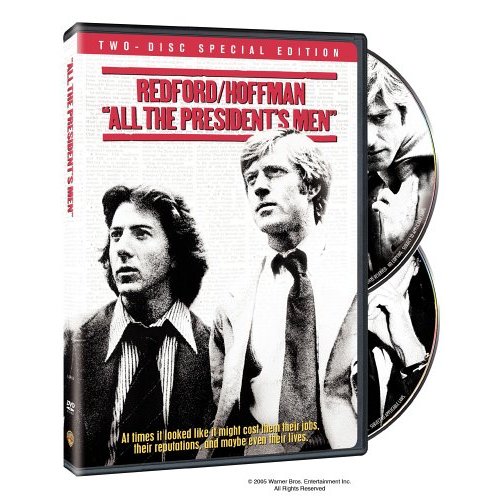
The two-hour program took a look back at Watergate often through the context of All the President’s Men, the 1976 cinematic adaptation of Bob Woodward and Carl Bernstein’s eponymous book about their Watergate reporting for the Washington Post.

The movie, which starred Robert Redford and Dustin Hoffman, idealized Woodward and Bernstein, identifying their reporting as central to uncovering the scandal that toppled Richard Nixon’s corrupt presidency. The first hour of the Discovery program similarly emphasized that misleading interpretation, mostly through frequent snippets of interviews with the aging Woodward and Bernstein.

The inescapable impression was that their reporting was essential to spurring the federal and congressional investigations that ultimately produced tape-recorded evidence that showed Nixon conspired to cover up the signal crime of Watergate — the break-in in June 1972 at the headquarters of the Democratic National Committee.

That interpretation — that Woodward and Bernstein’s reporting set the table for the crucial official inquiries — is favored by the Post (its Web site explains Watergate that way).

But  it is utterly misleading.

As serious historians of Watergate have demonstrated, federal investigators were far ahead of Woodward and Bernstein in their piecemeal reporting about the unfolding scandal in the summer and fall of 1972.

For example, Max Holland, author of Leak, a book about Watergate published last year, has aptly noted:

“Federal prosecutors and agents never truly learned anything germane from The Washington Posts [Watergate] stories — although they were certainly mortified to see the fruits of their investigation appear in print. … The government was always ahead of the press in its investigation of Watergate; it just wasn’t publishing its findings.”

What’s more, the Post’s investigation into Watergate “ran out of gas” by late October 1972, Barry Sussman, then the newspaper’s city editor, acknowledged in an interview in 1974.

The most interesting segments of All the President’s Men Revisited were during the program’s second hour, when the federal and congressional investigations of Watergate figured prominently. At the same time, Woodward and Bernstein receded noticeably from the limelight, replaced by the likes of Alexander Butterfield, the former White House aide who disclosed that Nixon recorded his conversations in the Oval Office.

Butterfield’s revelation about the tapes came during a U.S. Senate select committee’s investigation into Watergate — and represented a decisive pivot in the unfolding the scandal. Nixon ultimately was compelled to surrender audiotapes that demonstrated his role in attempting to coverup the Watergate breakin. He resigned soon afterward.

http://www.youtube.com/watch?v=MeQXopJ5U-Q

Interestingly, All the President’s Men Revisited  made clear that Woodward and Bernstein did not break the story about the existence of the tapes — and pinned the blame on the Post’s executive editor, Ben Bradlee.

Woodward recounted in the program (as he did in the book All the President’s Men) that he had heard about the tapes and asked Bradlee about pursuing a story along those lines. Bradlee, according to Woodward’s recollections, rated a prospective story about the tapes a B-plus: Not good enough for Woodward to pursue immediately.

(In the book, Bradlee is quoted as saying: “See what more you can find out, but I wouldn’t bust one on it.” And the reporters didn’t, thus failing to report a pivotal story about the scandal.)

The program’s second-half focus on the federal and congressional inquiries in a way addresses a major flaw of All the President’s Men, the movie, which was criticized for ignoring the contributions of federal investigators, special prosecutors, and congressional panels in ripping away the coverup of the Watergate break-in.

The movie’s narrow focus, I wrote in my media-mythbusting book Getting It Wrong, served “to solidify and elevate the heroic-journalist myth” of Watergate — the notion that the dogged work of Woodward and Bernstein brought down Nixon.

While the program did not challenge the deeply entrenched heroic-journalist myth, All the President’s Men Revisited did offer an historically accurate interpretation about how the scandal unspooled: As such, it rather succeeded where the movie had clearly failed.

WJC

More from Media Myth Alert:

William Randolph Hearst mostly elusive in new ‘Citizen Hearst’ documentary

In 1897, Anniversaries, Cinematic treatments, Error, Furnish the war, Reviews on March 15, 2013 at 10:26 am

Citizen Hearst was a mostly unsatisfactory biography published in 1961 about media baron William Randolph Hearst. It was more caricature than revealing portrait.

Citizen HearstThe title, Citizen Hearst, has been reprised for documentary that opened in several theaters this week. The documentary — commissioned by the media company that Hearst founded 126 years ago — is no revealing portrait, either.

Hearst was an innovative yet often-contradictory figure, and this complexity is largely elusive in Citizen Hearst, an 84-minute film that had its Washington, D.C., debut screening last night at the Newseum. The director, Leslie Iwerks, introduced the film by saying it told “the wonderful Hearst story.”

The opening third of Citizen Hearst delivers a fast-paced if mostly shallow look at Hearst’s long career in journalism. After that, the film turns mostly gushy about the diversified media company that is Hearst Corp.

To its credit, Citizen Hearst steers largely clear of the myths that distort understanding of Hearst and his early, most innovative years in journalism.

His affable grandson, Will Hearst, is shown in the film scoffing at what may be the best-known anecdote in American journalism — that William Randolph Hearst vowed in a telegram to the artist Frederic Remington to “furnish the war” with Spain.

The anecdote is undocumented and utterly dubious, but it was presented at face value in the biography Citizen Hearst. It is an irresistible tale often invoked in support of a broader and nastier media myth, that Hearst and his newspapers fomented the Spanish-American War in 1898.

Citizen Hearst the documentary doesn’t embrace the warmongering myth (although former CBS News anchor Dan Rather is shown saying he was taught in school that Hearst practically brought on the Spanish-American War).

The documentary, however, fails to consider the innovative character of Hearst’s newspapers of the late 19th century.

It notably avoids discussing Hearst’s eye-opening brand of participatory journalism — the “journalism of action” — which maintained that newspapers were obliged take a prominent and participatory roles in civic life, to swing into action when no other agency or entity was willing or able.

This ethos was a motivating force for one of the most exceptional and dramatic episodes in American journalism — the jailbreak and escape of Evangelina Cisneros, a 19-year-old political prisoner held without charge in Spanish-ruled Cuba.

Cisneros

Evangelina Cisneros

A reporter for Hearst’s New York Journal, supported by clandestine operatives in Havana and U.S. diplomatic personnel in Cuba, broke Cisneros from jail in early October 1897.

She was hidden for nearly three days at the home of an American-educated Cuban banker (whom she married several months later). Then, dressed as a boy, Cisneros was smuggled aboard a passenger steamer bound for New York City, where Hearst organized a thunderous welcome for her.

The Cisneros jailbreak was stunning manifestation of Hearst’s “journalism of action” and it offers rich material for a documentary. It was, as I wrote in my 2006 book, The Year That Defined American Journalism: 1897 and the Clash of Paradigms, the “greatest escape narrative” in U.S. media history.

It receives not a mention in Citizen Hearst.

The documentary presents only superficial consideration of Hearst’s mostly unfulfilled political ambitions — and avoids mentioning how he turned his newspapers into platforms to support those ambitions.

Hearst wanted to be president, and was a serious contender for the Democratic party’s nomination in 1904. He lost out to Alton Parker, a New York judge, who in turn was badly defeated by Republican Theodore Roosevelt.

Citizen Hearst presents the observations of no serious Hearst biographer: No David Nasaw, author of The Chief, an admirably even-handed biography published in 2000; no Kenneth Whyte, author of The Uncrowned King, an outstanding work published in 2009 about Hearst’s s early career.

Instead, Dan Rather is shown speaking vaguely about Hearst’s journalism (“he played big”). Movie critic Leonard Maltin makes several appearances, discussing such topics as headline size in Hearst’s fin de siècle newspapers.

The documentary treats Helen Gurley Brown, she of Cosmopolitan fame, much like a rock star. And Hearst company officials are quoted often and sometimes at length.

HuffingtonPost was quite right in noting in a review posted Wednesday that the film turns into “something you’d expect to see playing on a loop on the lobby TV screen at Hearst’s headquarters”  in New York.

It leaves you wondering how many people would pay to see it. Or why.

WJC

More from Media Myth Alert:

Woodward ‘destroyed the Nixon presidency’: More dubious history from Rush Limbaugh

In Cinematic treatments, Debunking, Error, Media myths, Scandal, Washington Post, Watergate myth on March 1, 2013 at 7:21 am

Talk-radio host Rush Limbaugh was at it again yesterday, offering up the dubious interpretation that Bob Woodward’s Watergate reporting “destroyed the Nixon presidency.”

That’s a seriously exaggerated version of the Watergate scandal, which led to Nixon’s resignation in 1974. Not even Woodward embraces that interpretation, once telling an interviewer: “To say the press brought down Nixon, that’s horse shit.”

(Woodward(Jim Wallace/Smithsonian)

Woodward
(Jim Wallace/Smithsonian)

Limbaugh’s remark about Woodward’s having “destroyed the Nixon presidency” came during a lengthy commentary about Woodward’s recent criticism about the administration of President Barack Obama.

Woodward has asserted that Obama proposed the controversial sequester plan — the automatic federal spending cuts that are to begin taking effect today.

What most intrigues Media Myth Alert is Limbaugh’s repeated claim that Woodward’s reporting was decisive in ending Nixon’s presidency. The talk-show host’s remark yesterday about Woodward and Nixon marked the second time this week he has made such an assertion.

On his show Monday, Limbaugh said flatly that “Woodward brought down Nixon” in the Watergate scandal.

The record, though,  is far more nuanced and complex than that: Woodward and his Washington Post reporting colleague Carl Bernstein played rather modest roles in unraveling the scandal.

Their reporting in the summer and fall 1972 progressively linked White House officials to a secret fund used to finance the foiled burglary at the headquarters of the Democratic National Committee — the signal crime of Watergate.

But by late October 1972, the Post’s investigation into Watergate “ran out of gas,” as Barry Sussman, then the newspaper’s city editor, later acknowledged.

Significantly, Woodward and Bernstein did not break such crucial stories as the existence of Nixon’s audiotaping system at the White House. The tapes ultimately provided evidence that the president had obstructed justice by approving a scheme to deflect the FBI’s inquiry into the burglary.

The disclosure about the taping system came in July 1973, during a Senate select committee’s investigation into the unfolding Watergate scandal.

Nor did Woodward and Bernstein disclose the payment of hush money to operatives arrested in the burglary — a key development in tying the White House to the Watergate scandal.

I discuss the media myth of Watergate in my latest book, Getting It Wrong, and write that the scandal demanded “the collective if not always the coordinated forces of special prosecutors, federal judges, both houses of Congress, the Supreme Court, as well as the Justice Department and the FBI.”

What I call the hero-journalist myth of Watergate — the notion that Woodward and Bernstein’s dogged reporting brought down Nixon — stems in large measure from the 1976 motion picture, All the President’s Men.

The movie, an adaptation of Woodward and Bernstein’s book by the same title, concentrated on the  reporters and ignored the far more decisive contributions of subpoena-wielding investigators and special prosecutors.Getting It Wrong_cover

The movie was critically acclaimed and widely seen. Its effect, I write in Getting It Wrong, was “to solidify and elevate the heroic-journalist myth, giving it dramatic power, and sustaining it in the collective memory.”

All the President’s Men, the movie, promoted a simplistic yet readily accessible interpretation of the Watergate scandal that is often invoked — as Limbaugh’s recent comments suggest. But it is an interpretation that nonetheless is utterly wrong.

WJC

More from Media Myth Alert:

Runup to the Oscars: ‘Politically inspired movies’ and the myth of Watergate

In Cinematic treatments, Debunking, Error, Media myths, Scandal, Washington Post, Watergate myth on February 22, 2013 at 2:51 pm

The runup to the Academy Awards ceremony brings inevitable bursts of nostalgia — as well as the almost-predictable appearance of hoary media myths.

CNN logoCNN.com today offered a gauzy look back at “politically inspired movies that have been nominated [for] or won” an Oscar. In doing so, CNN bought into the media myth of the Watergate scandal.

The retrospective discussed the 1976 film All The President’s Men, noting that it “won four Oscars and was nominated for four more.”

The movie was an adaptation of a book by the Washington Post’s lead Watergate reporters, Bob Woodward and Carl Bernstein, who, according to CNN, were “responsible for uncovering the Watergate scandal and forcing the resignation of President Richard Nixon.”

All the President’s Men, CNN added, “provided context and drama about how the reporters brought down the most powerful man on Earth.”

That’s an expansive claim. It’s also glib, and totally mythical.

As I discuss in my media mythbusting book, Getting It Wrong, Woodward and Bernstein’s reporting did not bring down Nixon. They didn’t uncover the scandal, either.

All President's Men

The movie

Far from it.

Woodward and Bernstein and the Post were at best modest contributors in unraveling an intricate scandal that sent to jail nearly 20 men associated with Nixon’s presidency or his 1972 reelection campaign.

Indeed, when considered against the far more decisive forces and factors that uncovered Watergate, Woodward and Bernstein’s contributions recede into near insignificance.

The decisive forces included special prosecutors, federal judges, the FBI, panels of both houses of Congress, and the Supreme Court.

Even in the face of such an array of forces, I write in Getting It Wrong, “Nixon likely would have served out his term if not for the audiotape recordings he secretly made of most conversations in the Oval Office of the White House. Only when compelled by the Supreme Court did Nixon surrender those recordings, which captured him plotting the cover-up” of the signal crime of Watergate — the breakin in June 1972 at the headquarters of the Democratic National Committee.

Notably, Woodward and Bernstein didn’t reveal existence of Nixon’s secret tapes, the contents of which proved vital in Watergate’s outcome. Nor did Woodward and Bernstein disclose the extent of the attempted coverup of the crimes of Watergate.

What’s more, principals at the Washington Post have from time to time over the years dismissed the notion that the newspaper was central in forcing Nixon’s resignation.

For example, the Post’s publisher during and after the Watergate scandal, Katharine Graham, said in 1997 at a program marking the scandal’s 25th anniversary:

“Sometimes people accuse us of bringing down a president, which of course we didn’t do. The processes that caused [Nixon’s] resignation were constitutional.”

Even Woodward has scoffed at the notion, telling American Journalism Review in 2004:

To say the press brought down Nixon, that’s horse shit.”

The cinematic version of All the President’s Men contains few references to the subpoena-wielding authorities who really did break open the scandal. Instead, the movie leads audiences to just one, misleading conclusion — that the tireless reporting of Woodward and Bernstein was vital to Watergate’s ultimate outcome.

WJC

More from Media Myth Alert:

Proxies for reality: Fact-based films and their mythmaking potential

In Cinematic treatments, Debunking, Murrow-McCarthy myth, Washington Post, Watergate myth on January 7, 2013 at 12:03 pm

The Sunday “Outlook” section of the Washington Post usually is such a ZeroDarkThirty_posterjumble of thumbsucker essays and middling book reviews that it deserves just passing attention.

What made yesterday’s “Outlook” an exception was an engaging critique of Zero Dark Thirty, the controversial new movie about the CIA’s years-long hunt for terror leader Osama bin-Laden.

The critique, written by former CIA official Jose A. Rodriguez Jr., suggests anew the mythmaking capacity of fact-based films. “Inevitably,” Rodriguez writes of Zero Dark Thirty, “films like this come to be seen by the public as a sort of proxy for reality.”

And that’s especially troubling because, as Rodriguez also points out:

“One of the advantages of inhabiting the world of Hollywood is that you can have things both ways.” Publicity for Zero Dark Thirty emphasizes that it rests upon careful research, Rodriguez notes; at the same time, the film’s screenwriter, Mark Boal, has insisted it’s “not a documentary.”

Carefully researched, yet with enough fictional or imaginative elements so that it’s no documentary: Such have been the ingredients of mythmaking by the cinema.

All the President’s Men offers a compelling example.

The hero-journalist myth of Watergate — the notion that the dogged investigative journalism of Washington Post reporters Bob Woodward and Carl Bernstein brought down Richard Nixon’s corrupt presidency — was propelled and solidified by the cinematic treatment of Woodward and Bernstein‘s 1974 book, All the President’s Men.

The movie version was fact-based, but certainly no documentary treatment of Watergate (even though the Post once referred to the film as journalism’s “finest 2 hours and 16 minutes“).

As I note in my media-mythbusting book, Getting It Wrong, All the President’s Men the movie offers “a neat, tidy, and vastly simplified account of the Watergate scandal, one that allowed viewers to sidestep the scandal’s complexity while engaging in an entertaining storyline.”

The movie dramatized the reporting of Woodward and Bernstein while ignoring the far more decisive contributions of federal investigators, special prosecutors, and Congressional investigative panels.

The omissions made for a cleaner storyline — and promoted a media-centric myth that not even Woodward embraces.

“To say that the press brought down Nixon,” Woodward once told American Journalism Review, “that’s horseshit.”

WordPress_FreshlyPressed logoAll the President’s Men was made in 1976 and remains the most-viewed cinematic treatment of Watergate —  a “proxy for reality” about how America’s greatest political scandal was rolled up. It’s Watergate simplified.

Rodriguez says in his commentary that the makers of Zero Dark Thirty get a lot right: Notably, they “portray the hunt for bin Laden as a 10-year marathon, rather than a sprint ordered by a new president.”

His principal concern is the movie’s depiction of the interrogation of captured al-Qaeda operatives. The interrogation scenes early in the movie “torture the truth,” he writes, adding:

“The film shows CIA officers brutalizing detainees — beating them mercilessly, suspending them from the ceiling with chains, leading them around in dog collars and, on the spur of the moment, throwing them on the floor, grabbing a large bucket and administering a vicious ad hoc waterboarding. The movie implies that such treatment went on for years.

“The truth is that no one was bloodied or beaten in the enhanced interrogation program which I supervised from 2002 to 2007. Most detainees received no enhanced interrogation techniques, and the relative few who did faced harsh measures for only a few days or weeks at the start of their detention.”

I’ve not seen Zero Dark Thirty. But Rodriguez’s critique seems well-reasoned. He advises theatergoers to recognize “that Zero Dark Thirty is more than a movie and less than the literal truth.”

I’d shift the obligation somewhat, away from moviegoers: It behooves the makers of fact-based movies to stipulate that “fact-based” doesn’t mean factual, that even high-quality cinematic treatments simplify and distort.

Fact-based movies ought not be served up in effect as history lessons for the public.

These are hardly new concerns, of course. “Is it possible,” Richard Bernstein wrote in 1989 in an essay in the New York Times, “to have successful cinema and good history at the same time?”

Perhaps, Bernstein added, “the rule of thumb is this: When artists, intentionally or not, distort the known facts to get an effect, either political or commercial, they are on the wrong side of the line between poetic truth and historical falsification. Artists who present as fact things that never happened, who refuse to allow the truth to interfere with a good story, are betraying their art and history as well.”

Ideally, fact-based movies would be so compelling as to stimulate interest and curiosity, to encourage passive theatergoers to find out more about the subject, to conduct some research on their own.

Doing so isn’t always easy; but it can be an antidote to cinematic mythmaking.

WJC

More from Media Myth Alert:

The media myths of Watergate: Part Five

In Anniversaries, Cinematic treatments, Debunking, Media myths, Scandal, Washington Post, Watergate myth on June 21, 2012 at 6:32 am

This is the last of five posts addressing prominent media-driven myths about the Watergate scandal, which began unfolding 40 years ago this week with the foiled burglary at the headquarters in Washington of the
Democratic National Committee.
This installment address the often-stated claim that enrollments in college journalism programs in the United States
soared in the aftermath of Watergate.

Watergate made Gerald Ford president — and made journalism seem sexy

It’s a subsidiary myth of Watergate, that the reporting exploits of Bob Woodward and Carl Bernstein of the Washington Post — made legendary by the cinematic adaptation of their book, All the President’s Men — turned journalism into glamorous and alluring profession.

So alluring and heroic were the depictions of Woodward and Bernstein as they, ahem, toppled a corrupt president that young adult Americans in the 1970s thronged to collegiate journalism programs.

A commentary last week in Post made just that point, declaring that the film had “inspired a generation of journalism school students.” Similarly, a recent essay at Gawker.com said the glowing accounts of Woodward and Bernstein’s work “helped swell enrollments at journalism schools across the nation as eager young college graduates came to view reporting not as a lowly trade but as a noble profession.”

But it’s a media myth that Watergate stimulated journalism school enrollments — a myth that endures despite its thorough repudiation by scholarly research.

As I discuss in my 2010 book, Getting It Wrong (which includes a chapter confronting what I call the heroic-journalist myth of Watergate), two scholarly studies about enrollments in collegiate journalism programs found no evidence that Watergate was much of a stimulus.

Enrollment data are reasonably good proxies as they would surely have reflected heightened interest in careers in the profession. If Watergate and All the President’s Men inspired broad interest in careers in journalism, evidence of the stimulus should be apparent in surging j-school enrollments.

But the evidence just isn’t there.

A study conducted for the Freedom Forum media foundation and released in 1995 found that “growth in journalism education” resulted “not from specific events as Watergate … but rather to a larger extent from the appeal of the field to women, who have been attending universities in record numbers. The growth also in part reflects the applied nature of the field and its link to specific job skills.”

The study’s authors, Lee Becker and Joseph Graf, stated flatly that “students didn’t come rushing to the university because they wanted to follow in the footsteps of Woodward and Bernstein ….”

A separate study, conducted by a senior journalism scholar, Maxwell E. McCombs, reported in 1988 that “the boom in journalism education was underway at least five years before” the Watergate break-in in 1972.

McCombs wrote:

“It is frequently, and wrongly, asserted that the investigative reporting of Woodward and Bernstein provided popular role models for students, and led to a boom in journalism school enrollments. The data … reveal, however, that enrollments already had doubled between 1967 and 1972.”

I point out in Getting It Wrong that the notion that Watergate reporting made journalism appealing and sexy lives on “because it seems irresistibly logical and straightforward— too obvious, almost, not to be true.”

Watergate’s presumed stimulus on journalism school enrollments is an attractive and simplistic construct, easy to grasp, and easy to remember.

And such characteristics — easy to grasp, easy to remember — often are propellants. Propellants of media-driven myths.

WJC

Recent or related:

The media myths of Watergate: Part Four

In Anniversaries, Cinematic treatments, Debunking, Media myths, Newspapers, Quotes, Reviews, Washington Post, Watergate myth on June 20, 2012 at 7:40 am

This is the fourth of five posts addressing prominent media-driven myths about the Watergate scandal, which began unfolding 40 years ago this week, with
the foiled burglary at the headquarters
in Washington of the Democratic National Committee.
This installment addresses the notion that the Watergate reporting of Bob Woodward and Carl Bernstein
placed the reporters in grave danger.

No film or documentary about Watergate has been seen more often by more people than All the President’s Men, the 1976 adaptation of the eponymous book by the Washington Post’s lead reporters on the scandal, Bob Woodward and Carl Bernstein.

The movie won rave reviews. The New York Times called it “a spellbinding detective story” and “an unequivocal smash-hit — the thinking man’s Jaws.”

The Post once immodestly described All the President’s Men as “journalism’s finest 2 hours and 16 minutes” and “the best film ever made about the craft of journalism.”

For all its glowing notices, All the President’s Men was often sluggish in pacing. More than a few scenes showed reporters at their desk, talking into telephones and banging away at typewriters.

Hardly gripping cinema.

But a measure of drama and menace was injected near the close of the movie (see video clip below).

http://www.youtube.com/watch?feature=player_embedded&v=NVNU5jkOwzU

That came when Woodward’s stealthy, high-level “Deep Throat” source, at a meeting in a darkened parking garage, grimly warns the wide-eyed reporter, played by Robert Redford:

“Your lives are in danger.”

But was it even true? Had Woodward and Bernstein, in their reporting about the misdeeds of men close to President Richard Nixon, unknowingly put their lives on the line? Were they targeted by Nixon’s henchmen? Or was this just dramatic license by Hollywood?

The movie leaves such questions hanging. The Woodward/Redford character informs the Bernstein character (played by Dustin Hoffman) about what “Deep Throat” said, and together they confer with the Post’s executive editor character (Jason Robards) — in the middle of the night, in the middle of the editor’s lawn.

But the movie closes before resolving the question of the hazards the reporters faced.

So were their lives really in danger?

Nope.

Not according to the book, All the President’s Men.

The book discusses a late-night meeting between Woodward and “Deep Throat” in mid-May 1973 when the source — W. Mark Felt, a senior official at the FBI, as it turned out — advised the reporter to “be cautious.”

Woodward returned to his apartment and invited Bernstein to stop by. When he did, Woodward typed out a message and handed it to his colleague:

Everyone’s life is in danger.”

Bernstein gave a curious look and Woodward typed another note:

Deep Throat says electronic surveillance is going on and we had better watch it.”

Who was doing the surveillance? Bernstein asked in long hand.

“C-I-A,” Woodward silently mouthed.

For a time afterward, the reporters and senior editors at the Post took precautions to avoid the suspected surveillance of their activities.

Woodward and Bernstein wrote in All the President’s Men that they “conferred on street corners, passed notes in the office, avoided telephone conversations.”

But soon, they said, “it all seemed rather foolish and melodramatic” and they went back to their routines.

No evidence, they wrote, was ever found “that their telephones had been tapped or that anyone’s life had been in danger.”

At a program last week at the Newseum, Woodward said he took Felt’s warning “too literally. I think he was speaking metaphorically” about the hazards.

“I think it was an overreaction,” Woodward said.

On another occasion — an online chat five years ago — Woodward said the “most sinister pressure” he and Bernstein felt during Watergate “was the repeated denial” by Nixon’s White House “of the information we were publishing” as the scandal deepened.

Also in that chat, Woodward said of the cinematic version of All the President’s Men:

“The movie is an incredibly accurate portrait of what happened.”

Oh, sure, it is.

Even that Post review, which called the movie journalism’s finest 2 hours and 16 minutes, noted that All the President’s Men “over-glamorizes reporting, oversimplifies editing and makes power appear the only proper subject for a newsman’s pen.”

WJC

Recent or related:

The media myths of Watergate: Part One

In Anniversaries, Cinematic treatments, Debunking, Media myths, Newspapers, Reviews, Scandal, Washington Post, Watergate myth on June 17, 2012 at 6:00 am

This is the first of five posts addressing prominent media-driven myths about the Watergate scandal, which began unfolding 40 years ago with the foiled burglary at the headquarters in Washington of the Democratic National Committee. This installment discusses the tenacious myth
that reporting by the 
Washington Post brought down
Richard Nixon’s corrupt presidency
.

Other posts in this series
may be accessed here, here, here, and here.

For years, the dominant narrative of Watergate has been that the dogged reporting of Bob Woodward and Carl Bernstein for the Washington Post revealed the crimes that forced Richard Nixon to resign the presidency in August 1974.

That’s also a media-driven myth — the heroic-journalist myth, as I called it in my 2010 book, Getting It Wrong.

I note in Getting It Wrong that the media-centric heroic-journalist construct “has become the most familiar storyline of Watergate,” serving as “ready short-hand for understanding Watergate and its denouement, a proxy for grasping the scandal’s essence while avoiding its forbidding complexity.”

The misdeeds of Watergate were many. Twenty men associated with Nixon’s presidency or his 1972 reelection campaign went to jail for crimes such as perjury, obstruction of justice, and conspiracy.

Three powerful and related factors have propelled and solidified the heroic-journalist trope in the popular consciousness.

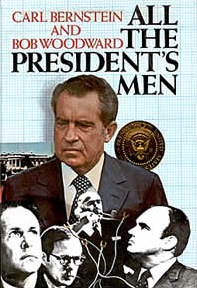
One factor was Woodward and Bernstein’s engaging book about their Watergate reporting, All the President’s Men, which came out in June 1974, just as the scandal was nearing culmination.

As Stanley I. Kutler, Watergate’s preeminent historian, has written, All the President’s Men “offered a journalistic brief to the nation as it prepared to understand and judge for itself” the growing evidence of Nixon’s guilt.

All the President’s Men was quite the success, holding the top spot on the New York Times’ non-fiction best-seller list for 15 weeks — through the climatic days of Watergate and beyond.

“The book’s impeccable timing,” I write in Getting It Wrong, served to “promote an impression that Woodward and Bernstein were central to Watergate’s ultimate outcome.”

The book that helped promote a myth

That impression was deepened in the cinematic version of All the President’s Men, which was released to great fanfare and rave reviews in April 1976.

The movie placed Woodward and Bernstein at the center of Watergate’s unraveling — and minimized or ignored the far more decisive contributions of subpoena-wielding investigators.

Indeed, rolling up a scandal of Watergate’s dimension and complexity required the collective efforts of special prosecutors, federal judges, both houses of Congress, the Supreme Court, as well as the Justice Department and the FBI.

And even then, as I write in Getting It Wrong, Nixon likely would have survived the scandal and served out his term if not for the audiotape recordings he secretly made of conversations in the Oval Office of the White House.

Only when compelled by the Supreme Court did Nixon surrender the recordings, which captured him approving a plan to divert the FBI’s investigation into Watergate’s seminal crime, the break-in June 17, 1972, at the headquarters of the Democratic National Committee.

The third factor in pressing the heroic-journalist myth firmly into the popular consciousness was the 30-year guessing game about the identity of Woodward’s stealthy, high-level source whom a Post editor code-named “Deep Throat.”

Speculation about the identity of “Deep Throat” came not infrequently and was often prominent. The guessing game offered periodic reminders about the Post and its Watergate coverage. The speculation effectively kept Woodward and Bernstein in the public eye far longer than they otherwise might have.

In 2005, W. Mark Felt, formerly second in command at the FBI, disclosed that he had been the “Deep Throat” source — giving rise to yet another round of reminiscing about the heroic journalists  of Watergate.

Such preening was misplaced, of course.

As Max Holland, author of Leak, a recent book about Watergate and “Deep Throat,” has aptly put it:

“Federal prosecutors and agents never truly learned anything germane from The Washington Posts [Watergate] stories — although they were certainly mortified to see the fruits of their investigation appear in print. … The government was always ahead of the press in its investigation of Watergate; it just wasn’t publishing its findings.”

Interestingly, principals at the Post have periodically scoffed at and rejected the heroic-journalist narrative.

For example, Katharine Graham, the Post’s publisher during and after Watergate, said at a program in 1997 marking the scandal’s 25th anniversary:

“Sometimes people accuse us of bringing down a president, which of course we didn’t do. The processes that caused [Nixon’s] resignation were constitutional.”

And Woodward  complained in 1996 that “the mythologizing of our role in Watergate has gone to the point of absurdity, where journalists write … that I, single-handedly, brought down Richard Nixon.

“Totally absurd.”

Indeed. To explain Watergate through the lens of the heroic-journalist is to simplify and misunderstand the scandal. It is to misread history and indulge in a beguiling media-driven myth.

WJC

Recent or related:

Woodward and Bernstein: The ‘only superstars newspapers ever produced’?

In Cinematic treatments, Debunking, Media myths, Newspapers, Washington Post, Watergate myth on April 16, 2012 at 5:11 am

The 40th anniversary of the debut of the Watergate scandal falls in two months and we’re certain read many effusive tributes to the Washington Post’s reporters who often —  but wrongly — are said to have exposed the scandal and brought down Richard Nixon’s corrupt presidency.

It’s a safe bet that many of the tributes to the Post and its Watergate reporting team of Bob Woodward and Carl Bernstein will be exaggerated and erroneous.

Take, for example, this passage, which appeared over the weekend in a column in the Toronto Sun:

“The only superstars newspapers ever produced were Woodward and Bernstein, the Washington Post investigative team who broke the Watergate story that led to the downfall of U.S. president Richard Nixon.”

Maybe they were the only superstars of newspaperdom, although that claim might provoke an argument from the committee at New York University that recently selected 100 outstanding U.S. journalists of the past 100 years. (The list included several dubious entries, such as the self-important Christiane Amanpour of CNN; photojournalist and probable fraud Robert Capa; mythmaking writer David Halberstam, and broadcast journalism’s flawed saint, Edward R. Murrow.)

Woodward and Bernstein made NYU’s rather predictable list, too.

If they are newspapering’s lone superstars, their self-promotion had a lot to do with it.  Woodward and Bernstein’s book about their Watergate reporting, All the President’s Men, came out in June 1974, about two months before Nixon’s resignation.

The book, a months-long best-seller, had been written with the movies in mind; the cinematic version of All the President’s Men came out in April 1976 and starred Robert Redford as Woodward and Dustin Hoffman as Bernstein.

But more important than Woodward and Bernstein’s superstar status is the claim in the Sun’s column that they “broke the Watergate story.”

They did no such thing.

The signal crime of Watergate — the June 1972 burglary at Democratic National Committee headquarters — wasn’t broken by the Post. The break-in was interrupted by police and within hours, news was circulating of the arrest of five burglars at the Watergate complex.

The story in the Post about the break-in appeared beneath the byline of Alfred E. Lewis, a veteran police reporter, and its opening paragraph made quite clear that details were from investigators:

“Five men, one of whom said he is a former employee of the Central Intelligence Agency, were arrested at 2:30 a.m. yesterday in what authorities described as an elaborate plot to bug the offices of the Democratic National Committee here.”

Watergate reporting by the Post did not expose the cover-up of crimes linked to the break-in or the payment of hush money to the burglars, either.

As I note in my latest book, Getting It Wrong, which includes a chapter about the media myths of Watergate, Woodward was quoted in 1973 as saying that those crucial aspects of the scandal were “held too close. Too few people knew. We couldn’t get that high.”

Woodward: 'held too close'

Nor did Woodward and Bernstein uncover or disclose the existence of the White House audiotaping system, which was decisive to the outcome of Watergate.

The tapes secretly made by President Richard Nixon captured him approving a plan in June 1972 intended to thwart the FBI’s investigation of the Watergate break-in.

That contents of that tape — the so-called “smoking gun” of Watergate — sealed Nixon’s fate and directly led to his resignation in August 1974.

The White House taping system had been disclosed 11 months before, not by Woodward and Bernstein but by investigators of the Senate select committee on Watergate.

As I point out in Getting It Wrong, Woodward and Bernstein later claimed to have had a solid lead about the taping system.

In All the President’s Men, the book, Woodward recalled having spoken with Post Executive Editor Ben Bradlee about the lead.

Bradlee advised:

“I wouldn’t bust one” in checking it out.

Had they followed the lead, Woodward and Bernstein may well have broken a pivotal story about Watergate.

But they didn’t.

WJC

Recent and related:

‘Getting It Wrong’ goes on ‘One Hour of Hope’

In Anniversaries, Cinematic treatments, Cronkite Moment, Debunking, Jessica Lynch, Media myths, Washington Post, Watergate myth on January 10, 2012 at 12:15 pm

I recently was on “One Hour of Hope,” a satirically named radio show in Gainesville, Florida, to speak about several of the media-driven myths debunked in my latest book, Getting It Wrong.

Among them are the heroic-journalist trope of Watergate, the so-called “Cronkite Moment” of 1968, and the battlefield derring-do misattributed to Jessica Lynch early in the Iraq War.

The host of “One Hour of Hope,” Doug Clifford, noted at the outset of the interview that 2012 marks the 40th anniversary of the Watergate scandal’s signal crime, the breakin in June 1972 at the headquarters of the Democratic National Committee.

I am sure the anniversary will give rise  to a resurgence of the heroic-journalist interpretation of Watergate, which holds that the dogged investigative reporting of Washington Post reporters Bob Woodward and Carl Bernstein uncovered the scandal and brought about President Richard M. Nixon’s resignation in August 1974.

That media myth has become the dominant narrative of Watergate, I noted during the radio interview, which aired on WSKY-FM.

The persistence of that misreading narrative, I said, can be traced to All the President’s Men, Woodward and Bernstein’s 1974 book about their Watergate reporting, and especially to the 1976 movie by the same title.

The movie, by focusing on the exploits of Woodward and Bernstein, projects the notion that the reporters, with help from a the stealthy, high-level source code-named “Deep Throat,” unearthed the evidence that forced Nixon to quit.

That, I said, is a very simplistic interpretation, “a serious misreading of history” that ignores the far more powerful forces and factors that combined to uncover evidence of Nixon’s culpability.

Those forces, I noted, were typically subpoena-wielding and included committees of both houses of Congress, the Justice Department, the FBI, and a federal judge in Washington named John Sirica.

(Interestingly, the Washington Post, in its obituary of Sirica, said the judge’s “persistence in searching for the facts while presiding over the Watergate cases led to President Nixon’s resignation.”)

The myth of the “Cronkite Moment” represents another serious misreading of history, I said.

Clifford summarized the purported “Cronkite Moment,” that President Lyndon Johnson, in reaction to the CBS News anchor Walter Cronkite’s pessimistic assessment of the Vietnam War, said, “If I’ve lost Cronkite, I’ve lost America.”

I noted that versions of what the president said vary markedly and also include:

  • “If I’ve lost Cronkite, I’ve lost Middle America.”
  • “If I’ve lost Cronkite, I’ve lost the country.”
  • “If I’ve lost Cronkite, I’ve lost the war.”

(Version variability of such magnitude, I write in Getting It Wrong, is a revealing marker of a media-driven myth.)

I noted in the interview that there’s no evidence Johnson saw Cronkite’s television report about Vietnam when it aired February 27, 1968. At the time, the president was attending a birthday party for Governor John Connally on the campus of the University of Texas at Austin.

Nor is there any credible evidence that Cronkite’s reporting about Vietnam influenced  Johnson’s decision, announced in late March 1968, not to seek reelection.

Clifford asked about reporting of the Jessica Lynch case, and I said the bogus tale of her battlefield heroics was largely due to “sloppy reporting by the Washington Post.”

I described the newspaper’s electrifying report, published April 3, 2003, that cited otherwise unidentified “U.S. officials” in saying Lynch had fought fiercely in the ambush of Army unit in Iraq, that she had kept firing at Iraqi attackers even as she suffered gunshot and stab wounds.

But none of that proved true. Lynch fired not a shot in the attack. She was wounded not in the firefight with the Iraqis but in the crash of her Humvee as it tried to flee the ambush.

I also noted in the interview how a “false narrative that the military made up the story” has come to define the Lynch tale.

One of the reporters on the Post’s botched story, I pointed out, has said that the Pentagon wasn’t the newspaper’s source, and also has said that far “from promoting stories about Lynch, the military didn’t like the story.”

The false narrative, I added, has had the additional effect of obscuring recognition of the heroics of Donald Walters, a cook-sergeant who apparently performed the heroics deeds wrongly attributed to Lynch.

Walters laid down covering fire as Lynch and others in their unit sought to escape. He was captured when he ran out of ammunition, and soon afterward executed.

Clifford said his show’s title, “One Hour of Hope,” is a satiric gesture; his once-weekly, 60-minute program leans left while much of the rest of the station’s talk-show content is conservative in political orientation.

WJC

Recent and related: