W. Joseph Campbell

Archive for the ‘Debunking’ Category

Blaming assassination on overheated commentary: No new tactic

In 1897, Debunking, Media myths, New York Sun, Spanish-American War, Yellow Journalism on January 10, 2011 at 7:56 am

The extreme attempts to politicize the weekend shootings in Arizona were dismaying and wrong-headed, but not without parallel.

Efforts to link the attack on Democratic Congresswoman Gabrielle Giffords to overheated political rhetoric and, more explicitly, to Republican Sarah Palin and the conservative Tea Party movement were evocative of a campaign more than a century ago to blame the assassination of President William McKinley on the yellow press of William Randolph Hearst.
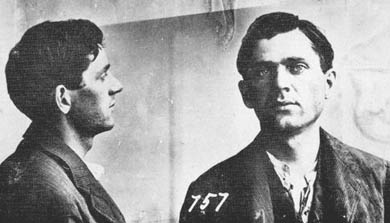
Czolgosz, assassin

McKinley was fatally shot in September 1901 by an anarchist named Leon Czolgosz, who, according to Hearst’s finest biographer, was unable to read English.

Even so, Hearst’s foes–notably, the New York Sun–sought to tie the assassination to ill-advised comments about McKinley that had appeared in Hearst’s newspapers months earlier.

One especially ill-considered comment helped fuel the allegations: That was a quatrain written by columnist Ambrose Bierce 20 months before McKinley was shot on September 6, 1901, while greeting well-wishers in Buffalo.

Bierce’s column of February 4, 1900, closed with a reference to the assassination a few days earlier of the Kentucky governor, William Goebel. Bierce, a prickly and acerbic commentator, wrote:

The bullet that pierced Goebel’s breast
Can not be found in all the West.
Good reason: it is speeding here [to Washington]
To stretch McKinley on his bier.

As I pointed out in my 2005 work, The Spanish-American War: American Wars and the Media in Primary Documents, “The quatrain attracted little notice or comment until Czolgosz shot the president in 1901.”

Bierce later wrote, ‘The verses, variously garbled but mostly made into an editorial, or a news dispatch with a Washington date-line but usually no date, were published all over the country as evidence of Mr. Hearst’s [supposed] complicity in the crime.”

The Sun led the assault on Hearst and his flagship newspaper, the New York Journal.

Beneath the headline, “A Menace to Our Civilization,” the Sun on September 12, 1901, accused the Journal of having provoked “an atrocious Anarchistic assault on the President” and declared that yellow journalism had “graduated into a serious and studied propaganda of social revolution.”

Never, the Sun declared, “was an instrument of disorder and sedition used so effectually and none ever had so great opportunities for its malign propaganda.”

Advertisers in the Journal, said the Sun, were “feeding a monster which is using the strength they are giving nutrition to in an effort to strike down the civilization upon which they depend.”

It was of course absurd to claim that Czolgosz’s mind had been poisoned by the contents of the Hearst press. Few other New York City newspapers were inclined to pick up the cudgel, even though not many admired Hearst’s activist-oriented journalism.

And as media scholar Brian Thornton noted in a fine journal article in 2000, “most of the attack against Hearst” in the aftermath of the McKinley shooting was sustained by letters to the editor of the Sun, not by the newspaper’s editorials.

The Sun, it should be noted, had long campaigned against Hearst, having urged in early 1897 a readership boycott of the yellow press, an effort that drew attention but ultimately collapsed.
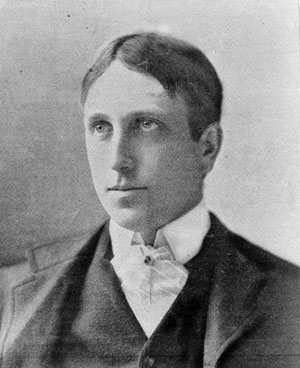
Hearst

Still, the uproar in 1901 stunned Hearst. David Nasaw, Hearst’s leading biographer, wrote that perhaps for “the first time in his life, Hearst was forced onto the defensive.”

In response, Hearst renamed the Journal the Journal and American, to assert the newspaper’s patriotism. Eventually, he dropped the “Journal” from the nameplate altogether.

Hearst could take a measure of comfort in the insightful and level-headed commentary of journals such as The Bookman, which dismissed the criticism as preposterous.

“As a matter of fact,” The Bookman said in its December 1901 number, “it cannot be shown that any President ever lost his life because his assassins were influenced by the reading of newspaper denunciation.”

The Bookman also noted:

“Indeed, the most severe attacks on President McKinley’s policy were not attacks for which the so-called ‘yellow journals’ were responsible, but they were attacks uttered by such sincere and high-minded men as Senator [George] Hoar and ex-Secretary [Carl] Schurz–both of them Republicans–and by newspapers of great ability, such as the Evening Post” of New York.

The Bookman added:

“It is unthinkable that a press censorship should ever be established in our country; for in its practical operation it would mean that the opposition would have to abstain from all newspaper criticism of the party in power.”

There are in The Bookman commentary echoes of well-reasoned and insightful commentary written in the aftermath of the rampage in Arizona that left six people (a federal judge among them) dead and Giffords clinging to life.

Notably, media critic Jack Shafer pointed out in a column posted yesterday at slate.com that only “the tiniest handful of people—most of whom are already behind bars, in psychiatric institutions, or on psycho-meds—can be driven to kill by political whispers or shouts.

“Asking us to forever hold our tongues lest we awake their deeper demons,” Shafer wrote, “infantilizes and neuters us and makes politicians no safer.”

He’s absolutely right.

And to seize on political shootings to score political points is as appalling as it is unworthy.

WJC

Recent and related:

The elusive ‘defining moment’ in investigative journalism

In Cinematic treatments, Debunking, Media myths, New York Times, Newspapers, Washington Post, Watergate myth on January 9, 2011 at 8:59 am

The Financial Times of London has asserted that the Watergate reporting of the Washington Post stands as the “defining moment” in investigative reporting–a claim I challenged yesterday.

Not the Post's doing

The notion that the Post and its reporters Bob Woodward and Carl Bernstein brought down Richard Nixon’s corrupt presidency in the Watergate scandal is a hardy meme–and is one of 10 prominent media-driven myths I debunk in my latest book, Getting It Wrong.

The heroic-journalist trope has been driven principally the cinematic version of Woodward and Bernstein’s book about their Watergate reporting, All the President’s Men. The movie’s inescapable message was that the work of reporters brought about Nixon’s resignation in 1974.

But even principals at the Post over the years have dismissed the heroic-journalist interpretation of Watergate.

So if not Watergate, what then was the “defining moment” in investigative reporting?

And how’s “defining moment” to be defined, anyway? The essay in the Financial Times didn’t say.

I argue that the “defining moment” in investigative reporting would have to be that collection of reports recognized years afterward as a landmark in journalism, for having exposed corruption or misconduct. The reports would have been so significant as to have changed government policy and/or altered practices among journalists.

Not many media investigations have had such profound and lasting effect. As Jack Shafer of slate.com has correctly noted:

“Too many journalists who wave the investigative banner merely act as the conduit for other people’s probing.” That is, they often feed off government-led investigations. Woodward and Bernstein did so, to an extent.

A review of the Pulitzer Prizes awarded for investigative reporting over the past 25 years turns up impressive and intriguing candidates. But most winners of the Pulitzer for investigative journalism are local and decidedly narrow in focus and impact; none of them meets my definition of “defining moment.”

The Post won the 2008 Pulitzer for public service for its outstanding reports about abuses at the Walter Reed Army hospital. The first installment of the Post series described the venerable institution as “a holding ground for physically and psychologically damaged outpatients.”

It was a shameful scandal that led to much soul-searching, some reforms, and a few broken careers in Army medicine. The series projected a faint whiff of controversy, too, because conditions at Walter Reed had been the subject of somewhat similar reporting two years earlier by salon.com.

The Boston Globe in 2003 won the public service Pulitzer for its reports about sexual abuse among Roman Catholic priests–a series that seems to have stood up well over time and perhaps qualifies as landmark in investigative reporting.

But is it widely recognized and remembered as such? I don’t think so.

A few media historians have identified the so-called “Arizona Project” in the 1970s as landmark investigative journalism.

The Arizona Project brought together reporters and editors from 23 newspapers, in response to a call by the Investigative Reporters and Editors organization to conduct a collaborative inquiry into the bombing death of Don Bolles, an investigative reporter for the Arizona Republic.

The project produced 40 articles about organized crime in Arizona.

David Sloan and Lisa Mullikin Parcell wrote in their book, American Journalism: History, Principles, Practices that the Arizona Project “was a defining moment in the history of investigative reporting–a rare instance when normally competitive journalists set aside their egos, stepped outside their news organizations, and cooperated on a dramatic and startling story.”

But in all, the Arizona Project produced mixed results.

It didn’t lead to a succession of similar joint ventures by journalists. Prominent news organizations such as the Post and the New York Times declined to participate. And critics said the undertaking smacked of a kind of arrogant vigilantism by journalists.

The Financial Times in its essay published Friday mentioned in addition to the Watergate reporting by the Post a few other works of outstanding investigative journalism.

It said the journalistic “exposures such as The Sunday Times on the effects of Thalidomide in the 1970s, The Guardian on bribery scandals in British Aerospace in 2003 and The New Yorker’s revelations about abuses in Iraq’s Abu Ghraib prison in 2004″ have prominent places on “a long roll of honor” in investigative journalism.

Intriguing cases, all. But are they recognized as landmarks? Maybe.

Tarbell (Library of Congress)

How about the muckraking period early in the 20th century–notably Ida Tarbell’s two-year exposé of Standard Oil, published in McClure’s magazine from 1904 to 1906? That work certainly is recognized as memorable, as a landmark, even.

But its effects tend to have been overstated. Tarbell’s work, detailed and searching though it was, did not bring about the breakup of Standard Oil, as is often claimed.

The breakup came years after Tarbell’s series, when the U.S. Supreme Court ruled in 1911 that Standard Oil had violated antitrust laws.

In the end, we have a few candidates but no overwhelming favorite for the “defining moment” in investigative journalism. And perhaps that’s not so surprising.

Like most works of journalism, investigative reporting tends to be time-specific and of transient importance–and short-lived in its effects.

WJC

Recent and related:

The ‘defining moment’ in investigative journalism? Wasn’t Watergate

In Cinematic treatments, Debunking, Media myths, Newspapers, Watergate myth, Yellow Journalism on January 8, 2011 at 9:03 am

The “defining moment” in investigative journalism? Well, that had to be the Watergate reporting of the Washington Post in the early 1970s.

So says Britain’s serious-minded Financial Times in a commentary published yesterday.

The newspaper, however, offered no persuasive evidence for the Post-Watergate claim beyond asserting:

“Investigative reporting has been one of the strongest developments of postwar journalism, illuminating government deceit, corporate fraud and criminal activity. The reporting of Bob Woodward and Carl Bernstein for The Washington Post in the early 1970s on the illegal efforts of Nixon’s White House to destabilise the Democratic party remains its defining moment.”

Was it, really, the “defining moment”? The Post certainly practiced some solid journalism in reporting the unfolding Watergate scandal; its coverage after all won the Pulitzer Prize for public service in 1973.

But the defining moment of investigative reporting?

I argue “no, not at all,” in my latest book, Getting It Wrong, which addresses and debunks 10 prominent media-driven myths–among them the heroic-journalist interpretation of Watergate.

The heroic-journalist meme has it that Woodward and Bernstein’s dogged reporting about the Watergate scandal brought down Richard Nixon’s corrupt presidency. (Nixon resigned in 1974, in the face of certain impeachment and conviction for his role in seeking to coverup the Watergate scandal.)

“The heroic-journalist has become the most familiar storyline of Watergate,” I write in Getting It Wrong. That interpretation, I add, is “ready short-hand for understanding” Watergate, “a proxy for grasping the scandal’s essence while avoiding its forbidding complexity. How the Post and its reporters uncovered Watergate is deeply ingrained in American journalism as one of the field’s most important and self-reverential stories.”

But that doesn’t make it the “defining moment” in investigative reporting.

The reporting by the Post certainly did not bring down Nixon’s presidency. To embrace that interpretation is, I write, “to indulge in a particularly beguiling media-driven myth.

“The heroic-journalist interpretation minimizes the far more decisive forces that unraveled the scandal and forced Nixon from office”–including the collective efforts of such subpoena-wielding agencies and entities as the FBI, federal grand juries, special prosecutors, bipartisan congressional panels, and ultimately the U.S. Supreme Court.

Not even the Post embraces the heroic-journalist interpretation of Watergate.

For example, the newspaper’s publisher during the Watergate period, Katharine Graham, insisted the Post did topple Nixon. In 1997, at a Newseum program marking the 25th anniversary of the break-in at Democratic headquarters–the Watergate’s seminal crime–Graham declared:

“Sometimes people accuse us of bringing down a president, which of course we didn’t do,” she said. “The processes that caused [Nixon’s] resignation were constitutional.”

And in 2005, Michael Getler, then the newspaper’s ombudsman, declared in his column:

“Ultimately, it was not The Post, but the FBI, a Congress acting in bipartisan fashion and the courts that brought down the Nixon administration.”

I note in Getting It Wrong that Woodward and Bernstein “did not uncover defining and decisive elements of the Watergate scandal—the cover-up and the payment of hush money to the Watergate burglars.”

Those aspects of the scandal, Woodward was quoted as saying in 1973, were “held too close. Too few people knew. We couldn’t get that high.”

Nor did they disclose the secret audiotaping system that Nixon had installed at the White House; the recordings of his private conversations about Watergate proved decisive in the scandal’s outcome.

If not Watergate, then what was the “defining moment” in investigative reporting–the genre’s most decisive and lasting contribution?

I’ll take up that question tomorrow at Media Myth Alert.

WJC

Recent and related:

WaPo journo on Jessica Lynch story rejoins paper

In Debunking, Jessica Lynch, Media myths, Newspapers, Washington Post on January 6, 2011 at 8:50 am

Vernon Loeb, one of the Washington Post reporters who in 2003 wrote the botched story about Jessica Lynch’s purported battlefield heroics in Iraq, is returning to the newspaper as its local editor.

Washington Post, April 3, 2003

The electrifying but erroneous story about Lynch, then a 19-year-old Army private, turned her into the single most recognizable soldier of the Iraq War.

In a front-page report published April 3, 2003, the Post anonymously cited “U.S. officials” in saying that Lynch “fought fiercely” in the ambush of her unit in southern Iraq, that she had “shot several enemy soldiers,” and that she had fired her weapon “until she ran out of ammunition.”

But the hero-warrior narrative–published beneath the bylines of Loeb and Susan Schmidt–was untrue.

Lynch did not fire her weapon in the ambush. Nor was she shot and stabbed, as the Post reported.

I examine the Lynch case in my latest book, Getting It Wrong, noting how the Post account of her supposed derring-do “became a classic illustration of intermedia agenda-setting: News organizations around the world followed the Post’s lead by prominently reporting the supposed heroics of young Jessica Lynch and contemplating their significance.”

Not surprisingly, the Post in announcing yesterday that Loeb was returning neither mentioned nor hinted at his role in reporting the Lynch story. The Post memo did describe Loeb as “a tremendously talented, high-energy journalist, whose enthusiasm for what we do is infectious.

“In his new job, he will drive our coverage of the region, ensuring we are serving our readers, both print and digital, the smartest, freshest and most authoritative news and features on the issues that matter most to them. It’s a good match: this is a highly competitive market, and Vernon is an intensely competitive editor.”

The memo also said Loeb has run marathons and is an ardent fan of the Philadelphia Phillies baseball team. (The DCist blog noted that Loeb’s Twitter account has been silent for several months.)

Loeb returns to the Post on February 1, following a stint as deputy managing editor for news at the Philadelphia Inquirer. He had left the Post in 2004 to become an investigations editor at the Los Angeles Times.

I once tried to speak with Loeb about the Lynch case. I called him at the Inquirer in 2008, while I was researching Getting It Wrong; he abruptly hung up on me.

I wanted to ask Loeb about the sources behind the Lynch story. I also wanted to ask him about the interview he gave to the NPR Fresh Air show in late 2003, during which he said the Pentagon was not the source for the Post story.

In the years since, the dominant narrative has become that the Pentagon concocted the story about Lynch’s heroics and fed it to the Post in order to boost American support for the war.

But in the interview on Fresh Air, Loeb said he “could never get anybody from the Pentagon to talk about” the Lynch case.

“They wouldn’t say anything about Jessica Lynch,” Loeb said on the show.

“I just didn’t see the Pentagon trying to create a hero where there was none,” he added. “I mean …they never showed any interest in doing that, to me.”

Moreover, he declared:

“Our sources for that story were not Pentagon sources.”

Loeb described them as “some really good intelligence sources” in Washington, D.C.

And he added:

“We wrote a story that turned out to be wrong because intelligence information we were given was wrong. That happens quite often.”

And yet, the false narrative about the Pentagon’s having made up the story about Lynch’s heroics endures, and has become dominant. It fits well with a curdled popular view about the war in Iraq.

I’ve called before at Media Myth Alert for the Post to knock down the false narrative about the Lynch case and disclose the identify of its sources on that story.

If they weren’t “Pentagon sources,” then who were the “U.S. officials” who supplied the erroneous account about Lynch? Why should they be continue to be protected with anonymity, given that they clearly provided inaccurate information?

Loeb should say, especially since his new job at the Post will include “ensuring [that] we are serving our readers” in an “authoritative” way.

WJC

Recent and related:

Murrow, Cronkite myths cited in Poland’s top paper

In Cronkite Moment, Debunking, Media myths, Murrow-McCarthy myth, New York Times, Newspapers, Watergate myth on January 4, 2011 at 10:25 am

I’ve discussed from time to time at Media Myth Alert how media-driven myths about the U.S. news media have a way of traveling well and finding expression in news outlets overseas.

Watergate-related myths are notable examples of this tendency.

A couple of prominent media myths popped up yesterday in an article posted at the online site of Gazeta Wyborca, the leading daily in Poland and a newspaper with a remarkable past.

Gazeta Wyborca traces its lineage to what was the leading underground newspaper in Poland of the 1980s, Tygodnik Mazowsze. The clandestine title appeared under the noses of Poland’s communist authorities, week after week, from 1982 to 1989–some 290 issues in all.

Tygodnik Mazowsze was run almost entirely by women affiliated with Poland’s then-banned Solidarity opposition. When the country’s communist rulers permitted Solidarity candidates to stand in elections in 1989, one of the conditions was that the movement be permitted to publish an above-ground newspaper.

So the staff of Tygodnik Mazowsze moved up from the underground to launch Gazeta Wyborca, which means “electoral newspaper.” In the years since, Gazeta has become the dominant news outlet in Poland, which now is a thriving democracy.

Gazeta yesterday referred to the debate that bubbled last week in U.S. news media over a New York Times article that likened TV comedian Jon Stewart to legendary CBS newsman Edward R. Murrow.

Gazeta noted that U.S. news media “triumphantly” mentioned “cases in which journalists have changed the course of history” and referred to Murrow’s “instrumental” role in ending Senator Joseph McCarthy’s communists-in-government witch-hunt.

It also noted CBS anchorman Walter Cronkite’s criticism of the Vietnam War in 1968, which supposedly forced President Lyndon Johnson to realize his war policy was a shambles.

It’s too bad Gazeta didn’t point out that both cases are media-driven myths.

As I discuss in my latest book, Getting It Wrong, Murrow was quite late in confronting McCarthy, doing so most prominently in a half-hour television program that aired March 9, 1954.

That show came months, even years after other American journalists–notably, syndicated columnist Drew Pearson–had reported critically, closely, and often about McCarthy and his exaggerated charges.

“To be sure,” I write in Getting It Wrong, “it wasn’t as if Americans in early 1954 were hoping for someone to step up and expose McCarthy, or waiting for a white knight like Murrow to tell them about the toxic threat the senator posed.”

By then, they knew all too well.

Nor was Cronkite at the cutting edge of criticism of the U.S. war effort in Vietnam.

Far from it.

The CBS anchorman declared in a televised special report on February 27, 1968, that the U.S. military was “mired in stalemate” in Vietnam.

LBJ in Texas, February 27, 1968

But that scarcely was a remarkable assertion.

As I note in Getting It Wrong, stalemate” had been appearing as early as the summer of 1967 in New York Times editorials and analyses about the war.

What supposedly made the Cronkite characterization stand out is that President Johnson saw the program and, as it ended, said to an aide or aides, “If I’ve lost Cronkite, I’ve lost Middle America.”

Or something to that effect.

But in fact, Johnson wasn’t in front of a television set that night. He didn’t see the Cronkite program when it aired.

At the time Cronkite was intoning his “mired in stalemate” assessment, Johnson was offering light-hearted banter in Austin, Texas, at the 51st birthday party of one of his longtime political allies, Governor John Connally.

So it’s difficult to fathom how Johnson could have been much moved by a program that he hadn’t seen.

WJC

Recent and related:

Excess praise for Edward R. Murrow

In Debunking, Media myths, Murrow-McCarthy myth, New York Times on January 2, 2011 at 10:59 am

Edward R. Murrow, the legendary CBS newsman who died in 1965, has been back in the news of late, owing to the facile suggestion by the New York Times that TV comedian Jon Stewart is Murrow’s “modern-day equivalent.”

Murrow the legendary

Absurd though it was, the comparison in the Times served to train attention anew on Murrow and on his famous 30-minute television program of March 9, 1954, which supposedly helped end the communists-in-government witch-hunt of Senator Joseph R. McCarthy.

The latest iteration of that theme find expression today in a commentary in South Bend Tribune in Indiana, which revisits the Times-Stewart-Murrow tempest and asserts that “in broadcast journalism history, Murrow was a giant of his time, honored for turning the spotlight in 1954 on the witch-hunt excesses of Sen. Joseph McCarthy, ‘McCarthyism,’ and helping to bring the demagogue’s downfall.”

Murrow certainly was a preeminent figure in American broadcast journalism, having won fame for his radio reports from London during World War II and for his weekly, documentary-style television program, See It Now, which was launched in 1951.

But to argue that Murrow turned the spotlight on the excesses of McCarthyism, and to claim Murrow helped bring about McCarthy’s downfall–well, that’s excess praise.

As I point out in Getting It Wrong, my mythbusting book published last year, the See It Now program on McCarthy in 1954 was neither pivotal nor decisive, in part because Murrow was following the spotlight when he turned attention to McCarthy and his excesses.

That is, Murrow was quite late in taking on McCarthy, doing so long after other journalists–among them muckraking columnist Drew Pearson–had become persistent and searching critics of the senator, his record, and his tactics.

As I write in Getting It Wrong,  Murrow’s friend and CBS colleague Eric Sevareid chafed at the misleading interpretation attached to the See It Now program on McCarthy which, he noted, “came very late in the day.”

Sevareid said in 1978:

“The youngsters read back and they think only one person in broadcasting and the press stood up to McCarthy and this has made a lot of people feel very upset, including me, because that program came awfully late.”

And in the days and weeks following the See It Now program on McCarthy, Murrow acknowledged the show’s contributions were modest, that it had at best reinforced what others had long said about McCarthy.

Jay Nelson Tuck, the television critic for the New York Post, wrote in April 1954 that Murrow felt “almost a little shame faced at being saluted for his courage in the McCarthy matter. He said he had said nothing that … anyone might not have said without a raised eyebrow only a few years ago.”

And Murrow’s collaborator and co-producer, Fred W. Friendly, rejected claims the See It Now program was decisive. Friendly wrote in his memoir, Due to Circumstances Beyond Our Control:

“To say that the Murrow broadcast of March 9, 1954, was the decisive blow against Senator McCarthy’s power is as inaccurate as it is to say that Joseph R. McCarthy … single-handedly gave birth to McCarthyism.”

These were not assertions of false modesty. McCarthy’s tactics, after all, had become quite well-known by March 1954. As I write in Getting It Wrong, it wasn’t as if Americans then “were waiting for a white knight like Murrow to tell them about the toxic threat the senator posed.”

From the work of Pearson and other journalists, they already knew.

'Best of Person to Person'

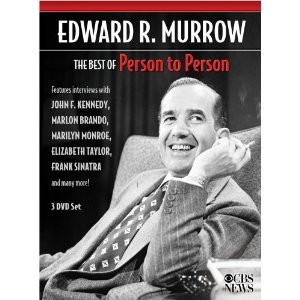
While Murrow may have been a giant in American broadcasting, he did a fair share of puff-ball journalism, too. Besides the See It Now program, Murrow conducted mushy interviews with the likes of Marilyn Monroe, Elizabeth Taylor, Marlon Brando, and other celebrities of the 1950s on his highly rated Person to Person show on CBS.

As Jack Shafer of slate.com has argued: “If we’re going to praise Murrow for producing fearless TV news, we should also be ready to damn him for paving the way for Barbara Walters, Oprah Winfrey, and all the celebrity bootlickers on red carpets.”

It should be noted that Murrow was no white knight, either. He privately tutored Adlai Stevenson, the Democratic presidential candidate in 1956, on speaking to the TV camera. In addition, Murrow claimed a master’s degree that he never earned, and inflated his speech major at Washington State University to a degree in international relations and political science.

I mention this not to dismiss Murrow’s contributions, but to argue for context about an important though flawed figure in American journalism–and to challenge as one-dimensional and misleading the mythic image of Murrow as “a giant of his time.”

WJC

Recent and related:

Anniversary journalism and media-driven myths in 2011

In Anniversaries, Bay of Pigs, Debunking, Media myths, New York Times, Newspapers on January 1, 2011 at 7:21 am

NY Times front page, April 7, 1961

“Anniversary journalism” has the appeal of being irresistible and easily done.

Typically, a reporter targets an upcoming anniversary (preferably, the occasion is divisible by 5 or 10), sells the idea to an editor, and cobbles together a story recalling the event. Easily done, but as the Independent newspaper in London has observed, not always very compelling.

We’ll surely see a lot of “anniversary journalism” in 2011.

The year, after all, brings the 10th anniversary of terrorist attacks of September 11, the 100th anniversary of the death of Joseph Pulitzer, and the 150th anniversary of the start of the American Civil War.

Media Myth Alert will be especially interested in 2011 in the 50th anniversary of the botched Bay of Pigs invasion of Cuba, which gave rise to the durable New York Times-Bay of Pigs suppression myth.

In the run-up to the anniversary in April of the Bay of Pigs invasion, we’ll no doubt see frequent references to this media-driven myth.

As I discuss in Getting It Wrong, my mythbusting book that came out in 2010, the suppression myth has it that the New York Times bowed to pressure from the White House of President John F. Kennedy and “spiked,” or self-censored, its detailed report about the pending Bay of Pigs invasion of Cuba.

The purported self-censorship took place about 10 days before the invasion– which failed utterly in its objective of toppling the Cuban revolutionary leader, Fidel Castro.

But as I point out in Getting It Wrong, the Times did not suppress its reports about the pending invasion of Cuba.

It did not censor itself.

The Times’ reports about preparations for the invasion were in fact fairly detailed–and prominently displayed on the front page in the days before the invasion.

The run-up to the Bay of Pigs was no one-day story. A succession of articles before the invasion “kept expanding the realm of what was publicly known about a coming assault against Castro,” I write.

To be sure, not all pre-invasion news reports were accurate or on-target. Much of the reporting was piecemeal.

But overall, the reports in the Times and other U.S. newspapers let readers know that something was afoot in the Caribbean, that an assault on Castro was in the works.

“Indeed,” I write in Getting It Wrong, “the coverage helped strip away the fiction circulated by the Kennedy administration that the invasion was strictly a Cuban affair.”

The suppression myth largely centers around a dispatch that a veteran Times correspondent, Tad Szulc, filed on April 6, 1961.

Supposedly, the Kennedy administration learned of the contents of Szulc’s dispatch about the pending invasion and urged that it be suppressed.

In his book The Powers That Be, David Halberstam offered a graphic, though exaggerated, account of Kennedy’s calling James Reston of the Times, saying the newspaper risked having blood on its hands were the article published.

Such a conversation never happened, according to Reston and others quoted in Harrison Salisbury’s Without Fear or Favor, an insider’s account of the Times and its history.

Moreover, as I note in Getting It Wrong:

“The Kennedy Library in Boston says that the White House telephone logs reveal no calls were placed to Reston” or other Times executives on April 6, 1961.

Szulc’s story was published on the front page on April 7, 1961 (see image, above).

I argue in Getting It Wrong that that the suppression myth likely stems from confusion over an episode in October 1962, when Kennedy did ask the Times to delay publication of a sensitive report.

That came during the Cuban Missile Crisis, when Reston was prepared to report that nuclear-tipped Soviet weapons had been deployed in Cuba. With the prospect of a nuclear exchange seemingly in the balance, the Times complied with the president’s request.

Kennedy took office in 1961–a year with more than a few significant anniversaries. In 1961, Berlin Wall went up, the Soviets put the first man into space, Hemingway killed himself, and Adolf Eichmann‘s war-crimes trial was convened in Israel.

And the Times suppression myth took hold.

WJC

Recent and related:

Only Murrow had the bona fides? Nonsense

In Debunking, Media myths, Murrow-McCarthy myth, New York Times, Newspapers on December 30, 2010 at 11:31 am

The New York Times certainly was casual and superficial in likening TV comedian Jon Stewart to Edward R. Murrow. Not only that, but the discussion about the absurd comparison has been accompanied by the appearance of media-driven myth.

Notably, a post yesterday at the Atlantic online site invoked the dubious notion that Murrow stood up to Joseph R. McCarthy, the red-baiting senator from Wisconsin, when no one else could or would.

The Atlantic post said of Stewart and Murrow:

“Both men stuck their necks out. Both went first into a sort of no-man’s-land. It is probably true that only Murrow in his time had the bona fides to stand up to McCarthy (and don’t forget, Murrow waited years before doing so).” [Emphasis added in bold.]

That claim is just absurd.

While Murrow did take on McCarthy, in a much-celebrated half-hour television program in March 1954, he was scarcely alone in challenging the senator and his communists-in-government witch-hunt. And certainly not the first.

As I point out in my latest book, Getting It Wrong, other journalists in the early 1950s had the bona fides, and had the guts, to take on McCarthy when the risks of doing so were quite pronounced.

Pearson: Had the bona fides

Among these journalists with the bona fides was the Washington-based syndicated columnist Drew Pearson.

As I note in Getting It Wrong: “During the four years of his communists-in-government campaign, McCarthy had no more relentless, implacable, or scathing foe in the news media” than the muckraking Pearson, who wrote the widely published “Washington Merry-Go-Round” column and had a radio show.

Pearson was no saint. Jack Shafer of slate.com not long ago described Pearson as “one of the skuzziest journalists to ever write a story.” Pearson was intrusive and overbearing. He readily made enemies, and almost seemed to relish doing so.

But there’s no denying that he was quick off the dime, that he went after McCarthy hard and relentlessly, and that he immediately recognized the dubious quality of McCarthy’s claims about communists in high places in the U.S. government and military.

Pearson first wrote about McCarthy’s allegations on February 18, 1950, just days after McCarthy had begun raising them, notably in a speech in Wheeling, West Virginia. Pearson called McCarthy the “harum-scarum” senator and said that when he “finally was pinned down, he could produce … only four names of State Department officials whom he claimed were communists.”

Two of the four people named by McCarthy had resigned years earlier; another had been cleared, and the fourth had never worked for the State Department, Pearson wrote.

Pearson followed up with another column, writing that “the alleged communists which he claims are sheltered in the State Department just aren’t.”

Pearson also noted that he had covered the State Department for years, during which time he had been “the career boys’ severest critic. However, knowing something about State Department personnel, it is my opinion that Senator McCarthy is way off base.”

As he was.

Pearson leveled not just a few, scattered shots at McCarthy. His challenges in print became a near-barrage. Pearson scrutinized the senator’s tax troubles in Wisconsin, his accepting funds from a government contractor, and his taking suspicious campaign contributions back in Wisconsin.

The probing angered McCarthy, and in December 1950, the hulking senator physically assaulted Pearson after a dinner at the hush-hush Sulgrave Club on DuPont Circle in Washington, D.C.

McCarthy confronted Pearson in the Sulgrave’s coat check room and either slapped, kneed, or punched the columnist.

Richard Nixon, who recently had been sworn in as a U.S. Senator, intervened to break up the encounter. Nixon, in his memoir RN, said Pearson “grabbed his coat and ran from the room. McCarthy said, ‘You shouldn’t have stopped me, Dick.’”

So Pearson had the bona fides.

So did James A. Wechsler, editor of the New York Post.

In 1951, the Post published a 17-part, bare-knuckle series about McCarthy. The installments of the series addressed McCarthy’s tax troubles, his hypocrisy, and his recklessness in raising allegations about communists in government.

The closing installment likened McCarthy to “a drunk at a party who was funny half an hour ago but now won’t go home. McCarthy is camped in America’s front room trying to impress everybody by singing all the dirty songs and using all the four-letter words he knows. The jokes are pointless, the songs unfunny, the profanity a bore.”

The series was published 2½ years before Murrow’s television program on McCarthy.

And Wechsler paid a price for it, too. He was hauled before McCarthy’s investigative subcommittee and grilled about his dalliance years before in the Communist Youth League.

Wechsler characterized the closed-door hearing as “a reprisal against a newspaper and its editor for their opposition to the methods of this committee’s chairman.” But he complied, reluctantly, with the subcommittee’s demand to produce names of people he had known to be communists during his time in the Youth League.

By the time Murrow took on McCarthy in March 1954, the senator’s favorable ratings had crested and entered a terminal decline.

And Americans by then weren’t “waiting for a white knight like Murrow to tell them about the toxic threat the senator posed,” I write in Getting It Wrong.

Thanks to the work of Pearson and Wechsler and other journalists, they already knew.

WJC

Recent and related:

LOC honor stirs references to Watergate myth

In Cinematic treatments, Debunking, Media myths, Newspapers, Washington Post, Watergate myth on December 29, 2010 at 11:31 am

All the President’s Men, the movie that helped solidify the heroic-journalist myth of Watergate, was among 25 American motion pictures chosen for the 2010 National Film Registry, the Library of Congress announced yesterday.

I have no serious quarrel with the LOC’s selection. All the President’s Men is an entertaining and imaginative film, adapted from Bob Woodward and Carl Bernstein’s book by the same title about their Watergate reporting for the Washington Post.

The cinematic version of All the President’s Men came out in 1976, just as the wounds of Watergate were beginning to heal, and has aged quite well.

But as I discuss in my latest book, Getting It Wrong, All the President’s Men “offers an unmistakable assertion of the power and centrality of the press” in the fall of Richard Nixon’s corrupt presidency. The movie promotes the misleading yet beguiling heroic-journalist interpretation of Watergate.

I note in Getting It Wrong that All the President’s Men “allows no other interpretation: It was the work Woodward and Bernstein that set in motion far-reaching effects that brought about the first-ever resignation of a U.S. president.”

And that message that “has endured,” I write. “More than thirty-five years later, what remains most vivid, memorable, and accessible about Watergate is the cinematic version of All the President’s Men.”

Nonetheless, as I discuss in Getting It Wrong, the Watergate reporting of Woodward and Bernstein was at best marginal to the outcome of the scandal, in which 19 men associated with Nixon’s presidency or his 1972 reelection campaign went to jail.

Nixon resigned in 1974, to avoid certain impeachment and conviction for his role in Watergate.

Rolling up a scandal of such dimension, I write in Getting It Wrong, “required the collective if not always the coordinated forces of special prosecutors, federal judges, both houses of Congress, the Supreme Court, as well as the Justice Department and the FBI.”

But the cinematic version of All the President’s Men portrays none of that collective effort. In fact, the movie downplays, even denigrates, the contributions of investigative agencies such as the FBI.

The LOC’s announcement inevitably stirred references in mainstream media and the blogosphere to the heroic-journalist interpretation of Watergate.

The New York Post, for example, said in referring to the movie’s recognition that the work of Woodward and Bernstein “led to the resignation of President Nixon.”

And in a lengthy and glowing post at Houston’s CultureMap blog, a film critic described Woodward and Bernstein as “fearless and relentless seekers of truth who helped to bring down the most corrupt President in U.S. history.”

He also wrote that All the President’s Men stood as “first among equals” among the movies selected for the National Film Registry and added that Woodward and Bernstein “set new standards for American journalism, and inspired thousands of idealists — along with more than a few amoral glory-hounds — to follow in their paths.”

Just what were those “new standards” was left unsaid.

And the work of Woodward and Bernstein may have “inspired thousands of idealists” to enter American journalism, but there’s only anecdotal support for such claims.

And scholarly research has shown that Woodward, Bernstein, and All the President’s Men did not cause enrollments to climb at journalism and mass communication programs at U.S. college and universities.

One such study was financed by the Freedom Forum media foundation and conducted by researchers Lee B. Becker and Joseph D. Graf. They reported in 1995 that “growth in journalism education result[ed] not from specific events as Watergate … but rather to a larger extent from the appeal of the field to women, who ha[d] been attending universities in record numbers. The growth also in part reflect[ed] the applied nature of the field and its link to specific job skills.”

Becker and Graf added:

“There is no evidence … that Watergate had any effect on enrollments.”

A final note about All the President’s Men and the National Film Registry: As the MovieNation blog at the Boston Globe pointed out, “It has to be the only film on the list that includes a scene set in the Library of Congress.”

That scene depicts Woodward and Bernstein at a table in the Library’s spectacular Main Reading Room, sorting through records of materials checked out by the Nixon White House. As they thumb through stacks of cards, the camera pulls away, slowly and upward, toward the Reading Room’s gold-inlaid dome. The effect is to suggest the lonely earnestness of the reporters’ work.

WJC

Recent and related:

Likening Jon Stewart to Murrow: ‘Ignorant garbage’

In Cronkite Moment, Debunking, Media myths, Murrow-McCarthy myth, New York Times on December 28, 2010 at 12:04 am

Murrow

The New York Times piece that extravagantly compared TV comedian Jon Stewart to Edward R. Murrow stirred considerable discussion yesterday in the blogosphere and beyond.

The most incisive and inspired characterization I encountered was that of Todd Gitlin, a professor of journalism and sociology at Columbia University. He was quoted by ABC News as saying that likening Stewart to Murrow or legendary CBS anchorman Walter Cronkite “is childish, it is garbage, it is ignorant garbage.”

Ignorant garbage: Scathing but accurate, indeed.

Gitlin, whom I do not know, also was quoted as saying, quite correctly, that Stewart “is not a news person. He’s a satirist and when he chooses to be blunt, he has the luxury of being blunt.” Stewart is host of Comedy Central’s Daily Show with Jon Stewart.

Embedded in the Times article were two prominent media-driven myths, both of which I address and debunk in my latest book, Getting It Wrong.

One was the notion that Murrow’s half-hour television report on Senator Joseph R. McCarthy in 1954 turned public opinion against the senator and his communists-in-government witch-hunt. In fact, however, McCarthy’s favorable ratings had been falling for a few months before Murrow’s program, which aired March 9, 1954.

The other embedded myth was the allusion to the “Cronkite Moment” of February 1968. That was when Cronkite declared on-air that the U.S. military was “mired in stalemate” in Vietnam. Supposedly, Cronkite’s analysis was an epiphany for President Lyndon Johnson, who suddenly realized his war policy was a shambles.

But as I note in Getting It Wrong, Cronkite’s “mired in stalemate” assessment was scarcely novel or stunning at the time. And Johnson didn’t even see the Cronkite report when it aired. He was in Austin, Texas, attending a birthday party for a longtime political ally, Governor John Connally (see photo).

LBJ didn't see Cronkite show

As such, it is very difficult to believe the president was much moved by a program that he hadn’t watched.

Left largely unaddressed in the discussion of the Times claim about Stewart, Murrow, and Cronkite is why–what accounts for the appeal of such extravagant characterizations?

In part, they are driven by an understandable urge to distill and simplify history–to be able to grasp the essence of important historical events while sidestepping their inherent complexity, messiness, and nuance.

Characterizations such as those in the Times yesterday also seek to ratify the importance of contemporary television personalities, to locate in them the virtues and values that supposedly animated the likes of Murrow and Cronkite.

Such an impulse skirts, if not indulges in, the “golden age” fallacy.

But it should be noted that Murrow, in particular, was no white knight, no paragon of journalistic virtue.

As I point out in Getting It Wrong, Murrow’s biographers have acknowledged that the broadcasting legend added to his employment application at CBS five years to his age and claimed to have majored in college in international relations and political science.

He had been a speech major at Washington State University.

Murrow also passed himself off as the holder of a master’s degree from Stanford University–a degree he never earned.

And Cronkite for years pooh-poohed the notion that his 1968 program on Vietnam had much effect on Johnson and U.S. war policy. Cronkite said in his memoir, A Reporter’s Life, that his  “mired in stalemate” assessment represented for Johnson “just one more straw in the increasing burden of Vietnam.”

Cronkite later told the CNBC cable network that he doubted the program “had a huge significance.

“I think it was a very small straw on a very heavy load [Johnson] was already carrying.”

Only late in his life, as the so-called “Cronkite Moment” gained legendary dimension, did Cronkite begin to embrace the anecdote’s purported power.

“It never occurred to me,” Cronkite said in 2004, that the 1968 program “was going to have the effect it had.”

But Cronkite’s initial interpretation was most accurate: The show had little to no effect on policy or public opinion.

WJC

Recent and related: