W. Joseph Campbell

Archive for the ‘Debunking’ Category

‘Famously rumored’: Hearst and his reputed vow

In 1897, Debunking, Furnish the war, Media myths, Spanish-American War on July 22, 2010 at 9:26 am

Media-driven myths are propelled by many forces, among them the reality that the tales sometimes are just too good, too delicious, to check out.

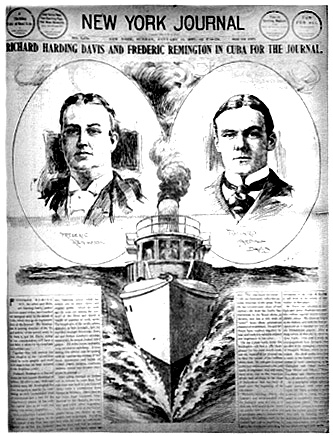
Hearst's Evening Journal, April 1898

So it was with a commentary posted yesterday at the “Unleashed” blog of the Australian Broadcasting Corporation.

The commentary invoked the well-known and often-repeated anecdote about William Randolph Hearst’s purported vow to “furnish the war” with Spain, stating:

“Hearst is famously rumored to have declared in writing to artist Frederic Remington: ‘I’ll furnish the war,’ referring, of course, to the Spanish-American War in 1898, henceforth referred to as ‘Mr Hearst’s War’….”

“Famously rumored,” eh? A flimsy construct, that, for making a point or building an argument.

It takes but a few minutes spent online to find evidence that the Hearstian vow is almost certainly a media-driven myth–a dubious, improbable tale masquerading as fact.

Chapter One in Getting It Wrong, my new book debunking 10 prominent media-driven myths, takes up and dismantles the Hearstian vow, and that chapter is readily accessible online.

Still, it’s clear that the anecdote’s simplistic directness have helped make it resistant to debunking. As I note in Getting It Wrong, media myths that can be reduced to a memorably pithy phrase are most likely to withstand debunking.

So it is with “furnish the war.”

The anecdote also is impressively flexible. It is useful, I write, “in illustrating any number of media sins and shortcomings. It has been invoked to illustrate the media’s willingness to compromise impartiality, promote political agendas, and indulge in sensationalism. It has been used, more broadly, to suggest the media’s capacity to inject malign influence into international affairs.”

Even more impressive, perhaps, is that the anecdote endures despite the near-complete absence of supporting documentation.

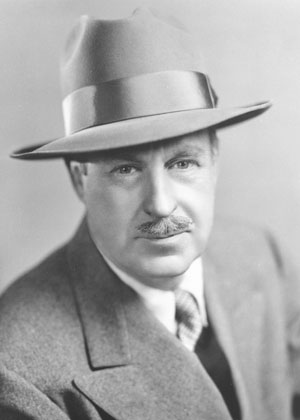
Hearst

“It lives on,” I write in Getting It Wrong, “even though the telegrams supposedly exchanged by Remington and Hearst have never turned up. It lives on even though Hearst denied ever sending such a message. It lives on despite an irreconcilable internal inconsistency: It would have been absurd for Hearst to vow to ‘furnish the war’ because war—specifically, the Cuban rebellion against Spain’s colonial rule—was the very reason Hearst sent Remington to Cuba in the first place. Anyone reading U.S. newspapers in early 1897 would have been well aware that Cuba was a theater of a nasty war.”

Hearst assigned Remington to Cuba 15 months before the Spanish-American War broke out. In early 1897, no one, including Hearst, could have known the United States would take up arms against Spain over Cuba.

WJC

Related:

‘Lyndon Johnson went berserk’? Not because of Cronkite

In Cronkite Moment, Debunking, Media myths, Year studies on July 21, 2010 at 1:13 pm

President Lyndon Johnson supposedly “went berserk” when he heard Walter Cronkite’s on-air assessment in 1968 that the U.S. war effort in Vietnam was “mired in stalemate.”

So claims Tom Hayden, the 1960s antiwar activist in a commentary posted yesterday at the online site of the Nation magazine.

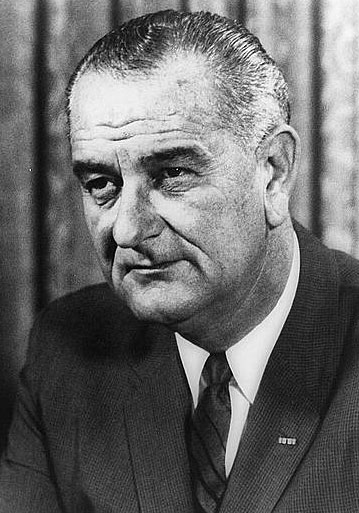
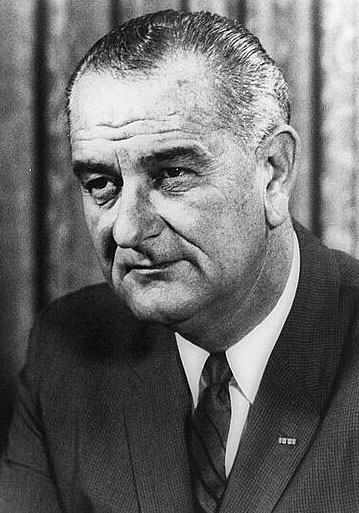
Johnson, unberserk

Hayden’s commentary invoked what often is called the “Cronkite Moment” in saying:

“Cronkite went to Vietnam in April 1968 to survey the state of that war, just as [MSNBC’s Rachel] Maddow spent time in Afghanistan investigating the current reality. When Cronkite pronounced Vietnam as ‘mired in stalemate,’ it is said that Lyndon Johnson went berserk.”

It’s a striking way of describing the mythical “Cronkite Moment”: I’ve never before read that Johnson supposedly “went berserk” in response to Cronkite’s characterization.

In any case, Hayden’s descriptions of Cronkite’s program and Johnson’s reaction are in error.

The trip to which Hayden refers took place not in April 1968 but in February that year. Cronkite went to Vietnam then to gather material for a special report that aired on CBS on February 27, 1968.

Johnson, however, did not see the Cronkite program when it aired.

As I discuss in Getting It Wrong, my new book debunking the “Cronkite Moment” and nine other media-driven myths, Johnson was in Austin, Texas, at the time Cronkite intoned his “mired in stalemate” assessment.

Johnson wasn’t going “berserk” on that occasion. Rather, he was offering light-hearted remarks at the birthday party for Texas Governor John Connally, a longtime political ally.

“Today you are 51, John,” the president said. “That is the magic number that every man of politics prays for—a simple majority. Throughout the years we have worked long and hard—and I might say late—trying to maintain it, too.”

Even if Johnson later saw the Cronkite program on videotape, he “gave no indication of having taken the anchorman’s message to heart,” I write in Getting It Wrong. The show represented no epiphany for the president, no occasion for going “berserk.”

Not long after Cronkite’s program, Johnson delivered a rousing speech in Minneapolis, in which he urged “a total national effort” to win the war in Vietnam. That speech was given March 18, 1968, and in it, the president declared:

“We love nothing more than peace, but we hate nothing worse than surrender and cowardice.”

He criticized war critics as wanting the United States to “tuck our tail and violate our commitments.”

Johnson’s aggressive remarks are quite difficult to square with his supposedly downcast, self-pitying reaction to Cronkite’s assessment about Vietnam.

Moreover, Cronkite’s “mired in stalemate” assessment about Vietnam was an unremarkable characterization by early 1968. Mark Kurlansky said as much in his well-received year-study about 1968.

Indeed, nearly seven months before the “Cronkite Moment,” the New York Times published on its front page a news analysis that said victory in Vietnam “is not close at hand. It may be beyond reach.”

The Times analysis was published in August 1967 beneath the headline “Vietnam: The Signs of Stalemate.”

I’ve noted at Media Myth Alert that former NBC newsman Frank McGee in March 1968 offered an analysis about Vietnam that was more direct and punchier than Cronkite’s “mired in stalemate” characterization.

“The war,” McGee said on an NBC News program that aired March 10, 1968, “is being lost by the [Johnson] administration’s definition.”

No hedging there about the war effort being “mired in stalemate.”

Lost.

Related:

Watergate a Washington Post ‘scoop’? Not quite

In Debunking, Media myths, Washington Post, Watergate myth on July 20, 2010 at 7:08 pm

Among the myths and misunderstandings associated with the sprawling scandal that was Watergate is the notion that the Washington Post owned the story.

The notion was reiterated today in a post at a blog of a North Carolina newspaper. The post, which discussed the Post‘s ongoing investigative series on U.S. intelligence networks, contained this passage:

“Newspaper editors and writers usually consider themselves patriots, but they are aware that government officials sometimes hide their actions behind the national security banner. The issue came up as the Watergate scandal was unfolding during the Nixon administration. That was also a Washington Post scoop.”

A “scoop”? Not exactly.

As I write in Getting It Wrong, my new book about media-driven myths, “rival news organizations such as Los Angeles Times and New York Times did not ignore Watergate as the scandal slowly took dimension during the summer and fall of 1972.”

The Los Angeles Times, for example, published an unprecedented, first-person account in early October 1972 of Alfred C. Baldwin III, a former FBI agent who acted as the lookout man in the burglary at Democratic National Headquarters in June 1972–the signal crime of the Watergate scandal.

And the New York Times was the first news organization to report the payment of hush money to the Watergate burglars, a pivotal disclosure in early 1973 that made clear that efforts were under way to cover up and conceal the crimes and misconduct of others in the scandal.

Unlike most other Watergate-related news reports in 1972 and early 1973, the New York Times story about hush money “hit home!” John Dean, former counsel to President Richard Nixon, recalled years later in a memoir titled Lost Honor. “It had everyone concerned and folks in the White House and at the reelection committee were on the wall,” Dean wrote.

In addition, as Edward Jay Epstein wrote in his classic essay about Watergate and the news media, the Washington Post and other newspapers were joined during the summer of 1972 by the General Accounting Office, the investigative arm of Congress, and Common Cause, a foundation that seeks accountability in government office, in directing public attention to the scandal.

“In short, even in publicizing Watergate,” Epstein wrote, “the press was only one among a number of institutions at work.”

And as I point out in Getting It Wrong:

“Nixon’s Democratic challenger for the presidency, George McGovern, repeatedly invoked Watergate in his campaign appearances in the summer and fall of 1972. At one point, McGovern charged that Nixon was ‘at least indirectly responsible’ for the Watergate burglary.”

So in its reporting on the emergent scandal in the summer and fall of 1972, the Post “was one of several institutions seeking to delineate the reach and contours of Watergate,” I write.

As the scandal unfolded, then, the Post was very much not on its own.

WJC

Related:

Hearst, war, and the international appeal of media myths

In 1897, Debunking, Furnish the war, Media myths, Spanish-American War, Yellow Journalism on July 18, 2010 at 3:24 pm

I wrote the other day about the international appeal of prominent media-driven myths, an observation that was reconfirmed yesterday in the Correio do Brasil.

The Correio item recounted the purported exchange of telegrams between the artist Frederic Remington and newspaper publisher William Randolph Hearst, in which Hearst supposedly declared:

“You furnish the pictures, I’ll furnish the war.”

Remington at the time was in Cuba, on assignment for Hearst’s New York Journal to draw illustrations of the rebellion against Spanish colonial rule.

The exchange, if it took place, would have been in January 1897, during Remington’s six-day visit to the island. The anecdote was first recounted in 1901 by James Creelman, a bluff, cigar-chomping journalist who was neither with Hearst nor Remington in early 1897; he was in Europe at the time of the purported exchange, and never explained how he learned of it.

The anecdote Creelman told, though, is rich and delicious, suggesting the malign potential of media power as well as Hearst’s meddling ways. The anecdote often is cited in support of the dubious claim that Hearst and his yellow press fomented the Spanish-American War in 1898.

Trouble is, the “furnish the war” tale is almost certainly apocryphal.

As I discuss in Getting It Wrong, my new book debunking 10 media-driven myths, the reasons for doubting the anecdote are many and include the fact that the purported telegram containing Hearst’s vow has never surfaced; Hearst, himself, denied having sent such a message, and Remington apparently never discussed such an exchange.

Hearst’s purported message, moreover, is incongruous and illogical on its face: It would have made no sense for Hearst to have pledged to “furnish the war” because war–the Cuban rebellion against Spanish rule–was the very reason he sent the artist to Cuba in the first place.

I also note in Getting It Wrong that Remington’s work from Cuba further serves to impugn the anecdote. His sketches for Hearst’s Journal depicted unmistakable (if unremarkable) scenes of rebellion.

His work showed a scouting party of Spanish cavalry with rifles at the ready; a cluster of Cuban non-combatant captives being herded into Spanish lines; a scruffy Cuban rebel kneeling to fire at a small Spanish fort, and a knot of Spanish soldiers dressing a comrade’s wounded leg.

The sketches appeared in the Journal beneath headlines such as “Cuban War Sketches Gathered in the Field by Frederic Remington” and “Frederic Remington Sketches A Familiar Incident of the Cuban War.”

After his return to the United States, Remington wrote a letter to the Journal’s keenest rival, the New York World, in which he disparaged the Spanish colonial regime as a “woman-killing outfit down there in Cuba.”

As I write in Getting It Wrong, “Remington’s sketches and correspondence … leave no doubt that he had seen a good deal of war-related disruption in Cuba.”

In addition, I write, “there was no chance that telegrams such as those Creelman described would have flowed freely between Remington in Havana and Hearst in New York. Spanish control of the cable traffic in Havana was too vigilant and severe to have allowed such an exchange to have gone unnoticed and unremarked upon.

“A vow such as Hearst’s to ‘furnish the war’ surely would have been intercepted and publicized by Spanish authorities as a clear-cut example of Yankee meddling in Cuba.”

That element–because it reputedly suggests Yankee meddling–surely helps explain why the Remington-Hearst anecdote exerts appeal beyond the United States, especially in Latin America.

The anecdote, in addition, is broadly appealing in its simplicity and deliciousness.

Indeed, it is almost too delicious to check out.

WJC

Related:

Considering the irresistible ‘Cronkite Moment’

In Cronkite Moment, Debunking, Media myths, Year studies on July 17, 2010 at 1:15 pm

Cronkite (Library of Congress)

Legendary CBS newsman Walter Cronkite died one year ago today. The myth that helps define his celebrated standing in American journalism is as robust and irresistible as ever.

The myth is that of the “Cronkite Moment” of February 27, 1968, when the anchorman’s on-air assessment of the war in Vietnam as “mired in stalemate” supposedly swung public opinion against the conflict, altered U.S. policy, and encouraged President Lyndon Johnson not to seek reelection.

All of which is exaggerated. All of which represents a serious misreading of history.

As I discuss in Getting It Wrong, my new book debunking prominent media-driven myths, public opinion had begun turning against the Vietnam War weeks and months before Cronkite’s special report in late February 1968.

By October 1967, a plurality of Americans–47 percent–said having sent U.S. forces to Vietnam was a mistake, according to Gallup surveys.

Moreover, Cronkite’s “mired in stalemate” assessment was, I write in Getting It Wrong, “neither notable nor extraordinary,” noting that author Mark Kurlansky in his year-study of 1968 described Cronkite’s critique as “hardly a radical position” for the time.

Indeed, nearly seven months before the “Cronkite moment,” the New York Times published on its front page as analysis that said victory in Vietnam “is not close at hand. It may be beyond reach.” The Times analysis was published in August 1967 beneath the headline:

“Vietnam: The Signs of Stalemate.”

Cronkite’s assessment in late February 1968 was much less assertive than the observations offered less than two weeks later by Frank McGee of the rival NBC network.

“The war,” McGee said on an NBC News program that aired March 10, 1968, “is being lost by the [Johnson] administration’s definition.”

In any case, Johnson wasn’t much moved by such assessments–if he saw them at all.

The crucial component of the “Cronkite Moment” is that Johnson watched the program at the White House and, after hearing Cronkite’s “mired in stalemate” characterization, snapped off the television set, telling an aide or aides:

“If I’ve lost Cronkite, I’ve lost Middle America.”

Or words to that effect.

That purported comment infuses the “Cronkite Moment” with power, decisiveness, and enduring appeal. The comment was reiterated just yesterday, for example, in a blog post at the New American online site, which claimed:

“When famed evening news broadcaster Walter Cronkite delivered an editorial expressing his opinion that the war in Vietnam was not winnable, Johnson is reported to have said, ‘If I’ve lost Cronkite, I’ve lost Middle America.'”

Johnson

But the anecdote’s defining and most delicious element is in error: Johnson did not see the Cronkite program when it aired. He was at the time in Austin, Texas, at the 51st birthday party of Governor John Connally. Thus Johnson could not have had “the abrupt yet resigned reaction that so often has been attributed to him,” I write in Getting It Wrong.

Moreover, there is no evidence that Johnson watched the Cronkite program later, on videotape.

Even if he had, the program represented no epiphany for Johnson. Indeed, not long after Cronkite’s report, the president gave a rousing speech in Minneapolis, in which he urged a “total national effort” to win the war in Vietnam.

That speech was delivered March 18, 1968, and in it, the president declared:

“We love nothing more than peace, but we hate nothing worse than surrender and cowardice.”

He criticized war critics as wanting the United States to “tuck our tail and violate our commitments.”

Johnson’s aggressive remarks are difficult to square with his supposedly downcast, self-pitying reaction to Cronkite’s assessment about Vietnam.

As for Johnson’s decision not to seek reelection, the “Cronkite moment” certainly was a non-factor. Johnson’s announcement came at the end of March 1968, a month after the Cronkite program–and a couple of weeks after the president’s poor showing as a write-in candidate in the Democratic primary in New Hampshire.

What’s more, there’s evidence Johnson never intended to seek reelection, that he had privately decided in 1967 against another campaign.

He said as much in his memoirs, writing that he had told Connally early in 1967 that he had “felt certain [he] would not run” for another term.

WJC

Related:

The expanding claims for the ‘Cronkite Moment’

In Cronkite Moment, Debunking, Media myths, Year studies on July 16, 2010 at 12:23 pm

Prominent media-driven myths tend to “ascribe power, significance, and sometimes great courage to the news media and their practitioners,” I write in my new book, Getting It Wrong.

That’s an important reason why media myths are so appealing to journalists, and so tenacious. They serve to identify a time when the news media were decisive forces in American life, told truth to power, and prompted change for the better.

As I write in Getting It Wrong, “media myths invite indulgence in the ‘golden age fallacy,’ the flawed but enticing belief that there really was a time when journalism and its practitioners were respected and inspiring.”

Few media myths illustrate the yearnings inherent in the golden age fallacy as well as the so-called “Cronkite Moment” of February 1968, when CBS newsman Walter Cronkite took to the air and declared the U.S. military was “mired in stalemate” in Vietnam.

Cronkite’s assessment supposedly prompted a reappraisal of U.S. policy in Vietnam, swung public opinion against the war, and helped Lyndon Johnson decide against seeking reelection to the presidency.

To that roster of presumed effects, the blog Firedoglake would add revelations that “our leaders had lied and our policy might fail” in Vietnam.

A writer at the blog made those claims yesterday, in a post asserting that the U.S. news media news media “are not providing enough in-depth coverage to foster an informed debate about war policy” in Afghanistan. During the Vietnam War, he wrote, the “news media didn’t focus deeply enough on the possibility that our leaders had lied and our policy might fail until Walter Cronkite said so on CBS.”

In reality, the prospects of failure in Vietnam had been discussed in the news media long before Cronkite’s program (which did not accuse U.S. military and political leaders of having lied about the war).

As I point out in Getting It Wrong, Cronkite’s “mired in stalemate” assessment was neither notable nor extraordinary in early 1968.

“Leading American journalists and news organizations had … weighed in with pessimistic assessments about the war long before Cronkite’s special report on Vietnam,” I note, adding that Mark Kurlansky, in his year-study about the events of 1968m wrote that Cronkite’s view was “hardly a radical position” for the time.

Moreover, the Wall Street Journal said in an editorial four days before the Cronkite program that the U.S. war effort in Vietnam “may be doomed” and that “everyone had better be prepared for the bitter taste of defeat beyond America’s power to prevent.”

And nearly seven months before Cronkite’s “mired in stalemate” assessment, New York Times correspondent R.W. Apple Jr. had cited “disinterested observers” in reporting that the war in Vietnam “is not going well.”

Victory, Apple wrote, “is not close at hand. It may be beyond reach.”

Apple’s downbeat analysis was published on the Times’ front page in August 1967, beneath the headline:

“Vietnam: The Signs of Stalemate.”

Several months before that, in late March 1967, the nationally syndicated columnists Rowland Evans and Robert Novak ruminated about “the frustrations of … a seemingly endless war [in Vietnam] that will not yield to the political mastery of Lyndon Johnson. Never before in his career as a political leader … has Mr. Johnson been so immobilized.”

So Cronkite’s editorial comments about Vietnam offered no startling insight, no fresh analysis.

As Jack Gould, the New York Times’ television critic, noted in his column at the time, Cronkite’s assessment about America’s predicament in Vietnam “did not contain striking revelations.” It served instead, Gould wrote, “to underscore afresh the limitless difficulties lying ahead and the mounting problems attending United States involvement.”

A reminder, it was: Not a revelation.

WJC

Related:

Going international: Media myths travel far, well

In Cinematic treatments, Debunking, Furnish the war, Media myths, Newspapers, Spanish-American War, Washington Post, Watergate myth on July 15, 2010 at 6:05 am

Prominent media-driven myths—the subject of my new book, Getting It Wrong—not only can be tenacious; some of them travel quite well, crossing linguistic and cultural borders with surprising ease.

Indeed, it’s a sign of hardy appeal when media-driven myths turn up in international contexts more often than just occasionally.

The heroic-journalist myth of Watergate–one of the 10 media myths I explore in Getting It Wrong—represents this phenomenon quite well. The heroic-journalist meme has it that the fearless investigative reporting by Bob Woodward and Carl Bernstein, then-young journalists for the Washington Post, brought down Richard Nixon’s corrupt presidency in the Watergate scandal.

Woodward

It’s a compelling tale that long ago became the scandal’s dominant popular narrative.

It’s also a simplistic interpretation of what was a complex and intricate web of misconduct that took down Nixon and landed nearly 20 of his top aides, associates, and cabinet officers in jail.

I note in Getting It Wrong that to roll up a scandal of such dimension required the collective, if not always the coordinated, efforts of special prosecutors, bipartisan congressional panels, federal judges, the FBI, and, ultimately, the U.S. Supreme Court, which ordered Nixon to surrender audiotapes that proved his complicity in the Watergate cover-up.

Against such a tableau, journalism’s contributions to unraveling Watergate were modest—certainly not decisive.

But because the heroic-journalist interpretation is so straightforward and unambiguous, it’s not surprising that it finds appeal across cultures and turns up fairly often in media reports outside the United States.

Simplicity propels the Watergate myth, enabling it to travel far and well.

Just the other day, for example, a commentary at Mediapart, a French online investigative reporting site, recalled Woodward and Bernstein as “the two journalists for the Washington Post who, thanks to their investigation, set in motion the resignation of President Richard Nixon, during Watergate.”

Another media myth that travels widely and well is that of William Randolph Hearst’s purported vow to “furnish the war” with Spain at the end of the 19th century. Hearst’s pledge supposedly was contained in a cable to the artist Frederic Remington, whom Hearst sent to draw illustrations of the Cuban rebellion, which preceded the Spanish-American War.

The anecdote lives on as one of the most famous and delicious in American journalism—even though it is buttressed by no supporting documentation and is improbable on its face.

It is, however, a tale almost too good to be disbelieved, given that it so effectively captures Hearst as warmonger . The anecdote turns up more than occasionally abroad, especially in Spanish-language media.

I note in Getting It Wrong that “Hearst’s famous vow to ‘furnish the war’ has achieved unique status as an adaptable, hardy, all-purpose anecdote, useful in illustrating any number of media sins and shortcomings. It has been invoked to illustrate the media’s willingness to compromise impartiality, promote political agendas, and indulge in sensationalism. It has been used, more broadly, to suggest the media’s capacity to inject malign influence into international affairs.”

With all that going for it, the step to adoption in international contexts is fairly small.

Beyond simplicity and deliciousness, the international appeal of prominent media myths also may be attributed to a keen and enduring curiosity abroad in American journalism. For all its faults and uncertainties, American journalism is a sprawling, robust, and intriguing profession. Such dynamism exerts appeal and interest beyond the United States.

American cinema is perhaps an even more powerful force: Hollywood treatments have helped solidify media myths. And Hollywood productions often travel well abroad.

The 1976 film All the President’s Men certainly helped propel the heroic-journalist myth of Watergate, for example. As I write in Getting It Wrong: “More than thirty-five years later, what remains most vivid, memorable, and accessible about Watergate is the cinematic version of All the President’s Men.”

The movie, I note, “helped ensure the [heroic-journalist] myth would live on by offering a neat, tidy, and vastly simplified account the Watergate scandal, one that allowed viewers to sidestep the scandal’s complexity while engaging in an entertaining storyline.”

Hollywood also was crucial to cementing Hearst’s purported vow into the popular consciousness. That vehicle was Citizen Kane, the 1941 motion picture based loosely on Hearst’s life and times.

Hearst’s purported vow is paraphrased in a scene early in Kane, which some critics regard as the best-ever American motion picture.

The Hearstian vow also is quoted in the 1997 James Bond movie, Tomorrow Never Dies. Or, as it was known in francophone countries, Demain ne meurt jamais.

WJC

A version of this post first appeared at the University of California Press blog.

Media ‘too scared’ to challenge Joe McCarthy? Hardly

In Debunking, Media myths, Murrow-McCarthy myth, Newspapers on July 14, 2010 at 3:01 pm

It’s commonplace in American journalism to argue that it took the power and resolve of none other than Edward R. Murrow to end the witch-hunting ways of Senator Joseph McCarthy.

That meme is a durable media-driven myth, one of 10 debunked in my new book, Getting It Wrong. The meme resurfaced the other day in a column in the San Francisco Chronicle.

The column, which discussed the on-air poise of CNN’s Rachel Madow, invoked Murrow in saying the newsman’s “takedown of Sen. Joe McCarthy, was not really news–everybody in Washington knew what was going on, how vile and stupid McCarthy was; the media was just too scared to print it, possibly because politicians were too scared to challenge McCarthy, the ruiner of lives.”

How’s that?

The news media were “too scared” to take on McCarthy?

That’s scarcely what the historical record shows.

As I discuss in Getting It Wrong, Murrow was very late in taking on McCarthy, doing so in a 30-minute report on the CBS See It Now program in March 1954.

That was years after the muckraking columnist Drew Pearson challenged McCarthy’s extreme charges that communists had infiltrated the U.S. government, the military, and the Democratic party.

Pearson

Pearson ridiculed McCarthy as the “harum-scarum” senator and labeled his allegations “way off base.” Pearson’s characterizations came in February 1950, shortly after McCarthy began making little-documented charges about communists in government.

Pearson was unrelenting in his scrutiny of McCarthy, poking into the senator’s tax troubles in Wisconsin and his accepting questionable payments from a government contractor.

McCarthy was so annoyed by Pearson’s probing that he threatened the columnist at a Gridiron Club dinner in Washington, D.C., in May 1950. On that occasion, McCarthy placed a hand on Pearson’s arm and muttered:

“Someday I’m going to get a hold of you and really break your arm….”

As I write in Getting It Wrong, the verbal threat was a prelude to a brief but violent encounter between McCarthy and Pearson at the fashionable Sulgrave Club in Washington. The Sulgrave occupies a Beaux-Arts mansion at DuPont Circle and in the 1950s, I write, “it was a hush-hush meeting place for Washington socialites and powerbrokers.”

McCarthy and Pearson were guests at a dinner party at the Sulgrave in December 1950. They were seated at the same table and traded gibes and insults throughout the evening.

Time magazine wrote that Pearson and McCarthy were “the two biggest billygoats in the onion patch, and when they began butting, all present knew history was being made.”

After dinner, McCarthy cornered Pearson in the Sulgrave’s coat-check room.

“Accounts differ about what happened,” I write. “Pearson said McCarthy pinned his arms to one side and kneed him twice in the groin. McCarthy said he slapped Pearson, hard, with his open hand. A third account, offered by a radio broadcaster friendly to McCarthy, said the senator slugged Pearson, a blow so powerful that it lifted Pearson three feet into the air.”

Then-Senator Richard Nixon, also a guest at the dinner party, intervened to break up the encounter.

Pearson was hardly alone in taking on McCarthy.

In September 1951, the New York Post published a bare-knuckled, 17-part series about McCarthy and his ways. The installments of the Post‘s unflattering and searching series appeared with the logo “Smear Inc.”

The first installment in the series said in part:

“McCarthy has raced to the fore with breakneck speed. In the course of his careening, reckless, headlong drive down the road to political power and personal fame, he has smashed the reputations of countless men, destroyed Senate careers, splattered mud on the pages of 20 years of national history, confused and distracted the public mind, bulldozed press and radio.”

That characterization was to echo 2½ years later, in the content of Murrow’s See It Now program about McCarthy.

So, no, the press wasn’t “too scared to print” what a menace McCarthy was. As I write in Getting It Wrong, by March 1954, Americans weren’t “waiting for a white knight like Murrow to tell them about the toxic threat the senator posed.”

They already knew, from sources other than Murrow.

WJC

Related:

‘Persuasive and entertaining’: WSJ reviews ‘Getting It Wrong’

In Cronkite Moment, Debunking, Furnish the war, Jessica Lynch, Media myths, Murrow-McCarthy myth, New York Times, Reviews, Spanish-American War, War of the Worlds, Washington Post, Watergate myth on July 12, 2010 at 6:05 am

Today’s Wall Street Journal reviews Getting It Wrong, characterizing as “persuasive and entertaining” my new book debunking 10 prominent media-driven myths.

The review–which appears beneath the headline “Too good to check”–is clever and engaging, and opens this way:

“Hello, city desk, get me rewrite. Here’s the lead: Many of the landmark moments in American journalism are carefully nurtured myths—or, worse, outright fabrications.

“William Randolph Hearst never said, ‘You furnish the pictures, and I’ll furnish the war.’ Orson Welles’s ‘War of the Worlds’ radio broadcast didn’t panic America. Ed Murrow’s ‘See It Now’ TV show didn’t destroy Sen. Joseph McCarthy. JFK didn’t talk the New York Times into spiking its scoop on the Bay of Pigs invasion. Far from being the first hero of the Iraq War, captured Army Pvt. Jessica Lynch was caught sobbing ‘Oh, God help us’ and never fired a shot.

“These fables and more are lovingly undressed in W. Joseph Campbell’s persuasive and entertaining ‘Getting It Wrong.’ With old-school academic detachment, Mr. Campbell, a communications professor at American University, shows how the fog of war, the warp of ideology and muffled skepticism can transmute base journalism into golden legend.”

The reviewer, Edward Kosner, author of the memoir It’s News to Me, also discusses the myth of the “Cronkite Moment,” writing, “Television icons are central to two of Mr. Campbell’s dubious cases: Murrow and his successor as the patron saint of TV news, Walter Cronkite.”

Kosner notes–as I do in Getting It Wrong–that at least some of the myths confronted in the book will likely survive their debunking.

“For all Mr. Campbell’s earnest scholarship,” Kosner writes, “these media myths are certain to survive his efforts to slay them. Journalism can’t help itself—it loves and perpetuates its sacred legends of evil power-mongers, courageous underdogs, dread plagues and human folly.”

Well said.

And, alas, he may be right. Some of the myths almost certainly will live on. As I write in the introduction to Getting It Wrong, they “may prove resistant to debunking. They may still be widely believed despite the contrary evidence marshaled against them.

“The most resilient myths,” I further write, “may be those that can be distilled to a catchy, pithy phrase like: ‘If I’ve lost Cronkite, I’ve lost Middle America.’ Such quotations are neat, tidy, and easily remembered. Cinematic treatments influence how historical events are collectively remembered and can harden media-driven myths against debunking. The motion picture All the President’s Men, which cast Robert Redford and Dustin Hoffman in the lead roles of Washington Post reporters [B0b] Woodward and [Carl] Bernstein, has helped ensure that the journalists and their newspaper would be regarded as central to cracking the Watergate scandal.”

Kosner closes the review with a humorous observation, writing:

“At the end of the book, Mr. Campbell offers some remedies for media mythologizing, urging journalists, among other things, ‘to deepen their appreciation of complexity and ambiguity.’ Good luck with that, professor.'”

Heh, heh. Nice touch.

WJC

Related:

Invoking the ‘Cronkite Moment’ in Canada

In Cronkite Moment, Debunking, Media myths on July 10, 2010 at 9:28 am

Media-driven myths not only can be remarkably hardy; they often find use and application in contexts well beyond their original incarnation.

Cronkite in Vietnam, 1968

Evidence for that appears today in a column in Canada’s leading newspaper, the Globe and Mail. The column invokes the hoary myth of the “Cronkite Moment” to underscore how, in a splintered media landscape, no single television anchor projects exceptional influence.

(Or ever did, I would argue.)

In any case, the Globe and Mail column, which discusses the coming retirement of long-time Canadian TV news anchor Lloyd Robertson, declares:

“When venerable CBS broadcaster Walter Cronkite declared the Vietnam War could not be won, U.S. President Lyndon Johnson remarked. ‘If I’ve lost Cronkite, I’ve lost Middle America.'”

As I write in Getting It Wrong, my new book debunking 10 prominent media-driven myths:

“Scrutiny of the evidence associated with the program reveals that Johnson did not have—could not have had—the abrupt yet resigned reaction that so often has been attributed to him. That’s because Johnson did not see the program when it was aired.”

The Cronkite program about Vietnam was broadcast on the evening February 27, 1968, not long after the anchorman had returned from a visit to what then was South Vietnam.

Legend has it that Johnson was at the White House and watched the show. After Cronkite editorialized that the U.S. military effort in Vietnam was “mired in stalemate,” Johnson supposedly reached over, snapped off the television set, and exclaimed to an aide or aides:

“If I’ve lost Cronkite, I’ve lost Middle America.”

Or words to that effect. Versions vary.

In reality, Johnson was not at the White House that evening. He was not in front of a television set.

He was on the campus of the University of Texas at Austin, attending the 51st birthday party of a long-time political ally, Governor John Connally.

As I note in Getting It Wrong, at about the time Cronkite intoned his “mired in stalemate” assessment, Johnson was offering light-hearted banter about Connally’s age, saying:

“Today you are 51, John. That is the magic number that every man of politics prays for—a simple majority. Throughout the years we have worked long and hard—and I might say late—trying to maintain it, too.”

Even if Johnson later saw the Cronkite program on videotape, the president “gave no indication of having taken the anchorman’s message to heart,” I write in Getting It Wrong, adding:

“Just three days after the program aired, Johnson vowed in remarks at a testimonial dinner in Texas that the United States would ‘not cut and run’ from Vietnam. ‘We’re not going to be Quislings,’ the president said, invoking the surname of a Norwegian politician who helped the Nazis take over his country. ‘And we’re not going to be appeasers….'”

So in the days and even weeks following the Cronkite program, Johnson remained openly hawkish on the war.

The “Cronkite Moment” is a particularly delicious media myth in that it exerts enduring, and international, allure. But the notion that a sitting president would be suddenly and dramatically moved by the on-air assessment of a television anchorman is highly improbable.

“It is exceedingly rare for any news report to trigger a powerful, immediate and decisive reaction akin to” the “Cronkite Moment,” I write in Getting It Wrong. “Researchers long ago dismissed the notion the news media can create such profound and immediate effects, as if absorbing media messages were akin to receiving potent drugs via a hypodermic needle.”

It just doesn’t work that way.

WJC

Related: