W. Joseph Campbell

Archive for the ‘Newspapers’ Category

Saturday at Newseum: Telling the back story to ‘Yes, Virginia’

In 1897, Media myths, New York Sun, Newspapers, Year studies on December 10, 2010 at 4:44 pm

I’ll be discussing American journalism’s best-known, most-reprinted editorial at a program tomorrow afternoon at the Newseum, the $450 million museum of news on Pennsylvania Avenue in Washington.

The editorial is, of course, the timeless tribute to childhood and the Christmas spirit that ran 113 years ago in the old New York Sun beneath the headline, “Is There A Santa Claus?”

I’ll be speaking about the back story to the classic editorial at 3:30 p.m. in the Newseum’s Knight studio, near the close of what is billed as “‘Yes, Virginia,’ Family Day.” The essay often is referred to as “Yes, Virginia,” owing to its most famous passage–“Yes, Virginia, there is a Santa Claus.”

As I note in my 2006 book, The Year That Defined American Journalism: 1897 and the Clash of Paradigms, the editorial was rather obscure and inconspicuous in its first appearance.  “Is There A Santa Claus?” was published in the third of three columns of tightly packed commentaries on topics that ranged from the ambiguities in Connecticut’s election law to the features of the chainless bicycle anticipated in 1898.

The editorial’s timing was odd and incongruous, too. “Is There A Santa Claus?” first appeared in the Sun on September 21, 1897–more than three months before Christmas.

As I write in The Year That Defined American Journalism, the best explanation for the puzzling timing “lies in the excited speculation of a little girl who, after celebrating her birthday in mid-summer, began to wonder about the gifts she would receive at Christmas.”

The little girl was Virginia O’Hanlon who, in her excited speculation, wrote to the Sun, saying:

“Some of my little friends say there is no Santa Claus. … Please tell me the truth; is there a Santa Claus?”

Virginia O'Hanlon

As she recalled years later, the letter was sent soon after her 8th birthday in July 1897. But the editorial reply in the Sun didn’t appear until more than two months had passed.

“After writing to the Sun,” she told an audience in 1959, “I looked every day for the simple answer I expected. When it didn’t appear, I got disappointed and forgot about it.”

Apparently, the Sun had misplaced or overlooked her letter. It eventually turned up on the desk of Edward P. Mitchell, the editorial page editor, who asked Francis P. Church to craft a reply.

Years later, Mitchell wrote that Church, a retiring, taciturn journalist, “bristled and pooh-poohed” at the request but finally “took the letter and turned with an air of resignation to his desk” to write.

It took Church less than a day to draft the editorial that would ensure him enduring posthumous fame. (His authorship wasn’t disclosed by the Sun until shortly after his death in 1906.)

“Virginia,” Church wrote in the editorial, “your little friends are wrong. They have been affected by the skepticism of a skeptical age. They do not believe except they see. They think that nothing can be which is not comprehensible by their little minds.”

After ruminating about the dimensions of human imagination, Church opened a new paragraph and wrote the editorial’s most memorable passages:

“Yes, Virginia, there is a Santa Claus. He exists as certainly as love and generosity and devotion exist, and you know that they abound and give to your life its highest beauty and joy. Alas! how dreary would be the world if there were no Santa Claus. It would be as dreary as if there were no Virginias.”

It sometimes is claimed that “Is There A Santa Claus?” was an instant sensation. In fact, it attracted no immediate attention. As I write in The Year That Defined American Journalism:

“Although it was published at a time when newspaper editors routinely commented on—and often disparaged—the work and content of their rivals, the oddly timed editorial prompted no comment from the Sun’s rivals in New York City.”

But “readers noted it and found it memorable,” I add. “In untold numbers over the years, readers asked the Sun to reprint the essay.” While it took years, the newspaper grudgingly acquiesced.

From 1924 until the newspaper’s last Christmas before folding in 1950, “Is There A Santa Claus?” was the lead editorial in the Sun on December 23 or 24.

“Ultimately,” I note, “the newspaper gave in—tacitly acknowledging that editors are not always as perceptive as their readers in identifying journalism of significance and lasting value.”

WJC

Recent and related:

That made-up Watergate line resonates abroad

In Cinematic treatments, Cronkite Moment, Debunking, Furnish the war, Murrow-McCarthy myth, Newspapers, Washington Post, Watergate myth on November 30, 2010 at 9:38 am

Watergate’s most famous made-line up — “follow the money,” which was a cinematic invention not the revealing words of guidance — is often invoked by U.S. news outlets. Surprisingly, it resonates as well in news media abroad.

“Follow the money” is often attributed to “Deep Throat,” the stealthy, anonymous source to whom Bob Woodward of the Washington Post frequently turned during the newspaper’s Watergate investigation.

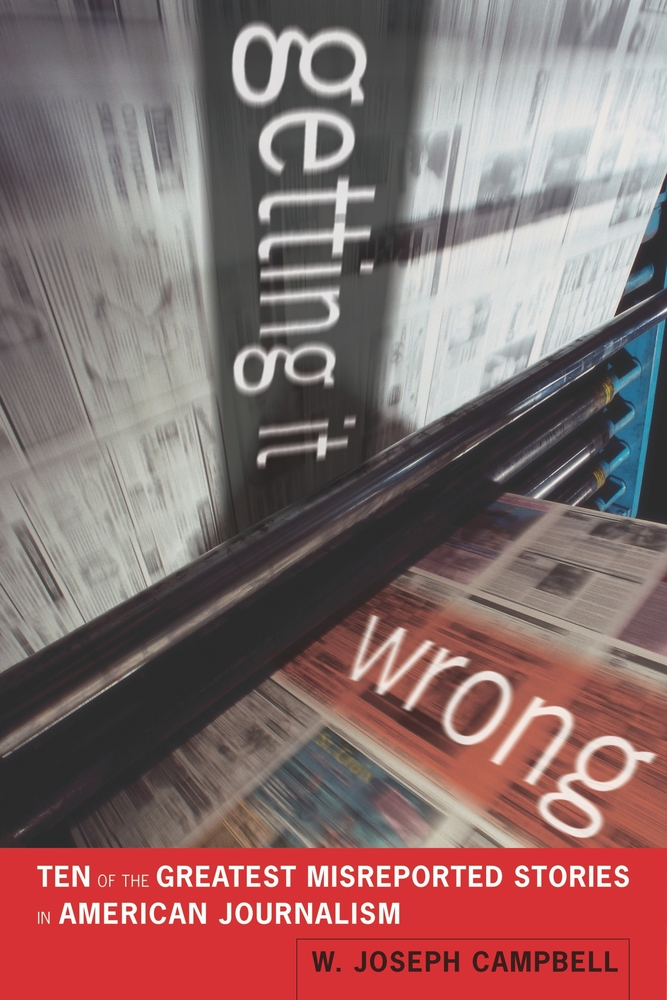
But the phrase “follow the money” never figured in the Post’s Watergate coverage, which is the topic of a chapter in my mythbusting book, Getting It Wrong.

What’s more, a search of the electronic archive of all issues of the Post from June 1, 1972, to October 1, 1974, the period embracing the Watergate scandal, produced no returns for the phrase “follow the money.”

The line, however, was uttered in the cinematic version of All the President’s Men by the character who played “Deep Throat.” The movie, which was released in 1976, was an adaptation of Woodward and Carl Bernstein’s book by the same title.

The most likely inventor of “follow the money” was the screenwriter of All the President’s Men, William Goldman.

Testimony to the line’s impressive adaptability abroad appeared yesterday in an item posted at a South Africa news outlet called the Daily Maverick. The item included this passage:

“‘Follow the money,’ as the informant ‘Deep Throat’ famously told Bob Woodward and Carl Bernstein during the Watergate scandal.”

The line also popped up not long ago in Le Devoir, a French-language daily newspaper in Quebec. The article in Devoir stated:

“Comme Deep Throat disait dans l’affaire du Watergate: follow the money.” [As Deep Throat said in the Watergate affair: follow the money.]

So why does this made-up line from a long-ago motion picture possess such international appeal?

In a way, “follow the money” is like media-driven myths that have gained popularity abroad–among them, the mythical Cronkite Moment, the Murrow-McCarthy tale, the famous “furnish the war” vow attributed to William Randolph Hearst. And, of course, the heroic-journalist myth, according to which the investigative reporting of Woodward and Bernstein brought down Richard Nixon’s corrupt presidency in the Watergate scandal.

They are decidedly American tales that offer reductive, mediacentric interpretations of important historical moments.  News outlets abroad–intrigued as they often are by American culture and politics–are scarcely immune from the temptation to offer up these tales. Or pithy lines like “follow the money,” which sums up fairly well an important path of inquiry in the Watergate scandal.

Pithiness can be a powerful propellant of movie lines–and media myths.

Besides, these tales are straightforward, unambiguous, and as such memorable. They can be readily invoked to make a telling point, usually about the power and importance of the news media.

But often, that message is misleading.

As I write in Getting It Wrong, “media-driven myths are neither trivial nor innocuous. They can and do have adverse consequences. Notably, they tend to distort understanding about the role and function of journalism in American society, conferring on the news media far more power and influence than they necessarily wield.”

Media myths, I add, “often emerge from an eagerness to find influence and lasting significance in what journalists do….”

Debunking these myths helps to place media influence in a more coherent context.

WJC

Recent and related:

Cinematic treatments can solidify media myths

In Cinematic treatments, Cronkite Moment, Debunking, Media myths, Murrow-McCarthy myth, Newspapers, Washington Post, Watergate myth on November 14, 2010 at 7:12 am

In this, the last of three installments drawn from an interview with Newsbusters about Getting It Wrong, the discussion turns to whether new media are effective in thwarting the spread of media-driven myths.

I express doubts about that prospect.

The Newsbusters interview was conducted by Lachlan Markay, who described Getting It Wrong as “exhaustively researched and painstakingly even-handed.” The interview transcript is accessible here.

NEWSBUSTERS: Looking forward, do new media present an opportunity to debunk these myths, before they get started?

CAMPBELL: You would think that it would, and I think there has been some evidence that that’s the case, but then there are other myths that just seem to defy debunking newer myths.

Jack Shafer at Slate.com has done some interesting work in looking at the so-called … “pharm parties” in which young people would raid their medicine cabinets of their parents and just take whatever medication they could find, bring them to a party, and then dump them in a communal bowl, and sort of play Russian roulette with these drugs–by the handful take them, and see what kind of effect that they have.

And it seems to be an urban legend that’s just taken hold, and it’s appeared in newspapers, periodically, around the country–San Francisco to DC–and there seems to be no evidence to support this other than the notion that police have heard that this kind of stuff goes on. And Shafer’s written a number of columns at Slate that insist that no one has ever seen this happen, no one has ever attended a pharm party, there’s never been any kind of first person documentation.

And yet, the story is too good not to be true, and it lives on.

So you would think that the Internet would have been more effective by now in knocking down that kind of story. It hasn’t.

NB: So these myths, then, get started because newspapers have disregarded their own–or not just newspapers, but any media has disregarded its own standards of journalism.

CAMPBELL: You could see that in some cases, yeah, I suppose that’s true. [But] I don’t think they’re going at this whole hog and saying, we’re just going to forget about our standards and go at this story just because it sounds so good.

NB: Or, put differently, if those standards were followed to a T, some of these myths might never have taken shape.

CAMPBELL: Yeah, that’s probably true.

NB: A lot of these myths are ingrained in our culture. They’re part of American history, included in textbooks. The Woodward and Bernstein example comes to mind. You have movies, for instance, All the President’sMen , or Good Night, and Good Luck with Edward R. Murrow–does pop culture, or culture in general, play a larger part in perpetuating these myths? Is this something that journalists create on their own, or is it out of their hands and American culture sees these magnificent stories, and sort of adopts them as their own?

CAMPBELL: I think the dynamic that leads to the solidification of media myths is a very interesting one. It’s kind of complex, but I think that some of the points that you’ve mentioned are very central to that process of solidifying a myth–sort of the national consciousness. Cinema does a very good job of doing that.

Cinematic treatments help solidify in the minds of people the supposed reality of some of these exchanges, of some of these encounters, of some of these moments.

…. the cinematic treatment of Woodward and Bernstein in All the President’s Men I think really helped solidify the notion that those two guys were central to bringing down Richard Nixon. In fact, the movie, as clever and well-done as it is, leads to no other interpretation but that. It had to be those guys. …

As a nation we do tend to remember things cinematically. I’m not the first one to say that. Others have looked at it more closely than I have and have made that determination. It’s a fair statement. Good Night, and Good Luck introduced a whole new generation of Americans to the notion that Edward R. Murrow was the one who did in Joe McCarthy, with his 30-minute television program.

NB: Do you have students who come in and say, “I saw Good Night and Good Luck and it inspired me to pursue a career in journalism”?

CAMPBELL: You know, I haven’t heard it said quite that way. But they do think that that movie is well done.

NB: The romanticism of journalism appeals to the students.

CAMPBELL: Exactly. And more students have seen All the President’s Men than have read the book, by far. … But cinema really is a factor that propels and solidifies these myths.

End of part three

Media myths send ‘misleading’ message of media power

In Cronkite Moment, Debunking, Hurricane Katrina, Media myths, Murrow-McCarthy myth, Newspapers, Spanish-American War, Washington Post, Watergate myth on November 13, 2010 at 9:42 am

In this, the second of three installments drawn from Newsbusters‘ lengthy interview about Getting It Wrong, I discuss why it’s vital to debunk media-driven myths, those dubious tales about the news media that masquerade as factual.

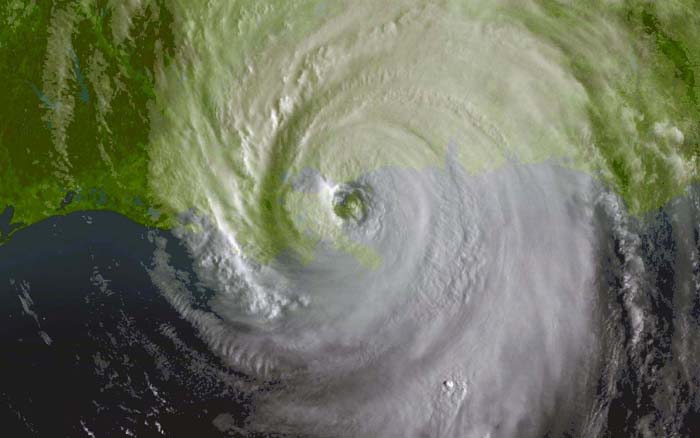
This installment also includes a discussion about the flawed and over-the-top news coverage of Hurricane Katrina‘s aftermath in 2005.

The Newsbusters interview was conducted by Lachlan Markay, who described Getting It Wrong as “exhaustively researched and painstakingly even-handed.”

The third and final excerpt from the interview will be posted tomorrow at Media Myth Alert . The interview transcript is accessible here.

NEWSBUSTERS: So why, personally, do you feel that–you obviously feel it’s very important that these myths be exposed as myths. What’s the damage that these myths do if they carry on unquestioned?

CAMPBELL: I think one of the drawbacks [of media-driven myths] is that they … suggest power that the news media typically do not have. Media power in my view tends to be episodic, tends to be situational, nuanced, and it’s typically trumped by other forces and other factors. Government power, police power tend to overwhelm media power on an average basis in most circumstances.

But these stories–about [Walter] Cronkite, about [Edward] Murrow, about Watergate, about [William Randolph] Hearst, and some of the others in the book–typically send a message that the media have great power, to do good or to do harm.

They can start a war, they can end a war, they can alter the political landscape, they can even bring down a president–they’re that powerful. That’s absolutely a misleading message. It’s not how media power is applied or exerted, and that’s an important reason to debunk these myths.

There’s also some inherent importance too in trying to set the record straight to the extent you can. And in that regard, the book is aligned with the fundamental objective of journalism as practiced in this country, of getting it right, getting the story correct. …

NB: And some of the–the Katrina example comes to mind–some of the myths actually have to do with the media–not just a flawed or misleading understanding of events, but a completely fabricated, and made up and very destructive events sometimes. And I say Katrina because there were all these reports of gunfire in New Orleans, of dead bodies being piled up in the Superdome, none of which was true.

CAMPBELL: That’s right. …  Not only that, but the collective sense that those kinds of media reports gave about New Orleans–the place had just collapsed, the city and its people had collapsed into this sort of apocalyptic, Mad Max-like, nightmarish scene–and it served to besmirch the city and its citizens at the time of their direst need.

And that, I think, is just absolutely reprehensible. And that’s the message that we were getting [from the coverage of Katrina’s aftermath in early September 2005]. …

To the credit of the news media, they did go back –many of them, many of these news organizations–and took a look at how they got it wrong. But that tended to be a one-off kind of thing, and placed … inside the papers.

Broadcast media didn’t do much of this at all. … So even to this day, five years on, I still don’t believe the news media have taken full measure of the mistakes they made in the coverage of Hurricane Katrina.

The tendency is still to blame government–local, state, and certainly federal government–for an inept response. But the story was deeper than that, and it was more complex than that, and that’s the part that the news media got wrong.

NB: And of course one of the consequences of that misreporting was that, as you mention, the federal government especially bore a lot of the blame for what was happening there. And then you also have Murrow taking down perhaps the most notorious cold warrior in our country’s history, you have Cronkite as the standard-bearer for the left’s main cause during the 1960s, you have Woodward and Bernstein taking down a Republican president. Are there political factors at work here, do you think?

CAMPBELL: I think that some of the more enduring myths are those that have appeal across the political spectrum.

The Cronkite moment is one of them–it appeals because this is, for folks on the right, this is a real clear-cut example of how “the news media screwed us in Vietnam, and how they prevented us from winning the war there.” And on the left it’s an example of telling truth to power, and how Walter Cronkite was able to pierce … the nonsense, and make it clear to the Johnson administration that the policy in Vietnam was bankrupt.

Something for everyone.

End of part two

‘Exhaustively researched and painstakingly even-handed’

In Cronkite Moment, Debunking, Media myths, Murrow-McCarthy myth, Newspapers, Spanish-American War, Washington Post, Watergate myth on November 12, 2010 at 10:15 pm

Getting It Wrong is exhaustively researched and painstakingly even-handed,” writes Lachlan Markay in introducing his detailed interview with me about my latest book.

He writes that W. Joseph Campbell “makes sure to stress at the outset that it is not a ‘media-bashing book.’ Rather, the volume stays true to journalism’s real mission: not myth-making, but fact-finding. Campbell seeks to set the record straight where often journalists themselves have obscured it.”

Excerpts of the interview–posted at the lively Newsbusters online site–follow. The transcript of the interview, which runs to 4,200 words, is accessible here. Other excerpts  will be posted at Media Myth Alert tomorrow and Sunday .

NEWSBUSTERS: We as a society, and as a culture, seem to have this iconic image, collective image, of a journalist in the good old days of journalism, of course, as sort of a shadowy figure with a little press label in his hat hammering away at his typewriter all night to make deadline. Is that a media driven myth, and do we have a sort of false nostalgia about the bygone days of journalism, when reporters were hardworking and honest and could really make a difference and affect positive change?

CAMPBELL: I mean, we can look back in those days, and I think very we’re very susceptible in journalism in general, to what I call in the book the Golden Age fallacy. It’s not my construction, others have identified it, but I think its very applicable to journalism to look back and say, “oh, yes, there really was a time when journalism mattered, when [Walter] Cronkite could shift the direction of a war, or [Bob] Woodward and [Carl] Bernstein, two young reporters could bring down a president.”

That’s emblematic of the Golden Age fallacy. …

NB: So how are these media-driven myths created?

CAMPBELL: They come from lots of different sources. Sometimes these are stores that are just too good to be checked out. Like, William Randolph Hearst [and his famous vow], “You furnish the pictures, and I’ll furnish the war.” That sums up not only Hearst and his malignant, toxic personality pretty well, but it also suggests the news media can, at the worst … even bring about a war that the country otherwise wouldn’t have fought.

NB: You open the book with the example of the New York Sun, and mere months before it closes shop, it offers Cronkite and [Edward] Murrow as the paragons of the power of journalism and journalistic integrity and honesty and speaking truth to power. Those are both myths?

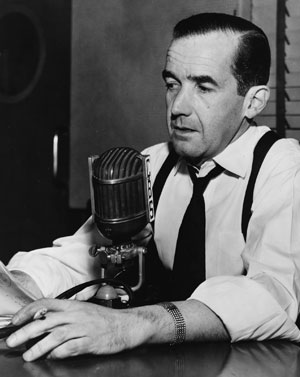
CAMPBELL: Yeah, both of ’em. And Murrow–although he’s held up as the white knight of broadcast journalism–was very much a compromised character. Even his own biographers have identified what we would see today as disqualifying ethical lapses in his background. He claimed degrees that he did not earn, he coached Adlai Stevenson on the finer techniques of using television during the 1956 presidential campaign. Privately, he did this, but if that was known, and a well-known broadcast journalist was doing that today–well, I don’t know, but I suspect there would be considerable controversy about that kind of conduct.

Murrow, no white knight

No, Murrow was no white knight. …

NB: Going back to the New York Sun example, these are very self-serving myths sometimes, and today, when traditional journalism, especially print journalism, seems to be on the decline in terms of its influence, are these myths being promoted more than they have traditionally in an attempt by the old guard to convince people of–to make people nostalgic for the time when these honest journalists with integrity spoke truth to power?

CAMPBELL: There is no doubt part of that. That’s one of the factors.

I think that these stories, though, many of them–the Murrow story, the Cronkite story, Watergate, Hearst–are just too good to resist … and they [have] become ingrained as part of the accepted conventional wisdom.

The Watergate story–the dominant narrative of Watergate–really is that Woodward and Bernstein brought down a corrupt president. Now there’s no doubt in my mind that Nixon was corrupt and deserved to be removed from office, but the forces that brought him down were not Woodward and Bernstein. In fact, Woodward and Bernstein and the Washington Post were really marginal to that [outcome]. But it’s become part of the story, part of the dominant narrative, it’s an intriguing story and it lives on that way.

It’s also a very simplistic explanation for a complex historical event, and that’s another reason these myths take hold and live on. Watergate was not–the outcome of Watergate was not due to the Washington Post so much as it was to the combined, collective, if not always coordinated efforts of subpoena-wielding authorities. The FBI, federal prosecutors, special prosecutors, both houses of Congress, ultimately the Supreme Court, which got Nixon to surrender the tapes the prosecutors had wanted, and those tapes quite clearly showed his active role in covering up the seminal crimes of Watergate.

So it took that kind of collective effort over a sustained period of time by people who could compel testimony and could compel the disclosure of evidence in ways that reporters can’t.

End of part one

‘Getting It Wrong’ among 90 titles at NPC Book Fair

In 1897, Cronkite Moment, Debunking, Hurricane Katrina, Media myths, Murrow-McCarthy myth, Newspapers, Washington Post, Watergate myth, Year studies on November 8, 2010 at 11:55 am

I will be among more than 90 authors signing and selling their recent books tomorrow evening at the annual National Press Club Book Fair and Authors’ Night.

My latest book, Getting It Wrong, will be among the titles at the Press Club event.

The book fair this year brings together a variety of authors, including one of my favorite journalism historians, Maurine Beasley of the University of Maryland; Jack Fuller, author of What Is Happening To News, and Chesley (“Sully”) Sullenberger, the pilot who safely landed a stricken passenger airliner on the Hudson River in January 2009.

The Book Fair is a fine occasion. I attended the event in 2006 and had a great time. My book at that event was The Year That Defined American Journalism: 1897 and the Clash of Paradigms.

Getting It Wrong, which came out during the summer, addresses and debunks 10 prominent media-driven myths. These are stories about and/or by the news media that widely believed and often retold but which, under scrutiny, dissolve as apocryphal or wildly exaggerated.

I liken them to the “junk food” of journalism–delicious and appealing, perhaps, but not terribly healthy or nutritious.

The myths debunked in Getting It Wrong include some of the most cherished stories American journalism tells about itself, including:

“Because it takes on some of the most treasured stories in American journalism,” I write in the introduction to Getting It Wrong, the book “is a work with a provocative edge. It could not be otherwise.”

I further write that Getting It Wrong “aligns itself with a central objective of newsgathering—that of seeking to get it right, of setting straight the record by offering searching reappraisals of some of the best-known stories journalism tells about itself.

“Given that truth-seeking is such a widely shared and animating value in American journalism,” I add, “it is a bit odd that so little effort has been made over the years to revisit, scrutinize, and verify these stories. But then, journalism seldom is seriously introspective, or very mindful of its history. It usually proceeds with little more than a nod to its past.”

I point out that media myths take hold for a variety of reasons: Because they delicious stories that are almost too good not to be true; because they are reductive in offering simplistic interpretations of complex historical events, and because they are self-flattering in that they place journalists at the decisive center of important developments.

The Book Fair opens at 5:30 p.m. Admission is free for members, and $5 for non-members.

WJC

Recent and related:

‘Follow the money’: A made-up Watergate line

In Cinematic treatments, Debunking, Media myths, Newspapers, Washington Post, Watergate myth on November 6, 2010 at 6:52 am

“Follow the money” is one of the most memorable phrases of Watergate-era American journalism.

And it’s a made-up line.

That hasn’t prevented it from being invoked, as it was yesterday in a blog post at the online financial site, MarketWatch.

The item discussed how the Washington Post continues to be buoyed by its Kaplan education-testing service unit, saying:

“If Kaplan’s business ever went south, the Washington Post Co. would be in big trouble—and the flagship newspaper would likely become a shadow of its former self.”

No doubt.

The MarketWatch item closed by invoking the “follow the money” phrase, stating:

“The Post family had better pray that nothing unsettles Kaplan’s business. Kaplan is their lifeblood and future. As the Post preached during its glory days, the Watergate investigations of the 1970s, follow the money.”

The attempt to offer a cute closing line misfired. “Follow the money” never figured in the newspaper’s Watergate coverage–which is the topic of a chapter in my latest book, Getting It Wrong.

A search of the electronic archive of all issues of the Post from June 1, 1972, to October 1, 1974, the period embracing the Watergate scandal, produced no returns for the phrase “follow the money.”

The line, however, was uttered in the cinematic version of All the President’s Men by the anonymous and mysterious source code-named “Deep Throat.” The movie dramatized the Watergate reporting of Post reporters Bob Woodward and Carl Bernstein and was based on their non-fiction book by the same title.

But the phrase “follow the money” doesn’t appear in the book.

As I noted in a blog post last month, the line was “kind of made up for the movie,” according to an item at the online site of National Public Radio.

That item quoted an NPR research librarian as saying that newsman Daniel Schorr once asked her “to find the phrase ‘follow the money’ in the book All The President’s Men.

The librarian was further quoted as saying that she “went through the book page by page,” finding that the “phrase does not appear there.

“And then in talking to Bob Woodward and the screenwriter, William Goldman, Dan discovered that [the phrase is] actually kind of made up for the movie.”

I also noted that former Nixon speechwriter William Safire offered in 1997 a somewhat more detailed version of the anecdote, writing in the New York Times Sunday Magazine that Woodward and Goldman blamed each other for having invented the line.

“The screenplay was written by William Goldman,” Safire wrote. “When Schorr called him, the famed screenwriter at first insisted that the line came from the book; when proved mistaken about that, he said: ‘I can’t believe I made it up. I was in constant contact with Woodward while writing the screenplay. I guess he made it up.”’

Safire wrote that Schorr “then called Woodward, who could not find the phrase in his exhaustive notes of Watergate interviews. The reporter told Schorr he could no longer rely on his memory as to whether Deep Throat had said the line and was inclined to believe that Goldman had invented it.”

(New York Times columnist Frank Rich wrote in 2005 that Goldman took credit for coming up with “follow the money.”)

The Post in an article last summer praised All the President’s Men, which was released in 1976, saying the movie had “held up not only as a taut, well-made thriller but as the record itself of the Watergate scandal that transpired four years earlier.”

The Post article also stated:

“It barely matters that the film’s most iconic piece of dialogue–‘Follow the money’– was never spoken in real life.”

How so, it barely matters?

It certainly does matter. The memorable, often-quoted but phony line is emblematic of the exaggerations that characterize the movie.

Far from being “the record itself of the Watergate scandal,” the cinematic version of All the President’s Men presented “a neat, tidy, and vastly simplified account” of the scandal, I write in Getting It Wrong. It’s a version “that allowed viewers to sidestep the scandal’s complexity while engaging in an entertaining storyline.”

The movie version helped cement the heroic-journalist myth of Watergate by leaving the inescapable but erroneous impression that Woodward and Bernstein were central to unraveling the scandal and to forcing the resignation of a president.

WJC

Recent and related:

Many thanks to fivefeetoffury and
to Ed Driscoll for linking to this post.

‘If I’ve lost Cronkite’–ever-hardy, and illusory

In Cronkite Moment, Debunking, Media myths, Newspapers on November 4, 2010 at 5:15 pm

Few tales in American journalism are as hardy as the mythical “Cronkite Moment,” that occasion in late February 1968 when an on-air commentary by CBS News anchorman Walter Cronkite altered a president’s thinking about the war in Vietnam.

The purported “Cronkite Moment” is so trenchant, so believable and revealing that it lives on as a timeless example of the power of the news media–of how effective they can be as forces for truth-telling.

Problem is, the “Cronkite Moment” is illusory.

As I discuss in my latest book, Getting It Wrong, the anecdote is dubious and improbable on many grounds.

Still, the “Cronkite Moment” made another appearance recently, this time in column posted at the New York edition of examiner.com. The column declared:

“President Lyndon Johnson is reported to have said, referring to diminishing support from pivotal 1960s news anchor Walter Cronkite, ‘If I’ve lost Cronkite, I’ve lost Middle America.'”

The anecdote centers around Cronkite’s special program on the Vietnam War, a show that aired February 27, 1968. Near the end of the report, Cronkite declared the U.S. war effort was “mired in stalemate” and suggested negotiations with the communist North Vietnamese as a way to end the conflict.

At the White House, Johnson supposedly watched the Cronkite program. Upon hearing the anchorman’s assessment, the president supposedly snapped off the television set and told an aide or aides:

“If I’ve lost Cronkite, I’ve lost Middle America.”

Or something to that effect. As I point out in Getting It Wrong, versions vary markedly as to what the president supposedly said. And acute version variability can be a marker of a media-driven myth.

The anecdote’s broader point is that Cronkite was such an honest and trusted figure that his views could sway opinions of thousands of Americans. And with Cronkite having gone wobbly on Vietnam, the Johnson White House supposedly reeled.

But the Cronkite program on Vietnam quite clearly had no such effect.

Johnson didn’t see the show when it aired. He wasn’t in front of a television set; nor was he at the White House.

The president that night was in Austin, Texas, attending the 51st birthday party of a longtime political ally, Governor John Connally.

At about the moment Cronkite was intoning his “mired in stalemate” commentary, Johnson was offering light-hearted banter about Connally and his age.

“Today you are 51, John,” the president told Connally. “That is the magic number that every man of politics prays for—a simple majority. Throughout the years we have worked long and hard—and I might say late—trying to maintain it, too.”

Earlier that day, Johnson has delivered a rousing speech in Dallas, in which he cast America’s role in Vietnam in Churchillian terms.

“There will be blood, sweat and tears shed,” the president declared, adding:  “I do not believe that America will ever buckle” in pursuit of its objectives in Vietnam.

Even if the president did see the Cronkite program, or was told about the show, it is exceedingly difficult to imagine how his mood could have swung so abruptly, from vigorously defending the war effort to throwing up his hands in despair.

But if the “Cronkite Moment” is to be believed, that’s what happened: An abrupt, dramatic, and decisive change of heart occurred within hours of the president’s hawkish speech in Dallas.

And that’s just not likely.

WJC

Recent and related:

Hearst ‘pushed us into war’? How’d he do that?

In Debunking, Media myths, Newspapers, Spanish-American War on November 3, 2010 at 2:44 pm

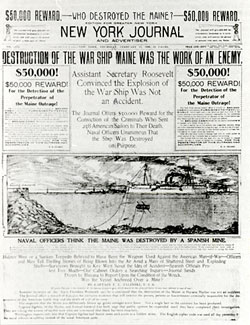
'Maine' destroyed

So powerful was William Randolph Hearst, the favorite bogeyman of American journalism, that he and his flamboyant yellow press brought on the Spanish-American War in 1898.

It’s a popular but dubious claim–a media myth, really–that lives on as a cautionary tale about the dark potential of media power.

This enduring myth about Hearst and the war was invoked yesterday, in a post at the Atlantic online site. The item–which took a few pokes at another bogeyman of journalism, global media mogul Rupert Murdoch–declared:

“Murdoch has displayed an absolute genius for pouring gasoline on fires. It’s an old tabloid technique, of course, as William Randolph Hearst well knew as he pushed us into war with Spain a century ago.”

Left quite unsaid is how Hearst accomplished that, how specifically “he pushed us into war with Spain.” It’s a topic we’ve explored previously at Media Myth Alert.

And the answer is, he didn’t.

He couldn’t have.

As I wrote in my 2001 book, Yellow Journalism: Puncturing the Myths, Defining the Legacies:

“The yellow press is not to blame for the Spanish-American-War. It did not force—it could not have forced—the United States into hostilities with Spain over Cuba in 1898. The conflict was, rather, the result of a convergence of forces far beyond the control or direct influence of even the most aggressive of the yellow newspapers, William Randolph Hearst’s New York Journal.”

In 1898, Hearst’s newspapers were the Journal, the New York Evening Journal, and the San Francisco Examiner. These three titles wielded what was at very best modest agenda-setting influence on the rest of the American press, which numbered more than 2,200 daily newspapers.

Indeed, as I noted in Yellow Journalism:

“There is little evidence that the press beyond New York City, especially in small-town and rural America, was influenced by the content of the yellow journals, including their demands for war after the destruction of the Maine,” an American battleship that blew up in Havana harbor in February 1898, killing 266 officers and sailors. (See front-page image, above.)

The destruction of the Maine–in a harbor under Spanish control–was a trigger for the war that began in April 1898, amid a diplomatic impasse between the United States and Spain over extending self-rule to Cuba.

That impasse was the central cause of the conflict.

Invariably absent in the claims that Hearst “pushed us into war” are persuasive explanations about how the often-exaggerated contents of his newspapers were transformed into U.S. policy, and how specifically those contents were decisive in the decisionmaking the led to the United States to declare war on Spain.

If Hearst and his yellow press had indeed “pushed us into war,” researchers surely should be able to find evidence of such influence in the personal papers and in the reminiscences of policymakers of the time.

But nothing of the like can be found in the private letters, diary entries, and diplomatic correspondence of top members of the administration of President William McKinley.

Those papers contain “almost no evidence that the demands of the yellow journals—especially during the critical weeks after the Maine’s destruction—penetrated the thinking of key White House officials, let alone influenced the Cuban policy of the McKinley administration,” I wrote in Yellow Journalism.

And the few occasions when McKinley administration officials did refer to the yellow press in the run-up to the war, they tended to dismiss it as an annoyance or scoff it at as a complicating factor.

WJC

Recent and related:

Why ‘War of the Worlds’ show didn’t panic America

In Anniversaries, Debunking, Media myths, Media myths and radio, Newspapers, War of the Worlds on October 30, 2010 at 12:54 am

Today’s the 72nd anniversary of the famous War of the Worlds radio dramatization, a show that was so realistic and made such effective use of simulated news reports that it pitched America into panic and mass hysteria.

That The War of the Worlds program created fear beyond measure on that long ago October night is a delicious tale, one inevitably recalled and retold with gusto as Halloween approaches.

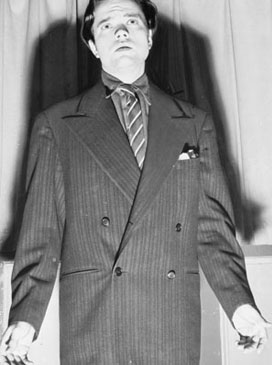
The radio dramatization–the work of 23-year-old Orson Welles–was aired over the CBS radio network on Sunday evening, October 30, 1938.

As I write in my latest book, Getting It Wrong: “So alarming was the show, so realistic were its accounts of invading Martians wielding deadly heat rays, that listeners by the tens of thousands—or maybe the hundreds of thousands—were convulsed in panic.

“They fled their homes, jammed highways, overwhelmed telephone circuits, flocked to houses of worship, set about preparing defenses, and even contemplated suicide in the belief that the end of the world was at hand.

“Fright beyond measure seized America that night more than seventy years ago. … Or so the media myth has it.”

Getting It Wrong presents a compelling case that the panic and hysteria so commonly associated with The War of The Worlds program did not occur on anything approaching nationwide dimension. That it did can be called Halloween’s greatest media myth.

Some Americans may have been frightened by what they heard on Welles’ show, but most listeners, in overwhelming numbers, were not.

“They recognized it for what it was—an imaginative and entertaining show on the night before Halloween,” I write, citing data from surveys taken shortly after the program.

But newspaper reports appearing the day after the program advanced the thesis of mass panic had indeed swept the country. From coast to coast, front-page newspaper headlines  told of the fright, terror, and panic that the program supposedly caused.

Welles, the day after

“U.S. Terrorized By Radio’s ‘Men From Mars,’” said the San Francisco Chronicle.

“Radio Listeners in Panic, Taking War Drama as Fact,” declared the New York Times.

“Attack From Mars In Radio Play Puts Thousands in Fear,” said the New York Herald Tribune.

“Radio Fake Scares Nation,” cried the Chicago Herald and Examiner.

These reports, however, were highly anecdotal and the reactions they reported simply did not rise to the level of nationwide panic and mass hysteria.

Newspapers, I point out, “had no reliable way of ascertaining the validity of the sweeping claims they offered in their columns the day after the program.”

Here’s why.

The broadcast aired late on Sunday evening in the Eastern time zone, a time when newsrooms of most daily newspapers were thinly staffed.

As such, collecting the reactions to The War of The Worlds broadcast represented no small challenge, especially for morning newspapers having late-night deadlines, I note in Getting It Wrong, adding:

“Given the constraints of time and staffing, relying on wire services such as the Associated Press became essential.

“This dependency, in turn, had the effect of promoting and deepening the notion that panic was widespread that night: On a late-breaking story of uncertain dimension and severity, many newspapers took their lead from wire service dispatches. They had little choice.”

The wire service reports were roundups that emphasized breadth rather than depth. Reliance on the roundups helps explain the consensus among U.S. newspapers that The War of the Worlds program had caused mass panic.

It also helps explains the striking similarity that characterized newspaper coverage of the broadcast. Many anecdotes transmitted by the wire services found their way into  newspapers across the country.

One widely recounted anecdote told of a woman in Pittsburgh whose husband prevented her from poisoning herself. “I’d rather die like this,” she exclaimed, than fall victim to a Martian heat ray.

Also widely reported was the story of a woman who told the Boston Globe she could “see the fire” caused by the alien attack and that she and her neighbors were preparing to flee.

Newspapers in their coverage also tended to place considerable importance on the unusually large volume of calls placed that October night to their switchboards and to those of police and fire departments and local radio stations.

“The surge in call volume was routinely but mistakenly characterized by newspapers as evidence of widespread fright and hysteria,” I write, noting that call volume was a misleading marker of fear and alarm.

The increased call volume is in fact best understood as signaling an altogether rational response by people who neither panicked nor became hysterical. Instead, they sought confirmation or clarification from external sources–newspapers, ironically, as well as police and fire departments–known to be usually reliable.

“Moreover, the call volume surely included people who telephoned friends and relatives to talk about the unusual and clever program they had just heard,” I point out in Getting It Wrong.

WJC

Recent and related: