W. Joseph Campbell

Archive for the ‘War of the Worlds’ Category

A ‘fascinating and detailed exploration’

In Debunking, Media myths, War of the Worlds, Washington Post, Watergate myth on July 19, 2011 at 9:04 am

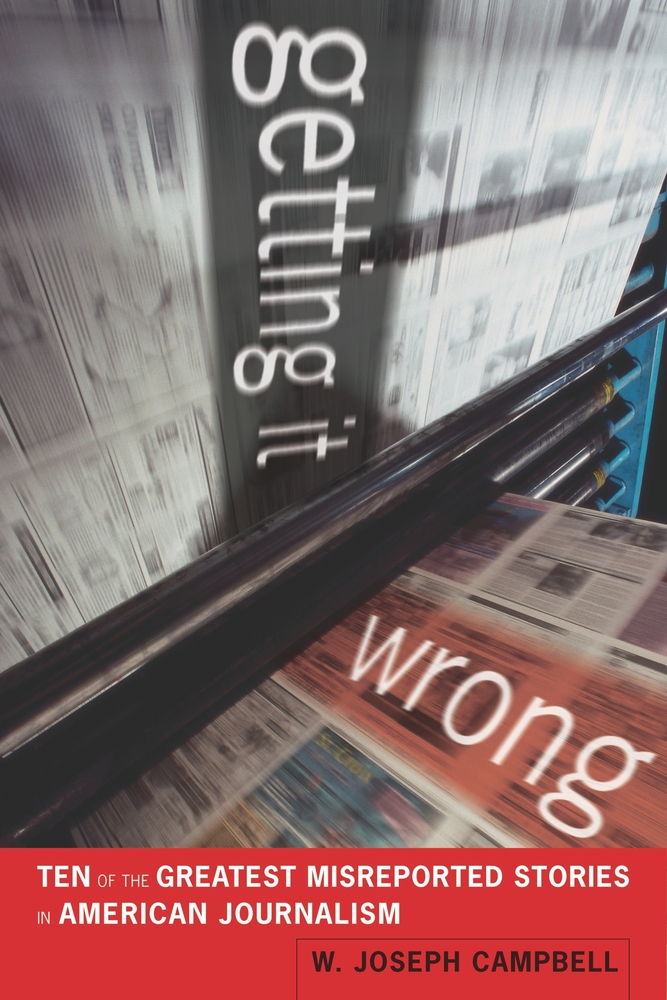
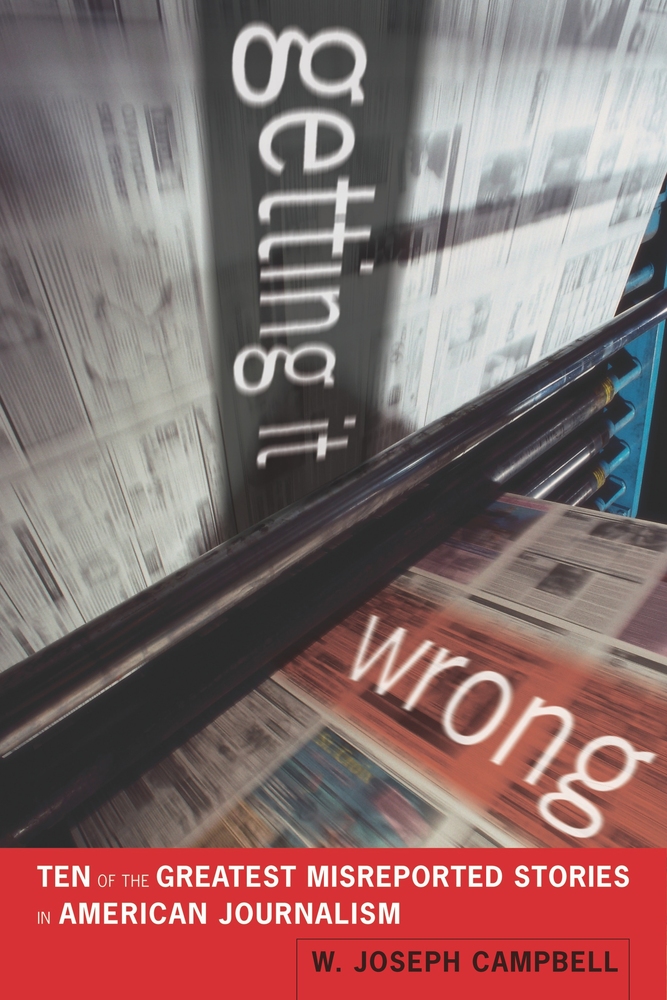
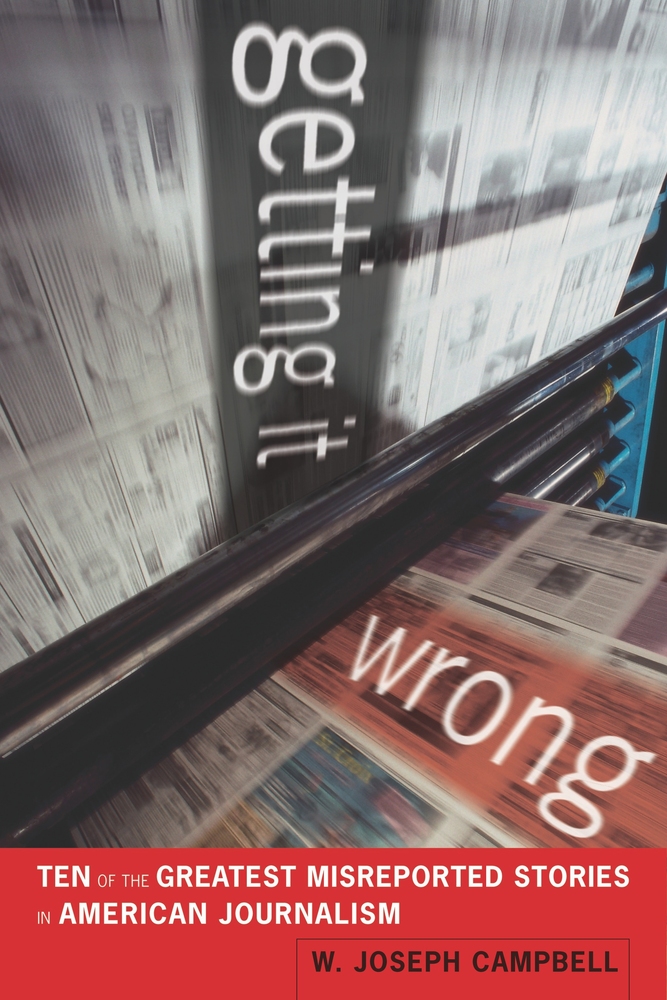
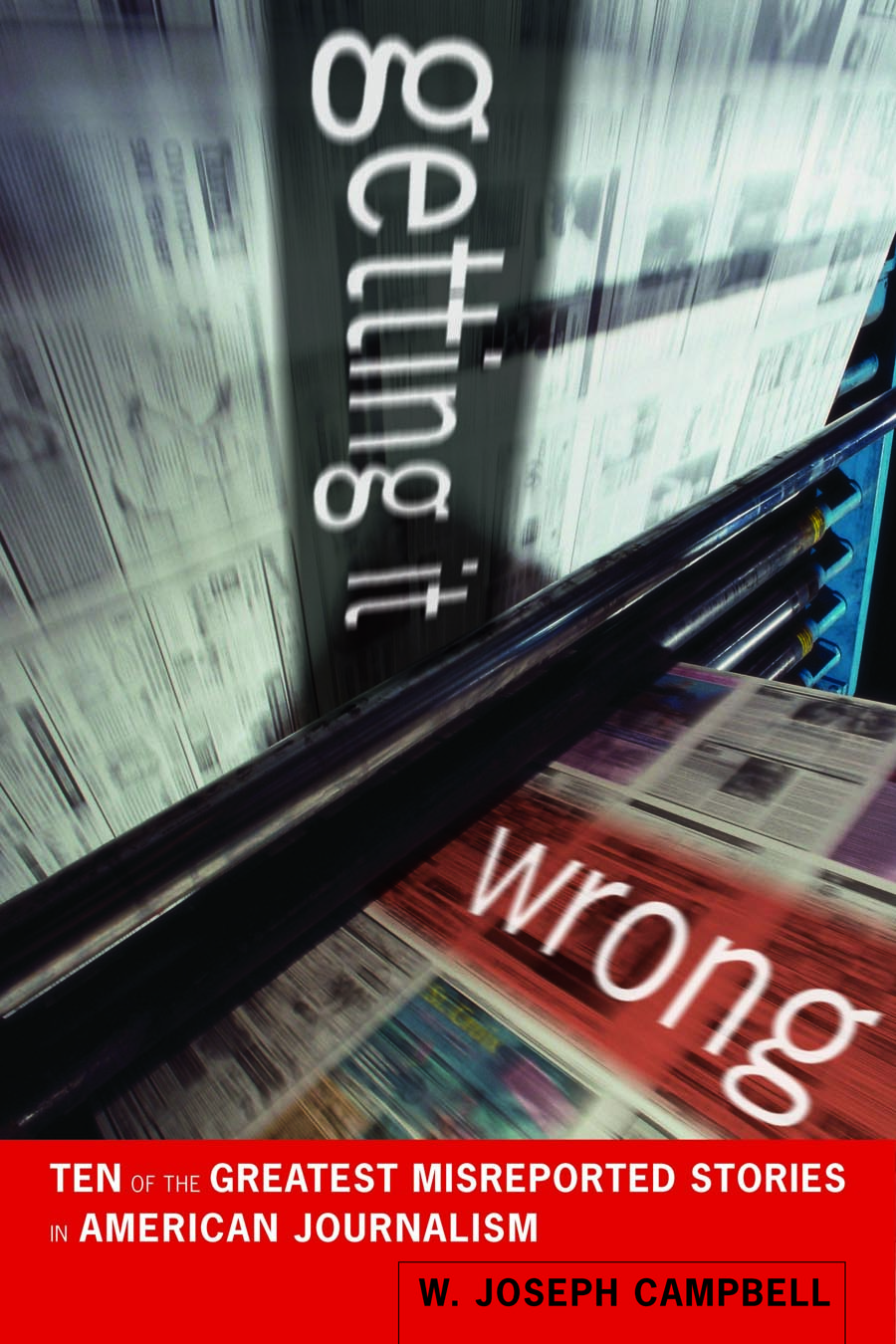
My media myth-busting book, Getting It Wrong,was reviewed recently by the Idaho Statesman, which called the work a “fascinating and detailed exploration.”

Getting It Wrong addresses and debunks 10 prominent media-driven myths, those dubious tales about the news media that masquerade as factual.

The Statesman’s review discusses in some detail the myths about the War of the Worlds radio broadcast in October 1938, which supposedly set off nationwide panic and mass hysteria, and about the Watergate scandal of 1972-74 which brought down Richard Nixon’s corrupt presidency.

The reviewer was Bob Kustra, president of Boise State University and the engaging host of the  Reader’s Corner, a weekly radio program about books and their authors. I was interviewed on Kustra’s show last month.

About the media myth of Watergate — the notion that intrepid reporters for the Washington Post broke or exposed the scandal and brought about Nixon’s resignation — Kustra writes:

“While Campbell acknowledges that most people believe two young and ambitious Washington Post reporters brought down a corrupt president, he deftly shows how journalism’s contribution to Nixon’s fall was modest at best.

“The president’s decline, he explains, was the consequence of his criminal conduct, which was exposed in the convergence of many forces. But it’s far easier to focus on two heroic journalists, says Campbell, than it is to grapple with the complexities of the Watergate scandal.

Nixon resigns: Not WaPo's doing

“Therein,” Kustra adds, “lies one of the reasons we are so likely to believe media myths — they offer simplistic answers to complex issues. They also lead us to believe the news media are very powerful and sometimes even dangerous forces in society.”

He also writes that the myths debunked in Getting It Wrong “are worth revisiting, and not just to set the record straight.

“Doing so offers important lessons on being discerning consumers of what we read and hear in the news.”

WJC

Recent and related:

Area 51 book offers implausible, myth-based tale

In Debunking, Media myths, War of the Worlds on May 21, 2011 at 6:45 am

I had a chance yesterday to thumb through Area 51, Annie Jacobsen’s provocative new book, which says Soviet dictator Josef Stalin was behind the crash-landing of an alien-like spacecraft in New Mexico in 1947, in a one-off bid to sow panic in America — much like the fright supposedly caused by the War of the Worlds broadcast in 1938.

Welles and 'War of Worlds'

I found Jacobsen’s speculative claim as absurd and far-fetched as it is implausible.

It’s based on a single, unnamed source, and it draws sustenance from a media-driven myth.

According to Jacobsen, the strange craft contained children who had been “biologically and/or surgically reengineered” to look like space aliens, with large eyes and large heads.  “Stalin sent … the craft over New Mexico hoping it would land there,” she writes, adding:

“Stalin’s plan was for the children to climb out and be mistaken for visitors from Mars. Panic would ensue, just like it did after the radio broadcast of The War of the Worlds.”

Oh, right. Sure.

As I discuss in my media-mythbusting book, Getting It Wrong, “the panic and mass hysteria so readily associated with The War of The Worlds program did not occur on anything approaching nationwide dimension” when it aired October 30, 1938.

While some Americans may have been briefly frightened or disturbed by the program, “most listeners, overwhelmingly, were not: They recognized it for what it was — an imaginative and entertaining show on the night before Halloween,” I note in Getting It Wrong.

Had the radio program — which starred and was directed by Orson Welles — provoked widespread panic and hysteria, newspapers for days and even weeks afterward would have published details about the upheaval and its repercussions. As it was, though, newspapers dropped the overblown story after only a day or two.

Significantly, no deaths, serious injuries, or suicides were associated with Welles’ program. Had panic and hysteria indeed swept the country that night in 1938, many people surely would have been killed and badly injured in the tumult.

The War of the Worlds radio dramatization aired on a Sunday from 8-9 p.m. (Eastern), when most newspaper newsrooms were thinly staffed.

Reporting on the reactions to The War of The Worlds broadcast posed no small challenge for morning newspapers with tight deadlines.

“Given the constraints of time and staffing,” I write in Getting It Wrong, “relying on wire services such as the Associated Press became essential. This dependency, in turn, had the effect of promoting and deepening the notion that panic was widespread that night: On a late-breaking story of uncertain dimension and severity, many newspapers took their lead from wire service dispatches.

“They had little choice.”

The AP’s reports about the program essentially were roundups of reactions culled from the agency’s bureaus across the country, I write. Typically, AP roundups emphasized sweep — pithy, anecdotal reports quickly gathered from many places — over depth and searching detail.

The anecdotes about people frightened by the show tended to be sketchy, shallow, small-bore. But their scope contributed to a mistaken sense that radio-inspired fear was widespread that night.

The reliance on superficial wire service roundups helps explain the consensus among U.S. newspapers that the broadcast had created a lot of fright, even mass panic.

Stalin  may well have had intelligence resources to have known that, to have understood that U.S. news reports of mass panic and widespread hysteria following The War of the Worlds broadcast had been exaggerated.

Jacobsen’s far-fetched claim falters on another point: Why would sending bizarre-looking aviators to thinly populated, postwar New Mexico have created panic across the United States?

Rural New Mexico would have been among the least likely places in the country for Stalin to have deployed a mission to stir panic in the United States. Especially since the aviators were not armed with the kind of lethal heat rays that the invading Martians wielded in The War of the Worlds story.

WJC

Recent and related:

Recalling how a ‘debunker’s work is never done’

In Bay of Pigs, Bra-burning, Cronkite Moment, Debunking, Furnish the war, Jessica Lynch, Media myths, Murrow-McCarthy myth, New York Times, Reviews, War of the Worlds, Washington Post, Watergate myth, Yellow Journalism on May 20, 2011 at 5:45 am

It’s been a year since Jack Shafer, media critic for slate.com, posted his review of my media-mythbusting book, Getting It Wrong. The review offered the telling observation that a “debunker’s work is never done.”

So true.

In the 52 weeks since the review went online, I’ve posted more than 275 essays at Media Myth Alert, nearly all of them calling attention to media-driven myths that have found their way into traditional or online media.

So, no, a debunker’s work is never done.

The top posts over the past 52 weeks, as measured by page views, were these:

Shafer’s review sent traffic to Media Myth Alert, too, as it linked to my post that critically discussed Evan Thomas’ book, The War Lovers.

The review, which appeared beneath the headline “The Master of Debunk,” noted that “the only way to debunk an enshrined falsehood is with maximum reportorial firepower.”

And repetitive firepower. Debunking media myths will happen no other way.

Even then, some myths are so deeply ingrained — so delicious, beloved, and readily at hand — that they’ll probably never be thoroughly uprooted and forgotten.

The tale about William Randolph Hearst’s vow to “furnish the war” with Spain at the end of the 19th century is an excellent example. It’s been around more than 100 years.

And it surely is apocryphal, for a long list of reasons I discuss in Getting It Wrong.

Even so, “furnish the war” lives on — hardy, robust, and apparently only slightly dented for all the debunking broadsides hurled its way. Evan Thomas turned to it in War Lovers. So, more recently, did the Nieman Watchdog blog.

Another especially hardy media myth is the presumptive “Cronkite Moment” of 1968, when Walter Cronkite’s on-air assessment that the U.S. military was “mired in stalemate” in Vietnam supposedly prompted President Lyndon Johnson to declare:

“If I’ve lost Cronkite, I’ve lost Middle America.”

Or something along those lines. Versions vary markedly.

That they do vary is among the many indicators the “Cronkite Moment” is media myth. Another, more direct indicator is that Johnson did not see the program when it aired.

The “Cronkite Moment” surely will live on, too, as it represents so well the news media conceit of the effects of telling truth to power, of serving as the indispensable watchdog of government.

Shafer noted the durability of media myths in one of his periodic dismantlings of the “pharm party” phenomenon, which in some form has circulated for 40-some years. (The mythical “pharm party” has it that teens swipe pharmaceuticals from medicine cabinets at home, dump the purloined pills into a bowl at a party, and take turns swallowing handfuls to see what sort of high they’ll reach.)

Shafer wrote early last year:

“I regret to inform you that this column has failed to eradicate the ‘pharm party’ meme. Since June 2006, I’ve written five columns … debunking pharm parties, and yet the press keeps on churning out stories that pretend the events are both real and ubiquitous.”

He added:

“Any myth hearty enough to survive and thrive for 40-plus years in the media is probably unkillable.”

The Hearstian vow is easily within the 40-plus-years category. So, too, are the “Cronkite Moment,” the Bay of Pigs suppression myth, and the War of the Worlds panic meme.

Irrepressible myths, all.

WJC

Recent and related:

‘Getting It Wrong’ wins SPJ award for Research about Journalism

In Bay of Pigs, Bra-burning, Cronkite Moment, Debunking, Furnish the war, Hurricane Katrina, Jessica Lynch, Media myths, Media myths and radio, Murrow-McCarthy myth, New York Times, Spanish-American War, War of the Worlds, Washington Post, Watergate myth, Yellow Journalism on May 10, 2011 at 9:02 am

The Society of Professional Journalists announced today that my media-mythbusting book, Getting It Wrong, is the winner of the 2010 Sigma Delta Chi award for Research about Journalism.

The award will be presented in September at the Excellence in Journalism convention in New Orleans.

Getting It Wrong, which was published last year by the University of California Press, debunks 10 prominent media-driven myths, which are dubious tales about the news media that masquerade as factual.

Here’s a summary of the 10 myths dismantled in Getting It Wrong:

  1. Remington-Hearst: William Randolph Hearst’s famous vow “to furnish the war” with Spain is almost certainly apocryphal.
  2. War of Worlds: The notion that the War of Worlds radio dramatization in 1938 caused nationwide panic and mass hysteria is exaggerated.
  3. Murrow-McCarthy: Edward R. Murrow’s famous See It Now program in March 1954 did not end Senator Joseph McCarthy’s communists-in-government witch-hunt; Murrow in fact was very late to take on McCarthy.
  4. Bay of Pigs: The New York Times did not suppress its reporting in the run-up to the ill-fated Bay of Pigs invasion in April 1961.
  5. Cronkite-Johnson: Walter Cronkite’s special report on Vietnam in February 1968 did not prompt an immediate reassessment or revision of U.S. war policy.
  6. Bra-burning: Humor columnist Art Buchwald helped spread the notion that feminist demonstrators dramatically burned their bras at a Miss America protest in September 1968.
  7. Watergate: The Washington Post’s intrepid reporters, Carl Bernstein and Bob Woodward, did not bring down Richard Nixon’s corrupt presidency. That they did is a trope that knows few bounds.
  8. Crack babies: The much-feared “bio-underclass” of children born to women who smoked crack cocaine during their pregnancies never materialized.
  9. Jessica Lynch: The Washington Post’s erroneous reporting about Jessica Lynch early in the Iraq War gave rise to several myths about her capture and rescue.
  10. Hurricane Katrina: News coverage of Katrina’s aftermath in New Orleans in early September 2005 was marred by wild exaggerations about extreme, Mad Max-like violence.

The “Research about Journalism” award recognizes “an investigative study about some aspect of journalism,” SPJ says, and “must be based on original research; either published or unpublished, and must have been completed during the 2010 calendar year. … Judges will consider value to the profession, significance of the subject matter, thoroughness of the research, and soundness of the conclusion.”

WJC

Recent and related:

JHistory: ‘Getting It Wrong’ deserves to be ‘required reading’

In Bay of Pigs, Bra-burning, Cronkite Moment, Debunking, Hurricane Katrina, Media myths, New York Times, Newspapers, Reviews, War of the Worlds, Washington Post, Watergate myth on February 7, 2011 at 9:51 am

JHistory, the listserv devoted to issues in journalism history, posted yesterday a very insightful and favorable review of my latest book, Getting It Wrong, saying it “should be required reading for journalism students as well as journalists and editors.”

Getting It Wrong “reinforces the necessity of healthy skepticism; a commitment to fully understanding the implications of one’s research; and the importance of cultivating diverse, credible sources and viewpoints for probing, quality journalism,” the review says.

Getting It Wrong, which was published in summer 2010 by University of California Press, addresses and debunks 10 prominent media-driven myths — those dubious tales about and/or by the news media that masquerade as factual.

The reviewer for JHistory, Jeanette McVicker of SUNY-Fredonia, says Getting It Wrong is a “compelling book” that “generated a minor sensation in journalism circles all summer, with good reason.”

McVicker, whom I do not know, notes:

“In each chapter, Campbell delivers pithy, well-researched correctives for each sensational claim.

“No,” she writes, “Orson Welles’s ‘War of the Worlds‘ radio broadcast did not induce a national panic in October 1938. Yes, there was symbolic bra burning in the Freedom Trash Can at the 1968 protest of the Miss America pageant in Atlantic City, but no mass stripping of undergarments by wild women’s liberationists. No, the Kennedy administration did not request the New York Times to spike or delay a report on the imminent Bay of Pigs invasion: ‘utter fancy,’ Campbell writes.”

McVicker adds:

“The deconstruction of these cherished media myths by Campbell’s archival, source-driven research is praiseworthy, and makes for fascinating reading.”

She further notes:

“In most of these examples, the devastating legacy of the mythmaking media machine continues far beyond attempts to backpedal and correct the erroneous reporting: sensational stories tend to remain in public consciousness for years and sometimes decades.”

Indeed.

Getting It Wrong, McVicker adds, “demonstrates with tremendous force how discrete instances of media reporting and mythmaking have built up a golden age fallacy of journalism’s self-importance, and his work goes a long way toward deflating such heroic myths and consensus-narratives at the heart of modern journalism history.”

Her principal challenge to Getting It Wrong lies in my view that stripping away and debunking prominent media myths “enhances a case for limited news media influence. Media power tends to be modest, nuanced, diffused, and situational.”

Too often, I write, “the ubiquitous presence of the news media is mistaken for power and influence. … The influence of the news media is typically trumped by other forces.”

It’s an accurate assessment, especially given that media myths — such as the notion that investigative reporting by the Washington Post brought down Richard Nixon’s corrupt presidency in the Watergate scandal — often seek to “ascribe power, significance, and sometimes great courage to the news media and their practitioners.”

Puncturing media myths thus serves to deflate the notion of sweeping media power.

McVicker tends to disagree, writing that “it is surely not the case that the combined effects of such narratives are ‘modest, nuanced, diffused, and situational.'”

She notes as an example “the ongoing legacy of mainstream media’s failure to hold members of the Bush administration accountable during the buildup to the invasion of Iraq, a devastating correlate to Campbell’s spot-on analysis of the distorted, erroneous reporting of what was happening in the streets of New Orleans following Hurricane Katrina.”

There is, though, a fair amount of evidence that the news media were neither gullible nor comatose in the run-up to the war in Iraq, that tough questions were raised of the Bush administration’s pre-war plans.

While the notion of a docile news media has hardened into conventional wisdom about the pre-war coverage, that view has been challenged, notably by David Gregory of NBC News, who has asserted:

“I think the questions were asked [in the run-up to the war].  I think we pushed. I think we prodded. I think we challenged the president. I think not only those of us the White House press corps did that, but others in the rest of the landscape of the media did that.

“If there wasn’t a debate in this country” about going to war in Iraq, Gregory has said, “then maybe the American people should think about, why not?  Where was Congress? Where was the House? Where was the Senate? Where was public opinion about the war?”

I find quite telling this observation, offered in 2007 by Reason magazine:

“The ‘we should have done more to head off this war’ arguments assumes too much, exaggerates the media’s power to influence, removes the onus from politicians and infantilizes news consumers. … many in the media did ask tough questions of the administration, but the public wasn’t paying much attention.”

That the news media were comatose in the run-up to the Iraq War may be yet another media-driven myth.

WJC

Recent and related:


Campbell’s

book should be required reading for journalism students as well as

journalists and editors, for it reinforces the necessity of healthy

skepticism; a commitment to fully understanding the implications of one’s

research; and the importance of cultivating diverse, credible sources and

viewpoints for probing, quality journalism. There is an even greater lesson

here, however, pertinent for all readers: consistent with the rise of

“modern” journalism from the late 1800s to the present, the institution of

journalism has bolstered itself with narratives celebrating its own

strategic importance to society, even when the narratives turn out to be

fictions.

Have a look: New trailer for ‘Getting It Wrong’

In Anniversaries, Debunking, Hurricane Katrina, Media myths, Media myths and radio, Newspapers, War of the Worlds, Washington Post, Watergate myth on January 18, 2011 at 7:08 am

Check out the new trailer for my latest book, Getting It Wrong, which addresses and debunks 10 prominent media-driven myths–those dubious stories about the news media that masquerade as factual.
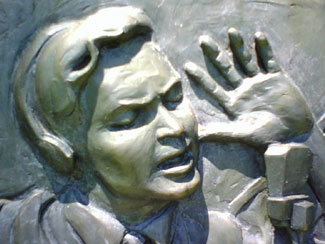
As I say in narrating the trailer, media-driven myths can be thought of as the “junk food of journalism“–delicious and appealing, perhaps, but not very nutritious.

The trailer, recently completed by research assistant Jeremiah N. Patterson, reviews the media myths related to the Watergate scandal, the purported Cronkite Moment, and the aftermath of Hurricane Katrina.

A trailer prepared last year by Mariah Howell shortly before publication of Getting It Wrong remains accessible at YouTube.

Another YouTube video–prepared by Patterson in the fall to mark the anniversary of the famous War of the Worlds radio broadcast that supposedly was so realistic that it panicked America–also is accessible online. The video discusses Halloween’s greatest media myth.

WJC

Recent and related:

Mythbusting at the Smithsonian

In Cronkite Moment, Debunking, Media myths, New York Times, War of the Worlds, Washington Post, Watergate myth on November 19, 2010 at 7:03 pm

A fine crowd was on hand last night for my book talk at the Smithsonian’s Ripley Center about media-driven myths.

The talk was part of the Smithsonian Resident Associates Program, which organized the event superbly well.

During the talk, I reviewed three of the 10 media myths debunked in my latest book, Getting It Wrong: the heroic-journalist myth that has become the most popular narrative of the Watergate scandal; the mythical  “Cronkite Moment” of 1968 that supposedly forced President Lyndon Johnson to realize the futility of the war effort in Vietnam, and The War of the Worlds radio dramatization in 1938 that purportedly pitched tens of thousands of Americans into panic and mass hysteria.

I also offered a few suggestions about identifying and sidestepping media myths, suggestions that included being skeptical about turns of phrase that just sound too neat and tidy–almost too good to be true. Another bit of advice was to apply logic and healthy skepticism to extravagant claims about the news media and their presumed influence.

Questions and comments from the audience of 170 or so people were especially thoughtful.

One comment was about the notion the famous New York City blackout in November 1965 was followed nine months later by an uptick in births–a linkage suggested in reports by the New York Times in August 1966. The Times quoted a sociologist as saying then:

“The lights went out and people were left to interact with each other.”

Though not addressed in Getting It Wrong, it is an intriguing topic, one that could be considered in a sequel about media myths, I said.

I added that the blackout tale sounded a lot like more recent speculation that the major snowstorms along the East Coast in December 2009 and February 2010 would give rise to an increase in live births nine months later. A blizzard baby boom, as it were.

That correlation may be mythical, though.

Still, the notion there is such a linkage isn’t entirely far-fetched. It rests on the cusp of plausibility–as do many media myths addressed in Getting It Wrong, I said.

I also noted during the Q-and-A session that media myths that have appeal across the political spectrum can be especially tenacious and enduring. They are tales, I said, that offer something for everyone.

The “crack baby” scare of the late 1980s and 1990s is an example of a media-driven narrative that offered something for everyone.

As I write in Getting It Wrong:

“The crack baby was a rare social issue that had appeal across the political spectrum—appeal that made the phenomenon especially powerful, compelling, notable, and tenacious. For conservatives, the specter of crack babies underscored the importance of imposing stiff penalties in the country’s war on drugs. And penalties were stiffened for crack possession during the second half of the 1980s. For liberals, meanwhile, crack babies represented an opportunity to press for costly assistance programs aimed at helping crack users and their children.”

“Crack babies” were children born to women who had taken cocaine during pregnancy, and many news reports and commentaries predicted an epidemic of crack-damaged misfits.

Among the more overheated predictions was that of conservative columnist Charles Krauthammer, who wrote in 1989:

“The inner-city crack epidemic is now giving birth to the newest horror: a bio-underclass, a generation of physically damaged cocaine babies whose biological inferiority is stamped at birth.”

Krauthammer likened the crack-induced “bio-underclass” to a “biologically determined underclass of the underclass.”

But it never happened.

The crack baby phenomenon turned out to be the epidemic that wasn’t, the product of over-the-top, anecdote-driven news reporting.

WJC

Recent and related:

Inaugurating the Parker-Qualls lecture

In Debunking, Media myths, Spanish-American War, War of the Worlds, Washington Post, Watergate myth, Yellow Journalism on November 11, 2010 at 10:55 pm

I inaugurated last night the Parker-Qualls lecture in communications at the University of North Alabama with an audience of some 300 students, faculty, staff, administrators, and townspeople in attendance.

My talk centered on three of the 10 prominent media-driven myths debunked in  my latest book, Getting It Wrong.

I discussed the heroic-journalist myth that has become the dominant narrative of the Watergate scandal, which ended Richard Nixon’s presidency in 1974; the mythical  “Cronkite Moment” of 1968 that supposedly forced President Lyndon Johnson to realize the futility of the war effort in Vietnam, and The War of the Worlds radio dramatization that reputedly pitched Americans into panic and mass hysteria in 1938.

During the Q-and-A that followed my presentation, I was asked how media audiences can better identify potential media-driven myths, those dubious stories about or by the news media that masquerade as factual. It’s a fine question, with no easy answer.
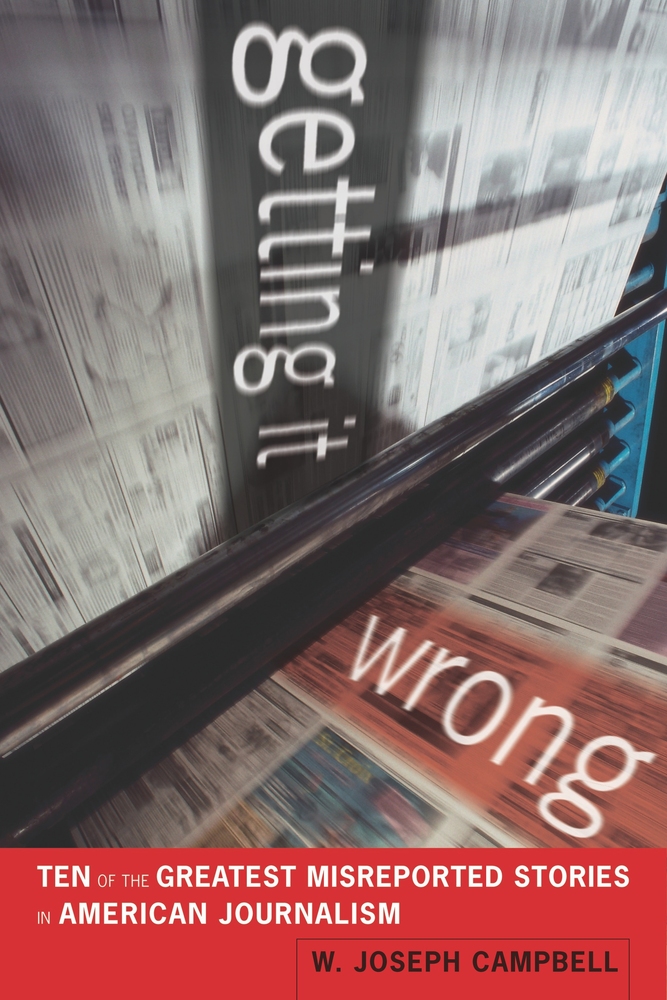
I advised being wary about media-related stories that just sound too neat and too tidy. The famous vow attributed to William Randolph Hearst–“you furnish the pictures, and I’ll furnish the war”–is a telling example, I said. The quote just seems too good, too perfect to be true.  It deftly captures Hearst as war-monger, but it’s supported by almost no evidence. It’s almost certainly apocryphal.

Media audiences also should apply logic and healthy skepticism to stories about or by the news media and their power, I said, citing The War of the Worlds dramatization as an example. It it really plausible that a radio show–even one as  clever and imaginative as that–really could send tens of thousands, or hundreds of thousands of Americans into the streets in sheer panic and hysteria? It doesn’t seem logical to me.

I also recommended consulting online sources: Some, like Media Myth Alert, are devoted to mythbusting. Even a simple Google search will readily turn skeptical accounts of popular, mediacentric stories.

I also was asked whether there were candidate-media myths that proved to true. Another good question and I couldn’t recall any immediately.

Then I remembered having had suspicions about Joe Namath’s guarantee that the New York Jets would defeat the heavily favored Baltimore Colts in the 1969 Super Bowl. That Namath guaranteed victory sounded to me almost too neat and tidy to be true.  (I privately congratulated myself on remembering being suspicious of that quote,  as it enabled me to mention a football legend who starred at the University of Alabama, a team much followed in Northern Alabama.)

Anyway, it turned out that Namath had indeed made such a guarantee–which I quickly determined in a check of a database of historical newspapers. So that was a candidate myth that proved to be true.

I also was asked what prompted me to write Getting It Wrong. In some ways, I replied, the book built upon previous research. I mentioned my 2001 book, Yellow Journalism: Puncturing the Myths, Defining the Legacies, in which I addressed the myth of Hearst’s famous vow.

I noted that I returned to that topic in the first chapter of Getting It Wrong, offering additional detail about how the often-retold tale about Hearst’s vow took hold and was diffused.

Another inspiration for the book stemmed from my classes at American University. I’ve often included in my courses references to the “Cronkite Moment,” I noted for example, adding that the more I read about and thought about such anecdotes, the more dubious they seemed to be.

And under scrutiny–in researching them–they dissolved as apocryphal or wildly exaggerated.

My hosts at the University of North Alabama have been Greg Pitts, chair of the department of communications, and Jim R. Martin, a journalism historian and editor of the scholarly journal American Journalism.

WJC

Recent and related:

SRO for ‘Getting It Wrong’ talk at UMd

In Anniversaries, Cronkite Moment, Debunking, Furnish the war, Jessica Lynch, Media myths, Media myths and radio, War of the Worlds, Washington Post, Watergate myth on November 5, 2010 at 11:50 am

A terrific audience of journalism students and faculty turned out last night for my talk at the University of Maryland’s Merrill College of Journalism.

It was standing-room-only at the Knight Hall conference room, where I discussed several chapters in my latest book, Getting It Wrong, which debunks 10 prominent media-driven myths.

I walked through the heroic-journalist myth of the Watergate scandal that toppled Richard Nixon’s presidency; the mythical  “Cronkite Moment” of 1968 that reputedly shifted U.S. public opinion about the war in Vietnam, and The War of the Worlds radio dramatization of 1938 that supposedly panicked listeners across the United States.

During the Q-and-A period that followed, I touched on the famous vow to “furnish the war” attributed to William Randolph Hearst and on the erroneously reported battlefield heroics of Private Jessica Lynch early in the Iraq War.

An intriguing question from the audience was what message should students take away from a book that identifies as media-driven myths some of the best-known stories in American journalism. The implication was that mythbusting may undercut the regard would-be journalists have for the profession.

I replied by saying that I  don’t consider Getting It Wrong a media-bashing book: Such books are many on the market as it is.

Rather, I said, the mythbusting in Getting It Wrong is aligned with the fundamental objective of American journalism. And that is to get it right, to offer an account that is as accurate as possible.

And it does journalism little good to indulge in tales such as the heroic-journalist myth of Watergate or the mythical “Cronkite Moment” that offer misleading interpretations about the news media and their power.

Debunking media myths, as I write in Getting It Wrong, “can help to place media influence in more coherent context.”

Nor should we worry about students being disappointed that well-known and even cherished stories about American journalism have been exposed as mythical. It shouldn’t be disheartening to learn the news media aren’t necessarily the powerful forces they are often believed to be.

Students can handle it.

Not only that, but mythbusting can offer them useful lessons in the importance of applying skepticism and a critical eye to dominant narratives and received wisdom of American journalism.

Indeed, Professor John Kirch, host and organizer of my talk at Maryland, does just that in presenting these and other tales in his journalism classes. Doing so can become a revealing exercise in critical thinking.

I also was asked about candidate-myths for a prospective sequel to Getting It Wrong.

A strong candidate for such a book, I said, is the myth of viewer-listener disagreement in the first Kennedy-Nixon debate in 1960.

The myth has it that people who watched the debate on television thought that Senator John F. Kennedy won; those who listened on radio thought Vice President Richard Nixon had the better of the exchanges.

The notion of listener-viewer-disagreement was long ago debunked by David L. Vancil and Sue D. Pendell, in an article in Central States Speech Journal. They noted that reports of viewer-listener disagreement typically were anecdotal and the few surveys that hinted at a viewer-listener disconnect were too small and unrepresentative from which to make confident judgments.

But the myth is a hardy one, I noted, and it resurfaced in late September, at the 50th anniversary of the Kennedy-Nixon encounter.

Among the 80 or so people in attendance last night was Jamie McIntyre, former Pentagon correspondent for CNN. Afterward, we compared notes about the misreported Lynch case, which the Washington Post propelled into the public domain with a botched, front-page story in early April 2003.

Recent and related:

Why ‘War of the Worlds’ show didn’t panic America

In Anniversaries, Debunking, Media myths, Media myths and radio, Newspapers, War of the Worlds on October 30, 2010 at 12:54 am

Today’s the 72nd anniversary of the famous War of the Worlds radio dramatization, a show that was so realistic and made such effective use of simulated news reports that it pitched America into panic and mass hysteria.

That The War of the Worlds program created fear beyond measure on that long ago October night is a delicious tale, one inevitably recalled and retold with gusto as Halloween approaches.

The radio dramatization–the work of 23-year-old Orson Welles–was aired over the CBS radio network on Sunday evening, October 30, 1938.

As I write in my latest book, Getting It Wrong: “So alarming was the show, so realistic were its accounts of invading Martians wielding deadly heat rays, that listeners by the tens of thousands—or maybe the hundreds of thousands—were convulsed in panic.

“They fled their homes, jammed highways, overwhelmed telephone circuits, flocked to houses of worship, set about preparing defenses, and even contemplated suicide in the belief that the end of the world was at hand.

“Fright beyond measure seized America that night more than seventy years ago. … Or so the media myth has it.”

Getting It Wrong presents a compelling case that the panic and hysteria so commonly associated with The War of The Worlds program did not occur on anything approaching nationwide dimension. That it did can be called Halloween’s greatest media myth.

Some Americans may have been frightened by what they heard on Welles’ show, but most listeners, in overwhelming numbers, were not.

“They recognized it for what it was—an imaginative and entertaining show on the night before Halloween,” I write, citing data from surveys taken shortly after the program.

But newspaper reports appearing the day after the program advanced the thesis of mass panic had indeed swept the country. From coast to coast, front-page newspaper headlines  told of the fright, terror, and panic that the program supposedly caused.

Welles, the day after

“U.S. Terrorized By Radio’s ‘Men From Mars,’” said the San Francisco Chronicle.

“Radio Listeners in Panic, Taking War Drama as Fact,” declared the New York Times.

“Attack From Mars In Radio Play Puts Thousands in Fear,” said the New York Herald Tribune.

“Radio Fake Scares Nation,” cried the Chicago Herald and Examiner.

These reports, however, were highly anecdotal and the reactions they reported simply did not rise to the level of nationwide panic and mass hysteria.

Newspapers, I point out, “had no reliable way of ascertaining the validity of the sweeping claims they offered in their columns the day after the program.”

Here’s why.

The broadcast aired late on Sunday evening in the Eastern time zone, a time when newsrooms of most daily newspapers were thinly staffed.

As such, collecting the reactions to The War of The Worlds broadcast represented no small challenge, especially for morning newspapers having late-night deadlines, I note in Getting It Wrong, adding:

“Given the constraints of time and staffing, relying on wire services such as the Associated Press became essential.

“This dependency, in turn, had the effect of promoting and deepening the notion that panic was widespread that night: On a late-breaking story of uncertain dimension and severity, many newspapers took their lead from wire service dispatches. They had little choice.”

The wire service reports were roundups that emphasized breadth rather than depth. Reliance on the roundups helps explain the consensus among U.S. newspapers that The War of the Worlds program had caused mass panic.

It also helps explains the striking similarity that characterized newspaper coverage of the broadcast. Many anecdotes transmitted by the wire services found their way into  newspapers across the country.

One widely recounted anecdote told of a woman in Pittsburgh whose husband prevented her from poisoning herself. “I’d rather die like this,” she exclaimed, than fall victim to a Martian heat ray.

Also widely reported was the story of a woman who told the Boston Globe she could “see the fire” caused by the alien attack and that she and her neighbors were preparing to flee.

Newspapers in their coverage also tended to place considerable importance on the unusually large volume of calls placed that October night to their switchboards and to those of police and fire departments and local radio stations.

“The surge in call volume was routinely but mistakenly characterized by newspapers as evidence of widespread fright and hysteria,” I write, noting that call volume was a misleading marker of fear and alarm.

The increased call volume is in fact best understood as signaling an altogether rational response by people who neither panicked nor became hysterical. Instead, they sought confirmation or clarification from external sources–newspapers, ironically, as well as police and fire departments–known to be usually reliable.

“Moreover, the call volume surely included people who telephoned friends and relatives to talk about the unusual and clever program they had just heard,” I point out in Getting It Wrong.

WJC

Recent and related: