W. Joseph Campbell

Archive for the ‘Watergate myth’ Category

The Fin Times and the ‘mantra’ of Watergate

In Cinematic treatments, Debunking, Media myths, Washington Post, Watergate myth on July 28, 2011 at 7:33 am

The single phrase associated most often with Watergate surely is “follow the money” — guidance supposedly given to Washington Post reporters covering the scandal in the early 1970s.

“Follow the money” also is the best-known made-up line of Watergate.

The statement is only as real as images projected on the screen: “Follow the money” was written into the screenplay of All the President’s Men, the cinematic version of the Watergate book by Post reporters Bob Woodward and Carl Bernstein.

But because it sounded so compelling, because it seemed to be such crucial guidance to unraveling the dimensions of Watergate, “follow the money” made a smooth transition from cinematic fiction to the vernacular.

So it’s commonly believed that “follow the money” was guidance uttered by the  Post’s high-level secret source, who was code-named “Deep Throat.”

The usually sober and usually well-reported Financial Times of London yesterday invoked “follow the money” as if it were genuine, stating in a column on financial matters:

“’Follow the money’ might have been the mantra for Bob Woodward and Carl Bernstein in investigating the Watergate scandal. But ‘follow the debt’ would be a better way of summing up where investors should be looking for the next bubble.”

We’ll leave “follow the debt” to bubble-seeking investors.

What intrigues Media Myth Alert is the reference to “follow the money” as the “mantra” of Watergate.

No way was it Watergate’s “mantra.”

The line appeared in no Watergate-related news article or editorial in the Post until 1981 — nearly seven years after Watergate had reached a climax with the resignation of President Richard Nixon.

Moreover, “follow the money” appears nowhere in Woodward and Bernstein’s book about their Watergate reporting. The book came out in June 1974, a couple of months before Nixon quit the presidency in disgrace.

So the phrase was no “mantra.”

What pressed “follow the money” into the vernacular was the marvelous performance of actor Hal Holbrook in the cinematic version of All the President’s Men.

Holbrook played a conflicted, shadowy, even tormented “Deep Throat” character. In a memorable, late-night scene in a darkened parking garage, Holbrook told the Woodward character (played by Robert Redford):

“I have to do this my way. You tell me what you know, and I’ll confirm. I’ll keep you in the right direction, if I can, but that’s all.

“Just follow the money.”

Holbrook delivered the “follow the money” line with such quiet conviction that it seemed to be a guide to unraveling the labyrinthine scandal that was Watergate.

Bernstein (Newseum photo)

But had it really been offered to Woodward (“Deep Throat” never met Bernstein during Watergate), “follow the money” would have taken him only so far.

Watergate, after all, was much broader than the misuse of campaign funds.

What ultimately brought down Nixon was  his plotting to cover up the signal crime of Watergate — the break-in at the headquarters of the Democratic National Committee in June 1972.

As I note in my latest book, Getting It Wrong, rolling up a scandal of Watergate’s dimension required “the collective if not always the coordinated forces of special prosecutors, federal judges, both houses of Congress, the Supreme Court, as well as the Justice Department and the FBI.

“Even then,” I write, “Nixon likely would have served out his term if not for the audiotape recordings he secretly made of most conversations in the Oval Office of the White House.”

Only when compelled by the Supreme Court did Nixon surrender the Watergate-related recordings that captured him plotting to cover up the Watergate break-in.

Heeding advice to “follow-the-money” scarcely would have enabled investigators to uncover the decisive evidence about Nixon’s misconduct.

WJC

Recent and related:

More media myths from CounterPunch

In Bay of Pigs, Debunking, Furnish the war, Jessica Lynch, Media myths, Washington Post, Watergate myth on July 24, 2011 at 8:30 am

CounterPunch touts itself as “America’s best political newsletter.”

It’s building a reputation for indulging in media-driven myths, too.

Since mid-March, essays posted at CounterPunch have:

CounterPunch has indulged yet again in media myth, in a commentary in its weekend edition about Rupert Murdoch’s troubled media empire.

CounterPunch claimed the tough old media mogul has “surpassed William Randolph Hearst,” press baron of the 19th and early 20th centuries, “in practicing yellow journalism.”

The commentary invoked the hoary media myth about Hearst’s purported vow to “furnish the war” with Spain.

According to CounterPunch, Hearst said: “Get me the photos and I’ll get you the war.”

That was, CounterPunch added, “Hearst’s 1898 dictum to help start the Spanish-American War.”

Provocative tale. But it’s pure media myth.

Hearst’s vow is almost surely apocryphal, for reasons I discuss in my myth-busting book, Getting It Wrong, which came out last year.

Among the reasons:  The telegram that supposedly contained Hearst’s vow — a cable sent to artist Frederic Remington, on assignment to Cuba — has never turned up.

More significantly, as I point out Getting It Wrong, the anecdote about Hearst’s purported vow suffers from “an irreconcilable internal inconsistency.”

That is, it would have been absurd and illogical for Hearst to have vowed to “furnish the war” because war — specifically, the Cuban rebellion against Spain’s colonial rule — was the reason he sent Remington to Cuba in the first place.

In addition, the Spanish colonial authorities who ruled Cuba closely controlled and censored incoming and outgoing telegraphic traffic: They surely would have intercepted and called attention to Hearst’s incendiary telegram, had it been sent.

But in fact, there was, as I write in Getting It Wrong, no chance that telegrams would have flowed freely between Remington in Cuba and Hearst in New York.

So “furnish the war” (or, “provide the war”) wasn’t at all Hearst’s “dictum to help start the Spanish-American War.”

That Hearst helped bring on the war with Spain is a media myth, too.

It’s a myth dismantled in my 2001 book, Yellow Journalism: Puncturing the Myths, Defining the Legacies, in which I pointed out that the yellow press of Hearst and his rival, Joseph Pulitzer, “is not to blame for the Spanish-American-War.

“It did not force — it could not have forced — the United States into hostilities with Spain over Cuba in 1898.

“The conflict was, rather, the result of a convergence of forces far beyond the control or direct influence of even the most aggressive of the yellow newspapers, William Randolph Hearst’s New York Journal.”

The proximate cause of the war was the humanitarian crisis created by Spain’s bungled attempts to quell a rebellion that had begun in Cuba in 1895 and had spread across the island by 1897, when Remington arrived in Havana on assignment for Hearst.

WJC

Recent and related:

An outbreak of ‘follow the money,’ that phony Watergate line

In Cinematic treatments, Debunking, Media myths, Washington Post, Watergate myth on July 23, 2011 at 7:05 am

From Oregon to Canada to India, news outlets turned yesterday to Watergate’s most famous made-up phrase, treating the line as if it were genuine.

Felt: Not his line

The line is “follow the money,” which supposedly was vital guidance that a secret source code-named “Deep Throat” gave to the Washington Post during its Watergate investigation in 1972-74.

The passage was offered up credulously by these news outlets yesterday:

  • The Huffington Post, in (yet another) commentary about the phone-hacking scandal that has battered Rupert Murdoch’s News Corp. The commentary declared: “During the Washington Post‘s investigative reporting of President [Richard] Nixon’s attempts to cover up the Watergate burglary, it’s [sic] source, ‘Deep Throat’ gave the reporters the best advice. ‘Deep Throat’ said that the truth would be discovered if they ‘follow the money.’ They did and it ultimately led to the resignation of President Nixon.”
  • The Register-Guard newspaper of Eugene, Oregon, in a column about the phone-hacking scandal: “As Deep Throat advised reporters unraveling a different national scandal, ‘Follow the money.’”
  • The Business News Network in Canada, in a blog post about interest rates in that country: “I’ll take the advice of Mark Felt, the former FBI agent most famously known as Deep Throat, the key source in Bob Woodward’s Watergate investigation: follow the money.”
  • The Hindu newspaper in India, in a commentary about suspected banking improprieties: “‘Follow the money’ was the advice given by the secret informant within the government to Bob Woodward of Washington Post at the beginning of the Watergate scandal.”

As those cases suggest, “follow the money” is impressively versatile. Its popularity seems limitless.

But however appealing and catchy, “follow the money” is contrived.

The phrase was never uttered by the “Deep Throat” source, who met periodically with Woodward as Watergate unfolded. (“Deep Throat” was self-identified in 2005 as W. Mark Felt, formerly the second-ranking official at the FBI. Felt never spoke during Watergate with Woodward’s reporting partner, Carl Bernstein.)

According to a database of Washington Post content, the phrase “follow the money” appeared in no news article or editorial about Watergate before 1981.

“Follow the money” doesn’t appear, either, in All the President’s Men, Woodward and Bernstein’s book about their Watergate reporting, which came out in 1974.

The derivation of the passage lies in a scene in All the President’s Men, the cinematic version of Woodward and Bernstein’s book. The movie was released to much fanfare in April 1976, 20 months after Nixon resigned the presidency for his guilty role in obstructing justice in the Watergate scandal.

What pressed “follow the money” into the popular consciousness was an outstanding performance turned in by actor Hal Holbrook in the cinematic version of All the President’s Men.

Holbrook played a twitchy, conflicted, shadowy “Deep Throat.” In a late-night scene in a darkened parking garage, Holbrook told the Woodward character, played by Robert Redford:

“I have to do this my way. You tell me what you know, and I’ll confirm. I’ll keep you in the right direction, if I can, but that’s all.

“Just follow the money.”

Holbrook delivered the line with such quiet conviction that it did seem to be a way through the labyrinth that was the Watergate scandal.

But the guidance, had it really been offered to Woodward, would have taken him only so far. Watergate, after all, was much broader than a case of improper use of campaign monies.

In the end, Nixon was toppled by his efforts to cover up the signal crime of Watergate, the break-in at the headquarters of the Democratic National Committee in June 1972.

As a simplistic key to explaining the scandal, the follow-the-money interpretation minimizes the far more decisive forces that unraveled Watergate and forced Nixon from office.

As I point out in my latest book, Getting It Wrong, rolling up a scandal of Watergate’s complexity and dimension required “the collective if not always the coordinated forces of special prosecutors, federal judges, both houses of Congress, the Supreme Court, as well as the Justice Department and the FBI.

“Even then,” I write, “Nixon likely would have served out his term if not for the audiotape recordings he secretly made of most conversations in the Oval Office of the White House.”

Only when compelled by the Supreme Court did Nixon surrender the Watergate-related recordings that captured him plotting to cover up the Watergate break-in.

WJC

Recent and related:

Inflating the exploits of WaPo’s Watergate reporters

In Debunking, Media myths, Washington Post, Watergate myth on July 21, 2011 at 2:51 am

As it has receded in time and memory, the Watergate scandal of 1972-74 has become ever more prone to myth and misleading interpretation.

Bernstein in 2009 (Newseum photo)

That helps explain why Watergate’s dominant narrative centers on the reporting exploits of Carl Bernstein and Bob Woodward, two then-young reporters for the Washington Post.

It’s far simpler to focus on two star reporters — and to inflate their accomplishments — than it is to wrestle with the forbidding complexity of a scandal that sent 19 men to jail and forced the resignation of a sitting U.S. president, Richard Nixon.

That’s a point I make in my media myth-busting book, Getting It Wrong, which came out last year. “How the Post and its reporters uncovered Watergate,” I write, “is deeply ingrained in American journalism as one of the field’s most important and self-reverential stories.”

It’s a narrative that commands considerable appeal abroad as well.

Just yesterday, Britain’s Sky News channel became the latest news outlet to indulge in the heroic-journalist interpretation of Watergate, declaring in a report posted online that “Bernstein was one of two reporters who revealed US president Richard Nixon’s efforts to cover up a break-in at the Democratic National Committee headquarters.

“It led to the conviction of a number of White House officials and Mr Nixon’s eventual resignation,” Sky’s report said.

Well, no: Neither Bernstein nor Woodward “revealed” Nixon’s attempts to cover up the burglary at the Watergate complex in Washington, the scandal’s signal crime. And their reporting didn’t bring about Nixon’s downfall, either.

Nixon’s authorization of a cover-up — to obstruct justice by attempting to divert the FBI’s investigation of the break-in — wasn’t clearly demonstrated until July 1974.

That was when Nixon complied with the U.S. Supreme Court’s decision and surrendered audiotapes of key, Watergate-related conversations that he had secretly recorded in the Oval Office of the White House.

The tapes clearly showed the president had engaged in a cover-up, a revelation that led directly to his resigning in August 1974.

Bernstein and Woodward’s reporting had nothing to do with the forced disclosure of the incriminating audiotapes.

Nor did Bernstein and Woodward’s reporting disclose that the tapes existed.

That Nixon had made such recordings emerged in July 1973, during the Watergate investigation by a select committee of the U.S. Senate.

To call out the erroneous Sky News report about Bernstein and Woodward is not to pick nits.

Rather, it’s to insist on a more precise understanding of the Washington Post’s modest role in Watergate — and to note how routinely that role is exaggerated.

In other words, to call out the Sky News report is to insist on what Bernstein says is journalism’s fundamental objective — that of seeking “the best obtainable version of the truth.”

And the truth is, the Post’s reporting did not disclose the cover-up Nixon ordered; nor did the newspaper’s reporting force the president’s resignation.

To roll up a scandal of the dimension of Watergate, I point out in Getting It Wrong, “required the collective if not always the coordinated forces of special prosecutors, federal judges, both houses of Congress, the Supreme Court, as well as the Justice Department and the FBI.

“Even then,” I add, “Nixon likely would have served out his term if not for the audiotape recordings he secretly made of most conversations in the Oval Office of the White House.”

WJC

Recent and related:

A ‘fascinating and detailed exploration’

In Debunking, Media myths, War of the Worlds, Washington Post, Watergate myth on July 19, 2011 at 9:04 am

My media myth-busting book, Getting It Wrong,was reviewed recently by the Idaho Statesman, which called the work a “fascinating and detailed exploration.”

Getting It Wrong addresses and debunks 10 prominent media-driven myths, those dubious tales about the news media that masquerade as factual.

The Statesman’s review discusses in some detail the myths about the War of the Worlds radio broadcast in October 1938, which supposedly set off nationwide panic and mass hysteria, and about the Watergate scandal of 1972-74 which brought down Richard Nixon’s corrupt presidency.

The reviewer was Bob Kustra, president of Boise State University and the engaging host of the  Reader’s Corner, a weekly radio program about books and their authors. I was interviewed on Kustra’s show last month.

About the media myth of Watergate — the notion that intrepid reporters for the Washington Post broke or exposed the scandal and brought about Nixon’s resignation — Kustra writes:

“While Campbell acknowledges that most people believe two young and ambitious Washington Post reporters brought down a corrupt president, he deftly shows how journalism’s contribution to Nixon’s fall was modest at best.

“The president’s decline, he explains, was the consequence of his criminal conduct, which was exposed in the convergence of many forces. But it’s far easier to focus on two heroic journalists, says Campbell, than it is to grapple with the complexities of the Watergate scandal.

Nixon resigns: Not WaPo's doing

“Therein,” Kustra adds, “lies one of the reasons we are so likely to believe media myths — they offer simplistic answers to complex issues. They also lead us to believe the news media are very powerful and sometimes even dangerous forces in society.”

He also writes that the myths debunked in Getting It Wrong “are worth revisiting, and not just to set the record straight.

“Doing so offers important lessons on being discerning consumers of what we read and hear in the news.”

WJC

Recent and related:

Imprecise, overwrought Watergate analogies emerge in Murdoch scandal

In Cinematic treatments, Debunking, Media myths, Washington Post, Watergate myth on July 17, 2011 at 3:00 am

Meeting his Watergate?

Watergate has become a frequent though imprecise point of reference for the reporting scandal that has battered Rupert Murdoch’s media holdings in Britain, prompting the closure of a leading Sunday tabloid, the resignation of two executives prominent in his news empire, and groveling apologies in print.

The scandal, which centers on illegal hacking of cell phone voicemail, has come to called Murdoch’s Watergate, a characterization embraced especially by Murdoch’s  enemies in America, hoping that this imbroglio may finally brings down the tough old media mogul.

The phone-hacking scandal is “a debacle that features Murdoch starring in the eerily similar role as the one Dick Nixon played,” declared Eric Boehlert in an essay posted the other day at Huffington Post.

Carl Bernstein, who teamed with Bob Woodward in covering Watergate for the Washington Post, has notably promoted the Murdoch-Watergate comparison.

In an essay titled “Murdoch’s Watergate?” and published recently in Newsweek, Bernstein wrote, not surprisingly:

“For this reporter, it is impossible not to consider these facts through the prism of Watergate. … The circumstances of the alleged lawbreaking within [Murdoch’s] News Corp. suggest more than a passing resemblance to Richard Nixon presiding over a criminal conspiracy in which he insulated himself from specific knowledge of numerous individual criminal acts while being himself responsible for and authorizing general policies that routinely resulted in lawbreaking and unconstitutional conduct.”

But it’s imprecise, premature, and a bit overwrought to liken the phone-hacking scandal to Watergate.

It’s no Watergate. Not yet, anyway. And it’s certainly not clear that Murdoch authorized policies that “routinely resulted in lawbreaking and unconstitutional conduct.”

Watergate was sui generis, an unprecedented constitutional crisis that led in to Nixon’s departure from office in disgrace in 1974. He was the first U.S. president ever to resign.

In addition, 19 men associated with Nixon’s presidency or his 1972 reelection campaign went to jail for Watergate-related crimes. (Woodward once called Watergate “an immensely complicated scandal with a cast of characters as varied as a Tolstoy novel.”)

Rolling up a scandal of such dimension required, as I note in my latest book, Getting It Wrong, “the collective if not always the coordinated forces of special prosecutors, federal judges, both houses of Congress, the Supreme Court, as well as the Justice Department and the FBI.”

Even then, Nixon likely would have survived and served out his term if not for the audiotape recordings he secretly made of most private conversations in the Oval Office of the White House. (Woodward has endorsed that interpretation as well. He said in an online chat at washingtonpost.com in 1997 that “if the tapes had never been discovered, or [Nixon] had burned them, he almost surely would not have had to resign, in my view.”)

Toppling Nixon was no certain outcome of Watergate, at least not in the first year or so of the slowly unfolding scandal. And bringing down Nixon wasn’t a consequence of the reporting of Woodward and Bernstein, hoary media myth notwithstanding.

The phone-hacking scandal — in which reporters and private investigators for Murdoch’s now-shuttered News of the World tabloid broke into the voicemail of scores of people — has been an occasion to conjure Watergate in another way. In a romanticized, glowing way that recalls Watergate as a golden age in American journalism.

The Houston Chronicle has given expression to the golden-age sentiment.

The newspaper declared in a tut-tutting editorial the other day that the phone-hacking scandal “is a very long way from the saga of All the President’s Men, the uplifting account of how two dogged young reporters, Bob Woodward and Carl Bernstein, with the backing of ethically responsible Washington Post management, broke the Watergate scandal in 1972 that led to the resignation of President Richard Nixon. It inspired a generation of new journalists to their mission and exhibited the finest aspects of the profession.”

All the President’s Men was Woodward and Bernstein’s 1974 book about their Watergate reporting. The book’s cinematic version came out in 1976 and helped solidify the mythical notion that the Post brought down Nixon.

It deserves noting that the Chronicle’s editorial errs in at least three respects.

One, the Post management was not always so “ethically responsible” during Watergate.

For example, top editors approved an ethically suspect scheme allowing Woodward and Bernstein to approach federal grand jurors hearing Watergate testimony and ask them to break their vows of secrecy. As the reporters wrote in All the President’s Men, the ill-advised overtures to grand jurors nearly landed them in jail.

Two, the Post did not break the Watergate scandal.

The signal crime of Watergate — the burglary in June 1972 at Democratic National Committee headquarters — was interrupted by police. Within hours, news was circulating of the arrest of five burglars at the Watergate complex in Washington, D.C.

The Post’s article about the break-in appeared beneath the byline of Alfred E. Lewis, a veteran police reporter, and it drew heavily on information from investigators.

In subsequent Watergate reporting, moreover, the Post exposed  neither the cover-up of crimes linked to the break-in, nor the payment of hush money to the burglars. Nor did it break the news about Nixon’s secret audiotapes.

Three, the claim that coverage of Watergate “inspired a generation of new journalists to their mission” is exaggerated.

Watergate produced no enrollment surge in journalism programs at American colleges and university. Enrollment growth in fact had begun well before Woodward and Bernstein wrote their first Watergate-related story in 1972.

Still, as I note in Getting It Wrong, the notion that Woodward and Bernstein inspired a generation of students to take up journalism “lives on despite its thorough repudiation in scholarly research.”

Like many media-driven myths, the tale of inspiration is almost too good not to be true.

WJC

Many thanks to Instapundit
Glenn Reynolds for linking to this post.

Recent and related:

Carl Bernstein, disingenuous

In Debunking, Washington Post, Watergate myth on July 11, 2011 at 8:56 am

Carl Bernstein, he of Watergate fame, writes scathingly and at length in the latest Newsweek about the phone-hacking scandal that has shaken Rupert Murdoch’s media operations in Britain and prompted the closing of London’s largest Sunday tabloid, the News of the World.

Bernstein (Newseum photo)

Inevitably, Bernstein invokes the Watergate scandal of 1972-74– but conveniently skips over the borderline illegal conduct he and his Washington Post colleague, Bob Woodward, engaged in, in asking federal grand jurors to break their oaths of secrecy and discuss Watergate testimony.

Bernstein writes in Newsweek that “it is impossible not to consider” the News of the World phone-hacking scandal “through the prism of Watergate.”

He adds:

“When Bob Woodward and I came up against difficult ethical questions, such as whether to approach grand jurors for information (which we did, and perhaps shouldn’t have), we sought executive editor Ben Bradlee’s counsel, and he in turn called in the company lawyers, who gave the go-ahead and outlined the legal issues in full.”

That story’s a lot messier than Bernstein lets on: The private entreaties to Watergate grand jurors in December 1972 angered the federal judge hearing the Watergate cases and nearly landed the reporters in jail.

As described in All the President’s Men, Bernstein and Woodward’s book about their Watergate reporting, none of the grand jurors was cooperative but the reporters’ overtures were reported to the federal prosecutors, who informed the chief judge of U.S. District Court in the District of Columbia, John J. Sirica.

The judge was livid.

According to All the President’s Men, Edward Bennett Williams, the Post’s top lawyer, went to lengths to persuade Sirica — known as “Maximum John” for the stern sentences he imposed — not to throw the book at the wayward reporters.

“John Sirica is some kind of pissed at you fellas,” Williams was quoted as saying in the book. “We had to do a lot of convincing to keep your asses out of jail.”

Being sent to jail would have interrupted and may well have ended their reporting on Watergate. (The myths surrounding Bernstein and Woodward’s work are discussed in my latest book, Getting It Wrong.)

It wasn’t as if Bernstein and Woodward and their editors at the Post were oblivious to the hazards of inviting grand jurors to violate their secrecy vows. They were well aware of the risks of what they described in All the President’s Men as “a seedy venture.”

The Post’s editors consulted on the scheme — among them Bradlee, Managing Editor Howard Simons, Metropolitan Editor Harry M. Rosenfeld — all entertained “private doubts” about approaching grand jurors.

The Post city editor, Barry Sussman, was described in All the President’s Men as fearing “that one of them, probably Bernstein, would push too hard and find a way to violate the law.

“Woodward wondered whether there was ever justification for a reporter to entice someone across the line of legality while standing safely on the right side himself. Bernstein, who vaguely approved of selective civil disobedience, was not concerned about breaking the law in the abstract. It was a question of which law, and he believed that grand-jury proceedings should be inviolate.”

But they went ahead anyway, desperate for leads in the slowly unfolding scandal.

Their overtures to the grand jurors drew a tongue-lashing from Sirica in open court on December 19, 1972.

“I want it understood by the person who approached members of the grand jury that the court regards this matter as extremely serious” and “at least potentially” contempt of court, Sirica said.

The judge, though, did not mention the reporters by name, saying only that the entreaties to grand jurors had been made by “a news media representative.”

Reporters covering the hearing buzzed with speculation as to whom Sirica was referring.

Bernstein and Woodward deflected suggestions that they had made the improper overtures. “We … engaged in our own cover-up,” Woodward was quoted as saying in Alicia Shepard’s Woodward and Bernstein: Life in the Shadow of Watergate.

The reporters wrote in All the President’s Men, which came out in 1974 just as Watergate was nearing its climax, that in seeking out the grand jurors, they “had chosen expediency over principle and, caught in the act, their role had been covered up.”

To be sure, their dubious conduct was not in the same league as the rank illegality of News of the World’s phone-hacking.

But Bernstein was more than a little disingenuous in soft-pedaling how he and Woodward solicited information from Watergate grand jurors.

WJC

Many thanks to Instapundit
Glenn Reynolds for linking to this post.

Recent and related:

The journos who saved us

In Cinematic treatments, Debunking, Media myths, Murrow-McCarthy myth, Washington Post, Watergate myth on July 5, 2011 at 12:49 pm

Murrow: Savior?

At their extreme, media-driven myths are hero-worshipping devices, invoked to venerate journalists as saviors.

Thankfully, such treatment is rare, and typically reserved for such journalists the legendary CBS newsman Edward R. Murrow and the Watergate reporting duo, Bob Woodward and Carl Bernstein.

Brian Unger, host of a history program on cable television, indulged in a bit of journalists-idolatry in compiling for an Entertainment Weekly blog a list of a dozen heroic figures from TV shows and the movies.

On the list was Ed Murrow, whom Unger praised for “saving us from someone who pretended to be a great American patriot, Sen. Joseph McCarthy.”

Also selected were Robert Redford and Dustin Hoffman, the movie stars who played Washington Post reporters Woodward and Bernstein in the film All the President’s Men. “Armed only with a pen,” Unger wrote, “they saved the country from itself.”

Journalists as saviors: Like most media-driven myths, the notion is simply too good to be true, too simplistic to be credible.

Murrow hardly took down Joe McCarthy in Murrow’s famous See It Now program on CBS in March 1954.

The show was aired four years after McCarthy began his communists-in-government witch-hunt, and four years after muckraking columnist Drew Pearson piercingly challenged and punctured many of McCarthy’s claims.

Pearson

The television critic for the New York Post, Jay Nelson Tuck, wrote that Murrow in the days after the show felt “almost a little shame faced at being saluted for his courage in the McCarthy matter. He said he had said nothing that … anyone might not have said without a raised eyebrow only a few years ago.”

Years later, Murrow’s CBS colleague, Eric Severaid, chafed at the misleading interpretation attached to the See It Now program on McCarthy which, he noted, “came very late in the day.”

Sevareid said: “The youngsters read back and they think only one person in broadcasting and the press stood up to McCarthy and this has made a lot of people feel very upset, including me, because that program came awfully late.”

As I write in my media myth-busting book, Getting It Wrong, Americans in early 1954 weren’t “hoping for someone to step up and expose McCarthy, or waiting for a white knight like Murrow to tell them about the toxic threat the senator posed.”

By then they knew, thanks to the work of journalists such as Pearson.

Murrow no more ended McCarthy’s witch-hunt than Woodward and Bernstein brought down Richard Nixon’s corrupt presidency in Watergate — and, as Unger wrote, “saved the country from itself.”

Whatever that means.

It is clear that Woodward and Bernstein’s contributions to unraveling the Watergate scandal of 1972-74 were modest, and pale in significance when compared to the work of such subpoena-wielding entities as special prosecutors, both houses of Congress, the Justice Department, the FBI.

“Even then,” I write in Getting It Wrong, Nixon “likely would have served out his term if not for the audiotape recordings he secretly made of most conversations in the Oval Office of the White House. Only when compelled by the Supreme Court did Nixon surrender those recordings, which captured him plotting” to obstruct justice in the Watergate scandal.

Interestingly, principals at the Washington Post over the years have scoffed at the mythical and mediacentric interpretation that the newspaper brought down Nixon.

In 2005, for example, Michael Getler, then the newspaper’s ombudsman, wrote in a column:

“Ultimately, it was not The Post, but the FBI, a Congress acting in bipartisan fashion and the courts that brought down the Nixon administration. They saw Watergate and the attempt to cover it up as a vast abuse of power and attempted corruption of U.S. institutions.”

Woodward, himself, declared in 2004, in an interview with American Journalism Review:

To say the press brought down Nixon, that’s horseshit.”

But undoubtedly it’s the film All the President’s Men that’s largely responsible for the heroic-journalist trope that Woodward and Bernstein took down Nixon and saved the country.

All the President’s Men easily is the most-viewed movie made about Watergate. And as I note in Getting It Wrong, it places “Woodward and Bernstein at the center of Watergate’s unraveling while denigrating the efforts of investigative agencies such as the FBI.

“The effect was to solidify and elevate the heroic-journalist myth, giving it dramatic power, and sustaining it in the collective memory.”

WJC

Recent and related:

‘Sneakily patriotic’ movies that promote media myths

In Cinematic treatments, Debunking, Media myths, Murrow-McCarthy myth, Washington Post, Watergate myth on July 1, 2011 at 7:28 am

The film critic for Gannett News Service has identified in time for the Fourth of July weekend 10 movies he says are “sneakily patriotic.”

Meaning they promote patriotism indirectly, without a lot of flag-waving flamboyance.

The list, compiled by critic Bill Goodykoontz, includes Apollo 13, the dramatic 1995 movie about an ill-fated lunar mission that ended safely, and Miracle, the 2004 film about the gold medal-winning 1980 U.S. Olympics hockey team, a movie that does feature a fair amount of flag-waving.

Notably, two of the “sneakily patriotic” films have promoted and propelled media-driven myths — those dubious and improbable tales about news media that masquerade as factual.

Both myth-promoting movies push the extravagant notion that the news media are, or were, powerful and decisive forces in American political life. And both movies are discussed in my media myth-busting book, Getting It Wrong, which came out last year.

The myth-promoters are:

Goodykoontz, in describing the two movies, invokes their mythical aspects.

About All the President’s Men, Goodykoontz writes that Woodward and Bernstein’s “coverage of the Watergate break-in … led, ultimately, to the resignation of Richard Nixon.”

And Good Night, and Good Luck, he writes, “evokes an earlier era of media and how it could be used to stem the abuse of power.”

I point out in Getting It Wrong how movies can solidify media-driven myths in the public’s consciousness. “High-quality cinematic treatments,” I write, “are powerful agents of media myth-making, and can enhance a myth’s durability.”

The cinematic version of All the President’s Men solidified what I call the heroic-journalist myth of Watergate — the simplistic notion that Woodward and Bernstein’s investigative reporting brought down Richard Nixon’s corrupt presidency.

All the President’s Men, I write, allows no interpretation other than it was the work of Woodward and Bernstein that “set in motion far-reaching effects that brought about the first-ever resignation of a U.S. president.”

But to embrace that interpretation, I further write in Getting It Wrong, “is to abridge and misunderstand the scandal and to indulge in a particularly beguiling media-driven myth.”

The heroic-journalist interpretation serves to diminish and ignore the far more powerful forces that unraveled the scandal and forced Nixon from office.

Those forces, I write, “included special prosecutors, federal judges, both houses of Congress, the Supreme Court, as well as the Justice Department and the FBI.

“Even then, Nixon likely would have served out his term if not for the audiotape recordings he secretly made of most conversations in the Oval Office of the White House. Only when compelled by the Supreme Court did Nixon surrender those recordings, which captured him” plotting to obstruct justice in the Watergate scandal.

When considered against the tableau of subpoena-wielding authorities, the contributions of Woodward and Bernstein pale in significance and consequence.

A somewhat similar dynamic is at work in Good Night, and Good Luck.

The movie, which was released in black and white to lend a 1950s feel, permits no other conclusion than Murrow’s See It Now program about McCarthy single-handedly ended the senator’s communists-in-government witch-hunt.

Murrow’s show detailing McCarthy’s loathsome and bullying tactics was aired in March 1954 — long after other journalists had confronted the senator and, in some cases, paid a heavy price for doing so.

Among those journalists was the muckraking columnist Drew Pearson, who took aim at McCarthy in February 1950, not long after the senator began his red-baiting campaign.

By the end of that year, McCarthy had physically assaulted Pearson and denounced him from the Senate floor as the “diabolically” clever “voice of international communism,” a “prostitute of journalism,” and the “sugar-coated voice of Russia.”

In the Senate speech excoriating Pearson, McCarthy aimed a threat at Adam Hat Stores Inc., the principal sponsor of the columnist’s Sunday night radio program.

McCarthy said that “anyone who buys from a store that stocks an Adams hat is unknowingly contributing at least something to the cause of international communism by keeping this communist spokesman on the air.”

Within a week, Adam Hat announced the end of its sponsorship of Pearson’s program.

Pearson may not have had the finest reputation in 1950s American journalism. Jack Shafer, the media critic for Slate.com, wrote last year that Pearson was “one of the skuzziest journalists to ever write a story.”

But Pearson took on McCarthy years before Murrow — and long before it was safe. He certainly was “sneakily patriotic” in doing so.

WJC

Recent and related:

List of flubs by pols incomplete without Biden’s Watergate gaffe

In Debunking, Media myths, Washington Post, Watergate myth on June 30, 2011 at 10:55 am

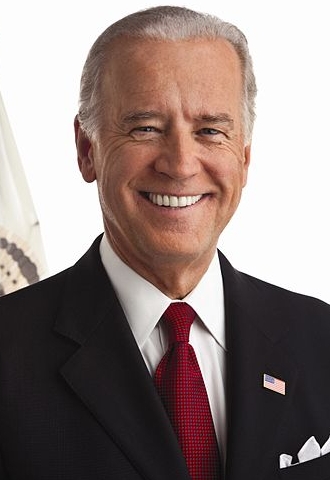
The gaffe-prone vice president, Joe Biden, claimed in a speech aboard a few months ago that the Washington Post “brought down” Richard Nixon’s corrupt presidency in the Watergate scandal.

Gaffe-prone

That’s a media myth — a misreading of history that not even the Post embraces.

While Biden’s blunder didn’t receive much media attention at the time, the flub merited inclusion in Time magazine’s lineup of memorable mischaracterizations of American history offered by leading U.S. politicians.

In a posting yesterday, the magazine’s “Swampland” politics blog offered what it termed were nine “epically wrong politician accounts of yesteryear.”

The “Swampland” lineup included two flubs by Michele Bachmann, the Republican congresswoman running for president — that the battles of Lexington and Concord were fought in New Hampshire and that John Quincy Adams was among America’s founding fathers.

Biden made the “Swampland” lineup for his laughable statement that President Franklin D. Roosevelt went on television and spoke to Americans after the stock market crash of 1929. Roosevelt didn’t become president until 1933 and television wasn’t pervasive in American households until the 1950s.

While perhaps not as delicious as the FDR-market crash gaffe, Biden’s ahistoric flub about the Post and Watergate would have rounded out the “Swampland” list at 10.

Its inclusion would’ve underscored how unraveling a scandal as complex as Watergate required far more investigative clout than any news organization could muster.

Although it won a Pulitzer Prize in 1973, the Post’s Watergate-related reporting was scarcely enough to turn a sitting president from office. Nixon resigned in August 1974.

Biden’s mischaracterization of Watergate was astonishing and the “Swampland” list is incomplete without mentioning the blunder. The vice president told an audience in Moscow in March:

“In my country it was a newspaper, not the FBI, or the Justice Department, it was a newspaper, the Washington Post that brought down a President for illegal actions.”

It didn’t.

As I write in my latest book, Getting It Wrong,to argue that the Post and the dogged reporting of its reporters Bob Woodward and Carl Bernstein took down Nixon “is to abridge and misunderstand the scandal and to indulge in a particularly beguiling media-driven myth.”

I note that rolling up a scandal of the sweep and dimension of Watergate “required the collective if not always the coordinated forces of special prosecutors, federal judges, both houses of Congress, the Supreme Court, as well as the Justice Department and the FBI.”

And even then, I write, “Nixon likely would have served out his term if not for the audiotape recordings he secretly made of most conversations in the Oval Office of the White House.

“Only when compelled by the Supreme Court did Nixon surrender those recordings, which captured him plotting the cover-up” of Watergate’s signal crime — the break-in at the headquarters of the Democratic National Committee in June 1972.

So against the tableau of subpoena-wielding authorities, the contributions of the Post in Watergate fade in significance.

Those contributions were not decisive, as top officials at the Post have noted over the years.

Katharine Graham, the newspaper’s publisher during and after the Watergate years, said in 1997, at a program marking the scandal’s 25th anniversary:

“Sometimes people accuse us of bringing down a president, which of course we didn’t do. The processes that caused [Nixon’s] resignation were constitutional.”

Ben Bradlee,who was the Post’s executive editor during Watergate, said on the “Meet the Press” interview show in 1997:

“[I]t must be remembered that Nixon got Nixon. The Post didn’t get Nixon.”

And Woodward himself has disputed the mediacentric interpretation of Watergate, declaring in 2004 in an interview with American Journalism Review:

To say the press brought down Nixon, that’s horseshit.”

WJC

Recent and related: