W. Joseph Campbell

Posts Tagged ‘1968’

Koppel goes on NPR, indulges in media myth

In Cronkite Moment, Debunking, Media myths, Murrow-McCarthy myth on November 18, 2010 at 6:19 am

Ted Koppel, the former host of ABC’s Nightline program, has been back in the public eye of late, following his smug but widely noted lament in the Washington Post about the partisanship of cable TV news.
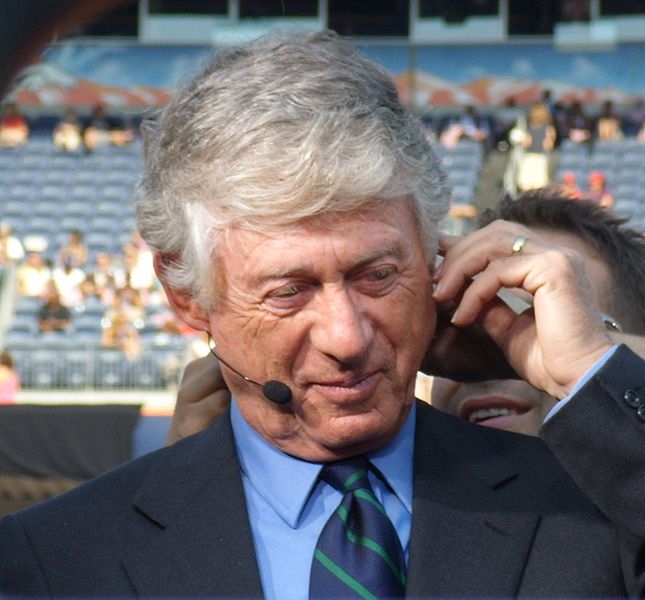
Koppel (Wikicommons)

Koppel renewed his complaint in an interview the other day on NPR’s Talk of the Nation–during which he indulged in some of American journalism’s most alluring mythology.

Specifically, Koppel embraced the mythical “Cronkite Moment” of 1968 and saluted Edward R. Murrow’s legendary report about Senator Joseph McCarthy in 1954–much as Keith Olbermann, Koppel’s nemesis of late, did the other night on his MSNBC show, Countdown.

In the interview on Talk of the Nation, Koppel said one of the most memorable programs in Cronkite’s years as CBS News anchorman was “the piece that he did when he came back after a couple of weeks in Vietnam and of which President Johnson famously said, ‘If I’ve lost Walter Cronkite, I’ve lost the country.'”

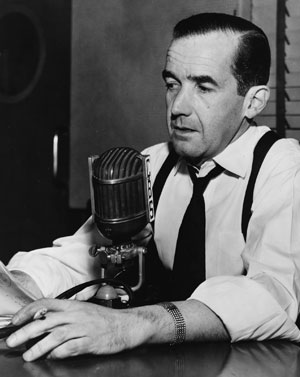
As for Murrow, Koppel said that “what is most remembered about what Ed Murrow did is the extraordinary See It Now piece that he did on Joseph McCarthy.”

Let’s unpack both dubious claims.

Cronkite first.

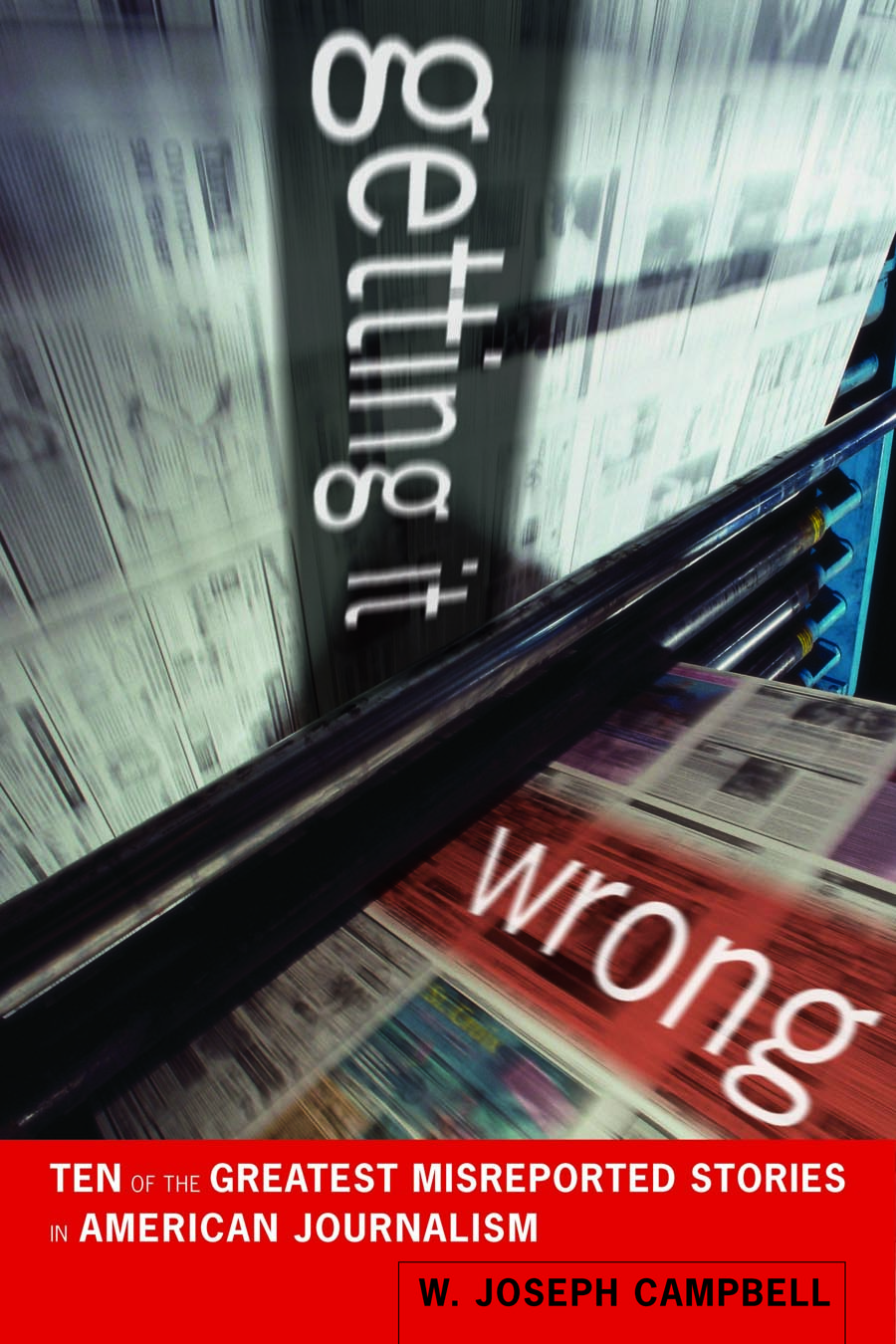
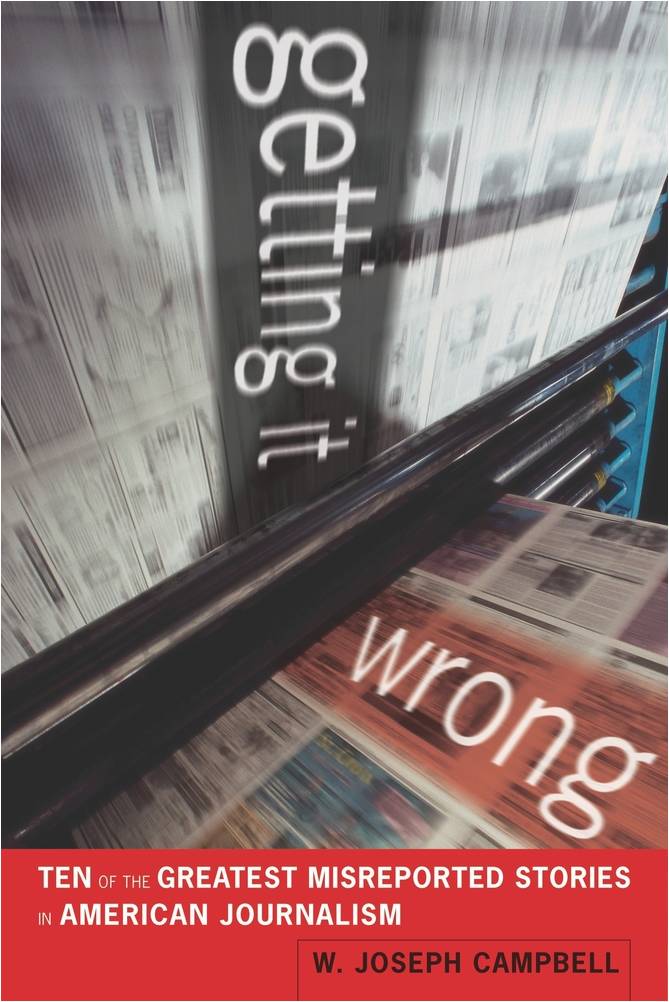
As I write in my latest book, Getting It Wrong, President Lyndon Johnson “did not have—could not have had—the abrupt yet resigned reaction that so often has been attributed to him. That’s because Johnson did not see the [Cronkite] program when it was aired.”

And there’s no evidence he ever saw it on videotape, either.

As such, it’s quite difficult to make a case that Johnson was much moved by a program he didn’t see.

Cronkite closed his report on Vietnam, which aired February 27, 1968, with an editorial comment that the U.S. military effort  was “mired in stalemate” and that negotiations might eventually offer a way out.

Media myth has it that Johnson, at the White House, saw the Cronkite program and, upon hearing the anchorman’s “mired in stalemate” assessment, leaned over, snapped off the television set, and said to an aide or aides:

“If I’ve lost Cronkite, I’ve lost the country.”

Another, more common version quotes Johnson as saying, “If I’ve lost Cronkite, I’ve lost Middle America.”

There are other versions, too, of what the president supposedly said in reaction.

But Johnson wasn’t at the White House that night. He wasn’t in front of a television set, either.
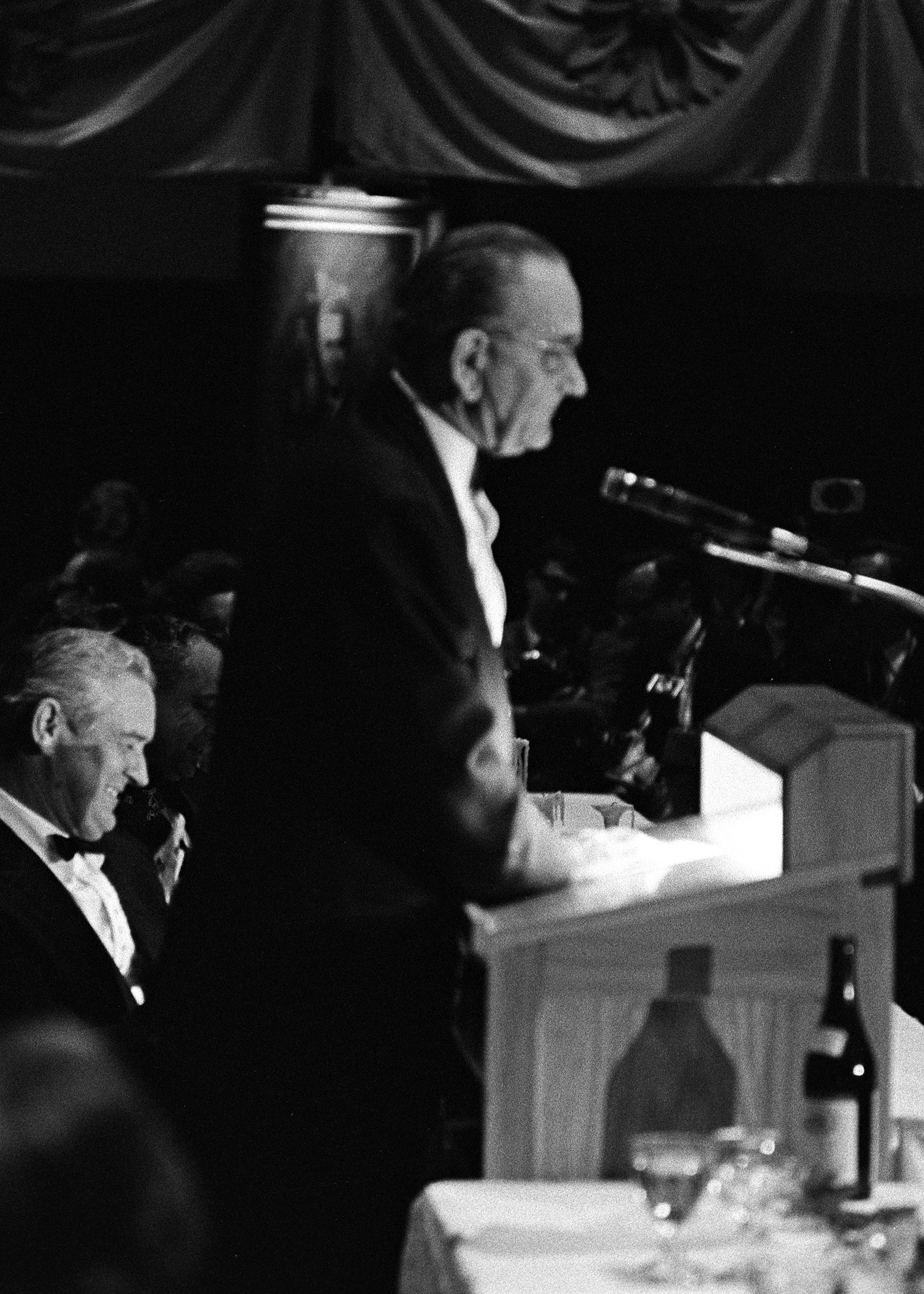
Johnson at Austin

At the time Cronkite offered his downbeat commentary, Johnson was offering light-hearted banter in Austin, Texas, at the 51st birthday party of Governor John Connally.

The president wasn’t agonizing about his policy in Vietnam. He wasn’t wringing his hands about losing the country. He was teasing Connally about his age: “Today you are 51, John,” the president said. “That is the magic number that every man of politics prays for—a simple majority.”

What’s more, Cronkite’s “mired in stalemate” opinion was, by February 1968, neither exceptional nor stunning. Indeed, nearly seven months before Cronkite’s program, the  New York Times published a front-page report that cited “disinterested observers” as saying the war in Vietnam was “not going well.” Victory, the Times reported, “is not close at hand. It may be beyond reach.”

That analysis was published in August 1967, beneath the headline:

“Vietnam: The Signs of Stalemate.”

As for Murrow’s “extraordinary” show about McCarthy: It wasn’t all that extraordinary. It aired March 9, 1954–years after other journalists had begun scrutinizing the senator’s exaggerated claims and hard-ball tactics in campaigning against communists in government.

Long before the See It Now program,” I note in Getting It Wrong, “several prominent journalists—including the Washington-based syndicated columnist Drew Pearson—had become persistent and searching critics of McCarthy, his record, and his tactics.”

Some critics at the time pointed out that the See It Now program had offered nothing new about McCarthy.

“Murrow said nothing, and his cameras showed nothing, that this and some other newspapers have not been saying—and saying more strongly—for three or four years,” Jay Nelson Tuck, the New York Post’s television writer, wrote after the program. He was referring to the 17-part series on McCarthy that ran in the Post in 1951.

“The news” in Murrow’s program, Tuck added, “was in the fact that television was saying it at all.”

Murrow’s collaborator and co-producer, Fred W. Friendly, also rejected claims the See It Now program about Murrow was exceptional or decisive.

Friendly wrote in his memoir:

“To say that the Murrow broadcast of March 9, 1954, was the decisive blow against Senator McCarthy’s power is as inaccurate as it is to say that Joseph R. McCarthy … single-handedly gave birth to McCarthyism.”

Interestingly, a book that Murrow and Friendly compiled in 1955 about the best of the See It Now omitted the 1954 show on McCarthy, the one that Koppel claims was so “extraordinary.”

WJC

Recent and related:

Media history with Olbermann: Wrong and wrong

In Cronkite Moment, Debunking, Media myths, Murrow-McCarthy myth on November 17, 2010 at 7:15 am

MSNBC host Keith Olbermann invoked media history the other night in a blustering, on-air response to criticism by Ted Koppel, the former host of ABC’s Nightline, about hyperpartisanship on cable TV news.

Trouble is, Olbermann got it wrong in the two history lessons he cited–the mythical “Cronkite Moment” of 1968 and the Murrow-McCarthy encounter of 1954.

In both cases, Olbermann bought into tenacious media-driven myths.

The so-called “Cronkite Moment” came on February 27, 1968, when CBS News anchorman said in an on-air commentary that the U.S. war effort in Vietnam was “mired in stalemate” and suggested that negotiations might offer a way out of the morass.

Declared Olbermann: “All that newscast did was convince the 36th president of the United States to not seek reelection.”

It had no such effect.

The media-driven myth surrounding the “Cronkite Moment”–one of 10 media myths debunked in my latest book, Getting It Wrong–has it that Lyndon Johnson, the 36th president, saw the program and, upon hearing the anchorman’s commentary, told an aide or aides, “If I’ve lost Cronkite, I’ve lost Middle America.”

Or words to that effect.

But Johnson didn’t see the show when it aired. He was in Austin, Texas, at the time, offering light-hearted banter at the 51st birthday party of Governor John Connally, a longtime political ally.

The president couldn’t have been much moved by–or decided his political future on–a show he hadn’t seen. And there’s no evidence that he watched it on videotape at some later date.

Johnson announced at the end of March 1968 that he would not seek reelection. It was a stunning development–but the Cronkite show had nothing to do with the president’s decision.

Johnson’s announcement came a couple of weeks after his surprisingly poor showing as a write-in candidate in the Democratic primary in New Hampshire. The president won the primary with 49 percent of the vote. But Senator Eugene McCarthy won 42 percent, an unexpectedly strong result.

Within days, Senator Robert F. Kennedy entered the race for the Democratic presidential nomination. So Johnson faced a brutal course to winning the party’s nomination, not to mention reelection.

Moreover, there’s strong evidence that Johnson never intended to seek another term, that in 1967, or even earlier, he had decided against another campaign for the presidency. (Johnson wrote in his memoir, The Vantage Point: “Long before I settled on the proper forum to make my announcement, I had told a number of people of my intention not to run again.”)

Given those factors, Cronkite’s show at the end of February 1968 recedes into trivial insignificance as a factor in Johnson’s decision not to stand for reelection.

Olbermann in his commentary referred to Edward R. Murrow as “a paragon of straight reporting” and claimed the American press “stood idly by” as Senator Joseph R. McCarthy pursued his communists-in-government witch-hunt.

But on March 9, 1954, on a 30-minute television show called See It Now, “Murrow slayed the dragon,” Olbermann declared.

But neither Murrow, nor his producer Fred Friendly, bought the dragon-slaying interpretation. (The latter wrote in his memoir, Due to Circumstances Beyond Our Control: “To say that the Murrow broadcast of March 9, 1954, was the decisive blow against Senator McCarthy’s power is as inaccurate as it is to say that Joseph R. McCarthy … single-handedly gave birth to McCarthyism.”)

And it’s quite clear that the American press did not stand “idly by” as the scourge of McCarthyism emerged.

Drew Pearson

As I write in Getting It Wrong:

“Long before the See It Now program, several prominent journalists—including the Washington-based syndicated columnist Drew Pearson—had become persistent and searching critics of McCarthy, his record, and his tactics.”

Indeed, Pearson was McCarthy’s most relentless and implacable media foe during the senator’s witch-hunt.

In his widely read column, Pearson ridiculed McCarthy as the “harum-scarum” senator and dismissed his allegations “way off base.” And those characterizations came in February 1950–more than four years before Murrow’s See It Now show on McCarthy.

Pearson was unrelenting in his scrutiny of McCarthy, calling attention to the senator’s tax troubles in Wisconsin and to questionable payments McCarthy received from a government contractor.

McCarthy was so annoyed by Pearson’s probing that he threatened the columnist at a Gridiron Club dinner in Washington, D.C., in May 1950. On that occasion, McCarthy placed a hand on Pearson’s arm and muttered:

“Someday I’m going to get a hold of you and really break your arm….”

That was a prelude to a violent encounter in December 1950, when McCarthy cornered Pearson in the cloakroom of the hush-hush Sulgrave Club in Washington and either kneed the columnist in the groin or slapped him hard across the face.

So, no, the press didn’t stand “idly by” in face of the McCarthy menace.

As I write in Getting It Wrong, by March 1954 Americans weren’t “waiting for a white knight like Murrow to tell them about the toxic threat the senator posed.”

They already knew, from the work of Pearson and others.

And Pearson took on McCarthy when doing was not risk-free.

WJC

Recent and related:

Media myths send ‘misleading’ message of media power

In Cronkite Moment, Debunking, Hurricane Katrina, Media myths, Murrow-McCarthy myth, Newspapers, Spanish-American War, Washington Post, Watergate myth on November 13, 2010 at 9:42 am

In this, the second of three installments drawn from Newsbusters‘ lengthy interview about Getting It Wrong, I discuss why it’s vital to debunk media-driven myths, those dubious tales about the news media that masquerade as factual.

This installment also includes a discussion about the flawed and over-the-top news coverage of Hurricane Katrina‘s aftermath in 2005.

The Newsbusters interview was conducted by Lachlan Markay, who described Getting It Wrong as “exhaustively researched and painstakingly even-handed.”

The third and final excerpt from the interview will be posted tomorrow at Media Myth Alert . The interview transcript is accessible here.

NEWSBUSTERS: So why, personally, do you feel that–you obviously feel it’s very important that these myths be exposed as myths. What’s the damage that these myths do if they carry on unquestioned?

CAMPBELL: I think one of the drawbacks [of media-driven myths] is that they … suggest power that the news media typically do not have. Media power in my view tends to be episodic, tends to be situational, nuanced, and it’s typically trumped by other forces and other factors. Government power, police power tend to overwhelm media power on an average basis in most circumstances.

But these stories–about [Walter] Cronkite, about [Edward] Murrow, about Watergate, about [William Randolph] Hearst, and some of the others in the book–typically send a message that the media have great power, to do good or to do harm.

They can start a war, they can end a war, they can alter the political landscape, they can even bring down a president–they’re that powerful. That’s absolutely a misleading message. It’s not how media power is applied or exerted, and that’s an important reason to debunk these myths.

There’s also some inherent importance too in trying to set the record straight to the extent you can. And in that regard, the book is aligned with the fundamental objective of journalism as practiced in this country, of getting it right, getting the story correct. …

NB: And some of the–the Katrina example comes to mind–some of the myths actually have to do with the media–not just a flawed or misleading understanding of events, but a completely fabricated, and made up and very destructive events sometimes. And I say Katrina because there were all these reports of gunfire in New Orleans, of dead bodies being piled up in the Superdome, none of which was true.

CAMPBELL: That’s right. …  Not only that, but the collective sense that those kinds of media reports gave about New Orleans–the place had just collapsed, the city and its people had collapsed into this sort of apocalyptic, Mad Max-like, nightmarish scene–and it served to besmirch the city and its citizens at the time of their direst need.

And that, I think, is just absolutely reprehensible. And that’s the message that we were getting [from the coverage of Katrina’s aftermath in early September 2005]. …

To the credit of the news media, they did go back –many of them, many of these news organizations–and took a look at how they got it wrong. But that tended to be a one-off kind of thing, and placed … inside the papers.

Broadcast media didn’t do much of this at all. … So even to this day, five years on, I still don’t believe the news media have taken full measure of the mistakes they made in the coverage of Hurricane Katrina.

The tendency is still to blame government–local, state, and certainly federal government–for an inept response. But the story was deeper than that, and it was more complex than that, and that’s the part that the news media got wrong.

NB: And of course one of the consequences of that misreporting was that, as you mention, the federal government especially bore a lot of the blame for what was happening there. And then you also have Murrow taking down perhaps the most notorious cold warrior in our country’s history, you have Cronkite as the standard-bearer for the left’s main cause during the 1960s, you have Woodward and Bernstein taking down a Republican president. Are there political factors at work here, do you think?

CAMPBELL: I think that some of the more enduring myths are those that have appeal across the political spectrum.

The Cronkite moment is one of them–it appeals because this is, for folks on the right, this is a real clear-cut example of how “the news media screwed us in Vietnam, and how they prevented us from winning the war there.” And on the left it’s an example of telling truth to power, and how Walter Cronkite was able to pierce … the nonsense, and make it clear to the Johnson administration that the policy in Vietnam was bankrupt.

Something for everyone.

End of part two

‘Exhaustively researched and painstakingly even-handed’

In Cronkite Moment, Debunking, Media myths, Murrow-McCarthy myth, Newspapers, Spanish-American War, Washington Post, Watergate myth on November 12, 2010 at 10:15 pm

Getting It Wrong is exhaustively researched and painstakingly even-handed,” writes Lachlan Markay in introducing his detailed interview with me about my latest book.

He writes that W. Joseph Campbell “makes sure to stress at the outset that it is not a ‘media-bashing book.’ Rather, the volume stays true to journalism’s real mission: not myth-making, but fact-finding. Campbell seeks to set the record straight where often journalists themselves have obscured it.”

Excerpts of the interview–posted at the lively Newsbusters online site–follow. The transcript of the interview, which runs to 4,200 words, is accessible here. Other excerpts  will be posted at Media Myth Alert tomorrow and Sunday .

NEWSBUSTERS: We as a society, and as a culture, seem to have this iconic image, collective image, of a journalist in the good old days of journalism, of course, as sort of a shadowy figure with a little press label in his hat hammering away at his typewriter all night to make deadline. Is that a media driven myth, and do we have a sort of false nostalgia about the bygone days of journalism, when reporters were hardworking and honest and could really make a difference and affect positive change?

CAMPBELL: I mean, we can look back in those days, and I think very we’re very susceptible in journalism in general, to what I call in the book the Golden Age fallacy. It’s not my construction, others have identified it, but I think its very applicable to journalism to look back and say, “oh, yes, there really was a time when journalism mattered, when [Walter] Cronkite could shift the direction of a war, or [Bob] Woodward and [Carl] Bernstein, two young reporters could bring down a president.”

That’s emblematic of the Golden Age fallacy. …

NB: So how are these media-driven myths created?

CAMPBELL: They come from lots of different sources. Sometimes these are stores that are just too good to be checked out. Like, William Randolph Hearst [and his famous vow], “You furnish the pictures, and I’ll furnish the war.” That sums up not only Hearst and his malignant, toxic personality pretty well, but it also suggests the news media can, at the worst … even bring about a war that the country otherwise wouldn’t have fought.

NB: You open the book with the example of the New York Sun, and mere months before it closes shop, it offers Cronkite and [Edward] Murrow as the paragons of the power of journalism and journalistic integrity and honesty and speaking truth to power. Those are both myths?

CAMPBELL: Yeah, both of ’em. And Murrow–although he’s held up as the white knight of broadcast journalism–was very much a compromised character. Even his own biographers have identified what we would see today as disqualifying ethical lapses in his background. He claimed degrees that he did not earn, he coached Adlai Stevenson on the finer techniques of using television during the 1956 presidential campaign. Privately, he did this, but if that was known, and a well-known broadcast journalist was doing that today–well, I don’t know, but I suspect there would be considerable controversy about that kind of conduct.

Murrow, no white knight

No, Murrow was no white knight. …

NB: Going back to the New York Sun example, these are very self-serving myths sometimes, and today, when traditional journalism, especially print journalism, seems to be on the decline in terms of its influence, are these myths being promoted more than they have traditionally in an attempt by the old guard to convince people of–to make people nostalgic for the time when these honest journalists with integrity spoke truth to power?

CAMPBELL: There is no doubt part of that. That’s one of the factors.

I think that these stories, though, many of them–the Murrow story, the Cronkite story, Watergate, Hearst–are just too good to resist … and they [have] become ingrained as part of the accepted conventional wisdom.

The Watergate story–the dominant narrative of Watergate–really is that Woodward and Bernstein brought down a corrupt president. Now there’s no doubt in my mind that Nixon was corrupt and deserved to be removed from office, but the forces that brought him down were not Woodward and Bernstein. In fact, Woodward and Bernstein and the Washington Post were really marginal to that [outcome]. But it’s become part of the story, part of the dominant narrative, it’s an intriguing story and it lives on that way.

It’s also a very simplistic explanation for a complex historical event, and that’s another reason these myths take hold and live on. Watergate was not–the outcome of Watergate was not due to the Washington Post so much as it was to the combined, collective, if not always coordinated efforts of subpoena-wielding authorities. The FBI, federal prosecutors, special prosecutors, both houses of Congress, ultimately the Supreme Court, which got Nixon to surrender the tapes the prosecutors had wanted, and those tapes quite clearly showed his active role in covering up the seminal crimes of Watergate.

So it took that kind of collective effort over a sustained period of time by people who could compel testimony and could compel the disclosure of evidence in ways that reporters can’t.

End of part one

Inaugurating the Parker-Qualls lecture

In Debunking, Media myths, Spanish-American War, War of the Worlds, Washington Post, Watergate myth, Yellow Journalism on November 11, 2010 at 10:55 pm

I inaugurated last night the Parker-Qualls lecture in communications at the University of North Alabama with an audience of some 300 students, faculty, staff, administrators, and townspeople in attendance.

My talk centered on three of the 10 prominent media-driven myths debunked in  my latest book, Getting It Wrong.

I discussed the heroic-journalist myth that has become the dominant narrative of the Watergate scandal, which ended Richard Nixon’s presidency in 1974; the mythical  “Cronkite Moment” of 1968 that supposedly forced President Lyndon Johnson to realize the futility of the war effort in Vietnam, and The War of the Worlds radio dramatization that reputedly pitched Americans into panic and mass hysteria in 1938.

During the Q-and-A that followed my presentation, I was asked how media audiences can better identify potential media-driven myths, those dubious stories about or by the news media that masquerade as factual. It’s a fine question, with no easy answer.

I advised being wary about media-related stories that just sound too neat and too tidy. The famous vow attributed to William Randolph Hearst–“you furnish the pictures, and I’ll furnish the war”–is a telling example, I said. The quote just seems too good, too perfect to be true.  It deftly captures Hearst as war-monger, but it’s supported by almost no evidence. It’s almost certainly apocryphal.

Media audiences also should apply logic and healthy skepticism to stories about or by the news media and their power, I said, citing The War of the Worlds dramatization as an example. It it really plausible that a radio show–even one as  clever and imaginative as that–really could send tens of thousands, or hundreds of thousands of Americans into the streets in sheer panic and hysteria? It doesn’t seem logical to me.

I also recommended consulting online sources: Some, like Media Myth Alert, are devoted to mythbusting. Even a simple Google search will readily turn skeptical accounts of popular, mediacentric stories.

I also was asked whether there were candidate-media myths that proved to true. Another good question and I couldn’t recall any immediately.

Then I remembered having had suspicions about Joe Namath’s guarantee that the New York Jets would defeat the heavily favored Baltimore Colts in the 1969 Super Bowl. That Namath guaranteed victory sounded to me almost too neat and tidy to be true.  (I privately congratulated myself on remembering being suspicious of that quote,  as it enabled me to mention a football legend who starred at the University of Alabama, a team much followed in Northern Alabama.)

Anyway, it turned out that Namath had indeed made such a guarantee–which I quickly determined in a check of a database of historical newspapers. So that was a candidate myth that proved to be true.

I also was asked what prompted me to write Getting It Wrong. In some ways, I replied, the book built upon previous research. I mentioned my 2001 book, Yellow Journalism: Puncturing the Myths, Defining the Legacies, in which I addressed the myth of Hearst’s famous vow.

I noted that I returned to that topic in the first chapter of Getting It Wrong, offering additional detail about how the often-retold tale about Hearst’s vow took hold and was diffused.

Another inspiration for the book stemmed from my classes at American University. I’ve often included in my courses references to the “Cronkite Moment,” I noted for example, adding that the more I read about and thought about such anecdotes, the more dubious they seemed to be.

And under scrutiny–in researching them–they dissolved as apocryphal or wildly exaggerated.

My hosts at the University of North Alabama have been Greg Pitts, chair of the department of communications, and Jim R. Martin, a journalism historian and editor of the scholarly journal American Journalism.

WJC

Recent and related:

The sporting version of the ‘Cronkite Moment’

In Cronkite Moment, Debunking, Media myths, New York Times, Year studies on November 9, 2010 at 8:01 am

The mythical “Cronkite Moment” is a hardy and impressively flexible tale.

As a presumptive lesson about journalism’s capacity to tell truths to power, the “Cronkite Moment” turns up in the media in all sorts of ways.

He of the 'Cronkite Moment'

It appears even on the sports pages.

The “Cronkite Moment“–in which the downbeat assessment of CBS New anchorman Walter Cronkite supposedly forced President Lyndon Johnson to understand the futility of his Vietnam War policy–turned up yesterday in a column posted at cbssports.com.

In discussing the firing of Wade Phillips as head coach of the Dallas Cowboys football team, columnist Ray Ratto wrote:

“Cronkite one night came out against the war, right there on the evening news (when there were just three networks and the evening news meant something), and Johnson knew at that moment that he was finished. ‘If I’ve lost Cronkite,’ Johnson is alleged to have said, ‘I’ve lost Middle America.””

Flexibility may make the anecdote appealing and long-lived. But it doesn’t mean it’s true.

As I discuss in my latest book, Getting It Wrong, the “Cronkite Moment” is  a media-driven myth, a tall tale about the news media masquerading as factual.

Let’s unpack what Ratto wrote:

  • Cronkite didn’t really come “out against the war”: He described the U.S. military effort in Vietnam as “mired in stalemate,” which hardly was a striking or novel interpretation at time his assessment was offered in early 1968.
  • Cronkite didn’t present his “mired in stalemate” commentary on the evening news: It came at the end of an hour-long special report about Vietnam that aired February 27, 1968.
  • Johnson did not know “at that moment that he was finished.” Johnson, as I discuss in Getting It Wrong, didn’t even see the Cronkite program when it aired. The president at the time was in Austin, Texas, making light-hearted comments at the 51st birthday party of Governor John Connally, a longtime political ally.

At about the time Cronkite was uttering his “mired in stalemate” comment, Johnson wasn’t in front of a television set. He didn’t exclaim, “If I’ve lost Cronkite, I’ve lost Middle America”–or words to that effect. He said:

“Today you are 51, John. That is the magic number that every man of politics prays for—a simple majority. Throughout the years we have worked long and hard—and I might say late—trying to maintain it, too.”

There was no woe-is-me about having “lost Cronkite.” There was no epiphany for the president that his war policy was a shambles.

Only a light-hearted comment about Connally’s turning 51.

The power of the “Cronkite Moment,” I write in Getting It Wrong, lies “in the sudden, unexpected, and decisive effect it supposedly had on the president.” Had Johnson seen the program later, on videotape, it would not have carried the sudden, unexpected punch that the “Cronkite Moment” is presumed to have had.

Indeed, I write, “Such an effect would have been absent, or greatly diminished, had Johnson had seen the program on videotape at some later date.”

As I say, Cronkite’s “mired in stalemate” view was neither notable nor extraordinary in early 1968. Mark Kurlansky wrote in his fine year-study about 1968 that Cronkite’s view was “hardly a radical position” for the time.

Indeed, nearly seven months before Cronkite’s program, a report in the  New York Times had cited “disinterested observers” in reporting that the war in Vietnam “is not going well.” Victory, the Times reported, “is not close at hand. It may be beyond reach.”

This analysis was published on the Times’ front page in August 1967, beneath the headline:

“Vietnam: The Signs of Stalemate.”

WJC

Recent and related:

‘Getting It Wrong’ among 90 titles at NPC Book Fair

In 1897, Cronkite Moment, Debunking, Hurricane Katrina, Media myths, Murrow-McCarthy myth, Newspapers, Washington Post, Watergate myth, Year studies on November 8, 2010 at 11:55 am

I will be among more than 90 authors signing and selling their recent books tomorrow evening at the annual National Press Club Book Fair and Authors’ Night.

My latest book, Getting It Wrong, will be among the titles at the Press Club event.

The book fair this year brings together a variety of authors, including one of my favorite journalism historians, Maurine Beasley of the University of Maryland; Jack Fuller, author of What Is Happening To News, and Chesley (“Sully”) Sullenberger, the pilot who safely landed a stricken passenger airliner on the Hudson River in January 2009.

The Book Fair is a fine occasion. I attended the event in 2006 and had a great time. My book at that event was The Year That Defined American Journalism: 1897 and the Clash of Paradigms.

Getting It Wrong, which came out during the summer, addresses and debunks 10 prominent media-driven myths. These are stories about and/or by the news media that widely believed and often retold but which, under scrutiny, dissolve as apocryphal or wildly exaggerated.

I liken them to the “junk food” of journalism–delicious and appealing, perhaps, but not terribly healthy or nutritious.

The myths debunked in Getting It Wrong include some of the most cherished stories American journalism tells about itself, including:

“Because it takes on some of the most treasured stories in American journalism,” I write in the introduction to Getting It Wrong, the book “is a work with a provocative edge. It could not be otherwise.”

I further write that Getting It Wrong “aligns itself with a central objective of newsgathering—that of seeking to get it right, of setting straight the record by offering searching reappraisals of some of the best-known stories journalism tells about itself.

“Given that truth-seeking is such a widely shared and animating value in American journalism,” I add, “it is a bit odd that so little effort has been made over the years to revisit, scrutinize, and verify these stories. But then, journalism seldom is seriously introspective, or very mindful of its history. It usually proceeds with little more than a nod to its past.”

I point out that media myths take hold for a variety of reasons: Because they delicious stories that are almost too good not to be true; because they are reductive in offering simplistic interpretations of complex historical events, and because they are self-flattering in that they place journalists at the decisive center of important developments.

The Book Fair opens at 5:30 p.m. Admission is free for members, and $5 for non-members.

WJC

Recent and related:

LBJ ‘changed Vietnam policy based on Cronkite’s views’? Hardly

In Cronkite Moment, Debunking, Media myths on November 7, 2010 at 10:16 am

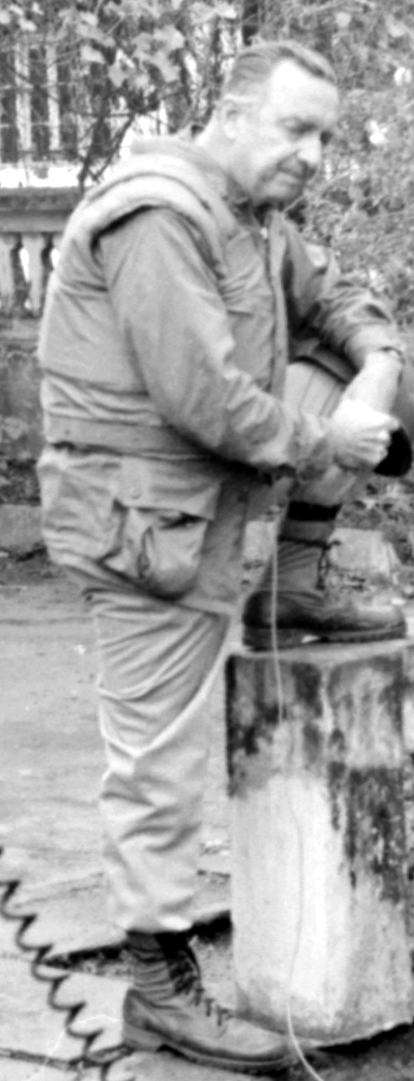
Cronkite in Vietnam, 1968

The presumptive “Cronkite Moment” is one of American journalism’s most memorable occasions. It was a time, supposedly, when a leading media figure offered analysis so penetrating and revealing that it altered U.S. foreign policy.

That notion was reiterated the other day in a commentary posted at the Big Journalism online site. The commentary alluded to the broadcast in February 1968 in which CBS News anchorman Walter Cronkite declared that the U.S. war effort in Vietnam was “mired in stalemate.” President Lyndon Johnson supposedly saw the Cronkite report and, upon hearing the anchorman’s assessment, realized his war policy was a  shambles.

“If I’ve lost Cronkite,” Johnson purportedly declared, “I’ve lost Middle America.”

Another version has the president saying: “If I’ve lost Cronkite, I’ve lost the war.”

In a clear reference to the mythical “Cronkite Moment,” the Big Journalism commentary stated:

“LBJ was afraid of the activist old media when he changed his Vietnam policy based on what Walter Cronkite thought. Nothing could be more sad and pathetic than that and America paid a dear price for Johnson’s fear of the media.”

As I discuss in my latest book, Getting It Wrong, the Cronkite program on Vietnam quite simply did not have the powerful effects so often attributed to it. The “Cronkite Moment” is one hardy media-driven myth.

I further note in Getting It Wrong:

“Scrutiny of the evidence associated with the program reveals that Johnson did not have—could not have had—the abrupt yet resigned reaction that so often has been attributed to him. That’s because Johnson did not see the program when it was aired.”

The president was not in front of a television set when Cronkite’s report on Vietnam aired on the evening of February 27, 1968. He was not at the White House. He was in Austin, Texas, attending the 51st birthday party of a longtime political ally, Governor John Connally.

And about the time Cronkite was intoning his “mired in stalemate” assessment, Johnson wasn’t throwing up his hands in despair over his war policy. He was offering light-hearted banter about Connally’s age, saying:

“Today you are 51, John. That is the magic number that every man of politics prays for—a simple majority. Throughout the years we have worked long and hard—and I might say late—trying to maintain it, too.”

There is no evidence that Johnson ever watched a recording of the Cronkite show. Johnson’s memoir, The Vantage Point, is silent about the program, offering no clue as to whether he ever saw it or, if he did, what he thought of it.

In any case, the power of the reputed “Cronkite Moment” lies “in the sudden, unexpected, and decisive effect it supposedly had on the president,” I note in Getting It Wrong. “Such an effect would have been absent, or greatly diminished, had Johnson had seen the program on videotape at some later date.”

I also write:

“Even if he had seen Cronkite’s program on videotape, Johnson gave no indication of having taken the anchorman’s message to heart.

“Just three days after the program aired, Johnson vowed in remarks at a testimonial dinner in Texas that the United States would ‘not cut and run’ from Vietnam. ‘We’re not going to be Quislings,’ the president said, invoking the surname of a Norwegian politician who helped the Nazis take over his country. ‘And we’re not going to be appeasers.'”

In the immediate aftermath of the Cronkite program, Johnson remained hawkish on the war in Vietnam. He was not moved by a TV show he had not seen.

WJC

Recent and related:

SRO for ‘Getting It Wrong’ talk at UMd

In Anniversaries, Cronkite Moment, Debunking, Furnish the war, Jessica Lynch, Media myths, Media myths and radio, War of the Worlds, Washington Post, Watergate myth on November 5, 2010 at 11:50 am

A terrific audience of journalism students and faculty turned out last night for my talk at the University of Maryland’s Merrill College of Journalism.

It was standing-room-only at the Knight Hall conference room, where I discussed several chapters in my latest book, Getting It Wrong, which debunks 10 prominent media-driven myths.

I walked through the heroic-journalist myth of the Watergate scandal that toppled Richard Nixon’s presidency; the mythical  “Cronkite Moment” of 1968 that reputedly shifted U.S. public opinion about the war in Vietnam, and The War of the Worlds radio dramatization of 1938 that supposedly panicked listeners across the United States.

During the Q-and-A period that followed, I touched on the famous vow to “furnish the war” attributed to William Randolph Hearst and on the erroneously reported battlefield heroics of Private Jessica Lynch early in the Iraq War.

An intriguing question from the audience was what message should students take away from a book that identifies as media-driven myths some of the best-known stories in American journalism. The implication was that mythbusting may undercut the regard would-be journalists have for the profession.

I replied by saying that I  don’t consider Getting It Wrong a media-bashing book: Such books are many on the market as it is.

Rather, I said, the mythbusting in Getting It Wrong is aligned with the fundamental objective of American journalism. And that is to get it right, to offer an account that is as accurate as possible.

And it does journalism little good to indulge in tales such as the heroic-journalist myth of Watergate or the mythical “Cronkite Moment” that offer misleading interpretations about the news media and their power.

Debunking media myths, as I write in Getting It Wrong, “can help to place media influence in more coherent context.”

Nor should we worry about students being disappointed that well-known and even cherished stories about American journalism have been exposed as mythical. It shouldn’t be disheartening to learn the news media aren’t necessarily the powerful forces they are often believed to be.

Students can handle it.

Not only that, but mythbusting can offer them useful lessons in the importance of applying skepticism and a critical eye to dominant narratives and received wisdom of American journalism.

Indeed, Professor John Kirch, host and organizer of my talk at Maryland, does just that in presenting these and other tales in his journalism classes. Doing so can become a revealing exercise in critical thinking.

I also was asked about candidate-myths for a prospective sequel to Getting It Wrong.

A strong candidate for such a book, I said, is the myth of viewer-listener disagreement in the first Kennedy-Nixon debate in 1960.

The myth has it that people who watched the debate on television thought that Senator John F. Kennedy won; those who listened on radio thought Vice President Richard Nixon had the better of the exchanges.

The notion of listener-viewer-disagreement was long ago debunked by David L. Vancil and Sue D. Pendell, in an article in Central States Speech Journal. They noted that reports of viewer-listener disagreement typically were anecdotal and the few surveys that hinted at a viewer-listener disconnect were too small and unrepresentative from which to make confident judgments.

But the myth is a hardy one, I noted, and it resurfaced in late September, at the 50th anniversary of the Kennedy-Nixon encounter.

Among the 80 or so people in attendance last night was Jamie McIntyre, former Pentagon correspondent for CNN. Afterward, we compared notes about the misreported Lynch case, which the Washington Post propelled into the public domain with a botched, front-page story in early April 2003.

Recent and related:

‘If I’ve lost Cronkite’–ever-hardy, and illusory

In Cronkite Moment, Debunking, Media myths, Newspapers on November 4, 2010 at 5:15 pm

Few tales in American journalism are as hardy as the mythical “Cronkite Moment,” that occasion in late February 1968 when an on-air commentary by CBS News anchorman Walter Cronkite altered a president’s thinking about the war in Vietnam.

The purported “Cronkite Moment” is so trenchant, so believable and revealing that it lives on as a timeless example of the power of the news media–of how effective they can be as forces for truth-telling.

Problem is, the “Cronkite Moment” is illusory.

As I discuss in my latest book, Getting It Wrong, the anecdote is dubious and improbable on many grounds.

Still, the “Cronkite Moment” made another appearance recently, this time in column posted at the New York edition of examiner.com. The column declared:

“President Lyndon Johnson is reported to have said, referring to diminishing support from pivotal 1960s news anchor Walter Cronkite, ‘If I’ve lost Cronkite, I’ve lost Middle America.'”

The anecdote centers around Cronkite’s special program on the Vietnam War, a show that aired February 27, 1968. Near the end of the report, Cronkite declared the U.S. war effort was “mired in stalemate” and suggested negotiations with the communist North Vietnamese as a way to end the conflict.

At the White House, Johnson supposedly watched the Cronkite program. Upon hearing the anchorman’s assessment, the president supposedly snapped off the television set and told an aide or aides:

“If I’ve lost Cronkite, I’ve lost Middle America.”

Or something to that effect. As I point out in Getting It Wrong, versions vary markedly as to what the president supposedly said. And acute version variability can be a marker of a media-driven myth.

The anecdote’s broader point is that Cronkite was such an honest and trusted figure that his views could sway opinions of thousands of Americans. And with Cronkite having gone wobbly on Vietnam, the Johnson White House supposedly reeled.

But the Cronkite program on Vietnam quite clearly had no such effect.

Johnson didn’t see the show when it aired. He wasn’t in front of a television set; nor was he at the White House.

The president that night was in Austin, Texas, attending the 51st birthday party of a longtime political ally, Governor John Connally.

At about the moment Cronkite was intoning his “mired in stalemate” commentary, Johnson was offering light-hearted banter about Connally and his age.

“Today you are 51, John,” the president told Connally. “That is the magic number that every man of politics prays for—a simple majority. Throughout the years we have worked long and hard—and I might say late—trying to maintain it, too.”

Earlier that day, Johnson has delivered a rousing speech in Dallas, in which he cast America’s role in Vietnam in Churchillian terms.

“There will be blood, sweat and tears shed,” the president declared, adding:  “I do not believe that America will ever buckle” in pursuit of its objectives in Vietnam.

Even if the president did see the Cronkite program, or was told about the show, it is exceedingly difficult to imagine how his mood could have swung so abruptly, from vigorously defending the war effort to throwing up his hands in despair.

But if the “Cronkite Moment” is to be believed, that’s what happened: An abrupt, dramatic, and decisive change of heart occurred within hours of the president’s hawkish speech in Dallas.

And that’s just not likely.

WJC

Recent and related: