W. Joseph Campbell

Posts Tagged ‘All the President’s Men’

A ‘certain American paper brought down a certain president’

In Debunking, Media myths, Newspapers, Washington Post, Watergate myth on September 29, 2011 at 4:14 am

It’s impressive how strictly American media myths can win such eager embrace in international contexts.
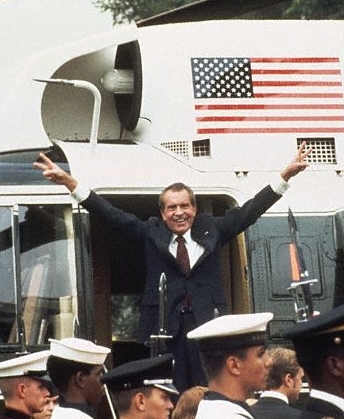
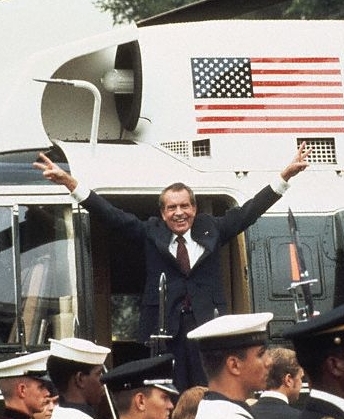
A certain American president leaves office

The heroic-journalist myth of Watergate is a telling example.

India’s leading English-language newspaper, the Hindu, invoked that myth the other day in a commentary that declared:

“More than 30 years ago, a certain American newspaper brought down a certain president by courageously exposing his wrongdoings entirely on the strength of information supplied by an anonymous source. It was not until some quarter of a century later that the real identity of Washington Post’s source for its expose of the Watergate scandal was revealed.”

Alright, let’s unbundle that myth-freighted paragraph:

  • Richard Nixon’s corrupt presidency was not brought down by the Washington Post, or by any other American newspaper — a topic I discuss in my media mythbusting book, Getting It Wrong.
  • Nixon’s fall in 1974 had nothing to do with “information supplied by an anonymous source” — a reference to the Post’s stealthy, high-level contact code-named “Deep Throat.” In 2005, a former senior FBI official named W. Mark Felt announced that he had been the Post’s Deep Throat.”

I note in Getting It Wrong that the heroic-journalist interpretation of Watergate — “the endlessly appealing notion that the dogged reporting of two young, hungry, and tireless Washington Post journalists, Bob Woodward and Carl Bernstein, brought down Nixon and his corrupt presidency” — has become the dominant narrative of the greatest scandal in American political history.

“But to explain Watergate through the lens of the heroic-journalist is,” I write, “to abridge and misunderstand the scandal and to indulge in a particularly beguiling media-driven myth.”

I point out that the heroic-journalist trope “minimizes the far more decisive forces that unraveled the scandal and forced Nixon from office.”

Those forces, I write, included “the collective if not always the coordinated forces of special prosecutors, federal judges, both houses of Congress, the Supreme Court, as well as the Justice Department and the FBI.”

But even then, Nixon likely would have served out his second term as president if not for the audiotape recordings he secretly made of most conversations in the Oval Office of the White House.

Only when compelled by the Supreme Court in July 1974 did Nixon surrender the recordings that captured him plotting to cover up his administration’s ties to the burglary at the headquarters of the Democratic National Committee in Washington.

I note that the heroic-journalist interpretation “has become the dominant popular narrative of the Watergate scandal for several reasons,” including:

Woodward and Bernstein’s book about their reporting of the unfolding Watergate scandal; the popular cinematic version of their book, All the President’s Men, and the years-long guessing game about the identity of “Deep Throat,” with whom Woodward (but never Bernstein) met periodically in 1972 and 1973, while investigating Watergate.

The role of “Deep Throat,” the reporters wrote in All the President’s Men, was to “confirm information that had been obtained elsewhere and to add some perspective.”

Those factors, I write, “combined to place Woodward and Bernstein at the center of Watergate in popular consciousness” while projecting and reinforcing the erroneous notion that the scandal’s outcome pivoted on disclosures reported by the news media.

WJC

Recent and related:

The ‘stories that brought down a president’: Sure, they did

In Debunking, Media myths, Washington Post, Watergate myth on September 26, 2011 at 3:31 am

The Guardian, one of London’s top newspapers, bought into Watergate’s dominant myth yesterday in a flattering article about Carl Bernstein, who teamed with Bob Woodward to report the scandal for the Washington Post.

Referring to the resignation of President Richard Nixon in 1974 at the height of Watergate, the Guardian asserted that Bernstein and Woodward produced “a string of stories that brought down a president.”

That claim may be the dominant narrative of Watergate. But it’s simplistic, a media-centric misreading of history.

As I discuss in my latest book, Getting It Wrong, the heroic-journalist interpretation of Watergate — the notion that Bernstein and Woodward’s dogged reporting forced Nixon from office in disgrace — “minimizes the far more decisive forces that unraveled the scandal and forced Nixon from office.”

Bernstein: Didn't bring down Nixon

Those forces included special Watergate prosecutors, federal judges, bipartisan panels of both houses of Congress, the U.S. Supreme Court, as well as the Justice Department and the FBI.

To explain Watergate through the lens of the heroic-journalist interpretation, I write in Getting It Wrong, is to short-change and “misunderstand the scandal and to indulge in a particularly beguiling media-driven myth.”

The myth, though, is endlessly appealing – as the Guardian article suggested.

Interestingly, though, not even the Washington Post embraces the heroic-journalist trope.

For example, Michael Getler, then the newspaper’s ombudsman wrote in 2005:

“Ultimately, it was not The Post, but the FBI, a Congress acting in bipartisan fashion and the courts that brought down the Nixon administration. They saw Watergate and the attempt to cover it up as a vast abuse of power and attempted corruption of U.S. institutions.”

And Ben Bradlee, the Post’s executive editor during and after Watergate, said on the Meet the Press interview show in 1997:

[I]t must be remembered that Nixon got Nixon. The Post didn’t get Nixon.”

Even Woodward has dismissed the heroic-journalist interpretation, stating in an interview with American Journalism Review:

To say the press brought down Nixon, that’s horse shit.”

What brought down Nixon’s presidency was evidence of his guilty role in the crimes of Watergate — evidence captured on audiotapes that he secretly made of his conversations at the White House.

The decisive evidence — known as the “Smoking Gun” tape — revealed that Nixon at a meeting with his top aide, H.R. Haldemann, on June 23, 1972, sought to deflect or derail the FBI investigation into the Watergate burglary.

Bernstein and Woodward didn’t reveal the contents of that tape, which Watergate prosecutors had subpoenaed and which Nixon refused to surrender until ordered by the U.S. Supreme Court to comply.

Nor did Bernstein and Woodward reveal the existence of Nixon’s taping system, which proved so crucial to Watergate’s outcome.

In All the President’s Men, their book about their Watergate reporting, Bernstein and Woodward said they had received a tip about the taping system a few days before its existence was made public in July 1973.

But according to the book, Bradlee, the executive editor, suggested not expending much energy pursuing the tip. And they didn’t.

WJC

Recent and related:

Talking media myths on ‘Community Voices’

In Debunking, Media myths, Media myths and radio, Newspapers, Washington Post, Watergate myth on September 3, 2011 at 3:14 pm

The exaggerated tales of Watergate, Hurricane Katrina, and crack babies were the principal media myths I discussed the other day in an interview on KPCW Radio in Utah.

The interview focused on those chapters of my latest book, Getting It Wrong, and was conducted by Larry Warren and Linda Gorton on their  “Community Voices” show.

I noted early in the interview that the “animating force” in American journalism is to get the story right and that Getting It Wrong “is associated with that ethos of truth-telling, of seeking to get the story right.”

The interviewers quickly turned to Watergate, asking whether the reporting of Bob Woodward and Carl Bernstein for the Washington Post was what indeed drove President Richard Nixon to resign in 1974.

“That is the dominant narrative of Watergate,” I pointed out, adding that’s also a very simplistic explanation for rolling up what was a complex scandal.

“To unravel the complexity and the intricacy of Watergate,” I said, “took all kinds of forces, most of them subpoena-wielding — federal prosecutors, the FBI, bipartisan panels of both houses of Congress, ultimately Supreme Court, which forced Richard Nixon to surrender the evidence which clearly showed that he had conspired with top aides to try to cover up the investigation into the Watergate break-in, the signal crime of the scandal.

“Against that backdrop, the contributions of Woodward and Bernstein fade into relative insignificance,” I said.

Another reason that Watergate’s dominant narrative focuses so squarely on Woodward, Bernstein, and the Washington Post is, I said, the cinematic version of the reporters’ book, All the President’s Men.

It surely is the most-watched movie ever made about Watergate, and “it really does focus,” I noted, “on the work of Woodward and Bernstein to the exclusion” of the forces and factors that were truly decisive in bringing down Nixon’s corrupt presidency.

“I think we know,” Warren interjected, “that you’re not going to be invited to Mr. Woodward’s for dinner anytime soon.”

“You know,” I replied, Woodward “has said something to the effect of, ‘to say the press brought down Richard Nixon is total nonsense.’ He used earthier terms to make that point.”

The reference to Woodward’s comment in an interview in 2004 with American Journalism Review in which he asserted:

To say the press brought down Nixon, that’s horse shit.”

I also discussed the notion that news coverage of Hurricane Katrina was superlative, that it supposedly “demonstrated the value and importance of traditional news media, both print and broadcast, at a time of disaster. And Hurricane Katrina was no small storm. It was no [Hurricane] Irene, that’s for sure.”

But I added:

“The coverage of Hurricane Katrina was no high heroic moment in American journalism because, on many important elements of that story, the news media got it badly wrong.”

The hurricane’s death toll was “wildly exaggerated,” I noted, adding that the “apocalyptic reports that the news media put out in the days after Hurricane Katrina’s landfall proved to be largely untrue.

“There were no snipers firing at medical personnel, no snipers firing at [rescue] helicopters. No bodies stacked up like cordwood, no children with their throats slashed. No roving gangs preying on tourists. No sharks plying the flood waters of New Orleans.

“All these reports were out there,” I said, but in the end “none of them was verified or substantiated.”

The erroneous and exaggerated reports of violence in post-Katrina New Orleans in some cases had the effect of delaying the arrival and delivery of aid to the storm-stricken city, I noted.

The social disaster that the news media anticipated in the purported — and widely misreported — “crack baby” epidemic never took place, I pointed out.

More than one news commentator, I said, described as a “bio-underclass” the generation that would come of age after having been exposed to crack cocaine in the womb. These children supposedly would be so mentally and physically deformed as to be forever dependent on the state.

“The news media were spectacularly wrong about the crack baby epidemic,” I said, noting that news reports in the late 1980s and early 1990s “pushed very hard on preliminary evidence suggesting there was a powerful linkage between taking crack during pregnancy and subsequent deformities in children.”

To their discredit, I added, the news media never went back in a sustained and systematic way to undertake to dismantle the crack-baby myth — “even after consensus had taken hold among scientists and biomedical researchers that [prenatal] exposure to crack was not this destructive force that preliminary research had suggested.”

WJC

Recent and related:

Woodward, Bernstein toppled Nixon? Think again

In Media myths, Washington Post, Watergate myth on August 27, 2011 at 9:58 am

'Nixon got Nixon'

The passing of time is making the heroic-journalist narrative of Watergate even more heroic.

A commentary yesterday at Huffington Post suggests as much, in extolling — and overstating — the accomplishments of Bob Woodward and Carl Bernstein, the Washington Post reporters who covered the scandal.

The commentary, which considers the state of investigative reporting, says Woodward and Bernstein “plugged away for two years at the Watergate story through thick and thin and false leads. They were determined to nail then President Richard Nixon for authori[z]ing a break in at the Democratic Party HQ during his re-election campaign and then organi[z]ing a cover up. They did, with his resignation in August 1974.”

Woah. A lot of overstatement there.

First, there’s no evidence that Nixon authorized or even knew in advance about the burglary in June 1972 at the headquarters of the Democratic National Committee, the signal crime of Watergate.

Nixon, however, certainly did seek to block the FBI’s investigation of the breakin — and for that obstruction of justice, he was compelled to resign the presidency in disgrace.

But more important is that Woodward and Bernstein didn’t “nail” Nixon on Watergate. As I discuss in my latest book, Getting It Wrong, their investigative reporting for the Post certainly didn’t bring down Nixon’s corrupt presidency.

The heroic-journalist interpretation of Watergate, I write in Getting It Wrong, is to “misunderstand the scandal and to indulge in a particularly beguiling media-driven myth.

“The heroic-journalist interpretation,” I add, “minimizes the far more decisive forces that unraveled the scandal and forced Nixon from office.” Those forces included bipartisan panels of both houses of Congress, special federal Watergate prosecutors, federal judges, the Justice Department, the FBI, and the U.S. Supreme Court.

If inelegantly, even Woodward has concurred, declaring in an interview in 2004:

To say the press brought down Nixon, that’s horse shit.”

What toppled Nixon, what brought down his presidency, was clear evidence of his culpability in the crimes of Watergate — evidence captured on audiotapes that he secretly made of his conversations at the White House.

The decisive evidence — known as the “Smoking Gun” tape — revealed that Nixon at a meeting with his top aide, H.R. Haldemann, on June 23, 1972, sought to deflect or derail the FBI investigation into the Watergate burglary.

Woodward and Bernstein didn’t reveal the contents of that tape, which Watergate prosecutors had subpoenaed and which Nixon had refused to surrender until ordered to do so by the U.S. Supreme Court.

Nor did Woodward and Bernstein disclose the existence of Nixon’s secret taping system. That was revealed in July 1973, during hearings of the Senate Select Committee on Watergate.

In All the President’s Men, their book about their reporting, Woodward and Bernstein said they had received a tip about the taping system a few days before its existence was made public.

According to All the President’s Men, Ben Bradlee, then the Post‘s executive editor, suggested not expending much energy pursuing the tip. And they didn’t.

Interestingly, Bradlee also insisted the Post did not nail Nixon.

Speaking on a Meet the Press interview program at the 25th anniversary of the Watergate break-in, Bradlee declared:

[I]t must be remembered that Nixon got Nixon. The Post didn’t get Nixon.”

WJC

Recent and related:

Misreporting Watergate

In Debunking, Media myths, Washington Post, Watergate myth on August 20, 2011 at 5:15 am

That new historical marker at the parking garage where Bob Woodward of the Washington Post occasionally met his stealthy “Deep Throat” source has stirred some cheery buzz among journalists — and some breathtaking exaggeration about the consequences of Woodward’ reporting on the Watergate scandal.

Credit: Odestreet.com

The marker titled “Watergate Investigation” went up late last week outside the garage in the Rosslyn section of Arlington, Virginia.

As I’ve noted at Media Myth Alert, the marker errs in stating that information Deep Throat” (who in 2005 was self-revealed to have been W. Mark Felt) provided Woodward “exposed the Nixon administration’s obstruction of the FBI’s Watergate investigation.”

For some news outlets commenting about the marker, it has been occasion to assert hyperbolic claims that the Post’s reporting on Watergate brought down Richard Nixon’s scandal-riddled presidency.

For example, the widely followed all-news radio station in Washington, WTOP,  said yesterday in its report about the marker:

“Mark ‘Deep Throat’ Felt, passed state secrets to Washington Post reporter Bob Woodward for a string of stories that would eventually take down a president — what would come to be known as the Watergate scandal.”

Quite simply not true.

Felt, formerly a top official at the FBI, offered Woodward mostly incremental details about Watergate as the scandal unfolded in 1972 and 1973. And as Woodward noted in the book, All the President’s Men, the role of “Deep Throat” was “only to confirm information that had been obtained elsewhere, and to add some perspective.”

It was hardly the stuff of “state secrets.”

More important, the reporting of Woodward and his Post colleague Carl Bernstein assuredly did not “take down” Nixon’s presidency.

Embracing that interpretation of Watergate, I write my media-mythbusting book, Getting It Wrong, “is to abridge and misunderstand the scandal and to indulge in a particularly beguiling media-driven myth.”

It’s an interpretation that not even officials at the Post have endorsed.

For example, Kathryn Graham, the newspaper’s publisher during and after Watergate, said in 1997, at a Newseum program marking the scandal’s 25th anniversary:

“Sometimes people accuse us of bringing down a president, which of course we didn’t do. The processes that caused [Nixon’s] resignation were constitutional.”

And Woodward, in earthier terms, has concurred, telling American Journalism Review in 2004:

To say that the press brought down Nixon, that’s horseshit.

The popular Washington entertainment blog, DCist, offered an even stranger interpretation of “Deep Throat” and his meetings with Woodward in the garage.

DCist, in a brief report about the marker, said yesterday the garage was where  “the informant, the FBI’s Mark ‘Deep Throat’ Felt, fessed up to what would eventually become the Watergate scandal that brought down President Richard Nixon.”

Huh? The “Deep Throat” source “fessed up to what would eventually become the Watergate scandal”?

“Fessed up”?

Such wording suggests that Felt/”Deep Throat” was a culprit or a suspect in the Watergate scandal.

Which he wasn’t.

Felt in fact wasn’t even around the FBI when the scandal reached its climax with Nixon’s resignation in August 1974.

He had been passed over for the FBI directorship and left the agency in 1973. Felt last conferred with Woodward at the Arlington garage in November that year.

But that’s not to say Felt was beyond reproach.

He really wasn’t such a hero.

In his senior position at the FBI, Felt had authorized illegal burglaries in the early 1970s as part of the agency’s investigations into leftists associated with the radical Weather Underground.

Felt was convicted in 1980 on felony charges related to those break-ins, but pardoned by President Ronald Reagan.

So if it not Felt’s tips to Woodward, what then brought down Nixon?

As I point out in Getting It Wrong, rolling up a scandal of Watergate’s complexity and dimension demanded “the collective if not always the coordinated forces of special prosecutors, federal judges, both houses of Congress, the Supreme Court, as well as the Justice Department and the FBI.

“Even then,” I write, “Nixon likely would have served out his term if not for the audiotape recordings he secretly made of most conversations in the Oval Office of the White House.”

Only when compelled by the Supreme Court did Nixon surrender the recordings that captured him plotting to cover up the break-in in June 1972, the signal crime of Watergate.

WJC

Recent and related:

Following the money on 37th anniversary of Nixon’s fall

In Anniversaries, Cinematic treatments, Debunking, Media myths, Washington Post on August 9, 2011 at 12:55 am

Nixon resigns, 1974

It’s somehow fitting on this, the 37th anniversary of President Richard Nixon’s resignation, to direct attention to the myth and hyperbole that embrace the best-known line of the Watergate scandal, the line that supposedly helped bring him down.

That line, of course, is “follow the money,” which purportedly was crucial advice given the Washington Post by a super-secret, high-level source code-named “Deep Throat.”

Follow the money” was said to have been so telling and effective that it’s still cited as exemplary guidance applicable in journalism, politics, and finance.

Just yesterday, for example, Barry Nolan, a journalist and contributor to Boston Magazine’sBoston Daily” blog, invoked the famous phrase, writing:

“Any time you really want to know why a vote happened the way it did, the single best piece of advice ever given came from ‘Deep Throat,’ the shadowy tipster in the Watergate scandal. ‘Follow the money,’ he told the Washington Post reporters.”

It may seem like stellar advice, but it’s guidance that the “Deep Throat” source offered only in the movies.

As I’ve discussed at Media Myth Alert, “follow the money” is Watergate’s most famous made-up line.

The phrase was written into the screenplay of All the President’s Men, the 1976 cinematic version of the book by Bob Woodward and Carl Bernstein of the Washington Post.

“Follow the money” appears nowhere in Woodward and Bernstein’s book about their Watergate reporting — reporting that did not, as I discuss in my latest work, Getting It Wrong, take down Nixon’s corrupt presidency.

Nor did “follow the money” appear in any Watergate-related news article or editorial in the Post until June 1981, nearly seven years after Nixon’s resignation.

Nor did “Deep Throat” — who was self-identified in 2005 as W. Mark Felt, formerly the FBI’s second-ranking official — utter the line in his periodic meetings with Woodward. (And Felt/”Deep Throat” didn’t meet Bernstein until 2008.)

Follow the money” was memorably intoned not by Mark Felt but by Hal Holbrook, the actor who played “Deep Throat” in All the President’s Men.

As I’ve noted, Holbrook turned in a marvelous performance as a tormented, conflicted, and stealthy “Deep Throat.”

Holbrook delivered the “follow the money” line with such conviction and steely assurance, that it seemed for all the world to offer a way through the labyrinth of the Watergate scandal.

But even if Woodward had been counseled to “follow the money,” the advice certainly neither would have unraveled Watergate nor led him to Nixon.

Nixon resigned 37 years ago today not because he misused campaign funds but because he sought to obstruct justice by covering up the signal crime of Watergate, the break-in at the headquarters of the Democratic National Committee in June 1972.

The simplified follow-the-money  interpretation of Watergate effectively deflects attention from the decisive forces that ultimately forced Nixon from office.

As I note in Getting It Wrong, rolling up a scandal of Watergate’s intricacy and dimension required “the collective if not always the coordinated forces of special prosecutors, federal judges, both houses of Congress, the Supreme Court, as well as the Justice Department and the FBI.

“Even then,” I write, “Nixon likely would have served out his term if not for the audiotape recordings he secretly made of most conversations in the Oval Office of the White House.

“Only when compelled by the Supreme Court did Nixon surrender those recordings, which captured him plotting the cover-up” that cost him the presidency.

WJC

Recent and related:

India high court order invokes phony Watergate line

In Media myths, Furnish the war, Washington Post, Debunking, Watergate myth on August 2, 2011 at 9:48 am

Two Supreme Court judges in India last month turned to Watergate’s most famous made-up line in ordering an investigation into large sums of money believed stashed in banks abroad.

The judges in their order cited the made-up line as if it had been genuine advice from a high-level source to Bob Woodward of the Washington Post  during the newspaper’s investigation of the Watergate scandal.

The line is “follow the money” — and it had no role whatsoever in the Watergate scandal.

Follow the money” was never uttered by Woodward’s stealthy source, who was code-named “Deep Throat.”

The line appears nowhere in the All the President’s Men, the book Woodward and Carl Bernstein wrote about their Watergate reporting for the Post.

Nor did the passage appear in any Watergate-related news article or editorial in the Post before June 1981 — nearly seven years after the scandal reached its denouement with President Richard Nixon’s resignation.

Follow the money” was written into the screenplay of All the President’s Men, the 1976 movie based on Woodward and Bernstein’s book.

Many people and many news outlets over the years have cited “follow the money” as if it were real, as if it had been advice to Woodward that really worked.

Just last week, for example, a column in London’s high-brow Financial Times newspaper described “follow the money” as the “mantra” of Watergate. And a column posted at Huffington Post a couple of weeks ago also repeated “follow the money” as if it had been vital guidance to uncovering Watergate.

But finding its way into a high court order probably represents a first for “follow the money.”

As noted in a Bloomberg news service report yesterday, the two judges — B. Sudershan Reddy and S.S. Singh Nijjar — invoked “follow the money” at the outset of the order they released early last month.

Credulously, the judges wrote:

“‘Follow the money’ was the short and simple advice given by the secret informant, within the American Government, to Bob Woodward, the journalist from Washington Post, in aid of his investigations of the Watergate Hotel break in.”

So how is it that such errors are made? What explains the impressive reach and popularity of this appealing but contrived statement?

A partial explanation is that “follow the money” seems just too good, too delicious, not to be true. It’s in the class of William Randolph Hearst’s purported vow to “furnish the war” with Spain: It’s a quotation that really ought to true.

And as I point out in my media myth-busting book, Getting It Wrong:

“To thwart media myths, journalists can start by applying a measure of skepticism to pithy, telling quotes such as Hearst’s vow to ‘furnish the war.’ … Turns of phrase that sound too neat and tidy often are too perfect to be true.”

The popularity of “follow the money” goes beyond appealing pithiness and is rooted in the dramatic quality of All the President’s Men, the most-watched movie ever made about Watergate.

The “Deep Throat” character was played in All the President’s Men by the actor Hal Holbrook, who turned in a marvelous performance.

In a late-night scene in a darkened parking garage, the shadowy, raspy-voiced Holbrook told the Woodward character (played by Robert Redford):

“I have to do this my way. You tell me what you know, and I’ll confirm. I’ll keep you in the right direction, if I can, but that’s all.

“Just follow the money.”

Holbrook delivered the line with such quiet insistence that it truly seemed to offer a way through the labyrinth of the Watergate scandal. And the popularity of the movie carried “follow the money” into the vernacular.

But such guidance, had it really been offered to Woodward, would have taken the reporter only so far. Watergate, after all, was much broader than the improper use of campaign monies.

Nixon was toppled not by heroic journalists who followed a money trail, but by irrefutable evidence captured on audiotapes that he had ordered the cover up Watergate’s signal crime, the break-in at the headquarters of the Democratic National Committee in June 1972.

WJC

Recent and related:

The Fin Times and the ‘mantra’ of Watergate

In Cinematic treatments, Debunking, Media myths, Washington Post, Watergate myth on July 28, 2011 at 7:33 am

The single phrase associated most often with Watergate surely is “follow the money” — guidance supposedly given to Washington Post reporters covering the scandal in the early 1970s.

“Follow the money” also is the best-known made-up line of Watergate.

The statement is only as real as images projected on the screen: “Follow the money” was written into the screenplay of All the President’s Men, the cinematic version of the Watergate book by Post reporters Bob Woodward and Carl Bernstein.

But because it sounded so compelling, because it seemed to be such crucial guidance to unraveling the dimensions of Watergate, “follow the money” made a smooth transition from cinematic fiction to the vernacular.

So it’s commonly believed that “follow the money” was guidance uttered by the  Post’s high-level secret source, who was code-named “Deep Throat.”

The usually sober and usually well-reported Financial Times of London yesterday invoked “follow the money” as if it were genuine, stating in a column on financial matters:

“’Follow the money’ might have been the mantra for Bob Woodward and Carl Bernstein in investigating the Watergate scandal. But ‘follow the debt’ would be a better way of summing up where investors should be looking for the next bubble.”

We’ll leave “follow the debt” to bubble-seeking investors.

What intrigues Media Myth Alert is the reference to “follow the money” as the “mantra” of Watergate.

No way was it Watergate’s “mantra.”

The line appeared in no Watergate-related news article or editorial in the Post until 1981 — nearly seven years after Watergate had reached a climax with the resignation of President Richard Nixon.

Moreover, “follow the money” appears nowhere in Woodward and Bernstein’s book about their Watergate reporting. The book came out in June 1974, a couple of months before Nixon quit the presidency in disgrace.

So the phrase was no “mantra.”

What pressed “follow the money” into the vernacular was the marvelous performance of actor Hal Holbrook in the cinematic version of All the President’s Men.

Holbrook played a conflicted, shadowy, even tormented “Deep Throat” character. In a memorable, late-night scene in a darkened parking garage, Holbrook told the Woodward character (played by Robert Redford):

“I have to do this my way. You tell me what you know, and I’ll confirm. I’ll keep you in the right direction, if I can, but that’s all.

“Just follow the money.”

Holbrook delivered the “follow the money” line with such quiet conviction that it seemed to be a guide to unraveling the labyrinthine scandal that was Watergate.

Bernstein (Newseum photo)

But had it really been offered to Woodward (“Deep Throat” never met Bernstein during Watergate), “follow the money” would have taken him only so far.

Watergate, after all, was much broader than the misuse of campaign funds.

What ultimately brought down Nixon was  his plotting to cover up the signal crime of Watergate — the break-in at the headquarters of the Democratic National Committee in June 1972.

As I note in my latest book, Getting It Wrong, rolling up a scandal of Watergate’s dimension required “the collective if not always the coordinated forces of special prosecutors, federal judges, both houses of Congress, the Supreme Court, as well as the Justice Department and the FBI.

“Even then,” I write, “Nixon likely would have served out his term if not for the audiotape recordings he secretly made of most conversations in the Oval Office of the White House.”

Only when compelled by the Supreme Court did Nixon surrender the Watergate-related recordings that captured him plotting to cover up the Watergate break-in.

Heeding advice to “follow-the-money” scarcely would have enabled investigators to uncover the decisive evidence about Nixon’s misconduct.

WJC

Recent and related:

More media myths from CounterPunch

In Bay of Pigs, Debunking, Furnish the war, Jessica Lynch, Media myths, Washington Post, Watergate myth on July 24, 2011 at 8:30 am

CounterPunch touts itself as “America’s best political newsletter.”

It’s building a reputation for indulging in media-driven myths, too.

Since mid-March, essays posted at CounterPunch have:

CounterPunch has indulged yet again in media myth, in a commentary in its weekend edition about Rupert Murdoch’s troubled media empire.

CounterPunch claimed the tough old media mogul has “surpassed William Randolph Hearst,” press baron of the 19th and early 20th centuries, “in practicing yellow journalism.”

The commentary invoked the hoary media myth about Hearst’s purported vow to “furnish the war” with Spain.

According to CounterPunch, Hearst said: “Get me the photos and I’ll get you the war.”

That was, CounterPunch added, “Hearst’s 1898 dictum to help start the Spanish-American War.”

Provocative tale. But it’s pure media myth.

Hearst’s vow is almost surely apocryphal, for reasons I discuss in my myth-busting book, Getting It Wrong, which came out last year.

Among the reasons:  The telegram that supposedly contained Hearst’s vow — a cable sent to artist Frederic Remington, on assignment to Cuba — has never turned up.

More significantly, as I point out Getting It Wrong, the anecdote about Hearst’s purported vow suffers from “an irreconcilable internal inconsistency.”

That is, it would have been absurd and illogical for Hearst to have vowed to “furnish the war” because war — specifically, the Cuban rebellion against Spain’s colonial rule — was the reason he sent Remington to Cuba in the first place.

In addition, the Spanish colonial authorities who ruled Cuba closely controlled and censored incoming and outgoing telegraphic traffic: They surely would have intercepted and called attention to Hearst’s incendiary telegram, had it been sent.

But in fact, there was, as I write in Getting It Wrong, no chance that telegrams would have flowed freely between Remington in Cuba and Hearst in New York.

So “furnish the war” (or, “provide the war”) wasn’t at all Hearst’s “dictum to help start the Spanish-American War.”

That Hearst helped bring on the war with Spain is a media myth, too.

It’s a myth dismantled in my 2001 book, Yellow Journalism: Puncturing the Myths, Defining the Legacies, in which I pointed out that the yellow press of Hearst and his rival, Joseph Pulitzer, “is not to blame for the Spanish-American-War.

“It did not force — it could not have forced — the United States into hostilities with Spain over Cuba in 1898.

“The conflict was, rather, the result of a convergence of forces far beyond the control or direct influence of even the most aggressive of the yellow newspapers, William Randolph Hearst’s New York Journal.”

The proximate cause of the war was the humanitarian crisis created by Spain’s bungled attempts to quell a rebellion that had begun in Cuba in 1895 and had spread across the island by 1897, when Remington arrived in Havana on assignment for Hearst.

WJC

Recent and related:

An outbreak of ‘follow the money,’ that phony Watergate line

In Cinematic treatments, Debunking, Media myths, Washington Post, Watergate myth on July 23, 2011 at 7:05 am

From Oregon to Canada to India, news outlets turned yesterday to Watergate’s most famous made-up phrase, treating the line as if it were genuine.

Felt: Not his line

The line is “follow the money,” which supposedly was vital guidance that a secret source code-named “Deep Throat” gave to the Washington Post during its Watergate investigation in 1972-74.

The passage was offered up credulously by these news outlets yesterday:

  • The Huffington Post, in (yet another) commentary about the phone-hacking scandal that has battered Rupert Murdoch’s News Corp. The commentary declared: “During the Washington Post‘s investigative reporting of President [Richard] Nixon’s attempts to cover up the Watergate burglary, it’s [sic] source, ‘Deep Throat’ gave the reporters the best advice. ‘Deep Throat’ said that the truth would be discovered if they ‘follow the money.’ They did and it ultimately led to the resignation of President Nixon.”
  • The Register-Guard newspaper of Eugene, Oregon, in a column about the phone-hacking scandal: “As Deep Throat advised reporters unraveling a different national scandal, ‘Follow the money.’”
  • The Business News Network in Canada, in a blog post about interest rates in that country: “I’ll take the advice of Mark Felt, the former FBI agent most famously known as Deep Throat, the key source in Bob Woodward’s Watergate investigation: follow the money.”
  • The Hindu newspaper in India, in a commentary about suspected banking improprieties: “‘Follow the money’ was the advice given by the secret informant within the government to Bob Woodward of Washington Post at the beginning of the Watergate scandal.”

As those cases suggest, “follow the money” is impressively versatile. Its popularity seems limitless.

But however appealing and catchy, “follow the money” is contrived.

The phrase was never uttered by the “Deep Throat” source, who met periodically with Woodward as Watergate unfolded. (“Deep Throat” was self-identified in 2005 as W. Mark Felt, formerly the second-ranking official at the FBI. Felt never spoke during Watergate with Woodward’s reporting partner, Carl Bernstein.)

According to a database of Washington Post content, the phrase “follow the money” appeared in no news article or editorial about Watergate before 1981.

“Follow the money” doesn’t appear, either, in All the President’s Men, Woodward and Bernstein’s book about their Watergate reporting, which came out in 1974.

The derivation of the passage lies in a scene in All the President’s Men, the cinematic version of Woodward and Bernstein’s book. The movie was released to much fanfare in April 1976, 20 months after Nixon resigned the presidency for his guilty role in obstructing justice in the Watergate scandal.

What pressed “follow the money” into the popular consciousness was an outstanding performance turned in by actor Hal Holbrook in the cinematic version of All the President’s Men.

Holbrook played a twitchy, conflicted, shadowy “Deep Throat.” In a late-night scene in a darkened parking garage, Holbrook told the Woodward character, played by Robert Redford:

“I have to do this my way. You tell me what you know, and I’ll confirm. I’ll keep you in the right direction, if I can, but that’s all.

“Just follow the money.”

Holbrook delivered the line with such quiet conviction that it did seem to be a way through the labyrinth that was the Watergate scandal.

But the guidance, had it really been offered to Woodward, would have taken him only so far. Watergate, after all, was much broader than a case of improper use of campaign monies.

In the end, Nixon was toppled by his efforts to cover up the signal crime of Watergate, the break-in at the headquarters of the Democratic National Committee in June 1972.

As a simplistic key to explaining the scandal, the follow-the-money interpretation minimizes the far more decisive forces that unraveled Watergate and forced Nixon from office.

As I point out in my latest book, Getting It Wrong, rolling up a scandal of Watergate’s complexity and dimension required “the collective if not always the coordinated forces of special prosecutors, federal judges, both houses of Congress, the Supreme Court, as well as the Justice Department and the FBI.

“Even then,” I write, “Nixon likely would have served out his term if not for the audiotape recordings he secretly made of most conversations in the Oval Office of the White House.”

Only when compelled by the Supreme Court did Nixon surrender the Watergate-related recordings that captured him plotting to cover up the Watergate break-in.

WJC

Recent and related: