W. Joseph Campbell

Posts Tagged ‘Cinema’

Imprecise, overwrought Watergate analogies emerge in Murdoch scandal

In Cinematic treatments, Debunking, Media myths, Washington Post, Watergate myth on July 17, 2011 at 3:00 am

Meeting his Watergate?

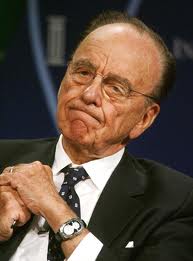
Watergate has become a frequent though imprecise point of reference for the reporting scandal that has battered Rupert Murdoch’s media holdings in Britain, prompting the closure of a leading Sunday tabloid, the resignation of two executives prominent in his news empire, and groveling apologies in print.

The scandal, which centers on illegal hacking of cell phone voicemail, has come to called Murdoch’s Watergate, a characterization embraced especially by Murdoch’s  enemies in America, hoping that this imbroglio may finally brings down the tough old media mogul.

The phone-hacking scandal is “a debacle that features Murdoch starring in the eerily similar role as the one Dick Nixon played,” declared Eric Boehlert in an essay posted the other day at Huffington Post.

Carl Bernstein, who teamed with Bob Woodward in covering Watergate for the Washington Post, has notably promoted the Murdoch-Watergate comparison.

In an essay titled “Murdoch’s Watergate?” and published recently in Newsweek, Bernstein wrote, not surprisingly:

“For this reporter, it is impossible not to consider these facts through the prism of Watergate. … The circumstances of the alleged lawbreaking within [Murdoch’s] News Corp. suggest more than a passing resemblance to Richard Nixon presiding over a criminal conspiracy in which he insulated himself from specific knowledge of numerous individual criminal acts while being himself responsible for and authorizing general policies that routinely resulted in lawbreaking and unconstitutional conduct.”

But it’s imprecise, premature, and a bit overwrought to liken the phone-hacking scandal to Watergate.

It’s no Watergate. Not yet, anyway. And it’s certainly not clear that Murdoch authorized policies that “routinely resulted in lawbreaking and unconstitutional conduct.”

Watergate was sui generis, an unprecedented constitutional crisis that led in to Nixon’s departure from office in disgrace in 1974. He was the first U.S. president ever to resign.

In addition, 19 men associated with Nixon’s presidency or his 1972 reelection campaign went to jail for Watergate-related crimes. (Woodward once called Watergate “an immensely complicated scandal with a cast of characters as varied as a Tolstoy novel.”)

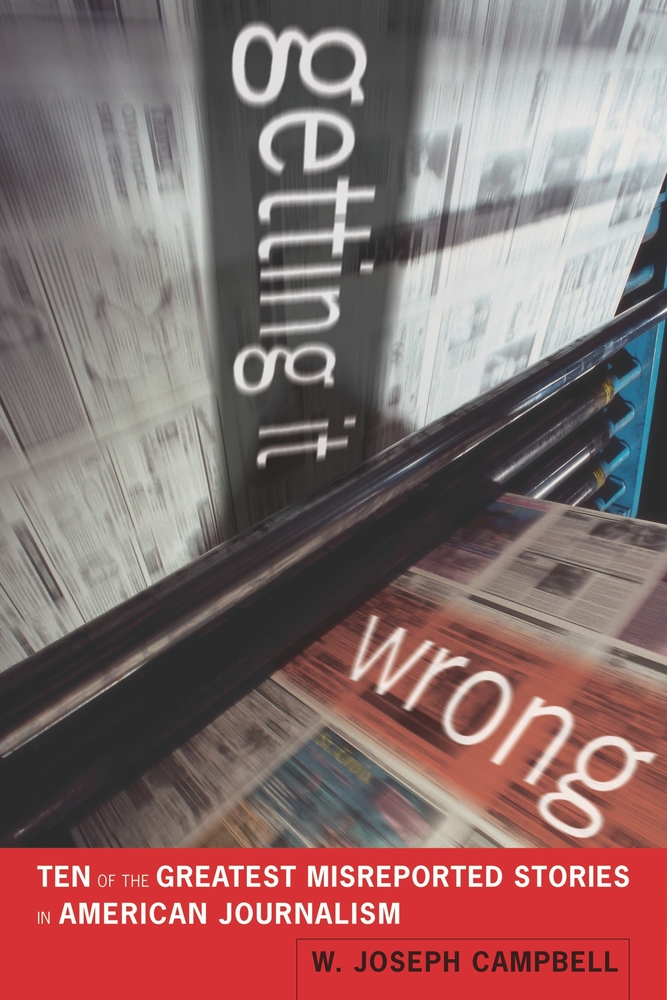
Rolling up a scandal of such dimension required, as I note in my latest book, Getting It Wrong, “the collective if not always the coordinated forces of special prosecutors, federal judges, both houses of Congress, the Supreme Court, as well as the Justice Department and the FBI.”

Even then, Nixon likely would have survived and served out his term if not for the audiotape recordings he secretly made of most private conversations in the Oval Office of the White House. (Woodward has endorsed that interpretation as well. He said in an online chat at washingtonpost.com in 1997 that “if the tapes had never been discovered, or [Nixon] had burned them, he almost surely would not have had to resign, in my view.”)

Toppling Nixon was no certain outcome of Watergate, at least not in the first year or so of the slowly unfolding scandal. And bringing down Nixon wasn’t a consequence of the reporting of Woodward and Bernstein, hoary media myth notwithstanding.

The phone-hacking scandal — in which reporters and private investigators for Murdoch’s now-shuttered News of the World tabloid broke into the voicemail of scores of people — has been an occasion to conjure Watergate in another way. In a romanticized, glowing way that recalls Watergate as a golden age in American journalism.

The Houston Chronicle has given expression to the golden-age sentiment.

The newspaper declared in a tut-tutting editorial the other day that the phone-hacking scandal “is a very long way from the saga of All the President’s Men, the uplifting account of how two dogged young reporters, Bob Woodward and Carl Bernstein, with the backing of ethically responsible Washington Post management, broke the Watergate scandal in 1972 that led to the resignation of President Richard Nixon. It inspired a generation of new journalists to their mission and exhibited the finest aspects of the profession.”

All the President’s Men was Woodward and Bernstein’s 1974 book about their Watergate reporting. The book’s cinematic version came out in 1976 and helped solidify the mythical notion that the Post brought down Nixon.

It deserves noting that the Chronicle’s editorial errs in at least three respects.

One, the Post management was not always so “ethically responsible” during Watergate.

For example, top editors approved an ethically suspect scheme allowing Woodward and Bernstein to approach federal grand jurors hearing Watergate testimony and ask them to break their vows of secrecy. As the reporters wrote in All the President’s Men, the ill-advised overtures to grand jurors nearly landed them in jail.

Two, the Post did not break the Watergate scandal.

The signal crime of Watergate — the burglary in June 1972 at Democratic National Committee headquarters — was interrupted by police. Within hours, news was circulating of the arrest of five burglars at the Watergate complex in Washington, D.C.

The Post’s article about the break-in appeared beneath the byline of Alfred E. Lewis, a veteran police reporter, and it drew heavily on information from investigators.

In subsequent Watergate reporting, moreover, the Post exposed  neither the cover-up of crimes linked to the break-in, nor the payment of hush money to the burglars. Nor did it break the news about Nixon’s secret audiotapes.

Three, the claim that coverage of Watergate “inspired a generation of new journalists to their mission” is exaggerated.

Watergate produced no enrollment surge in journalism programs at American colleges and university. Enrollment growth in fact had begun well before Woodward and Bernstein wrote their first Watergate-related story in 1972.

Still, as I note in Getting It Wrong, the notion that Woodward and Bernstein inspired a generation of students to take up journalism “lives on despite its thorough repudiation in scholarly research.”

Like many media-driven myths, the tale of inspiration is almost too good not to be true.

WJC

Many thanks to Instapundit
Glenn Reynolds for linking to this post.

Recent and related:

The journos who saved us

In Cinematic treatments, Debunking, Media myths, Murrow-McCarthy myth, Washington Post, Watergate myth on July 5, 2011 at 12:49 pm

Murrow: Savior?

At their extreme, media-driven myths are hero-worshipping devices, invoked to venerate journalists as saviors.

Thankfully, such treatment is rare, and typically reserved for such journalists the legendary CBS newsman Edward R. Murrow and the Watergate reporting duo, Bob Woodward and Carl Bernstein.

Brian Unger, host of a history program on cable television, indulged in a bit of journalists-idolatry in compiling for an Entertainment Weekly blog a list of a dozen heroic figures from TV shows and the movies.

On the list was Ed Murrow, whom Unger praised for “saving us from someone who pretended to be a great American patriot, Sen. Joseph McCarthy.”

Also selected were Robert Redford and Dustin Hoffman, the movie stars who played Washington Post reporters Woodward and Bernstein in the film All the President’s Men. “Armed only with a pen,” Unger wrote, “they saved the country from itself.”

Journalists as saviors: Like most media-driven myths, the notion is simply too good to be true, too simplistic to be credible.

Murrow hardly took down Joe McCarthy in Murrow’s famous See It Now program on CBS in March 1954.

The show was aired four years after McCarthy began his communists-in-government witch-hunt, and four years after muckraking columnist Drew Pearson piercingly challenged and punctured many of McCarthy’s claims.

Pearson

The television critic for the New York Post, Jay Nelson Tuck, wrote that Murrow in the days after the show felt “almost a little shame faced at being saluted for his courage in the McCarthy matter. He said he had said nothing that … anyone might not have said without a raised eyebrow only a few years ago.”

Years later, Murrow’s CBS colleague, Eric Severaid, chafed at the misleading interpretation attached to the See It Now program on McCarthy which, he noted, “came very late in the day.”

Sevareid said: “The youngsters read back and they think only one person in broadcasting and the press stood up to McCarthy and this has made a lot of people feel very upset, including me, because that program came awfully late.”

As I write in my media myth-busting book, Getting It Wrong, Americans in early 1954 weren’t “hoping for someone to step up and expose McCarthy, or waiting for a white knight like Murrow to tell them about the toxic threat the senator posed.”

By then they knew, thanks to the work of journalists such as Pearson.

Murrow no more ended McCarthy’s witch-hunt than Woodward and Bernstein brought down Richard Nixon’s corrupt presidency in Watergate — and, as Unger wrote, “saved the country from itself.”

Whatever that means.

It is clear that Woodward and Bernstein’s contributions to unraveling the Watergate scandal of 1972-74 were modest, and pale in significance when compared to the work of such subpoena-wielding entities as special prosecutors, both houses of Congress, the Justice Department, the FBI.

“Even then,” I write in Getting It Wrong, Nixon “likely would have served out his term if not for the audiotape recordings he secretly made of most conversations in the Oval Office of the White House. Only when compelled by the Supreme Court did Nixon surrender those recordings, which captured him plotting” to obstruct justice in the Watergate scandal.

Interestingly, principals at the Washington Post over the years have scoffed at the mythical and mediacentric interpretation that the newspaper brought down Nixon.

In 2005, for example, Michael Getler, then the newspaper’s ombudsman, wrote in a column:

“Ultimately, it was not The Post, but the FBI, a Congress acting in bipartisan fashion and the courts that brought down the Nixon administration. They saw Watergate and the attempt to cover it up as a vast abuse of power and attempted corruption of U.S. institutions.”

Woodward, himself, declared in 2004, in an interview with American Journalism Review:

To say the press brought down Nixon, that’s horseshit.”

But undoubtedly it’s the film All the President’s Men that’s largely responsible for the heroic-journalist trope that Woodward and Bernstein took down Nixon and saved the country.

All the President’s Men easily is the most-viewed movie made about Watergate. And as I note in Getting It Wrong, it places “Woodward and Bernstein at the center of Watergate’s unraveling while denigrating the efforts of investigative agencies such as the FBI.

“The effect was to solidify and elevate the heroic-journalist myth, giving it dramatic power, and sustaining it in the collective memory.”

WJC

Recent and related:

‘Sneakily patriotic’ movies that promote media myths

In Cinematic treatments, Debunking, Media myths, Murrow-McCarthy myth, Washington Post, Watergate myth on July 1, 2011 at 7:28 am

The film critic for Gannett News Service has identified in time for the Fourth of July weekend 10 movies he says are “sneakily patriotic.”

Meaning they promote patriotism indirectly, without a lot of flag-waving flamboyance.

The list, compiled by critic Bill Goodykoontz, includes Apollo 13, the dramatic 1995 movie about an ill-fated lunar mission that ended safely, and Miracle, the 2004 film about the gold medal-winning 1980 U.S. Olympics hockey team, a movie that does feature a fair amount of flag-waving.

Notably, two of the “sneakily patriotic” films have promoted and propelled media-driven myths — those dubious and improbable tales about news media that masquerade as factual.

Both myth-promoting movies push the extravagant notion that the news media are, or were, powerful and decisive forces in American political life. And both movies are discussed in my media myth-busting book, Getting It Wrong, which came out last year.

The myth-promoters are:

Goodykoontz, in describing the two movies, invokes their mythical aspects.

About All the President’s Men, Goodykoontz writes that Woodward and Bernstein’s “coverage of the Watergate break-in … led, ultimately, to the resignation of Richard Nixon.”

And Good Night, and Good Luck, he writes, “evokes an earlier era of media and how it could be used to stem the abuse of power.”

I point out in Getting It Wrong how movies can solidify media-driven myths in the public’s consciousness. “High-quality cinematic treatments,” I write, “are powerful agents of media myth-making, and can enhance a myth’s durability.”

The cinematic version of All the President’s Men solidified what I call the heroic-journalist myth of Watergate — the simplistic notion that Woodward and Bernstein’s investigative reporting brought down Richard Nixon’s corrupt presidency.

All the President’s Men, I write, allows no interpretation other than it was the work of Woodward and Bernstein that “set in motion far-reaching effects that brought about the first-ever resignation of a U.S. president.”

But to embrace that interpretation, I further write in Getting It Wrong, “is to abridge and misunderstand the scandal and to indulge in a particularly beguiling media-driven myth.”

The heroic-journalist interpretation serves to diminish and ignore the far more powerful forces that unraveled the scandal and forced Nixon from office.

Those forces, I write, “included special prosecutors, federal judges, both houses of Congress, the Supreme Court, as well as the Justice Department and the FBI.

“Even then, Nixon likely would have served out his term if not for the audiotape recordings he secretly made of most conversations in the Oval Office of the White House. Only when compelled by the Supreme Court did Nixon surrender those recordings, which captured him” plotting to obstruct justice in the Watergate scandal.

When considered against the tableau of subpoena-wielding authorities, the contributions of Woodward and Bernstein pale in significance and consequence.

A somewhat similar dynamic is at work in Good Night, and Good Luck.

The movie, which was released in black and white to lend a 1950s feel, permits no other conclusion than Murrow’s See It Now program about McCarthy single-handedly ended the senator’s communists-in-government witch-hunt.

Murrow’s show detailing McCarthy’s loathsome and bullying tactics was aired in March 1954 — long after other journalists had confronted the senator and, in some cases, paid a heavy price for doing so.

Among those journalists was the muckraking columnist Drew Pearson, who took aim at McCarthy in February 1950, not long after the senator began his red-baiting campaign.

By the end of that year, McCarthy had physically assaulted Pearson and denounced him from the Senate floor as the “diabolically” clever “voice of international communism,” a “prostitute of journalism,” and the “sugar-coated voice of Russia.”

In the Senate speech excoriating Pearson, McCarthy aimed a threat at Adam Hat Stores Inc., the principal sponsor of the columnist’s Sunday night radio program.

McCarthy said that “anyone who buys from a store that stocks an Adams hat is unknowingly contributing at least something to the cause of international communism by keeping this communist spokesman on the air.”

Within a week, Adam Hat announced the end of its sponsorship of Pearson’s program.

Pearson may not have had the finest reputation in 1950s American journalism. Jack Shafer, the media critic for Slate.com, wrote last year that Pearson was “one of the skuzziest journalists to ever write a story.”

But Pearson took on McCarthy years before Murrow — and long before it was safe. He certainly was “sneakily patriotic” in doing so.

WJC

Recent and related:

Those delicious but phony quotes ‘that refuse to die’

In Cinematic treatments, Cronkite Moment, Debunking, Furnish the war, Media myths, Murrow-McCarthy myth, Spanish-American War, Washington Post, Watergate myth on June 25, 2011 at 10:31 am

Craig Silverman, author of Regret the Error, posted an intriguing column yesterday about appealing but dubious quotations that journalists seem especially prone to cite, noting that such famous lines “often turn out to be manufactured or inexact representations.”

It’s an important reminder, given the endless popularity of quotations that are neat, tidy, and irresistibly delicious. As I note in my latest book, Getting It Wrong, “Turns of phrase that sound too neat and tidy often are too perfect to be true.”

Plouffe: Not so 'queasy'?

Silverman’s column, titled “Misquotes that refuse to die,” was centered around a comment attributed in 2009 to David Plouffe, Barrack Obama’s campaign manager in 2008.

Plouffe supposedly said he felt a bit “queasy” about the prospect of Obama’s facing Jon Huntsman, the Republican former Utah governor, in the presidential election in 2012.

“Plouffe never said it,” Silverman wrote, describing how the queasy line took on life of its own.

Journalists can be particularly susceptible to such succinct “little gems,” as Silverman put it, because the gems are so effective in making a point or in distilling complexity.

Silverman’s column noted two famous, dubious quotes that I dismantle in Getting It Wrong.

One of them is the comment misattributed to President Lyndon Johnson who,  in reaction to Walter Cronkite’s on-air assessment that the war in Vietnam was “mired in stalemate,” supposedly said:

“If I’ve lost Cronkite, I’ve lost Middle America.”

Or something to that effect.

Versions as to what Johnson supposedly said vary quite a lot — which can be a marker of a media myth. I also point out in Getting It Wrong that Johnson did not see the Cronkite report when it aired on CBS on February 27, 1968.

The other dubious quote discussed in Getting It Wrong and mentioned by Silverman is William Randolph Hearst’s purported vow to “furnish the war” with Spain.

Reasons for doubting the Hearstian vow are many, I write, and include the fact that the telegram in which Hearst supposedly made the statement has never turned up. Plus, Hearst denied making such a vow.

A number of other famous and delicious quotes favored by journalists likewise have proven to be false, made-up, or of mythical dimension; among them:

  • Too early to say.” It’s often said that Chinese premier Zhou Enlai offered the observation in 1972, as sage, far-sighted analysis about the effects of the French Revolution of 1789. But according to a retired American diplomat, Charles W.  (Chas) Freeman Jr., Zhou’s comment, which came during President Richard Nixon’s visit to China in February 1972, was about political turmoil in France in 1968. “I cannot explain the confusion about Zhou’s comment, except in terms of the extent to which it conveniently bolstered a stereotype” about Chinese leaders taking an exceptionally long and patient view of history, Freeman said recently. Freeman was Nixon’s interpreter on the trip.

So what to do about these delicious but dubious and phony quotations?

Keep pounding away at them, calling them out for what they are, whenever they appear. That’s the only effective way of debunking.

But even then, thorough and utter debunking can be rare.

WJC

Recent and related:

Why history is badly taught, poorly learned

In Cinematic treatments, Debunking, Media myths on June 19, 2011 at 12:41 pm

I’m not much a fan of the work of David McCullough, the award-winning popular historian whose latest book is the well-received The Greater Journey: Americans in Paris.

I couldn’t get through McCullough’s acclaimed 1776, a military history of a decisive year in American life that oddly had little to say about the Declaration of Independence.

But McCullough, in an interview published in yesterday’s Wall Street Journal, offered several provocative and telling points about why American history is so badly taught and so poorly grasped.

The splintered state of historical studies is one of the factors, McCullough said, adding:

“History is often taught in categories — women’s history, African American history, environmental history — so that many of the students have no sense of chronology. They have no idea what followed what.”

That’s a fair point. History by interest group can be an invitation to incoherence.

McCullough also pointed out that textbooks on history tend to “so politically correct as to be comic. Very minor characters that are currently fashionable are given considerable space, whereas people of major consequence … are given very little space or none at all.”

What’s more, as McCullough noted, textbooks often are tedious, boring, and poorly written. Historians by and large “haven’t learned to write very well,” McCullough wrote.

Although McCullough didn’t mention this in the interview, learning history can be frustrating because history is prone to error, distortion, and myth.

History quite simply can be myth-encrusted — and unlearning the myths of history can be challenging, time-consuming, and often unrewarding.

As I discuss in Getting It Wrong, my media-mythbusting book that came out last year, myths in history spring from many sources, including the timeless appeal of the tale that’s simple and delicious.

A telling example is the undying tale about William Randolph Hearst’s purported vow in an exchange of telegrams with Frederic Remington to “furnish the war” with Spain at the end of the 19th century.

As I discuss in Getting It Wrong, among the many reasons for doubting that anecdote are Hearst’s denial and the absence of any supporting documentation. The Remington-Hearst telegrams have never surfaced.

But the tale lives on, as an appealing yet exceedingly simplified explanation about the causes of the Spanish-American War and as presumptive evidence of Hearst’s madcap and ethically compromised ways.

The urge to simplify history also explains the tenacity of the so-called “Cronkite Moment” of 1968, when the CBS News anchorman’s assessment of the Vietnam War as a “stalemate” supposedly prompted President Lyndon Johnson to realize the folly of his war policy and not to seek reelection.

However, as I discuss in Getting It Wrong, Johnson did not see the program when it aired, and Cronkite until late in his life claimed his “stalemate” assessment had at best modest influence, that it was “another straw on the back of a crippled camel.”

And even that effect was probably exaggerated.

But the notion that the “Cronkite Moment” was powerful and decisive has been promoted by many historians, notably David Halberstam in his error-riddled The Powers That Be.

The cinema, too, often injects error and misunderstanding into historical topics.

Hollywood’s treatment of Bob Woodward and Carl Bernstein’s investigative reporting for the Washington Post is an important reason why many people erroneously believe that Woodward and Bernstein brought down Richard Nixon’s corrupt presidency.

Good history and successful cinema are quite often at odds, as Richard Bernstein noted in a memorable essay published several years ago in the New York Times.

“Artists who present as fact things that never happened, who refuse to allow the truth to interfere with a good story, are betraying their art and history,” Bernstein wrote.

So there are plenty of reasons beyond McCullough’s useful observations as to why American history is so poorly understood.

It may always be that way. After all, as the Scottish historian Gerard De Groot has noted, history is “what we decide to remember.

“We mine the past,” he has written, “for myths to buttress our present.”

WJC

Recent and related:

That was quick: Crummy Cleveland mob pic now out on DVD

In Cinematic treatments, Cronkite Moment, Debunking, Furnish the war, Media myths, Spanish-American War on June 16, 2011 at 1:08 pm

It was just three months ago when a low-budget yet widely reviewed movie about Cleveland’s 1970s mob scene came out in limited release.

The film, Kill the Irishman, never much caught on and was released this week in DVD.

I’m hardly surprised that its time in theaters was so brief.

Update: I’ve now seen Kill the Irishman and it’s not as dreadful as anticipated. Still, the movie meanders without making much of a point, other than to glamorize the Cleveland mob scene of the 1970s and romanticize a violence-prone hood named Danny Greene.

I’ve not seen the movie but have enjoyed reading the reviews, such as the one in the New York Times that called Kill the Irishman “an extravagantly corny ode to the collapse of the Cleveland mafia in the 1970s” that “never misses an opportunity to mythologize the meatheads who populate [the] script.”

The Los Angeles Times review likened Kill the Irishman to “clichéd shards of mob movies that add up to the usual ‘Goodfellas’ knockoff.”

Plain Dealer, October 7, 1977

Kill the Irishman is based on the violent life of a Cleveland mob figure, Daniel J. (Danny) Greene, best known for having survived several attempts on his life before falling victim to a deadly car bombing in 1977.

I was in Cleveland then, a young reporter for the city’s morning newspaper, the Plain Dealer. I remember the city’s mob scene as murky, chaotic, and not at all glamorous; its figures — including Greene — were scarcely heroic.

Greene rather struck me as an arrogant, somewhat off-kilter punk.

He was hardly a legendary character possessing the stuff that would attract serious attention beyond Cleveland.

What most rankled me about Kill the Irishman was its exaggerated premise, that there were 36 bombing in the heart of Cleveland in the summer of 1976 as Greene waged a turf war with the local Italian mafia.

Sure, Hollywood exaggerates. A lot. But a documentary-esque film ought not to cock a snook at the truth. And there was no such bombing rampage in downtown Cleveland that summer.

The claim is preposterous.

As I’ve noted previously at Media Myth Alert, the figure of 36 bombings appears to have been mistakenly taken from an article published in May 1977 in the Plain Dealer, as a sidebar to the account of the bombing death of John A. Nardi, a mob figure allied with Greene.

The sidebar article said that in all of 1976, there had been 21 bombings in Cleveland and 37 in Cuyahoga County, which includes Cleveland and most of its many suburbs. That’s a lot, but nothing as stunning or sustained as 36 bombings in the heart of the city in a single summer. Such a spree would correspond to 12 bombings a month.

That never happened.

Also off-putting is the movie’s clear objective of glamorizing the unglamorous Danny Greene. One reviewer of the Blu-Ray version called Kill the Irishman “a clichéd offering of criminal worship ….” Well said.

So maybe I’ll rent the DVD. Some day.

WJC

Recent and related:

Six years on: Identity of Watergate’s ‘Deep Throat’ revealed

In Anniversaries, Cinematic treatments, Debunking, Media myths, Washington Post, Watergate myth on May 29, 2011 at 6:22 am

It’s been six years since W. Mark Felt,  once a senior FBI official, was revealed to have been “Deep Throat” of the Watergate era, the most famous source in modern American journalism.

Alias 'Deep Throat'

Felt’s “Deep Throat” identity had remained a secret — and was a topic of often-intense speculation — for more than 30 years.

On May 31, 2005, Vanity Fair disclosed that Felt had been the Washington Post’s elusive and enigmatic source as the Watergate scandal unfolded in 1972-73.

The disclosure was made with the consent of Felt — who then was 91 and in declining physical and mental health — and his daughter, Joan.

The Vanity Fair report meant that the Post effectively had been scooped on its own story.

“The identity of Deep Throat is modern journalism’s greatest unsolved mystery,” Vanity Fair crowed in its article lifting Felt’s secret. “It has been said that he may be the most famous anonymous person in U.S. history.”

As I note in Getting It Wrong, my media-mythbusting book that came out last year, the prolonged guessing game about the identity of “Deep Throat” help solidify the notion that the Post and its lead Watergate reporters, Bob Woodward and Carl Bernstein, were central to uncovering the scandal and forcing President Richard Nixon’s resignation.

I point out that speculation “about the identity of the ‘Deep Throat’ source provided periodic and powerful reminders about the Post and its Watergate coverage, serving to keep Woodward and Bernstein in the public eye far longer than they otherwise would have been.”

I further note:

“They and the mysterious ‘Deep Throat’ source became central figures” in what the Philadelphia Inquirer once called “the parlor game that would not die. … With each passing year, as ‘Deep Throat’s’ cloak of anonymity remained securely in place, his perceived role in Watergate gained gravitas.”

“And so,” I write, “… did the roles of Woodward and Bernstein.”

Although Alexander Haig, John Dean, and Henry Kissinger were among the suspects mentioned in the “Deep Throat” guessing game, Felt’s name always placed high on the roster of likely candidates.

As I discuss in Getting It Wrong, speculation about the identity of “Deep Throat” began in earnest in June 1974, with a front-page article in the Wall Street Journal, and continued periodically over the next 31 years.

The Journal article appeared soon after publication of All the President’s Men, Woodward and Bernstein’s best-selling book about Watergate in which they introduced the furtive source they called “Deep Throat.”

The Journal article described Felt as the top suspect.

Felt, though, repeatedly and adamantly denied having been “Deep Throat.” He was quoted as saying in the Journal article in 1974:

“I’m just not that kind of person.”

He told the Hartford Courant newspaper in 1999 that he “would have been more effective” had he indeed been Woodward’s secretive source, adding:

“Deep Throat didn’t exactly bring the White House crashing down, did he?”

That’s a revealing point that goes to the heart of what I call the heroic-journalist myth of Watergate: Disclosures by “Deep Throat” didn’t bring down Nixon’s corrupt presidency; nor did the reporting of Woodward and Bernstein.

(Bernstein, by the way, never spoke with Felt during the Watergate scandal; Felt was Woodward’s exclusive source. Bernstein finally met Felt in November 2008, shortly before the former G-man’s death.)

On the day six years ago when Felt was confirmed to have been “Deep Throat,” his family issued a statement calling him “a great American hero who went well above and beyond the call of duty at much risk to himself to save his country from a horrible injustice. We all sincerely hope the country will see him this way as well.”

Felt, though, hardly was such a noble character.

In his senior position at the FBI, he had authorized illegal burglaries as part of FBI investigations into leftists associated with the radical Weather Underground in the early 1970s.

Felt was convicted in 1980 on felony charges related to the break-ins, but pardoned by President Ronald Reagan.

Interestingly, his “Deep Throat” alter ego may best be known for a line Felt never spoke: “Follow the money.”

As I’ve discussed at Media Myth Alert, Felt never offered such guidance to Woodward. He never advised the reporter to “follow the money.”

The line doesn’t appear in the book All the President’s Men. But it was written into the script of the cinematic adaptation of Woodward and Bernstein’s book.

Follow the money” was spoken by Hal Holbrook, who delivered a bravado performance as “Deep Throat” in the movie.

Holbrook delivered his “follow the money” lines with such quiet insistence and knowing authority that it sounded for all the world as if it really had been guidance crucial to rolling up Watergate.

WJC

Recent and related:

Every good historian a mythbuster

In Anniversaries, Cinematic treatments, Debunking, Media myths, Newspapers, Washington Post, Watergate myth on May 27, 2011 at 6:10 am

While researching studies of memorable or decisive years recently, I happened across a Washington Post review of The Year That Changed the World, a book about 1989.

I was impressed by this passage in the review:

The good historian is a mythbuster.”

Indeed.

Couldn’t agree more.

The reviewer, Gerard DeGroot, also wrote:

“The past is what happened, history what we decide to remember. We mine the past for myths to buttress our present.”

That’s well said, too. It’s a characterization that offers insight about the rise and diffusion of media-driven myths, 10 of which I debunk in my latest book, Getting It Wrong.

History often is what we decide to remember. And we tend to remember what’s most accessible, what’s most easy to remember.

Take, for example, the mediacentric interpretation of Watergate, the greatest political scandal in American history, a scandal that destroyed a presidency and sent nearly twenty men to jail.

The shorthand, easy-to-grasp version of Watergate is that Bob Woodward and Carl Bernstein of the Washington Post, aided immeasurably by a stealthy, high-level source code-named “Deep Throat,” brought down Richard Nixon’s corrupt presidency.

That’s also the mediacentric version of Watergate, the version journalists love to recall. It serves to remind them of the potential power of the news media.

But as I note in Getting It Wrong, the mediacentric interpretation is misleading and historically inaccurate; it “minimizes the far more decisive forces that unraveled the scandal and forced Nixon from office,” I write.

To roll up a scandal of Watergate’s dimensions, I add, “required the collective if not always the coordinated forces of special prosecutors, federal judges, both houses of Congress, the Supreme Court, as well as the Justice Department and the FBI.

“Even then,” I argue, “Nixon likely would have served out his term if not for the audiotape recordings he secretly made of most conversations in the Oval Office of the White House. Only when compelled by the Supreme Court did Nixon surrender those recordings, which captured him plotting the cover-up and authorizing payments of thousands of dollars in hush money.”

So why do we choose to remember the Woodward-Bernstein-mediacentric interpretation of Watergate? Why has it become the dominant narrative of the scandal? That it is shorn of complexity and easy to grasp is one reason.

A more powerful reason is to be found in the cinematic adaptation of All the President’s Men, Woodward and Bernstein’s book about their Watergate reporting.

The book came out in June 1974 as Watergate was approaching its climax, and was a best-seller.

All the President’s Men was an even greater success in its screen adaptation. It was released 35 years ago this spring and surely ranks as the most-viewed movie about Watergate.

To an extent “far greater than the book,” I write in Getting It Wrong, “the cinematic version of All the President’s Men placed Woodward and Bernstein at the center of Watergate’s unraveling while denigrating the efforts of investigative agencies such as the FBI.

“The effect,” I add, “was to solidify and elevate” the heroic-journalist myth of Woodward and Bernstein, “giving it dramatic power, and sustaining it in the collective memory.”

For contemporary journalists who confront sustained and sweeping upheaval in their field, the mediacentric myth of Watergate is comforting,  reassuring.

Recalling the myth and treating it as authentic serves to buttress the present against the riptide of change.

WJC

Recent and related:

A ‘follow the money’ hat trick

In Anniversaries, Cinematic treatments, Debunking, Media myths, Washington Post, Watergate myth on May 14, 2011 at 9:32 am

Follow the money,” the line so readily associated with the Washington Post and its Watergate reporting, is freighted with no fewer than three related media myths.

One is that the Post’s stealthy, high-level source known as “Deep Throat” uttered “follow the money” as guidance vital to unraveling the Watergate scandal.

What page is it on?

Two is that “Deep Throat” conferred privately with both Bob Woodward and Carl Bernstein, the Post’s  lead reporters on Watergate.

Three is that “follow the money” appears in Woodward and Bernstein’s book about Watergate, All the President’s Men.

All three are untrue.

And all three were incorporated into a blog report posted yesterday at the online site of the Providence Journal, in what was a rare “follow the money” hat trick.

The Providence Journal item described “follow the money” as “the famous admonition from the source ‘Deep Throat’ to Washington Post reporters Bob Woodward and Carl Bernstein during the Watergate scandal that brought down President Richard M. Nixon. It was immortalized in the reporters’ book, and the subsequent movie, ‘All the President’s Men.'”

No, no, and most definitely no.

The Post’s “Deep Throat” source — who was revealed in 2005 to have been W. Mark Felt, formerly a senior FBI official — never recommended that the Post “follow the money” as a way to get a handle on Watergate.

“Deep Throat,” moreover, conferred only with Woodward, sometimes late at night in a parking garage in the Rosslyn section of Arlington, Va., across the Potomac River from Washington. Felt/”Deep Throat” never met Bernstein until weeks before Felt’s death in 2008.

And, no, “follow the money” certainly does not appear in Woodward and Bernstein’s book, which came out in June 1974, just as the Watergate scandal was nearing its denouement with Nixon’s resignation.

The famous line was written into the cinematic version of All the President’s Men, which came out 35 years ago last month.

Follow the money” was spoken not by Felt but by the actor who played “Deep Throat” in the movie — Hal Holbrook.

As I’ve noted at Media Myth Alert, Holbrook turned in a marvelous performance as a twitchy, tormented, conflicted “Deep Throat.”

And he delivered his “follow the money” lines with such quiet conviction that for all the world they seemed to suggest a way through the labyrinth that was the Watergate scandal.

But even if guidance such as “follow the money” had been offered to Woodward (and/or Bernstein), it would have taken them only so far in investigating Watergate. The scandal was, after all, much broader than the misuse of campaign monies.

In the end, Nixon was toppled by his felonious conduct in attempting to cover up the signal crime of Watergate, the break-in at the headquarters of the Democratic National Committee in June 1972.

The simplified, mediacentric, follow-the-money  interpretation of Watergate tends to minimize the more decisive forces that unraveled the scandal and forced Nixon from office.

As I note in my latest book, Getting It Wrong, rolling up a scandal of Watergate’s dimensions required “the collective if not always the coordinated forces of special prosecutors, federal judges, both houses of Congress, the Supreme Court, as well as the Justice Department and the FBI.

“Even then,” I write, “Nixon likely would have served out his term if not for the audiotape recordings he secretly made of most conversations in the Oval Office of the White House. Only when compelled by the Supreme Court did Nixon surrender those recordings, which captured him plotting the cover-up and authorizing payments of thousands of dollars in hush money.”

Against the tableau of subpoena-wielding investigative authorities, the contributions of Woodward and Bernstein in the Watergate scandal fade into comparative insignificance.

WJC

Recent and related:

‘Follow the money’: You won’t find that line in the book

In Anniversaries, Cinematic treatments, Debunking, Media myths, Washington Post, Watergate myth on April 27, 2011 at 4:00 am

The most famous line about Watergate reporting — “follow the money” — appears nowhere in the most famous book about Watergate reporting, All the President’s Men.

Not in this book

It’s often thought that it does. The Post and Courier newspaper in Charleston, S.C., said so, for example, in an editorial posted online yesterday.

The editorial referred to the stealthy Watergate source of Washington Post reporter Bob Woodward and declared:

“‘Deep Throat,’ finally identified in 2005 as former FBI associate director Mark Felt, gave Carl Bernstein and Bob Woodward the inside dirt on the Nixon administration’s attempt to cover up its dirty tricks.

“He also gave them, as chronicled in their book ‘All the President’s Men,’ this tip: ‘Follow the money.'”

Felt was Woodward’s source; he never met Bernstein until late in Felt’s life.

And Felt never offered Woodward the advice of “follow the money.”

That line doesn’t appear in All the President’s Men, Woodward and Bernstein’s book about their reporting on Watergate. Nor does it appear in any Watergate-related article or editorial published in the Washington Post before 1981.

The passage was, though, written into the screenplay of All the President’s Men, the 1976 cinematic version of Woodward and Bernstein’s book. The movie came out 35 years ago this month, and has aged quite well.

The acting was notably strong and included a memorable performance by Hal Holbrook, who played a shadowy, tormented “Deep Throat.”

Holbrook delivered his lines about “follow the money” with such certainty and quiet insistence that it sounded as if it really were guidance vital to rolling up Watergate.

But in the real-life investigation of Watergate, “follow the money” wouldn’t have taken investigators to the point of determining Nixon’s guilty role in the crimes of Watergate.

As I write in Getting It Wrong, my media-mythbusting book that came out last year, some 20 men associated with Nixon’s administration or his 1972 reelection campaign went to jail for crimes linked to Watergate.

Rolling up a scandal of such sweep, I write in Getting It Wrong, “required the collective if not always the coordinated forces of special prosecutors, federal judges, both houses of Congress, the Supreme Court, as well as the Justice Department and the FBI.

“Even then,” I add, “Nixon likely would have served out his [second] term if not for the audiotape recordings he secretly made of most conversations in the Oval Office of the White House. Only when compelled by the Supreme Court did Nixon surrender those recordings, which captured him plotting the cover-up and authorizing payments of thousands of dollars in hush money.”

What cost Nixon the presidency wasn’t of the improper use of campaign monies but his efforts to obstruct justice and deter the FBI’s investigation of the scandal.

Still, it’s curious why “follow the money” crossed so seamlessly from the silver screen to the vernacular.

One reason no doubt are proximate release dates of the book and movie of All the President’s Men, allowing the two versions to become confounded.

The book came out in June 1974, just as Watergate was nearing its endgame with Nixon’s resignation in August 1974. The movie was released in April 1976, as the wounds of Watergate were only beginning to heal.

Another reason for the persistent appeal of “follow the money” lies in its pithiness. Like many media-driven myths — those dubious or apocryphal tales about the news media and their power — “follow the money” is neat, tidy, succinct. It’s easy to remember, and it seems almost too good not to be true.

But probably the most compelling explanation for its tenacity lies in the power of the cinema to propel media myths and to offer plausible if greatly simplified versions of history.

Richard Bernstein addressed this tendency quite well in a memorable essay published in 1989 in the New York Times.

He wrote that “movies-as-history” tend “to construct Technicolored and sound-tracked edifices of entertainment on the slender foundations of what appear to be actual events, or, at the very least, to mingle fact with fancy, history with imagination, in such a way that the average viewer has no way of sorting out one from the other.”

Quite so.

I note in Getting It Wrong that the cinematic version of All the President’s Men helped ensure that Woodward, Bernstein, and the Post would be regarded as vital and central to the unraveling of Watergate.

The mediacentric version of Watergate — or what I call the heroic-journalist interpretation — allows audiences to sidestep the scandal’s off-putting complexity and engage in a narrative that is entertaining and reassuring.

WJC

Recent and related: