W. Joseph Campbell

Posts Tagged ‘Cronkite Moment’

‘Getting It Wrong’ plays the Tattered Cover

In Debunking, Furnish the war, Jessica Lynch, Media myths, Washington Post, Watergate myth on August 7, 2010 at 7:28 pm

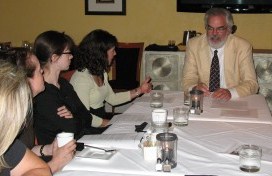
Denver’s well-known Tattered Cover bookstore was the venue last night for a fine discussion about Getting It Wrong, my new book that addresses and debunks 10 prominent, media-driven myths.

At the Tattered Cover

About 60 people attended the book event, at least a few of whom had learned about it in listening to my in-studio interview Friday morning with David Sirota on KKZN, AM 760, Denver’s progressive talk radio station.

At the Tattered Cover, one of the country’s top independent bookstores, I discussed the myths of Watergate, of the “Cronkite Moment,” of William Randolph Hearst’s purported vow to “furnish the war” with Spain, and of the famous War of Worlds radio dramatization of  1938.

Those stories, I noted, are “all well-known—they are often taught in schools, colleges, and universities. They’re all delicious tales about the power of the news media to bring about change, for good or ill.”

And I proceeded to explain why all of them are media-driven myths–dubious and improbable tales about the news media that masquerade as factual. “They can be thought of as the junk food of journalism,” I noted. “Tasty and alluring, perhaps, but in the end, not terribly healthy or nutritious.”

The surprise of the evening came in discussing the mythical “Cronkite Moment,” in which President Lyndon Johnson supposedly realized U.S. policy in Vietnam was doomed, given the on-air assessment by CBS anchorman Walter Cronkite that the war was “mired in stalemate.”

Among the reasons the “Cronkite Moment” is a media myth, I said, is that Johnson did not see the Cronkite program on Vietnam when it aired on February 27,  1968.

Johnson was not in Washington; he was not in front of a television set. He was in Austin, Texas, making light-hearted comments at a black-tie birthday party for Governor John Connally, who that day turned 51.

“At about the time Cronkite was intoning his ‘mired in stalemate’ commentary,” I said at the Tattered Cover, “Johnson was at the podium at Connally’s birthday party, saying: ‘Today you are 51, John. That is the magic number that every man of politics prays for—a simple majority.'”

And with that, the audience burst into laughter.

Never before had the line prompted so many laughs. For some reason last night, it did.

The audience was attentive and inquisitive. Questions were raised about the media myth associated with coverage of the Jessica Lynch case and of the aftermath of Hurricane Katrina, which battered the Gulf Coast five years ago this month.

Another question was about the cinema’s capacity to promote and propel media myths. It was a good observation, one that I wished I had emphasized earlier in my talk.

A telling example of the how cinematic can solidify media myths is to be found in the 1976 film All the President’s Men, an adaptation of the book by the same name by Carl Bernstein and Bob Woodward about their Watergate reporting.

As I write in Getting It Wrong the cinematic version of All the President’s Men “helped ensure the [heroic-journalist] myth would live on by offering a neat, tidy, and vastly simplified account the Watergate scandal, one that allowed viewers to sidestep the scandal’s complexity while engaging in an entertaining storyline.”

I noted in my talk that Bernstein and Woodward did not uncover the defining and decisive elements of the Watergate scandal—the cover-up and the payment of hush money to the burglars arrested at Democratic national headquarters in June 1972, the signal crime of Watergate. Nor did Woodward and Bernstein uncover the existence of the audiotaping system that Nixon had installed in the Oval Office, which proved decisive in forcing the president’s resignation.

The Tattered Cover was a wonderful venue–comfortable, inviting. Its staff is exceptionally courteous and professional, and the hour-and-a-half went by extremely quickly.

WJC

Related:

Photo credit: Ann-Marie C. Regan
‘Getting It Wrong’ goes on Q-and-A

In Cronkite Moment, Debunking, Media myths, War of the Worlds, Watergate myth on August 4, 2010 at 8:47 am

My interview with Brian Lamb on C-SPAN’s Q&A program aired Sunday evening and early Monday–and the show looked better on the tube than I thought it would.

The interview was taped two weeks earlier and, afterward, I didn’t feel that it had gone all that well.

But I was mistaken.

Lamb, who is a real gentleman and is supported by a courteous and highly professional staff, led me through a brief discussion of each of the 10 prominent tales about American journalism which I address and debunk in my new book, Getting It Wrong.

We subsequently zeroed in on the myths of Watergate, Murrow-McCarthy, the Cronkite Moment, and the War of the Worlds radio dramatization.

Toward the end of the interview, which lasted nearly an hour, Lamb asked what might be next in my research. Maybe a sequel to Getting It Wrong, I replied, adding that universe of media-driven myths isn’t confined to the 10 addressed in the book.

Lamb

Lamb, who had read Getting It Wrong closely, surprised me a few times with his questions, including his query about this passage in the book’s closing chapter:

“American journalism loves giving prizes—to its own.”

That passage (which is true, of course) was a way of setting up the conclusion to the chapter discussing the highly exaggerated, over-the-top news coverage of Hurricane Katrina, which battered New Orleans and the Gulf Coast five years ago this month.

Among the many awards given for reporting about the hurricane was the Mongerson Prize for Investigative Reporting on the News. That award, I note in Getting It Wrong, “was initiated in 2001 to recognize journalists who set the record straight on inaccurate, incomplete, or misleading news stories. The Mongerson Prize was administered by Northwestern University and had a five-year run. It never attracted much attention, certainly nothing approaching the prominence of the Murrow Awards or the Pulitzer Prizes.”

The Mongerson Prize was given for the last time in 2006 and the winners that year were Brian Thevenot and Gordon Russell of the New Orleans Times-Picayune. They were honored for the report they prepared in late September 2005 that examined exaggerated accounts of mayhem in post-Katrina New Orleans.

“Four weeks after the storm,” Thevenot and Russell wrote, “few of the widely reported atrocities have been backed with evidence. The piles of murdered bodies never materialized, and soldiers, police officers and rescue personnel on the front lines assert that, while anarchy reigned at times and people suffered unimaginable indignities, most of the worst crimes reported at the time never happened.”

In announcing the winners, Northwestern said Thevenot and Russell had “exposed the dangers of pack journalism in a difficult reporting environment.”

A telling point.

I write in Getting It Wrong that Katrina’s aftermath “was no high, heroic moment in American journalism. The coverage was in important respects flawed and exaggerated. On crucial details, journalists erred badly, and got it wrong.

“In the days following Katrina’s landfall, news reports described apocalyptic horror that the hurricane supposedly had unleashed. They reported snipers firing at medical personnel. They reported that shots were fired at helicopters, halting evacuations from the Convention Center. They told of bodies being stacked there like cordwood. They reported roving gangs were preying on tourists and terrorizing the occupants of the Superdome, raping and killing. They said children were victims of sexual assault, that one seven-year-old was raped and her throat was slit. They reported that sharks were plying the flooded streets of New Orleans.

“None of those reports was verified or substantiated: No shots fired at rescue helicopters, no child rape victims, no bodies stacked like cordwood, no sharks.”

Thevenot’s candor about the Katrina coverage was refreshing, in measure because he acknowledged that he, too, had gotten it wrong in some of his reporting.

In an article for American Journalism Review titled “Mythmaking in New Orleans,” Thevenot wrote that “in the worst of the storm reporting, tales of violence, rapes, murders and other mayhem were simply stated as fact with no attribution at all.

“I am among those who committed this sin,” he conceded, referring to his description of the Convention Center in New Orleans, where many people dispossessed by the hurricane took refuge, as “a nightly scene of murders, rapes and regular stampedes.”

WJC

Related:

None of those reports was verified or substantiated: No shots fired at rescue helicopters,[i] no child rape victims, no bodies stacked like cordwood, no sharks


[i] See A Failure of Initiative, 169.

Long reach of the ‘Cronkite Moment’

In Cronkite Moment, Debunking on August 1, 2010 at 8:33 am

The long reach and international appeal of the mythical Cronkite Moment–when in 1968 the words of Walter Cronkite supposedly altered U.S. war policy in Vietnam–is reconfirmed by the anecdote’s appearance today in a Sri Lankan newspaper.

Johnson in Austin

I’ve periodically noted at MediaMythAlert how media-driven myths, those dubious and improbable tales about the American news media, often find application in contexts abroad. The Sri Lanka newspaper, the Nation, invoked the “Cronkite Moment” in a commentary about last week’s WikiLeaks disclosure of military documents about the war in Afghanistan.

The commentary stated:

“When anchor and newsman Walter Cronkite, called the most trusted man in America, reported from Vietnam in 1967 [sic] that the war cannot be won, JFK’s successor, President Lyndon Johnson famously remarked to an aide, ‘If I’ve lost Cronkite, I’ve lost America.’

“The WikiLeaks revelations may not have a similar effect on the war in Afghanistan,” the commentary adds, “but it would surely make the task of victory, or even honourable withdrawal, even more difficult for the United States and its coalition partners.”

The Nation commentary certainly is on target about the impact of the WikiLeaks disclosure: Its effect has been notably modest.

But, then, so was the impact of the “Cronkite Moment,” when the CBS anchorman asserted in a special report broadcast February 27, 1968, that the U.S. war effort was “mired in stalemate.”

As I note in Getting It Wrong, my new book debunking media-driven myths, Cronkite’s assessment about the U.S. predicament in Vietnam was scarcely original or exceptional in early 1968.

The New York Times’ television critic, Jack Gould, noted in a review of the Cronkite’s program that the anchorman’s assessment “did not contain striking revelations” but served instead “to underscore afresh the limitless difficulties lying ahead and the mounting problems attending United States involvement.”

The power of the “Cronkite Moment” flows from its purported effect on Lyndon Johnson who, as the Nation commentary says, supposedly watched the program and as it ended uttered something to the effect of: “If I’ve lost Cronkite, I’ve lost America.”

A more common version has Johnson saying, “If I’ve lost Cronkite, I’ve lost Middle America.” But the accounts of what the president said vary markedly.

In any case, Johnson did not see the Cronkite program when it aired. The president at the time was in Austin, Texas, making light-hearted comments at the 51st birthday party of Governor John Connally (see photo, above).

Moreover, I write in Getting It Wrong:

“Even if he later heard—or heard about— Cronkite’s assessment, it was no epiphany for Johnson. Not long after the program, Johnson gave a rousing, lectern-pounding speech in which he urged a ‘total national effort’ to win the war in Vietnam.”

Johnson’s change of heart on Vietnam, I note in Getting It Wrong, “came about through a complex process in which Cronkite’s views counted for little. Among the forces and factors that influenced Johnson’s thinking … was the counsel of an influential and informal coterie of outside advisers known as the ‘Wise Men.’

“They included such foreign policy notables as Dean Acheson, a former secretary of state; McGeorge Bundy, a former National security adviser to Kennedy and Johnson; George Ball, a former under-secretary of state; Douglas Dillon, a former treasury secretary; General Omar Bradley, a former chairman of the joint chiefs of staff, and Abe Fortas, a U.S. Supreme Court justice and friend of Johnson.

“The ‘Wise Men’ had met in November 1967, and expressed their near-unanimous support for Johnson’s Vietnam policy. They met again, at the request of the White House, in late March 1968.”

Largely, though not unanimously, the “Wise Men,” expressed opposition to escalating the war in Vietnam. And Johnson appeared shaken by the advice.

The counsel of the Wise Men represented a tipping point in Johnson’s deciding to seek“peace in Vietnam through negotiations. And in a speech March 31, 1968, the president announced a limited halt to U.S. aerial bombing of North Vietnam as an inducement to the communist government in Hanoi to enter peace talks.

He also announced then he would not seek reelection to the presidency.

WJC

Related:

WikiLeaks disclosure no ‘Cronkite Moment’

In Cronkite Moment, Debunking, Media myths on July 27, 2010 at 9:39 am

The WikiLeaks disclosure of thousands of secret military documents about the war in Afghanistan has been likened–erroneously–to the mythical “Cronkite Moment” of 1968, when CBS anchorman Walter Cronkite declared the U.S. war effort in Vietnam was “mired in stalemate.”

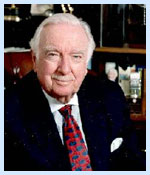
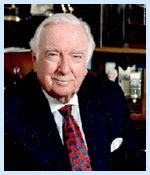
Cronkite

A commentary posted today at the Huffington Post is among the latest to make the dubious connection. The commentary said Cronkite’s “assessment of the war is often credited as the turning point for American public opinion, moving opposition to the U.S.’s involvement in Vietnam into the mainstream. Reportedly, upon hearing this commentary, President Lyndon Johnson said, ‘If I’ve lost Cronkite, I’ve lost middle America.’

“I can’t help wonder if the release of the Afghan War Logs by WikiLeaks is our Cronkite moment for Afghanistan. In fact, when I consider the totality of the recent news on our efforts in Afghanistan, I can’t reach any other conclusion than that if Cronkite was still alive, he would say we have.”

Given that the WikiLeaks documents contain little that was previously unknown about the conflict, disclosure is unlikely to amount to the “Cronkite moment for Afghanistan.”

More important, the “Cronkite Moment” wasn’t very decisive at all.

It really wasn’t much of a “moment.”

As I discuss in Getting It Wrong, my new book about media-driven myths, Cronkite himself disputed the notion that his assessment about Vietnam had had much effect on Johnson or on U.S. war policy. For example, in promoting his memoir in 1997, Cronkite likened his “mired in stalemate” commentary to a straw on the back of a crippled camel.

He repeated the analogy in 1999, stating in an interview with CNN: “I think our broadcast simply was another straw on the back of a crippled camel.”

Only late in his life did Cronkite embrace the presumptive power of the so-called “Cronkite Moment,” telling Esquire in 2006: “To be honest, I was rather amazed that my reporting from Vietnam had such an effect on history.”

As I further discuss in Getting It Wrong, President Johnson did not see Cronkite’s show when it aired February 27, 1968, and therefore “did not have–could not have had–the abrupt yet resigned reaction that so often has been attributed to him.”

At the time Cronkite intoned his “mired in stalemate” assessment, Johnson was in Austin, Texas, offering light-hearted remarks at the birthday party for Texas Governor John Connally, a longtime political ally.

“Today you are 51, John,” the president said. “That is the magic number that every man of politics prays for—a simple majority. Throughout the years we have worked long and hard—and I might say late—trying to maintain it, too.”

Even if Johnson later saw the Cronkite program on videotape, he “gave no indication of having taken the anchorman’s message to heart,” I write in Getting It Wrong.

Not long after Cronkite’s program, Johnson delivered a rousing speech in Minneapolis, in which he urged “a total national effort” to win the war in Vietnam. That speech was given March 18, 1968, and in it, the president declared:

“We love nothing more than peace, but we hate nothing worse than surrender and cowardice.”

Johnson’s aggressive remarks are quite difficult to square with his supposedly downcast, self-pitying reaction to the supposed “Cronkite Moment.”

Moreover, as I discussed yesterday at MediaMythAlert, public opinion polls show that Americans’ views about the war had begun to shift in 1967, months before the “Cronkite Moment.”

WJC

Related:

‘Lyndon Johnson went berserk’? Not because of Cronkite

In Cronkite Moment, Debunking, Media myths, Year studies on July 21, 2010 at 1:13 pm

President Lyndon Johnson supposedly “went berserk” when he heard Walter Cronkite’s on-air assessment in 1968 that the U.S. war effort in Vietnam was “mired in stalemate.”

So claims Tom Hayden, the 1960s antiwar activist in a commentary posted yesterday at the online site of the Nation magazine.

Johnson, unberserk

Hayden’s commentary invoked what often is called the “Cronkite Moment” in saying:

“Cronkite went to Vietnam in April 1968 to survey the state of that war, just as [MSNBC’s Rachel] Maddow spent time in Afghanistan investigating the current reality. When Cronkite pronounced Vietnam as ‘mired in stalemate,’ it is said that Lyndon Johnson went berserk.”

It’s a striking way of describing the mythical “Cronkite Moment”: I’ve never before read that Johnson supposedly “went berserk” in response to Cronkite’s characterization.

In any case, Hayden’s descriptions of Cronkite’s program and Johnson’s reaction are in error.

The trip to which Hayden refers took place not in April 1968 but in February that year. Cronkite went to Vietnam then to gather material for a special report that aired on CBS on February 27, 1968.

Johnson, however, did not see the Cronkite program when it aired.

As I discuss in Getting It Wrong, my new book debunking the “Cronkite Moment” and nine other media-driven myths, Johnson was in Austin, Texas, at the time Cronkite intoned his “mired in stalemate” assessment.

Johnson wasn’t going “berserk” on that occasion. Rather, he was offering light-hearted remarks at the birthday party for Texas Governor John Connally, a longtime political ally.

“Today you are 51, John,” the president said. “That is the magic number that every man of politics prays for—a simple majority. Throughout the years we have worked long and hard—and I might say late—trying to maintain it, too.”

Even if Johnson later saw the Cronkite program on videotape, he “gave no indication of having taken the anchorman’s message to heart,” I write in Getting It Wrong. The show represented no epiphany for the president, no occasion for going “berserk.”

Not long after Cronkite’s program, Johnson delivered a rousing speech in Minneapolis, in which he urged “a total national effort” to win the war in Vietnam. That speech was given March 18, 1968, and in it, the president declared:

“We love nothing more than peace, but we hate nothing worse than surrender and cowardice.”

He criticized war critics as wanting the United States to “tuck our tail and violate our commitments.”

Johnson’s aggressive remarks are quite difficult to square with his supposedly downcast, self-pitying reaction to Cronkite’s assessment about Vietnam.

Moreover, Cronkite’s “mired in stalemate” assessment about Vietnam was an unremarkable characterization by early 1968. Mark Kurlansky said as much in his well-received year-study about 1968.

Indeed, nearly seven months before the “Cronkite Moment,” the New York Times published on its front page a news analysis that said victory in Vietnam “is not close at hand. It may be beyond reach.”

The Times analysis was published in August 1967 beneath the headline “Vietnam: The Signs of Stalemate.”

I’ve noted at Media Myth Alert that former NBC newsman Frank McGee in March 1968 offered an analysis about Vietnam that was more direct and punchier than Cronkite’s “mired in stalemate” characterization.

“The war,” McGee said on an NBC News program that aired March 10, 1968, “is being lost by the [Johnson] administration’s definition.”

No hedging there about the war effort being “mired in stalemate.”

Lost.

Related:

Considering the irresistible ‘Cronkite Moment’

In Cronkite Moment, Debunking, Media myths, Year studies on July 17, 2010 at 1:15 pm

Cronkite (Library of Congress)

Legendary CBS newsman Walter Cronkite died one year ago today. The myth that helps define his celebrated standing in American journalism is as robust and irresistible as ever.

The myth is that of the “Cronkite Moment” of February 27, 1968, when the anchorman’s on-air assessment of the war in Vietnam as “mired in stalemate” supposedly swung public opinion against the conflict, altered U.S. policy, and encouraged President Lyndon Johnson not to seek reelection.

All of which is exaggerated. All of which represents a serious misreading of history.

As I discuss in Getting It Wrong, my new book debunking prominent media-driven myths, public opinion had begun turning against the Vietnam War weeks and months before Cronkite’s special report in late February 1968.

By October 1967, a plurality of Americans–47 percent–said having sent U.S. forces to Vietnam was a mistake, according to Gallup surveys.

Moreover, Cronkite’s “mired in stalemate” assessment was, I write in Getting It Wrong, “neither notable nor extraordinary,” noting that author Mark Kurlansky in his year-study of 1968 described Cronkite’s critique as “hardly a radical position” for the time.

Indeed, nearly seven months before the “Cronkite moment,” the New York Times published on its front page as analysis that said victory in Vietnam “is not close at hand. It may be beyond reach.” The Times analysis was published in August 1967 beneath the headline:

“Vietnam: The Signs of Stalemate.”

Cronkite’s assessment in late February 1968 was much less assertive than the observations offered less than two weeks later by Frank McGee of the rival NBC network.

“The war,” McGee said on an NBC News program that aired March 10, 1968, “is being lost by the [Johnson] administration’s definition.”

In any case, Johnson wasn’t much moved by such assessments–if he saw them at all.

The crucial component of the “Cronkite Moment” is that Johnson watched the program at the White House and, after hearing Cronkite’s “mired in stalemate” characterization, snapped off the television set, telling an aide or aides:

“If I’ve lost Cronkite, I’ve lost Middle America.”

Or words to that effect.

That purported comment infuses the “Cronkite Moment” with power, decisiveness, and enduring appeal. The comment was reiterated just yesterday, for example, in a blog post at the New American online site, which claimed:

“When famed evening news broadcaster Walter Cronkite delivered an editorial expressing his opinion that the war in Vietnam was not winnable, Johnson is reported to have said, ‘If I’ve lost Cronkite, I’ve lost Middle America.'”

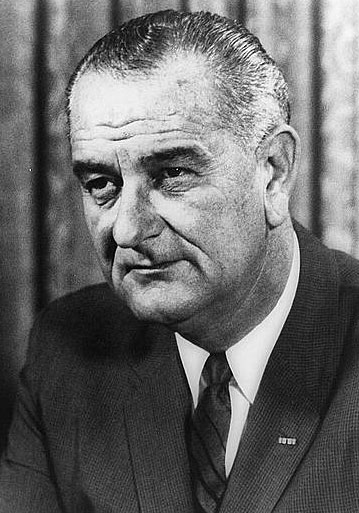
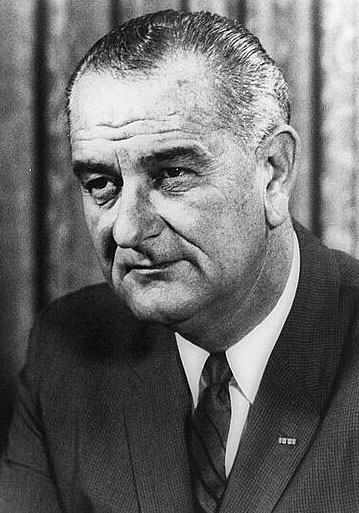
Johnson

But the anecdote’s defining and most delicious element is in error: Johnson did not see the Cronkite program when it aired. He was at the time in Austin, Texas, at the 51st birthday party of Governor John Connally. Thus Johnson could not have had “the abrupt yet resigned reaction that so often has been attributed to him,” I write in Getting It Wrong.

Moreover, there is no evidence that Johnson watched the Cronkite program later, on videotape.

Even if he had, the program represented no epiphany for Johnson. Indeed, not long after Cronkite’s report, the president gave a rousing speech in Minneapolis, in which he urged a “total national effort” to win the war in Vietnam.

That speech was delivered March 18, 1968, and in it, the president declared:

“We love nothing more than peace, but we hate nothing worse than surrender and cowardice.”

He criticized war critics as wanting the United States to “tuck our tail and violate our commitments.”

Johnson’s aggressive remarks are difficult to square with his supposedly downcast, self-pitying reaction to Cronkite’s assessment about Vietnam.

As for Johnson’s decision not to seek reelection, the “Cronkite moment” certainly was a non-factor. Johnson’s announcement came at the end of March 1968, a month after the Cronkite program–and a couple of weeks after the president’s poor showing as a write-in candidate in the Democratic primary in New Hampshire.

What’s more, there’s evidence Johnson never intended to seek reelection, that he had privately decided in 1967 against another campaign.

He said as much in his memoirs, writing that he had told Connally early in 1967 that he had “felt certain [he] would not run” for another term.

WJC

Related:

Invoking the ‘Cronkite Moment’ in Canada

In Cronkite Moment, Debunking, Media myths on July 10, 2010 at 9:28 am

Media-driven myths not only can be remarkably hardy; they often find use and application in contexts well beyond their original incarnation.

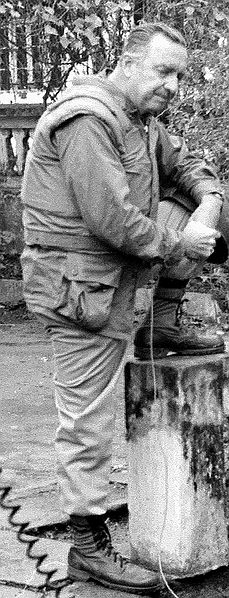
Cronkite in Vietnam, 1968

Evidence for that appears today in a column in Canada’s leading newspaper, the Globe and Mail. The column invokes the hoary myth of the “Cronkite Moment” to underscore how, in a splintered media landscape, no single television anchor projects exceptional influence.

(Or ever did, I would argue.)

In any case, the Globe and Mail column, which discusses the coming retirement of long-time Canadian TV news anchor Lloyd Robertson, declares:

“When venerable CBS broadcaster Walter Cronkite declared the Vietnam War could not be won, U.S. President Lyndon Johnson remarked. ‘If I’ve lost Cronkite, I’ve lost Middle America.'”

As I write in Getting It Wrong, my new book debunking 10 prominent media-driven myths:

“Scrutiny of the evidence associated with the program reveals that Johnson did not have—could not have had—the abrupt yet resigned reaction that so often has been attributed to him. That’s because Johnson did not see the program when it was aired.”

The Cronkite program about Vietnam was broadcast on the evening February 27, 1968, not long after the anchorman had returned from a visit to what then was South Vietnam.

Legend has it that Johnson was at the White House and watched the show. After Cronkite editorialized that the U.S. military effort in Vietnam was “mired in stalemate,” Johnson supposedly reached over, snapped off the television set, and exclaimed to an aide or aides:

“If I’ve lost Cronkite, I’ve lost Middle America.”

Or words to that effect. Versions vary.

In reality, Johnson was not at the White House that evening. He was not in front of a television set.

He was on the campus of the University of Texas at Austin, attending the 51st birthday party of a long-time political ally, Governor John Connally.

As I note in Getting It Wrong, at about the time Cronkite intoned his “mired in stalemate” assessment, Johnson was offering light-hearted banter about Connally’s age, saying:

“Today you are 51, John. That is the magic number that every man of politics prays for—a simple majority. Throughout the years we have worked long and hard—and I might say late—trying to maintain it, too.”

Even if Johnson later saw the Cronkite program on videotape, the president “gave no indication of having taken the anchorman’s message to heart,” I write in Getting It Wrong, adding:

“Just three days after the program aired, Johnson vowed in remarks at a testimonial dinner in Texas that the United States would ‘not cut and run’ from Vietnam. ‘We’re not going to be Quislings,’ the president said, invoking the surname of a Norwegian politician who helped the Nazis take over his country. ‘And we’re not going to be appeasers….'”

So in the days and even weeks following the Cronkite program, Johnson remained openly hawkish on the war.

The “Cronkite Moment” is a particularly delicious media myth in that it exerts enduring, and international, allure. But the notion that a sitting president would be suddenly and dramatically moved by the on-air assessment of a television anchorman is highly improbable.

“It is exceedingly rare for any news report to trigger a powerful, immediate and decisive reaction akin to” the “Cronkite Moment,” I write in Getting It Wrong. “Researchers long ago dismissed the notion the news media can create such profound and immediate effects, as if absorbing media messages were akin to receiving potent drugs via a hypodermic needle.”

It just doesn’t work that way.

WJC

Related:

Puncturing media myths: A case for modest media influence

In Cronkite Moment, Debunking, Jessica Lynch, Media myths, Murrow-McCarthy myth, Washington Post, Watergate myth on July 7, 2010 at 2:02 pm

Getting It Wrong: Ten of the Greatest Misreported Stories in American Journalism punctures prominent media-driven myths—false, dubious, and improbable stories about the news media that masquerade as factual.

The 10 tales debunked in Getting It Wrong often ascribe power, significance, and sometimes great courage to the news media and their practitioners. The book dismantles the legend of Edward R. Murrow’s crushing the menace of McCarthyism, of Walter Cronkite’s effectively ending a faraway and unpopular war, and of Bob Woodward and Carl Bernstein’s toppling Richard Nixon’s corrupt presidency.

Those stories, I write, “are compelling and exert an enduring allure; to expose them as exaggerated or untrue is to take aim at the self-importance of American journalism.”

I further write:

“To identify these tales as media myths is to confront the reality that the news media are not the powerful agents they, and many others, assume them to be.”

Indeed, it is quite rare for any news report to trigger a powerful, immediate, and decisive reaction akin to President Lyndon Johnson’s purported woe-is-me response to Cronkite’s televised assessment about Vietnam in 1968: “If I’ve lost Cronkite, I’ve lost Middle America.” (Or words to that effect.)

Researchers long ago dismissed the notion that the news media can create profound and immediate effects, as if absorbing media messages were akin to receiving potent drugs via a hypodermic needle.

Debunking media-driven myths thus enhances the case for modest or limited media effects. Getting It Wrong points out that “too often the ubiquitous presence of the news media is mistaken for power and influence.” Robert J. Samuelson, a columnist who writes on economics issues for Newsweek and the Washington Post, has described this fallacy notably well.

“Because the media are everywhere—and inspire much resentment—their influence is routinely exaggerated,” Samuelson wrote in Newsweek in 2003. “The mistake is in confusing visibility with power, and the media are often complicit in the confusion. We [in the news media] embrace the mythology, because it flatters our self-importance.”

What’s more, the news media nowadays are too diverse and too splintered—into print, broadcast, cable, satellite, and online options—to exert much collective or sustained influence on policymakers and broader audiences.

And as Herbert Gans, a sociologist who has written widely about the news media, once noted:

“If news audiences had to respond to all the news to which they are exposed, they would not have time to live their own lives. In fact, people screen out many things, including news, that could interfere with their own lives.”

That’s for sure. Large numbers of Americans ignore the news altogether: They are beyond media influence in any case. Nearly 20 percent of American adults go newsless on a typical day, according to a study conducted in 2008 by the Pew Research Center for the People & the Press.

The newsless option is particularly striking among young adults, 18-to-24-years-old. Thirty-four percent of that cohort goes newsless, according to Pew Research. (That proportion represents a substantial increase from 1998 when 25 percent of the 18-to-24-year-old cohort shunned the news.)

Media power tends to be modest, nuanced, diffused, and situational. And overstated.

Debunking media-driven myths helps place media influence in a more coherent, more rational context.

WJC

A version of this post first appeared at the University of California Press blog.

‘Getting It Wrong’ goes Majic

In Bay of Pigs, Bra-burning, Debunking, Furnish the war, Jessica Lynch, Media myths, Media myths and radio, New York Times, War of the Worlds, Washington Post, Watergate myth on July 1, 2010 at 11:34 am

I did an engaging and entertaining in-studio interview yesterday on the Lanigan & Malone show, one of the most popular radio programs in Cleveland, the gritty city where I cut my teeth, journalistically, years ago.

On the air with Lanigan (center) and Malone

The show airs on WMJI, Majic 105.7 FM, and I spoke with hosts John Lanigan and Jimmy Malone about several media-driven myths addressed and debunked in my new book, Getting It Wrong.

They included the case of Jessica Lynch, the waiflike Army private whom the Washington Post elevated to hero status in a sensational but utterly erroneous report early in the Iraq War in 2003.

The Post depicted Lynch as having “fought fiercely” in the Iraqi ambush at Nasiriyah of the Army’s 507th Maintenance Company. The newspaper said Lynch had “shot several enemy soldiers” and kept “firing her weapon until she ran out of ammunition.”

Walters

The Lynch case, I said during the Lanigan & Malone interview, appears to have centered around a case of mistaken identity. It wasn’t Lynch who had fought heroically at Nasiriyah. It was most likely Donald Walters, a cook-sergeant in Lynch’s unit who, after running out of ammunition, was captured by Iraqi irregulars and executed.

I pointed out during the interview how war and conflict can readily give rise to myth and misunderstanding. Indeed, half the chapters in Getting It Wrong are related to warfare, including the book’s first chapter, the myth of William Randolph Hearst’s infamous vow to “furnish the war” with Spain.

We moved on to discuss the myth that widespread panic and mass hysteria characterized the reactions to the 1938 radio dramatization of The War of the Worlds, then jumped to a discussion of the myth of superlative reporting of Hurricane Katrina’s aftermath in September 2005, and considered at some length about what I call the “nuanced myth” of bra-burning.

“Bra-smoldering,” I said, would be a more accurate characterization of what happened during the women’s liberation protest at Atlantic City in September 1968. My research shows that bras and other items were set afire, if briefly, during the demonstration against that year’s Miss America pageant.

“All these are ruined,” Lanigan said at one point about the myths debunked in Getting It Wrong.

We also discussed the Bay of Pigs-New York Times suppression myth. That myth centers around a telephone call President John F. Kennedy supposedly placed to the Times publisher or top editors in April 1961, asking that the newspaper hold off on reporting about the pending CIA-supported invasion of Cuba.

There is no evidence, I said, that Kennedy ever placed such a call. (Or even had time to place such a call.)

What appears to have happened is that the Bay of Pigs-suppression myth has become confounded with the 1962 Cuban missile crisis, during which Kennedy did call the Times to request a delay on a report about nuclear-tipped missiles the Soviets had deployed on the island.

As the interview wrapped up, Lanigan said he’s “sure there will be another” volume, a sequel, to Getting It Wrong.

“It’s a good book,” he said afterward. “I’m glad he did it.”

WJC

Related:

Discussing ‘Getting It Wrong’ with AU alums

In Cinematic treatments, Cronkite Moment, Debunking, Media myths, Media myths and radio, War of the Worlds, Washington Post, Watergate myth on June 30, 2010 at 10:35 pm

I met in Cleveland’s Little Italy neighborhood last night with a terrific group of American University alumni, at a program that featured a discussion of Getting It Wrong, my new book about media-driven myths.

With AU alums in Cleveland

The gathering was the second of the Cleveland area alumni chapter, which is ably led by Neil T. Young, Anthony Vacanti, and Antoinette Bacon. I was privileged to talk with the group about the book, which addresses and debunks 10 prominent media myths–those false, dubious, improbable stories about the news media that masquerade as factual.

We met at Michaelangelo’s, a fine Italian restaurant where the service is superb. Our discussion about Getting It Wrong was conducted seminar style and featured my fairly lengthy review of the heroic-journalist myth of Watergate–the notion that the intrepid investigative reporting by the Washington Post brought down Richard Nixon’s corrupt presidency.

I described how the book All the President’s Men and the cinematic version by the same title helped solidify the notion that the Post and its reporters Bob Woodward and Carl Bernstein were central to unraveling the Watergate scandal.

The book and the movie have had the effect of focusing on the Post reporters while ignoring or overlooking the far more significant contributions of federal prosecutors, federal judges, bipartisan congressional panels, and ultimately the U.S. Supreme Court in identifying Nixon’s efforts to obstruct justice in the scandal.

“Against that backdrop,” I said, “the news media were decidedly modest factors” in Watergate’s outcome.

Orson Welles

We also discussed the War of the Worlds myth–that Orson Welles’ 1938 radio dramatization of an invasion from Mars was so realistic that tens of thousands of Americans were convulsed in panic and fled their homes in hysteria. The program was imaginative entertainment–and was recognized as such by listeners in overwhelming numbers, I pointed out.

In addition, we talked about the so-called “Cronkite Moment” of February 1968, when CBS anchorman Walter Cronkite offered a downbeat analysis of the U.S. war effort in Vietnam, saying the military was “mired in stalemate.”

Supposedly, Cronkite’s assessment came as an epiphany to President Lyndon Johnson who, it is said, snapped off the television set upon hearing the anchorman’s “mired in stalemate” characterization and said, “If I’ve lost Cronkite, I’ve lost Middle America.”

Or words to that effect.

In reality, I pointed out, the president wasn’t in front of a television set that night.

He was in Austin, Texas, at the 51st birthday party of Governor John Connally. And even if Johnson had seen the Cronkite report on videotape, the anchorman’s assessment really was no epiphany, because the president in the days and weeks immediately afterward hewed to a hawkish line on Vietnam.

Questions from the alums were quite thoughtful. Among them was a query about the common threads may be found in the myths debunked in Getting It Wrong.

A thoughtful and perceptive question, that.

And indeed there are some shared characteristics of media myths.

Many myths are reductive, in that they offer simplistic explanations for complex historical events. That factor certainly helps explains the tenacity of the heroic-journalist myth of Watergate and the “Cronkite Moment.” It is far easier to characterize the news media as prime movers in the outcomes of Watergate and Vietnam than it is to grapple with the complexities and nuances of those landmark events, I said.

Additionally, media myths tend to be delicious stories–stories almost too good to be disbelieved. And that certainly holds for Watergate, the “Cronkite Moment,” and the War of the Worlds dramatization.

And media myths tend to be ways to assert the notion that the news media are powerful and influential forces in American society.

But as I write in Getting It Wrong, media power “tends to be modest, nuanced, diffused, and situational” and altogether “too often the ubiquitous presence of the news media is mistaken for power and influence.”

Moreover, I write, “The American media these days are far too splintered and diverse—print, broadcast, cable, satellite, online—to exert much in the way of collective and sustained influence on policymakers or media audiences.”

WJC

Related: