W. Joseph Campbell

Posts Tagged ‘Cronkite Moment’

Searing insight that wasn’t: Fox Business and the ‘Cronkite Moment’

In Cronkite Moment, Debunking, Media myths on March 25, 2011 at 7:59 am

It’s intriguing how media myths — especially those distilled to pithy turns of phrase — are invoked by commentators to infuse their arguments with a presumptive moral authority.

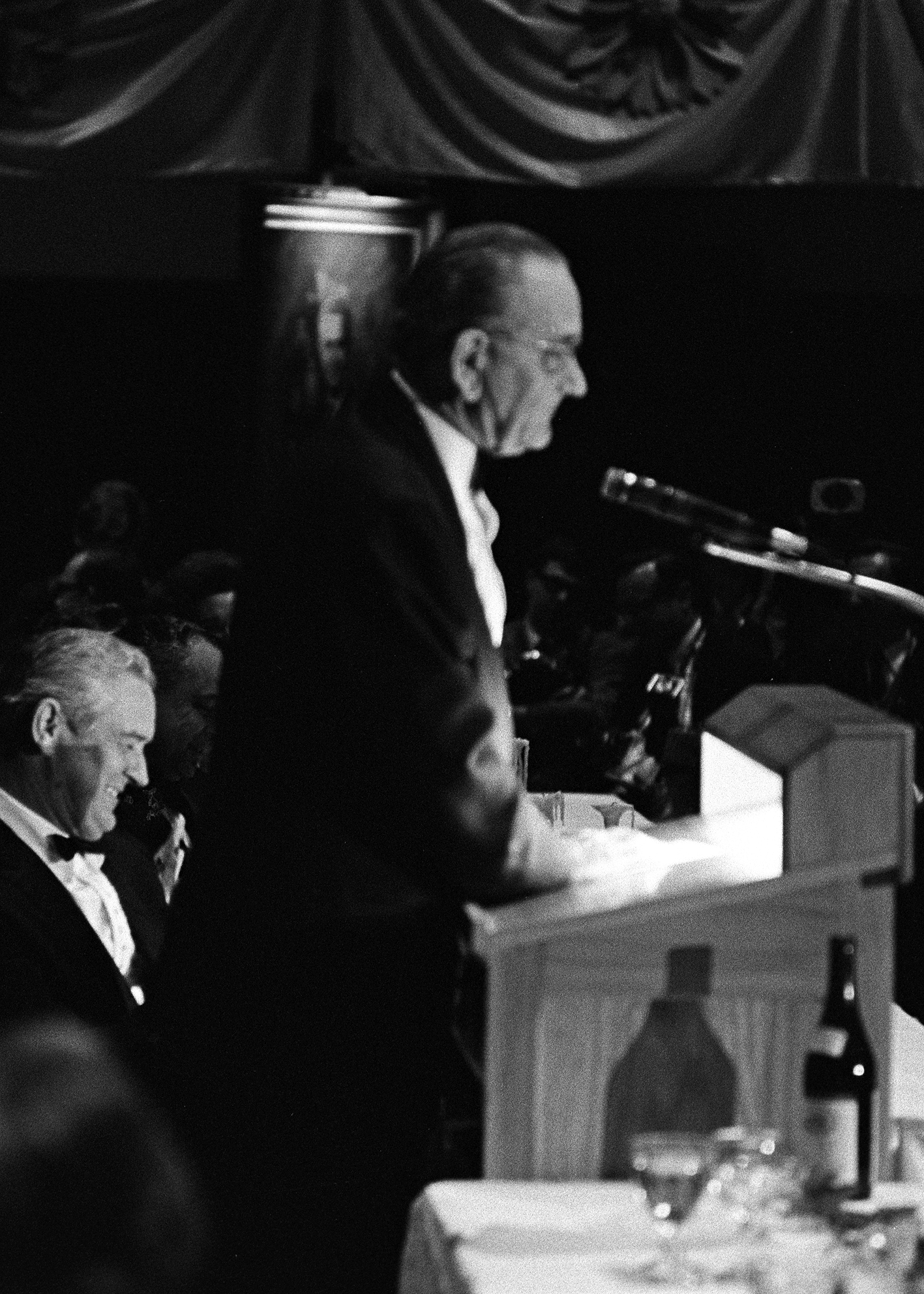
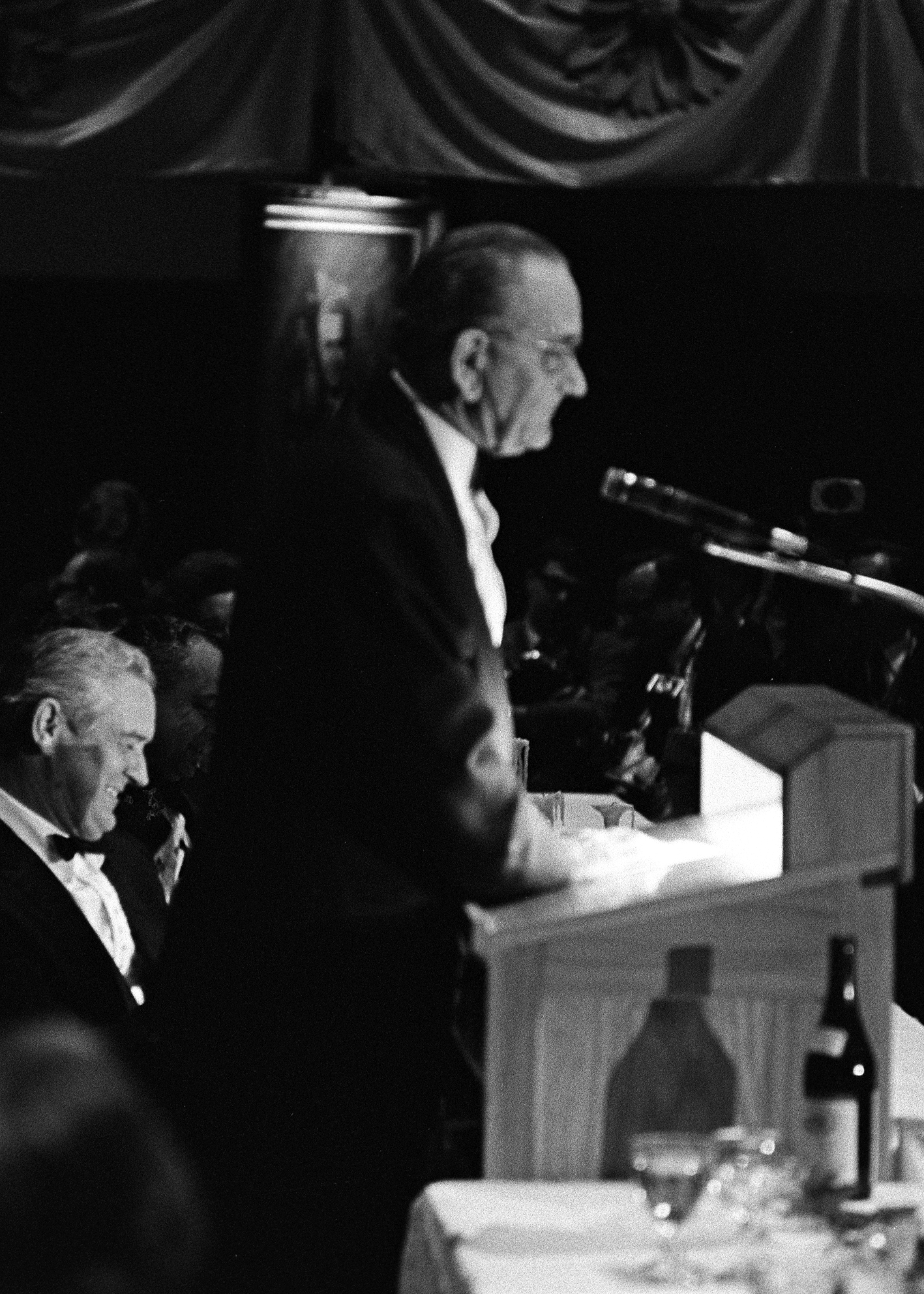
Johnson: Cracked a joke instead

A telling example of this tendency is the mythical line attributed to President Lyndon Johnson — “If I’ve lost Cronkite, I’ve lost Middle America” (or words to that effect).

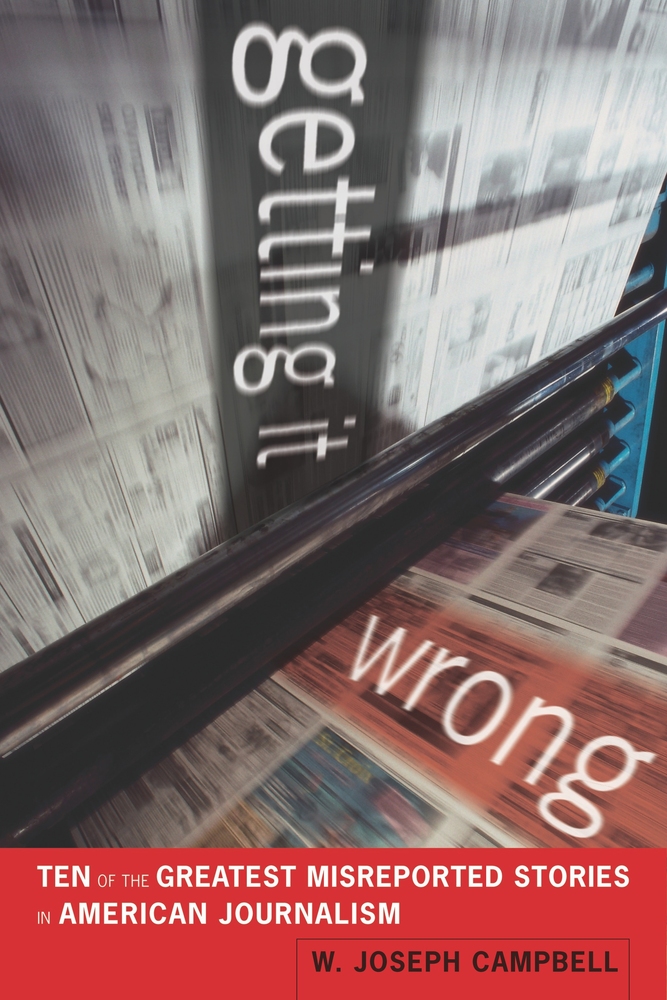
As I note in my latest book, Getting It Wrong, it’s almost certain that Johnson never made the comment, at least not in reaction to Walter Cronkite’s on-air assessment in February 1968 that the U.S. military in Vietnam was “mired in stalemate.”

But the mythical line lives on because it’s pithy, memorable, and telling. Supposedly.

It suggests the news media can offer power-wielding authorities insight so profound and searing that can alter policy and even change the course of a war. Which is what Cronkite’s “mired in stalemate” characterization purportedly represented for Johnson.

As I write in Getting It Wrong, Cronkite’s assessment “supposedly was so singularly potent that it is has come to be remembered as the ‘Cronkite Moment.‘”

How the “Cronkite Moment” can be applied in reaching for the high moral ground was evident the other day in a commentary aired on the Fox Business cable channel.

The commentator, Gerri Willis, slammed Obamacare, the year-old federal health care legislation, as a looming financial disaster that “sure ain’t what it was advertised to be.”

Fair enough: No argument there.

But in closing, Willis reached for the “Cronkite Moment,” as if to gild her argument.

It came off sounding like a non-sequitur.

Here’s what she said:

“It’s no wonder that an all-star panel of health care backers — which included Ted Kennedy’s widow Vicki Kennedy and Tom Daschle, among others — are nowhere to be found.

“President Johnson said during the Vietnam War, ‘If I’ve lost Cronkite I’ve lost Middle America.

“Well Mr. Obama ,” she said, referring to President Barack Obama, “look at the polls. You lost Middle America on this a long time ago.”

Invoking a media myth hardly clinches the argument. Turning to the dubious line makes the argument appear a bit frivolous and decidedly  less than sedulous.

And why is the comment attributed to Johnson a media myth?

For several reasons, which are discussed in Getting It Wrong.

For starters, Johnson did not see the Cronkite program when it aired. The president at the time was in Austin, Texas, at the 51st birthday party for a longtime political ally, Gov. John Connally.

Johnson wasn’t in front of a television set when Cronkite intoned his “mired in stalemate” commentary. Johnson was at the podium at Connally’s birthday party, cracking a joke (see photo).

“Today, you are 51, John,” the president said. “That is the magic number that every man of politics prays for—a simple majority.”

It is difficult to fathom how Johnson could have been much moved by a television program he didn’t see.

And even if the president watched the Cronkite report on videotape at some later date (and there’s no evidence he did), it represented no epiphany, no moment of revealing insight.

Johnson in the days and weeks after the Cronkite program was publicly urging a national recommitment to the war in Vietnam.

Just a few days after Cronkite offered his “mired in stalemate” assessment, Johnson delivered a rousing speech in Texas, declaring that the United States would “not cut and run” from commitments in Vietnam.

In mid-March 1968, Johnson gave lectern-pounding speech in Minnesota, urging “a total national effort to win the war” in Vietnam.

“We love nothing more than peace,” Johnson said, “but we hate nothing worse than surrender and cowardice.”

Clearly, the “Cronkite Moment” offered no searing insight for Lyndon Johnson.

WJC

Recent and related:

Have a look: New trailer for ‘Getting It Wrong’

In Anniversaries, Debunking, Hurricane Katrina, Media myths, Media myths and radio, Newspapers, War of the Worlds, Washington Post, Watergate myth on January 18, 2011 at 7:08 am

Check out the new trailer for my latest book, Getting It Wrong, which addresses and debunks 10 prominent media-driven myths–those dubious stories about the news media that masquerade as factual.

As I say in narrating the trailer, media-driven myths can be thought of as the “junk food of journalism“–delicious and appealing, perhaps, but not very nutritious.

The trailer, recently completed by research assistant Jeremiah N. Patterson, reviews the media myths related to the Watergate scandal, the purported Cronkite Moment, and the aftermath of Hurricane Katrina.

A trailer prepared last year by Mariah Howell shortly before publication of Getting It Wrong remains accessible at YouTube.

Another YouTube video–prepared by Patterson in the fall to mark the anniversary of the famous War of the Worlds radio broadcast that supposedly was so realistic that it panicked America–also is accessible online. The video discusses Halloween’s greatest media myth.

WJC

Recent and related:

Cronkite’s view on Vietnam ‘changed course of history’ But how?

In Cronkite Moment, Debunking, Media myths, New York Times, Newspapers on January 17, 2011 at 7:16 am

Few media-driven myths are more enticing, delicious, or retold as often as the so-called “Cronkite Moment,” when the views of CBS anchorman Walter Cronkite supposedly altered American policy in the Vietnam War.

The presumptive “Cronkite Moment“–one of 10 media-driven myths I address and debunk in my latest book, Getting It Wrong–took place February 27, 1968, when Cronkite declared on air that U.S. military was “mired in stalemate” in Vietnam.

At the White House, President Lyndon Johnson supposedly watched the Cronkite report and, upon hearing the “mired in stalemate” analysis, snapped off the television set and told an aide or aides:

“If I’ve lost Cronkite, I’ve lost Middle America.”

Or something to that effect. Versions vary markedly.

The words of the anchorman supposedly represented an epiphany for the president.

A slimmed-down version of the “Cronkite Moment” appeared in yesterday’s Los Angeles Times, in a commentary about a supposed surfeit of opinion in contemporary America.

“Opinion inflation has invaded every aspect of our lives,” wrote the commentary’s author, Stephen Randall, the deputy editor of Playboy.

“There was a time,” he added, vaguely, “when thoughtful people tried to be balanced. The old-style political columnists were famous for saying nothing.”

Randall further declared:

“Walter Cronkite voiced so few opinions that when he uttered one—about the Vietnam War—it changed the course of history.”

My opinion? Such ruminations are glib, superficial and, in reference to Cronkite, the stuff of media myth.

The author doesn’t explain how Cronkite’s views on Vietnam “changed the course of history” (an exaggerated claim sometimes made about the Watergate reporting of Bob Woodward). But Randall’s clearly alluding to the mythical “Cronkite Moment” of February 1968.

As I discuss in Getting It Wrong, “serious flaws are associated with the presumptive ‘Cronkite moment.'”

Notable among them is that President Johnson did not see Cronkite’s Vietnam program when it aired.

Johnson at the time wasn’t at the White House and he wasn’t in front of a television set.

Johnson was on the campus of the University of Texas at Austin, attending the 51st birthday party of a longtime political ally, Governor John Connally.

As Cronkite was intoning his “mired in stalemate” assessment, Johnson was offering light-hearted banter about Connally’s age.

“Today you are 51, John,” the president said. “That is the magic number that every man of politics prays for—a simple majority.”

Cronkite

It was hardly the best presidential joke ever told. But it clearly demonstrated that Johnson was not bemoaning the loss of Cronkite’s support.

Indeed, it is difficult to fathom how Johnson could have been moved by a program he did not see.

Not only that, but Cronkite’s “mired in stalemate” assessment was by late February 1968 neither striking nor original.

As I note in Getting It Wrong, “stalemate” had been invoked  for months to describe the war in Vietnam.

Notably, the New York Times published a front-page analysis on August 7, 1967, that declared “the war is not going well. Victory is not close at hand.”

The Times report was published on its front page beneath the headline:

Vietnam: The Signs of Stalemate.

And that wasn’t the only occasion in 1967 when the Times turned to “stalemate” to characterize the war.

A review of database articles and editorials published in the Times reveals that “stalemate” was invoked not infrequently in the months before the supposedly revealing “Cronkite Moment.”

For example, in a news analysis published July 4, 1967, the Times said of the war effort:

“Many officers believe that despite the commitment of 466,000 United States troops now in South Vietnam … the military situation there has developed into a virtual stalemate.”

And in an editorial published October 29, 1967, the Times said:

“Instead of denying a stalemate in Vietnam, Washington should be boasting that it has imposed a stalemate, for that is the prerequisite–on both sides–to a negotiated settlement. That settlement, if it is to be achieved, will have to be pursued with the same ingenuity and determination that have been applied to fighting the war.”

So Cronkite in his report about Vietnam on February 27, 1968, essentially reiterated an assessment that had been offered several times by the Times.

And embracing the view of the Times “changed the course of history”?

Hardly.

U.S. troops were in Vietnam for five years after the “Cronkite Moment.”

WJC

Recent and related:

Murrow, Cronkite myths cited in Poland’s top paper

In Cronkite Moment, Debunking, Media myths, Murrow-McCarthy myth, New York Times, Newspapers, Watergate myth on January 4, 2011 at 10:25 am

I’ve discussed from time to time at Media Myth Alert how media-driven myths about the U.S. news media have a way of traveling well and finding expression in news outlets overseas.

Watergate-related myths are notable examples of this tendency.

A couple of prominent media myths popped up yesterday in an article posted at the online site of Gazeta Wyborca, the leading daily in Poland and a newspaper with a remarkable past.

Gazeta Wyborca traces its lineage to what was the leading underground newspaper in Poland of the 1980s, Tygodnik Mazowsze. The clandestine title appeared under the noses of Poland’s communist authorities, week after week, from 1982 to 1989–some 290 issues in all.

Tygodnik Mazowsze was run almost entirely by women affiliated with Poland’s then-banned Solidarity opposition. When the country’s communist rulers permitted Solidarity candidates to stand in elections in 1989, one of the conditions was that the movement be permitted to publish an above-ground newspaper.

So the staff of Tygodnik Mazowsze moved up from the underground to launch Gazeta Wyborca, which means “electoral newspaper.” In the years since, Gazeta has become the dominant news outlet in Poland, which now is a thriving democracy.

Gazeta yesterday referred to the debate that bubbled last week in U.S. news media over a New York Times article that likened TV comedian Jon Stewart to legendary CBS newsman Edward R. Murrow.

Gazeta noted that U.S. news media “triumphantly” mentioned “cases in which journalists have changed the course of history” and referred to Murrow’s “instrumental” role in ending Senator Joseph McCarthy’s communists-in-government witch-hunt.

It also noted CBS anchorman Walter Cronkite’s criticism of the Vietnam War in 1968, which supposedly forced President Lyndon Johnson to realize his war policy was a shambles.

It’s too bad Gazeta didn’t point out that both cases are media-driven myths.

As I discuss in my latest book, Getting It Wrong, Murrow was quite late in confronting McCarthy, doing so most prominently in a half-hour television program that aired March 9, 1954.

That show came months, even years after other American journalists–notably, syndicated columnist Drew Pearson–had reported critically, closely, and often about McCarthy and his exaggerated charges.

“To be sure,” I write in Getting It Wrong, “it wasn’t as if Americans in early 1954 were hoping for someone to step up and expose McCarthy, or waiting for a white knight like Murrow to tell them about the toxic threat the senator posed.”

By then, they knew all too well.

Nor was Cronkite at the cutting edge of criticism of the U.S. war effort in Vietnam.

Far from it.

The CBS anchorman declared in a televised special report on February 27, 1968, that the U.S. military was “mired in stalemate” in Vietnam.

LBJ in Texas, February 27, 1968

But that scarcely was a remarkable assertion.

As I note in Getting It Wrong, stalemate” had been appearing as early as the summer of 1967 in New York Times editorials and analyses about the war.

What supposedly made the Cronkite characterization stand out is that President Johnson saw the program and, as it ended, said to an aide or aides, “If I’ve lost Cronkite, I’ve lost Middle America.”

Or something to that effect.

But in fact, Johnson wasn’t in front of a television set that night. He didn’t see the Cronkite program when it aired.

At the time Cronkite was intoning his “mired in stalemate” assessment, Johnson was offering light-hearted banter in Austin, Texas, at the 51st birthday party of one of his longtime political allies, Governor John Connally.

So it’s difficult to fathom how Johnson could have been much moved by a program that he hadn’t seen.

WJC

Recent and related:

Likening Jon Stewart to Murrow: ‘Ignorant garbage’

In Cronkite Moment, Debunking, Media myths, Murrow-McCarthy myth, New York Times on December 28, 2010 at 12:04 am

Murrow

The New York Times piece that extravagantly compared TV comedian Jon Stewart to Edward R. Murrow stirred considerable discussion yesterday in the blogosphere and beyond.

The most incisive and inspired characterization I encountered was that of Todd Gitlin, a professor of journalism and sociology at Columbia University. He was quoted by ABC News as saying that likening Stewart to Murrow or legendary CBS anchorman Walter Cronkite “is childish, it is garbage, it is ignorant garbage.”

Ignorant garbage: Scathing but accurate, indeed.

Gitlin, whom I do not know, also was quoted as saying, quite correctly, that Stewart “is not a news person. He’s a satirist and when he chooses to be blunt, he has the luxury of being blunt.” Stewart is host of Comedy Central’s Daily Show with Jon Stewart.

Embedded in the Times article were two prominent media-driven myths, both of which I address and debunk in my latest book, Getting It Wrong.

One was the notion that Murrow’s half-hour television report on Senator Joseph R. McCarthy in 1954 turned public opinion against the senator and his communists-in-government witch-hunt. In fact, however, McCarthy’s favorable ratings had been falling for a few months before Murrow’s program, which aired March 9, 1954.

The other embedded myth was the allusion to the “Cronkite Moment” of February 1968. That was when Cronkite declared on-air that the U.S. military was “mired in stalemate” in Vietnam. Supposedly, Cronkite’s analysis was an epiphany for President Lyndon Johnson, who suddenly realized his war policy was a shambles.

But as I note in Getting It Wrong, Cronkite’s “mired in stalemate” assessment was scarcely novel or stunning at the time. And Johnson didn’t even see the Cronkite report when it aired. He was in Austin, Texas, attending a birthday party for a longtime political ally, Governor John Connally (see photo).

LBJ didn't see Cronkite show

As such, it is very difficult to believe the president was much moved by a program that he hadn’t watched.

Left largely unaddressed in the discussion of the Times claim about Stewart, Murrow, and Cronkite is why–what accounts for the appeal of such extravagant characterizations?

In part, they are driven by an understandable urge to distill and simplify history–to be able to grasp the essence of important historical events while sidestepping their inherent complexity, messiness, and nuance.

Characterizations such as those in the Times yesterday also seek to ratify the importance of contemporary television personalities, to locate in them the virtues and values that supposedly animated the likes of Murrow and Cronkite.

Such an impulse skirts, if not indulges in, the “golden age” fallacy.

But it should be noted that Murrow, in particular, was no white knight, no paragon of journalistic virtue.

As I point out in Getting It Wrong, Murrow’s biographers have acknowledged that the broadcasting legend added to his employment application at CBS five years to his age and claimed to have majored in college in international relations and political science.

He had been a speech major at Washington State University.

Murrow also passed himself off as the holder of a master’s degree from Stanford University–a degree he never earned.

And Cronkite for years pooh-poohed the notion that his 1968 program on Vietnam had much effect on Johnson and U.S. war policy. Cronkite said in his memoir, A Reporter’s Life, that his  “mired in stalemate” assessment represented for Johnson “just one more straw in the increasing burden of Vietnam.”

Cronkite later told the CNBC cable network that he doubted the program “had a huge significance.

“I think it was a very small straw on a very heavy load [Johnson] was already carrying.”

Only late in his life, as the so-called “Cronkite Moment” gained legendary dimension, did Cronkite begin to embrace the anecdote’s purported power.

“It never occurred to me,” Cronkite said in 2004, that the 1968 program “was going to have the effect it had.”

But Cronkite’s initial interpretation was most accurate: The show had little to no effect on policy or public opinion.

WJC

Recent and related:

Two myths and today’s New York Times

In Cronkite Moment, Debunking, Media myths, Murrow-McCarthy myth, New York Times on December 27, 2010 at 1:33 am

Today’s New York Times offers up a double-myth story, a rare article that incorporates two prominent media-driven myths.

The Times invokes the Murrow-McCarthy and “Cronkite Moment” myths in suggesting that TV comedian Jon Stewart is a latter-day equivalent of Edward R. Murrow for advocating congressional approval of a health-aid package for first responders to the terror attacks of September 11, 2001.

That’s certainly a stretch.

But here’s what the Times says in presenting its double dose of media myths–both of which are addressed and debunked in my latest book, Getting It Wrong:

  • “Edward R. Murrow turned public opinion against the excesses of Senator Joseph McCarthy in the 1950s.”
  • “Walter Cronkite’s editorial about the stalemate in the war in Vietnam after the Tet Offensive in 1968 convinced President Lyndon B. Johnson that he had lost public support and influenced his decision a month later to decline to run for re-election.”

Both claims are delicious, and often invoked as evidence of the power of the news media.

But both claims are specious.

As I discuss in Getting It Wrong, public opinion began turning against McCarthy well before Murrow’s often-recalled half-hour television report in March 1954 that scrutinized the senator and his communists-in-government witch-hunt.

Specifically, I note Gallup Poll data showing McCarthy’s appeal having crested in December 1953, when 53 percent of Americans said they had a favorable view of him. The senator’s favorable rating fell to 40 percent by early January 1954, and to 39 percent in February 1954, when an almost identical number of Americans viewed him unfavorably.

“To be sure,” I write in Getting It Wrong, “it wasn’t as if Americans in early 1954 were hoping for someone to step up and expose McCarthy, or waiting for a white knight like Murrow to tell them about the toxic threat the senator posed.

“By then, McCarthy and his tactics were well-known and he had become a target of withering ridicule—a sign of diminished capacity to inspire dread.”

On March 9, 1954, the day Murrow’s See It Now program on McCarthy was aired, former president Harry Truman reacted to reports of an anonymous threat against McCarthy’s life by quipping:

“We’d have no entertainment at all if they killed him.”

And long before Murrow took on McCarthy, “several prominent journalists—including the Washington-based syndicated columnist Drew Pearson—had become persistent and searching critics of McCarthy, his record, and his tactics,” I note.

A media-driven myth even more tenacious than the Murrow-McCarthy tale is the legendary “Cronkite Moment” of February 1968, when CBS anchorman Cronkite declared on-air that the U.S. military was “mired in stalemate” in Vietnam.

I point out in Getting It Wrong that by early 1968, Cronkite’s assessment was neither novel nor exceptional.

Indeed, the Times had reported August 1967, months before Cronkite’s on-air assessment, that the war effort was not going well.

Victory in Vietnam, the Times said then, “is not close at hand. It may be beyond reach.”

The article appeared on the front page August 7, 1967, beneath the headline:

Vietnam: The Signs of Stalemate

That wasn’t only occasion in 1967 when the Times invoked “stalemate” to characterize the war. In a news analysis published July 4, 1967, the newspaper stated:

“Many officers believe that despite the commitment of 466,000 United States troops now in South Vietnam … the military situation there has developed into a virtual stalemate.”

Moreover, the Times anticipated Cronkite’s “mired in stalemate” commentary in an editorial published February 8, 1968.

“Politically as well as militarily,” the editorial declared, “stalemate increasingly appears as the unavoidable outcome of the Vietnam struggle.”

So “stalemate” was much in the air weeks and months before Cronkite invoked the word on television.

Moreover, as I note in Getting It Wrong, President Johnson didn’t even see the Cronkite program when it aired February 27, 1968.

Johnson wasn’t at the White House that night. And he wasn’t in front of a TV set.

The president was in Austin, Texas, offering light-hearted remarks at the 51st birthday party of a longtime political ally, Governor John Connally.

About the time Cronkite was intoning his “mired in stalemate” assessment, Johnson was saying in jest:

“Today, you are 51, John. That is the magic number that every man of politics prays for—a simple majority.”

It’s difficult to make a persuasive case that the president could have been much moved by a television report he didn’t see.

Not only that, but Johnson may have decided in 1967 or even earlier against seeking reelection in 1968. He wrote in his memoir, The Vantage Point: “Long before I settled on the proper forum to make my announcement, I had told a number of people of my intention not to run again.”

Johnson’s memoir, by the way, has nothing to say about the Cronkite program of February 1968.

WJC

Recent and related:

Many thanks for Ed Driscoll and Jim Romenesko for linking to this post

Knocking down the ‘Cronkite Moment’

In Cronkite Moment, Debunking, Media myths, New York Times on December 22, 2010 at 9:28 am

That’s more like it.

A blog sponsored by the Hollywood Reporter yesterday invoked–and parenthetically disputed–the so-called “Cronkite Moment” of 1968, when CBS news anchorman Walter Cronkite declared on-air that the U.S. war effort in Vietnam was “mired in stalemate.”

The media myth has it that President Lyndon Johnson watched the Cronkite report and, upon hearing the anchorman’s “mired in stalemate” assessment, snapped off the television set and told an aide or aides:

“If I’ve lost Cronkite, I’ve lost Middle America.” Or something to that effect.

As I discuss in my latest book, Getting It Wrong, the tale almost certainly is a media myth.

Johnson didn’t see the Cronkite report when it aired on February 27, 1968. The president at the time was in Austin, Texas, attending the 51st birthday party of Governor John Connally, one of his longtime allies.

About the time Cronkite was intoning “mired in stalemate,” Johnson wasn’t lamenting the loss of the anchorman’s support. Johnson was making light-hearted comments about Connally’s age, saying:

“Today you are 51, John. That is the magic number that every man of politics prays for—a simple majority.”

Moreover, there is no compelling evidence that Johnson saw the Cronkite program later, on videotape.

And as I point out in Getting It Wrong, “The power of the ‘Cronkite moment’ resides in the sudden, unexpected, and decisive effect it supposedly had on the president: Such an effect would have been absent, or greatly diminished, had Johnson had seen the program on videotape at some later date.”

So here’s what the Hollywood Reporter blog said yesterday, in a column that discussed leading candidates for best motion picture of 2010:

“They say that when President LBJ saw newscaster Walter Cronkite editorialize against Vietnam, he said, ‘If I’ve lost Cronkite, I’ve lost the war.’ (Actually, this is an urban legend, but it’s a fine metaphor so it endures.)”

While it’s not entirely clear why the writer felt compelled to invoke the “Cronkite Moment,” that he promptly knocked it down is commendable.

Calling it out as dubious is necessary if the myth ever is to be unmade.

The “Cronkite Moment,” despite its wobbly and improbable elements, is a delicious story of a journalist telling truth to power–and producing a powerful effect. As such, it probably will live on.

It certainly will live on if efforts aren’t made repeatedly to call attention to its improbability: A news anchorman’s brief editorial statement was sufficient to alter a president’s thinking?

Come on.

It doesn’t work that way.

Besides, as I point out in Getting It Wrong, Cronkite’s assessment of the U.S. war effort was hardly original.

Nearly seven months before the “Cronkite Moment,” the New York Times had reported the war in Vietnam “is not going well.”

Victory, the Times said in August 1967, “is not close at hand. It may be beyond reach.”

This analysis was published on the Times’ front page beneath the headline:

Vietnam: The Signs of Stalemate.”

WJC

Recent and related:

Not off the hook with ‘reportedly’

In Cronkite Moment, Debunking, Media myths, New York Times on December 17, 2010 at 10:08 am

“Reportedly” is a squishy weasel word that journalists use to deflect immediate responsibility or as a buffer against blame.

LBJ at time of 'Cronkite Moment'

In invoking “reportedly,” journalists in effect are saying: “I can’t vouch for this statement first-hand, but others have used it. It’s in wide circulation.” So they slap “reportedly” before the claim and go with it.

The mythical “Cronkite Moment” of 1968–when the on-air assessment of CBS news anchor Walter Cronkite supposedly altered U.S. policy in Vietnam–invites such usage.

Today’s Dallas Morning News invokes the r-word in a column on the entertainment page that parenthetically recalls the “Cronkite Moment.”

The column referred to CBS newsman Bob Schieffer and his comments about Afghanistan, offered at a recent luncheon in Dallas. It states:

“Schieffer took a page out of Cronkite’s book and expressed his skepticism about our approach to the war in Afghanistan. (After Cronkite’s 1968 editorial on Vietnam, LBJ reportedly said, ‘If I’ve lost Cronkite, I’ve lost middle America.’)”

“Reportedly” doesn’t let the journalist off the hook of responsibility. It’s a thin cover, a vague caveat. Its use doesn’t make the claim about the “Cronkite Moment” any less assertive.

Or any less the media myth.

I address and debunk the “Cronkite Moment” in my latest book, Getting It Wrong, pointing out that until late in his life even Cronkite pooh-poohed the notion his program on Vietnam had much effect on U.S. policy.

The program that gave rise to the “Cronkite Moment” was an hour-long special report that aired February 27, 1968. Near the close of program, Cronkite declared the U.S. military in Vietnam was “mired in stalemate” and suggested that negotiations might eventually lead to a way out.

At the White House, President Lyndon Johnson supposedly watched the Cronkite program and, upon hearing the anchorman’s assessment, switched off the television set and muttered to an aide or aids:

“If I’ve lost Cronkite, I’ve lost Middle America.”

Or something to that effect. Versions vary markedly.

But as I point out in Getting It Wrong, Johnson wasn’t at the White House that night. He did not see the Cronkite program when it aired, and there is no solid evidence he later watched the show on videotape.

And as Cronkite was intoning his “mired in stalemate” assessment, Johnson was in Texas, making light-hearted comments at the 51st birthday party of Governor John Connally, a longtime political ally.

“Today you are 51, John,” the president said. “That is the magic number that every man of politics prays for—a simple majority. Throughout the years we have worked long and hard—and I might say late—trying to maintain it, too.”

It wasn’t the funniest presidential joke ever told. But the comment makes clear that Johnson that night wasn’t lamenting his having “lost Cronkite.”

The show was no epiphany for Johnson; it offered no flash of insight that his war policy was a shambles. Indeed, it is difficult to fathom how the president could have been much moved by a television program he had not seen.

What’s more, Cronkite’s “mired in stalemate” assessment was hardly a stunning interpretation in early 1968. It was neither notable nor extraordinary for the time.

Indeed, nearly seven months before Cronkite’s program, the New York Times had cited “disinterested observers” in reporting that the war in Vietnam “is not going well.”

Victory, the Times reported, “is not close at hand. It may be beyond reach.”

This analysis was published on the Times’ front page in August 1967, beneath the headline:

Vietnam: The Signs of Stalemate.”

Given the that earlier reporting, Cronkite might well have said on his program about Vietnam that the U.S. war effort was “reportedly mired in stalemate.”

WJC

Recent and related:

‘Spiegel’ thumbsucker invokes Watergate myth

In Cronkite Moment, Debunking, Media myths, Washington Post, Watergate myth on December 14, 2010 at 10:20 am

In the fallout from the Wikileaks disclosure of 25o,000 U.S. diplomatic cables, commentators seeking a point of reference sometimes have turned to what I call the heroic-journalist myth of Watergate.

The German newsmagazine Der Spiegel is the latest to do so, offering up the Watergate myth in a thumbsucker about Wikileaks, posted in English yesterday at its online site. The commentary–titled “Is Treason a Civic Duty?”–included this passage:

“The Washington Post, whose reporters Bob Woodward and Carl Bernstein once exposed the Watergate affair, describes WikiLeaks as a ‘criminal organization.'”

That passage has two significant problems.

First, searches of the LexisNexis database produce no reference to the Post or its online affiliate washingtonpost.com having taken an editorial view that Wikileaks is a “criminal organization.”

Indeed, just last Sunday the Post declared in an editorial that Wikileaks founder Julian Assange acted “irresponsibly” in releasing the cache of diplomatic cables. “But that does not mean he has committed a crime,” the Post added.

The newspaper did run a column in August by Marc A. Thiessen who called Wikileaks “a criminal enterprise. Its reason for existence is to obtain classified national security information and disseminate it as widely as possible–including to the United States’ enemies.”

But Thiessen is a visiting fellow at the American Enterprise Institute who writes a weekly op-ed column for the Post. As such, he hardly sets or expresses the newspaper’s editorial policy.

Second, and far more pertinent to Media Myth Alert, is the reference in the Spiegel essay to Woodward and Bernstein’s having “once exposed the Watergate affair.”

They didn’t.

The seminal crime of the Watergate scandal was a break-in at Democratic headquarters at the Watergate complex in Washington, D.C. The crime was thwarted by local police and word of the arrest of five Watergate burglars began circulating within hours.

The Post reported on June 18, 1972:

“Five men, one of whom said he is a former employee of the Central Intelligence Agency, were arrested at 2:30 a.m. yesterday in what authorities described as an elaborate plot to bug the offices of the Democratic National Committee here.”

Woodward and Bernstein were listed as contributors to that report, which carried the byline of Alfred E. Lewis, a veteran police reporter.

The reporting of Woodward and Bernstein didn’t expose the cover-up of crimes linked to the break-in or the payment of hush money to the burglars, either. As I note in my latest book, Getting It Wrong, Woodward was quoted as saying in 1973 that those crucial aspects of the scandal were “held too close. Too few people knew. We couldn’t get that high.”

Nor did Woodward and Bernstein expose or disclose the existence of the White House audiotaping system that proved so pivotal to Watergate’s outcome.

Audiotapes secretly made by President Richard Nixon captured his approving a plan to impede the FBI investigation into the Watergate burglary and related crimes. The taping system was disclosed by investigators of the Senate select committee on Watergate, which convened hearings during spring and summer 1973.

The U.S. Supreme Court in July 1974 ordered Nixon to surrender the tapes to the Watergate special prosecutor; he complied. The tapes’ contents forced him to resign the presidency.

As I write in Getting It Wrong, against “the tableau of prosecutors, courts, federal investigations, and bipartisan congressional panels, the contributions of Woodward and Bernstein [in exposing the Watergate scandal] were modest, and certainly not decisive.”

I also point out that principals at the Post have acknowledged as much” over the years. They have sought from time to time to dispute the notion the newspaper brought down Nixon.

So Watergate is indeed a misleading point of reference in assessing the Wikileaks fallout.

Especially wrong-headed is the eagerness to ascribe great significance in the Wikileaks disclosures, including those of last summer. There was interest then in characterizing the leaks of Afghanistan war logs as another “Cronkite Moment.” Which they weren’t.

After all, the original “Cronkite Moment” of 1968 was a media-driven myth.

The Wikileaks disclosures–especially the recent release of diplomatic cables–have proven to be remarkably unshocking.

The cables have tended to confirm what many people who follow (and teach) foreign affairs and foreign policy have long known or suspected: The Saudis are fearful of the Iranian nuclear program and want it dismantled; the Chinese aren’t too keen about Kim Jong Il and his ilk in North Korea; Russia under Vladimir Putin has become a mafia regime; Italian prime minister Silvio Berlusconi is a buffoon.

None of that comes as a shock or surprise.

If Assange and Wikileaks meant to sabotage U.S. foreign policy in the disclosure of the diplomatic cables, they’ve failed.

WJC

Recent and related:

Mythical ‘follow the money’ line turns up in sports

In Cronkite Moment, Debunking, Media myths, Washington Post, Watergate myth on December 5, 2010 at 6:29 pm

I’ve noted at Media Myth Alert how media-driven myths–those dubious and improbable stories that masquerade as factual–can infiltrate the sports pages.

There was, for example, a sports column a month ago that invoked the mythical “Cronkite Moment” of 1968–a hardy media myth that I take up and debunk in my latest book, Getting It Wrong.

And today, the famous made-up line of Watergate, “follow the money,” popped up in the sports pages of a newspaper in Midland, Texas.

The phrase supposedly was offered as advice by “Deep Throat,” the high-level, anonymous source who met from time to time with Bob Woodward of the Washington Post during the newspaper’s Watergate investigation.

A sports writer for the Midland Reporter-Telegram, invoked the “follow the money” line in referring to the NCAA investigation of Auburn quarterback  Cam Newton, whose father is suspected of having sought more than $100,000 if his son would sign with Mississippi State University. (The NCAA recently said it had determined that Cam Newton knew nothing about the purported scheme.)

The Reporter-Telegram item stated:

“In the words of Bob Woodward’s famous Watergate source ‘Deep Throat’ it’s time to ‘follow the money’ when it comes to Cam Newton. Newton has been ruled eligible [to play], but I don’t think we’ve heard the last of this.”

While the NCAA ruling certain raises eyebrows, it’s the use of “follow the money” that most interests Media Myth Alert.

While the line often is attributed to “Deep Throat,” it never figured in the Post’s Watergate coverage.

I’ve conducted a search of an electronic archive of the issues of the Post from June 1, 1972, to October 1, 1974, the period embracing the Watergate scandal, and no article or editorial published during that time contained the phrase “follow the money.”

However, the line was uttered in the cinematic version of All the President’s Men by Hal Holbrook, the actor who played “Deep Throat.” (The movie, an adaptation of Woodward and Carl Bernstein’s book by the same title, came out in 1976.)

“Follow the money,” Holbrook advises the Woodward character, played Robert Redford. The scene is a parking garage, not unlike the one in suburban Virginia where Woodward and “Deep Throat” sometimes conferred.

“What do you mean?” Redford asks in the garage scene. “Where?”

“Oh,” Holbrook says, “I can’t tell you that.”

“But you could tell me?”

“No,” Holbrook says. “I have to do this my way. You tell me what you know, and I’ll confirm. I’ll keep you in the right direction, if I can, but that’s all.

“Just follow the money.”

The most likely author of “follow the money” was William Goldman, the screenwriter of All the President’s Men. Frank Rich, a columnist for the New York Times, wrote in 2005 that Goldman told him, “I just want you to remember that I wrote, ‘Follow the money.'”

Goldman’s comment to Rich came shortly after the disclosure in Vanity Fair magazine that W. Mark Felt, a former senior FBI official, had been Woodward‘s “Deep Throat” source.

As I point out in Getting It Wrong, the 30-year guessing game about the identity of “Deep Throat” helped keep Woodward, the Post, and its Watergate coverage “in the public eye far longer than they otherwise would have been.”

And that guessing game is an important reason why the dominant popular narrative about Watergate is the notion that the reporting of Woodward and Bernstein brought down Richard Nixon’s corrupt presidency.

But that, I note, is “a particularly beguiling media-driven myth.”

WJC

Recent and related: