W. Joseph Campbell

Posts Tagged ‘Cuba’

Those ‘warmongering’ papers of William Randolph Hearst

In 1897, Debunking, Furnish the war, Media myths, Spanish-American War, Yellow Journalism on May 1, 2012 at 5:35 am

The first major engagement of the Spanish-American War took place 114 years ago today — in the Philippines, where U.S. warships attacked and destroyed a Spanish naval squadron in Manila Bay.
Warmonger?

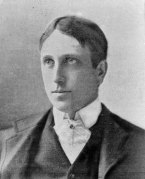
The battle was a thoroughly unexpected development in a conflict fought over Spain’s harsh rule of Cuba, a conflict often but inaccurately blamed on the yellow press of William Randolph Hearst.

A commentary in the Tennessean newspaper took up that hoary myth the other day and added for good measure the apocryphal tale of Hearst’s having vowed to bring on the war.

The commentary said of Hearst:

“His most infamous manipulation was the warmongering his papers did in pushing the U.S. into war with Spain in 1898. He sent artist Frederick Remington to Cuba to cover the native uprising against Spain. Remington reportedly cabled Hearst that there was no war in Cuba. Hearst responded, ‘You get me the pictures; I’ll get you the war.’ He was true to his word.”

No serious historian embraces the notion that Hearst’s newspapers were decisive or much of a factor at all in the U.S. declaration of war against Spain in April 1898. That is a simplistic explanation about a war that was fought largely on humanitarian grounds — those of ending Spain’s long and harsh rule of Cuba.

As often is the case when such mediacentric claims are advanced, the commentary in the Tennessean left wholly unaddressed the method or mechanism by which the content of Hearst’s newspapers — he published three in 1898 —  was transformed into military action.

Three was, in fact, no such mechanism.

As I pointed out in my 2001 book, Yellow Journalism: Puncturing the Myths, Defining the Legacies, top officials in the administration of President William McKinley largely disregarded the content of the Hearst press. They certainly didn’t turn to it for policy guidance.

“If the yellow press did foment the war,” I wrote in Yellow Journalism, “researchers should be able to find some hint of, some reference to, that influence in the personal papers and the reminiscences of policymakers of the time.

“But neither the diary entries of Cabinet officers nor the contemporaneous private exchanges among American diplomats indicate that the yellow newspapers exerted any influence at all. When it was discussed within the McKinley administration, the yellow press was dismissed as a nuisance or scoffed at as a complicating factor.”

Advocates of the mediacentric interpretation of the Spanish-American War invariably cite — as the Tennessean did — the tale about Hearst’s vowing to furnish the war. It’s their Exhibit A.

While colorful, the tale of the purported Hearstian vow is a media-driven myth, one of the hardiest in American journalism.

It’s more than 110-years-old; during that time, no compelling evidence has ever emerged to support or document the tale.

Hearst denied making such a vow, which he purportedly sent in a telegram to Remington, an artist on assignment to Spanish-ruled Cuba in early 1897 for Hearst’s New York Journal.

The telegram to Remington has never surfaced. And Remington apparently never discussed the tale, which was first recounted in 1901, in a brief, unsourced passage in memoir by James Creelman, a blowhard journalist known for frequent exaggeration.

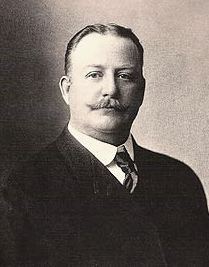
Creelman

Perhaps the most compelling reason for doubting Creelman’s undocumented account rests on an irreconcilable internal inconsistency.

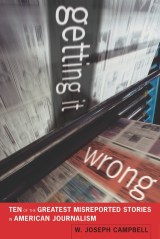
As I write in my latest book, Getting It Wrong, it “would have been absurd for Hearst to vow to ‘furnish the war’ because war — specifically, the Cuban rebellion against Spain’s colonial rule — was the very reason Hearst sent Remington to Cuba in the first place.

“Anyone reading U.S. newspapers in early 1897 would have been well aware that Cuba was a theater of a nasty war.”

WJC

Recent and related:

Sketches published 115 years ago undercut a tenacious media myth

In 1897, Anniversaries, Debunking, Furnish the war, Media myths, Spanish-American War on January 24, 2012 at 5:25 am

On assignment for Hearst

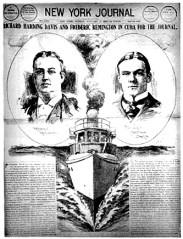
The artist Frederic Remington was back from Havana just a few days when on January 24, 1897, William Randolph Hearst’s New York Journal began publishing his sketches of the Cuban rebellion against Spanish colonial rule.

Remington later confided that he didn’t think much of the Journal’s reproduction techniques. But the newspaper played up Remington’s artwork, publishing them beneath an extravagant headline that read:

“Cuban War Sketches Gathered in the Field by Frederic Remington; The Gifted Artist, Visiting Cuba Especially for the Journal, Describes with Pen and Pencil Characters That Are Making the War Famous and Infamous.”

The prominent display given the sketches, and the Journal’s flattering references to the artist, serve to undercut a tenacious and prominent media-driven myth, an anecdote that ranks as one of the most popular in American journalism.

And that is the hoary tale that Hearst, in a telegraphic exchange with Remington, vowed to “furnish the war” with Spain.

As I discuss in my latest book, Getting It Wrong, the exchange, if it happened, would have occurred on or about January 17, 1897, when Remington was preparing to leave Cuba and return to New York.

Hearst had sent Remington and the correspondent Richard Harding Davis to Cuba to report on the rebellion against Spanish rule, a vicious conflict that gave rise in 1898 to the Spanish-American War.

Remington and Davis didn’t get along and parted ways after only a few days in Cuba. According to legend, Remington before leaving sent a cable to Hearst that said:

Everything is quiet. There is no trouble here. There will be no war. I wish to return.”

In reply, Hearst supposedly told Remington:

Please remain. You furnish the pictures, and I’ll furnish the war.”

Remington left anyway, taking the passenger steamer Seneca to New York, arriving January 21, 1897. His Cuba sketches began appearing in the Journal 115 years ago today.

So how do those sketches help debunk the tale about Hearst’s vow “furnish the war”?

As I discuss in Getting It Wrong, the sketches “depict unmistakable (if unremarkable) scenes of a rebellion — a scouting party of Spanish cavalry with rifles at the ready; a cluster of Cuban non-combatants trussed and bound and being herded into Spanish lines; a scruffy Cuban rebel kneeling to fire at a small Spanish fort; a knot of Spanish soldiers dressing a comrade’s leg wound.”

Their subject matter effectively disputes the notion that Remington had found “everything … quiet” in Cuba.

Remington, 'gifted artist'

That the sketches were accompanied by glowing references to Remington as a “gifted artist” indicates that Hearst was not angry with Remington as he surely would have been had the artist left Cuba after being told “please remain.”

Indeed, it is difficult to believe Hearst would have been so generous in his compliments and ordered such prominent display of Remington’s work had the artist in fact disregarded Hearst’s instructions to stay in Cuba.

“Far from being irritated and displeased with Remington,” I write in Getting It Wrong, “Hearst was delighted with his work. He recalled years later that Remington and Richard Harding Davis, the celebrated writer who traveled to Cuba with the artist, ‘did their work admirably and aroused much indignation among Americans’ about Spanish rule of the island.”

The sole source of the “furnish the war” anecdote was James Creelman, who in January 1897 was neither with Hearst in New York nor with Remington in Cuba. Creelman then was in Spain, as the Journal’s “special commissioner,” or correspondent, on the Continent.

Creelman incorporated the anecdote about the Remington-Hearst exchange in a book of reminiscences, On the Great Highway, which was published in 1901. Creelman, a blustery, cigar-chomping egotist, did not say how he learned about the purported Remington-Hearst exchange, which he presumes to quote verbatim.

Hearst denied ever having sent such a message. Remington apparently never spoke about the supposed exchange.

The display Remington’s sketches received in Hearst’s Journal, and the newspaper’s compliments about the artist, are two of several compelling reasons for doubting the anecdote and treating it as a media myth.

Another reason is that the telegrams Remington and Hearst supposedly sent have never turned up.

The anecdote, moreover, is illogical on its face: It would have made no sense for Hearst to have vowed to “furnish the war” because war — the rebellion against Spanish rule — was the reason he sent Remington to Cuba in the first place.

WJC

Recent and related:

Where do they get this stuff?

In 1897, Debunking, Furnish the war, Media myths, Spanish-American War, Yellow Journalism on September 24, 2011 at 5:06 am

William Randolph Hearst almost surely never vowed to “furnish the war” with Spain, and his newspapers of the late 19th century were much more than rumor-mongering sheets.

Hearst: Never made the vow

None of this is particularly new, though.

The tale about “furnish the war” was debunked as a media myth years ago, for example.

And Hearst’s leading biographer, David Nasaw, noted in his authoritative 2000 work, The Chief, that “Hearst and his staff improved on their product” day by day in the late 1890s.

“Their headlines,” Nasaw wrote, “were more provocative than anyone else’s, their drawings more lifelike … the writing throughout the paper outstanding, if, at times, a bit long-winded. Equally important in attracting new readers, the paper’s layout was excellent, with text and drawing breaking through columns to create new full-page landscapes….”

So it’s a bit baffling just where the exaggerated and cartoonish characterizations about Hearst come from. When they are cited, they’re usually accompanied by little or no sourcing information — as was the case in a commentary posted yesterday at the Technorati news site.

The commentary asserted:

“Media magnate William Randolph Heart once quipped, ‘You furnish the pictures and I’ll furnish the war.’ As the father of yellow journalism, he was well known for providing his stories as a game of Telephone, repeating a rumor of a rumor of a rumor. It made him billions, and lowered the discourse of media to this day.”

I revisit the tale about “furnish the war” in my latest book, Getting It Wrong, noting that it was first recounted in a memoir published in 1901 by James Creelman, a portly, Canadian-born journalist prone to pomposity and exaggeration.

Creelman

Creelman, I write, “never explained how he learned about the anecdote” about Hearst’s purported vow to “furnish the war.” Creelman offered no citation for it in his memoir, On the Great Highway.

According to Creelman, Hearst’s vow was contained in an exchange of telegrams with the artist Frederic Remington, who went to Cuba in early 1897 to draw sketches for Hearst’s newspapers about the rebellion against Spanish colonial rule.

The Cuba rebellion gave rise 15 months later to the Spanish-American War.

At the time Remington was in Cuba, Creelman was in Madrid, which means he had no first-hand knowledge of the purported exchange of telegrams.

I point out in Getting It Wrong that the artifacts — the telegrams supposedly exchanged by Remington and Hearst — have never turned up and that Hearst denied ever having sent such a message.

What’s more, I write, the anecdote “lives on despite an irreconcilable internal inconsistency: It would have been absurd for Hearst to vow to ‘furnish the war’ because war — specifically, the Cuban rebellion against Spain’s colonial rule — was the very reason Hearst sent Remington to Cuba in the first place.”

Interestingly, Creelman recounted Hearst’s purported vow not as a rebuke but, I write, “as a compliment, to commend Hearst and the activist, anticipatory ‘yellow journalism’ that he had pioneered in New York City.”

The anecdote was, to Creelman, illustrative of the power and potential of what Hearst championed as the “journalism of action” — the journalism that gets things done.

It was journalism with a social conscience.

Hearst’s leading newspaper, the New York Journal, insisted in editorials that a newspaper’s duty should not be “confined to exhortation.” Rather, newspapers had an obligation to inject themselves into public life, to right the wrongs that government could not or would not address.

So Hearstian journalism of the late 19th century was scarcely a game of “telephone,” of rumor piled upon rumor.

Why is all this significant?

Because the anecdote about “furnish the war” is often presented as evidence that Hearst did foment the conflict with Spain over Cuba in 1898.

Which is nonsense.

The reasons why the United States went to war in 1898 are far more profound and complex than the supposed manipulative powers of Hearst and his newspapers.

WJC

That’s not what Zhou meant

In Debunking, Furnish the war, Media myths, Spanish-American War on August 17, 2011 at 7:52 am

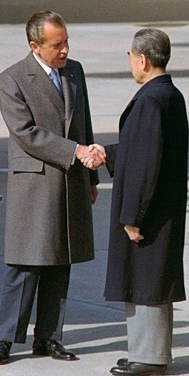
Nixon and Zhou, 1972

In 1972, Chinese premier Zhou Enlai told President Richard M. Nixon that it was “too early to say” what would be the implications of political upheaval in France.

It’s long been thought that Zhou was referring to the French Revolution that began in 1789 — that Zhou was taking a decidedly wise, sagacious, and patient view of history.

But in reality, according to a former U.S. diplomat who was present at the discussion in China, Zhou was referring to the more recent turmoil that had shaken France in 1968.

Still, the conventional interpretation — the Zhou was thinking in centuries, not in mere years — is so appealing that it lives on, as was suggested by a commentary posted yesterday by the English-language Moscow Times newspaper.

The commentary, which considered the significance of the attempted coup in the former Soviet Union in August 1991, began this way:

“Chinese leader Zhou Enlai may have been correct when he told U.S. President Richard Nixon in 1972 that it was too early to determine the impact of the French Revolution, but 20 years is usually enough to assess the importance of most historical events.”

The commentary may be quite correct about a 20-year interval being sufficient for assessing historical events.

But the characterization about Zhou’s comment is off-target, in light of recollections offered in June by Charles W.  (Chas) Freeman Jr., a retired diplomat who was interpreter for Nixon on his famous 1972 trip to China.

The Financial Times of London was first to report about the revised interpretation of Zhou’s comment. The newspaper quoted Freeman’s remarks at a panel discussion in Washington, D.C., that the Chinese leader was referring to the events of 1968.

Freeman, in a subsequent interview with me, described Zhou’s comment as “one of those convenient misunderstandings that never gets corrected,” noting that “it conveniently bolstered a stereotype … about Chinese statesmen as far-sighted individuals who think in longer terms than their Western counterparts.”

The misconstrued comment fit nicely with “what people wanted to hear and believe,” Freeman said, “so it took” hold.  And is not infrequently repeated.

Freeman said it was “absolutely clear” from the context of the discussion that Zhou’s “too early to say” remark was in reference to upheaval of 1968, not the years of turmoil that began in 1789.

Freeman described Zhou’s remark as “a classic of the genre of a constantly repeated misunderstanding that has taken on a life of its own.”

In that way, it’s akin to other deliciously irresistible quotations that are just too neat and too tidy to be true — a topic I discuss in my latest book, Getting It Wrong, which addresses and debunks 10 prominent media-driven myths.

One of the too-perfect-to-be-true quotations I discuss is the vow attributed to William Randolph Hearst, who purportedly pledged to “furnish the war” with Spain in the late 19th century.

The Hearstian vow suggests the depths to which journalists can stoop — to agitate for a war the country otherwise would not fight. That’s a reason for the tenacity of the purported Hearst quote. It reveals journalists at their most depraved.

But the purported vow, however well-known, is surely apocryphal.

Hearst denied having sent such a message, and the artifact — the telegram conveying the vow — has never turned up.

What’s more, pledging to “furnish the war” would have made no sense, given the context. Hearst’s telegram was supposedly sent to an artist, Frederic Remington, who was in Cuba to draw sketches of the rebellion against Spanish colonial rule.

It’s illogical that Hearst would have vowed to “furnish the war” when war — the Cuban rebellion — was the reason he sent Remington to the island in the first place.

WJC

Recent and related:

Media myth infiltrates NYTimes ‘Learning Network’

In 1897, Debunking, Furnish the war, New York Times, Spanish-American War on August 13, 2011 at 12:06 am

The New York Times’ Learning  Network” blog declares says it provides “teaching and learning materials and ideas” based on the newspaper’s archival content.

Its entry yesterday was pegged to the 113th anniversary of the effective end of the Spanish-American War — and offered up a hoary media myth in discussing newspaper coverage of the conflict.

The Times item stated:

Support for the Spanish-American War was stirred by sensationalist accounts of Spanish wrongdoing in the newspapers of [William] Randolph Hearst and Joseph Pulitzer; according to legend, Hearst told an illustrator covering the war, ‘You furnish the pictures and I will furnish the war.'”

It’s highly debatable whether much support for the war was generated by the newspapers of Hearst and Pulitzer. There is considerable evidence to suggest that their newspapers had little if any agenda-setting effect on the administration of President William McKinley on the question of going to war with Spain over Cuba in 1898.

And it’s virtually certain that Hearst’s purported vow to “furnish the war” is apocryphal.

As I discuss in my latest book, Getting It Wrong, the anecdote about “furnish the war” is a hardy media myth that lives on despite concerted attempts to dismantle and debunk it.

The vow supposedly was contained in a telegram sent to the artist, Frederic Remington, who was in Cuba on assignment for Hearst’s New York Journal. Remington and the correspondent Richard Harding Davis were there to cover the rebellion against Spain’s harsh colonial rule — a rebellion that gave rise in 1898 to the Spanish-American War.

Remington and Davis reached Havana in early January 1897; Remington stayed just six days.

Before leaving for New York by passenger steamer, Remington supposedly cabled Hearst, stating:

“Everything is quiet. There will be no war. I wish to return.”

Hearst is said to have replied:

Please remain. You furnish the pictures, and I’ll furnish the war.”

But Remington didn’t remain in Cuba.

He promptly returned to New York, where his sketches received prominent display in Hearst’s Journal. They appeared beneath such flattering headlines as:

“Cuban War Sketches Gathered in the Field by Frederic Remington; The Gifted Artist, Visiting Cuba Especially for the Journal.”

That’s scarcely the kind of tribute Hearst would have given a wayward artist who ignored instructions to “remain” in Cuba.

I further note in Getting It Wrong that the myth about Hearst’s vow “lives on despite an irreconcilable internal inconsistency: It would have been absurd for Hearst to vow to ‘furnish the war’ because war — specifically, the Cuban rebellion against Spain’s colonial rule — was the very reason Hearst sent Remington to Cuba in the first place.”

Anyone reading U.S. newspapers in early 1897 “would have been well aware,” I point out, “that Cuba was a theater of a nasty war” of rebellion.

Not only that, but the artifacts — the telegrams reputedly exchanged by Remington and Hearst — have never surfaced. Spanish censors closely monitored incoming and outgoing telegraphic traffic in Havana and they surely would have intercepted and called attention to Hearst’s incendiary message, had it been sent.

For those and other reasons, the tale about the Remington-Hearst exchange is surely apocryphal — a myth too often presented as fact.

The “Learning Network” isn’t off the hook by couching its reference to the purported Remington-Hearst exchange as “legend.” If the blog had doubts about the veracity of Heart’s purported vow, then it ought not have mentioned it in the first place.

WJC

Recent and related:

Some dubious history from Frank Rich

In Media myths, Spanish-American War, Yellow Journalism on August 1, 2011 at 9:50 am

Frank Rich, in a lengthy New York magazine screed about Rupert Murdoch, invokes the hoary media myth that William Randolph Hearst’s “papers famously fomented the Spanish-American War and perfected the modern gossip machine.”

I won’t quarrel much with Rich’s claim about “the modern gossip machine.” But the bit about the Spanish-American War represents a serious misreading of history.

In addressing such a dubious assertion as Hearst’s yellow press “fomented the Spanish-American War,” it’s useful to ask: How’d they do it? How was newspaper content translated into war policy?

Rich doesn’t say. He doesn’t pause to consider how it was that content of Hearst’s newspapers set an agenda for war that the administration of President William McKinley pursued.

The yellow press in fact had no such agenda-setting influence. It was a negligible factor.

As I wrote in my 2001 book, Yellow Journalism: Puncturing the Myths, Defining the Legacies, McKinley administration officials took no leads from Hearst’s newspapers.

They derided the yellow press, when they thought of it at all, and regarded it as a complicating factor in efforts to resolve a diplomatic impasse over Spain’s harsh rule of Cuba — an impasse that gave rise in April 1898 to the Spanish-American War.

The impasse arose from Spain’s brutal but ineffective attempts to put down a rebellion on Cuba that began in 1895 and reached islandwide proportion by 1898.

To tamp down the rebellion, Spain imposed a policy it called “reconcentration,” in which tens of thousands of Cuban men, women, and children were herded into garrisons towns and fortified areas, from where they could provide no aid or support to Cuban insurgents in the countryside.

Reconcentration” brought on widespread starvation, malnutrition, and disease. Tens of thousands of Cuban non-combatants died as a result of the Spanish policy which, as historian Ivan Musicant has written, “did more to bring on the Spanish-American War than anything else the Spanish could have done.”

The misguided policy, Musicant also noted, “turned public opinion enormously in the United States.”

Ultimately, then, as I wrote in Yellow Journalism, the Spanish-American War was “the result of a convergence of forces far beyond the control or direct influence of even the most aggressive of the yellow newspapers, William Randolph Hearst’s New York Journal.”

I also noted:

“While the yellow press may have reported extensively on the consequences of Spain’s failures and missteps, it did not create them.”

So what? one might ask.

After all, Rich’s reference to Hearst and the Spanish-American War represented a small portion of a lengthy article about Murdoch. So why make a fuss about it?

Several reasons offer themselves.

For starters, the Hearst-Murdoch comparison, as I’ve pointed out previously at Media Myth Alert, is facile and inexact. The similarities between the two media tycoons are largely superficial.

Notably, Hearst had nothing akin to the global reach of Murdoch’s multimedia empire. And Hearst, unlike Murdoch, vigorously pursued political ambitions: Hearst ran repeatedly and mostly unsuccessfully for high political office during his late 30s and 40s, before giving up.

But a more important reason for directing attention to this dubious bit of media history is that Rich arguably should have known better: Few serious historians buy into the claim about Hearst and his newspapers fomenting the war with Spain.

And thinking it through, it doesn’t seem very logical: Could newspaper content be so powerful and decisive that it could push a country into war it otherwise wouldn’t have fought?

Does it really work that way?

Assuredly not.

WJC

Recent and related:

Juan Williams’ new book repeats Spanish-American War myth

In Debunking, Media myths, Newspapers, Spanish-American War, Yellow Journalism on July 27, 2011 at 8:58 am

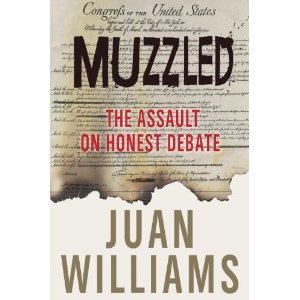
The new book by Juan Williams, the political analyst clumsily dismissed by NPR last year, offers some history of American journalism.

Some inaccurate history of American journalism.

The book, Muzzled: The Assault on Honest Debate, repeats the hoary media myth that the yellow press of William Randolph Hearst and Joseph Pulitzer brought on the Spanish-American War of 1898.

That’s a facile, media-centric interpretation endorsed by few if any serious historians of the conflict.

According to an excerpt of Muzzled posted at the online site of Fox News,  Williams writes:

“Hearst and Pulitzer became infamous for starting a real war. They whipped up so much anger at Spain through inflammatory stories about Spain’s handling of American vessels that they incited the United States to go to war with Spain in the Spanish-American War.”

Williams also says of Hearst and Pulitzer:

“Their coverage of the news, from crime to political scandals to war, was a study in sensationalized accounts, including outright distortion and lies, in a battle to sell more papers in New York City.”

Hearst and Pulitzer were bitter rivals, to be sure. But anyone who has spent much time reading their newspapers of the mid- and late-1890s can only be impressed by the vigor and breadth of their report.

As media historian John D. Stevens wrote in his study of sensationalism and New York City journalism, it is “tempting to caricature the yellow papers as being edited for janitors and clerks.”

But in fact they “published a fair amount of sober financial, political, and diplomatic information,” Stevens wrote. They were much more than merely sensational.

If the newspapers of Hearst and Pulitzer titillated, Stevens noted, they also informed.

In any case, they certainly cannot be blamed for bringing on the Spanish-American War.

As I wrote in my 2001 book, Yellow Journalism: Puncturing the Myths, Defining the Legacies:

The yellow press “did not force — it could not have forced— the United States into hostilities with Spain over Cuba in 1898. The conflict was, rather, the result of a convergence of forces far beyond the control or direct influence of even the most aggressive of the yellow newspapers, William Randolph Hearst’s New York Journal.”

Claims that the yellow press brought on the war, I wrote, “are exceedingly media-centric, often rest on the selective use of evidence, and tend to ignore more relevant and immediate factors that give rise to armed conflict.”

Those factors centered around a diplomatic impasse between the United States and Spain over Spanish colonial rule of Cuba — the scene of an islandwide rebellion that had begun in 1895.

In a failed attempt to put down the rebellion, Spanish authorities ordered thousands of Cubans, mostly old men, women, and children, into garrison towns where they could offer neither support nor supplies to the Cuban rebels.

The authorities called the policy “reconcentration,” and it gave rise to malnutrition and disease: Unknown tens of thousands of Cuban non-combatants died from illness and starvation.

The human rights disaster on Cuba “inevitably stirred outrage and condemnation in the United States,” I wrote in Yellow Journalism. The conditions on Cuba were in 1897 and early 1898 a frequent topic of reporting in the American press — included, but not limited to, the newspapers of Hearst and Pulitzer.

A leading historian of that period, Ivan Musicant, has quite correctly observed that the abuses and suffering caused by reconcentration “did more to bring on the Spanish-American War than anything else the Spanish could have done.”

The yellow press reported on, but certainly did not create, the devastating effects of Spain’s ill-considered and destructive policy.

So to indict Hearst and Pulitzer, as Williams does, for supposedly “starting” the Spanish-American War is to misread the evidence and do disservice to a keener understanding of the much-maligned genre of yellow journalism.

WJC

Recent and related:

More media myths from CounterPunch

In Bay of Pigs, Debunking, Furnish the war, Jessica Lynch, Media myths, Washington Post, Watergate myth on July 24, 2011 at 8:30 am

CounterPunch touts itself as “America’s best political newsletter.”

It’s building a reputation for indulging in media-driven myths, too.

Since mid-March, essays posted at CounterPunch have:

CounterPunch has indulged yet again in media myth, in a commentary in its weekend edition about Rupert Murdoch’s troubled media empire.

CounterPunch claimed the tough old media mogul has “surpassed William Randolph Hearst,” press baron of the 19th and early 20th centuries, “in practicing yellow journalism.”

The commentary invoked the hoary media myth about Hearst’s purported vow to “furnish the war” with Spain.

According to CounterPunch, Hearst said: “Get me the photos and I’ll get you the war.”

That was, CounterPunch added, “Hearst’s 1898 dictum to help start the Spanish-American War.”

Provocative tale. But it’s pure media myth.

Hearst’s vow is almost surely apocryphal, for reasons I discuss in my myth-busting book, Getting It Wrong, which came out last year.

Among the reasons:  The telegram that supposedly contained Hearst’s vow — a cable sent to artist Frederic Remington, on assignment to Cuba — has never turned up.

More significantly, as I point out Getting It Wrong, the anecdote about Hearst’s purported vow suffers from “an irreconcilable internal inconsistency.”

That is, it would have been absurd and illogical for Hearst to have vowed to “furnish the war” because war — specifically, the Cuban rebellion against Spain’s colonial rule — was the reason he sent Remington to Cuba in the first place.

In addition, the Spanish colonial authorities who ruled Cuba closely controlled and censored incoming and outgoing telegraphic traffic: They surely would have intercepted and called attention to Hearst’s incendiary telegram, had it been sent.

But in fact, there was, as I write in Getting It Wrong, no chance that telegrams would have flowed freely between Remington in Cuba and Hearst in New York.

So “furnish the war” (or, “provide the war”) wasn’t at all Hearst’s “dictum to help start the Spanish-American War.”

That Hearst helped bring on the war with Spain is a media myth, too.

It’s a myth dismantled in my 2001 book, Yellow Journalism: Puncturing the Myths, Defining the Legacies, in which I pointed out that the yellow press of Hearst and his rival, Joseph Pulitzer, “is not to blame for the Spanish-American-War.

“It did not force — it could not have forced — the United States into hostilities with Spain over Cuba in 1898.

“The conflict was, rather, the result of a convergence of forces far beyond the control or direct influence of even the most aggressive of the yellow newspapers, William Randolph Hearst’s New York Journal.”

The proximate cause of the war was the humanitarian crisis created by Spain’s bungled attempts to quell a rebellion that had begun in Cuba in 1895 and had spread across the island by 1897, when Remington arrived in Havana on assignment for Hearst.

WJC

Recent and related:

Tarring Murdoch with Hearst’s evil ‘vow’ to ‘furnish the war’

In 1897, Debunking, Furnish the war, Media myths, Spanish-American War on July 20, 2011 at 8:28 am

Rupert Murdoch’s much-anticipated hearing yesterday before a Parliament committee was hardly very dramatic — save for the assault on the tough old media mogul by a chucklehead wielding a shaving cream-pie.

The hearing, which centered around the misconduct of journalists formerly in Murdoch’s employ, was more farce and tedium than high-noon encounter that threatened Murdoch’s far-reaching media empire.

Murdoch, who is 80 and clearly doddering, even won a measure of sympathy as victim of the none-too-bright shaving cream-pie attack.

What was fairly remarkable was that in the hearing’s aftermath at least a couple of U.S. commentators turned credulously to a hoary media myth to make points about Murdoch’s supposedly evil ways.

Hearst: Made no vow

The media myth is the tale that press baron William Randolph Hearst, in an exchange of telegrams with the artist Frederic Remington, vowed to “furnish the war” with Spain in the late 19th century.

I describe in my latest book, Getting It Wrong, why that tale is almost surely apocryphal for reasons that include Hearst’s denial and the improbable context in which his message supposedly was sent.

One of the pundits invoking the media myth was Milos Stehlik, a commentator on WBEZ, an FM radio station in Chicago.

Stehlik likened Murdoch to Hearst and Charles Foster Kane, the fictional media baron in Citizen Kane, the 1941 movie loosely based on Hearst’s life.

“Kane, Hearst and Murdoch … share a political activism which pretends to help the media-consuming masses while, in reality, mostly helped their own privileged class,” Stehlik declared, before invoking the “furnish the war” myth as if it were genuine.

“Hearst,” he said, “told artist Frederic Remington, who was in Cuba, to send dispatches about the war. Remington sent Hearst a telegram saying there was no war in Cuba. Hearst famously told Remington to just provide him the pictures, and he would furnish the war.”

Meanwhile in Seattle, Jon Talton, a newspaper columnist on economic issues, posted a commentary that began this way:

“Press lord Rupert Murdoch isn’t accused of doing anything some of his notorious forebears wouldn’t have attempted given the technology. ‘You supply the pictures and I’ll supply the war,’ William Randolph Hearst is said to have instructed his Cuba correspondents as he ginned up circulation on the eve of the Spanish-American War.”

If Hearst had made the vow, it wouldn’t have been “on the eve of the Spanish-American War,” as Talton wrote in his column for the Seattle Times. It would have been in January 1897 — 15 months before the war began.

That was when Remington arrived in Havana, on a brief assignment for Hearst’s New York Journal to draw sketches of the Cuban rebellion against Spanish colonial rule.

Remington soon tired of the assignment and, the myth has it, cabled Hearst, stating:

“Everything is quiet. There will be no war. I wish to return.”

Hearst, in New York, supposedly replied by stating:

“Please remain. You furnish the pictures, and I’ll furnish the war.”

The anecdote’s sole original source was a blustering, cigar-chomping journalist named James Creelman, who recounted the tale in his 1901 memoir, On the Great Highway.

Creelman, though, did not explain how he heard about the Remington-Hearst exchange. It couldn’t have been first hand because at the time Remington was in Cuba, Creelman was in Spain, on assignment for the Journal.

That means Creelman could only have learned about the tale second-hand or, as is more likely, just made it up.

Significantly, the context of the supposed Remington-Hearst exchange makes no sense.

I write in Getting It Wrong that “it would have been absurd for Hearst to vow to ‘furnish the war’ because war — specifically, the Cuban rebellion against Spain’s colonial rule — was the very reason Hearst sent Remington to Cuba in the first place.”

The rebellion was a vicious conflict that began in early 1895; by early 1897, it had reached islandwide proportion. As such, the rebellion attracted much attention in U.S. newspapers, including those published by Hearst.

So what may prompt pundits to turn credulously and not infrequently to the anecdote about Hearst and his supposed wickedness?

Because it’s arguably the most deliciously evil tale in journalism history, a tale that reveals Hearst’s ruthlessness and his warmongering. It’s a tale about journalism at its most sinister and malign, a tale wrapped in a dark and arrogant pledge to bring on a war the country otherwise wouldn’t have fought.

And these days, it’s a handy if indirect way of tarring Murdoch, by associating him with Hearst in the exclusive club of vile and villainous media magnates.

WJC

Many thanks to Instapundit
Glenn Reynolds for linking to this post

Recent and related:

Recalling Hearst to bash Murdoch: Superficial and off-target

In Debunking, Hurricane Katrina, Media myths, Spanish-American War, Yellow Journalism on July 18, 2011 at 12:26 am

Hearst: Murdoch's model?

The fallout from the phone-hacking scandal rocking Rupert Murdoch’s media holdings in Britain has prompted unflattering comparisons that the tough old media mogul is but a latter-day reincarnation of William Randolph Hearst, American press lord of the late 19th and early 20th centuries.

Trouble is, such comparisons are facile and no better than superficial. Hearst, for example, hardly established the international presence that Murdoch commands.

And these off-target comparisons have become an occasion to indulge in the hoary media myth that Hearst and his yellow press fomented the Spanish-American War in 1898.

The Sun Herald newspaper of Mississippi, a winner of the Pulitzer Prize for public service in 2006 for coverage of the Hurricane Katrina disaster on the Gulf Coast, did just that in an editorial published over the weekend.

“Not since William Randolph Hearst’s newspaper empire sensationalized news and gave a distinctive yellow tinge to journalism has the world seen the likes of Rupert Murdoch, the Australian/American media lord whose News Corporation has spread its tabloid brand in print and on the airwaves to so many corners of the globe,” the Sun Herald harrumphed in its editorial.

Of Hearst, the Sun Herald further stated:

“His newspapers were so powerful in molding public opinion that they were credited with pushing the United States into war with Spain in 1898.”

Really?

No.

As I pointed out in my 2001 book, Yellow Journalism: Puncturing the Myths, Defining the Legacies, critics who blame the yellow press of Hearst (and his rival, Joseph Pulitzer) for bringing on the war invariably fail to explain how the contents of those newspapers came to be transformed into policy and military action.

How did that work? What was the mechanism? Why was the yellow press so singularly powerful at that moment in American history?

In truth, as I’ve noted previously at Media Myth Alert, there was no mechanism by which the newspapers’ contents were translated into policy and a decision to go to war. They were not that powerful.

Had the newspapers of Hearst and Pulitzer brought about the war with Spain, then “researchers should be able to find some hint of, some reference to, that influence in the personal papers and the reminiscences of policymakers of the time,” I wrote in Yellow Journalism, adding:

“But neither the diary entries of Cabinet officers nor the contemporaneous private exchanges among American diplomats indicate that the yellow newspapers exerted any influence at all. When it was discussed within the McKinley administration, the yellow press was dismissed as a nuisance or scoffed at as a complicating factor.”

In short, senior officials in the administration of President William McKinley largely disregarded the content of what was called the yellow press. They did not turn to it for guidance or insight in policymaking.

Their thinking was not shaped by yellow journalism.

A variation of the Murdoch-Hearst criticism is to assail Murdoch — as a commentary  posted yesterday at Huffington Post put it — “the latest prime purveyor of so-called ‘yellow journalism’.”

The author, novelist Terence Clarke, declared that yellow journalism as practiced by Hearst and Pulitzer “sacrificed truth in favor of sensationalism in order simply to sell more papers.

“It was a business ploy, not an example of high journalistic ideals. Now, with Murdoch leading the way, journalism in many instances has fallen victim to the same wish for sales, and has descended, again, from the high ground it should occupy.”

Oh, spare us such superficiality.

The yellow press of Hearst and Pulitzer was much more than merely sensational.

Anyone who has spent much time reading through their newspapers of the late 19th century invariably comes away impressed with the aggressive and news-oriented approaches they took.

David Nasaw, author of a commendably even-handed biography of Hearst, pointed this out notably well, writing:

“Day after day, Hearst and his staff improved on their product. Their headlines were more provocative than anyone else’s, their drawings more lifelike … the writing throughout the paper outstanding, if, at times, a bit long-winded.”

Not only that, but Hearst was willing to spend lavishly to get the news. He, much more so than Pulitzer, was inclined to tap prominent writers, such as Mark Twain, and pay them well to cover important events for his New York Journal.

Hearst paid $3,000 to the novelist, playwright, and foreign correspondent Richard Harding Davis to spend a month for the Journal in Cuba in early 1897, writing reports about the Cuban rebellion that was the proximate cause of the Spanish-American War.

That sum is the equivalent today of more than $50,000.

Moreover, the yellow press of the late 19th century exerted a lasting and profound influence on American journalism history.

As I wrote in Yellow Journalism, the genre “was much decried but its salient features often were emulated.”

Yellow journalism “was appealing and distinctive in its typography, in its lavish use of illustrations, in its aggressive newsgathering techniques,” I noted, adding:

“To a striking degree, features characteristic of the yellow press live on in American journalism, notably in the colorful layouts that characterize the formerly staid titles that used to disparage the yellow press—titles such as the New York Times and Washington Post.”

WJC

Recent and related: