W. Joseph Campbell

Posts Tagged ‘Fact-checking’

Challenge the dominant narrative? Who, us?

In Debunking, Media myths on September 4, 2011 at 9:01 am

No surprise here.

The mainstream news media, as expected, have ignored the publication of an impressively researched and authoritative book challenging the narrative that Thomas Jefferson had children by one of his slaves, Sally Hemings.
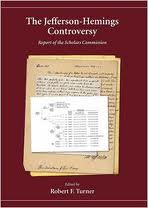
The 400-page work, The Jefferson-Hemings Controversy: Report of the Scholars Commission, was released September 1 at a news conference at the National Press Club in Washington.

A search of the LexisNexis database reveals no major U.S. news organization has since reported on the book’s appearance or, more important, on its content.

That Jefferson sired children with Hemings has long been accepted and reported as fact by mainstream news media, even though DNA testing often cited to support the claim was misreported when released in Nature magazine in 1998.

News reports then often characterized the DNA tests as having verified Jefferson’s parentage of at least one of Hemings’ children.

The Philadelphia Inquirer, for example, declared:

“DNA evidence has confirmed that Thomas Jefferson, the revered third president of the United States, fathered at least one child by his slave-mistress, Sally Hemings.”

And the New York Times asserted:

“DNA tests on the descendants of Thomas Jefferson’s family and of Jefferson’s young slave, Sally Hemings, offer compelling evidence that the nation’s third President fathered at least one of her children, according to an article in the scientific journal Nature.”

That evidence, the Times declared, “is likely to send historians scurrying to re-evaluate Jefferson, particularly his role in the anti-slavery movement.”

But in fact the DNA tests identified Jefferson as one of about two dozen Jefferson males who could have fathered Hemings’ last child, Eston.

The new book  — which places between hard covers the report and essays issued 10 years ago by a commission of scholars that investigated the Jefferson-Hemings matter — declares that “much of the public has been misled about the significance of the DNA tests … first reported in the journal Nature in November 1998.

“While the tests were professionally done by distinguished experts, they were never designed to prove, and in fact could not have proven, that Thomas Jefferson was the father of any of Sally Hemings’ children.

“The tests merely establish a strong probability that Sally Hemings’ youngest son, Eston, was fathered by one of the more than two dozen Jefferson men in Virginia at the time ….”
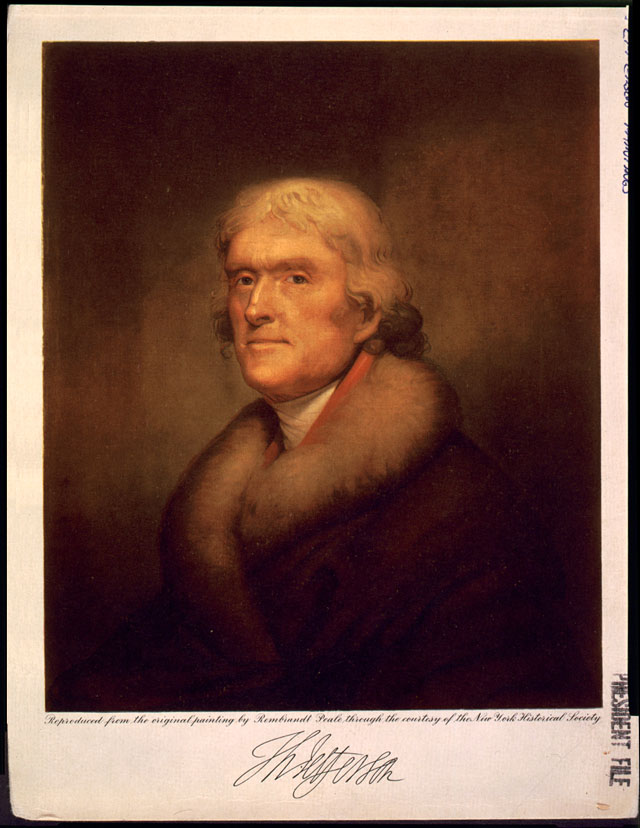
Thomas Jefferson: Library of Congress

The new book says circumstantial evidence points more powerfully to Jefferson’s younger brother, Randolph (or his sons), in the question of Eston Hemings’ paternity.

Randolph Jefferson, the book says, was known to have socialized with the slaves at Monticello, Thomas Jefferson’s home near Charlottesville, VA.

Randolph Jefferson was a dozen years younger than the president, and the available record offers no evidence that Thomas Jefferson “enjoyed socializing at night with Monticello slaves,” the book says.

Eston Hemings’ was conceived around August 1807, when Thomas Jefferson was 64 and in declining health — factors that further diminish the likelihood of his paternity.

Jefferson’s age and ailments always have represented crucial exculpatory evidence, in my view. That and the fact that Hemings had no children after Jefferson retired to Monticello from public life.

What’s more, the book says “Sally Hemings appears to have been a very minor figure in Thomas Jefferson’s life,” noting that Jefferson referred to her “in but four of his tens of thousands of letters.”

Of particular interest to Media Myth Alert is why the mainstream news media would ignore compelling evidence that exonerates Jefferson, or at least seriously complicates the paternity case against him.

Why wouldn’t the news media find appealing an opportunity to challenge the dominant narrative about Jefferson and his purported slave-mistress?

A number of reasons offer themselves.

One is that the new book essentially is a compilation of reports released in April 2001. In the new book’s acknowledgements, editor Robert F. Turner apologizes to members of the scholars commission “for the long delay in finally getting this volume in print.”

But the volume’s delayed publication doesn’t make the case against Jefferson’s paternity any less powerful or less compelling.

It is a complex case, and complexity seldom appeals to the news media. Simplistic tales are far more engaging, alluring, and easy to report.

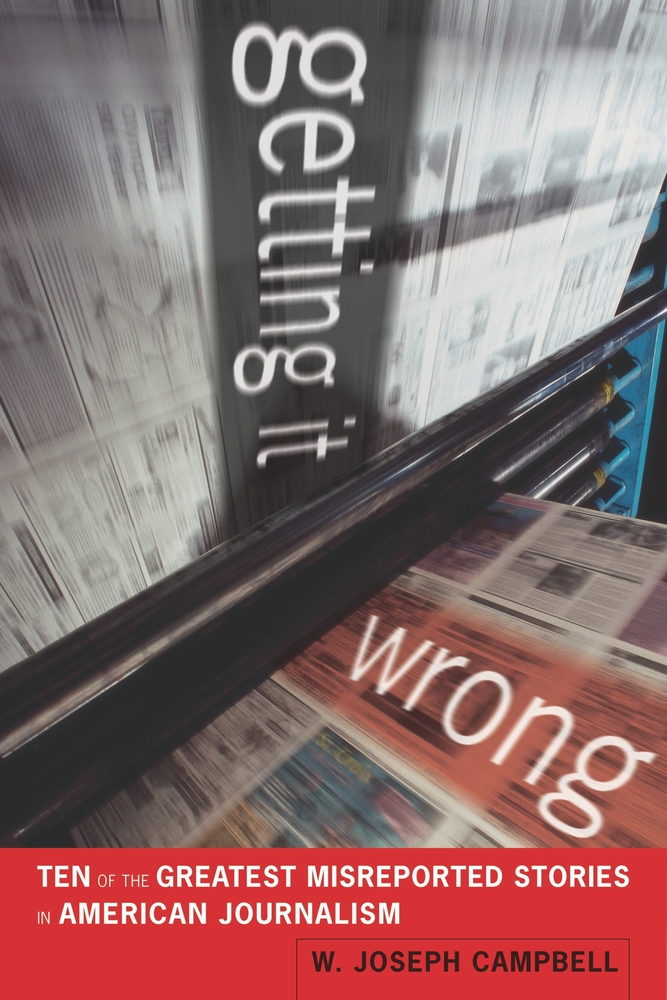
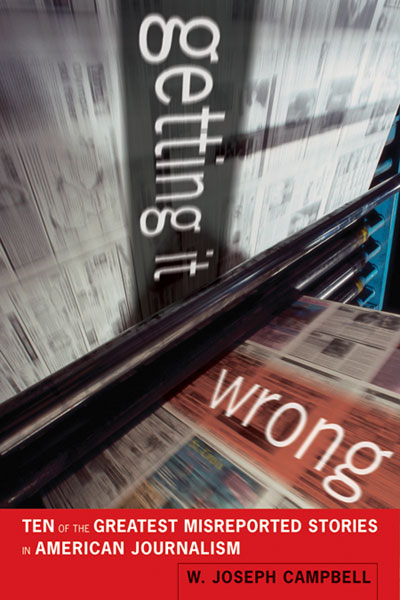
As I point out in my latest book, Getting It Wrong (which does not discuss the Jefferson-Hemings controversy), media-driven myths “tend to minimize or negate complexity in historical events and offer simplistic and misleading interpretations instead.”

As does the dominant narrative of the Jefferson-Hemings matter.

That Thomas Jefferson sired offspring by a slave-mistress is an intriguing and perversely delicious story. But it is hardly settled history. It’s more likely a misreading of history — a misreading that the well-written and thoroughly researched new book, to its credit, seeks to correct.

WJC

Recent and related:

Talking media myths on ‘Community Voices’

In Debunking, Media myths, Media myths and radio, Newspapers, Washington Post, Watergate myth on September 3, 2011 at 3:14 pm

The exaggerated tales of Watergate, Hurricane Katrina, and crack babies were the principal media myths I discussed the other day in an interview on KPCW Radio in Utah.

The interview focused on those chapters of my latest book, Getting It Wrong, and was conducted by Larry Warren and Linda Gorton on their  “Community Voices” show.

I noted early in the interview that the “animating force” in American journalism is to get the story right and that Getting It Wrong “is associated with that ethos of truth-telling, of seeking to get the story right.”

The interviewers quickly turned to Watergate, asking whether the reporting of Bob Woodward and Carl Bernstein for the Washington Post was what indeed drove President Richard Nixon to resign in 1974.

“That is the dominant narrative of Watergate,” I pointed out, adding that’s also a very simplistic explanation for rolling up what was a complex scandal.

“To unravel the complexity and the intricacy of Watergate,” I said, “took all kinds of forces, most of them subpoena-wielding — federal prosecutors, the FBI, bipartisan panels of both houses of Congress, ultimately Supreme Court, which forced Richard Nixon to surrender the evidence which clearly showed that he had conspired with top aides to try to cover up the investigation into the Watergate break-in, the signal crime of the scandal.

“Against that backdrop, the contributions of Woodward and Bernstein fade into relative insignificance,” I said.

Another reason that Watergate’s dominant narrative focuses so squarely on Woodward, Bernstein, and the Washington Post is, I said, the cinematic version of the reporters’ book, All the President’s Men.

It surely is the most-watched movie ever made about Watergate, and “it really does focus,” I noted, “on the work of Woodward and Bernstein to the exclusion” of the forces and factors that were truly decisive in bringing down Nixon’s corrupt presidency.

“I think we know,” Warren interjected, “that you’re not going to be invited to Mr. Woodward’s for dinner anytime soon.”

“You know,” I replied, Woodward “has said something to the effect of, ‘to say the press brought down Richard Nixon is total nonsense.’ He used earthier terms to make that point.”

The reference to Woodward’s comment in an interview in 2004 with American Journalism Review in which he asserted:

To say the press brought down Nixon, that’s horse shit.”

I also discussed the notion that news coverage of Hurricane Katrina was superlative, that it supposedly “demonstrated the value and importance of traditional news media, both print and broadcast, at a time of disaster. And Hurricane Katrina was no small storm. It was no [Hurricane] Irene, that’s for sure.”

But I added:

“The coverage of Hurricane Katrina was no high heroic moment in American journalism because, on many important elements of that story, the news media got it badly wrong.”

The hurricane’s death toll was “wildly exaggerated,” I noted, adding that the “apocalyptic reports that the news media put out in the days after Hurricane Katrina’s landfall proved to be largely untrue.

“There were no snipers firing at medical personnel, no snipers firing at [rescue] helicopters. No bodies stacked up like cordwood, no children with their throats slashed. No roving gangs preying on tourists. No sharks plying the flood waters of New Orleans.

“All these reports were out there,” I said, but in the end “none of them was verified or substantiated.”

The erroneous and exaggerated reports of violence in post-Katrina New Orleans in some cases had the effect of delaying the arrival and delivery of aid to the storm-stricken city, I noted.

The social disaster that the news media anticipated in the purported — and widely misreported — “crack baby” epidemic never took place, I pointed out.

More than one news commentator, I said, described as a “bio-underclass” the generation that would come of age after having been exposed to crack cocaine in the womb. These children supposedly would be so mentally and physically deformed as to be forever dependent on the state.

“The news media were spectacularly wrong about the crack baby epidemic,” I said, noting that news reports in the late 1980s and early 1990s “pushed very hard on preliminary evidence suggesting there was a powerful linkage between taking crack during pregnancy and subsequent deformities in children.”

To their discredit, I added, the news media never went back in a sustained and systematic way to undertake to dismantle the crack-baby myth — “even after consensus had taken hold among scientists and biomedical researchers that [prenatal] exposure to crack was not this destructive force that preliminary research had suggested.”

WJC

Recent and related:

The Zhou misinterpretation

In Debunking, Media myths on August 31, 2011 at 11:17 am

It’s been debunked, but even so the tale lives on about Chinese premier Zhou Enlai’s  taking a long and sage view of history in saying in 1972 that it was “too early” to assess the implications of the French revolution, which began in 1789.

A commentary today at Time magazine’s “Global Spin” blog effectively testifies to the enduring appeal of Zhou misinterpretation.

The  commentary considered the wider implications of the fall of Moammar Khadafy’s regime in Libya and, in closing, invoked the conventional version of Zhou’s remark, stating:

“[T]o borrow from Chinese leader Zhou Enlai’s 1972 answer when asked about the historical significance of the French Revolution, when it comes to Libya’s grander significance, it may simply be ‘too early to tell.'”

Zhou’s comment — made during a discussion in China with President Richard M. Nixon — was about political upheaval in France in 1968, not the French Revolution, according to Charles W. (Chas) Freeman Jr., a former U.S. diplomat who was Nixon’s interpreter on the trip and who was present at the conversation.

First to debunk the Zhou misinterpretation was London’s Financial Times, which quoted Freeman’s remarks at a panel discussion in June in Washington, D.C.

In a subsequent interview with me, Freeman said it was “absolutely clear” from the context of the conversation that Zhou’s “too early to say” comment was in reference to the turmoil of 1968.

Freeman described Zhou’s remark as “a classic of the genre of a constantly repeated misunderstanding that has taken on a life of its own.”

He’s quite right about that. It long ago took on life of its own.

Further evidence of that is offered in a superficial commentary by McClatchy newspapers about the effects of the terrorist attacks of September 11, 2001.

The commentary asserted that the United States is “in some ways a very different country.

“How different?

“First, a story: It’s said that when President Richard Nixon made his groundbreaking visit to Communist China in 1972, he asked Premier Zhou Enlai what he thought about the French Revolution.

“It’s unclear if Zhou thought Nixon was asking about the political upheaval of 1789 or the Paris student demonstrations just four years earlier. In any case he replied: ‘Too soon to tell.'”

Well, no: It’s not unclear what Zhou meant, as Freeman’s recollections demonstrate.

The Zhou misinterpretation, moreover, was inspiration for a clever and amusing observation the other day, in a blog post by Gideon Rachman of the Financial Times.

Rachman’s post considered the legacy at the International Monetary Fund of Dominique Straus-Khan, the agency’s former director-general known as “DSK.”

He resigned in May after being arrested in New York on felony sex charges. Those charges recently were dropped.

“Sometimes,” Rachman noted, “an early exit is good for your legacy.”

He added:

“So, DSK’s legacy? As Zhou Enlai never said about the French Revolution: too early to tell.”

“As Zhou Enlai never said.”

Wonderful.

WJC

Recent and related:

No, really: Ray Nagin sought out for advice on hurricane prep

In Debunking, Hurricane Katrina, Media myths on August 28, 2011 at 2:37 am

What a joke.

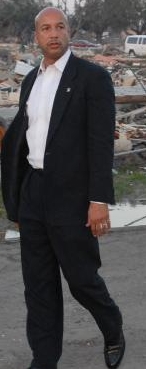
Nagin in New Orleans

As Hurricane Irene churned toward the East Coast of the United States, MSNBC brought on Ray Nagin, the former mayor of New Orleans, for insights about storm preparations.

In introducing Nagin, MSNBC anchor Martin Bashir declared:

“Former New Orleans Mayor Ray Nagin joins us to explain what leaders must do to avoid the mistakes that were made six years ago” when Hurricane Katrina battered the Gulf Coast.

Nagin, a preparedness authority?

Hardly.

Not only did Nagin fumble the local response to Hurricane Katrina (remember the yellow school buses, all neatly parked and submerged by flood waters?). He contributed significantly to the terribly misleading notion that in the storm’s aftermath, the city was swept by mayhem and lawlessness.

As I point out in my media mythbusting book, Getting It Wrong, Nagin offered up  what proved to be highly exaggerated estimates of Katrina-related deaths in New Orleans.

He said the toll could reach 10,000.

Deaths attributed to the hurricane in Louisiana were a little more than 1,000.

What’s more, I note in Getting It Wrong, “Nagin and the city’s police commissioner, Eddie Compass, were sources for some of the most shocking and exaggerated reports about the disaster.”

During an appearance on Oprah Winfrey’s television talk show on September 6, 2005, Nagin said “hundreds of armed gang members” were terrorizing storm evacuees inside the Louisiana Superdome.

Nagin said conditions at the Superdome had deteriorated to “an almost animalistic state” and evacuees “in that frickin’ Superdome for five days, watching dead bodies, watching hooligans killing people, raping people.”

Nagin was winging it on national television. And smearing his city in the process.

(It deserves noting that Nagin was criticized in a bipartisan Congressional report about the responses to Katrina. The report, issued in 2006 and titled A Failure of Initiative, pointed out that the mayor had “repeated unsubstantiated rumors before the national media, creating an exaggerated image of utter lawlessness.”)

As I note in Getting It Wrong, Nagin’s descriptions “were widely reported — and proved to be almost totally without foundation. In all, six people died in the Superdome during the Katrina aftermath. None of those deaths was related to violent crime.”

Interestingly, Compass was asked months afterward why he had depicted post-Katrina New Orleans as swept by mayhem and terror.

He offered this strange reply:

“I didn’t want people to think we were trying to cover anything up,” he said. “So I repeated things without being substantiated, and it caused a lot of problems.”

Compass was forced to resign within a few weeks of his appearance on Oprah. Nagin, though, was reelected in 2006 to a four-year term as mayor. He left office in 2010.

He’s out now with a self-published book, Katrina’s Secrets: Storms after the Storm (Volume I). In it, Nagin stokes the undocumented claims about violence inside the Superdome in the hurricane’s aftermath.

According to an essay written by Brendan McCarthy of the New Orleans Times-Picayune and posted at nola.com, Nagin claims in the book to have had “private conversations” with “several” women who said they were raped there.

McCarthy’s post quotes Nagin’s book as stating:

“The political and media spin later claimed that many of the rapes were basically the figment of our collective imagination. This ensured that anyone who was raped would not come forward to face unfair, invasive scrutiny while being forced to defend their credibility.”

McCarthy’s post also quotes Compass’ successor, Warren Riley, as having said in 2010:

“The stories that people had died in the Superdome, that people were being raped — there’s not one iota of evidence to show that anyone was killed or raped in the Dome.”

WJC

Recent and related:

Woodward, Bernstein toppled Nixon? Think again

In Media myths, Washington Post, Watergate myth on August 27, 2011 at 9:58 am

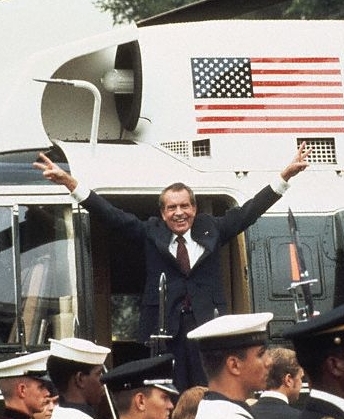
'Nixon got Nixon'

The passing of time is making the heroic-journalist narrative of Watergate even more heroic.

A commentary yesterday at Huffington Post suggests as much, in extolling — and overstating — the accomplishments of Bob Woodward and Carl Bernstein, the Washington Post reporters who covered the scandal.

The commentary, which considers the state of investigative reporting, says Woodward and Bernstein “plugged away for two years at the Watergate story through thick and thin and false leads. They were determined to nail then President Richard Nixon for authori[z]ing a break in at the Democratic Party HQ during his re-election campaign and then organi[z]ing a cover up. They did, with his resignation in August 1974.”

Woah. A lot of overstatement there.

First, there’s no evidence that Nixon authorized or even knew in advance about the burglary in June 1972 at the headquarters of the Democratic National Committee, the signal crime of Watergate.

Nixon, however, certainly did seek to block the FBI’s investigation of the breakin — and for that obstruction of justice, he was compelled to resign the presidency in disgrace.

But more important is that Woodward and Bernstein didn’t “nail” Nixon on Watergate. As I discuss in my latest book, Getting It Wrong, their investigative reporting for the Post certainly didn’t bring down Nixon’s corrupt presidency.

The heroic-journalist interpretation of Watergate, I write in Getting It Wrong, is to “misunderstand the scandal and to indulge in a particularly beguiling media-driven myth.

“The heroic-journalist interpretation,” I add, “minimizes the far more decisive forces that unraveled the scandal and forced Nixon from office.” Those forces included bipartisan panels of both houses of Congress, special federal Watergate prosecutors, federal judges, the Justice Department, the FBI, and the U.S. Supreme Court.

If inelegantly, even Woodward has concurred, declaring in an interview in 2004:

To say the press brought down Nixon, that’s horse shit.”

What toppled Nixon, what brought down his presidency, was clear evidence of his culpability in the crimes of Watergate — evidence captured on audiotapes that he secretly made of his conversations at the White House.

The decisive evidence — known as the “Smoking Gun” tape — revealed that Nixon at a meeting with his top aide, H.R. Haldemann, on June 23, 1972, sought to deflect or derail the FBI investigation into the Watergate burglary.

Woodward and Bernstein didn’t reveal the contents of that tape, which Watergate prosecutors had subpoenaed and which Nixon had refused to surrender until ordered to do so by the U.S. Supreme Court.

Nor did Woodward and Bernstein disclose the existence of Nixon’s secret taping system. That was revealed in July 1973, during hearings of the Senate Select Committee on Watergate.

In All the President’s Men, their book about their reporting, Woodward and Bernstein said they had received a tip about the taping system a few days before its existence was made public.

According to All the President’s Men, Ben Bradlee, then the Post‘s executive editor, suggested not expending much energy pursuing the tip. And they didn’t.

Interestingly, Bradlee also insisted the Post did not nail Nixon.

Speaking on a Meet the Press interview program at the 25th anniversary of the Watergate break-in, Bradlee declared:

[I]t must be remembered that Nixon got Nixon. The Post didn’t get Nixon.”

WJC

Recent and related:

Recalling who gave us the ‘manufactured heroism’ of Jessica Lynch

In Debunking, Jessica Lynch, Media myths, Watergate myth on August 22, 2011 at 5:09 am

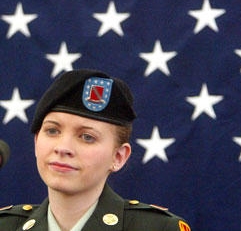
Lynch: No hero, she

I’ve noted how remarkable it is that the Washington Post so thoroughly eludes censure for placing the bogus hero-warrior tale about Jessica Lynch into the public domain during the first days of the Iraq War.

Confirmation of that observation came yesterday in an otherwise thoughtful essay in the New York Times about the deference Americans across the political spectrum tend to pay the military.

The essay described the Lynch case not as a stunning example of errant journalism but as “an instrument of propaganda.”

The essay, written by William Deresiewicz, asserts that in 2003, “we were treated to the manufactured heroism of Jessica D. Lynch, the young supply clerk who was rescued from an Iraqi hospital a few days after her capture by enemy forces (both events turning out to be far less cinematic than initially put out) and who finally felt compelled to speak out against her own use as an instrument of propaganda.”

Great line, “manufactured heroism.”

But who really was responsible for the “manufactured heroism”?

Deresiewicz avoids saying.

He fails to identify the Washington Post as solely responsible for placing the hero-warrior tale about Lynch into worldwide circulation.

He doesn’t say that the Post’s botched story about Lynch’s purported heroics was picked up by news organizations around the world, turning the 19-year-old Army private into the best-known American solider of the Iraq War.

WaPo's botched hero-warrior story

It was the Post, citing otherwise unnamed “U.S. officials,” that offered up the electrifying tale about how Lynch “fought fiercely and shot several enemy soldiers after Iraqi forces ambushed” her unit, the 507th Maintenance Company, in Nasiriyah on March 23, 2003.

It was the Post that reported Lynch “continued firing at the Iraqis even after she sustained multiple gunshot wounds and watched several other soldiers in her unit die around her” in the fighting.

None of it was true, however.

Lynch never fired a shot in Iraq. Her weapon jammed during the ambush. Her shattering injuries were suffered in the crash of a Humvee as it fled the attack.

It wasn’t long before the Post’s erroneous report about Lynch’s derring-do began to unravel.

But as I discuss in my latest book, Getting It Wrong, the newspaper in the years since has never fully explained how it got the Lynch story so badly wrong.

Nor has the Post ever identified the sources who led it so badly astray.

And why has the Post sidestepped blame for the botched Lynch narrative? Why isn’t the newspaper more routinely cited in essays, such as Deresiewicz’s, that invoke the Lynch case?

It’s principally because details of the Lynch case have been subordinated to a far more sinister narrative that says the Pentagon conjured the hero-warrior tale about the waif-like young woman in order to bolster popular support for the Iraq War.

It’s a perversely appealing narrative — and it’s quite false.

As Vernon Loeb, one of the Post reporters who shared a byline on the botched Lynch story in 2003, has said:

“Our sources for that story were not Pentagon sources.”

Loeb also said, in an interview that aired on NPR’s Fresh Air program in mid-December 2003:

“I just didn’t see the Pentagon trying to create a hero where there was none. I mean …they never showed any interest in doing that, to me.”

Loeb said the story was provided by “some really good intelligence sources” in Washington, D.C., adding:

“We wrote a story that turned out to be wrong because intelligence information we were given was wrong. That happens quite often.”

As I note in Getting It Wrong, Loeb on another occasion was quoted in the New York Times as saying:

“Far from promoting stories about Lynch, the military didn’t like the story.”

What’s more, the notion the Pentagon’s made up the story  — and somehow fed it to the Post — to bolster popular support for the war doesn’t make much sense. After all, the American public in overwhelming numbers supported the war in its early days and months.

But it’s clear that if not for the Post, the “manufactured” tale of Lynch’s heroism never would have circulated as it did.

Far from being an “instrument of propaganda,” the Lynch hero-warrior narrative is a case of bungled reporting that has never been adequately explained, let alone corrected.

WJC

Recent and related:

Misreporting Watergate

In Debunking, Media myths, Washington Post, Watergate myth on August 20, 2011 at 5:15 am

That new historical marker at the parking garage where Bob Woodward of the Washington Post occasionally met his stealthy “Deep Throat” source has stirred some cheery buzz among journalists — and some breathtaking exaggeration about the consequences of Woodward’ reporting on the Watergate scandal.

Credit: Odestreet.com

The marker titled “Watergate Investigation” went up late last week outside the garage in the Rosslyn section of Arlington, Virginia.

As I’ve noted at Media Myth Alert, the marker errs in stating that information Deep Throat” (who in 2005 was self-revealed to have been W. Mark Felt) provided Woodward “exposed the Nixon administration’s obstruction of the FBI’s Watergate investigation.”

For some news outlets commenting about the marker, it has been occasion to assert hyperbolic claims that the Post’s reporting on Watergate brought down Richard Nixon’s scandal-riddled presidency.

For example, the widely followed all-news radio station in Washington, WTOP,  said yesterday in its report about the marker:

“Mark ‘Deep Throat’ Felt, passed state secrets to Washington Post reporter Bob Woodward for a string of stories that would eventually take down a president — what would come to be known as the Watergate scandal.”

Quite simply not true.

Felt, formerly a top official at the FBI, offered Woodward mostly incremental details about Watergate as the scandal unfolded in 1972 and 1973. And as Woodward noted in the book, All the President’s Men, the role of “Deep Throat” was “only to confirm information that had been obtained elsewhere, and to add some perspective.”

It was hardly the stuff of “state secrets.”

More important, the reporting of Woodward and his Post colleague Carl Bernstein assuredly did not “take down” Nixon’s presidency.

Embracing that interpretation of Watergate, I write my media-mythbusting book, Getting It Wrong, “is to abridge and misunderstand the scandal and to indulge in a particularly beguiling media-driven myth.”

It’s an interpretation that not even officials at the Post have endorsed.

For example, Kathryn Graham, the newspaper’s publisher during and after Watergate, said in 1997, at a Newseum program marking the scandal’s 25th anniversary:

“Sometimes people accuse us of bringing down a president, which of course we didn’t do. The processes that caused [Nixon’s] resignation were constitutional.”

And Woodward, in earthier terms, has concurred, telling American Journalism Review in 2004:

To say that the press brought down Nixon, that’s horseshit.

The popular Washington entertainment blog, DCist, offered an even stranger interpretation of “Deep Throat” and his meetings with Woodward in the garage.

DCist, in a brief report about the marker, said yesterday the garage was where  “the informant, the FBI’s Mark ‘Deep Throat’ Felt, fessed up to what would eventually become the Watergate scandal that brought down President Richard Nixon.”

Huh? The “Deep Throat” source “fessed up to what would eventually become the Watergate scandal”?

“Fessed up”?

Such wording suggests that Felt/”Deep Throat” was a culprit or a suspect in the Watergate scandal.

Which he wasn’t.

Felt in fact wasn’t even around the FBI when the scandal reached its climax with Nixon’s resignation in August 1974.

He had been passed over for the FBI directorship and left the agency in 1973. Felt last conferred with Woodward at the Arlington garage in November that year.

But that’s not to say Felt was beyond reproach.

He really wasn’t such a hero.

In his senior position at the FBI, Felt had authorized illegal burglaries in the early 1970s as part of the agency’s investigations into leftists associated with the radical Weather Underground.

Felt was convicted in 1980 on felony charges related to those break-ins, but pardoned by President Ronald Reagan.

So if it not Felt’s tips to Woodward, what then brought down Nixon?

As I point out in Getting It Wrong, rolling up a scandal of Watergate’s complexity and dimension demanded “the collective if not always the coordinated forces of special prosecutors, federal judges, both houses of Congress, the Supreme Court, as well as the Justice Department and the FBI.

“Even then,” I write, “Nixon likely would have served out his term if not for the audiotape recordings he secretly made of most conversations in the Oval Office of the White House.”

Only when compelled by the Supreme Court did Nixon surrender the recordings that captured him plotting to cover up the break-in in June 1972, the signal crime of Watergate.

WJC

Recent and related:

‘Deep Throat’ garage marker errs about Watergate source disclosures

In Debunking, Media myths, Washington Post, Watergate myth on August 18, 2011 at 10:16 am

An historical marker went up the other day outside the parking garage in Arlington, Virginia, where Washington Post reporter Bob Woodward periodically met during the Watergate scandal with a stealthy, high-level source code-named “Deep Throat.”

It’s a handsome marker, artfully scalloped at the top.

Felt: Cagey source

But it errs in describing the information Woodward received from “Deep Throat,” who in 2005 revealed himself as W. Mark Felt, formerly the FBI’s second in command.

The marker, which is titled “Watergate Investigation,” says:

“Felt provided Woodward information that exposed the Nixon administration’s obstruction of the FBI’s Watergate investigation.”

Not so.

Such evidence would have been so damaging and explosive that it surely would have forced Nixon to resign the presidency well before he did, in August 1974.

Felt didn’t have that sort of information — or (less likely) didn’t share it with Woodward.

As described in Woodward’s book about Felt, The Secret Man, the FBI official provided or confirmed a good deal of piecemeal evidence about the scandal as it unfolded.

And he could be cagey and evasive in doing so.

Here, for example, is a passage from Secret Man, in which Woodward discussed efforts he and his Post colleague Carl Bernstein had made to identify Nixon’s chief of staff, H.R. Haldemann, as one of five people controlling a secret slush fund:

“I told Felt that we were going to publish a story next week saying that Haldemann was the fifth and final person to control the secret fund.

“‘You’ve got to do it on your own,’ Felt said.

“I said I expected him to warn me if we were wrong.

“Felt said he would.

“So he was essentially confirming Haldemann?

“‘I’m not,’ he said. ‘You’ve got to do it on your own.’

“It was a distinction that didn’t make sense to me. I was tired of this dancing around.

“‘You cannot use me as a source [on that story],’ Felt said. ‘I won’t be a source on a Haldemann story.””

And so it went.

(All the President’s Men, Woodward and Bernstein’s book about their Watergate reporting, says Woodward’s conversations with “Deep Throat” were intended “only to confirm information that had been gathered elsewhere and to add some perspective.”)

Woodward met Felt at the garage six times from October 1972 to November 1973, the marker notes. The last meeting at the garage was a few months after Felt had been passed over for the FBI directorship and retired.

Not until late summer 1974 — months after Felt left the FBI — did unequivocal evidence emerge about Nixon’s attempt to thwart the agency’s investigation into Watergate.

That came when Nixon complied with a unanimous Supreme Court ruling and surrendered audiotape recordings he had secretly made of conversations at the White House.

A recording of Nixon’s meeting with Haldemann on June 23, 1972, revealed that the president had sought to deflect or derail the FBI investigation into the burglary six days before at the headquarters of the Democratic National Committee at the Watergate complex in Washington.

The recording was called the “Smoking Gun” tape — and that tape, not information Felt gave Woodward, exposed Nixon’s guilt and forced his resignation.

The tape offered stunning and incontrovertible evidence that Nixon “had participated in an obstruction of justice almost from the outset” of the scandal, Stanley I. Kutler, the leading historian of the scandal, wrote in The Wars of Watergate.

As I note in my latest book, Getting It Wrong, had Nixon not recorded his conversations, he likely would have survived the Watergate scandal and served out his second term.

The marker outside the “Deep Throat” garage contains another, smaller error, too.

It says it was “erected in 2008 by Arlington County, Virginia.” But the online news site arlnow .com pointed out that the marker went up late last week — “after a three year delay.”

WJC

Recent and related:

Fox News misremembers Watergate and ‘follow the money’

In Cinematic treatments, Debunking, Media myths, Washington Post, Watergate myth on August 16, 2011 at 9:20 am

I’ve referred to “follow the money” as Watergate’s best-known made-up line.

It also can be thought of as Watergate’s best-known misremembered line.

I say that because a Fox News commentary posted yesterday thoroughly misremembered the phrase as having been part of the “media circus” of Watergate in the months before the scandal reached its denouement with Richard Nixon’s resignation in August 1974.

The Fox commentary declared:

“America was transfixed for months by [Watergate-related] televised hearings presided over by the colorful Sen. Sam Ervin. … We learned about the mysterious insider, pornographically code-named ‘Deep Throat’ murmuring intriguing clues like ‘Follow the Money….’ It was a media circus.”

But as I’ve noted at Media Myth Alert, follow the money” was not part of the vernacular of Watergate. It was never offered as advice — murmured or otherwise — by the stealthy “Deep Throat” source, who met periodically with Bob Woodward of the Washington Post as the scandal unraveled.

(The identity of “Deep Throat” remained a secret for more than 30 years until W. Mark Felt, a former top FBI official, self-identified himself as having been Woodward’s secret source during Watergate.)

What’s more, “follow the money” appeared in no Watergate-related article or editorial in the Post until June 1981.

Nor is the line to be found in All the President’s Men, the book Woodward and his Post colleague, Carl Bernstein, wrote about their Watergate reporting.

The phrase exists only in the movies — in the cinematic version of All the President’s Men, which came out in April 1976.

Follow the money” was written into the screenplay of All the President’s Men and spoken by the actor Hal Holbrook, who turned in a memorable performance as “Deep Throat.”

Holbrook intoned “follow the money” with such steely assurance that it did indeed seemed to suggest a way — however simplistic — to unravel the scandal.

But even if “Deep Throat”/Felt had counseled Woodward to “follow the money,” the advice would have neither unraveled Watergate nor led the reporter to Nixon.

Nixon quit the presidency not because he misused campaign funds; he resigned in disgrace after it became clear he had sought to obstruct justice by covering up the signal crime of Watergate, the break-in at the headquarters of the Democratic National Committee in June 1972.

As I note in my latest book, Getting It Wrong, rolling up a scandal of the dimension and complexity of Watergate required “the collective if not always the coordinated forces of special prosecutors, federal judges, both houses of Congress, the Supreme Court, as well as the Justice Department and the FBI.

“Even then,” I write, “Nixon likely would have served out his term if not for the audiotape recordings he secretly made of most conversations in the Oval Office of the White House.

“Only when compelled by the Supreme Court did Nixon surrender those recordings, which captured him plotting the cover-up” — which cost him the presidency.

WJC

Recent and related:

60 years after his death, media myth towers around Hearst

In Anniversaries, Debunking, Furnish the war, Media myths, Spanish-American War on August 15, 2011 at 4:35 am

The BBC over the weekend marked the 60th anniversary of the death of William Randolph Hearst by posting a piece I wrote about the mythology surrounding the often-scorned media tycoon of the late 19th and 20th centuries.

Hearst: Routinely scorned

Hearst, I wrote, “lives on 60 years after his death as the mythical bogeyman of American journalism, the personification of the field’s most egregious impulses,” and the inspiration for the epithet “yellow journalism.”

I discussed the hardy media myths that Hearst famously vowed to “furnish the war” with Spain and then made good on the pledge.

“The towering mythology that envelopes Hearst,” I noted, “began to take hold long before his death on 14 August 1951.

“The lore dates to the late 1930s and the first in a succession of wretched biographies about Hearst.

“Among them was Imperial Hearst, a truculent work that excoriated Hearst’s increasingly conservative politics and resurrected the ‘furnish the war’ myth.”

Even more important to the mythology around Hearst, I wrote, was Orson Welles’ cinematic masterpiece, Citizen Kane.

“The movie was based loosely on Hearst’s life and times, and received mostly mixed reviews when it was released in 1941,” I noted, adding:

“Hearst did try to have the film killed, which served to enhance its latent appeal. Kane was rediscovered in the 1960s and ultimately gained deserved recognition as a classic.”

I noted that a rollicking scene in Kane “borrows from and paraphrases the ‘furnish the war’ anecdote, which further helped to implant the myth in the popular consciousness.”

Hearst was a ready target for the contempt of his peers and rivals because of inherited wealth enabled him to enter journalism at the top — as publisher of the San Francisco Examiner and, later in the 19th century, the New York Journal.

Hearst’s quixotic personality also made his a target of media mythmaking. I quoted David Nasaw’s fine biography of Hearst, The Chief, which noted:

“William Randolph Hearst was a huge man with a tiny voice; a shy man who was most comfortable in crowds; a war hawk in Cuba and Mexico but a pacifist in Europe; an autocratic boss who could not fire people; a devoted husband who lived with his mistress; a Californian who spent half his life in the East.”

It’s little wonder then why Hearst was, and remains, the object of so much myth and misunderstanding.

He also used his newspapers as platforms for pursuing his mostly unfulfilled political ambitions — which further accounts for the mythology, which further explains why he became a lightning rod for enduring scorn.

Hearst ran for the Democratic Party’s nomination for the presidency in 1904, but fell well short. Later, he ran for governor of New York and mayor of New York City, and lost.

By 1910 or so, Hearst’s political ambitions were, I noted, mostly spent.

And now, 60 years after his death, the mythology surrounding Hearst is so firmly entrenched so as never to be expunged.

WJC

Recent and related: