The departure of the bombastic Keith Olbermann from MSNBC’s primetime lineup is no an occasion for mourning.
But it’s to be regretted.
A little.
So suggested Bret Stephens yesterday in hisWall Street Journal column about Olbermann, who abruptly left his “Countdown” show at the end of last week.
Stephens pointed out:
“The ‘Countdown’ host did away with the old-fashioned liberal snigger and replaced it with a full-frontal snarl. Put simply, Mr. Olbermann had a genuine faith in populism, something liberals more often preach than practice.”
Stephens also offered this intriguing observation:
“America does better when its political debates descend, as they so often do on (or between) MSNBC and Fox News, into honest brawls.”
He may be right, although I wish he had elaborated on that point.
The observation about “honest brawls” reminded me of the insults and brickbats that American newspaper editors of the 1890s routinely exchanged in print. These were vigorous, lusty, often vicious exchanges — and there really was little memorable or lasting about them. Save, perhaps, for an epithet or two.
Like that of “yellow journalism.”

Wardman, father to a sneer
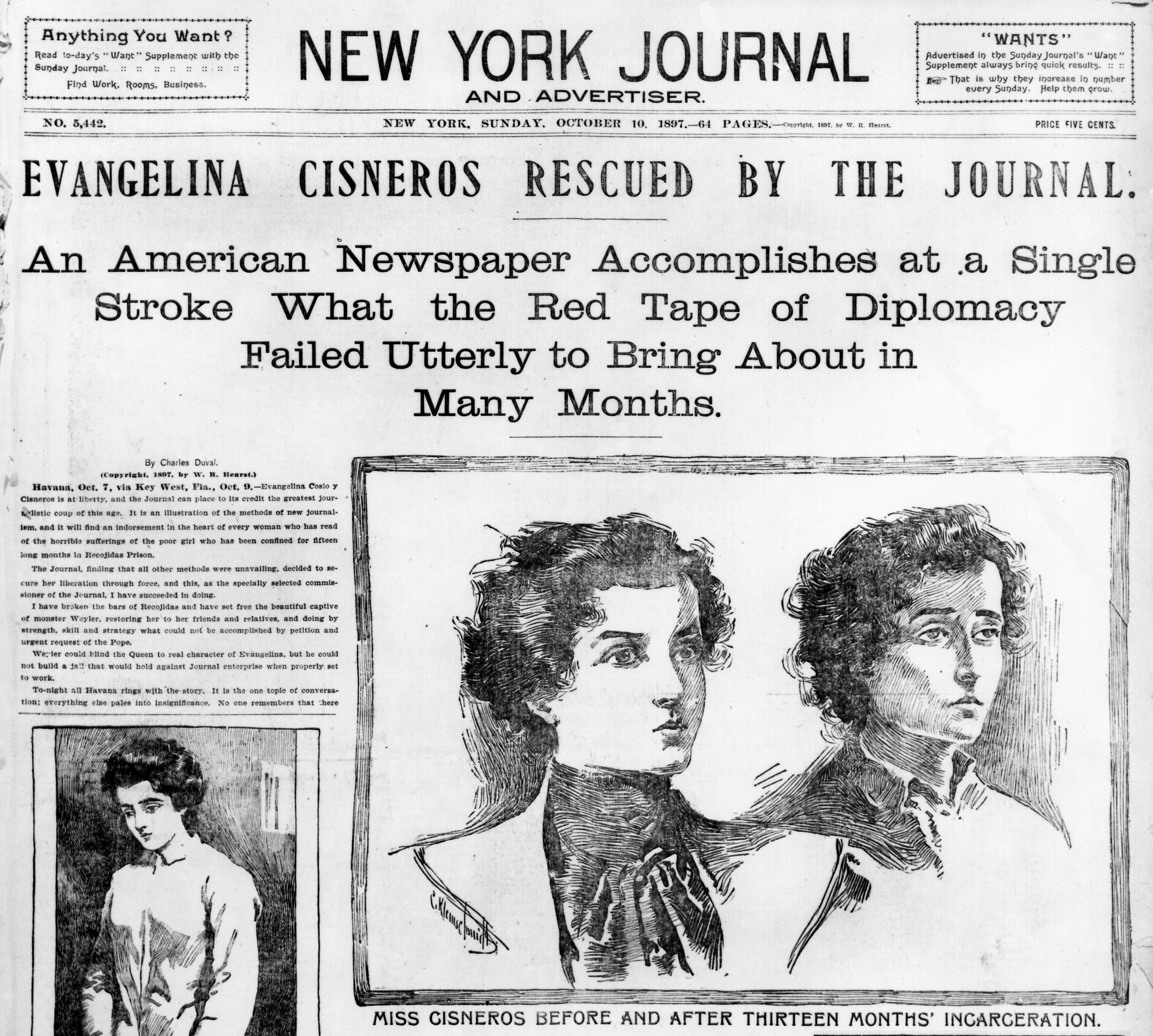
As I discussed in my 2001 book, Yellow Journalism: Puncturing the Myths Defining the Legacies, the epithet emerged in late January 1897, during the failed campaign of Ervin Wardman, a New York newspaper editor, to drive a stake into the heart of the upstart journalism of William Randolph Hearst and, to a lesser extent, of Joseph Pulitzer.
“Yellow journalism” took hold and spread quickly in 1897; it lives on today, as a vague but handy smear especially favored by letter-writers to newspapers.
Trouble is, the sneer “yellow journalism” is so ill-defined and flabby that it has become synonymous with journalistic sins of all kinds — exaggeration, sensationalism, hype, plagiarism, what have you.
And the trouble with media rabble-rousers like Olbermann is that their commentary often lacks wit and nuance, and tends to be superficial. It’s not deft, typically, and it’s unheard of for them to invoke media-driven myths–those dubious stories about the news media that masquerade as factual.
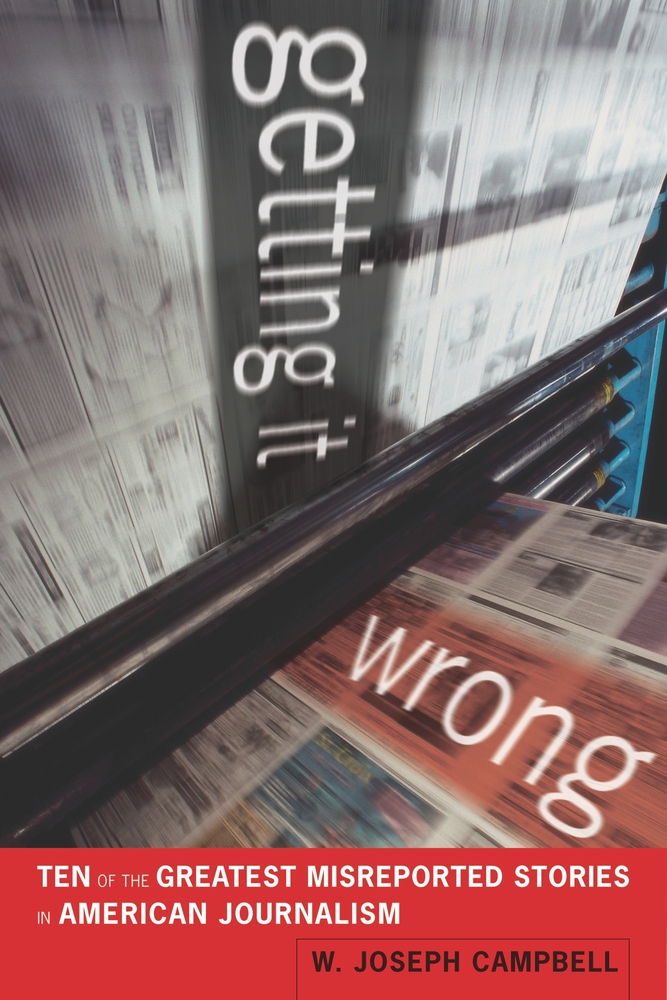
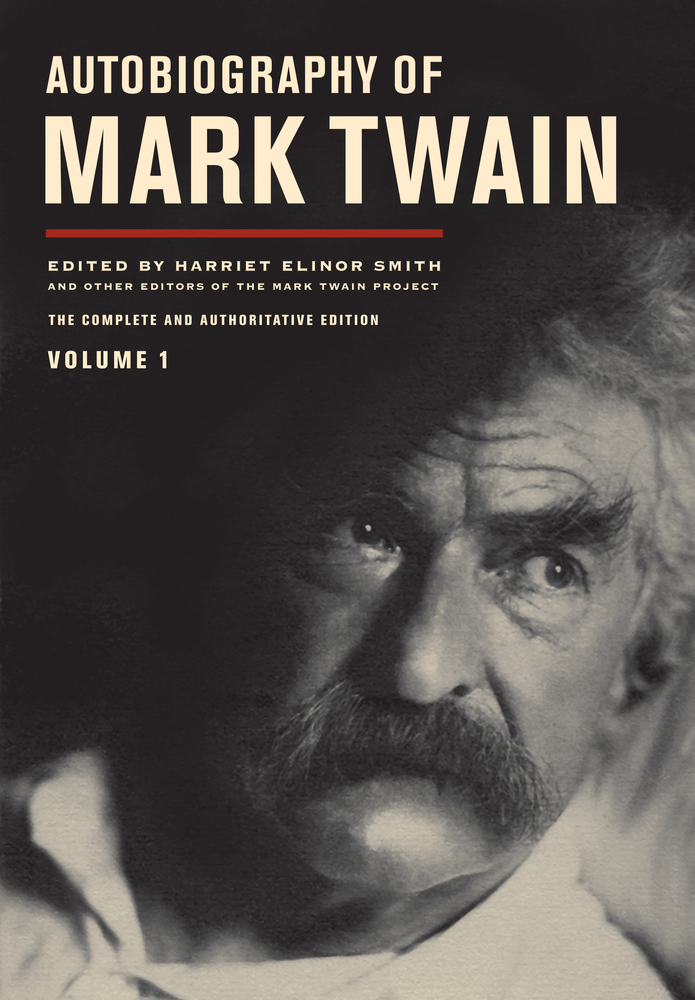
I address and debunk 10 prominent media-driven myths in my latest book, Getting It Wrong.
On his way out, in announcing his abrupt departure, Olbermann indulged in media myth. He described as “exaggerated” the rescue of Army private Jessica Lynch in Iraq in 2003. Hyped, maybe a bit. But the Lynch rescue, conducted by a U.S. special operations force under combat conditions, was not exaggerated.
As I note in Getting It Wrong, the Defense Department’s inspector general reported in 2007 that the rescue of Lynch from an Iraqi hospital was “a valid mission” to recover a prisoner of war.
There was no evidence to suggest that the rescue “was a staged media event” even though it was videotaped, as such missions often are.
Olbermann had on other occasions invoked the media myth surrounding Edward R. Murrow, whom he sought to emulate by borrowing the legendary broadcaster’s sign-off, “Good night, and good luck.”
In November, Olbermann referred to Murrow as “a paragon of straight reporting” while claiming the American press “stood idly by” as Senator Joseph R. McCarthy pursued his communists-in-government witch-hunt.
On March 9, 1954, during a 30-minute CBS television show called See It Now, “Murrow slayed the dragon,” Olbermann declared.
As I point out in Getting It Wrong, neither Murrow nor his producer, Fred Friendly, embraced the dragon-slaying interpretation. (Friendly wrote in his memoir, Due to Circumstances Beyond Our Control: “To say that the Murrow broadcast of March 9, 1954, was the decisive blow against Senator McCarthy’s power is as inaccurate as it is to say that Joseph R. McCarthy … single-handedly gave birth to McCarthyism.”)
And it’s quite clear that the American press did not stand “idly by” as the scourge of McCarthyism emerged.
As I point out in Getting It Wrong:
“Long before the See It Now program, several prominent journalists—including the Washington-based syndicated columnist Drew Pearson—had become persistent and searching critics of McCarthy, his record, and his tactics.”
By the time Murrow took on McCarthy in March 1954, Americans weren’t waiting for a white knight to tell them about the toxic threat the senator posed.
Thanks to the work of Pearson and other journalists, they already knew.
Recent and related:
- New York Times practices ‘yellow journalism’? How so?
- Two myths and today’s New York Times
- NYTimes flubs the correction
- Fact-checking WaPo columnist on ‘McKinley Moment’
- The ‘anniversary’ of a media myth: ‘I’ll furnish the war’
- Obama, journalism history, and ‘folks like Hearst’
- Jimmy Carter fumbles Watergate history
- Some snarky history from WaPo
- Media myths, the ‘junk food of journalism’
- Not off the hook with ‘reportedly’
- ‘Persuasive and entertaining’: WSJ reviews ‘Getting It Wrong’




 Media Myth Alert
1897, Commentary, Debunking, Fact-checking, Hearst, History, Insults, Journalism, Media, New journalism, New York Press, News, Opinion, Pulitzer, Spanish-American War, Yellow Journalism
‘Yellow journalism’ turns 114
In 1897, Anniversaries, Debunking, Media myths, Newspapers, Spanish-American War, Yellow Journalism on January 30, 2011 at 8:21 amIt is a little-recognized, never-celebrated anniversary in American journalism, granted.
Wardman of the Press
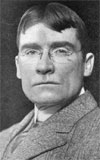
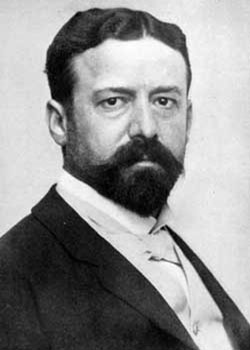
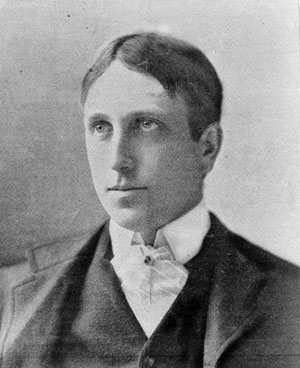
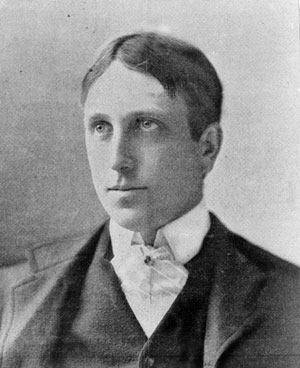
But tomorrow marks 114 years since the term “yellow journalism” first appeared in print, in the old New York Press, edited by the austere Ervin Wardman (left).
The phrase “the Yellow Journalism” appeared in a small headline on the editorial page of the Press on January 31, 1897. The phrase also appeared that day in the newspaper’s editorial page gossip column, “On the Tip of the Tongue.”
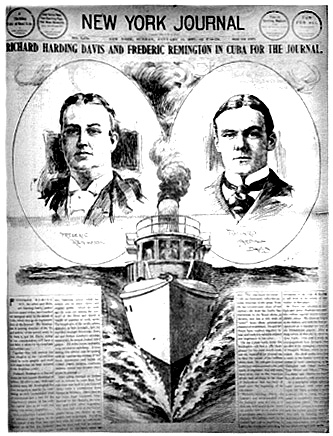
“Yellow journalism” quickly caught on, as a sneer to denigrate what then was called the “new journalism” of the New York Journal of William Randolph Hearst and the New York World of Joseph Pulitzer. By the end of March 1897, references to “yellow journalism” had appeared in newspapers in Providence, Richmond, and San Francisco.
In the decades since then, “yellow journalism” has become a widely popular if nebulous term — derisive shorthand for vaguely denouncing sensationalism and journalistic misconduct of all kinds, real and imagined.
“It is,” as I noted in my 2001 book Yellow Journalism: Puncturing the Myths, Defining the Legacies, “an evocative term that has been diffused internationally, in contexts as diverse as Greece and Nigeria, as Israel and India.”
Precisely how Wardman and the Press landed on the phrase “yellow journalism” isn’t clear.
The newspaper’s own, brief discussion of the term’s derivation was unhelpful and unrevealing: “We called them Yellow because they are Yellow,” it said in 1898 about the Journal and the World.
In the 1890s, the color yellow sometimes was associated with decadent literature, which may have been an inspiration to the Harvard-educated Wardman, a figure now largely lost to New York newspaper history.
Wardman was tall and stern-looking. He once was described as showing his “Calvinistic ancestry in every line of his face.” He did little to conceal his contempt for Hearst and Hearst’s journalism.
His disdain was readily apparent in the columns of the Press, of which Wardman became editor in chief in 1896 at the age of 31. (The Press is long defunct; it is not to be confused with the contemporary alternative weekly of the same title.)
Wardman’s Press took to taunting Hearst, Hearst’s mother, and Hearst’s support for Democratic candidate William Jennings Bryan in the 1896 presidential election. The New York Journal was virtually alone among New York newspapers in supporting Bryan’s “free silver” candidacy.
The Press disparaged Hearst, then 34, as a mama’s boy, as “Billy” and “little Willie.” It referred to the Journal as “our silverite, or silver-wrong, contemporary.”
The Press also experimented with pithy blasts on the editorial page to denounce “new journalism.”
“The ‘new journalism,’” the Press said in early January 1897 “continues to think up a varied assortment of new lies.”
Later in the month, the Press asked in a single-line editorial comment:
“Why not call it nude journalism?”
It clearly was a play on “new journalism” and meant to suggest the absence of “even the veneer of decency.”
Before long, Wardman and the Press seized upon the phrase “yellow-kid journalism,” which evoked the Hearst-Pulitzer rivalry over a popular cartoon character known as the “Yellow Kid.”
Both the Journal and the World at the time were publishing versions of the kid.
Yellow kid poster (Library of Congress)
At the end of January 1897, the phrase “yellow-kid journalism” was modified to “the Yellow Journalism,” and the sneer was born.
After landing on that evocative pejorative, Wardman turned to it often, invoking the term in brief editorial comments and asides such as: “The Yellow Journalism is now so overripe that the little insects which light upon it quickly turn yellow, too.”
The diffusion of “yellow journalism” was sealed when the Journal embraced the term in mid-May 1898, during the Spanish-American War. With typical immodesty, the newspaper declared:
“… the sun in heaven is yellow—the sun which is to this earth what the Journal is to American journalism.”
WJC
From an essay originally posted at Media Myth Alert January 31, 2010
Many thanks to Jim Romenesko for linking to this post
Recent and related:
Share this: