W. Joseph Campbell

Posts Tagged ‘Jessica Lynch’

Taking stock: Top mythbusting posts of 2011

In Anniversaries, Bra-burning, Cronkite Moment, Debunking, Jessica Lynch, Media myths, Murrow-McCarthy myth, Quotes, Washington Post, Watergate myth on December 31, 2011 at 4:45 am

Reviewing the year in media-mythbusting reveals a number of memorable posts. Here are the Media Myth Alert five top writeups of 2011, with a roster of other mythbusting posts of note:

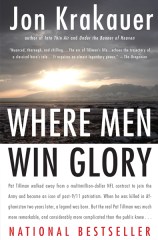
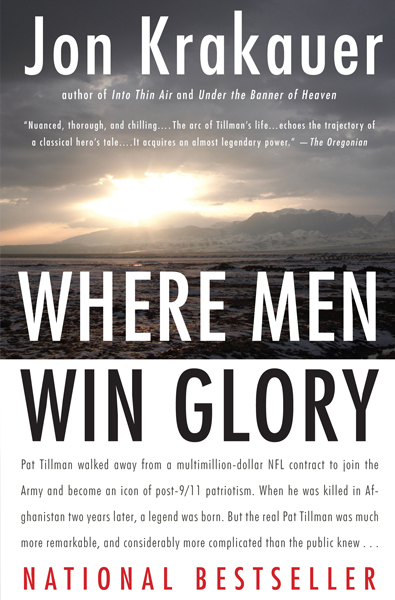
Krakauer retreats from Lynch-source claim (posted November 11): This post revealed author Jon Krakauer’s quiet retreat from claims in a 2009 book that Jim Wilkinson, a former White House official, was the source for the bogus Washington Post report about Jessica Lynch and her supposed battlefield heroics in the Iraq War in 2003.

The claims in Krakauer’s book were unattributed — and vigorously denied by Wilkinson, who sought a correction.
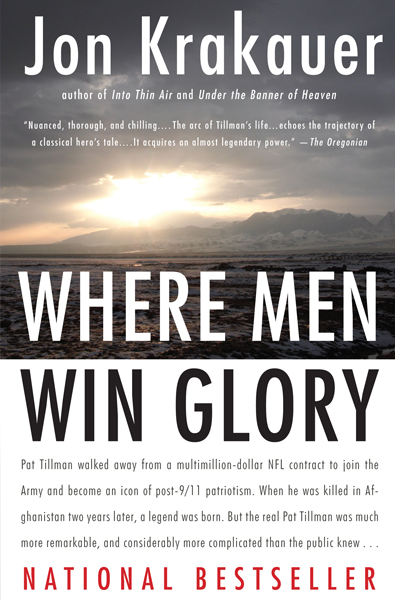
When it came, the correction was inserted unobtrusively in a new printing of the paperback edition of Krakauer’s book, Where Men Win Glory. It read:

“Earlier editions of this book stated that it was Jim Wilkinson ‘who arranged to give the Washington Post exclusive access’ to this leaked intelligence [about Jessica Lynch]. This is incorrect. Wilkinson had nothing to do with the leak.”

I’ve noted that the Post’s enduring silence about its sources on the Lynch story has allowed for the emergence not only of false allegations such as those about Wilkinson, but of a false narrative that the military concocted the tale about Lynch’s derring-do.

The false narrative  also has deflected attention from the soldier whose heroics apparently were misattributed to Lynch. He was Sgt. Donald Walters, a cook in Lynch’s unit.

‘Deep Throat’ garage marker errs about Watergate source disclosures (posted August 18): A handsome historical marker went up in August outside the parking garage in Arlington, Virginia, where Bob Woodward of the Post conferred occasionally in 1972 and 1973 with his stealthy Watergate source, “Deep Throat.”

The marker, I pointed out, errs in describing the information Woodward received from the “Deep Throat” source, who in 2005 revealed himself as W. Mark Felt, formerly the FBI’s second in command.
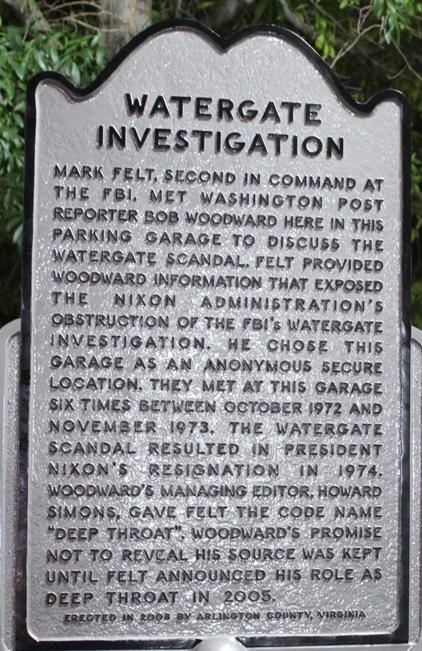
The marker says:

“Felt provided Woodward information that exposed the Nixon administration’s obstruction of the FBI’s Watergate investigation.”

Which just isn’t so.

Such evidence, had “Deep Throat” offered it to Woodward, would have been so damaging and so explosive that it surely would have forced Richard Nixon to resign the presidency well before he did, in August 1974.

Felt didn’t have that sort of information — or (less likely) didn’t share it with Woodward.

I noted in my post about the marker that All the President’s Men, the book Woodward wrote with Carl Bernstein about their Watergate reporting, says Woodward’s conversations with “Deep Throat” were intended “only to confirm information that had been gathered elsewhere and to add some perspective.”

Bra-burning in Toronto: Confirmed (posted February 19): I ascertained in this post that an image of a bra-burning protest in Toronto in 1979 was no hoax, that the photograph was authentic.

I had not seen the photograph before it appeared in February with an article at the online site of  London’s Guardian newspaper.

I had doubts about the photo’s authenticity — given the periodic claims that no bras ever were burned at a feminist protest. The Toronto image, I suspected, might have been unethically altered.

Turns out that was not the case.

I tracked down one of the participants at the Toronto protest and she confirmed the bra-burning, saying by phone from Vancouver:

“The photo is authentic. Absolutely. It happened.”

The participant was Vicki Trerise, who appears at the far right in the photograph above.

The photograph shows a moment of demonstrative bra-burning, although Trerise said it “wasn’t a focal point” of the protest, which took place not far from Toronto’s City Hall.

The bra-burning came near the end of the demonstration, which was called to protest what the organizers said was an illogical report about rape, prepared by the Ontario Provincial Police.

Trerise said the demonstrators in Toronto were media-savvy and “knew that if they burned a bra, someone would take their picture.”

Suspect Murrow quote pulled at Murrow school (posted February 17): The online welcome page of the dean of the Edward R. Murrow College of Communication at Washington State University contained a quotation attributed to Murrow that’s only half-true.

Murrow

The quote reads:

“We must not confuse dissent with disloyalty. When the loyal opposition dies, I think the soul of America dies with it.”

As I’ve reported previously, the first portion of the quote was indeed spoken by Murrow, in his mythical 1954 television program that addressed Senator Joseph McCarthy’s red-baiting ways.

The second part of the quote — “When the loyal opposition dies, I think the soul of America dies with it” — is apocryphal.

In February, I found that the full quotation — accompanied by a facsimile of Murrow’s signature — was posted at the welcome page of Dean Lawrence Pintak of Murrow College at Washington State, Murrow’s alma mater.

I asked the dean what knew about the quote’s provenance, noting that I had consulted, among other sources, a database of historical newspapers which contained no articles quoting the “loyal opposition” passage.

Pintak referred my inquiry to an instructor on his faculty who, a few hours later, sent an email to the dean and me, stating:

“While [the ‘loyal opposition’ quotation] seems to reflect the Murrow spirit, the lack of evidence that he phrased it that way is indeed suspicious.”

He added: “I feel the evidence says no, Murrow did not say this.”

By day’s end, the suspect quote had been pulled from the welcome page. Just the authentic portion — “We must not confuse dissent with disloyalty” — remained posted there.

Mythmaking in Moscow: Biden says WaPo brought down Nixon (posted March 12): Joe Biden, the hapless U.S. vice president, repeated the dominant but misleading narrative about the Watergate scandal in March by telling an audience in Moscow that the Washington Post had “brought down” Richard Nixon’s corrupt presidency.

The gaffe-prone Biden told his audience:

“In my country it was a newspaper, not the FBI, or the Justice Department, it was a newspaper, the Washington Post that brought down a President for illegal actions.”

It’s a version of scandal that few serious historians accept. Not even the Washington Post buys into such a myth-encrusted interpretation.

Indeed, principals at the Post from time to time have sought to distance the newspaper from that misleading assessment.

For example, Katharine Graham, the newspaper’s publisher during and after the Watergate scandal, said in 1997, at a program marking the 25th anniversary of the scandal:

“Sometimes people accuse us of bringing down a president, which of course we didn’t do. The processes that caused [Nixon’s] resignation were constitutional.”

More recently, Michael Getler, then the newspaper’s ombudsman, wrote in 2005:

“Ultimately, it was not The Post, but the FBI, a Congress acting in bipartisan fashion and the courts that brought down the Nixon administration.”

Such comments are not the expressions of false modesty. Instead, they represent a more accurate reading of the history of Watergate than Biden offered up in Moscow.

Even so, in the run-up to the scandal’s 40th anniversary in 2012, the Watergate myth — the heroic-journalist trope — is sure to emerge often and insistently.

But the Post and its reporting of Watergate assuredly did not bring down Nixon, as I discuss in Getting It Wrong, my latest book which was published in 2010.

WJC

Many thanks to Instapundit
Glenn Reynolds for linking to this post.

Other memorable posts of 2011:

‘Salon’ offers up repudiated Lynch-source claim

In Debunking, Jessica Lynch, Washington Post on December 21, 2011 at 8:47 am

The fallout is unending from the botched Washington Post story about Jessica Lynch’s heroics early in the Iraq War.

The online news and commentary site Salon offered up the other day the discredited claim that the hero-warrior tale about Jessica Lynch was the work of a former White House communications official named Jim Wilkinson.

Salon asserted, without attribution, that Wilkinson was known “for inventing the false story of Jessica Lynch,” a 19-year-old Army supply clerk whom the Post erroneously said had fought fiercely in the ambush of her unit in Iraq in March 2003.

The Post’s electrifying report was published April 3, 2003, and picked up by news organizations around the world. The story soon proved utterly wrong in its most important details, notably that Lynch had never fired a shot in the attack.

Salon’s claim about Wilkinson was an echo of a since-repudiated assertion in Jon Krakauer’s 2009 book, Where Men Win Glory: The Odyssey of Pat Tillman.

Krakauer claimed — without attribution — that Wilkinson was the Post’s source on the Lynch story. Krakauer asserted that Wilkinson was  “a master propagandist” and “the guy who deserved top billing for creating the myth of Jessica Lynch.”

Wilkinson — who at the time was director of strategic communications for the commander of U.S. forces in Iraq, General Tommy Franks — vigorously denied he was the newspaper’s source.

The Post has never identified the sources who led it so badly awry on the Lynch report.

Wilkinson said he discussed corrections with Krakauer late last year. The unflattering claims about him were removed in a recent paperback printing of Where Men Win Glory, which included a footnote, saying:

“Earlier editions of this book stated that it was Jim Wilkinson ‘who arranged to give the Washington Post exclusive access’ to this leaked intelligence [about Jessica Lynch]. This is incorrect. Wilkinson had nothing to do with the leak.”

Salon’s claim about Wilkinson was included in a commentary posted Monday, that scoffed at speculation that former U.S. Secretary of State Condoleezza Rice might seek the Republican nomination for vice president.

Asked by email about Salon’s claim about his “inventing” the Lynch hero-warrior tale, Wilkinson replied:

“Craziness! Wish they would leave me alone.”

The author of the Salon commentary, Alex Pareene, said by email yesterday that he had relied on Krakauer’s book in offering the claim about Wilkinson.

Pareene also said:

“I was unaware of Krakauer’s correction, and it’s worth an explanatory note.”

He later appended a footnote to his commentary, citing Krakauer’s rollback and stating that Wilkinson “apparently isn’t responsible for falsifying [Lynch’s] actions or leaking that false story to the press.”

So now, how about some transparency from the Washington Post?

By disclosing the identities of its sources on the Lynch case, the Post would help put an end to the erroneous speculation of the kind that has injured Wilkinson’s reputation.

Disclosing its sources also would puncture the false narrative that the U.S. military concocted the story about Lynch’s heroics in a cynical and devious attempt to bolster popular support in the United States for the war in Iraq.

As I point out in my latest book, Getting It Wrong, one of the Post reporters on the botched report about Lynch has said flatly, “Our sources for that story were not Pentagon sources.”

What’s more, public opinion polls in the early days of the Iraq War showed “there was little reason for morale-boosting among Americans,” I write in Getting It Wrong, adding:

“It may be little-recalled now, but the U.S.-led invasion of Iraq was widely supported by the American public. Polling data from March and April 2003, the opening days and weeks of the war, show an overwhelming percentage of Americans supported the conflict and believed the war effort, overall, was going well.”

WJC

Recent and related:

Lynch blames ‘military, media’ for bogus hero story, ignores WaPo

In Debunking, Jessica Lynch, Media myths, Washington Post on December 19, 2011 at 8:09 am

Jessica Lynch has blamed the “military and the media” for the bogus story about her battlefield heroics in the opening days of the Iraq War — but ignored mentioning the Washington Post, which was solely responsible for circulating the erroneous if electrifying tale.

Lynch’s remarks were made in an as-told-to article posted yesterday at the Daily Beast, an online site affiliated with Newsweek magazine.

“Though I didn’t know it at the time,” she said, “the military and the media labeled me a hero. They said I’d gone down guns blazing, like Rambo, when really my rifle had jammed and I hadn’t shot a soul.”

She was referring to the hero-warrior tale the Washington Post thrust into the public domain in a sensational, front-page report on April 3, 2003.

The Post said Lynch, then a 19-year-old Army private, had fought fiercely in the ambush of her unit, the 507th Maintenance Company, at Nasariyah in March 2003.

The botched hero-warrior story

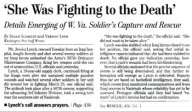
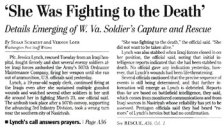
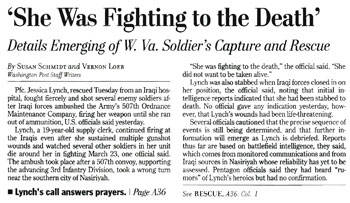
The Post referred anonymously to “U.S. officials” in reporting that Lynch shot several enemy soldiers” in the ambush and “continued firing at the Iraqis even after she sustained multiple gunshot wounds and watched several other soldiers in her unit die around her” in the fighting.

The hero-warrior tale — published beneath the headline “‘She was fighting to the death'” — made terrific copy, and news organizations around the world picked up the story.

As I note in my latest book, Getting It Wrong, Lynch became the best-known Army private of the war.

But the story soon proved thoroughly in error. Lynch never fired a shot in the ambush. She was neither shot nor stabbed. She suffered shattering injuries in the crash of a Humvee as it attempted to flee the ambush.

The bogus story clearly wasn’t the work of multiple news organizations. It was the Post’s story, exclusively.

The Post has never fully explained how it got the dramatic story about Lynch so utterly wrong; nor has the newspaper disclosed the identity of its sources on the bogus story.

Its silence about the sources has allowed a false narrative to fester and spread — namely, that the military concocted the story about Lynch’s heroics and fed it to the Post in a cynical attempt to bolster popular support in the United States for the war in Iraq.

That version, though quite vague, has proved very popular, as suggested by Lynch’s comments posted at the Daily Beast.

But we know from one of the Post reporters on the botched hero-warrior story that the Pentagon wasn’t the newspaper’s source.

The reporter, Vernon Loeb, told NPR in mid-December 2003: “Our sources for that story were not Pentagon sources.”

He also said in the NPR interview that military officials “wouldn’t say anything about Jessica Lynch.

“I’ve never believed that at least as far as the story we wrote goes, that it was a Pentagon attempt to create a hero there.”

Loeb said that “we basically told our readers that day what basically the U.S. intelligence community was telling senior members of the U.S. government. It just kind of goes back to the old adage, you know, that initial reports from the battlefield are almost always wrong.”

It bears repeating: Responsibility for spreading the erroneous account lies neither with the “military” nor with the “media”; it rests solely with the Washington Post.

WJC

Recent and related:

ABC News invokes false narrative of Jessica Lynch case

In Debunking, Jessica Lynch, Media myths, Washington Post on December 17, 2011 at 10:22 am

ABC News yesterday invoked the false derivation of the hero-warrior myth about Jessica Lynch, declaring that “the U.S. government portrayed her as a fearless heroine who had gone down fighting” early in the Iraq War.

Not so. The Washington Post did that.

The Post — alone — placed the bogus tale about Lynch and her battlefield derring-do into the public domain in April 2003, in an electrifying, front-page article that was picked up by news organizations around the world.

The “U.S. government” — specifically, the Pentagon — was loath to embrace the tale about Lynch and her heroics.

Indeed, as one of the Post reporters on the botched report about Lynch later said:

“Our sources for that story were not Pentagon sources.”

The reporter, Vernon Loeb, also said in an interview on NPR: “They wouldn’t say anything about Jessica Lynch.”

Loeb and another Post reporter, Susan Schmidt, had reported on April 3, 2003, that Lynch fought fiercely in the ambush of her unit, the 507th Maintenance Company, on March 23, 2003. Neither Loeb nor Schmidt was with Lynch’s unit; no journalist was.

Loeb and Schmidt wrote that Lynch “shot several enemy soldiers” and  “continued firing at the Iraqis even after she sustained multiple gunshot wounds and watched several other soldiers in her unit die around her in fighting” at Nasiriyah, in southern Iraq.

Loeb and Schmidt quoted a source, to whom they referred as a “U.S. official,” as saying:

“She was fighting to the death. She did not want to be taken alive.”

Though dramatic, and even cinematic, the Post report was utterly wrong.

Lynch had not fired a shot in the ambush; her weapon jammed. Lynch was neither shot nor stabbed; she suffered shattering injuries in the crash of a Humvee as it tried to escape the ambush.

The Post has never fully explained how it botched the hero-warrior story about Lynch. It has never disclosed the identities of the anonymous sources that led it so badly awry on the Lynch story.

The murkiness of the newspaper’s sourcing has not only encouraged the rise of the false narrative, which ABC News cited in asserting, without attribution, that the “U.S. government portrayed” Lynch as a hero.

The Post’s obscure sourcing also has given rise to false allegations. The author Jon Krakauer, for example, wrongly accused Jim Wilkinson, a communications official in the administration of President George Bush, of having “arranged to give the Washington Post exclusive access” to the Lynch hero-warrior tale.

Krakauer called Wilkinson a “master propagandist” who “deserves top billing for creating the myth of Jessica Lynch.”

Krakauer has since quietly rescinded those allegations, which he had included in his 2009 book, Where Men Win Glory: The Odyssey of Pat Tillman.

Another upshot of the false narrative is that it has obscured wide recognition of a real hero at Nasiriyah, a sergeant in Lynch’s unit named Donald Walters.

Sgt. Walters

As I write in my latest book, Getting It Wrong, Walters’ battlefield heroics were likely misattributed to Lynch, owing to mistranslation of Iraqi radio transmissions from the battlefield.

“During the ambush in Nasiriyah,” I write, “… Walters either stayed behind, or was left behind, to lay down covering fire as his fellow soldiers tried to make their escape. Walters fought his attackers in a fashion that the Post attributed to Lynch.”

I point out that the most detailed account of Walters’ bravery appears in Richard Lowry’s fine study of the fighting at Nasiriyah, Marines in the Garden of Eden.

Lowry wrote that Walters killed “several Iraqis before he was surrounded and captured” by Iraqi irregulars, the Fedayeen, and executed.

“We will never really know the details of Walters’ horrible ordeal,” Lowry wrote. “We do know that he risked his life to save his comrades and was separated from the rest of the convoy, deep in enemy territory.

“We know that he fought until he could no longer resist.”

The Post, though, has shown scant interest in Walters’ heroism.

A database search of Post articles published since April 2003 revealed just four stories in which Walters was mentioned. None of those articles discussed in any detail his bravery at Nasiriyah.

WJC

Recent and related:

WaPo still dodging responsibility in Jessica Lynch case

In Debunking, Jessica Lynch, Washington Post on December 14, 2011 at 2:01 pm

Lynch in 2003

The Washington Post — the newspaper that brought the world the bogus hero-warrior tale about Jessica Lynch early in the Iraq War — placed at its Web site today a wire service report about Lynch’s completing an education degree at the University of West Virginia at Parkersburg.

The 900-word report made no mention about the Post’s singular role in pressing the hero-warrior tale into the public domain but instead invoked the false narrative that the U.S. military made up the account about Lynch’s battlefield heroics to bolster support at home for the war.

“To make her seem more heroic and rally public support for the war,” said the report by the Associated Press, which the Post placed online, “the military claimed she’d gone down firing — when, in fact, her rifle had jammed.”

How arrogant: It was the Post that reported Lynch had “gone down firing,” that she had fought ferociously in the ambush of her unit, the 507th Maintenance Company, at Nasariyah in March 2003.

It was the Post — citing otherwise unnamed “U.S. officials” — that presented the electrifying tale that Lynch had “shot several enemy soldiers” in the ambush.

It was the Post that reported Lynch “continued firing at the Iraqis even after she sustained multiple gunshot wounds and watched several other soldiers in her unit die around her” in the fighting.

It was the Post that said Lynch also suffered stab wounds in the ambush.

But none of it was true.

Lynch never fired a shot in Iraq. Her weapon jammed during the ambush.

She suffered shattering injuries not in battling Iraqi soldiers but in the crash of a Humvee as it fled the ambush.

As I discuss in a chapter in my latest book, Getting It Wrong, the Post has never fully explained how it got the Lynch story so badly wrong.

It has never disclosed the anonymous sources it cited in presenting the bogus hero-warrior tale.

Indeed, the Post has largely sidestepped accountability for the bogus hero-warrior narrative, which has allowed the false narrative about the military’s concocting the Lynch story to take hold and proliferate.

We know it’s a false narrative from one of the Post reporters whose byline appeared on the botched Lynch story, which was published April 3, 2003, beneath the headline:

“‘She was fighting to the death.'”

Vernon Loeb, a veteran journalist whose byline appeared on that report, said in an interview on NPR’s Fresh Air program in December 2003:

“Our sources for that story were not Pentagon sources.”

He also said in the interview:

“They wouldn’t say anything about Jessica Lynch.”

Loeb added: “I just didn’t see the Pentagon trying to create a hero where there was none. I mean …they never showed any interest in doing that, to me.”

Loeb said the Post based its story on the accounts of “some really good intelligence sources” in Washington, D.C., adding:

“We wrote a story that turned out to be wrong because intelligence information we were given was wrong. That happens quite often.”

As I note in Getting It Wrong, Loeb on another occasion was quoted in a commentary in the New York Times as saying:

“Far from promoting stories about Lynch, the military didn’t like the story.”

Loeb also was quoted in the commentary as saying that “the sources for this information [about Lynch’s derring-do] were apparently Iraqis, both Iraqi informants and intercepts.”

Loeb’s disclaimers notwithstanding, the notion that the Pentagon’s made up the story to bolster domestic U.S. support for the war makes little sense. The American public, after all, supported the Iraq War in overwhelming numbers in its early days and weeks, as I point out in Getting It Wrong.

But it’s clear that if not for the Post’s erroneous reporting, the bogus tale of Lynch’s battlefield heroism never would have circulated as widely and as profoundly as it did.

WJC

Recent and related:

Jon Krakauer rolls back claims about WaPo ‘source’ in Jessica Lynch case

In Debunking, Jessica Lynch, Media myths, Washington Post on November 11, 2011 at 12:05 am

Author Jon Krakauer has quietly retreated from claims in a 2009 book that a former White House official, Jim Wilkinson, was the source for the Washington Post’s botched report about Jessica Lynch and her supposed battlefield heroics early in the Iraq War.

The unattributed assertions about Wilkinson — who was said to have “duped reporters and editors at the Washington Post” — were included in Krakauer’s Where Men Win Glory: The Odyssey of Pat Tillman.

The claims were removed in a recent printing of the book’s paperback edition, which now contains a footnote, saying:

“Earlier editions of this book stated that it was Jim Wilkinson ‘who arranged to give the Washington Post exclusive access’ to this leaked intelligence [about Jessica Lynch]. This is incorrect. Wilkinson had nothing to do with the leak.”

The Post has never identified the sources for its report, published on its front page April 3, 2003, that said Lynch had fought fiercely in the ambush of the 507th Maintenance Company at Nasiriyah in southern Iraq on March 23, 2003.

The Post’s account cited “U.S. officials” in saying that Lynch, a 19-year-old supply clerk, had kept “firing at the Iraqis even after she sustained multiple gunshot wounds and watched several other soldiers in her unit die around her in fighting” at Nasiriyah.

The Post’s electrifying report about the waif-like Army private was picked up by news organizations around the world.

But none of it was true.

As I discuss in my latest book, Getting It Wrong, Lynch never fired a shot at Nasiriyah; her rifle jammed during the attack. She suffered shattering injuries when a rocket-propelled grenade struck her Humvee, causing the vehicle to crash. But Lynch was not shot.

She was taken prisoner and treated at an Iraqi hospital, from where she was rescued April 1, 2003, by a U.S. special operations team.

In the years since, the Post has never adequately explained how it so thoroughly erred on the hero-warrior story about Lynch; nor has it disclosed the identities of the “U.S. officials” who led the newspaper awry.

The Post’s silence about its sources has contributed to the rise to a false narrative that the Pentagon concocted the hero-warrior tale in a cynical effort to bolster public support for the war.

Vernon Loeb, one of the reporters who shared the byline on the botched Lynch story, has said that the Pentagon was not the source for the report.

“I could never get anybody from the Pentagon to talk about those reports at all,” Loeb said on an NPR program in mid-December 2003, adding:

“They wouldn’t say anything about Jessica Lynch.”

Even so, the false narrative about Lynch and the Pentagon persists and has deflected attention from the Army sergeant who apparently did fight to the death at Nasiriyah. He was Donald Walters, who laid down covering fire as elements of the 507th tried to flee the ambush.

Walters was captured when his ammunition ran out and was executed by his captors soon afterward.

At the time of the battle at Nasiriyah, Wilkinson was director of strategic communications for General Tommy Franks, the commander of U.S. forces in Iraq. Among his prior positions, Wilkinson was deputy director of communications at the White House.

Wilkinson, who had vigorously denied the claims about him in Where Men Win Glory, said he met with Krakauer nearly a year ago in Colorado to discuss corrections.

At that meeting, Wilkinson said, the author told him that his source recanted claims about Wilkinson.

Wilkinson told Media Myth Alert that he was grateful to Krakauer for correcting the record, adding that he feels “100 times better” that the book’s extensive and unflattering assertions about him have been removed. “I greatly appreciate his willingness to meet with me and then issue a corrected version of the book that clears my name,” Wilkinson said.

The unflattering assertions were dropped in June, in what was the 17th printing of the Anchor Books soft-cover edition of Where Men Win Glory. Anchor, an imprint of Random House, issued no announcement about the revisions.

In earlier editions of Where Men Win Glory, Krakauer called Wilkinson a “master propagandist” and identified him as “the guy who deserved top billing for creating the myth of Jessica Lynch.”

Wilkinson, Krakauer also wrote, “duped reporters and editors at the Washington Post … and other media outlets into running wildly hyperbolic stories about Lynch.”

It remains unclear how Krakauer erred so badly in accusing Wilkinson. The author did not reply to an email sent to him yesterday and attempts this week to reach him through his publisher were unavailing.

“Unfortunately, he’s not talking questions at this time,” Russell Perreault, a spokesman for Random House, said by email. “He’s working on a new project.”

Krakauer’s most recent work, Three Cups of Deceit, seeks to puncture the humanitarian reputation of Greg Mortensen, whose charitable organization builds schools in Afghanistan and Pakistan.

“The image of Mortensen that has been created for public consumption,” Krakauer wrote in Three Cups of Deceit, “is an artifact born of fantasy, audacity, and an apparently insatiable hunger for esteem. Mortensen has lied about the noble deeds he has done, the risks he has taken, the people he has met, the number of schools he has built.”

WJC

Many thanks to Instapundit
Glenn Reynolds for linking to this post.

Recent and related:

Recalling who gave us the ‘manufactured heroism’ of Jessica Lynch

In Debunking, Jessica Lynch, Media myths, Watergate myth on August 22, 2011 at 5:09 am

Lynch: No hero, she

I’ve noted how remarkable it is that the Washington Post so thoroughly eludes censure for placing the bogus hero-warrior tale about Jessica Lynch into the public domain during the first days of the Iraq War.

Confirmation of that observation came yesterday in an otherwise thoughtful essay in the New York Times about the deference Americans across the political spectrum tend to pay the military.

The essay described the Lynch case not as a stunning example of errant journalism but as “an instrument of propaganda.”

The essay, written by William Deresiewicz, asserts that in 2003, “we were treated to the manufactured heroism of Jessica D. Lynch, the young supply clerk who was rescued from an Iraqi hospital a few days after her capture by enemy forces (both events turning out to be far less cinematic than initially put out) and who finally felt compelled to speak out against her own use as an instrument of propaganda.”

Great line, “manufactured heroism.”

But who really was responsible for the “manufactured heroism”?

Deresiewicz avoids saying.

He fails to identify the Washington Post as solely responsible for placing the hero-warrior tale about Lynch into worldwide circulation.

He doesn’t say that the Post’s botched story about Lynch’s purported heroics was picked up by news organizations around the world, turning the 19-year-old Army private into the best-known American solider of the Iraq War.

WaPo's botched hero-warrior story

It was the Post, citing otherwise unnamed “U.S. officials,” that offered up the electrifying tale about how Lynch “fought fiercely and shot several enemy soldiers after Iraqi forces ambushed” her unit, the 507th Maintenance Company, in Nasiriyah on March 23, 2003.

It was the Post that reported Lynch “continued firing at the Iraqis even after she sustained multiple gunshot wounds and watched several other soldiers in her unit die around her” in the fighting.

None of it was true, however.

Lynch never fired a shot in Iraq. Her weapon jammed during the ambush. Her shattering injuries were suffered in the crash of a Humvee as it fled the attack.

It wasn’t long before the Post’s erroneous report about Lynch’s derring-do began to unravel.

But as I discuss in my latest book, Getting It Wrong, the newspaper in the years since has never fully explained how it got the Lynch story so badly wrong.

Nor has the Post ever identified the sources who led it so badly astray.

And why has the Post sidestepped blame for the botched Lynch narrative? Why isn’t the newspaper more routinely cited in essays, such as Deresiewicz’s, that invoke the Lynch case?

It’s principally because details of the Lynch case have been subordinated to a far more sinister narrative that says the Pentagon conjured the hero-warrior tale about the waif-like young woman in order to bolster popular support for the Iraq War.

It’s a perversely appealing narrative — and it’s quite false.

As Vernon Loeb, one of the Post reporters who shared a byline on the botched Lynch story in 2003, has said:

“Our sources for that story were not Pentagon sources.”

Loeb also said, in an interview that aired on NPR’s Fresh Air program in mid-December 2003:

“I just didn’t see the Pentagon trying to create a hero where there was none. I mean …they never showed any interest in doing that, to me.”

Loeb said the story was provided by “some really good intelligence sources” in Washington, D.C., adding:

“We wrote a story that turned out to be wrong because intelligence information we were given was wrong. That happens quite often.”

As I note in Getting It Wrong, Loeb on another occasion was quoted in the New York Times as saying:

“Far from promoting stories about Lynch, the military didn’t like the story.”

What’s more, the notion the Pentagon’s made up the story  — and somehow fed it to the Post — to bolster popular support for the war doesn’t make much sense. After all, the American public in overwhelming numbers supported the war in its early days and months.

But it’s clear that if not for the Post, the “manufactured” tale of Lynch’s heroism never would have circulated as it did.

Far from being an “instrument of propaganda,” the Lynch hero-warrior narrative is a case of bungled reporting that has never been adequately explained, let alone corrected.

WJC

Recent and related:

No ‘rock-em,’ no ‘sock-em’: What ails WaPo

In Debunking, Jessica Lynch, Media myths, Newspapers, Washington Post, Watergate myth on August 7, 2011 at 1:59 am

The ombudsman of the Washington Post, Patrick Pexton, weighs in today with platitudes and hang-wringing about the newspaper. He mostly misses the mark.

Pexton writes in his column that the Post’s “future lies not with the rich; it lies with the citizenry.

“This newspaper must be the one source of high-quality, probing Washington news that readers in this region and across the country can look to for holding their government accountable. This publication must be for all Americans.”

Oh, brother.

But wait: Here’s more vague abstraction:

“The Post,” Pexton writes, “can’t be a liberal publication or a conservative one. It must be hard-hitting, scrappy and questioning — skeptical of all political figures and parties and beholden to no one. It has to be the rock-’em-sock-’em organization that is passionate about the news. It needs to be less bloodless and take more risks when chasing the story and the truth.”

A “rock-’em-sock-’em organization,” eh? Well, that’s useful guidance.

In his five or so months as ombudsman, Pexton hasn’t dared touch the electrified third rail about the Post, which one of his predecessors, Deborah Howell, gamely if belatedly addressed.

That’s a decided lack of intellectual diversity in the Post’s newsroom. In mid-November 2008, shortly after Barack Obama was elected president, Howell wrote in her ombudsman column:

“I’ll bet that most Post journalists voted for Obama. I did. There are centrists at The Post as well. But the conservatives I know here feel so outnumbered that they don’t even want to be quoted by name in a memo.”

Howell’s column quoted Tom Rosenstiel of the Project for Excellence in Journalism as saying that “conservatives are right that journalism has too many liberals and not enough conservatives. It’s inconceivable that that is irrelevant.”

In Obama's thrall

The lack of intellectual diversity often shows in the Post’s report. Even casual reading signals that the newspaper remains in the thrall of Obama, despite his clearly failing presidency.

Obama scarcely gets “rock-’em-sock-’em” treatment from the Post.

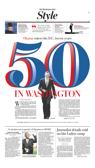
Last Wednesday, for example, the Post’s once-edgy “Style” section devoted most of its front page to a cheery feature about the meaning of Obama’s turning 50-years-old.

“On Thursday,” the article gushed, “President Obama — one of American history’s most precocious achievers — joins the ranks of Washington 50-somethings ….”

But what ails the Post goes well beyond its routinely tender treatment of Obama.

The Post’s local report is superficial, a diet of eye-rolling, feel-good features. The newspaper carries little staff-produced national coverage. Its international report is undistinguished, especially compared to that of the New York Times.

Moreover, the Post offers few notable cases of investigative journalism any more.

It has won two Pulitzer Prizes for investigative reporting in 25 years, which has to be considered meager for a newspaper that reputedly brought down Richard Nixon’s corrupt presidency with its relentless digging into the Watergate scandal.

But as I discuss in my latest book, Getting It Wrong, the Post-Watergate trope, of course, is a powerful media-driven myth.

I’d be remiss were I to fail to note that the Post never has come clean about how it erred so utterly in offering the world the bogus hero-warrior tale about Jessica Lynch in the early days of the Iraq War.

Lynch, the Post reported on its front page on April 3, 2003, “fought fiercely and shot several enemy soldiers after Iraqi forces ambushed the Army’s 507th Ordnance Maintenance Company, firing her weapon until she ran out of ammunition, U.S. officials said yesterday.”

But none of the derring-do attributed to Lynch was true, and the Post has never explained who led it so badly astray.

Moreover, the staff cuts and buyouts of recent years left few notable characters on the newspaper’s staff.

Gone are such colorful figures as the erudite and pugnacious Henry Allen, a Pulitzer winner who left the Post after throwing punches at a staff writer who called him a c—sucker.

Now there was “rock-’em-sock-’em,” old school variety.

WJC

Many thanks to Instapundit
Glenn Reynolds for linking to this post.

Recent and related:

Jessica Lynch featured in ‘this day in history’ feature; WaPo ignored

In Debunking, Jessica Lynch, Media myths, Washington Post on July 25, 2011 at 10:00 am

Lynch in 2003

It is remarkable how often Jessica Lynch pops up in media reports, even though eight years have passed since the bogus story about her heroics in an ambush in Iraq thrust her into the international limelight.

It’s likewise remarkable how seldom the Washington Post is identified as the sole source of the tale about her derring-do — how Lynch, a private in a non-combat Army maintenance unit, supposedly fought ferociously against Iraqi attackers, despite being shot and stabbed.

None of it was true; Lynch suffered neither gunshot nor stab wounds. She was badly injured in the crash of a Humvee as its fled the ambush. But Lynch never fired a shot in the attack, which took place March 23, 2003, in Nasiriyah in southern Iraq.

The other day, the online site of cable TV’s History Channel recalled Lynch and the return in July 2003 to her hometown in West Virginia as the “lead story” of its “this day in history” feature.

Predictably, the account made no mention of the singular role the Washington Post played in thrusting the bogus hero-warrior story into the public domain. The ensuing worldwide sensation had the effect of making Lynch the single best-known American soldier of the war.

Instead of mentioning the Post, the History Channel feature referred vaguely to “news accounts indicating that even after Lynch was wounded during the ambush she fought back against her captors.”

And just as vaguely, it blamed the government for the bogus story, noting that critics “charged the U.S. government with embellishing her story to boost patriotism and help promote the Iraq war.”

So just who in the “U.S. government” concocted the Lynch story “to boost patriotism and help promote the Iraq war”? Nor surprisingly, the History Channel feature didn’t say: Such accusations typically are unaccompanied by specific details.

The accusation is, though, sometimes aimed at the Pentagon — that the military ginned up the hero-warrior tale about Lynch to bolster public support for the war.

But that claim is untenable for at least two reasons, as I discuss in my latest book, Getting It Wrong.

One, public backing for the war in Iraq was quite strong in the conflict’s early days. For example, a CNN/USA Today/Gallup poll, taken of 1,012 American adults on March 29 and 30, 2003, found that 85.5 percent of respondents thought the war effort was going “very well” or “moderately well” for U.S. forces. And that was before Baghdad fell to U.S. ground forces.

So there was no need or incentive to concoct a hero-warrior tale to bolster support for the war.

Two, and more important, one of the Post reporters who wrote the bogus hero-warrior story about Lynch said in late 2003 that the Pentagon was not the source. The reporter, Vernon Loeb, stated flatly:

“Our sources for that story were not Pentagon sources.”

Loeb also said in the interview, which aired December 15, 2003, on National Public Radio, that the Pentagon “wouldn’t say anything about Jessica Lynch.”

He added:

“I just didn’t see the Pentagon trying to create a hero where there was none. I mean …they never showed any interest in doing that, to me.”

On an earlier occasion, Loeb was quoted in a commentary in the New York Times as saying:

“Far from promoting stories about Lynch, the military didn’t like the story.”

The Post’s hero-warrior story about Lynch was published April 3, 2003, and cited otherwise anonymous “U.S. officials” as sources.

As I’ve previously stated at Media Myth Alert, it is high time for the Post to identify the “U.S. officials” who led it astray.

The Post is under no obligation to protect the identity of sources who misled it so badly. Identifying them would clear the record by clarifying what role, if any, the Pentagon or other U.S. agencies had in the derivation of the bogus tale.

And doing so certainly would help make those periodic retrospective pieces such as the History Channel’s writeup about Lynch more complete, revealing, and accurate.

WJC

Recent and related:

More media myths from CounterPunch

In Bay of Pigs, Debunking, Furnish the war, Jessica Lynch, Media myths, Washington Post, Watergate myth on July 24, 2011 at 8:30 am

CounterPunch touts itself as “America’s best political newsletter.”

It’s building a reputation for indulging in media-driven myths, too.

Since mid-March, essays posted at CounterPunch have:

CounterPunch has indulged yet again in media myth, in a commentary in its weekend edition about Rupert Murdoch’s troubled media empire.

CounterPunch claimed the tough old media mogul has “surpassed William Randolph Hearst,” press baron of the 19th and early 20th centuries, “in practicing yellow journalism.”

The commentary invoked the hoary media myth about Hearst’s purported vow to “furnish the war” with Spain.

According to CounterPunch, Hearst said: “Get me the photos and I’ll get you the war.”

That was, CounterPunch added, “Hearst’s 1898 dictum to help start the Spanish-American War.”

Provocative tale. But it’s pure media myth.

Hearst’s vow is almost surely apocryphal, for reasons I discuss in my myth-busting book, Getting It Wrong, which came out last year.

Among the reasons:  The telegram that supposedly contained Hearst’s vow — a cable sent to artist Frederic Remington, on assignment to Cuba — has never turned up.

More significantly, as I point out Getting It Wrong, the anecdote about Hearst’s purported vow suffers from “an irreconcilable internal inconsistency.”

That is, it would have been absurd and illogical for Hearst to have vowed to “furnish the war” because war — specifically, the Cuban rebellion against Spain’s colonial rule — was the reason he sent Remington to Cuba in the first place.

In addition, the Spanish colonial authorities who ruled Cuba closely controlled and censored incoming and outgoing telegraphic traffic: They surely would have intercepted and called attention to Hearst’s incendiary telegram, had it been sent.

But in fact, there was, as I write in Getting It Wrong, no chance that telegrams would have flowed freely between Remington in Cuba and Hearst in New York.

So “furnish the war” (or, “provide the war”) wasn’t at all Hearst’s “dictum to help start the Spanish-American War.”

That Hearst helped bring on the war with Spain is a media myth, too.

It’s a myth dismantled in my 2001 book, Yellow Journalism: Puncturing the Myths, Defining the Legacies, in which I pointed out that the yellow press of Hearst and his rival, Joseph Pulitzer, “is not to blame for the Spanish-American-War.

“It did not force — it could not have forced — the United States into hostilities with Spain over Cuba in 1898.

“The conflict was, rather, the result of a convergence of forces far beyond the control or direct influence of even the most aggressive of the yellow newspapers, William Randolph Hearst’s New York Journal.”

The proximate cause of the war was the humanitarian crisis created by Spain’s bungled attempts to quell a rebellion that had begun in Cuba in 1895 and had spread across the island by 1897, when Remington arrived in Havana on assignment for Hearst.

WJC

Recent and related: