Watergate’s most famous made-up line — “follow the money” — is impressively versatile and doggedly persistent, some 35 years after it was written into a screenplay.
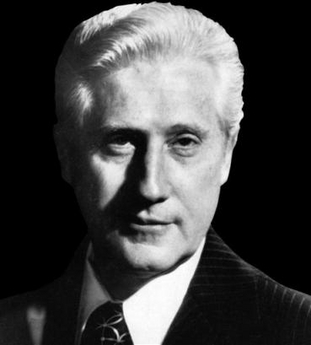
Mark Felt, 'Deep Throat' source
It’s a phrase that has resonance internationally. It’s made its way onto the sports pages and into publications on topics as diverse as secondary education and systems analysis.
And yesterday, the CBS business news site BNET invoked the passage in a post discussing a recent report of the Financial Crisis Inquiry Commission.
The reference to “follow the money” appeared at the end of BNET, as if it were an attempt at a witty ending:
“As Deep Throat said about the Watergate investigation, ‘follow the money.'”
But “follow the money” is really more clichéd than witty.
More important, it was a line not spoken by the stealthy “Deep Throat” source (see photo, above) of the Washington Post during its investigation of the Watergate scandal. The passage never appeared in the newspaper’s Watergate-related coverage.
No, it wasn’t the “Deep Throat” newspaper source who uttered “follow the money.” It was the actor Hal Holbrook, who played “Deep Throat” in the motion picture, All the President’s Men. The movie was based on Bob Woodward and Carl Bernstein’s book about their Watergate reporting for the Post.
Screenwriter William Goldman has taken credit for writing “follow the money” into the script of All the President’s Men, which came out in 1976, less than two years after Watergate reached a climax with the resignation of President Richard Nixon.
Since 1976, millions of people have repeated the line, oblivious to its derivation and unaware of its falsity.
So why does this made-up line persist? Why is “follow the money” so appealing and versatile?
Like many media myths, “follow the money” is pithy, accessible, and easy-to-remember.
As I write in my latest book, Getting It Wrong, “Turns of phrase that sound too neat and tidy often are too perfect to be true.” William Randolph Hearst’s pithy vow to “furnish the war” with Spain is a particularly telling example.
There are, of course, other explanations for the persistent popularity of “follow the money.” It is, after all, a supposedly famous piece of advice — advice presumably crucial in unraveling Watergate.
The line suggests that rolling up the scandal was accomplished by identifying, pursuing, and reporting on an illicit money trail. Its purported centrality to understanding the Watergate scandal is an important reason why “follow the money” crossed smoothly from the silver screen to the vernacular and lives on.
But the Watergate scandal was more than a matter of a money trail. In the end, Nixon’s attempts to obstruct justice by covering up the break-in at headquarters Democratic national committee headquarters in 1972 brought down his presidency.
Moreover, “follow the money” is adaptable advice. It can be applied in many contexts. As Frances Miller wrote last year in the American Journal of Law and Medicine:
“Follow the money is a versatile phrase; the term can be used as an exhortation, designate a pathway, or denote a lifestyle choice. When it comes to health care, following the money is at least part of the sine qua non for anyone seeking to understand how this complex sector of the U.S. economy has arrived at its present sorry state.”
Similarly, “follow the money” has offered pertinent lessons in systems thinking, a broad-based approach to organizational assessment.
The journal Quality Progress invoked “Deep Throat” and “follow the money” in observing in 2004:
“What Deep Throat did, in effect, was lead Woodward, his colleague Carl Bernstein and the rest of us Watergate observers through an experiential workshop in systems thinking. The general instruction he gave the reporters to unravel the plot was, ‘Follow the money.’
“He assured them the money would connect the dots for them and eventually reveal the conspiracy’s entire ‘circulatory’ system. Identifying resources is one way to sketch in the outlines of some systems.”
That assessment was offered in the year before W. Mark Felt, formerly the second-ranking official at the FBI, identified himself as having been the “Deep Throat” of the Washington Post.
Recent and related:
- ‘Follow the money’: As if it were genuine
- Didn’t: A Watergate primer
- Catching up: Great movie misquotations
- Media myth and Truthout
- Talking ethics and the ‘golden days’ of Watergate
- The Watergate myth: Why debunking matters
- Cinema and the tenacity of media myths
- 24/7 news cycle no new phenomenon
- Invoking media myths to score points
- Getting It Wrong goes on Q-and-A








 Media Myth Alert
1897, Commentary, Debunking, Fact-checking, Hearst, History, Insults, Journalism, Media, New journalism, New York Press, News, Opinion, Pulitzer, Spanish-American War, Yellow Journalism
‘Yellow journalism’ turns 114
In 1897, Anniversaries, Debunking, Media myths, Newspapers, Spanish-American War, Yellow Journalism on January 30, 2011 at 8:21 amIt is a little-recognized, never-celebrated anniversary in American journalism, granted.
Wardman of the Press
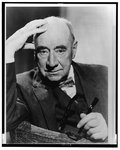
But tomorrow marks 114 years since the term “yellow journalism” first appeared in print, in the old New York Press, edited by the austere Ervin Wardman (left).
The phrase “the Yellow Journalism” appeared in a small headline on the editorial page of the Press on January 31, 1897. The phrase also appeared that day in the newspaper’s editorial page gossip column, “On the Tip of the Tongue.”
“Yellow journalism” quickly caught on, as a sneer to denigrate what then was called the “new journalism” of the New York Journal of William Randolph Hearst and the New York World of Joseph Pulitzer. By the end of March 1897, references to “yellow journalism” had appeared in newspapers in Providence, Richmond, and San Francisco.
In the decades since then, “yellow journalism” has become a widely popular if nebulous term — derisive shorthand for vaguely denouncing sensationalism and journalistic misconduct of all kinds, real and imagined.
“It is,” as I noted in my 2001 book Yellow Journalism: Puncturing the Myths, Defining the Legacies, “an evocative term that has been diffused internationally, in contexts as diverse as Greece and Nigeria, as Israel and India.”
Precisely how Wardman and the Press landed on the phrase “yellow journalism” isn’t clear.
The newspaper’s own, brief discussion of the term’s derivation was unhelpful and unrevealing: “We called them Yellow because they are Yellow,” it said in 1898 about the Journal and the World.
In the 1890s, the color yellow sometimes was associated with decadent literature, which may have been an inspiration to the Harvard-educated Wardman, a figure now largely lost to New York newspaper history.
Wardman was tall and stern-looking. He once was described as showing his “Calvinistic ancestry in every line of his face.” He did little to conceal his contempt for Hearst and Hearst’s journalism.
His disdain was readily apparent in the columns of the Press, of which Wardman became editor in chief in 1896 at the age of 31. (The Press is long defunct; it is not to be confused with the contemporary alternative weekly of the same title.)
Wardman’s Press took to taunting Hearst, Hearst’s mother, and Hearst’s support for Democratic candidate William Jennings Bryan in the 1896 presidential election. The New York Journal was virtually alone among New York newspapers in supporting Bryan’s “free silver” candidacy.
The Press disparaged Hearst, then 34, as a mama’s boy, as “Billy” and “little Willie.” It referred to the Journal as “our silverite, or silver-wrong, contemporary.”
The Press also experimented with pithy blasts on the editorial page to denounce “new journalism.”
“The ‘new journalism,’” the Press said in early January 1897 “continues to think up a varied assortment of new lies.”
Later in the month, the Press asked in a single-line editorial comment:
“Why not call it nude journalism?”
It clearly was a play on “new journalism” and meant to suggest the absence of “even the veneer of decency.”
Before long, Wardman and the Press seized upon the phrase “yellow-kid journalism,” which evoked the Hearst-Pulitzer rivalry over a popular cartoon character known as the “Yellow Kid.”
Both the Journal and the World at the time were publishing versions of the kid.
Yellow kid poster (Library of Congress)
At the end of January 1897, the phrase “yellow-kid journalism” was modified to “the Yellow Journalism,” and the sneer was born.
After landing on that evocative pejorative, Wardman turned to it often, invoking the term in brief editorial comments and asides such as: “The Yellow Journalism is now so overripe that the little insects which light upon it quickly turn yellow, too.”
The diffusion of “yellow journalism” was sealed when the Journal embraced the term in mid-May 1898, during the Spanish-American War. With typical immodesty, the newspaper declared:
“… the sun in heaven is yellow—the sun which is to this earth what the Journal is to American journalism.”
WJC
From an essay originally posted at Media Myth Alert January 31, 2010
Many thanks to Jim Romenesko for linking to this post
Recent and related:
Share this: