W. Joseph Campbell

Posts Tagged ‘Murrow’

On media myths and the ‘golden age’ fallacy

In Cronkite Moment, Debunking, Media myths, Washington Post, Watergate myth on August 11, 2010 at 11:49 am

Carl Bernstein, he of Watergate and Washington Post fame, offered a thoughtful observation recently about investigative reporting and the notion that its best days were long ago.

Bernstein said an interview “there’s a little too much nostalgia about maybe a golden age of ‘investigative journalism’ that never really existed.”

That “golden age” sometimes is associated with the post-Watergate era, when investigative reporting, and teams of investigative reporters, flourished at American newspapers.

Howard Kurtz, the Washington Post’s media writer, indulged in this fallacy a few years ago, writing about a “golden glow” that Bernstein and his Watergate reporting colleague Bob Woodward supposedly cast across the news business in the mid-1970s.

“Newspapermen became cinematic heroes,” Kurtz wrote, adding that they were “determined diggers who advanced the cause of truth by meeting shadowy sources in parking garages, and journalism schools were flooded with aspiring sleuths and crusaders.

“But the media’s reputation since then has sunk like a stone….”

The notion there was a “golden age” of journalism or of investigative reporting is as alluring as it is misleading. And the “golden age fallacy” contributes to the tenacity of media-driven myths, those dubious and improbable tales about the news media that masquerade as factual.
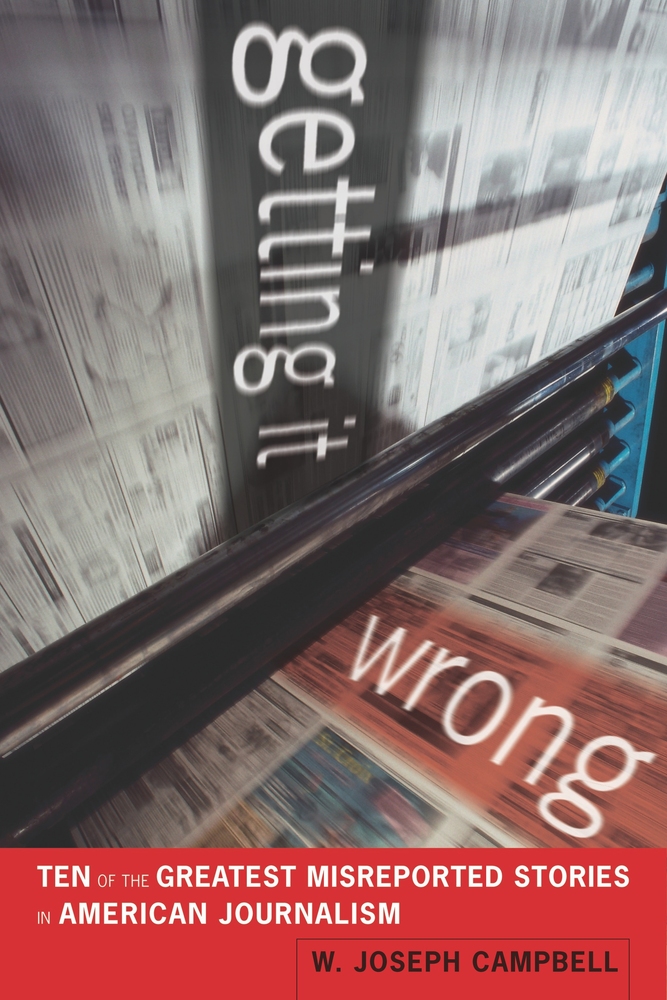
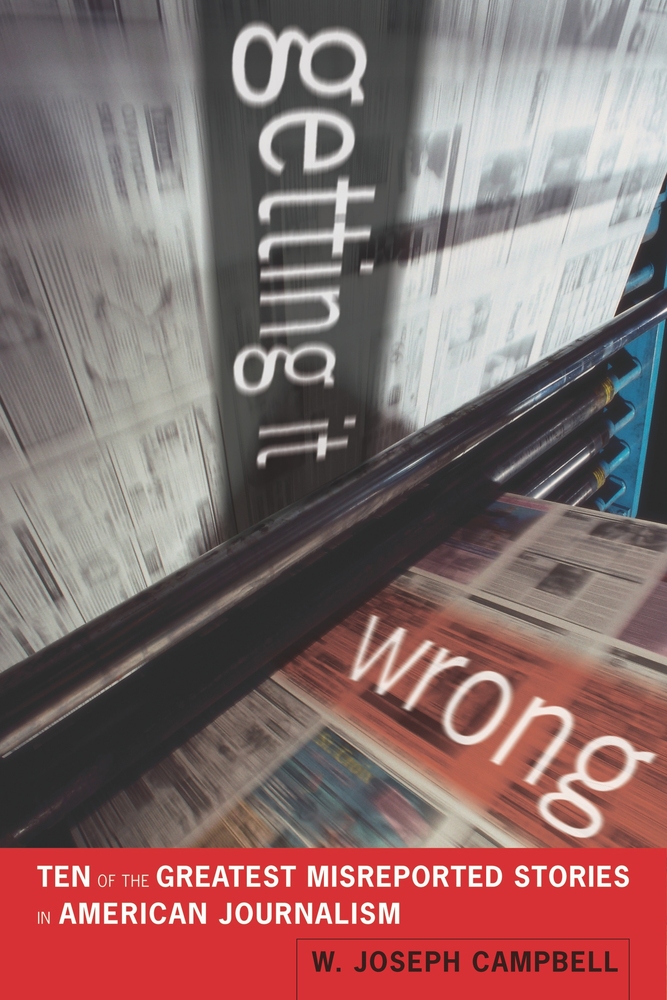
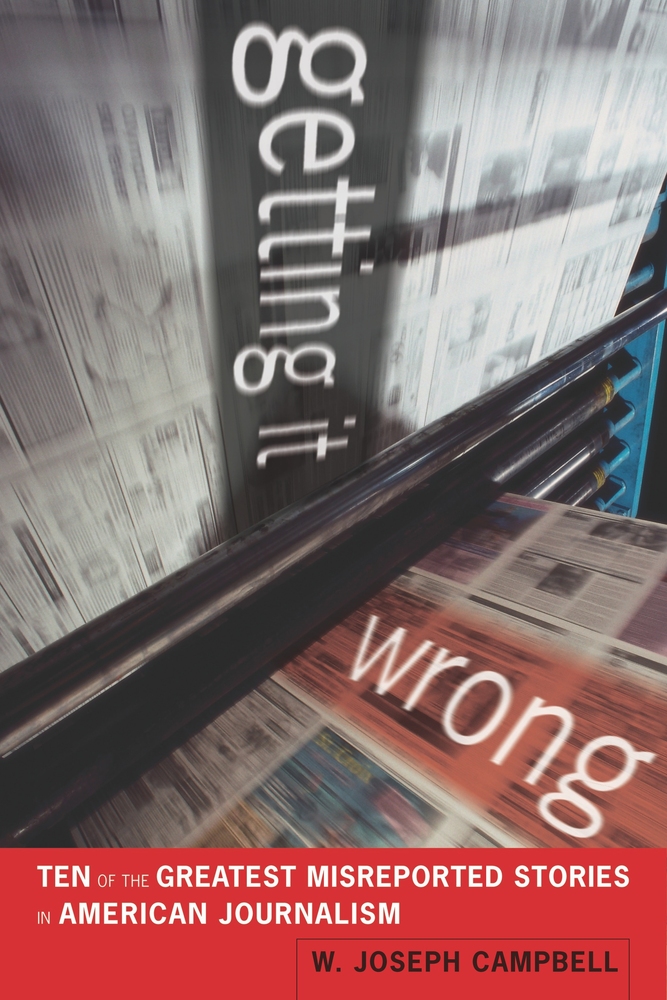
I address the fallacy in Getting It Wrong, my new book that debunks the heroic-journalist myth of Watergate as well as nine other prominent tales about the news media.

I note in Getting It Wrong how  “media myths invite indulgence in the ‘golden age fallacy,’ the flawed but enticing belief that there really was a time when journalism and its practitioners were respected and inspiring—the time, say, of Murrow or Cronkite, or Woodward and Bernstein.”

As I discuss in Getting It Wrong, the heroic contributions of Edward R. Murrow and Walter Cronkite often have been overstated.

The “golden age fallacy” in the case of Woodward and Bernstein certainly was deepened and solidified with the cinematic version of All the President’s Men, their 1974 book about reporting on Watergate. The roles of Woodward and Bernstein were played, respectively, by Robert Redford and Dustin Hoffman.

“Such is the power of movies,” Frank Rich of the New York Times once noted, that the first image ‘Watergate’ brings to mind [more than] three decades later is not Richard Nixon so much as the golden duo of Redford and Hoffman riding to the nation’s rescue in ‘All the President’s Men.'”

True enough.

And while it is not specifically discussed in Getting It Wrong, another fallacy helps account for the appeal and tenacity of media-driven myths. And that is what the venerable historian David Hackett Fischer has called the “telescopic fallacy”–the urge to make a long story short.

“This form of error is common today,” Fischer wrote 40 years ago in his influential work, Historians’ Fallacies, “and likely to become still more so, as historians become increasingly interested in putting big questions to little tests.”

The heroic-journalist interpretation of Watergate is, in a way, a representation of the “telescopic fallacy.” That interpretation compresses the details and complexities of what was a sprawling scandal into a readily understood, digestible package that Woodward and Bernstein’s investigative reporting toppled Richard Nixon’s corrupt presidency.

However, “to explain Watergate through the lens of the heroic-journalist is to abridge and misunderstand the scandal and to indulge in a particularly beguiling media-driven myth,” I write in Getting It Wrong. “The heroic-journalist interpretation minimizes the far more decisive forces that unraveled the scandal and forced Nixon from office.”

WJC

Related:


Media ‘too scared’ to challenge Joe McCarthy? Hardly

In Debunking, Media myths, Murrow-McCarthy myth, Newspapers on July 14, 2010 at 3:01 pm

It’s commonplace in American journalism to argue that it took the power and resolve of none other than Edward R. Murrow to end the witch-hunting ways of Senator Joseph McCarthy.

That meme is a durable media-driven myth, one of 10 debunked in my new book, Getting It Wrong. The meme resurfaced the other day in a column in the San Francisco Chronicle.

The column, which discussed the on-air poise of CNN’s Rachel Madow, invoked Murrow in saying the newsman’s “takedown of Sen. Joe McCarthy, was not really news–everybody in Washington knew what was going on, how vile and stupid McCarthy was; the media was just too scared to print it, possibly because politicians were too scared to challenge McCarthy, the ruiner of lives.”

How’s that?

The news media were “too scared” to take on McCarthy?

That’s scarcely what the historical record shows.

As I discuss in Getting It Wrong, Murrow was very late in taking on McCarthy, doing so in a 30-minute report on the CBS See It Now program in March 1954.

That was years after the muckraking columnist Drew Pearson challenged McCarthy’s extreme charges that communists had infiltrated the U.S. government, the military, and the Democratic party.

Pearson

Pearson ridiculed McCarthy as the “harum-scarum” senator and labeled his allegations “way off base.” Pearson’s characterizations came in February 1950, shortly after McCarthy began making little-documented charges about communists in government.

Pearson was unrelenting in his scrutiny of McCarthy, poking into the senator’s tax troubles in Wisconsin and his accepting questionable payments from a government contractor.

McCarthy was so annoyed by Pearson’s probing that he threatened the columnist at a Gridiron Club dinner in Washington, D.C., in May 1950. On that occasion, McCarthy placed a hand on Pearson’s arm and muttered:

“Someday I’m going to get a hold of you and really break your arm….”

As I write in Getting It Wrong, the verbal threat was a prelude to a brief but violent encounter between McCarthy and Pearson at the fashionable Sulgrave Club in Washington. The Sulgrave occupies a Beaux-Arts mansion at DuPont Circle and in the 1950s, I write, “it was a hush-hush meeting place for Washington socialites and powerbrokers.”

McCarthy and Pearson were guests at a dinner party at the Sulgrave in December 1950. They were seated at the same table and traded gibes and insults throughout the evening.

Time magazine wrote that Pearson and McCarthy were “the two biggest billygoats in the onion patch, and when they began butting, all present knew history was being made.”

After dinner, McCarthy cornered Pearson in the Sulgrave’s coat-check room.

“Accounts differ about what happened,” I write. “Pearson said McCarthy pinned his arms to one side and kneed him twice in the groin. McCarthy said he slapped Pearson, hard, with his open hand. A third account, offered by a radio broadcaster friendly to McCarthy, said the senator slugged Pearson, a blow so powerful that it lifted Pearson three feet into the air.”

Then-Senator Richard Nixon, also a guest at the dinner party, intervened to break up the encounter.

Pearson was hardly alone in taking on McCarthy.

In September 1951, the New York Post published a bare-knuckled, 17-part series about McCarthy and his ways. The installments of the Post‘s unflattering and searching series appeared with the logo “Smear Inc.”

The first installment in the series said in part:

“McCarthy has raced to the fore with breakneck speed. In the course of his careening, reckless, headlong drive down the road to political power and personal fame, he has smashed the reputations of countless men, destroyed Senate careers, splattered mud on the pages of 20 years of national history, confused and distracted the public mind, bulldozed press and radio.”

That characterization was to echo 2½ years later, in the content of Murrow’s See It Now program about McCarthy.

So, no, the press wasn’t “too scared to print” what a menace McCarthy was. As I write in Getting It Wrong, by March 1954, Americans weren’t “waiting for a white knight like Murrow to tell them about the toxic threat the senator posed.”

They already knew, from sources other than Murrow.

WJC

Related:

‘Persuasive and entertaining’: WSJ reviews ‘Getting It Wrong’

In Cronkite Moment, Debunking, Furnish the war, Jessica Lynch, Media myths, Murrow-McCarthy myth, New York Times, Reviews, Spanish-American War, War of the Worlds, Washington Post, Watergate myth on July 12, 2010 at 6:05 am

Today’s Wall Street Journal reviews Getting It Wrong, characterizing as “persuasive and entertaining” my new book debunking 10 prominent media-driven myths.

The review–which appears beneath the headline “Too good to check”–is clever and engaging, and opens this way:

“Hello, city desk, get me rewrite. Here’s the lead: Many of the landmark moments in American journalism are carefully nurtured myths—or, worse, outright fabrications.

“William Randolph Hearst never said, ‘You furnish the pictures, and I’ll furnish the war.’ Orson Welles’s ‘War of the Worlds’ radio broadcast didn’t panic America. Ed Murrow’s ‘See It Now’ TV show didn’t destroy Sen. Joseph McCarthy. JFK didn’t talk the New York Times into spiking its scoop on the Bay of Pigs invasion. Far from being the first hero of the Iraq War, captured Army Pvt. Jessica Lynch was caught sobbing ‘Oh, God help us’ and never fired a shot.

“These fables and more are lovingly undressed in W. Joseph Campbell’s persuasive and entertaining ‘Getting It Wrong.’ With old-school academic detachment, Mr. Campbell, a communications professor at American University, shows how the fog of war, the warp of ideology and muffled skepticism can transmute base journalism into golden legend.”

The reviewer, Edward Kosner, author of the memoir It’s News to Me, also discusses the myth of the “Cronkite Moment,” writing, “Television icons are central to two of Mr. Campbell’s dubious cases: Murrow and his successor as the patron saint of TV news, Walter Cronkite.”

Kosner notes–as I do in Getting It Wrong–that at least some of the myths confronted in the book will likely survive their debunking.

“For all Mr. Campbell’s earnest scholarship,” Kosner writes, “these media myths are certain to survive his efforts to slay them. Journalism can’t help itself—it loves and perpetuates its sacred legends of evil power-mongers, courageous underdogs, dread plagues and human folly.”

Well said.

And, alas, he may be right. Some of the myths almost certainly will live on. As I write in the introduction to Getting It Wrong, they “may prove resistant to debunking. They may still be widely believed despite the contrary evidence marshaled against them.

“The most resilient myths,” I further write, “may be those that can be distilled to a catchy, pithy phrase like: ‘If I’ve lost Cronkite, I’ve lost Middle America.’ Such quotations are neat, tidy, and easily remembered. Cinematic treatments influence how historical events are collectively remembered and can harden media-driven myths against debunking. The motion picture All the President’s Men, which cast Robert Redford and Dustin Hoffman in the lead roles of Washington Post reporters [B0b] Woodward and [Carl] Bernstein, has helped ensure that the journalists and their newspaper would be regarded as central to cracking the Watergate scandal.”

Kosner closes the review with a humorous observation, writing:

“At the end of the book, Mr. Campbell offers some remedies for media mythologizing, urging journalists, among other things, ‘to deepen their appreciation of complexity and ambiguity.’ Good luck with that, professor.'”

Heh, heh. Nice touch.

WJC

Related:

Puncturing media myths: A case for modest media influence

In Cronkite Moment, Debunking, Jessica Lynch, Media myths, Murrow-McCarthy myth, Washington Post, Watergate myth on July 7, 2010 at 2:02 pm

Getting It Wrong: Ten of the Greatest Misreported Stories in American Journalism punctures prominent media-driven myths—false, dubious, and improbable stories about the news media that masquerade as factual.

The 10 tales debunked in Getting It Wrong often ascribe power, significance, and sometimes great courage to the news media and their practitioners. The book dismantles the legend of Edward R. Murrow’s crushing the menace of McCarthyism, of Walter Cronkite’s effectively ending a faraway and unpopular war, and of Bob Woodward and Carl Bernstein’s toppling Richard Nixon’s corrupt presidency.

Those stories, I write, “are compelling and exert an enduring allure; to expose them as exaggerated or untrue is to take aim at the self-importance of American journalism.”

I further write:

“To identify these tales as media myths is to confront the reality that the news media are not the powerful agents they, and many others, assume them to be.”

Indeed, it is quite rare for any news report to trigger a powerful, immediate, and decisive reaction akin to President Lyndon Johnson’s purported woe-is-me response to Cronkite’s televised assessment about Vietnam in 1968: “If I’ve lost Cronkite, I’ve lost Middle America.” (Or words to that effect.)

Researchers long ago dismissed the notion that the news media can create profound and immediate effects, as if absorbing media messages were akin to receiving potent drugs via a hypodermic needle.

Debunking media-driven myths thus enhances the case for modest or limited media effects. Getting It Wrong points out that “too often the ubiquitous presence of the news media is mistaken for power and influence.” Robert J. Samuelson, a columnist who writes on economics issues for Newsweek and the Washington Post, has described this fallacy notably well.

“Because the media are everywhere—and inspire much resentment—their influence is routinely exaggerated,” Samuelson wrote in Newsweek in 2003. “The mistake is in confusing visibility with power, and the media are often complicit in the confusion. We [in the news media] embrace the mythology, because it flatters our self-importance.”

What’s more, the news media nowadays are too diverse and too splintered—into print, broadcast, cable, satellite, and online options—to exert much collective or sustained influence on policymakers and broader audiences.

And as Herbert Gans, a sociologist who has written widely about the news media, once noted:

“If news audiences had to respond to all the news to which they are exposed, they would not have time to live their own lives. In fact, people screen out many things, including news, that could interfere with their own lives.”

That’s for sure. Large numbers of Americans ignore the news altogether: They are beyond media influence in any case. Nearly 20 percent of American adults go newsless on a typical day, according to a study conducted in 2008 by the Pew Research Center for the People & the Press.

The newsless option is particularly striking among young adults, 18-to-24-years-old. Thirty-four percent of that cohort goes newsless, according to Pew Research. (That proportion represents a substantial increase from 1998 when 25 percent of the 18-to-24-year-old cohort shunned the news.)

Media power tends to be modest, nuanced, diffused, and situational. And overstated.

Debunking media-driven myths helps place media influence in a more coherent, more rational context.

WJC

A version of this post first appeared at the University of California Press blog.

Murrow, McCarthy and ‘the guts to say enough is enough’

In Debunking, Media myths, Murrow-McCarthy myth on July 5, 2010 at 3:42 pm

The heroic tale of Edward R. Murrow’s taking on, and supposedly ending, Senator Joseph McCarthy’s communists-in-government witch-hunt is the stuff of legend.

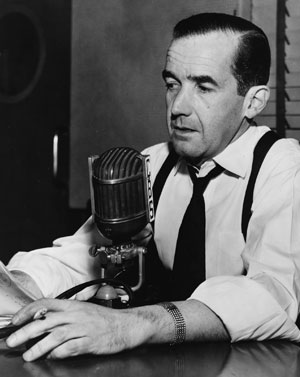
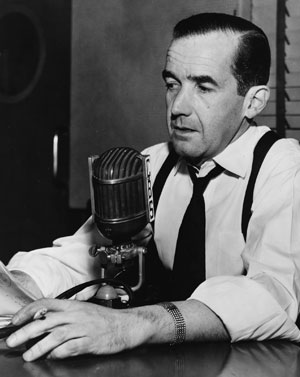
Murrow in 1954

It’s no surprise that the story–so rich and delicious in its assertion of media power–would resurface on the Fourth of July. A guest column yesterday in the Los Angeles Daily News, a regional newspaper in southern California, invoked the tale, stating:

“The 1950s were disgraced by Joseph McCarthy. The senator from Wisconsin bullied hundreds of witnesses with reckless charges of communism until CBS newsman Edward R. Murrow and a patrician lawyer from Boston, Joseph Welch, had the guts to say enough is enough.”

Welch was lead counsel for the Army during the Army-McCarthy hearings in Congress in 1954. In what perhaps was the most dramatic and memorable moment of the hearings, Welch confronted the red-baiting senator, telling him:

“You’ve done enough. Have you no sense of decency, sir? At long last, have you left no sense of decency?”

The hearings were a disaster for the senator, who was censured by the Senate late in 1954 and fell into political eclipse.

There is little doubt, though, that Murrow’s contributions to McCarthy’s decline and fall have been dramatically overstated.

The claim that Murrow and his See It Now program on the senator in March 1954 “ended Joe McCarthy’s reign of terror is,”  I write in my new book, Getting It Wrong, “a compelling story, one of the best-known in American journalism.

“It also is a media-driven myth.”

Interestingly, the media myth took hold despite Murrow’s protestations.

“In the days and weeks after the See It Now program,” I note in Getting It Wrong, “Murrow said he recognized his accomplishments were modest, that at best he had reinforced what others had long said about McCarthy.”

I also write that “the evidence is overwhelming that … Murrow in fact was very late in confronting McCarthy, that he did so only after other journalists had challenged the senator and his tactics for months, even years.”

Notably, the muckraking journalist Drew Pearson had written critically of McCarthy and his reckless charges about communists in government years before Murrow took to the air with his show about McCarthy.

And in September 1951, the New York Post published a bare-knuckled, 17-part series about McCarthy and his ways. The installments of the Post‘s series appeared with the logo “Smear Inc.”

The first article in the series–which is little-remembered in the historiography of the media and McCarthy–said in part:

“McCarthy has raced to the fore with breakneck speed. In the course of his careening, reckless, headlong drive down the road to political power and personal fame, he has smashed the reputations of countless men, destroyed Senate careers, splattered mud on the pages of 20 years of national history, confused and distracted the public mind, bulldozed press and radio.”

That characterization was to echo 2½ years later, on Murrow’s See It Now program about McCarthy.

So, no, it’s not accurate to say Murrow had “the guts to say enough is enough” about McCarthy.

By March 1954, taking on McCarthy hardly was a gutsy thing to do.

WJC

Related:

‘Junk food of jornalismo’: Diário writes up ‘Getting It Wrong’

In Bay of Pigs, Cronkite Moment, Debunking, Furnish the war, Media myths, Media myths and radio, Murrow-McCarthy myth, Reviews, Watergate myth on June 28, 2010 at 2:49 pm

Today’s edition of the venerable  Portuguese newspaper Diário de Notícias includes a write up about Getting It Wrong, my new book about prominent media-driven myths–those false, dubious, improbable stories about the news media that masquerade as factual.

With the help of the online translation site Babelfish, I was able to make out a good deal of the Diário review, which says in part:

“W. Joseph Campbell in Getting it Wrong: Ten of the Greatest Misreported Stories in American Journalism, published the University of California Press, [says] these ‘myths can be thought as junk food of jornalismo.'”

The Diário article mentions several media myths addressed and debunked in Getting It Wrong, including those of William Randolph Hearst’s purported vow to “furnish the war” with Spain; the 1938 radio dramatization of the War of the Worlds which supposedly sowed panic across the United States; the notion that Edward R. Murrow’s 1954 See It Now television program abruptly halted Senator Joseph McCarthy’s communists-in-government witch-hunt, and the myth that the New York Times suppressed its coverage of the run-up to the Bay of Pigs invasion in 1961.

Diário characterizes as one of the book’s “more concrete” examples “the Watergate case,” in which reporters for the Washington Post are credited with having toppled the corrupt presidency of Richard Nixon.

Media myths, the articles notes, are not innocuous; ” they can distort the perception of the power and function of jornalismo” because “they tend to give the media” more power and influence than they rightly deserve. It also says that myths can “minimize the complexity of the historical events for simplistic interpretations.” Both of those are important points raised in Getting It Wrong.

The review closes by taking up the suggestion I offer in the conclusion of Getting It Wrong, namely that there are more media myths to debunk.

“By no means do the media myths examined on these pages represent a closed universe,” I write in the book’s closing passage. “Others surely will assert themselves. They may tell of great deeds by journalists, or of their woeful failings. They may well hold appeal across the political spectrum, offering something for almost everyone. They may be about war, or politics, or biomedical research.

“Predictably, they will be delicious tales, easy to remember, and perhaps immodest and self-congratulatory. They probably will offer vastly simplified accounts of history, and may be propelled by cinematic treatment.  They will be media-driven myths, all rich candidates for debunking.”

WJC

Related:

‘Getting It Wrong’ launched at Newseum

In Cronkite Moment, Debunking, Furnish the war, Media myths, Murrow-McCarthy myth, Spanish-American War, Washington Post, Watergate myth on June 20, 2010 at 2:09 pm

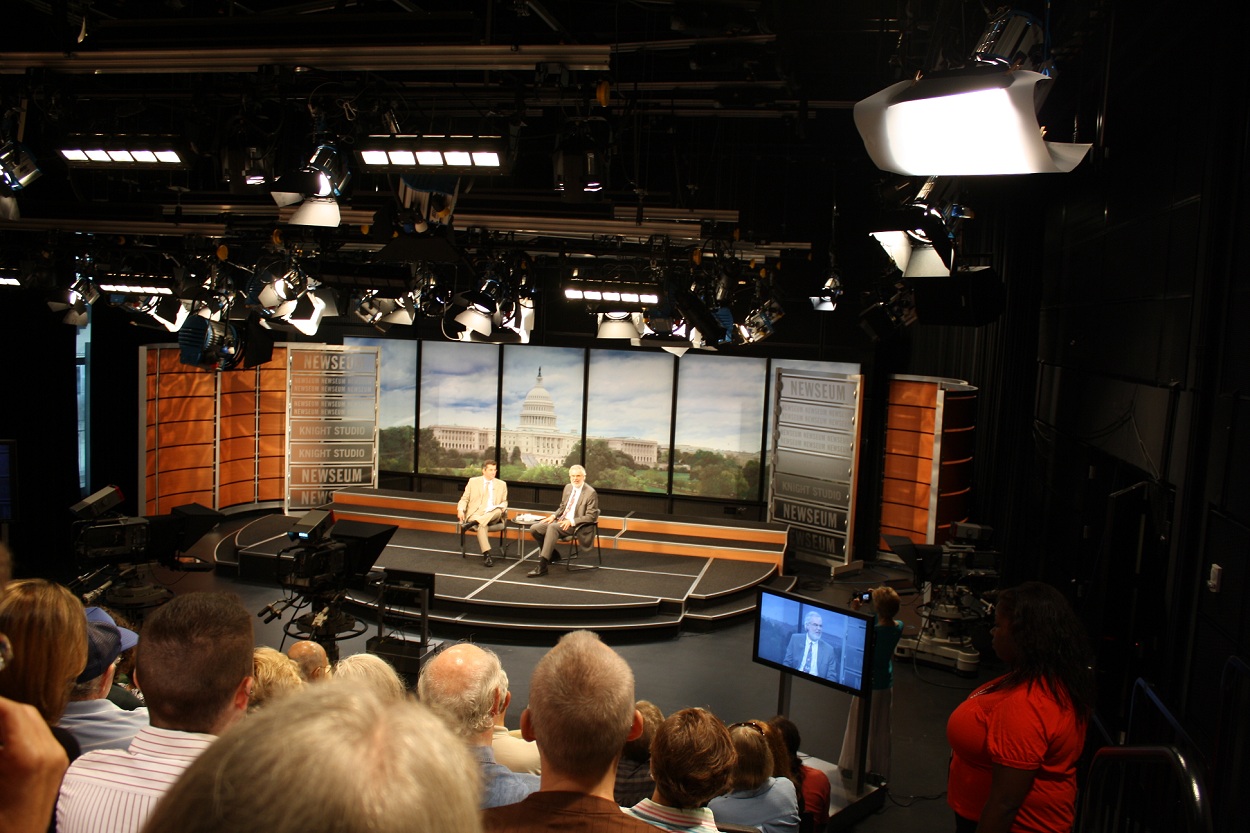
Newseum program, audience view

Getting It Wrong, my new book about media-driven myths, was launched at a terrific program yesterday at the Newseum, the $450 million museum of news in downtown Washington, D.C.

The Newseum’s John Maynard moderated a brisk “Inside Media” talk, during which I reviewed the myths of:

  • William Randolph Hearst’s purported vow to “furnish the war” with Spain,
  • Edward R. Murrow‘s  1954 See It Now television program that supposedly ended Senator Joseph R. McCarthy’s communists-in-government witch-hunt,
  • the so-called “Cronkite moment” of 1968,
  • the heroic-journalist of Watergate, and
  • the supposedly superlative reporting in the immediate aftermath of Hurricane Katrina‘s landfall in 2005.

The audience (see photo, above) posed several intriguing questions about the book. Among them was whether I thought the media myths confronted in Getting It Wrong would now be forever buried.

It’s probably too soon to say, given the book’s recent publication. But I mentioned in my reply that I’ve been struck by how dearly some myths are held.

The myth of the “Cronkite moment” is an example, I said: It seems quite difficult for some people to believe that Walter Cronkite’s program on Vietnam in February 1968 was not of decisive effect.

The “Cronkite moment” may live on, and continue to be embraced, despite the weight of the evidence that Cronkite’s television report about Vietnam was of scant importance in revising policy or in shaping the president’s thinking about reelection.

At the book launch

A question was posed about how media myths emerge, and I noted that they arise from several sources, including an urge to identify examples of media power. Another factor is  what I call “complexity-avoidance”–the appeal of simplified explanations for complex historical events.

It is, after all, far easier to believe that Hearst and his “yellow press” brought on the Spanish-American War in 1898, I said, than it is to grasp the complexities of the failed diplomacy among Spain, Cuba, and the United States that gave rise to that conflict. It is far easier to believe that the Washington Post brought down Richard Nixon’s corrupt presidency, I said, than it is to sort through tangled lines of investigation of the Watergate scandal that ultimately forced Nixon from office.

Even then, I said, Nixon may have served out his term if not for the tape-recordings he made of his private Oval Office conversations. Those tapes, which the U.S. Supreme Court forced Nixon to produce in 1974, revealed his guilty role in the Watergate coverup.

I also was asked whether there are other media myths to bust.

Indeed there are, I said.

Getting It Wrong may deserve a sequel and suggested as candidates for a follow-on book the dubious phenomenon of “Pharm Parties” and the question of whether Cronkite really was “the most trusted man in America.”

Book signing at Newseum

I signed copies of Getting It Wrong following the “Inside Media” program, and then toasted the book’s publication at a reception sponsored by the Newseum and American University’s School of Communication.

The School’s dean, Larry Kirkman, offered generous remarks in his toast at the reception, which was attended by AU colleagues, former students, past research assistants, and friends and family.

WJC

Related:

Photo credits:

  • Ruxandra Giura (audience view)
  • Bruce Guthrie

Launching ‘Getting It Wrong’ at Newseum

In Bay of Pigs, Bra-burning, Cronkite Moment, Debunking, Furnish the war, Jessica Lynch, Media myths, Murrow-McCarthy myth, War of the Worlds, Washington Post, Watergate myth on June 14, 2010 at 6:28 am

My new book, Getting It Wrong, will be launched Saturday, June 19, at an “Inside Media” program at the Newseum, the $450 million museum of news in downtown Washington, D.C.

The program will begin at 2:30 p.m. in the Knight TV Studio on the third level and will feature a discussion with the Newseum’s John Maynard, followed by audience Q-and-A.

I’ll be signing copies of Getting It Wrong afterward.

The book addresses, and debunks, 10 prominent media-driven myths–stories about and/or by the news media that are widely believed and often retold but which, on close inspection, proved to be apocryphal or wildly exaggerated.

Here is a brief description about each of the 10 myths:

  1. Remington-Hearst: William Randolph Hearst’s famous vow, “you furnish the pictures, I’ll furnish the war,” is almost certainly apocryphal.
  2. War of Worlds: The notion that the War of Worlds radio dramatization in 1938 caused nationwide panic and mass hysteria is exaggerated.
  3. Murrow-McCarthy: Edward R. Murrow’s famous See It Now program in March 1954 did not end Senator Joseph McCarthy’s communists-in-government witch-hunt; Murrow in fact was very late to take on McCarthy.

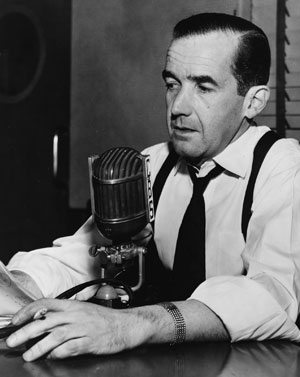
    Murrow in 1954

  4. Bay of Pigs: The New York Times did not suppress its reporting in the run-up to the ill-fated Bay of Pigs invasion in April 1961.
  5. Cronkite-Johnson: Walter Cronkite’s special report on Vietnam in February 1968 did not prompt an immediate reassessment of U.S. war policy.
  6. Bra-burning: Humor columnist Art Buchwald helped spread the notion that feminist demonstrators dramatically burned their bras at a Miss America protest in September 1968.
  7. Watergate: The Washington Post’s intrepid reporters, Carl Bernstein and Bob Woodward, did not bring down Richard Nixon’s corrupt presidency. That they did is a trope that knows few bounds.
  8. Crack babies: The much-feared “bio-underclass” of children born to women who smoked crack cocaine during their pregnancies never materialized.
  9. Jessica Lynch: The Washington Post’s erroneous reporting about Jessica Lynch early in the Iraq War gave rise to several myths about her capture and rescue.
  10. Hurricane Katrina: News coverage of Katrina’s aftermath in New Orleans in early September 2005 was marred by wild exaggerations of extreme, Mad Max-like violence.

As I write in Getting It Wrong, the myths debunked “are among American journalism’s best-known stories. Most of them are savory tales. And at least some of them seem almost too good to be false.”

I further write that because it “takes on some of the most treasured stories in American journalism,” Getting It Wrong is “a work with a provocative edge. It could not be otherwise.”

WJC

Related:

Media myths, the ‘junk food of journalism’

In Debunking, Furnish the war, Murrow-McCarthy myth, Spanish-American War, Washington Post, Watergate myth on May 26, 2010 at 9:14 pm

Media-driven myths, the subject of my soon-to-be-published book, Getting It Wrong, are prominent tales of doubtful authenticity—false, dubious, or improbable stories about the news media that masquerade as factual.

The  myths addressed and debunked in the book include the notion that two intrepid reporters for the Washington Post took down Richard Nixon’s corrupt presidency, that Edward R. Murrow’s See It Now television program brought an end to Senator Joseph McCarthy’s communists-in-government witch-hunt, and that newspaper magnate William Randolph Hearst vowed to “furnish the war” with Spain at the end of the 19th century.

“In a way,” I write in Getting It Wrong, media myths “are the junk food of journalism—alluring and delicious, perhaps, but not especially wholesome or nourishing.”

But why bother: Why devote a book to debunking media-driven myths?

It’s a question that, somewhat to my surprise, arises not infrequently.

Several answers offer themselves.

For one, there is inherent value is seeking to set straight the historical record. As I write in Getting It Wrong, “the effort to dismantle [media myths] is certainly worthy, if only to insist on a demarcation between fact and fiction.” That effort is aligned with a core objective of newsgathering—that of getting it right.

Media-driven myths, moreover, are neither trivial nor innocuous. They can have adverse consequences. They tend, for example, to minimize the nuance and complexity of historical events and offer simplistic and misleading interpretations instead. It’s effortless and undemanding to say the Washington Post brought down Nixon, that Murrow ended McCarthyism, or that Hearst plunged the United States into war with Spain. The historical reality in each of those cases is, of course, significantly more complex.

So media-driven myths distort popular understanding about the roles and functions of journalism in American society. They tend to confer on the news media far more power and influence than they typically wield.

Media influence, I write in the book, usually “is trumped by other forces” and further undercut by the traditional self-view of American journalists as messengers first, rather than as makers and shapers of news.

What’s more, the news media these days are too splintered and diverse—print, broadcast, cable, satellite, online—to exert much in the way of collective and sustained influence on policymakers or media audiences.

Thus, debunking media-driven myths can help to locate media influence in a more coherent context. Getting It Wrong offers the case that such influence tends to modest, nuanced, and situational.

There are occasions, though, when the splintered news media coalesce and devote exceptionally intense attention to a single topic—such as Hurricane Katrina’s rampage along the Gulf Coast nearly five years ago. The news media gave themselves high marks for their coverage of the disaster’s aftermath, especially of the federal government’s fitful response.

But as I discuss in Getting It Wrong, the coverage also was characterized by highly exaggerated reports of nightmarish violence and wanton criminality in New Orleans in the hurricane’s wake. The misreporting of the disaster’s aftermath, I write, effectively “defamed a battered city and impugned its residents at a time of their deep despair.”

Thus, another reason why debunking matters—media-driven myths can and do feed prejudices and stereotypes.

Finally, confronting media myths discourages the tendency to regard prominent journalists in extreme terms—as heroes or villains. Piercing the myth surrounding Murrow renders him somewhat less Olympian. Similarly, debunking the myth about Hearst and his purported vow to “furnish the war” with Spain makes him seem less manipulative, and less demonic.

Getting It Wrong is a work with a provocative edge. Given that it takes on some of the most treasured stories in American journalism, it could not be otherwise.

WJC

This post first appeared at the University of California Press blog.

Remembering ‘journalism hero’ Murrow, 45 years on

In Anniversaries, Debunking, Media myths, Murrow-McCarthy myth on April 27, 2010 at 9:46 am

The Poughkeepsie Journal notes the 45th anniversary today of the  death of legendary broadcast journalist Edward R. Murrow.

Murrow died April 27, 1965, at his farm near Pawling, N.Y., about 20 miles from Poughkeepsie. Murrow, a chainsmoker, fell victim to lung cancer. He had just turned 57.

Chainsmoking Ed Murrow

Inevitably, the Poughkeepsie Journal tribute–which carried the headline, “Journalism hero Edward R. Murrow lives on”–recalled Murrow’s famous See It Now documentary program in March 1954. That was when he took on the red-baiting Republican senator from Wisconsin, Joseph R. McCarthy.

The newspaper’s article said Murrow’s program on McCarthy “is credited for exposing the senator’s tactics by using clips of his own words, and helped lead to the senator’s downfall.”

The program’s mythical dimensions are addressed in my forthcoming book, Getting It Wrong, in which I note:

See It Now that night was powerful television. More accurately, it was a hearty serving of advocacy journalism. … Murrow and his See It Now team assembled a series of film clips that was decidedly unflattering to McCarthy.”

I also write:

“McCarthy’s oddball appearance and mannerisms—his hulking, menacing presence, his nutty laugh, his five o’clock shadow, his careless grooming that allowed strands of thinning, greasy hair to creep down his forehead—were among the most revealing and most unforgettable moments of the program.”

But did the show expose McCarthy’s tactics?

Not at all.

McCarthy had burst upon the national scene four years earlier, claiming in a series of speeches that scores of communists, communist sympathizers, or persons of risk were embedded in the U.S. State Department.

His charges were almost immediately challenged by Drew Pearson, a nationally syndicated muckraking columnist based in Washington, D.C.

“The Senator from Wisconsin has been a healthy watchdog of some government activities, but the alleged communists which he claims are sheltered in the State Department just aren’t,” Pearson wrote in February 1950, more than four years before Murrow’s program on McCarthy.

So did the See It Now show “helped lead to the senator’s downfall,” as the Poughkeepsie Journal claims?

Not so much.

By the time Murrow took to the air to confront McCarthy, the senator’s favorability ratings had already hit the skids.

As I write in Getting It Wrong, “it wasn’t as if Americans in early 1954 were hoping for someone to step up and expose McCarthy, or waiting for a white knight like Murrow to tell them about the toxic threat the senator posed.”

Thanks to Pearson, and other journalists, they knew.

WJC