W. Joseph Campbell

Posts Tagged ‘News’

No ‘rock-em,’ no ‘sock-em’: What ails WaPo

In Debunking, Jessica Lynch, Media myths, Newspapers, Washington Post, Watergate myth on August 7, 2011 at 1:59 am

The ombudsman of the Washington Post, Patrick Pexton, weighs in today with platitudes and hang-wringing about the newspaper. He mostly misses the mark.

Pexton writes in his column that the Post’s “future lies not with the rich; it lies with the citizenry.

“This newspaper must be the one source of high-quality, probing Washington news that readers in this region and across the country can look to for holding their government accountable. This publication must be for all Americans.”

Oh, brother.

But wait: Here’s more vague abstraction:

“The Post,” Pexton writes, “can’t be a liberal publication or a conservative one. It must be hard-hitting, scrappy and questioning — skeptical of all political figures and parties and beholden to no one. It has to be the rock-’em-sock-’em organization that is passionate about the news. It needs to be less bloodless and take more risks when chasing the story and the truth.”

A “rock-’em-sock-’em organization,” eh? Well, that’s useful guidance.

In his five or so months as ombudsman, Pexton hasn’t dared touch the electrified third rail about the Post, which one of his predecessors, Deborah Howell, gamely if belatedly addressed.

That’s a decided lack of intellectual diversity in the Post’s newsroom. In mid-November 2008, shortly after Barack Obama was elected president, Howell wrote in her ombudsman column:

“I’ll bet that most Post journalists voted for Obama. I did. There are centrists at The Post as well. But the conservatives I know here feel so outnumbered that they don’t even want to be quoted by name in a memo.”

Howell’s column quoted Tom Rosenstiel of the Project for Excellence in Journalism as saying that “conservatives are right that journalism has too many liberals and not enough conservatives. It’s inconceivable that that is irrelevant.”
In Obama's thrall

The lack of intellectual diversity often shows in the Post’s report. Even casual reading signals that the newspaper remains in the thrall of Obama, despite his clearly failing presidency.

Obama scarcely gets “rock-’em-sock-’em” treatment from the Post.

Last Wednesday, for example, the Post’s once-edgy “Style” section devoted most of its front page to a cheery feature about the meaning of Obama’s turning 50-years-old.

“On Thursday,” the article gushed, “President Obama — one of American history’s most precocious achievers — joins the ranks of Washington 50-somethings ….”

But what ails the Post goes well beyond its routinely tender treatment of Obama.

The Post’s local report is superficial, a diet of eye-rolling, feel-good features. The newspaper carries little staff-produced national coverage. Its international report is undistinguished, especially compared to that of the New York Times.

Moreover, the Post offers few notable cases of investigative journalism any more.

It has won two Pulitzer Prizes for investigative reporting in 25 years, which has to be considered meager for a newspaper that reputedly brought down Richard Nixon’s corrupt presidency with its relentless digging into the Watergate scandal.

But as I discuss in my latest book, Getting It Wrong, the Post-Watergate trope, of course, is a powerful media-driven myth.

I’d be remiss were I to fail to note that the Post never has come clean about how it erred so utterly in offering the world the bogus hero-warrior tale about Jessica Lynch in the early days of the Iraq War.

Lynch, the Post reported on its front page on April 3, 2003, “fought fiercely and shot several enemy soldiers after Iraqi forces ambushed the Army’s 507th Ordnance Maintenance Company, firing her weapon until she ran out of ammunition, U.S. officials said yesterday.”

But none of the derring-do attributed to Lynch was true, and the Post has never explained who led it so badly astray.

Moreover, the staff cuts and buyouts of recent years left few notable characters on the newspaper’s staff.

Gone are such colorful figures as the erudite and pugnacious Henry Allen, a Pulitzer winner who left the Post after throwing punches at a staff writer who called him a c—sucker.

Now there was “rock-’em-sock-’em,” old school variety.

WJC

Many thanks to Instapundit
Glenn Reynolds for linking to this post.

Recent and related:

Some dubious history from Frank Rich

In Media myths, Spanish-American War, Yellow Journalism on August 1, 2011 at 9:50 am

Frank Rich, in a lengthy New York magazine screed about Rupert Murdoch, invokes the hoary media myth that William Randolph Hearst’s “papers famously fomented the Spanish-American War and perfected the modern gossip machine.”

I won’t quarrel much with Rich’s claim about “the modern gossip machine.” But the bit about the Spanish-American War represents a serious misreading of history.

In addressing such a dubious assertion as Hearst’s yellow press “fomented the Spanish-American War,” it’s useful to ask: How’d they do it? How was newspaper content translated into war policy?

Rich doesn’t say. He doesn’t pause to consider how it was that content of Hearst’s newspapers set an agenda for war that the administration of President William McKinley pursued.

The yellow press in fact had no such agenda-setting influence. It was a negligible factor.

As I wrote in my 2001 book, Yellow Journalism: Puncturing the Myths, Defining the Legacies, McKinley administration officials took no leads from Hearst’s newspapers.

They derided the yellow press, when they thought of it at all, and regarded it as a complicating factor in efforts to resolve a diplomatic impasse over Spain’s harsh rule of Cuba — an impasse that gave rise in April 1898 to the Spanish-American War.

The impasse arose from Spain’s brutal but ineffective attempts to put down a rebellion on Cuba that began in 1895 and reached islandwide proportion by 1898.

To tamp down the rebellion, Spain imposed a policy it called “reconcentration,” in which tens of thousands of Cuban men, women, and children were herded into garrisons towns and fortified areas, from where they could provide no aid or support to Cuban insurgents in the countryside.

Reconcentration” brought on widespread starvation, malnutrition, and disease. Tens of thousands of Cuban non-combatants died as a result of the Spanish policy which, as historian Ivan Musicant has written, “did more to bring on the Spanish-American War than anything else the Spanish could have done.”

The misguided policy, Musicant also noted, “turned public opinion enormously in the United States.”

Ultimately, then, as I wrote in Yellow Journalism, the Spanish-American War was “the result of a convergence of forces far beyond the control or direct influence of even the most aggressive of the yellow newspapers, William Randolph Hearst’s New York Journal.”

I also noted:

“While the yellow press may have reported extensively on the consequences of Spain’s failures and missteps, it did not create them.”

So what? one might ask.

After all, Rich’s reference to Hearst and the Spanish-American War represented a small portion of a lengthy article about Murdoch. So why make a fuss about it?

Several reasons offer themselves.

For starters, the Hearst-Murdoch comparison, as I’ve pointed out previously at Media Myth Alert, is facile and inexact. The similarities between the two media tycoons are largely superficial.

Notably, Hearst had nothing akin to the global reach of Murdoch’s multimedia empire. And Hearst, unlike Murdoch, vigorously pursued political ambitions: Hearst ran repeatedly and mostly unsuccessfully for high political office during his late 30s and 40s, before giving up.

But a more important reason for directing attention to this dubious bit of media history is that Rich arguably should have known better: Few serious historians buy into the claim about Hearst and his newspapers fomenting the war with Spain.

And thinking it through, it doesn’t seem very logical: Could newspaper content be so powerful and decisive that it could push a country into war it otherwise wouldn’t have fought?

Does it really work that way?

Assuredly not.

WJC

Recent and related:

A media myth eruption: WaPo, Watergate, and Nixon’s fall

In Debunking, Media myths, Washington Post, Watergate myth on July 30, 2011 at 4:55 am

Bimbo eruptions” was the memorably colorful term invoked during the 1992 presidential campaign by Betsey Wright, an aide to presidential candidate Bill Clinton, to describe the suspicions and potential allegations about Clinton’s womanizing.

Sure, he did

The past couple of days have brought an eruption of media myth — notably, the rich and appealing tale that Bob Woodward and Carl Bernstein’s reporting for the Washington Post brought down Richard Nixon’s corrupt presidency in the Watergate scandal.

Not even the Post buys into that simplistic and media-centric interpretation. As Michael Getler, the newspaper’s then-ombudsman correctly noted in 2005:

“Ultimately, it was not The Post, but the FBI, a Congress acting in bipartisan fashion and the courts that brought down the Nixon administration. They saw Watergate and the attempt to cover it up as a vast abuse of power and attempted corruption of U.S. institutions.”

(More coarsely, Woodward himself has declared: “To say the press brought down Nixon, that’s horseshit.”)

Even so, the media myth about Woodward, Bernstein, and the Post — the heroic-journalist myth, as I describe it in my latest book, Getting It Wrong — is so delicious and compelling that it lives on and on, as this recent eruption attests.

Figuring in the media myth eruption have been:

  • The Daily Beast, which rhetorically asked in a commentary yesterday about the phone-hacking scandal that has battered Rupert Murdoch’s media in Britain: “Did Woodward and Bernstein need [phone-hackers and private investigators] to bring down Richard Nixon?”
  • The Daily Mirror  tabloid in Britain declared in an article posted online today that “Watergate was exposed by Washington Post reporters Carl Bernstein and Bob Woodward.”
  • Charleston Gazette in West Virginia, which declared passage in an editorial about Murdoch’s troubles in Britain: “The Washington Post toppled President Richard Nixon in the Watergate scandal.”
  • The publisher of the North Platte Telegraph in Nebraska, who in a column the other day referred to the “early 1970s when the Post brought down the presidency of Richard Nixon using primarily an unnamed source.” That was a reference to Woodward’s stealthy, high-level source who was code-named “Deep Throat.”

The appearance of the heroic-journalist myth in such diverse outlets and contexts is testifies to how deeply embedded the tale has become in the popular consciousness.

And why is that?

The heroic-journalist myth, as I discuss in Getting It Wrong, is “ready short-hand for understanding Watergate and its denouement, a proxy for grasping the scandal’s essence while avoiding its forbidding complexity.”

Rather that attempting to keep straight the dimensions of a scandal that began to break nearly 40 years ago, it is fair easier to embrace the proxy version — the simplified narrative that Woodward and Bernstein took down Nixon, with help from the “Deep Throat” source.

The identity of “Deep Throat” remained a secret — and the subject of much speculation and many guessing games — until 2005 when W. Mark Felt and his family announced that Felt, a former FBI official, had been Woodward’s mysterious source.

The heroic-journalist myth lives on because it’s such a reassuring narrative for the news media — a tale that describes the news media at their supposed best, a time when their reporting made a powerful difference in national life.

As I note in Getting It Wrong, the notion that the Post and its reporters exposed the Watergate scandal “is deeply ingrained in American journalism as one of the field’s most important and self-reverential stories.”

It’s a comforting trope about a purported triumph for a profession that’s more accustomed to scorn and condemnation than applause and approbation.

But it’s no less a media myth.

WJC

Many thanks to Instapundit
Glenn Reynolds for linking to this post.

Recent and related:

Juan Williams’ new book repeats Spanish-American War myth

In Debunking, Media myths, Newspapers, Spanish-American War, Yellow Journalism on July 27, 2011 at 8:58 am

The new book by Juan Williams, the political analyst clumsily dismissed by NPR last year, offers some history of American journalism.

Some inaccurate history of American journalism.

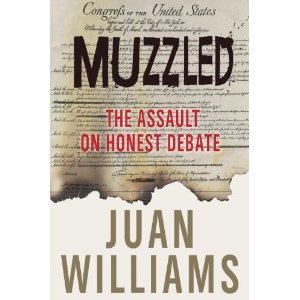
The book, Muzzled: The Assault on Honest Debate, repeats the hoary media myth that the yellow press of William Randolph Hearst and Joseph Pulitzer brought on the Spanish-American War of 1898.

That’s a facile, media-centric interpretation endorsed by few if any serious historians of the conflict.

According to an excerpt of Muzzled posted at the online site of Fox News,  Williams writes:

“Hearst and Pulitzer became infamous for starting a real war. They whipped up so much anger at Spain through inflammatory stories about Spain’s handling of American vessels that they incited the United States to go to war with Spain in the Spanish-American War.”

Williams also says of Hearst and Pulitzer:

“Their coverage of the news, from crime to political scandals to war, was a study in sensationalized accounts, including outright distortion and lies, in a battle to sell more papers in New York City.”

Hearst and Pulitzer were bitter rivals, to be sure. But anyone who has spent much time reading their newspapers of the mid- and late-1890s can only be impressed by the vigor and breadth of their report.

As media historian John D. Stevens wrote in his study of sensationalism and New York City journalism, it is “tempting to caricature the yellow papers as being edited for janitors and clerks.”

But in fact they “published a fair amount of sober financial, political, and diplomatic information,” Stevens wrote. They were much more than merely sensational.

If the newspapers of Hearst and Pulitzer titillated, Stevens noted, they also informed.

In any case, they certainly cannot be blamed for bringing on the Spanish-American War.

As I wrote in my 2001 book, Yellow Journalism: Puncturing the Myths, Defining the Legacies:

The yellow press “did not force — it could not have forced— the United States into hostilities with Spain over Cuba in 1898. The conflict was, rather, the result of a convergence of forces far beyond the control or direct influence of even the most aggressive of the yellow newspapers, William Randolph Hearst’s New York Journal.”

Claims that the yellow press brought on the war, I wrote, “are exceedingly media-centric, often rest on the selective use of evidence, and tend to ignore more relevant and immediate factors that give rise to armed conflict.”

Those factors centered around a diplomatic impasse between the United States and Spain over Spanish colonial rule of Cuba — the scene of an islandwide rebellion that had begun in 1895.

In a failed attempt to put down the rebellion, Spanish authorities ordered thousands of Cubans, mostly old men, women, and children, into garrison towns where they could offer neither support nor supplies to the Cuban rebels.

The authorities called the policy “reconcentration,” and it gave rise to malnutrition and disease: Unknown tens of thousands of Cuban non-combatants died from illness and starvation.

The human rights disaster on Cuba “inevitably stirred outrage and condemnation in the United States,” I wrote in Yellow Journalism. The conditions on Cuba were in 1897 and early 1898 a frequent topic of reporting in the American press — included, but not limited to, the newspapers of Hearst and Pulitzer.

A leading historian of that period, Ivan Musicant, has quite correctly observed that the abuses and suffering caused by reconcentration “did more to bring on the Spanish-American War than anything else the Spanish could have done.”

The yellow press reported on, but certainly did not create, the devastating effects of Spain’s ill-considered and destructive policy.

So to indict Hearst and Pulitzer, as Williams does, for supposedly “starting” the Spanish-American War is to misread the evidence and do disservice to a keener understanding of the much-maligned genre of yellow journalism.

WJC

Recent and related:

More media myths from CounterPunch

In Bay of Pigs, Debunking, Furnish the war, Jessica Lynch, Media myths, Washington Post, Watergate myth on July 24, 2011 at 8:30 am

CounterPunch touts itself as “America’s best political newsletter.”

It’s building a reputation for indulging in media-driven myths, too.

Since mid-March, essays posted at CounterPunch have:

CounterPunch has indulged yet again in media myth, in a commentary in its weekend edition about Rupert Murdoch’s troubled media empire.

CounterPunch claimed the tough old media mogul has “surpassed William Randolph Hearst,” press baron of the 19th and early 20th centuries, “in practicing yellow journalism.”

The commentary invoked the hoary media myth about Hearst’s purported vow to “furnish the war” with Spain.

According to CounterPunch, Hearst said: “Get me the photos and I’ll get you the war.”

That was, CounterPunch added, “Hearst’s 1898 dictum to help start the Spanish-American War.”

Provocative tale. But it’s pure media myth.

Hearst’s vow is almost surely apocryphal, for reasons I discuss in my myth-busting book, Getting It Wrong, which came out last year.

Among the reasons:  The telegram that supposedly contained Hearst’s vow — a cable sent to artist Frederic Remington, on assignment to Cuba — has never turned up.

More significantly, as I point out Getting It Wrong, the anecdote about Hearst’s purported vow suffers from “an irreconcilable internal inconsistency.”

That is, it would have been absurd and illogical for Hearst to have vowed to “furnish the war” because war — specifically, the Cuban rebellion against Spain’s colonial rule — was the reason he sent Remington to Cuba in the first place.

In addition, the Spanish colonial authorities who ruled Cuba closely controlled and censored incoming and outgoing telegraphic traffic: They surely would have intercepted and called attention to Hearst’s incendiary telegram, had it been sent.

But in fact, there was, as I write in Getting It Wrong, no chance that telegrams would have flowed freely between Remington in Cuba and Hearst in New York.

So “furnish the war” (or, “provide the war”) wasn’t at all Hearst’s “dictum to help start the Spanish-American War.”

That Hearst helped bring on the war with Spain is a media myth, too.

It’s a myth dismantled in my 2001 book, Yellow Journalism: Puncturing the Myths, Defining the Legacies, in which I pointed out that the yellow press of Hearst and his rival, Joseph Pulitzer, “is not to blame for the Spanish-American-War.

“It did not force — it could not have forced — the United States into hostilities with Spain over Cuba in 1898.

“The conflict was, rather, the result of a convergence of forces far beyond the control or direct influence of even the most aggressive of the yellow newspapers, William Randolph Hearst’s New York Journal.”

The proximate cause of the war was the humanitarian crisis created by Spain’s bungled attempts to quell a rebellion that had begun in Cuba in 1895 and had spread across the island by 1897, when Remington arrived in Havana on assignment for Hearst.

WJC

Recent and related:

An outbreak of ‘follow the money,’ that phony Watergate line

In Cinematic treatments, Debunking, Media myths, Washington Post, Watergate myth on July 23, 2011 at 7:05 am

From Oregon to Canada to India, news outlets turned yesterday to Watergate’s most famous made-up phrase, treating the line as if it were genuine.

Felt: Not his line

The line is “follow the money,” which supposedly was vital guidance that a secret source code-named “Deep Throat” gave to the Washington Post during its Watergate investigation in 1972-74.

The passage was offered up credulously by these news outlets yesterday:

  • The Huffington Post, in (yet another) commentary about the phone-hacking scandal that has battered Rupert Murdoch’s News Corp. The commentary declared: “During the Washington Post‘s investigative reporting of President [Richard] Nixon’s attempts to cover up the Watergate burglary, it’s [sic] source, ‘Deep Throat’ gave the reporters the best advice. ‘Deep Throat’ said that the truth would be discovered if they ‘follow the money.’ They did and it ultimately led to the resignation of President Nixon.”
  • The Register-Guard newspaper of Eugene, Oregon, in a column about the phone-hacking scandal: “As Deep Throat advised reporters unraveling a different national scandal, ‘Follow the money.’”
  • The Business News Network in Canada, in a blog post about interest rates in that country: “I’ll take the advice of Mark Felt, the former FBI agent most famously known as Deep Throat, the key source in Bob Woodward’s Watergate investigation: follow the money.”
  • The Hindu newspaper in India, in a commentary about suspected banking improprieties: “‘Follow the money’ was the advice given by the secret informant within the government to Bob Woodward of Washington Post at the beginning of the Watergate scandal.”

As those cases suggest, “follow the money” is impressively versatile. Its popularity seems limitless.

But however appealing and catchy, “follow the money” is contrived.

The phrase was never uttered by the “Deep Throat” source, who met periodically with Woodward as Watergate unfolded. (“Deep Throat” was self-identified in 2005 as W. Mark Felt, formerly the second-ranking official at the FBI. Felt never spoke during Watergate with Woodward’s reporting partner, Carl Bernstein.)

According to a database of Washington Post content, the phrase “follow the money” appeared in no news article or editorial about Watergate before 1981.

“Follow the money” doesn’t appear, either, in All the President’s Men, Woodward and Bernstein’s book about their Watergate reporting, which came out in 1974.

The derivation of the passage lies in a scene in All the President’s Men, the cinematic version of Woodward and Bernstein’s book. The movie was released to much fanfare in April 1976, 20 months after Nixon resigned the presidency for his guilty role in obstructing justice in the Watergate scandal.

What pressed “follow the money” into the popular consciousness was an outstanding performance turned in by actor Hal Holbrook in the cinematic version of All the President’s Men.

Holbrook played a twitchy, conflicted, shadowy “Deep Throat.” In a late-night scene in a darkened parking garage, Holbrook told the Woodward character, played by Robert Redford:

“I have to do this my way. You tell me what you know, and I’ll confirm. I’ll keep you in the right direction, if I can, but that’s all.

“Just follow the money.”

Holbrook delivered the line with such quiet conviction that it did seem to be a way through the labyrinth that was the Watergate scandal.

But the guidance, had it really been offered to Woodward, would have taken him only so far. Watergate, after all, was much broader than a case of improper use of campaign monies.

In the end, Nixon was toppled by his efforts to cover up the signal crime of Watergate, the break-in at the headquarters of the Democratic National Committee in June 1972.

As a simplistic key to explaining the scandal, the follow-the-money interpretation minimizes the far more decisive forces that unraveled Watergate and forced Nixon from office.

As I point out in my latest book, Getting It Wrong, rolling up a scandal of Watergate’s complexity and dimension required “the collective if not always the coordinated forces of special prosecutors, federal judges, both houses of Congress, the Supreme Court, as well as the Justice Department and the FBI.

“Even then,” I write, “Nixon likely would have served out his term if not for the audiotape recordings he secretly made of most conversations in the Oval Office of the White House.”

Only when compelled by the Supreme Court did Nixon surrender the Watergate-related recordings that captured him plotting to cover up the Watergate break-in.

WJC

Recent and related:

‘Economist’ indulges in media myth

In 1897, Debunking, Media myths, Spanish-American War, Yellow Journalism on July 22, 2011 at 8:31 am

The latest issue of Britain’s Economist newsweekly carries a column that presents an intriguing discussion of “the madness of great men” — an affliction it says is common among media tycoons.

To buttress that point, the usually well-reported Economist turns to a media myth — the discredited notion that press baron William Randolph Hearst, the timeless bogeyman of American journalism, fomented the Spanish-American War of 1898.

Such claims about Hearst are often made but rarely supported by persuasive explanations as to how the contents of Hearst’s newspapers were transformed into U.S. policy and military action.

The Economist column offers no such explanation: Its assertion about Hearst is supported by no evidence.

The column, titled “Great bad men as bosses,” considers the serious recent troubles of media mogul Rupert Murdoch and introduces Hearst with a brief discussion of “what Norwegians call stormannsgalskap, the madness of great men.” (It also can be translated to “megalomania.”)

Stormannsgalskap,” the Economist says, “is particularly common among media barons, not least because they frequently blur the line between reporting reality and shaping it. William Randolph Hearst is widely suspected of stirring up the Spanish-American war to give his papers something to report.”

Widely suspected by whom?

No serious historian of the Spanish-American war period gives much credence to such claims.

As I wrote in my 2001 book, Yellow Journalism: Puncturing the Myths, Defining the Legacies, the yellow press of Hearst and Joseph Pulitzer “is not to blame for the Spanish-American-War. It did not force — it could not have forced—the United States into hostilities with Spain over Cuba in 1898.

“The conflict was, rather, the result of a convergence of forces far beyond the control or direct influence of even the most aggressive of the yellow newspapers, William Randolph Hearst’s New York Journal.”

The proximate cause of the war was the humanitarian crisis created by Spain’s bungled attempts to quell a rebellion that had begun in Cuba in 1895 and had spread across the island by 1898.

To deprive the Cuban rebels of support, Spain’s colonial rulers herded Cuban women, children, and old men into garrison towns, where thousands of them died from starvation and disease.

While mostly forgotten nowadays, that humanitarian crisis was widely reported in the U.S. press, and widely condemned by the U.S. government.

The disaster on Cuba “inevitably stirred outrage and condemnation in the United States,” I noted in Yellow Journalism.

And as a leading historian of that period, Ivan Musicant, has correctly noted, the ill-advised and destructive policy toward Cuban non-combatants “did more to bring on the Spanish-American War than anything else the Spanish could have done.”

The Economist’s additional claim, that Hearst stirred up the war “to give his papers something to report,” is laughable.

Quite simply, there was no shortage of news to cover in the run-up to the Spanish-American War.

As I wrote in Yellow Journalism, a “variety of other events figured prominently on the Journal’s front page in the months before the Spanish-American War,” including the inauguration in March 1897 of President William McKinley;  the brief war between Greece and Turkey; the headless torso murder mystery that gripped New York in the summer of 1897; the Klondike gold rush; New York’s vigorously contested mayoral election, and the Journal-sponsored New Year’s Eve gala to celebrate the political consolidation of the five boroughs of New York City.

WJC

Tarring Murdoch with Hearst’s evil ‘vow’ to ‘furnish the war’

In 1897, Debunking, Furnish the war, Media myths, Spanish-American War on July 20, 2011 at 8:28 am

Rupert Murdoch’s much-anticipated hearing yesterday before a Parliament committee was hardly very dramatic — save for the assault on the tough old media mogul by a chucklehead wielding a shaving cream-pie.

The hearing, which centered around the misconduct of journalists formerly in Murdoch’s employ, was more farce and tedium than high-noon encounter that threatened Murdoch’s far-reaching media empire.

Murdoch, who is 80 and clearly doddering, even won a measure of sympathy as victim of the none-too-bright shaving cream-pie attack.

What was fairly remarkable was that in the hearing’s aftermath at least a couple of U.S. commentators turned credulously to a hoary media myth to make points about Murdoch’s supposedly evil ways.

Hearst: Made no vow

The media myth is the tale that press baron William Randolph Hearst, in an exchange of telegrams with the artist Frederic Remington, vowed to “furnish the war” with Spain in the late 19th century.

I describe in my latest book, Getting It Wrong, why that tale is almost surely apocryphal for reasons that include Hearst’s denial and the improbable context in which his message supposedly was sent.

One of the pundits invoking the media myth was Milos Stehlik, a commentator on WBEZ, an FM radio station in Chicago.

Stehlik likened Murdoch to Hearst and Charles Foster Kane, the fictional media baron in Citizen Kane, the 1941 movie loosely based on Hearst’s life.

“Kane, Hearst and Murdoch … share a political activism which pretends to help the media-consuming masses while, in reality, mostly helped their own privileged class,” Stehlik declared, before invoking the “furnish the war” myth as if it were genuine.

“Hearst,” he said, “told artist Frederic Remington, who was in Cuba, to send dispatches about the war. Remington sent Hearst a telegram saying there was no war in Cuba. Hearst famously told Remington to just provide him the pictures, and he would furnish the war.”

Meanwhile in Seattle, Jon Talton, a newspaper columnist on economic issues, posted a commentary that began this way:

“Press lord Rupert Murdoch isn’t accused of doing anything some of his notorious forebears wouldn’t have attempted given the technology. ‘You supply the pictures and I’ll supply the war,’ William Randolph Hearst is said to have instructed his Cuba correspondents as he ginned up circulation on the eve of the Spanish-American War.”

If Hearst had made the vow, it wouldn’t have been “on the eve of the Spanish-American War,” as Talton wrote in his column for the Seattle Times. It would have been in January 1897 — 15 months before the war began.

That was when Remington arrived in Havana, on a brief assignment for Hearst’s New York Journal to draw sketches of the Cuban rebellion against Spanish colonial rule.

Remington soon tired of the assignment and, the myth has it, cabled Hearst, stating:

“Everything is quiet. There will be no war. I wish to return.”

Hearst, in New York, supposedly replied by stating:

“Please remain. You furnish the pictures, and I’ll furnish the war.”

The anecdote’s sole original source was a blustering, cigar-chomping journalist named James Creelman, who recounted the tale in his 1901 memoir, On the Great Highway.

Creelman, though, did not explain how he heard about the Remington-Hearst exchange. It couldn’t have been first hand because at the time Remington was in Cuba, Creelman was in Spain, on assignment for the Journal.

That means Creelman could only have learned about the tale second-hand or, as is more likely, just made it up.

Significantly, the context of the supposed Remington-Hearst exchange makes no sense.

I write in Getting It Wrong that “it would have been absurd for Hearst to vow to ‘furnish the war’ because war — specifically, the Cuban rebellion against Spain’s colonial rule — was the very reason Hearst sent Remington to Cuba in the first place.”

The rebellion was a vicious conflict that began in early 1895; by early 1897, it had reached islandwide proportion. As such, the rebellion attracted much attention in U.S. newspapers, including those published by Hearst.

So what may prompt pundits to turn credulously and not infrequently to the anecdote about Hearst and his supposed wickedness?

Because it’s arguably the most deliciously evil tale in journalism history, a tale that reveals Hearst’s ruthlessness and his warmongering. It’s a tale about journalism at its most sinister and malign, a tale wrapped in a dark and arrogant pledge to bring on a war the country otherwise wouldn’t have fought.

And these days, it’s a handy if indirect way of tarring Murdoch, by associating him with Hearst in the exclusive club of vile and villainous media magnates.

WJC

Many thanks to Instapundit
Glenn Reynolds for linking to this post

Recent and related:

A ‘fascinating and detailed exploration’

In Debunking, Media myths, War of the Worlds, Washington Post, Watergate myth on July 19, 2011 at 9:04 am

My media myth-busting book, Getting It Wrong,was reviewed recently by the Idaho Statesman, which called the work a “fascinating and detailed exploration.”

Getting It Wrong addresses and debunks 10 prominent media-driven myths, those dubious tales about the news media that masquerade as factual.

The Statesman’s review discusses in some detail the myths about the War of the Worlds radio broadcast in October 1938, which supposedly set off nationwide panic and mass hysteria, and about the Watergate scandal of 1972-74 which brought down Richard Nixon’s corrupt presidency.

The reviewer was Bob Kustra, president of Boise State University and the engaging host of the  Reader’s Corner, a weekly radio program about books and their authors. I was interviewed on Kustra’s show last month.

About the media myth of Watergate — the notion that intrepid reporters for the Washington Post broke or exposed the scandal and brought about Nixon’s resignation — Kustra writes:

“While Campbell acknowledges that most people believe two young and ambitious Washington Post reporters brought down a corrupt president, he deftly shows how journalism’s contribution to Nixon’s fall was modest at best.

“The president’s decline, he explains, was the consequence of his criminal conduct, which was exposed in the convergence of many forces. But it’s far easier to focus on two heroic journalists, says Campbell, than it is to grapple with the complexities of the Watergate scandal.

Nixon resigns: Not WaPo's doing

“Therein,” Kustra adds, “lies one of the reasons we are so likely to believe media myths — they offer simplistic answers to complex issues. They also lead us to believe the news media are very powerful and sometimes even dangerous forces in society.”

He also writes that the myths debunked in Getting It Wrong “are worth revisiting, and not just to set the record straight.

“Doing so offers important lessons on being discerning consumers of what we read and hear in the news.”

WJC

Recent and related:

Recalling Hearst to bash Murdoch: Superficial and off-target

In Debunking, Hurricane Katrina, Media myths, Spanish-American War, Yellow Journalism on July 18, 2011 at 12:26 am

Hearst: Murdoch's model?

The fallout from the phone-hacking scandal rocking Rupert Murdoch’s media holdings in Britain has prompted unflattering comparisons that the tough old media mogul is but a latter-day reincarnation of William Randolph Hearst, American press lord of the late 19th and early 20th centuries.

Trouble is, such comparisons are facile and no better than superficial. Hearst, for example, hardly established the international presence that Murdoch commands.

And these off-target comparisons have become an occasion to indulge in the hoary media myth that Hearst and his yellow press fomented the Spanish-American War in 1898.

The Sun Herald newspaper of Mississippi, a winner of the Pulitzer Prize for public service in 2006 for coverage of the Hurricane Katrina disaster on the Gulf Coast, did just that in an editorial published over the weekend.

“Not since William Randolph Hearst’s newspaper empire sensationalized news and gave a distinctive yellow tinge to journalism has the world seen the likes of Rupert Murdoch, the Australian/American media lord whose News Corporation has spread its tabloid brand in print and on the airwaves to so many corners of the globe,” the Sun Herald harrumphed in its editorial.

Of Hearst, the Sun Herald further stated:

“His newspapers were so powerful in molding public opinion that they were credited with pushing the United States into war with Spain in 1898.”

Really?

No.

As I pointed out in my 2001 book, Yellow Journalism: Puncturing the Myths, Defining the Legacies, critics who blame the yellow press of Hearst (and his rival, Joseph Pulitzer) for bringing on the war invariably fail to explain how the contents of those newspapers came to be transformed into policy and military action.

How did that work? What was the mechanism? Why was the yellow press so singularly powerful at that moment in American history?

In truth, as I’ve noted previously at Media Myth Alert, there was no mechanism by which the newspapers’ contents were translated into policy and a decision to go to war. They were not that powerful.

Had the newspapers of Hearst and Pulitzer brought about the war with Spain, then “researchers should be able to find some hint of, some reference to, that influence in the personal papers and the reminiscences of policymakers of the time,” I wrote in Yellow Journalism, adding:

“But neither the diary entries of Cabinet officers nor the contemporaneous private exchanges among American diplomats indicate that the yellow newspapers exerted any influence at all. When it was discussed within the McKinley administration, the yellow press was dismissed as a nuisance or scoffed at as a complicating factor.”

In short, senior officials in the administration of President William McKinley largely disregarded the content of what was called the yellow press. They did not turn to it for guidance or insight in policymaking.

Their thinking was not shaped by yellow journalism.

A variation of the Murdoch-Hearst criticism is to assail Murdoch — as a commentary  posted yesterday at Huffington Post put it — “the latest prime purveyor of so-called ‘yellow journalism’.”

The author, novelist Terence Clarke, declared that yellow journalism as practiced by Hearst and Pulitzer “sacrificed truth in favor of sensationalism in order simply to sell more papers.

“It was a business ploy, not an example of high journalistic ideals. Now, with Murdoch leading the way, journalism in many instances has fallen victim to the same wish for sales, and has descended, again, from the high ground it should occupy.”

Oh, spare us such superficiality.

The yellow press of Hearst and Pulitzer was much more than merely sensational.

Anyone who has spent much time reading through their newspapers of the late 19th century invariably comes away impressed with the aggressive and news-oriented approaches they took.

David Nasaw, author of a commendably even-handed biography of Hearst, pointed this out notably well, writing:

“Day after day, Hearst and his staff improved on their product. Their headlines were more provocative than anyone else’s, their drawings more lifelike … the writing throughout the paper outstanding, if, at times, a bit long-winded.”

Not only that, but Hearst was willing to spend lavishly to get the news. He, much more so than Pulitzer, was inclined to tap prominent writers, such as Mark Twain, and pay them well to cover important events for his New York Journal.

Hearst paid $3,000 to the novelist, playwright, and foreign correspondent Richard Harding Davis to spend a month for the Journal in Cuba in early 1897, writing reports about the Cuban rebellion that was the proximate cause of the Spanish-American War.

That sum is the equivalent today of more than $50,000.

Moreover, the yellow press of the late 19th century exerted a lasting and profound influence on American journalism history.

As I wrote in Yellow Journalism, the genre “was much decried but its salient features often were emulated.”

Yellow journalism “was appealing and distinctive in its typography, in its lavish use of illustrations, in its aggressive newsgathering techniques,” I noted, adding:

“To a striking degree, features characteristic of the yellow press live on in American journalism, notably in the colorful layouts that characterize the formerly staid titles that used to disparage the yellow press—titles such as the New York Times and Washington Post.”

WJC

Recent and related: