W. Joseph Campbell

Posts Tagged ‘Nixon’

Carl Bernstein, disingenuous

In Debunking, Washington Post, Watergate myth on July 11, 2011 at 8:56 am

Carl Bernstein, he of Watergate fame, writes scathingly and at length in the latest Newsweek about the phone-hacking scandal that has shaken Rupert Murdoch’s media operations in Britain and prompted the closing of London’s largest Sunday tabloid, the News of the World.

Bernstein (Newseum photo)

Inevitably, Bernstein invokes the Watergate scandal of 1972-74– but conveniently skips over the borderline illegal conduct he and his Washington Post colleague, Bob Woodward, engaged in, in asking federal grand jurors to break their oaths of secrecy and discuss Watergate testimony.

Bernstein writes in Newsweek that “it is impossible not to consider” the News of the World phone-hacking scandal “through the prism of Watergate.”

He adds:

“When Bob Woodward and I came up against difficult ethical questions, such as whether to approach grand jurors for information (which we did, and perhaps shouldn’t have), we sought executive editor Ben Bradlee’s counsel, and he in turn called in the company lawyers, who gave the go-ahead and outlined the legal issues in full.”

That story’s a lot messier than Bernstein lets on: The private entreaties to Watergate grand jurors in December 1972 angered the federal judge hearing the Watergate cases and nearly landed the reporters in jail.

As described in All the President’s Men, Bernstein and Woodward’s book about their Watergate reporting, none of the grand jurors was cooperative but the reporters’ overtures were reported to the federal prosecutors, who informed the chief judge of U.S. District Court in the District of Columbia, John J. Sirica.

The judge was livid.

According to All the President’s Men, Edward Bennett Williams, the Post’s top lawyer, went to lengths to persuade Sirica — known as “Maximum John” for the stern sentences he imposed — not to throw the book at the wayward reporters.

“John Sirica is some kind of pissed at you fellas,” Williams was quoted as saying in the book. “We had to do a lot of convincing to keep your asses out of jail.”

Being sent to jail would have interrupted and may well have ended their reporting on Watergate. (The myths surrounding Bernstein and Woodward’s work are discussed in my latest book, Getting It Wrong.)

It wasn’t as if Bernstein and Woodward and their editors at the Post were oblivious to the hazards of inviting grand jurors to violate their secrecy vows. They were well aware of the risks of what they described in All the President’s Men as “a seedy venture.”

The Post’s editors consulted on the scheme — among them Bradlee, Managing Editor Howard Simons, Metropolitan Editor Harry M. Rosenfeld — all entertained “private doubts” about approaching grand jurors.

The Post city editor, Barry Sussman, was described in All the President’s Men as fearing “that one of them, probably Bernstein, would push too hard and find a way to violate the law.

“Woodward wondered whether there was ever justification for a reporter to entice someone across the line of legality while standing safely on the right side himself. Bernstein, who vaguely approved of selective civil disobedience, was not concerned about breaking the law in the abstract. It was a question of which law, and he believed that grand-jury proceedings should be inviolate.”

But they went ahead anyway, desperate for leads in the slowly unfolding scandal.

Their overtures to the grand jurors drew a tongue-lashing from Sirica in open court on December 19, 1972.

“I want it understood by the person who approached members of the grand jury that the court regards this matter as extremely serious” and “at least potentially” contempt of court, Sirica said.

The judge, though, did not mention the reporters by name, saying only that the entreaties to grand jurors had been made by “a news media representative.”

Reporters covering the hearing buzzed with speculation as to whom Sirica was referring.

Bernstein and Woodward deflected suggestions that they had made the improper overtures. “We … engaged in our own cover-up,” Woodward was quoted as saying in Alicia Shepard’s Woodward and Bernstein: Life in the Shadow of Watergate.

The reporters wrote in All the President’s Men, which came out in 1974 just as Watergate was nearing its climax, that in seeking out the grand jurors, they “had chosen expediency over principle and, caught in the act, their role had been covered up.”

To be sure, their dubious conduct was not in the same league as the rank illegality of News of the World’s phone-hacking.

But Bernstein was more than a little disingenuous in soft-pedaling how he and Woodward solicited information from Watergate grand jurors.

WJC

Many thanks to Instapundit
Glenn Reynolds for linking to this post.

Recent and related:

The journos who saved us

In Cinematic treatments, Debunking, Media myths, Murrow-McCarthy myth, Washington Post, Watergate myth on July 5, 2011 at 12:49 pm

Murrow: Savior?

At their extreme, media-driven myths are hero-worshipping devices, invoked to venerate journalists as saviors.

Thankfully, such treatment is rare, and typically reserved for such journalists the legendary CBS newsman Edward R. Murrow and the Watergate reporting duo, Bob Woodward and Carl Bernstein.

Brian Unger, host of a history program on cable television, indulged in a bit of journalists-idolatry in compiling for an Entertainment Weekly blog a list of a dozen heroic figures from TV shows and the movies.

On the list was Ed Murrow, whom Unger praised for “saving us from someone who pretended to be a great American patriot, Sen. Joseph McCarthy.”

Also selected were Robert Redford and Dustin Hoffman, the movie stars who played Washington Post reporters Woodward and Bernstein in the film All the President’s Men. “Armed only with a pen,” Unger wrote, “they saved the country from itself.”

Journalists as saviors: Like most media-driven myths, the notion is simply too good to be true, too simplistic to be credible.

Murrow hardly took down Joe McCarthy in Murrow’s famous See It Now program on CBS in March 1954.

The show was aired four years after McCarthy began his communists-in-government witch-hunt, and four years after muckraking columnist Drew Pearson piercingly challenged and punctured many of McCarthy’s claims.

Pearson

The television critic for the New York Post, Jay Nelson Tuck, wrote that Murrow in the days after the show felt “almost a little shame faced at being saluted for his courage in the McCarthy matter. He said he had said nothing that … anyone might not have said without a raised eyebrow only a few years ago.”

Years later, Murrow’s CBS colleague, Eric Severaid, chafed at the misleading interpretation attached to the See It Now program on McCarthy which, he noted, “came very late in the day.”

Sevareid said: “The youngsters read back and they think only one person in broadcasting and the press stood up to McCarthy and this has made a lot of people feel very upset, including me, because that program came awfully late.”

As I write in my media myth-busting book, Getting It Wrong, Americans in early 1954 weren’t “hoping for someone to step up and expose McCarthy, or waiting for a white knight like Murrow to tell them about the toxic threat the senator posed.”

By then they knew, thanks to the work of journalists such as Pearson.

Murrow no more ended McCarthy’s witch-hunt than Woodward and Bernstein brought down Richard Nixon’s corrupt presidency in Watergate — and, as Unger wrote, “saved the country from itself.”

Whatever that means.

It is clear that Woodward and Bernstein’s contributions to unraveling the Watergate scandal of 1972-74 were modest, and pale in significance when compared to the work of such subpoena-wielding entities as special prosecutors, both houses of Congress, the Justice Department, the FBI.

“Even then,” I write in Getting It Wrong, Nixon “likely would have served out his term if not for the audiotape recordings he secretly made of most conversations in the Oval Office of the White House. Only when compelled by the Supreme Court did Nixon surrender those recordings, which captured him plotting” to obstruct justice in the Watergate scandal.

Interestingly, principals at the Washington Post over the years have scoffed at the mythical and mediacentric interpretation that the newspaper brought down Nixon.

In 2005, for example, Michael Getler, then the newspaper’s ombudsman, wrote in a column:

“Ultimately, it was not The Post, but the FBI, a Congress acting in bipartisan fashion and the courts that brought down the Nixon administration. They saw Watergate and the attempt to cover it up as a vast abuse of power and attempted corruption of U.S. institutions.”

Woodward, himself, declared in 2004, in an interview with American Journalism Review:

To say the press brought down Nixon, that’s horseshit.”

But undoubtedly it’s the film All the President’s Men that’s largely responsible for the heroic-journalist trope that Woodward and Bernstein took down Nixon and saved the country.

All the President’s Men easily is the most-viewed movie made about Watergate. And as I note in Getting It Wrong, it places “Woodward and Bernstein at the center of Watergate’s unraveling while denigrating the efforts of investigative agencies such as the FBI.

“The effect was to solidify and elevate the heroic-journalist myth, giving it dramatic power, and sustaining it in the collective memory.”

WJC

Recent and related:

‘What’s a couple of centuries’ when it comes to China and Zhou Enlai?

In Bra-burning, Debunking, Media myths on July 3, 2011 at 5:58 am

When Zhou Enlai observed that it was “too early” to assess the significance of political upheaval in France, he was speaking about the turmoil of 1968, and not, as is often believed, about the French Revolution that began in 1789.

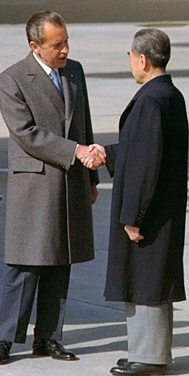
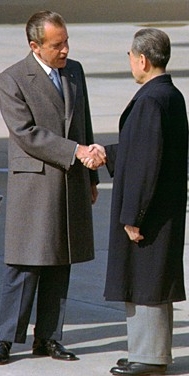
Zhou greets Nixon, 1972

The Independent newspaper in London referred to the Zhou misunderstanding in an editorial posted yesterday, and essentially shrugged it off, stating :

“Revisionists now claim that he was commenting not on the storming of the Bastille in 1789, but on the student riots of 1968. But what’s a couple of centuries to a China still engaged in its own long march to modernity?”

The editorial’s snark and breezy dismissiveness may be because the “revisionists” include the Financial Times, a rival London newspaper.

The Financial Times was first to call attention to the mistaken interpretation of Zhou’s remark.

Zhou, the Chinese premier, said during President Richard Nixon’s trip to China in February 1972 that it was “too early to say” what were the implications of political upheaval in France.

Charles (Chas) Freeman, an American diplomat who was Nixon’s interpreter on the China visit, told a panel discussion in Washington, D.C., last month that Zhou clearly was speaking about the turmoil and student protests in France in 1968 — not the French revolution of nearly 200 years before.

A reporter for the Financial Times moderated the panel discussion and in his article wrote that Freeman said:

“There was a mis­understanding [about Zhou’s remark] that was too delicious to invite correction.”

In a subsequent interview with me, Freeman said:

“I cannot explain the confusion about Zhou’s comment, except in terms of the extent to which it conveniently bolstered a stereotype” about Chinese leaders’ taking an exceptionally long and patient view of history.

Stereotyping helps explain why Zhou’s comment has been so widely quoted — and why debunking its erroneous and more extravagant interpretation really does matter.

Stereotyping, as I discuss in my latest book, Getting It Wrong, can be buoyed by media-driven myths, those dubious media-centric stories that masquerade as factual.

In Getting It Wrong, I note a number of examples of stereotypes that have been bolstered by media myths.

I write: “The misleading if euphonic epithet of ‘bra-burning‘ emerged from a demonstration on the Atlantic City boardwalk in 1968 to become shorthand for denigrating the emergent feminist movement and dismissing it as trivial and even a bit odd. The widely misreported pandemic of ‘crack babies‘ in the late 1980s and early 1990s seemed to confirm the worst pathologies associated with inner-city poor people.”

Rather than reflecting China’s supposedly long and patient view of history, Zhou’s “too early” observation was cautious analysis about events that were fairly recent and still under interpretation.

Zhou’s was a pragmatic observation, hardly sage or long-sighted.

WJC

Recent and related:

List of flubs by pols incomplete without Biden’s Watergate gaffe

In Debunking, Media myths, Washington Post, Watergate myth on June 30, 2011 at 10:55 am

The gaffe-prone vice president, Joe Biden, claimed in a speech aboard a few months ago that the Washington Post “brought down” Richard Nixon’s corrupt presidency in the Watergate scandal.

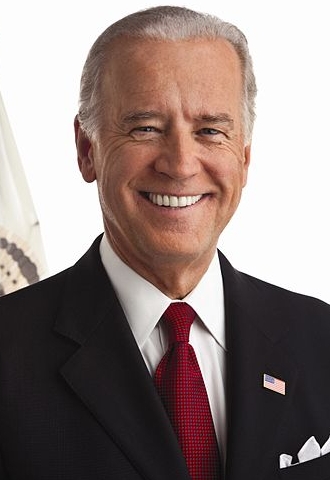
Gaffe-prone

That’s a media myth — a misreading of history that not even the Post embraces.

While Biden’s blunder didn’t receive much media attention at the time, the flub merited inclusion in Time magazine’s lineup of memorable mischaracterizations of American history offered by leading U.S. politicians.

In a posting yesterday, the magazine’s “Swampland” politics blog offered what it termed were nine “epically wrong politician accounts of yesteryear.”

The “Swampland” lineup included two flubs by Michele Bachmann, the Republican congresswoman running for president — that the battles of Lexington and Concord were fought in New Hampshire and that John Quincy Adams was among America’s founding fathers.

Biden made the “Swampland” lineup for his laughable statement that President Franklin D. Roosevelt went on television and spoke to Americans after the stock market crash of 1929. Roosevelt didn’t become president until 1933 and television wasn’t pervasive in American households until the 1950s.

While perhaps not as delicious as the FDR-market crash gaffe, Biden’s ahistoric flub about the Post and Watergate would have rounded out the “Swampland” list at 10.

Its inclusion would’ve underscored how unraveling a scandal as complex as Watergate required far more investigative clout than any news organization could muster.

Although it won a Pulitzer Prize in 1973, the Post’s Watergate-related reporting was scarcely enough to turn a sitting president from office. Nixon resigned in August 1974.

Biden’s mischaracterization of Watergate was astonishing and the “Swampland” list is incomplete without mentioning the blunder. The vice president told an audience in Moscow in March:

“In my country it was a newspaper, not the FBI, or the Justice Department, it was a newspaper, the Washington Post that brought down a President for illegal actions.”

It didn’t.

As I write in my latest book, Getting It Wrong,to argue that the Post and the dogged reporting of its reporters Bob Woodward and Carl Bernstein took down Nixon “is to abridge and misunderstand the scandal and to indulge in a particularly beguiling media-driven myth.”

I note that rolling up a scandal of the sweep and dimension of Watergate “required the collective if not always the coordinated forces of special prosecutors, federal judges, both houses of Congress, the Supreme Court, as well as the Justice Department and the FBI.”

And even then, I write, “Nixon likely would have served out his term if not for the audiotape recordings he secretly made of most conversations in the Oval Office of the White House.

“Only when compelled by the Supreme Court did Nixon surrender those recordings, which captured him plotting the cover-up” of Watergate’s signal crime — the break-in at the headquarters of the Democratic National Committee in June 1972.

So against the tableau of subpoena-wielding authorities, the contributions of the Post in Watergate fade in significance.

Those contributions were not decisive, as top officials at the Post have noted over the years.

Katharine Graham, the newspaper’s publisher during and after the Watergate years, said in 1997, at a program marking the scandal’s 25th anniversary:

“Sometimes people accuse us of bringing down a president, which of course we didn’t do. The processes that caused [Nixon’s] resignation were constitutional.”

Ben Bradlee,who was the Post’s executive editor during Watergate, said on the “Meet the Press” interview show in 1997:

“[I]t must be remembered that Nixon got Nixon. The Post didn’t get Nixon.”

And Woodward himself has disputed the mediacentric interpretation of Watergate, declaring in 2004 in an interview with American Journalism Review:

To say the press brought down Nixon, that’s horseshit.”

WJC

Recent and related:

Those delicious but phony quotes ‘that refuse to die’

In Cinematic treatments, Cronkite Moment, Debunking, Furnish the war, Media myths, Murrow-McCarthy myth, Spanish-American War, Washington Post, Watergate myth on June 25, 2011 at 10:31 am

Craig Silverman, author of Regret the Error, posted an intriguing column yesterday about appealing but dubious quotations that journalists seem especially prone to cite, noting that such famous lines “often turn out to be manufactured or inexact representations.”

It’s an important reminder, given the endless popularity of quotations that are neat, tidy, and irresistibly delicious. As I note in my latest book, Getting It Wrong, “Turns of phrase that sound too neat and tidy often are too perfect to be true.”

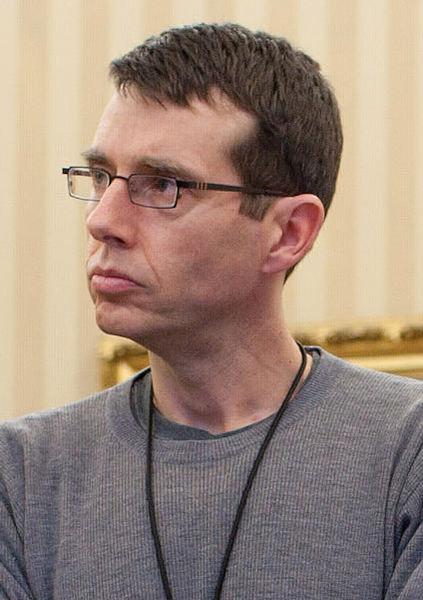
Plouffe: Not so 'queasy'?

Silverman’s column, titled “Misquotes that refuse to die,” was centered around a comment attributed in 2009 to David Plouffe, Barrack Obama’s campaign manager in 2008.

Plouffe supposedly said he felt a bit “queasy” about the prospect of Obama’s facing Jon Huntsman, the Republican former Utah governor, in the presidential election in 2012.

“Plouffe never said it,” Silverman wrote, describing how the queasy line took on life of its own.

Journalists can be particularly susceptible to such succinct “little gems,” as Silverman put it, because the gems are so effective in making a point or in distilling complexity.

Silverman’s column noted two famous, dubious quotes that I dismantle in Getting It Wrong.

One of them is the comment misattributed to President Lyndon Johnson who,  in reaction to Walter Cronkite’s on-air assessment that the war in Vietnam was “mired in stalemate,” supposedly said:

“If I’ve lost Cronkite, I’ve lost Middle America.”

Or something to that effect.

Versions as to what Johnson supposedly said vary quite a lot — which can be a marker of a media myth. I also point out in Getting It Wrong that Johnson did not see the Cronkite report when it aired on CBS on February 27, 1968.

The other dubious quote discussed in Getting It Wrong and mentioned by Silverman is William Randolph Hearst’s purported vow to “furnish the war” with Spain.

Reasons for doubting the Hearstian vow are many, I write, and include the fact that the telegram in which Hearst supposedly made the statement has never turned up. Plus, Hearst denied making such a vow.

A number of other famous and delicious quotes favored by journalists likewise have proven to be false, made-up, or of mythical dimension; among them:

  • Too early to say.” It’s often said that Chinese premier Zhou Enlai offered the observation in 1972, as sage, far-sighted analysis about the effects of the French Revolution of 1789. But according to a retired American diplomat, Charles W.  (Chas) Freeman Jr., Zhou’s comment, which came during President Richard Nixon’s visit to China in February 1972, was about political turmoil in France in 1968. “I cannot explain the confusion about Zhou’s comment, except in terms of the extent to which it conveniently bolstered a stereotype” about Chinese leaders taking an exceptionally long and patient view of history, Freeman said recently. Freeman was Nixon’s interpreter on the trip.

So what to do about these delicious but dubious and phony quotations?

Keep pounding away at them, calling them out for what they are, whenever they appear. That’s the only effective way of debunking.

But even then, thorough and utter debunking can be rare.

WJC

Recent and related:

Appearance decisive in politics? Revisiting the Kennedy-Nixon debate

In Debunking, Media myths on June 23, 2011 at 4:04 am

First presidential debate, 1960

The power of the image in presidential politics was never better demonstrated than in September 1960.

That was when John F. Kennedy supposedly won the first-ever televised debate between U.S. presidential candidates because he appeared so poised, rested, and telegenic compared to his sweaty, haggard-looking rival, Richard M. Nixon.

Most television viewers thought so, supposedly.

But people who listened to the debate on radio had a distinctly different impression: They thought Nixon won the encounter.

So goes one of the most delicious, enduring, and often-repeated myths about the American media and politics, which was served up yesterday in a commentary posted online yesterday by Canadian-based Troy Media.

The commentary declared:

“The major story of the first televised presidential debate in 1960 became the photogenic appeal of John F. Kennedy versus the sickly look of his opponent, Richard Nixon. … Radio listeners, who heard the debate but hadn’t seen it, gave the victory to Nixon. But a large majority of television viewers recognized Kennedy as the winner.”

The myth of viewer-listener disagreement — that television viewers and radio listeners had starkly different impressions of the inaugural presidential debate — was destroyed (or ought to have been) in research published in 1987 by David L. Vancil and Sue D. Pendell.

They noted that reports of viewer-listener disagreement were thin, flawed, and anecdotal, and the few surveys that hinted at a viewer-listener disconnect were too small and unrepresentative to allow for confident assessments.

Vancil and Pendell concluded:

“The relationship of substance and appearance is complex, and the effects of electronic media on political communication surely deserve attention. However, there is little merit in speculation based upon unsupported anecdotes of the first Kennedy-Nixon debate.”

Vancil and Pendell’s research also challenged the notion that Nixon’s haggard look much contributed to views about the debate.

“Appearance problems, such as Nixon’s perspiring brow, could have had a negative impact on viewer perceptions,” they wrote, “but it is also possible for viewers to be sympathetic to such problems, or to interpret them as evidence of attractive or desirable qualities.”

They added: “Even if viewers disliked Nixon’s physical appearance, the relative importance of this factor is a matter of conjecture.”

It’s revealing to note that a good deal of post-debate commentary deemed the encounter a draw.

For example, James Reston, then the Washington bureau chief for the New York Times, wrote shortly after the debate: “Who took the first round is a matter of individual opinion. My own view is that Kennedy gained more than Nixon, but it was a fielder’s choice, settling nothing.”

But the Washington Post saw it another way, stating in a post-debate editorial:

“Of the two performances, Mr. Nixon’s was probably the smoother. He is an accomplished debater with a professional polish, and he managed to convey a slightly patronizing air of a master instructing a pupil.”

Right after the Kennedy-Nixon encounter, the Associated Press conducted an unscientific survey of 100 Americans in 10 major U.S. cities and reported that most respondents said they weren’t influenced by the exchanges.

“Only a few persons,” the AP reported, “said they had actually switched from one candidate to the other because of the debate.”

And it was hardly the case that “a large majority of television viewers recognized Kennedy as the winner” of the debate, as the Troy Media commentary claimed.

A Gallup poll conducted during the week after the debate and released October 11, 1960, reported that 43 percent of voters thought Kennedy “did the better job” in the debate; 23 percent thought Nixon was better, and 29 percent said both candidates were about the same. Five percent offered no opinion.

The survey, moreover, detected no marked shift of support to Kennedy, post-debate. The survey reported Kennedy to be narrowly ahead, by 49 percent to 46 percent, with 5 percent undecided.

“The prudent reader can see,” George Gallup, head of the polling organization, stated in reporting those results, “that polling accuracy has not reached the degree of accuracy required to say with certainty which candidate is ahead in a close race such as the present one.”

WJC

Recent and related:

Why history is badly taught, poorly learned

In Cinematic treatments, Debunking, Media myths on June 19, 2011 at 12:41 pm

I’m not much a fan of the work of David McCullough, the award-winning popular historian whose latest book is the well-received The Greater Journey: Americans in Paris.

I couldn’t get through McCullough’s acclaimed 1776, a military history of a decisive year in American life that oddly had little to say about the Declaration of Independence.

But McCullough, in an interview published in yesterday’s Wall Street Journal, offered several provocative and telling points about why American history is so badly taught and so poorly grasped.

The splintered state of historical studies is one of the factors, McCullough said, adding:

“History is often taught in categories — women’s history, African American history, environmental history — so that many of the students have no sense of chronology. They have no idea what followed what.”

That’s a fair point. History by interest group can be an invitation to incoherence.

McCullough also pointed out that textbooks on history tend to “so politically correct as to be comic. Very minor characters that are currently fashionable are given considerable space, whereas people of major consequence … are given very little space or none at all.”

What’s more, as McCullough noted, textbooks often are tedious, boring, and poorly written. Historians by and large “haven’t learned to write very well,” McCullough wrote.

Although McCullough didn’t mention this in the interview, learning history can be frustrating because history is prone to error, distortion, and myth.

History quite simply can be myth-encrusted — and unlearning the myths of history can be challenging, time-consuming, and often unrewarding.

As I discuss in Getting It Wrong, my media-mythbusting book that came out last year, myths in history spring from many sources, including the timeless appeal of the tale that’s simple and delicious.

A telling example is the undying tale about William Randolph Hearst’s purported vow in an exchange of telegrams with Frederic Remington to “furnish the war” with Spain at the end of the 19th century.

As I discuss in Getting It Wrong, among the many reasons for doubting that anecdote are Hearst’s denial and the absence of any supporting documentation. The Remington-Hearst telegrams have never surfaced.

But the tale lives on, as an appealing yet exceedingly simplified explanation about the causes of the Spanish-American War and as presumptive evidence of Hearst’s madcap and ethically compromised ways.

The urge to simplify history also explains the tenacity of the so-called “Cronkite Moment” of 1968, when the CBS News anchorman’s assessment of the Vietnam War as a “stalemate” supposedly prompted President Lyndon Johnson to realize the folly of his war policy and not to seek reelection.

However, as I discuss in Getting It Wrong, Johnson did not see the program when it aired, and Cronkite until late in his life claimed his “stalemate” assessment had at best modest influence, that it was “another straw on the back of a crippled camel.”

And even that effect was probably exaggerated.

But the notion that the “Cronkite Moment” was powerful and decisive has been promoted by many historians, notably David Halberstam in his error-riddled The Powers That Be.

The cinema, too, often injects error and misunderstanding into historical topics.

Hollywood’s treatment of Bob Woodward and Carl Bernstein’s investigative reporting for the Washington Post is an important reason why many people erroneously believe that Woodward and Bernstein brought down Richard Nixon’s corrupt presidency.

Good history and successful cinema are quite often at odds, as Richard Bernstein noted in a memorable essay published several years ago in the New York Times.

“Artists who present as fact things that never happened, who refuse to allow the truth to interfere with a good story, are betraying their art and history,” Bernstein wrote.

So there are plenty of reasons beyond McCullough’s useful observations as to why American history is so poorly understood.

It may always be that way. After all, as the Scottish historian Gerard De Groot has noted, history is “what we decide to remember.

“We mine the past,” he has written, “for myths to buttress our present.”

WJC

Recent and related:

Commodity markets and Watergate’s most famous made-up line

In Cinematic treatments, Debunking, Media myths, Washington Post, Watergate myth on June 15, 2011 at 7:56 am

Follow the money,” that famous and dramatic line about the Watergate scandal, was made up for the cinema.

Not in this book

But because it’s so pithy and compelling, the passage is routinely treated as if it had been advice vital to unseating President Richard Nixon and unraveling the greatest scandal in American politics.

The Reuters wire service yesterday offered “follow the money” as if it were genuine, stating in a dispatch posted at the Commodities Now online site:

“‘Follow the money,’ FBI Deputy Director Mark Felt (‘Deep Throat’) told Washington Post reporters Bob Woodward and Carl Bernstein during their investigation into the Watergate break ins. It remains good advice for participants in commodity markets.”

Follow the money” may well be sound guidance for commodities brokers. But in the Watergate scandal, the line had relevance and as dramatic effect only in the movies.

Felt — whose family disclosed in 2005 that he had been the fabled “Deep Throat” source of the Washington Postdidn’t offer such guidance to Woodward during their periodic meetings in 1972 and 1973 as the scandal unfolded. Felt, moreover, never spoke with Bernstein during Watergate.

Nor does the advice to “follow the money” appear in All the President’s Men, Woodward and Bernstein’s book about their Watergate reporting. And the line can’t be found in any Watergate-related article or editorial in the Washington Post before 1981.

The derivation of the line lies in the screenplay of All the President’s Men, the cinematic version of Woodward and Bernstein’s book. The movie came out 35 years ago and has been seen by millions of people, easily qualifying it as the most-viewed film about Watergate.

All the President’s Men included a boffo performance by Hal Holbrook who played the stealthy, conflicted “Deep Throat” character.

Holbrook advised the Woodward character, played by Robert Redford, to “follow the money” — and did so with such quiet assurance and insistence that it sure seemed as if the guidance were vital to rolling up Watergate.

But had the advice indeed been given to Woodward, “follow the money” would’ve have taken the reporter only so far. Watergate, after all, was a scandal far more complex than the misuse of campaign monies.

As I write in Getting It Wrong, my media-mythbusting book that came out last year, some 20 men associated with Richard Nixon’s presidency or his 1972 reelection campaign went to jail for crimes linked to Watergate.

To unravel a scandal of such dimension, I write in Getting It Wrong, “required the collective if not always the coordinated forces of special prosecutors, federal judges, both houses of Congress, the Supreme Court, as well as the Justice Department and the FBI.

“Even then,” I add, “Nixon likely would have served out his [second] term if not for the audiotape recordings he secretly made of most conversations in the Oval Office of the White House. Only when compelled by the Supreme Court did Nixon surrender those recordings, which captured him plotting the cover-up and authorizing payments of thousands of dollars in hush money.”

As I’ve noted previously at Media Myth Alert, what cost Nixon the presidency wasn’t of the improper use of campaign funds but his obstruction of justice in attempting to thwart the FBI’s investigation of the scandal.

The misunderstanding about “follow the money” is an element in the broader mythology of Watergate, which centers around the historically inaccurate notion that Woodward and Bernstein, through their dogged investigative reporting, brought down Nixon’s presidency.

To embrace that interpretation of Watergate is, I write in Getting It Wrong, “to abridge and misunderstand the scandal and to indulge in a particularly beguiling media-driven myth.”

WJC

Recent and related:

‘Too early to say’: Zhou was speaking about 1968, not 1789

In Debunking, Media myths on June 14, 2011 at 8:50 am

Nixon and Zhou, 1972

When Chinese premier Zhou Enlai famously said it was “too early” to assess the implications of the French revolution, he was referring to turmoil in France in 1968 and not — as is commonly thought — to the more distant political upheaval of 1789.

So says a retired American diplomat, Charles W.  (Chas) Freeman Jr., who was present when Zhou made the comment during President Richard Nixon’s visit to China in February 1972.

Freeman, who was Nixon’s interpreter during the historic, weeklong trip, made the disclosure last week during a panel discussion in Washington about On China, the latest book by former Secretary of State Henry Kissinger.

The discussion was moderated by Richard McGregor, a journalist and China expert who wrote about Freeman’s comments for the Financial Times of London.

In an interview yesterday, Freeman elaborated on his recollection about Zhou’s comment, the conventional interpretation of which is frequently offered as evidence of China’s sage, patient, and far-sighted ways. Foreign Policy magazine, for example, referred last month to that interpretation, saying the comment was “a cautionary warning of the perils of judgments made in real time.”

The Washington Post’s recent review of Kissinger’s book likewise referred to the conventional understanding of Zhou’s remark.

Freeman described Zhou’s misconstrued comment as “one of those convenient misunderstandings that never gets corrected.”

He said Zhou’s remark probably was made over lunch or dinner, during a discussion about revolutions that had succeeded and failed. They included, Freeman said, the Prague Spring of 1968 and the Hungarian uprising of 1956, both of which the Soviet Union crushed.

He said it was clear from the context and content of Zhou’s comment that in saying it was “too early to say” the Chinese leader was speaking about the events in France in May 1968, not the years of upheaval that began in 1789.

Freeman acknowledged that the conventional interpretation makes for a better story but added that it was “absolutely clear” from the context of the discussion that Zhou was speaking about 1968.

Just how Zhou’s remark came to be misinterpreted, Freeman was unable to say.

“I cannot explain the confusion about Zhou’s comment except in terms of the extent to which it conveniently bolstered a stereotype (as usual with all stereotypes, partly perceptive) about Chinese statesmen as far-sighted individuals who think in longer terms than their Western counterparts,” Freeman said in a follow-up email. “It was what people wanted to hear and believe, so it took” hold.

He described Zhou’s misinterpreted remark as “a classic of the genre of a constantly repeated misunderstanding that has taken on a life of its own.”

The Zhou comment also represents a reminder about the often-irresistible quality of pithy and apparently telling quotations — a topic discussed in my latest book, Getting It Wrong, which addresses and debunks 10 prominent media-driven myths. (An expanded second edition of Getting It Wrong came out in late 2016.)

“Turns of phrase that sound too neat and tidy often are too perfect to be true,” I write in discussing such media myths as William Randolph Hearst’s reputed vow — supposedly made in an exchange of telegrams with the artist Frederic Remington — to “furnish the war” with Spain in the 1890s.

“Like many media-driven myths,” I write, the purported Hearstian vow “is succinct, savory, and easily remembered. It is almost too good not to be true.” As is the conventional interpretation of Zhou’s “too early to say” remark.

I note in Getting It Wrong that among the many reasons for doubting the anecdote is that it “would have been absurd for Hearst to vow to ‘furnish the war’ because war — specifically, the Cuban rebellion against Spain’s colonial rule — was the very reason Hearst sent Remington to Cuba in the first place.”

Anyone reading U.S. newspapers in January 1897, when Remington was in Cuba on assignment for Hearst’s New York Journal, “would have been well aware,” I write, “that Cuba was a theater of a nasty war.”

What I call version variability — the imprecision that alters or distorts an anecdote in its retelling — has afflicted Zhou’s “too early to say” comment. Some accounts, for example, have attributed the remark to Chinese dictator Mao Zedong.

Another account has it that Zhou, who died in 1976, made the comment in Geneva in 1953, in response to a French journalist’s question.

Freeman said he doubted that version was accurate.

Zhou, he said, “was a man with a graceful wit but not given to facetious remarks.”

WJC

Recent and related:

On Gingrich, JFK, and the appearance factor in presidential debates

In Debunking, Media myths on June 13, 2011 at 11:19 am

First presidential debate, 1960

The first televised presidential debate set a standard for American politics.

A myth-encrusted standard.

John F. Kennedy supposedly won that debate in September 1960 because he looked so much more rested and telegenic than his rival, Richard M. Nixon. There is, however, scant evidence to support that notion, which was revived yesterday in a commentary at the Daily Caller blog.

The commentary suggested that Newt Gingrich’s beleaguered presidential campaign might find a spark during tonight’s debate in New Hampshire among seven Republicans seeking the presidency.

In 1960, the Daily Caller commentary stated, “then-Sen. John F. Kennedy reportedly spent the day of his big debate against Vice President Richard Nixon getting a sun tan and resting. Nixon, on the other hand, spent the day rigorously campaigning (he also didn’t wear makeup). It worked for Kennedy who, thanks to the advent of TV, ‘won’ the debate. A rested Gingrich might likewise perform well in Monday’s debate in New Hampshire.”

Gingrich’s hopes to win the presidency probably were destroyed with last week’s mass departure of top campaign staffers and advisers. But his long-shot candidacy is of scant interest to Media Myth Alert. Far more compelling is the Daily Caller’s claim about the presidential debate in September 1960.

It’s important to note that most commentary in the debate’s immediate aftermath called the Kennedy-Nixon encounter a draw.

For example, James Reston, then the Washington bureau chief for the New York Times, wrote in a post-debate column: “Who took the first round is a matter of individual opinion. My own view is that Kennedy gained more than Nixon, but it was a fielder’s choice, settling nothing.”

The Washington Post, on the other hand, said in a post-debate editorial:

“Of the two performances, Mr. Nixon’s was probably the smoother. He is an accomplished debater with a professional polish, and he managed to convey a slightly patronizing air of a master instructing a pupil.”

The St. Louis Post-Dispatch hedged in its assessment, declaring: “We should not say that anybody won. … They both looked pretty young to us.”

Immediately after the Kennedy-Nixon encounter, the Associated Press conducted an unscientific survey in 10 major U.S. cities and reported that most respondents said they hadn’t been influenced by the exchanges. “Only a few persons,” according to AP, “said they had actually switched from one candidate to the other because of the debate.”

In the months afterward, Nixon’s sweaty brow and haggard appearance during the debate emerged as factors supposedly decisive to the outcome of the encounter — and to the 1960 election. Such claims, however, rest on more on conjecture than compelling evidence.

David L. Vancil and Sue D. Pendell wrote in a revealing journal article published in 1987 that “the inference that appearance problems caused Nixon’s loss, or Kennedy’s victory [in the debate], is classic post hoc fallacy.

“Appearance problems, such as Nixon’s perspiring brow, could have had a negative impact on viewer perceptions, but it is also possible for viewers to be sympathetic to such problems, or to interpret them as evidence of attractive or desirable qualities.”

That is, Nixon’s sweating under hot television lights could have stirred viewers empathy, making them feel more kindly toward the Republican candidate. It’s a plausible supposition.

Vancil and Pendell also wrote:

“Even if viewers disliked Nixon’s physical appearance, the relative importance of this factor in viewers’ selection of a debate winner is a matter of conjecture.”

A Gallup poll conducted during the week following the debate and released October 11, 1960, reported that 43 percent of voters thought Kennedy “did the better job” in the debate, which was the first of four during the 1960 fall campaign. Twenty-three percent thought Nixon was better; 29 percent said both candidates were about the same. Five percent offered no opinion.

But the poll did not specifically address the appearance of either candidate; nor did the poll detect a sharp swing of support to Kennedy. The survey reported Kennedy to be narrowly ahead, by 49 percent to 46 percent, with 5 percent undecided.

That result represented a slight change from a Gallup survey taken just before the debate, which reported Nixon leading by 47 percent to 46 percent.

But Gallup termed the post-debate shift too slight to be meaningful.

“The prudent reader can see,” George Gallup, head of the polling organization, stated in reporting the results, “that polling accuracy has not reached the degree of accuracy required to say with certainty which candidate is ahead in a close race such as the present one.”

By the way, Kennedy didn’t take off the day of the debate to rest and work on his tan, as the Daily Caller commentary said. The Chicago Tribune reported that Kennedy received “a boisterous welcome” in an appearance that afternoon at a carpenters union convention in Chicago, the debate’s host city.

WJC

Recent and related: