W. Joseph Campbell

Posts Tagged ‘Research’

Murrow ‘risked his career to confront demagogic Joe McCarthy’? Hardly

In Debunking, Error, Media myths, Murrow-McCarthy myth, Washington Post on July 1, 2017 at 3:01 pm

The sentiments may be noble but the claims — one of them, at least — are dubious.

‘Demagogic’ Joe McCarthy

So it is with a Washington Post commentary this weekend that makes mention of “men and women who defended this country and its values in other ways [than taking up arms]: people like Edward R. Murrow, the broadcaster who risked his career to confront the demagogic Sen. Joe McCarthy; Harvey Milk, who helped pass gay rights legislation in San Francisco before he was assassinated; and Rosa Parks, whose courageous defiance was a spark for the civil rights movement, in which many were killed.”

What most interests Media Myth Alert is the reference to Murrow’s having risked his career in taking on McCarthy — a reference to the broadcaster’s half-hour television program, “See It Now,” in March 1954 that critically examined the senator’s communists-in-government witchhunt.

The show has long since become encrusted with media myth — namely that Murrow’s report exposed McCarthy’s demagoguery and abruptly ended his red-baiting ways.

The notion that Murrow’s career hung in the balance in taking on the bullying senator from Wisconsin was promoted in Good Night, and Good Luck, an overwrought cinematic account of the Murrow-McCarthy confrontation. But in reality, the risks to Murrow were scant by time he took on McCarthy in 1954.

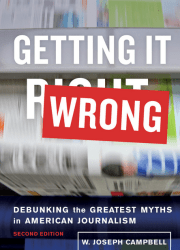
By then, as I discuss in my media-mythbusting book, Getting It Wrong (a second edition of which is out now), Murrow was quite safe.
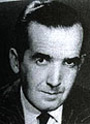
Murrow

That’s because, as I write, Murrow “was very late in confronting McCarthy” and “did so only after other journalists had challenged the senator and his tactics for months, even years.”

These journalists included the syndicated columnist Drew Pearson, who called out McCarthy’s exaggerations almost as soon as the senator began hurling accusations of communists infiltration of the State Department. That was in February 1950 — years before Murrow’s program on McCarthy.

Pearson certainly wasn’t a much-liked journalist; he was an aggressive, self-important muckraker whom media critic Jack Shafer once described as one of the skuzziest journalists to ever write a story. Pearson, I note, was always “eager to inject himself as a participant in Washington’s political scene.”

But he caught on quickly to McCarthy’s excesses.
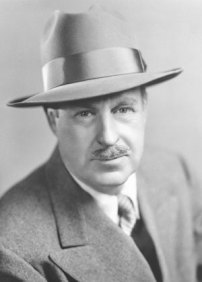
Pearson: McCarthy nemesis

I note in Getting It Wrong that “Pearson first wrote about McCarthy’s wild allegations on February 18, 1950, just days after McCarthy had begun raising them. Pearson called McCarthy the ‘harum-scarum’ senator,” and described how the allegations had been discredited years earlier, after having been raised by a Republican congressman from Michigan.

Pearson wrote that “knowing something about State Department personnel, it is my opinion that Senator McCarthy is way off base.”

Pearson also went after McCarthy for his tax troubles in Wisconsin and for a suspicious $10,000 payment from a government contractor. And he likened McCarthy and his tactics to 17th century witchcraft trials in Massachusetts.

All of this angered the headstrong McCarthy who, at a Gridiron Club dinner in Washington in May 1950, approached Pearson, placed a hand on the columnist’s arm and muttered:

“Someday I’m going to get a hold of you and really break your arm.”

The thuggish threat, I write, was a prelude to a brief but violent encounter at the fashionable Sulgrave Club in Washington, D.C.

The Sulgrave, which occupies a late Gilded Age, Beaux-Arts mansion at DuPont Circle, was in the 1950s a hush-hush meeting place for Washington socialites and powerbrokers. “The club prided itself on insuring privacy and permitted no photographers to enter,” I note.

In December 1950, a young socialite named Louise Tinsley (“Tinnie”) Steinman invited both Pearson and McCarthy to join her guests at a dinner-dance at the Sulgrave.

She seated the men at the same table and they traded insults throughout the evening. Pearson and McCarthy “are the two biggest billygoats in the onion patch, and when they began butting, all present knew history was being made,” Time magazine said about their encounter.

“As the evening ended,” I write, “McCarthy confronted Pearson in the Sulgrave’s coat check room. Accounts differ about what happened. Pearson said McCarthy pinned his arms to one side and kneed him twice in the groin. McCarthy said he slapped Pearson, hard, with his open hand. A third account, offered by a radio broadcaster friendly to McCarthy, said the senator slugged Pearson, a blow so powerful that it lifted Pearson three feet into the air.

“Senator Richard Nixon, who also was a guest at Tinnie Steinman’s party, intervened to break up the encounter.”

In his memoir RN, Nixon quoted McCarthy as saying:

“You shouldn’t have stopped me, Dick.”

McCarthy took to the floor of the Senate not long afterward to assail Pearson in speeches that were unalloyed McCarthyism.

He denounced the columnist as the “diabolically” clever “voice of international communism,” a “prostitute of journalism,” and a “Moscow-directed character assassin.”

McCarthy also aimed a threat at Adam Hat Stores Inc., the principal sponsor of Pearson’s Sunday night radio program on NBC. McCarthy declared that “anyone who buys from a store that stocks an Adams [sic] hat is unknowingly contributing at least something to the cause of international communism by keeping this communist spokesman on the air.”

Adam Hat subsequently said it would not renew its sponsorship of Pearson’s radio show, citing “a planned change in advertising media for 1951.”

Pearson later claimed that losing the Adam Hat sponsorship cut his gross radio income to $100,000 from $250,000. “I suppose no one newspaperman suffered more economically than I did from Joe McCarthy,” he mused.

It’s tempting to suggest that the Post’s commentary would have been more apropos had it replaced Pearson for Murrow in saluting “men and women who defended this country and its values.” But, then, the memory of Drew Pearson projects none of the luster of the legendary Ed Murrow.

Also, it’s worth speculating that a keener risk to Murrow’s career and his reputation came in 1956, when he privately advised Adlai Stevenson, the Democratic presidential candidate, on what Murrow’s biographer, A.M. Sperber, called “the finer points of speaking to the camera.”

Sperber wrote in Murrow: His Life and Times that even though the Republican incumbent, Dwight D. Eisenhower, seemed sure to win to reelection,  Murrow agreed “to help the Democrats.”

The Murrow-Stevenson “connection was kept under wraps,” Sperber noted, adding that the “understanding” between the broadcaster and Stevenson’s advisers was that Murrow “was acting as a private citizen,” that his coaching was to be “kept quiet.”

WJC

More from Media Myth Alert:

Cronkite’s view on Vietnam had ‘tremendous impact,’ new book says: But how?

In Cronkite Moment, Debunking, Error, Media myths on June 9, 2017 at 7:20 am

A new book by prominent non-fiction writer Mark Bowden both treats skeptically and embraces key elements of the “Cronkite Moment,” a tenacious myth about media influence and the war in Vietnam.

Bowden is best known for Black Hawk Down, a well-regarded book about a bungled U.S. military mission in Somalia in 1993. Bowden devotes passing reference to the mythical “Cronkite Moment” in his latest work, Hue 1968, a detailed account of the weeks-long battle for the Vietnamese provincial capital Hue during the Tet offensive, launched by communist forces at the end of January 1968.

Cronkite in Vietnam

The offensive swept across much of what then was South Vietnam and deeply surprised the American public. The scope and shock of the assaults prompted Walter Cronkite, the anchorman at CBS News, to travel to Vietnam and gather first-hand details about the U.S. war effort.

Cronkite reported in his findings in an hour-long special report that aired at the end of February 1968. At the close of the broadcast, Cronkite offered his assessment that the U.S. military was “mired in stalemate” in Vietnam and that negotiations might eventually offer a way out.

It was a tepid appraisal; his “stalemate” observation mirrored what other American journalists had been saying for months.

But as I discuss in my media-mythbusting book, Getting it Wrong, Cronkite’s assessment has gained the luster of decisiveness, and is often recalled as an occasion when a prominent journalist spoke truth and influenced the powerful.

As the myth has it, President Lyndon Johnson watched Cronkite’s report and, upon hearing the “mired in stalemate” assessment, said something to the effect of, “If I’ve lost Cronkite, I’ve lost Middle America.”

So powerful and timely was Cronkite’s opinion that it also swung public opinion against the war.

From Google Books

Supposedly.

In Hue 1968, Bowden dismisses elements of the “Cronkite Moment,” writing that Johnson “probably never said the line that has been widely attributed to him after the broadcast — ‘If I’ve lost Cronkite, I’ve lost middle America.’

“Nor,” Bowden adds, “is it true, as David Halberstam would later write, that ‘it was the first time in American history a war had been declared over by an anchorman.'”

Indeed, the Vietnam War dragged on seven years for after the presumptive “Cronkite Moment.”

But Bowden also writes that Cronkite’s assessment “had tremendous impact and made it much harder to dismiss those who opposed the was as ‘hippies’ or un-American.”

He provides no evidence to support the claim of “tremendous impact,” however.

In fact, popular support for the war had begun declining months before the Cronkite report. The shift became evident by Fall 1967.

A Gallup poll in October 1967 found, for the first time, that a plurality of Americans — 47 percent — believed sending troops to fight in Vietnam had been a mistake.

A little more than two years earlier, just 24 percent of respondents said they thought it was a mistake to have deployed U.S. forces to Vietnam.

Gallup asked the question again in a poll completed hours before Cronkite’s program was aired: Forty-nine percent of the respondents said “yes,” U.S. military intervention in Vietnam had been a mistake; 42 percent said “no.”

In April 1968, Gallup found that 48 percent of respondents said U.S. military intervention in Vietnam had been a mistake; 42 percent said it had not been.

Moreover, print journalists had detected softening support for the war well before Cronkite’s report.

In December 1967, for example, journalist Don Oberdorfer, wrote that the previous summer and fall had “been a time of switching, when millions of American voters — along with many religious leaders, editorial writers and elected officials — appeared to be changing their views about the war.”

So a persuasive case can be made that rather than having had “tremendous impact,” Cronkite followed rather than led U.S. public opinion on the war.

And until late in his life, Cronkite downplayed the effects of his report from Vietnam, saying in an interview in 1999 that its impact on the Johnson administration was akin to that of a “straw on the back of a crippled camel.”

Only in the years before his death in 2009 did Cronkite embrace the mistaken notion his report in February 1967 had exerted powerful effects.

A closing note about Bowden’s book: It lacks an index and bibliography, which likely curbs its value to scholars.

WJC

More from Media Myth Alert:

WaPo’s ‘myths about Watergate’ article ignores the scandal’s best-known mythical narrative

In Debunking, Error, Media myths, Washington Post, Watergate myth on May 22, 2017 at 12:49 pm

The Washington Post’s commentary section yesterday presented a rundown about five “most persistent” myths of Watergate.

Trouble is, the article unaccountably ignored the scandal’s most prominent and tenacious myth — that the Post’s reporting brought down Richard Nixon’s corrupt presidency.

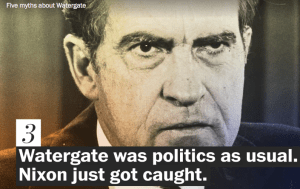
Instead, the article addressed hackneyed claims such as “Watergate was politics as usual; Nixon just got caught” or obscure arguments such as “Nixon could have quieted the scandal by firing employees.” The sort of stuff few people find especially compelling.

Washington Post illustration

What many people do embrace is a claim often repeated in the news media in America and abroad.

And that is the heroic-journalist interpretation of Watergate, the mythical go-to narrative that the Post and its intrepid reporters, Bob Woodward and Carl Bernstein, unearthed the incriminating evidence that forced Nixon to resign in disgrace in August 1974.

It’s a hardy, media-centric trope that pops up frequently in news outlets both prominent and relatively obscure.

It’s also a narrative rejected by those who ran the Post as the scandal unfolded from 1972-74.

For example, Katharine Graham, the newspaper’s publisher at the time, insisted that the Post did not topple Nixon. “Sometimes people accuse us of bringing down a president, which of course we didn’t do,” she said in 1997. “The processes that caused [Nixon’s] resignation were constitutional.”

Woodward has concurred, if in earthier terms, telling an interviewer in 2004:

To say that the press brought down Nixon, that’s horseshit.”

As I point out in my media-mythbusting book, Getting It Wrong (an expanded second edition of which is out now), credit for bringing down Nixon belongs to the federal investigators, federal judges, federal prosecutors, bipartisan congressional panels, the Supreme Court, and others who investigated the scandal and compelled the testimony and uncovered the evidence that led to Nixon’s resignation.

Against that tableau, I write in Getting It Wrong, “the contributions of Woodward and Bernstein were at best modest, and certainly not decisive.”

The “myths of Watergate” article published yesterday made its nearest approach to the heroic-journalist narrative in addressing the notion that Woodward’s high-level secret source, code-named “Deep Throat,” was “pivotal to Nixon’s downfall.”

Of course he wasn’t.

Deep Throat” was self-revealed in 2005 as W. Mark Felt who, for a time, had been second in command at the FBI.

Felt conferred with Woodward periodically in 1972 and 1973, sometimes in a parking garage in the Washington suburb of Rosslyn, Virginia. Typically, “Deep Throat” passed on to Woodward, or confirmed for him, piecemeal evidence about the scandal as it unfolded. At least that’s the version Woodward offered in The Secret Man, his book about Felt.

A far more prominent Watergate myth about “Deep Throat” is that he advised Woodward to “follow the money” in unlocking the intricacies of Watergate.

Follow the money” may be the single best-known quotation associated with Watergate (rivaled, perhaps, by Nixon’s statement in November 1973 that he was “not a crook”).

“Follow the money” was born of dramatic license, a line written into the screenplay of All the President’s Men, the cinematic version of Woodward and Bernstein’s eponymous book about their Watergate reporting.

“Follow the money” was memorably uttered by the actor Hal Holbrook, who in the movie was outstanding in playing a conflicted, twitchy, and tormented “Deep Throat.”

Holbrook delivered his “follow the money” lines with such assurance and confidence that it seemed to offer a roadmap to understanding and unraveling Watergate.

But even if Woodward had been counseled in real life to “follow the money,” the advice would have taken him only so far.

It wouldn’t have led him to Nixon.

What forced Nixon from office was not the mishandling of funds raised for his presidential reelection campaign but evidence of his plotting to cover up the signal crime of Watergate, the break-in at the Democratic National Committee headquarters in June 1972.

That evidence was contained in one of the many audiotapes Nixon secretly made of his conversations at the White House from 1971 to 1973. The existence of the tapes was disclosed not by Woodward and Bernstein but by a former White House official, Alexander Butterfield, in testimony before a U.S. Senate select committee in July 1973.

Twelve months later, the Supreme Court ordered Nixon to surrender the tell-tale “Smoking Gun” tape to the Watergate special prosecutor, precipitating the president’s resignation.

WJC

More from Media Myth Alert:


Why Trump-Russia is still not Watergate redux

In Debunking, Error, Media myths, Watergate myth on May 14, 2017 at 10:28 pm

We need not take Bob Woodward’s word for it: The murky Trump-Russia suspicions are still far, far from the constitutional crisis that was Watergate, the scandal that took down Richard Nixon’s corrupt presidency and sent some 20 of his associates to jail.

Saturday Night Massacre

Even so, exaggerated claims have flourished in the days since President Donald Trump sacked the preening FBI director, James Comey.

Firing Comey was reminiscent — vaguely — of Nixon’s Saturday Night Massacre in October 1973, when the top two Justice Department officials resigned rather than carry out the president’s order to dismiss Archibald Cox, the Watergate special prosecutor.

A persuasive case can be made that Comey, unlike Cox, merited dismissal. But Trump’s conduct was puzzling nonetheless: What better way to encourage Trump-Russia suspicions than to fire the head of an agency investigating those suspicions?

Still, the Trump-Russia matter differs from Nixon-Watergate in significant respects, not all of which are well-recognized.

For starters, Watergate originated with a crime — a thwarted burglary in June 1972 at the headquarters of the Democratic National Committee. Arrested in the break-in were five men linked to Nixon’s reelection campaign, including the security coordinator.

The  Trump-Russia matter, however, is a mess of suspicion, of feverish speculation that Trump may have benefited from, encouraged, or somehow participated in Russia’s suspected meddling in the stunning 2016 presidential election.

But the centerpiece crime in Trump-Russia? No one can say. As Jonathan Turley, a law professor at George Washington University, said the other night: “No one has yet to explain to me what the core crime that would be investigated with regards to Russian influence.”

More than six months after the election, it remains unclear what Trump’s campaign did — if anything — to collude with Russian operatives.

And it’s unlikely that Russian interference would have been decisive in tipping the election to Trump. The inept, highly centralized campaign run by Democratic nominee Hillary Clinton effectively accomplished that. Trump was the beneficiary of Clinton’s flawed candidacy.

It’s also important to recognize that although Watergate’s outcome may seem now to have been inevitable, bringing about Nixon’s resignation was rather a close call.

Although journalists may love the interpretation, Nixon quit the presidency in 1974 not because of Woodward and Carl Bernstein’s reporting for the Washington Post.

Nixon resigned after the Supreme Court compelled him to surrender telltale audio tapes that he had secretly made of many of his conversations at the White House. (Woodward, himself, said last week: “The Supreme Court forced Nixon to turn those [tapes] over and that ended the reign.”)

As I point out in my media-mythbusting book, Getting It Wrong (an expanded second edition of which is out now), absent the audiotapes “Nixon likely would have served out his term.” The tapes were key. They were compelling evidence that captured him, in his own words, approving a scheme to sidetrack the FBI’s investigation of the Watergate burglary.

It is, moreover, important to keep in mind the sui generis character of Watergate. The scandal was sweeping; it went to the heart of America’s political and constitutional system, as Stanley I. Kutler, Watergate’s leading historian, noted. Its reach and implications were exceptional, and they will be difficult, perhaps impossible, to duplicate.

WJC

More from Media Myth Alert:

Journos ‘can, under right circumstances, topple a presidency’: What a myth

In Debunking, Error, Media myths, New York Times, Washington Post, Watergate myth on May 1, 2017 at 8:48 am

I ruminated the other day about the many applications of the heroic-journalist trope of Watergate, the ever-engaging myth that the dogged reporting of Bob Woodward and Carl Bernstein for the Washington Post brought down Richard Nixon’s corrupt presidency.

The New York Times today suggests another use — that the heroic-journalist tale sends a message (presumably to the administration of President Donald Trump) “that journalists can, under the right circumstances, topple a presidency.”

The Times made the outsize claim in a glowing article about Saturday night’s White House Correspondents’ Association dinner, at which Woodward and Bernstein spoke about the importance of unfettered media.

The Times account, written by media reporter Michael M. Grynbaum, quoted liberal commentator E.J. Dionne as saying the dinner “’was a line-in-the-sand night, to an extent I didn’t expect.’” Dionne was further quoted as saying that “’having Woodward and Bernstein [speak at the dinner] sends another message’ — that journalists can, under the right circumstances, topple a presidency.”

The last portion was Grynbaum’s paraphrase — which makes it no less a media myth.

Ford became president when Nixon quit

As I discuss in the expanded second edition of my media-mythbusting book, Getting It Wrong:

The heroic-journalist tale “has become the most familiar story line of Watergate: ready shorthand for understanding Watergate and its denouement, a proxy for grasping the scandal’s essence while avoiding its forbidding complexity. How the Post and its reporters uncovered Watergate is deeply ingrained in American journalism as one of the field’s most important and self-reverential stories. …

“But to explain Watergate through the lens of the heroic journalist is to abridge and misunderstand the scandal and to indulge in a particularly beguiling media-driven myth. The heroic-journalist interpretation minimizes the far more decisive forces that unraveled the scandal and forced Nixon from office” — namely subpoena-wielding investigators who included special federal prosecutors, the FBI, panels of both houses of Congress, not to mention the U.S. Supreme Court, which compelled Nixon to surrender secretly recorded audio tapes that confirmed his guilty role in Watergate and made certain his resignation in August 1974.

As I’ve noted often at Media Myth Alert, not even principals at the Post during the Watergate period embraced the heroic-journalist myth.

The newspaper’s publisher back then, Katharine Graham, said during a program at the Newseum in 1997:

“Sometimes people accuse us of bringing down a president, which of course we didn’t do. The processes that caused [Nixon’s] resignation were constitutional.”

And the newspaper’s top editor during Watergate, Ben Bradlee, said on the  “Meet the Press” talk show in 1997 that “it must be remembered that Nixon got Nixon. The Post didn’t get Nixon.” He was referring to the secret tapes Nixon had made.

Michael Getler, then the Post’s ombudsman, or in-house critic, wrote in 2005:

“Ultimately, it was not The Post, but the FBI, a Congress acting in bipartisan fashion and the courts that brought down the Nixon administration. They saw Watergate and the attempt to cover it up as a vast abuse of power and attempted corruption of U.S. institutions.”

And Woodward, himself, told an interviewer in 2006 2004:

To say that the press brought down Nixon, that’s horseshit.”

So why does this myth live on? Why is it so irresistible?

The reasons are many, as I discussed in the post the other day.

Among others, the trope has the heady effect of placing journalists at the decisive center of an exceptional moment in American history. Moreover, the notion that journalists can topple a president is reassuring to practitioners, especially amid the sustained retrenchment in their field. And it’s a way, however misguided, of a way to pay fawning tribute to Woodward and Bernstein, both of whom are in their 70s.

But perhaps most of all, the myth lives on because it’s an easy-to-remember version of what happened in Watergate, the country’s gravest political crisis. Easy to remember, and easy to retell.

Media myths thrive on such simplicity.

WJC

More from Media Myth Alert:

The heroic-journalist myth of Watergate and its applications

In Debunking, Error, Media myths, Newspapers, Washington Post, Watergate myth on April 28, 2017 at 3:26 pm

The heroic-journalist myth of Watergate — the notion that dogged reporting by Bob Woodward and Carl Bernstein for the Washington Post brought down Richard Nixon’s corrupt presidency — pops up often, and in the service of any number of objectives.

Nixon got Nixon

It is a tale of supposed high accomplishment inspiring to journalists, especially so at a time of sustained retrenchment in their field.

It’s a trope with the intoxicating effect of placing journalists at the decisive center of an exceptional moment in U.S. history.

And it’s a way of paying obsequious tribute to the Washington Post, much as Sky News in Britain did not long ago.

“The Washington Post is one of the world’s great newspapers,” a fawning essay at the Sky’s online site declared, adding:

“Thanks to its investigative reporters Bob Woodward and Carl Bernstein, it can make the unique claim of having brought down an American president — the corrupt Richard Nixon.”

It’s not too difficult to understand why such an extravagant claim circulates so widely.

After all, it is tidy, handy if  terribly misleading shorthand about the sprawling Watergate scandal of 1972-74: It sweeps away complexities of Watergate, rendering the scandal and its thicket of lies and criminality rather easy to grasp. After all, as I noted in the recently published, expanded second edition of my mythbusting book, Getting It Wrong, the Watergate scandal “has grown so distant that few Americans can accurately describe what took place.”

The heroic-journalist myth has become a reductive substitute.

The heroic-journalist interpretation also is a way of saluting Woodward and Bernstein, both of whom are in their 70s. Both, in fact, will highlight this weekend’s White House Correspondents’ Association dinner, where they are to hand out awards and offer remarks about the importance of investigative reporting. (Not surprisingly, their pending joint appearance has stirred fresh retelling of the heroic-journalist myth. The Washington Examiner said the other day, for instance, that Woodward and Bernstein’s “coverage of the Watergate break-in led eventually to former President Richard Nixon’s resignation.”)

In their younger days, Woodward and Bernstein sneered at the correspondents’ association dinner, describing it in All the President’s Men, their 1974 book about Watergate, as “a formal, overdone, alcohol-saturated event, attended by all those with power — or pretensions to power — in the media and government.” Woodward and Bernstein went anyway, in 1973, to collect a couple of prizes.

So over-the-top is the heroic-journalist interpretation of Watergate that not even principals at the Post when the scandal played out — notably the publisher, Katharine Graham, and her top editor, Ben Bradlee — embraced the notion.

“Sometimes people accuse us of bringing down a president, which of course we didn’t do,” Graham said in 1997. “The processes that caused [Nixon’s] resignation were constitutional.”

Also that year, Bradlee said on the Sunday talk show “Meet the Press” that “it must be remembered that Nixon got Nixon. The Post didn’t get Nixon.”

He was referring to the White House audio tapes which Nixon secretly made and which revealed the president’s guilty role in attempting to divert the FBI investigation into the botched burglary of Democratic National Committee headquarters in Washington in June 1972. The breakin touched off the scandal.

And in earthier terms, Woodward concurred, telling an interviewer in 2006:

To say that the press brought down Nixon, that’s horseshit.”

Quite.

WJC

More from Media Myth Alert:

‘Napalm Girl’ photograph ‘changed us and our stomach for war’: But how?

In 'Napalm girl', Debunking, Error, Media myths, Photographs on March 14, 2017 at 4:25 pm

The Associated Press photographer who took the famous “Napalm Girl” photograph of the Vietnam War is retiring this month, a development that prompted yet another exaggerated claim about the image and its supposed effects.

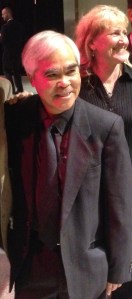
Nick Ut in 2016

The photographer is Nick Ut, who in June 1972 made the photograph of a cluster of terrified Vietnamese children fleeing an errant aerial napalm attack at Trang Bang, a village in what then was South Vietnam. The image is regarded as among the most memorable of the war and won for Ut a Pulitzer Prize in 1973.

Over the years, the photograph has become embroidered with media myths — notably the erroneous notion that the napalm was dropped by U.S. warplanes. As I discuss in the expanded second edition of my mythbusting book, Getting It Wrong, the attack at Trang Bang was carried out by the 518th Fighter Squadron of the South Vietnamese Air Force.

The other day, a Los Angeles television station contributed to the hyperbole associated with “Napalm Girl” by declaring the photograph was so powerful that it “changed us and our stomach for war.”

But how?

How did Ut’s black-and-white photograph — emotionally powerful though it was — change “us and our stomach for war”?

The report, by KABC TV, didn’t say, didn’t back up what was a sweeping and dubious claim.

Instead, the report reviewed Ut’s career, much of which was spent in Los Angeles for AP, after the Vietnam War.

To direct attention to the blithe KABC claim is not to be excessively fastidiousness. Indeed, calling out the assertion that the photograph “changed us” is to underscore how “Napalm Girl” has, as I note in Getting It Wrong, “become invested with mythic qualities and suffused with power that no photograph, however distinctive and exceptional, can realistically project.”

The myths and exaggerations that have taken hold about “Napalm Girl” also include claims that that the photograph hastened an end to the Vietnam War and that it galvanized American public opinion against the conflict. Those claims are inaccurate; neither can be sustained by dispassionate assessment of the relevant evidence.

The war went on nearly three years after the photograph was taken, ending in April 1975 with North Vietnam’s military conquest of South Vietnam. And U.S. public opinion had shifted against the conflict long before 1972.

As for having little “stomach for war” after 1972 — the United States has been engaged in numerous conflicts since Vietnam, including wars in Iraq and Afghanistan, as well as interventions or air strikes in Lebanon, Grenada, Panama, Somalia, Haiti, Bosnia, Kosovo, Libya, and Syria.

So why does it much matter to confront and debunk the myths of the “Napalm Girl,” a photograph taken nearly 45 years ago?

Debunking those myths, I point out in Getting It Wrong, “is vital for a number of reasons, not the least of which is insisting on a more complete understanding of a prominent visual artifact of a bitter and prolonged war.

“Confronting the myths [also] serves to puncture the post hoc causality commonly associated with the image, and to deflate the notion that a single still photograph was decisive to the Vietnam conflict. To assert such an argument is to indulge in media-centrism; it is to stretch logic.”

WJC

More from Media Myth Alert:

Why Trump-Russia is hardly Nixon-Watergate

In Debunking, Media myths, Scandal, Watergate myth on March 5, 2017 at 9:59 am
nixon-resigns_cxtribune

Exceptional

“Overstated” hardly suffices in describing the media’s eagerness to find in President Donald Trump’s odd affinity for Russia parallels or echoes that bring to mind Richard Nixon and the Watergate scandal.

Such stuff is overstated. Premature. Facile. And ahistoric.

Even if they are vague and remote, Trump-Russia parallels to Nixon-Watergate are delectable to hyperventilating anti-Trump commentators. But of course no evidence has emerged that Trump or his administration have been corrupted by Russia, or that they are under the influence of Russia’s thuggish leader, Vladimir Putin.

Casually invoking such parallels is to ignore and diminish Watergate’s exceptionality. Watergate was a constitutional crisis of unique dimension in which some 20 men, associated either with Nixon’s administration or his reelection campaign in 1972, went to prison.

Watergate’s dénouement — Nixon’s resignation in August 1974 — was driven not by dogged reporting of the Washington Post but by Nixon’s self-destructive decision to tape-record conversations at the White House. Thousands of hours of audiotape recordings were secretly made, from February 1971 to July 1973.

As I point out in my media-mythbusting book, Getting It Wrong — an expanded second edition of which came out not long ago:

“To roll up a scandal of such dimension [as Watergate] required the collective if not always the coordinated forces of special prosecutors, federal judges, both houses of Congress, and the Supreme Court, as well as the Justice Department and the FBI.

“Even then,” I write, Nixon likely would have served out his term if not for the audiotape recordings he secretly made of most conversations in the Oval Office of the White House.”

Those recordings were crucial. They provided unambiguous evidence that Nixon conspired to obstruct justice by approving a plan to divert the FBI from its investigation into the seminal crime of Watergate — the burglary in June 1972 at the headquarters of the Democratic National Committee in Washington, D.C.

Without the tapes, Nixon likely would have served out his second presidential term. He would have been bloodied and weakened by Watergate, but his presidency likely would have survived the scandal.

That, too, was the assessment of Watergate’s leading historian, Stanley Kutler, who died last year. In the final analysis, Kutler observed, Nixon “was primarily responsible” for bringing down Nixon, given the tell-tale tapes.

“Absent the tapes, Nixon walks,” Kutler said. “You had to have that kind of corroborative evidence to nail the president of the United States.”

Other figures, including John Dean, White House counsel to Nixon as Watergate unfolded, have reached similar conclusions.

Not only were the White House tapes essential, but unseating Nixon, a Republican, also required a Democratic-controlled Congress to pursue investigations of the administration and the tentacles of Watergate. Likewise, it took a Republican-controlled Congress to impeach Bill Clinton, a Democrat, in 1998 for perjury and obstruction of justice.

It would take a good deal more than vague associations for a Republican-controlled Congress to consider launching an impeachment inquiry of Trump, and that reality renders Trump-Russia and Nixon-Watergate comparisons even more distant and improbable.

Of course, Trump, himself, has invoked Nixon and Watergate. He did so yesterday, claiming on Twitter that his predecessor, Barack Obama, wiretapped Trump Tower in New York City. Trump offered no evidence to support the claim, which stands as yet another example of how Nixon-Watergate parallels are invoked with imprecision.

In tweeting such a claim, Trump came off as unpersuasive as his bloviating media foes.

WJC

More from Media Myth Alert:

After the ‘Cronkite Moment,’ LBJ doubled down on Viet policy

In Cronkite Moment, Debunking, Error, Media myths, Washington Post on February 23, 2017 at 7:15 am

One of the most cherished stories in American journalism is also a tenacious media-driven myth.

Cronkite in Vietnam

Cronkite in Vietnam

The cherished tale/media myth is commonly known as the “Cronkite Moment” of 1968, when CBS anchorman Walter Cronkite supposedly exposed the bankruptcy of the Vietnam War. Forty-nine years ago next week, Cronkite declared in an unusual editorial comment at the close of a special report that the U.S. military was “mired in stalemate” in Vietnam and said  negotiations might offer the country a way out.

As I discuss in Getting It Wrong, an expanded second edition of which came out recently, the “Cronkite Moment” had few of the effects that are commonly, and extravagantly, associated with it.

Notable among those effects was that President Lyndon B. Johnson watched the program and, upon hearing Cronkite’s downbeat assessment, immediately recognized that his war policy was a shambles.

We know that’s not true: Johnson did not see the Cronkite program when it aired on February 27, 1968. He was in Austin, Texas, at that time, attending the 51st birthday party of a long-time political ally, Governor John Connally. It is not clear whether, or when, Johnson saw the program on videotape at some later date.

In any case, Cronkite said nothing about the war that hadn’t been said by leading journalists many times before. By February 1968, “stalemate” was a decidedly unoriginal way to characterize the Vietnam War.

It’s often claimed that Cronkite’s assessment turned public opinion against the war. But that wasn’t true, either: Public opinion had begun shifting months before Cronkite’s commentary. Indeed, Cronkite followed rather than led Americans’ changing views about Vietnam.

The second edition of Getting It Wrong, which includes three new chapters and new material elsewhere, presents additional evidence that underscores the mythical status of the “Cronkite Moment.”

This evidence elaborates on Johnson’s conduct in the immediate aftermath of Cronkite’s special report — the days and weeks when the anchorman’s assessment should have exerted greatest influence and impact, when its immediacy and vigor should have been most pronounced.

But instead of recognizing that Cronkite had shown him the light, instead of realizing that his war policy was a shambles, the president doubled down. Johnson mounted an aggressive and assertive defense of his war policy that made clear he had not taken the anchorman’s message to heart.

Just three days after the program aired, Johnson vowed in remarks at a testimonial dinner that the United States would “not cut and run” from Vietnam. “We’re not going to be Quislings,” the president said, invoking the surname of a Norwegian politician who had helped the Nazis take over his country. “And we’re not going to be appeasers.”

At a ceremony at the White House on March 12, 1968, at which he awarded Medals of Honors to two Marines, Johnson declared:

“I think if we are steady, if we are patient, if we do not become the willing victims of our own despair [about Vietnam], if we do not abandon what we know is right when it comes under mounting challenge — we shall never fail.”

Johnson spoke with even greater vigor in mid-March 1968, telling a meeting of business leaders in Washington:

“We must meet our commitments in the world and in Vietnam. We shall and we are going to win. … I don’t want a man in here to go back home thinking otherwise — we are going to win.”

Two days after that, on March 18, 1968, the president traveled to Minneapolis to speak at the National Farmers Union convention. He took the occasion to urge “a total national effort to win the war” in Vietnam. Johnson punctuated his remarks by slapping the lectern and declaring:

“We love nothing more than peace, but we hate nothing worse than surrender and cowardice.”

He also said on that occasion that “the time has come when we ought to unite, when we ought to stand up and be counted, when we ought to support our leaders, our government, our men and allies until aggression is stopped, wherever it has occurred.”

He disparaged critics of the war as being ready to “tuck our tail and violate our commitments.”

A day later, Johnson insisted in what the Washington Post described as “a brief, tough talk” at the State Department:

“We have set our course [in Vietnam]. And we will prevail.”

Two days after that, on March 21, the president said at a Rose Garden ceremony at the White House that the will of America’s Vietnamese allies did not “break under fire” during the recent Tet offensive, adding:

“Neither shall ours break under frustration.”

And on March 25, Johnson told an audience of trade unionists: “Now the America that we are building would be a threatened nation if we let freedom and liberty die in Vietnam. We will do what must be done — we will do it both at home and we will do it wherever our brave men are called upon to stand.”

So in the days and weeks after the Cronkite program, Johnson was adamant in defending his Vietnam policy. On multiple occasions during that time, the president in effect brushed aside Cronkite’s downbeat assessment and sought to rally support for the war effort. At a time when Cronkite’s views should have been most potent, the president remained openly and tenaciously hawkish on the war.

The shift in the president’s approach came not in the immediate aftermath of the “Cronkite Moment” (which was not referred to as such until many years later) but during meetings with an informal group of senior counselors who collectively were known as the “Wise Men.”

They included such foreign policy notables as Dean Acheson, a former secretary of state; McGeorge Bundy, a former national security adviser to Kennedy and Johnson, and George Ball, a former under secretary of state.

The “Wise Men” had met in November 1967 and expressed near-unanimous support for Johnson’s Vietnam policy. They met again, at the request of the White House, in late March 1968.

Mostly, if not unanimously, the Wise Men expressed opposition to America’s escalating the war in Vietnam, as Johnson was then contemplating. “The theme that ran around the table was, ‘You’ve got to lower your sights,’” George Ball later recalled.

The president “was shaken by this kind of advice from people in whose judgment he necessarily had some confidence, because they’d had a lot of experience,” Ball noted a few years later.

The counsel of the Wise Men probably was the tipping point for Johnson on Vietnam. On March 31, he announced the United States would restrict most bombing missions over North Vietnam — and that he would not seek reelection to the presidency.

WJC

A version of this essay first appeared
at University of California Press blog

More from Media Myth Alert:


WaPo book review invokes Hearst myth of ‘furnish the war’

In 1897, Debunking, Error, Furnish the war, Media myths, Newspapers, Quotes, Spanish-American War, Washington Post, Yellow Journalism on January 28, 2017 at 9:05 am

In a time of “fake news” circulated by shadowy Web sites, you’d think mainstream media would be extra-vigilant about not trafficking in media myths, those appealing tall tales about the exploits of journalists.

Not so the Washington Post, which repeats the mythical anecdote about William Randolph Hearst’s vow to wapologofurnish the war” with Spain at the end of the 19th century.

The Post’s blunder appeared in a review posted yesterday of The True Flag, a new book about America’s emergence as a colonial power during and after the Spanish-American War of 1898.

The review qualified the anecdote with the adverb “reputedly,” as if that insulates the writer or the newspaper from blame for peddling a dubious tale.

It doesn’t. If the anecdote’s false, or likely so, it ought to be left out.

Here’s how the offending passage reads:

“Yellow-press lord William Randolph Hearst reputedly cabled one of his photographers, ‘You furnish the pictures and I’ll furnish the war.'”

As I point out in my media-mythbusting book, Getting It Wrong (an expanded second edition of which was published recently), “the Hearst anecdote is succinct, savory, and easily remembered. It is almost too good not to be true.”

screen-shot-2016-09-23-at-3-53-56-pmIt also is one of American journalism’s most tenacious myths that circulates, I note, “despite a nearly complete absence of supporting documentation.”

The anecdote first appeared in 1901 in a book of reminiscences by James Creelman, a journalist prone to hyperbole and pomposity. Creelman’s book, On the Great Highway, did not explain how or where he learned about the “furnish the war” tale.

Creelman said Hearst’s vow was triggered by a telegram from Frederic Remington, a prominent artist and illustrator on assignment in Cuba for the New York Journal. (Contrary to the claim in the Post’s review, Remington was not a photographer.)

He spent six days in Cuba in January 1897, drawing sketches of the islandwide rebellion against Spanish rule, which preceded the wider war of 1898.

According to Creelman’s unsourced account, Remington wired Hearst, publisher of the Journal, to say: “Everything is quiet. There is no trouble here. There will be no war. I wish to return.”

Hearst said in reply, according to Creelman:

“Please remain. You furnish the pictures, and I’ll furnish the war.”

The tale gained traction only years later after Hearst, a lifelong Democrat, broke with President Franklin D. Roosevelt over the New Deal and backed a Republican, Alf Landon, in the 1936 presidential election. Hearst’s apostasy prompted vigorous criticism and his foes seized on “furnish the war” as an example of his dangerous, war-mongering ways.

The most truculent of biographies about Hearst — Ferdinand Lundberg’s slim polemic, Imperial Hearst — was published in 1936. And it repeated the “furnish the war” anecdote.

The tale has endured, even though the telegrams supposedly exchanged by Remington and Hearst have never turned up.

“It lives on,” I write in Getting It Wrong, “even though Hearst denied ever sending such a message. It lives on despite an irreconcilable internal inconsistency: it would have been absurd for Hearst to vow to ‘furnish the war’ because war — specifically, the Cuban rebellion against Spain’s colonial rule — was the very reason he sent Remington to Cuba in the first place.”

Not only that, I write, but “Spanish control of the cable traffic in Havana was too vigilant and severe to have allowed such an exchange to go unnoticed and unremarked upon. A vow such as Hearst’s to ‘furnish the war’ surely would have been intercepted and publicized by Spanish authorities as a clear-cut example of Yankee meddling in Cuba.”

The evidence arrayed against the hearty anecdote makes it clear that the exchange Creelman described never took place.

So what are the odds the arrogant Post will correct this lapse?

WJC

More from Media Myth Alert: