W. Joseph Campbell

Archive for the ‘Cronkite Moment’ Category

Gorging on the mythical ‘Cronkite Moment’

In Cronkite Moment, Debunking, Media myths on October 7, 2011 at 1:55 am

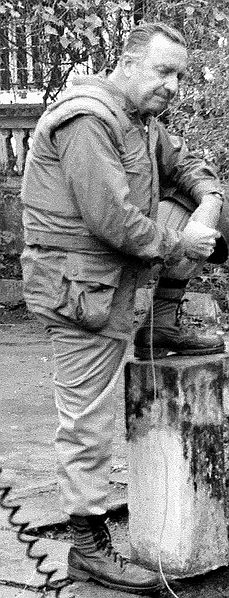
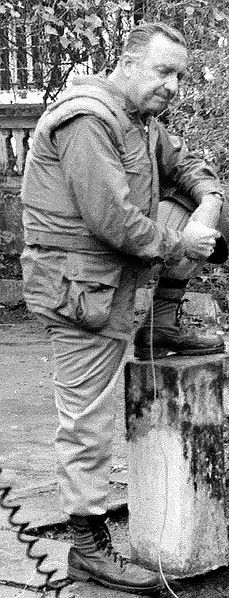
Cronkite in Vietnam

The phenomenon of version variability runs rampant across the presumptive “Cronkite Moment,” the mythical broadcast in 1968 when Walter Cronkite’s editorial comment supposedly altered U.S. war policy in Vietnam.

Version variability is the imprecision that alters or distorts an anecdote in its retelling, and it’s a marker of a media-driven myth.

The “Cronkite Moment” supposedly was an epiphany for President Lyndon Johnson, prompting him to declare:

“If I’ve lost Cronkite, I’ve lost Middle America.”

Or: “If I’ve lost Cronkite, I’ve lost the war.”

Or: “If I’ve lost Cronkite, I’ve lost the American people.”

Or: “If I’ve lost Cronkite, I’ve lost the country.”

Or: “If I’ve lost Cronkite, I’ve lost America.”

To that dubious roster, the Irish Independent the other day offered this version:

“It’s said that Lyndon Johnson knew his presidency had imploded when he sat down one evening after a gargantuan Texan dinner to watch Walter Cronkite denounce his Vietnam policy straight to camera.

“Johnson knew that … it was time to start planning the presidential library.”

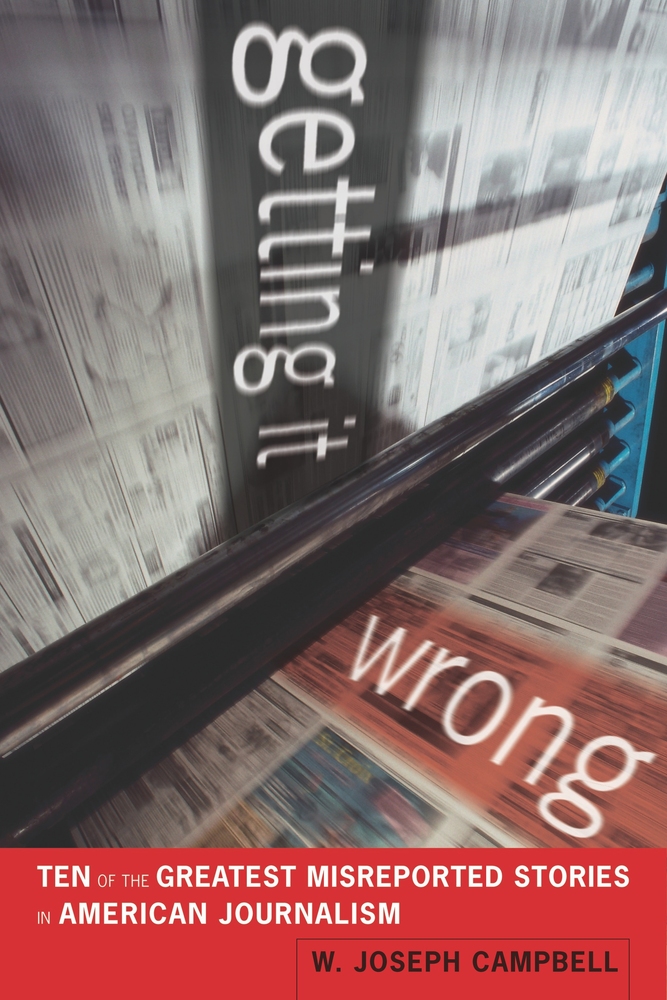
As I discuss in my latest book, Getting It Wrong, Johnson wasn’t in front of a television set the night Cronkite offered what really was an unremarkable assessment of the Vietnam War.

The CBS News anchorman said at the close of an hour-long special report about Vietnam that the war effort there had become “mired in stalemate” and that negotiations might eventually be the way out for the United States.

Other commentators and news outlets had been turning for months to stalemate” to describe the U.S. war effort. So Cronkite’s assessment was hardly striking, hardly very original. Indeed, it was quite tame compared to other commentaries at the time.

But Johnson didn’t see the Cronkite report when it aired February 27, 1968 (and there’s no evidence he saw it later, on videotape). The president most certainly didn’t gorge on “a gargantuan Texan dinner” before sitting down to watch Cronkite’s program.

As the show aired, Johnson was en route to the University of Texas at Austin, to attend the 51st birthday party of a longtime political ally, Governor John Connally.

Johnson spoke for a few minutes at the party. He didn’t bemoan the loss of Cronkite’s support. Rather, he offered light-hearted comments about Connally’s age.

About the time Cronkite was offering his “mired in stalemate” closing assessment, Johnson was saying:

“Today you are 51, John. That is the magic number that every man of politics prays for — a simple majority.”

I further note in Getting It Wrong that even if Johnson saw the Cronkite’s program on videotape, the president “gave no indication of having taken the anchorman’s message to heart.

“Just three days after the program aired, Johnson vowed in remarks at a testimonial dinner in Texas that the United States would ‘not cut and run’ from Vietnam. ‘We’re not going to be Quislings,’ the president said, invoking the surname of a Norwegian politician who helped the Nazis take over his country. ‘And we’re not going to be appeasers….'”

So under scrutiny, the presumptive “Cronkite Moment” dissolves as illusory— a media-driven myth.

“That it does is not so surprising,” I write in Getting It Wrong, adding:

“Seldom, if ever, do the news media exert truly decisive influences in decisions to go to war or to seek negotiated peace. Such decisions typically are driven by forces and factors well beyond the news media’s ability to shape, alter, or significantly influence. So it was in Vietnam, where the war ground on for years after the ‘Cronkite moment.'”

WJC

Recent and related:

Misreading the ‘Cronkite Moment’ — and media power

In Cronkite Moment, Debunking, Media myths on September 13, 2011 at 7:27 am

LBJ wasn't watching Cronkite

The mythical “Cronkite Moment” — that heady occasion in 1968 when an editorial comment by CBS News anchor Walter Cronkite purportedly altered the course of the war in Vietnam — lives on as an irresistible parable about the power of the news media.

The parable is timeless and often invoked — most recently in a commentary posted yesterday at the online sports site, Bleacher Report.

The commentary declared:

“The flashy columnist, opinionated radio host, or aggressive TV interviewer that pushes the needle and ultimately helps get those in charge to make a move for fear of public ridicule and backlash.

“A great example of this came in 1968 in the time of the Vietnam War when a story by broadcasting legend Walter Cronkite called the war unwinnable and un-American, then-president Lyndon B. Johnson was reported to have said ‘If I’ve lost Cronkite, I have lost middle America.’

“That is the kind of power that a strong media personality can have: the power to affect change.”

Except Cronkite didn’t cause such change.

As I discuss in my latest book, Getting It Wrong, Johnson wasn’t in front of a television when Cronkite’s special report aired on February 27, 1968. The president wasn’t lamenting the loss of Cronkite’s support, either.

Rather, Johnson was on the campus of the University of Texas at Austin, offering light-hearted banter at the 51st birthday party of Governor John Connally, a longtime political ally.

At about the time Cronkite was offering his downbeat assessment about the U.S. war effort, Johnson was quipping:

“Today you are 51, John. That is the magic number that every man of politics prays for — a simple majority.”

Not only was the president not watching, but Cronkite’s editorial comment wasn’t especially dramatic or incisive. His comment, offered at the close of his special report, was quite mild.

Most certainly Cronkite did not say the war was “unwinnable” or “un-American,” as the Bleacher Report commentary asserts. He said the U.S. military was “mired in stalemate” in Vietnam and that negotiations eventually might offer America a way out.

The “mired in stalemate” comment was hardly an original assessment.

Leading U.S. news outlets such as the New York Times had turned to “stalemate” for months before the Cronkite program.

For example, in a news analysis published July 4, 1967, the Times said of the war effort:

“Many officers believe that despite the commitment of 466,000 United States troops now in South Vietnam … the military situation there has developed into a virtual stalemate.”

In a report from Saigon that was published August 7, 1967, the Times noted:

“‘Stalemate’ is a fighting word in Washington. President Johnson rejects it as a description of the situation in Vietnam. But it is the word used by almost all Americans here, except the top officials, to characterize what is happening. They use the word for many reasons ….”

Far more assertive than the “mired in stalemate” assessment was a Wall Street Journal editorial, published four days before Cronkite’s special report aired.

The Journal said the U.S. war effort in Vietnam “may be doomed” and that “everyone had better be prepared for the bitter taste of defeat beyond America’s power to prevent.”

As I note in Getting It Wrong, the “Cronkite Moment,” when scrutinized, dissolves as illusory — a chimera, a media-driven myth.

“That it does is not so surprising,” I write. “Seldom, if ever, do the news media exert truly decisive influences in decisions to go to war or to seek negotiated peace. Such decisions typically are driven by forces and factors well beyond the news media’s ability to shape, alter, or significantly influence.

“So it was in Vietnam, where the war ground on for years after the ‘Cronkite moment.’”

WJC

Recent and related:

He ‘did a Zhou Enlai’

In Cronkite Moment, Debunking, Media myths, New York Times on July 26, 2011 at 10:15 am

Cohen (NYTimes photo)

Roger Cohen, a twice-a-week foreign affairs columnist for the New York Times, stirred murmured commentary not long by defending Rupert Murdoch as a phone-hacking scandal swirled around the tycoon’s media holdings in Britain.

“If you add everything up,” Cohen wrote about the tough, old media mogul, “he’s been good for newspapers over the past several decades, keeping them alive and vigorous and noisy and relevant.”

Maybe Cohen was being contrarian. Or maybe he didn’t quite grasp what the scandal says about Murdoch and his corporate management.

In a more recent column, Cohen revealed that he’s not fully up to speed with the revised interpretation of Zhou Enlai’s famous comment in 1972 that “it’s too early” to discern the implications of upheaval in France.

The conventional interpretation is that Zhou was speaking about the French Revolution that began in 1789.

As such, his comment suggests a sagacity and a long view of history seldom matched by Western leaders.

Recent evidence has emerged, however, that says Zhou was referring not to the French Revolution but to the more recent political unrest that rocked France in 1968.

The new evidence was offered last month by Charles W.  (Chas) Freeman Jr., a retired U.S. diplomat who a was present when Zhou made the comment during President Richard Nixon’s visit to China in February 1972.

Freeman discussed the context of Zhou’s remark last month at a panel discussion in Washington, D.C. London’s Financial Times was first to report on the revised interpretation that Freeman offered about Zhou’s comment.

In a subsequent interview with me, Freeman said that Zhou made the remark during a discussion about revolutions that had failed or succeeded.

He pointed out that it was clear from the context that Zhou’s “too early to say” comment was in reference to upheaval in France in May 1968, not the years of turmoil that began in 1789.

Freeman described Zhou’s misinterpreted comment as “one of those convenient misunderstandings that never gets corrected,” adding that “it conveniently bolstered a stereotype … about Chinese statesmen as far-sighted individuals who think in longer terms than their Western counterparts.”

The misconstrued comment fit nicely with “what people wanted to hear and believe,” Freeman said, “so it took” hold.

And it’s not infrequently repeated.

Cohen invoked the conventional interpretation late last week, in a column that began this way:

“When I asked Gen. David H. Petraeus what the biggest U.S. mistake of the past decade has been, he did a Zhou Enlai on the French Revolution number to the effect that it was too early to say.

“The outgoing commander in Afghanistan and incoming Central Intelligence Agency chief is adept at politics,” Cohen wrote, “one reason he’s the object of the sort of political speculation once reserved for Gen. Colin L. Powell, who was the face of the military to most Americans before Petraeus assumed that role later in the post-9/11 era.”

The passage, “he did a Zhou Enlai,” suggests how irresistible Zhou’s misconstrued remark really is — a quality that’s typical of quotations that seem just too highly polished.

“Turns of phrase that sound too neat and tidy often are too perfect to be true,” I write in my latest book, Getting It Wrong, which addresses and debunks 10 prominent media-driven myths.

Among the myths is the remark attributed to President Lyndon B. Johnson, who after watching Walter Cronkite’s pessimistic, on-air assessment about the Vietnam War supposedly said:

“If I’ve lost Cronkite, I’ve lost Middle America.”

Or something to that effect.

Versions vary markedly.

But as I discuss in Getting It Wrong, the anecdote is almost certainly apocryphal.

Johnson wasn’t in front of a television when Cronkite’s special report about Vietnam aired on CBS television on February 27, 1968.

The president wasn’t lamenting the supposed loss of Cronkite’s support, either.

Rather, Johnson was on the campus of the University of Texas at Austin, offering light-hearted banter at the 51st birthday party of a longtime political ally, Governor John Connally.

At about the time Cronkite was saying the U.S. war effort was “mired in stalemate,” Johnson was quipping:

“Today you are 51, John. That is the magic number that every man of politics prays for — a simple majority.”

WJC

Recent and related:

The ‘Cronkite Moment’ was fictive

In Cronkite Moment, Debunking, Media myths on July 8, 2011 at 8:01 am

Cronkite in Vietnam

The mythical “Cronkite Moment” of 1968 offers supposedly timeless and irresistible lessons for journalists about the importance of telling truth to power and about the media’s potential to wield decisive influence.

Trouble is, the “Cronkite Moment” is fictive: It had little of the impact so often ascribed to it — impact of the kind described yesterday by Paul Fanlund, editor of the Capital Times in Madison, Wisconsin.

He wrote at a Capital Times blog:

“One has to be of a certain age, or a student of history, to know Walter Cronkite’s impact on Vietnam. In 1968, the famed broadcaster, who had been privately pro-war, pronounced on air that the war was no longer winnable, prompting President Lyndon Johnson to remark, ‘If I’ve lost Cronkite, I’ve lost the country.'”

Unpacking that paragraph reveals that it’s exaggerated in three ways.

One is that Cronkite (as he himself claimed for many years) had little if any “impact” on the war in Vietnam.

Two, Cronkite did not say on air that “the war was no longer winnable.” He said, in a special report broadcast on February 27, 1968, that the U.S. military was “mired in stalemate” in Vietnam and that negotiations might offer America a way out.

Three, Cronkite’s on-air assessment about Vietnam did not prompt President Lyndon Johnson to declare, “If I’ve lost Cronkite, I’ve lost the country.” Or anything akin to such a remark.

As I discuss in my media myth-busting book, Getting It Wrong, Johnson did not see the Cronkite program when it aired. And there is no evidence the president watched the show later, on videotape.

Moreover, Johnson was not in front of a television set when the Cronkite report about Vietnam was broadcast.

He was on the campus of the University of Texas at Austin, offering light-hearted remarks at the 51st birthday party of Governor John Connally, a long-time political ally.

About the time Cronkite was intoning his “mired in stalemate” assessment, Johnson wasn’t bemoaning his failed Vietnam policy; he wasn’t bemoaning the loss of Cronkite’s support.

He was jesting about Connally’s age.

“Today,” Johnson said, “you are 51, John. That is the magic number that every man of politics prays for—a simple majority.”

Even if he had watched the Cronkite report, it’s unlikely Johnson would have been much moved by the “mired in stalemate” assessment. It was hardly an original observation.

Leading U.S. news outlets such as the New York Times had invoked “stalemate” periodically in the months before the Cronkite program.

For example, in a news analysis published July 4, 1967, the Times said of the war effort:

“Many officers believe that despite the commitment of 466,000 United States troops now in South Vietnam … the military situation there has developed into a virtual stalemate.”

In a report from Saigon that was published August 7, 1967, the Times noted:

“‘Stalemate’ is a fighting word in Washington. President Johnson rejects it as a description of the situation in Vietnam. But it is the word used by almost all Americans here, except the top officials, to characterize what is happening. They use the word for many reasons ….”

By the end of February 1968, “stalemate” had been often used, and had become a rather tame assessment.

Far more assertive was the Wall Street Journal, which, in an editorial published four days before Cronkite’s report, said the U.S. war effort in Vietnam “may be doomed” and that “everyone had better be prepared for the bitter taste of defeat beyond America’s power to prevent.”

Interestingly, Cronkite disputed the notion his report about Vietnam had much impact.

He said in his 1997 memoir that his “mired in stalemate” assessment represented for Johnson “just one more straw in the increasing burden of Vietnam.” It was an analogy Cronkite repeatedly made.

“I think our broadcast simply was another straw on the back of a crippled camel,” he said in an interview on CNN in 1999.

But late in his life, Cronkite began to embrace the purported power of the “Cronkite Moment.” He said in 2006, in an interview with Esquire:

“To be honest, I was rather amazed that my reporting from Vietnam had such an effect on history.”

A case of believing one’s own clippings.

As I note in Getting It Wrong:

“Under scrutiny, the ‘Cronkite moment’ dissolves as illusory — a chimera, a media-driven myth.

“That it does is not so surprising. Seldom, if ever, do the news media exert truly decisive influences in decisions to go to war or to seek negotiated peace. Such decisions typically are driven by forces and factors well beyond the news media’s ability to shape, alter, or significantly influence.

“So it was in Vietnam, where the war ground on for years after the ‘Cronkite moment.'”

WJC

Recent and related:

Those delicious but phony quotes ‘that refuse to die’

In Cinematic treatments, Cronkite Moment, Debunking, Furnish the war, Media myths, Murrow-McCarthy myth, Spanish-American War, Washington Post, Watergate myth on June 25, 2011 at 10:31 am

Craig Silverman, author of Regret the Error, posted an intriguing column yesterday about appealing but dubious quotations that journalists seem especially prone to cite, noting that such famous lines “often turn out to be manufactured or inexact representations.”

It’s an important reminder, given the endless popularity of quotations that are neat, tidy, and irresistibly delicious. As I note in my latest book, Getting It Wrong, “Turns of phrase that sound too neat and tidy often are too perfect to be true.”

Plouffe: Not so 'queasy'?

Silverman’s column, titled “Misquotes that refuse to die,” was centered around a comment attributed in 2009 to David Plouffe, Barrack Obama’s campaign manager in 2008.

Plouffe supposedly said he felt a bit “queasy” about the prospect of Obama’s facing Jon Huntsman, the Republican former Utah governor, in the presidential election in 2012.

“Plouffe never said it,” Silverman wrote, describing how the queasy line took on life of its own.

Journalists can be particularly susceptible to such succinct “little gems,” as Silverman put it, because the gems are so effective in making a point or in distilling complexity.

Silverman’s column noted two famous, dubious quotes that I dismantle in Getting It Wrong.

One of them is the comment misattributed to President Lyndon Johnson who,  in reaction to Walter Cronkite’s on-air assessment that the war in Vietnam was “mired in stalemate,” supposedly said:

“If I’ve lost Cronkite, I’ve lost Middle America.”

Or something to that effect.

Versions as to what Johnson supposedly said vary quite a lot — which can be a marker of a media myth. I also point out in Getting It Wrong that Johnson did not see the Cronkite report when it aired on CBS on February 27, 1968.

The other dubious quote discussed in Getting It Wrong and mentioned by Silverman is William Randolph Hearst’s purported vow to “furnish the war” with Spain.

Reasons for doubting the Hearstian vow are many, I write, and include the fact that the telegram in which Hearst supposedly made the statement has never turned up. Plus, Hearst denied making such a vow.

A number of other famous and delicious quotes favored by journalists likewise have proven to be false, made-up, or of mythical dimension; among them:

  • Too early to say.” It’s often said that Chinese premier Zhou Enlai offered the observation in 1972, as sage, far-sighted analysis about the effects of the French Revolution of 1789. But according to a retired American diplomat, Charles W.  (Chas) Freeman Jr., Zhou’s comment, which came during President Richard Nixon’s visit to China in February 1972, was about political turmoil in France in 1968. “I cannot explain the confusion about Zhou’s comment, except in terms of the extent to which it conveniently bolstered a stereotype” about Chinese leaders taking an exceptionally long and patient view of history, Freeman said recently. Freeman was Nixon’s interpreter on the trip.

So what to do about these delicious but dubious and phony quotations?

Keep pounding away at them, calling them out for what they are, whenever they appear. That’s the only effective way of debunking.

But even then, thorough and utter debunking can be rare.

WJC

Recent and related:

‘Getting It Wrong’ at ‘Reader’s Corner’ tonight

In Cronkite Moment, Debunking, Hurricane Katrina, Media myths, Washington Post, Watergate myth on June 24, 2011 at 6:02 am

I’ll be discussing my latest book, Getting It Wrong, in a half-hour interview that airs tonight at 7:30 (Eastern) on “Reader’s Corner,” a program of Boise State University public radio, KBSX 91.5 FM.

The host is the university’s president, Bob Kustra, an engaging interviewer who taped the show with me last week.

We discussed a number of the media-driven myths debunked in Getting It Wrong, including, in some detail, the mythical “Cronkite Moment” of 1968.

That was when CBS News anchor Walter Cronkite supposedly swung U.S. policy in Vietnam with his on-air assessment that the American military was “mired in stalemate” and that negotiations were a prospective way out of Southeast Asia.

The assessment, I write in Getting It Wrong, “supposedly was so singularly potent that it is has come to be remembered as the ‘Cronkite moment.'”

At the White House, President Lyndon Johnson supposedly watched Cronkite’s program about Vietnam — a special, hour-long report that aired February 27, 1968. Upon hearing Cronkite’s “mired in stalemate” statement, Johnson is said to have leaned over, snapped off the television set, and told an aide or aides:

“If I’ve lost Cronkite, I’ve lost Middle America.”

Or words to that effect. Versions vary. Markedly.

As I point out in Getting It Wrong, however, Johnson didn’t see the Cronkite report when it aired. The president wasn’t at the White House, either.

He was on the campus of the University of Texas at Austin, offering light-hearted banter at the 51st birthday party of Governor John Connally, one of the president’s long-time political allies.

About the time Cronkite intoned his “mired in stalemate” assessment, Johnson was saying this, about Connally’s age:

“Today you are 51, John. That is the magic number that every man of politics prays for—a simple majority.”

It’s difficult to imagine how Johnson was much moved by a show he didn’t see.

Even if the president did watch the Cronkite report at some later date on videotape — and there’s no evidence he did — it’s clear that Johnson did not take the anchorman’s assessment to heart. “Mired in stalemate” was no epiphany for the president.

Indeed, just three days after the Cronkite program aired, Johnson vowed in remarks at a testimonial dinner in Texas that the United States would “not cut and run” from Vietnam.

“We’re not going to be Quislings,” the president said, invoking the surname of a Norwegian politician who helped the Nazis take over his country. “And we’re not going to be appeasers….”

I noted in the interview with Kustra, that Cronkite until late in his life pooh-poohed the notion his assessment about Vietnam represented a pivotal moment.

In his memoir published in 1997, Cronkite wrote that his “mired in stalemate” assessment posed for Johnson “just one more straw in the increasing burden of Vietnam.”

But by 2006, three years before his death, Cronkite had come to embrace the conventional interpretation of the presumptive “Cronkite Moment,” saying in an interview with Esquire:

“To be honest, I was rather amazed that my reporting from Vietnam had such an effect on history.”

Among other topics, Kustra and I discussed the hero-journalist myth of Watergate (the notion that the dogged reporting of Bob Woodward and Carl Bernstein for the Washington Post brought down Richard Nixon’s presidency) and the woefully exaggerated reporting that characterized coverage of Hurricane Katrina’s aftermath in New Orleans.

I also noted during the interview that Getting It Wrong is best regarded as aligned with the fundamental imperative of newsgathering — that of getting it right, of seeking to obtain the most accurate version of events as possible.

WJC

That was quick: Crummy Cleveland mob pic now out on DVD

In Cinematic treatments, Cronkite Moment, Debunking, Furnish the war, Media myths, Spanish-American War on June 16, 2011 at 1:08 pm

It was just three months ago when a low-budget yet widely reviewed movie about Cleveland’s 1970s mob scene came out in limited release.

The film, Kill the Irishman, never much caught on and was released this week in DVD.

I’m hardly surprised that its time in theaters was so brief.

Update: I’ve now seen Kill the Irishman and it’s not as dreadful as anticipated. Still, the movie meanders without making much of a point, other than to glamorize the Cleveland mob scene of the 1970s and romanticize a violence-prone hood named Danny Greene.

I’ve not seen the movie but have enjoyed reading the reviews, such as the one in the New York Times that called Kill the Irishman “an extravagantly corny ode to the collapse of the Cleveland mafia in the 1970s” that “never misses an opportunity to mythologize the meatheads who populate [the] script.”

The Los Angeles Times review likened Kill the Irishman to “clichéd shards of mob movies that add up to the usual ‘Goodfellas’ knockoff.”

Plain Dealer, October 7, 1977

Kill the Irishman is based on the violent life of a Cleveland mob figure, Daniel J. (Danny) Greene, best known for having survived several attempts on his life before falling victim to a deadly car bombing in 1977.

I was in Cleveland then, a young reporter for the city’s morning newspaper, the Plain Dealer. I remember the city’s mob scene as murky, chaotic, and not at all glamorous; its figures — including Greene — were scarcely heroic.

Greene rather struck me as an arrogant, somewhat off-kilter punk.

He was hardly a legendary character possessing the stuff that would attract serious attention beyond Cleveland.

What most rankled me about Kill the Irishman was its exaggerated premise, that there were 36 bombing in the heart of Cleveland in the summer of 1976 as Greene waged a turf war with the local Italian mafia.

Sure, Hollywood exaggerates. A lot. But a documentary-esque film ought not to cock a snook at the truth. And there was no such bombing rampage in downtown Cleveland that summer.

The claim is preposterous.

As I’ve noted previously at Media Myth Alert, the figure of 36 bombings appears to have been mistakenly taken from an article published in May 1977 in the Plain Dealer, as a sidebar to the account of the bombing death of John A. Nardi, a mob figure allied with Greene.

The sidebar article said that in all of 1976, there had been 21 bombings in Cleveland and 37 in Cuyahoga County, which includes Cleveland and most of its many suburbs. That’s a lot, but nothing as stunning or sustained as 36 bombings in the heart of the city in a single summer. Such a spree would correspond to 12 bombings a month.

That never happened.

Also off-putting is the movie’s clear objective of glamorizing the unglamorous Danny Greene. One reviewer of the Blu-Ray version called Kill the Irishman “a clichéd offering of criminal worship ….” Well said.

So maybe I’ll rent the DVD. Some day.

WJC

Recent and related:

Why they get it wrong

In Bay of Pigs, Cronkite Moment, Debunking, Furnish the war, Jessica Lynch, Media myths, New York Times, Newspapers, Washington Post, Watergate myth on June 3, 2011 at 6:49 am

It’s striking how several well-known journalists and news outlets have indulged over last six months in media-driven myths, those dubious tales about the news media that masquerade as factual.

The lineup of myth-indulgers is impressive and, among others, includes:

  • Bill Keller, executive editor of the New York Times, who rubbed shoulders with the Bay of Pigs suppression myth in a column in the Times in January. The suppression myth holds that at the behest of President John F. Kennedy, the Times killed or emasculated its report about the pending Bay of Pigs invasion in 1961. That tale is unfounded, as I discuss in my latest book, Getting It Wrong.
  • Mother Jones magazine which, in its May/June cover story by Rick Perlstein, offered up a rare two-fer — two media myths discussed in a single article. One of the myths was the hoary and surely apocryphal tale about William Randolph Hearst and his reputed vow to “furnish the war” with Spain. The other was about the so-called the “Cronkite Moment” of 1968, in which Walter Cronkite’s on-air assessment that the U.S. military was “mired in stalemate” in Vietnam was so powerful as to alter U.S. policy.
  • Keith Olbermann, the acerbic cable television commentator who, as he quit his prime-time Countdown show in January, referred to the  “exaggerated rescue” of Army private Jessica Lynch in the early days of the Iraq War. Such claims, raised as long ago as 2003, were unsubstantiated by an inquiry of the Defense Department’s inspector general who found the rescue operation was found to have been “a valid mission” to recover Lynch, a prisoner of war, “under combat conditions.”

What accounts for such lapses by prominent journalists and their outlets? Why do these and other media-driven myths often find their way into news reports and commentaries?

Some media myths are just too good not to be true; they almost are too good to take time to check out. The tale about Hearst’s vowing to “furnish the war” certainly falls into this category. It shouldn’t be at all difficult to locate references to the dubious character of the anecdote, which has been the subject of repeated debunking over the years.

Likewise, it can be far easier to invoke a media myths that to commit to the tedium of research and legwork. Media myths are convenient, readily at hand. Poking into their details takes time, and a willingness to challenge what are accepted as consensus narratives.

As I noted in discussing Keller’s column that invoked the Bay of Pigs suppression myth:

“Had Keller consulted the newspaper’s database of reporting about the run-up to the Bay of Pigs invasion in April 1961, he would have found that the Times reported in detail, if not always accurately, about the preparations to infiltrate a U.S.-trained brigade of Cuban exiles in an attempt to topple Fidel Castro.”

Similarly, some media myths (such as the illusory “Cronkite Moment“) may be too ingrained, too dearly held by journalists, ever to be uprooted or thoroughly repudiated.

Unlearning such tales is no small challenge, after all. The conundrum of unlearning was addressed a few months ago in a Wall Street Journal column, which noted:

“For adults, one of the most important lessons to learn in life is the necessity of unlearning. We all think that we know certain things to be true beyond doubt, but these things often turn out to be false and, until we unlearn them, they get in the way of new understanding.”

Media myths also can be convenient means of scoring political points. The two-fer in Mother Jones magazine, for example, were presented as part of a sneering attack about “fact-free” Republicans.

Moreover, media myths — the most prominent of them, anyway — resonate in contemporary contexts.

History, it has been said, is “what we decide to remember,” and journalism history is not an exception. Recalling and celebrating the memory of Cronkite’s supposedly telling truth to power about Vietnam — or of Bob Woodward and Carl Bernstein’s bringing down a corrupt presidency — is to offer reassurance to contemporary journalists at a time of confusion and upheaval in their field.

Deciding to remember such mythical tales is understandable if not justifiable, given that those tales bring solace and reassurance amid sweeping uncertainty.

WJC

Recent and related:

Recalling how a ‘debunker’s work is never done’

In Bay of Pigs, Bra-burning, Cronkite Moment, Debunking, Furnish the war, Jessica Lynch, Media myths, Murrow-McCarthy myth, New York Times, Reviews, War of the Worlds, Washington Post, Watergate myth, Yellow Journalism on May 20, 2011 at 5:45 am

It’s been a year since Jack Shafer, media critic for slate.com, posted his review of my media-mythbusting book, Getting It Wrong. The review offered the telling observation that a “debunker’s work is never done.”

So true.

In the 52 weeks since the review went online, I’ve posted more than 275 essays at Media Myth Alert, nearly all of them calling attention to media-driven myths that have found their way into traditional or online media.

So, no, a debunker’s work is never done.

The top posts over the past 52 weeks, as measured by page views, were these:

Shafer’s review sent traffic to Media Myth Alert, too, as it linked to my post that critically discussed Evan Thomas’ book, The War Lovers.

The review, which appeared beneath the headline “The Master of Debunk,” noted that “the only way to debunk an enshrined falsehood is with maximum reportorial firepower.”

And repetitive firepower. Debunking media myths will happen no other way.

Even then, some myths are so deeply ingrained — so delicious, beloved, and readily at hand — that they’ll probably never be thoroughly uprooted and forgotten.

The tale about William Randolph Hearst’s vow to “furnish the war” with Spain at the end of the 19th century is an excellent example. It’s been around more than 100 years.

And it surely is apocryphal, for a long list of reasons I discuss in Getting It Wrong.

Even so, “furnish the war” lives on — hardy, robust, and apparently only slightly dented for all the debunking broadsides hurled its way. Evan Thomas turned to it in War Lovers. So, more recently, did the Nieman Watchdog blog.

Another especially hardy media myth is the presumptive “Cronkite Moment” of 1968, when Walter Cronkite’s on-air assessment that the U.S. military was “mired in stalemate” in Vietnam supposedly prompted President Lyndon Johnson to declare:

“If I’ve lost Cronkite, I’ve lost Middle America.”

Or something along those lines. Versions vary markedly.

That they do vary is among the many indicators the “Cronkite Moment” is media myth. Another, more direct indicator is that Johnson did not see the program when it aired.

The “Cronkite Moment” surely will live on, too, as it represents so well the news media conceit of the effects of telling truth to power, of serving as the indispensable watchdog of government.

Shafer noted the durability of media myths in one of his periodic dismantlings of the “pharm party” phenomenon, which in some form has circulated for 40-some years. (The mythical “pharm party” has it that teens swipe pharmaceuticals from medicine cabinets at home, dump the purloined pills into a bowl at a party, and take turns swallowing handfuls to see what sort of high they’ll reach.)

Shafer wrote early last year:

“I regret to inform you that this column has failed to eradicate the ‘pharm party’ meme. Since June 2006, I’ve written five columns … debunking pharm parties, and yet the press keeps on churning out stories that pretend the events are both real and ubiquitous.”

He added:

“Any myth hearty enough to survive and thrive for 40-plus years in the media is probably unkillable.”

The Hearstian vow is easily within the 40-plus-years category. So, too, are the “Cronkite Moment,” the Bay of Pigs suppression myth, and the War of the Worlds panic meme.

Irrepressible myths, all.

WJC

Recent and related:

Pakistan facing its ‘Cronkite Moment’? That ‘Moment’ is a myth

In Cronkite Moment, Debunking, Media myths, New York Times on May 13, 2011 at 5:18 am

'Cronkite Moment' a media myth

This is a twist: The Pakistan military may be facing its “Cronkite Moment” in the fallout from the stunning Navy SEALs’ raid that took down terror leader Osama bin Laden.

That, at least, is what ABC News Radio reported yesterday, noting recent on-air criticism by Kamran Khan, a leading Pakistan television journalist whom it characterized as “typically pro-military.”

Khan said last week of Pakistan:

”We have become the biggest haven of terrorism in the world and we have failed to stop it.”

Khan’s criticism, according to ABC, may represent “the Pakistani military’s ‘Walter Cronkite moment,’ akin to when the United States’ most popular television anchor declared in 1968 that Vietnam was unwinnable — after which Lyndon Johnson said, ‘If I’ve lost Cronkite, I’ve lost middle America.'”

As is discussed in my latest book, Getting It Wrong, the purported “Cronkite Moment” a prominent and hardy media-driven myth — a dubious tale about the news media masquerading as factual.

ABC’s claim notwithstanding, Cronkite did not declare the Vietnam War “unwinnable.” At the close of a special report televised on February 27, 1968, the CBS News anchorman said the U.S. military effort in Vietnam was “mired in stalemate.”

And that was a wholly unremarkable and unoriginal observation. The New York Times had for months been using “stalemate” to characterize the war effort.

I further note in Getting It Wrong that “a close reading of the transcript of Cronkite’s closing remarks reveals how hedged and cautious they really were. … Cronkite held open the possibility that the U.S. military efforts might still force the North Vietnamese to the bargaining table and suggested the U.S. forces be given a few months more to press the fight in Vietnam.”

So, no, Cronkite didn’t declare the war “unwinnable.”

Nor is there any documented evidence that President Lyndon Johnson had a powerful, visceral reaction to Cronkite’s fairly pedestrian commentary.

Johnson, as I discuss in Getting It Wrong, did not see the Cronkite special report when it aired.

Johnson at the time was in Austin, Texas, on the campus of the University of Texas, making light-hearted remarks at the 51st birthday party of a longtime political ally, Governor John Connally.

About the time Cronkite was intoning his “mired in stalemate” assessment, Johnson wasn’t lamenting the supposed loss of the anchorman’s support. He wasn’t lamenting the failings of his Vietnam policy.

Johnson was saying:  “Today you are 51, John. That is the magic number that every man of politics prays for — a simple majority.”

Now, that wasn’t the finest joke ever told by an American president. But it clearly demonstrated that Johnson wasn’t fretting about Cronkite that night.

In the days that followed the purported “Cronkite Moment,” Johnson remained forceful and adamant in public statements about the war effort in Vietnam. He was not despairing.

Indeed, just three days after Cronkite’s special report aired, Johnson took to the podium at a testimonial dinner in Texas and vowed that the United States would “not cut and run” from Vietnam.

“We’re not going to be Quislings,” the president said, invoking the surname of a Norwegian politician who helped the Nazis during World War II. “And we’re not going to be appeasers….”

Clearly, the presumptive “Cronkite Moment” was no epiphany for Lyndon Johnson.

WJC

Recent and related: