W. Joseph Campbell

Archive for the ‘Debunking’ Category

Sales of ‘Getting It Wrong’ brisk at NPC’s Book Fair

In Debunking, Media myths, Murrow-McCarthy myth, Year studies on November 10, 2010 at 5:43 pm

The National  Press Club’s Book Fair last night was quite a success.

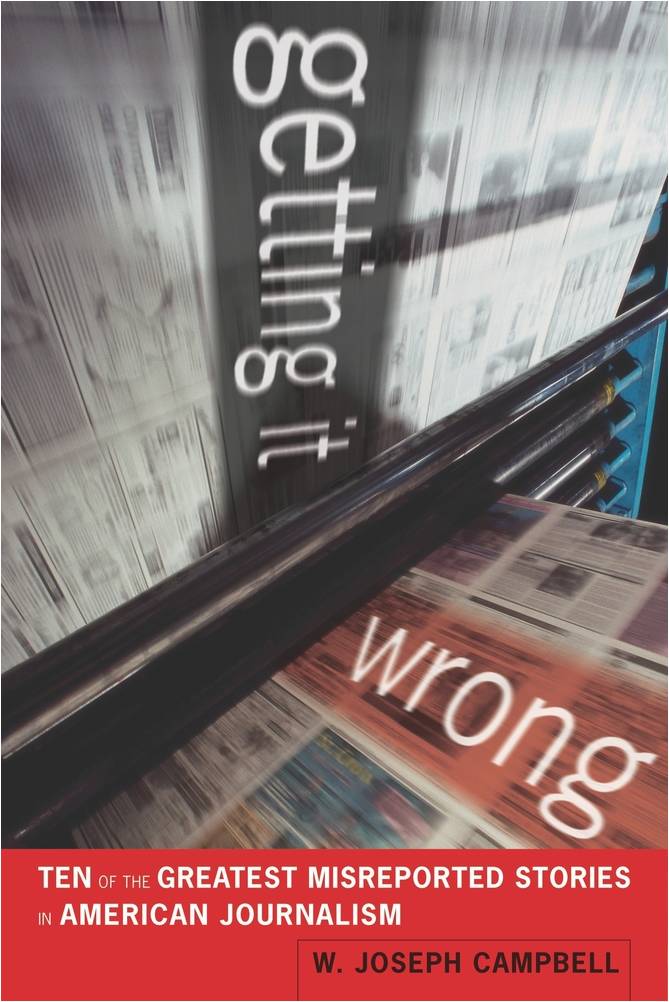
Getting It Wrong was among some 90 titles chosen for the book fair, and sales of the book were gratifyingly brisk. I didn’t keep count, but easily two dozen copies were sold during the three-hour event. Or more.

A volunteer at the checkout counter stopped by as the program was winding down to ask about the book. She said she had seen a lot of people buying it. And she decided to buy a copy, too.

The venue was the Press Club’s ballroom and it was jammed with book-buyers. I thought the crowd was larger than that of four years ago, when I was chosen to attend the book fair to sell copies of The Year The Defined American Journalism: 1897 and the Clash of Paradigms.

I shared a display table this year with Gayle Haggard, the charming author of Why I Stayed, who traveled from Colorado for the book fair. We were across an aisle from Captain Chesley (“Sully”) Sullenberger, who safely landed a stricken USAirways jet on the Hudson River early last year.

Sullenberger was quite the draw, and he left about an hour early, after selling the available copies of his book,  Highest Duty.

I received only one, mild challenge about Getting It Wrong. A small lady who must be in her 70s, thumbed through the book and announced that she disagreed with my take on Edward R. Murrow’s famous television report about Senator Joseph R. McCarthy and his witch-hunting ways.

Murrow “broke the bubble” on the McCarthy scourge, she told me as she returned the book to the stack on the table. I was tempted to point out that Murrow was very late in confronting McCarthy, doing so only after a number of other journalists had taken on the senator. I was tempted as well to note that Murrow and his producer, Fred Friendly, both dismissed the view that Murrow’s 1954 program was decisive in McCarthy’s fall.

But I let it pass.

Another visitor to the table asked whether Getting It Wrong has much attracted from criticism from journalists who find it dismaying that the book busts some of American journalism’s best-known stories.

Some people have resisted giving up on these stories, I replied. But more often the reaction has been one of some surprise that these tales were myths. Others have said they had rather suspected these tales were too good to be true, I added.

During the pre-event reception for authors and guests, I spoke for a while with James Swanson, author of Manhunt: The 12 Day Chase for Lincoln’s Killer and more recently of Bloody Crimes: The Chase for Jefferson Davis and the Death Pageant for Lincoln’s Corpse. Swanson said his next project is a fiction-thriller series. I also chatted with Maurine Beasley, a journalism historian at the University of Maryland who is one of my favorite scholars. Her latest book is Eleanor Roosevelt: Transformative First Lady.

I’m in Florence, Alabama, today, to deliver the first Parker-Qualls Lecture in Communications at the University of North Alabama. It’s a program that I’m very honored to inaugurate.

I also will speak with several classes at UNA on media theory, journalism ethics, and political communication.

WJC

Recent and related:

The sporting version of the ‘Cronkite Moment’

In Cronkite Moment, Debunking, Media myths, New York Times, Year studies on November 9, 2010 at 8:01 am

The mythical “Cronkite Moment” is a hardy and impressively flexible tale.

As a presumptive lesson about journalism’s capacity to tell truths to power, the “Cronkite Moment” turns up in the media in all sorts of ways.

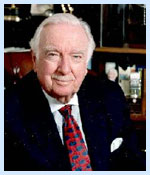
He of the 'Cronkite Moment'

It appears even on the sports pages.

The “Cronkite Moment“–in which the downbeat assessment of CBS New anchorman Walter Cronkite supposedly forced President Lyndon Johnson to understand the futility of his Vietnam War policy–turned up yesterday in a column posted at cbssports.com.

In discussing the firing of Wade Phillips as head coach of the Dallas Cowboys football team, columnist Ray Ratto wrote:

“Cronkite one night came out against the war, right there on the evening news (when there were just three networks and the evening news meant something), and Johnson knew at that moment that he was finished. ‘If I’ve lost Cronkite,’ Johnson is alleged to have said, ‘I’ve lost Middle America.””

Flexibility may make the anecdote appealing and long-lived. But it doesn’t mean it’s true.

As I discuss in my latest book, Getting It Wrong, the “Cronkite Moment” is  a media-driven myth, a tall tale about the news media masquerading as factual.

Let’s unpack what Ratto wrote:

  • Cronkite didn’t really come “out against the war”: He described the U.S. military effort in Vietnam as “mired in stalemate,” which hardly was a striking or novel interpretation at time his assessment was offered in early 1968.
  • Cronkite didn’t present his “mired in stalemate” commentary on the evening news: It came at the end of an hour-long special report about Vietnam that aired February 27, 1968.
  • Johnson did not know “at that moment that he was finished.” Johnson, as I discuss in Getting It Wrong, didn’t even see the Cronkite program when it aired. The president at the time was in Austin, Texas, making light-hearted comments at the 51st birthday party of Governor John Connally, a longtime political ally.

At about the time Cronkite was uttering his “mired in stalemate” comment, Johnson wasn’t in front of a television set. He didn’t exclaim, “If I’ve lost Cronkite, I’ve lost Middle America”–or words to that effect. He said:

“Today you are 51, John. That is the magic number that every man of politics prays for—a simple majority. Throughout the years we have worked long and hard—and I might say late—trying to maintain it, too.”

There was no woe-is-me about having “lost Cronkite.” There was no epiphany for the president that his war policy was a shambles.

Only a light-hearted comment about Connally’s turning 51.

The power of the “Cronkite Moment,” I write in Getting It Wrong, lies “in the sudden, unexpected, and decisive effect it supposedly had on the president.” Had Johnson seen the program later, on videotape, it would not have carried the sudden, unexpected punch that the “Cronkite Moment” is presumed to have had.

Indeed, I write, “Such an effect would have been absent, or greatly diminished, had Johnson had seen the program on videotape at some later date.”

As I say, Cronkite’s “mired in stalemate” view was neither notable nor extraordinary in early 1968. Mark Kurlansky wrote in his fine year-study about 1968 that Cronkite’s view was “hardly a radical position” for the time.

Indeed, nearly seven months before Cronkite’s program, a report in the  New York Times had cited “disinterested observers” in reporting that the war in Vietnam “is not going well.” Victory, the Times reported, “is not close at hand. It may be beyond reach.”

This analysis was published on the Times’ front page in August 1967, beneath the headline:

“Vietnam: The Signs of Stalemate.”

WJC

Recent and related:

‘Getting It Wrong’ among 90 titles at NPC Book Fair

In 1897, Cronkite Moment, Debunking, Hurricane Katrina, Media myths, Murrow-McCarthy myth, Newspapers, Washington Post, Watergate myth, Year studies on November 8, 2010 at 11:55 am

I will be among more than 90 authors signing and selling their recent books tomorrow evening at the annual National Press Club Book Fair and Authors’ Night.

My latest book, Getting It Wrong, will be among the titles at the Press Club event.

The book fair this year brings together a variety of authors, including one of my favorite journalism historians, Maurine Beasley of the University of Maryland; Jack Fuller, author of What Is Happening To News, and Chesley (“Sully”) Sullenberger, the pilot who safely landed a stricken passenger airliner on the Hudson River in January 2009.

The Book Fair is a fine occasion. I attended the event in 2006 and had a great time. My book at that event was The Year That Defined American Journalism: 1897 and the Clash of Paradigms.

Getting It Wrong, which came out during the summer, addresses and debunks 10 prominent media-driven myths. These are stories about and/or by the news media that widely believed and often retold but which, under scrutiny, dissolve as apocryphal or wildly exaggerated.

I liken them to the “junk food” of journalism–delicious and appealing, perhaps, but not terribly healthy or nutritious.

The myths debunked in Getting It Wrong include some of the most cherished stories American journalism tells about itself, including:

“Because it takes on some of the most treasured stories in American journalism,” I write in the introduction to Getting It Wrong, the book “is a work with a provocative edge. It could not be otherwise.”

I further write that Getting It Wrong “aligns itself with a central objective of newsgathering—that of seeking to get it right, of setting straight the record by offering searching reappraisals of some of the best-known stories journalism tells about itself.

“Given that truth-seeking is such a widely shared and animating value in American journalism,” I add, “it is a bit odd that so little effort has been made over the years to revisit, scrutinize, and verify these stories. But then, journalism seldom is seriously introspective, or very mindful of its history. It usually proceeds with little more than a nod to its past.”

I point out that media myths take hold for a variety of reasons: Because they delicious stories that are almost too good not to be true; because they are reductive in offering simplistic interpretations of complex historical events, and because they are self-flattering in that they place journalists at the decisive center of important developments.

The Book Fair opens at 5:30 p.m. Admission is free for members, and $5 for non-members.

WJC

Recent and related:

LBJ ‘changed Vietnam policy based on Cronkite’s views’? Hardly

In Cronkite Moment, Debunking, Media myths on November 7, 2010 at 10:16 am

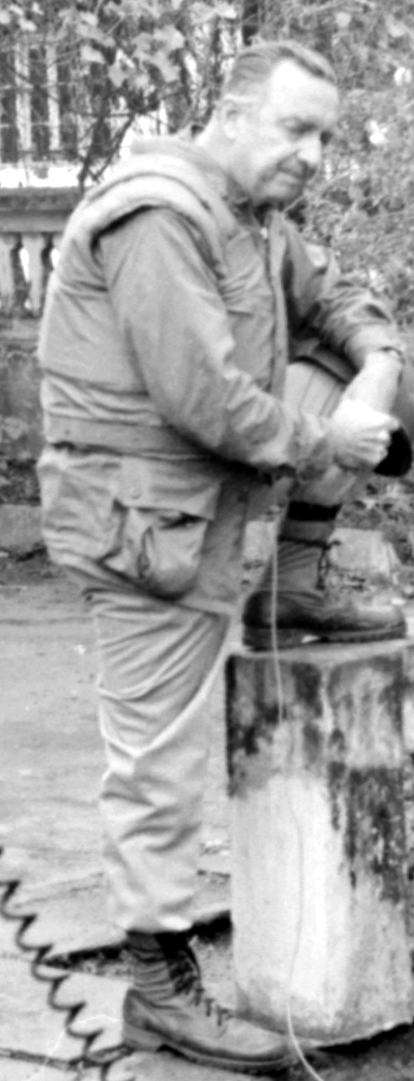
Cronkite in Vietnam, 1968

The presumptive “Cronkite Moment” is one of American journalism’s most memorable occasions. It was a time, supposedly, when a leading media figure offered analysis so penetrating and revealing that it altered U.S. foreign policy.

That notion was reiterated the other day in a commentary posted at the Big Journalism online site. The commentary alluded to the broadcast in February 1968 in which CBS News anchorman Walter Cronkite declared that the U.S. war effort in Vietnam was “mired in stalemate.” President Lyndon Johnson supposedly saw the Cronkite report and, upon hearing the anchorman’s assessment, realized his war policy was a  shambles.

“If I’ve lost Cronkite,” Johnson purportedly declared, “I’ve lost Middle America.”

Another version has the president saying: “If I’ve lost Cronkite, I’ve lost the war.”

In a clear reference to the mythical “Cronkite Moment,” the Big Journalism commentary stated:

“LBJ was afraid of the activist old media when he changed his Vietnam policy based on what Walter Cronkite thought. Nothing could be more sad and pathetic than that and America paid a dear price for Johnson’s fear of the media.”

As I discuss in my latest book, Getting It Wrong, the Cronkite program on Vietnam quite simply did not have the powerful effects so often attributed to it. The “Cronkite Moment” is one hardy media-driven myth.

I further note in Getting It Wrong:

“Scrutiny of the evidence associated with the program reveals that Johnson did not have—could not have had—the abrupt yet resigned reaction that so often has been attributed to him. That’s because Johnson did not see the program when it was aired.”

The president was not in front of a television set when Cronkite’s report on Vietnam aired on the evening of February 27, 1968. He was not at the White House. He was in Austin, Texas, attending the 51st birthday party of a longtime political ally, Governor John Connally.

And about the time Cronkite was intoning his “mired in stalemate” assessment, Johnson wasn’t throwing up his hands in despair over his war policy. He was offering light-hearted banter about Connally’s age, saying:

“Today you are 51, John. That is the magic number that every man of politics prays for—a simple majority. Throughout the years we have worked long and hard—and I might say late—trying to maintain it, too.”

There is no evidence that Johnson ever watched a recording of the Cronkite show. Johnson’s memoir, The Vantage Point, is silent about the program, offering no clue as to whether he ever saw it or, if he did, what he thought of it.

In any case, the power of the reputed “Cronkite Moment” lies “in the sudden, unexpected, and decisive effect it supposedly had on the president,” I note in Getting It Wrong. “Such an effect would have been absent, or greatly diminished, had Johnson had seen the program on videotape at some later date.”

I also write:

“Even if he had seen Cronkite’s program on videotape, Johnson gave no indication of having taken the anchorman’s message to heart.

“Just three days after the program aired, Johnson vowed in remarks at a testimonial dinner in Texas that the United States would ‘not cut and run’ from Vietnam. ‘We’re not going to be Quislings,’ the president said, invoking the surname of a Norwegian politician who helped the Nazis take over his country. ‘And we’re not going to be appeasers.'”

In the immediate aftermath of the Cronkite program, Johnson remained hawkish on the war in Vietnam. He was not moved by a TV show he had not seen.

WJC

Recent and related:

‘Follow the money’: A made-up Watergate line

In Cinematic treatments, Debunking, Media myths, Newspapers, Washington Post, Watergate myth on November 6, 2010 at 6:52 am

“Follow the money” is one of the most memorable phrases of Watergate-era American journalism.

And it’s a made-up line.

That hasn’t prevented it from being invoked, as it was yesterday in a blog post at the online financial site, MarketWatch.

The item discussed how the Washington Post continues to be buoyed by its Kaplan education-testing service unit, saying:

“If Kaplan’s business ever went south, the Washington Post Co. would be in big trouble—and the flagship newspaper would likely become a shadow of its former self.”

No doubt.

The MarketWatch item closed by invoking the “follow the money” phrase, stating:

“The Post family had better pray that nothing unsettles Kaplan’s business. Kaplan is their lifeblood and future. As the Post preached during its glory days, the Watergate investigations of the 1970s, follow the money.”

The attempt to offer a cute closing line misfired. “Follow the money” never figured in the newspaper’s Watergate coverage–which is the topic of a chapter in my latest book, Getting It Wrong.

A search of the electronic archive of all issues of the Post from June 1, 1972, to October 1, 1974, the period embracing the Watergate scandal, produced no returns for the phrase “follow the money.”

The line, however, was uttered in the cinematic version of All the President’s Men by the anonymous and mysterious source code-named “Deep Throat.” The movie dramatized the Watergate reporting of Post reporters Bob Woodward and Carl Bernstein and was based on their non-fiction book by the same title.

But the phrase “follow the money” doesn’t appear in the book.

As I noted in a blog post last month, the line was “kind of made up for the movie,” according to an item at the online site of National Public Radio.

That item quoted an NPR research librarian as saying that newsman Daniel Schorr once asked her “to find the phrase ‘follow the money’ in the book All The President’s Men.

The librarian was further quoted as saying that she “went through the book page by page,” finding that the “phrase does not appear there.

“And then in talking to Bob Woodward and the screenwriter, William Goldman, Dan discovered that [the phrase is] actually kind of made up for the movie.”

I also noted that former Nixon speechwriter William Safire offered in 1997 a somewhat more detailed version of the anecdote, writing in the New York Times Sunday Magazine that Woodward and Goldman blamed each other for having invented the line.

“The screenplay was written by William Goldman,” Safire wrote. “When Schorr called him, the famed screenwriter at first insisted that the line came from the book; when proved mistaken about that, he said: ‘I can’t believe I made it up. I was in constant contact with Woodward while writing the screenplay. I guess he made it up.”’

Safire wrote that Schorr “then called Woodward, who could not find the phrase in his exhaustive notes of Watergate interviews. The reporter told Schorr he could no longer rely on his memory as to whether Deep Throat had said the line and was inclined to believe that Goldman had invented it.”

(New York Times columnist Frank Rich wrote in 2005 that Goldman took credit for coming up with “follow the money.”)

The Post in an article last summer praised All the President’s Men, which was released in 1976, saying the movie had “held up not only as a taut, well-made thriller but as the record itself of the Watergate scandal that transpired four years earlier.”

The Post article also stated:

“It barely matters that the film’s most iconic piece of dialogue–‘Follow the money’– was never spoken in real life.”

How so, it barely matters?

It certainly does matter. The memorable, often-quoted but phony line is emblematic of the exaggerations that characterize the movie.

Far from being “the record itself of the Watergate scandal,” the cinematic version of All the President’s Men presented “a neat, tidy, and vastly simplified account” of the scandal, I write in Getting It Wrong. It’s a version “that allowed viewers to sidestep the scandal’s complexity while engaging in an entertaining storyline.”

The movie version helped cement the heroic-journalist myth of Watergate by leaving the inescapable but erroneous impression that Woodward and Bernstein were central to unraveling the scandal and to forcing the resignation of a president.

WJC

Recent and related:

Many thanks to fivefeetoffury and
to Ed Driscoll for linking to this post.

SRO for ‘Getting It Wrong’ talk at UMd

In Anniversaries, Cronkite Moment, Debunking, Furnish the war, Jessica Lynch, Media myths, Media myths and radio, War of the Worlds, Washington Post, Watergate myth on November 5, 2010 at 11:50 am

A terrific audience of journalism students and faculty turned out last night for my talk at the University of Maryland’s Merrill College of Journalism.

It was standing-room-only at the Knight Hall conference room, where I discussed several chapters in my latest book, Getting It Wrong, which debunks 10 prominent media-driven myths.

I walked through the heroic-journalist myth of the Watergate scandal that toppled Richard Nixon’s presidency; the mythical  “Cronkite Moment” of 1968 that reputedly shifted U.S. public opinion about the war in Vietnam, and The War of the Worlds radio dramatization of 1938 that supposedly panicked listeners across the United States.

During the Q-and-A period that followed, I touched on the famous vow to “furnish the war” attributed to William Randolph Hearst and on the erroneously reported battlefield heroics of Private Jessica Lynch early in the Iraq War.

An intriguing question from the audience was what message should students take away from a book that identifies as media-driven myths some of the best-known stories in American journalism. The implication was that mythbusting may undercut the regard would-be journalists have for the profession.

I replied by saying that I  don’t consider Getting It Wrong a media-bashing book: Such books are many on the market as it is.

Rather, I said, the mythbusting in Getting It Wrong is aligned with the fundamental objective of American journalism. And that is to get it right, to offer an account that is as accurate as possible.

And it does journalism little good to indulge in tales such as the heroic-journalist myth of Watergate or the mythical “Cronkite Moment” that offer misleading interpretations about the news media and their power.

Debunking media myths, as I write in Getting It Wrong, “can help to place media influence in more coherent context.”

Nor should we worry about students being disappointed that well-known and even cherished stories about American journalism have been exposed as mythical. It shouldn’t be disheartening to learn the news media aren’t necessarily the powerful forces they are often believed to be.

Students can handle it.

Not only that, but mythbusting can offer them useful lessons in the importance of applying skepticism and a critical eye to dominant narratives and received wisdom of American journalism.

Indeed, Professor John Kirch, host and organizer of my talk at Maryland, does just that in presenting these and other tales in his journalism classes. Doing so can become a revealing exercise in critical thinking.

I also was asked about candidate-myths for a prospective sequel to Getting It Wrong.

A strong candidate for such a book, I said, is the myth of viewer-listener disagreement in the first Kennedy-Nixon debate in 1960.

The myth has it that people who watched the debate on television thought that Senator John F. Kennedy won; those who listened on radio thought Vice President Richard Nixon had the better of the exchanges.

The notion of listener-viewer-disagreement was long ago debunked by David L. Vancil and Sue D. Pendell, in an article in Central States Speech Journal. They noted that reports of viewer-listener disagreement typically were anecdotal and the few surveys that hinted at a viewer-listener disconnect were too small and unrepresentative from which to make confident judgments.

But the myth is a hardy one, I noted, and it resurfaced in late September, at the 50th anniversary of the Kennedy-Nixon encounter.

Among the 80 or so people in attendance last night was Jamie McIntyre, former Pentagon correspondent for CNN. Afterward, we compared notes about the misreported Lynch case, which the Washington Post propelled into the public domain with a botched, front-page story in early April 2003.

Recent and related:

‘If I’ve lost Cronkite’–ever-hardy, and illusory

In Cronkite Moment, Debunking, Media myths, Newspapers on November 4, 2010 at 5:15 pm

Few tales in American journalism are as hardy as the mythical “Cronkite Moment,” that occasion in late February 1968 when an on-air commentary by CBS News anchorman Walter Cronkite altered a president’s thinking about the war in Vietnam.

The purported “Cronkite Moment” is so trenchant, so believable and revealing that it lives on as a timeless example of the power of the news media–of how effective they can be as forces for truth-telling.

Problem is, the “Cronkite Moment” is illusory.

As I discuss in my latest book, Getting It Wrong, the anecdote is dubious and improbable on many grounds.

Still, the “Cronkite Moment” made another appearance recently, this time in column posted at the New York edition of examiner.com. The column declared:

“President Lyndon Johnson is reported to have said, referring to diminishing support from pivotal 1960s news anchor Walter Cronkite, ‘If I’ve lost Cronkite, I’ve lost Middle America.'”

The anecdote centers around Cronkite’s special program on the Vietnam War, a show that aired February 27, 1968. Near the end of the report, Cronkite declared the U.S. war effort was “mired in stalemate” and suggested negotiations with the communist North Vietnamese as a way to end the conflict.

At the White House, Johnson supposedly watched the Cronkite program. Upon hearing the anchorman’s assessment, the president supposedly snapped off the television set and told an aide or aides:

“If I’ve lost Cronkite, I’ve lost Middle America.”

Or something to that effect. As I point out in Getting It Wrong, versions vary markedly as to what the president supposedly said. And acute version variability can be a marker of a media-driven myth.

The anecdote’s broader point is that Cronkite was such an honest and trusted figure that his views could sway opinions of thousands of Americans. And with Cronkite having gone wobbly on Vietnam, the Johnson White House supposedly reeled.

But the Cronkite program on Vietnam quite clearly had no such effect.

Johnson didn’t see the show when it aired. He wasn’t in front of a television set; nor was he at the White House.

The president that night was in Austin, Texas, attending the 51st birthday party of a longtime political ally, Governor John Connally.

At about the moment Cronkite was intoning his “mired in stalemate” commentary, Johnson was offering light-hearted banter about Connally and his age.

“Today you are 51, John,” the president told Connally. “That is the magic number that every man of politics prays for—a simple majority. Throughout the years we have worked long and hard—and I might say late—trying to maintain it, too.”

Earlier that day, Johnson has delivered a rousing speech in Dallas, in which he cast America’s role in Vietnam in Churchillian terms.

“There will be blood, sweat and tears shed,” the president declared, adding:  “I do not believe that America will ever buckle” in pursuit of its objectives in Vietnam.

Even if the president did see the Cronkite program, or was told about the show, it is exceedingly difficult to imagine how his mood could have swung so abruptly, from vigorously defending the war effort to throwing up his hands in despair.

But if the “Cronkite Moment” is to be believed, that’s what happened: An abrupt, dramatic, and decisive change of heart occurred within hours of the president’s hawkish speech in Dallas.

And that’s just not likely.

WJC

Recent and related:

Hearst ‘pushed us into war’? How’d he do that?

In Debunking, Media myths, Newspapers, Spanish-American War on November 3, 2010 at 2:44 pm

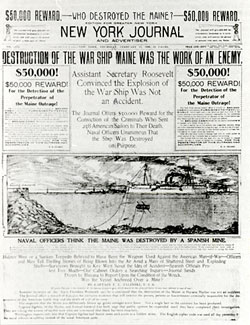
'Maine' destroyed

So powerful was William Randolph Hearst, the favorite bogeyman of American journalism, that he and his flamboyant yellow press brought on the Spanish-American War in 1898.

It’s a popular but dubious claim–a media myth, really–that lives on as a cautionary tale about the dark potential of media power.

This enduring myth about Hearst and the war was invoked yesterday, in a post at the Atlantic online site. The item–which took a few pokes at another bogeyman of journalism, global media mogul Rupert Murdoch–declared:

“Murdoch has displayed an absolute genius for pouring gasoline on fires. It’s an old tabloid technique, of course, as William Randolph Hearst well knew as he pushed us into war with Spain a century ago.”

Left quite unsaid is how Hearst accomplished that, how specifically “he pushed us into war with Spain.” It’s a topic we’ve explored previously at Media Myth Alert.

And the answer is, he didn’t.

He couldn’t have.

As I wrote in my 2001 book, Yellow Journalism: Puncturing the Myths, Defining the Legacies:

“The yellow press is not to blame for the Spanish-American-War. It did not force—it could not have forced—the United States into hostilities with Spain over Cuba in 1898. The conflict was, rather, the result of a convergence of forces far beyond the control or direct influence of even the most aggressive of the yellow newspapers, William Randolph Hearst’s New York Journal.”

In 1898, Hearst’s newspapers were the Journal, the New York Evening Journal, and the San Francisco Examiner. These three titles wielded what was at very best modest agenda-setting influence on the rest of the American press, which numbered more than 2,200 daily newspapers.

Indeed, as I noted in Yellow Journalism:

“There is little evidence that the press beyond New York City, especially in small-town and rural America, was influenced by the content of the yellow journals, including their demands for war after the destruction of the Maine,” an American battleship that blew up in Havana harbor in February 1898, killing 266 officers and sailors. (See front-page image, above.)

The destruction of the Maine–in a harbor under Spanish control–was a trigger for the war that began in April 1898, amid a diplomatic impasse between the United States and Spain over extending self-rule to Cuba.

That impasse was the central cause of the conflict.

Invariably absent in the claims that Hearst “pushed us into war” are persuasive explanations about how the often-exaggerated contents of his newspapers were transformed into U.S. policy, and how specifically those contents were decisive in the decisionmaking the led to the United States to declare war on Spain.

If Hearst and his yellow press had indeed “pushed us into war,” researchers surely should be able to find evidence of such influence in the personal papers and in the reminiscences of policymakers of the time.

But nothing of the like can be found in the private letters, diary entries, and diplomatic correspondence of top members of the administration of President William McKinley.

Those papers contain “almost no evidence that the demands of the yellow journals—especially during the critical weeks after the Maine’s destruction—penetrated the thinking of key White House officials, let alone influenced the Cuban policy of the McKinley administration,” I wrote in Yellow Journalism.

And the few occasions when McKinley administration officials did refer to the yellow press in the run-up to the war, they tended to dismiss it as an annoyance or scoff it at as a complicating factor.

WJC

Recent and related:

Mythical ‘Cronkite Moment’ is ‘believed because it’s believable’

In Cronkite Moment, Debunking, Media myths on November 2, 2010 at 5:15 pm

Johnson and 'Cronkite Moment'

The Wall Street Journal‘s “Best of the Web” online feature yesterday invoked the mythical “Cronkite Moment” of 1968, recalling it as “the oft-told story of President Johnson lamenting, ‘If I’ve lost [Walter] Cronkite, I’ve lost Middle America.'”

Best of the Web,” which is compiled and written by James Taranto, noted that the Cronkite-Johnson anecdote “is almost certainly apocryphal, but it was widely believed because it was believable.”

It’s a telling point: The tale is believed–and is often retold–because it is believable. Like other media-driven myths, the “Cronkite Moment” resides on the cusp of plausibility.

The anecdote tells of Lyndon Johnson’s supposed reaction to Cronkite’s on-air assessment that the U.S. war effort in Vietnam was “mired in stalemate” and that negotiations might prove to be the way out. Johnson reputedly watched the program at the White House and, upon hearing Cronkite’s show-ending commentary, leaned over and switched off the television and said to an aide or aides:

“If I’ve lost Cronkite, I’ve lost Middle America.”

Or words to that effect. Versions vary markedly as to what the president supposedly said.

Cronkite’s assessment reputedly was an epiphany to the president, who after the “Cronkite Moment” altered war policy and decided against seeking reelection. In the aftermath of Cronkite’s “mired in stalemate” assessment, American public opinion also swung against the war.

Or so the story has it.

But as I write in my latest book, Getting It Wrong, Cronkite’s report, which aired on CBS on February 27, 1968, had none of those effects–principally because Johnson did not see the show program when it aired.

The president at the time was in Austin, Texas, attending the 51st birthday party of Governor John Connally, a longtime political ally (see photo, above).

There’s no evidence that Johnson later saw the program on videotape, or what he thought of it, if he did see it.

We do know, though, that Johnson was openly hawkish about the war in the days and weeks immediately following Cronkite’s report. As I point out in Getting It Wrong, in mid-March 1968, Johnson gave a rousing, lectern-pounding speech in which he urged a “total national effort” to win the war in Vietnam.

So Johnson was hardly throwing up his hands in despair. That he remained hawkish signals how the “Cronkite Moment” represented no epiphany for the president.

Taranto’s quite right about the anecdote’s being “believed because it was believable.” Although it’s doubtful whether Cronkite ever was “the most trusted” man in America, he was a force in American broadcast journalism in the 1960s and 1970s, a time when network television news mostly was delivered on just three or four channels.

The Cronkite-Johnson story also lives on because it is so readily grasped and easily recalled. As I write in Getting It Wrong, prominent media myths are tenacious because they are reductive–they tend to “minimize or negate complexity in historical events and offer simplistic and misleading interpretations instead.”

The Cronkite-Johnson anecdote is a simplistic tale, but it also affirms the supposed power of the news media in American life. On important issues, the anecdote says, the news media can tell truth to power. They can be vital, even courageous forces in shaping and executing policy.

But all of those powerful effects begin to dissolve when it’s pointed out that Johnson never saw Cronkite’s program in the first place.

WJC

Recent and related:

Turbulent times and the myth of ‘bra burning’

In Bra-burning, Debunking, Media myths on November 1, 2010 at 11:47 am

Bra-burning,” I note in my latest book, Getting It Wrong, has long been a “convenient shorthand for describing the upheaval of the 1960s and early 1970s” in America.

At the 'Freedom Trash Can'

The term, I write, is often “casually invoked as a defining phrase, or cliché, of those troubled times—as in ‘the era of bra-burning,’ ‘the hysteria of bra-burning,’ the time of ‘raucous bra burning,’ when there were ‘bra burnings across the land,’ [and] ‘the bra-burning days of the turbulent 1960s’….”

The Dunkirk Observer newspaper in western New York State yesterday added to that refrain, asserting in a commentary about women’s liberation:

“The 1960s and 70s witnessed some more turbulent times in this liberation movement, including bra burning and other forms of protest.”

As I discuss in Getting It Wrong–which debunks 10 prominent media-driven myths–the notion of bra-burning stems from the women’s liberation protest at Atlantic City on September 7, 1968. About 100 or so demonstrators gathered on the boardwalk there to protest the Miss America pageant as a mindless spectacle degrading to women.

Leaders of the protest have long insisted that no bras were set afire that day–or at any time as part of a women’s liberation protest. Robin Morgan, lead organizer of the Atlantic City protest, has asserted, for example:

“There were no bras burned. That’s a media myth.”

However, Getting It Wrong offers evidence that bras and other items were burned–or at least smoldered–for a short time during the protest, a centerpiece of which was a burn barrel the demonstrators called the “Freedom Trash Can” (see photo, above).

Into the burn barrel they tossed such items as bras, girdles, and high-heeled shoes, as well as copies of Playboy and Cosmopolitan magazines.

My research, as described in Getting It Wrong, found a long-overlooked contemporaneous account in the Press of Atlantic City that said bras and other items in the Freedom Trash Can were set afire that day.

That account was written by a veteran reporter named John Boucher and published September 8, 1968, beneath the headline:

Bra-burners blitz boardwalk.”

Boucher’s article, which appeared on page 4 of the Press, was separately endorsed years later by Jon Katz, who in 1968 was a young reporter for the Atlantic City newspaper. He also covered the women’s liberation protest.

“I quite clearly remember the ‘Freedom Trash Can,’ and also remember some protestors putting their bras into it along with other articles of clothing, and some [Miss America] Pageant brochures, and setting the can on fire,” Katz said in an interview with me.

“I am quite certain of this.”

Katz also said:

“I recall and remember noting at the time that the fire was small, and quickly was extinguished, and didn’t pose a credible threat to the Boardwalk.”

As I point out in Getting It Wrong, the witness accounts of Boucher and Katz offer no support for “the far more vivid and popular imagery that many bras went up in flames” in a bonfire on the Boardwalk.

At most, “bra-burning” was confined to that single occasion at Atlantic City in 1968. Even then, it was more akin to bra-smoldering than a fiery spectacle in which demonstrators twirled flaming bras over their heads.

WJC

Recent and related: