W. Joseph Campbell

Archive for the ‘Furnish the war’ Category

Fact-checking ‘Mother Jones’: A rare two-fer

In Cronkite Moment, Debunking, Furnish the war, Media myths, New York Times, Spanish-American War on April 26, 2011 at 7:07 am

The most prominent media-driven myths — those dubious or apocryphal stories about the news media that masquerade as factual — include William Randolph Hearst’s vow to “furnish the war” and the so-called “Cronkite Moment” of 1968.

Mother Jones magazine, in the cover story of its May/June number, cites both tales as if they were genuine, in a rare, myth-indulging two-fer.

In an article written by Rick Perlstein and titled “Inside the GOP’s fact-free nation,” Mother Jones says of Hearst (who was no Republican):

“In a fearsome rivalry with Joseph Pulitzer, he chose as his vehicle the sort of manly imperialism to which the Washington elites of the day were certainly sympathetic — although far too cautiously for Hearst’s taste. ‘You furnish the pictures,’ he supposedly telegraphed a reporter, ‘and I’ll furnish the war.’ The tail wagged the dog.”

You furnish the pictures, and I’ll furnish the war.” Couching it with “supposedly” allows no free pass for myth-telling.

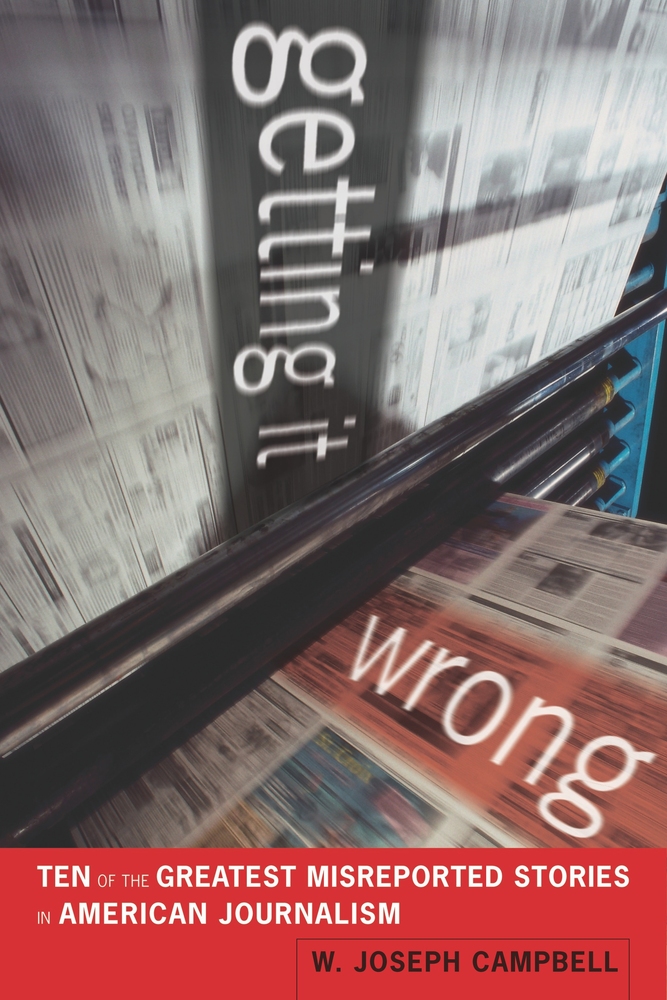
It’s quotation most often attributed to Hearst. And as I discuss in my latest book, Getting It Wrong, it’s a durable media-driven myth that has survived “concerted attempts to discredit and dismantle it.”

It is, I add, “succinct, savory, and easily remembered. It is almost too good not to be true.”

The purported recipient of Hearst’s telegram was not “a reporter,” as Perlstein writes, but Frederic Remington, the famous artist of the American West.

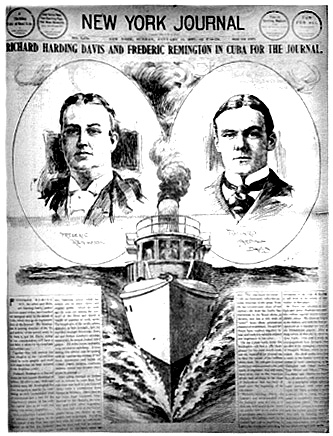
Remington, Davis in Cuba

Hearst had assigned Remington and the correspondent Richard Harding Davis to Cuba to cover the insurrection against Spanish colonial rule. They arrived in Havana in early January 1897, and Remington six days later.

He parted ways with Davis in Matanzas, Cuba, and, before leaving Havana for New York, supposedly cabled Hearst, saying:

“Everything is quiet. There will be no war. I wish to return.”

Hearst, in reply, cabled his famous vow, telling Remington:

“Please remain. You furnish the pictures, and I’ll furnish the war.”

Remington didn’t stay. He promptly returned to New York, where his sketches were given prominent display in Hearst’s New York Journal, appearing beneath such headlines as:

“Cuban War Sketches Gathered in the Field by Frederic Remington; The Gifted Artist, Visiting Cuba Especially for the Journal.”

That’s hardly an accolade Hearst would have extended to someone who had so brazenly disregarded instructions to remain on the scene.

As I write in Getting It Wrong, “the anecdote lives on despite a nearly complete absence of supporting documentation. It lives on even though telegrams supposedly exchanged by Remington and Hearst have never turned up.”

What’s more, I note in Getting It Wrong, the Remington-Hearst anecdote “lives on despite an irreconcilable internal inconsistency: It would have been absurd for Hearst to vow to ‘furnish the war’ because war — specifically, the Cuban rebellion against Spain’s colonial rule — was the very reason Hearst sent Remington to Cuba in the first place.”

Anyone who read U.S. newspapers in early 1897 “would have been well aware,” I write, “that Cuba was a theater of a nasty war,” which gave rise in April 1898 to the Spanish-American War.

The tale about the Remington-Hearst exchange is surely apocryphal.

So, too, is the presumed effect of the “Cronkite Moment” which, like the story about Hearst’s famous vow, is “succinct, savory, and easily remembered.”  It reputedly demonstrates the potency of broadcast journalism.

The “Cronkite Moment” was, I point out in Getting It Wrong, purportedly “an occasion when the power of television news was unequivocally confirmed,” a rare, pivotal moment when a truth-telling broadcast demonstrated the folly of a faraway war.

Perlstein writes in Mother Jones:

“Walter Cronkite traveled to Saigon after the Tet Offensive in 1968, saw things with his own eyes, and told the truth: The Vietnam War was stuck in a disastrous stalemate, no matter what the government said. That was a watershed.”

Well, no, it wasn’t.

Cronkite did indeed travel to Vietnam in February 1968 and upon his return to the United States aired an hour-long special report about the war, in which he concluded that the American military was “mired in stalemate” and suggested that negotiations offered the best way out.

But “mired in stalemate,” I write in Getting It Wrong, “was neither notable nor extraordinary” by February 27, 1968, when Cronkite’s report aired. As Mark Kurlansky wrote in his study of the year 1968, Cronkite’s assessment was “hardly a radical position” for the time.

Indeed, months before the program, the New York Times had been using “stalemate” to describe the war in Vietnam.

On July 4, 1967, for example, the Times said this about the war effort:

“Many officers believe that despite the commitment of 466,000 United States troops now in South Vietnam … the military situation there has developed into a virtual stalemate.”

And in a front-page analysis published August 7, 1967, the Times declared “the war is not going well.” Victory “is not close at hand.”

The Times published the analysis beneath the headline:

Vietnam: The Signs of Stalemate.

And in an editorial published October 29, 1967, the Times offered this assessment:

“Instead of denying a stalemate in Vietnam, Washington should be boasting that it has imposed a stalemate, for that is the prerequisite – on both sides – to a negotiated settlement. That settlement, if it is to be achieved, will have to be pursued with the same ingenuity and determination that have been applied to fighting the war.”

Cronkite’s “mired in stalemate” represented no watershed, no assessment of exceptional and stunning clarity. Cronkite said as much in his memoir, which was published in 1997. He wrote that his special report represented for President Lyndon B. Johnson “just one more straw in the increasing burden of Vietnam.”

In fact, public opinion had begun shifting away from supporting the war months before the “Cronkite Moment.”

It’s often said that Johnson watched Cronkite’s program and, upon hearing the “mired in stalemate” interpretation, snapped off the television set and said something to the effect of:

“If I’ve lost Cronkite, I’ve lost Middle America.”
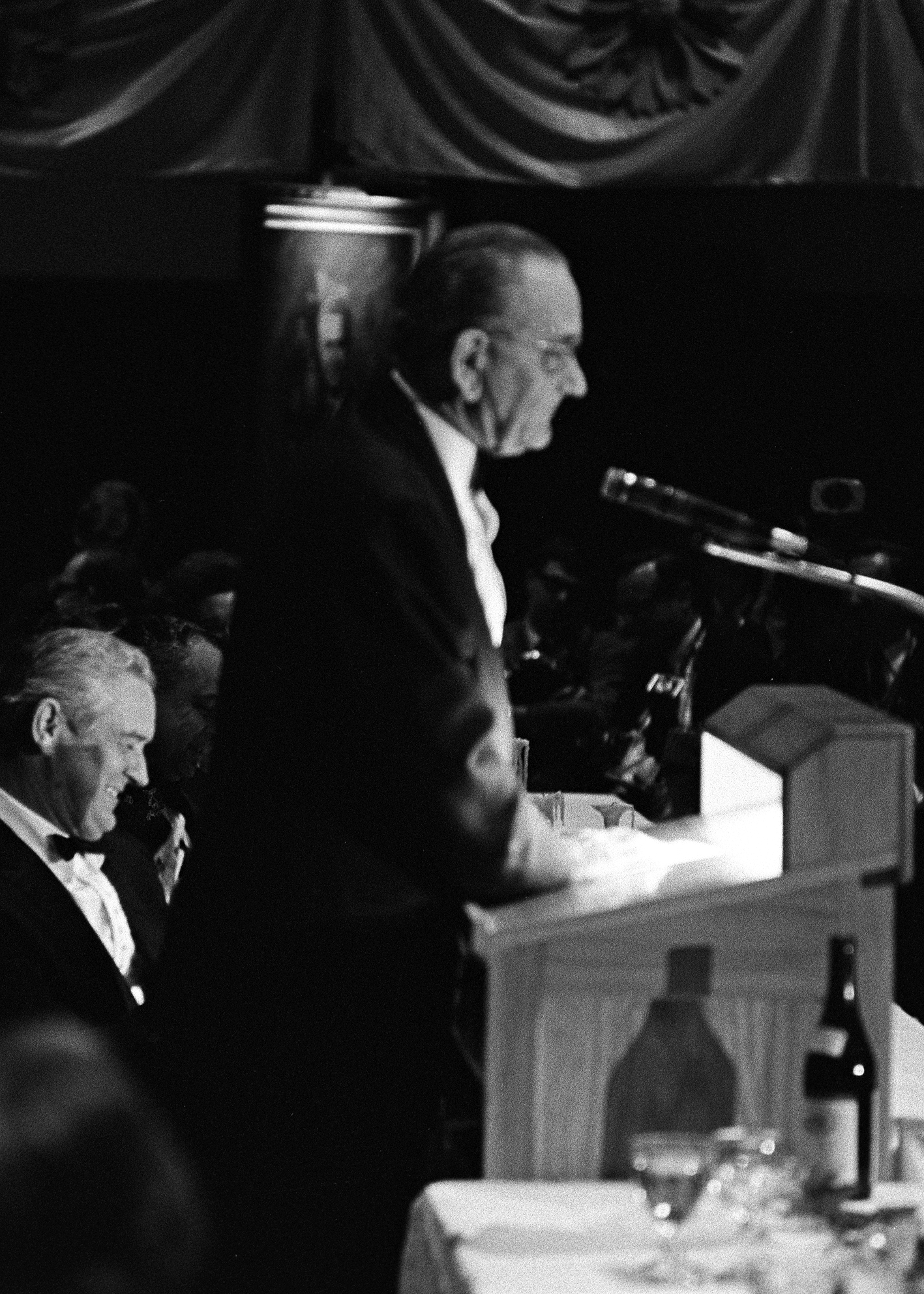
LBJ: Not watching TV

But as I discuss in Getting It Wrong, Johnson did not see the Cronkite report went it aired. The president at that time wasn’t in front of a television set. And he certainly wasn’t lamenting the loss of Cronkite’s support. Indeed, it is hard to fathom how he could have been much moved by a show he did not see.

At about the time Cronkite was intoning “mired in stalemate,” Johnson was in Austin, Texas, offering light-hearted banter at the 51st birthday party of Governor John Connally.

“Today,” the president said, “you are 51, John. That is the magic number that every man of politics prays for — a simple majority.”

WJC

Many thanks to Little Miss Attila
for linking to this post

Recent and related:

Talking media myths at the alma mater

In 1897, Cronkite Moment, Debunking, Furnish the war, Media myths, Spanish-American War, Washington Post, Watergate myth on March 19, 2011 at 9:06 am

I gave a talk about media-driven myths yesterday on the campus of Ohio Wesleyan University, where years ago I earned my undergraduate degree in journalism and history.

The talk focused on three of the media myths debunked in my latest book, Getting It Wrong, which is dedicated to Verne E. Edwards Jr., my journalism professor at Ohio Wesleyan.

I was delighted that Edwards and his wife attended yesterday’s talk, during which I discussed the myths of Watergate, of the “Cronkite Moment,” of William Randolph Hearst’s purported vow to “furnish the war” with Spain.

These, I said, all are well-known tales about the power of the news media that often are taught in schools, colleges, and universities. All of them are delicious stories that purport to offer lessons about the news media’s power to bring about change, for good or ill.

I described media-driven myths as I often do — as “the junk food of journalism, meaning that they’re tasty and alluring, but in the end, not terribly healthy or nutritious.”

Because it debunks prominent media myths, Getting It Wrong, I said, should not be considered “yet another media-bashing book.”

Rather, I said, Getting It Wrong is aligned with a fundamental objective of American journalism — that of getting it right.

I noted that the book is provocative and edgy — inevitably so, given that it dismantles several of the most-cherished stories in American journalism.

Among them is the notion that the Watergate reporting of the Washington Post exposed the crimes of the administration of President Richard Nixon and forced his resignation in 1974.

I noted that the Post and its reporting “was really peripheral to the outcome” of Watergate, pointing out that even senior officials at the newspaper have insisted as much over the years.

Among them was Katharine Graham, publisher of the Post during Watergate, who said on the scandal’s 25th anniversary in 1997:

“Sometimes people accuse us of bringing down a president, which of course we didn’t do. The processes that caused [Nixon’s] resignation were constitutional.”

I also pointed out that Bob Woodward, one the lead reporters for the Post on Watergate, has expressed much the same sentiment, only in earthier terms. In an interview in 2004 with American Journalism Review, Woodward declared:

To say the press brought down Nixon, that’s horseshit.”

I also reviewed the “Cronkite Moment” of February 27, 1968 — that legendary occasion when the on-air assessment of CBS News anchorman Walter Cronkite supposedly altered American policy on the Vietnam War. At the end of a special report about Vietnam, Cronkite asserted that the U.S. war effort was “mired in stalemate.”

President Lyndon Johnson supposedly watched Cronkite’s program and, upon hearing the anchorman’s “mired in stalemate” analysis, snapped off the television set and declared:

“If I’ve lost Cronkite, I’ve lost Middle America.”

Or something to that effect.

I pointed out that Johnson did not see the Cronkite program when it aired, that the president then was in Austin, Texas, at the 51st birthday party of Governor John Connally.

“About the time Cronkite was intoning his ‘mired in stalemate’ commentary,” I told the audience at Ohio Wesleyan, “Johnson was at the podium at Connally’s birthday party, saying: ‘Today, you are 51, John. That is the magic number that every man of politics prays for — a simple majority.’

“Now that may not have been the greatest presidential joke ever told,” I said, “but it is clear that Johnson at that time wasn’t lamenting his fate, wasn’t lamenting the supposed loss of Cronkite’s support” for the war in Vietnam.

Clearly, I added, the so-called “‘Cronkite Moment’ was of little importance or significance for Johnson. Especially since he didn’t even see the show when it aired.”

I described how Hearst’s purported vow to “furnish the war” lives on despite Hearst’s denial and despite an array of reasons that point to the anecdote’s falsity.

Hearst supposedly made the vow in an exchange of telegrams with the artist Frederic Remington, whom Hearst had sent to Cuba in early 1897 to draw sketches of the Cuban rebellion against Spanish colonial rule — the nasty conflict that gave rise in 1898 to the Spanish-American War.

The tale “lives on despite an irreconcilable internal inconsistency,” I said. “It would have been absurd for  Hearst to have vowed to ‘furnish the war’ because war — the Cuban rebellion against Spanish rule — was the very reasons he sent Remington to Cuba in the first place.”

Still, that anecdote and other media myths live on because they are “deliciously good stories — too good, almost, to be disbelieved,” I said. Too good, almost, to check out.

The university president, Rock Jones, introduced my talk, which was organized by Lesley Olson, general manager of the OWU bookstore, and by Cole E. Hatcher, the university’s director of media and community relations.

Two college buddies of mine, Hugh D. Pace and Tom Jenkins, also attended the talk.

WJC

Recent and related:

‘So to Speak’ about ‘Getting It Wrong’

In Debunking, Furnish the war, Media myths, Newspapers, Washington Post, Watergate myth on March 18, 2011 at 6:32 am

My mythbusting book, Getting It Wrong, made the Columbus Dispatch yesterday as the subject of a cleverly written column that opened this way:

“After interviewing W. Joseph Campbell, I checked the Dispatch archives to see whether I had ever committed any of the journalistic exaggerations he likes to skewer.

“I did write in 2005 that Mark Felt, the ‘Deep Throat‘ of Watergate fame, ‘rid the world of Richard Nixon.’ But I was overstating for effect, so I plead not guilty by reason of humor.”

Heh, heh. Nice touch.

The author was Joe Blundo, a veteran reporter who writes the “So to Speak” column for the “Life and Arts” section of the Dispatch.

The column was pegged to my book talk this afternoon at Ohio Wesleyan University, where I earned my undergraduate degree in journalism and history in the mid-1970s.

Blundo in his column offered overviews of some of the 10 media-driven myths dismantled in Getting It Wrong, including the notion that “Bob Woodward and Carl Bernstein of The Washington Post brought down Nixon with their Watergate reporting.

“Certainly Woodward and Bernstein (and Woodward’s source Deep Throat) had a role in the drama,” Blundo wrote, “but it took investigators, Congress and the Supreme Court to ultimately force the president to resign, Campbell, 58, said by phone.”

He further quoted me as saying that against the backdrop of subpoena-wielding authorities who dug into the crimes of Watergate, “the contributions of The Washington Post really recede into near insignificance.”

The newspaper’s contributions weren’t decisive, that’s for sure. Even officials at the Post have attempted over the years to distance the newspaper from the popular narrative that its reporting forced Nixon to resign.

As I note in Getting It Wrong, Katharine Graham, the newspaper’s publisher during and after the Watergate scandal, was among the senior figures at the  Post who dismissed that mediacentric link. She said in 1997, at a program marking the scandal’s 25th anniversary:

“Sometimes people accuse us of bringing down a president, which of course we didn’t do. The processes that caused [Nixon’s] resignation were constitutional.”

Also that year, Ben Bradlee,the executive editor at the Post during Watergate, said on the “Meet the Press” interview show:

“[I]t must be remembered that Nixon got Nixon. The Post didn’t get Nixon.”

Blundo also quoted me about some of the reasons media-driven myths are so tenacious and appealing — that they place the news media decisively at the center of important events and that they offer simplistic explanations for complex issues and developments of the past.

“Yet the myths won’t die,” he wrote.

I’m afraid he’s right. Media myths die hard, if they die at all.

The only way to counter them is to call them out, to pound away at them when they appear in the news media. Even then, utter and thorough debunking is rare. These stories, after all, often are too good not to be true.

And often too good to check out.

WJC

Recent and related:

‘Furnish the war’ finds a place in sports

In 1897, Debunking, Furnish the war, Media myths, Newspapers, Spanish-American War, Yellow Journalism on February 28, 2011 at 8:13 am

Hearst: Didn't say it

William Randolph Hearst’s famous vow to “furnish the war” with Spain is one of American journalism’s most enduring myths. It’s a stunningly hardy though dubious tale that has been deployed in discussing journalistic sins and shortcomings of all sorts.

As I write in my myth-debunking book Getting It Wrong, the Hearstian vow “has been invoked to illustrate the media’s willingness to compromise impartiality, promote political agendas, and indulge in sensationalism.

“It has been used, more broadly, to suggest the media’s capacity to inject malign influence into international affairs.”

It even has application in news about collegiate sports.

An online sports-news site, Bleacher Report, turned to “furnish the war” in a commentary posted yesterday about the whiff of scandal around Auburn University’s championship football program.

Hearst’s reputed vow was a way to set up the commentary, which defended the program from what it called “the incessant beating of the investigation drum by Auburn detractors” suspicious of player-recruitment violations.

Of interest to Media Myth Alert is the commentary’s total buy-in of the Hearst anecdote, which, as evidence offered in Getting It Wrong clearly shows, is counterfeit, a discredited media myth.

The Bleacher Report commentary declared:

“When photographer Frederic Remington was dispatched to Cuba in the late 1800s to document a war and found none, he sent a message to publisher William Randolph Hearst: ‘There is no war.’

“Hearst allegedly responded: ‘Please remain. You furnish the pictures and I’ll furnish the war.’

“In the ensuing months Hearst’s newspaper fanned the flames with sensationalized front page articles that were of dubious accuracy and in many cases patently false. His articles stirred passions among a readership that neither knew nor cared if the reports were accurate. His relentless attacks eventually helped push U.S. administration into declaring war on Spain.  Hearst got his war.

“Since October, the Auburn football program has endured a similar smear campaign. …”

Reasons for doubting that Hearst ever made such a vow are many, and include the anecdote’s breathtaking illogic.

War was the reason Hearst, owner of the flamboyant New York Journal, sent Remington (an artist, not a “photographer”) to Cuba in the first place. That war was the Cuban rebellion against Spain’s colonial rule, which began in February 1895.

Remington

Remington was in Cuba briefly in January 1897.

By that time, I note in Getting It Wrong, newspaper readers “would have been well aware that Cuba was a theater of a nasty war. By then, the Cuban rebellion had reached island-wide proportion and not a single province had been pacified by Spain’s armed forces.”

It would have made no sense for Hearst to vow to “furnish the war.”

In addition, Hearst denied having made such a statement. Remington, apparently, never discussed it. And the telegrams bearing the content of the purported Remington-Hearst exchange have never surfaced.

Moreover, as I point out in Getting It Wrong, “there was no chance” that the telegrams “would have flowed freely between Remington in Havana and Hearst in New York.

“Spanish control of the cable traffic in Havana was too vigilant and severe to have allowed such an exchange to have gone unnoticed and unremarked upon,” I write, adding:

“A vow such as Hearst’s to ‘furnish the war‘ surely would have been intercepted and publicized by Spanish authorities as a clear-cut example of Yankee meddling in Cuba.”

Like many media myths, the tale of the Hearstian vow is accessible, pithy, and easily recalled. It supposedly illuminates larger lessons about the news media — in this case, the media’s malign potential to bring about a war the country otherwise wouldn’t have fought.

Which is nonsense, and historically inaccurate.

The Spanish-American War of 1898 was hardly a matter of Hearst’s having “got his war.” Rather, the conflict was the consequence of an intractable, three-sided standoff.

Cuba’s rebels would settle for nothing short of political independence. Spain refused to grant self-rule to the most important remnant of its once-sprawling American empire. And the United States, for economic and humanitarian reasons, could no longer tolerate an inconclusive war just 90 miles from its shores.

Simply put, Hearst and newspaper content were non-factors in the decision to go to war.

WJC

Recent and related:

Suspect Murrow quote pulled at Murrow school

In Debunking, Furnish the war, Media myths, Murrow-McCarthy myth on February 17, 2011 at 7:37 am

Did he say it?

I’ve written occasionally at Media Myth Alert about a suspect quotation attributed to broadcasting legend Edward R. Murrow.

Here’s the quotation:

“We must not confuse dissent with disloyalty. When the loyal opposition dies, I think the soul of America dies with it.”

The quotation is half true. That is, the first part was indeed spoken by Murrow; the other part is just too good to be true.

I happened to find the full quotation posted at the welcome page of the dean of the Edward R. Murrow College of Communication at Washington State University.

By email, I asked the dean, Lawrence Pintak, what he could tell me about the quote’s provenance.

I noted in my email that the first portion  of the passage – “We must not confuse dissent with disloyalty” – was spoken by Murrow near the end of his 1954 See It Now program about the witch-hunting ways of Senator Joseph R. McCarthy.

“But the rest of quotation – ‘When the loyal opposition dies, I think the soul of America dies with it’ – was not spoken during that program,” I noted in my email. I added that “I’ve not been able to determine where and when it was spoken or written.”

I further noted that I had consulted a database of historical newspapers — a full-text repository that includes the New York Times, Washington Post, Chicago Tribune, and Los Angeles Times — but no articles quoting the “loyal opposition” passage were returned.

I also mentioned in my email that a search of the LexisNexis database “produced a few returns, but none dated before 2001.” None of them state where and when Murrow made the purported comment.

Pintak, who became the first dean of the Murrow College in 2009, stated in reply that the online site had been constructed before his arrival at Washington State. He added:

“My suspicion is that the site was built by the university marketing comm. people and they may well have just pulled it from the web, rather than original source. If it’s not correct, we certainly need to get it pulled.”

He referred my inquiry to an instructor on his faculty, Paul Mark Wadleigh, whom he asked to investigate.

A few hours later, Wadleigh sent an email to the dean and me, stating:

“While it seems to reflect the Murrow spirit, the lack of evidence that he phrased it that way is indeed suspicious.”

Wadleigh also wrote that the transcript of Murrow’s closing comments in the 1954 show about McCarthy “reveals a different language and tone than the ‘loyal opposition’ quote.”

Good point.

His bottom line?

“I feel the evidence says no, Murrow did not say this,” Wadleigh wrote.

By the end of the day, the suspect quote had been pulled from the dean’s welcome page. Just the authentic portion — “We must not confuse dissent with disloyalty” — remains posted there.

The College’s move to pull the quote not only was commendable; it stands as further evidence that the “loyal opposition” line attributed to Murrow is dubious. It may have been made up well after Murrow’s death in 1965, perhaps to score points politically.

I’ve noted that if it were genuine, if Murrow had uttered the line, then its derivation shouldn’t be too difficult to determine.

Moreover, the quotation seems too neat and tidy to be authentic — which can be a marker of a media-driven myth.

As I write in my mythbusting book, Getting It Wrong:

“To thwart media myths, journalists can start by applying a measure of skepticism to pithy, telling quotes such as [William Randolph] Hearst’s vow to ‘furnish the war‘ and even to euphonic phrases such as ‘bra burning.’

“Turns of phrase that sound too neat and tidy,” I write, “often are too perfect to be true.”

WJC

Recent and related:

Remembering the ‘Maine,’ Hearst, and Remington

In 1897, Anniversaries, Debunking, Furnish the war, Media myths, Spanish-American War on February 16, 2011 at 7:01 am

Wreckage of the 'Maine'

The battleship Maine blew up in Havana harbor 113 years ago yesterday, a development that rocked Americans and helped trigger the brief but decisive Spanish-American War.

The Brooklyn Daily Eagle recalled the battleship’s destruction in a post yesterday that invoked one of American journalism’s most tenacious myths — the purported vow of William Randolph Hearst to “furnish the war” with Spain.

The item in the Eagle — a latter-day version of the storied Brooklyn Daily Eagle that was published from 1841 until 1955 — said in its post that after the Maine blew up, Hearst “sent artist Frederic Remington to cover the war story in Cuba.

“When Remington found little happening there, he asked about coming home. Hearst wired back: ‘Please remain. You furnish the pictures and I’ll furnish the war.'”

As I discuss in the first chapter of my latest book, Getting It Wrong, the Hearstian vow, while well-known and often retold, is almost surely apocryphal.

I note in Getting It Wrong that that the vow “has achieved unique status” in American journalism “as an adaptable, hardy, all-purpose anecdote, useful in illustrating any number of media sins and shortcomings.

“It has been invoked to illustrate the media’s willingness to compromise impartiality, promote political agendas, and indulge in sensationalism. It has been used, more broadly, to suggest the media’s capacity to inject malign influence into international affairs.”

Reasons for doubting that Hearst ever sent such a message are many, and include the fact that the artifacts — the purported telegrams exchanged between Remington and Hearst — have never turned up.

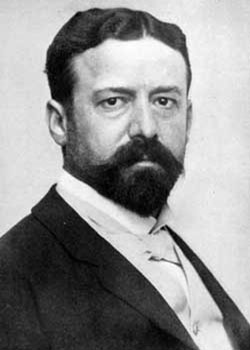
Hearst

Hearst, moreover, denied ever having sent such a message, and there’s no known record of Remington ever having discussed the purported exchange.

I note in Getting It Wrong that the Remington-Hearst anecdote “lives on despite an irreconcilable internal inconsistency: It would have been absurd for Hearst to vow to ‘furnish the war’ because war — specifically, the Cuban rebellion against Spain’s colonial rule — was the very reason Hearst sent Remington to Cuba in the first place.”

Had the Remingt0n-Hearst exchange taken place, it would have been in mid-January 1897, at the end of Remington’s lone visit to Cuba in the months before the loss of the Maine.

We know that because the sole original source of the anecdote, a self-centered journalist named James Creelman, claimed in a book of reminiscences that exchange took place “some time before the destruction of the battleship Maine in the harbor of Havana” on February 15, 1898.

Creelman, who titled his book On the Great Highway, did not say how he learned about the purported exchange. In early 1897, Creelman was not in New York with Hearst, nor in Cuba with Remington. Creelman was in Spain, on assignment for Hearst’s New York Journal, the leading exemplar of what was called “yellow journalism.”

It is exceedingly unlikely that the telegrams would have flowed freely between Hearst and Remington as Creelman suggested. Spanish authorities in Havana, after all, had imposed strict censorship of international cable traffic. As I note in Getting It Wrong:

“Spanish control of the cable traffic in Havana was too vigilant and severe to have allowed such an exchange to have gone unnoticed and unremarked upon. A vow such as Hearst’s to ‘furnish the war’ surely would have been intercepted and publicized by Spanish authorities as a clear-cut example of Yankee meddling in Cuba.”

I also note in Getting It Wrong that the purported Hearstian vow is a telling example of a quote that’s so neat and tidy that it should immediately trigger suspicions.

“Like many media-driven myths,” I write, “it is succinct, savory, and easily remembered.

“It is almost too good not to be true.”

WJC

Recent and related:

‘Follow the money’: Why the made-up Watergate line endures

In Cinematic treatments, Debunking, Furnish the war, Media myths, Washington Post, Watergate myth on February 8, 2011 at 10:32 am

Watergate’s most famous made-up line — “follow the money” — is impressively versatile and doggedly persistent, some 35 years after it was written into a screenplay.

Mark Felt, 'Deep Throat' source

It’s a phrase that has resonance internationally. It’s made its way onto the sports pages and into publications on topics as diverse as secondary education and systems analysis.

And yesterday, the CBS business news site BNET invoked the passage in a post discussing a recent report of the Financial Crisis Inquiry Commission.

The reference to “follow the money” appeared at the end of BNET, as if it were an attempt at a witty ending:

“As Deep Throat said about the Watergate investigation, ‘follow the money.'”

But “follow the money” is really more clichéd than witty.

More important, it was a line not spoken by the stealthy “Deep Throat” source (see photo, above) of the Washington Post during its investigation of the Watergate scandal. The passage never appeared in the newspaper’s Watergate-related coverage.

No, it wasn’t the “Deep Throat” newspaper source who uttered “follow the money.” It was the actor Hal Holbrook, who played “Deep Throat” in the motion picture, All the President’s Men. The movie was based on Bob Woodward and Carl Bernstein’s book about their Watergate reporting for the Post.

Screenwriter William Goldman has taken credit for writing “follow the  money” into the script of All the President’s Men, which came out in 1976, less than two years after Watergate reached a climax with the resignation of President Richard Nixon.

Since 1976, millions of people have repeated the line, oblivious to its derivation and unaware of its falsity.

So why does this made-up line persist? Why is “follow the money” so appealing and versatile?

Like many media myths, “follow the money” is pithy, accessible, and easy-to-remember.

As I write in my latest book, Getting It Wrong, “Turns of phrase that sound too neat and tidy often are too perfect to be true.” William Randolph Hearst’s pithy vow to “furnish the war” with Spain is a particularly telling example.

There are, of course, other explanations for the persistent popularity of “follow the money.” It is, after all, a supposedly famous piece of advice — advice presumably crucial in unraveling Watergate.

The line suggests that rolling up the scandal was accomplished by identifying, pursuing, and reporting on an illicit money trail. Its purported centrality to understanding the Watergate scandal is an important reason why “follow the money” crossed smoothly from the silver screen to the vernacular and lives on.

But the Watergate scandal was more than a matter of a money trail. In the end, Nixon’s attempts to obstruct justice by covering up the break-in at headquarters Democratic national committee headquarters in 1972 brought down his presidency.

Moreover, “follow the money” is adaptable advice. It can be applied in many contexts. As Frances Miller wrote last year in the American Journal of Law and Medicine:

“Follow the money is a versatile phrase; the term can be used as an exhortation, designate a pathway, or denote a lifestyle choice. When it comes to health care, following the money is at least part of the sine qua non for anyone seeking to understand how this complex sector of the U.S. economy has arrived at its present sorry state.”

Similarly, “follow the money” has offered pertinent lessons in systems thinking, a broad-based approach to organizational assessment.

The journal Quality Progress invoked “Deep Throat” and “follow the money” in observing in 2004:

“What Deep Throat did, in effect, was lead Woodward, his colleague Carl Bernstein and the rest of us Watergate observers through an experiential workshop in systems thinking. The general instruction he gave the reporters to unravel the plot was, ‘Follow the money.’

“He assured them the money would connect the dots for them and eventually reveal the conspiracy’s entire ‘circulatory’ system. Identifying resources is one way to sketch in the outlines of some systems.”

That assessment was offered in the year before W. Mark Felt, formerly the second-ranking official at the FBI, identified himself as having been the “Deep Throat” of the Washington Post.

WJC

Recent and related:

The ‘anniversary’ of a media myth: ‘I’ll furnish the war’

In 1897, Anniversaries, Debunking, Furnish the war, Media myths, Newspapers, Spanish-American War, Yellow Journalism on January 13, 2011 at 7:31 am

Remington, Davis in Cuba for Hearst

Had it occurred, the legendary but improbable exchange of telegrams between William Randolph Hearst and the artist Frederic Remington–in which Hearst supposedly vowed to “furnish the war” with Spain–would have taken place in mid-January 1897.

The uncertainty as to exactly when the purported exchange occurred is one of many signals the tale is apocryphal, a media-driven myth.

As I discuss in my media-mythbusting book, Getting It Wrong, the Remington-Hearst anecdote is “perhaps the hardiest myth in American journalism.”

It lives on in part because it is a pithy and delicious tale. It corresponds well to the image of Hearst the war-monger, the unscrupulous newspaper published who fomented the Spanish-American War in 1898.

As I point out in the first chapter of Getting It Wrong, the Remington-Hearst tale is often retold “despite a nearly complete absence of supporting documentation. It lives on even though telegrams supposedly exchanged by Remington and Hearst have never turned up. It lives on even though Hearst denied ever sending such a message.”

Moreover, I write:

The anecdote “lives on despite an irreconcilable internal inconsistency: It would have been absurd for Hearst to vow to ‘furnish the war’ because war—specifically, the Cuban rebellion against Spain’s colonial rule—was the very reason Hearst sent Remington to Cuba in the first place.”

The sole original source for the “furnish the war” quotation was On the Great Highway, a slim volume of reminiscences that came out in 1901. The author was James Creelman, a portly, cigar-chomping journalist prone to pomposity and exaggeration.

Creelman did not explain in On the Great Highway how or where he learned about the purported Remingt0n-Hearst exchange. Creelman–who was in Madrid at the time Remington was in Cuba–recounted the anecdote a not as a rebuke but as a compliment to Hearst and the activist “yellow journalism” he had pioneered in New York City.

Nor did Creelman say exactly when the presumed exchange took place, writing only that it was “some time before the destruction of the battleship Maine in the harbor of Havana” in mid-February 1898. The only time Remington was in Cuba before the explosion that destroyed the Maine was in January 1897.

Creelman: Sole source

Remington, an accomplished artist of the American West, went to Cuba in 1897 to draw sketches of scenes of the uprising against Spanish rule. He traveled with Richard Harding Davis, who then was burnishing a reputation as one of American journalism’s leading correspondents.

Hearst recruited Remington and Davis for a month, and the plan was for them to reach a force of Cuban rebels under the command of Máximo Gómez.

But Remington and Davis never reached the rebels. What’s more, they proved to be an oddly matched team. In Matanzas on January 15, 1897, they parted ways. Remington returned to Havana and the next day boarded a steamship bound for New York.

Legend has it that before leaving Havana, Remington sent Hearst a telegram that supposedly said:

“Everything is quiet. There will be no war. I wish to return.”

Hearst purportedly cabled Remington in reply:

“Please remain. You furnish the pictures, and I’ll furnish the war.”

Had it occurred, the exchange would have taken place late on January 15, 1897, or early on January 16, 1897.

Remington disregarded Hearst’s purported instructions to “remain” in Cuba. The artist was one of seven passengers aboard the Seneca when it sailed from Havana on January 16, 1897. The steamer reached New York four days later and soon afterward, Hearst’s New York Journal began publishing Remington’s sketches drawn in Cuba.

“The work was given prominent display,” I note in Getting It Wrong. Headlines in the Journal hailed Remington as a “gifted artist”–hardly the sort of accolade Hearst would have extended to someone in his employ who had brazenly disregarded instructions to remain on the scene.

That’s further reason for doubting that Hearst ever sent a telegram vowing to “furnish the war.”

And yet another reason is that Spanish censors, who controlled all incoming and outgoing cable traffic in Havana, surely would have intercepted Hearst’s inflammatory message, had it been sent. It’s highly improbable that cables such as those attributed to Hearst and Remington would have flowed readily between New York and Havana.

Additionally, the correspondence of Davis gives lie to the anecdote.

Davis wrote frequently to his family, especially to his mother, Rebecca Harding Davis. His letters make clear that  Remington did not leave because they found “everything is quiet” in Cuba.

In fact, Davis wrote on the day he and Remington parted ways:

“There is war here and no mistake.”

His correspondence offered detailed descriptions of what he called the grim process “of extermination and ruin” in Cuba.

More important, Davis’ letters make clear that Remington left for home not on the pretext that “everything is quiet,” but because Davis wanted him to go.

“I am as relieved at getting old Remington to go as though I had won $5000,” Davis wrote to his mother on January 15, 1897. “He was a splendid fellow but a perfect kid and had to be humored and petted all the time.”

Davis added that he “was very glad” Remington left “for he kept me back all the time and I can do twice as much in half the time.”

I note in Getting It Wrong that the Remington-Hearst tale was “Creelman’s singular contribution to American journalism.” The anecdote has proven to have timeless appeal, in part because it promotes what I call “the improbable notion the media are powerful and dangerous forces, so powerful they can even bring on a war.”

WJC

Recent and related:

As inevitable as ‘Yes, Virginia,’ at the holidays

In 1897, Debunking, Furnish the war, Media myths, New York Sun, New York Times, Newspapers, Year studies, Yellow Journalism on December 15, 2010 at 8:59 am

The approach of the year-end holidays brings inevitable reference to American  journalism’s most famous editorial, “Is There A Santa Claus?”

Virginia O'Hanlon

The lyrical and timeless tribute to childhood and the Christmas spirit was first published in 1897 in the old New York Sun, in response to the inquiry of an 8-year-old girl, Virginia O’Hanlon.

“Please tell me the truth,” she implored, “is there a Santa Claus?”

The Sun in reply was reassuring:

“Yes, Virginia, there is a Santa Claus. He exists as certainly as love and generosity and devotion exist, and you know that they abound and give to your life its highest beauty and joy.”

Almost as inevitable as the editorial’s reappearance this time of year are sightings of myths and misconceptions associated with “Is There A Santa Claus?”

Today, for example, an online reference site for journalists, Followthemedia.com, says in an essay that “Is There a Santa Claus?” was published on the front page of the Sun, on September 21, 1897.

The date is correct. But the famous editorial was given obscure placement in its debut. As I wrote in my 2006 book, The Year That Defined American Journalism: 1897 and the Clash of Paradigms:

“‘Is There a Santa Claus?’ appeared inconspicuously in the third of three columns of editorials in the New York Sun on 21 September 1987. It was subordinate to seven other commentaries that day, on such matters as ‘British Ships in American Waters,’ the ambiguities in Connecticut’s election law, and the features of the chainless bicycle anticipated in 1898.”

“Is There A Santa Claus” appeared on page six, the editorial page of the Sun.

Interestingly, the oddly timed editorial about Santa Claus–appearing as it did more than three months before Christmas–prompted no comment from the many newspaper rivals to the Sun.

That’s somewhat curious because the New York City press of the late 19th century was prone–indeed, eager–to comment on, and disparage, the content of their rivals.  That’s how the enduring sneer “yellow journalism” was coined, in early 1897.

In its headline today, Followthemedia suggests the editorial’s most-quoted passage — “Yes, Virginia, there is a Santa Claus” — are the words most famous in American journalism.

Maybe.

But a stronger case can be made for  the New York Times logo, “All the News That’s Fit to Print,” which in 1897 took a permanent place in the upper left corner of the newspaper’s front page, a spot known in journalism as the “left ear.”

As I noted in a blog post nearly a year ago: “The ‘Yes, Virginia,’ passage is invoked so often, and in so many contexts, that no longer is it readily associated with American journalism. ‘Yes, Virginia,’ long ago became unmoored from its original context, the third of three columns of editorials in the New York Sun on September 21, 1897.”

I also suggested then that the famous vow attributed to William Randolph Hearst–“You furnish the pictures, I’ll furnish the war“–may be more famous in journalism than “Yes, Virginia.”

The Hearstian vow, as I write in my latest book, Getting It Wrong, is almost certainly apocryphal. But like many media-driven myths, it lives on as an anecdote too delicious not to be true.

What is striking and perhaps exceptional about “Is There A Santa Claus?” is its timeless appeal–how generations of readers have found solace, joy, and inspiration in its passages.

A letter-writer to the Sun in 1914 said, for example: “Though I am getting old,” the editorial’s “thoughts and expressions fill my heart with overflowing joy.”

In 1926, a letter-writer told the Sun that “Is There A Santa Claus?” offered “fine relief from the commercialism and unsentimental greed” of the Christmas season.

In 1940, a writer to the Sun likened the editorial to “a ray of hope on the path to human understanding in our troubled times.”

WJC

Recent and related:

That made-up Watergate line resonates abroad

In Cinematic treatments, Cronkite Moment, Debunking, Furnish the war, Murrow-McCarthy myth, Newspapers, Washington Post, Watergate myth on November 30, 2010 at 9:38 am

Watergate’s most famous made-line up — “follow the money,” which was a cinematic invention not the revealing words of guidance — is often invoked by U.S. news outlets. Surprisingly, it resonates as well in news media abroad.

“Follow the money” is often attributed to “Deep Throat,” the stealthy, anonymous source to whom Bob Woodward of the Washington Post frequently turned during the newspaper’s Watergate investigation.

But the phrase “follow the money” never figured in the Post’s Watergate coverage, which is the topic of a chapter in my mythbusting book, Getting It Wrong.

What’s more, a search of the electronic archive of all issues of the Post from June 1, 1972, to October 1, 1974, the period embracing the Watergate scandal, produced no returns for the phrase “follow the money.”

The line, however, was uttered in the cinematic version of All the President’s Men by the character who played “Deep Throat.” The movie, which was released in 1976, was an adaptation of Woodward and Carl Bernstein’s book by the same title.

The most likely inventor of “follow the money” was the screenwriter of All the President’s Men, William Goldman.

Testimony to the line’s impressive adaptability abroad appeared yesterday in an item posted at a South Africa news outlet called the Daily Maverick. The item included this passage:

“‘Follow the money,’ as the informant ‘Deep Throat’ famously told Bob Woodward and Carl Bernstein during the Watergate scandal.”

The line also popped up not long ago in Le Devoir, a French-language daily newspaper in Quebec. The article in Devoir stated:

“Comme Deep Throat disait dans l’affaire du Watergate: follow the money.” [As Deep Throat said in the Watergate affair: follow the money.]

So why does this made-up line from a long-ago motion picture possess such international appeal?

In a way, “follow the money” is like media-driven myths that have gained popularity abroad–among them, the mythical Cronkite Moment, the Murrow-McCarthy tale, the famous “furnish the war” vow attributed to William Randolph Hearst. And, of course, the heroic-journalist myth, according to which the investigative reporting of Woodward and Bernstein brought down Richard Nixon’s corrupt presidency in the Watergate scandal.

They are decidedly American tales that offer reductive, mediacentric interpretations of important historical moments.  News outlets abroad–intrigued as they often are by American culture and politics–are scarcely immune from the temptation to offer up these tales. Or pithy lines like “follow the money,” which sums up fairly well an important path of inquiry in the Watergate scandal.

Pithiness can be a powerful propellant of movie lines–and media myths.

Besides, these tales are straightforward, unambiguous, and as such memorable. They can be readily invoked to make a telling point, usually about the power and importance of the news media.

But often, that message is misleading.

As I write in Getting It Wrong, “media-driven myths are neither trivial nor innocuous. They can and do have adverse consequences. Notably, they tend to distort understanding about the role and function of journalism in American society, conferring on the news media far more power and influence than they necessarily wield.”

Media myths, I add, “often emerge from an eagerness to find influence and lasting significance in what journalists do….”

Debunking these myths helps to place media influence in a more coherent context.

WJC

Recent and related: