W. Joseph Campbell

Archive for the ‘Hurricane Katrina’ Category

‘Getting It Wrong’ wins SPJ award for Research about Journalism

In Bay of Pigs, Bra-burning, Cronkite Moment, Debunking, Furnish the war, Hurricane Katrina, Jessica Lynch, Media myths, Media myths and radio, Murrow-McCarthy myth, New York Times, Spanish-American War, War of the Worlds, Washington Post, Watergate myth, Yellow Journalism on May 10, 2011 at 9:02 am

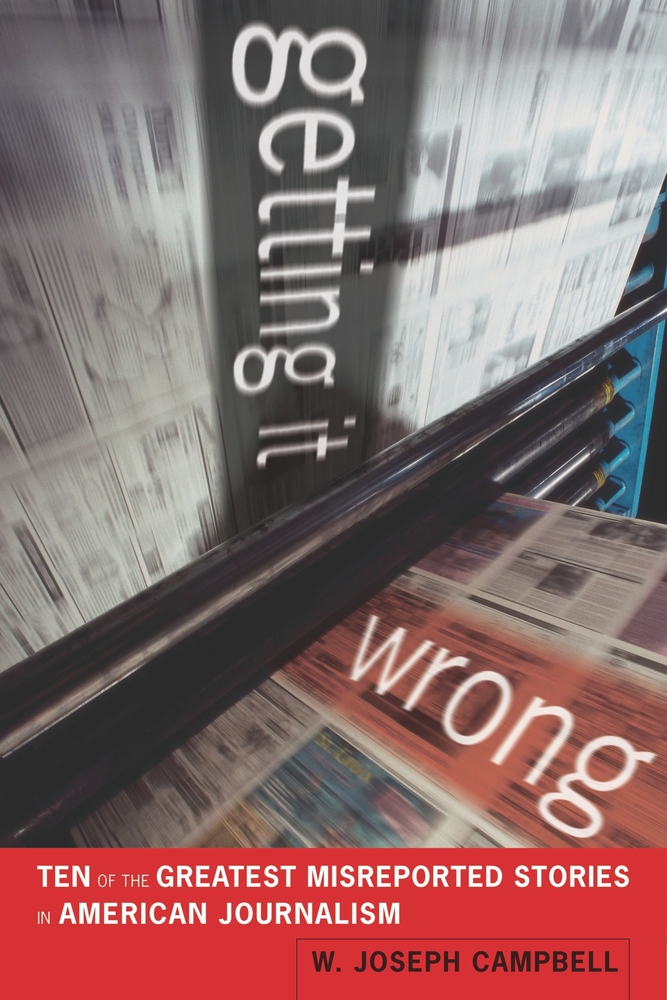
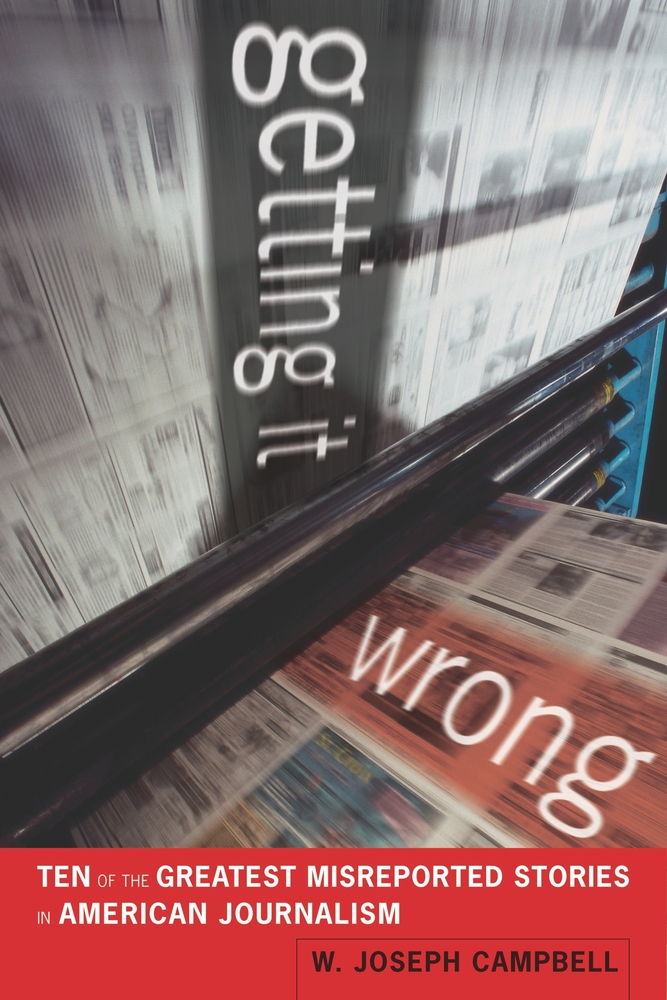
The Society of Professional Journalists announced today that my media-mythbusting book, Getting It Wrong, is the winner of the 2010 Sigma Delta Chi award for Research about Journalism.

The award will be presented in September at the Excellence in Journalism convention in New Orleans.

Getting It Wrong, which was published last year by the University of California Press, debunks 10 prominent media-driven myths, which are dubious tales about the news media that masquerade as factual.

Here’s a summary of the 10 myths dismantled in Getting It Wrong:

  1. Remington-Hearst: William Randolph Hearst’s famous vow “to furnish the war” with Spain is almost certainly apocryphal.
  2. War of Worlds: The notion that the War of Worlds radio dramatization in 1938 caused nationwide panic and mass hysteria is exaggerated.
  3. Murrow-McCarthy: Edward R. Murrow’s famous See It Now program in March 1954 did not end Senator Joseph McCarthy’s communists-in-government witch-hunt; Murrow in fact was very late to take on McCarthy.
  4. Bay of Pigs: The New York Times did not suppress its reporting in the run-up to the ill-fated Bay of Pigs invasion in April 1961.
  5. Cronkite-Johnson: Walter Cronkite’s special report on Vietnam in February 1968 did not prompt an immediate reassessment or revision of U.S. war policy.
  6. Bra-burning: Humor columnist Art Buchwald helped spread the notion that feminist demonstrators dramatically burned their bras at a Miss America protest in September 1968.
  7. Watergate: The Washington Post’s intrepid reporters, Carl Bernstein and Bob Woodward, did not bring down Richard Nixon’s corrupt presidency. That they did is a trope that knows few bounds.
  8. Crack babies: The much-feared “bio-underclass” of children born to women who smoked crack cocaine during their pregnancies never materialized.
  9. Jessica Lynch: The Washington Post’s erroneous reporting about Jessica Lynch early in the Iraq War gave rise to several myths about her capture and rescue.
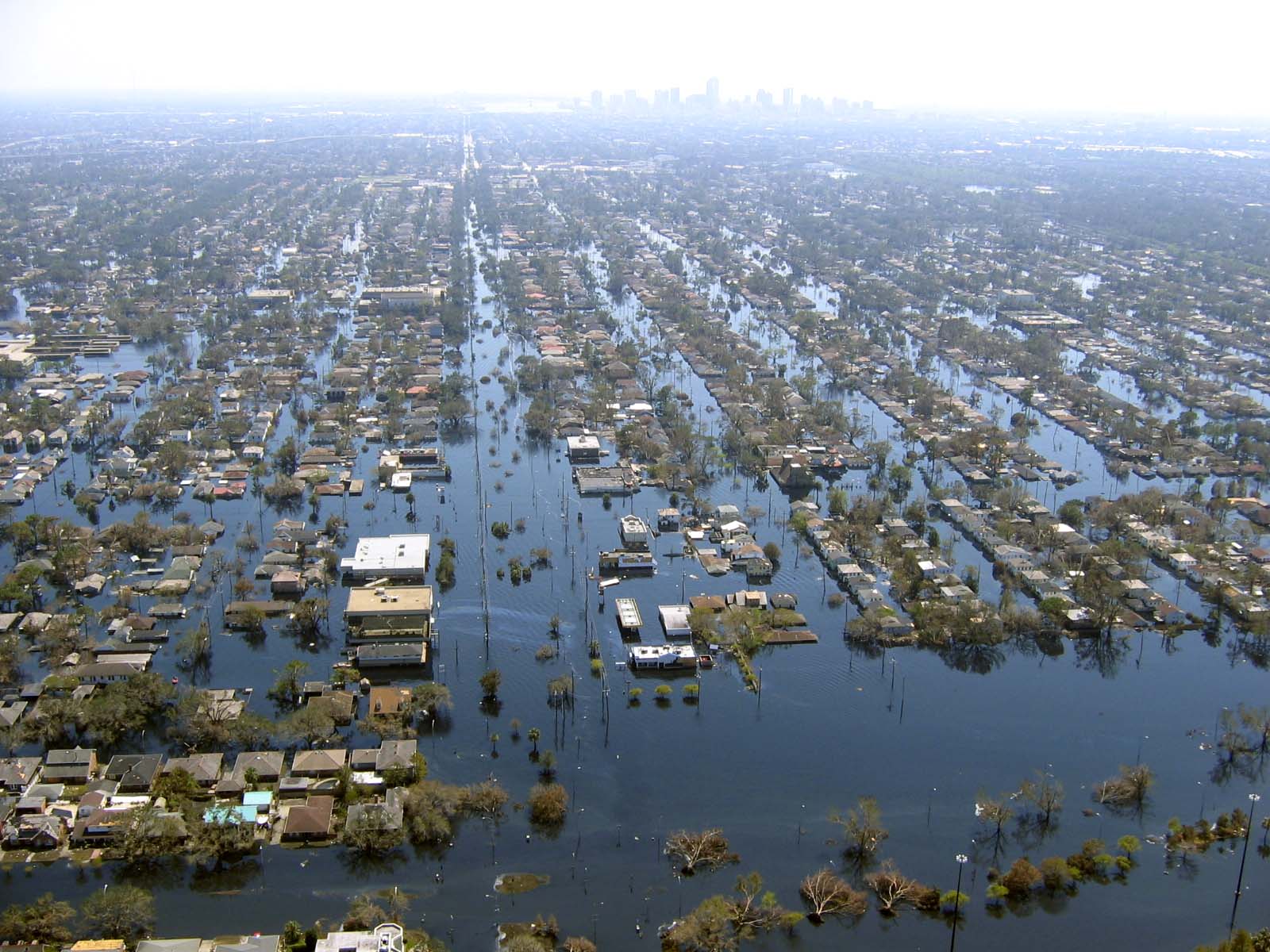
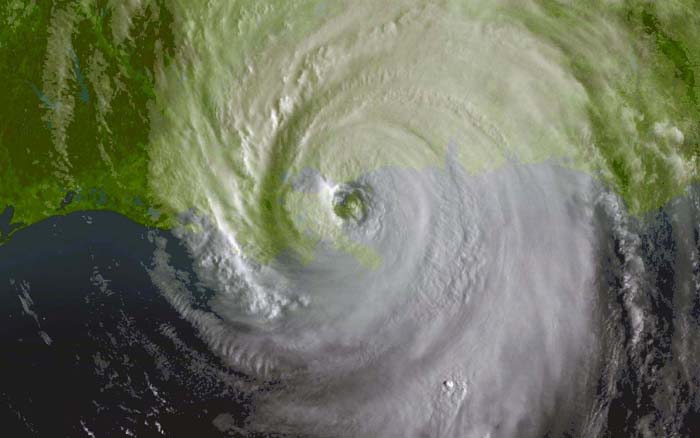
  10. Hurricane Katrina: News coverage of Katrina’s aftermath in New Orleans in early September 2005 was marred by wild exaggerations about extreme, Mad Max-like violence.

The “Research about Journalism” award recognizes “an investigative study about some aspect of journalism,” SPJ says, and “must be based on original research; either published or unpublished, and must have been completed during the 2010 calendar year. … Judges will consider value to the profession, significance of the subject matter, thoroughness of the research, and soundness of the conclusion.”

WJC

Recent and related:

A cautionary note on early coverage of dramatic events

In Debunking, Hurricane Katrina, Jessica Lynch, Media myths, Washington Post on May 3, 2011 at 8:17 am

Amid yesterday’s jubilation about the slaying of terror leader Osama bin Laden, the media critic at slate.com, Jack Shafer, posted a timely and telling reminder that initial news reports of major events seldom are reliable.

This is especially so, I would add, in covering disasters: The early accounts almost always are erroneous.

Got it wrong in New Orleans

The coverage of Hurricane Katrina’s aftermath, which I discuss in my latest book, Getting It Wrong, is instructive: News reports about the surreal violence that the storm supposedly unleashed on New Orleans in late summer 2005 were highly exaggerated and wildly inaccurate.

“Katrina’s aftermath was no high, heroic moment in American journalism,” I write, adding, “On crucial details, journalists erred badly, and got it wrong. ”

In his column about the coverage of the killing of bin Laden, Shafer noted that “the fog of breaking news almost always cloaks the truth, especially when the deadline news event is a super-top-secret military operation conducted by commandos halfway around the world and the sources of the sexiest information go unnamed.”

He pointed out the wide variance in the early reports about bin Laden’s violent end, noting such discrepancies as these:

  • ABC News: “He was shot in the head and then shot again to make sure he was dead.”
  • The Atlantic: “One of the dead was Osama bin Laden, done in by a double tap—boom, boom—to the left side of his face.”
  • The London Sun: “Elite troops opened fire when the 9/11 terror chief refused to surrender, hitting him in the head and chest. …”
  • MSNBC.com: “[H]e was shot in the left eye.”

Shafer added: “At some point, after reporters have time to independently report the events behind the raid, we’ll have a verified picture of who did what when instead of the official versions we’re reading and viewing today. Until then, it’s caveat emptor for news consumers.”

Journalists would do well to offer such reminders more frequently than they do.

Cautionary notes ought to be routine, as should specific reference to the challenges of reporting military operations from afar.

Such distance-reporting, after all, can give rise to errors that are both memorable and acutely embarrassingly. The Jessica Lynch case, which unfolded during the early days of the Iraq War in 2003 and which is discussed in Getting It Wrong, is memorable in that regard.

The Washington Post, drawing on sources it has never identified (but should), offered the world a sensational report about the battlefield heroics of Lynch, then a 19-year-old Army supply clerk who never expected to see combat.

Elements of her units fell under ambush in Nasiriyah, in southern Iraq on March 23, 2003.

According to the Post’s front-page article — which was mostly reported by journalists based in Washington — Lynch “continued firing at the Iraqis even after she sustained multiple gunshot wounds and watched several other soldiers in her unit die around her in fighting” at Nasiriyah.

The newspaper also said Lynch was “stabbed when Iraqi forces closed in on her position.”

The Post’s sensational report about Lynch was picked up by news outlets around the country and the world. But it was wrong, utterly wrong.

Lynch never fired a shot at Nasiriyah. Her rifle jammed during the ambush. She suffered shattering injuries when a rocket-propelled grenade struck her Humvee, causing the vehicle to crash.

But she was neither shot nor stabbed.

Lynch was taken prisoner and treated at an Iraqi hospital where she lingered near death before being rescued on April 1, 2003, by a U.S. special operations team.

The Post report offers another reminder about covering combat — the passage of time is no guarantee of accuracy in reporting. The sensational account about Lynch appeared on the Post’s front page of April 3, 2003, 11 days after the ambush at Nasiriyah.

WJC

Many thanks to Instapundit
Glenn Reynolds for linking to this post

Recent and related:

JHistory: ‘Getting It Wrong’ deserves to be ‘required reading’

In Bay of Pigs, Bra-burning, Cronkite Moment, Debunking, Hurricane Katrina, Media myths, New York Times, Newspapers, Reviews, War of the Worlds, Washington Post, Watergate myth on February 7, 2011 at 9:51 am

JHistory, the listserv devoted to issues in journalism history, posted yesterday a very insightful and favorable review of my latest book, Getting It Wrong, saying it “should be required reading for journalism students as well as journalists and editors.”

Getting It Wrong “reinforces the necessity of healthy skepticism; a commitment to fully understanding the implications of one’s research; and the importance of cultivating diverse, credible sources and viewpoints for probing, quality journalism,” the review says.

Getting It Wrong, which was published in summer 2010 by University of California Press, addresses and debunks 10 prominent media-driven myths — those dubious tales about and/or by the news media that masquerade as factual.

The reviewer for JHistory, Jeanette McVicker of SUNY-Fredonia, says Getting It Wrong is a “compelling book” that “generated a minor sensation in journalism circles all summer, with good reason.”

McVicker, whom I do not know, notes:

“In each chapter, Campbell delivers pithy, well-researched correctives for each sensational claim.

“No,” she writes, “Orson Welles’s ‘War of the Worlds‘ radio broadcast did not induce a national panic in October 1938. Yes, there was symbolic bra burning in the Freedom Trash Can at the 1968 protest of the Miss America pageant in Atlantic City, but no mass stripping of undergarments by wild women’s liberationists. No, the Kennedy administration did not request the New York Times to spike or delay a report on the imminent Bay of Pigs invasion: ‘utter fancy,’ Campbell writes.”

McVicker adds:

“The deconstruction of these cherished media myths by Campbell’s archival, source-driven research is praiseworthy, and makes for fascinating reading.”

She further notes:

“In most of these examples, the devastating legacy of the mythmaking media machine continues far beyond attempts to backpedal and correct the erroneous reporting: sensational stories tend to remain in public consciousness for years and sometimes decades.”

Indeed.

Getting It Wrong, McVicker adds, “demonstrates with tremendous force how discrete instances of media reporting and mythmaking have built up a golden age fallacy of journalism’s self-importance, and his work goes a long way toward deflating such heroic myths and consensus-narratives at the heart of modern journalism history.”

Her principal challenge to Getting It Wrong lies in my view that stripping away and debunking prominent media myths “enhances a case for limited news media influence. Media power tends to be modest, nuanced, diffused, and situational.”

Too often, I write, “the ubiquitous presence of the news media is mistaken for power and influence. … The influence of the news media is typically trumped by other forces.”

It’s an accurate assessment, especially given that media myths — such as the notion that investigative reporting by the Washington Post brought down Richard Nixon’s corrupt presidency in the Watergate scandal — often seek to “ascribe power, significance, and sometimes great courage to the news media and their practitioners.”

Puncturing media myths thus serves to deflate the notion of sweeping media power.

McVicker tends to disagree, writing that “it is surely not the case that the combined effects of such narratives are ‘modest, nuanced, diffused, and situational.'”

She notes as an example “the ongoing legacy of mainstream media’s failure to hold members of the Bush administration accountable during the buildup to the invasion of Iraq, a devastating correlate to Campbell’s spot-on analysis of the distorted, erroneous reporting of what was happening in the streets of New Orleans following Hurricane Katrina.”

There is, though, a fair amount of evidence that the news media were neither gullible nor comatose in the run-up to the war in Iraq, that tough questions were raised of the Bush administration’s pre-war plans.

While the notion of a docile news media has hardened into conventional wisdom about the pre-war coverage, that view has been challenged, notably by David Gregory of NBC News, who has asserted:

“I think the questions were asked [in the run-up to the war].  I think we pushed. I think we prodded. I think we challenged the president. I think not only those of us the White House press corps did that, but others in the rest of the landscape of the media did that.

“If there wasn’t a debate in this country” about going to war in Iraq, Gregory has said, “then maybe the American people should think about, why not?  Where was Congress? Where was the House? Where was the Senate? Where was public opinion about the war?”

I find quite telling this observation, offered in 2007 by Reason magazine:

“The ‘we should have done more to head off this war’ arguments assumes too much, exaggerates the media’s power to influence, removes the onus from politicians and infantilizes news consumers. … many in the media did ask tough questions of the administration, but the public wasn’t paying much attention.”

That the news media were comatose in the run-up to the Iraq War may be yet another media-driven myth.

WJC

Recent and related:


Campbell’s

book should be required reading for journalism students as well as

journalists and editors, for it reinforces the necessity of healthy

skepticism; a commitment to fully understanding the implications of one’s

research; and the importance of cultivating diverse, credible sources and

viewpoints for probing, quality journalism. There is an even greater lesson

here, however, pertinent for all readers: consistent with the rise of

“modern” journalism from the late 1800s to the present, the institution of

journalism has bolstered itself with narratives celebrating its own

strategic importance to society, even when the narratives turn out to be

fictions.

Have a look: New trailer for ‘Getting It Wrong’

In Anniversaries, Debunking, Hurricane Katrina, Media myths, Media myths and radio, Newspapers, War of the Worlds, Washington Post, Watergate myth on January 18, 2011 at 7:08 am

Check out the new trailer for my latest book, Getting It Wrong, which addresses and debunks 10 prominent media-driven myths–those dubious stories about the news media that masquerade as factual.

As I say in narrating the trailer, media-driven myths can be thought of as the “junk food of journalism“–delicious and appealing, perhaps, but not very nutritious.

The trailer, recently completed by research assistant Jeremiah N. Patterson, reviews the media myths related to the Watergate scandal, the purported Cronkite Moment, and the aftermath of Hurricane Katrina.

A trailer prepared last year by Mariah Howell shortly before publication of Getting It Wrong remains accessible at YouTube.

Another YouTube video–prepared by Patterson in the fall to mark the anniversary of the famous War of the Worlds radio broadcast that supposedly was so realistic that it panicked America–also is accessible online. The video discusses Halloween’s greatest media myth.

WJC

Recent and related:

Thoughts on why journalists can get it badly wrong

In Debunking, Hurricane Katrina, Jessica Lynch, Media myths, Washington Post on November 27, 2010 at 6:34 am

I mentioned in a blog post yesterday the Time magazine essay about journalists getting it wrong.

It’s a fine and thoughtful discussion, written by Kathryn Schulz, who maintains: “Reporters make serious mistakes routinely, and we do so not because we are immoral, but because of the nature of journalism, and of the human mind.”

Schulz, author of Being Wrong: Adventures in the Margin of Error, refers in the essay to what she says are “two rich sources of error”–the echo-chamber effect and “the double whammy of journalism’s shrinking profit margin and growing news hole.”

As an example of the first, she describes what in effect is the phenomenon of inter-media agenda-setting, which I discuss in my latest book, Getting It Wrong.

Inter-media agenda-setting typically occurs when large news organizations with resources to cover events far from home effectively set the news agenda for smaller outlets. “Journalists,” Schulz writes in the Time essay, “…often just replicate one another’s conclusions.

“That goes some way toward explaining how the massive myth of Pfc. Jessica Lynch’s Iraq heroics grew out of a single inaccurate story in the Washington Post.”

It’s refreshing to see such an acknowledgement.

As I’ve periodically noted at Media Myth Alert, the singular role of the Washington Post in propelling Lynch into unimagined and undeserved fame has receded in favor of the false narrative that accuses the Pentagon of having concocted the hero-warrior story about Lynch in Iraq to bolster Americans’ support for the war.

As I discuss in Getting It Wrong, the Pentagon wasn’t the source for the botched report in the Post about Lynch’s supposed heroics. The U.S. military was loath to discuss Lynch’s reputed derring-do. And yet, the false story line has since become entrenched as the dominant narrative about the Lynch case.

In writing about “the double whammy of journalism’s shrinking profit margin and growing news hole,” Schulz points out that thorough investigations cost news organizations a lot in time and money, but that reporters these days “increasingly resemble doctors in an understaffed emergency room, working under immense time pressure with inadequate resources.

“Those conditions,” she adds, “are not exactly conducive to the stodgy, time-consuming business of accuracy: verifying quotes, contacting additional sources, fact-checking claims.”

I’m not so sure about that: Why wouldn’t the reality of time pressures make fact-checking even more imperative in newsrooms? Blaming times pressures of course doesn’t exonerate journalists or excuse them from their errors.

The observation is reminiscent of excuses offered for the highly exaggerated, over-the-top reporting about mayhem and violence in New Orleans in the aftermath of Hurricane Katrina in 2005. Telecommunication networks were down. Telephone service was out. Cell phones didn’t function. Electricity was scarce.

But as I write in Getting It Wrong, those conditions do not let journalists off the hook for the inaccurate reporting about the horrific violence supposedly unleashed by the hurricane.

“It would not have been unreasonable for the collapse of communication networks to have given reporters pause, leaving them more cautious and more wary about what they heard and reported, and thus less likely to traffic in wild and dubious claims” of apocalyptic violence in Katrina’s immediate aftermath, I point out in the book.

Schulz mentions the flawed reporting of the hurricane, referring in her essay to “the quasi-hysterical coverage of Katrina: the uncritical regurgitation by reporters of claims of mass murder, children being raped, gang wars in the Superdome.”

And she notes the Katrina-related research I discuss in Getting It Wrong, writing:

“Those claims proved hyperbolic to the point of sheer invention: according to journalist W. Joseph Campbell in Getting It Wrong, only six people died in the Superdome (four of natural causes, one of a drug overdose, one an apparent suicide), and not a single claim of sexual assault was ever substantiated.”

Indeed.

To Schulz’s short list of the causes of major error in journalism, I would add, at a minimum, the fog of war.

I note in Getting It Wrong that it’s scarcely surprising that war and conflict can be breeding grounds for media-driven myth. After all, I write, “The stakes in war are quite high, and the shock of combat is alien and unfamiliar to most people.

“Given their limited first-hand experience with war, media audiences usually find themselves in no position to challenge reports from the battlefield. The confusion and intensity inherent in warfare can lead journalists to place fragmented information that emerges from conflict into recognizable if sometimes misleading frames.”

The Lynch case is one of a number of war-related myths addressed and debunked in Getting It Wrong.

WJC

Recent and related:

Media myths send ‘misleading’ message of media power

In Cronkite Moment, Debunking, Hurricane Katrina, Media myths, Murrow-McCarthy myth, Newspapers, Spanish-American War, Washington Post, Watergate myth on November 13, 2010 at 9:42 am

In this, the second of three installments drawn from Newsbusters‘ lengthy interview about Getting It Wrong, I discuss why it’s vital to debunk media-driven myths, those dubious tales about the news media that masquerade as factual.

This installment also includes a discussion about the flawed and over-the-top news coverage of Hurricane Katrina‘s aftermath in 2005.

The Newsbusters interview was conducted by Lachlan Markay, who described Getting It Wrong as “exhaustively researched and painstakingly even-handed.”

The third and final excerpt from the interview will be posted tomorrow at Media Myth Alert . The interview transcript is accessible here.

NEWSBUSTERS: So why, personally, do you feel that–you obviously feel it’s very important that these myths be exposed as myths. What’s the damage that these myths do if they carry on unquestioned?

CAMPBELL: I think one of the drawbacks [of media-driven myths] is that they … suggest power that the news media typically do not have. Media power in my view tends to be episodic, tends to be situational, nuanced, and it’s typically trumped by other forces and other factors. Government power, police power tend to overwhelm media power on an average basis in most circumstances.

But these stories–about [Walter] Cronkite, about [Edward] Murrow, about Watergate, about [William Randolph] Hearst, and some of the others in the book–typically send a message that the media have great power, to do good or to do harm.

They can start a war, they can end a war, they can alter the political landscape, they can even bring down a president–they’re that powerful. That’s absolutely a misleading message. It’s not how media power is applied or exerted, and that’s an important reason to debunk these myths.

There’s also some inherent importance too in trying to set the record straight to the extent you can. And in that regard, the book is aligned with the fundamental objective of journalism as practiced in this country, of getting it right, getting the story correct. …

NB: And some of the–the Katrina example comes to mind–some of the myths actually have to do with the media–not just a flawed or misleading understanding of events, but a completely fabricated, and made up and very destructive events sometimes. And I say Katrina because there were all these reports of gunfire in New Orleans, of dead bodies being piled up in the Superdome, none of which was true.

CAMPBELL: That’s right. …  Not only that, but the collective sense that those kinds of media reports gave about New Orleans–the place had just collapsed, the city and its people had collapsed into this sort of apocalyptic, Mad Max-like, nightmarish scene–and it served to besmirch the city and its citizens at the time of their direst need.

And that, I think, is just absolutely reprehensible. And that’s the message that we were getting [from the coverage of Katrina’s aftermath in early September 2005]. …

To the credit of the news media, they did go back –many of them, many of these news organizations–and took a look at how they got it wrong. But that tended to be a one-off kind of thing, and placed … inside the papers.

Broadcast media didn’t do much of this at all. … So even to this day, five years on, I still don’t believe the news media have taken full measure of the mistakes they made in the coverage of Hurricane Katrina.

The tendency is still to blame government–local, state, and certainly federal government–for an inept response. But the story was deeper than that, and it was more complex than that, and that’s the part that the news media got wrong.

NB: And of course one of the consequences of that misreporting was that, as you mention, the federal government especially bore a lot of the blame for what was happening there. And then you also have Murrow taking down perhaps the most notorious cold warrior in our country’s history, you have Cronkite as the standard-bearer for the left’s main cause during the 1960s, you have Woodward and Bernstein taking down a Republican president. Are there political factors at work here, do you think?

CAMPBELL: I think that some of the more enduring myths are those that have appeal across the political spectrum.

The Cronkite moment is one of them–it appeals because this is, for folks on the right, this is a real clear-cut example of how “the news media screwed us in Vietnam, and how they prevented us from winning the war there.” And on the left it’s an example of telling truth to power, and how Walter Cronkite was able to pierce … the nonsense, and make it clear to the Johnson administration that the policy in Vietnam was bankrupt.

Something for everyone.

End of part two

‘Getting It Wrong’ among 90 titles at NPC Book Fair

In 1897, Cronkite Moment, Debunking, Hurricane Katrina, Media myths, Murrow-McCarthy myth, Newspapers, Washington Post, Watergate myth, Year studies on November 8, 2010 at 11:55 am

I will be among more than 90 authors signing and selling their recent books tomorrow evening at the annual National Press Club Book Fair and Authors’ Night.

My latest book, Getting It Wrong, will be among the titles at the Press Club event.

The book fair this year brings together a variety of authors, including one of my favorite journalism historians, Maurine Beasley of the University of Maryland; Jack Fuller, author of What Is Happening To News, and Chesley (“Sully”) Sullenberger, the pilot who safely landed a stricken passenger airliner on the Hudson River in January 2009.

The Book Fair is a fine occasion. I attended the event in 2006 and had a great time. My book at that event was The Year That Defined American Journalism: 1897 and the Clash of Paradigms.

Getting It Wrong, which came out during the summer, addresses and debunks 10 prominent media-driven myths. These are stories about and/or by the news media that widely believed and often retold but which, under scrutiny, dissolve as apocryphal or wildly exaggerated.

I liken them to the “junk food” of journalism–delicious and appealing, perhaps, but not terribly healthy or nutritious.

The myths debunked in Getting It Wrong include some of the most cherished stories American journalism tells about itself, including:

“Because it takes on some of the most treasured stories in American journalism,” I write in the introduction to Getting It Wrong, the book “is a work with a provocative edge. It could not be otherwise.”

I further write that Getting It Wrong “aligns itself with a central objective of newsgathering—that of seeking to get it right, of setting straight the record by offering searching reappraisals of some of the best-known stories journalism tells about itself.

“Given that truth-seeking is such a widely shared and animating value in American journalism,” I add, “it is a bit odd that so little effort has been made over the years to revisit, scrutinize, and verify these stories. But then, journalism seldom is seriously introspective, or very mindful of its history. It usually proceeds with little more than a nod to its past.”

I point out that media myths take hold for a variety of reasons: Because they delicious stories that are almost too good not to be true; because they are reductive in offering simplistic interpretations of complex historical events, and because they are self-flattering in that they place journalists at the decisive center of important developments.

The Book Fair opens at 5:30 p.m. Admission is free for members, and $5 for non-members.

WJC

Recent and related:

Books and Banter club discusses ‘Getting It Wrong’

In Debunking, Furnish the war, Hurricane Katrina, Media myths, Washington Post, Watergate myth on October 19, 2010 at 6:46 pm

I was honored that the Books and Banter club in Washington, D.C., selected Getting It Wrong for discussion at its October meeting.

Getting It Wrong is my latest book; it debunks 10 prominent media-driven myths–dubious or improbable stories about the news media that masquerade as factual.

Sixteen members of the club met last night at a restaurant in the Rosslyn section of Arlington, Virginia–within a block or two of the underground parking garage where during the Watergate investigation Washington Post reporter Bob Woodward sometimes met his high-level federal source known as “Deep Throat.”

At the request of club member Paige Gold, who led the discussion, I dropped in for the closing half of the discussion about Getting It Wrong.

I told the club members that I didn’t consider Getting It Wrong as an exercise in media-bashing.

Rather, I said, I like to think of the book as aligned with a fundamental imperative in journalism–that of getting it right.

I had a great time fielding the club members’ very thoughtful, engaging, and intriguing questions.

Among those questions was whether media audiences bear any responsibility for the tenacity of media myths.

Not directly or significantly, I replied.

The myths addressed in Getting It Wrong are, in one way or another, all media-driven. Journalists and news organizations have been the primary culprits in pushing them. Their doing so is more than a little self-serving: After all, media myths serve to reinforce the notion that, for good or bad, the news media are central and decisive forces in American life.

So at one end of the scale, I said, “we have William Randolph Hearst, journalist-as-war-monger, who famously vowed to ‘furnish the war‘ with Spain” in the late 19th century.

At the other, I added, we have the heroic journalists of Watergate, Woodward and his colleague Carl Bernstein, whose investigative reporting brought down a corrupt presidency.

Myths such as those can be used to identify the media as malevolent forces or as indispensable guardians of truth and democratic values. And variety of that kind helps explain why media myths can be so tenacious.

I also was asked what should readers be sure to take away from the book.

In jest, I replied that I thought they should take away the recognition that Getting It Wrong is such a good book they should offer it as gifts to friends and family, especially at the year-end holidays.

Seriously, I added, the takeaway for readers may well be to treat media content with a healthy measure of skepticism, to realize that news reports often are tentative, incomplete, prone to error and revision.

This is especially the case in coverage of disasters, such as the aftermath of Hurricane Katrina a little more than five years ago.

Almost certainly, the early reports about a disaster will prove to be exaggerated in some fashion. The coverage of Katrina’s aftermath in New Orleans offers a telling reminder, I said.

As I write in Getting It Wrong, Katrina’s aftermath represented “no high, heroic moment in American journalism.

“The coverage was in important respects flawed and exaggerated. On crucial details, journalists erred badly, and got it wrong. In the days following Katrina’s landfall, news reports described apocalyptic horror that the hurricane supposedly had unleashed.”

The flawed coverage–the erroneous reports of snipers firing at medical personnel and relief helicopters, of bodies being stacked like cordwood in the New Orleans convention center, of roving gangs raping and killing, of children with their throats slashed, of sharks plying the city’s flood waters–was not without consequences.

As I write in Getting It Wrong, the over-the-top reporting “had the very real and serious effects of delaying the arrival of aid to New Orleans, of diverting and distorting the deployment of resources and capabilities, of heightening the anxiety of [storm] evacuees at the Superdome and Convention Center, and of broadly stigmatizing a city and its people.”

WJC

Recent and related:

‘Getting It Wrong’ goes on ‘PJM Political’

In Cronkite Moment, Debunking, Furnish the war, Hurricane Katrina, Media myths on October 10, 2010 at 10:24 am

I had a fine interview recently with Silicon Valley blogger Ed Driscoll for the Pajamas Media radio show, PJM Political.

The interview aired yesterday on Sirus-XM radio’s POTUS channel.

Topic: My new book, Getting It Wrong, which debunks 10 prominent media-driven myths, those dubious and improbable tales about the news media that masquerade as factual.

Driscoll, who conducts a thoughtful and well-prepared interview, led me through a discussion of several myths addressed in Getting It Wrong, including the Cronkite Moment” of 1968.

That was when, supposedly, the on-air analysis of CBS anchorman Walter Cronkite prompted President Lyndon Johnson to change his thinking about the Vietnam War and led him to decide against seeking reelection.

“That’s simply not true,” I pointed out. “Lyndon Johnson didn’t even see the [Cronkite] program when it aired in February 1968. And his decision not to seek reelection was driven by other forces and factors. Cronkite really was irrelevant to that equation, to that decision.

“But yet it lives on, as an example of media power, the media telling truth to power. And it’s a misleading interpretation, it’s a misreading of history.”

Driscoll said that the chapters of Getting It Wrong “have a sort of curious” set of bookends, in that they begin with a discussion of William Randolph Hearst’s famous vow to “furnish the war” with Spain and end with a look at the exaggerated, over-the-top coverage of Hurricane Katrina’s aftermath.

“Was this sort of book-ending intentional?” Driscoll asked.

It was an insightful question–and the first time an interviewer had asked about the book’s conceptual component.

I noted that the “original framework of the book had it organized more thematically, by ‘media and war’ and ‘media and government,'” and so on.

That framework was discarded, I said, “for a more chronological approach. So the bookends were driven more by chronology than anything else.”

We discussed how Orson Welles‘ cinematic masterpiece, Citizen Kane, helped cement the “furnish the war” myth in the public’s consciousness. Kane includes a scene that paraphrases Hearst’s purported vow.

The “furnish-the-war” anecdote about Hearst is dubious in many respects, I said, adding:

“Yet it lives on as an example of Hearst as the war-monger, as an example of the media–at its most malignant, in an extreme–can bring about a war that the country otherwise wouldn’t have fought.”

I mentioned how media-driven myths can be thought of as the “junk food of journalism,” which prompted Driscoll to ask:

What’s wrong with the American people being fed a little junk food? What’s wrong with being fed a few media myths?

There are several reasons, I replied.

Notably, “these myths tend to misrepresent the role of the news media in American society. They tend to grant the news media far more power and far more influence than they really do exert in American life.”

I added:

“Most people believe the media are powerful agents and powerful entities and often refer to some of the myths that I address, and debunk, in Getting It Wrong. They refer to them in support of this mistaken notion.”

In wrapping up the interview, Driscoll referred to Media Myth Alert as “a nifty blog.”

It was a generous plug that was much appreciated.

WJC

Recent and related:

On the high plateau of media distrust

In 1897, Debunking, Hurricane Katrina, Media myths, New York Times, Newspapers, Yellow Journalism on September 30, 2010 at 10:22 am

A Gallup poll released yesterday suggested that distrust of the news media has reached a high plateau among American adults.

Fifty-seven percent of Gallup’s respondents, the most ever, said they had little or no trust in the “mass media … when it comes to reporting the news fully, accurately, and fairly.” A year ago, the little-to-no trust response rate was 55 percent; in 2008 it was 56 percent.

As Andrew Malcolm noted at his engaging Top of the Ticket blog, the new “record high” in media distrust was reached “by one lousy percentage point.”

Even so, there’s little comfort in having reached such a plateau. And the factors accounting for a pronounced level of popular distrust are several–and hardly unfamiliar.

Surely one reason is that it’s commonplace to bad-mouth the news media as unreliable and unfair. Media-bashing has long been in fashion–and the news media are prone to beat up on themselves, and their rivals.

A commentary posted yesterday at the Atlantic blog put it well in saying that “media voices increasingly distinguish themselves by telling us not to trust the rest of the mainstream media. Think about all of the mass media today that tells us how stupid mass media is.”

True enough. That has to have an effect.

But the news media have long indulged in aiming brickbats and insults at one another. For the news media, media-bashing has long been an irresistible pasttime.

The ever-appealing and often-invoked epithet “yellow journalism” dates after all to 1897–and the efforts of a New York newspaper editor to find a pithy and imaginative way to denigrate what then was called the “new journalism” of William Randolph Hearst and Joseph Pulitzer.

Traditional and new, the media are everywhere these days and their ubiquity no doubt fosters some disdain and contempt. A hint of that contempt can be detected in the recent Pew Research Center’s news-consumption survey, which reported that 17 percent of American adults go newsless on a typical day.

Although the news media are everywhere, a sizable portion of the population has little use for them.

Going newsless can’t be easily accomplished, given the variety of readily accessible platforms by which news is delivered. But the going-newsless option is especially pronounced among American adults younger than 30: Pew’s report said 27 percent of that cohort gets no news on a typical day.

The prominent and well-documented fabrication scandals of several years ago doubt have contributed to the plateau of media distrust. The journalistic fraud committed by Jayson Blair of the New York Times and Jack Kelley of USA Today, among others, surely has left a bad taste for the media among many news consumers.

The inclination to distrust the media surely was reinforced by the highly exaggerated news coverage of Hurricane Katrina’s aftermath in New Orleans in 2005.

As I write in Getting It Wrong, my new book that debunks prominent media-driven myths, the Katrina coverage was “no high, heroic moment in American journalism. … On crucial details, journalists erred badly, and got it wrong. In the days following Katrina’s landfall, news reports described apocalyptic horror that the hurricane supposedly had unleashed.”

And that reporting was steeped in error.

The fifth anniversary of Katrina’s landfall was an occasion to revisit just how shoddy the news coverage was in the storm’s aftermath. And that anniversary fell shortly before Gallup conducted its annual media-trust survey.

Gallup said 1,019 adults were interviewed by telephone in a random survey conducted September 13-16. (The sampling error was plus or minus four percentage points, meaning the level of distrust could be as great as 61 percent, or as narrow as 53 percent.)

Mundane factors probably contribute to the plateau of distrust as well. Staff cuts at many U.S. newspaper, including the unsung heroes manning copy desks, have been blamed for an increase grammar, spelling, and factual errors.

It’s not that newspapers ever were mostly free of such lapses. Anecdotally at least, they seem more frequent and conspicuous. The ombudsman, or reader’s representative, at the Washington Post suggested as much last year in writing that growing numbers of readers were calling on him “to complain about typos and small errors” appearing in the newspaper.

And it’s become a cliché to say that such small-bore errors undermine credibility–or, perhaps more accurately, encourage media distrust.

And then there is the matter of limited viewpoint diversity in American newsrooms, a point I raise in Getting It Wrong.

Few journalists for mainstream national media “consider themselves politically conservative,” I note, referring to surveys conducted in 2004 and 2008 for the Washington-based Committee of Concerned Journalists. The surveys found that the overwhelming majority of national correspondents for U.S. news media considered themselves to be politically “moderate” or “liberal.”

Interestingly, Gallup reported that “Democrats and liberals remain far more likely than other political and ideological groups to trust the media and to perceive no bias.”

Viewpoint diversity in newsrooms “is an issue not much discussed in American journalism,” I write in Getting It Wrong. “But it is hardly irrelevant.”

Especially when distrust of the news media has found such a high plateau.

WJC

Recent and related: