 I was traveling last week and only recently caught up with the eye-opening recent editorial in the Washington Post that took to task the makers of Fair Game, a just-released movie about the Valerie Plame-CIA leak affair, which stirred a lot of misplaced fury seven years ago.
The Post editorial is eye-opening in a revealing way, describing Fair Game as “full of distortions–not to mention outright inventions.”
Even more revealing–and pertinent to Media Myth Alert–was this observation:
“Hollywood has a habit of making movies about historical events without regard for the truth; ‘Fair Game’ is just one more example. But the film’s reception illustrates a more troubling trend of political debates in Washington in which established facts are willfully ignored.”
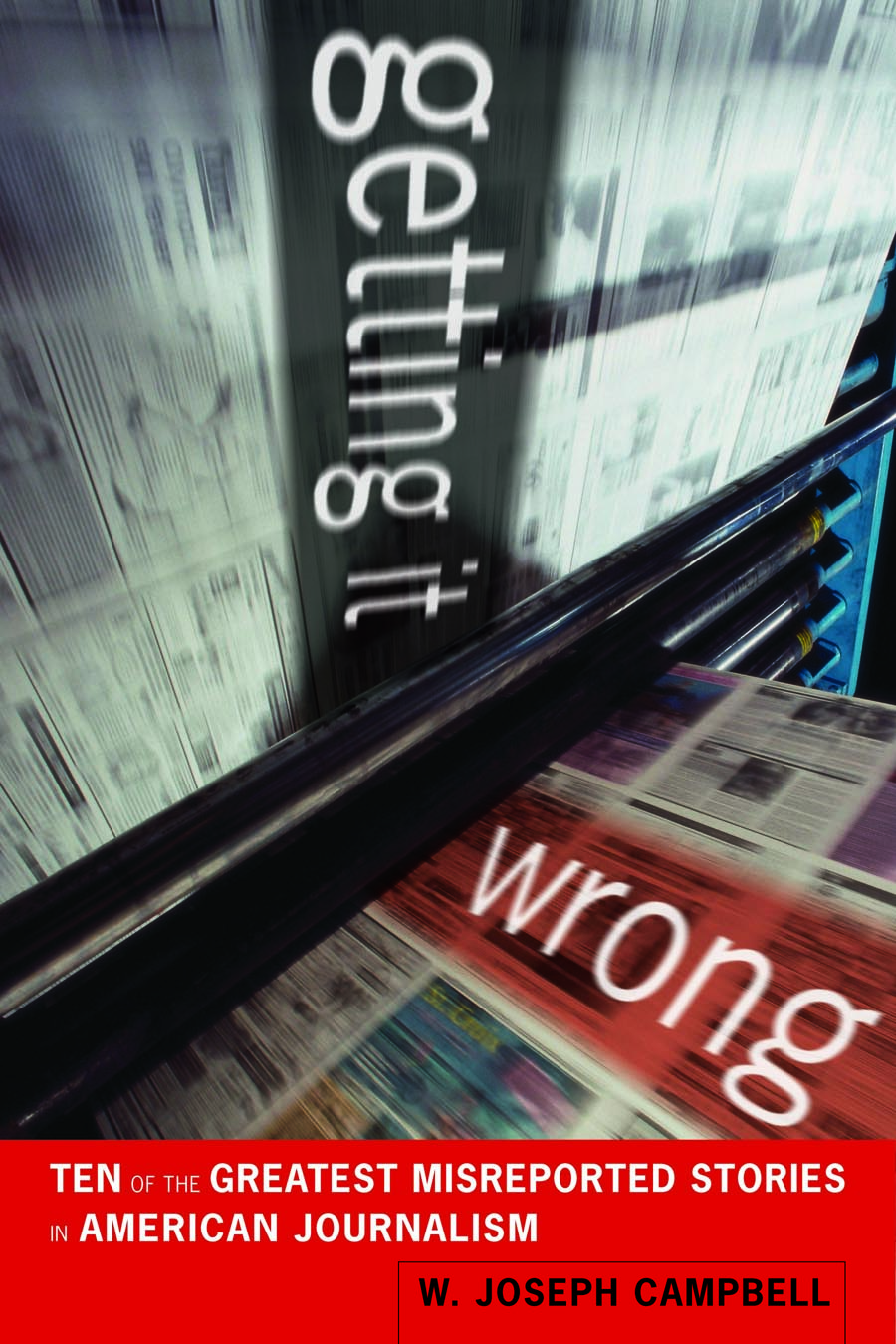
That’s akin to the point I make in my latest book, Getting It Wrong, about how cinema can propel and solidify media-driven myths.
On that point, I write in Getting It Wrong:
“High-quality cinematic treatments are powerful agents of media myth-making, and can enhance a myth’s durability.
“Untold millions of Americans born after 1954 were introduced to the Murrow-McCarthy confrontation through Good Night, and Good Luck, a critically acclaimed film released in 2005 that cleverly promoted the myth that Murrow stood up to McCarthy when no one else would or could.”
Good Night, and Good Luck is but one example of cinema’s mythmaking capacity.
Not surprisingly, comments made online about the Post editorial were largely critical. Said one: “You just reminded me why I stopped reading the Washington Post editorials and began subscribing to the New York Times.”
Said another: “This editorial proves the thesis that The Post is willing to go to any length to suck up to the power elite in order to maintain access to the same.”
And another, more perceptive comment read:
“The myth-making in ‘Fair Game’ is no more or less egregious than it was in ‘All the President’s Men.’ Hollywood loves simplistic story lines (which is why the likes of John Sirica and Archibald Cox were nowhere to be found in ‘ATPM’).”
Now that’s an excellent point.
As I note in Getting It Wrong:
“The 1976 cinematic version of All the President’s Men solidified the notion that young, diligent reporters for the Washington Post brought down President Richard Nixon. That myth of Watergate may be stronger than ever, given that All the President’s Men is the first and perhaps only extended exposure many people have to the complex scandal that was Watergate.
“Thanks in part to Hollywood, the heroic-journalist myth of Watergate has become the most familiar and readily accessible explanation about why Nixon left office in disgrace.”
Indeed, All the President’s Men has been a significant contributor to the misleading yet dominant popular narrative of Watergate, that the reporting of Post reporters Bob Woodward and Carl Bernstein uncovered evidence that forced Nixon’s resignation. The movie focuses on the reporters and their work, ignoring the more significant contributions of Sirica, a federal judge, and Cox, a special prosecutor, in unraveling the Watergate scandal.
As bold as it may have been, the Post editorial about Hollywood and Fair Game might have gone farther and ruminated about the effects of All the President’s Men. Still, it was a telling and impressive commentary.
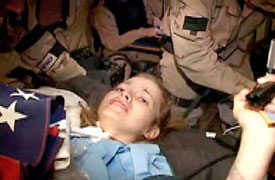
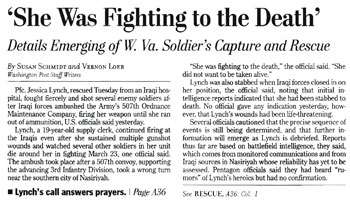
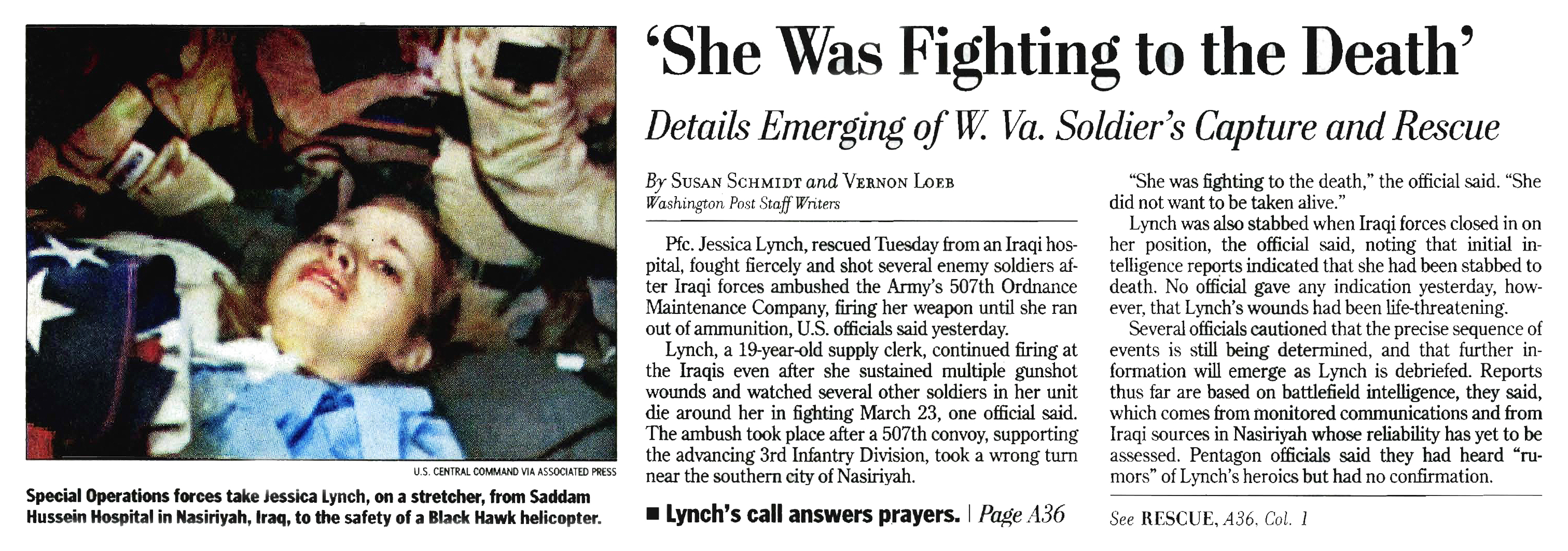
I not infrequently take the Post to task at Media Myth Alert, usually for its unwillingness to confront its singular role in thrusting the Jessica Lynch case into the public domain. The Post, I’ve argued, ought to disclose the sources for its electrifying but bogus story about Lynch’s supposed battlefield heroics in Iraq.
The newspaper’s unwillingness to do so has allowed the false popular narrative that the Pentagon concocted the story to emerge and become dominant. Even one of the reporters on the Lynch story has said, “Our sources for that story were not Pentagon sources.”
But for its clear-eyed editorial about Fair Game, the Post deserves a tip of the chapeau.
Recent and related:
- Washington Post ignores its singular role in Lynch hero-warrior story
- Ignoring the astonishing reporting lapses in Lynch case
- Recalling the overlooked heroism of Sgt. Walters
- Jessica Lynch returns to spotlight in unedifying Bio interview
- Jessica Lynch, one of the ‘buzziest’?
- On the high plateau of media distrust
- Obama, journalism history, and ‘folks like Hearst’
- Invoking media myths to score points
- Getting It Wrong goes on Q-and-A









 Media Myth Alert